25 Best Things to Do in Tbilisi in 2026 (With Prices)
Tbilisi is known for its sulfur baths, its Old Town of carved wooden balconies and the fortress ridge that watches over both. Most of the best things to do in Tbilisi are free or cost a few lari, and the main sights sit closer together than you'd expect. Here's what you need to know about the 25 I'd put on any first trip: what each one costs in 2026, how long it takes and when to go.
The 25 best things to do in Tbilisi at a glance
Here is my whole list in one table, grouped the way the city is laid out, with prices per person in October 2026. A free day in Tbilisi is easy, because the sights that cost nothing are some of the best ones.
| # | Thing to do | Cost | Time | Best time |
|---|---|---|---|---|
| 1 | Walk Old Tbilisi | Free | Half a day | From 09:00 |
| 2 | Tip-based walking tour | A cash tip | 2.5 to 3 hours | First morning |
| 3 | Private sulfur bath | 120 to 300 GEL per room per hour | 1 to 2 hours | Evening |
| 4 | Anchiskhati, Sioni and Metekhi churches | Free | 1 hour | Sunday, 09:00 |
| 5 | Clock tower puppet show | Free | 15 minutes | 12:00 or 19:00 |
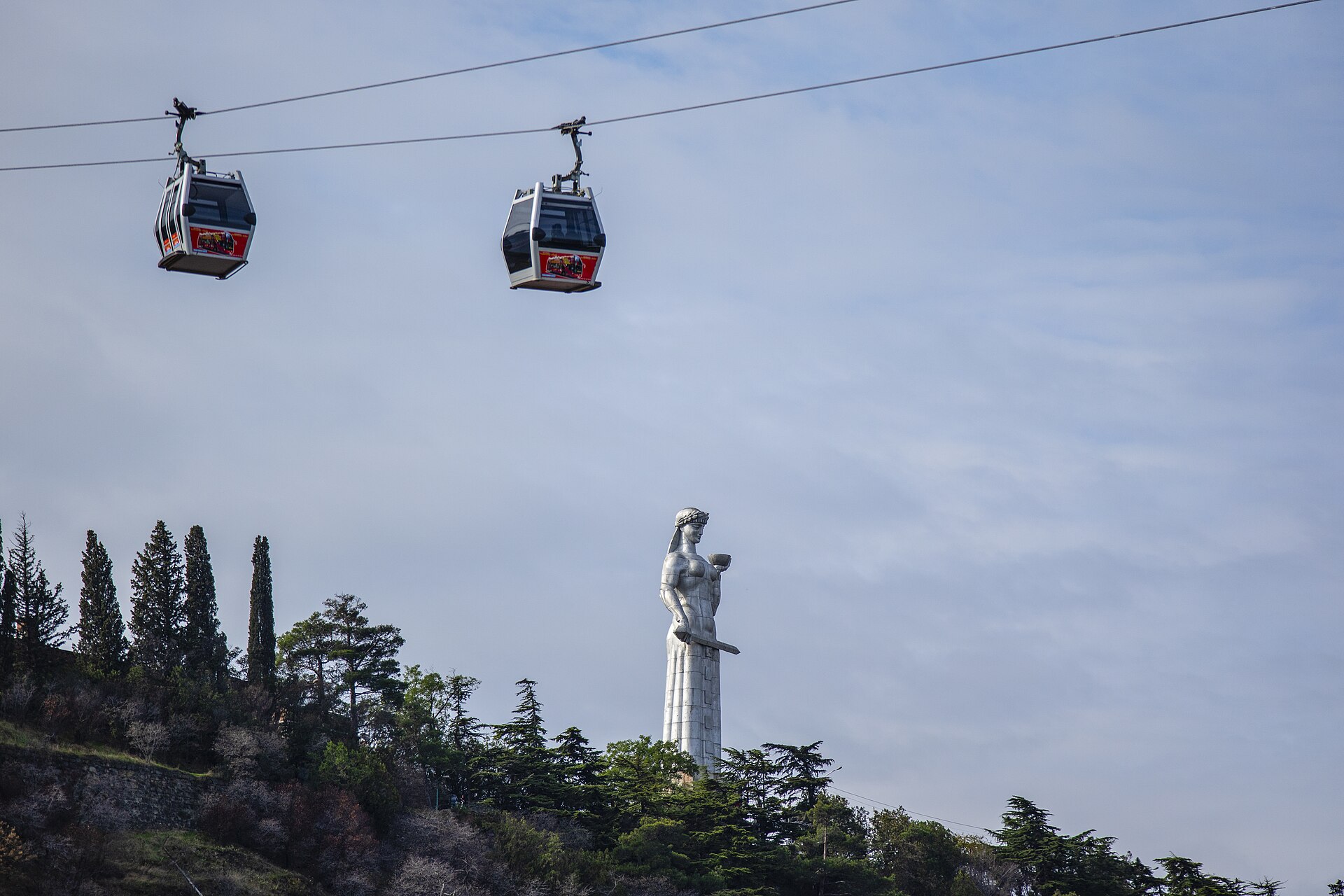
| 6 | Cable car to the Narikala ridge | 2.50 GEL | 2 hours with the walk down | Before sunset |
| 7 | Mother of Georgia | Free | 30 minutes | With Narikala |
| 8 | Botanical Garden waterfall | 4 GEL | 2 hours | Morning |
| 9 | Bridge of Peace and Rike Park | Free | 1 hour | After dark |
| 10 | Sameba Cathedral | Free | 1 hour | Before sunset |
| 11 | Stalin's Underground Printing House | About 10 GEL donation | 45 minutes | Weekdays only |
| 12 | Georgian National Museum | 40 GEL | 2 hours | Tuesday to Sunday |
| 13 | Rustaveli Avenue and the ballet | Free; seats from 20 GEL | 1 hour, plus an evening | Evening |
| 14 | Mtatsminda Park | Funicular 10 to 12 GEL | 2 hours | Weekday sunset |
| 15 | Dry Bridge market | Free | 1 hour | Weekends from 11:00 |
| 16 | Sololaki entrance halls | Free | 1 to 2 hours | Daytime |
| 17 | Dezerter Bazaar | Free | 1 hour | 08:00 to 11:00 |
| 18 | Fabrika courtyard | Free | An evening | After 20:00 |
| 19 | Stamba and Wine Factory N1 | Free | An evening | Evening |
| 20 | Turtle Lake | 1 GEL ropeway | 1 to 2 hours | Weekday afternoon |
| 21 | Open Air Museum of Ethnography | 25 GEL | 2 to 3 hours | A dry day |
| 22 | Chronicles of Georgia | Free, plus a 10 to 16 GEL taxi | Half a day | Early or before sunset |
| 23 | Wine tasting | 35 to 45 GEL | 1 hour | Evening |
| 24 | Khinkali dinner | 2.40 to 3 GEL a piece | 1.5 hours | Evening |
| 25 | Mtskheta day trip | 2 GEL van | Half a day | Leave early |
Old Tbilisi and the sulfur baths
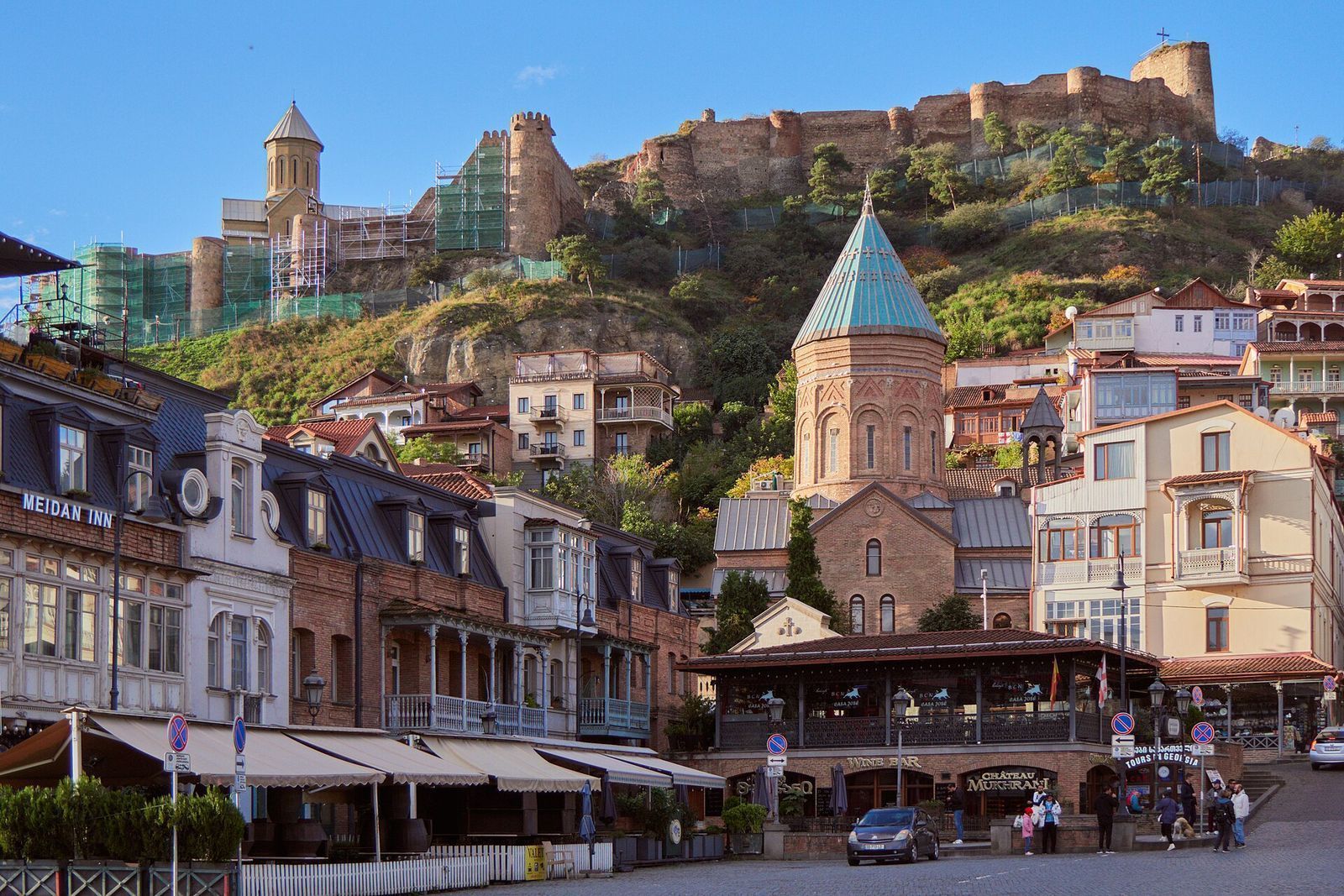
My favorite thing to do in Tbilisi costs nothing: walking Old Tbilisi with no plan. Meidan, Abanotubani, Kala and Betlemi sit about 10 minutes apart, and the carved balconies and crooked lanes are why most people fall for the city. The self-guided walk I give friends loops about 4 km from Meidan past the baths, up to the ridge and down the Betlemi stairs to the river, in 3 to 4 hours.
On day one, a tip-based walking tour from Freedom Square covers the same lanes in 2.5 to 3 hours, and you pay the guide in cash at the end.
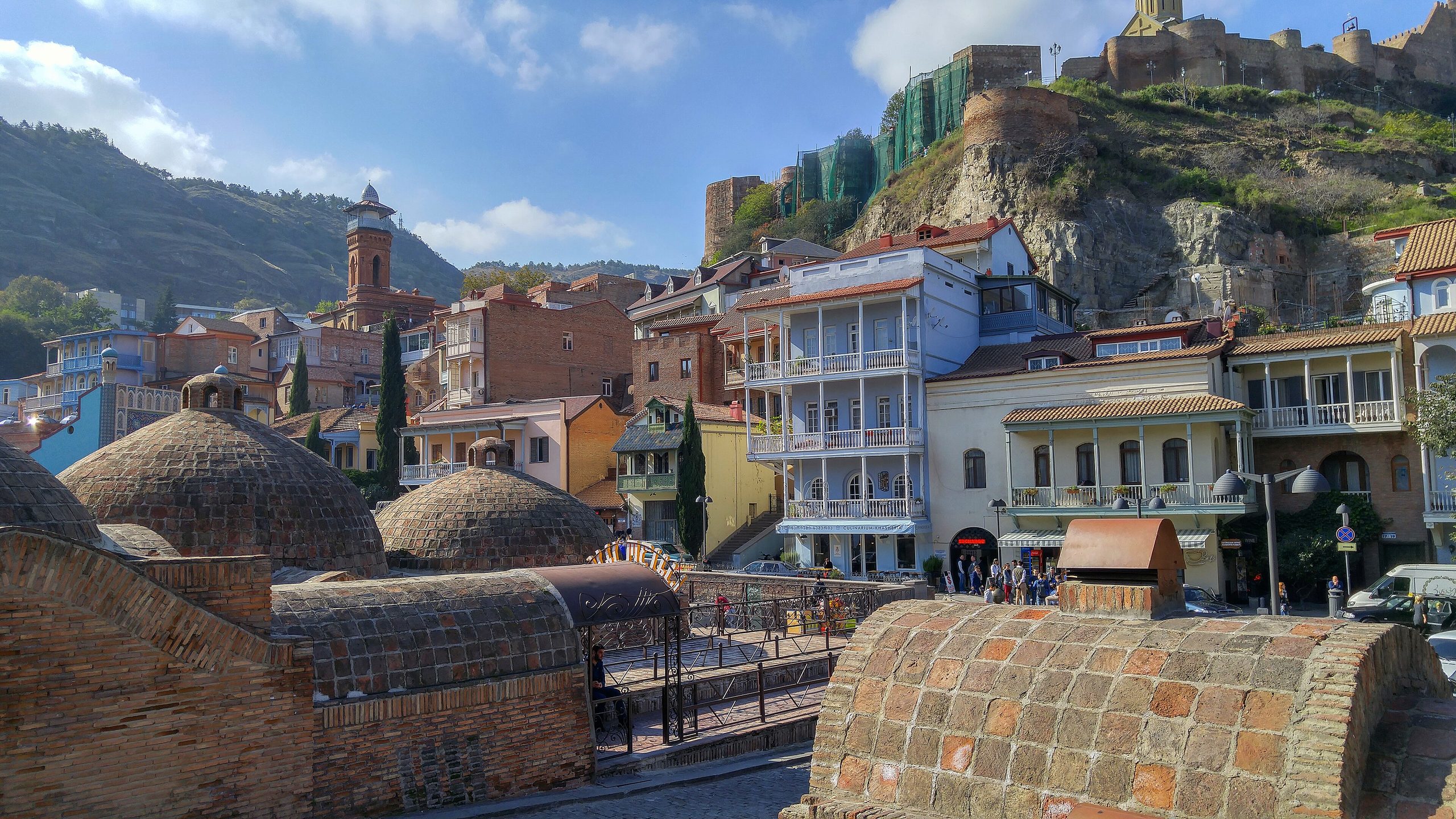
The brick domes at the bottom of the Old Town are the roofs of the sulfur baths of Abanotubani, the one thing here I'd spend real money on. Book a private room, not the public hall: most cost 120 to 300 GEL an hour for the room, and Chreli Abano, the blue-tiled one, starts at about 130 GEL for two. A kisa scrub adds 15 to 20 GEL in cash.
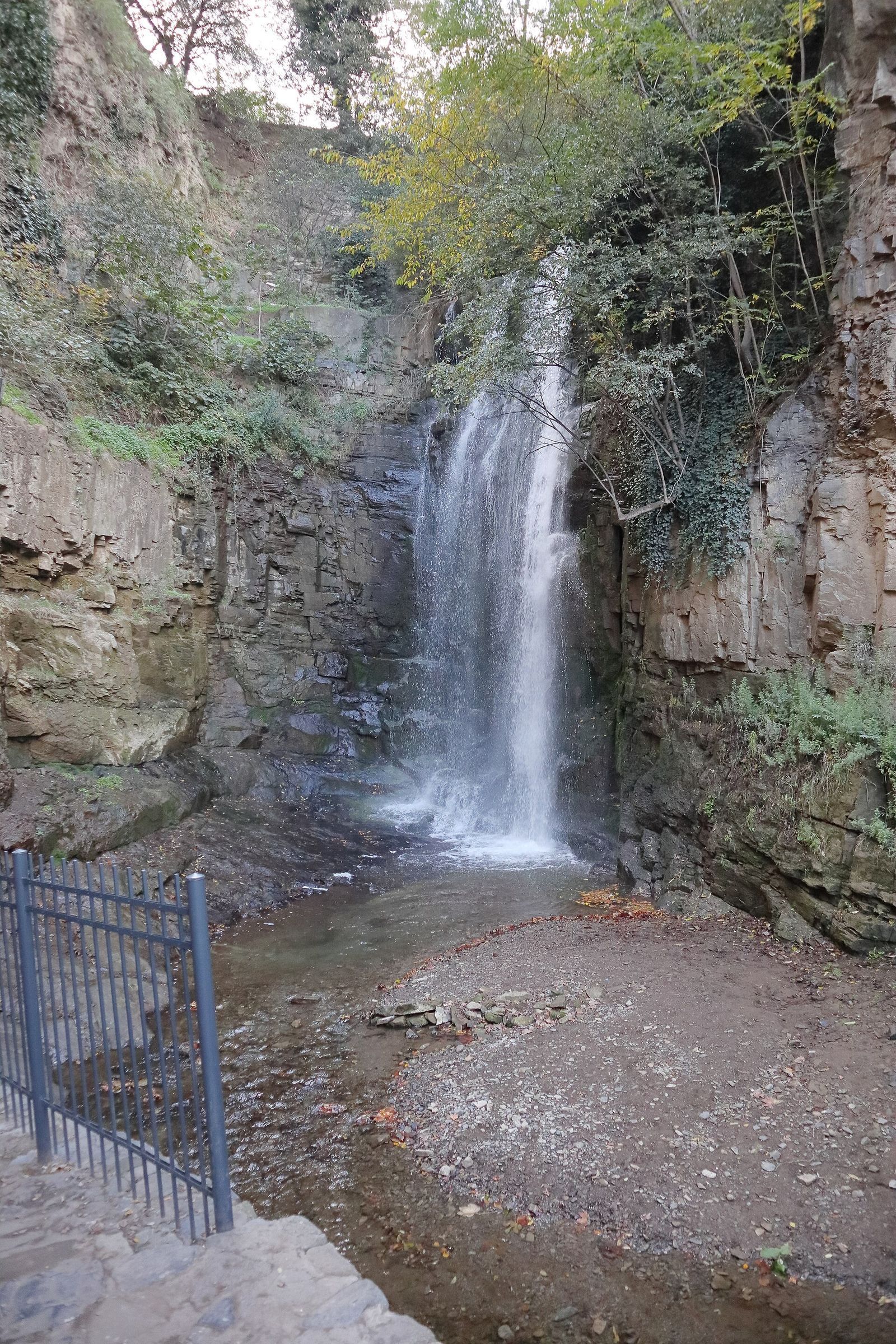
Follow the stream past the bathhouses and in about 5 minutes you reach the Leghvtakhevi waterfall. It's one of several unusual things to do in Tbilisi clustered here, along with the 3 GEL ruins of the oldest bathhouse and the fire temple on Gomi Street.
Three Old Town churches fit inside a 15-minute walk, and all three are free; cover your shoulders and knees, and women cover their hair.
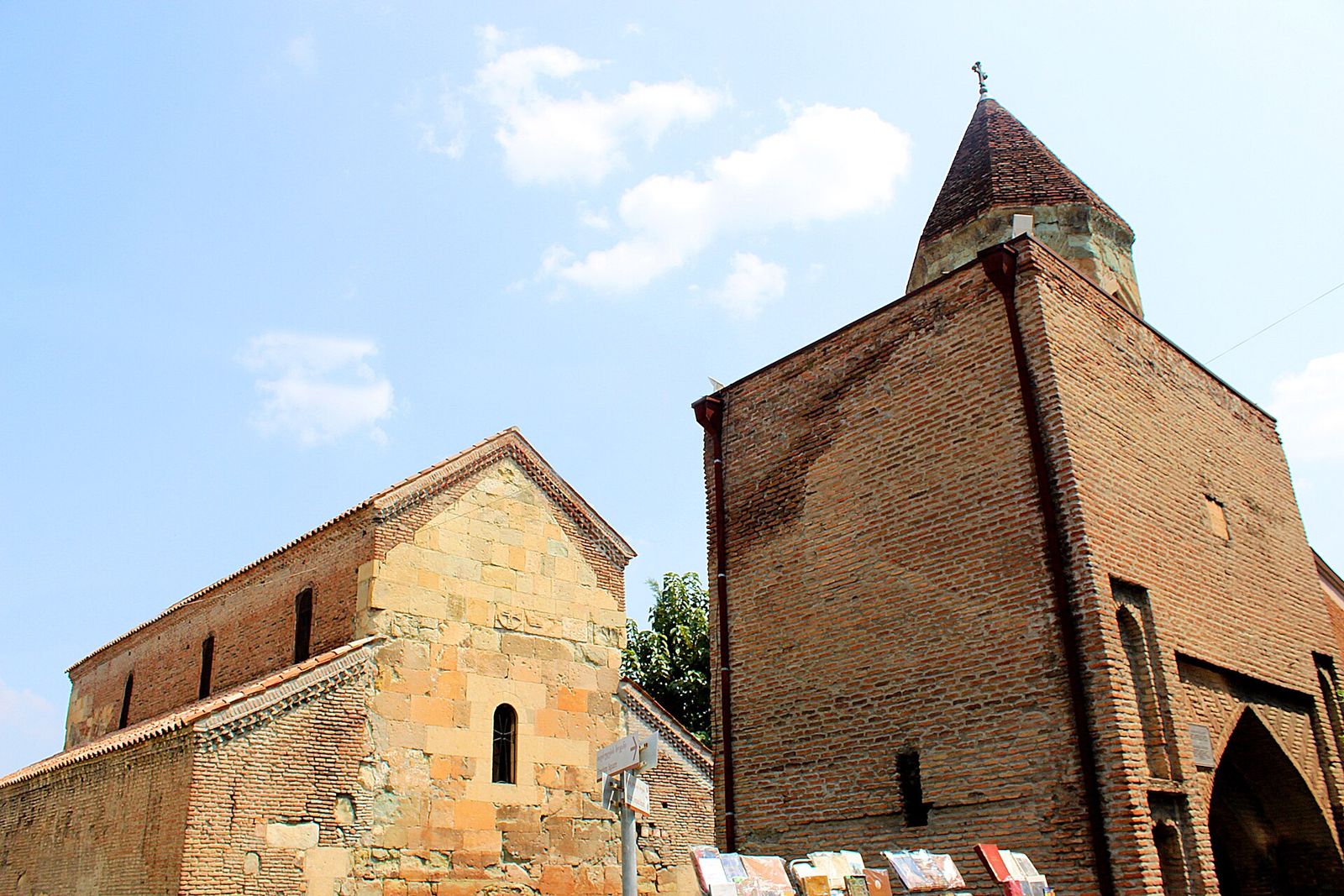
Anchiskhati is the oldest church in the city, from the 6th century. On Sunday from about 09:00, its choir and the one at Sioni sing Georgian polyphony, the best free concert in town.
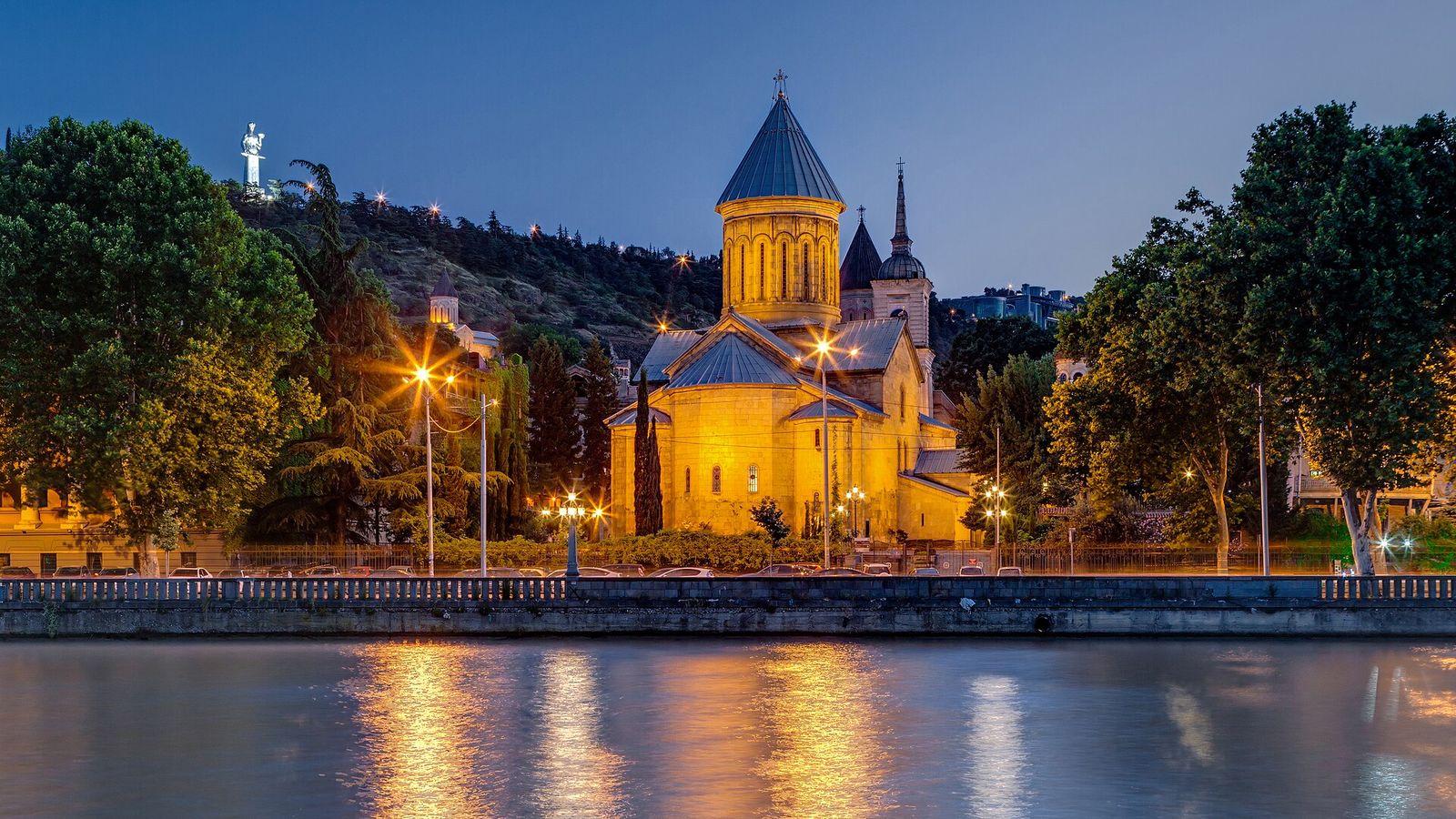
Sioni Cathedral is a few minutes' walk from Anchiskhati, closer to the river, so it's easy to catch part of both services on the same Sunday morning.
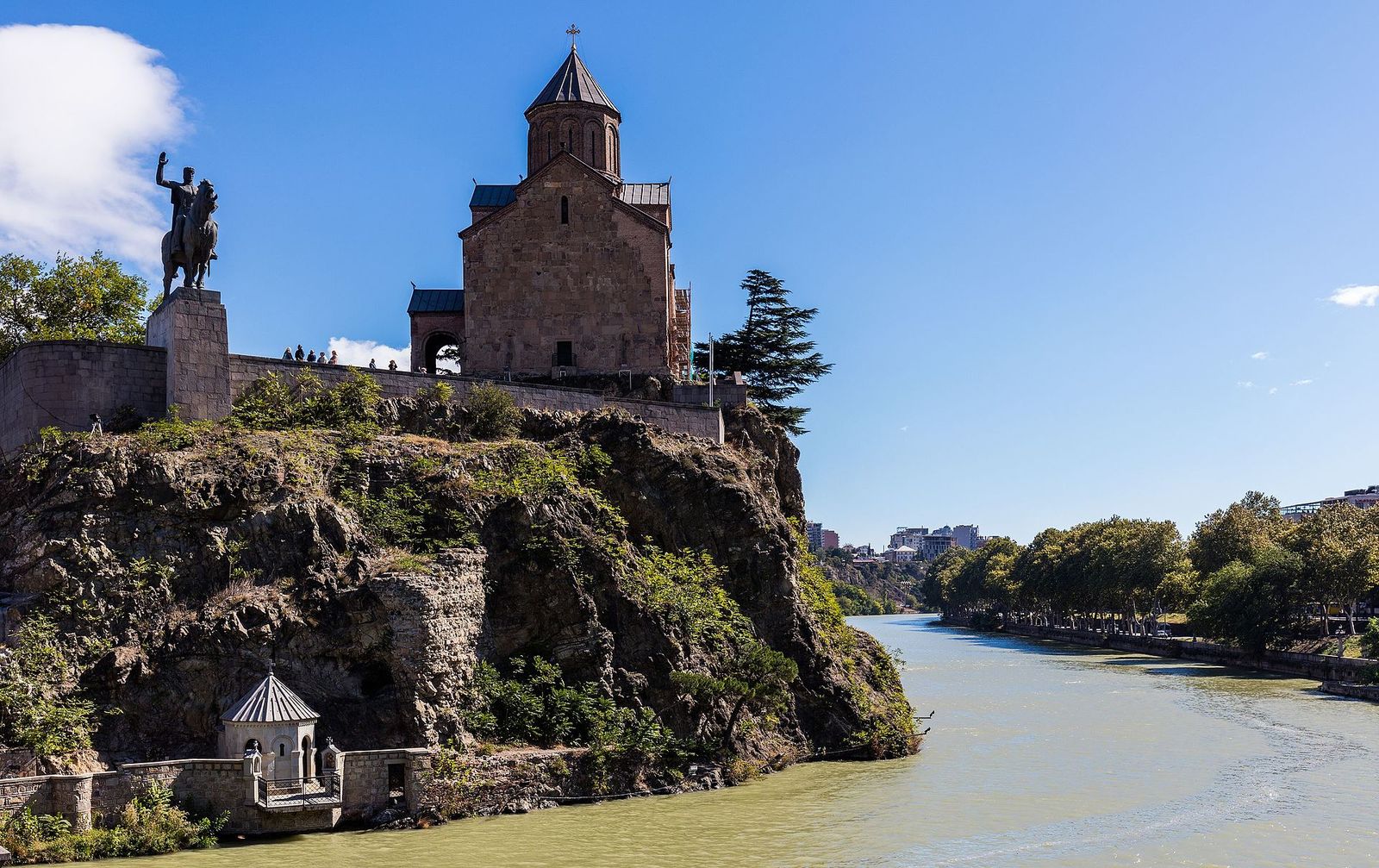
Metekhi Church sits on its cliff across the river from the baths, beside the statue of King Vakhtang Gorgasali.
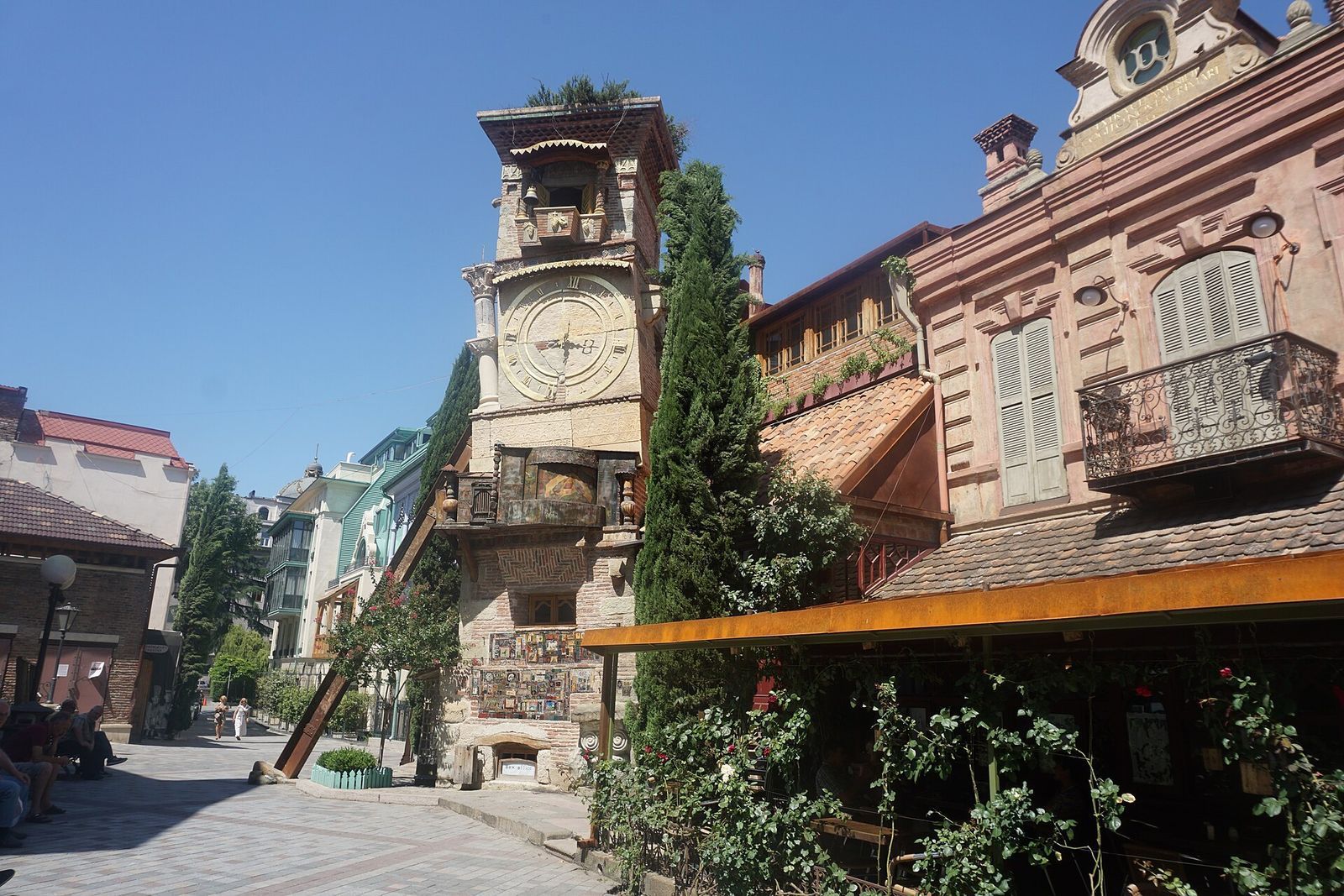
Nearby, the leaning Gabriadze clock tower on Shavteli Street stages a free 15-minute puppet show at 12:00 and 19:00. Stand back across the square, not right under the tower, to see the whole stage.
Narikala ridge, the Mother of Georgia and the Botanical Garden
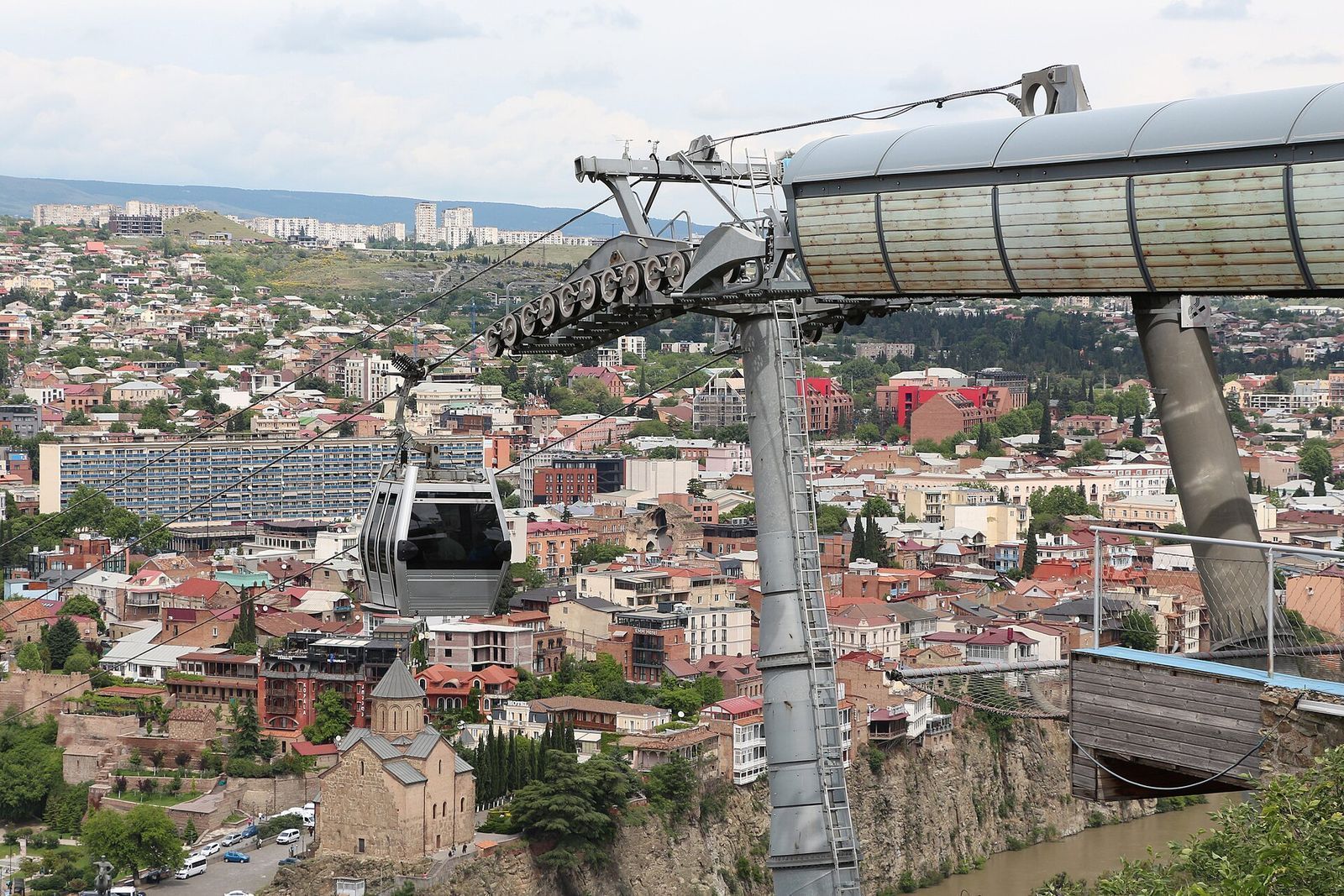
The cable car from Rike Park costs 2.50 GEL and takes a little over 2 minutes over the river and the bath domes. Its gates take no cash, so buy a 2 GEL Metromoney card at any metro station first. The walk up from Abanotubani takes about 20 minutes, and I always ride up and walk down.
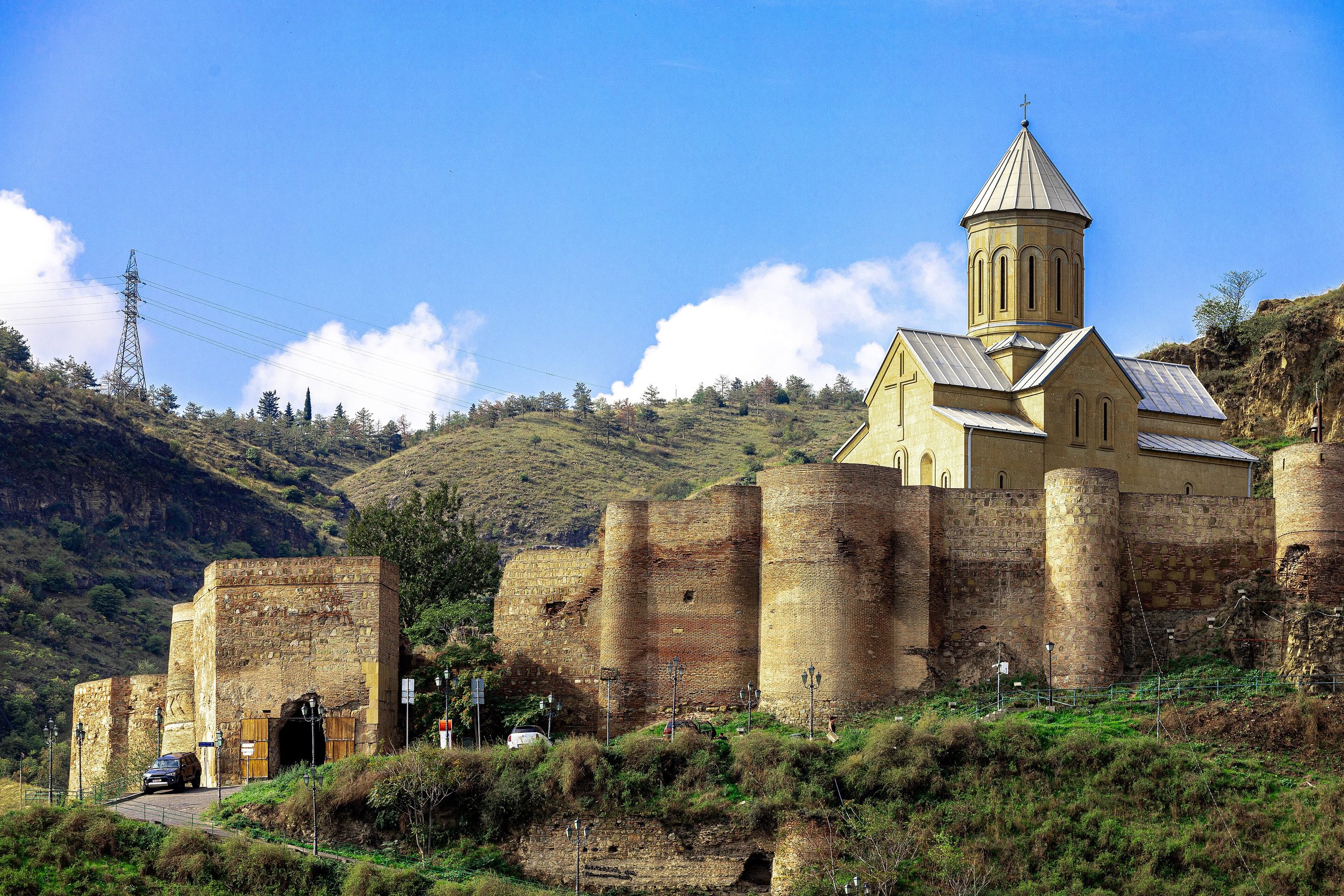
Narikala Fortress is free and its ridge is open around the clock. Go in the hour before sunset, when the Old Town turns gold below you and the walls light up on your way down.
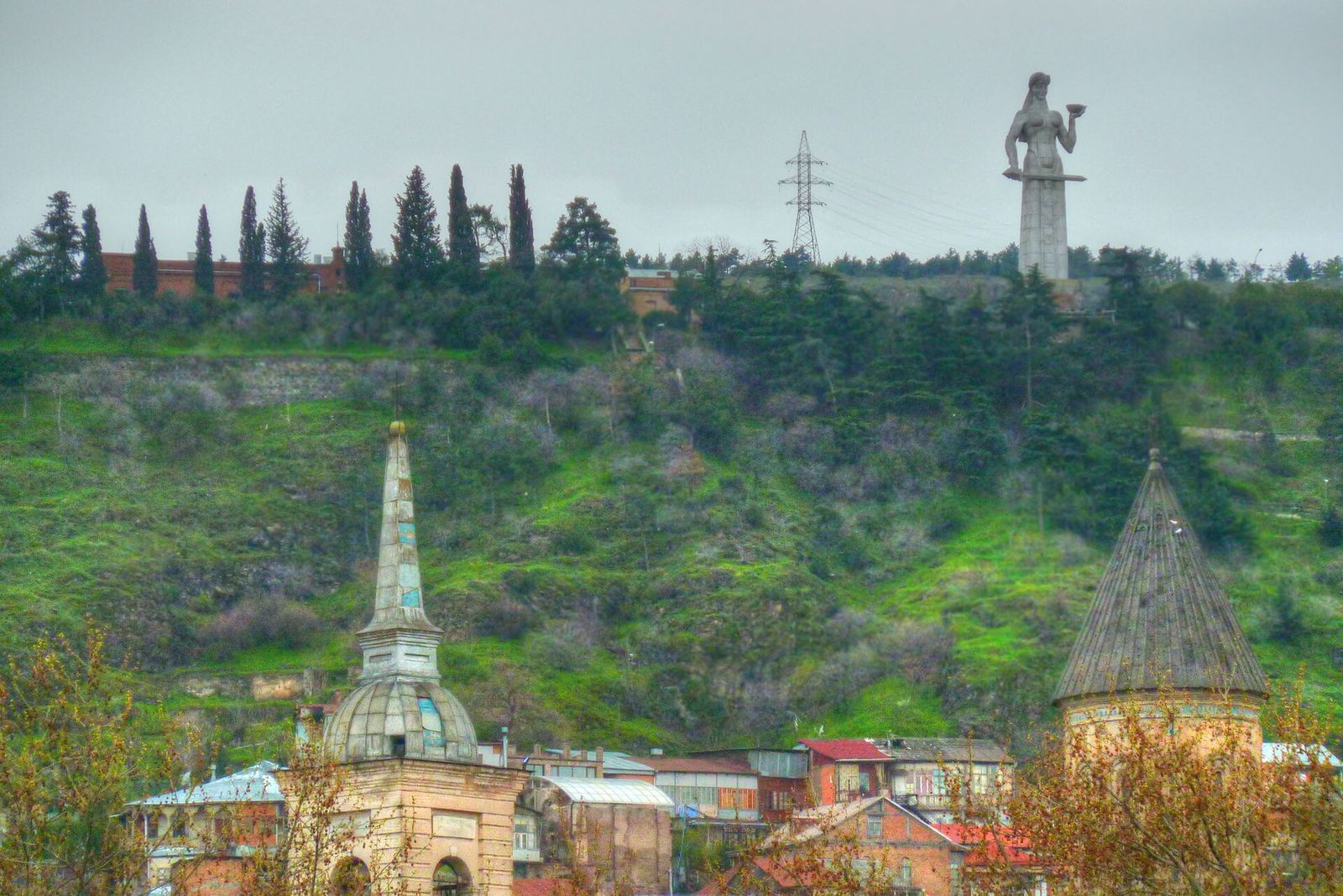
Five minutes along the ridge stands the Mother of Georgia, a 20 m aluminum statue first put up in 1958 and replaced in 1997. She holds a bowl of wine for guests and a sword for enemies.
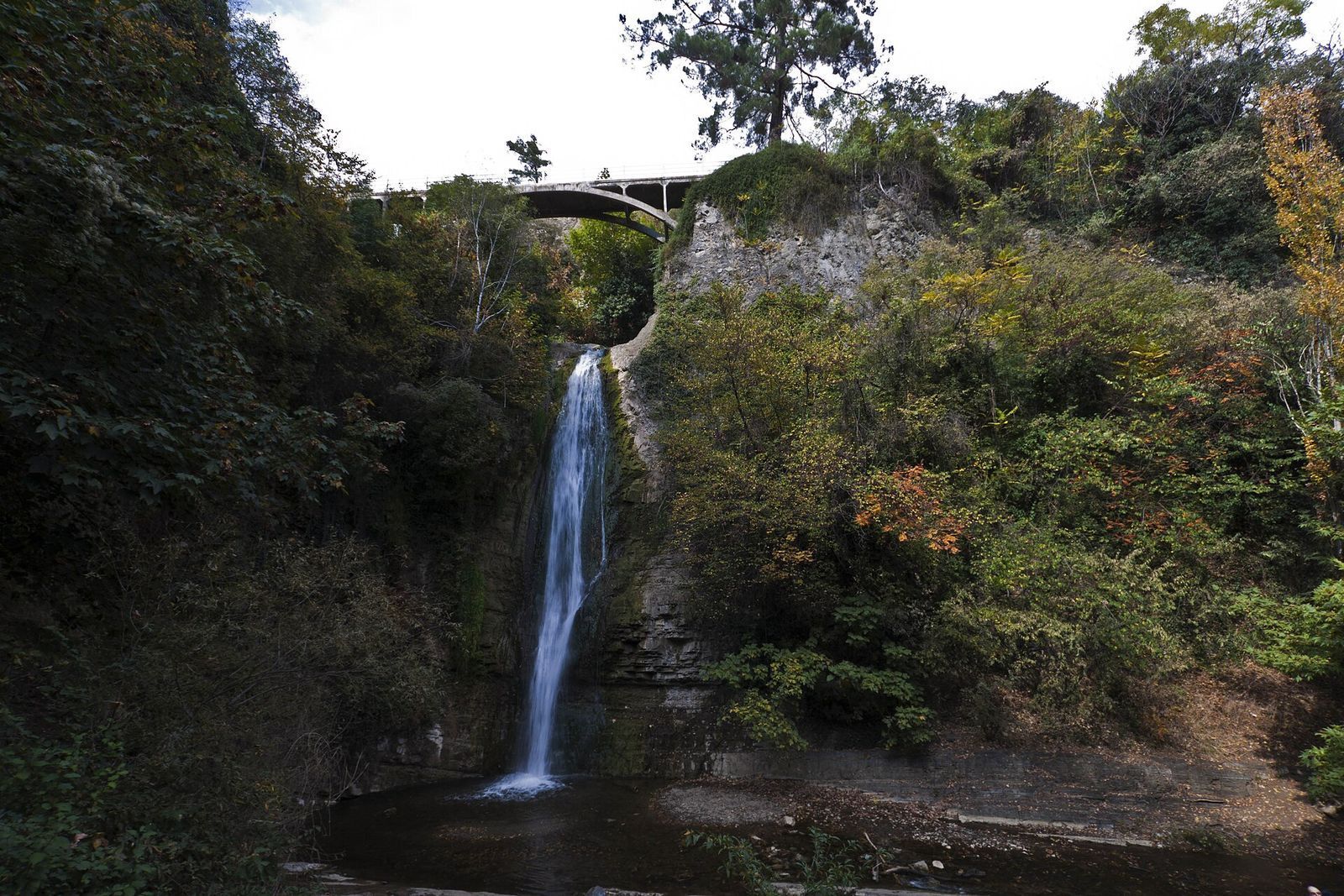
Behind the fortress, the National Botanical Garden hides a 22 m waterfall that runs all year. Entry is 4 GEL; enter by the upper gate on the ridge and walk downhill to the waterfall and out on Botanikuri Street.
Sameba Cathedral, the Bridge of Peace and Avlabari
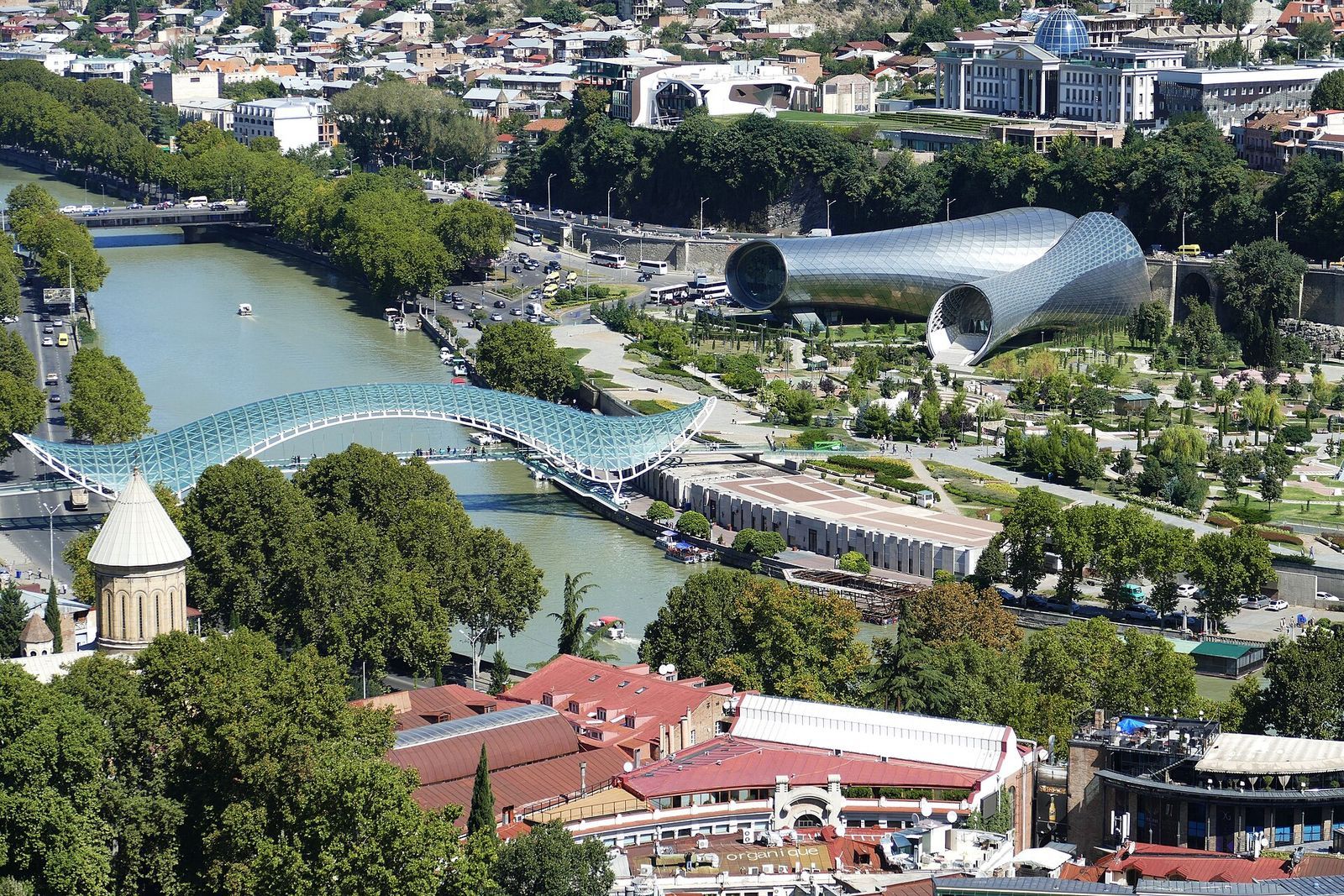
Across the river, the Bridge of Peace is a free 156 m glass footbridge to Rike Park, and its LEDs switch on 90 minutes before sunset, so I cross it after dark on the way to dinner.
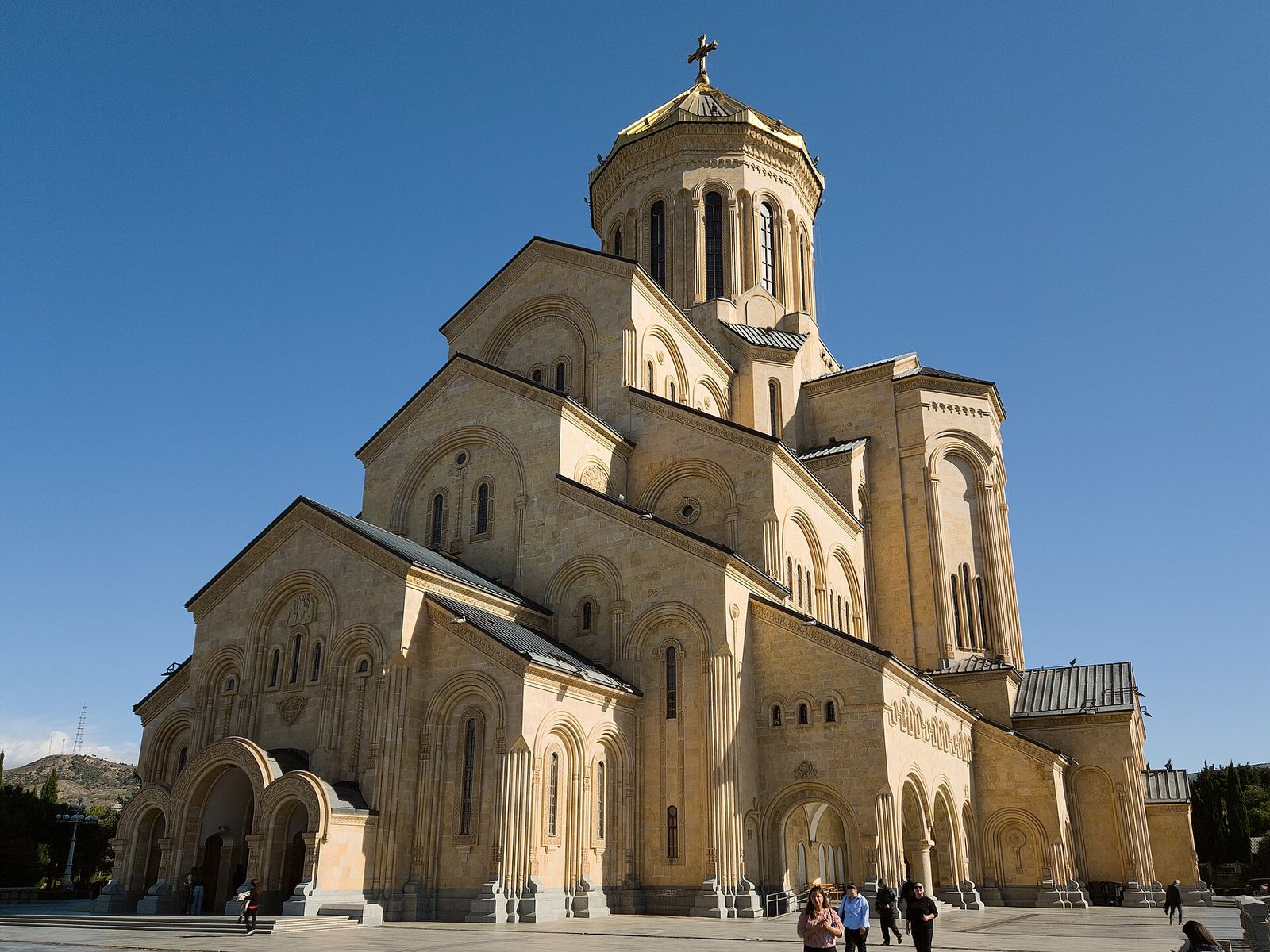
Up in Avlabari, Holy Trinity Cathedral, or Sameba, is the gold dome you see from every viewpoint: 87.1 m to the top of its cross and finished in 2004. It's free, open about 07:00 to 21:00, and 10 to 15 minutes uphill from Avlabari metro.
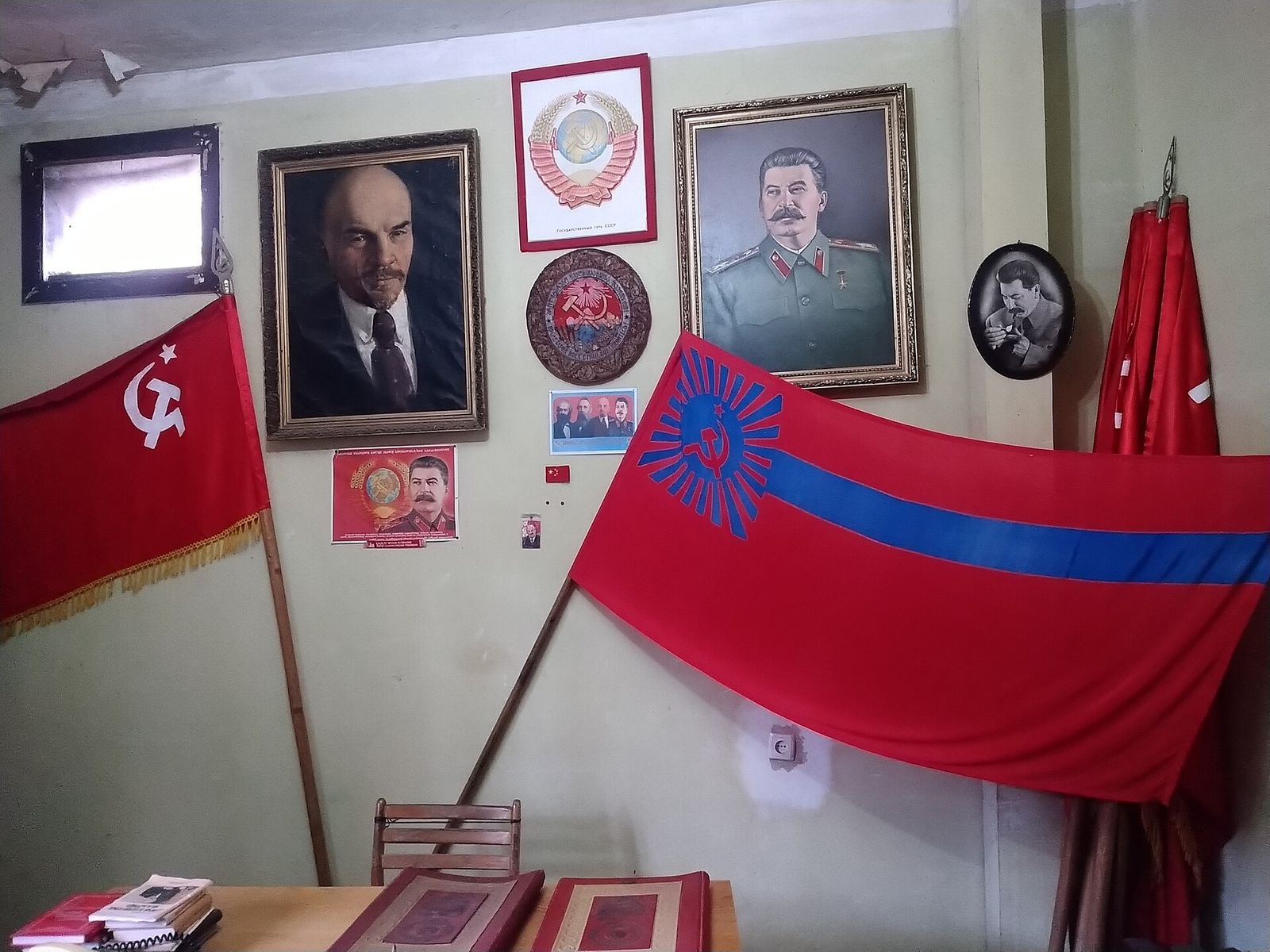
Avlabari also hides my favorite odd museum. At Stalin's Underground Printing House, a caretaker leads you down a spiral staircase to an 1893 press about 15 m underground. It runs on a cash donation of about 10 GEL and opens Monday to Friday only.
Rustaveli Avenue and the museums
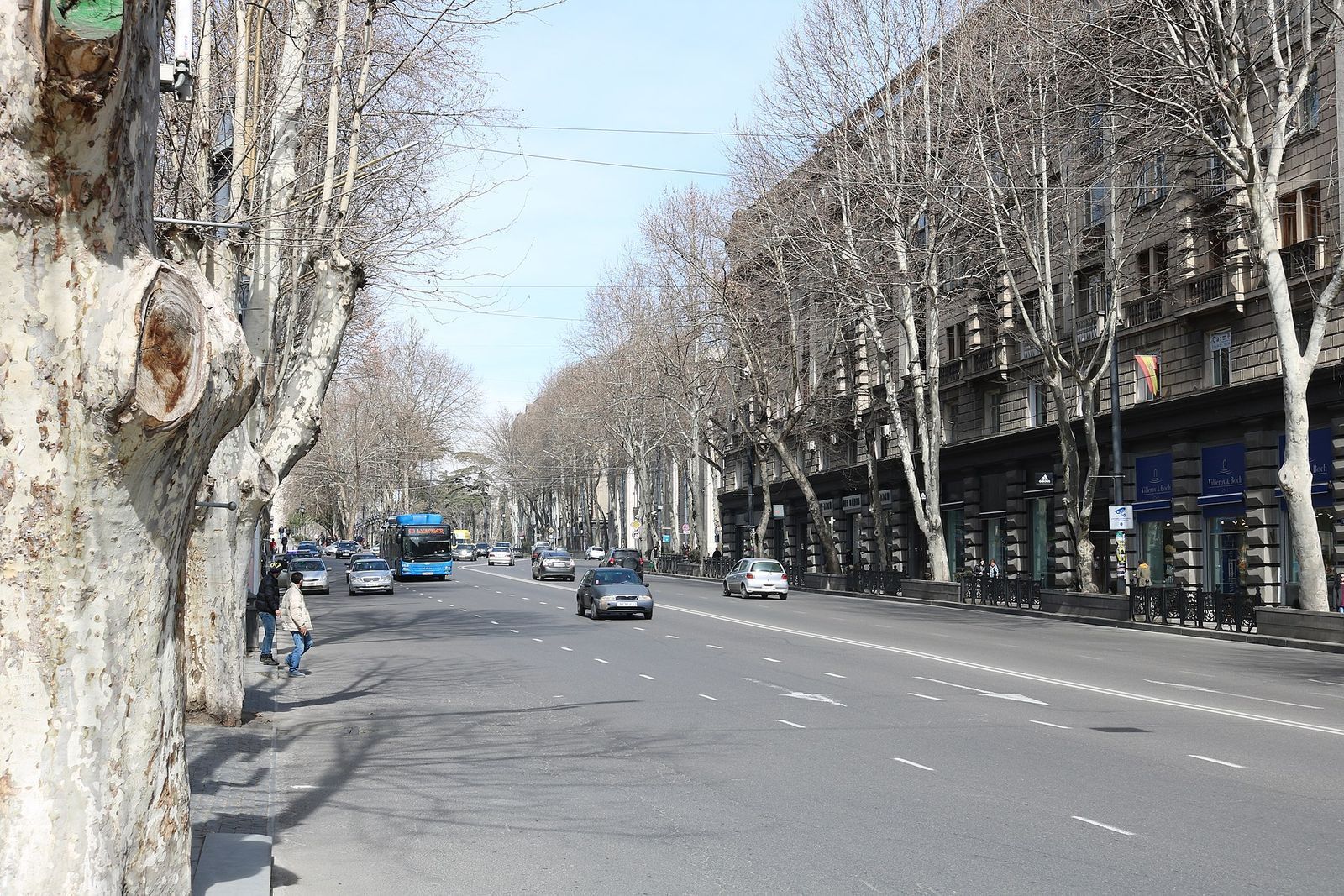
Rustaveli Avenue runs about 1.5 km from Freedom Square past Parliament, the opera house and the main museums, with a metro station at each end. Walk it in the morning for the facades and come back after dark for the floodlit buildings.
If you see one museum, make it the Georgian National Museum: 40 GEL, Tuesday to Sunday, 10:00 to 18:00. Head first to the basement Treasury for Colchian gold up to about 5,000 years old, then up to the Soviet Occupation Hall. A 50 GEL pass covers five museums, so add the National Gallery next door (25 GEL) for Pirosmani's paintings.
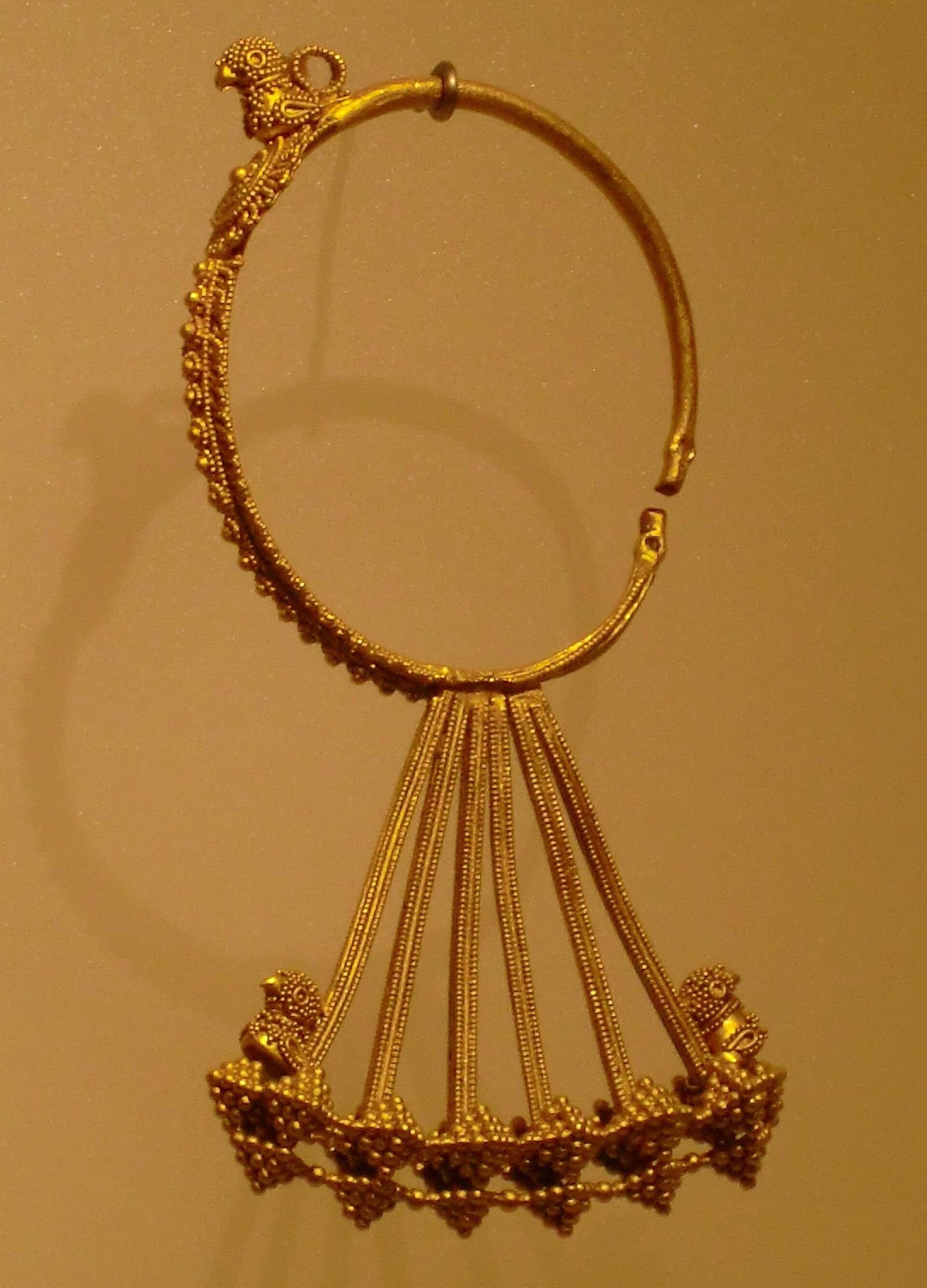
Most museums in Tbilisi sell tickets at the door, take cards and let children under 6 in free.
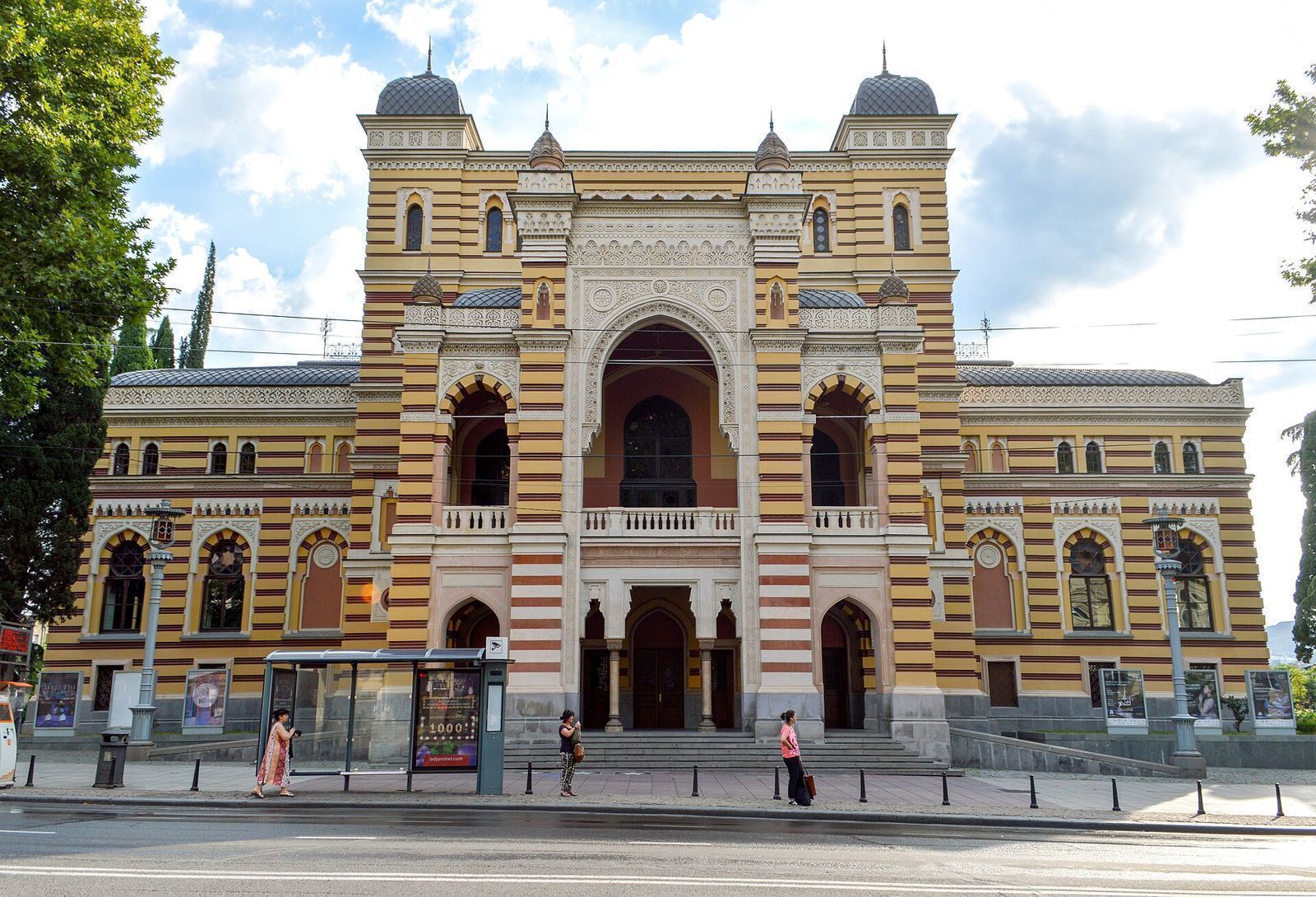
In the evening, the Opera and Ballet Theatre at 25 Rustaveli Avenue is the big night out. I'd pick ballet, which needs no translation, and opera and ballet seats start at about 20 GEL in a season that runs from autumn to July.
Mtatsminda Park and the best viewpoints
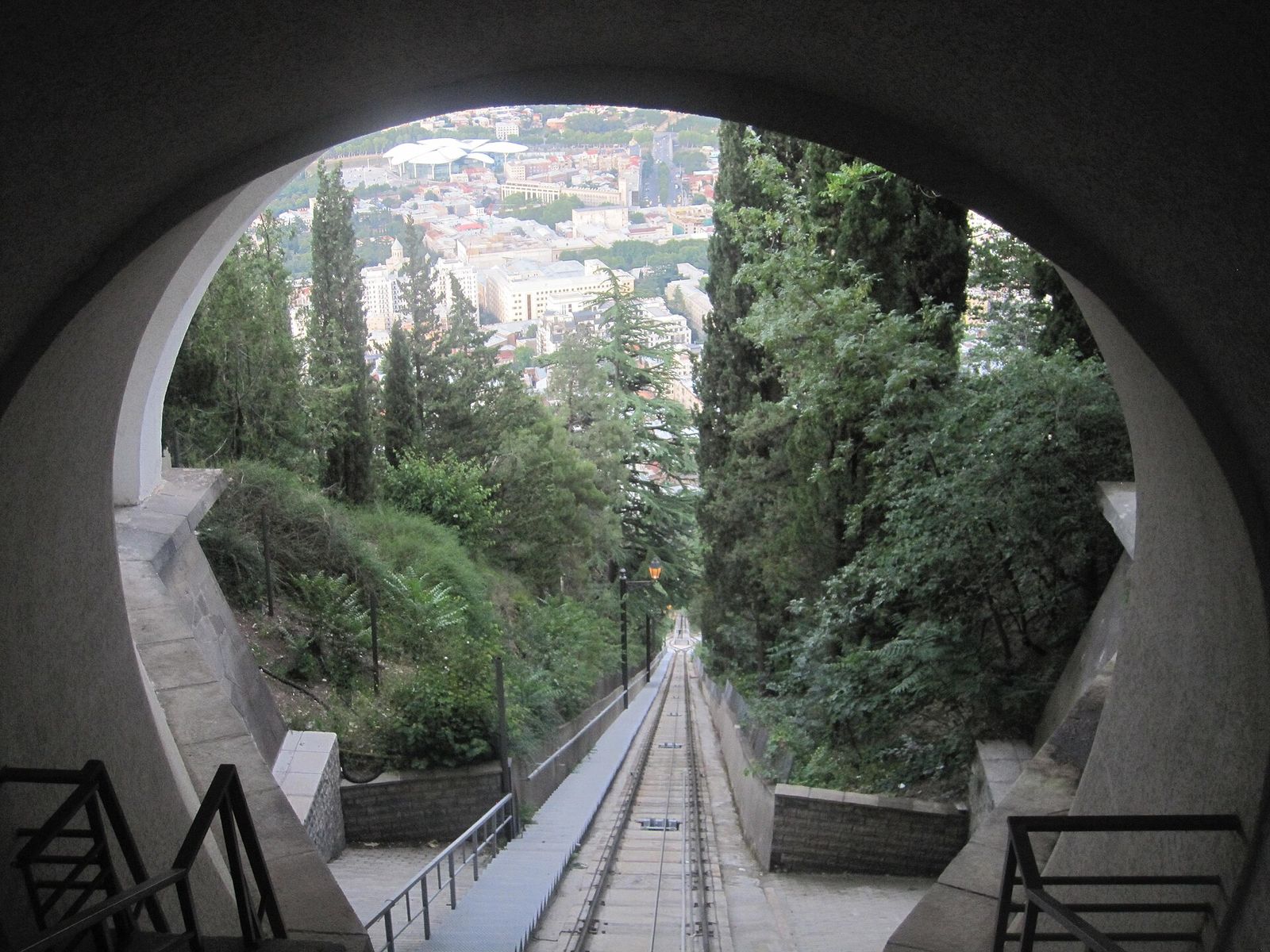
Mtatsminda Park, on the mountain behind Rustaveli, has the highest view in the city. Entry is free and rides cost about 1 to 10 GEL each. I take the funicular up and the 1.5 km paved Pantheon path down.
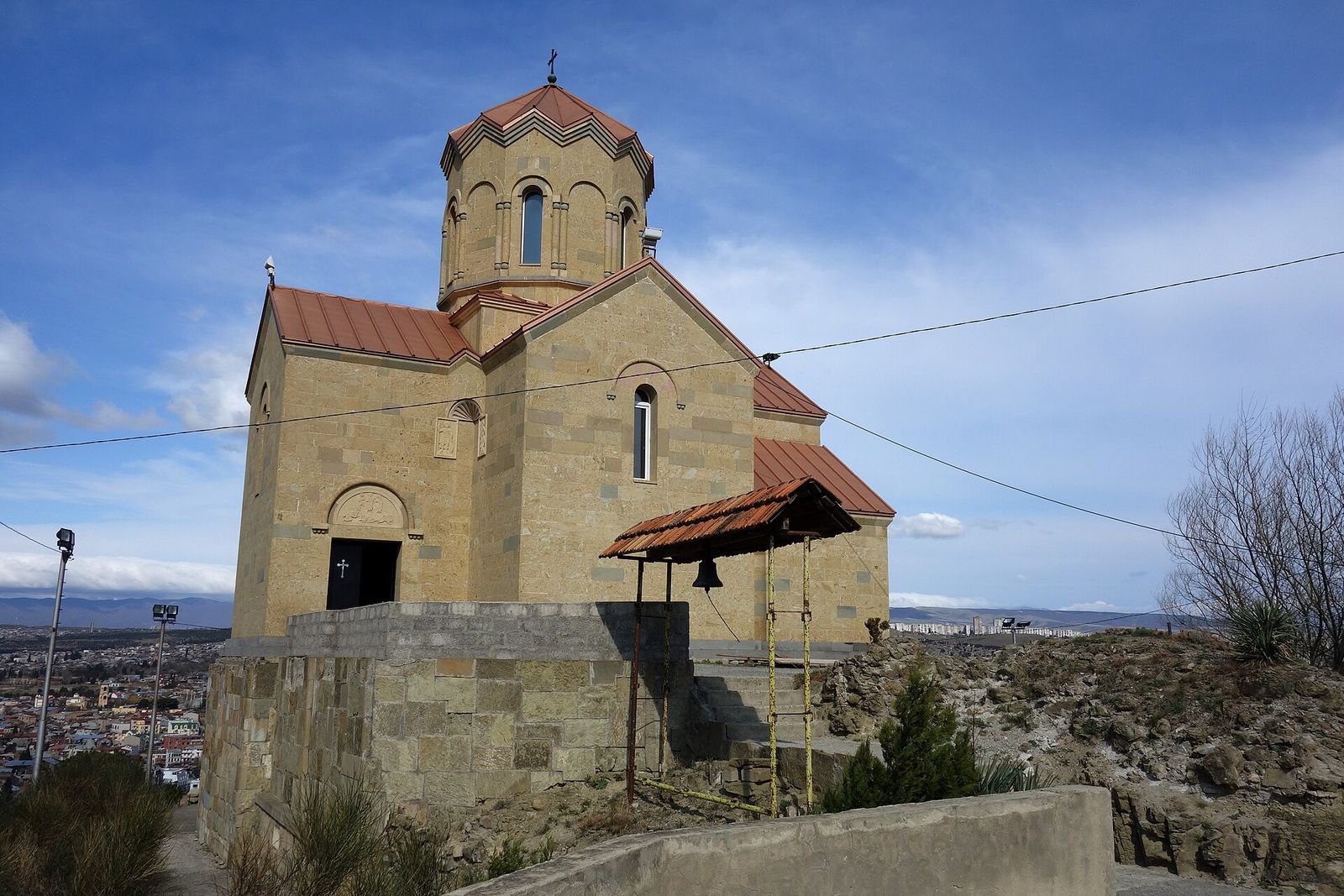
Most of the best viewpoints in Tbilisi are free. Beyond Narikala and Mtatsminda, I'd climb to Tabori Monastery for sunset, about 45 minutes on foot from the baths, and finish on the Rike Park embankment at blue hour, when Metekhi, the fortress walls and the Bridge of Peace light up together.
Dry Bridge market and Dezerter Bazaar
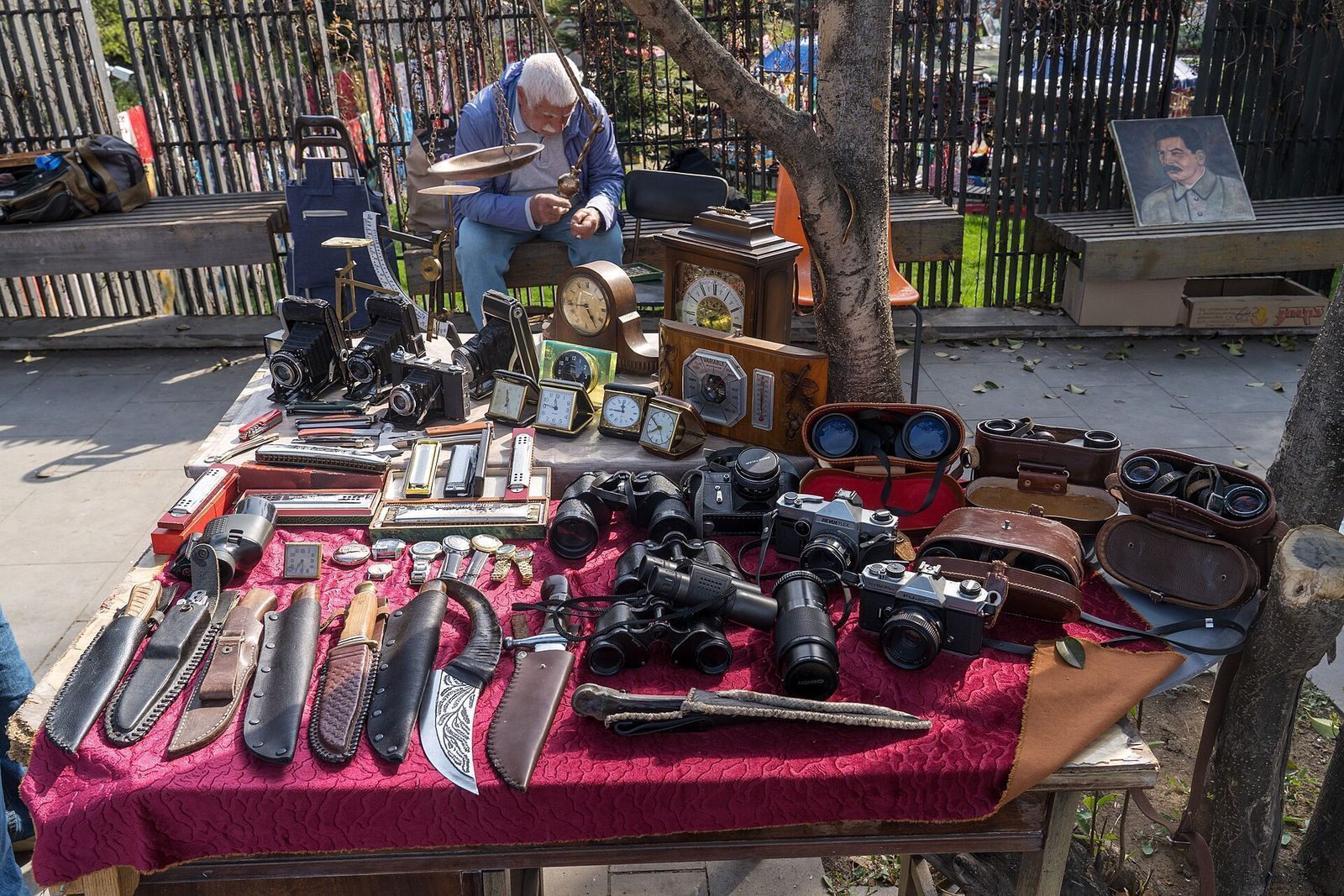
The Dry Bridge market is the city's open-air flea market, daily from about 10:00 to 17:00 and fullest at weekends from late morning. Look for Soviet cameras, medals and old porcelain, bring small notes and haggle with a smile.

For food, Dezerter Bazaar by the Central Railway Station opens daily from about 07:00 and is at its best before 11:00. Start in the covered hall for cheese, spices and churchkhela, then eat a 2 to 3 GEL lobiani on the way out.
Sololaki, Fabrika and the converted factories
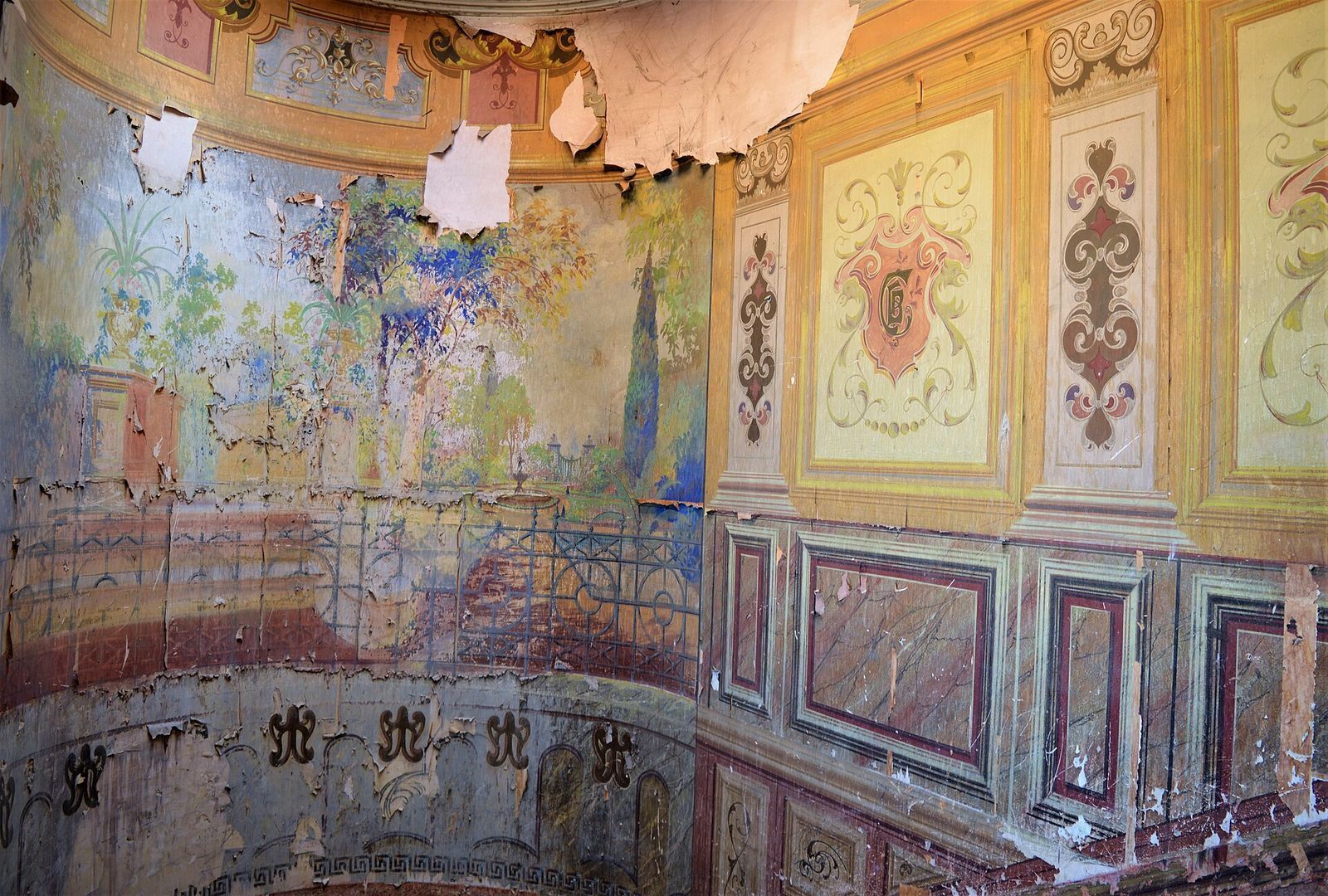
Sololaki climbs from Freedom Square toward the ridge, and its painted entrance halls are the draw, starting with Galaktion Tabidze Street 18, painted in 1911. These are homes, so only step in where the door is already open.
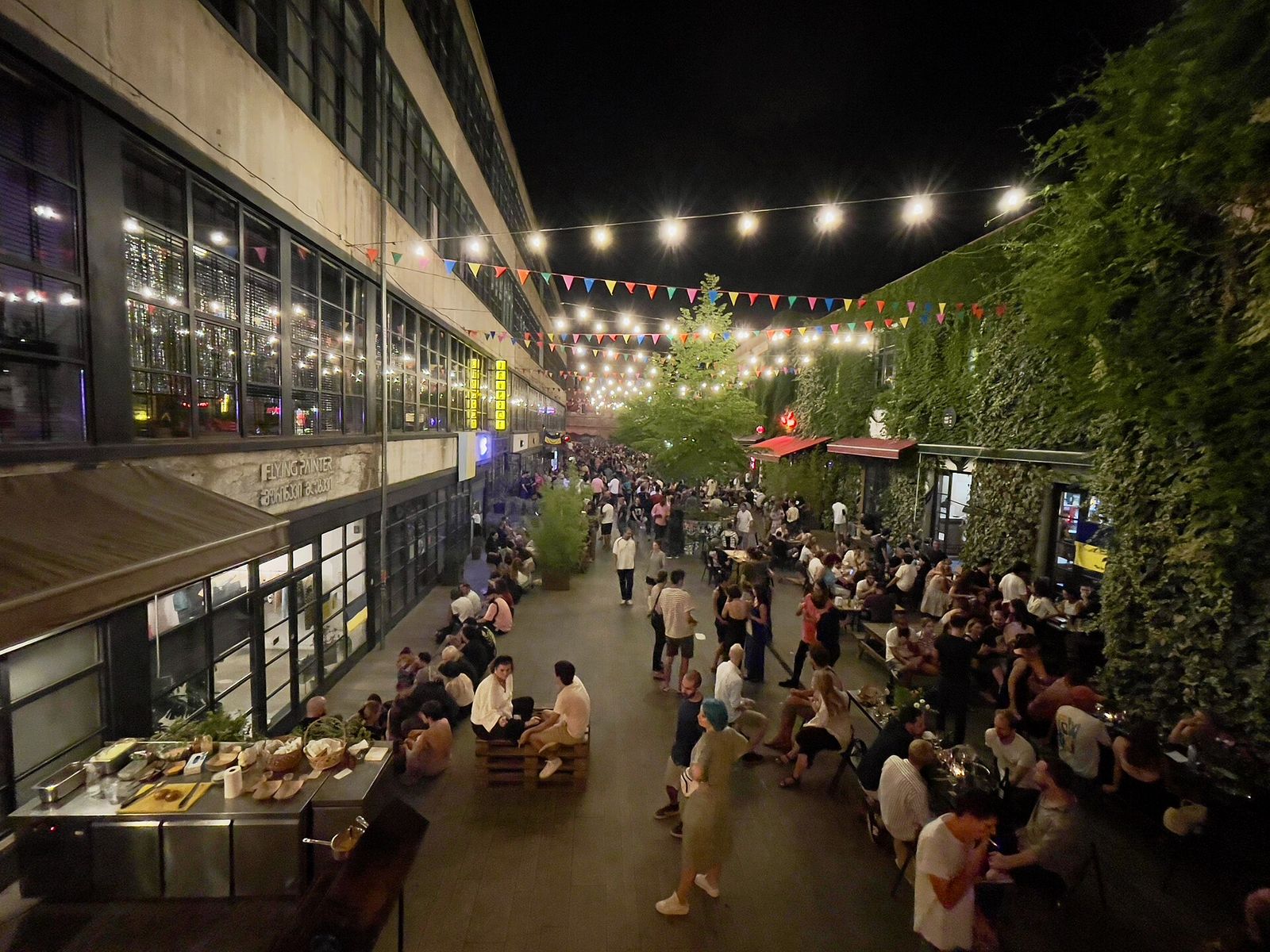
Across the river, Fabrika is a Soviet sewing factory turned courtyard of bars and cafes, a 10-minute walk from Marjanishvili metro, with beer at 7 to 10 GEL and no cover charge.
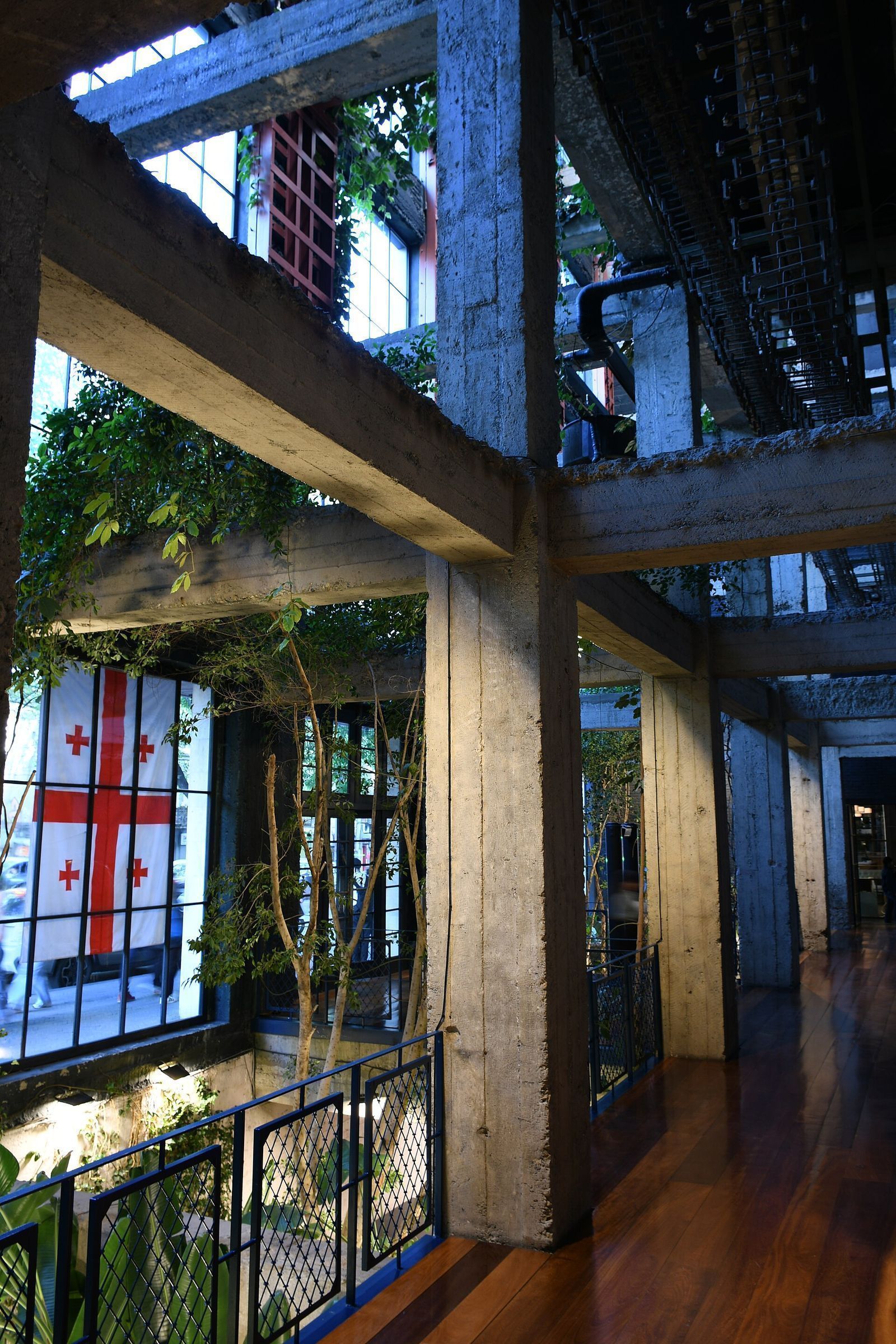
Stamba, in a 1930s publishing house in Vera, is one of the city's best converted factories, and its cafe, courtyard and bars are open to anyone.
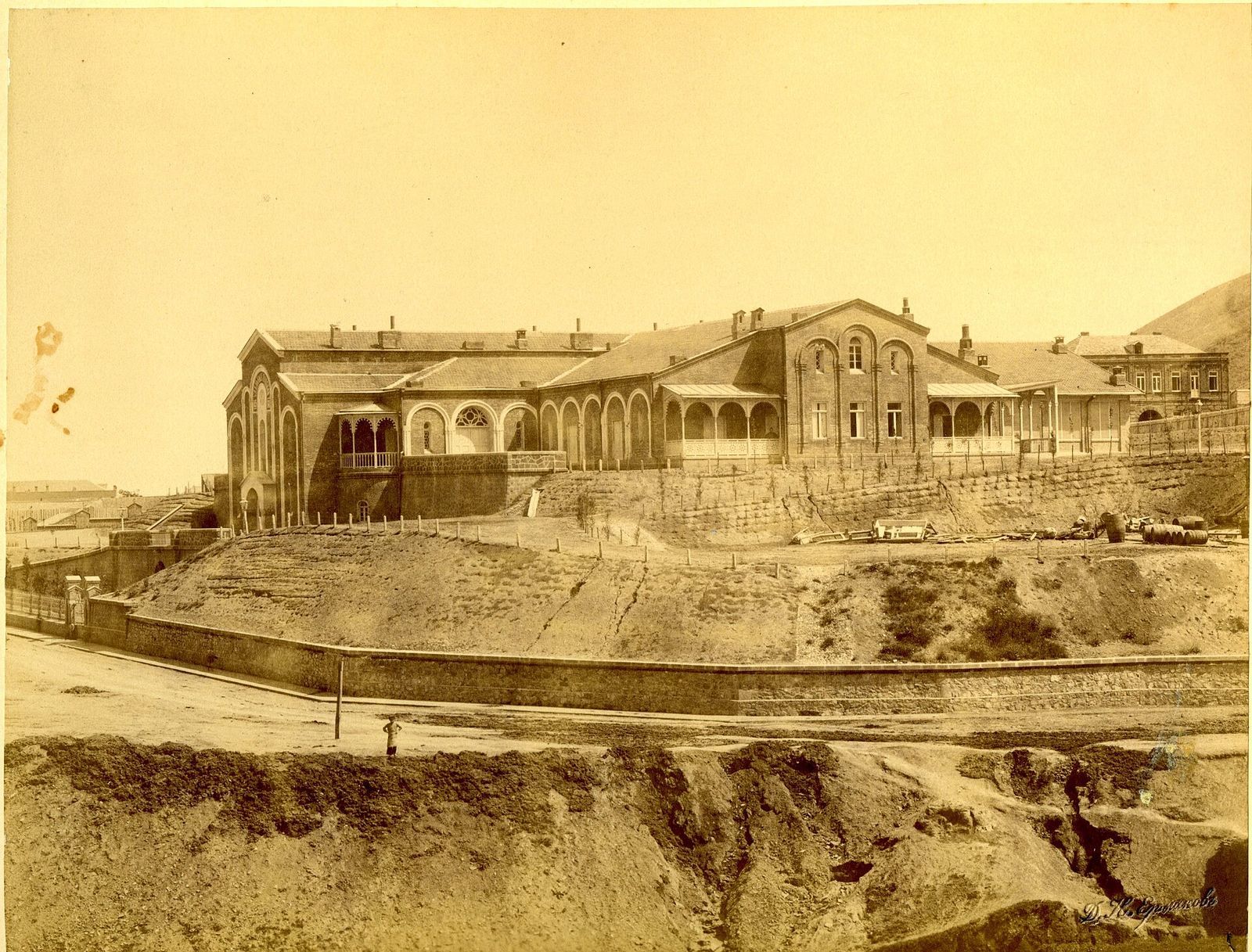
In the same neighborhood, Wine Factory N1 is an 1890s winery on Vasil Petriashvili Street that reopened in 2017 as a courtyard of bars and restaurants. Both are free to walk into, and I'd see Stamba in the morning and the winery courtyard in the evening.
Turtle Lake, the Open Air Museum and the Chronicles of Georgia
Three of my favorite half days sit outside the center.
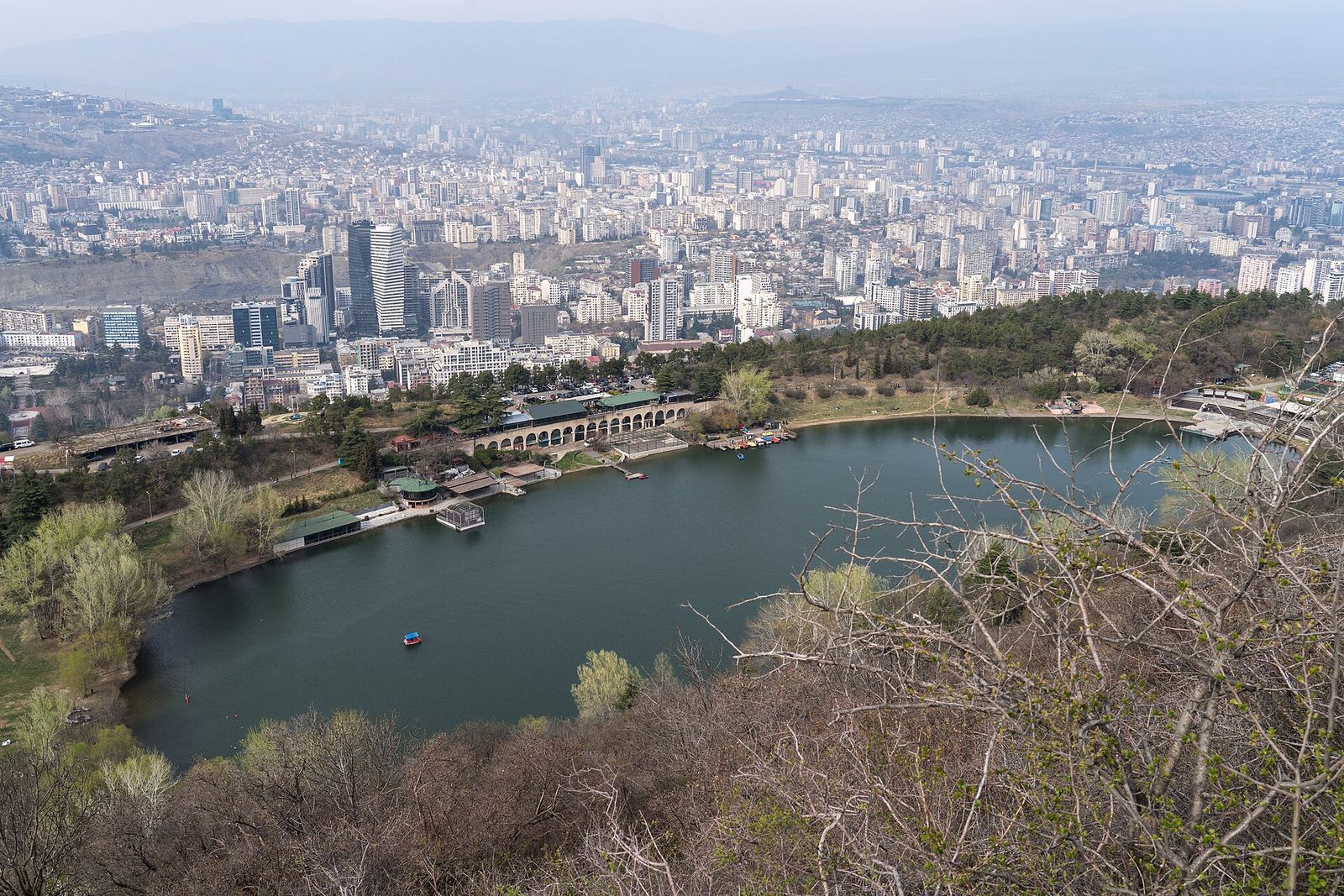
The 1 GEL ropeway from Vake Park lifts you to Turtle Lake, a small lake in the woods with a 20 to 30 minute shore path and swimming from June to September.
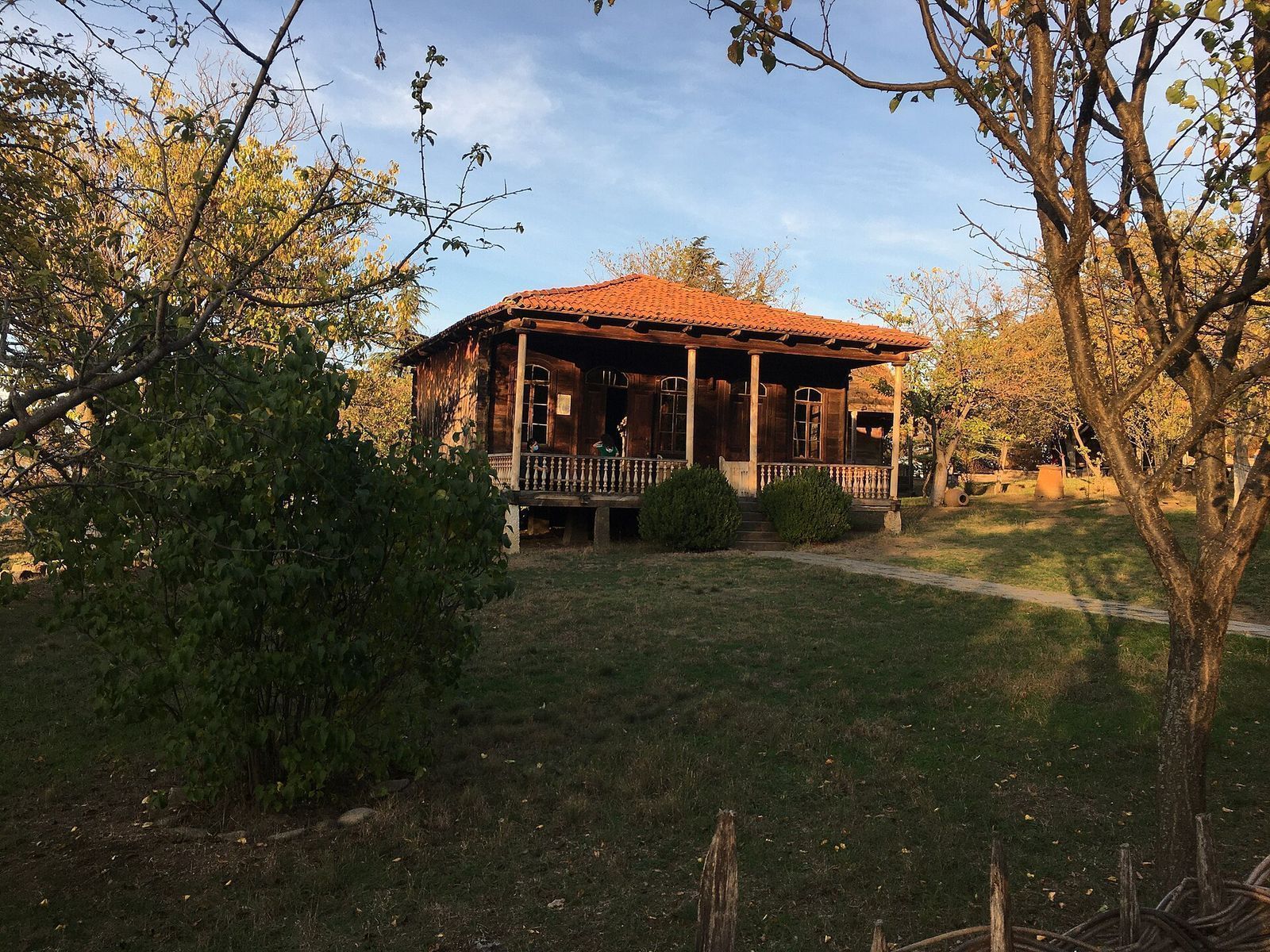
From the lake it's about 20 minutes downhill on foot to the Open Air Museum of Ethnography, where about 70 village houses, towers and wine cellars from across Georgia stand on a wooded hillside. Tickets are 25 GEL, Tuesday to Sunday, and I'd give it 2 to 3 hours on a dry day.
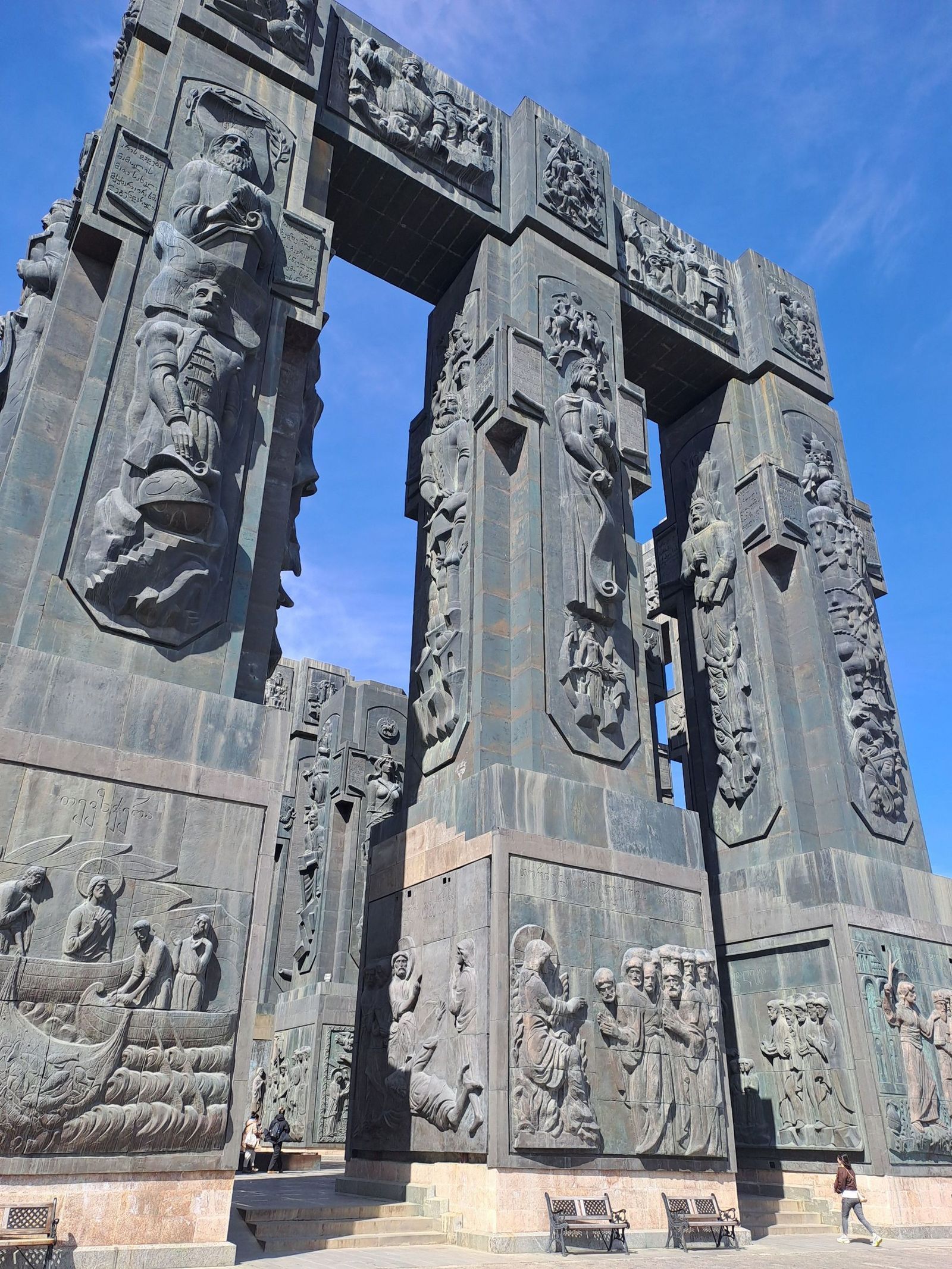
The Chronicles of Georgia is the strangest sight in the city: 16 pillars, 30 to 35 m tall, carved with Georgian kings and queens and scenes from the life of Christ, begun by Zurab Tsereteli in 1985 and never finished. It's free at any hour, about 10 to 16 GEL each way by Bolt.
Food and wine in Tbilisi
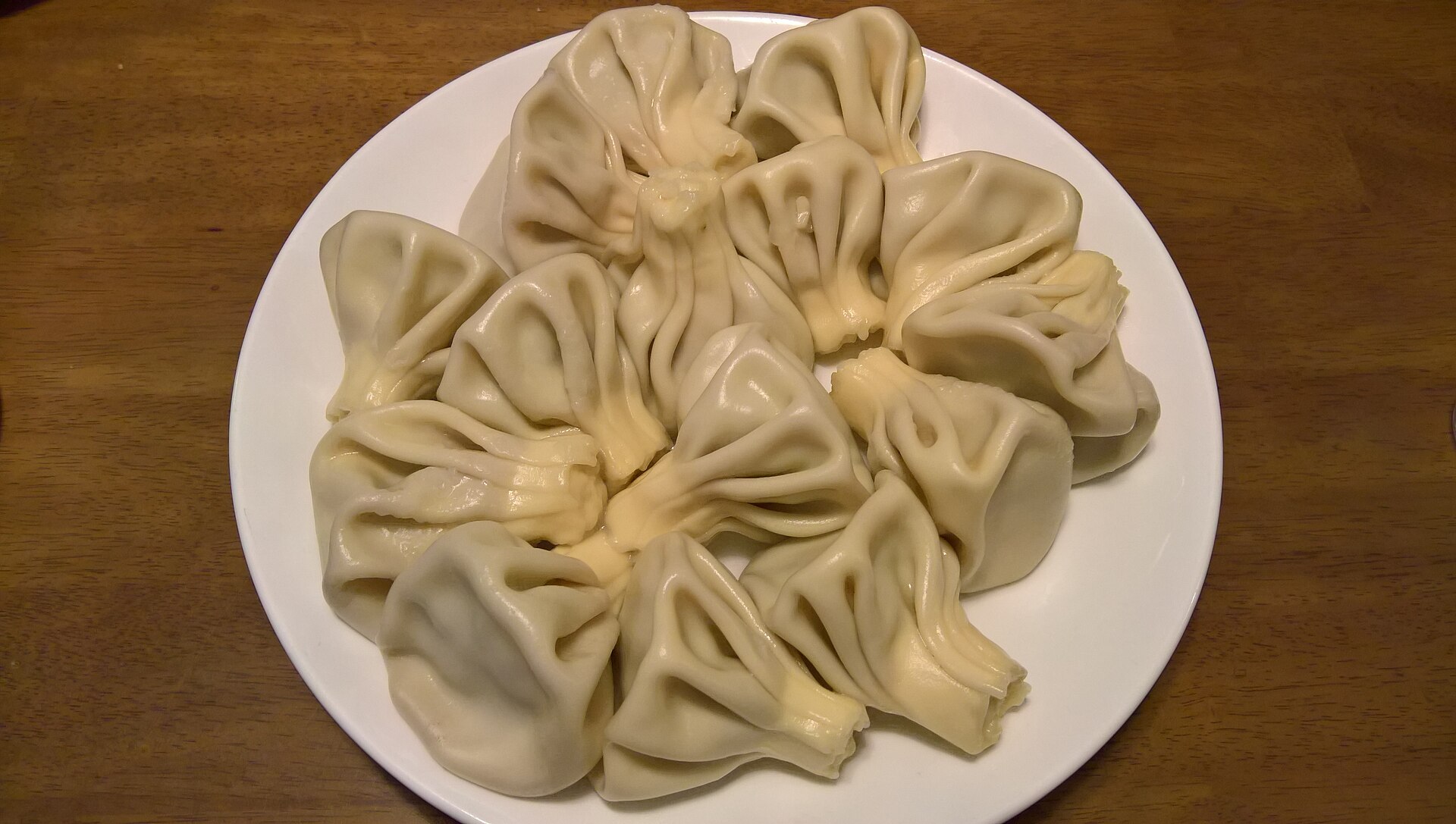
Start with the Georgian dishes everyone talks about: khachapuri, pkhali, badrijani and khinkali at about 2.40 to 3 GEL a piece, eaten by hand with the broth first. Dinner for two at a mid-range restaurant runs about 60 to 80 GEL.
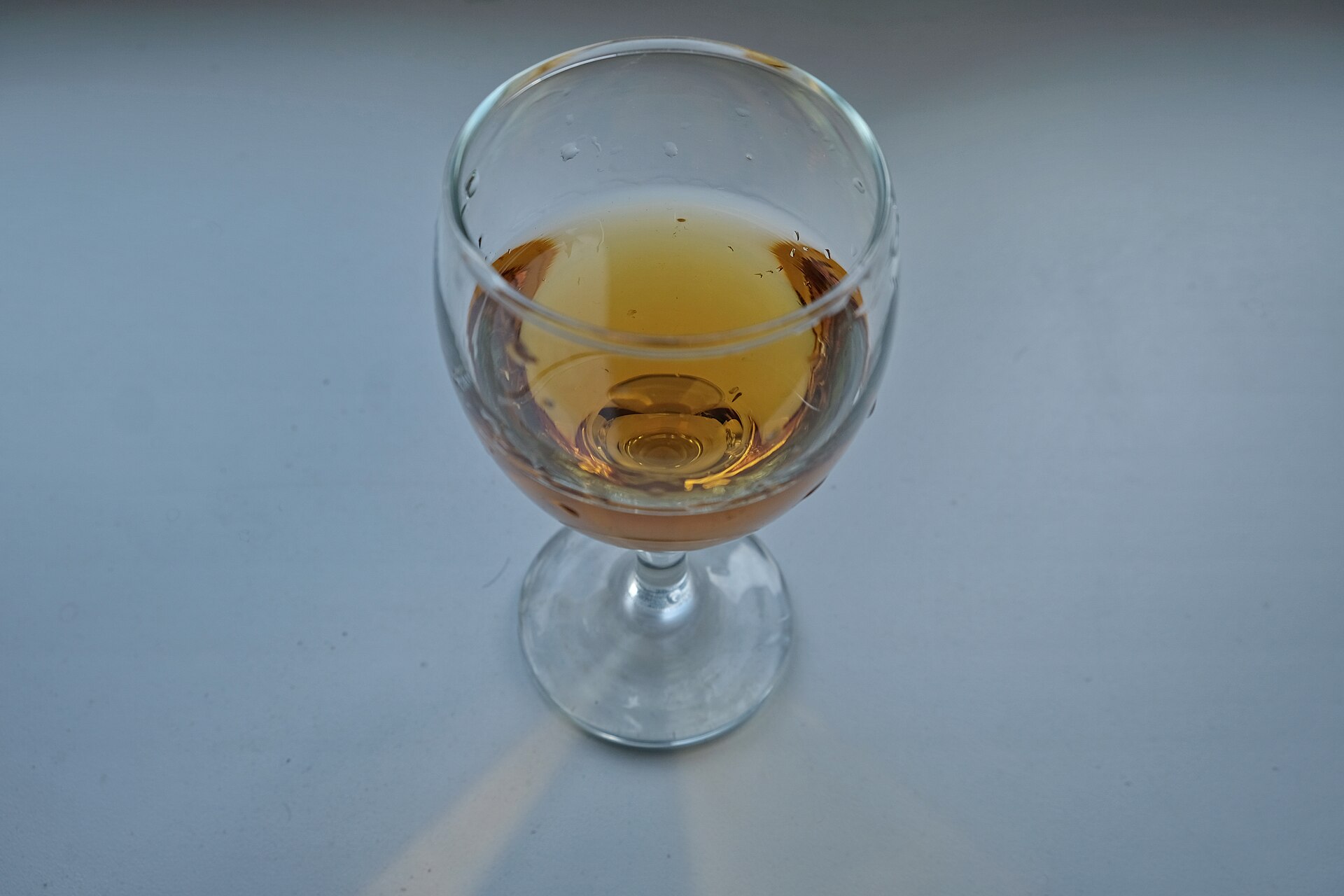
For wine, a booked wine tasting in Tbilisi pours four wines for 35 to 45 GEL. Ask for an amber qvevri wine, a dry Saperavi and a semi-sweet red, and you've covered Georgia's three big styles in an hour.
Tours, spas, pools and Tbilisi with kids
The tours worth booking are the ones you can't copy alone: a Soviet architecture walk, a food tour at about 160 GEL or a Kazbegi day tour.
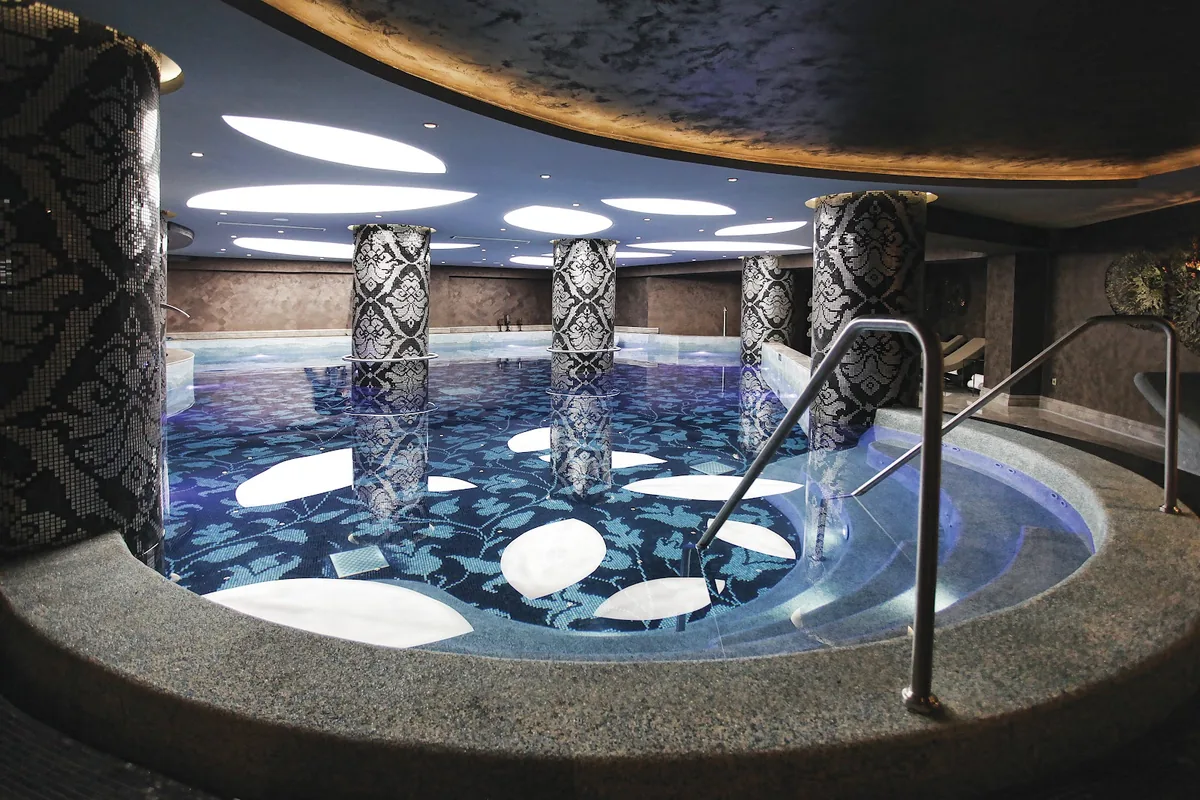
For a slow afternoon, Tbilisi has day spas and massage beyond the bathhouses, and my pick is Sam Raan in Avlabari, where the massage includes the pool and saunas.
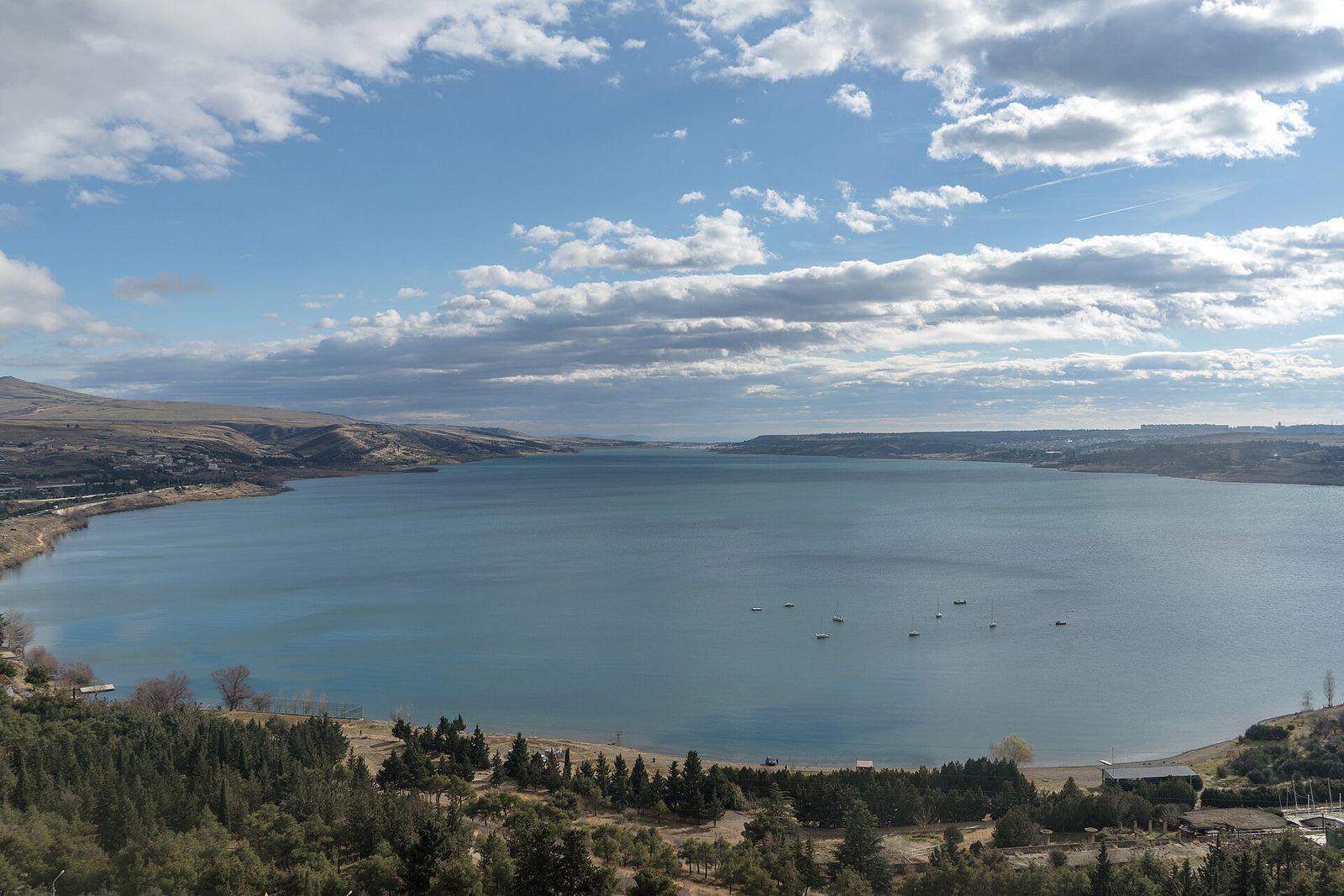
In summer, when the city passes 35°C, locals cool off at the pools and lakes, and the Tbilisi Sea beaches are free. Families get the Mtatsminda rides, free playgrounds in Vake and Mziuri parks and the 1 GEL Turtle Lake ropeway, which keeps Tbilisi with children cheap.
Day trips from Tbilisi
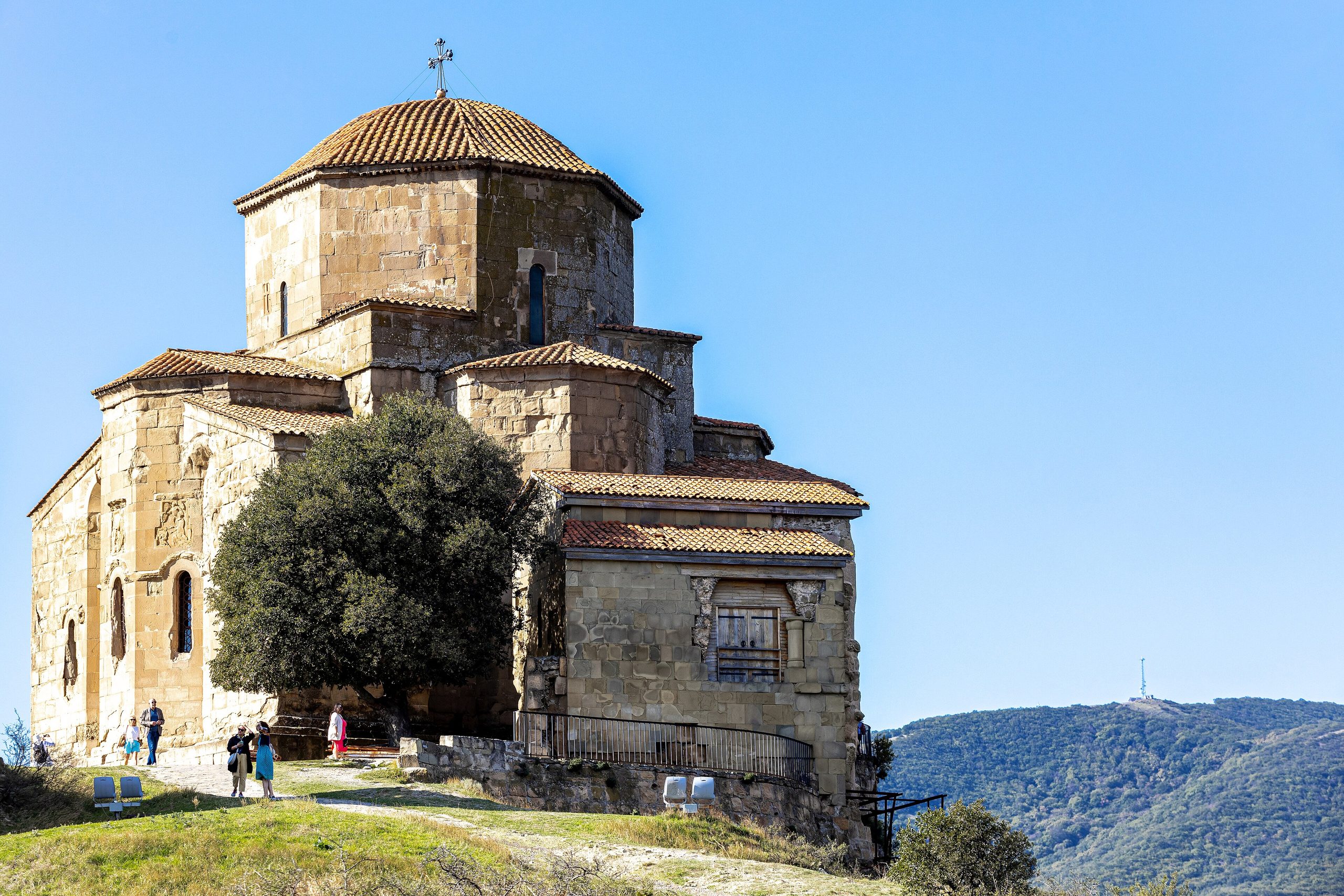
Mtskheta, about 25 km north, is the easy day out: a 2 GEL van from Didube metro, free churches at Jvari and Svetitskhoveli, and back in Tbilisi by 14:00.
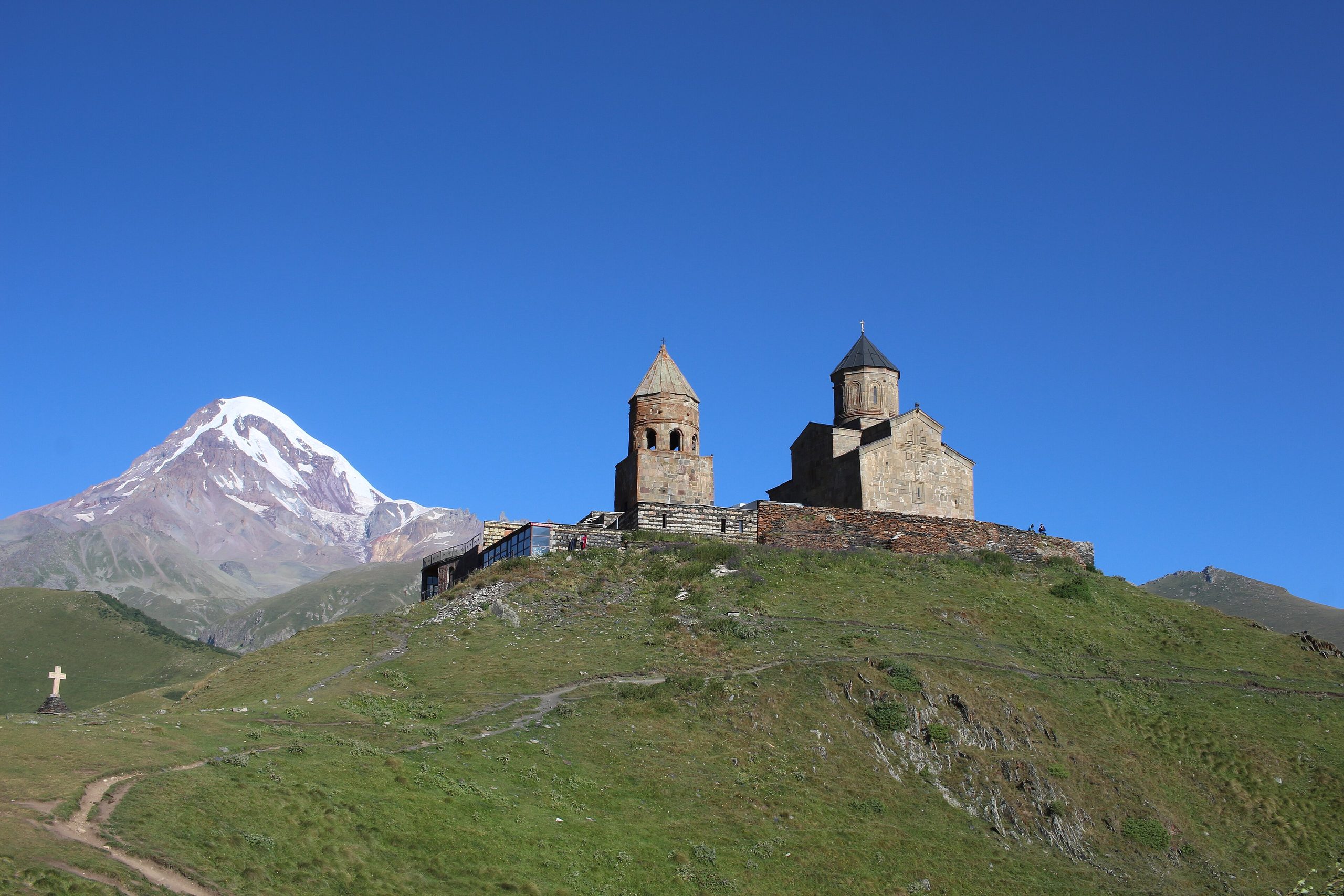
Kazbegi is the big one, 157 km away, with Gergeti Trinity Church under Mount Kazbek: a 10 to 12 hour day at 20 GEL by van or 150 to 250 GEL with a driver. The other day trips from Tbilisi run from Sighnaghi in wine country to the David Gareja cave monastery.
What I'd skip in Tbilisi
Here is what I'd skip on a first trip, and what I'd do with the time instead.
| Skip | Do this instead |
|---|---|
| Hoping to climb Narikala's towers | Walk the open ridge and terraces for free |
| The TV tower, closed to visitors | The Mtatsminda terraces and Ferris wheel |
| Shardeni Street drinks at 9 to 14 GEL a beer | Walk it after dark, drink a block away |
| A paid tour to Mtskheta | The 2 GEL van and a 15 GEL taxi up to Jvari |
| Museums on a Monday | The baths, the ridge and Stalin's printing house |
| The Pirosmani House Museum, closed for renovation | His paintings at the National Gallery |
Key takeaways
- The Old Town, the Narikala ridge at sunset and the Bridge of Peace after dark make the best single day in Tbilisi, for the price of a 2.50 GEL cable car ride.
- A private sulfur bath room at 120 to 300 GEL an hour is the one splurge I'd never skip.
- Museums close on Mondays and Stalin's printing house closes at weekends, so plan those days around them.
- Plan 3 days for the city and a fourth for Mtskheta or Kazbegi.
Frequently asked questions
What is the number one thing to do in Tbilisi?
Walking the Old Town and riding the cable car to the Narikala ridge for sunset. It costs 2.50 GEL, takes about 2 hours with the walk down, and ends at the sulfur baths if you want a soak.
What are the main tourist attractions in Tbilisi?
The Tbilisi attractions I'd never skip are the Old Town with the Abanotubani sulfur baths, Narikala Fortress and the Mother of Georgia, Sameba Cathedral, the Bridge of Peace and the Georgian National Museum. All of them are free except the baths and the 40 GEL museum.
How many days do you need in Tbilisi?
Three full days is right for a first visit, and a Tbilisi itinerary of that length goes Old Town and ridge, then Sololaki, Rustaveli and the left bank, then a bath and Sameba at sunset. Add days 4 and 5 for Mtskheta and Kazbegi.
Is Narikala Fortress open?
The ridge, the lower walls and the viewing terraces are open around the clock and free. The upper walls and towers have been fenced off for restoration since late 2023.
What can you do in Tbilisi on a Monday?
Stay outdoors: the Old Town, the Narikala ridge, the sulfur baths, Sameba, the Dry Bridge market and Stalin's Underground Printing House are all open on Mondays. Almost every museum is closed.
Is Tbilisi expensive for tourists?
No. Tbilisi's metro and buses cost 1 GEL a ride, the Narikala cable car 2.50 GEL and khinkali about 2.40 to 3 GEL a piece; the big costs are a private bath room and the 40 GEL National Museum.
When is the best time to visit Tbilisi?
Late April to June and September to October, when days run about 18 to 28°C. The best time to visit Tbilisi for a first trip, in my view, is the first half of October, while July and August average about 33°C in the afternoon.
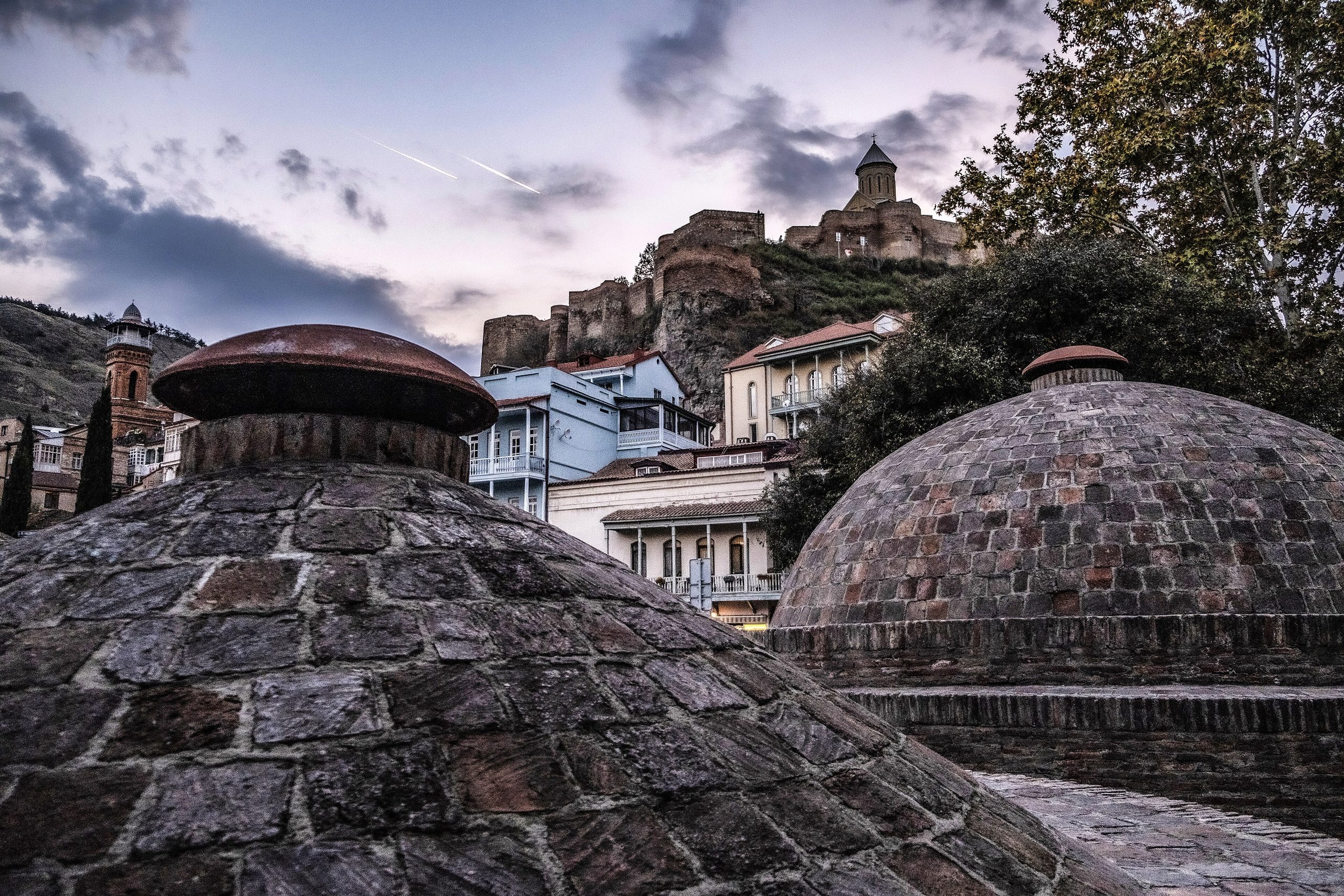
The Sulfur Baths of Abanotubani: Prices, Bathhouses and Booking
Tbilisi is known for its sulfur baths. Here is what to know about the bathhouses, room prices and booking.
Read the guideNarikala Fortress, Tbilisi: Getting Up, What Is Open and When to Go
Narikala is the fortress above Old Tbilisi. Here is what is open in 2026, how to get up and when to go for the view.
Read the guide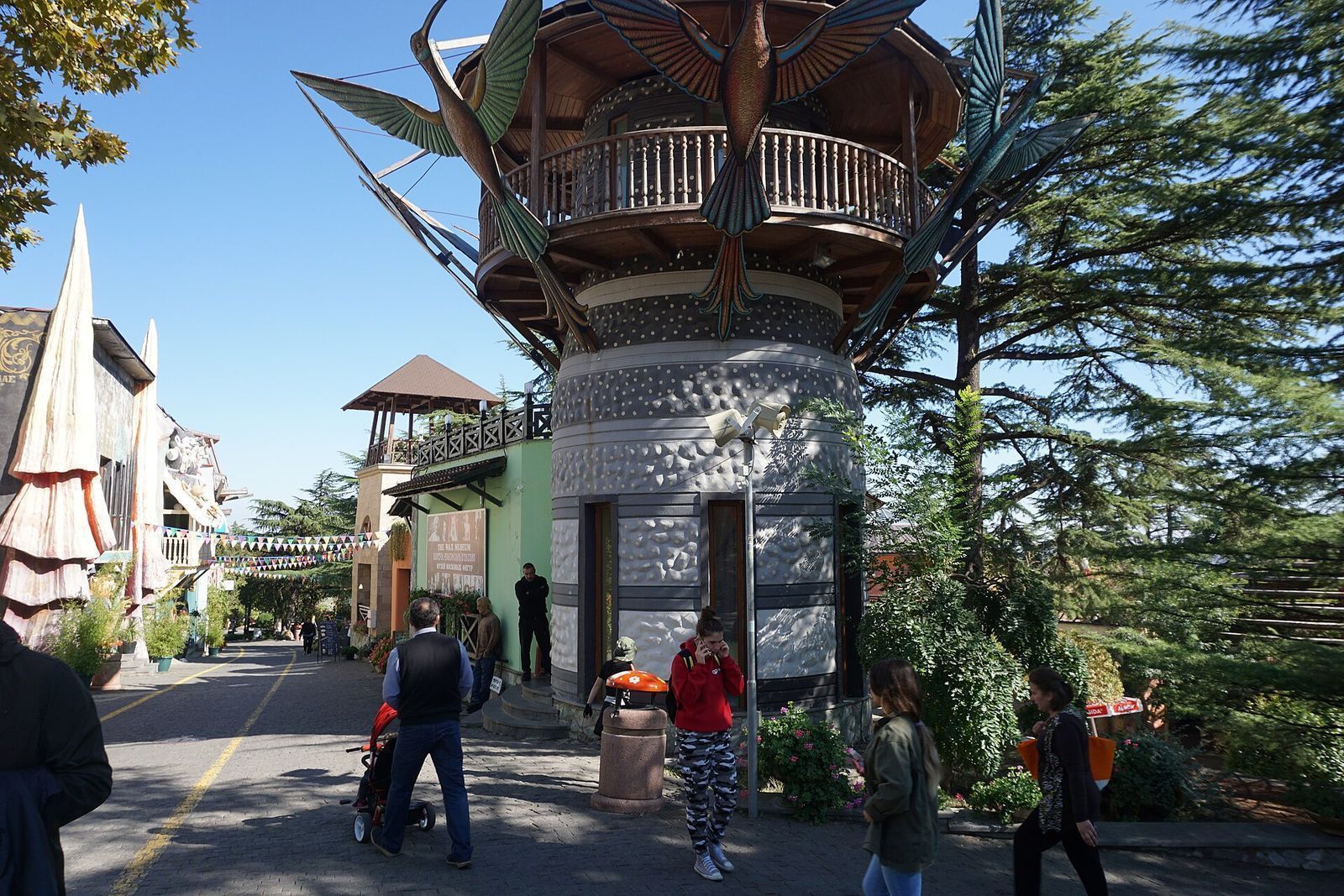
Mtatsminda Park and the Tbilisi Funicular: Getting Up, Prices and the View
Mtatsminda is the mountain with the best sunset view in Tbilisi. How to get up, what it costs and what to do at the top.
Read the guide