The Best Markets in Tbilisi: Bazaars, Flea Markets and Food Halls
Tbilisi is known for its markets: a sprawling food bazaar beside the railway station, a flea market on a bridge with no river under it, and souvenir stalls in brick tunnels below the Old Town. Here are the markets I'd actually send you to, what each one sells and costs, which day to go, and how to shop them with cash in your pocket.
The best markets in Tbilisi at a glance
Tbilisi's markets come in four kinds: food bazaars, flea markets, souvenir and design markets, and the everyday clothes and wholesale markets where locals do their real shopping. These are the 14 I'd choose from, with the hours they keep.
| Market | Type | Area | Open | Best for |
|---|---|---|---|---|
| Dezerter Bazaar | Food market | Station Square | Daily, about 07:00 to 17:00 | Cheese, spices, churchkhela |
| Samgori (Navtlughi) Bazaar | Food market | Samgori | Daily, about 08:00 to 17:00 | Cheaper produce, nuts, fish |
| Bazari Orbeliani | Food hall | Old Town | Daily, into the evening | A sit-down market lunch |
| Sunday farmers market | Farmers market | Sololaki | Sundays, 10:00 to 14:00 | Organic produce, jams, goat cheese |
| Dry Bridge Market | Flea market | Near Rustaveli Avenue | Daily, about 10:00 to 17:00 | Soviet cameras, silver, paintings |
| Barakholka | Flea market | Samgori | Daily, about 10:00 to 17:00 | Soviet odds and ends, cheap finds |
| Dedaena Park vintage markets | Vintage market | Dedaena Park | Sundays and some weekends | Vintage clothes, posters, books |
| Meidan Bazaar | Souvenir arcade | Old Town | Shop hours | Wine, spices and crafts on a rainy day |
| Flash Market | Design market | Old Town | Weekends, 12:00 to 21:00 | Handmade jewelry and leather |
| Fabrika pop-ups | Design market | Marjanishvili | Pop-ups, 12:00 to 21:00 | Vintage, vinyl, local design |
| Gold Market | Jewelry market | Station Square | Daily, about 10:00 to 18:00 | Gold and minankari enamel |
| Station Square market | Clothes market | Station Square | Daily, about 10:00 to 18:00 | A cheap extra bag |
| Lilo Market | Wholesale market | Past the airport | Daily, about 08:00 to 17:00 | Textiles, kitchenware, bargains |
| Christmas markets | Seasonal | Central Tbilisi | Mid-December to early January | Mulled Saperavi and gifts |
If you only have time for two, make it Dezerter in the morning and the Dry Bridge after lunch. They're a short metro ride apart, and together they show you both sides of the city's market life: what Tbilisi eats and what it once owned.
Food markets and bazaars
Dezerter Bazaar

Dezerter Bazaar is the big one. Covered halls of about 2,000 square meters, plus several blocks of street stalls between Station Square and the Dinamo stadium, are where Tbilisi buys its cheese, spices, fruit and meat. It's 3 to 5 minutes on foot from Station Square, the one interchange on the Tbilisi metro, and it costs nothing to wander.
I'd go between 08:00 and 11:00 on a weekday, when every stall is stocked and the sellers have time to let you taste. Start in the covered hall for sulguni and the other cheeses, walk the spice and churchkhela rows next, and leave the meat and fish sections for last. Prices are the lowest you'll find near the center: khmeli suneli runs 3 to 5 GEL a bag, Svan salt 5 to 8 GEL, sulguni 12 to 18 GEL a kilo and churchkhela 3 to 8 GEL a string.
The name means the Deserters' Market, after the soldiers said to have sold their rifles and uniforms here in the early 1920s. Saturday is the busiest day, when half the city does its weekly shop and the covered hall gets shoulder to shoulder. The city has talked since early 2024 about replacing the main building with a shopping center, but as of October 2026 the market is trading as normal.
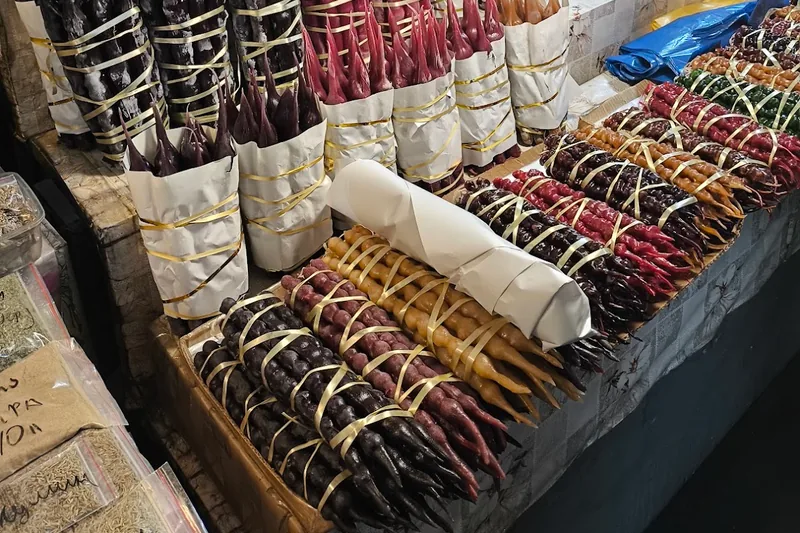
Allow 45 to 90 minutes for a first lap of Dezerter Bazaar, and come hungry: a lobiani from a bakery window costs 2 to 3 GEL and a canteen lunch 10 to 15 GEL. The churchkhela here, walnuts threaded on string and dipped in thickened grape juice, is a fraction of the Old Town price and the best of all Georgian sweets to carry home.
Samgori (Navtlughi) Bazaar
Samgori is where I go when Dezerter starts to feel like a sight. It's the market right outside Samgori metro in the east of the city, on Ketevan Dedofali Avenue, with a farmers' market at the front, signed as Navtlughi, and a much rougher flea market behind it. It's open daily from about 08:00 to 17:00, and the produce comes in mostly from eastern Georgia: Kakheti fruit at peak ripeness, walnuts and dried fruit by the sack, pickles, cheese, fresh fish and meat.
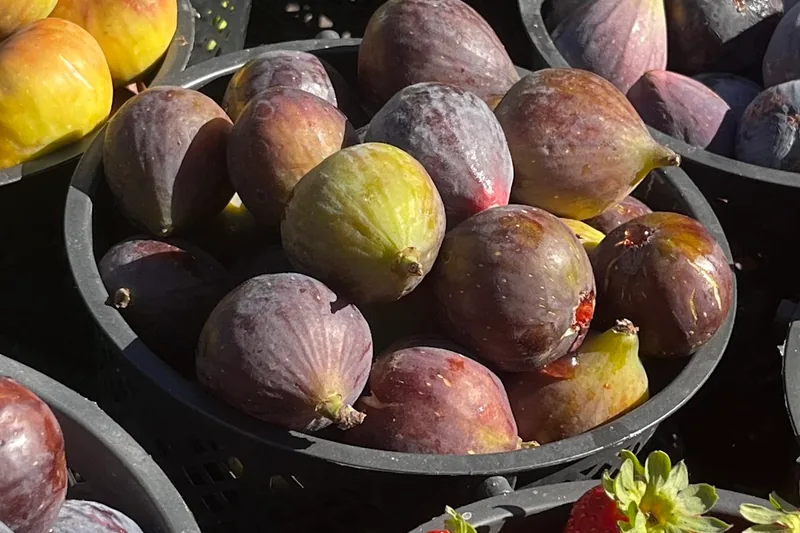
It's less polished than Dezerter and usually a little cheaper, with almost no tourists. Expect trucks, crates and people buying for a whole family rather than a tidy hall. Buy a bottle of the farmers' own sunflower oil if you have a kitchen.
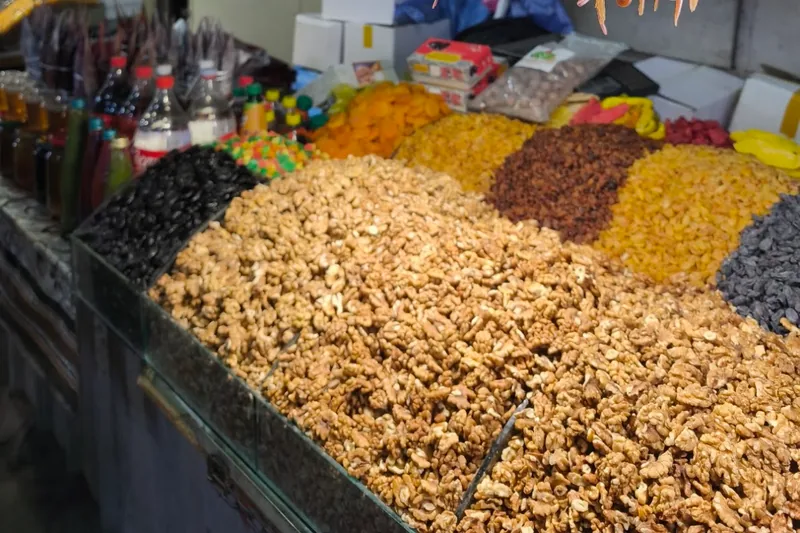
The minibus yard for Kakheti sits beside the metro too. If you're catching a marshrutka to Sighnaghi or Telavi, come an hour early and buy your breakfast and road snacks here: a bag of walnuts, some seasonal fruit and a string of churchkhela.
Bazari Orbeliani
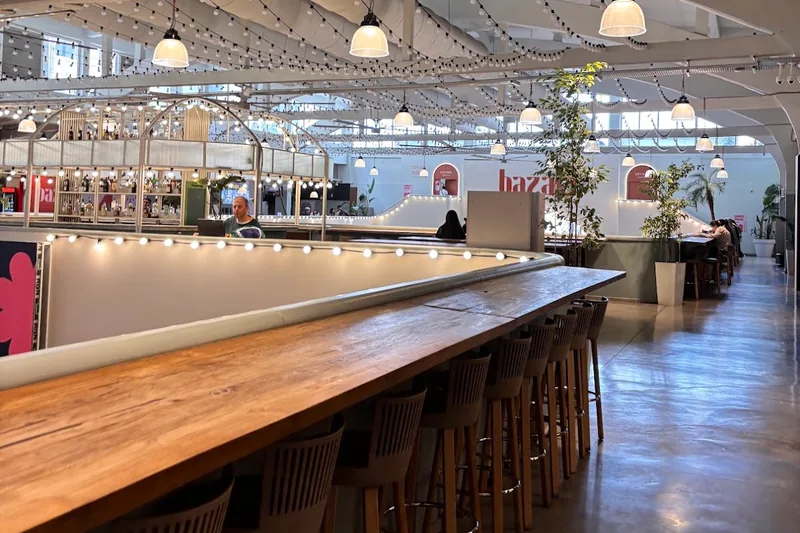
Bazari Orbeliani is the opposite of Dezerter: a renovated market hall at 3a Vekua Street in the Old Town, with tables, cards accepted and nobody calling out to you. It's a food hall more than a place to shop. There's a Coffee LAB branch open 10:00 to 23:00, Shoti's sandwiches in bread from the tone oven on the second floor, and counters for khinkali and a proper sit-down lunch. Its toilets cost 1 GEL, paid by card.
It also hosts two markets of its own. The Female Entrepreneurs Market brings about 30 women-led Georgian brands, food and handmade goods for an occasional Friday-to-Sunday run, usually 12:00 to 21:00, and a handful of bakers sell paska, the Easter bread, here for a few days around Orthodox Easter. I use it for a rainy afternoon or a group that can't agree on what to eat.

The Sunday farmers market in Sololaki
Every Sunday from 10:00 to 14:00, small producers set up at the old Ezo restaurant on Kikodze Street in Sololaki. Expect organic vegetables, jams, kombucha, Georgian teas, goat cheese and preserves, with vegan versions next to the traditional condensed milk. It's tiny next to Dezerter and costs more, but you're buying from the people who made it. Arrive at 10:00, because the best things sell out within about an hour.
Flea markets and antiques
Dry Bridge Market
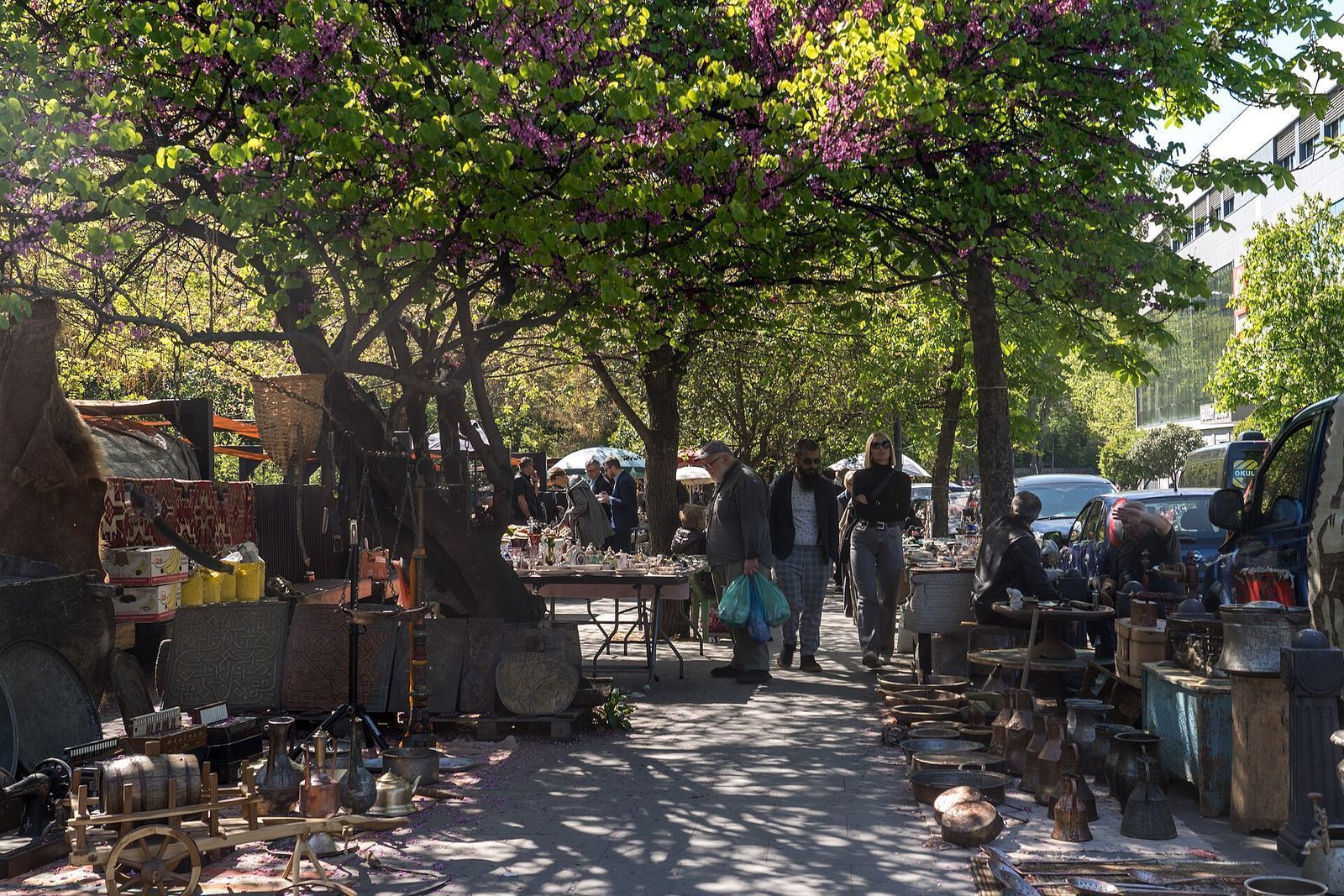
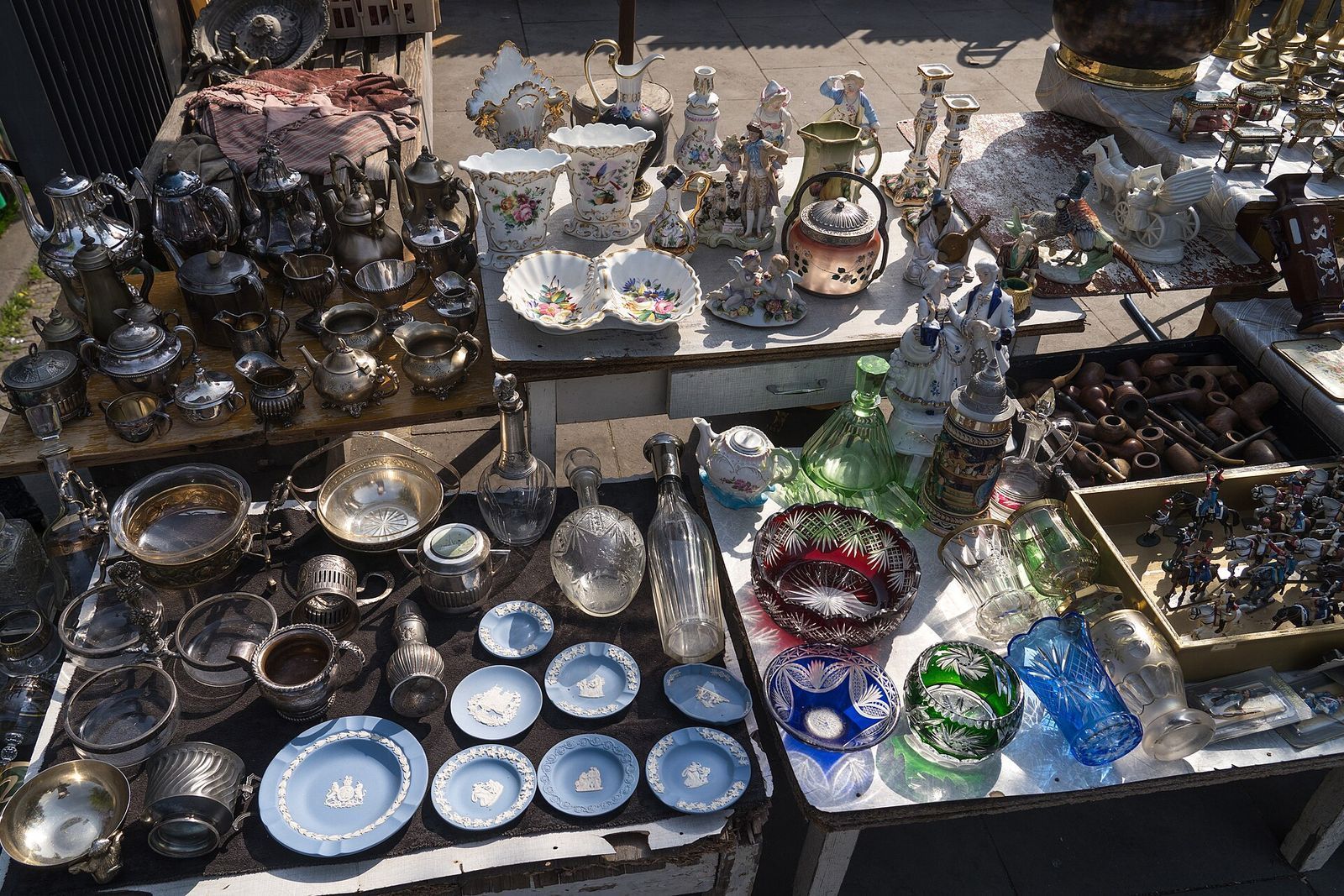
The Dry Bridge Market is the one everyone has heard of, and it earns it. Every day from about 10:00 to 17:00, sellers lay out Soviet film cameras, war medals, old silver, porcelain, carpets, vinyl, coins and paintings on the Dry Bridge and in 9 March Park and Dedaena Park on either side of it. It's about 850 meters, or a 12-minute walk, from Liberty Square metro.
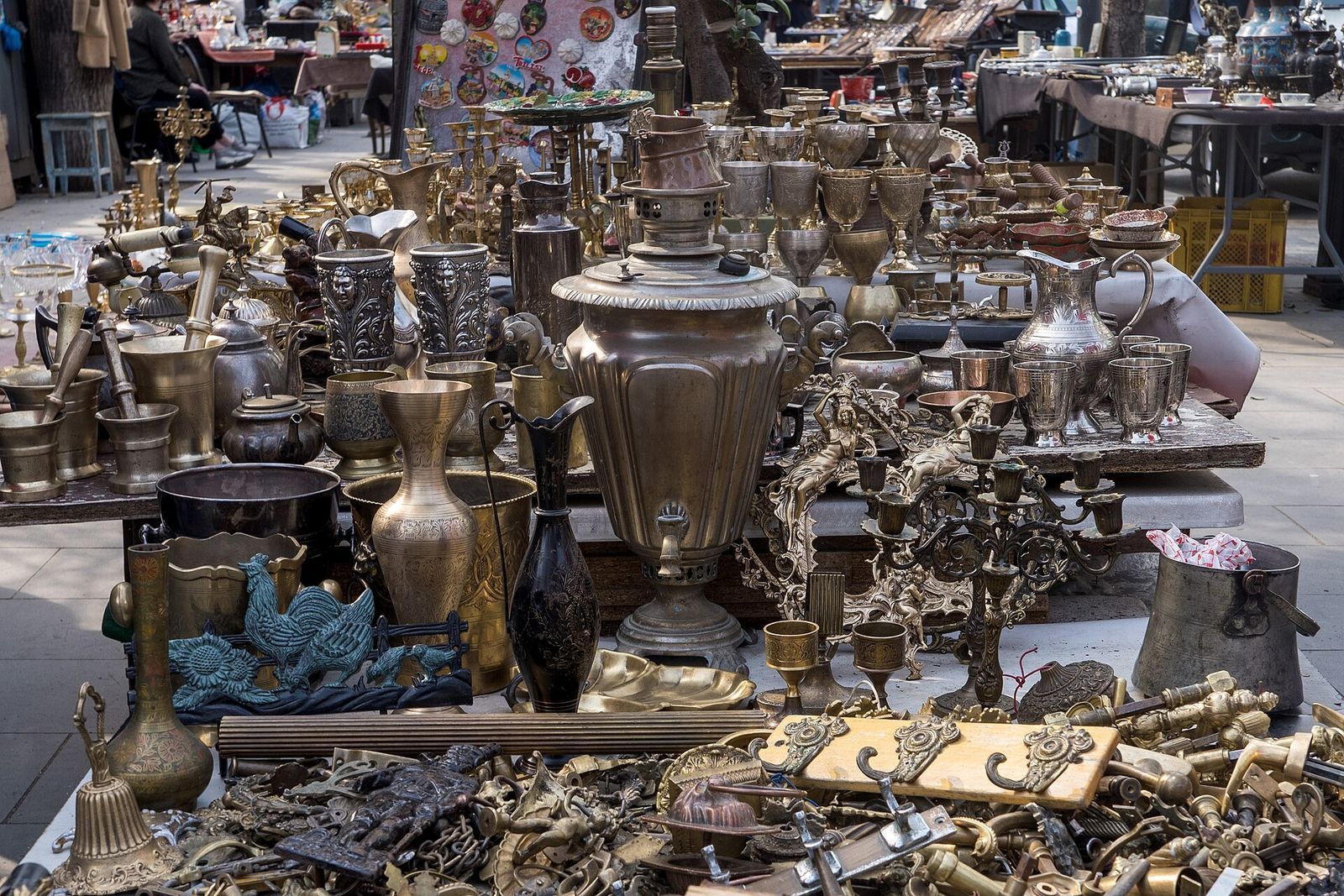
Weekends from late morning are when every table is out. Paintings start at about 20 to 30 GEL for a simple canvas, and everything else is a conversation: the first price carries a tourist premium, and the same Zenit camera often turns up on three tables at three prices, so do a full lap before you buy. At the Atoneli Street end, a few small antique shops sell pricier, better-sorted pieces.
The Dry Bridge flea market closes only on 1 January, Orthodox Easter Sunday and days of heavy rain or snow, when most vendors stay home. Give it 1 to 2 hours, more if you collect anything.
Barakholka
Barakholka, the old Soviet-era name for a flea market, is the rough-edged one behind Samgori Bazaar. It's open daily from about 10:00 to 17:00 and best on weekends from 11:00. It sells what the Dry Bridge doesn't bother with: secondhand washing machines, stacks of old pots, tools, electronics, furniture, clothes and shoes, with Soviet badges and ceramics mixed in among them.
The easy bargains have mostly been found by now. Dig through the tables and haggle, though, and you'll still pay a fraction of Dry Bridge prices for the same enamel mugs and old postcards. Combine it with the farmers' market at the front for a full morning in Samgori.
Dedaena Park vintage markets
Dedaena Park, the green strip along the river beside the Dry Bridge, hosts weekend markets of its own. A Sunday antiques and vintage market brings out vintage clothing, accessories, artwork and handmade crafts. Every two weeks or so, a weekend market of secondhand clothes, jewelry, posters, stickers and books sets up with live music. The lineup changes with each edition, so check the organizers' Instagram before you plan around it.
Souvenir and craft markets
Meidan Bazaar
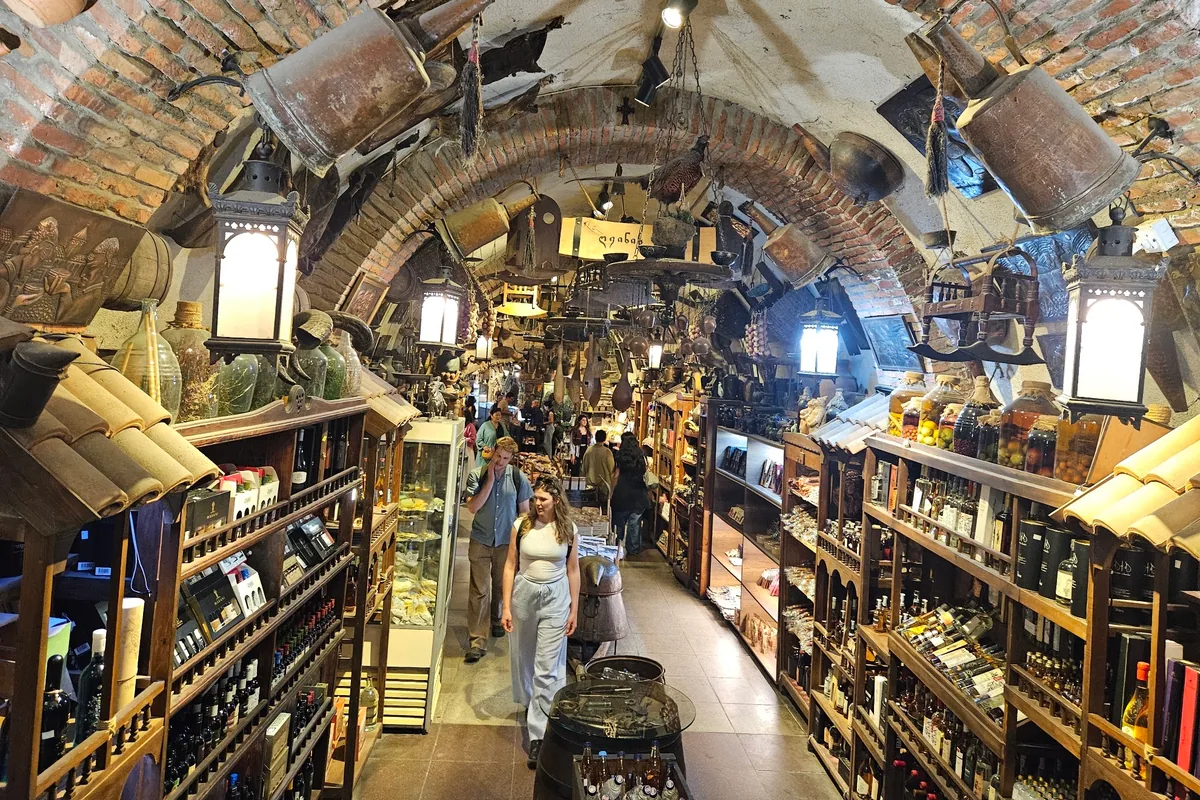
Meidan Bazaar runs through brick-vaulted tunnels under Meidan Square, at the foot of Old Tbilisi, and it's the most convenient market on this list. Crafts, spices, jams, wine, knitwear, carpets and Georgian sweets all sit under one arched roof a few minutes from the sulfur baths. Because it's underground, it's also the one market rain can't touch.
The prices are Old Town prices, well above Dezerter for the same spices and churchkhela. I use Meidan for crafts, a last-minute bottle and a browse out of the summer heat, and I buy food at the big markets.
Flash Market
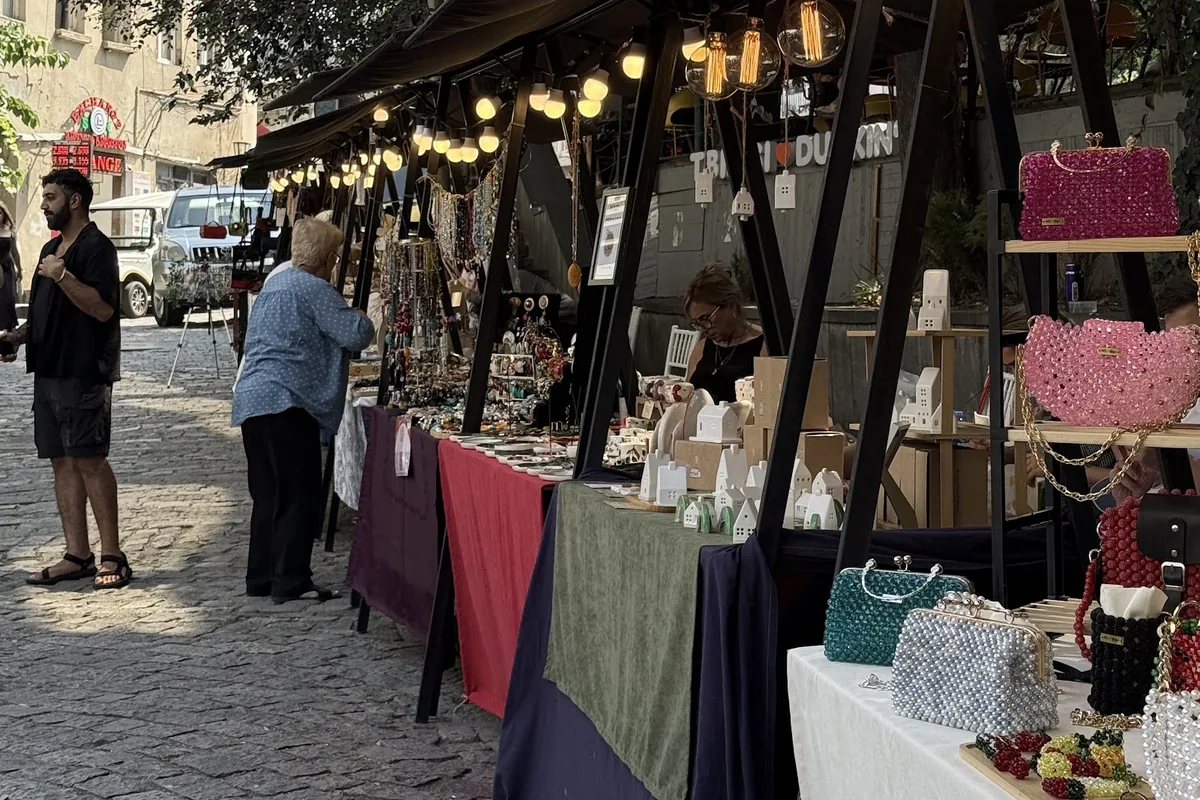
On weekends from 12:00 to 21:00, Flash Market sets up on Sioni Street in the Old Town, near Chardin Street. Small brands sell handmade jewelry, leather goods, clothes, homeware and Georgian food products. It's aimed at visitors more than locals, and it suits an evening stroll between the baths and dinner rather than a trip of its own.
Fabrika pop-up markets
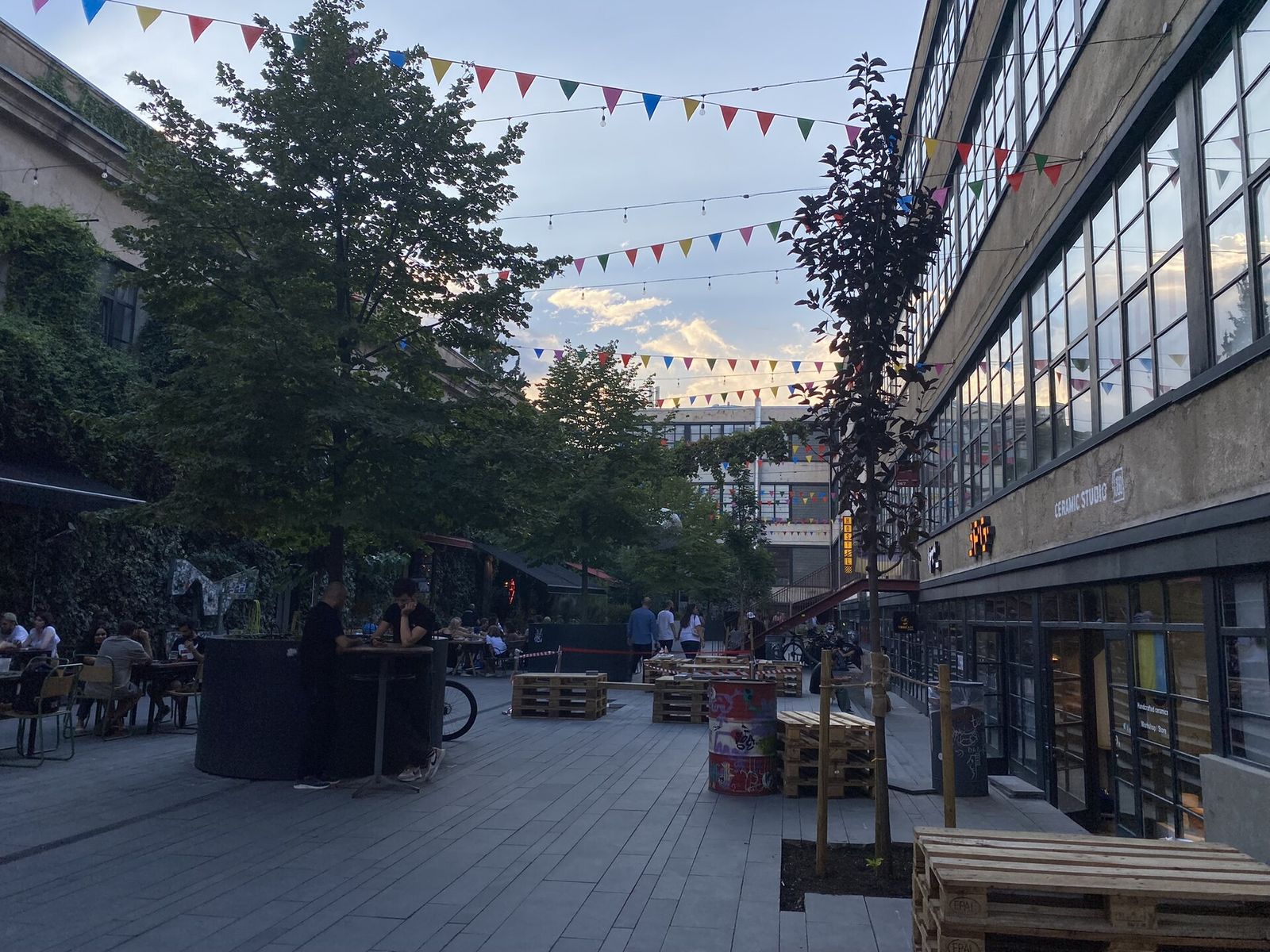
Fabrika, the Soviet sewing factory turned hostel, bars and courtyard cafes, runs pop-up markets in its courtyard through the year, usually from 12:00 to 21:00. Expect vintage clothes, vinyl, books, local design and food stalls, plus a Christmas fair every December. Events are announced a few weeks ahead on Fabrika's social pages, so check before you cross the river for one.
My rule for Georgian souvenirs is simple: food from the bazaars, vintage from the flea markets, and crafts from markets like Flash and Fabrika where you meet the maker. For felt, ceramics and enamel with a name behind them, the craft shops of Tbilisi beat the souvenir stalls on quality.
Clothes, gold and wholesale markets
The Gold Market at Station Square
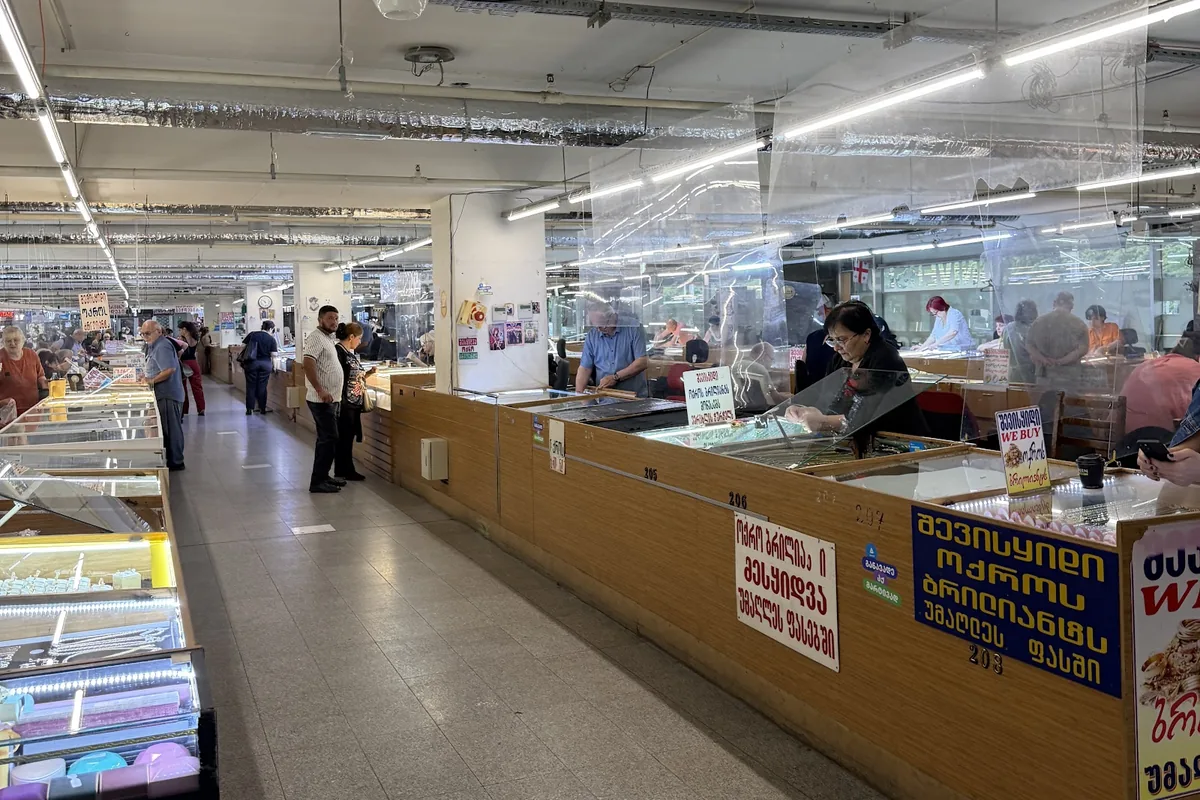
On the ground floor of the shopping center at the Central Railway Station, the Gold Market is a hall of small jewelers selling gold rings, chains and bracelets, plus minankari, the Georgian cloisonne enamel. It's open daily from about 10:00 to 18:00, and many stalls do repairs and custom pieces. It's a few minutes from Dezerter, so it's an easy add-on to a food market morning.
The Station Square clothes market
The streets around Station Square metro are also Tbilisi's everyday clothes market, the Vagzali market: cheap clothes, shoes, sportswear, backpacks, toys and suitcases, mostly from Turkey and China, daily from about 10:00 to 18:00. Nothing here is a souvenir. It's where I'd buy a cheap second bag when the bottles from the wine shops no longer fit in my luggage.
Lilo Market
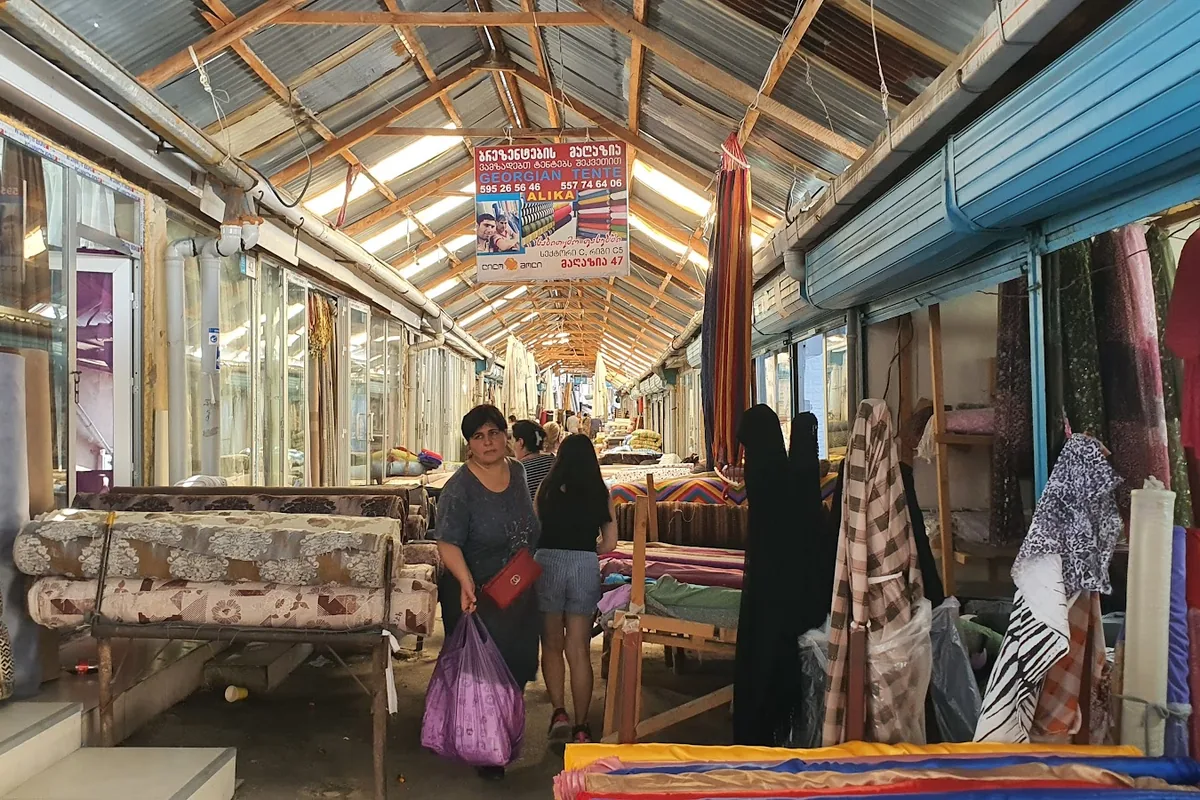
Lilo is the giant: a wholesale market on the Kakheti Highway just past the airport, and one of the largest in the Caucasus. It's open daily from about 08:00 to 17:00 and best on Mondays, Thursdays and weekends. Row after row sells clothes, shoes, textiles, curtains, kitchenware, electronics, tools and craft supplies, mostly from Turkey, China and the Middle East.
It's sprawling and confusing, and it's no place for souvenirs. Some maps list it as Lilo Mall, but it's nothing like the malls in Tbilisi such as East Point and Galleria. If you like markets as places rather than shops, an hour here shows you how half of Georgia stocks its homes. Bargaining is expected, and vendors will point you to the right row if you ask.
Seasonal markets in Tbilisi
Christmas markets
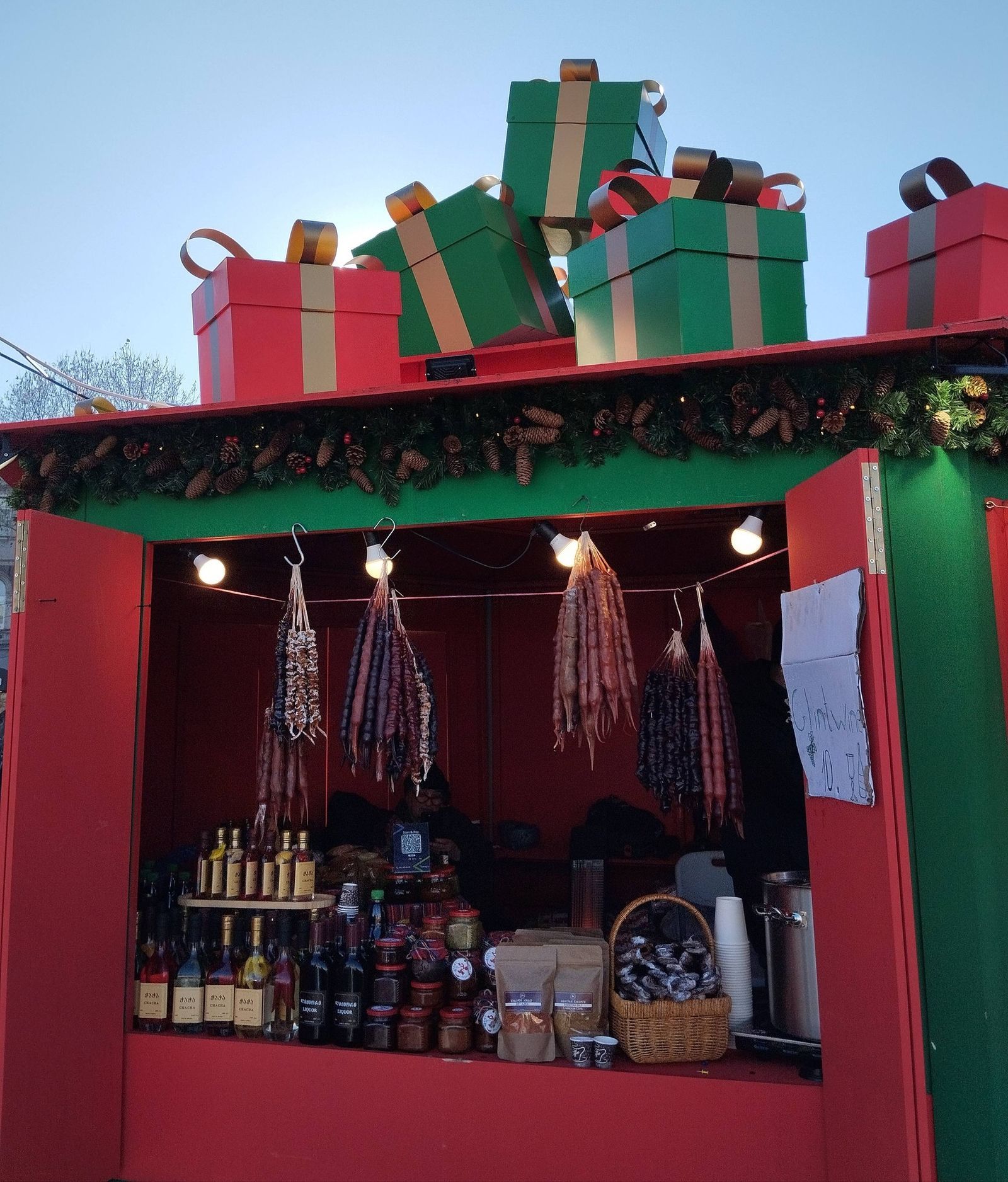
From mid-December to early January, Christmas markets fill central Tbilisi with wooden stalls, handmade gifts, decorations, snacks and hot mulled Saperavi. The locations change from year to year. Georgia follows the Orthodox calendar, so Christmas falls on 7 January, and the markets usually run until then and sometimes to 14 January, long after Europe's have packed up. The first week of January, between New Year and Orthodox Christmas, is the best time to catch them.
Easter markets
In the weeks before Orthodox Easter, small markets pop up across the neighborhoods selling dyed eggs, natural dye powders, madder root for the deep red color, trays of sprouted wheatgrass and church candles. They're part of the run-up to Easter in Georgia, when red eggs end up on every table, and they're a lovely small thing to stumble on in spring.
Agromarket
About three times a year, Agromarket takes over Dedaena Park from 12:00 to 19:00 with farmers and small producers: cheese, cured meats, honey, nuts, sauces, tea and wine, plus street food and music. If one lands during your trip, it's the easiest afternoon of tasting small Georgian producers you'll find.
Which market to visit for what
The right market depends on what you want to come home with. This is how I'd match them.
| If you want | Go to | Good to know |
|---|---|---|
| Cheese, spices and churchkhela to take home | Dezerter Bazaar | Svan salt 5 to 8 GEL, churchkhela 3 to 8 GEL a string |
| Soviet cameras, medals or a painting | Dry Bridge Market | Paintings from about 20 to 30 GEL; haggle |
| The most local market morning | Samgori Bazaar and Barakholka | Go on a weekend morning for both |
| Souvenirs on a rainy day | Meidan Bazaar | Underground, a few minutes from the baths |
| A market lunch where everyone can choose | Bazari Orbeliani | Cards accepted, Coffee LAB until 23:00 |
| Small-producer and organic food | Sunday farmers market, Sololaki | Sundays only, 10:00 to 14:00 |
| Gold or enamel jewelry | Gold Market, Station Square | Priced by weight; compare stalls |
| Handmade jewelry and design | Flash Market or Fabrika | Weekends and pop-ups, 12:00 to 21:00 |
| A cheap extra suitcase | Station Square clothes market | Daily, about 10:00 to 18:00 |
| A look at how Georgia shops wholesale | Lilo Market | Best on Mondays, Thursdays and weekends |
Tbilisi markets by day of the week
Most of the big markets open every day, but the day you go changes what you find. Food markets are best early in the week and early in the day; flea and design markets come alive at the weekend.
| Day | What's on | My plan |
|---|---|---|
| Monday | Every daily market; Lilo at its best | Dezerter early, but skip the Dry Bridge, often half empty |
| Tuesday to Friday | Every daily market, calmer crowds | The best days for a slow, chatty Dezerter morning |
| Saturday | Daily markets plus Flash Market; Dezerter at its busiest | Dry Bridge from 11:00, Flash Market in the evening |
| Sunday | Daily markets plus the Sololaki farmers market and Dedaena Park vintage market | Farmers market at 10:00, then the Dry Bridge and Dedaena Park |
My favorite market day is Sunday: coffee and goat cheese at the Sololaki farmers market at 10:00, a walk across the center to the Dry Bridge for late morning, and Dedaena Park for the vintage stalls before lunch.
How to shop Tbilisi's markets: cash, haggling and prices
- Cash, in small notes. Almost no market stall takes cards; Bazari Orbeliani is the exception. Bring 1 and 2 GEL coins and 5, 10 and 20 GEL notes, since a 100 GEL note for a 3 GEL bag of herbs means no change. Money in Georgia works the same way everywhere: cards in the center, cash at markets.
- Ask the price first. Many sellers type the number into a calculator and show you, which gets around any language gap. Produce is priced by the kilo.
- Haggle at flea markets, not over tomatoes. At the Dry Bridge and Barakholka the first price assumes you're a tourist, and offering less is normal. At food markets, ask for a little off only on bigger buys, like a kilo of churchkhela.
- Buy two or three things from one table. It's the easiest way to a better price at any flea market.
- Taste when offered, ask when not. Don't help yourself from an open tray; a gesture and a smile get you a sample.
- Bring a tote. The thin plastic bags vendors hand out split easily, and a sturdy bag carries jars, bottles and a kilo of walnuts.
- Watch your pockets in crowds. The covered hall at Dezerter on a Saturday is where pickpockets work, so keep your phone and wallet in a front pocket.
Market food is also the cheapest good eating in the city. A lobiani at Dezerter, a bag of fruit at Samgori and a coffee at Bazari Orbeliani come to less than one sit-down lunch on Shardeni Street, and they make a fine stand-in for the street food in Tbilisi on a market day.
Key takeaways
- Dezerter Bazaar is the food market to see first: daily from about 07:00 to 17:00, 3 to 5 minutes from Station Square metro, best before 11:00 on a weekday.
- The Dry Bridge Market is the flea market for Soviet cameras, silver and paintings, daily from about 10:00 to 17:00 and fullest on weekend late mornings.
- Samgori Bazaar and Barakholka, at Samgori metro, are the cheaper, more local version of both, and Meidan Bazaar is the rainy-day souvenir option in the Old Town.
- Pay cash in small notes, haggle at flea markets and on big buys only, and get export paperwork for anything genuinely old.
- Sunday is the best market day, with the Sololaki farmers market and the Dedaena Park vintage market on top of the daily ones.
Frequently asked questions
What is the most famous market in Tbilisi?
The Dry Bridge Market is the most famous, a daily flea market of Soviet cameras, medals, silver and paintings near Rustaveli Avenue. For food, Dezerter Bazaar beside the Central Railway Station is the one every local knows.
What is the biggest market in Tbilisi?
Dezerter Bazaar is the biggest market in central Tbilisi, with covered halls of about 2,000 square meters and several blocks of street stalls. Lilo Market, past the airport, is bigger still and one of the largest wholesale markets in the Caucasus, but it sells clothes and household goods rather than food.
Is the Dry Bridge Market open every day?
Yes. It runs daily from about 10:00 to 17:00, weather permitting, and closes only on 1 January, Orthodox Easter Sunday and days of heavy rain or snow. Weekends from late morning have the most stalls.
What is the best day to visit markets in Tbilisi?
Sunday is the best all-round day, because the Sololaki farmers market and the Dedaena Park vintage market add to the daily ones. For food markets alone, a weekday morning between 08:00 and 11:00 is calmer and better stocked than a crowded Saturday.
Can you pay by card at Tbilisi markets?
Mostly not. Dezerter, Samgori and the Dry Bridge run on cash, so bring lari in coins and 5, 10 and 20 GEL notes. Bazari Orbeliani is the exception, with cards accepted at its counters.
Can you haggle at markets in Tbilisi?
Yes, at flea markets and on bigger purchases. At the Dry Bridge and Barakholka the first price carries a tourist premium and offering less is normal, but haggling over a few lari on produce, which is already cheap, is bad form.
Are there Christmas markets in Tbilisi?
Yes. Christmas markets run in central Tbilisi from mid-December to early January, usually until Orthodox Christmas on 7 January and sometimes to 14 January, with gifts, decorations and mulled Saperavi. Fabrika also holds a Christmas fair every year.
Shopping in Tbilisi: Where to Shop, What to Buy and What It Costs
Tbilisi is known for its flea markets, bazaars and wine. Here's where to shop, what to buy and what it costs.
Read the guide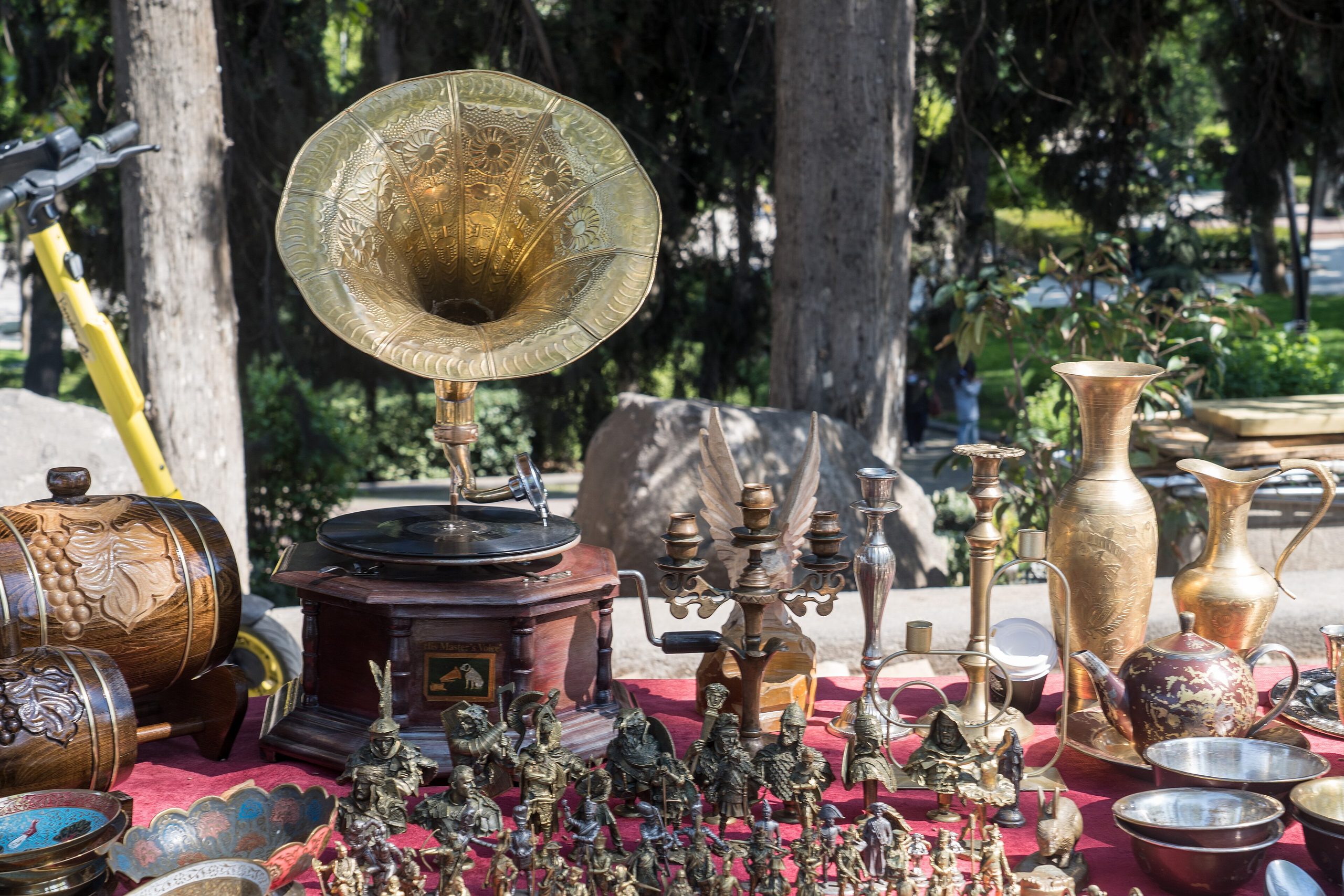
Dry Bridge Market, Tbilisi: A Guide to the City's Flea Market
Dry Bridge is the flea market of Tbilisi. Here is when to go, what to buy, how to haggle and how to get it home.
Read the guide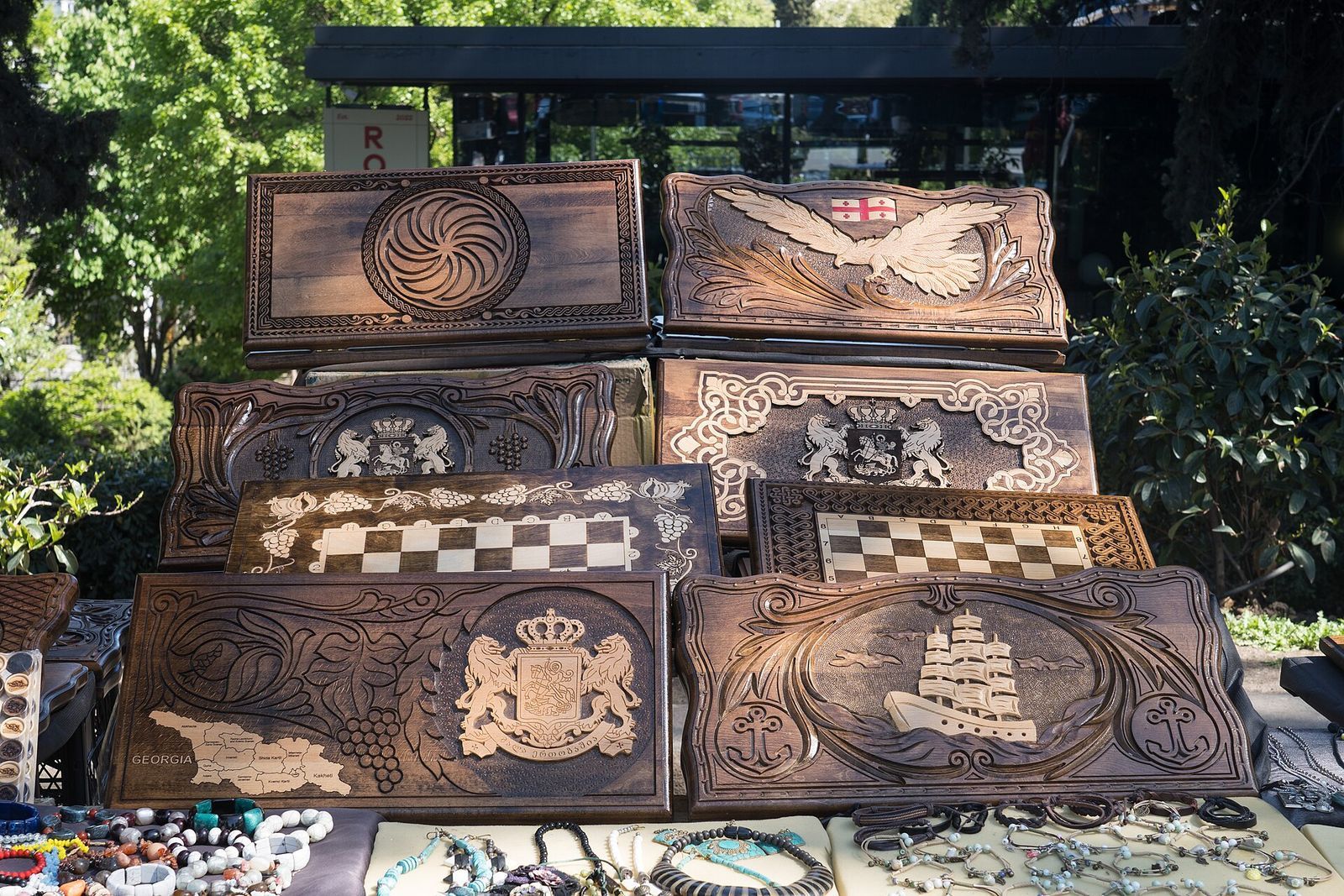
Georgian Souvenirs Worth Buying in Tbilisi
Georgia is known for its wine, churchkhela and crafts. Here is what to buy in Tbilisi, what it costs and where to shop.
Read the guide