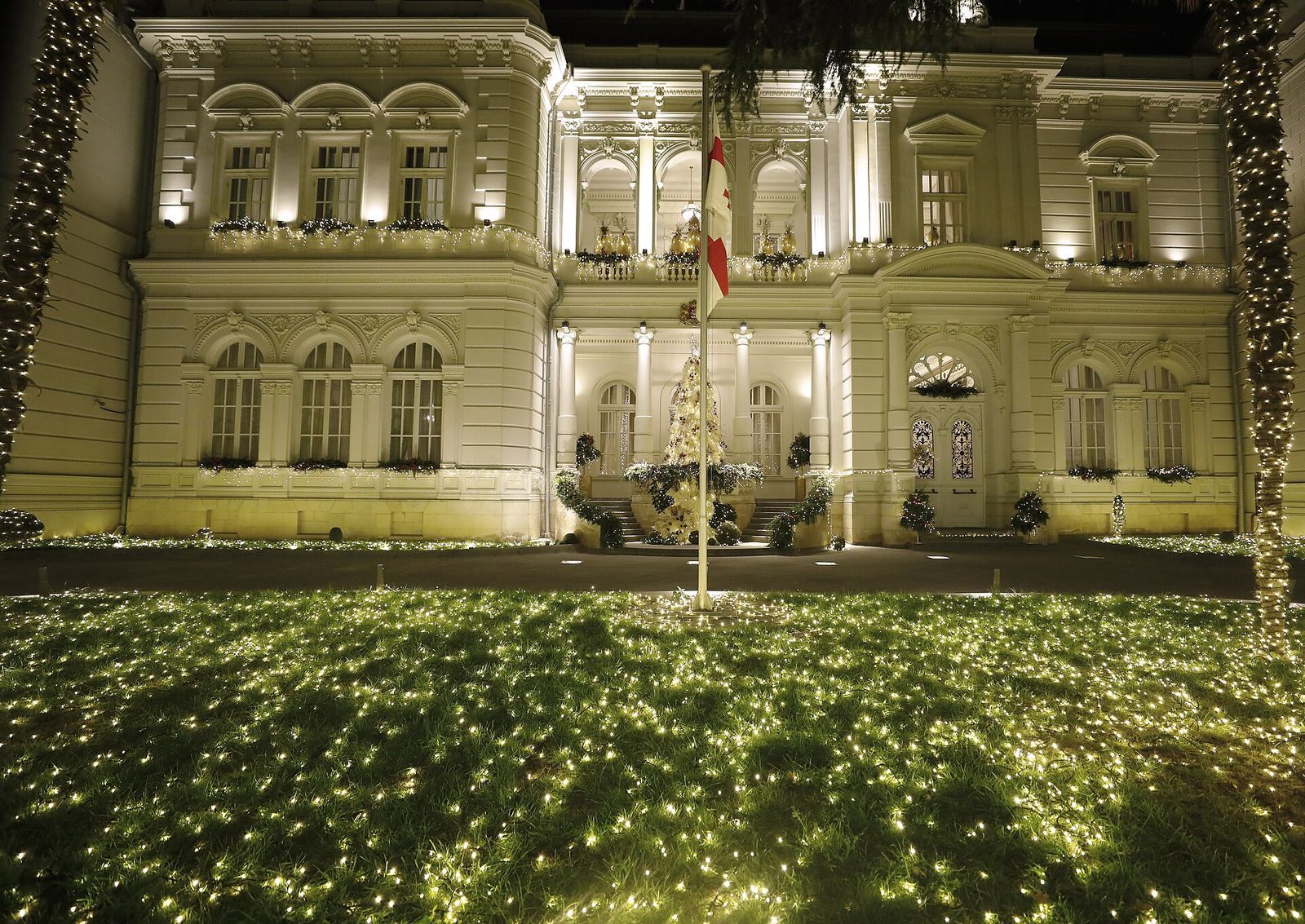
Christmas and New Year in Tbilisi: Dates, Alilo and New Year's Eve
Tbilisi is known for doing the holidays twice: New Year's Eve on 31 December is the big night, and Orthodox Christmas follows on 7 January with a carol procession through the center. Here's what you need to know about the dates, the fireworks, the food on the table, the Alilo parade and what stays open between them.
When are Christmas and New Year in Tbilisi?
Georgia runs its church year on the old Julian calendar, which sits 13 days behind the Western one. That single fact moves Christmas, called Shoba, to 7 January, and it gives the country a second New Year a week later. New Year itself stays on 1 January, so the order is flipped from what most visitors are used to: the party first, then Christmas.
In practice the holidays run as one long season. The lights go up and the main market opens in mid-December, New Year's Eve is the peak, Christmas on 7 January is the quieter religious high point, and everything winds down after Epiphany on 19 January. It's the calendar the festivals in Georgia all hang on, and winter is the stretch that packs the most into a few weeks.
| Date | What happens | What it means for you |
|---|---|---|
| Mid-December | City lights, the main tree and the Christmas market open at First Republic Square | The season starts; the market ran 12 December to 14 January last winter |
| 24 and 25 December | Western Christmas; a Catholic mass on the evening of the 24th | A normal working day in Georgia |
| 31 December | New Year's Eve: family feasts, a concert, fireworks at midnight | The biggest night of the year |
| 1 and 2 January | New Year's Day and Bedoba, the "day of fate" | Public holidays; a slow, quiet city |
| 6 to 7 January | Christmas Eve liturgy overnight, then Christmas Day and the Alilo procession | Public holiday on the 7th |
| 13 to 14 January | Old New Year, the New Year by the Julian calendar | Celebrated, but a working day |
| 18 to 19 January | The chichilaki is burned on the eve of Epiphany; Epiphany on the 19th | Public holiday on the 19th; the season ends |
Christmas lights and markets in Tbilisi
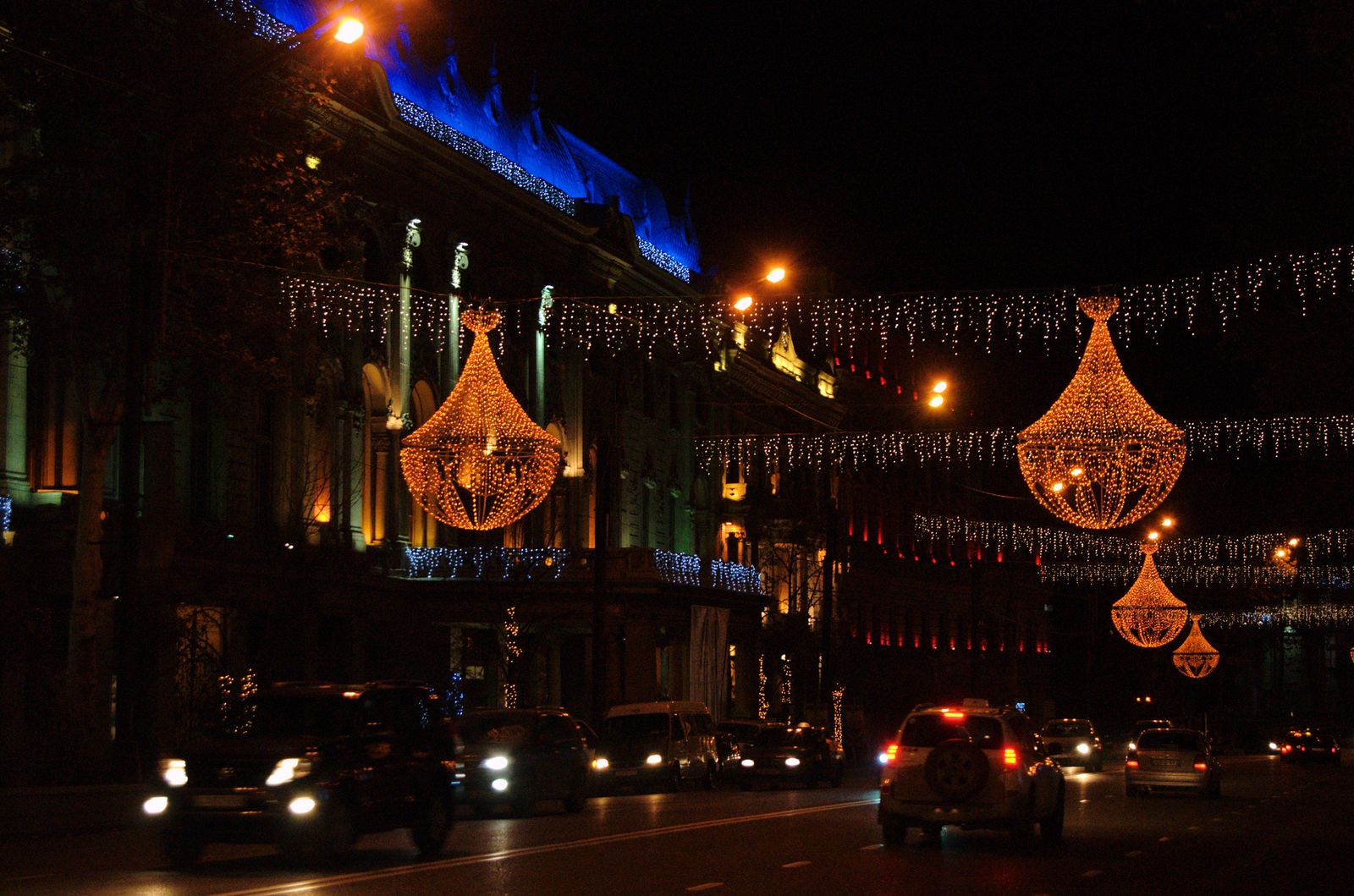
The city switches on its lights in mid-December. The main tree and the official Christmas market sit at First Republic Square, right outside Rustaveli metro, and in recent winters that's where the season's big events have been held. Lights also go up around Freedom Square and its St George column, Orbeliani Square, and the streets of Vera and Sololaki such as Atoneli, Kostava and Melikishvili.
The city also builds smaller "New Year villages" for about two weeks around the holiday, at spots that have included Orbeliani Square, the 9 April Garden, the Dry Bridge area and Dedaena Park. Daytime is for kids, with costumed characters and shows; at night there are bands and DJ sets for adults. The exact sites move from year to year, so check what's on the week you arrive.
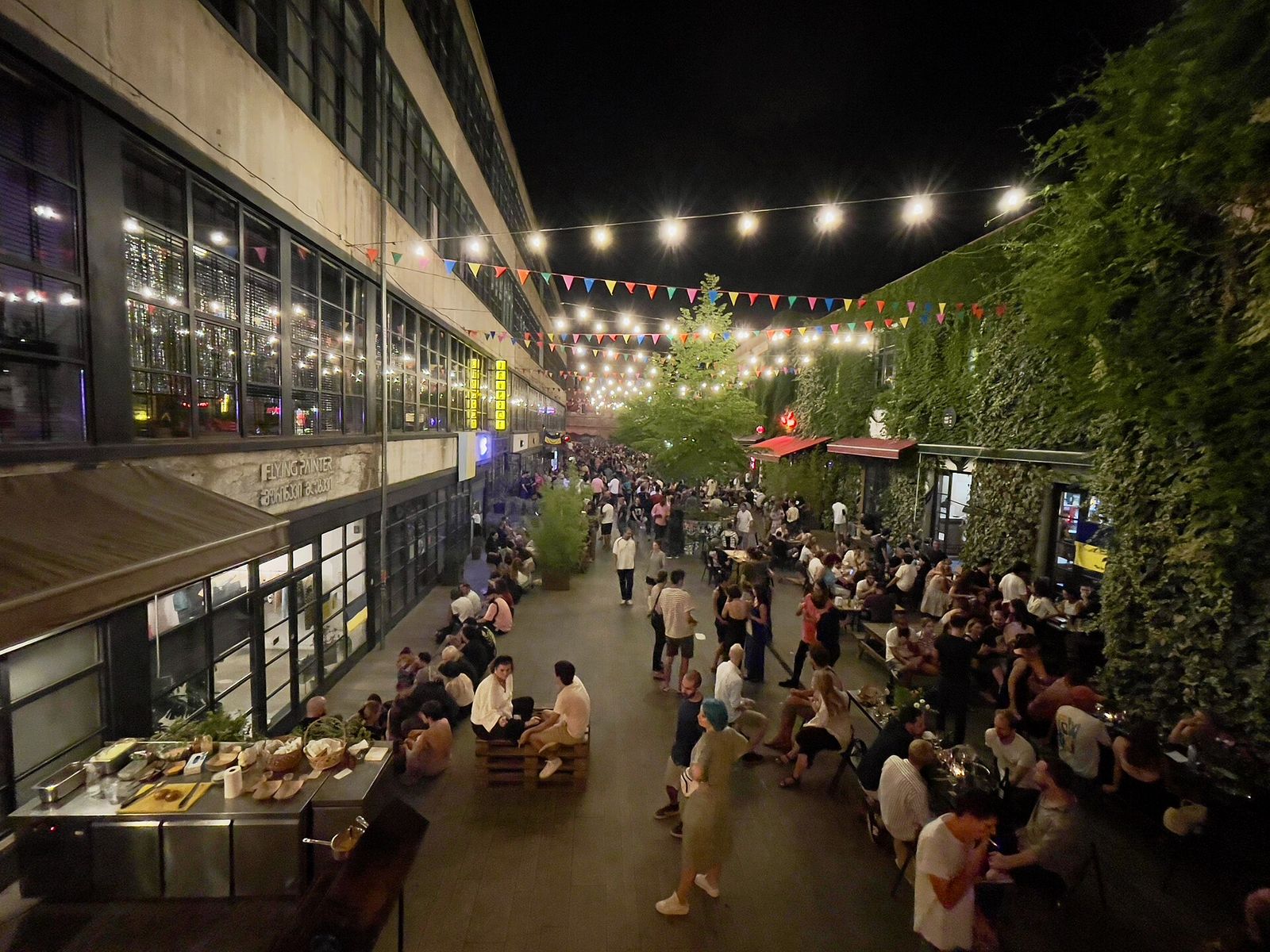
The market stalls are wooden huts selling handmade gifts, tree decorations, sweets, churchkhela and hot mulled wine. My favorite holiday market is the Christmas fair at Fabrika, the old sewing factory in Chughureti, which fills the courtyard with local designers, food stalls and vintage finds for a weekend just before Christmas; last year it ran on 21 and 22 December. It has a younger, more local crowd than the city market, and it's a better place to buy gifts that weren't made for tourists.
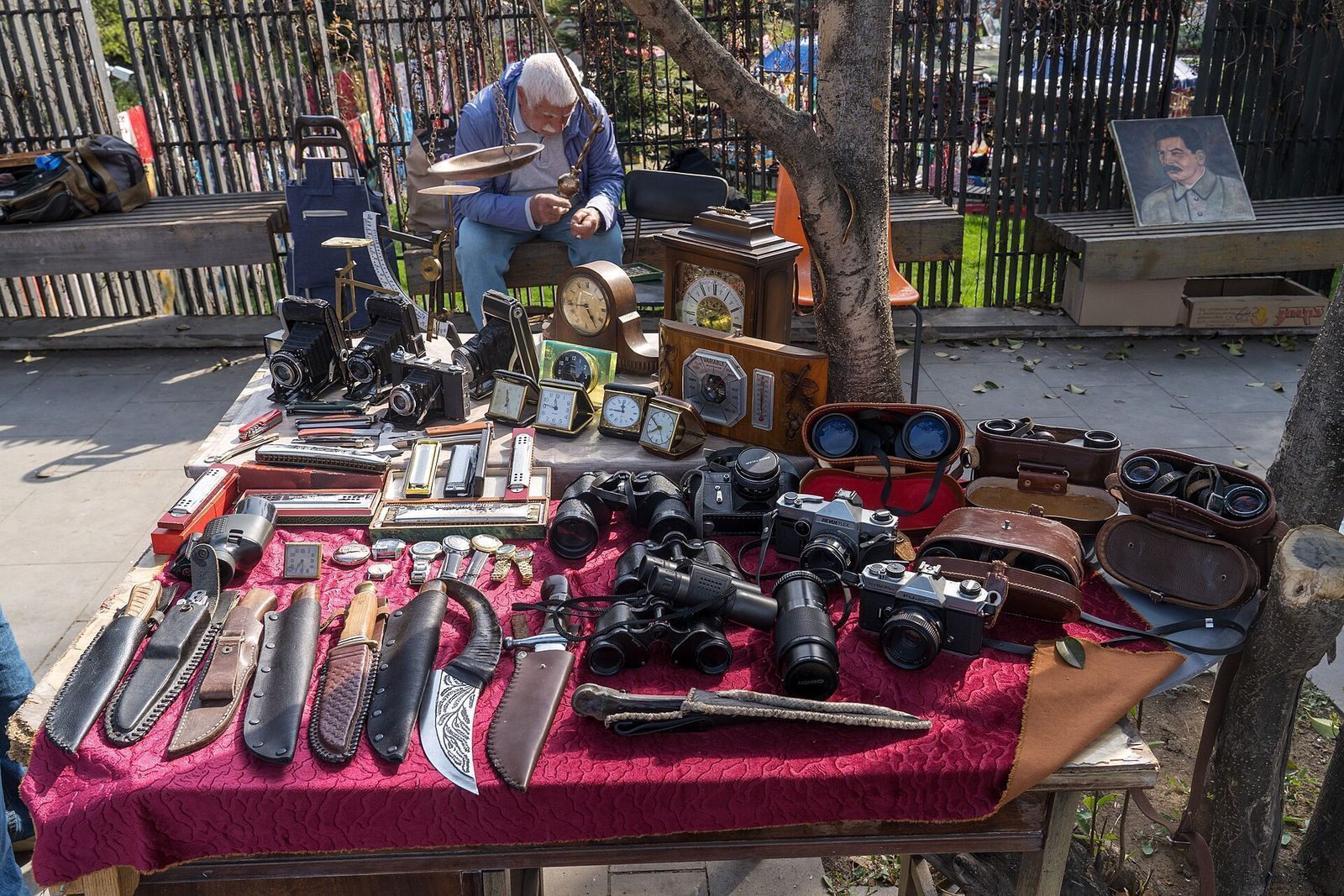
If you're hunting for old Soviet tree ornaments, the Dry Bridge market is where they turn up, mixed in with the medals, cameras and enamel pins. The other markets in town, from the flea markets to the produce halls, carry on through the holidays too, and the best markets in Tbilisi all pick up a stall or two of holiday sweets in December.
New Year's Eve in Tbilisi
New Year's Eve is the night that matters. In Soviet times New Year replaced Christmas as the main family holiday, and it has stayed that way: it's when Georgians give presents, cook their biggest meal of the year and stay up until morning. If you're only coming for one date, make it 31 December.
The night starts at home. Families sit down to a long Georgian supra, a feast with a toastmaster leading toasts, at about 23:00, so dinner is on the table as midnight arrives. Everyone raises a glass of sparkling wine on the stroke of midnight, then the feasting carries on, the doors open, and people head out to visit neighbors and friends. Restaurants, bars and clubs fill up after 01:00 and run until morning; the techno clubs hold their biggest nights of the year.
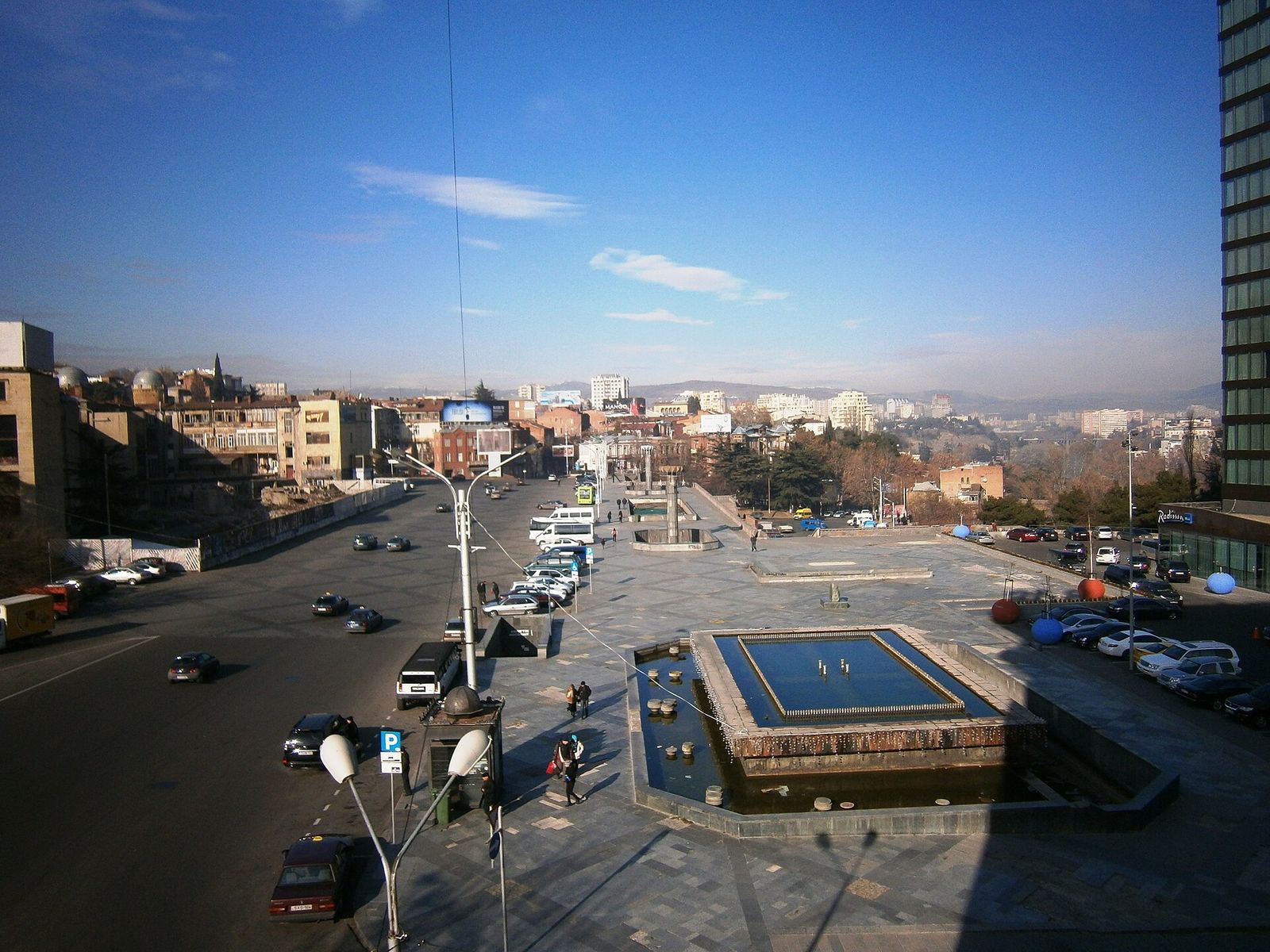
For visitors, the free option is the city's own party. A New Year's Eve concert takes over First Republic Square, with stages, food and drink vendors and live music through the evening and past midnight. It's a crowd of locals and visitors together, and it's the easiest way to be part of the night without a booking.
Fireworks and where to watch them
Tbilisi has no official fireworks show, and it doesn't need one. At midnight, residents let off their own fireworks from balconies, rooftops, courtyards and street corners across the whole city, and for 20 or 30 minutes the sky over every neighborhood fills at once. It starts well before midnight, with rockets going up from dusk, and keeps going in bursts for an hour after.
The trick is to get high. From a hill you see fireworks across the whole bowl of the city at the same time, which you never get in a European capital with one central display. These are the spots I'd pick.
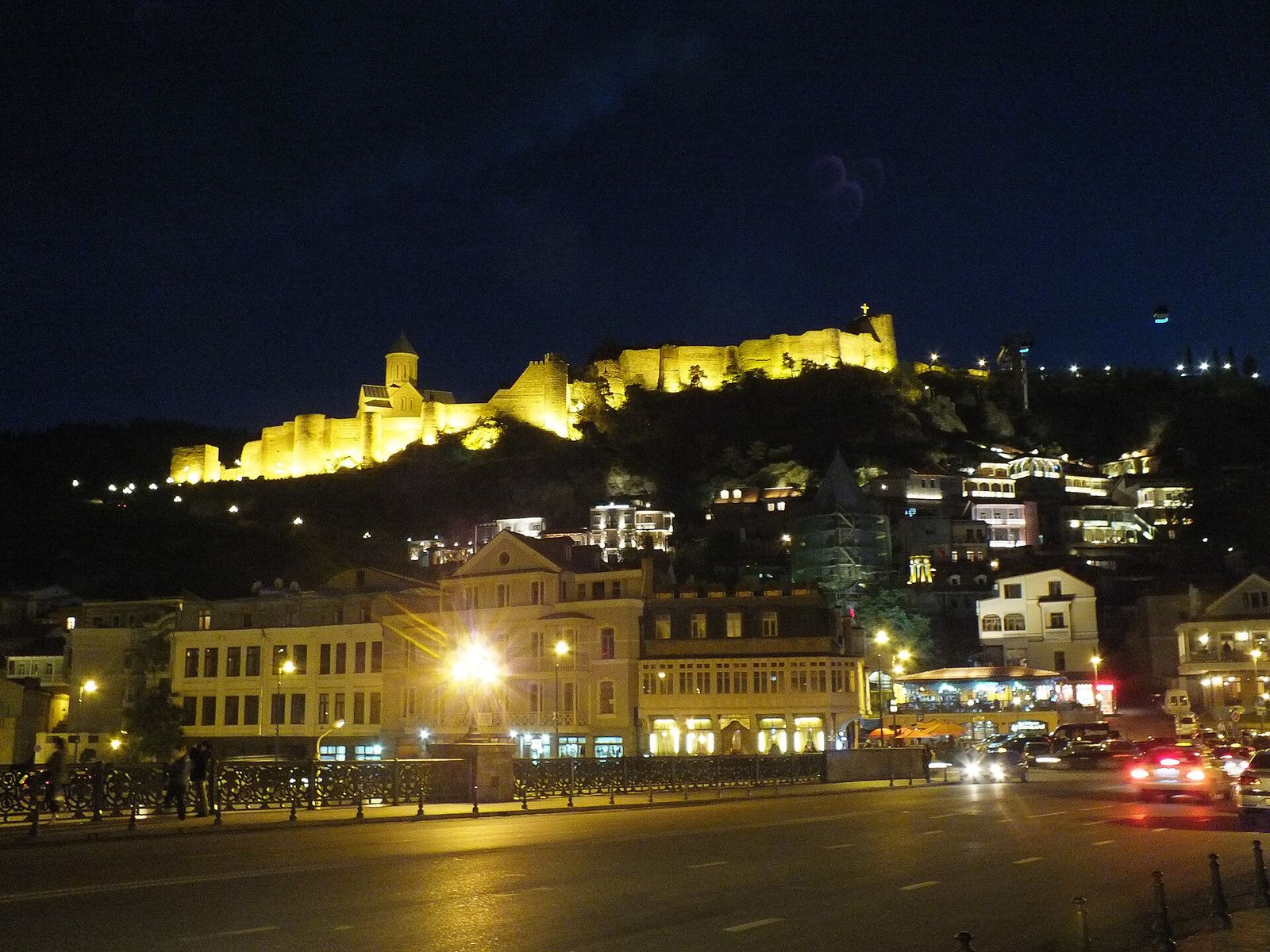
Narikala and the Sololaki ridge. The terraces at Narikala Fortress look straight down over the Old Town and the river, with fireworks going up on both banks. Walk up early and dress warmly, because the line for the cable car gets long well before midnight.
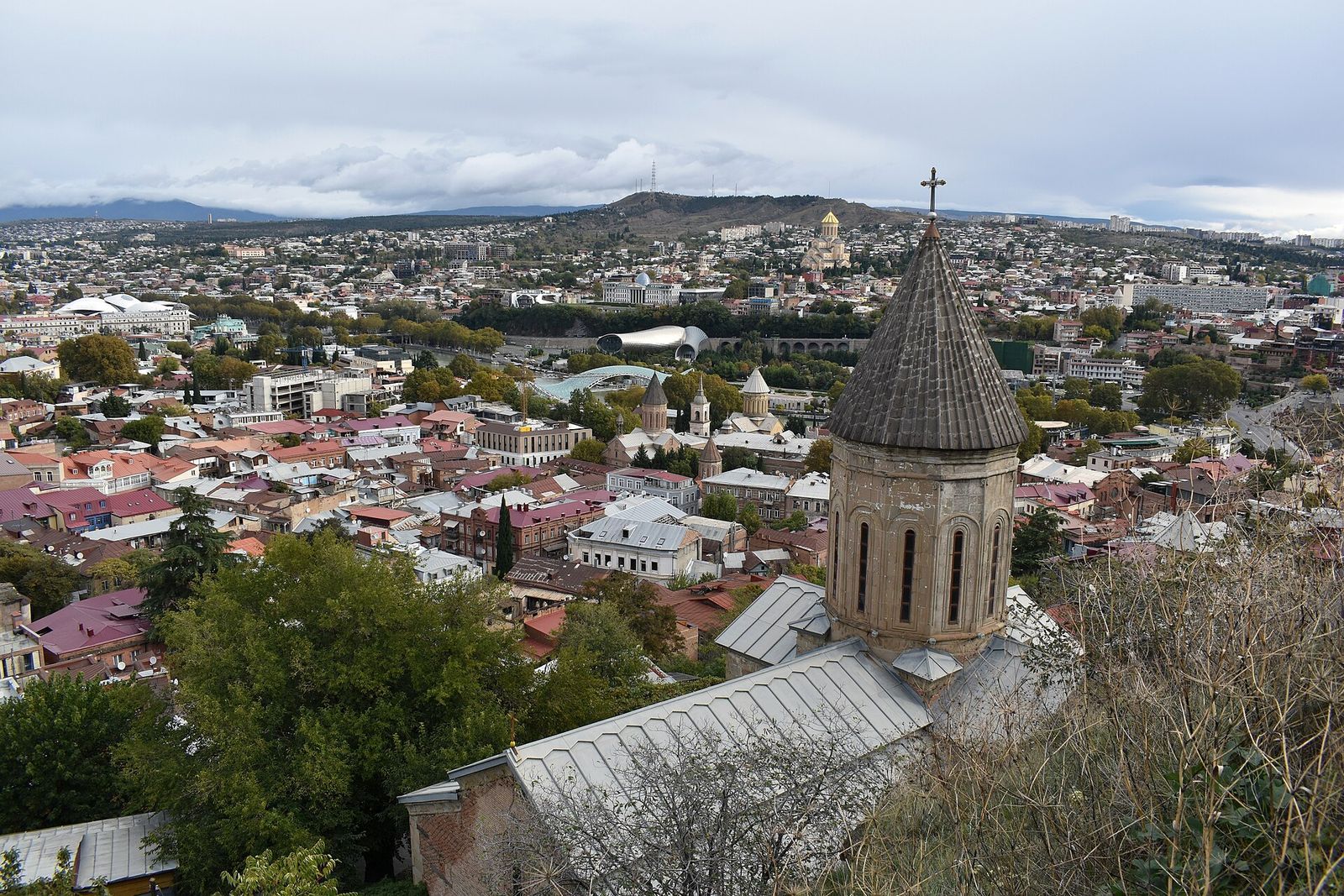
Betlemi Street and the Betlemi Church viewpoint. The stairs above Sololaki are lower than Narikala and much closer to the action, and a lot quicker to walk down from afterward.
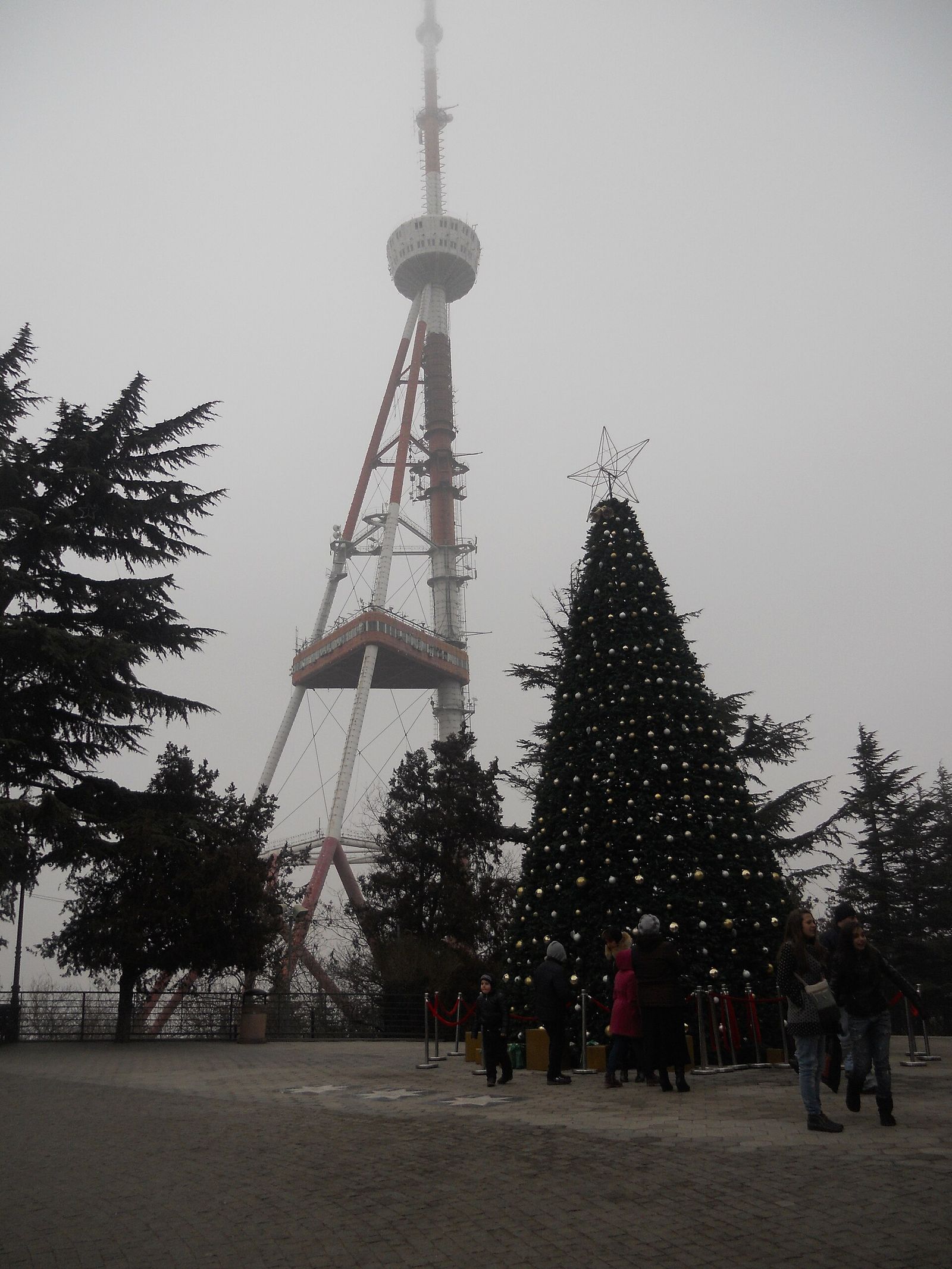
Mtatsminda. The highest view in town, looking down on the whole city from beside the TV tower. Mtatsminda Park holds its own New Year events, and restaurants up there sell New Year's Eve tables for the panorama.
Your own balcony. If you're staying in an old house in Sololaki, Vera or the Old Town, a balcony is a front-row seat, and it's what most locals do.
Most of the best viewpoints in Tbilisi face the center, so any hilltop terrace you liked by day works at midnight too.
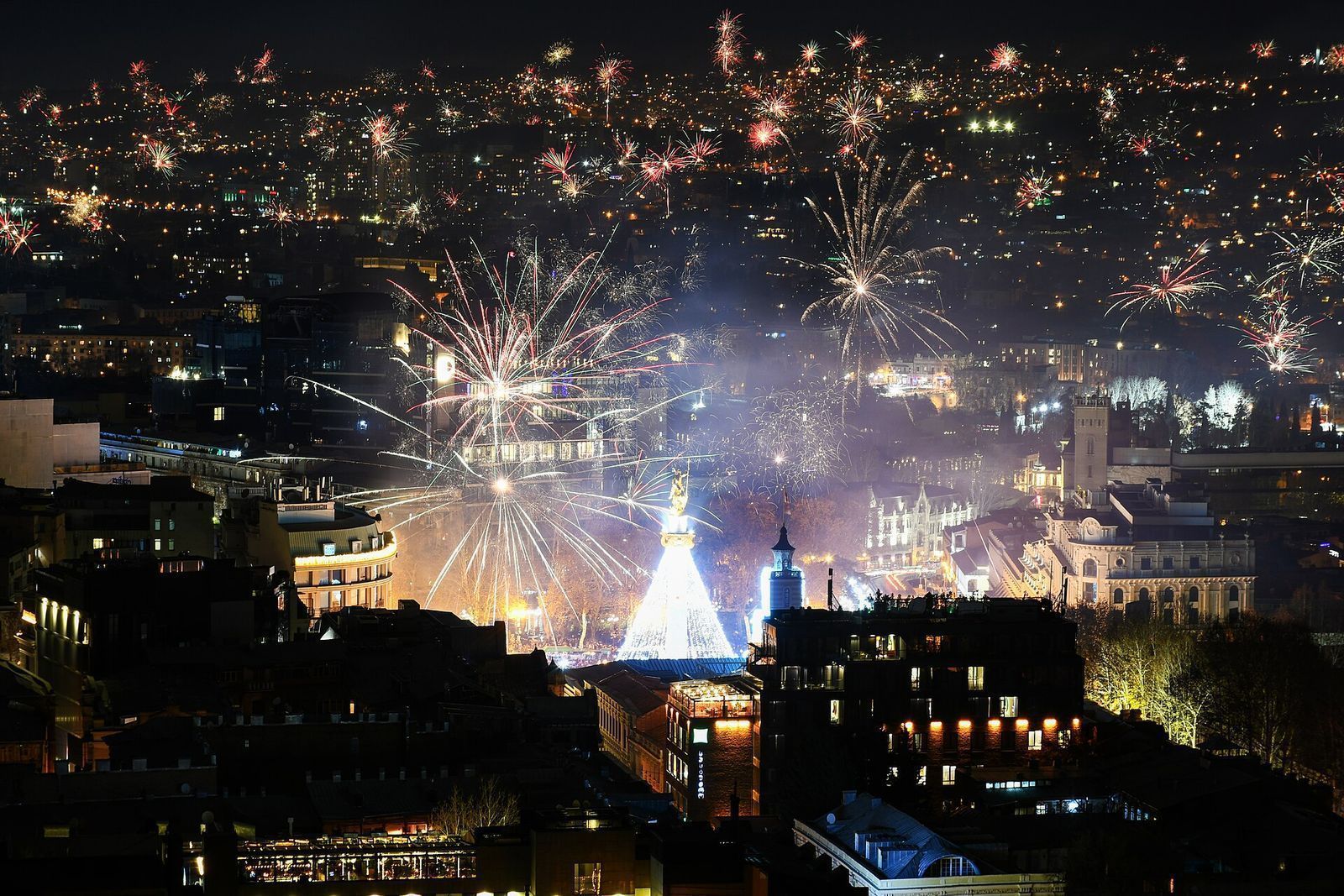
Where to spend New Year's Eve
The options come down to how much you want to spend and whether you want to eat or watch. My pick for a first visit is an early dinner booking, then a walk up to a viewpoint before 23:30.
| Option | What you get | Cost | Book ahead? |
|---|---|---|---|
| First Republic Square concert | Stages, live music, food stalls, the crowd | Free | No |
| A viewpoint (Narikala, Betlemi, Mtatsminda) | Fireworks across the whole city | Free | No, but arrive by 23:00 |
| Traditional restaurant in the Old Town | A set New Year's feast with wine | About 150 to 200 GEL a head | Yes, 3 to 4 weeks |
| Restaurant with a view on Mtatsminda | Dinner with the fireworks panorama | About 200 to 350 GEL a head | Yes, 3 to 4 weeks |
| Club night | Parties from about 01:00 until morning | Ticketed, varies by club | Buy tickets in advance |
| Hotel or guesthouse dinner | A supra in the place you're staying | Varies | Ask when you book the room |
Most restaurants switch to a fixed New Year's menu that night, so you won't be ordering à la carte. Ask what's included, and whether it covers wine and a seat until after midnight.
What Georgians eat at New Year
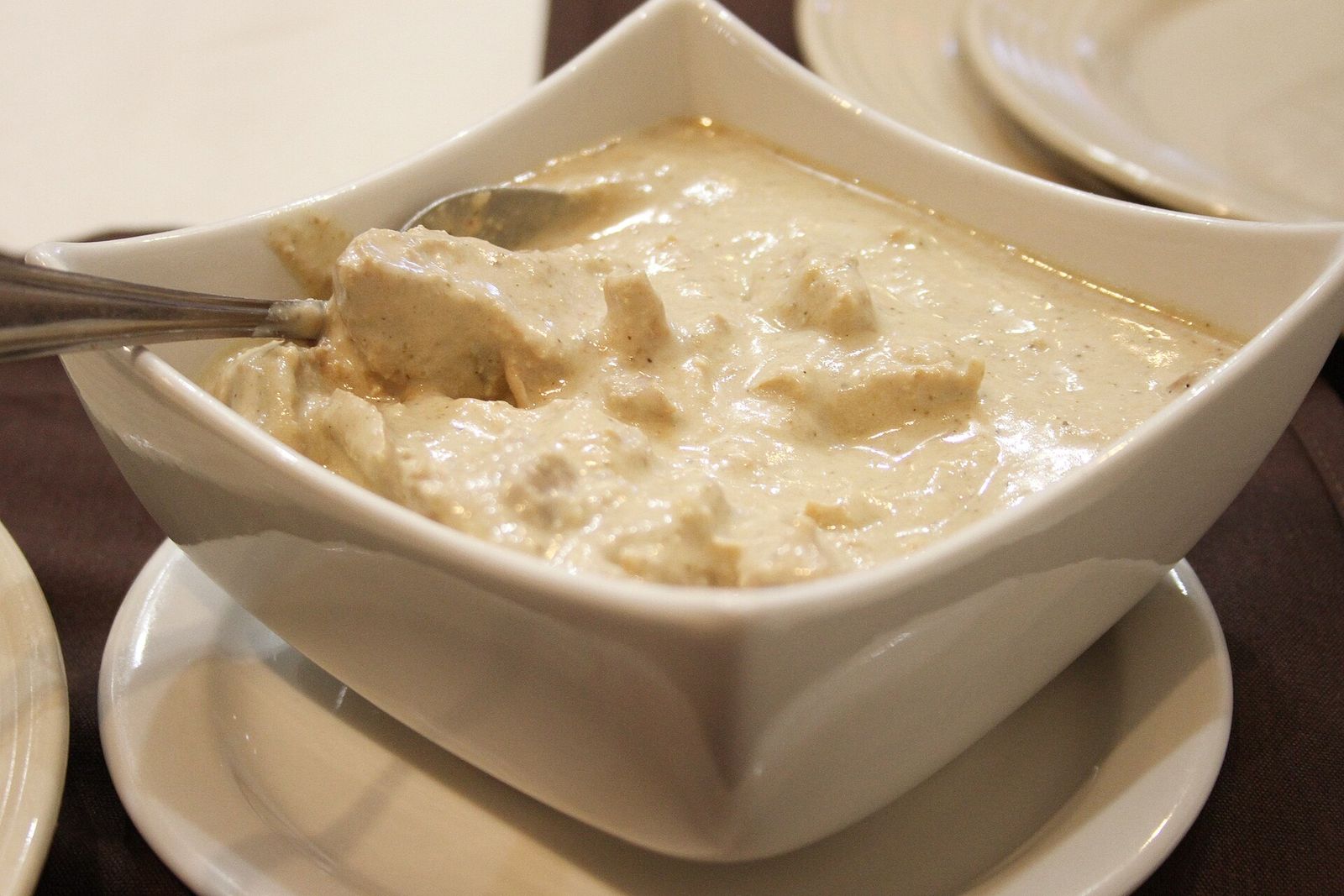
The New Year table is the most generous of the year, and it looks much the same in every home. The centerpiece is satsivi, turkey or chicken served cold in a thick walnut and garlic sauce, and the sweet everybody makes is gozinaki, toasted walnuts set in honey. Restaurants put the same dishes on their holiday menus, so even without an invitation home you'll eat the right things.
| Dish | What it is | When |
|---|---|---|
| Satsivi | Turkey or chicken in a cold walnut sauce | New Year's Eve, the main course |
| Gozinaki | Toasted walnuts set in caramelized honey, cut into diamonds | New Year's Eve to Christmas |
| Churchkhela | Walnuts on a string, dipped in thickened grape juice | All season |
| Pkhali | Vegetable and walnut pâtés: eggplant, spinach, beet, red pepper | On every holiday table |
| Khachapuri | Cheese bread | Every feast |
| Suckling pig | Roasted whole | New Year's Eve, in many families |
| Olivier salad | Potato, egg and mayonnaise salad from the Soviet table | New Year's Eve |
| Dried persimmons and figs | Sun-dried fruit | New Year's Eve dessert |
| Guruli khachapuri | A half-moon pie filled with cheese and boiled eggs, from Guria | Christmas, 7 January |
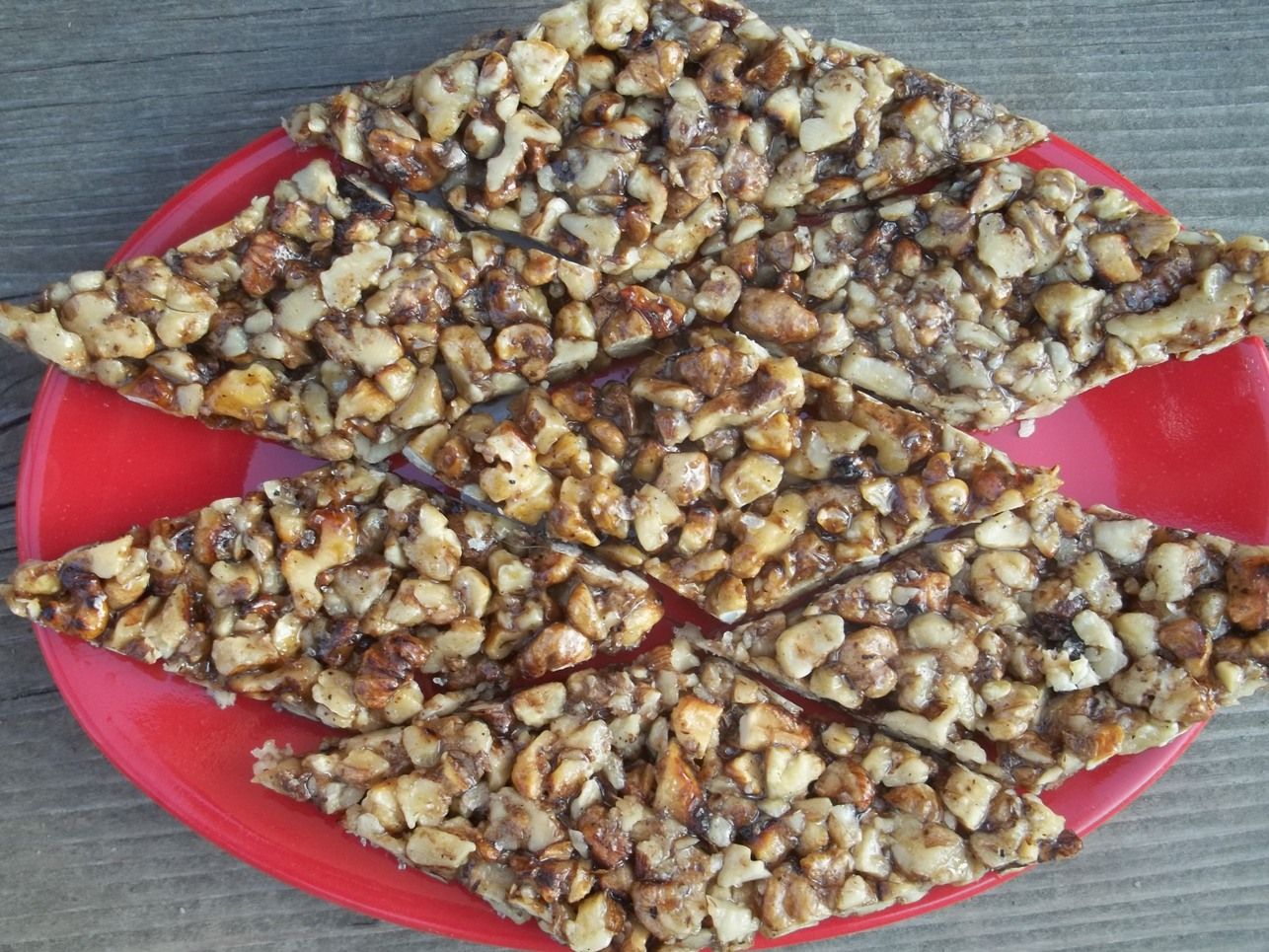
Gozinaki is the one to try. You'll find it homemade at the markets in December, in gift boxes at sweet shops and in every supermarket, and it's one of the few Georgian desserts tied so closely to a single season. If satsivi is new to you, it's the dish that shows why walnuts turn up in so much Georgian food: the sauce is rich, garlicky and spiced, and it tastes better the day after.
Georgian New Year traditions
A few customs still shape the holidays in most homes, and you'll see the signs of all of them around town.
The chichilaki, the Georgian Christmas tree
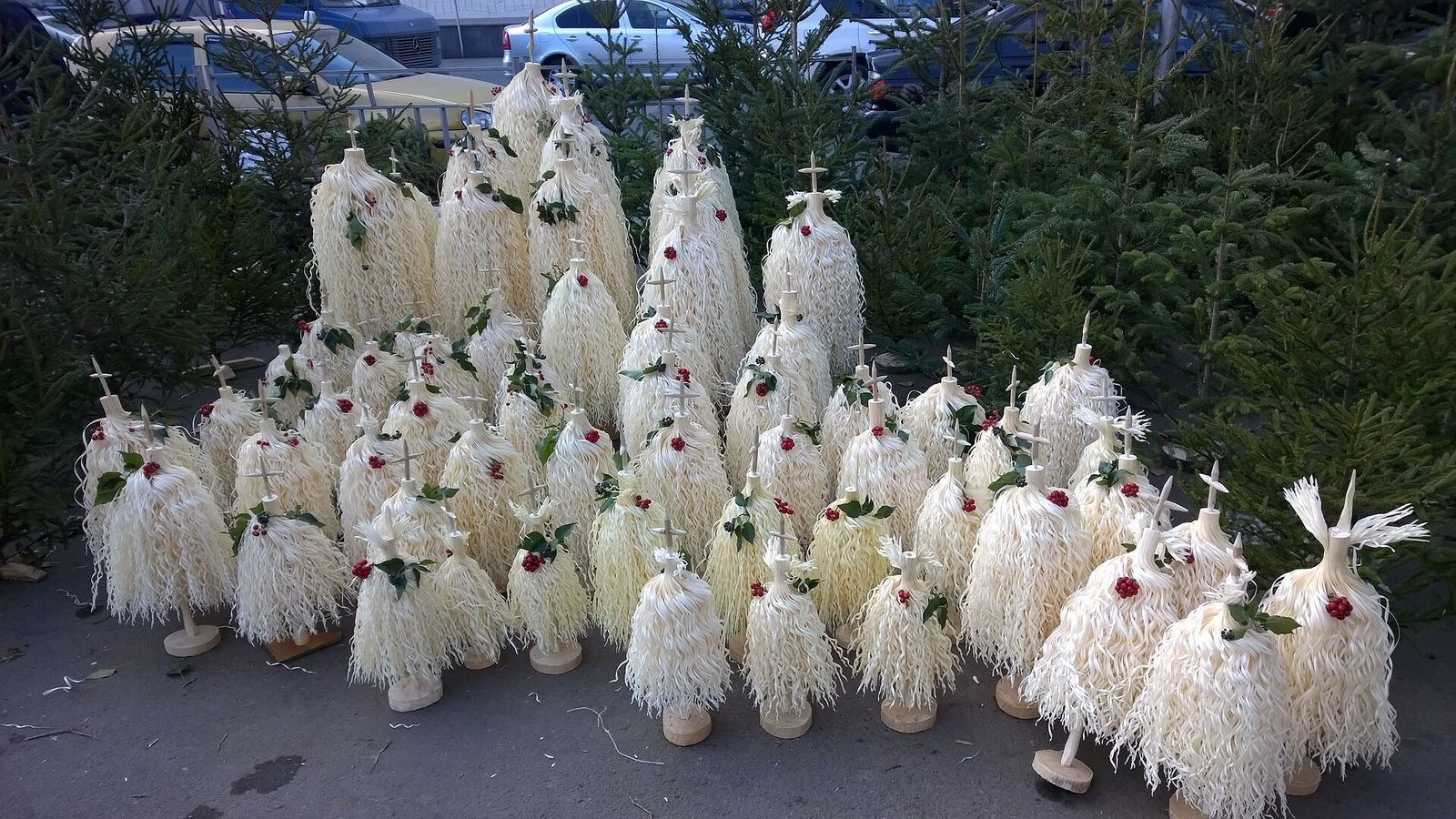
The chichilaki is a small tree made from a single hazelnut or walnut branch, shaved into long, curling white strips until it looks like a beard or a snowy fir. It's decorated with dried fruit, berries and sweets, and often topped with a cross. In December they're sold on street corners and at markets all over Tbilisi, stacked in rows next to the fir trees.
Most Georgian families now have a fir tree, real or plastic, and the chichilaki sits beside it or on the table. The old custom is to burn it on the eve of Epiphany, so the bad luck of the past year goes up in smoke with it. Some families now donate theirs to the Tbilisi Zoo instead of burning it. A small one makes a good souvenir, and it packs better than you'd think.
Mekvle, the first guest, and Bedoba
The mekvle is the first person to step into a home after midnight, and they're believed to set the luck for the whole year. Families choose their mekvle in advance: someone kind, healthy and lucky, traditionally a man, though now it can be anyone. The mekvle arrives with sweets, fruit or wine and a blessing for the house.
2 January is Bedoba, the "day of fate". The belief is that the way you spend it sets the tone for the year ahead, so people keep it calm and happy, eat well and avoid arguments. It's a public holiday, and the city is noticeably quiet.
Tovlis Babua and the candy swap
The Georgian Santa is Tovlis Babua, "Grandfather Snow", sometimes called Tovlis Papa. He comes down from Svaneti in traditional dress, with a white beard and sweets in a saddle bag, and he brings children their presents on New Year's Eve rather than at Christmas. On New Year's Day he has appeared at Mtatsminda Park handing out gifts.
Sweets are part of the season for adults too. Georgians carry individually wrapped candies through the holidays and hand them to friends, colleagues and sometimes strangers. If someone offers you one, take it with a smile.
Orthodox Christmas on 7 January
Christmas in Georgia is a religious holiday first. There's no shopping rush and no Christmas dinner out; it's a day for church, family and a quieter meal at home. Many Georgians keep a fast in the run-up to it, giving up meat and dairy until Christmas Day.
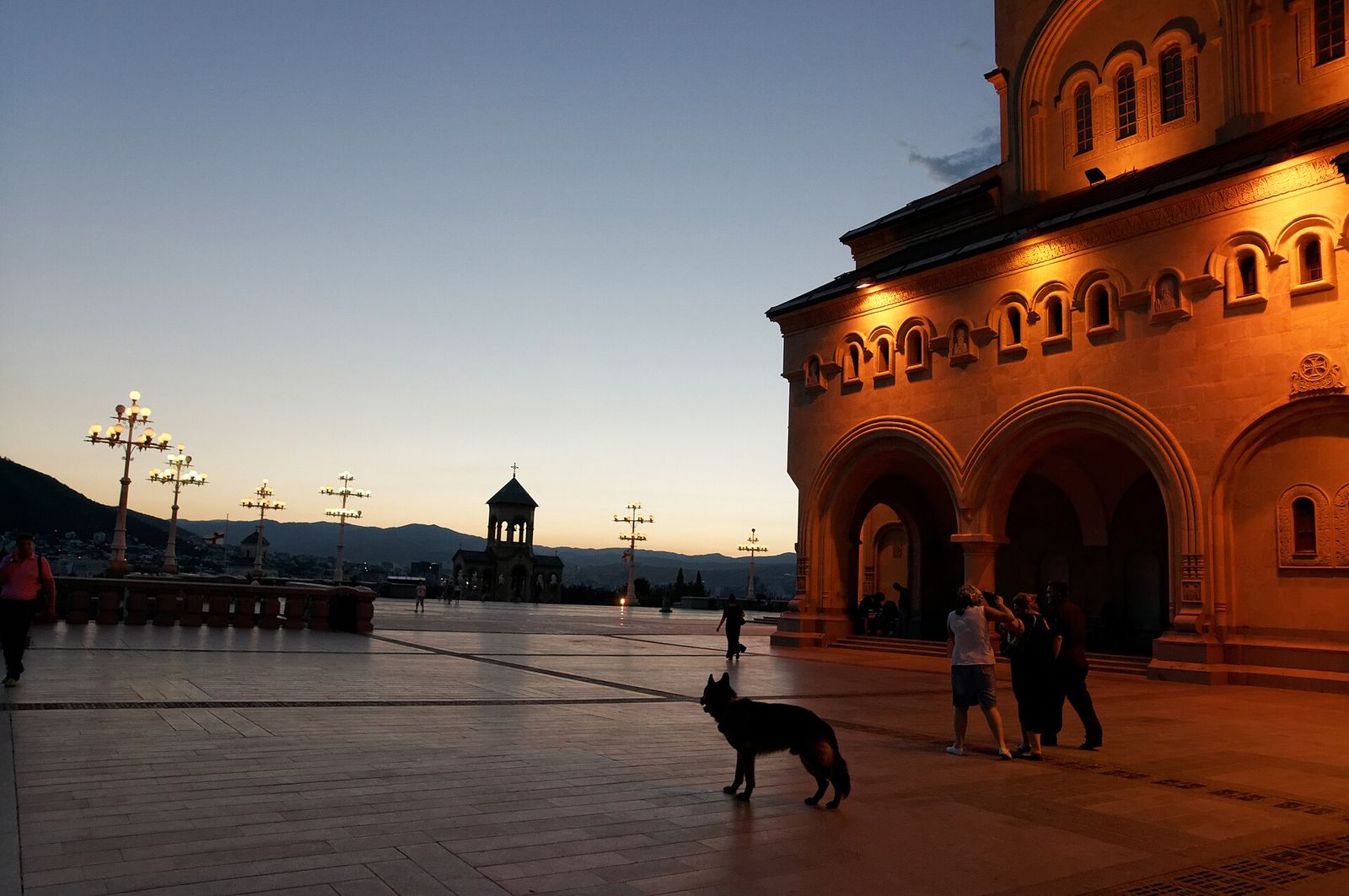
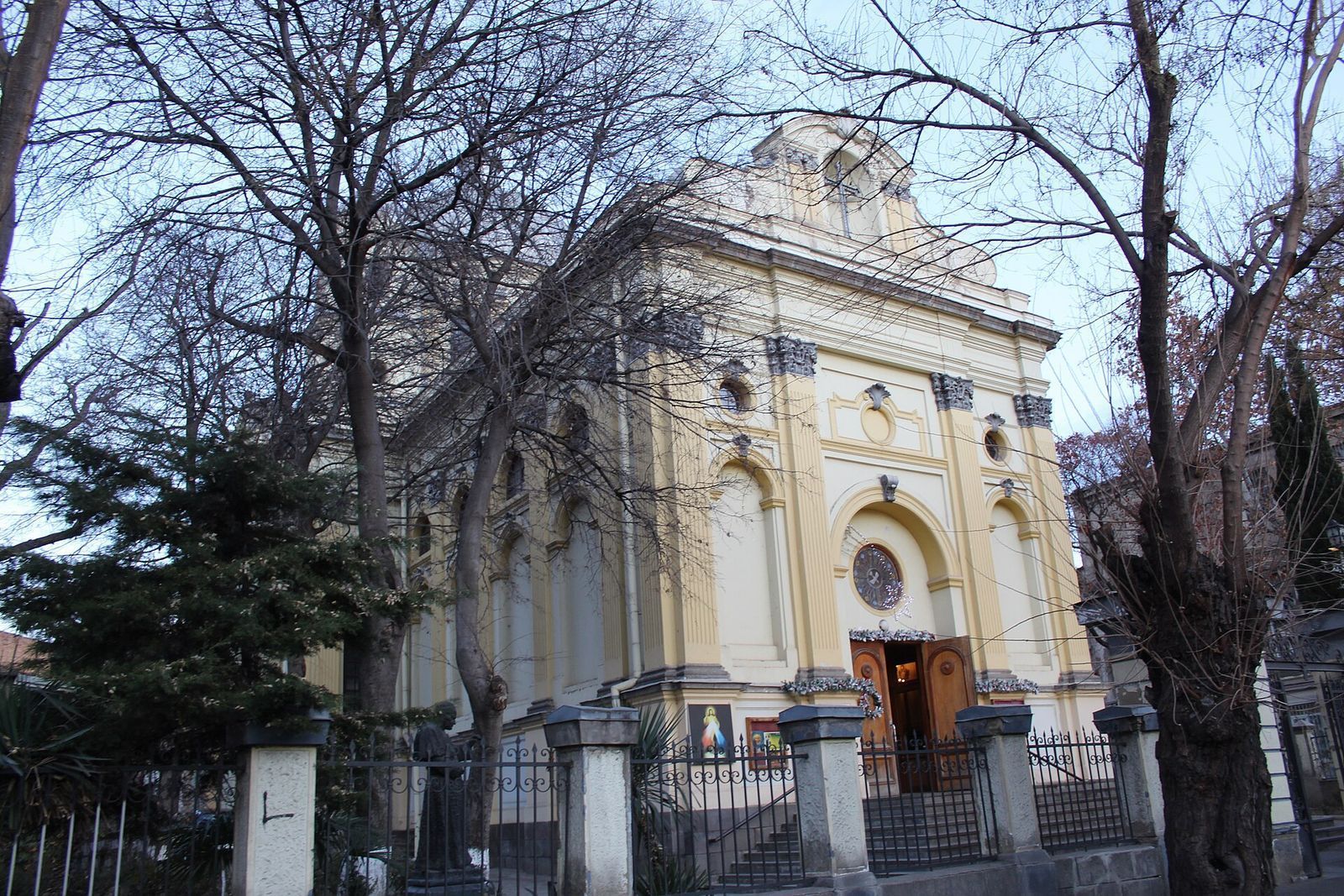
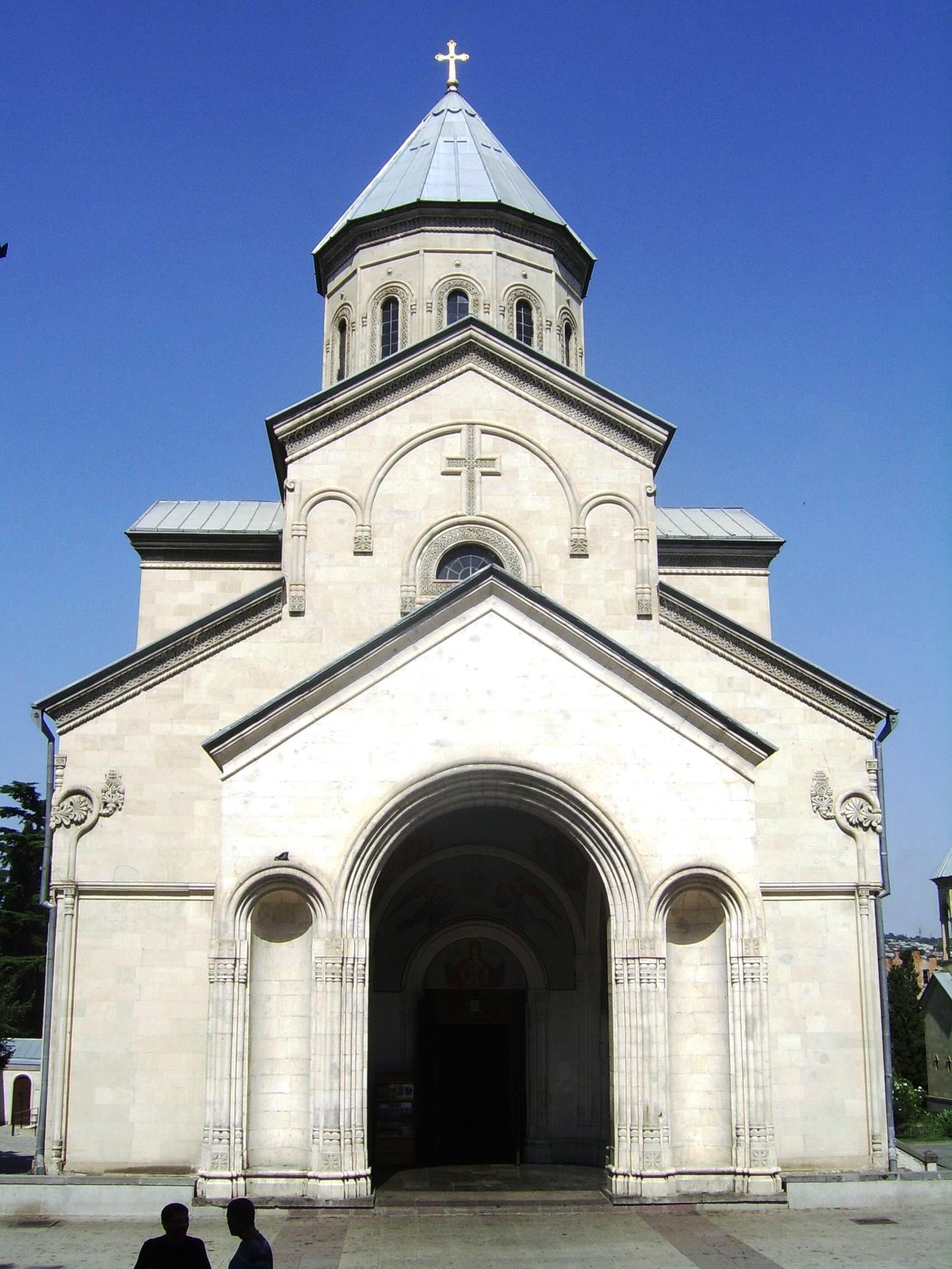
The big moment is the night before. On the evening of 6 January, churches across the country hold the Christmas Eve liturgy, which runs through the night and often finishes at 05:00 or 06:00. The largest is at Holy Trinity Cathedral, Sameba, where the Patriarch leads the service and the crowd spills out into the grounds. Kashveti Church on Rustaveli Avenue is a smaller and calmer choice. Visitors are welcome to come and go; nobody expects you to stay all night.
The Alilo procession
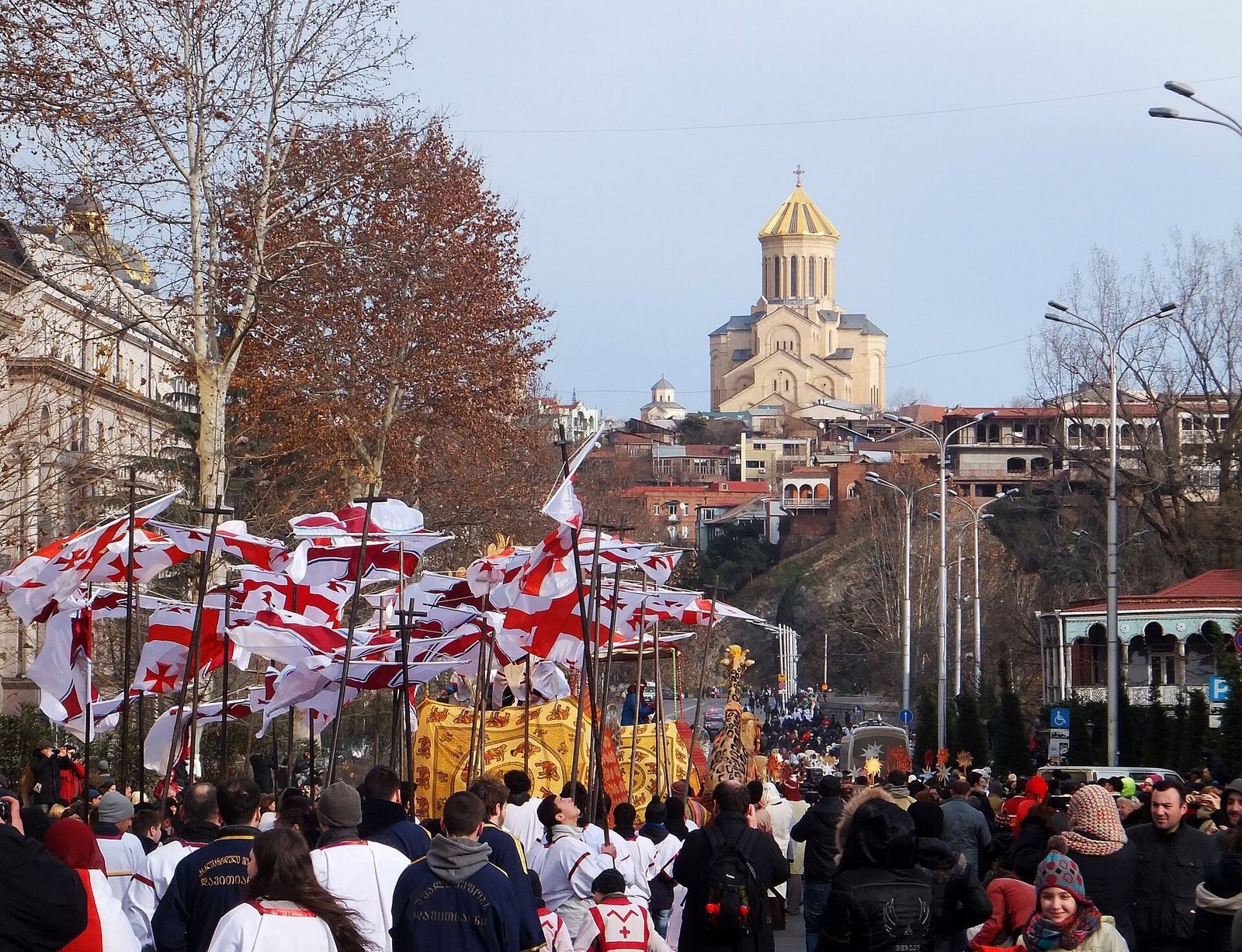
Alilo is the best thing to see in Tbilisi in winter. On Christmas Day, thousands of people walk through the center behind clergy, church choirs and banners, many in traditional dress, singing carols. Some carry flags, icons and crosses; children ride on floats or walk dressed as shepherds and angels, and they get sweets along the way.
The procession is also a charity drive. People bring food, clothes, toys and money along the route, and the church passes it on to orphanages, care homes and families in need. The name comes from the old carols sung door to door on Christmas morning, and you'll hear the Georgian polyphonic singing of the church choirs as the column passes.
In Tbilisi the procession starts at First Republic Square, by Rustaveli metro, at around 12:00 to 13:00, and walks through the center and across the river to Sameba Cathedral in Avlabari. It's free, anyone can walk along, and nobody minds visitors taking photos of the parade itself.
Old New Year and Epiphany
A week after Christmas, the New Year comes round again. The Old New Year is New Year by the Julian calendar, celebrated on the night of 13 to 14 January with another, smaller family dinner and a second round of fireworks in some neighborhoods. It's a working day, so offices and banks open as usual the next morning.
Epiphany on 19 January closes the season. It's a public holiday and a church feast, marking the baptism of Christ, and churches bless water that people take home in bottles. The night before is when the chichilaki traditionally goes on the fire, and after the 19th the trees and decorations come down. The city market usually packs up around the Old New Year.
What is open over the holidays in Tbilisi
Tbilisi never closes the way some cities do. Restaurants, cafes and bars stay open right through the season, though many open late on 1 and 2 January. The things that close are the official ones, and four public holidays fall inside the season: 1 January, 2 January, 7 January and 19 January.
| Place | Over the holidays |
|---|---|
| Restaurants, cafes and bars | Open; many start late on 1 and 2 January |
| Big supermarkets (Carrefour, Nikora, Agrohub) | Open, with shorter hours on 31 December |
| Small neighborhood shops | Some close for several days |
| Malls | Open, with limited hours possible on 1 and 2 January |
| Museums | Closed on public holidays |
| Banks, post offices and government offices | Closed on public holidays; in recent years some stayed shut until around 10 to 14 January |
| Metro and buses | Running, with extended hours on New Year's Eve and Christmas, and often free |
Getting around is the hard part on 31 December. Traffic jams up around the markets and the center from the afternoon, and taxi apps surge after midnight, so the Tbilisi metro is the way to move. If you do need a car home at 02:00, book it through an app rather than waving one down, because taxis in Tbilisi without a set price are at their worst that night.
Weather, snow and day trips over the holidays
Tbilisi at Christmas is cold, damp and usually grey, with daytime temperatures between about 0°C and 8°C. Snow in the city is rare, and when it falls it rarely lasts more than a day, so don't come expecting a white Christmas in the streets. Pack a warm coat, a hat, gloves and shoes with grip for the polished stone lanes of the Old Town. The cold is the best excuse for a long soak in the sulfur baths, and the slow days between the holidays are when Tbilisi in winter is at its quietest.
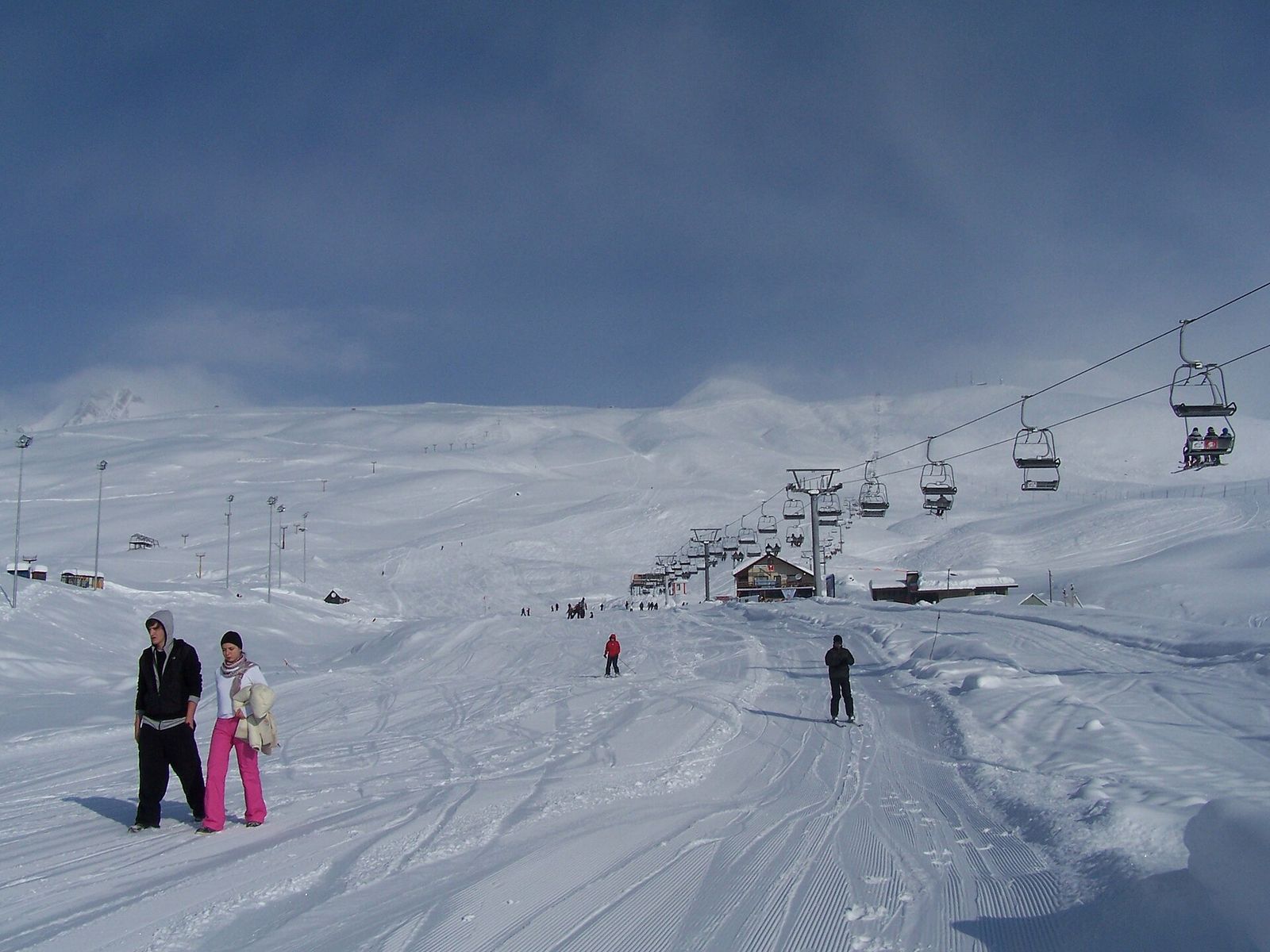
For real snow, head to the mountains. Gudauri, about two hours north on the Military Highway, is Georgia's main ski resort and holds its own New Year parties.
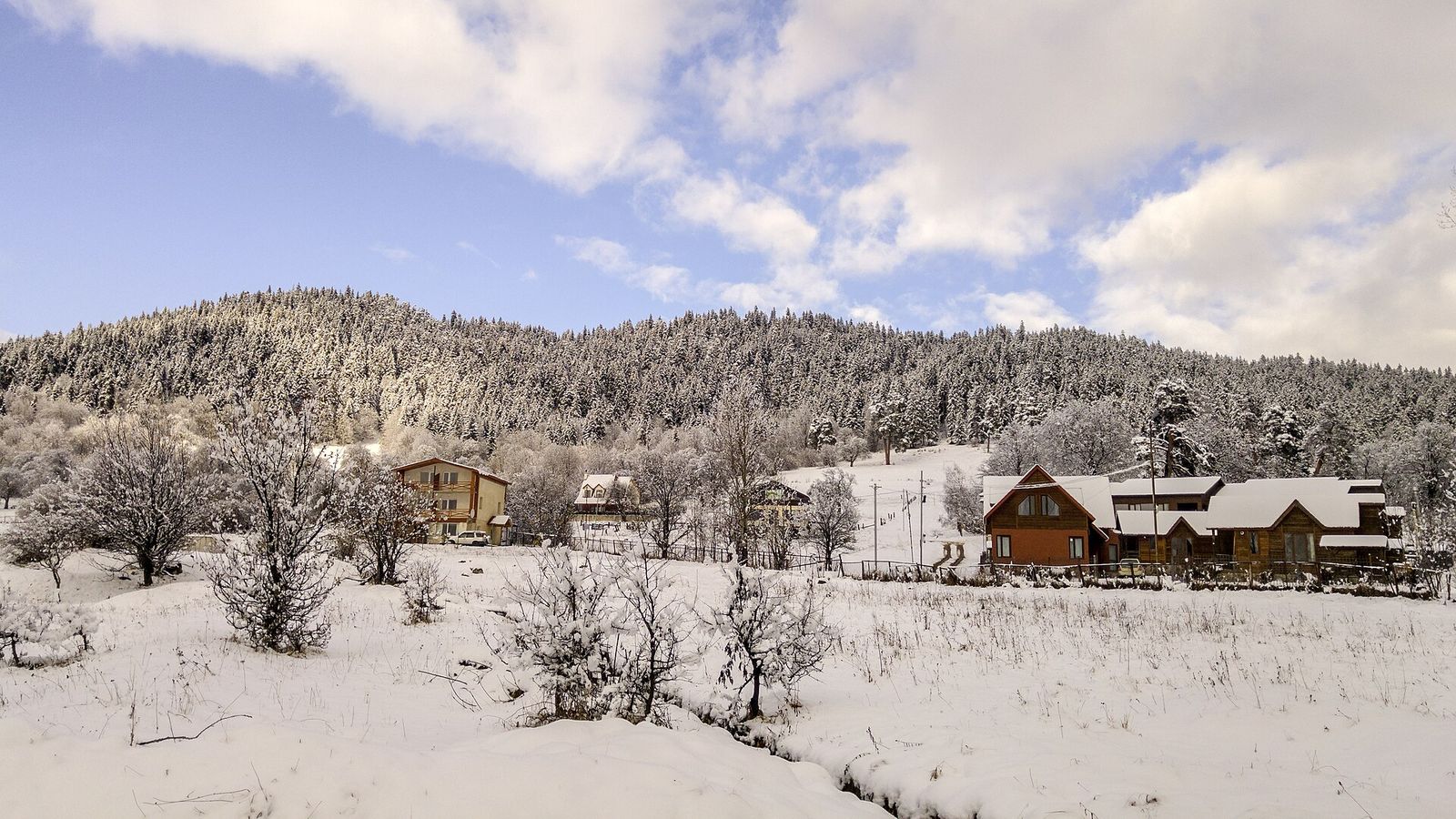
Bakuriani is the family ski town on the other side of the country, a village of wooden chalets under snowy pine forest.
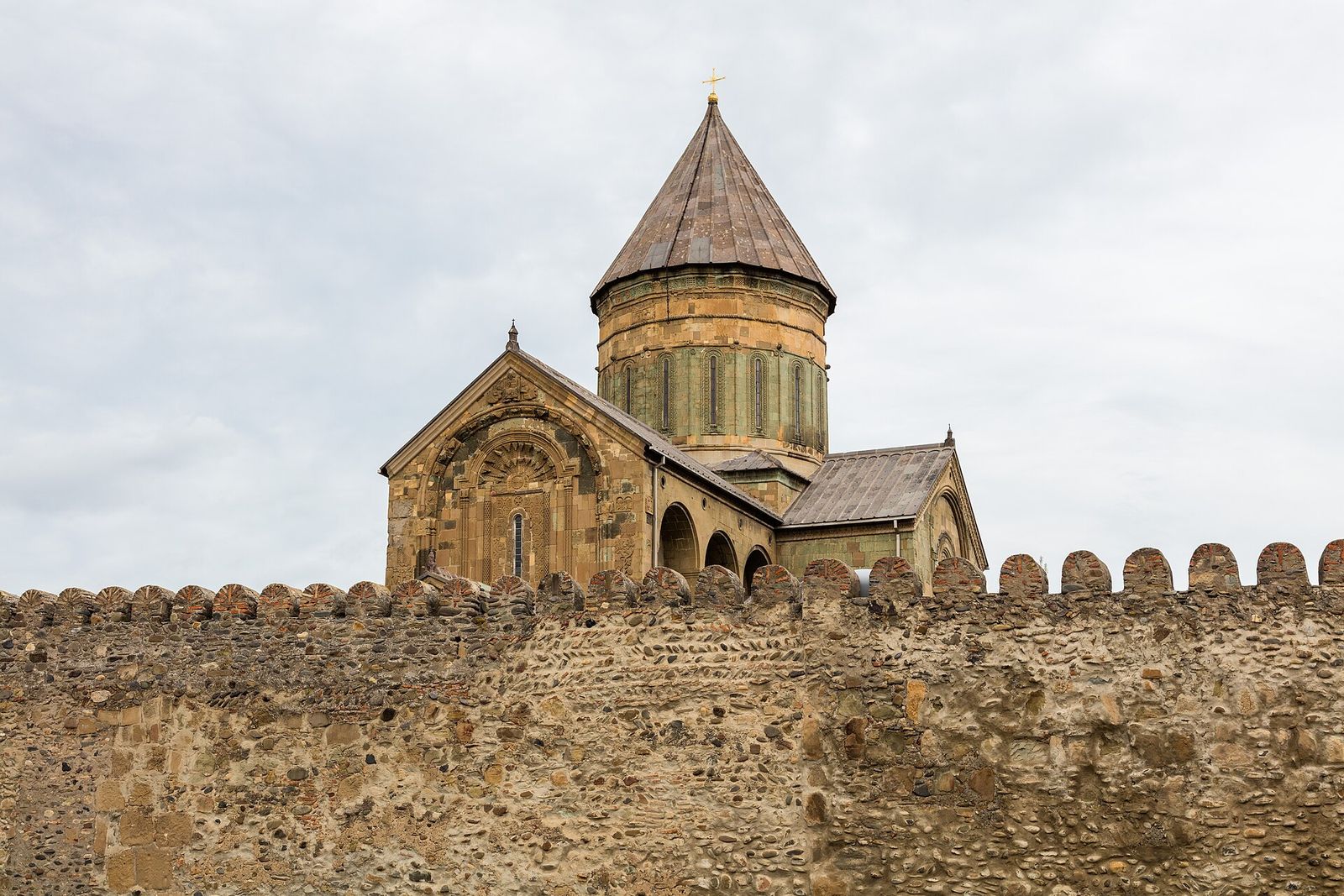
The quiet days after New Year are good for day trips. Mtskheta, the old capital, is about 30 minutes away, and its churches hold Christmas services too.
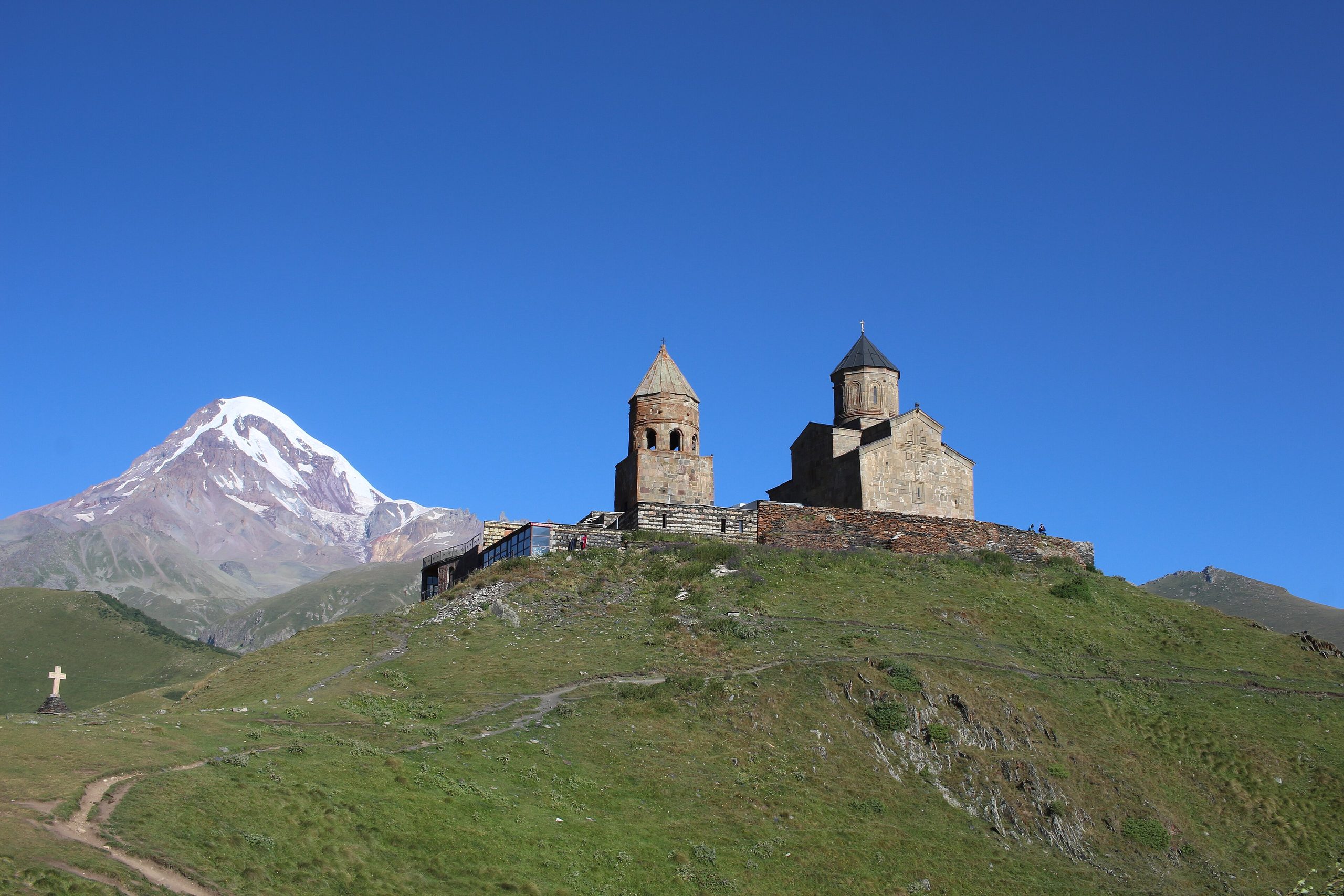
A Kazbegi day trip puts you under snowy peaks and Gergeti Trinity Church. Check the road over the Jvari Pass before you go, since snow can close it for a day or two.
Planning a Christmas and New Year trip to Tbilisi
If you can, come for both. Arriving on 29 or 30 December and leaving on 8 January gives you New Year's Eve, the quiet days after it, a couple of day trips and Christmas with the Alilo procession, all in 10 days. It's how I'd plan a first winter trip.
| Days | What to do |
|---|---|
| 29 to 30 December | Arrive, see the lights and the market at First Republic Square, buy a chichilaki and gozinaki |
| 31 December | Early New Year's Eve dinner, then a viewpoint for the fireworks at midnight |
| 1 to 2 January | Slow days: a sulfur bath, a long lunch, a walk through the Old Town |
| 3 to 5 January | Day trips to Mtskheta and Kazbegi, or a night in Gudauri |
| 6 January | Rest in the afternoon; the Christmas Eve liturgy at Sameba in the evening |
| 7 January | The Alilo procession from 12:00 to 13:00, then Christmas lunch |
Book early. Hotels in the center fill for New Year's Eve, and the good restaurant tables go 3 to 4 weeks ahead. Stay somewhere walkable to both First Republic Square and the Old Town, in Sololaki, Vera or the streets around Rustaveli Avenue, so you can walk home after midnight instead of fighting for a taxi.
Key takeaways
- New Year's Eve on 31 December is the main event, with family feasts, a free concert at First Republic Square and fireworks from every balcony at midnight.
- Orthodox Christmas is on 7 January, and 25 December is a normal working day in Georgia.
- The Alilo procession walks from First Republic Square to Sameba Cathedral on 7 January from around 12:00 to 13:00.
- The best fireworks views are from Narikala, Betlemi Street and Mtatsminda, so get up a hill before 23:30.
- Public holidays fall on 1, 2, 7 and 19 January, when banks and museums close but restaurants and bars stay open.
Frequently asked questions
When is Christmas in Georgia?
Christmas in Georgia is on 7 January. The Georgian Orthodox Church follows the Julian calendar, which runs 13 days behind the Western one, and the Christmas Eve liturgy runs through the night of 6 January.
Do Georgians celebrate Christmas on 25 December?
Mostly not. 25 December is a normal working day, and only a few families mark it informally. The Catholic Church of Sts Peter and Paul in Tbilisi holds a mass on the evening of 24 December.
Is Tbilisi good for New Year's Eve?
Yes, it's one of the best times to be in the city. New Year's Eve is the biggest night of the year, with a free concert at First Republic Square, fireworks across the whole city at midnight and bars and clubs open until morning.
Are there fireworks in Tbilisi on New Year's Eve?
Yes, but there's no official show. Residents set off their own fireworks from balconies, rooftops and streets across the city, starting at dusk and peaking for 20 or 30 minutes after midnight. Watch from a hill such as Narikala, Betlemi Street or Mtatsminda.
What is the Alilo parade?
Alilo is the Christmas Day procession on 7 January, when clergy, choirs and thousands of people, many in traditional dress, walk through Tbilisi singing carols. In Tbilisi it starts at First Republic Square around 12:00 to 13:00 and ends at Sameba Cathedral, and people bring food and clothes for families in need.
What is a chichilaki?
A chichilaki is the traditional Georgian Christmas tree, made from a hazelnut or walnut branch shaved into long, curly white strips and decorated with dried fruit and sweets. It's sold on street corners in December and traditionally burned on the eve of Epiphany, 19 January.
What is the Old New Year in Georgia?
The Old New Year is New Year by the Julian calendar, celebrated on the night of 13 to 14 January. Families sit down to a second, smaller holiday dinner, but it isn't a public holiday.
Does it snow in Tbilisi at Christmas?
Rarely. Daytime temperatures sit between about 0°C and 8°C, and snow in the city seldom lasts more than a day. For snow, go to Gudauri or Kazbegi in the mountains, about two to three hours north.
Georgian Culture and Traditions: A Visitor's Guide to Customs, Feasts, Faith and Song
Georgian culture is known for feasts, wine and song. Here's what visitors should know about its customs and traditions.
Read the guide
Basic Georgian Phrases for Travelers, with Pronunciation
Georgian has its own alphabet and a hello that means victory. Here are the phrases to learn and how to say them.
Read the guide
A Short History of Georgia and Tbilisi, From the Falcon Legend to Today
Tbilisi has been burned and rebuilt for 1,500 years. Here is Georgia's story in short, and where to see it today.
Read the guide