A Short History of Georgia and Tbilisi, From the Falcon Legend to Today
Tbilisi is known as the city that kept getting burned down and kept rebuilding itself, by Arabs, Mongols, Persians and Russians in turn. Georgia's history is long and tangled, but the main line is easy to follow once you know the eras. Here's the short version, from the falcon legend to independence, and the places in Tbilisi where you can still stand in each chapter.
Georgian history at a glance
Georgia's story runs for thousands of years, and Tbilisi sits in the middle of most of it. The city grew up on the road between Europe and Asia, which made it rich and made it a prize, and nearly every empire in the region held it at some point. This is the short version, with the spot in Tbilisi where each chapter still shows.
| When | What happened | Where to see it in Tbilisi |
|---|---|---|
| 4th century | Georgia becomes Christian, with St Nino | Mtskheta, the old capital, 25 km north |
| 458, by legend | Vakhtang Gorgasali founds Tbilisi at the hot springs | The sulfur baths, and his statue at Metekhi |
| 6th century | King Dachi moves the capital from Mtskheta to Tbilisi | The Narikala ridge, site of the early fortress |
| 736 to 1122 | The Emirate of Tbilisi under Arab rule | Narikala's walls, extended by the emirs |
| 1122 | David the Builder takes Tbilisi and makes it his capital | Aghmashenebeli Avenue, named after him |
| 12th and 13th centuries | The Golden Age under Queen Tamar | Rustaveli Avenue, named after the poet of her age |
| 1795 | A Persian army burns the city to the ground | The Old Town, largely rebuilt in the 19th century |
| 1801 | Russia annexes eastern Georgia | Sololaki's 19th-century mansions |
| 1918 to 1921 | The first independent republic, ended by the Red Army | Parliament, the center of every 26 May |
| 9 April 1989 | Soviet troops break up a protest, at least 19 dead | Rustaveli Avenue outside Parliament |
| 2003 | The Rose Revolution | Parliament, the building the protesters walked into |
Ancient Georgia, Mtskheta and the arrival of Christianity
People lived around Tbilisi's hot springs as far back as the Neolithic, but for most of the ancient world the center of eastern Georgia was somewhere else. The kingdom of Kartli, which Greek and Roman writers called Iberia, ruled from Mtskheta, upriver where the Aragvi meets the Kura. Tbilisi was a fortified spot on the road, and little more.
Georgians had one tradition down long before any of this. Winemaking here goes back about 8,000 years, and some cellars still make Georgian wine the ancient way, fermented in clay qvevri buried in the ground.
The big turn came in the 4th century, when Christianity arrived. The figure tied to it is St Nino, the woman credited with converting the royal court of Kartli, and the Orthodox church has shaped the country ever since. You'll see people cross themselves as they pass a church, even from the window of a bus. Mtskheta is 25 km north of Tbilisi, and its cathedral and the hilltop Jvari Monastery are the place to stand in Georgia's first chapter.
In the same century, King Varaz-Bakur I built a fortress on the ridge above the springs. That was the first version of Narikala, and the walls that run along the ridge above the Old Town today stand on the same line, rebuilt by almost every power that held the city afterward.
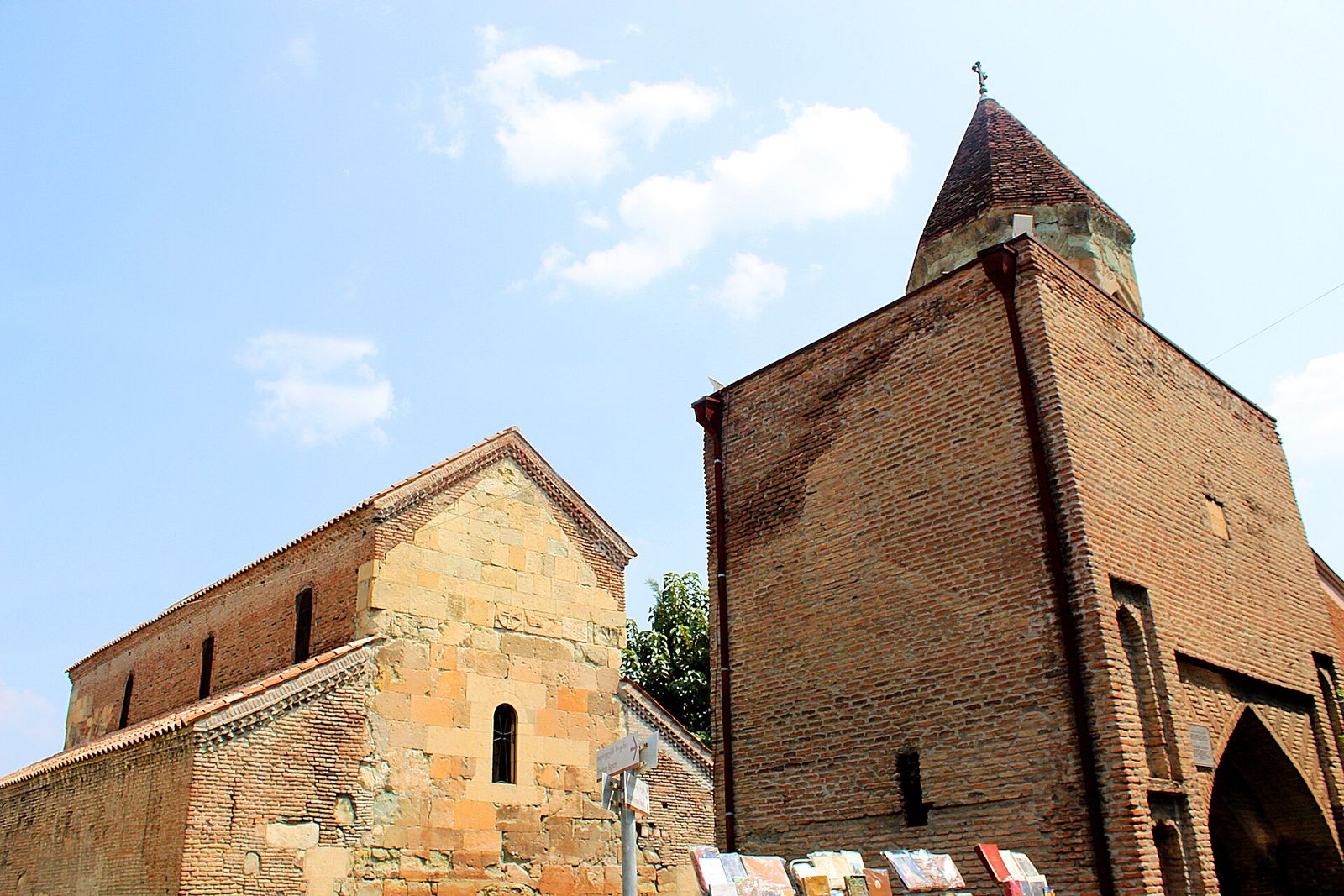
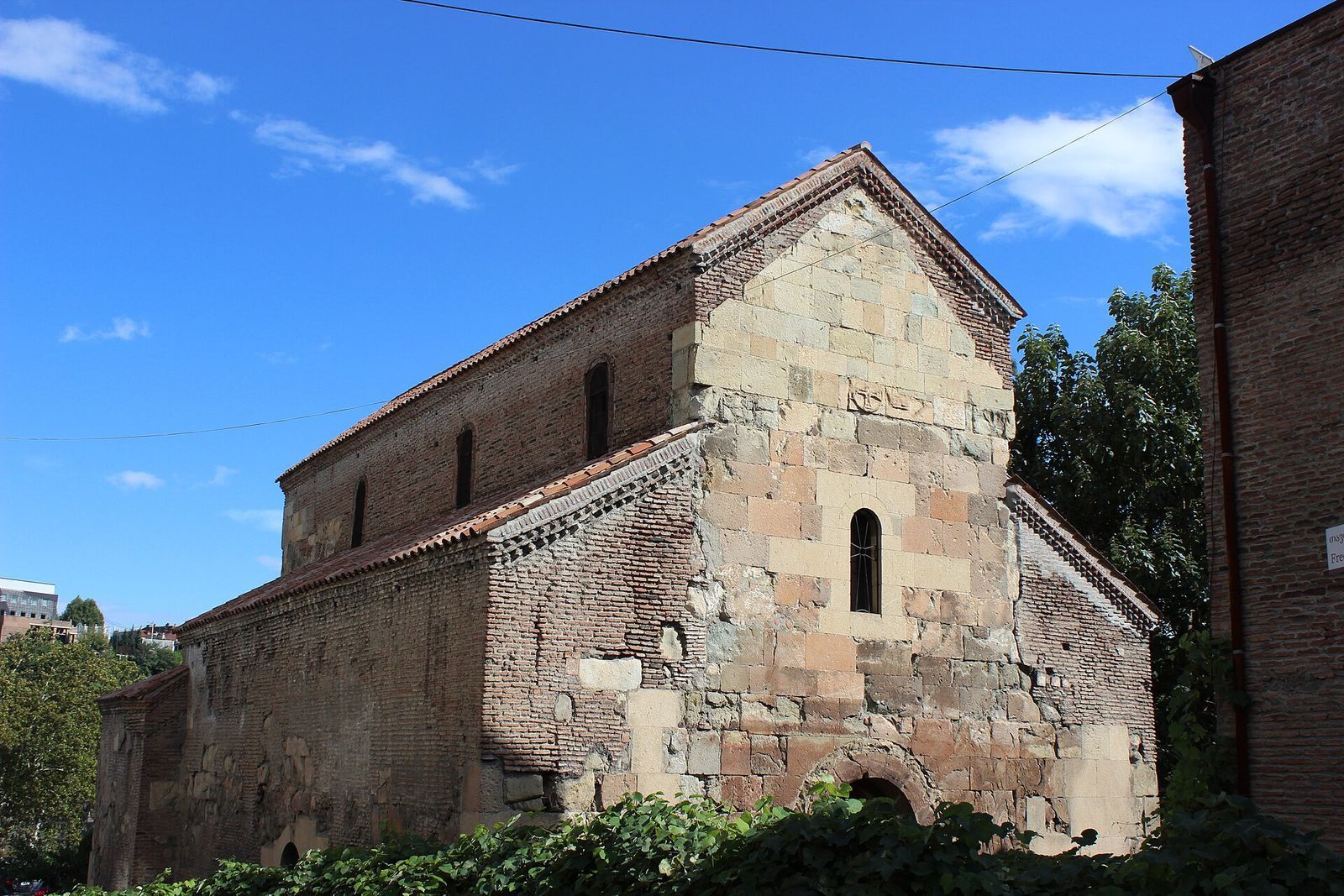
In Tbilisi itself, the oldest church still standing is Anchiskhati Basilica, a low stone church on a side street of the Old Town with a brick bell tower beside it. It's small, dim inside and easy to walk past, and it's the closest the city gets to its early Christian centuries.
How Tbilisi was founded: the falcon legend
Every Georgian knows this story. In the 5th century, usually dated to 458, King Vakhtang I Gorgasali went hunting in the forest here. His falcon chased a pheasant, and both birds dropped into a hot spring. The king was so taken with the warm water that he ordered a city built on the spot, and named it after the Georgian word for "warm".
Treat it as legend: Vakhtang retook and strengthened a fortress that was already here. But the springs are real, and they still run under the brick domes of Abanotubani, where an hour in the sulfur baths puts you in the same water the story started with.
Vakhtang's son, King Dachi, made it official in the 6th century by moving the capital of Kartli from Mtskheta to Tbilisi. The city sat on the trade route between Europe and Asia, and for the next 1,500 years that position decided its fate: merchants came for the same reason armies did.
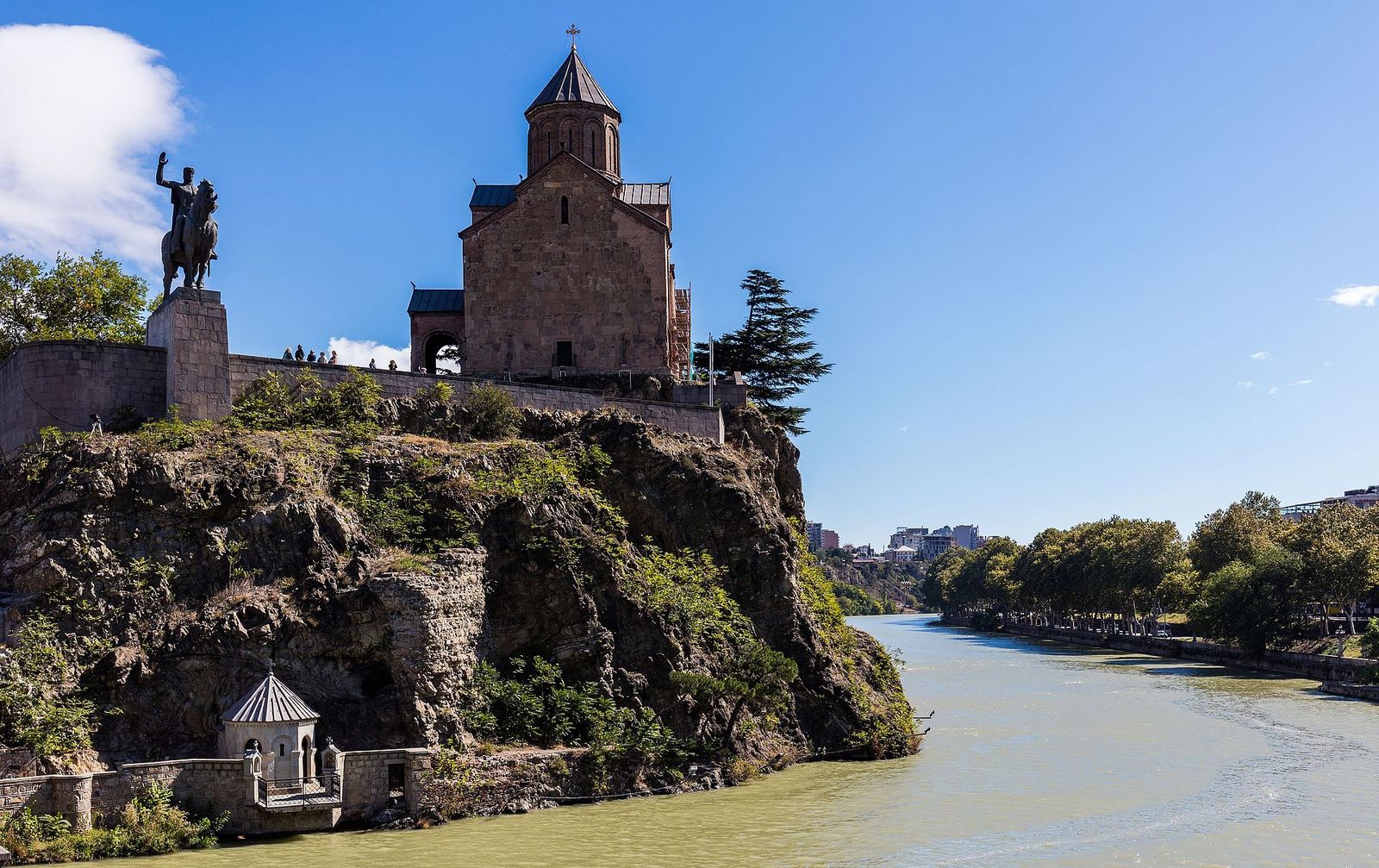
The founder rides on horseback above the river in Avlabari, beside Metekhi Church on its cliff, across the water from the baths and the fortress. It's the one statue in Tbilisi I'd make a point of seeing, because from that spot you can take in the springs, the ridge and the old city in one look.
Arab Tbilisi and David the Builder
In 736 the armies of the Umayyad Caliphate took Tbilisi and set up the Emirate of Tbilisi, a Muslim city-state that lasted almost 400 years. It was not a quiet stretch. In 853 an army sent by the caliph burned the city, the first of many times Tbilisi would be torched and rebuilt. The emirs extended Narikala's walls, and the city kept trading through all of it.
The man who ended it is the king Georgians rank above all others: David IV, called Aghmashenebeli, "the Builder". In 1121 he won the Battle of Didgori against a Seljuk army, and in 1122 he rode into Tbilisi and made it the royal capital of a united Georgia. He took a city of about 80,000 people, most of them Muslim, and made it the seat of a Christian kingdom.
You'll meet his name all over the country. The long 19th-century avenue on the left bank in Marjanishvili is Aghmashenebeli Avenue, and when a Georgian says "David" without a surname in a history conversation, this is the David they mean.
Queen Tamar and Georgia's Golden Age
A few generations after David, Queen Tamar took his kingdom to its height. She ruled in the late 12th and early 13th centuries, the first woman to rule Georgia in her own right, and her reign is what Georgians mean by the Golden Age: rich from trade, sure of itself, and building churches and monasteries across the country. Many people here still call her King Tamar.
Her age also produced the national poem. Shota Rustaveli wrote The Knight in the Panther's Skin in her time, it has been translated into about 40 languages, and Tbilisi's grandest street, Rustaveli Avenue, carries his name.
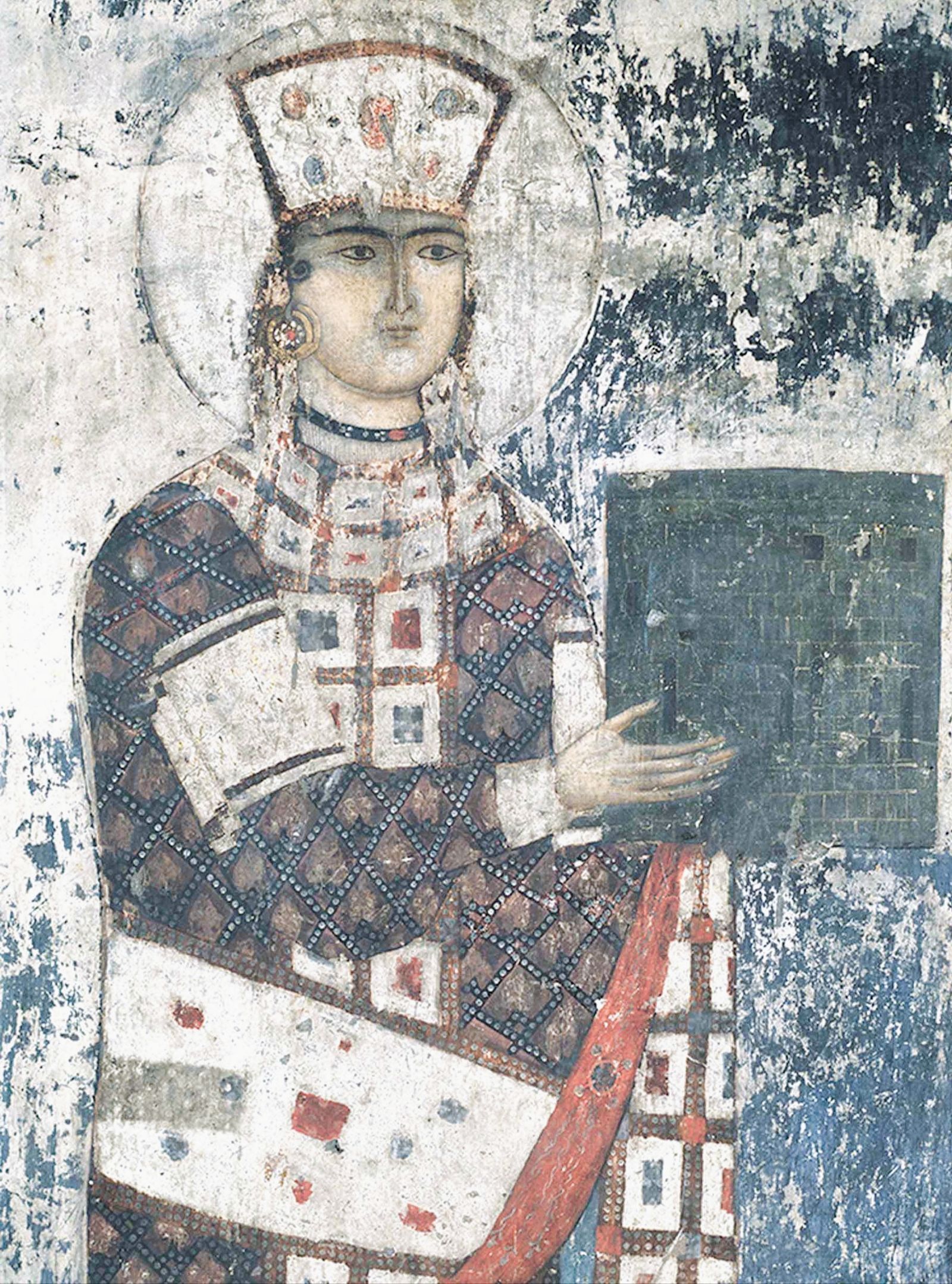
The portrait of Tamar everyone knows is a fresco in the main church at Vardzia, the cave monastery cut into a cliff in southern Georgia that was finished under her rule between 1184 and 1186. She is painted beside her father, George III, in a jeweled crown, and it's one of the few faces from the Golden Age you can still look in the eye.
Mongols, Timur and Persia: six centuries of invasions
The Golden Age did not last. In 1226 the Khwarezmians sacked Tbilisi, and from 1236 the city was under Mongol rule until the Mongols were pushed out in the 1320s. Then came Timur, also known as Tamerlane, who invaded eight times between 1386 and 1403 and captured King Bagrat V.
From 1522 Tbilisi was under Persian control. In 1762 the eastern kingdoms of Kartli and Kakheti joined under King Erekle II, and in 1783 a treaty made his kingdom a Russian protectorate.
The protection never came when it mattered. In 1795 the Persian ruler Agha Mohammad Khan marched on Tbilisi and burned it to the ground, and the Russians stayed away. That fire is the reason so little of medieval Tbilisi survives above ground: the churches and walls lasted, and almost everything around them was built again.
| Year | Invader | What it meant for Tbilisi |
|---|---|---|
| 853 | The caliph's army | The first great burning of the city |
| 1226 | The Khwarezmians | The Golden Age capital sacked |
| 1236 to the 1320s | The Mongols | Nearly a century of Mongol rule |
| 1386 to 1403 | Timur | Eight invasions and a captured king |
| 1522 | Persia | Persian control, on and off, until the Russians came |
| 1795 | Agha Mohammad Khan | The city burned to the ground |
Tiflis in the Russian Empire
In 1801 Russia annexed Kartli-Kakheti. Tiflis, as the Russians called it, became the main city of the Russian Caucasus, and the 19th century remade it: European-style mansions, theaters and boulevards, and railways out to Batumi, Poti, Baku and Yerevan. Artists and writers flocked here, and the city picked up the name "Paris of the East".
This is the Tbilisi most visitors fall for. Sololaki, just below the fortress, is where the merchants built their houses, with painted entrance halls, cast-iron staircases and carved wooden balconies hanging over the lanes. The crooked streets of Old Tbilisi follow a plan far older than the houses on them, because the city was rebuilt on its old street lines after 1795.
My favorite way to read this period is to look up. The balconies and the courtyards with spiral iron stairs are the 19th century still standing, and on a slow afternoon in Sololaki you can see more of it than in any museum.
Independence, Soviet Georgia and 9 April 1989
When the Russian Empire collapsed, Georgia declared independence on 26 May 1918. The first republic lasted less than three years: in February 1921 the Red Army marched into Tbilisi, and Georgia spent the next 70 years as part of the Soviet Union, from 1936 as the Georgian Soviet Socialist Republic.
The most notorious Georgian of the century was Joseph Stalin, born in Gori, where his birth house and a museum about him still stand. The Soviet decades also left Tbilisi its metro, its Stalin-era government buildings on Rustaveli Avenue and the concrete towers of Saburtalo, the raw material for any walk through Soviet architecture in Tbilisi.
Georgians pushed back more than once. On 14 April 1978, crowds on Rustaveli Avenue forced Moscow to keep Georgian as the state language, a day still marked every year and the reason the Georgian alphabet carries so much pride here.
Then came the night that changed everything. On 9 April 1989, Soviet troops broke up a peaceful protest on Rustaveli Avenue in front of the government building, and at least 19 people died. It turned a protest movement into a national one, and 9 April is now a public holiday, Independence Restoration Day. The Soviet Occupation Hall at the Georgian National Museum covers these 70 years, and it's the room I'd send anyone who wants to understand how people here talk about Russia.
Independent Georgia: civil war, the Rose Revolution and 2008
Georgia declared independence on 9 April 1991, two years to the day after the killings, as the Soviet Union came apart. The start was rough. In 1991 and 1992, fighting around Parliament ousted the first president, Zviad Gamsakhurdia, and you can still find bullet marks on buildings near Parliament on Rustaveli Avenue. Eduard Shevardnadze led the country through the rest of the 1990s, a decade of crime and corruption.
In November 2003 the Rose Revolution ended it. Protesters walked into Parliament, Shevardnadze resigned, and in January 2004 Mikheil Saakashvili became president. Georgia adopted the five-cross flag you see on every public building now, and corruption fell sharply.
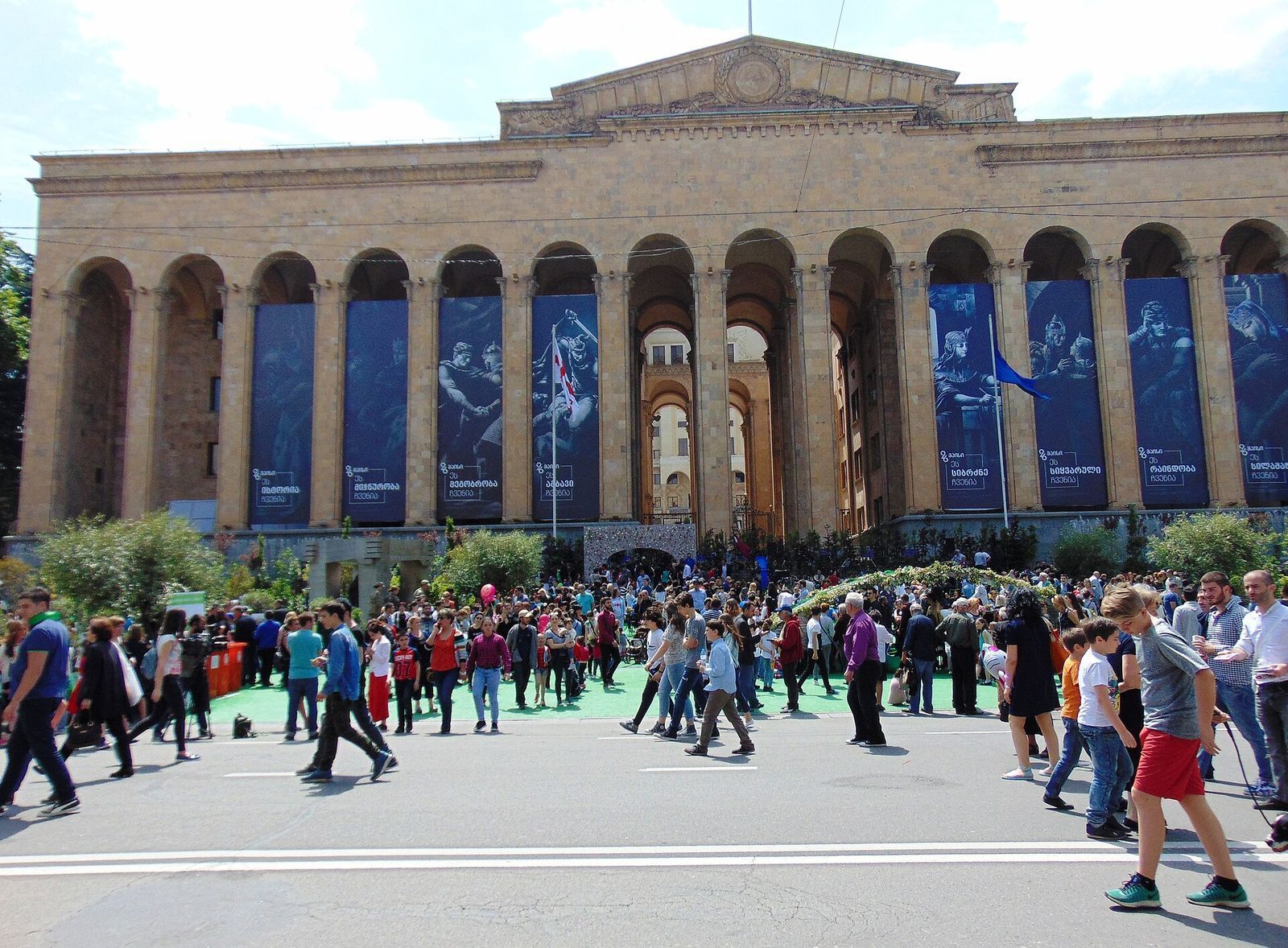
In August 2008 Georgia fought a five-day war with Russia, after which Russia recognized Abkhazia and South Ossetia as independent. In October 2012 the Georgian Dream party, founded by Bidzina Ivanishvili, won the parliamentary election. The same year Parliament moved to a new building in Kutaisi, and it returned to Tbilisi in 2019, back in the building on Rustaveli Avenue where so much of this story played out.
Where to see Georgian history in Tbilisi
The good news for a visitor is that Tbilisi's history is mostly outdoors and mostly free. You can walk through 1,500 years in a day without buying more than a museum ticket and a cable car ride.
| Place | Era | What you see | Cost |
|---|---|---|---|
| Georgian National Museum | Every era | Colchian gold, the Dmanisi skulls, the Soviet Occupation Hall | 40 GEL |
| Rustaveli Avenue and Parliament | 1918 to 2003 | The site of 9 April 1989 and the Rose Revolution | Free |
| Sololaki | 19th-century Tiflis | Merchants' mansions, painted entrance halls, carved balconies | Free |
| Anchiskhati Basilica | Early Christian Tbilisi | The oldest church in the city | Free |
| Narikala Fortress | 4th century onward | Walls rebuilt by almost every power that held the city | Free; cable car 2.50 GEL |
| Mother of Georgia | 1958, the city's 1,500th anniversary | A 20 m statue with a sword and a bowl of wine | Free |
| Abanotubani sulfur baths | The founding legend | The hot springs under brick domes | Private rooms from 130 GEL an hour |
| Metekhi and the Gorgasali statue | The 5th-century founder | The king on horseback above the river | Free |
| Chronicles of Georgia | Soviet era, 1980s | 16 pillars of kings, queens and Bible scenes | Free |
My history day runs backward in time, which works better on foot. Start at the National Museum when it opens at 10:00 (it's closed on Mondays), then walk down Rustaveli Avenue past Parliament to Freedom Square. Cut through Sololaki to the Old Town and Anchiskhati, climb or ride up to Narikala and walk along the ridge to the Mother of Georgia, which went up in 1958 for the city's 1,500th anniversary. Come down to the baths for the founding legend, then cross the river to Metekhi and end with the founder himself.
The Chronicles of Georgia are the one piece that needs a taxi: a monument of 16 pillars above the Tbilisi Sea, about 20 minutes from the center, with Georgia's kings, queens and saints in bronze. It's free and open around the clock, and after a day of the real places it plays like a picture book of everything you've just walked through.
Key takeaways
- Tbilisi's founding is dated to the 5th century, usually 458, and the falcon legend explains its name, from the Georgian word for "warm".
- David the Builder retook the city in 1122 and Queen Tamar led the Golden Age in the 12th and 13th centuries.
- Invasions from 1226 to 1795 destroyed most of medieval Tbilisi, and the Old Town you see today was largely rebuilt in the 19th century.
- Georgia was Soviet from 1921 to 1991, and 9 April 1989 and the 2003 Rose Revolution both played out on Rustaveli Avenue.
- Most of the history is outdoors and free: Narikala, the baths, Metekhi, Sololaki and Rustaveli Avenue fit into one walking day.
Frequently asked questions
How old is Tbilisi?
About 1,500 years as a city. Tradition dates its founding to the 5th century, usually 458, and the city marked its 1,500th anniversary in the late 1950s. People lived around the hot springs much earlier, as far back as the Neolithic.
Who founded Tbilisi?
King Vakhtang I Gorgasali, according to legend. He is said to have built the city after his falcon fell into a hot spring while chasing a pheasant, and his son Dachi made Tbilisi the capital in the 6th century.
What was Tbilisi called before?
Tiflis. That was the name used under Persian and Russian rule and on most foreign maps, and the city officially became Tbilisi in 1936.
Was Georgia part of the Soviet Union?
Yes, from 1921 to 1991. The Red Army invaded in February 1921 and ended Georgia's first independent republic, and the country regained its independence as the Soviet Union broke up in 1991.
When did Georgia become independent?
Twice. Georgia first declared independence on 26 May 1918, which is still Independence Day, and declared it again on 9 April 1991, two years to the day after Soviet troops killed at least 19 protesters in Tbilisi.
When did Georgia become Christian?
In the 4th century. St Nino is the figure credited with converting the royal court of Kartli, and Mtskheta, the capital at the time, is still the country's holiest town.
Who was the greatest king of Georgia?
Most Georgians would say David IV, "the Builder", who won the Battle of Didgori in 1121 and made Tbilisi his capital in 1122. Queen Tamar, who ruled in the Golden Age that followed, is the other name you'll hear.
What happened between Georgia and Russia in 2008?
Georgia and Russia fought a five-day war in August 2008. Afterward Russia recognized Abkhazia and South Ossetia, two regions inside Georgia's borders, as independent states.
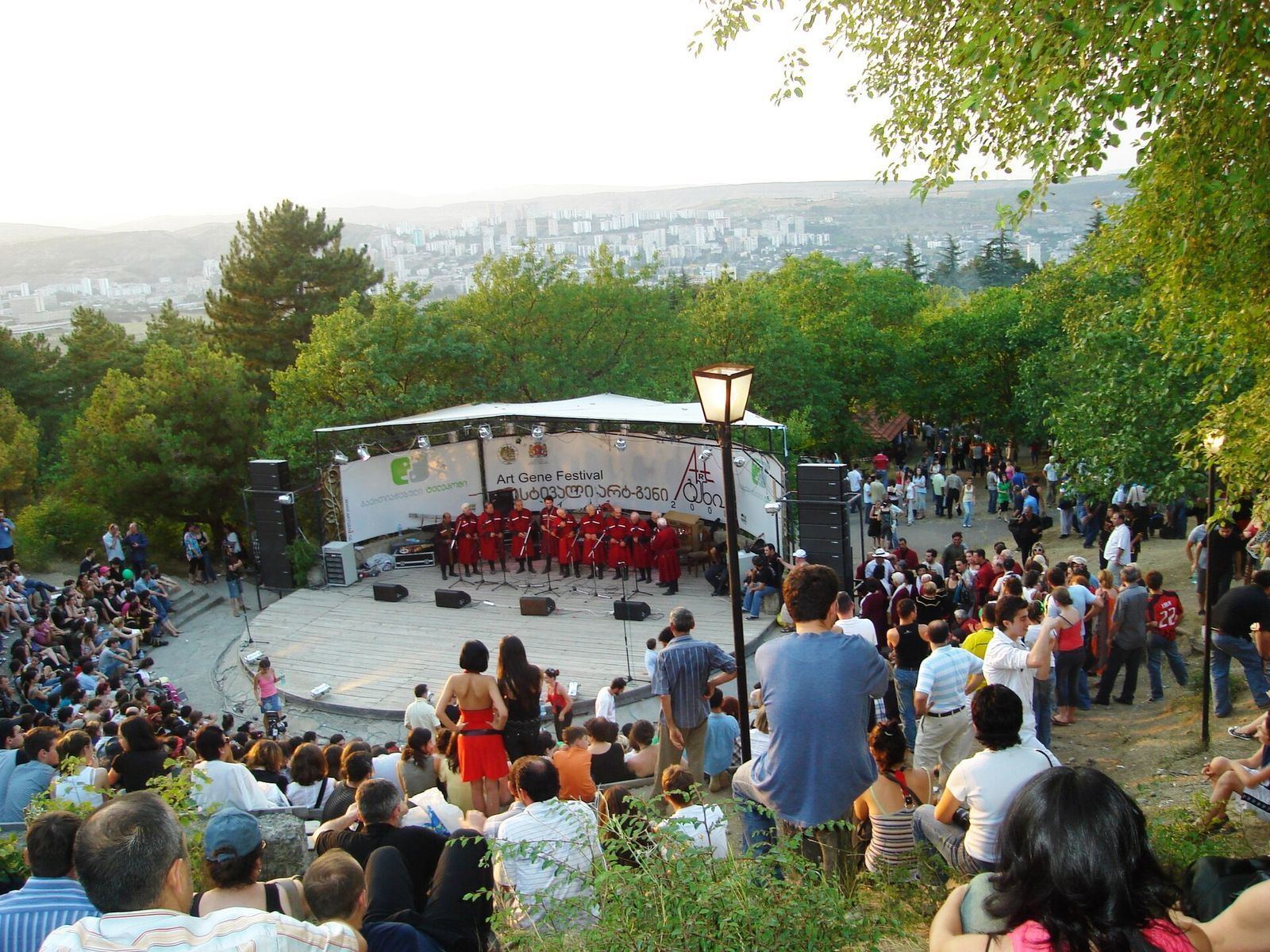
Georgian Culture and Traditions: A Visitor's Guide to Customs, Feasts, Faith and Song
Georgian culture is known for feasts, wine and song. Here's what visitors should know about its customs and traditions.
Read the guide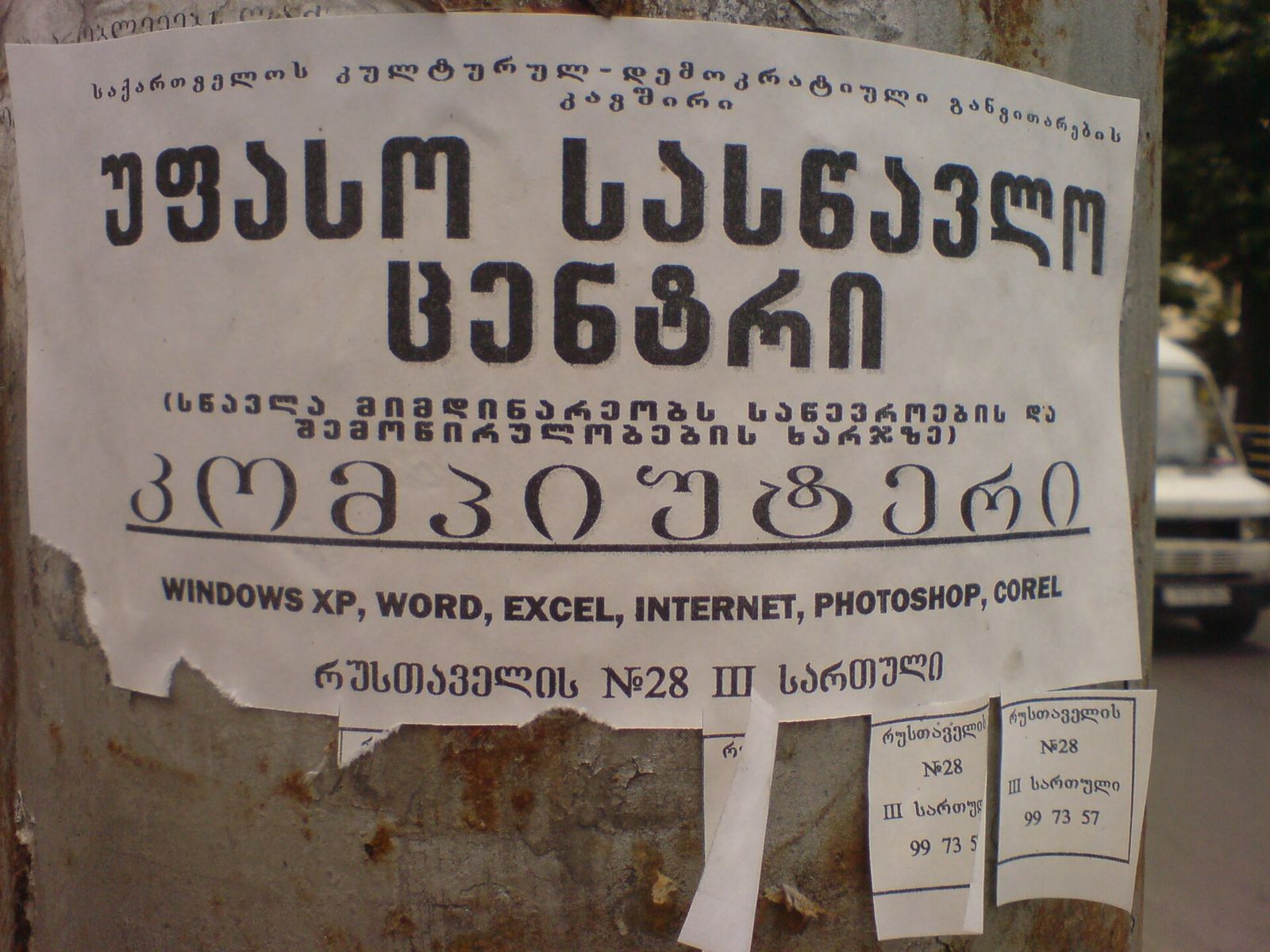
Basic Georgian Phrases for Travelers, with Pronunciation
Georgian has its own alphabet and a hello that means victory. Here are the phrases to learn and how to say them.
Read the guide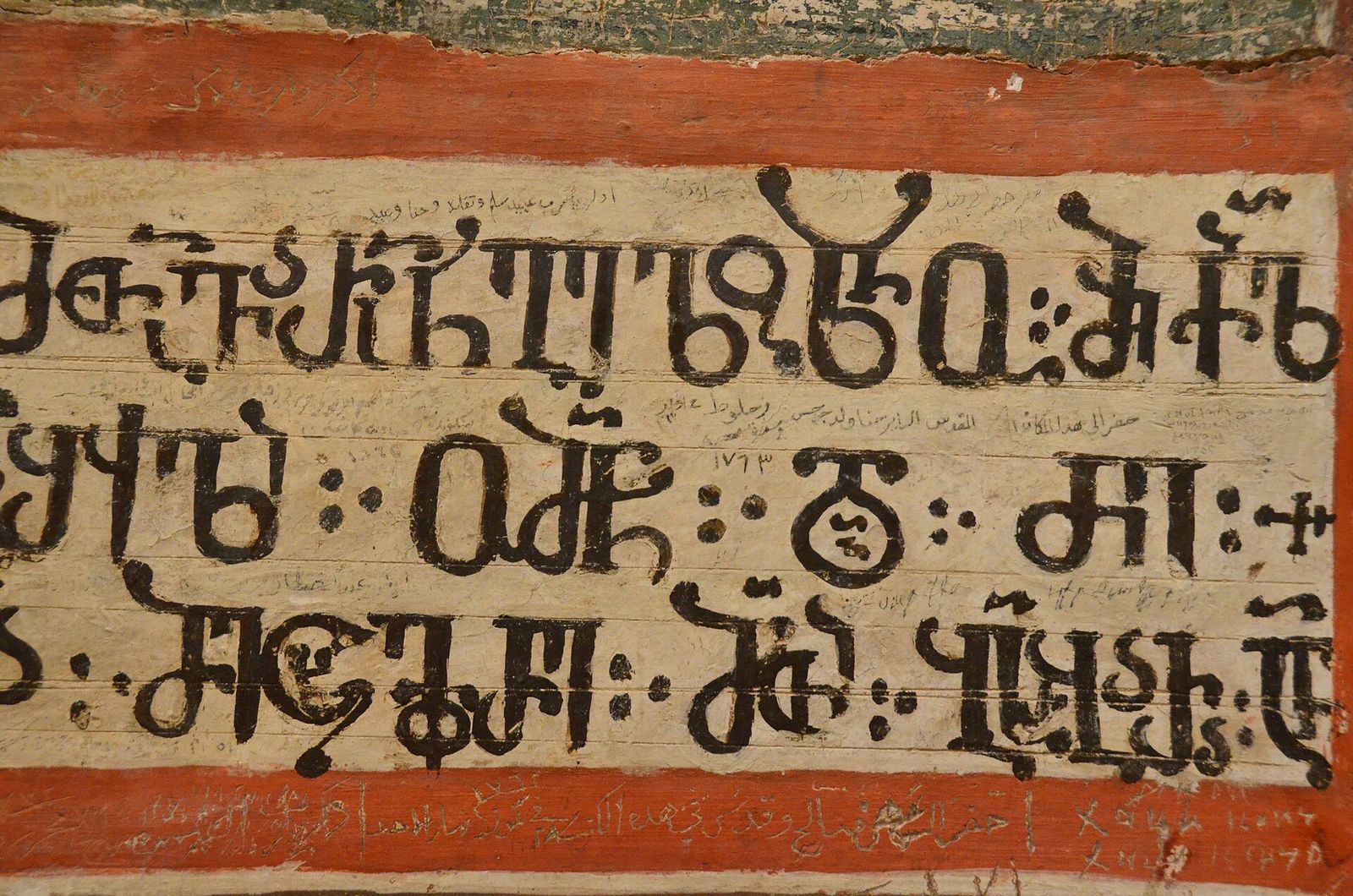
The Georgian Alphabet: 33 Letters, Three Scripts and Where to See Them
Georgia writes in its own alphabet. Here is how the 33 letters work, the three scripts and where to see them.
Read the guide