SIM Cards and eSIMs in Georgia: Magti, Silknet and Cellfie
Mobile data in Georgia is cheap and easy to get: a tourist SIM with a month of data costs about 20 GEL, and the Magti desk at Tbilisi Airport never closes. Here's what you need to know about the 3 networks (Magti, Silknet and Cellfie), what their packages cost in 2026, where to buy one, when an eSIM makes more sense, and where the signal drops out in the mountains.
Which SIM card to get in Georgia
My short answer is Magti. It has the best coverage once you leave the cities, 4G and 5G in Tbilisi, and its tourist package of 20 GEL for 15 GB over 30 days covers almost any trip. If you never leave Tbilisi or Batumi, Silknet does the job for less, and its tourist plans come with unlimited data.
Here's what I'd buy for each kind of trip:
| Your trip | What I'd get | What it costs |
|---|---|---|
| 3 to 5 days in Tbilisi only | Silknet tourist plan, unlimited data | 10 GEL for 7 days |
| 1 to 2 weeks with Kazbegi or Svaneti | Magti tourist package | 20 GEL for 15 GB, 30 days |
| A month or more, working on a laptop | Silknet Tourist+ unlimited, or a monthly plan from a city shop | 30 GEL for 30 days |
| A weekend stopover on an eSIM phone | An eSIM from an app, set up at home | From about $4.50 for 1 GB, 7 days |
| A tight budget, cities only | Cellfie prepaid | 8 GEL for 3 GB, 30 days |
| A late landing at Kutaisi | An eSIM set up before you fly | From about $4.50 |
The gap between the networks only shows once you head for the Greater Caucasus. In Tbilisi all 3 work, and you'd struggle to tell them apart on a walk through the old town. On the road to Kazbegi, in Svaneti or on a hike above a village, Magti is the one that keeps a signal.
Magti, Silknet and Cellfie compared
Georgia has 3 mobile networks. Their prices sit close together, so the real choice is coverage, and coverage only matters if your plans go beyond the big cities.
| Network | Coverage | Tourist data | Best for |
|---|---|---|---|
| Magti | The best in the mountains; 4G and 5G in the cities | 15 GEL for 5 GB, or 20 GEL for 15 GB | Any trip beyond Tbilisi |
| Silknet | Good in Tbilisi, Batumi and on the main highways; patchier in the mountains | Unlimited: 10 GEL a week, 30 GEL a month | City stays and heavy data use |
| Cellfie | The major cities only | 8 GEL for 3 GB | The cheapest city-only option |
Magti
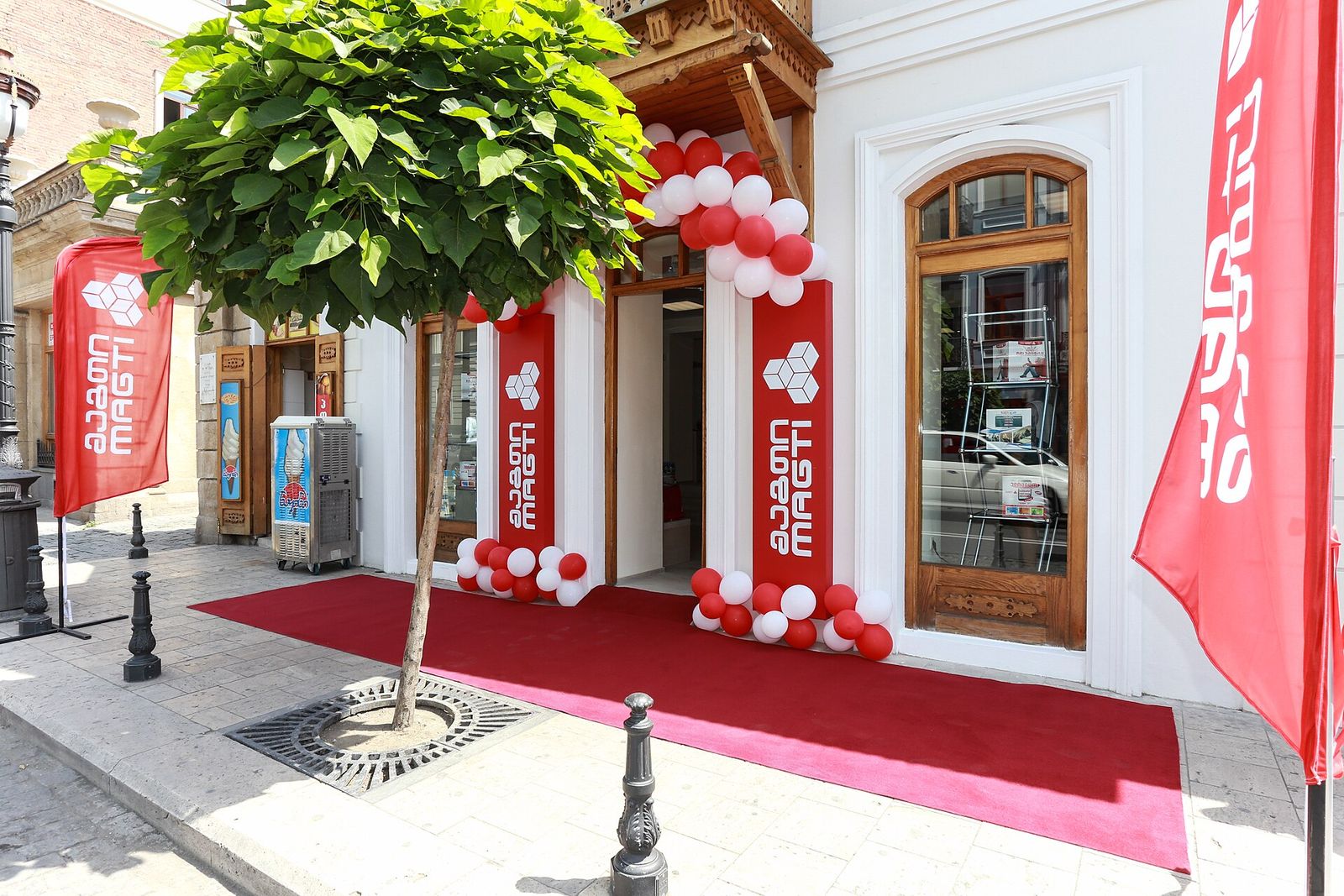
Magti is the biggest network in Georgia and the one I keep in my phone. Its coverage on the mountain roads to Kazbegi, Svaneti and Tusheti is the best of the 3, and in Tbilisi it runs on 4G and 5G. The tourist package is 20 GEL for 15 GB over 30 days, and if you burn through that, another 10 GB costs 10 GEL in the MyMagti app, paid by card.
Its stand at Tbilisi Airport is open 24 hours, and there are Magti shops all over the city center. If you land on a late flight and want one less decision to make, this is the desk to walk to.
Silknet
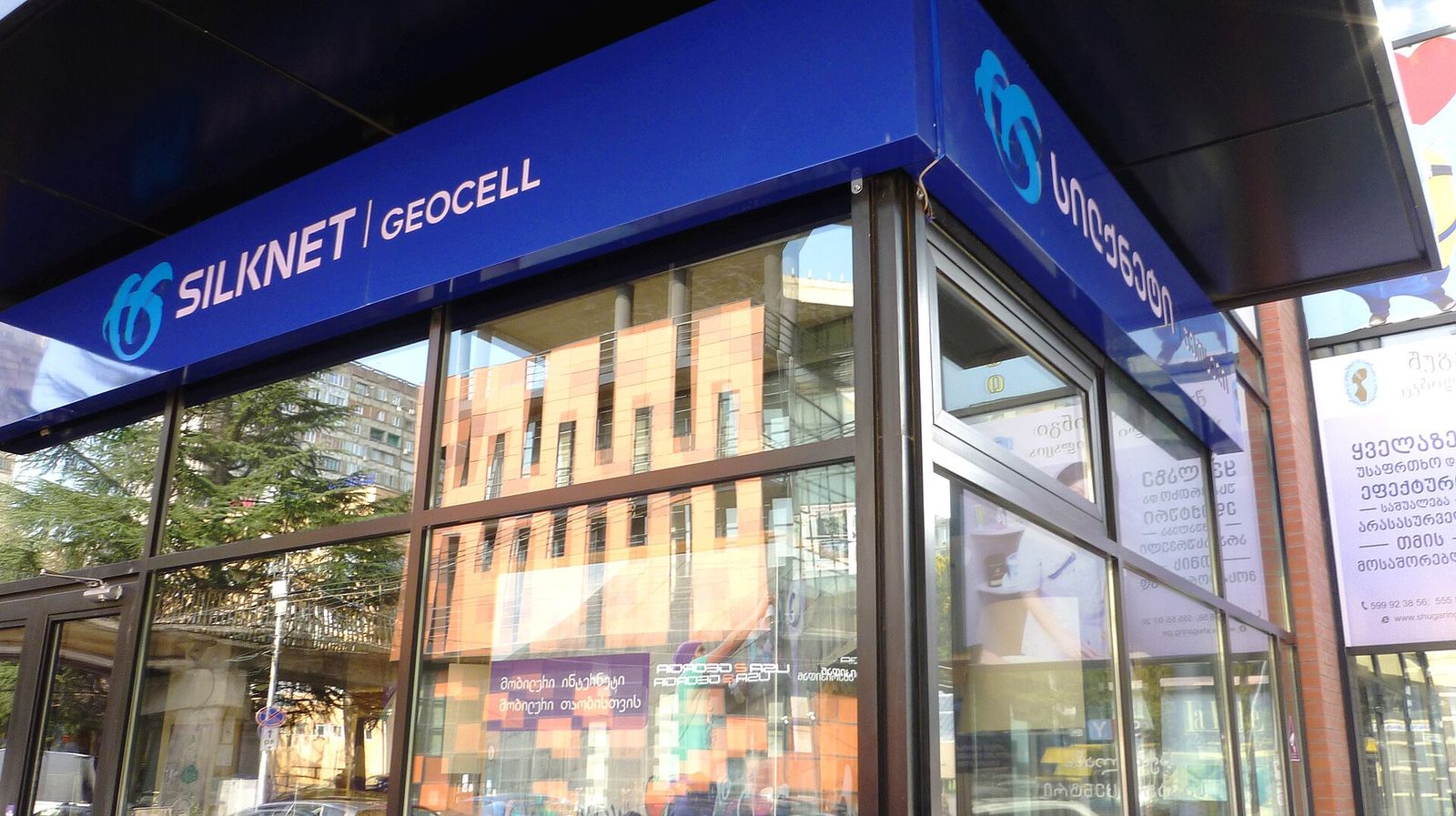
Silknet is the second network, and you'll still see its old name, Geocell, on some shopfronts. It's the cheapest way to get unlimited data in Georgia: 10 GEL for 7 days on the tourist plan, or 30 GEL for 30 days on Tourist+. Coverage is good in Tbilisi, in Batumi and along the main highways, and weaker once you climb into the mountains.
I'd pick Silknet for a city break, or for a month in Tbilisi with a laptop, when unlimited data matters more than signal in a high valley.
Cellfie
Cellfie is the network that used to be Beeline. It's the budget option, with a prepaid plan of 8 GEL for 3 GB over 30 days, but its coverage is limited to the major cities. It's fine for a few days in Tbilisi on a small data habit. I wouldn't take it on a mountain trip.
Tourist SIM prices in 2026
A tourist SIM in Georgia costs between 8 and 30 GEL, depending on how much data you want and for how long. Here's what each package costs:
| Network | Package | Data | Valid for | Price |
|---|---|---|---|---|
| Magti | Welcome 15 | 5 GB | 15 days | 15 GEL |
| Magti | Tourist package | 15 GB | 30 days | 20 GEL |
| Magti | Welcome 30 | 3 GB plus calls | 15 days | 30 GEL |
| Magti | Extra data in the app | 10 GB | Add-on | 10 GEL |
| Silknet | Tourist | Unlimited | 7 days | 10 GEL |
| Silknet | Tourist+ | Unlimited | 30 days | 30 GEL |
| Cellfie | Prepaid | 3 GB | 30 days | 8 GEL |
Maps and taxi apps use more data than most people expect, especially if you leave Google Maps running while you walk. I'd skip the smallest packages for anything longer than a weekend. Magti's 15 GB is the one I'd buy for most trips, and if you stream video or run a laptop off your phone, Silknet's unlimited plan is the answer.
Where to buy a SIM card: Tbilisi Airport or in town
At Tbilisi Airport the operator desks sit in arrivals, right after passport control. Magti's stand is open around the clock, registration needs only your passport, and it takes about 5 minutes. The desks sell the tourist packages above, so you walk out with working data.
In town, every network has shops on and around Rustaveli Avenue, Freedom Square and Vera, and the staff speak English. City shops carry more tariffs than the airport kiosks, including monthly plans, and some packages cost a little less there. Kiosk prices can also differ from one desk to the next, so if you're in no hurry, compare 2 before handing over your passport.
Kutaisi and Batumi airports have SIM desks too, but they may be shut when a late flight lands. If you fly into Kutaisi, the airport buses have free Wi-Fi all the way to the capital, and a Magti SIM bought once you reach Tbilisi costs less than the counter at the airport. The Kutaisi Airport to Tbilisi bus takes 3.5 to 4 hours, which is plenty of time to get by on the bus Wi-Fi.
The ride from Tbilisi Airport to the city center is the main reason to sort data first. A Bolt costs about 25 to 35 GEL, the taxi booth inside the terminal charges 60 to 80 GEL, and the unlicensed drivers at the doors ask 40 to 100 GEL, so a 20 GEL SIM pays for itself before you reach your hotel.
What you need to buy a SIM in Georgia
You need 2 things: your passport and an unlocked phone. Every SIM in Georgia is registered to the person buying it, so the desk needs to see your passport. If your phone is locked to your home network, a Georgian SIM won't work in it, so check before you fly.
Bring a card and a little lari. The airport ATMs from TBC and Bank of Georgia sit right by the arrivals exit, and they beat the airport exchange desk on rate; money in Georgia mostly runs on cards in Tbilisi, but cash still helps for small shops and minibuses.
eSIMs in Georgia
An eSIM is a SIM you download instead of slotting in. You buy it online, get a QR code by email, scan it in your phone's settings, and it's ready in about 2 minutes. Most recent phones take one: iPhone XS and later, Samsung Galaxy S20 and later, and Google Pixel 3 and later.
There are 2 ways to get one for Georgia:
- From a Georgian network. Magti, Silknet and Cellfie all sell eSIMs, and you can order one online before you arrive by sending a photo of your passport. You get local prices and a Georgian number.
- From an international eSIM app. These start at about $4.50 for 1 GB over 7 days and run on 4G. There's no desk and no passport scan, and you're online the moment the plane lands, but the data costs more than a local package.
For a short city break, an app eSIM is the simplest option. For a longer stay, or for any trip into the mountains, a local Magti SIM or eSIM wins on both price and coverage.
SIM, eSIM or roaming: what a week costs
Roaming on your home plan is the easy option and the expensive one. Here's how the 3 compare over a 7-day trip:
| Option | Cost for 7 days | Setup | Best for |
|---|---|---|---|
| Georgian SIM | 10 to 15 GEL | 5 minutes at a desk with your passport | Almost every trip |
| eSIM from an app | About $4.50 to $9 | At home, before you fly | Short city breaks and late landings |
| Roaming on your home plan | $15 to $80 or more | None | Only if your home plan includes Georgia |
If your home network already includes Georgia at no extra cost, roaming is fine for a few days. If it doesn't, a local SIM is the cheaper choice by a wide margin.
Mobile signal in the mountains: Kazbegi, Svaneti, Tusheti and Truso
This is where the choice of network shows. In the cities you'll have 4G on any of them; in the high valleys you'll want Magti, and even Magti runs out in places.
| Area | Signal on Magti | What to expect |
|---|---|---|
| Tbilisi to Kazbegi road | About 90% of the route | Full 4G at the Jvari Pass |
| Stepantsminda | Stable 4G | Fine for maps, calls and uploads |
| Gergeti Trinity Church hike | Weaker | Messaging apps still work |
| Truso Valley | Up to Ketrisi village | No signal for 2 to 3 hours on the walk to the Abano mineral lakes |
| Mestia | 3G and 4G | Enough for most things |
| Ushguli | Weak 2G | 30 to 40 minute gaps on the road from Mestia |
| David Gareja | Weak | Plan your ride back before you go |
| Batumi | Good on Magti and Silknet | Silknet works well here |
On a Kazbegi day trip you'll be online almost the whole way, which helps when the driver stops at Ananuri or the pass and you want to check the weather up top. Svaneti is a different story once you push past Mestia to Ushguli. At the David Gareja monastery, the signal is weak enough that I'd agree the pickup time with my driver before setting off.
Wi-Fi in the mountains is slower too. Hotels in Tbilisi usually run at 20 to 50 Mbps, and in the regions 10 to 20 Mbps is normal, with family guesthouses in the high villages often slower still. If you need to send work files from Kazbegi, the stable 4G on Magti in Stepantsminda is your backup when the guesthouse router crawls.
Topping up data and credit
You don't need to go back to a shop to top up. The MyMagti and Silknet apps both take a bank card, so adding data takes a minute wherever you are. On Magti, another 10 GB costs 10 GEL, which is how I'd stretch the 15 GB package over a longer trip rather than buying the biggest one up front.
Operator shops in town will also top you up over the counter, and so will the street payment terminals called Payboxes.
Wi-Fi in Tbilisi
Tbilisi is easy to stay connected in even without data. Free Wi-Fi is standard in nearly every hotel, in most cafes and restaurants, in metro stations, on Freedom Square and in some parks, and the airport network needs no login. Wi-Fi in the best cafes in Tbilisi usually runs at about 30 to 50 Mbps, which is fine for video calls.
If you're working from the city for a few days, these are the places I'd set up a laptop:
| Spot | Type | What to know |
|---|---|---|
| Stamba and Fabrika | Cafes in converted industrial buildings | About 30 to 50 Mbps, busy and social |
| Impact Hub | Coworking | From 25 GEL a day, 50 Mbps or more |
| Terminal | Coworking | From 20 GEL a day |
| Lokal | Coworking | From 15 GEL a day |
A cafe costs you nothing beyond what you order, though the tables fill up and the noise climbs through the afternoon. The coworking spaces cost more, but they're the better choice for a full day of video meetings.
Wi-Fi alone can carry a 2-day stopover in Tbilisi, but it won't follow you into a taxi or down a side street when you're looking for dinner. For anything longer, I'd still buy a SIM.
Your home SIM, bank codes and offline maps
Keep your home SIM in your phone if it has a second slot or takes an eSIM next to a physical SIM. Turn data roaming off on the home line and use the Georgian SIM for data. Your bank's SMS codes still reach you when you pay online or log in, and you don't run up a roaming bill.
Before you land, get the apps you'll use most working on Wi-Fi. Bolt and Yandex Go are the ride apps in Tbilisi, and Uber doesn't operate in Georgia; taxis in Tbilisi through an app cost 3 to 7 GEL across the center, against 10 to 20 GEL for a street taxi with no meter. The Tbilisi metro costs 1 GEL a ride and its stations have free Wi-Fi, so you can load the map for your next stop underground, even on a small data package.
Key takeaways
- Magti is the SIM to get for most trips: 20 GEL for 15 GB over 30 days, with the best mountain coverage in Georgia.
- Silknet's unlimited tourist plan (10 GEL a week, 30 GEL a month) is the cheapest option for a stay in Tbilisi or Batumi.
- Buy at the 24-hour Magti stand at Tbilisi Airport with your passport, so you have data for Bolt before you walk outside.
- An eSIM from an app suits a short city trip; a local SIM wins on price and coverage for anything longer.
- Download offline maps of Georgia before Truso, Ushguli or David Gareja, where the signal disappears.
Frequently asked questions
Which SIM card is best for tourists in Georgia?
Magti is the best SIM for most tourists in Georgia. It has the strongest coverage in the mountains, including Kazbegi, Svaneti and Tusheti, and its tourist package costs 20 GEL for 15 GB over 30 days. For a city-only stay, Silknet's unlimited plan at 10 GEL a week is cheaper.
Can I buy a SIM card at Tbilisi Airport?
Yes, the operator desks are in arrivals just after passport control, and Magti's stand is open 24 hours. You need only your passport, and it takes about 5 minutes. City shops carry more tariffs and can be slightly cheaper, but buying at the airport gets you data for a Bolt into town.
How much does a SIM card cost in Georgia?
A tourist package costs 8 to 30 GEL depending on data and validity. Magti charges 20 GEL for 15 GB over 30 days, Silknet 10 GEL for a week of unlimited data, and Cellfie 8 GEL for 3 GB over 30 days.
Can I use an eSIM in Georgia?
Yes. Magti, Silknet and Cellfie sell eSIMs you can order online with a photo of your passport, and international eSIM apps start at about $4.50 for 1 GB over 7 days. Your phone needs to support eSIM, which covers iPhone XS and later, Samsung Galaxy S20 and later, and Google Pixel 3 and later.
Do I need a passport to buy a SIM card in Georgia?
Yes, every SIM in Georgia is registered to its buyer, so the desk needs your passport. Since 2026 each passport can hold one SIM per network, so travel companions each need their own passport at the counter.
Is there mobile signal in the mountains of Georgia?
Mostly, if you're on Magti. It covers about 90% of the road to Kazbegi and has stable 4G in Stepantsminda, but signal fades to weak 2G in Ushguli and disappears for 2 to 3 hours on the Truso Valley walk. Download offline maps before you go.
Is Wi-Fi free in Tbilisi?
Yes, free Wi-Fi is standard in nearly every hotel, most cafes and restaurants, metro stations and Freedom Square, and at the airport with no login. Speeds in central cafes usually run at 30 to 50 Mbps.
Tbilisi Travel Tips: What I'd Tell You Before a First Trip to Georgia
Tbilisi is known for wine, sulfur baths and long dinners. Here's what to know about entry, money, transport and safety.
Read the guide
Tbilisi Itinerary: How I'd Spend 1 to 5 Days in Tbilisi
Tbilisi is best over 3 full days. Here is how to spend 1 to 5, with routes, meals, day trips and costs.
Read the guide
The Best Time to Visit Tbilisi, Month by Month
Tbilisi is known for golden autumns and hot summers. Here is the weather by month, the crowds, and when I would go.
Read the guide