The Best Georgian Wines to Try: Amber, Saperavi and Semi-Sweet
Georgia is known for its wine, and a Tbilisi wine list can run to a dozen grape names you've never seen before. Here's what you need to know about the 12 Georgian wines I'd try first: the amber whites, the dry reds and the semi-sweet reds, what each one tastes like, what a good bottle costs, and which ones to carry home.
The best Georgian wines at a glance
These are my 12, grouped by style rather than ranked against each other, because a great semi-sweet Khvanchkara and a great amber Kisi are not trying to do the same job. If you're new to Georgian wine and the way it's made, the style column matters more than the grape: it tells you whether the glass will be crisp, tannic or sweet.
| Wine | Style | Grape | Region | What it tastes like |
|---|---|---|---|---|
| Qvevri Rkatsiteli | Amber, dry | Rkatsiteli | Kakheti | Tannic, dried fruit, nutty |
| Kisi | Amber, dry | Kisi | Kakheti | Tannic, dried fruit |
| Tsinandali | Dry white | Rkatsiteli and Mtsvane | Kakheti | Crisp and easy |
| Mtsvane or Manavi | Dry white | Mtsvane | Kakheti | Mountain herbs and citrus |
| Tsolikouri | Dry white | Tsolikouri | Imereti | Fresh, mineral, bright acidity |
| Saperavi | Dry red | Saperavi | Kakheti | Dark cherry, blackberry, dark chocolate |
| Mukuzani | Dry red, oak-aged | Saperavi | Kakheti | Structured and firm |
| Shavkapito | Dry red | Shavkapito | Kartli | Medium-bodied, fruity, a little smoky |
| Kindzmarauli | Semi-sweet red | Saperavi | Kakheti | Soft, dark, velvety |
| Khvanchkara | Semi-sweet red | Aleksandrouli and Mujuretuli | Racha | Raspberry |
| Akhasheni | Semi-sweet red | Saperavi | Kakheti | Velvety, chocolate hints |
| Usakhelouri | Semi-sweet red | Usakhelouri | Lechkhumi | Ruby, wild strawberry |
Best Georgian amber and white wines
Georgian whites come two ways. Made the European way, pressed off the skins, they're pale and crisp. Made the Georgian way, left on their skins for months, they turn amber and pick up the grip of a red. Start with the amber ones, because nobody else does them like this.
1. Qvevri Rkatsiteli
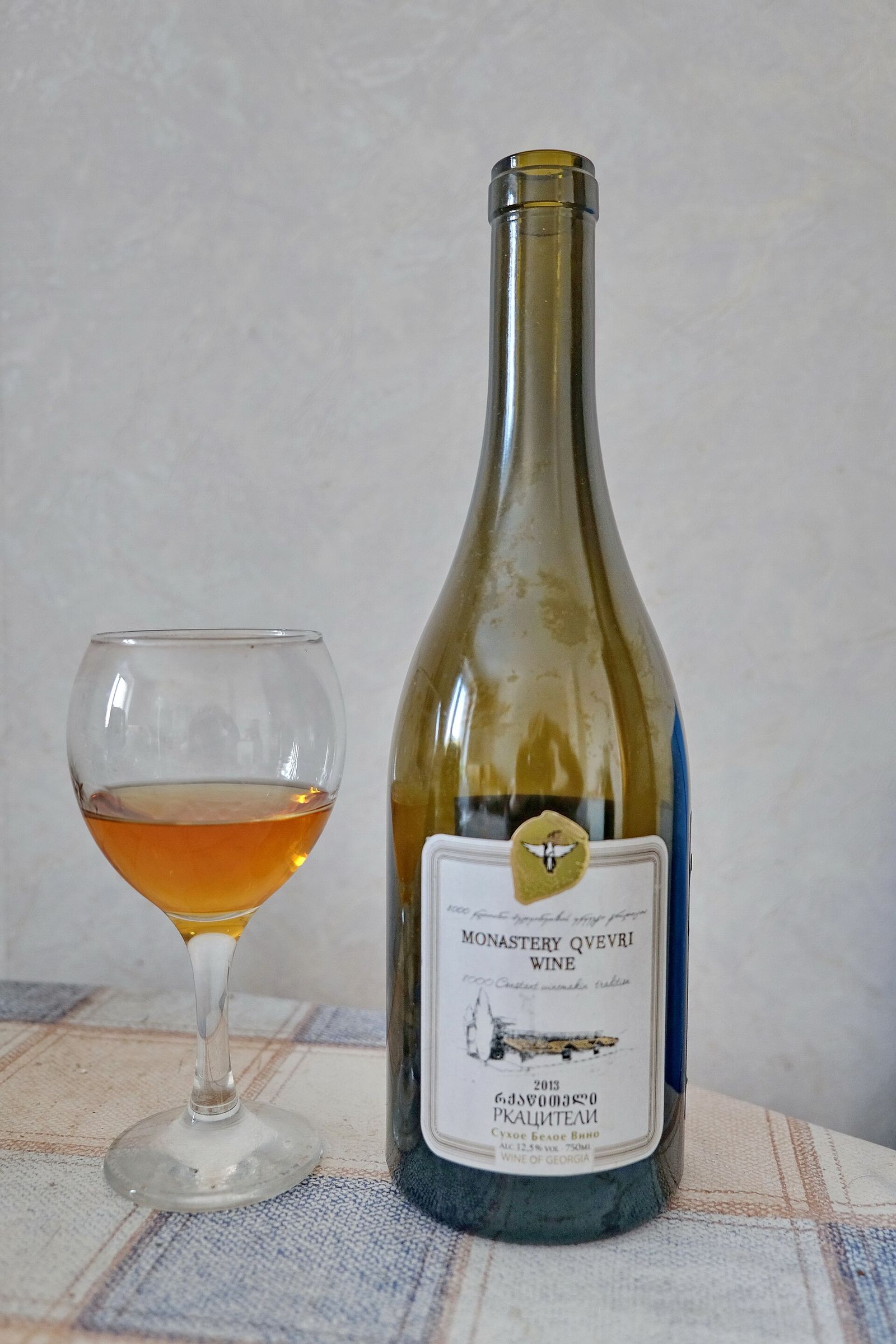
Rkatsiteli is Georgia's most planted white grape, and made in qvevri it's the wine I'd hand anyone on their first night in Tbilisi. The grapes go into a clay qvevri buried in the cellar floor with their skins, seeds and sometimes stems, and stay there for three to six months, often the full six in Kakheti. What comes out is amber to coppery, with tannin like a red, dried fruit and a nutty finish.
It's the style sold abroad as orange wine, and it suits fatty Georgian food: pork mtsvadi, cheese, anything with walnuts. The same grape made the European way is a light, floral white that drinks like a Pinot Grigio. Order one of each side by side once and you'll understand Georgian wine faster than any tour can teach it.
2. Kisi
Kisi is a Kakhetian white grape that nearly disappeared and has been brought back in recent years, and most of what you'll find is made as amber. It's my second step once someone likes qvevri Rkatsiteli, because it shows how much the grape changes the glass when the method stays the same.
Expect the same amber family traits: color from the skins, real tannin, dried fruit rather than fresh. It's less common than Rkatsiteli, so look for it at natural wine bars and specialist shops. If you enjoy it, the next grape to try is Khikhvi, another Kakhetian white made the same way, and by then you've tasted the core of Georgian amber wine across three grapes.
3. Tsinandali
Tsinandali is the classic dry white, usually about 80% Rkatsiteli and 20% Mtsvane, named for the Kakhetian village where the Chavchavadze family estate started bottling wine the European way in the early 1800s. It's made off the skins, so it's pale, crisp and easy, the opposite of an amber.
This is the bottle I'd order on a hot afternoon, or for a friend who winces at tannin in a white wine. A Tsinandali from a good producer starts at about 18 GEL in a Tbilisi shop, and a conventional white like this travels home better than an unsulfited natural wine.
4. Mtsvane and Manavi
Mtsvane means "green", and it's the aromatic white in the Georgian line-up: delicate, with mountain herbs and citrus on the nose. It often goes into blends with Rkatsiteli, including Tsinandali, but on its own it has more personality than its partner.
To be sure you're getting pure Mtsvane, order a Manavi, the Kakhetian appellation made from 100% Mtsvane. I like it chilled with a plate of Georgian salads and herbs, and it's the one white I'd put in a suitcase next to the reds. If you drink aromatic, fresh whites at home, start your Georgian whites here rather than with Rkatsiteli.
5. Tsolikouri
Tsolikouri is the white of western Georgia, mostly from Imereti, the region around Kutaisi, Georgia's second city. It's fresh and mineral with bright acidity, the gentle opposite of a Kakhetian amber.
Imeretian whites are lighter all round, and you'll see fewer of them on Tbilisi lists than Kakhetian wines, because Kakheti makes about 70% of the country's wine. That's the reason to order one when you do see it. A glass of Tsolikouri makes the best first drink of a long dinner, before you move to the heavier reds, and it's a good reminder that Georgian wine is not all tannin and skin contact.
Best dry Georgian red wines
Georgian red wine mostly means Saperavi. The three below run from the everyday bottle to the oak-aged one to a lighter grape from the region next to Tbilisi.
6. Saperavi
Saperavi is the flagship red, and the grape is unusual: its flesh is red too, so the juice runs dark, and the name means "dye". In the glass it's dark cherry, blackberry and dark chocolate, with deep tannin and fresh acidity. Young Saperavi is firm and grippy; after 3 years it turns velvety, and after 5 or more it picks up leather and tobacco notes.
A bottle in a Tbilisi shop costs 8 to 30 GEL, so you can drink very well for very little. The best Saperavi I'd point anyone to is the one poured straight from the qvevri at one of the family wineries in Kakheti, where you can book lunch with the family to go with it. If you only buy one red in Georgia, buy a good Saperavi.
7. Mukuzani
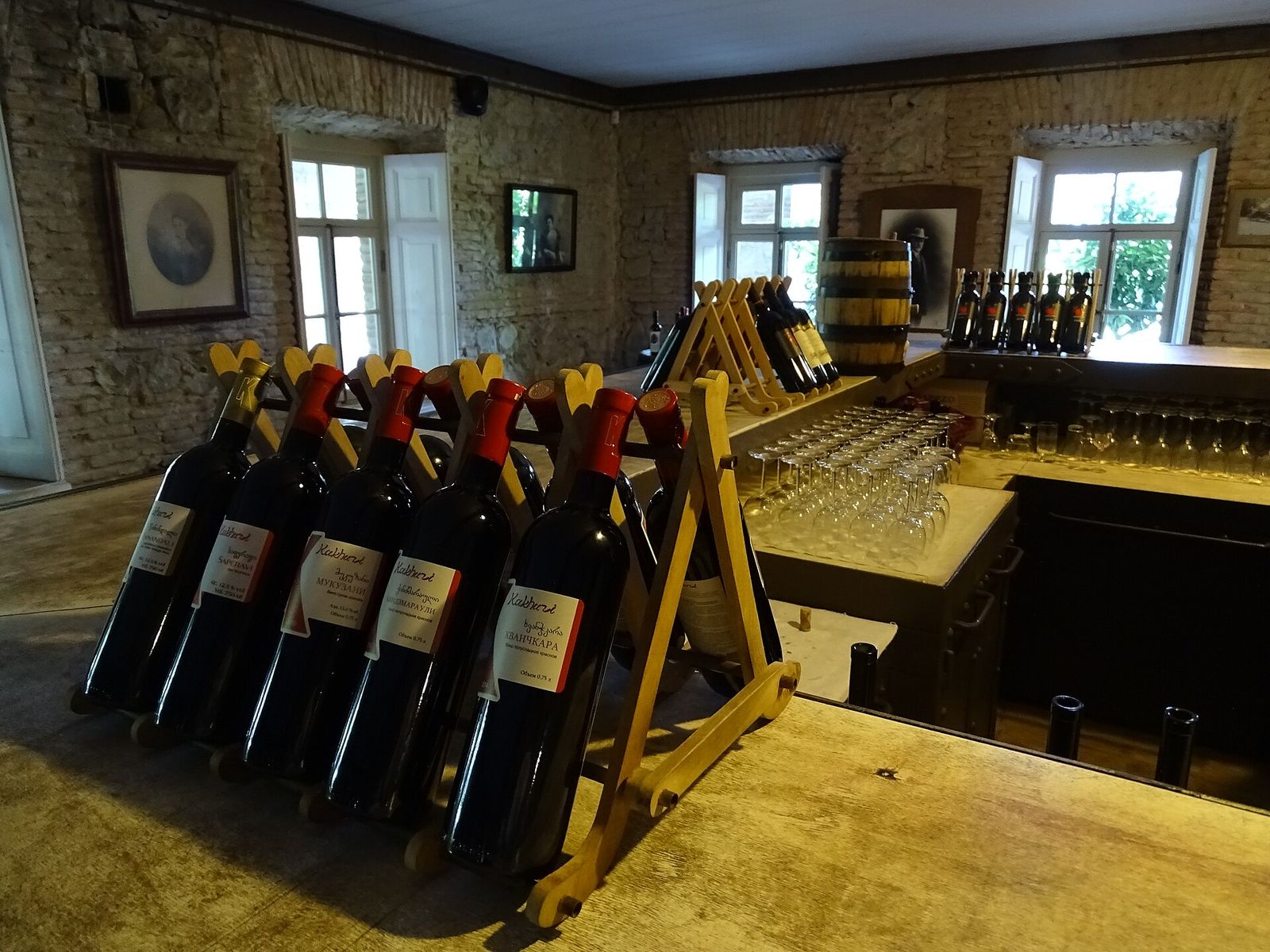
Mukuzani is Saperavi from the village of Mukuzani in Kakheti, aged at least 3 years in oak. It's dry, structured and serious, and it's the bottle I'd order for anyone who drinks Cabernet at home or finds Merlot too soft.
Because of the oak time, Mukuzani is the most familiar-tasting of the Georgian reds to a Western palate, which makes it a safe dinner bottle when you're ordering for a group. It goes with grilled meat and mtsvadi. A Mukuzani from a respectable producer starts at about 18 GEL in a shop, and it's a good one to carry home because oak-aged reds travel well.
8. Shavkapito
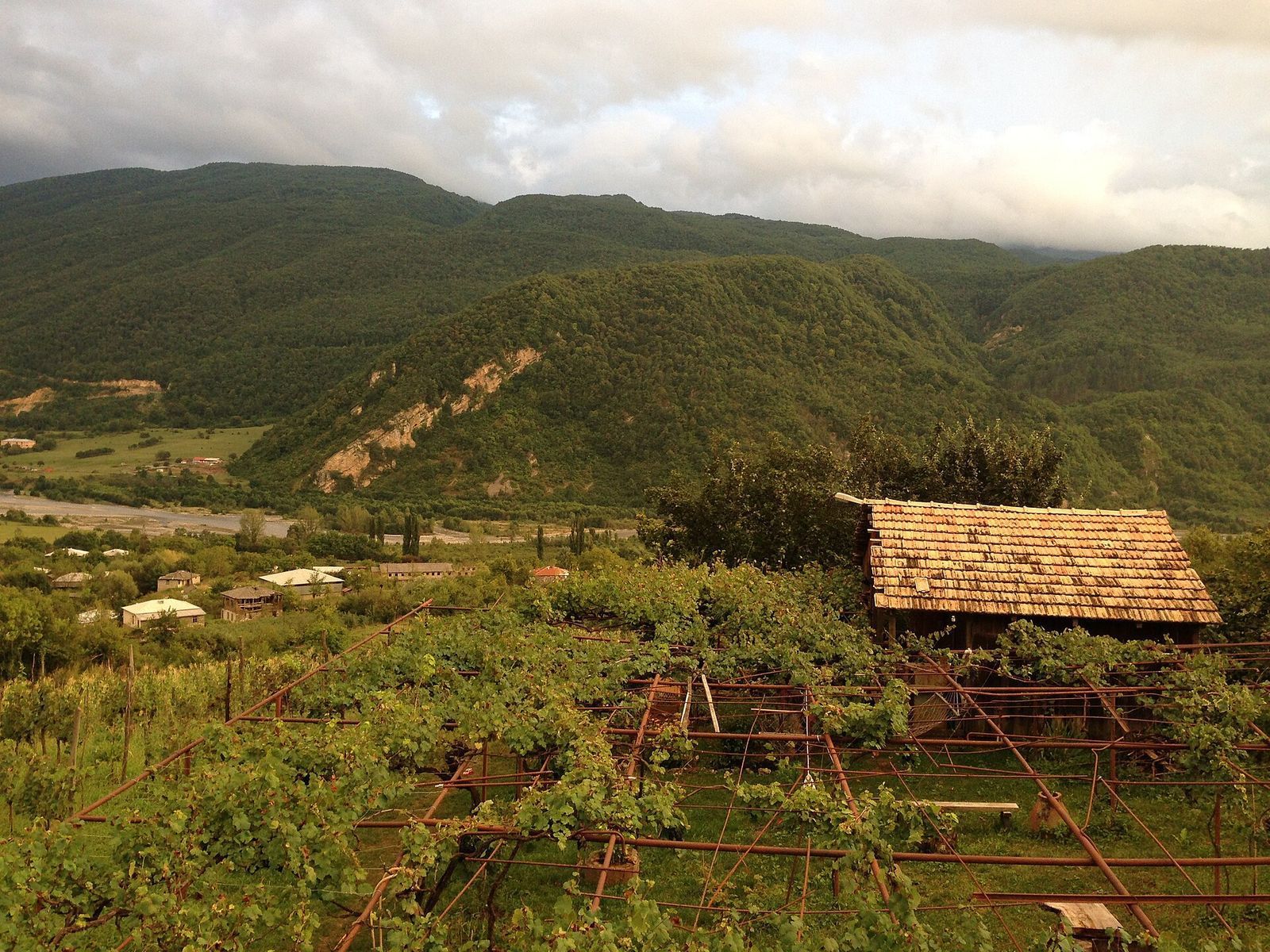
Shavkapito is a red grape from Kartli, the central wine region around Tbilisi, made both as a dry red and in qvevri. It's medium-bodied and fruity with a subtle smoky note, so it sits lighter in the glass than Saperavi.
This is my pick for anyone who finds Saperavi heavy, or for a summer evening when a big red feels like too much. It's also the easiest way to taste a region most visitors skip: the wineries near Tbilisi in Kartli are close enough for a half day, and Shavkapito is the Kartli red to ask for. You'll find it on fewer lists than Saperavi, so order it when you see it.
Best semi-sweet Georgian reds
The semi-sweet reds are the wines that surprise visitors. Their sweetness is natural: the winemaker stops the fermentation early, so some of the grape's own sugar stays in the wine. Nothing is added. They're some of the best-known Georgian names, and the ones most likely to land on your table by mistake.
9. Kindzmarauli
Kindzmarauli is the classic semi-sweet red, made from Saperavi grown in a microzone of about 15 km² in the Kvareli district of Kakheti. It was first made in the 1940s, and it's a soft, dark red with a velvety texture.
It's a lovely wine with the right food and a confusing one with the wrong food. I'd drink it with fruit, nuts, mild cheese or dessert, not with a steak. Because the zone is small and the name is famous, cheap imitations are common, so price is your first check: genuine Kindzmarauli never costs less than about 15 to 20 GEL a bottle in a shop.
10. Khvanchkara
Khvanchkara is the other famous semi-sweet red, and it comes from the opposite corner of Georgia: the mountain region of Racha, in the northwest. It's made from two grapes, Aleksandrouli and Mujuretuli, grown only around the village of Khvanchkara, and it has been made since 1907.
Expect raspberry at the front and a soft finish. Because it comes from one small area, there's never much of it, and it costs more than most Georgian wines. That makes it the semi-sweet bottle I'd buy as a gift: it's rare, it has a story, and it's the one I'd give anyone who likes sweeter reds.
11. Akhasheni
Akhasheni is a semi-sweet red from Saperavi grown in the Akhasheni vineyards of Gurjaani district, in Kakheti. It's velvety with hints of chocolate, and you'll see it less often than Kindzmarauli.
I think of it as Kindzmarauli's quieter sibling. If you liked Kindzmarauli, Akhasheni is the obvious next bottle, and a side-by-side of the two shows how much the place changes the same grape. It works with the same foods: churchkhela, the walnut and grape-juice sweet sold at every market stall, nuts and mild cheese. It's also a good gift for anyone who finds dry Georgian reds too tannic.
12. Usakhelouri
Usakhelouri is the rarity on this list: a semi-sweet red from the grape of the same name, grown in very small quantities in a few villages of Lechkhumi, in the northwest. It's counted among the rarest and most valuable wines in Georgia.
In the glass it's ruby and velvety, with wild strawberry. You won't find it on most bar lists, and it costs more than anything else here, so it's a bottle for a special dinner or a serious wine lover, not a casual first taste. If a specialist shop has one, ask to see it. It's the most memorable semi-sweet wine I can point you to.
The semi-sweet reds all pair the same way. They're good with fruit, desserts, nuts, churchkhela and mild cheeses like sulguni and Imeretian, which makes them a natural end to a meal of Georgian food rather than a partner for the grilled meat.
More Georgian wines worth ordering
Georgia grows many more native grapes than these 12. Once you've tried the list above, these are the names I'd order next:
- Khikhvi: a Kakhetian white for amber wine, the natural follow-up to Kisi.
- Napareuli: a Kakhetian appellation that can be a dry red from Saperavi or a dry white from Rkatsiteli, so check which before you order.
- Chinuri: a crisp white from Kartli, often made sparkling, and the base of much Georgian sparkling wine.
- Ojaleshi: a red from Racha-Lechkhumi, often made semi-sweet.
- Barakoni: a light ruby semi-sweet red from the same two grapes as Khvanchkara, with a violet aroma.
- Tavkveri: a juicy, lively red with cherry, raspberry and blackcurrant.
Most of these turn up at natural wine bars rather than on restaurant lists. You can taste through Georgian grape varieties like Khikhvi and Chinuri in one evening at a good bar, which beats memorizing them.
How to pick a Georgian wine you'll like
The fastest way to choose is to start from what you already drink. This is the table I'd use at the bar.
| If you like | Order | Why |
|---|---|---|
| Pinot Grigio or crisp whites | Tsinandali or a European-style Rkatsiteli | Pale, fresh, no tannin |
| Aromatic whites | Mtsvane or Manavi | Herbs and citrus |
| Orange or natural wine | Qvevri Rkatsiteli, then Kisi | Skin contact, amber color, grip |
| Cabernet | Mukuzani | Oak-aged, dry, structured |
| Lighter reds | Shavkapito | Medium-bodied, fruity |
| Big, dark reds | Saperavi | Dark fruit, deep tannin |
| Sweet reds or dessert wine | Kindzmarauli or Khvanchkara | Natural sweetness, soft |
If you're ordering for a group, one bottle of qvevri Rkatsiteli and one Saperavi cover most tables. Add a Kindzmarauli at the end if anyone has a sweet tooth.
Georgian wines to buy in Tbilisi and what they cost
Wine is one of the best-value buys in Tbilisi, and good bottles from small producers cost a fraction of their price abroad. These are the shop prices I'd expect in 2026.
| Bottle | Price (GEL) |
|---|---|
| Saperavi in a shop | 8 to 30 |
| Decent qvevri wine, such as an amber Rkatsiteli | From about 15 to 20 |
| Genuine Kindzmarauli | From about 15 to 20 |
| Mukuzani or Tsinandali from a good producer | From about 18 |
| Bottle in a Tbilisi wine bar | About 28 to 120 |
| Bottle bought at a Kakheti winery | About 15 to 100 |
For a first suitcase, I'd buy 2 or 3 Saperavi (one of them a Mukuzani), 1 qvevri Rkatsiteli and 1 Mtsvane. That covers the three things Georgia does best and travels reasonably well. Add a Kindzmarauli or Khvanchkara if someone at home likes sweeter wine.
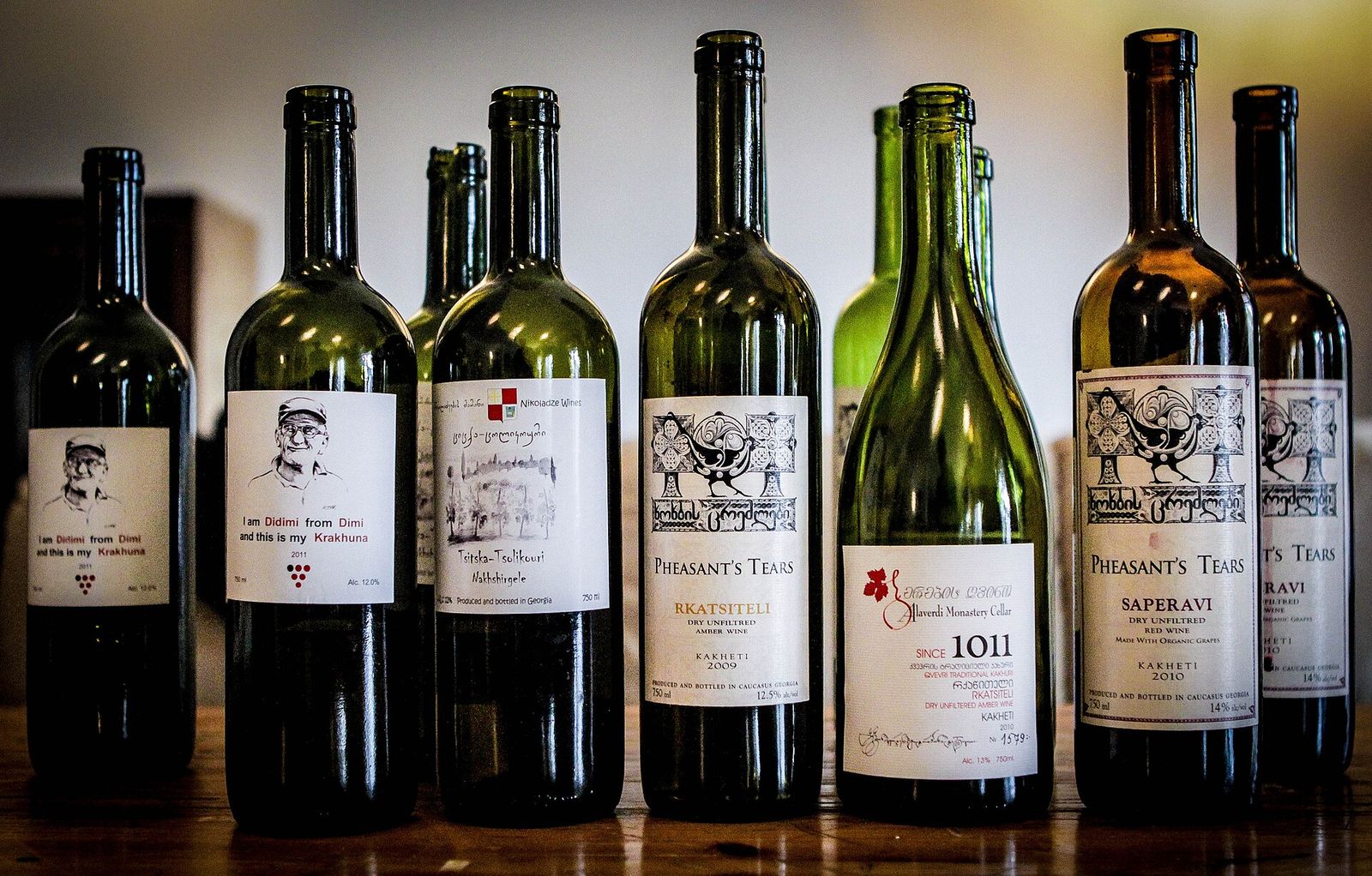
Where to buy matters more than the label. I'd go to a specialist shop over a supermarket: 8000 Vintages has a big range and English-speaking staff who will steer you to small producers, and Wine Gallery is a chain with several branches and temperature-controlled storage. The wine shops in Tbilisi also stock natural producers worth looking for, such as Iago's Wine, Our Wine, Pheasant's Tears and Lapati. At Dezerter Bazaar, the central market, stalls sell homemade wine on draught: bring an empty bottle and taste before you pay.
The cheapest good bottles are at the wineries themselves, often 3 to 5 times cheaper than in a Tbilisi shop, which is one more reason to spend a day on a Kakheti wine tour from Tbilisi before you shop in town.
Where to taste these wines in Tbilisi
You don't need to leave the city to try most of this list. A handful of wine bars in the center pour Georgian wine by the glass and explain what's in it, and two of them run cheap set tastings.
Vino Underground is where I'd start: a brick basement opened by natural winemakers, with English-speaking staff and a list built around small qvevri and amber producers, so it's the place for the ambers on this page. 8000 Vintages feels more like a bar, with cheese and charcuterie boards to go with the reds. The best wine bars in Tbilisi go well beyond these five, and a set wine tasting in Tbilisi at Wine Point or Wine Code is the quickest way to try four styles in an hour with someone explaining each glass.
Getting your bottles home
Many traditional Georgian wines have little or no added sulfite. That keeps them lively in the glass but makes them fragile on a long trip, so a natural wine that tasted wonderful in Tbilisi can taste flat at home. Drink your favorite natural wines here, and pack the sturdier ones: Mukuzani, a good Saperavi, Tsinandali and the semi-sweet reds.
Shipping wine abroad from Georgia is hard, so most people carry bottles in checked luggage, each one wrapped in clothes. Check your home country's alcohol allowance before you buy a case; taking Georgian wine home comes down to that allowance and good packing. If you're in Georgia during the Rtveli grape harvest, from late August to late October, the wineries are at their busiest and the best time to buy straight from the cellar. A bottle of Khvanchkara is also one of the best Georgian souvenirs for a wine lover, since there's so little of it.
Key takeaways
- The one Georgian wine to try is an amber Rkatsiteli from qvevri; Kisi and Khikhvi are the next steps.
- Saperavi is the essential red, Mukuzani is the oak-aged version at least 3 years in barrel, and Shavkapito is the lighter alternative.
- Kindzmarauli, Khvanchkara, Akhasheni and Usakhelouri are naturally semi-sweet; drink them with fruit, nuts and cheese rather than steak.
- Good shop bottles start at about 15 to 20 GEL, Saperavi runs 8 to 30 GEL, and a 7 GEL Kindzmarauli is industrial.
- Buy at specialist shops or wineries, try half bottles, carry home the sturdy reds and drink the unsulfited natural wines in Georgia.
Frequently asked questions
What is the best Georgian wine?
There's no single best Georgian wine, but the two I'd try first are an amber Rkatsiteli from qvevri and a dry Saperavi. Between them you taste what sets Georgian wine apart. Add Mukuzani for an oak-aged red and Kindzmarauli or Khvanchkara if you like sweeter wine.
What is the most famous Georgian wine?
Saperavi is the most famous Georgian grape, and Kindzmarauli and Khvanchkara are the best-known named wines. Both of those are semi-sweet reds. Among dry wines, Mukuzani and Tsinandali are the classic red and white.
Is Kindzmarauli sweet?
Yes, Kindzmarauli is a naturally semi-sweet red. The winemaker stops the fermentation early so some of the grape's sugar stays in the wine, and no sugar is added. It's made from Saperavi grown in a microzone of about 15 km² in the Kvareli district of Kakheti.
What is the difference between Kindzmarauli and Khvanchkara?
Both are semi-sweet reds, but they come from different grapes and regions. Kindzmarauli is Saperavi from Kakheti in the east, soft and dark. Khvanchkara is Aleksandrouli and Mujuretuli from around one village in Racha, with raspberry notes, and pricier because there's less of it.
Is Saperavi dry or sweet?
Saperavi sold under its own name is usually a dry red, dark and tannic. The same grape also makes semi-sweet wines such as Kindzmarauli and Akhasheni, so check the back label for the word dry or semi-sweet.
Is Rkatsiteli red or white?
Rkatsiteli is a white grape, the most planted in Georgia. Made the European way it's a pale, crisp white; fermented on its skins in qvevri it becomes amber, with tannin and dried fruit.
Which Georgian wine should I bring home?
Bring home the sturdy bottles: a good Saperavi, a Mukuzani and a Tsinandali, plus one qvevri Rkatsiteli packed well. Kindzmarauli or Khvanchkara make good gifts for people who like sweeter wine. Drink the unsulfited natural wines in Georgia, because they often travel badly.
How much does a good bottle of Georgian wine cost?
A good bottle costs from about 15 to 20 GEL in a Tbilisi shop. Saperavi runs 8 to 30 GEL, and a Mukuzani or Tsinandali from a good producer starts at about 18 GEL. Bottles bought at a Kakheti winery cost about 15 to 100 GEL.
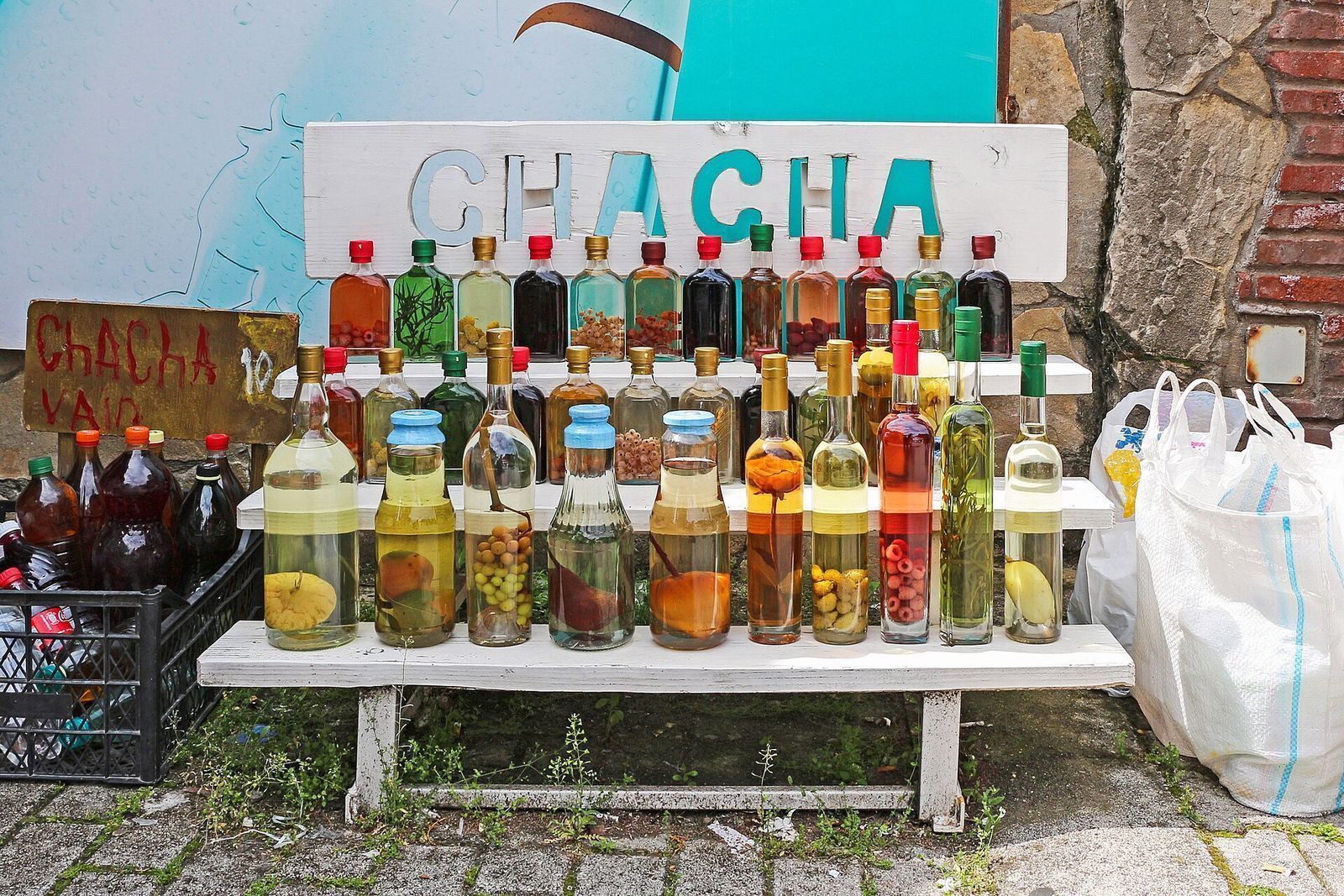
Georgian Drinks: What to Drink in Georgia and Where to Try It in Tbilisi
Tbilisi is known for its qvevri wine. Here's what to drink in Georgia, from amber wine to chacha, and where to try it.
Read the guide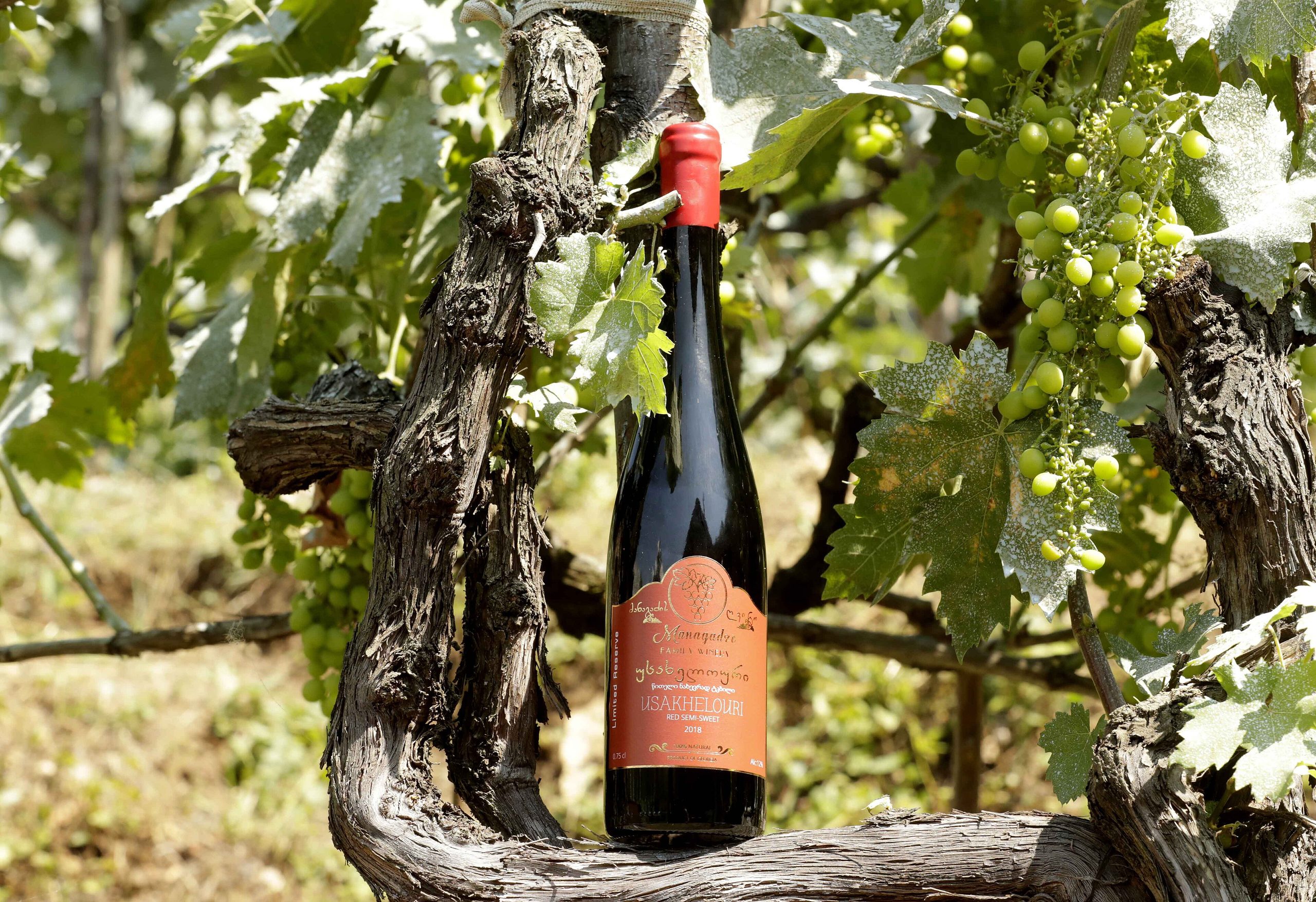
Georgian Wine Guide: Regions, Styles and What to Order
Georgia is known for 8,000 years of winemaking. Here is what to know about its styles, regions, prices and bars.
Read the guide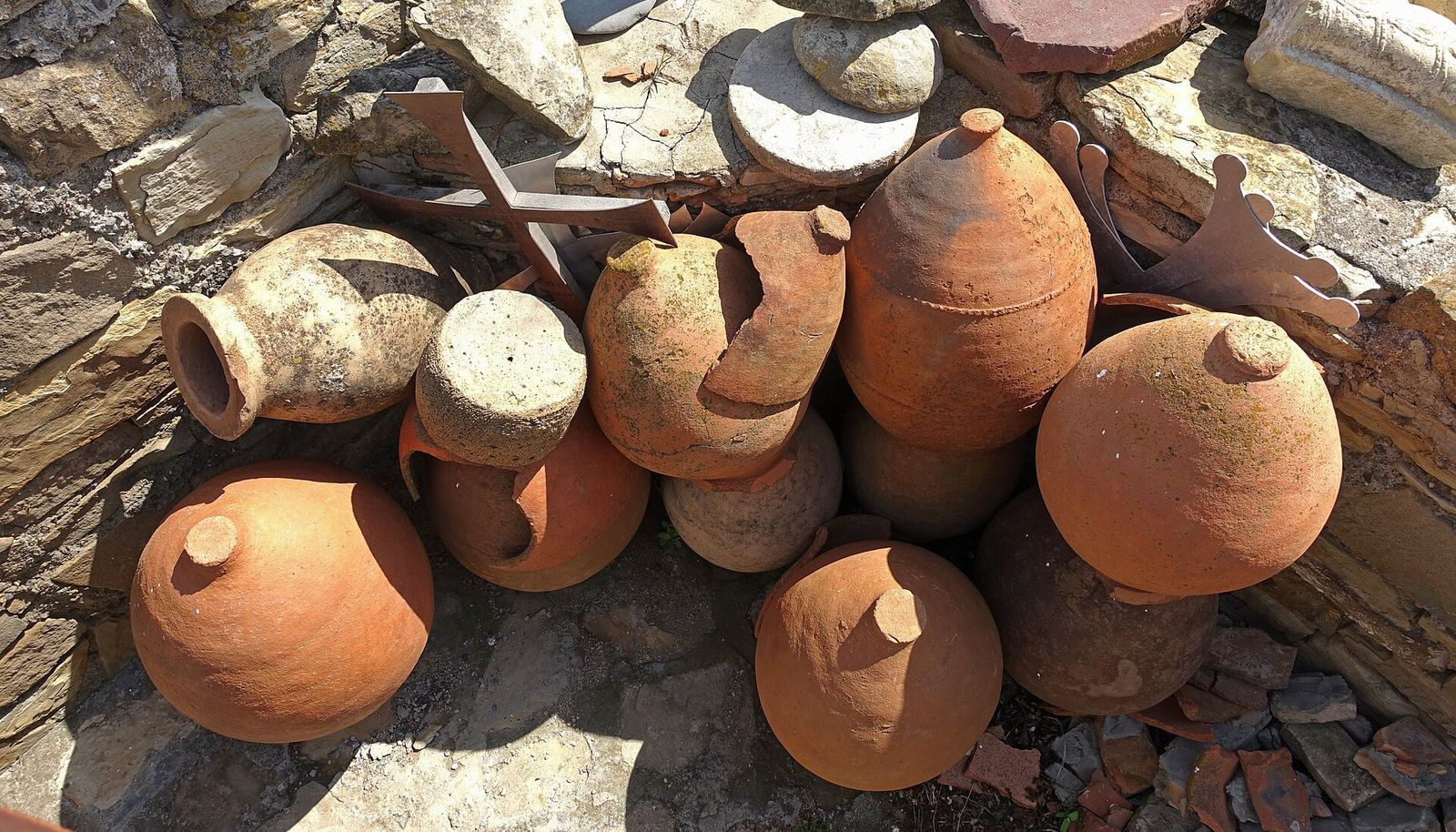
Qvevri Wine: How Georgia Makes Wine in Buried Clay Jars
Georgia is known for qvevri wine. Here is what the clay jars are, how the wine tastes and where to try it in Tbilisi.
Read the guide