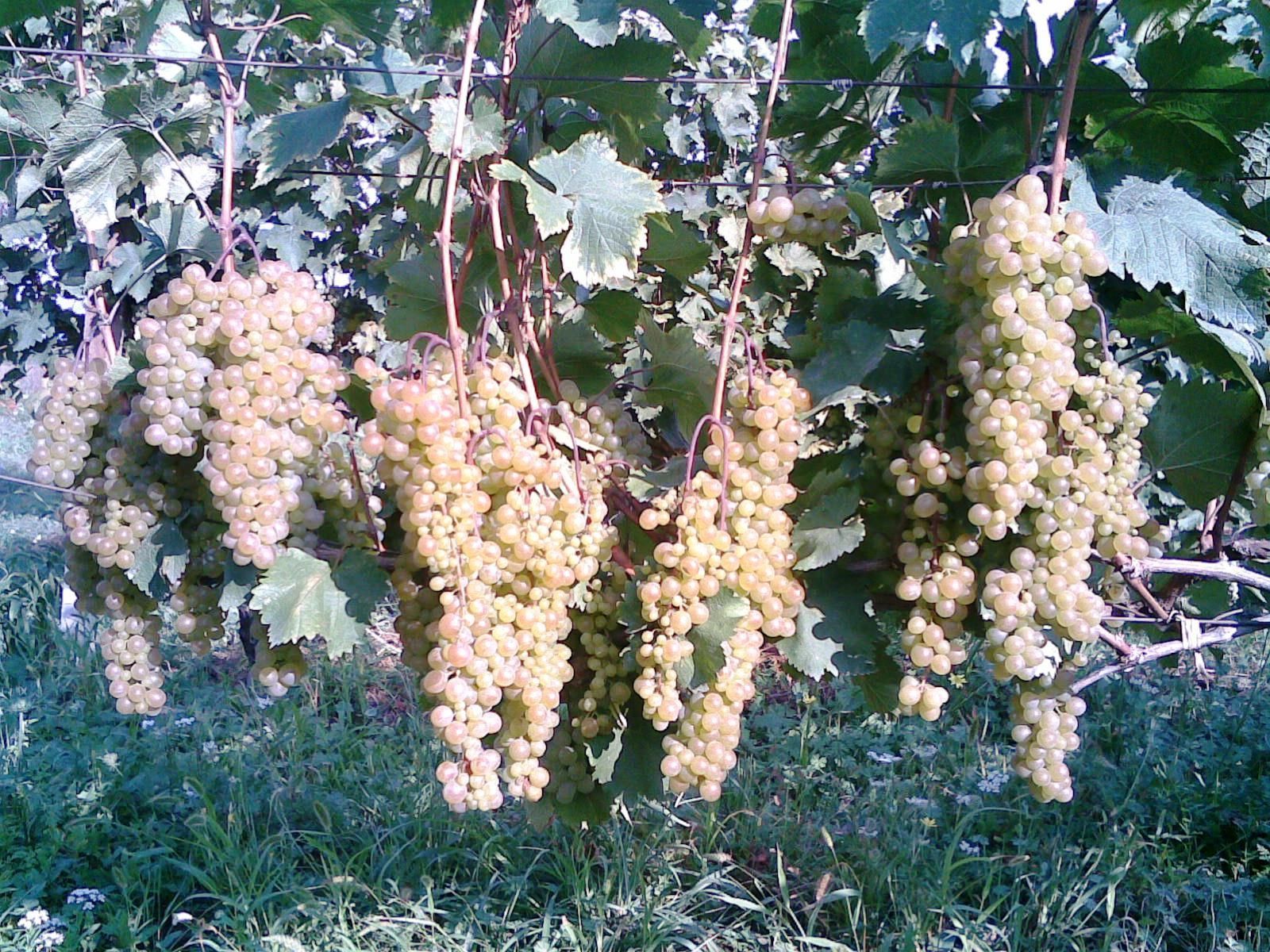
Georgian Grape Varieties: 17 Native Grapes and Where to Taste Them
Georgia is known for growing grapes almost nobody else grows: about 525 native varieties, with names like Mtsvane, Kisi and Khikhvi that you'll see across Tbilisi wine lists. Here's what you need to know about the 17 grapes you'll actually meet, what each one tastes like, where it grows, which wines on a label it hides behind, and the bars in Tbilisi where you can taste the rare ones in a single evening.
How many grape varieties does Georgia have?
About 525. That's the number most often given for Georgia's native grape varieties, one of the largest collections of any country. The catch is that most of them live in research vineyards, village gardens and old surveys rather than in bottles. Only a few dozen are made into wine commercially, and the official list of grapes approved for commercial winemaking runs to about 38.
Two grapes dominate. About 75% of Georgia's vineyards grow white grapes, and most of that is Rkatsiteli. Among the reds, Saperavi has the field almost to itself. Everything else on this page is a minority grape, which is exactly why a Tbilisi wine bar is so much fun: you can drink four grapes in one sitting that you have never seen on a shelf at home.
The list shrank for two reasons. Phylloxera, the vine pest that wrecked Europe's vineyards in the 19th century, killed off a share of the old vines. Then the Soviet wine industry planted for yield and disease resistance, mostly to make sparkling and semi-sweet wine for the wider Soviet market, and dozens of local grapes dropped out of production. Many survived only in family vineyards and remote mountain villages.
Georgian grape varieties at a glance
These are the 17 grapes you're most likely to see on a wine list or a back label in Tbilisi. Region means where the grape comes from and grows most, and Georgian wine regions shape the style as much as the grape does: Kakheti makes the bold ambers and reds, Kartli the light whites and sparkling wine, and the west the fresher, lighter styles.
| Grape | Color | Home region | Made as | Tastes like |
|---|---|---|---|---|
| Rkatsiteli | White | Kakheti | Dry white, amber | Green apple and quince; honey and stone fruit as amber |
| Mtsvane (Kakhuri) | White | Kakheti | Dry white, amber | White peach, citrus, flowers; apricot as amber |
| Kisi | White | Kakheti | Dry white, amber | Pear, white flowers, tropical fruit, a hint of tobacco |
| Khikhvi | White | Kakheti | Dry, amber, sweet, fortified | Rich, ripe and honeyed |
| Chinuri | White | Kartli | Dry white, sparkling, amber | Crisp, floral, herbal, a touch of mint |
| Goruli Mtsvane | White | Kartli | Dry white, sparkling | Light, green fruit, mineral |
| Tsolikouri | White | Imereti and the west | Dry, semi-sweet, sparkling | Full, ripe fruit, floral |
| Tsitska | White | Imereti | Dry white, sparkling | Green apple, melon, lime |
| Krakhuna | White | Imereti | Dry white, amber | Fresh and crisp; earthier as amber |
| Saperavi | Red | Kakheti | Dry, oak-aged, semi-sweet | Blackberry, plum, spice, dark chocolate |
| Shavkapito | Red | Kartli | Dry red | Cherry, berries, herbs; softer than Saperavi |
| Tavkveri | Red | Kakheti and Kartli | Dry red, rosé | Cherry, raspberry, blackcurrant |
| Aleksandrouli | Red | Racha | Semi-sweet, dry | Red fruit, blackberry, spice |
| Mujuretuli | Red | Racha | Semi-sweet, dry | Raspberry, wild berries |
| Ojaleshi | Red | Samegrelo | Dry, semi-sweet, sparkling | Ripe cherry, blackberry, lively acidity |
| Usakhelouri | Red | Lechkhumi | Semi-sweet | Light, ruby, red fruit and flowers |
| Aladasturi | Red | Western Georgia | Dry red | Pale and light, like a cool-climate Pinot Noir |
White grape varieties from Kakheti
Kakheti, the big wine region east of Tbilisi, makes about 70% of all Georgian wine, and its white grapes are the ones that made amber wine famous. All four below are at their most interesting fermented on their skins in a qvevri, the clay jar buried in the ground, which gives a white grape the color, grip and dried-fruit depth of amber wine.
Rkatsiteli
Rkatsiteli is the most planted white grape in Georgia and one of the oldest grape varieties anywhere. It's tough, it copes with a harsh climate, and it holds its acidity even when it gets very ripe, which is why it makes good wine across so many styles. As a European-style dry white it's fresh, with green apple, quince and white peach. Fermented on its skins in qvevri it turns amber, with honey, caramel, stone fruit and a light tannic grip.
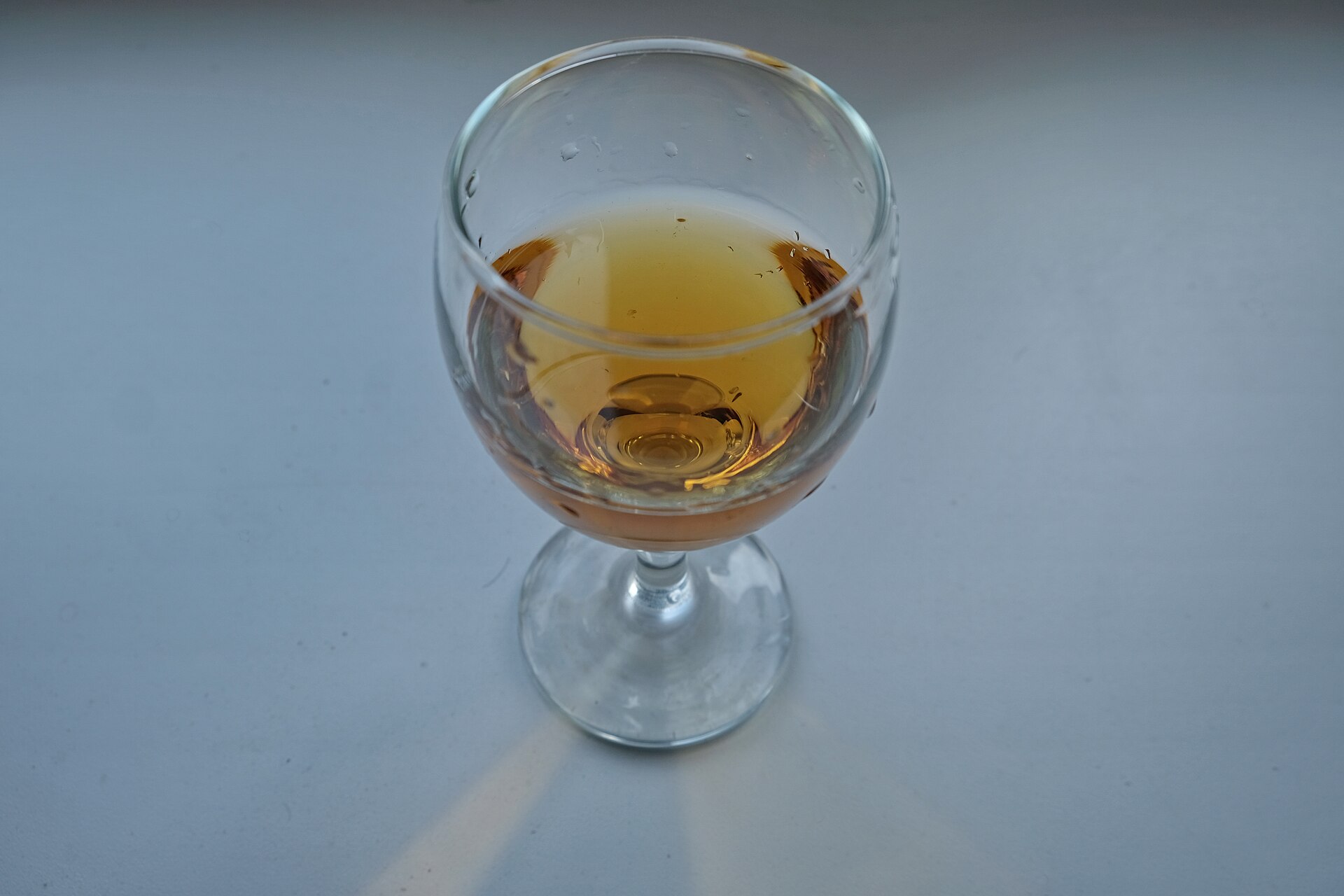
On its own it isn't a loud grape, and that's the point: like Chardonnay, it takes the shape the winemaker gives it, so two Rkatsiteli from neighboring villages can taste like different wines. If you try one Georgian grape, make it this one as amber, then compare it with a crisp dry version from the same region.
Mtsvane
Mtsvane means "green", and it's the name of six different, unrelated Georgian grapes, each named after the region where it was first recognized. The one on most Tbilisi lists is Mtsvane Kakhuri, the Mtsvane of Kakheti. In a modern dry white it's aromatic, with white peach, citrus, flowers and sometimes tropical fruit. Made in qvevri it goes toward apricot and stone fruit, with more body and good aging potential.
It oxidizes easily, so winemakers either protect it from air in a modern cellar or bury it in qvevri, where the skins protect it. You'll meet Mtsvane in two famous wines without seeing its name: Manavi is 100% Mtsvane, and Tsinandali is usually about 80% Rkatsiteli with 20% Mtsvane. Many winemakers also blend the two grapes in the cellar, the most common Georgian white blend you'll see.
Kisi
Kisi is the grape I'd send anyone to after their first amber Rkatsiteli. It's low yielding and strongly aromatic, with exotic flowers, pear and tropical fruit, and as an amber wine it adds spice, nuts and a whiff of tobacco. What makes it special is that it keeps its own character through months on the skins, where many white grapes start to taste alike.
It nearly disappeared in the early 2000s, and its return is one of the happier stories in Georgian wine. It's still a small grape in the vineyard, often blended with Rkatsiteli and Mtsvane, so a varietal Kisi on a list is worth ordering when you see one.
Khikhvi
Khikhvi is another low-yielding Kakhetian white, planted mostly on the right bank of the Alazani river, with a few vineyards in Kartli. It's the most versatile grape of the four: winemakers make it dry, amber, sweet and fortified. As an amber wine it's rich and honeyed, a bigger, rounder glass than Kisi.
Its fortified side has its own appellation, Kardenakhi, named after a Kakheti village, a strong dessert wine that's rare to find by the glass. In Tbilisi you'll mostly find Khikhvi as a dry amber, and it's the natural third step after Rkatsiteli and Kisi.
White grapes from Kartli and western Georgia
West of Tbilisi the climate gets cooler and wetter, and the white wines get lighter. Kartli, the central region around the capital, is Georgia's sparkling wine country, and Imereti and the west make fresh whites that are easier on a hot day than any Kakhetian amber.
Chinuri and Goruli Mtsvane
Chinuri is Kartli's signature white: a late-ripening grape with high acidity and a light body, at its best on limestone soils. It tastes floral and herbal, with yellow fruit and a touch of mint, and it makes some of Georgia's best sparkling wine, often blended with Goruli Mtsvane, Kartli's own Mtsvane. Goruli Mtsvane on its own is pale and light, with green fruit, white flowers and a mineral finish, a wine to drink young with fish or as an aperitif.
Both are easy to taste close to the city, since the wineries near Tbilisi are mostly in Kartli, and an amber Chinuri from qvevri is a lighter, crisper introduction to skin-contact wine than anything from Kakheti.
Tsolikouri
Tsolikouri is the leading white grape of western Georgia, from the old Kolkheti lowlands, the ancient Colchis of the Golden Fleece myth. Its wines are yellow, full and aromatic, with ripe fruit and flowers. Winemakers use it for dry whites, semi-sweet wines and sparkling wine, and it's often blended with Tsitska.
Tsitska
Tsitska is an old Imeretian grape that makes light, fresh dry whites with green apple, melon and lime, and a lot of the sparkling wine from the hills of upper Imereti. It's a high-yielding, early-picked grape, and the wines are best young and cold.
Krakhuna
Krakhuna is the third Imeretian white, crisp and fresh as a dry white and earthier as an amber. It ripens to high sugar levels, so it also turns up in semi-sweet wines. If you're heading west to Kutaisi, Imereti's main city, these three grapes are what you'll drink there.
Red grape varieties
Georgia's red grapes split along the same east and west line as the whites: Saperavi and the Kartli reds in the east make dry, dark wines, while the mountain grapes of Racha and Lechkhumi in the northwest make the famous semi-sweet reds.
Saperavi
Saperavi is the red of Georgia, and its name means "dye". It's a teinturier, one of the few grapes in the world with red flesh as well as dark skins, so even the juice is dark. The wines are deep garnet to inky, with blackberry, plum, spice and dark chocolate, plenty of tannin and the acidity to age; after 5 years or more a good one picks up leather and tobacco. It's also grown well outside Georgia, from Eastern Europe to Australia and the United States.
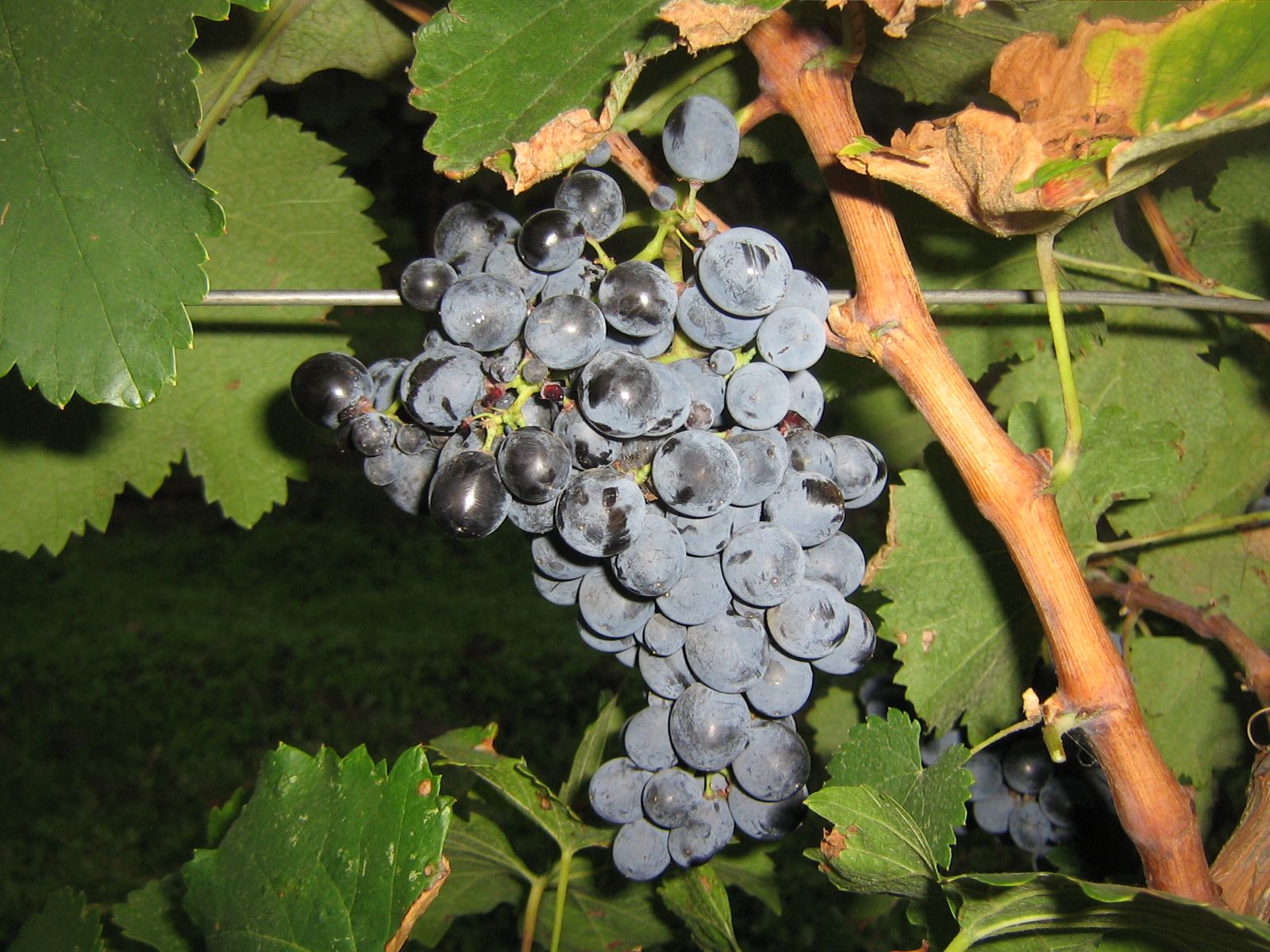
One grape, many wines: Saperavi is dry and tannic as a plain varietal, oak-aged as Mukuzani and naturally semi-sweet as Kindzmarauli, which puts it behind more of the best Georgian wines to try than any other grape. If you only drink one red in Georgia, a dry qvevri Saperavi is the one I'd pour.
Shavkapito
Shavkapito is a Kartli red that makes medium-bodied, fruity dry wines, light cherry to ruby in color, with berries and herbs. It's softer than Saperavi, and its character changes between valley-floor vineyards and mountain slopes. I'd order it for anyone who finds Saperavi too heavy.
Tavkveri
Tavkveri grows mainly in Kakheti and Kartli and makes easy, juicy reds and rosés with cherry, raspberry and blackcurrant, best drunk young. It's an odd vine: its flowers are functionally female, so growers sometimes have to help pollinate it. Winemakers often blend it with white grapes for a lighter red.
Aleksandrouli and Mujuretuli
These two red grapes grow together in Racha, the mountain region in the northwest, and together they make Khvanchkara, Georgia's most famous naturally semi-sweet red. Aleksandrouli brings red fruit, blackberry and spice in a medium-bodied, ruby wine; Mujuretuli adds color, raspberry and wild berries. Made dry, Aleksandrouli has been compared with a pale, cool-climate Pinot Noir.
Ojaleshi
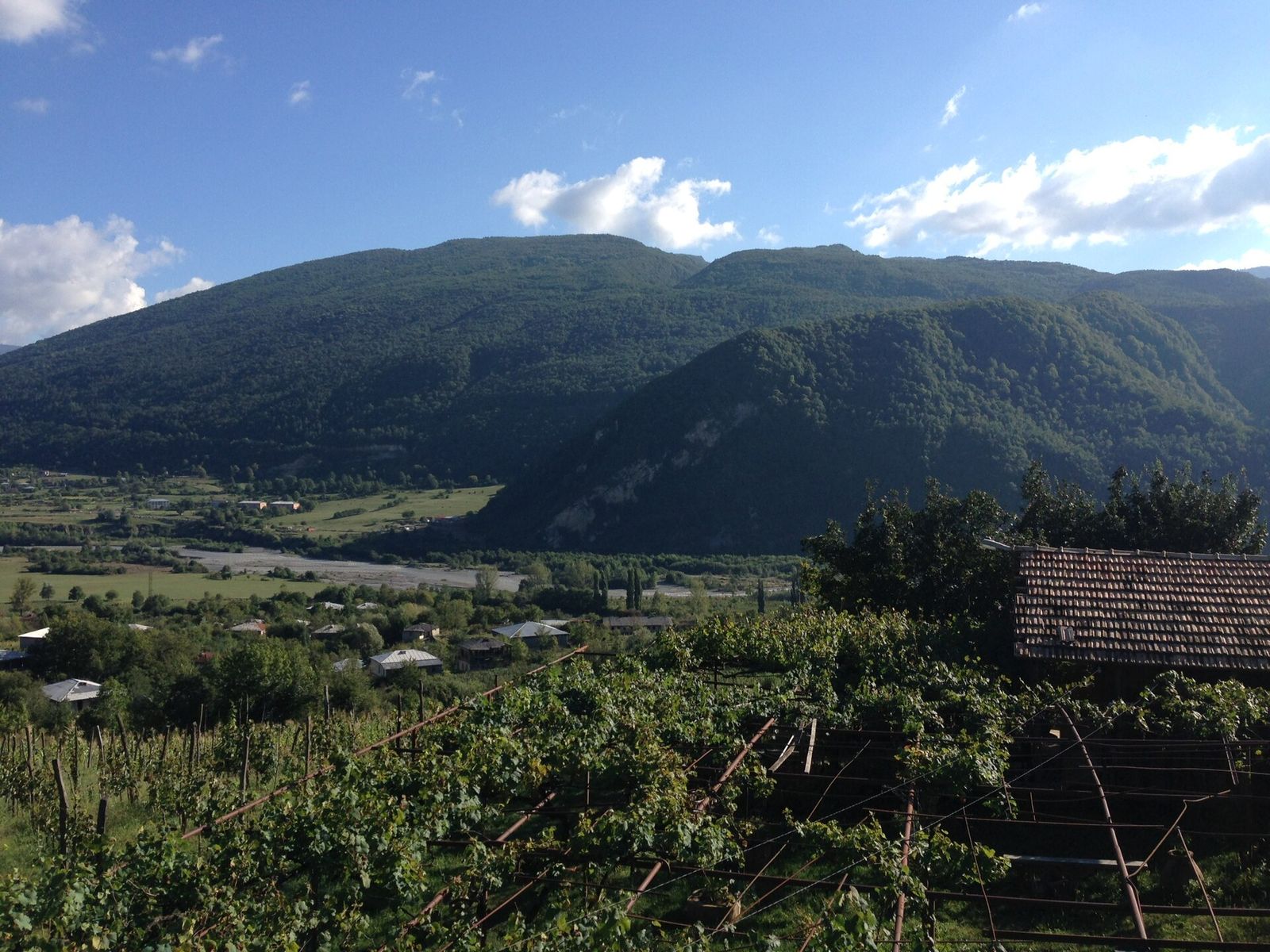
Ojaleshi comes from Samegrelo in the far west. It ripens late, which gives it deep color and intense flavor, with ripe cherry, blackberry and lively acidity. It's made dry, semi-sweet and even sparkling, and a dry Ojaleshi is one of my favorite surprises on a Tbilisi list.
Usakhelouri
Usakhelouri is the rarest grape on this page, grown in tiny quantities in Lechkhumi. The name is usually said to mean "nameless", a nod to its uncertain origins. The wine is light-bodied and bright ruby, with red fruit, flowers and spice, usually semi-sweet, and bottles are treated as collector's pieces, priced to match.
Aladasturi
Aladasturi is a western red from the cooler, wetter side of the country, pale and light in the glass, closer to a cool-climate Pinot Noir than to anything from Kakheti. You're most likely to find it in a natural wine bar.
Grape names and place names on a Georgian label
Georgian labels name either the grape or the place, and the place names are appellations with a fixed grape and style behind them. Kakheti holds 20 of Georgia's 29 protected appellations. This is the table I'd keep on my phone in a wine shop.
| On the label | Grape | Style | Region |
|---|---|---|---|
| Tsinandali | About 80% Rkatsiteli, 20% Mtsvane | Dry white | Kakheti |
| Manavi | 100% Mtsvane | Dry white | Kakheti |
| Napareuli | Saperavi or Rkatsiteli | Dry red or dry white | Kakheti |
| Mukuzani | Saperavi | Dry red, oak-aged | Kakheti |
| Kindzmarauli | Saperavi | Naturally semi-sweet red | Kakheti |
| Kardenakhi | Khikhvi | Fortified dessert wine | Kakheti |
| Khvanchkara | Aleksandrouli and Mujuretuli | Naturally semi-sweet red | Racha |
When a label shows only a grape name, check the back label for the region and for the words dry or semi-sweet. A grape name with "qvevri" on it usually means a skin-contact wine made the traditional way, and the qvevri method accounts for only about 5% of Georgian production, even though it's what most visitors come looking for.
Which Georgian grape to try first
The easiest way into 500 unfamiliar grapes is through the wine you already drink. This is how I'd match them.
| If you like | Try | Why |
|---|---|---|
| Sauvignon Blanc | Mtsvane or Tsitska | Fresh, aromatic, citrus and green fruit |
| Chardonnay | Dry Rkatsiteli or Tsolikouri | Fuller whites that take the winemaker's style |
| Orange or natural wine | Amber Rkatsiteli, then Kisi | Skin contact, grip and dried fruit |
| Champagne or cava | Chinuri sparkling | Crisp, high-acid, made in Kartli |
| Cabernet or Syrah | Saperavi or Mukuzani | Dark, tannic, built to age |
| Pinot Noir | Shavkapito, Aladasturi or dry Aleksandrouli | Lighter, red-fruited reds |
| Rosé | Tavkveri | Juicy and easy, drunk young |
| Off-dry or dessert wine | Khvanchkara, Kindzmarauli or Khikhvi | Natural sweetness, no sugar added |
Where to taste rare Georgian grapes in Tbilisi
Rkatsiteli and Saperavi are on every list in town. For Kisi, Khikhvi, Chinuri, Tsitska or Ojaleshi by the glass, go to a natural wine bar, where the lists come from small qvevri producers. A glass costs about 10 to 20 GEL, and a set four-wine wine tasting in Tbilisi runs 35 to 45 GEL. These are my three for grape hunting, and like most of the best wine bars in Tbilisi they pour plenty by the glass, so you can try a grape without committing to a bottle.
Vino Underground
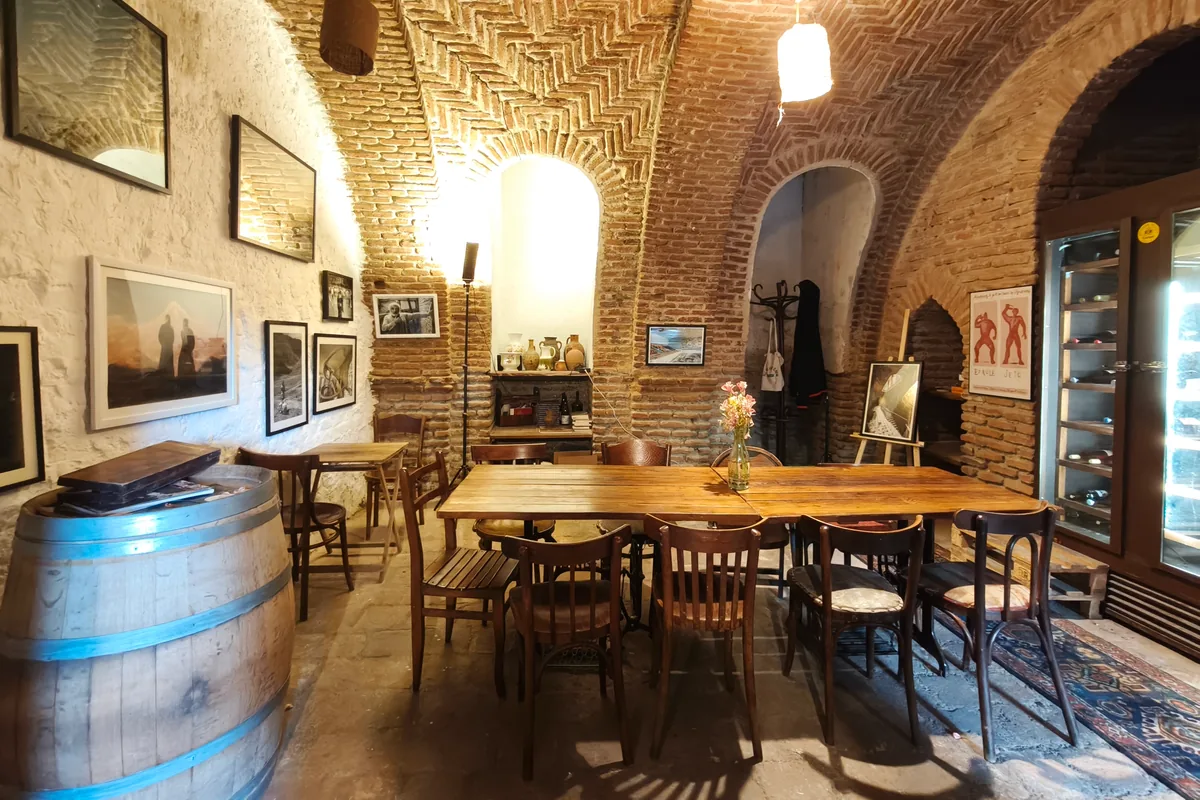
Vino Underground is a brick basement on Galaktion Tabidze Street near Freedom Square, opened by a group of natural winemakers and one of the first bars in the city devoted to organic Georgian wine. The list is built around small qvevri and amber producers, the staff speak English, and it opens at 2pm every day. Glasses run about 10 to 20 GEL and bottles 35 to 120 GEL.
This is where I'd go to drink the western whites, since a Tsitska or a Tsolikouri from a small cellar is exactly the kind of bottle this list is built on. Ask for two ambers from different regions and compare them.
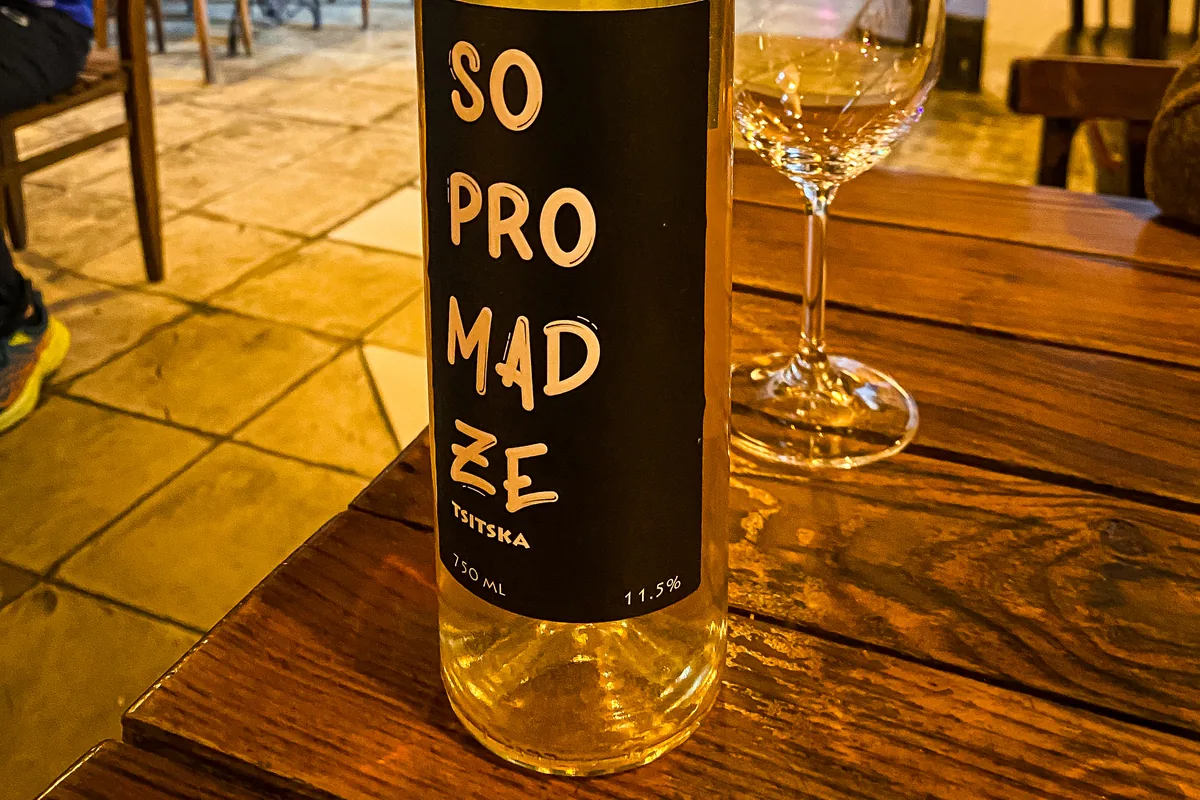
Ferment Wine Bistro
Ferment sits on the ground floor of a 19th-century building off Gudiashvili Square, about 5 minutes on foot from Freedom Square. It's owned by a winemaker, Rezi Tsetskhladze, and the list leans into rare grapes, qvevri and natural wine, with a modern Georgian kitchen to match.
Come here when you want dinner with your grape hunting. It's the bar I'd pick to try a Mtsvane or a Kisi with food rather than on its own, and to ask for the rarest grape open that night.
Sadzvele Wine Hub
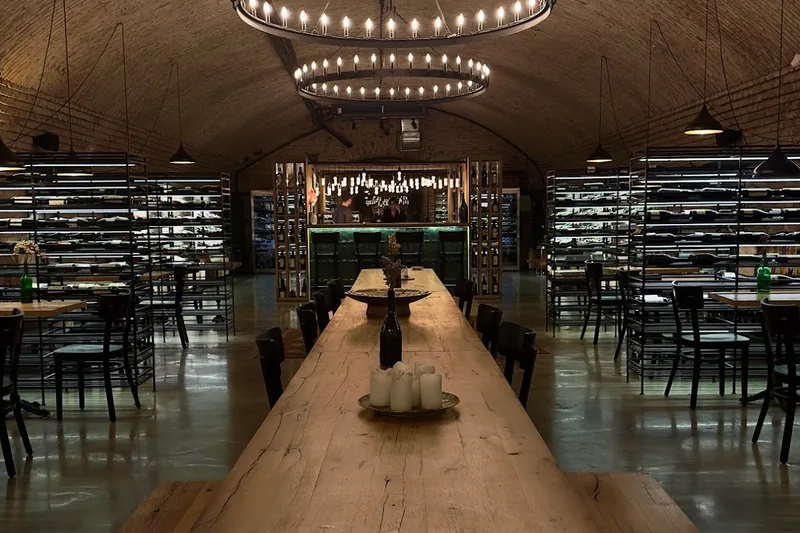
Sadzvele opened in fall 2024 inside Wine Factory N1, a wine factory from 1896 on Vasil Petriashvili Street. It's a wine bar, a wine school and an event room in one, with about 200 wines, qvevri on display and the building's oldest cellar visible through glass.
With 200 bottles to choose from, it's the best place in town to line up several rare grapes in one sitting. Book one of its tastings rather than just turning up if you want to work through the grapes on this page in order.
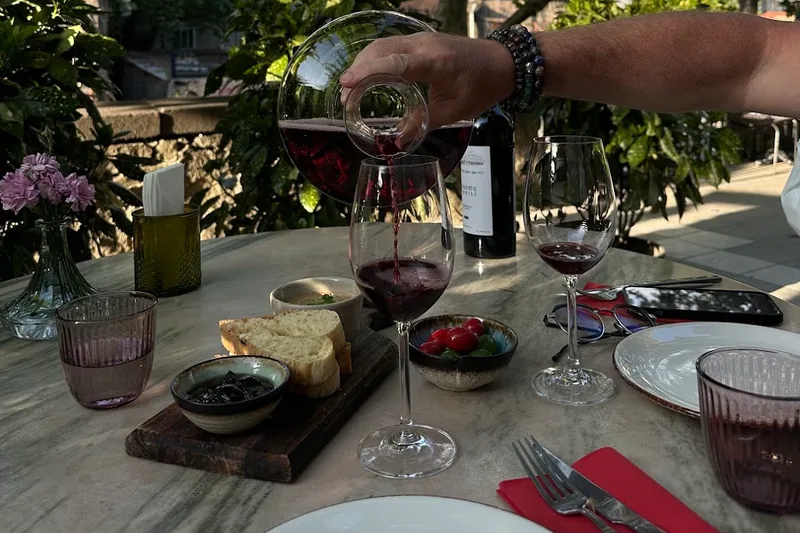
To keep tasting after you leave, the wine shops in Tbilisi sell many of these grapes from small producers, and a shop bottle costs a fraction of the bar price.
Seeing the grapes on the vine
The grapes are on the vine from late summer. Rtveli, the Georgian grape harvest, runs from late August to late October, with most picking between about 5 September and 20 October, and joining a family harvest during Rtveli is the most hands-on way to meet Rkatsiteli and Saperavi.
Telavi and Sighnaghi, Kakheti's two main towns, are each about 2 hours' drive from Tbilisi, and a Kakheti wine tour from the city puts you among the Rkatsiteli, Mtsvane, Kisi and Saperavi vineyards in a day. Family cellars are the place to taste the rarer Kakhetian whites, and the wineries in Kakheti take walk-ins for tastings at 15 to 40 GEL at the big producers and 30 to 120 GEL per person at family wineries. The pomace left after the harvest goes into chacha, the grape spirit you'll be offered at every cellar door.
Key takeaways
- Georgia has about 525 native grape varieties, but only a few dozen are made into wine commercially, and Rkatsiteli and Saperavi dominate.
- Start with amber Rkatsiteli and dry Saperavi, then try Mtsvane, Kisi and Khikhvi, the three Kakheti whites that shine in qvevri.
- Kartli and western Georgia grow lighter whites, Chinuri, Tsolikouri, Tsitska and Krakhuna, and Racha's Aleksandrouli and Mujuretuli make semi-sweet Khvanchkara.
- Read the label for the place as well as the grape: Tsinandali, Manavi and Mukuzani are dry, Kindzmarauli and Khvanchkara are semi-sweet.
- Natural wine bars such as Vino Underground, Ferment and Sadzvele are where to taste the rare grapes in Tbilisi, at 10 to 20 GEL a glass.
Frequently asked questions
How many grape varieties are there in Georgia?
Georgia has about 525 native grape varieties, one of the largest collections of any country. Only a few dozen are made into wine commercially, with about 38 on the official list for commercial winemaking. Most of the rest survive in research collections and village vineyards.
What is the main grape in Georgian wine?
Rkatsiteli is the main white grape and Saperavi the main red. About 75% of Georgian vineyards are planted with white grapes, most of them Rkatsiteli, while Saperavi dominates the reds and makes Mukuzani and Kindzmarauli.
What does Mtsvane taste like?
Mtsvane is an aromatic white with white peach, citrus and floral notes as a dry wine, and apricot and stone fruit when made as amber in qvevri. The Mtsvane on most lists is Mtsvane Kakhuri from Kakheti; Manavi is 100% Mtsvane, and Tsinandali blends it with Rkatsiteli.
What is Kisi wine?
Kisi is a white wine from the Kisi grape, a low-yielding, aromatic Kakheti variety that nearly disappeared in the early 2000s. It's usually made as amber wine, with pear, white flowers, tropical fruit, spice and a hint of tobacco, and it keeps its character through long skin contact.
What is Khikhvi?
Khikhvi is a white grape from Kakheti, grown mostly on the right bank of the Alazani river. It's made dry, amber, sweet and fortified, and it's the grape behind Kardenakhi, a fortified dessert wine. In Tbilisi bars you'll mostly find it as a rich, honeyed amber.
What grapes are used in Khvanchkara?
Khvanchkara is made from Aleksandrouli and Mujuretuli, two red grapes grown in Racha in northwest Georgia. It's a naturally semi-sweet red with red fruit and raspberry, so drink it with fruit, nuts or cheese rather than with a steak.
Is Saperavi a grape or a wine?
Both. Saperavi is a red grape with red flesh, its name meaning "dye", and it's also bottled under its own name as a dry red. The same grape makes Mukuzani, a dry oak-aged red, and Kindzmarauli, a naturally semi-sweet red.
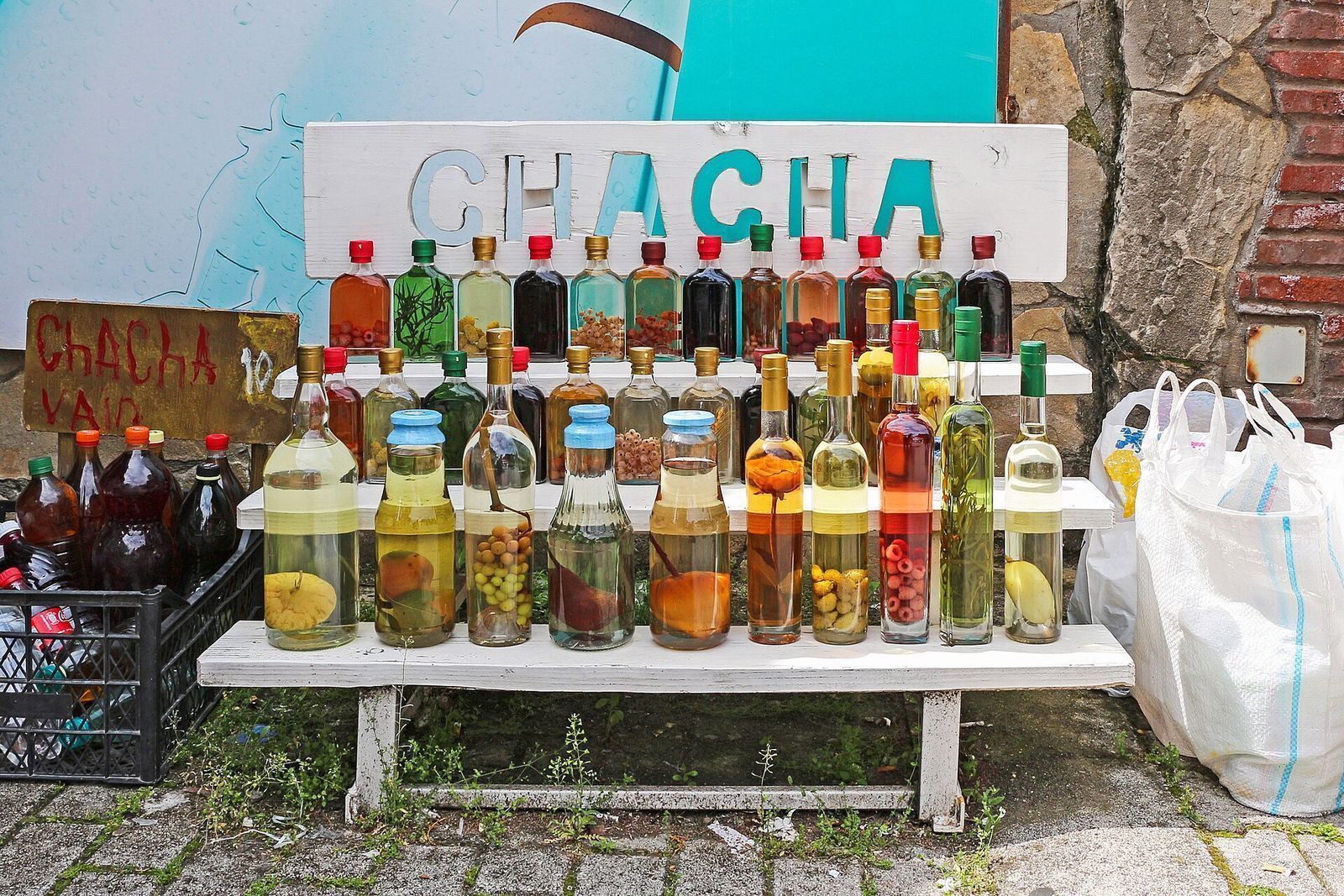
Georgian Drinks: What to Drink in Georgia and Where to Try It in Tbilisi
Tbilisi is known for its qvevri wine. Here's what to drink in Georgia, from amber wine to chacha, and where to try it.
Read the guide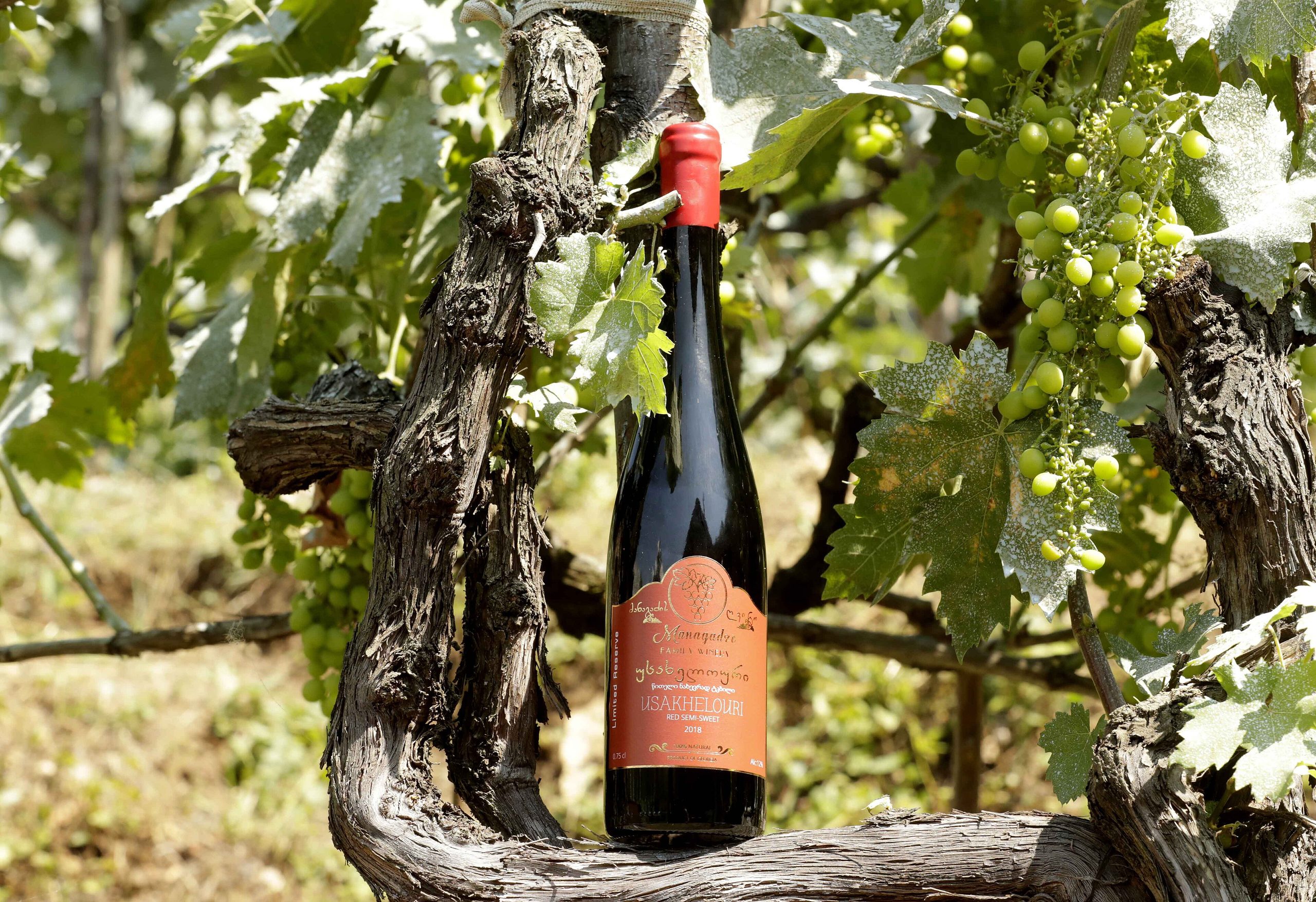
Georgian Wine Guide: Regions, Styles and What to Order
Georgia is known for 8,000 years of winemaking. Here is what to know about its styles, regions, prices and bars.
Read the guide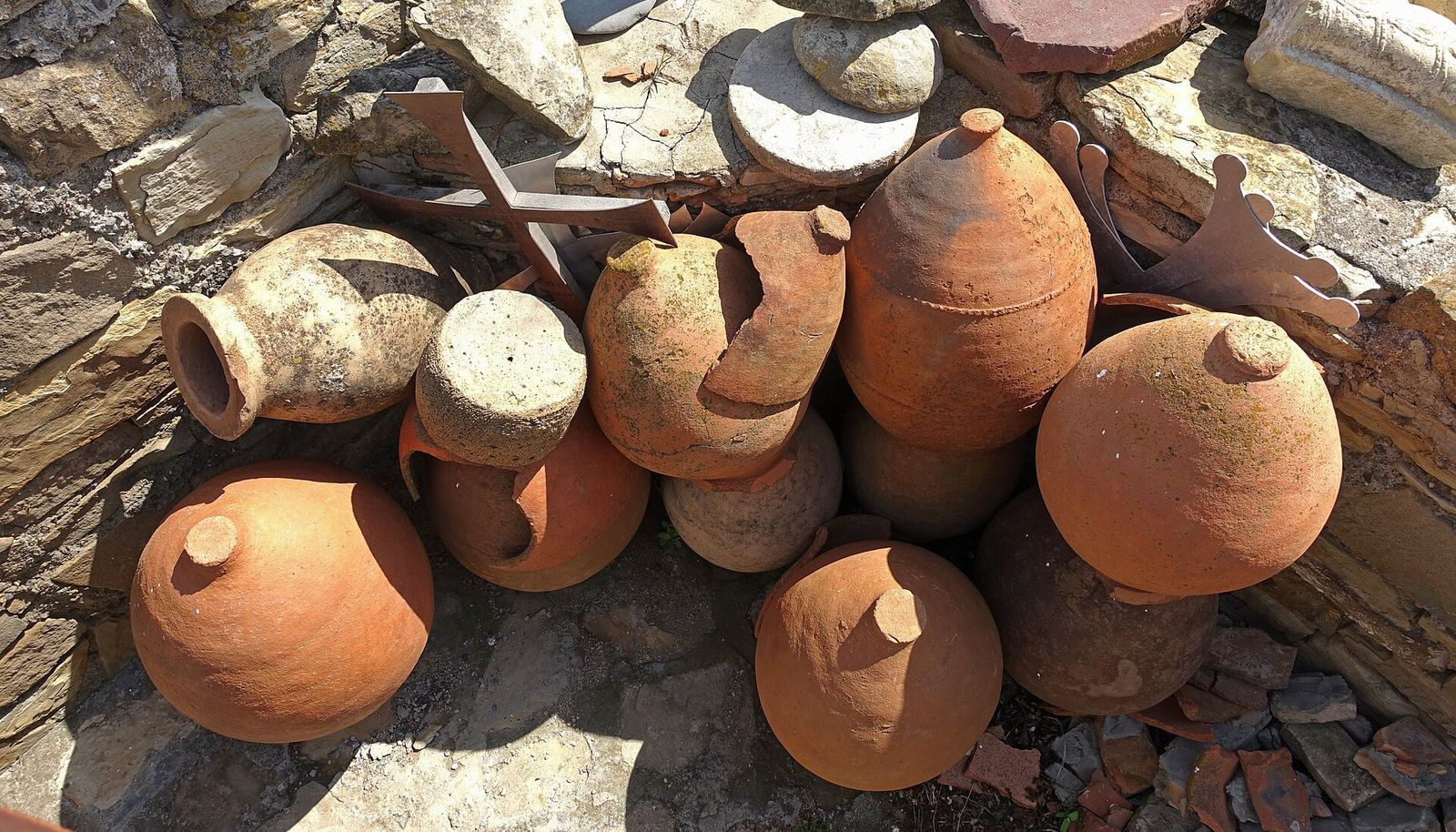
Qvevri Wine: How Georgia Makes Wine in Buried Clay Jars
Georgia is known for qvevri wine. Here is what the clay jars are, how the wine tastes and where to try it in Tbilisi.
Read the guide