
Georgia Visa Requirements: Who Needs One and How Long You Can Stay
Georgia is known for one of the easiest entry policies anywhere: most passports get in free and can stay up to a year. Here's what you need to know about who's visa-free, who needs the e-visa, the travel insurance rule that started in 2026, and what the officer at passport control asks to see.
Do you need a visa for Georgia?
Probably not. If you hold a passport from the US, the UK, any EU country, Canada, Australia, New Zealand, Japan or South Korea, you land, hand over your passport, get a stamp and can stay for up to a year. There's no form to fill in before you fly, no electronic travel authorization to buy and no fee at the border.
The answer changes if your passport sits outside the visa-free list. Then there are two routes in: a visa or residence permit from the US, the UK or a Schengen country lets you enter without a Georgian visa, and if you have neither, you apply for the e-visa online. A small number of passports get 90 days in 180 instead of the full year. Here's how it sorts out by situation:
| Your situation | What you need at the border | How long you can stay |
|---|---|---|
| Passport from a visa-free country | Passport (EU citizens can use a national ID card) and insurance | Up to 365 days in a row |
| Other passport, with a valid US, UK or Schengen visa or residence permit | Passport, that visa or permit, and insurance | 90 days in any 180 |
| Other passport, no such visa or permit | Georgian e-visa (20 USD) and insurance | Up to 30 days on a single-entry e-visa |
| Moving to Georgia or taking a local job | A work or residence permit | Set by the permit |
Whichever row you're in, the 2026 insurance rule applies to you. That's the one change that catches out people who visited Georgia a few years ago and assume nothing has moved.
Visa-free countries for Georgia
Georgia's visa-free list covers more than 90 countries. It's set by a government ordinance and updated from time to time, but the passports most visitors carry have been on it for years. These are the main ones:
| Region | Visa-free passports (main examples) |
|---|---|
| Europe | All EU member states, the UK, Ukraine, Belarus |
| North America | United States, Canada |
| Asia-Pacific | Australia, New Zealand, Japan, South Korea |
| Caucasus and Central Asia | Armenia, Azerbaijan, Kazakhstan, Uzbekistan |
| Russia | Russian citizens are visa-free for a full year |
| Middle East | The Gulf states |
If your passport isn't in that table, don't assume the worst. Check your nationality on geoconsul.gov.ge, the Foreign Ministry's consular site, which lists every country and the stay it gets. It takes a minute and it's the list the border officer works from.
Dual citizens can enter on whichever passport gives the better terms. Pick one and keep using it on every later trip, so your entries and exits line up on the same document.
The 1-year visa-free rule: how the 365 days work
Visa-free passports get up to 365 days in a row, counted from the day you're stamped in. That's the "1 year visa free" rule that makes Georgia so popular with long-stay travelers and remote workers, and it's four times the 90 days in 180 that Europe's Schengen area allows.
The count runs per entry. Leave Georgia and come back, and a new 365-day period starts on the day you re-enter. There's no published waiting period between trips, and you don't need to keep old stamps or tickets to prove anything: border officers see your entry and exit dates on their screen.
For a normal holiday none of this matters, since a two-week trip uses 14 of your 365 days. It starts to matter if you fall for the place and stay on, and Tbilisi is good at that. A full year lets you see every season in Tbilisi, from the blossom of April to the 38 to 40 C heat of July and the harvest in October, without filing a single form.
Entering Georgia with a US, UK or Schengen visa or residence permit
This is the route most people miss. If your passport needs a visa for Georgia but you hold a valid visa or residence permit from the US, the UK, a Schengen country or one of a handful of other countries, you can enter without a Georgian visa and stay up to 90 days in any 180-day period.
Say you hold an Indian passport, which needs a Georgian e-visa on its own. If you also hold a valid US tourist visa, you can fly into Tbilisi on that and stay up to 90 days, with no Georgian application at all. The same works for a UK residence permit, a Schengen visa or a Schengen residence card.
Two details trip people up. The foreign visa or permit has to be valid on the day you arrive, so check its expiry date before you book. And the 90 days in 180 is a rolling window: before each new entry, add up every day you've spent in Georgia over the last 180 days. If you qualify this way, don't apply for a Georgian e-visa as well. You don't need one, and the e-visa comes with its own, shorter terms.
The Georgia e-visa: cost, processing time and stay
If you're not visa-free and don't hold one of those foreign visas or permits, the e-visa is the standard route. It's run by Georgia's Ministry of Foreign Affairs at evisa.gov.ge, and you apply, pay and receive the visa online.
| E-visa detail | What to expect |
|---|---|
| Where to apply | evisa.gov.ge, the Foreign Ministry's portal |
| Consular fee | 20 USD, plus small processing and online identity check fees |
| Processing time | Issued within 5 working days of the application |
| When to apply | 2 to 3 weeks before you fly |
| Single-entry e-visa | A stay of up to 30 days |
| Multiple-entry e-visa | Up to 90 days in any 180 |
| What you upload | Passport details and scan, a photo, sometimes a hotel booking and insurance |
I'd apply three weeks out rather than one. The 5 working days is the legal limit, it doesn't count weekends, and Georgia has 18 public holidays that stop the clock too. Once it's issued, save the PDF on your phone and print a copy, because the airline can ask for it at check-in and the officer will look for it at passport control.
Embassy visas still exist for longer stays, study and work. Those go through a Georgian embassy or consulate rather than the portal, and the category depends on why you're coming.
Travel insurance is mandatory for Georgia since 2026
Since 1 January 2026, every foreign visitor needs travel insurance to enter Georgia, and that includes the visa-free passports. It's now a condition of entry, the same as your passport. The rules are short:
- What it covers: health and accident cover, including medical treatment and hospitalization.
- Minimum cover: 30,000 GEL, which is about 11,000 US dollars. Most travel medical policies cover far more.
- How long: the whole stay, counting your arrival day and your exit day.
- What counts as proof: a paper or digital policy, in Georgian or English.
- Where it's checked: at air, land and sea borders alike.
- Where to buy it: before you travel. There's no insurance desk at the airport to fix it on arrival.
I'd sort it the same evening you book flights. Policies that meet the Georgian rule start at about 4 US dollars a week online, and the cheapest ones work fine for a city trip. If you're planning to hike in Kazbegi or ski in Gudauri, check that the policy covers mountain activities before you buy.
Officers can ask to see the policy at any crossing. Keep the PDF downloaded on your phone, not just sitting in an email, because arrivals Wi-Fi is not something to rely on while a queue builds behind you.
What border officers check at Tbilisi airport

Passport control at Tbilisi airport is quick for most arrivals. You queue, hand over your passport, the officer scans it, may ask a question or two, and stamps you in. The line takes about 10 to 15 minutes on average, longer when several flights land together.
Your passport. It has to be valid for your whole stay and have a blank page for the entry stamp. I'd travel with at least 6 months left on it anyway, so there's nothing to discuss at check-in or at the booth.
Your insurance. See above: the PDF or a printout, covering the whole trip.
Where you're staying. The officer may ask for the address of your first night. If you haven't settled on a neighborhood to stay in yet, book at least the first night before you fly so you have an address to give.
Proof you're leaving. A return ticket is sometimes requested. Any confirmation of a planned departure works: a flight home, an onward flight, or a train or bus booking out of the country.
Money. Questions about funds are uncommon for tourists, but a card and a little cash covers you if one comes up. Bring a small amount of dollars or euros for day one, and change the rest in town, where exchange offices pay 10 to 15% more than the airport desks.
Once you're through, sort two things before leaving the terminal. The Magti stand in arrivals is open around the clock and sets you up with a tourist SIM in about 5 minutes with just your passport. Then getting into the city is bus 337 for 1 GEL before about 22:00, or a Bolt for about 25 to 35 GEL at any hour.
Arriving in Georgia by land
Plenty of travelers come overland from Armenia, Turkey or Russia. The rules are the same at land borders as at the airport: the same visa-free stay, the same e-visa, and the same insurance requirement, which officers can check at land and sea crossings too.
| Neighbor | Main crossing | Status in 2026 |
|---|---|---|
| Armenia | Sadakhlo, south of Tbilisi | Open; the road route toward Yerevan |
| Turkey | Sarpi, on the Black Sea coast just south of Batumi | Open |
| Russia | Upper Lars, on the military road past Kazbegi | Open, but heavy snow can close it in winter |
| Azerbaijan | Red Bridge, southeast of Tbilisi | Land border closed; fly between the two |
The Azerbaijan land border is the one that surprises people, because the Red Bridge used to be the easy road between Tbilisi and Baku. For now, the only way across is by air.
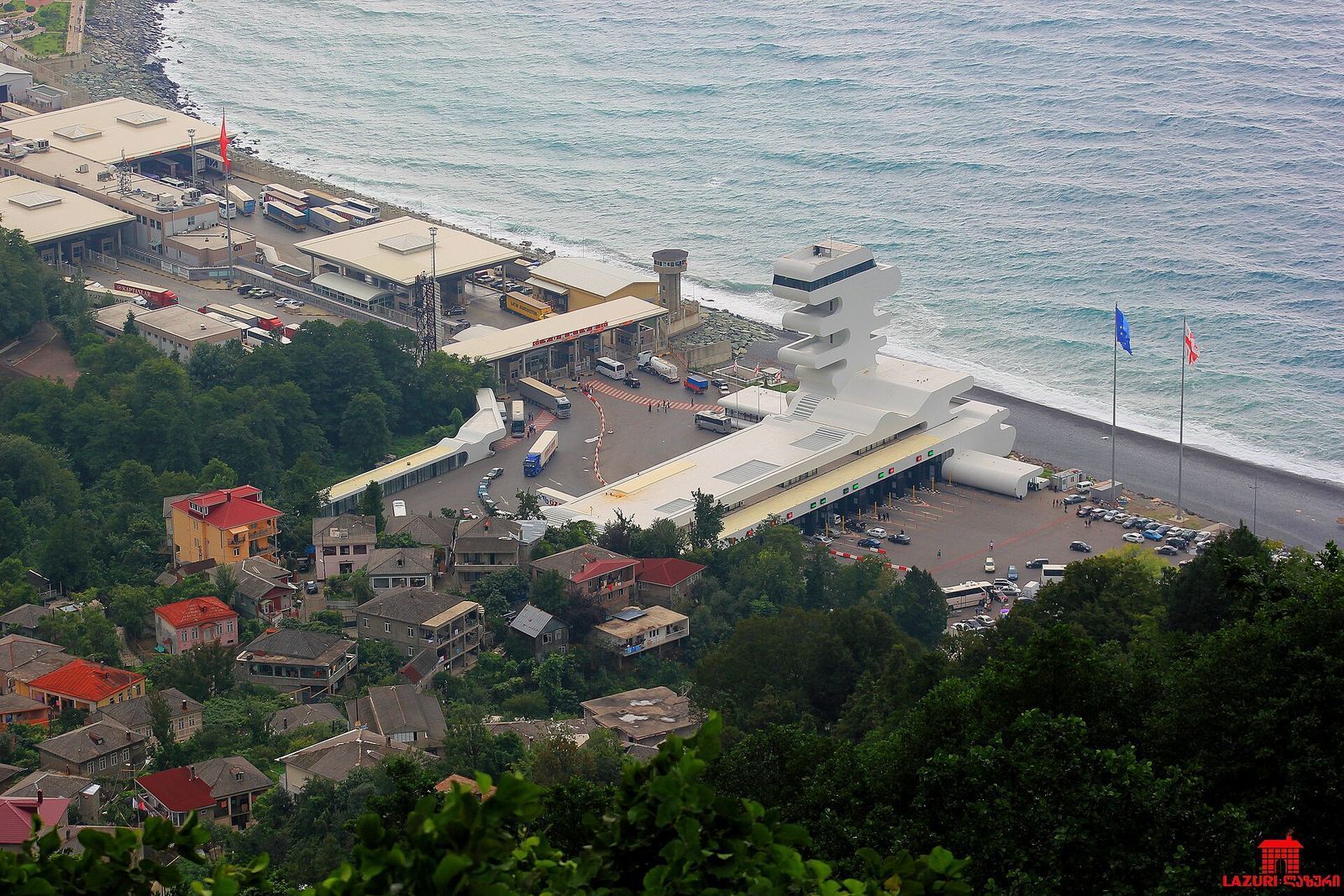
Sarpi is the crossing for anyone coming up the Turkish coast, and from Batumi it's 5 to 6 hours to Tbilisi by minibus, or quicker by train. Upper Lars sits at the top of the road to Kazbegi, so if you're coming in from Russia in winter, check the pass is open before you set off.
Staying longer than a year, working and overstays
For most long-stayers, the 365 days plus a trip abroad covers it. If you want to stay for good, the route is a residence permit, applied for at the House of Justice, with processing taking 1 to 3 months. That's a different project from a holiday, and a local immigration lawyer will save you a lot of trial and error.
Visa-free entry is for visiting. Taking a job with a Georgian employer needs a work permit or residence permit. Working remotely for a company abroad while you stay on the 365-day rule is a gray area in Georgian law, so if you're planning a long remote-work stint, get local advice on registering before your first year is up.
Overstaying is the mistake to avoid. Border officers see your entry date automatically when you leave, an overstay brings a fine and an order to depart, and repeat overstays can earn an entry ban. With a full year on the clock, there's no reason to let it happen.
Key takeaways
- Check your passport first: more than 90 nationalities get 365 days visa-free, and that list covers most Western passports.
- Without a visa-free passport, a valid US, UK or Schengen visa or residence permit gets you 90 days in any 180 with no Georgian application.
- Everyone else uses the e-visa on evisa.gov.ge: 20 US dollars, 5 working days, and only ever on the government portal.
- Buy health and accident insurance with at least 30,000 GEL of cover before you fly, because every visitor needs it since 2026.
- The Azerbaijan land border is closed, and entering Abkhazia or South Ossetia from Russia is illegal under Georgian law.
Frequently asked questions
Do US citizens need a visa for Georgia?
No. US citizens enter Georgia visa-free and can stay up to 365 days in a row. You need a passport valid for your whole stay and, since 2026, health and accident insurance covering the trip.
How long can you stay in Georgia without a visa?
Up to 365 days in a row if your passport is on the visa-free list. The count starts the day you enter, and leaving and coming back starts a new period. Holders of US, UK or Schengen visas and permits get 90 days in any 180 instead.
Do I need travel insurance to enter Georgia in 2026?
Yes. Since 1 January 2026 every foreign visitor needs health and accident insurance covering the whole stay, with at least 30,000 GEL of cover. Border officers can ask for it at any crossing, and you can't buy it at the airport.
Can I enter Georgia with a Schengen visa?
Yes, if your own passport needs a visa for Georgia. A valid Schengen visa or residence permit, like a US or UK one, lets you enter without a Georgian visa and stay up to 90 days in any 180-day period.
How much does a Georgia e-visa cost?
The consular fee is 20 US dollars, plus small processing and identity check fees. It's issued within 5 working days, and you apply only on evisa.gov.ge, the Foreign Ministry's portal.
Is a return ticket required to enter Georgia?
Not always, but officers sometimes ask for one. Any confirmation that you're leaving works, whether that's a flight home, an onward flight, or a train or bus booking out of the country.
Can EU citizens enter Georgia with an ID card?
Yes. EU citizens can enter Georgia with a national ID card instead of a passport and get the same visa-free stay. The insurance rule still applies.
What happens if you overstay in Georgia?
You get a fine and have to leave, and repeat overstays can lead to an entry ban. Officers see your entry date automatically when you exit, so the overstay will show.

Tbilisi Travel Tips: What I'd Tell You Before a First Trip to Georgia
Tbilisi is known for wine, sulfur baths and long dinners. Here's what to know about entry, money, transport and safety.
Read the guide
Tbilisi Itinerary: How I'd Spend 1 to 5 Days in Tbilisi
Tbilisi is best over 3 full days. Here is how to spend 1 to 5, with routes, meals, day trips and costs.
Read the guide
The Best Time to Visit Tbilisi, Month by Month
Tbilisi is known for golden autumns and hot summers. Here is the weather by month, the crowds, and when I would go.
Read the guide