The Georgian Supra: The Tamada, the Toasts and How to Join a Feast
Georgia is known for the supra, a long feast where nobody drinks without a toast. Here's what you need to know about the tamada who runs the table, the order the toasts usually follow, what gaumarjos means, the drinking horn, how to behave as a guest, and where in Tbilisi you can sit down at a feast of your own.
What a supra is
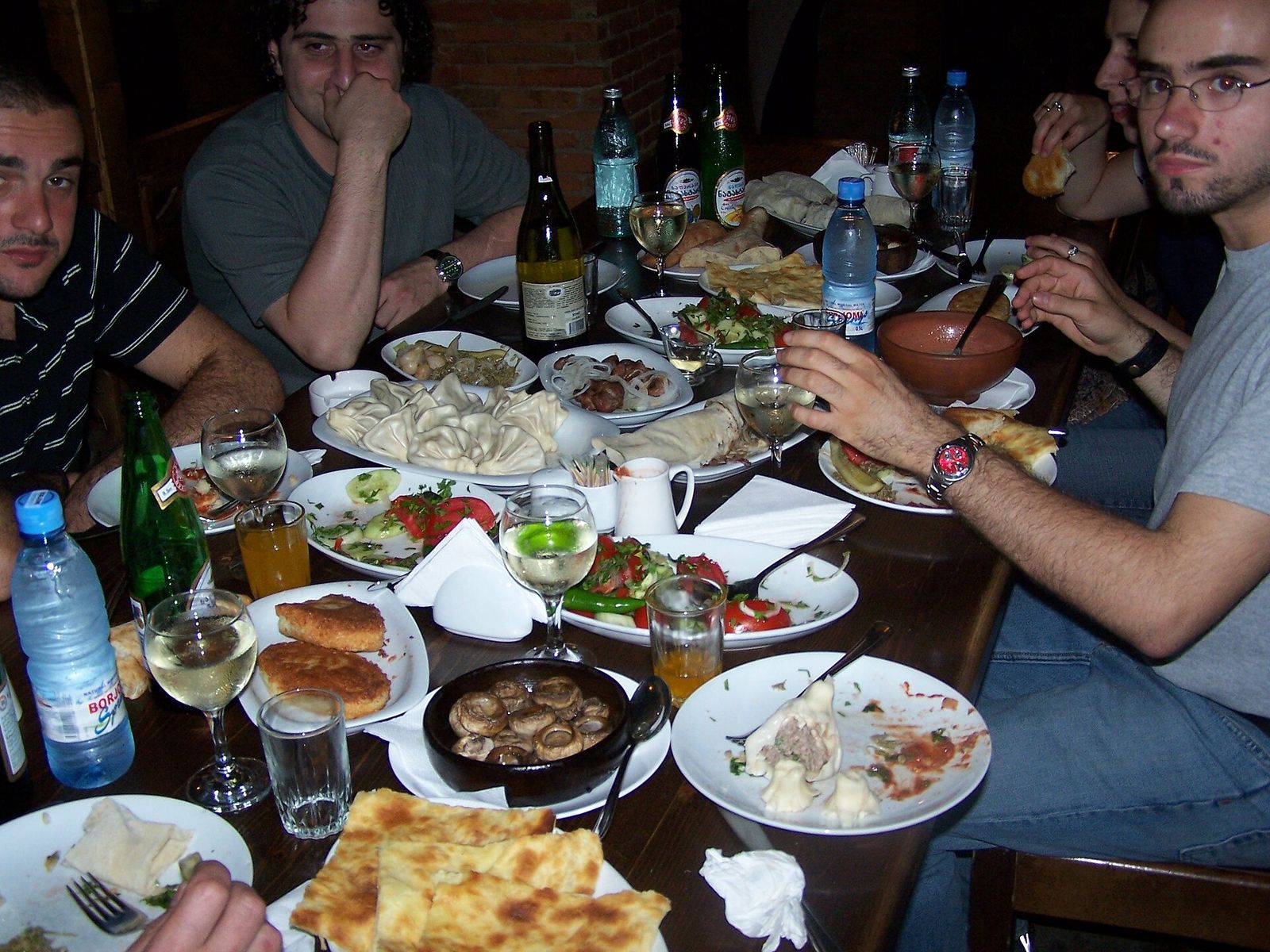
Supra literally means tablecloth, and in Georgia the word stands for everything laid on it: a table crowded with dishes, jugs of wine, bread, toasts and singing. Families hold one for weddings, birthdays, christenings, a relative home from abroad or a Sunday when enough people are around. A festive supra runs 4 to 5 hours, and often longer.
What makes it different from any big dinner is the structure. One person, the tamada, leads a sequence of toasts, and the wine follows the toasts, never the other way round. Georgians drink slowly, always with food, and getting drunk at a supra is a disgrace. In 2017 the supra went onto Georgia's national list of intangible cultural heritage.
The cloth itself has a craft tradition too. The old feast covering was the lurji supra, a deep blue cloth printed with white patterns, and a hand-printed one is still the best gift to carry home from Tbilisi.
Keipi and kelekhi: the two kinds of supra
There are two supras, and they could hardly be further apart. The keipi is the celebration: jokes, long toasts, songs and sometimes dancing between courses. The polyphonic folk songs Georgia is famous for were made for tables like this, and at a good keipi someone always starts one.
The kelekhi is the quiet feast held after a funeral, and again 40 days and one year after the death. It lasts up to 2 hours with 7 to 9 toasts, and it has its own dishes: kolio, a sweet mix of wheat, raisins and honey, and shila plavi, a rice and meat dish served last to signal the end. As a visitor you'll almost certainly meet the keipi, so everything below is about that one.
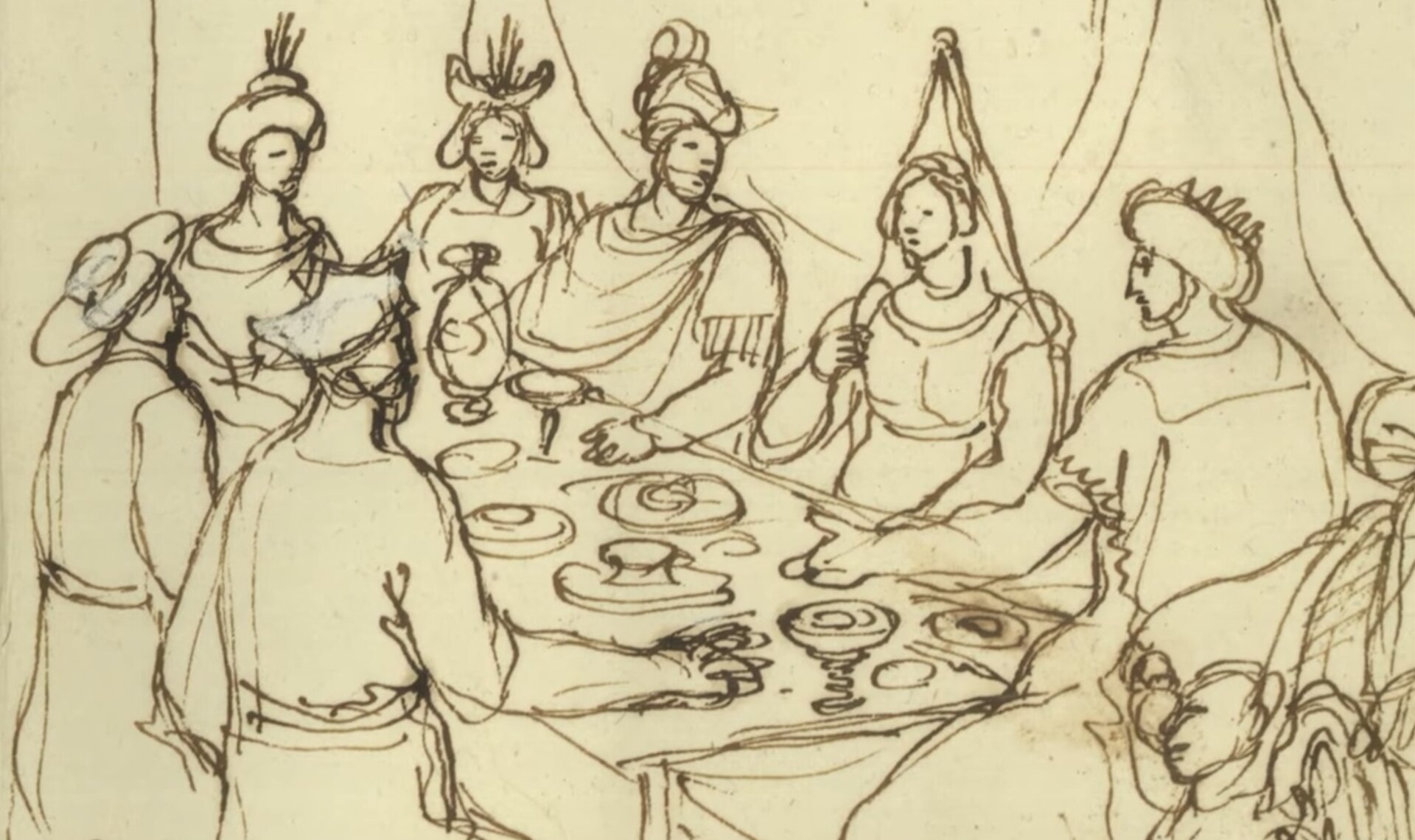
The custom is old. The drawing below was made in the 17th century by an Italian missionary who lived in Georgia, and the long table, the guests and the drinking vessels would look familiar at any family feast today.
The tamada: who runs the table
The tamada is the toastmaster, and he is chosen at the start of the meal. He's usually the most respected and eloquent person present, often the eldest man in the family or a close friend of the host. At a formal event such as a wedding, the host picks him in advance and introduces him with the first toast. At a casual dinner someone gets nominated on the spot, and younger groups of friends often rotate the role.
A good tamada needs wit, a sense of humor, original toasts and a strong head for wine, because he drains his glass on every toast he makes and still has to be steady at the end of the night. He sets the pace: toasts come thick and fast early on and slow down later, and he adds or drops toasts to suit the mood of the table. No one drinks outside his toasts, and no one proposes a toast without his permission.
When the tamada wants a particular guest to speak, he says alaverdi and hands them the floor. That guest then adds their own words on the same theme before drinking. Being given the alaverdi is a sign of trust, so it's polite to say something sincere rather than wave it away.
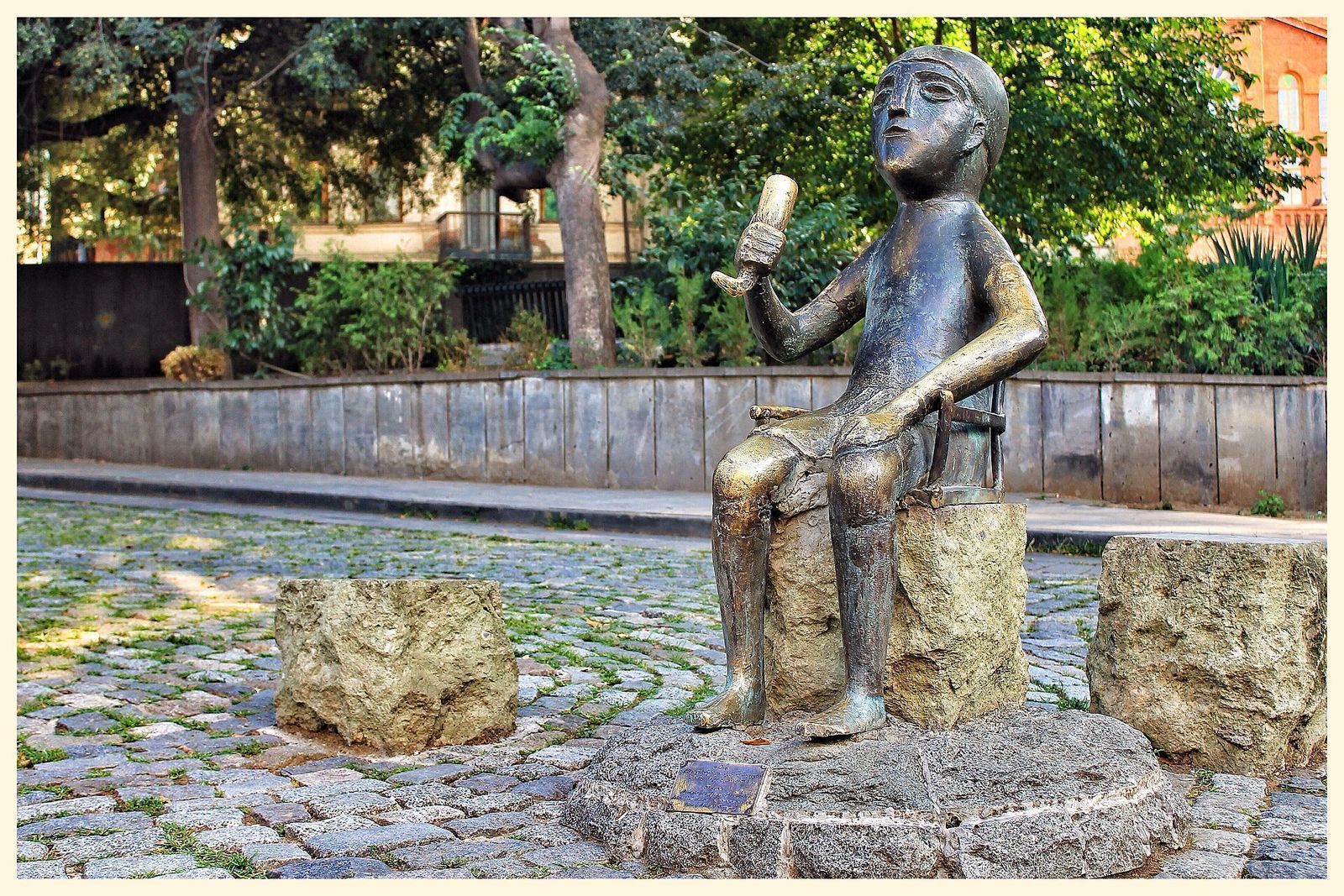
Walk through Old Tbilisi and you'll pass the city's bronze tamada, a small seated figure with his horn raised. He's my favorite photo stop in the lanes, and a good reminder of how central the toastmaster is to Georgian life.
The order of Georgian toasts
No two supras run the same list. The family, the region and the tamada all change it, and he slots in his own toasts as the night goes on. The backbone is still easy to recognize, and this is the order I'd expect at a family celebration in Tbilisi.
| # | Toast | What you do |
|---|---|---|
| 1 | God and peace (mshvidobas) | Raise your glass and drink |
| 2 | Georgia (sakartvelos gaumarjos) | Drink to the bottom |
| 3 | The reason for the feast: the birthday, the couple, the guest of honor | Drink, and add a word if the tamada asks |
| 4 | The dead and absent, starting with the most recent loss | Stand, stay silent, no clinking, drink |
| 5 | Children and the new generation, youngest first | Drink |
| 6 | Parents, ancestors and the host family | Drink to the bottom |
| 7 | Women, especially those at the table | Drink |
| 8 | Friendship | Drink, or sip if the night is long |
| 9 | Love: of family, friends, country or a partner | Drink, or sip |
| 10 | The guests (stumris gaumarjos) | Wait for the toast to end, thank the speaker, then drink |
| 11 | Spontaneous toasts from the tamada and the guests | Sip |
| 12 | The tamada, the hosts and the next time you all meet | Drink to the bottom and thank the hosts |
The heavy toasts are Georgia, the dead and the parents: those are the ones to finish. The smaller toasts later in the night can be sipped, and guests can drink a smaller measure without anyone minding.
Gaumarjos and the toasting words to know
Gaumarjos (ga-oo-mar-jos) is the Georgian cheers. It means "to victory" and shares a root with gamarjoba, the everyday hello. You say it when the glasses go up, and it works as the reply to any toast. A handful of other words come up at every supra, and knowing them makes the evening much easier to follow. The Georgian phrases a traveler needs start with gamarjoba and madloba, and these are the table extras.
| Word | What it means | When you hear it |
|---|---|---|
| Gaumarjos | To victory, cheers | Every toast |
| Gagvimarjos | May we be victorious | The reply from the table |
| Alaverdi | The tamada passes the toast to you | When he wants you to speak next |
| Sadghegrdzelo | A toast, literally "to long life" | When a guest asks the tamada for one |
| Bolomde | To the bottom | The big toasts, and the drinking horn |
| Tamada | The toastmaster | All night |
| Merikipe | The wine pourer | When your glass is filled |
The kantsi: Georgia's drinking horn
The kantsi is a drinking horn, often trimmed in silver or brass, and it comes out for the special toasts. It has no flat base, so it can't be set down half full: once it's poured, it has to be drunk to the bottom. The horn is either passed around the table or handed to the most honored guest, and as a visitor that guest might be you. At some tables a bowl or an oversized glass does the same job.
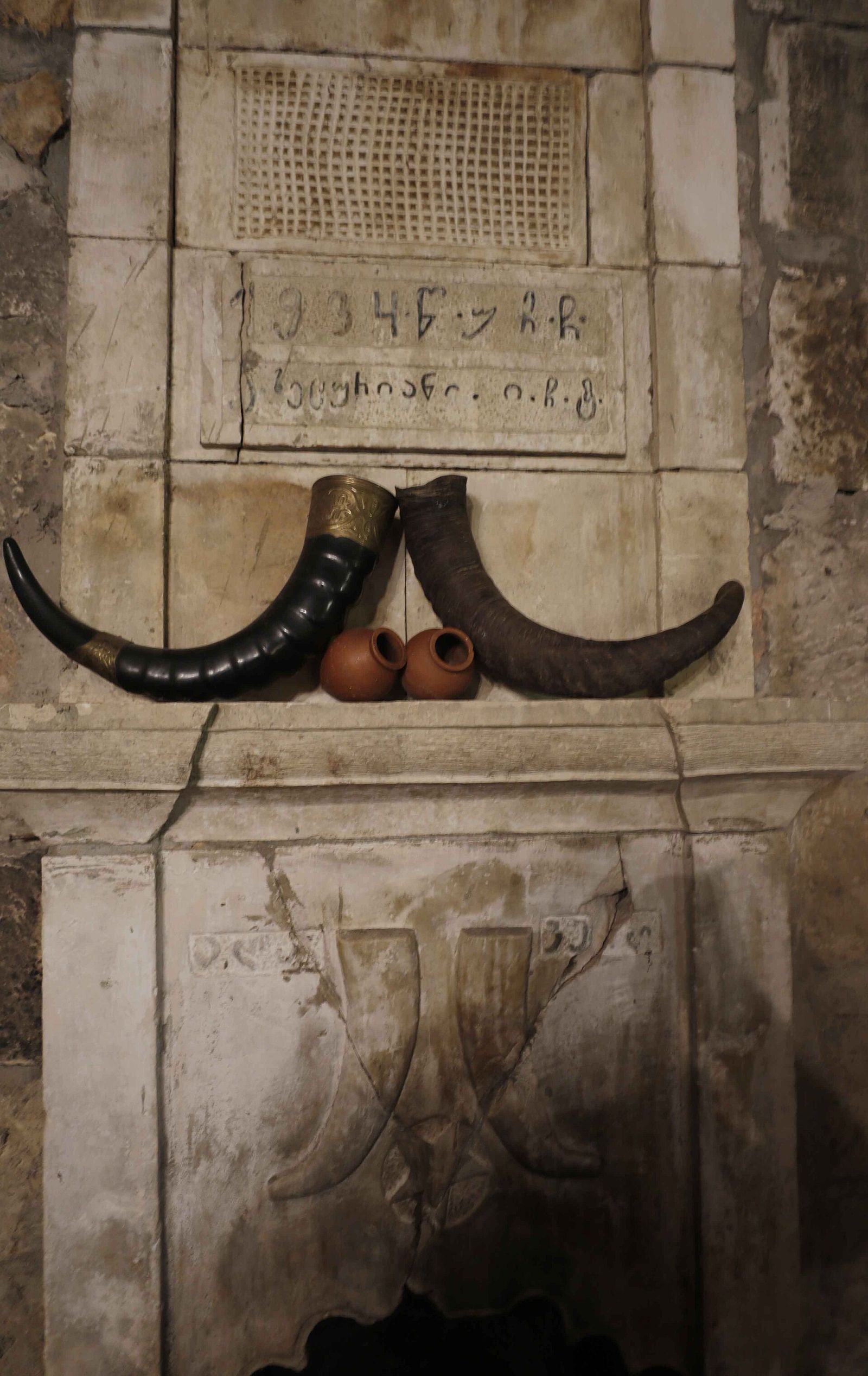
After some of the big toasts, the emptied glass or horn is turned upside down and someone says "ase mteri dagetsalos", may your enemy be as empty. It's one of my favorite moments at a supra, because the whole table joins in.
What you eat and drink at a supra
The food arrives before the guests and never stops. Dishes are set out for every 4 or 5 people so everyone can reach, and new plates get stacked on top of old ones rather than replacing them. The staples are khachapuri or bean-filled lobiani, mtsvadi (pork grilled on skewers), a platter of pkhali (vegetable and walnut pastes), badrijani nigvzit (eggplant rolled around walnut paste), a tomato and cucumber salad, cheese, pickles, tkemali plum sauce and plenty of bread. One or two hot stews of beef or chicken turn up later, just when you think the meal is over.
Khinkali usually aren't on a supra table unless the host comes from the mountains, where they are the main dish. Dessert is fresh fruit, cake, nuts, dried fruit, churchkhela and pelamushi, a set pudding of thickened grape juice; the Georgian sweets are all at their best at the end of a long table like this. Vegetarians do well, since so much of a supra is walnut, eggplant, beans and greens, and the classic Georgian dishes you'll meet here are the same ones on any good restaurant menu in town.
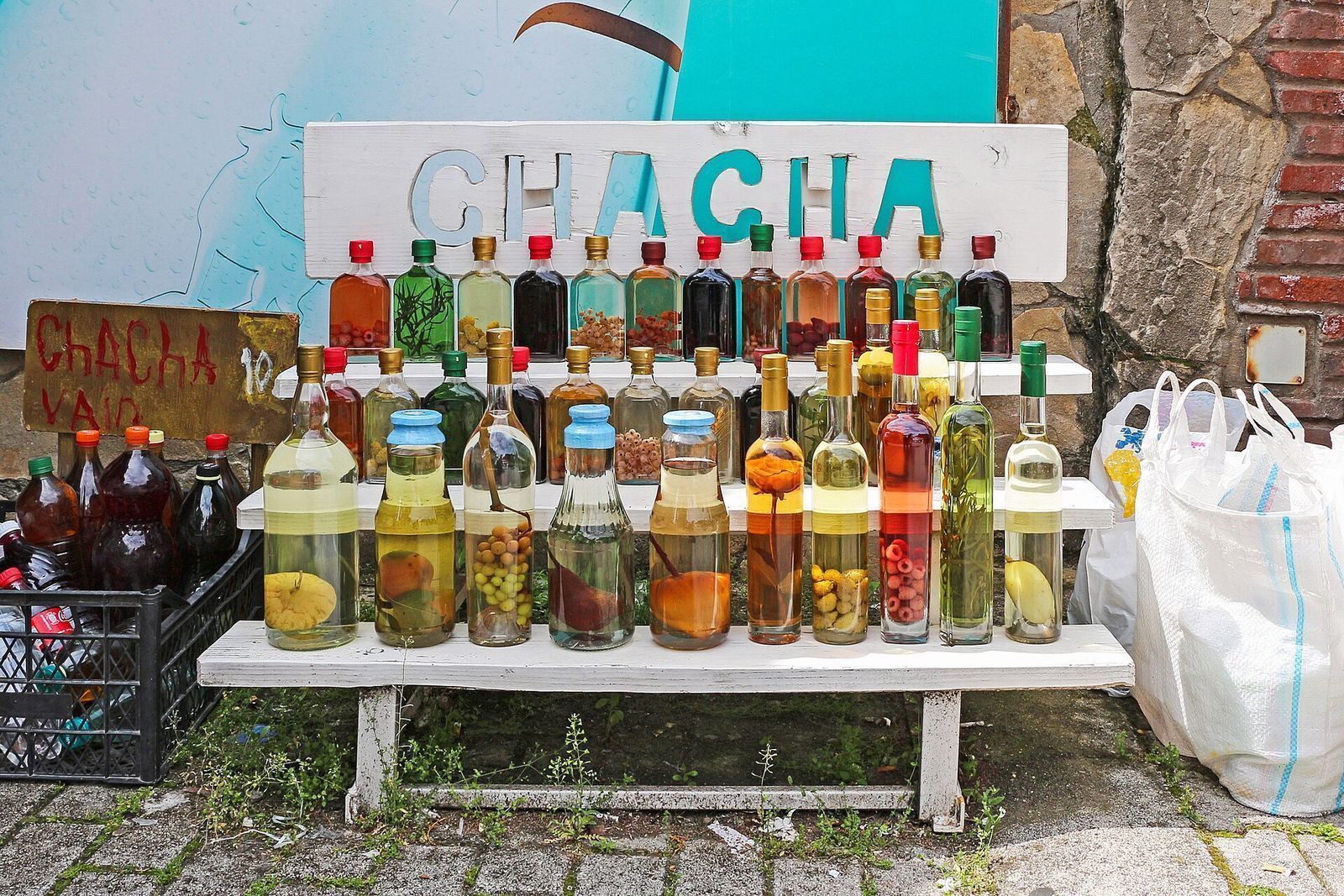
In the glass, the tradition is white wine, most often Rkatsiteli, and in many families it's homemade and poured from jugs. Glasses are small, about 120 ml, and they get refilled after every toast. Each guest also has a bigger glass for water or lemonade. At a lot of tables a round of chacha, the grape brandy, goes first; after that first round, switching to wine is fine. Stronger spirits such as vodka or whiskey mostly show up at younger friends' gatherings rather than family feasts. Knowing the main Georgian wine styles pays off at the table, because complimenting the wine is part of the evening.
Supra etiquette for guests
Most of the rules come down to one idea: the table drinks together, on the tamada's word. The wider manners Georgians expect from visitors apply here too, but these are the ones specific to a feast.
What to do:
- Drink only on a toast. Wait for the tamada to finish and for the gaumarjos before you lift the glass.
- Listen while someone speaks. Talking during a toast is rude, and eating through one is frowned on.
- Compliment the wine. It's often the host's own, and praise for it is always welcome.
- Say early if you don't drink. Driving or health reasons are understood if you mention them at the start; non-drinkers are accepted, though hosts may ask why.
- Pace yourself. Finish the big toasts and sip the rest, because homemade wine varies a lot from jug to jug.
What to avoid:
- Proposing your own toast without asking the tamada first.
- Clinking glasses on the toast to the dead.
- Getting drunk. A supra celebrates being together, and a guest who loses control embarrasses the hosts.
At traditional tables the men usually hold their glass until they've added a few words to the tamada's toast, while women can drink as soon as the toast ends. Men also get pressed to finish every glass. You can decline politely or just sip, but expect the glass to be topped up again either way.
How to give a toast as a guest
As a foreign guest, there's a good chance the tamada will hand you the alaverdi at some point, often around the toast to the guests. Don't panic and don't read from your phone. Keep it to 3 or 4 sentences, speak from the heart, and stick to safe themes: your hosts' hospitality, Georgia and its land, and your wish to come back.
When someone toasts you, stay seated and quiet until they finish, thank them, and then drink. When it's your turn, stand if everyone else stood for their toasts, raise your glass, look around the table, and finish with gaumarjos. Then drain the glass; a toast you gave yourself is one you finish.
Here's the kind of toast I'd give at a first supra, and you're welcome to borrow it:
I came to Georgia for the wine and the mountains, and tonight I learned the best thing here is the people at this table. Thank you for treating a stranger like family. To our hosts, and to the next time we sit together. Gaumarjos!
Where to experience a supra in Tbilisi
A true supra needs an invitation: a family celebration, a guesthouse host who likes you, a Georgian friend's birthday. If one comes your way, say yes. Without one, these are the places I'd go for the songs, the food and the feeling of a feast.
| Where | What you get | Good to know |
|---|---|---|
| Georgian House, 2 Giorgi Tsabadze St, Vera | Folk singers and dancers at weekends from 8 PM; mtsvadi is the dish to order | 30 to 60 GEL a person; open daily, noon to 1 AM |
| Ethno Tsiskvili, 99 Akaki Beliashvili St | Live music, dancing and bread baked in a clay tone oven by the entrance | The big night out for a first-timer; book ahead |
| Barbarestan, 132 Davit Aghmashenebeli Ave | Recipes from a 19th-century Georgian cookbook and qvevri wines | Live Georgian music on Saturday evenings; book well ahead |
| A family winery in Kakheti | Homemade qvevri wine and a family feast at the source | Usually part of a day tour from Tbilisi |
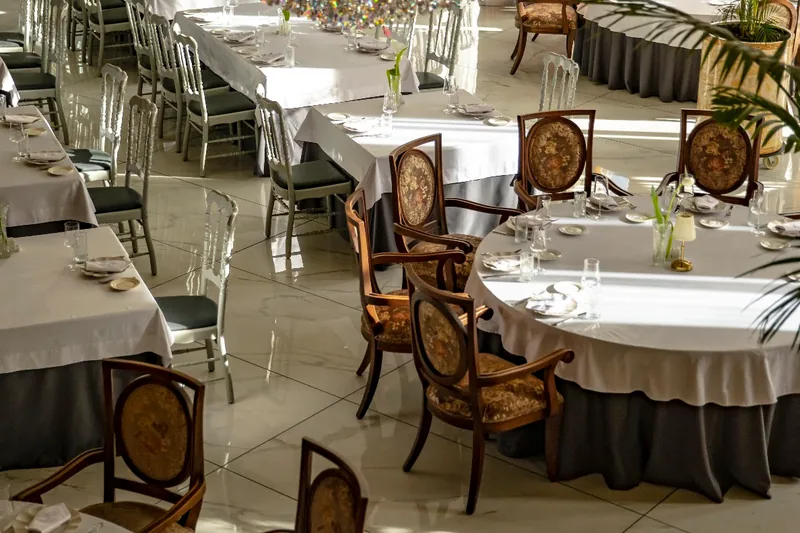
Georgian House is the one I'd book for a first feast. It's in Vera, an easy walk from Station Square metro, and the weekend folk singers and dancers are as close as a restaurant gets to the songs at a keipi. Order the mtsvadi and leave room for the cherry strudel.
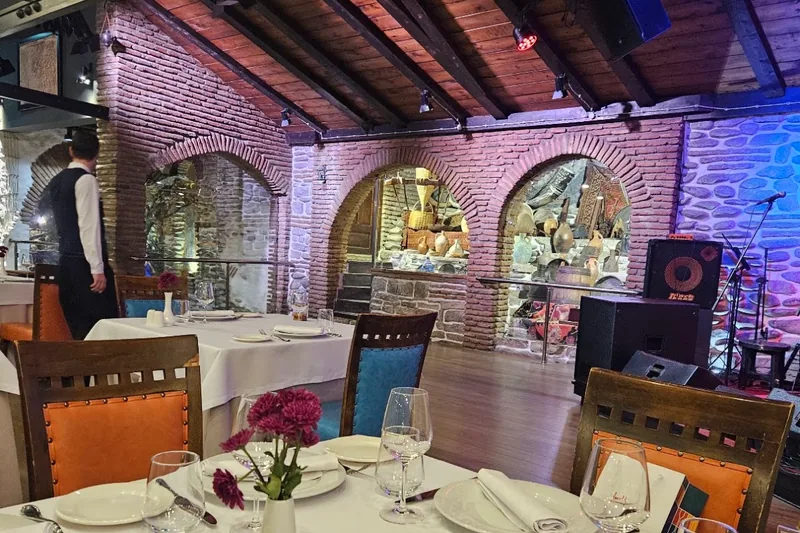
Ethno Tsiskvili is the big night out, with live music, dancing and a waterfall, and the tonis puri comes hot from the clay oven by the entrance. Order badrijani nigvzit, pork mtsvadi and lobiani, the same dishes that crowd a family supra table, and book ahead.
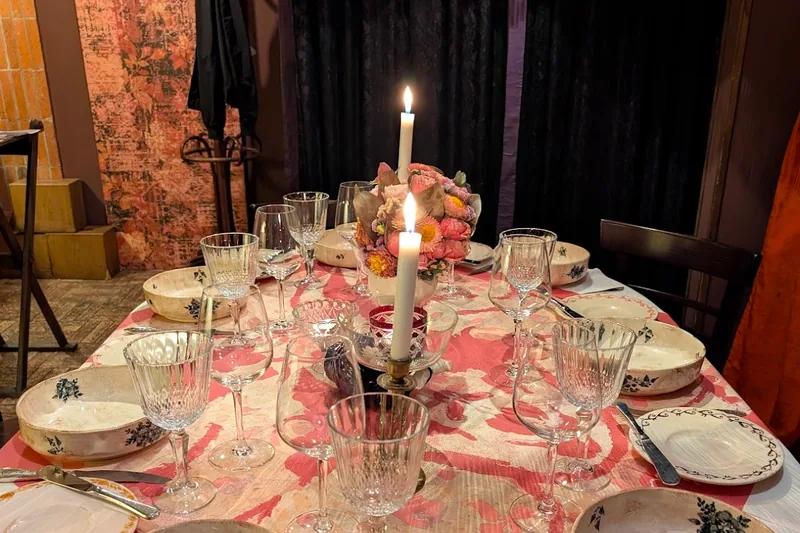
Barbarestan is the quieter table, cooking from a 19th-century Georgian cookbook: pumpkin patties, cherry soup with mint, rabbit wrapped in ham, and qvevri wines to toast with. It serves no beer, which suits a supra fine. Saturday evenings bring live Georgian music, and it's full most nights, so book well ahead.
The honest limit of a restaurant is that nobody hands you a tamada. My fix: pick the most talkative person in your group, make them tamada for the night, and run the toast table above. It works as well for 4 friends as for 40 relatives. A mid-range dinner for two with wine costs about 80 to 120 GEL in Tbilisi, and the best restaurants in the city take bookings, which you'll want on Friday and Saturday.
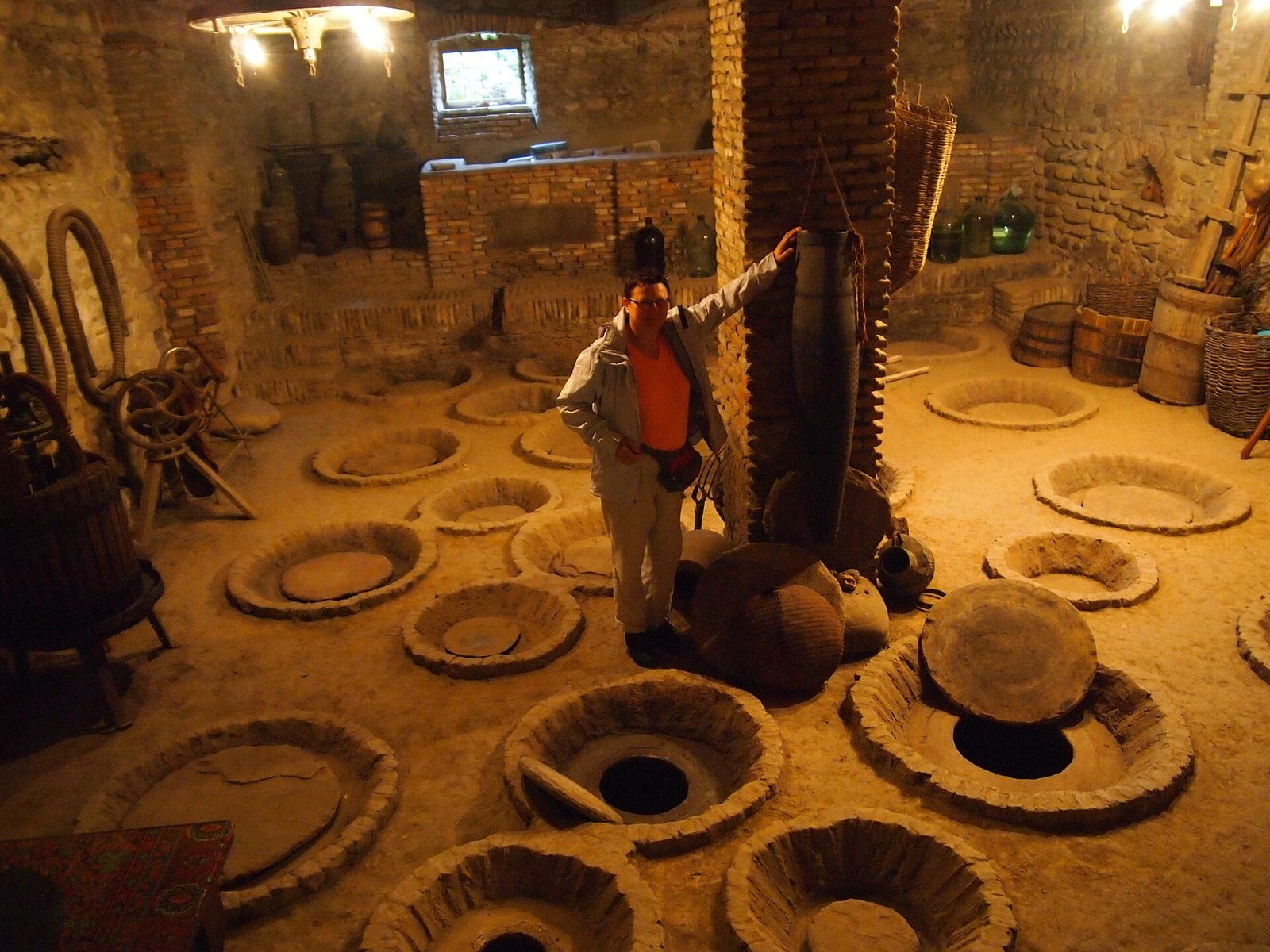
For the closest thing to a family supra, go to the wine country. A Kakheti wine tour from Tbilisi often ends at a family winery, where the wine comes out of the host's own qvevri, churchkhela sits on the table, and the toasts follow the same order you'd hear at a family celebration in the city.
Key takeaways
- A supra is a feast run by a tamada, and every drink follows one of his toasts.
- The usual order runs from peace and Georgia through the dead, children, parents and women to friendship, love, the guests and the tamada.
- Say gaumarjos, stand silently for the dead, drain the big toasts and sip the rest.
- A drinking horn has no base, so refuse it before it's filled, never after.
- Book Georgian House, Ethno Tsiskvili or Barbarestan for a feast with music, or a Kakheti wine tour for a family table.
Frequently asked questions
What does gaumarjos mean?
Gaumarjos means "to victory" and is the Georgian word for cheers. It comes from the same root as gamarjoba, the Georgian hello, and you say it whenever glasses go up. The usual reply is gagvimarjos, may we be victorious.
What is a tamada at a Georgian supra?
The tamada is the toastmaster who leads a Georgian feast. He's chosen at the start of the meal, usually the most respected and eloquent man present, and he decides the order and pace of the toasts. Nobody drinks outside his toasts.
What is the order of toasts at a Georgian supra?
The usual order is peace (and God at traditional tables), Georgia, the reason for the feast, the dead, children, parents and the host family, women, friendship, love, the guests, and finally the tamada and the hosts. Families and regions change it, and the tamada adds his own toasts along the way.
Do you have to drink at every toast in Georgia?
No, you only need to drain your glass for the big toasts, such as Georgia, the dead and the parents. Smaller toasts can be sipped, and non-drinkers are accepted if they say so at the start of the meal.
Why don't Georgians toast with beer?
In Georgian tradition a beer toast is for enemies, so raising a beer at a supra reads as an insult. Toast with wine or chacha instead, even if you have a beer on the table.
How long does a Georgian supra last?
A festive supra lasts 4 to 5 hours and often longer, with about 12 main toasts. A kelekhi, the funeral feast, is shorter, up to about 2 hours with 7 to 9 toasts.
What is the Georgian drinking horn called?
The Georgian drinking horn is called a kantsi. It's used for special toasts, and because it has no flat base it can't be set down until it's empty.
Georgian Drinks: What to Drink in Georgia and Where to Try It in Tbilisi
Tbilisi is known for its qvevri wine. Here's what to drink in Georgia, from amber wine to chacha, and where to try it.
Read the guide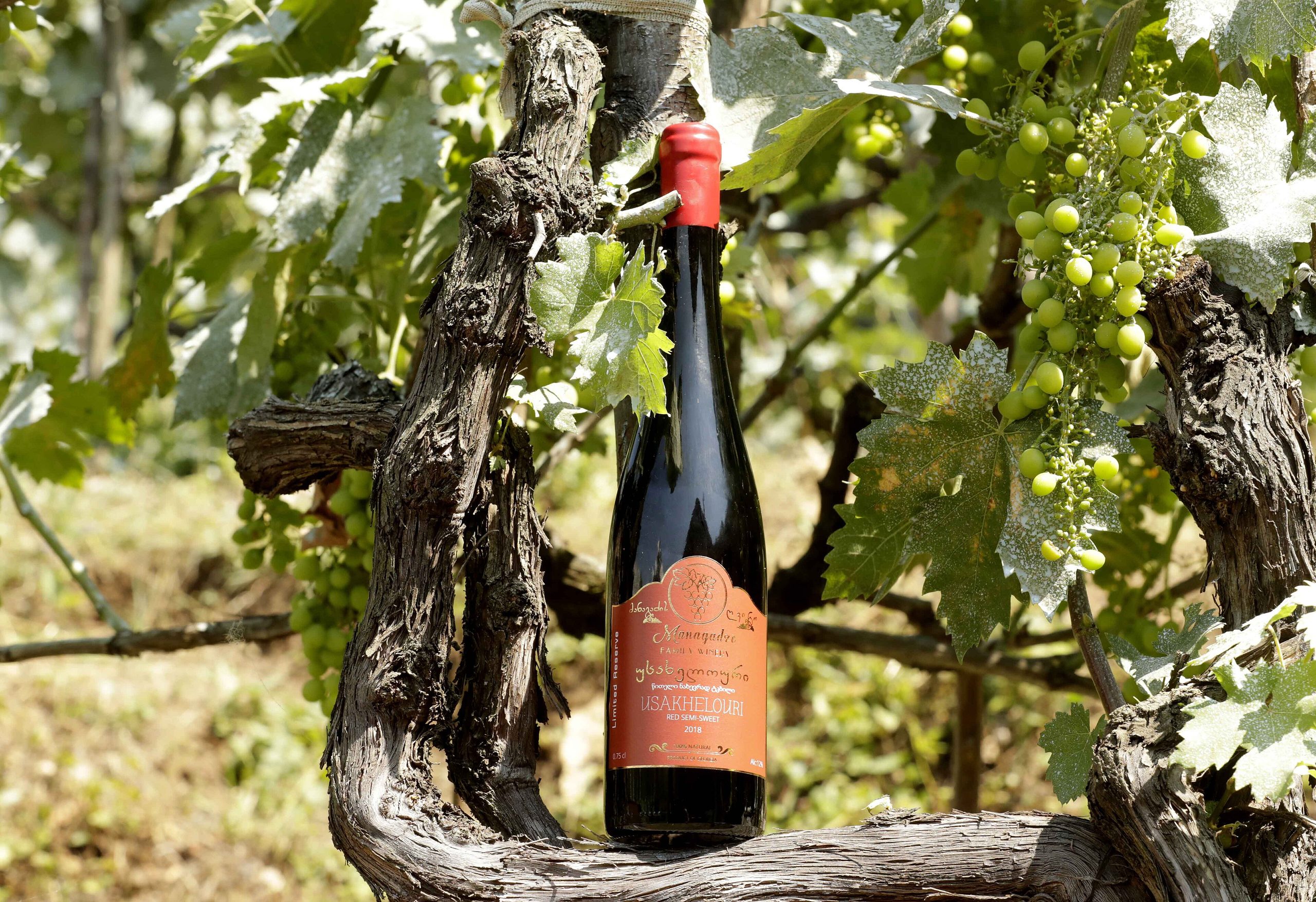
Georgian Wine Guide: Regions, Styles and What to Order
Georgia is known for 8,000 years of winemaking. Here is what to know about its styles, regions, prices and bars.
Read the guide
Qvevri Wine: How Georgia Makes Wine in Buried Clay Jars
Georgia is known for qvevri wine. Here is what the clay jars are, how the wine tastes and where to try it in Tbilisi.
Read the guide