Chronicles of Georgia, Tbilisi: How to Get There and What to See
The Chronicles of Georgia is the giant, unfinished monument on a hill above the Tbilisi Sea: 16 pillars covered in bronze reliefs of Georgian history and the life of Christ, about 20 minutes by car from the center. It's free, open at all hours and rarely crowded. Here's what you need to know about what you're looking at, how to get there and when to go.
What is the Chronicles of Georgia?
The Chronicles of Georgia (you'll also see it as the Chronicle of Georgia, or simply the Tbilisi Sea monument) is a sculpture complex on a hilltop at the northeast edge of the city. Sixteen pillars stand in a square open to the sky, each one 30 to 35 m tall and covered in bronze reliefs. The top halves tell the story of Georgia through its rulers and heroes; the bottom halves tell the story of Christ.
It is the work of Zurab Tsereteli, the Tbilisi-born sculptor. He began it in 1985, and the plan was to mark roughly 3,000 years of Georgian history and 2,000 years of Christianity in one place. Then the Soviet Union collapsed in 1991, Georgia went through a hard decade, and the money ran out. Work stalled and never properly restarted, so the monument is officially still unfinished more than 40 years on.
You'd struggle to tell. A few pieces are missing and some details were never completed, but from the steps it reads as a finished thing, just a very strange one. Its nickname is "Georgia's Stonehenge", and once you're standing in the ring of pillars with the wind coming off the reservoir, it makes sense.
It belongs with the rest of the late Soviet showpieces around the city, and anyone hunting down Tbilisi's brutalist buildings should put it near the top of the list. It is also one of the few places where the whole sweep of Georgian history is laid out in one go, if you know how to read it.
What to see at the Chronicles of Georgia
There are no information boards and no English signs, so most visitors walk around the pillars, take photos and leave without knowing what they saw. Here is how I'd read it, in the order you meet things coming up the steps.
The 16 pillars
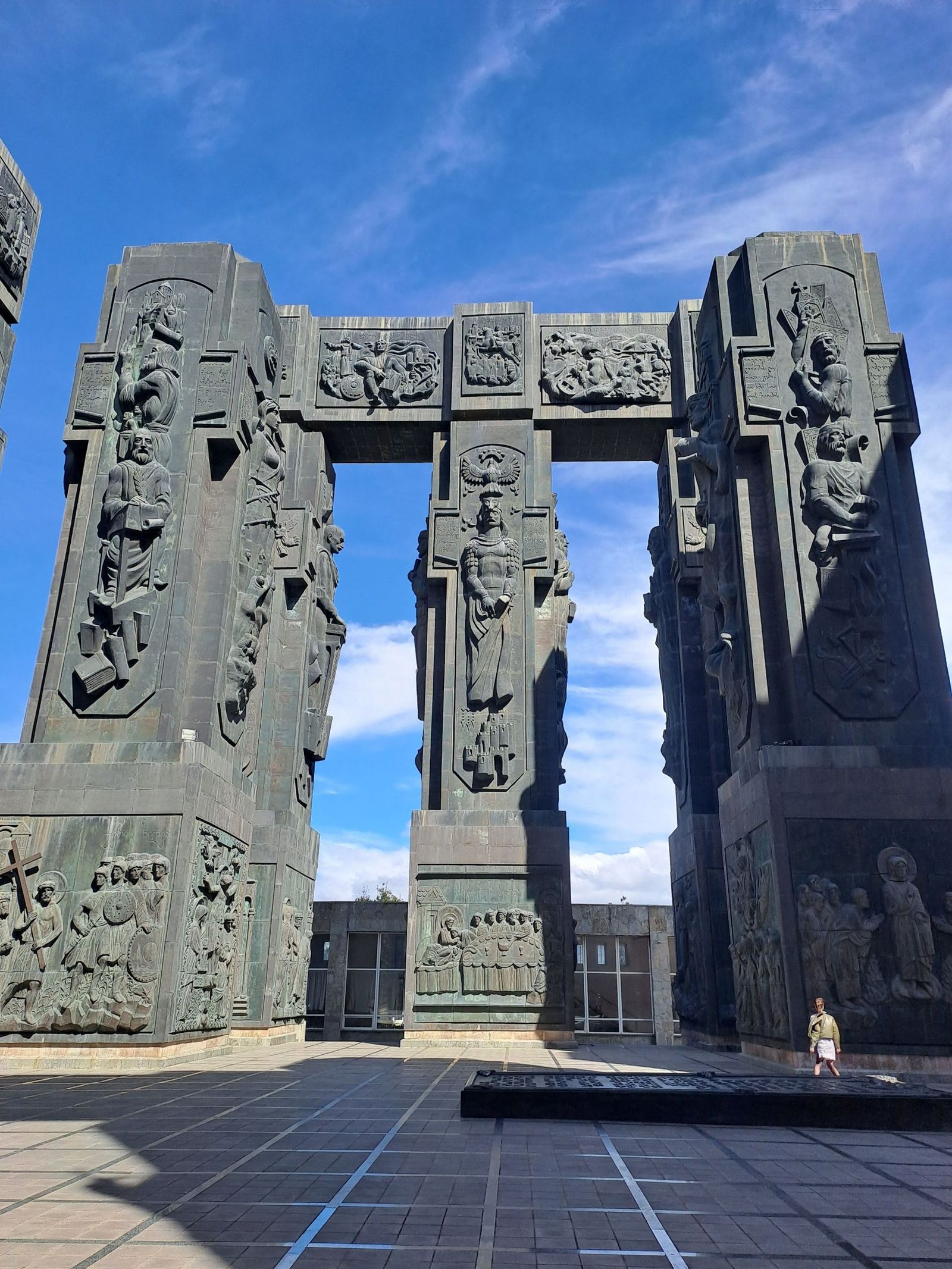
The pillars stand at the top of long flights of steps from the car park, arranged in a square like a cloister with no roof. Beside them stands a cross in the shape of St Nino's grapevine cross, the symbol of the woman who brought Christianity to Georgia. Photos never get the scale right. Each pillar is roughly the height of a 10-story building, and from the base the figures at the top are hard to make out without a zoom lens.
Walk the full square slowly rather than standing in the middle. The reliefs change on every face of every pillar, and the light moves across them through the day, so the side in shadow at 9:00 is the one to look at after lunch.
The upper tier: kings, queens and heroes
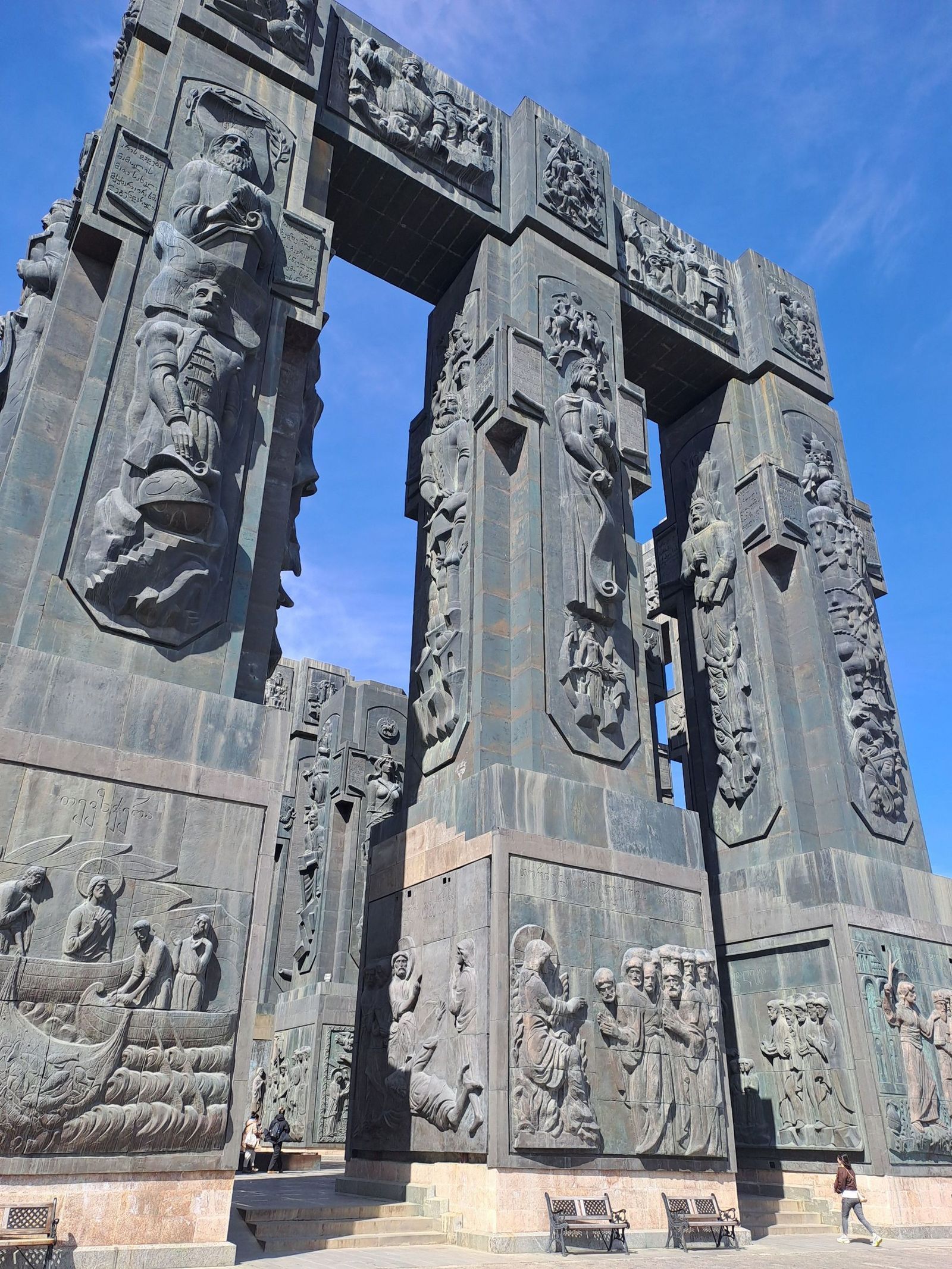
The top half of each pillar is the "chronicle" of the name: Georgian kings, queens and national heroes, crowned, armed and enormous. The scenes run through the country's long run of rulers, wars and golden ages, and lines of Georgian script carry historical text across the stone. Even without reading a word, you can pick out battles, coronations and crowned women, which is a fair summary of Georgian history.
The lower tier: the life of Christ
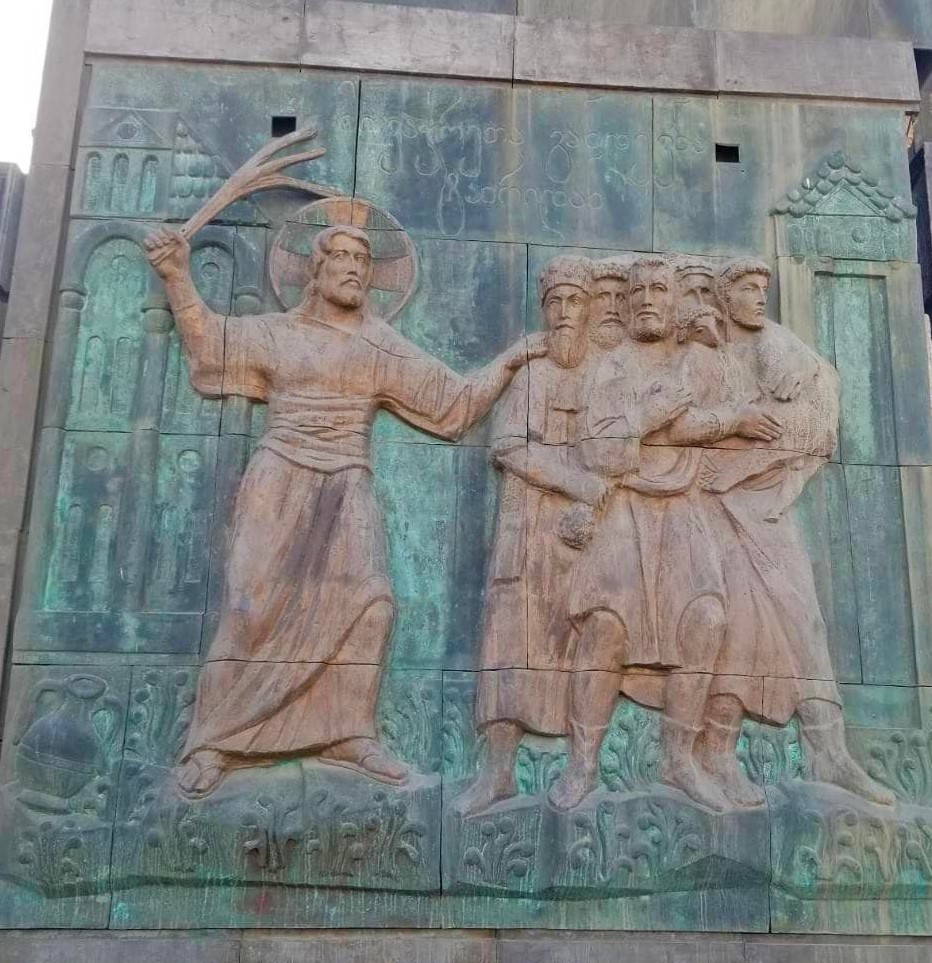
The bottom half of the pillars, the part at eye level, switches to the Bible. You'll find scenes from the life of Christ, including Palm Sunday, the Last Supper and the Resurrection, alongside the apostles, his family and a crowd of regional saints. This is the half to study up close, because it's the half you can actually see in detail.
The Church of the Annunciation
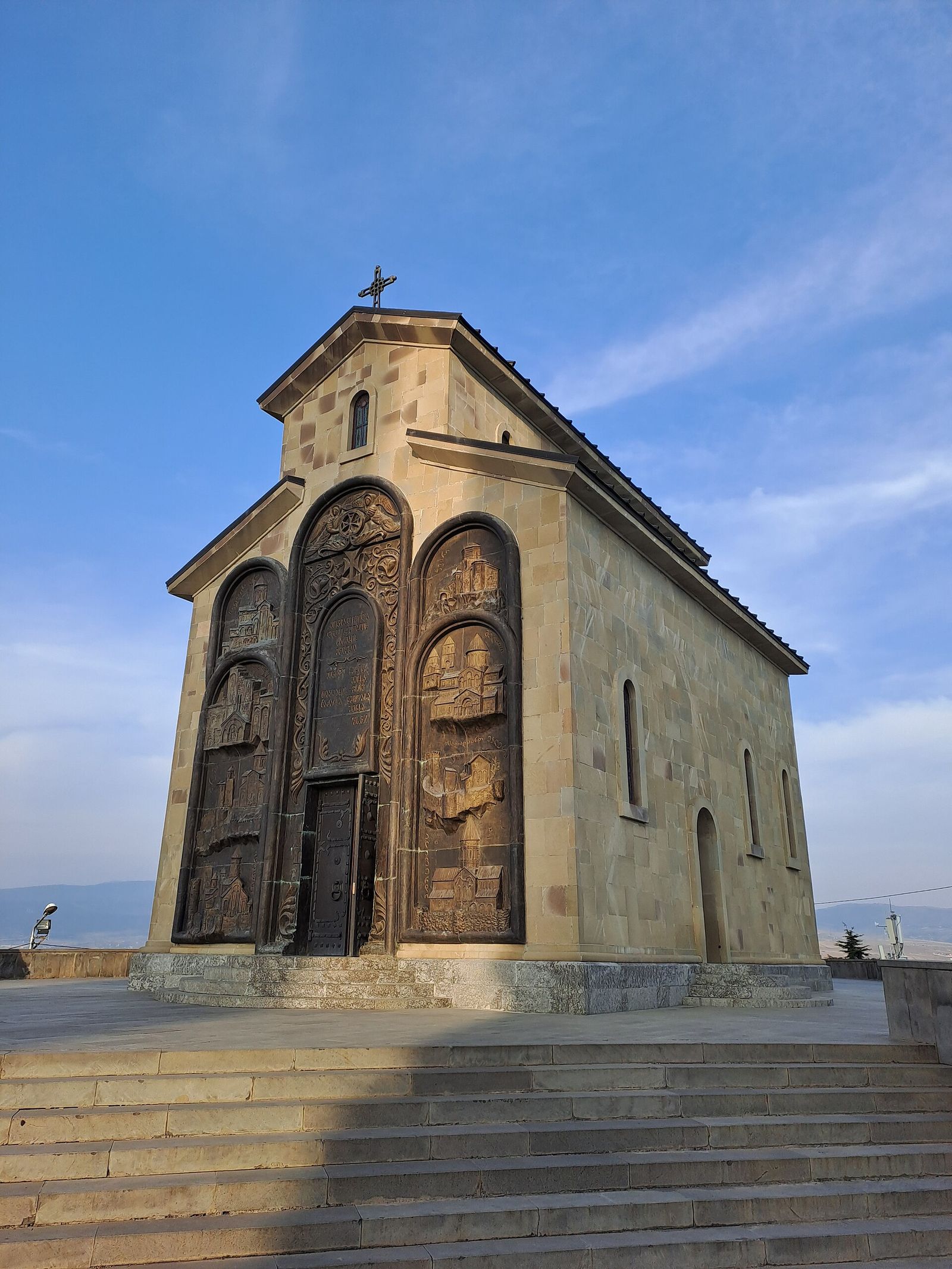
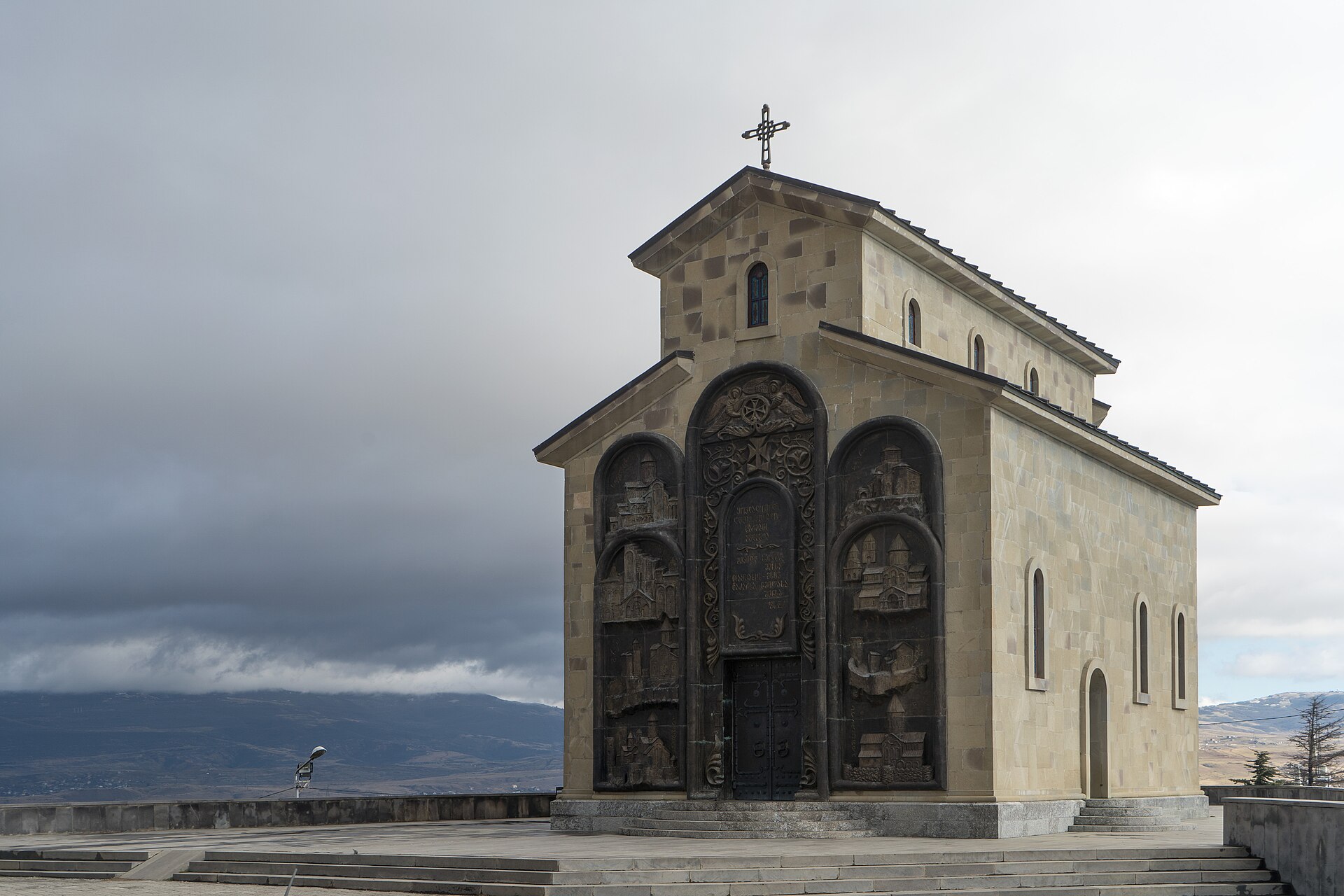
Behind the pillars sits a small stone chapel, the Church of the Annunciation. Its front is covered in the same bronze relief work as the pillars, set into three tall arches around the door, and it's worth a close look even when it's locked. It opens only some of the time, with no posted hours. If it is open, the usual Georgian church rules apply: shoulders and knees covered, and women usually cover their hair, the same as in Tbilisi's other churches.
The view from the Chronicles of Georgia
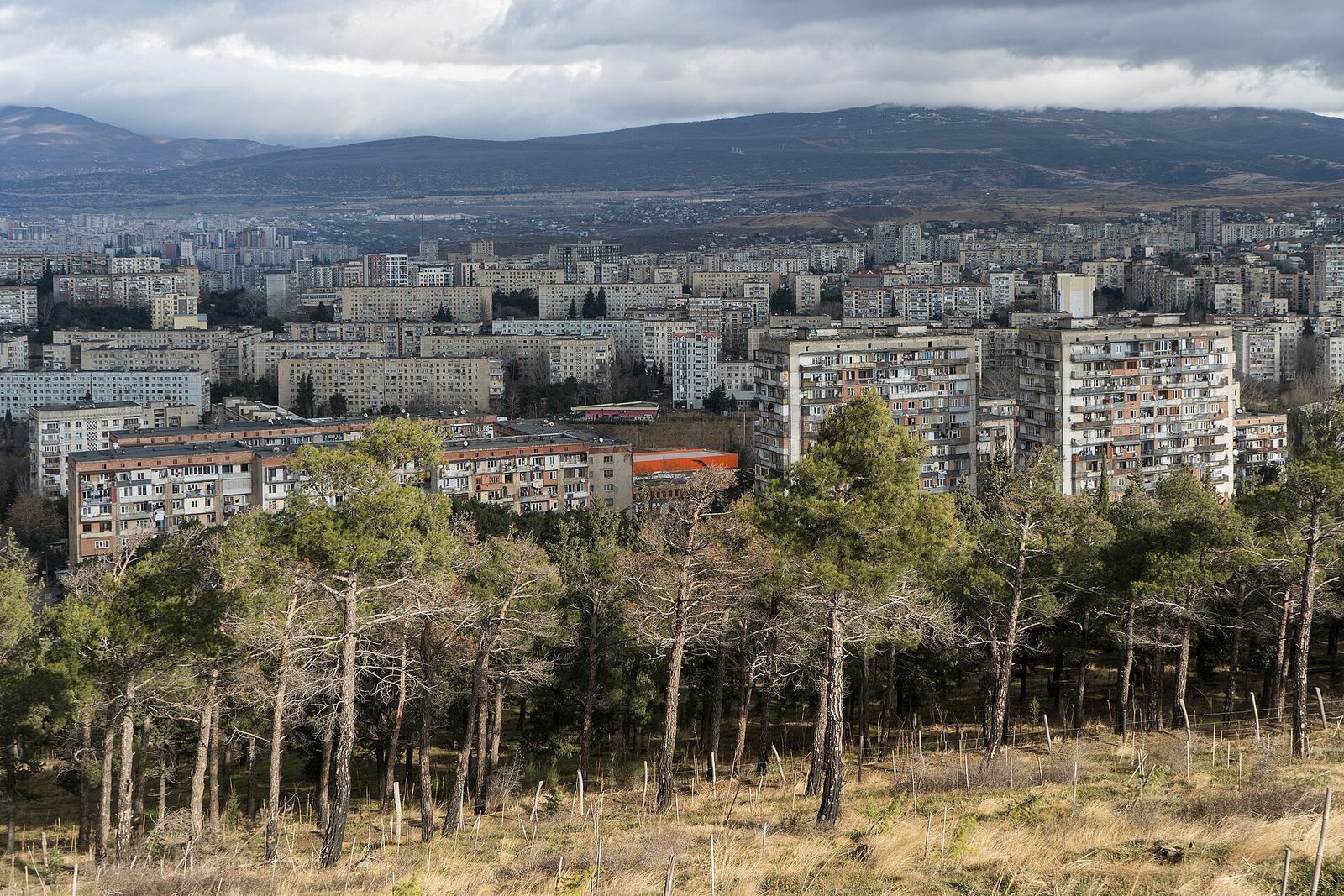
The monument was put on this hill for the view, and it delivers. Two viewing platforms sit on the slope, reached by more stairs, and the higher one is my favorite spot at the monument: the pillars behind you, the wind rarely letting up, and the Tbilisi Sea, the long reservoir on the city's edge, spread out below. Turn the other way and you look over the north of the city: block after block of Soviet-era apartment towers in Zghvisubani and Gldani, then dry, rolling hills beyond.
It is a different Tbilisi from the one in the postcards. From Narikala or Mtatsminda you look at balconies, domes and church towers; from here you see where most of the city actually lives. On my list of the best viewpoints in Tbilisi, it's the one I send people to once they've done the Old Town ones.
How to get to the Chronicles of Georgia
The monument is about 20 minutes by car from the center. There are four realistic ways to get there, and for most people the answer is a taxi.
| Way there | Starts at | Time | Cost | Best for |
|---|---|---|---|---|
| Bolt taxi | Anywhere in the center | About 20 minutes | About 10 to 16 GEL each way | Most visitors, and groups of 2 to 4 |
| Metro and bus 60 | Grmagele metro station | About 20 minutes on the bus, plus the metro | 1 GEL a ride on a Metromoney card | Solo travelers on a budget |
| Your own car | Anywhere | About 20 minutes | Fuel only | Parking right by the monument |
| Guided tour | The center | Half a day | Varies by tour | Pairing it with Mtskheta or brutalist sights |
By taxi
Open Bolt, type "Chronicles of Georgia" as the destination and the app finds it. A ride from the center costs about 10 to 16 GEL each way and takes around 20 minutes, depending on traffic and where you start. Ordering a taxi in an app fixes the fare before you get in, which matters out here, because a street taxi with no meter can charge whatever it likes.
By metro and bus
Take metro line 1, the red line, to Grmagele station. The bus stop is just outside: bus 60 takes about 20 minutes to the Military School stop, and from there it's about a 500 m walk up to the monument. Come back the same way. Each ride costs 1 GEL on a Metromoney card, which you buy at any Tbilisi metro station for 2 GEL, deposit refundable.
The catch is frequency. Bus 60 doesn't run often, so check the next departure in Google Maps before you leave the metro, and leave yourself time for the walk up.
By car
If you have a car, this is the easiest trip in Tbilisi. Search "Chronicle of Georgia" in Google Maps and it takes you to a small, safe car park right next to the monument.
On a tour
A few tours include the Chronicles. A 4-hour Brutalist Tbilisi tour pairs it with the Ministry of Highways building, the Saburtalo skybridge, a Soviet student dormitory and an old cable car, and some half-day tours combine it with the old capital, Mtskheta. Honestly, I'd only book a tour for the brutalist one; for Mtskheta, the day trip to Mtskheta works better on its own, with time for its cathedral and Jvari Monastery.
Best time to visit the Chronicles of Georgia
Go early or go late. Before 10:00 you'll have the pillars nearly to yourself, with soft light on the reliefs. After that, tour groups and car loads of visitors start arriving, though it rarely feels crowded.
The hour before sunset is my pick. The low light turns the bronze warm, the reservoir goes silver, and the apartment blocks to the north start lighting up. The monument is lit at night too, and it's open around the clock, so you can stay after dark and see the pillars glowing.
Two things to plan around. The hilltop is windswept, and the wind can be strong enough to knock a drone into a pillar, so bring a layer even on a warm day. And there's almost no shade, which makes July and August afternoons punishing; in Tbilisi in summer, save the trip for the early morning or the evening. Spring and autumn are the most comfortable, and a clear winter day gives the sharpest view.
The Tbilisi Sea below the monument
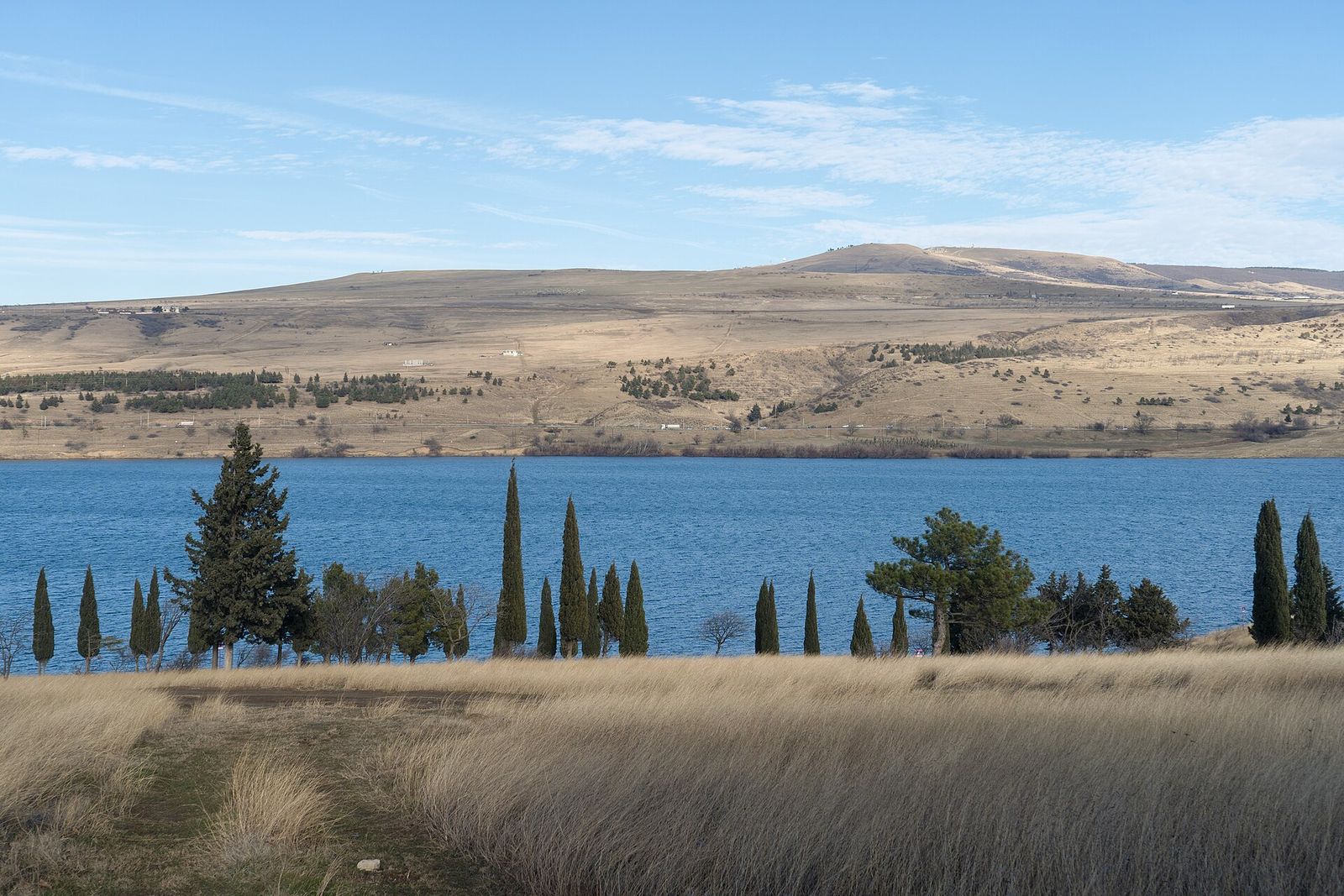
The Tbilisi Sea is not a sea. It's an artificial reservoir, opened in 1953, about 23 km around, and it's where Tbilisi goes to swim when the city hits 35°C. The Chronicles stand on the hill at its northwestern end, which is why many locals simply call it the Tbilisi Sea monument.
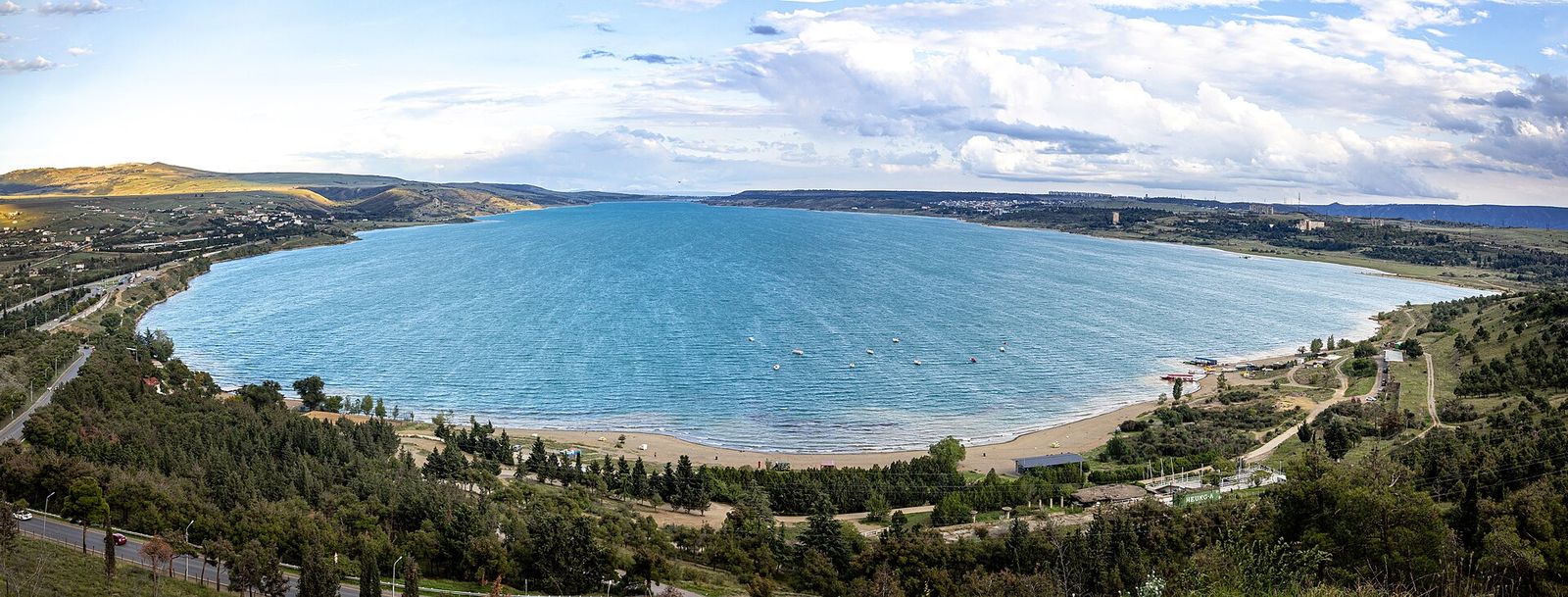
In summer the shore just south of the monument has a beach with food and drink, within walking distance of the pillars. The swimming season runs from May to September, and plenty of people simply wade in from the shore.
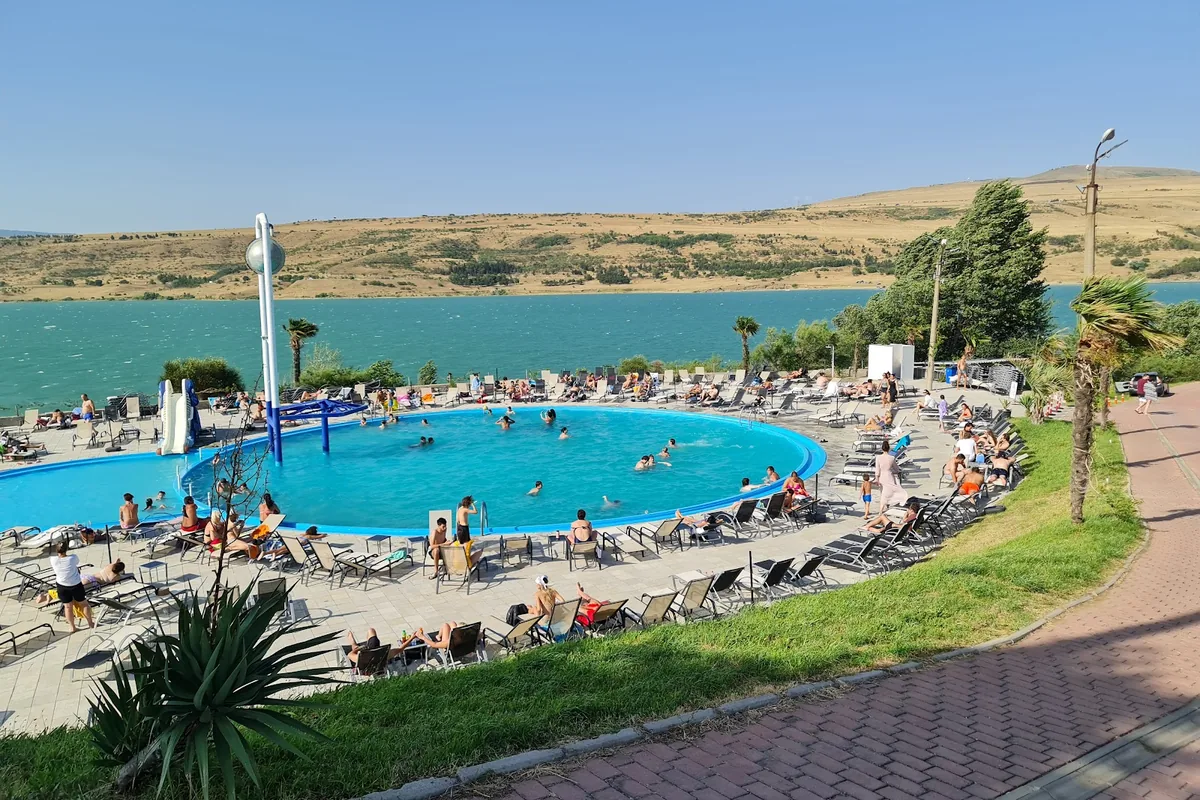
If you'd rather have a pool, the Tbilisi Sea Club on the peninsula has two large pools filled from the lake, plus a smaller pool and a slide for children; it opens for the summer only and gets crowded at weekends.
I wouldn't come out just for the reservoir on a short trip, but combining the monument with a swim is the best summer afternoon this side of the city has, and the reservoir is the one open-water option among Tbilisi's swimming spots that comes with a monument on the hill above it.
Nearby sights to combine with the Chronicles of Georgia
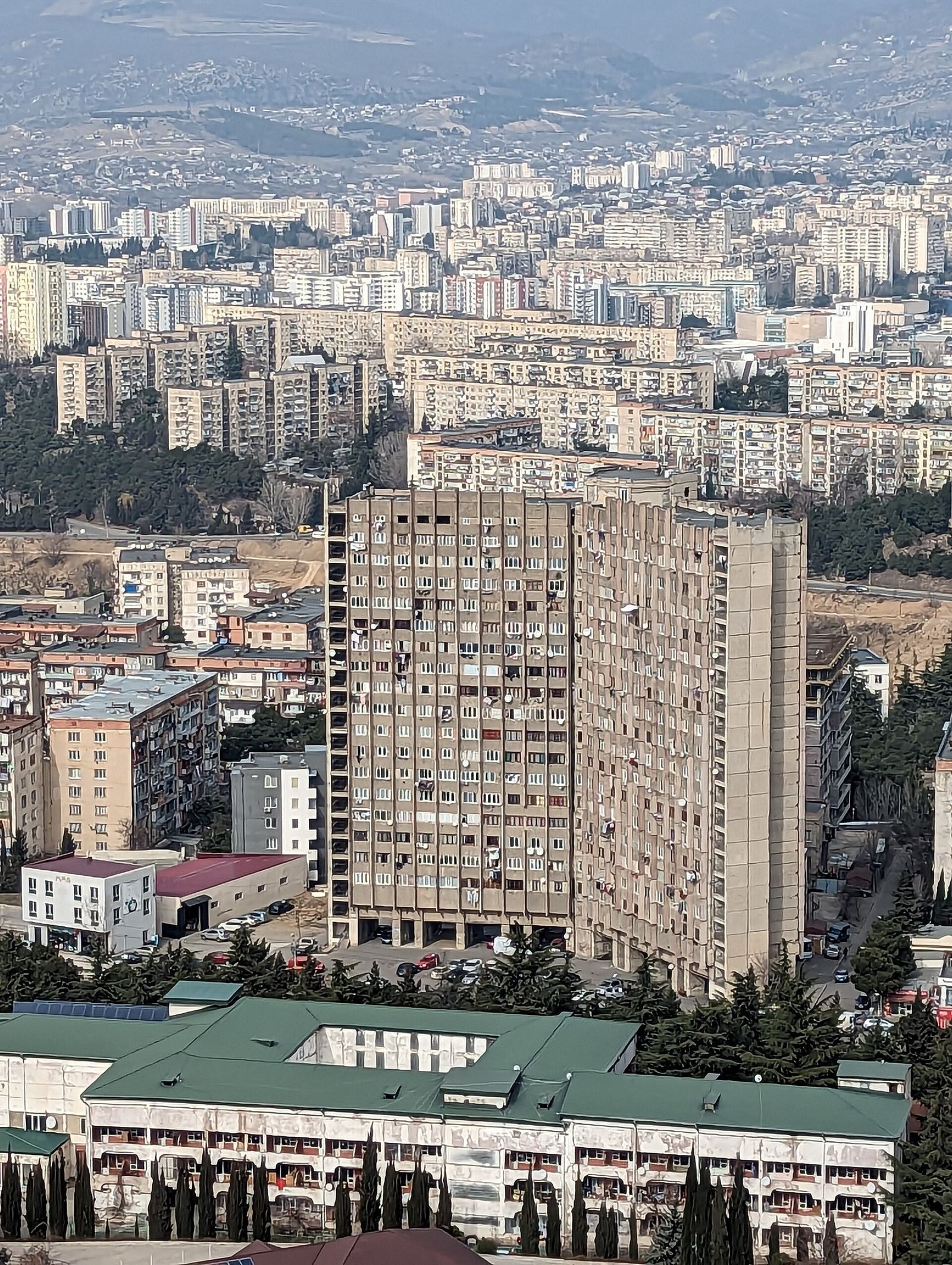
The Chronicles are 20 minutes out, so it makes sense to build a half day around them. The closest extra is the Arashenda building nearby, begun in 1982 as the Hotel Odishi and designed to look like an open book. Like the Chronicles, it was never finished; "arashenda" means roughly "never built". Today it is home to families displaced from Abkhazia, so look at it from the street, not the stairwells.
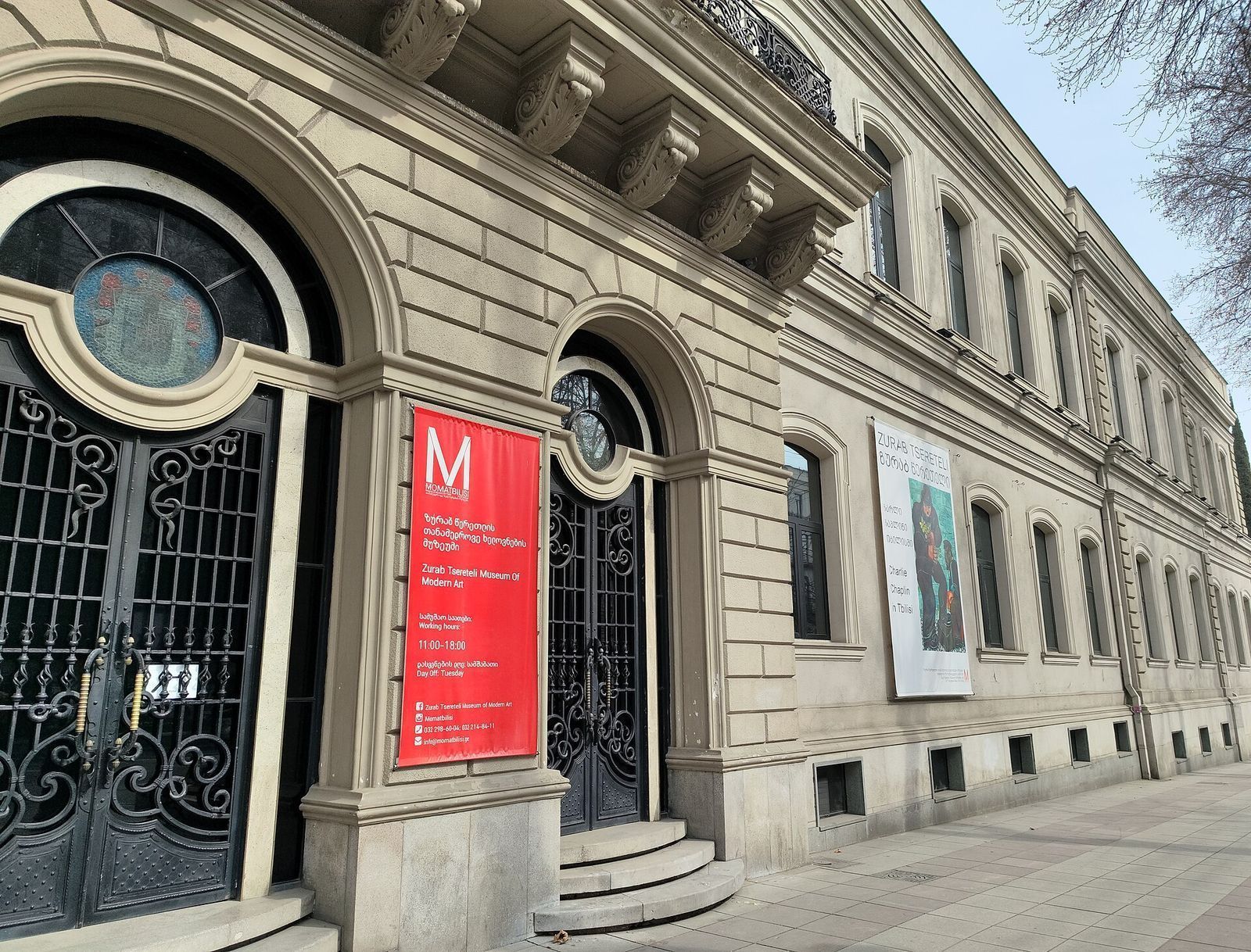
Back in the center, MoMA Tbilisi is Tsereteli's own museum of modern art, and its third floor has a section on the Chronicles and their construction, which fills in the story the site itself never tells. Tickets are 20 GEL for foreign visitors, and it closes on Tuesdays rather than Mondays, which makes it handy on a Monday when most of Tbilisi's museums are shut.
My half day out here looks like this:
| Stop | What you do there | Time |
|---|---|---|
| Chronicles of Georgia | The pillars, the cross, the chapel and both platforms | 45 minutes |
| Arashenda building | The open-book tower, seen from the street | 15 minutes |
| Tbilisi Sea shore | Walk down to the beach; swim from May to September | 1 to 2 hours |
| MoMA Tbilisi, back in the center | The Tsereteli floor on how the Chronicles were built | 1 hour |
Is the Chronicles of Georgia worth visiting?
Yes, for most people with more than two days in Tbilisi. It's free, it's unlike anything in the Old Town, and it ranks high among the offbeat things to do in Tbilisi because so few visitors bother to make the trip.
It suits you if you're:
- On day three or later. The Old Town, Narikala and the baths come first; this is the best thing to do once you've seen them.
- Into Soviet and brutalist design. It's the most dramatic late Soviet monument in the city, and the Arashenda building is next door.
- A photographer. Giant faces, hard shadows, a reservoir and an empty sky, all with no ticket and no closing time.
- Traveling in summer. Pair it with a swim in the Tbilisi Sea and the heat becomes the point.
- Counting lari. It's one of the best entries on any list of free things to do in Tbilisi; the taxi is the only cost.
Skip it if:
- You only have a day or two. The center has more to see per hour than a 40-minute round trip allows.
- Stairs are hard for you. The pillars and the platforms are all up long flights of steps.
- You want the story told on site. With no signs or guides, it's a monument to look at, not a museum.
Key takeaways
- The Chronicles of Georgia is 16 pillars, 30 to 35 m tall, begun by Zurab Tsereteli in 1985 and never finished.
- Kings, queens and heroes run along the top of the pillars; the life of Christ runs along the bottom.
- It's free and open 24 hours; a Bolt taxi costs about 10 to 16 GEL each way, or take the metro to Grmagele and bus 60.
- Go before 10:00 or in the hour before sunset, and bring water and a layer for the wind.
- Pair it with the Tbilisi Sea below for a half day, with a swim from May to September.
Frequently asked questions
Is the Chronicles of Georgia free?
Yes. There's no ticket, no gate and no booth, and you can walk among the pillars, visit the chapel when it's open and climb to both platforms for free. The only cost is getting there, about 10 to 16 GEL each way by Bolt.
What are the opening hours of the Chronicles of Georgia?
It's open 24 hours a day, every day. The monument is lit at night, so you can visit after dark. The Church of the Annunciation behind the pillars opens only some of the time, with no posted hours.
How do I get to the Chronicles of Georgia from Tbilisi?
The easiest way is a Bolt taxi, about 20 minutes and 10 to 16 GEL from the center. The budget way is the metro to Grmagele, then bus 60 to the Military School stop and a 500 m walk. With a car, there's a small car park right by the monument.
How tall are the pillars of the Chronicles of Georgia?
Each of the 16 pillars is about 30 to 35 m tall, roughly a 10-story building. They stand on a hilltop at the top of long flights of steps, so they look even bigger from below.
Why was the Chronicles of Georgia never finished?
The money ran out. Work began in 1985 with Soviet funding, and when the Soviet Union collapsed in 1991 and Georgia went through the hard years that followed, construction stalled. A few pieces are missing, but it looks close to complete.
What does the Chronicles of Georgia show?
The upper half of each pillar shows Georgian kings, queens and heroes, and the lower half shows scenes from the life of Christ, including Palm Sunday, the Last Supper and the Resurrection. A cross in the shape of St Nino's grapevine cross stands beside the pillars, and the small Church of the Annunciation sits behind them.
How long do you need at the Chronicles of Georgia?
Plan on 30 to 45 minutes at the monument, or about 1.5 hours with the taxi there and back. Add 1 to 2 hours if you walk down to the Tbilisi Sea for a swim.
Can you swim in the Tbilisi Sea?
Yes. The swimming season runs from May to September, with a beach on the shore below the monument and the Tbilisi Sea Club's lake-fed pools on the peninsula, which open in summer only.
25 Best Things to Do in Tbilisi in 2026 (With Prices)
Tbilisi is known for its sulfur baths, balconies and hilltop views. Here are 25 things to do, with prices and times.
Read the guide
The Sulfur Baths of Abanotubani: Prices, Bathhouses and Booking
Tbilisi is known for its sulfur baths. Here is what to know about the bathhouses, room prices and booking.
Read the guide
Narikala Fortress, Tbilisi: Getting Up, What Is Open and When to Go
Narikala is the fortress above Old Tbilisi. Here is what is open in 2026, how to get up and when to go for the view.
Read the guide