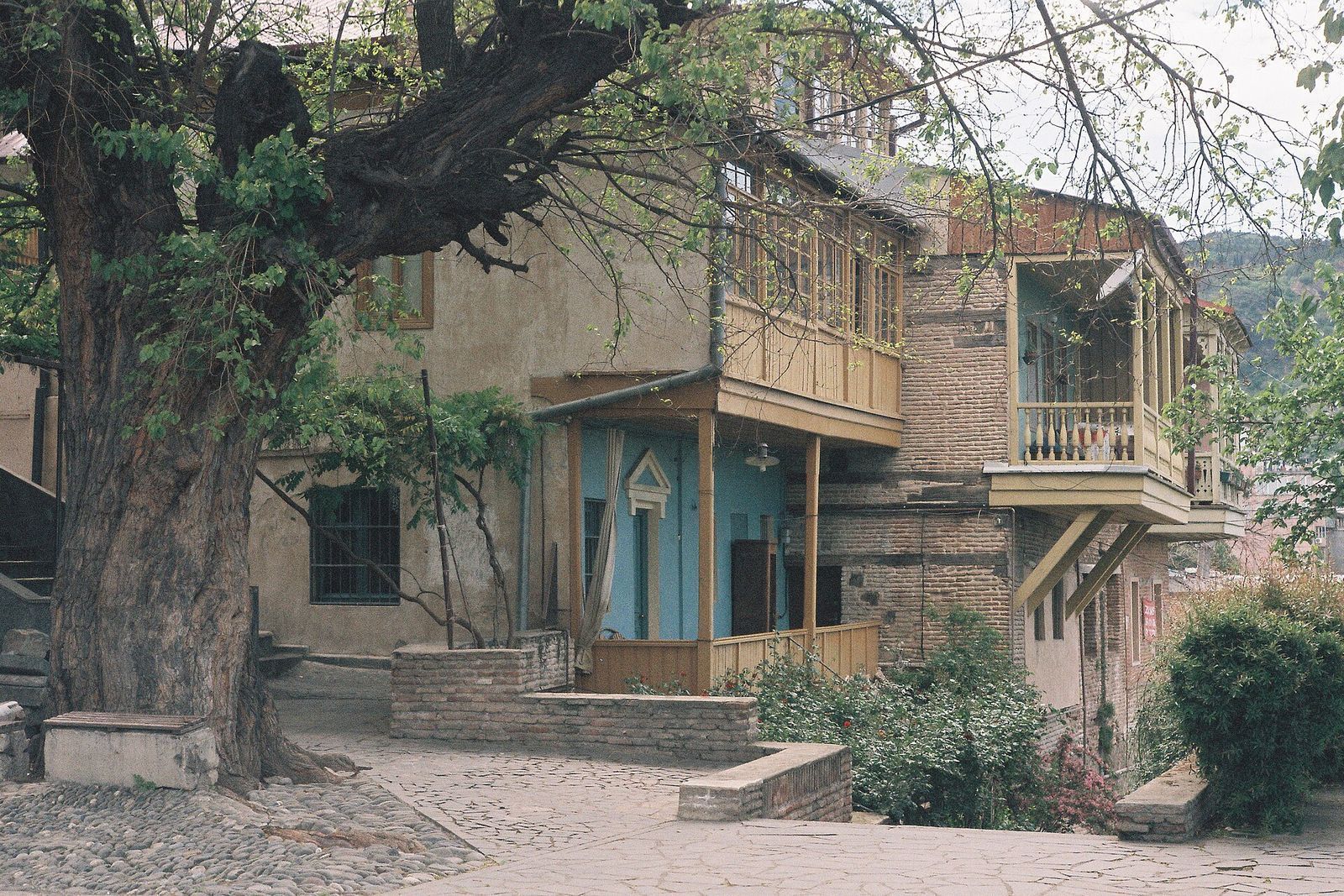
Tbilisi Neighborhoods: The 8 Best Areas and What Each One Is Like
Tbilisi is known for its neighborhoods as much as its sights: the balconied lanes of the Old Town, the painted entrance halls of Sololaki, the coffee and wine bars of Vera and the late dinners of Marjanishvili. Here's what you need to know about the 8 areas visitors actually spend time in, what each one is like, how they connect, and which I'd pick for your kind of trip.
Tbilisi neighborhoods at a glance
The old city sits on the right bank of the Mtkvari under the Narikala ridge, Avlabari and Chughureti face it from the left bank, and the newer districts spread west and north into the hills. These 8 hold nearly every sight, bar and restaurant a visitor will want.
| Neighborhood | Known for | River bank | Nearest metro | Best for |
|---|---|---|---|---|
| Old Tbilisi | Balconies, sulfur baths, the fortress ridge | Right | Liberty Square or Avlabari | First visits and the classic sights |
| Sololaki | Art Nouveau facades, painted entrance halls | Right | Liberty Square | Architecture and a quiet central base |
| Rustaveli Avenue | Opera, museums, Parliament | Right | Liberty Square and Rustaveli | Museums and an evening stroll |
| Vera | Specialty coffee, wine bars, Stamba | Right | Rustaveli | Couples, return visits, long stays |
| Avlabari | Metekhi, Sameba, views of the Old Town | Left | Avlabari | Views, quiet and value |
| Marjanishvili and Chughureti | Fabrika, Aghmashenebeli Avenue, food | Left | Marjanishvili | Dinner, nightlife and value |
| Vake | Vake Park, Turtle Lake, restaurants | Right | None | Parks, families, long lunches |
| Saburtalo | Soviet towers, Lisi Lake | Right | 5 stations on Line 2 | Soviet architecture and month-long stays |
With 2 or 3 days, the first 5 rows are your trip. Choosing where to stay in Tbilisi comes down to hills, night noise and the metro more than distance: I'd sleep in Sololaki or the Old Town on a first trip, at about 60 to 300 GEL a night, and in Marjanishvili when value matters most, with guesthouse doubles from about 50 GEL.
Tbilisi districts vs the neighborhood names you'll hear
Officially, Tbilisi is split into 10 administrative districts: Mtatsminda, Vake, Saburtalo, Krtsanisi, Isani, Samgori, Chughureti, Didube, Nadzaladevi and Gldani. They cover a lot of ground, and Mtatsminda district alone takes in Sololaki, Vera and the slopes up to the TV tower.
The names you'll actually use are older and smaller. Sololaki, Vera, Kala and Betlemi are historic neighborhoods rather than districts, and Old Tbilisi isn't an official district at all, just the name everyone gives the old city under the fortress. Avlabari sits inside Isani district, Marjanishvili is the visitors' end of Chughureti, and Vake and Saburtalo are the easy ones, where the neighborhood and the district share a name.
Old Tbilisi: balconies, bath domes and the fortress ridge
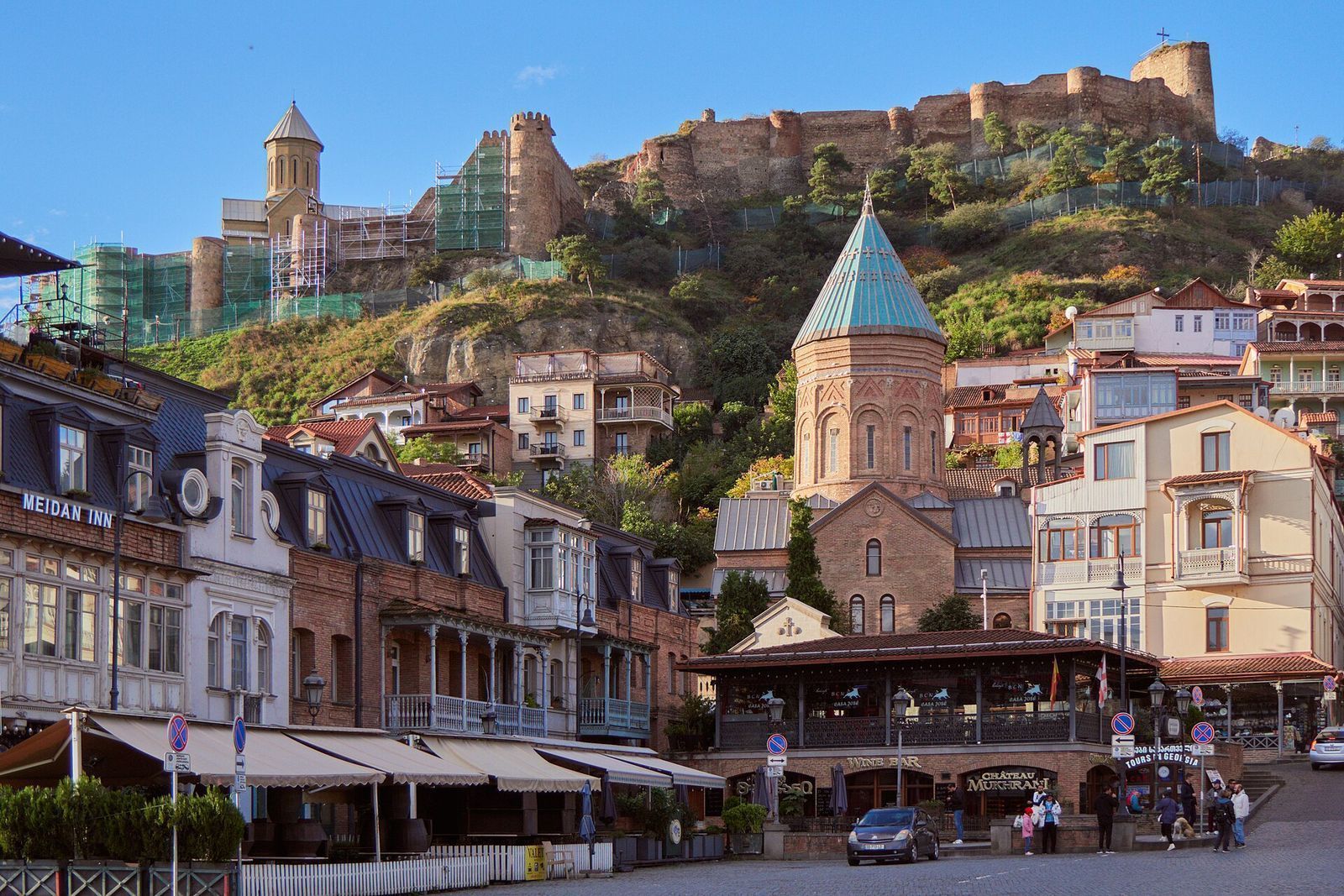
Old Tbilisi is the part of the city on every postcard: carved wooden balconies, brick churches and the brick domes of the sulfur baths under the Narikala ridge. Its five small quarters, Meidan, Abanotubani, Kala, Shardeni Street and Betlemi, sit within about a 10-minute walk of each other, so a relaxed half day covers the streets.
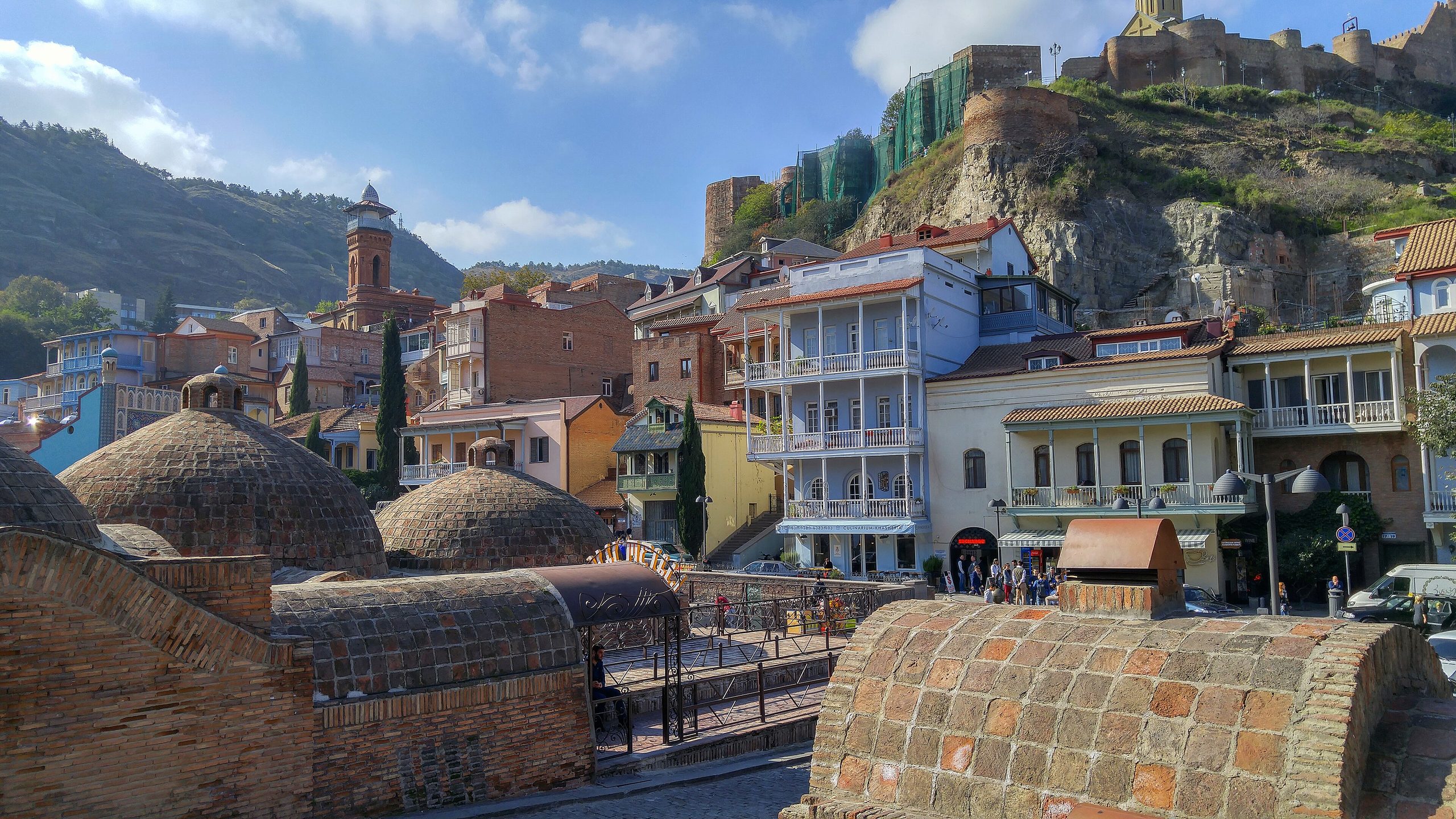
Legend says the city began in Abanotubani, when King Vakhtang Gorgasali's falcon fell into a hot spring, and about ten bathhouses still run on that water.
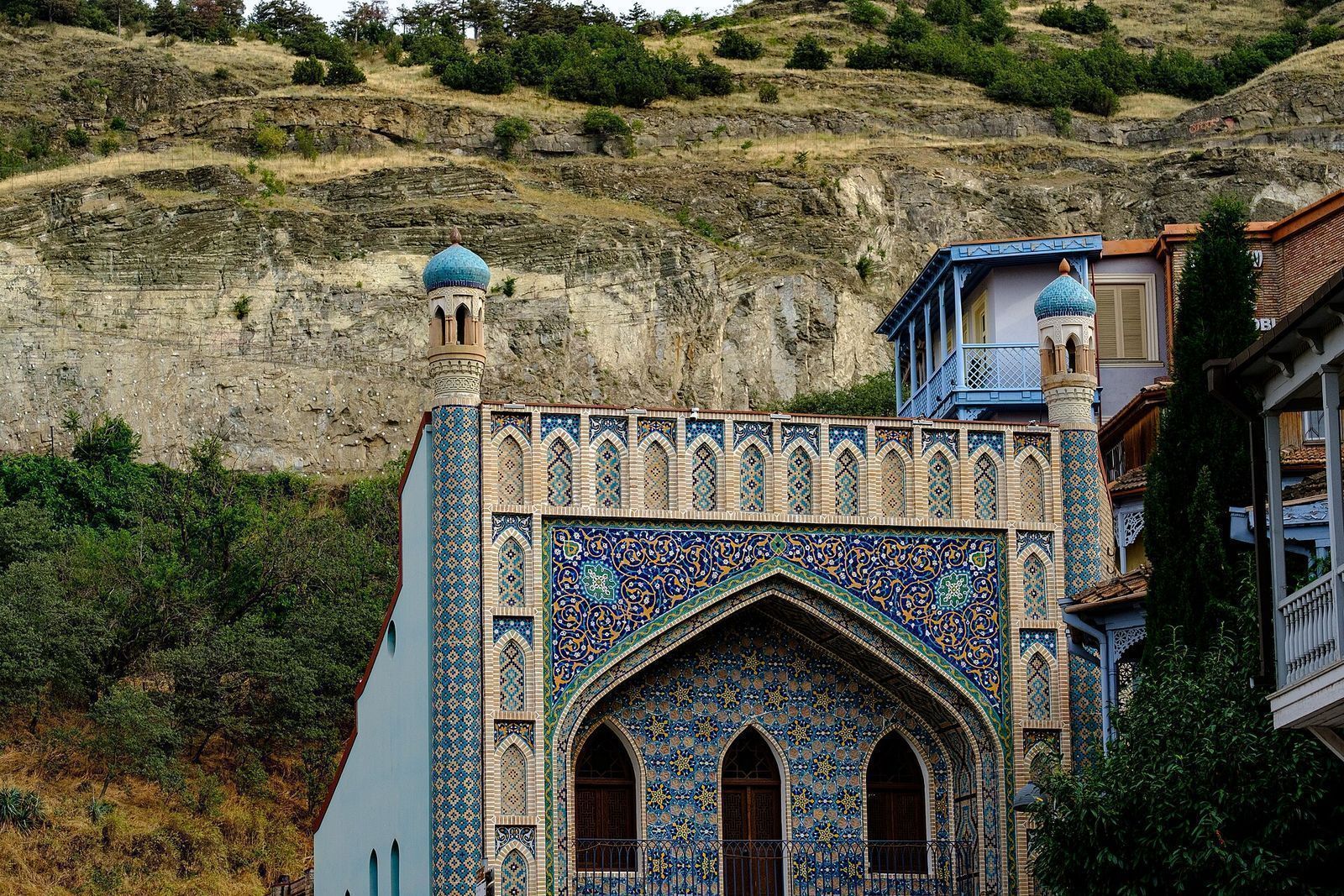
The bathhouse everyone photographs is Chreli Abano, the Orbeliani Baths, behind a facade of blue tiles under the cliff. It rents only private rooms, and an hour in a private sulfur bath room there starts at about 130 GEL.
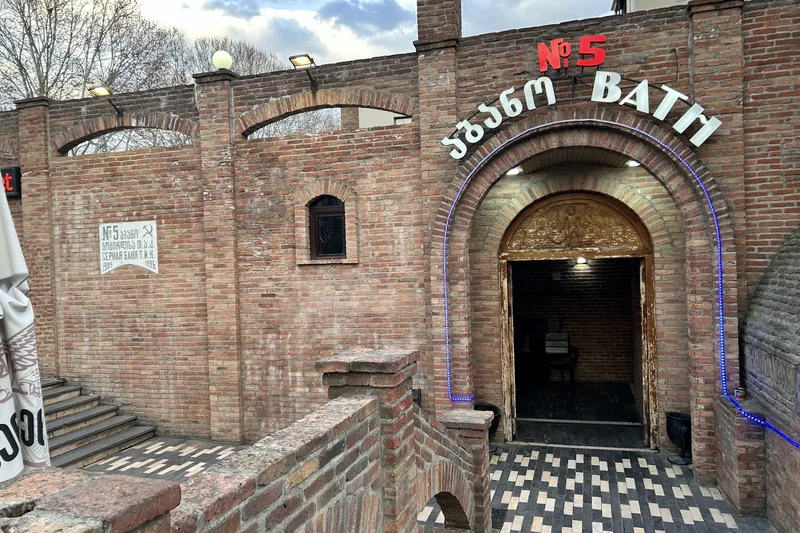
For a cheap soak, the public hall at Bath No. 5 costs 6 to 10 GEL, though the women's hall there has no pool. Above the baths, the 120 Betlemi stairs climb past two small churches to one of the best free views in the old city.
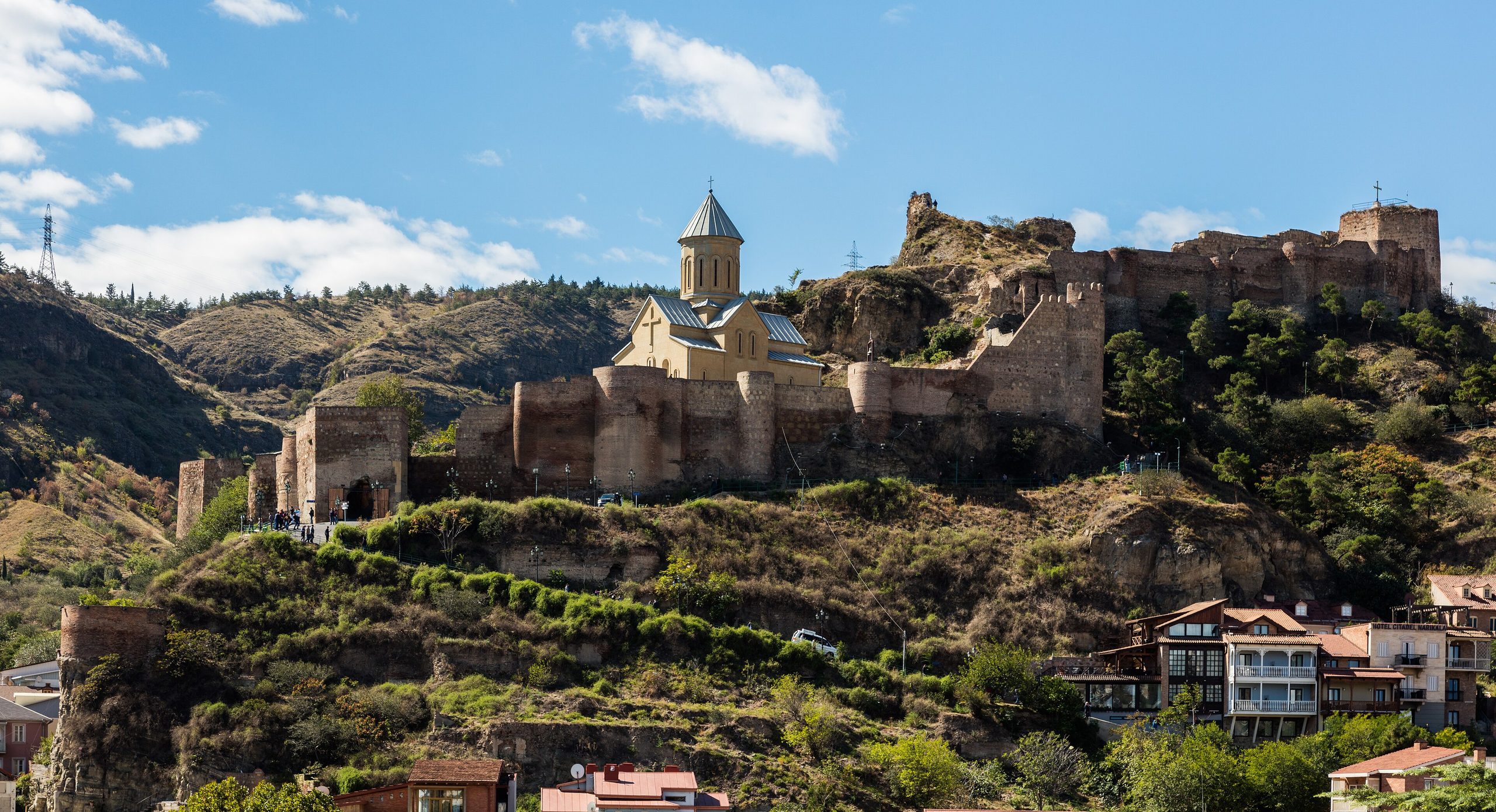
Narikala Fortress has been closed for restoration since late 2023, but the ridge walk and its viewpoint are open. My favorite way to see it all is the self-guided Old Tbilisi walk, a 4 km loop I'd start at 09:00, before the tour groups and the heat.
Sololaki: Art Nouveau entrance halls above the Old Town
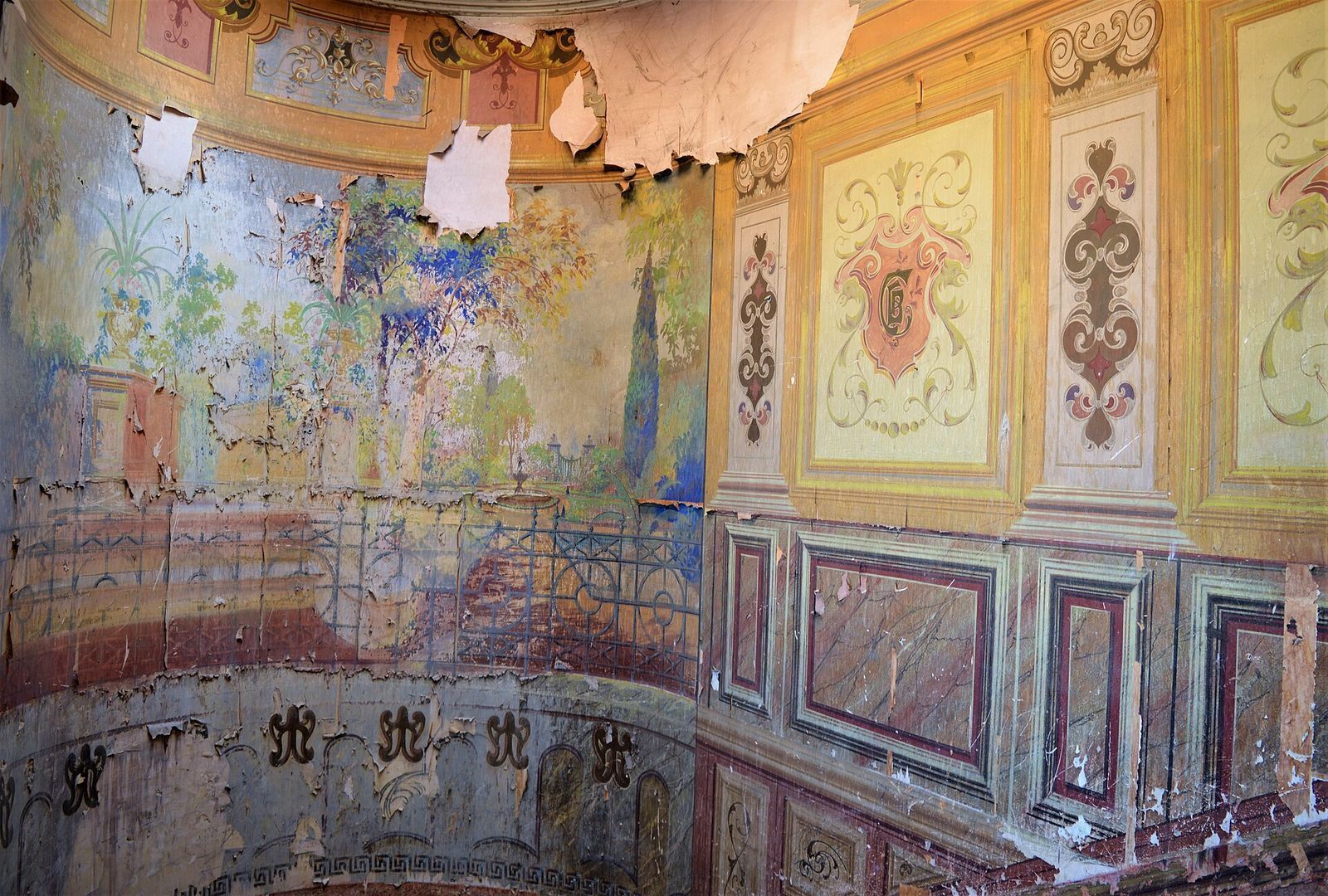
Sololaki starts at Freedom Square and climbs a grid of steep streets toward the ridge, directly above the Old Town. Merchants built it in the late 19th and early 20th century, with Art Nouveau facades, Italian courtyards and entrance halls painted from floor to ceiling. In Soviet times one family's house could hold 10 to 15 families, so many halls faded, but a few keep their murals and mosaic floors. I start at Galaktion Tabidze Street 18, painted in 1911, and walk on to Ivane Machabeli Street 17.
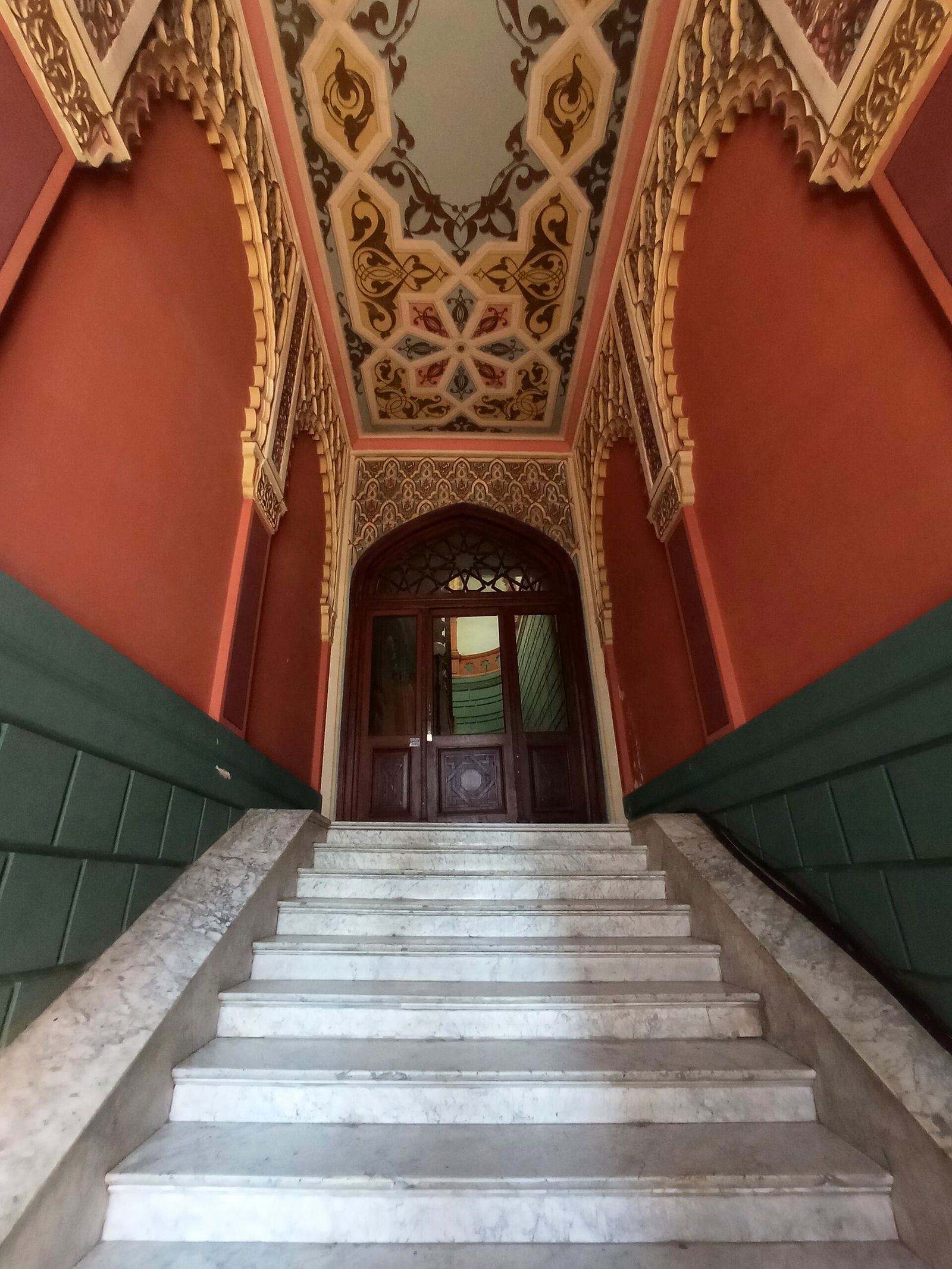
It's my favorite base in the center: the Old Town sights are about 5 minutes away on foot, and the streets belong to people who live here rather than to touts. It also has more local restaurants than the Old Town, with coffee shops, craft beer and wine bars on its side streets, and Liberty Square metro sits at the bottom of the hill.
Rustaveli Avenue and Freedom Square: the grand main street
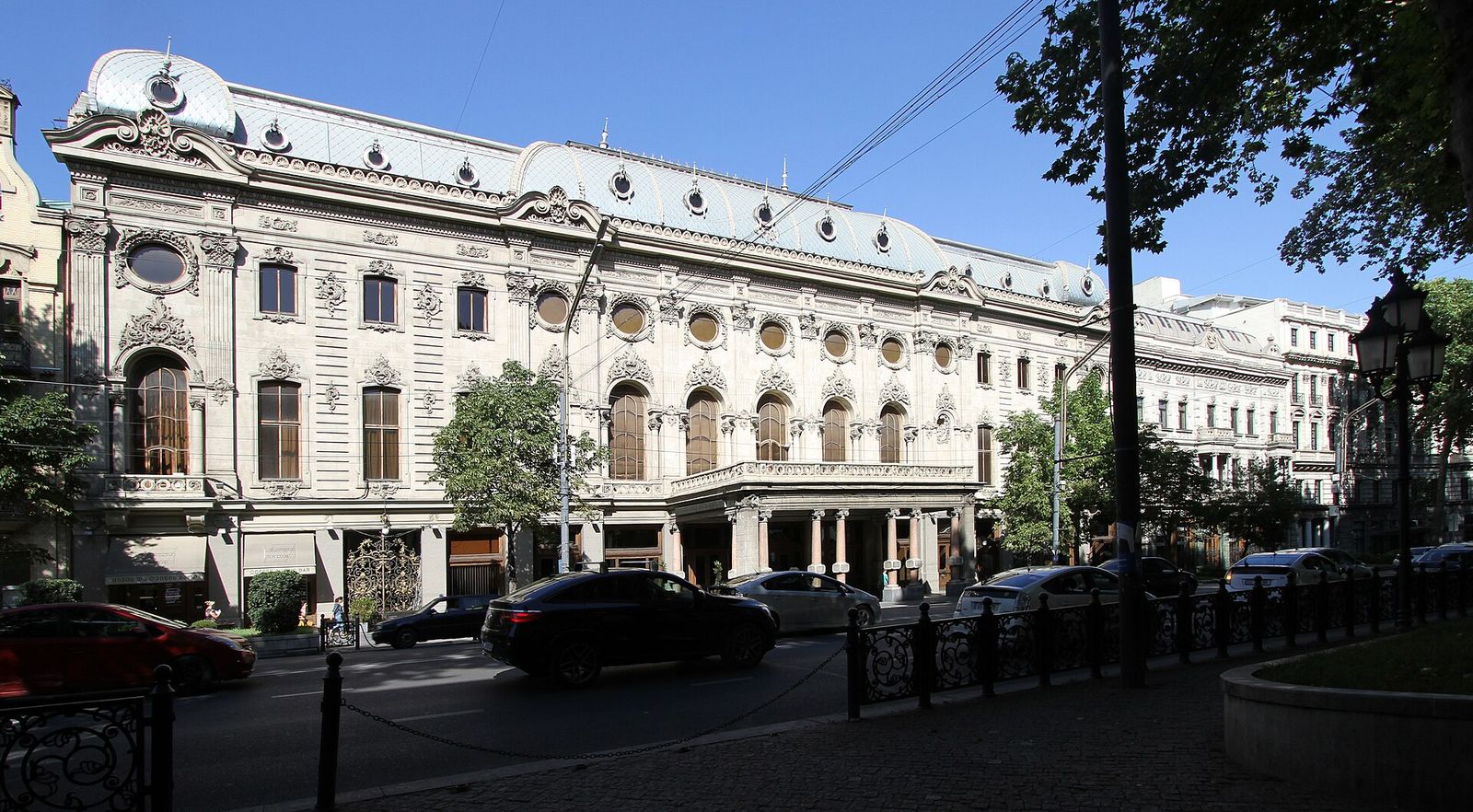
Rustaveli Avenue is the other face of the city. Where Old Tbilisi bends and climbs, Rustaveli runs straight and flat for about 1.5 km from Freedom Square to Rustaveli Square, past neoclassical facades and heavy Soviet blocks, with a metro station at each end.
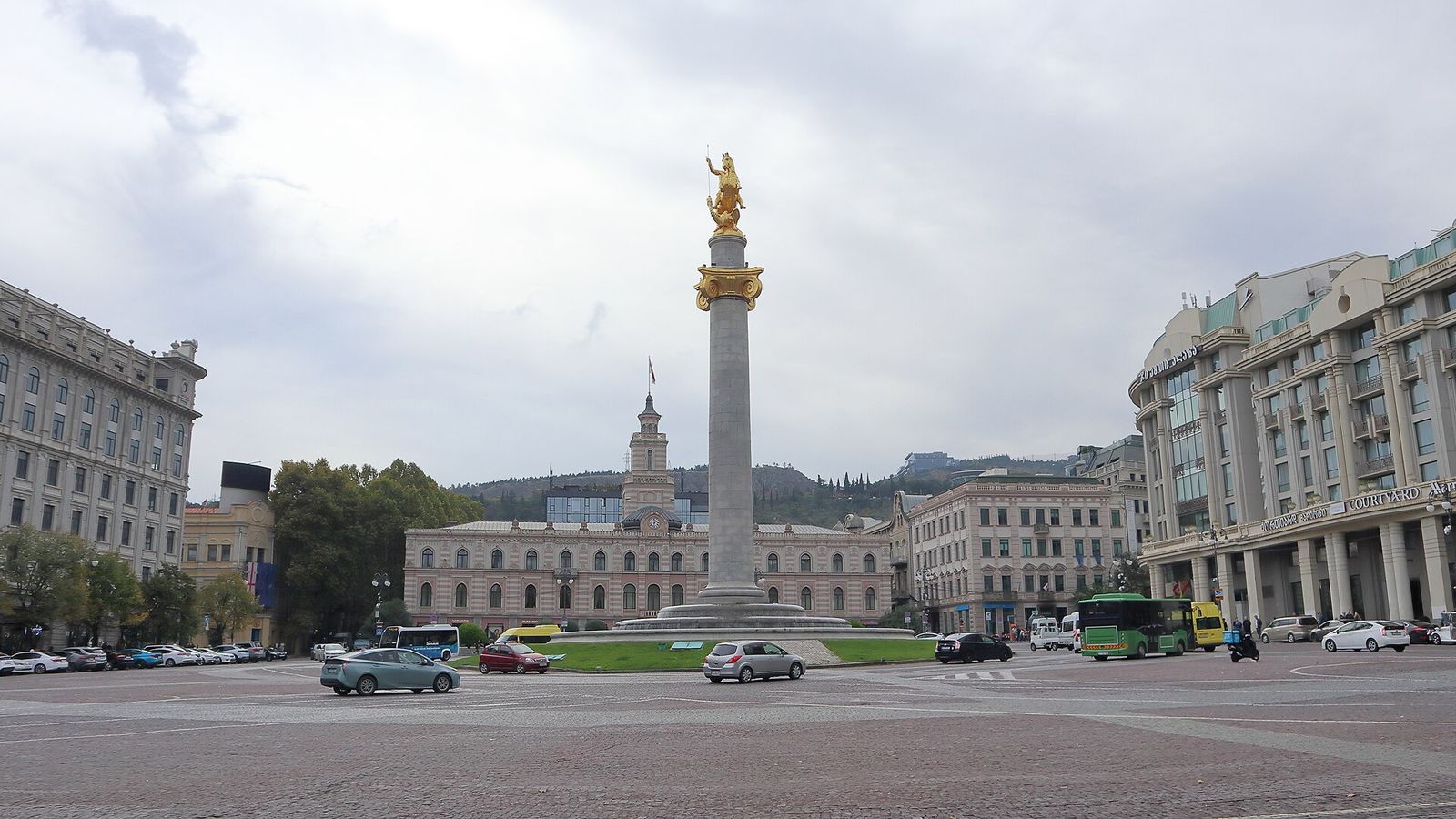
Freedom Square is the roundabout under a gold St George slaying the dragon, on a 29 m column put up in 2006 where a Lenin statue came down in 1991. Walking north, you pass Pushkin Garden, Kashveti Church, the Parliament, the Rustaveli Theatre and the Moorish facade of the Opera, which takes about an hour at an easy pace.
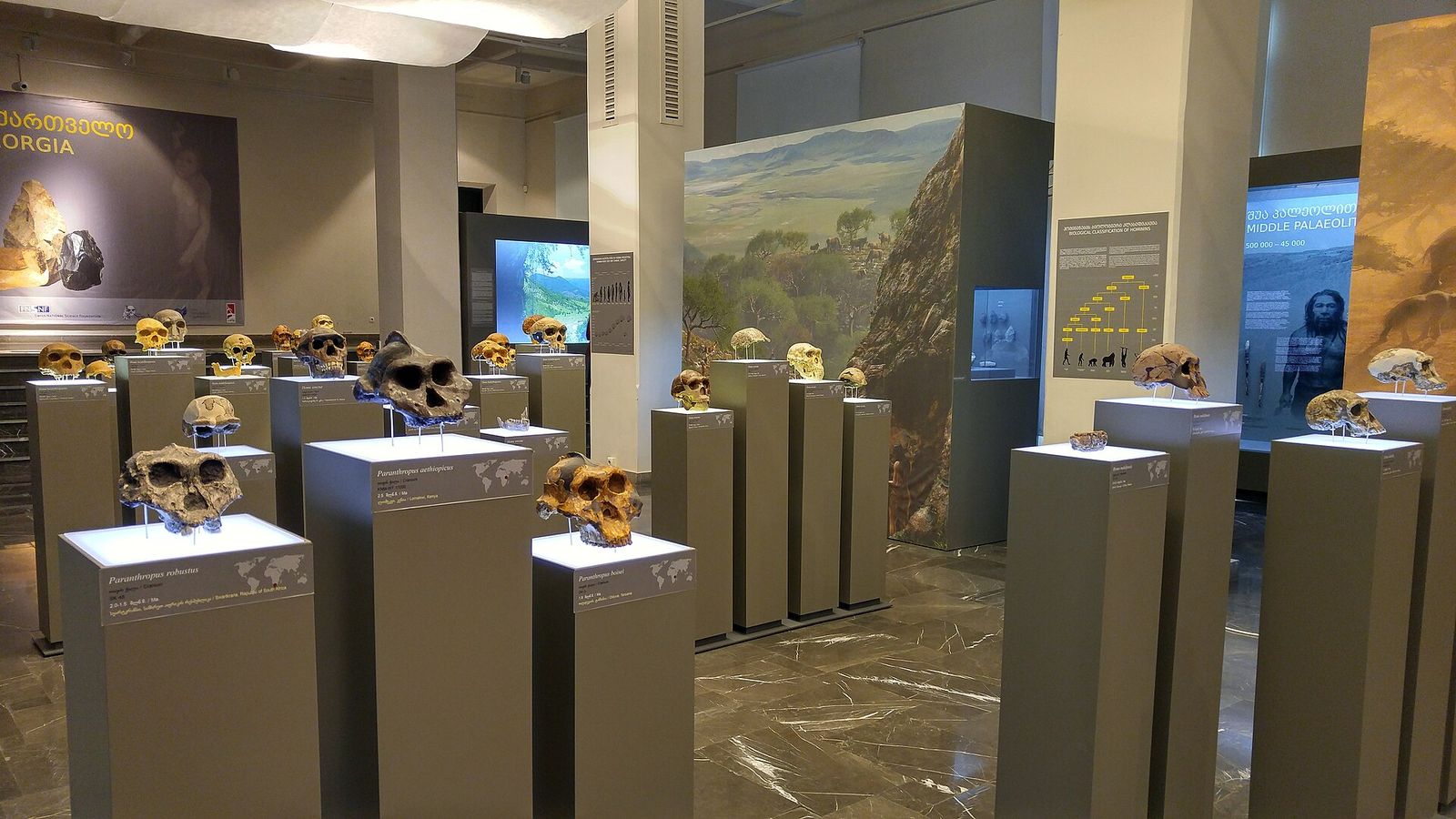
If you pay for one thing here, make it the Georgian National Museum at 3 Rustaveli Avenue, just up from Freedom Square: 40 GEL, Tuesday to Sunday, 10:00 to 18:00.
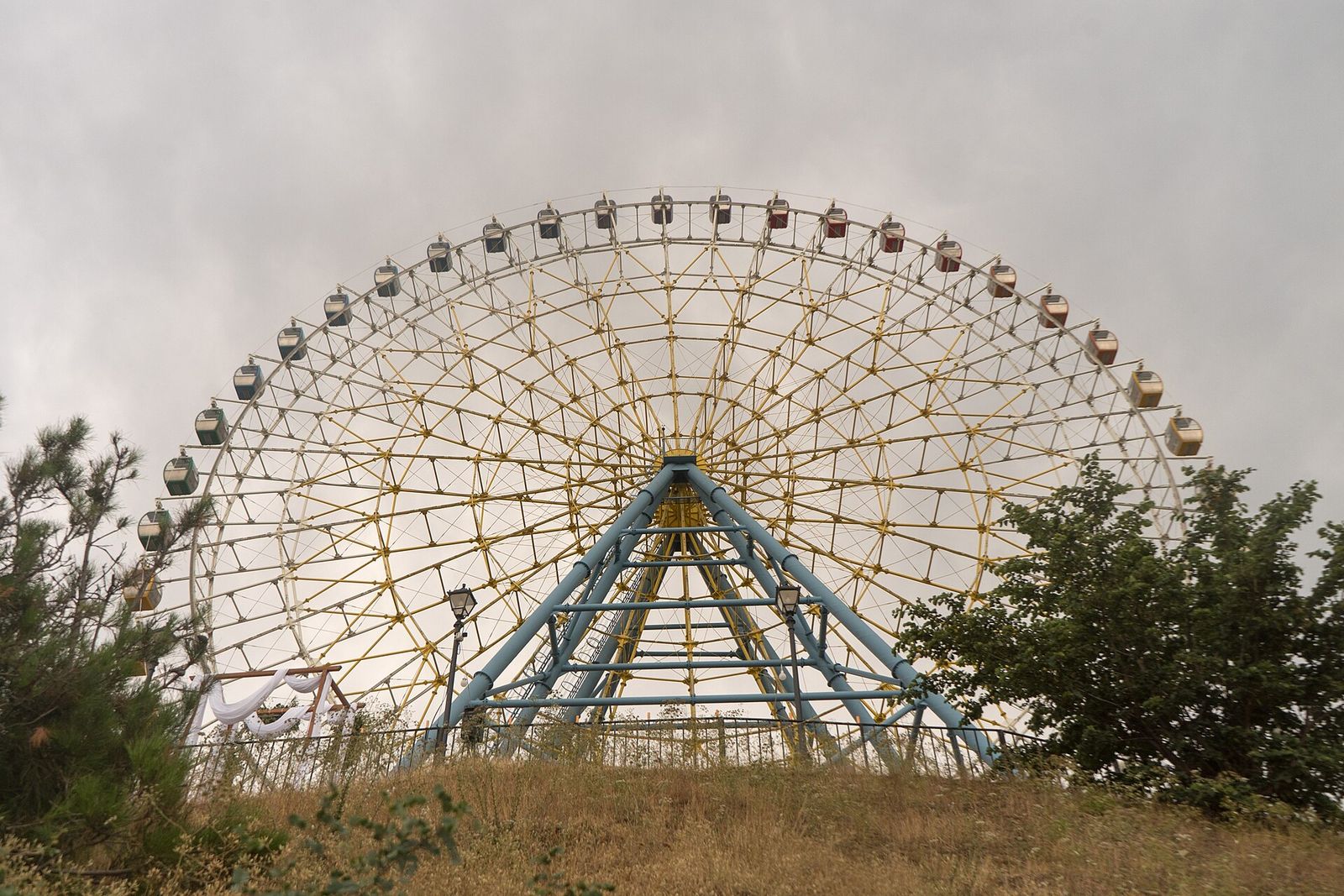
Above the avenue, a funicular climbs the holy mountain to Mtatsminda Park for about 10 to 12 GEL one way, and the city lights from the summit after dark are the reason to ride it.
Vera: coffee, wine bars and the old printing house
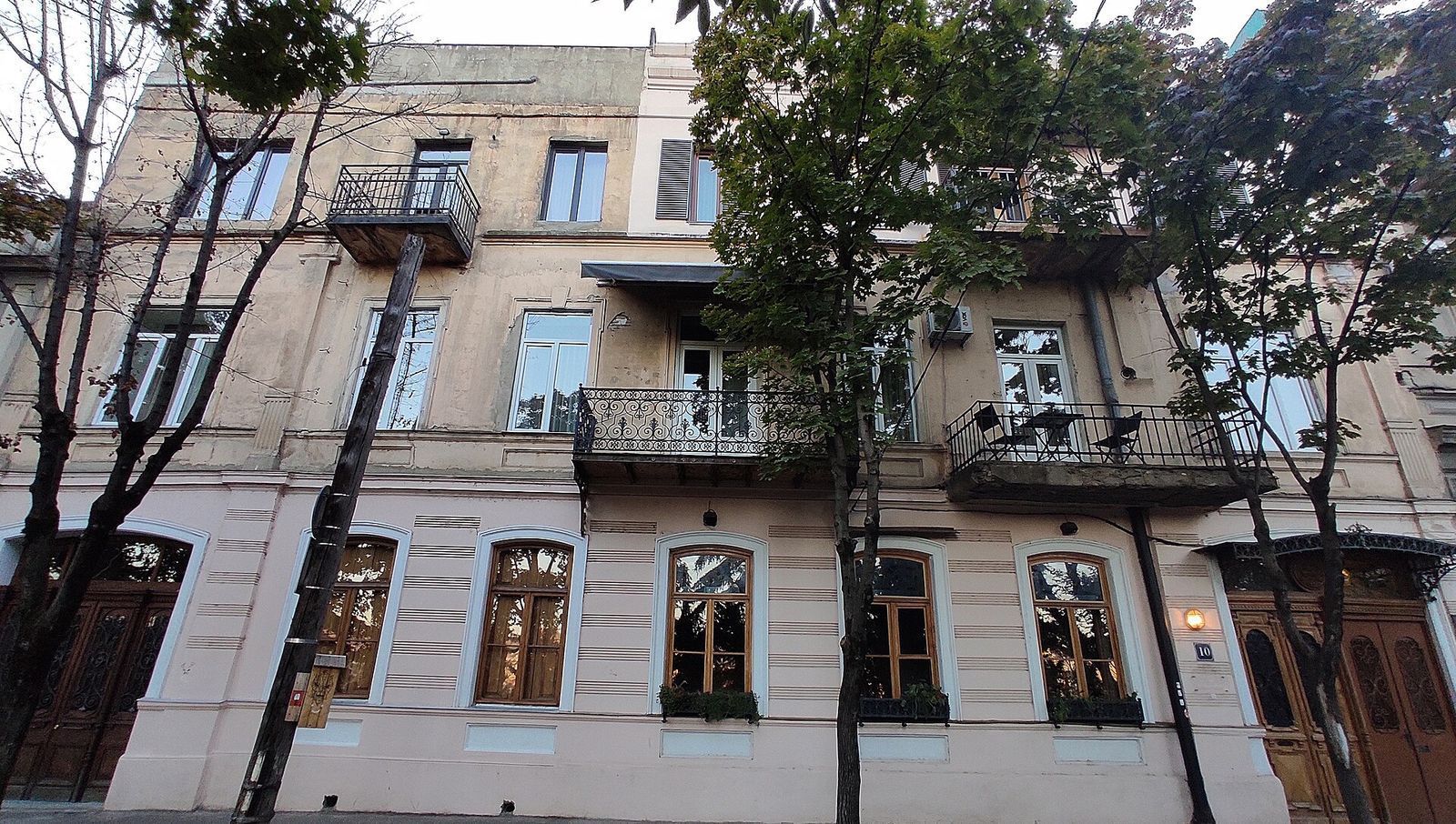
Vera starts at Rustaveli metro and climbs north toward Vake: narrow streets, red-brick houses and Soviet blocks, with a coffee shop or a six-table wine bar on almost every corner. It has far fewer tourists than the Old Town, which is why I send friends here once they've seen the postcards.
The sights make a free half-day walk: Kiacheli Street, the Blue Monastery, Vera Park and the round Concert Hall on Kostava Street.
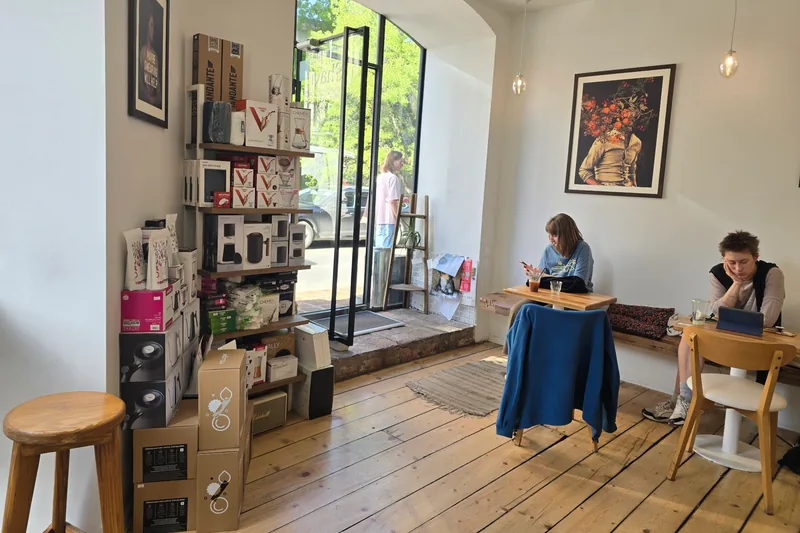
I start the day at Shavi Coffee Roasters, the original branch at 40 Zandukeli Street, where a cappuccino costs 10 to 12 GEL and laptops are kept to their own zone.
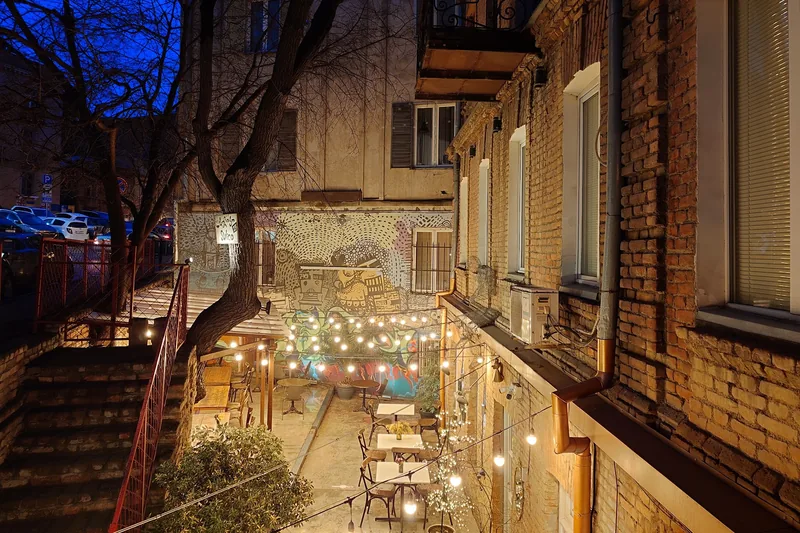
I end it up the same street at Sulico, number 27, which lists about 130 wines and is one of my favorite wine bars in Tbilisi. On a warm evening, ask for a table in the courtyard.
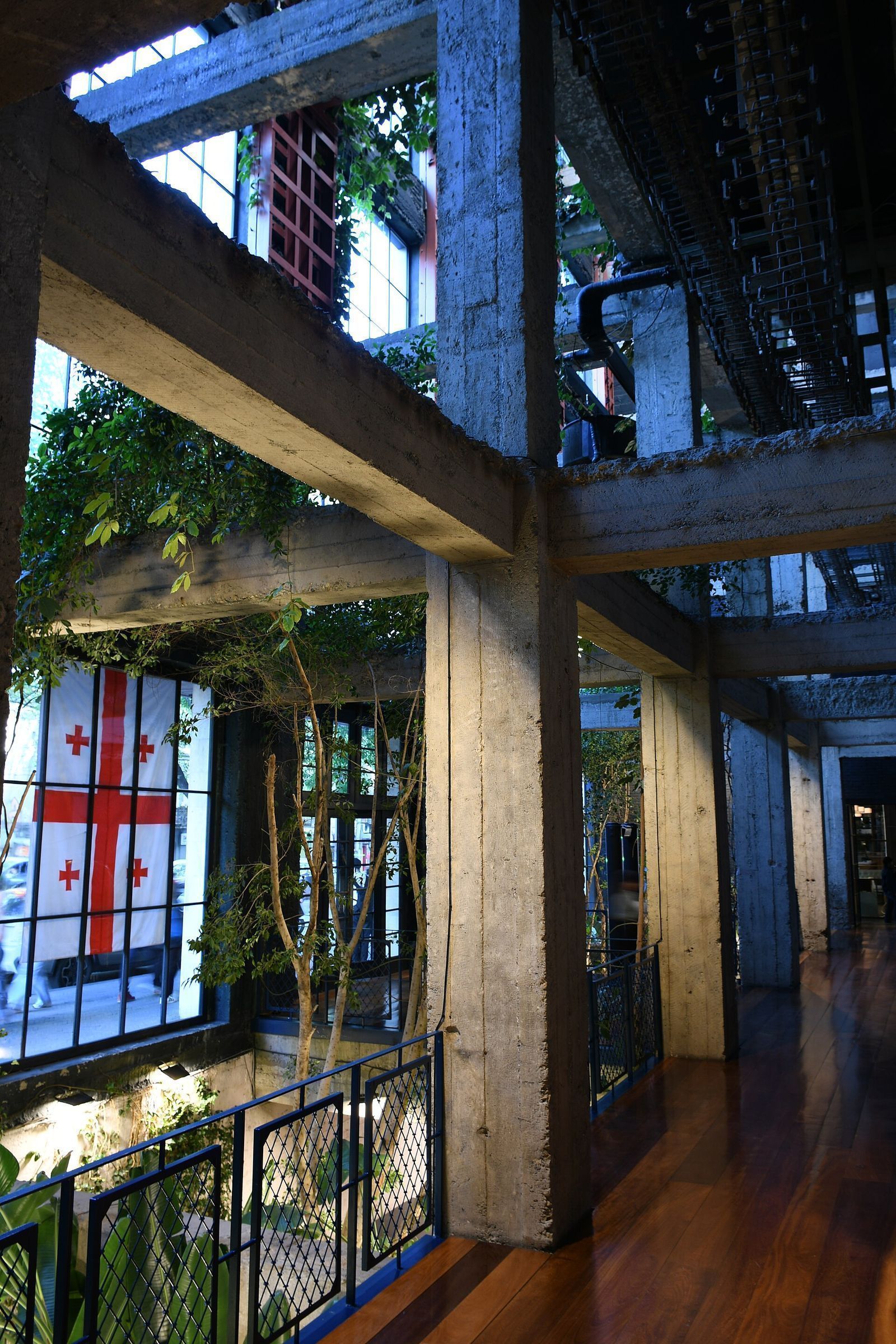
Further down Kostava Street, a former Soviet printing house holds two design hotels side by side. Rooms keeps the red brick, while Stamba keeps the raw concrete and steel and fills them with Cafe Stamba and its pink walls, a bakery and a photography museum. Even if you sleep elsewhere, a coffee in the Stamba courtyard is the easiest way to see inside.
Avlabari: Metekhi, Sameba and the view back across the river
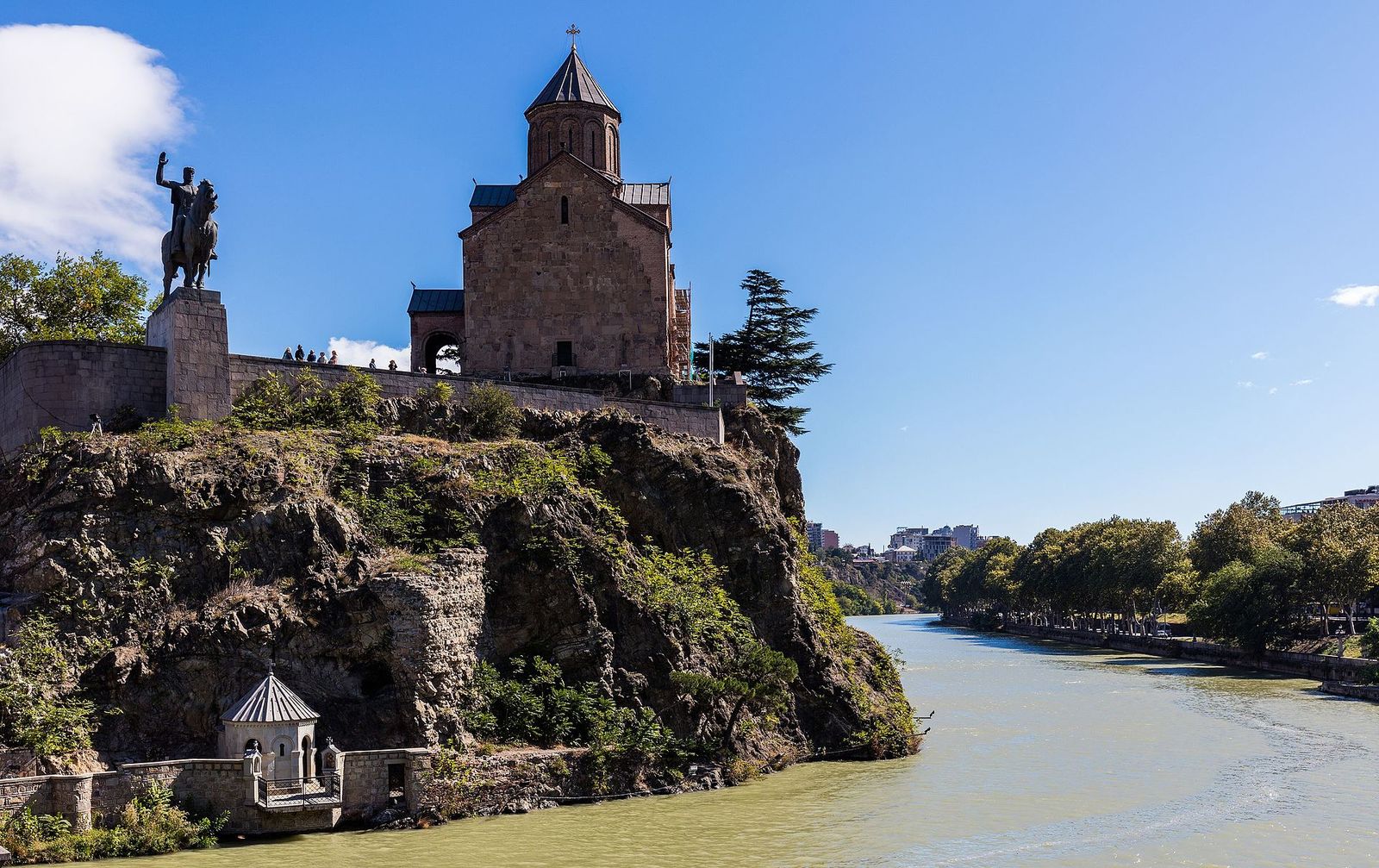
Avlabari looks straight back at the Old Town from the cliffs on the left bank. It starts at Metekhi Church, where Gorgasali's statue on horseback stands at the edge of the courtyard, and from that courtyard you see the bath domes, the old balconies and the Narikala ridge across the water.
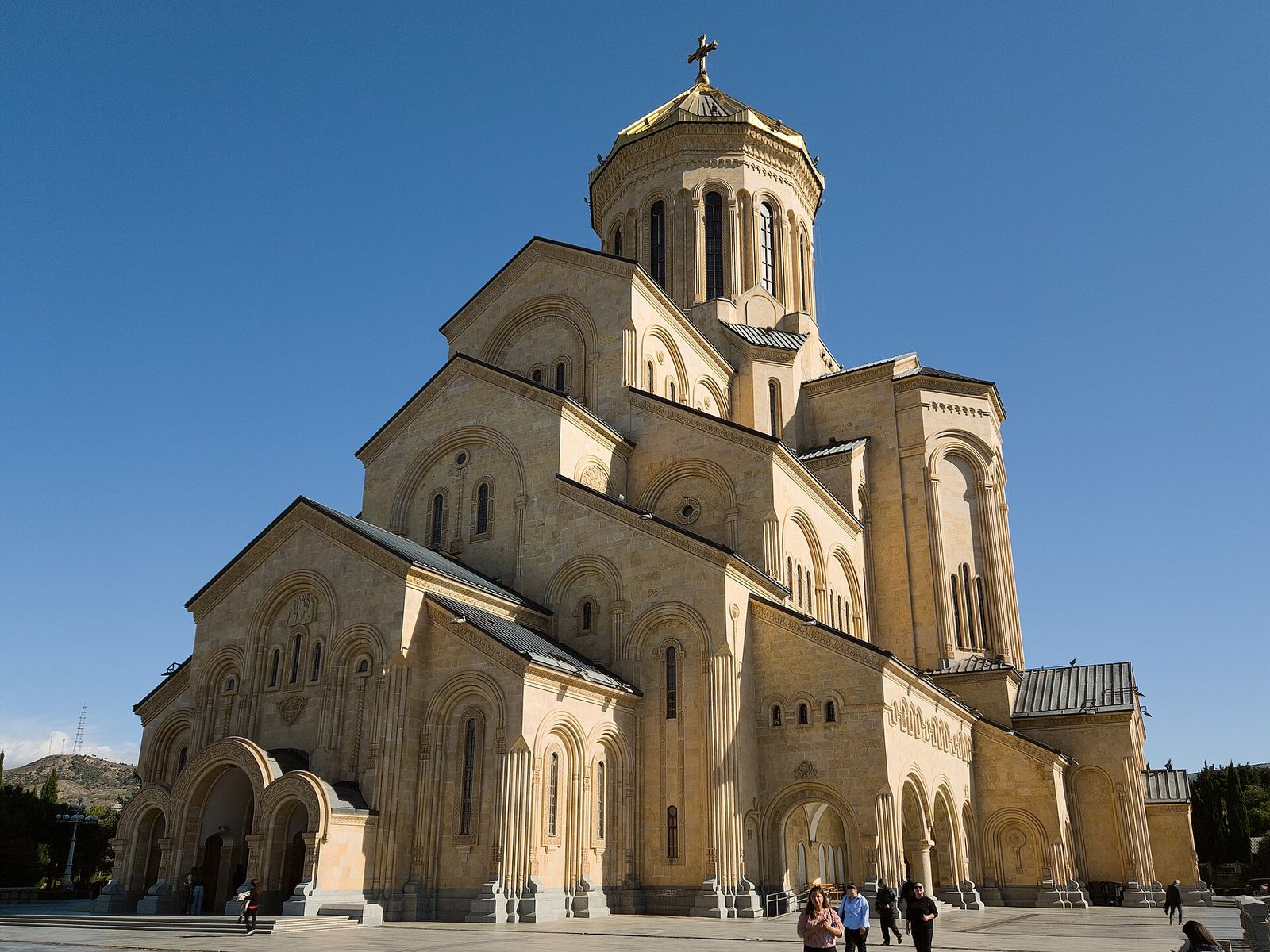
From Metekhi the streets climb east to Elia Hill and the gold dome of Sameba cathedral, which you see from almost every bridge in the city. It went up between 1995 and 2004 and ranks among the tallest Orthodox churches anywhere. Entry is free, and sunset is when I'd go.
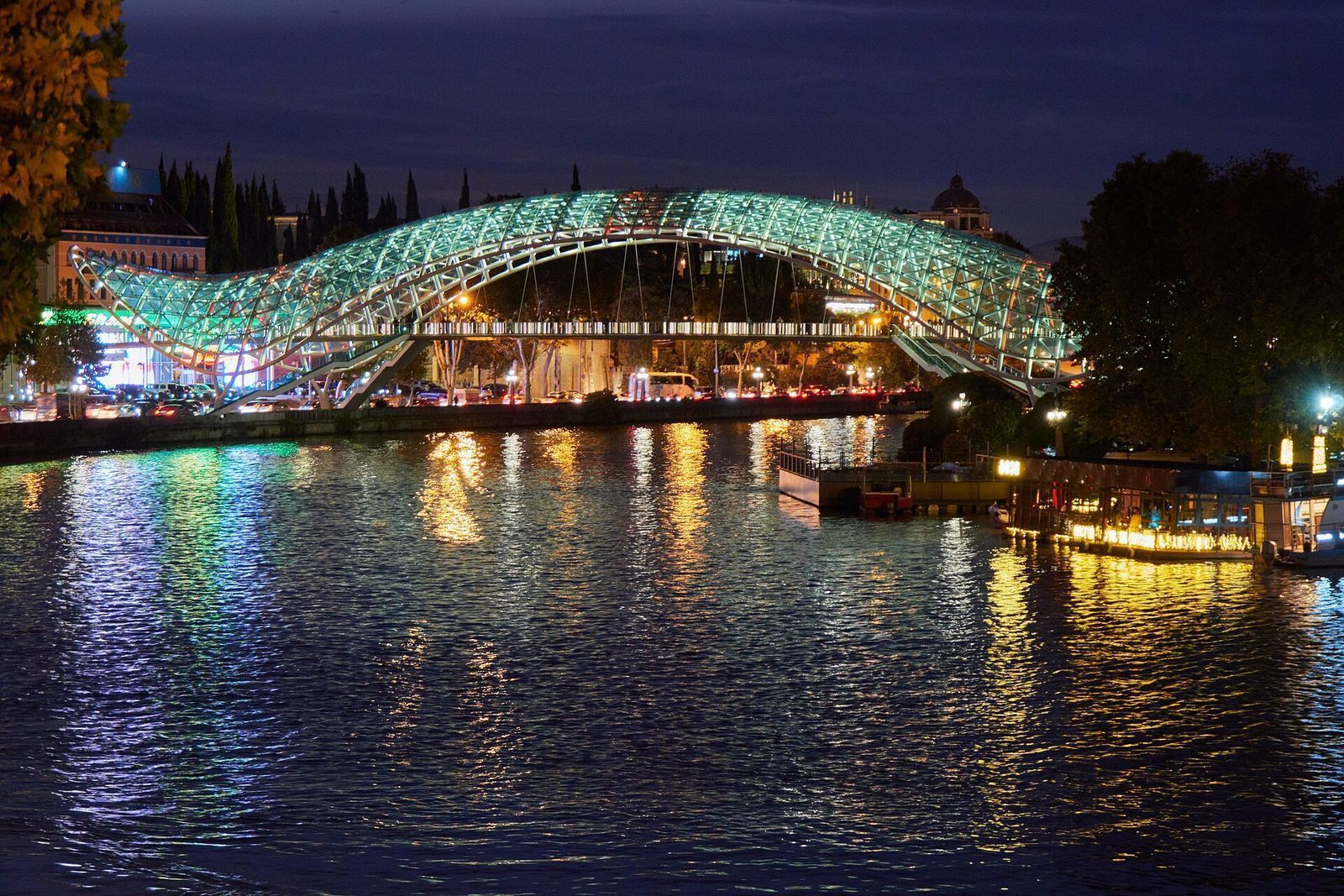
The road bridge at Metekhi is about 10 minutes on foot from the baths, and the glass Bridge of Peace lands in Rike Park on the Avlabari side. Its lights come on before sunset, so I cross it at dusk. From the park, the cable car to the Narikala ridge costs 2.50 GEL; every other sight here is free.
Behind the cliff, Avlabari is quiet and lived in, with far fewer restaurants than across the river. Its metro station is one stop from Liberty Square and the 337 airport bus stops outside, which makes it a cheaper, calmer base for a second trip.
Marjanishvili and Chughureti: food, Fabrika and late nights
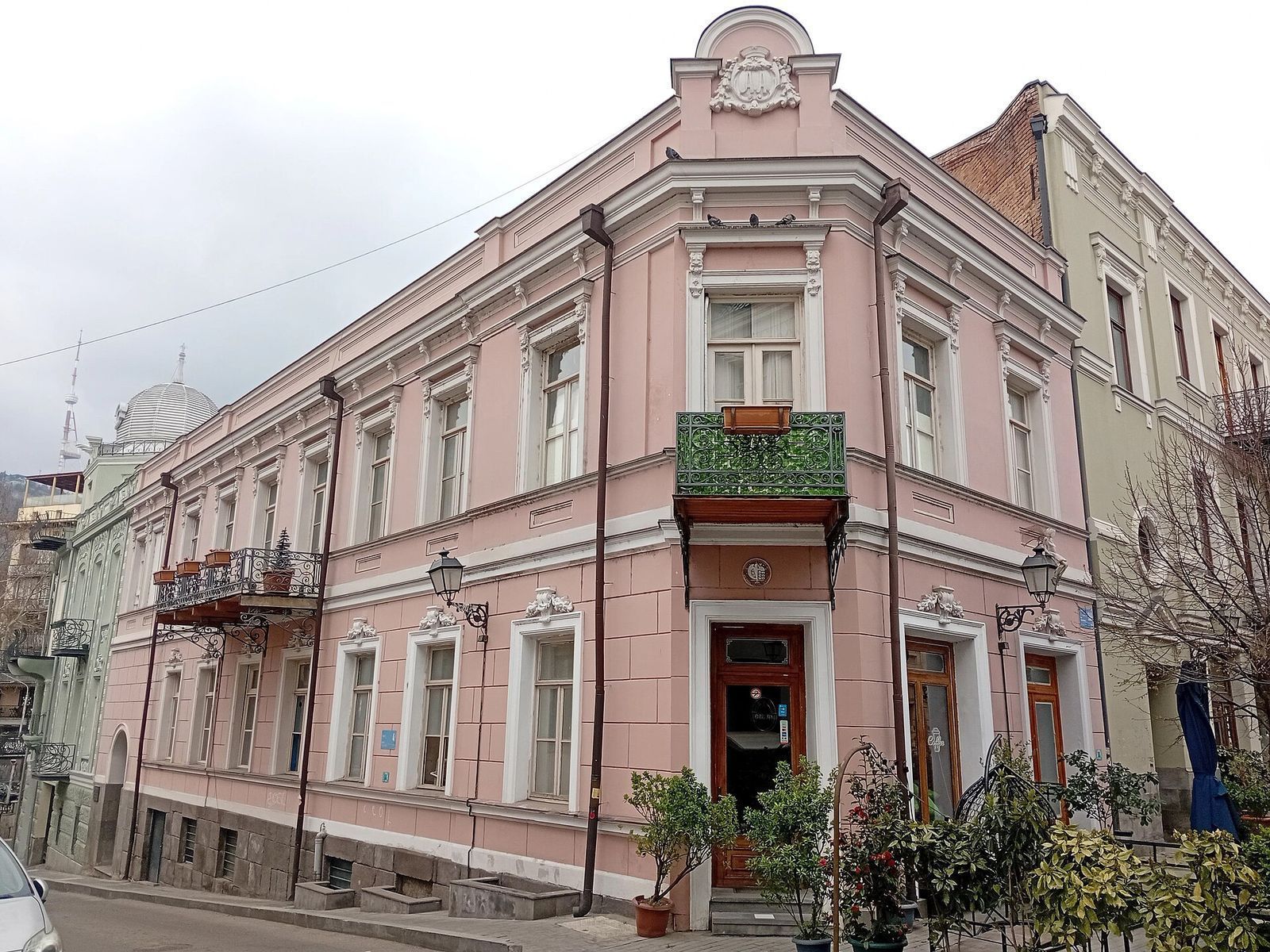
Marjanishvili is where Tbilisi goes to eat and drink. It's the visitors' end of Chughureti, 2 metro stops from Liberty Square, and it feels nothing like the Old Town: flat streets, bakeries and phone repair stalls, scruffy blocks next to restored townhouses. German colonists settled here in the 19th century, which is why it's still called the German quarter.
Its spine is Aghmashenebeli Avenue, where the restored main stretch is closed to cars and lined with restaurants and terraces. It's my favorite side of town for a long Georgian dinner, but it's loud on weekend nights, so light sleepers should eat here and sleep elsewhere.
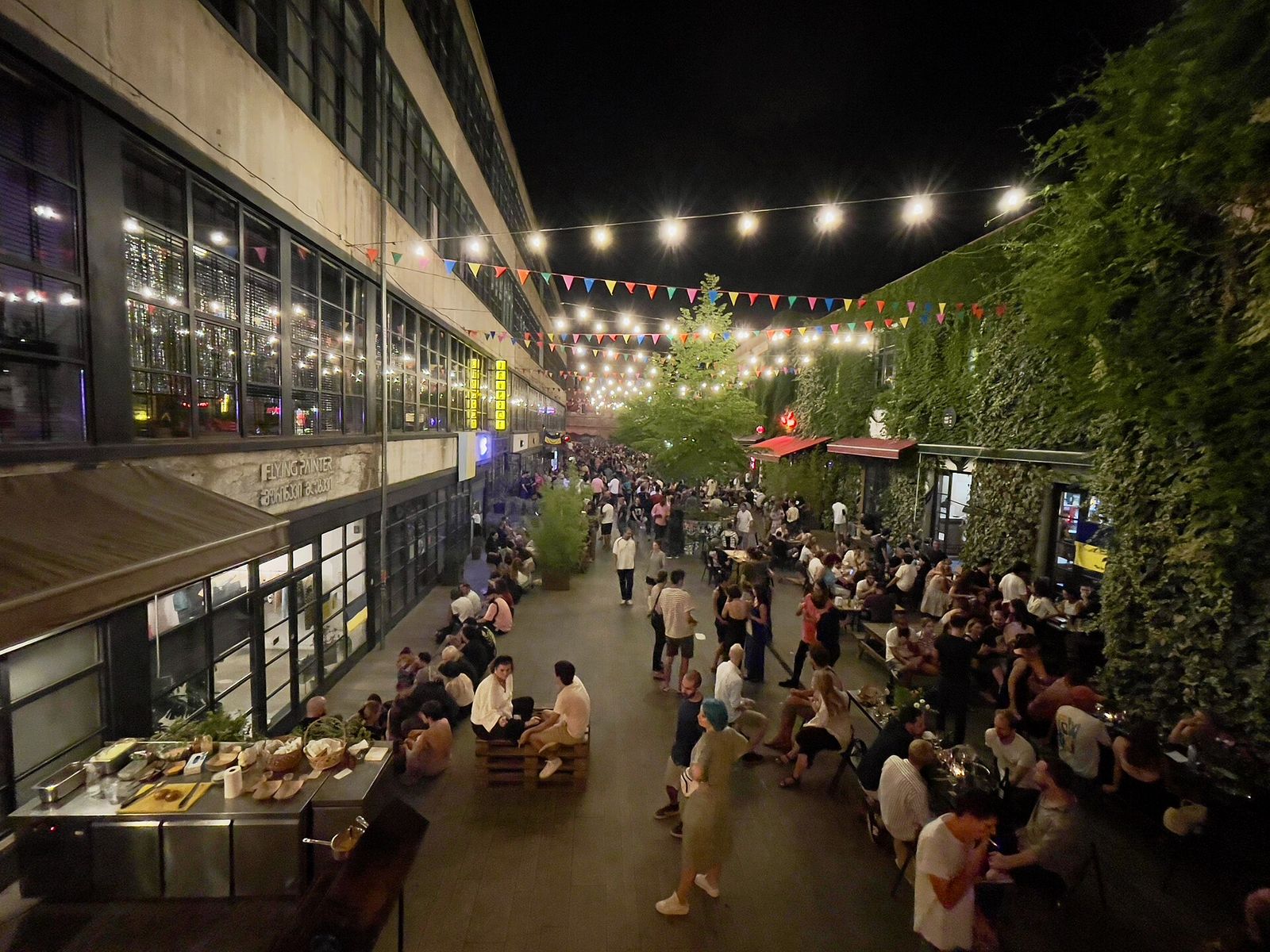
A few streets away, Fabrika fills an old Soviet sewing factory with a hostel, bars and a courtyard that stays busy late. The courtyard is free to wander, with street art on the walls, and dorm beds in the hostel run about 25 to 35 GEL a night.

Add the Marjanishvili Theatre and the Dezerter Bazaar, the big food market next to the Central Railway Station, and you have a full day. Dezerter opens daily from 07:00 to 17:00 and is best before noon, and I go for the cheese, the churchkhela and the pickles.
Vake: Vake Park, Turtle Lake and long lunches
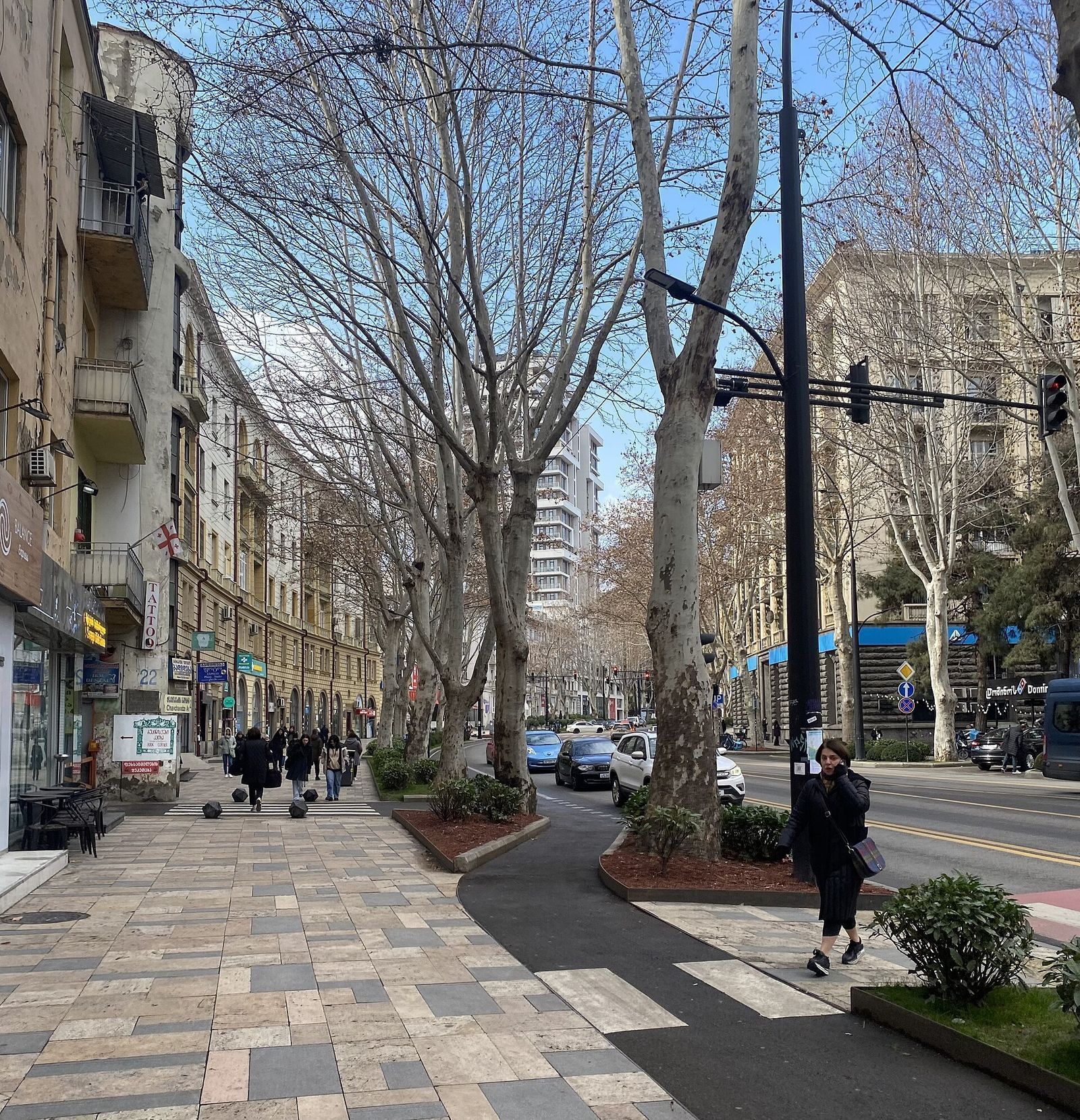
Vake spreads west from the end of Rustaveli Avenue along Chavchavadze Avenue, and locals call it the most prestigious place in the city to live: tree-lined streets, embassies and restaurants that don't need to shout for customers. There's no metro, so plan on a 20-minute taxi from Rustaveli at about 10 to 12 GEL.
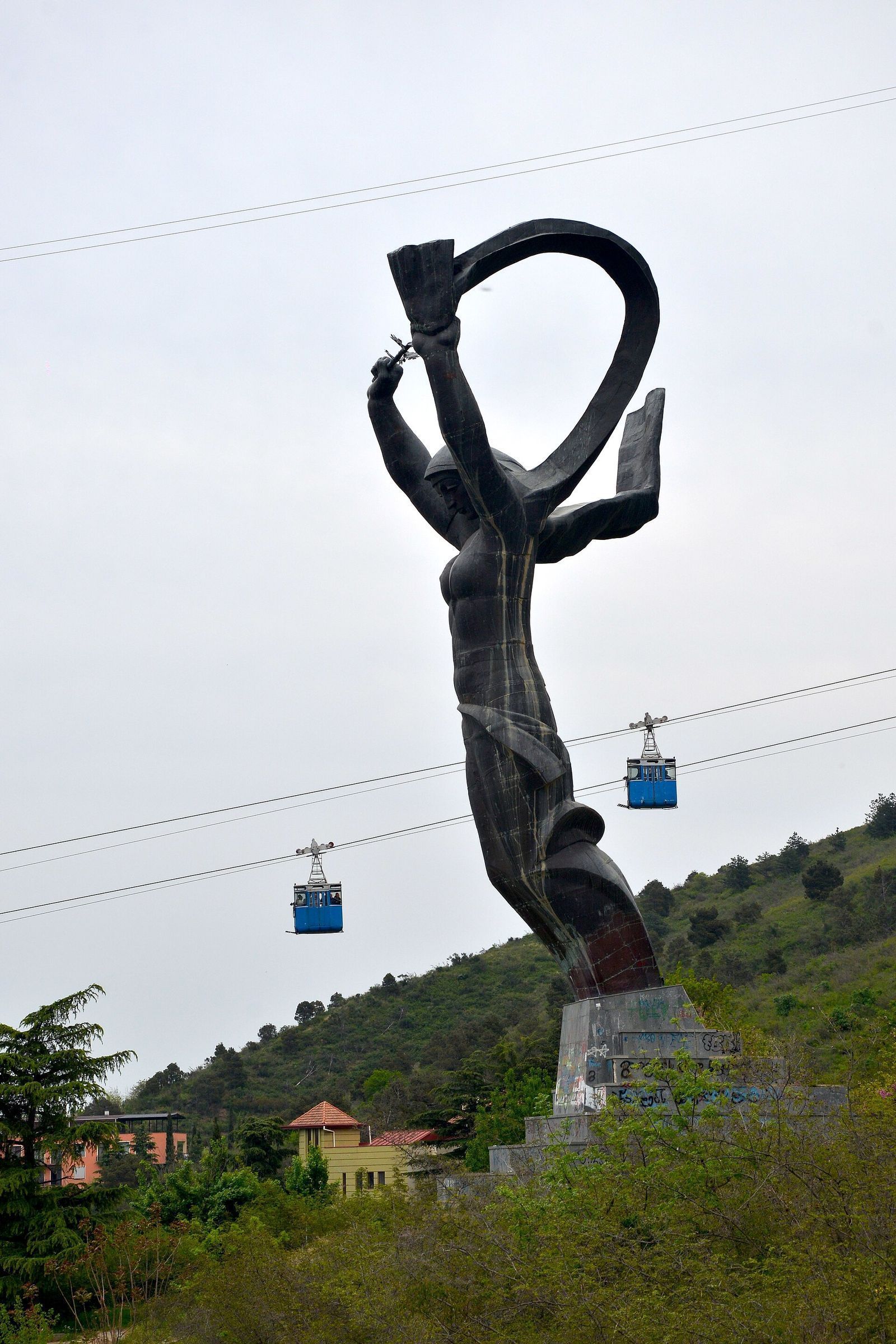
Vake Park is free and open around the clock. A broad cascade of stairs rises from Chavchavadze Avenue to the Victory statue, and the cable car at the park's top end climbs to Turtle Lake for 1 GEL, about 5 minutes in the air.
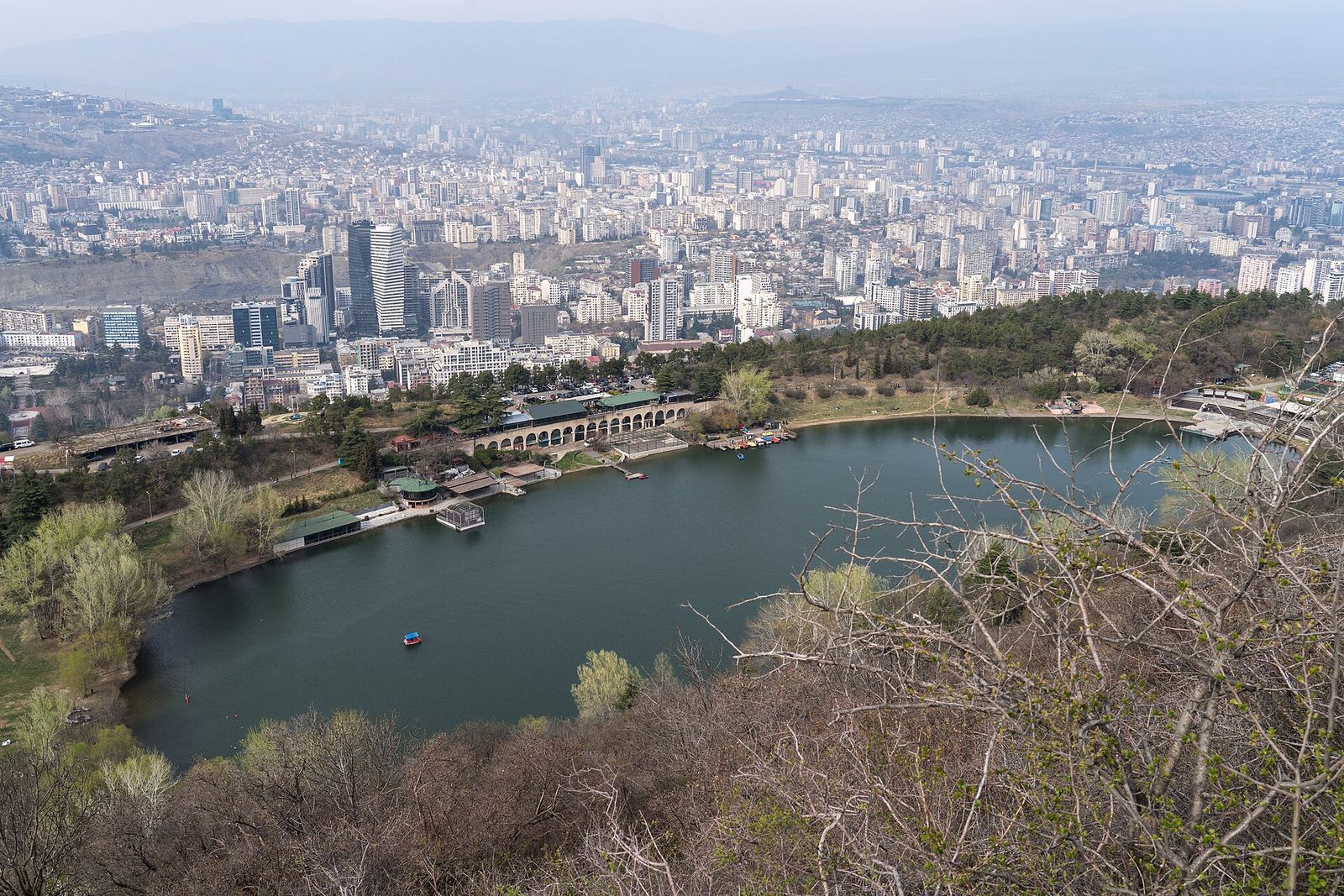
Turtle Lake is small, about 180 m long, and a lap of its paved shore path takes 20 to 30 minutes. You can swim from a little pebble beach from June to September, and since summer weekends bring half the city up the hill, I go on a weekday.
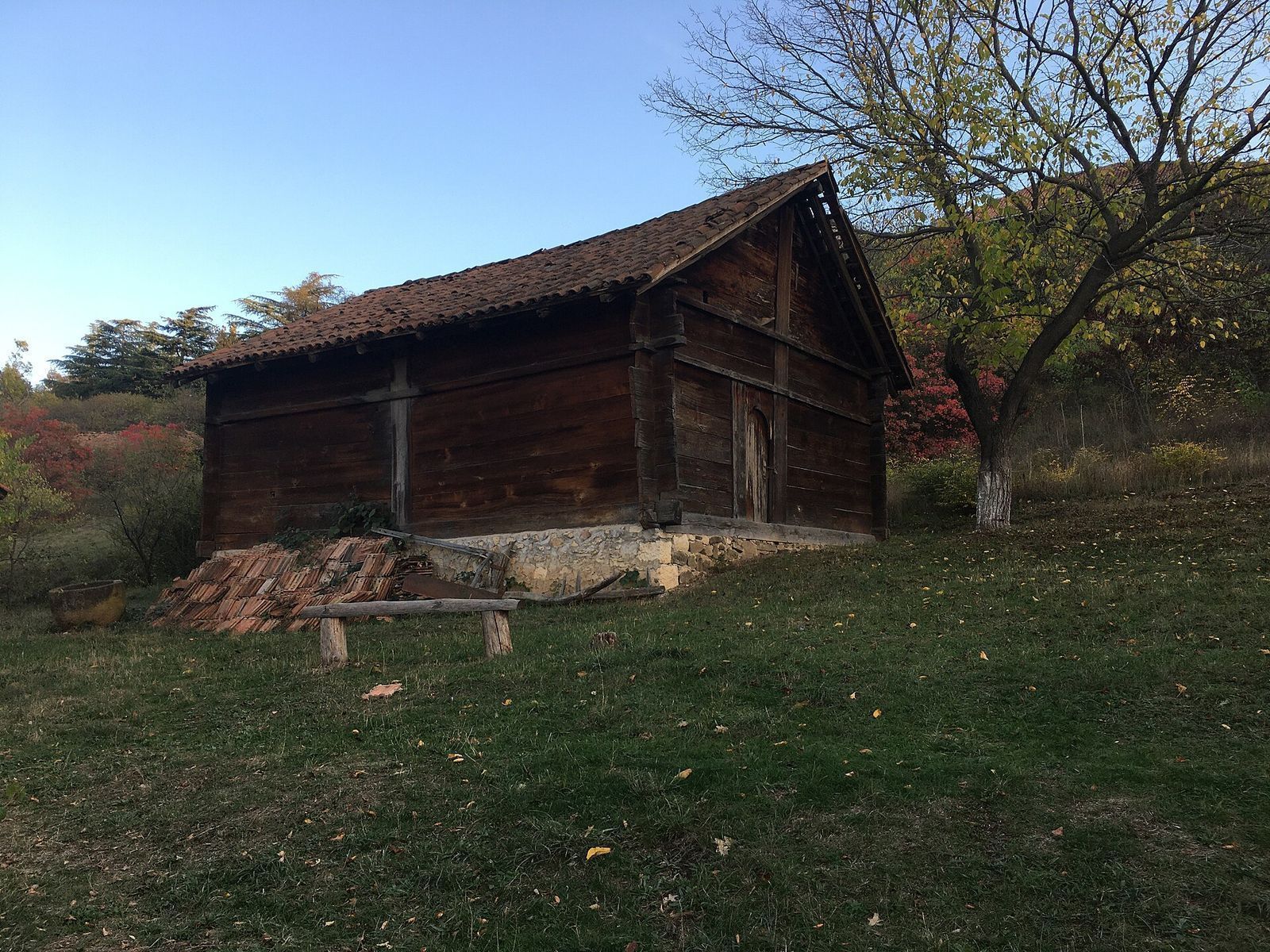
From the lake it's about 20 minutes on foot down to the Open Air Museum of Ethnography, where about 70 houses, towers and wine cellars from across Georgia stand on a wooded hillside (25 GEL).
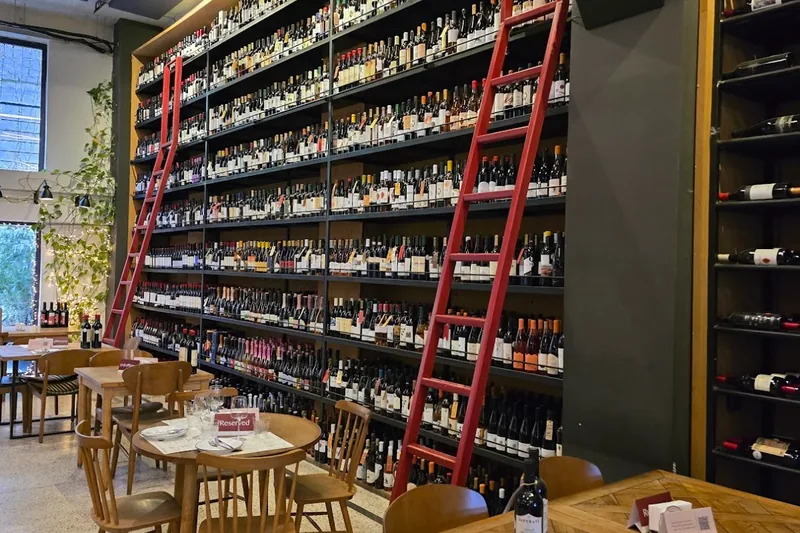
Back down, I finish at 8000 Vintages at 60 Abashidze Street, a wine shop and bar where you pick from the wall of bottles and order a cheese or charcuterie board to go with your glass.
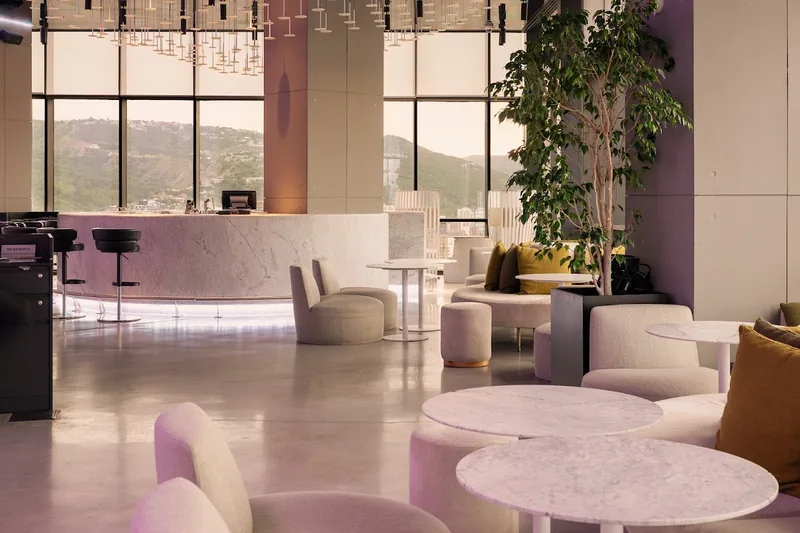
For the view instead, I go to the Weather Report Sky Bar at the top of the Axis Towers on Chavchavadze Avenue, which at 147 m are the tallest buildings in Tbilisi. Vake suits families and long stays; for anyone else, half a day is enough.
Saburtalo: Soviet towers, the Skybridge and Lisi Lake
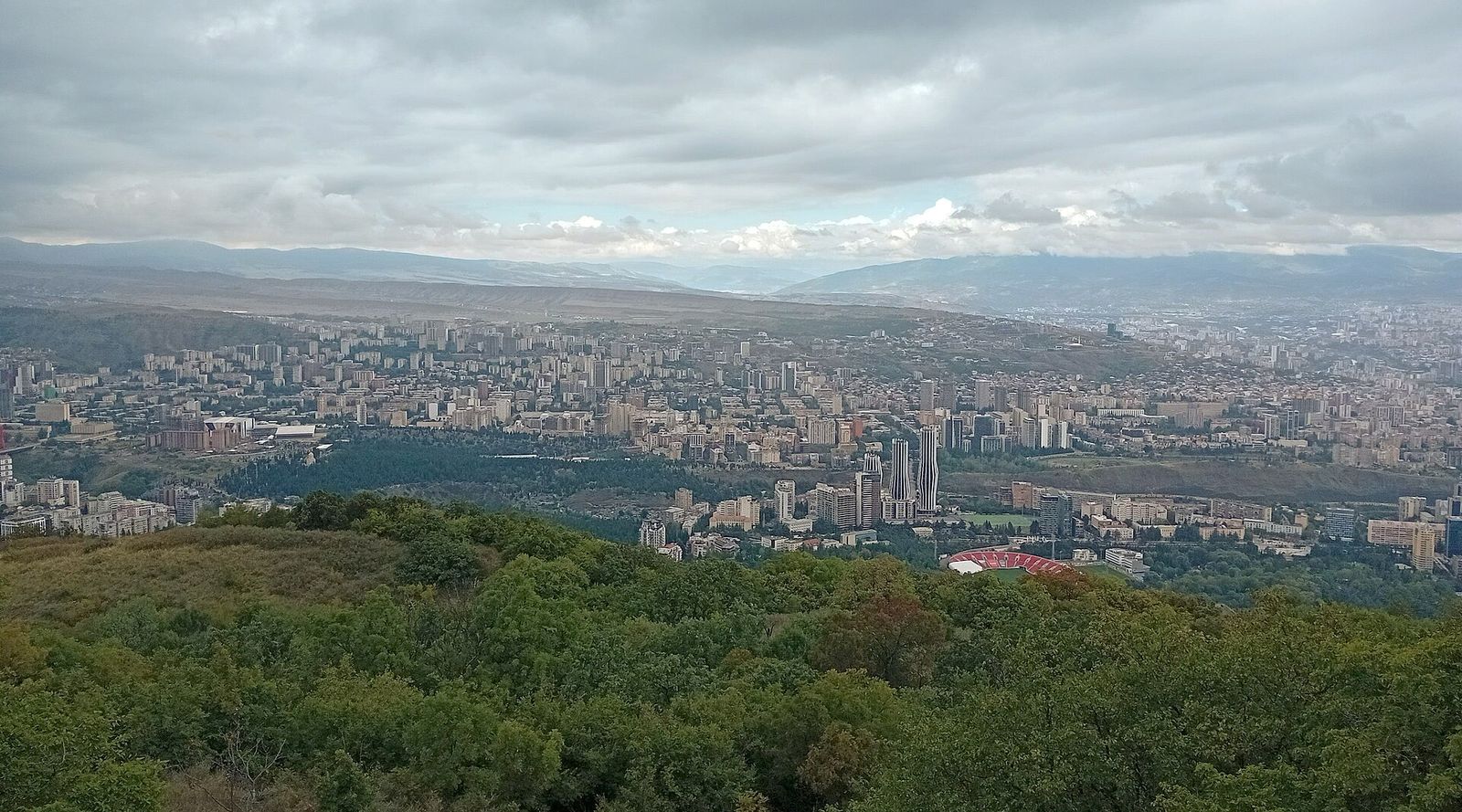
Saburtalo is where much of Tbilisi actually lives: tall Soviet apartment towers northwest of the center, three universities and a bakery on most corners. It has no old town, but it's the best part of the city for Soviet architecture, from the Sports Palace to the stacked blocks of the Bank of Georgia headquarters, and 5 stations on metro Line 2 serve it.
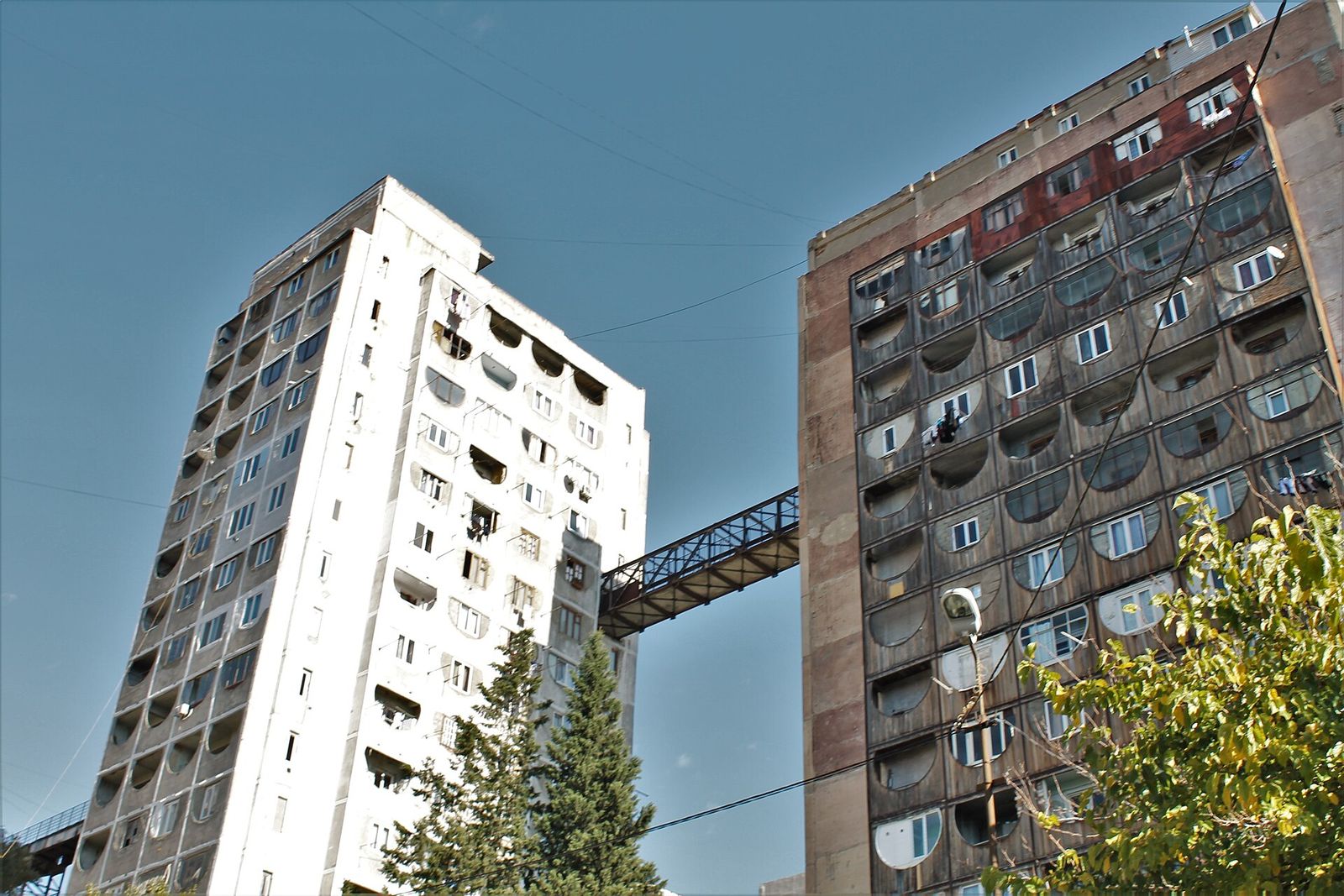
The sight you use like a local is the Nutsubidze Skybridge, where metal bridges built in the 1970s link three apartment towers. Locals use it as a shortcut, and the back right elevator to floor 14 costs 20 tetri in exact coins.
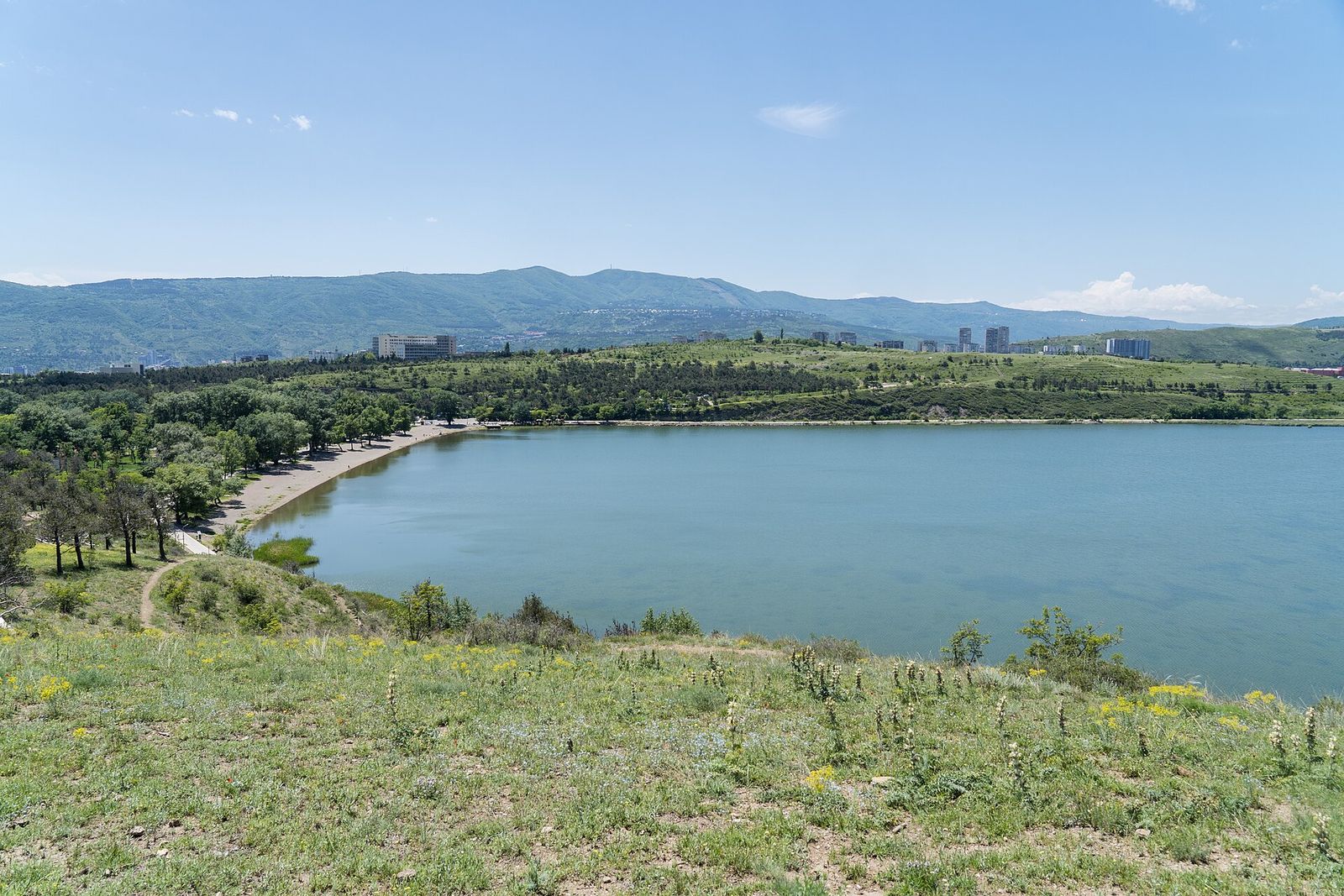
Lisi Lake, on the northwest edge, is a wide lake in open hills with a 3 km paved loop that suits a walk, a run or a bike ride.
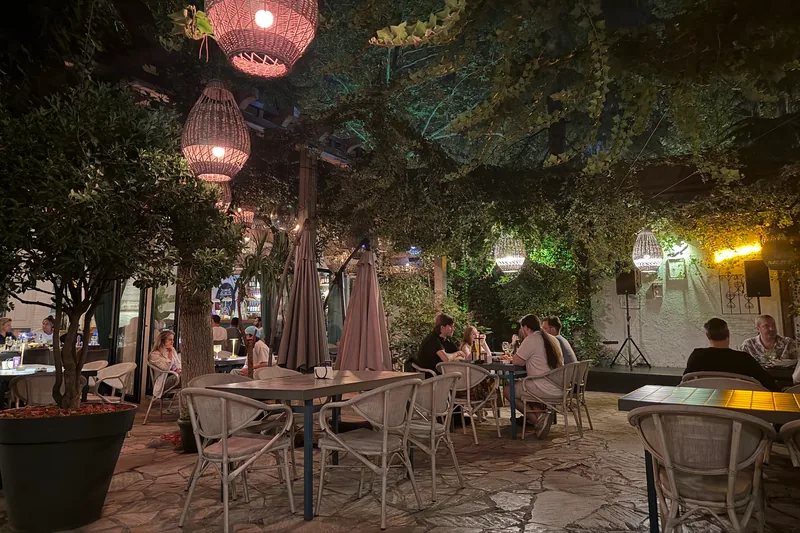
For dinner I go to Sormoni at 57 Kazbegi Avenue, across from City Mall, where trees grow through the dining room and the khinkali come with mushroom, chicken or smoked sulguni.
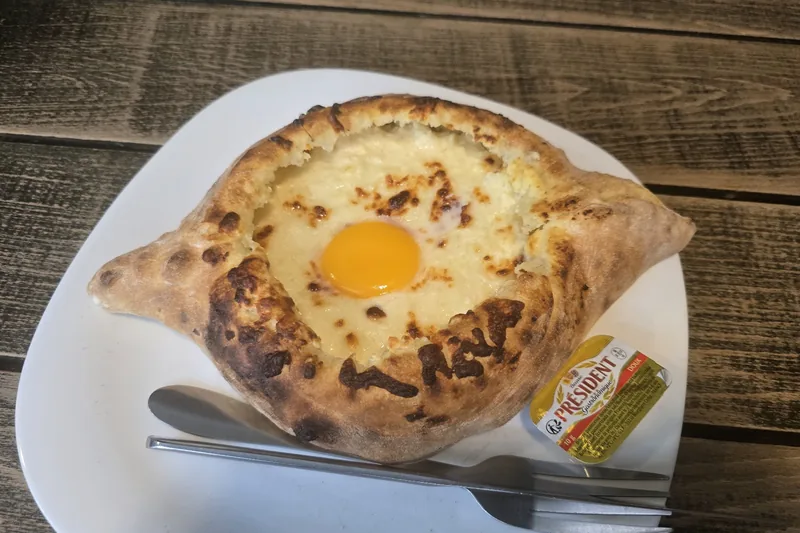
For a large Adjaruli khachapuri at about 20 GEL, enough for two, I go to Retro. With rooms at 40 to 80 GEL a night and monthly rents from around 600 GEL, Saburtalo suits a long stay far better than a 3-day first trip.
Beyond the center: Didube, Samgori and the outer districts
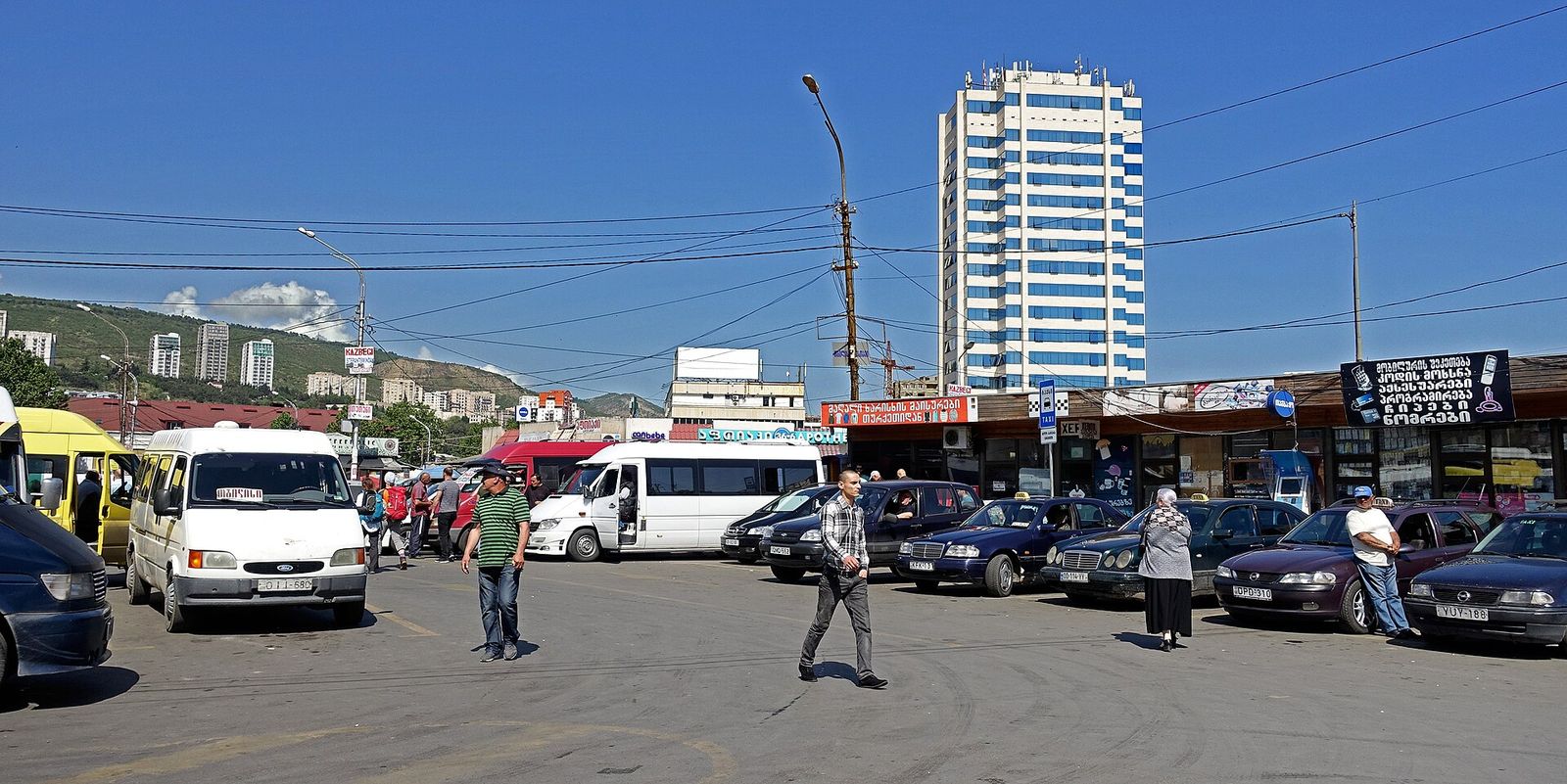
The other districts are mostly residential. Didube, on metro Line 1 north of the center, is home to the Didube bus station, where marshrutkas leave for Mtskheta, Kazbegi and Kutaisi, so it's the one outer district almost every visitor sees. It also holds the Didube Pantheon, the city's second pantheon of writers and public figures and one of the quieter historic cemeteries in Tbilisi.
In the east, Samgori has another bus station and a farmers' market right outside Samgori metro, with a rougher flea market behind it. Nadzaladevi and Gldani in the north and Isani beyond Avlabari are housing districts, where a concert venue or a Soviet bunker tour is the usual reason to go.
The best Tbilisi neighborhood for what you want to do
| If you want | Go to | Why |
|---|---|---|
| Postcard old streets | Old Tbilisi | Balconies, baths and the ridge within a 10-minute walk |
| Architecture | Sololaki | Art Nouveau facades and painted entrance halls |
| Museums and the opera | Rustaveli Avenue | National Museum, Opera and theatres on one street |
| Specialty coffee and wine bars | Vera | Roasters, six-table wine bars and Stamba |
| Dinner and nightlife on a budget | Marjanishvili | Fabrika, Aghmashenebeli Avenue, local prices |
| Views of the Old Town | Avlabari | Metekhi cliff, Rike Park and Sameba |
| Parks and kids | Vake | Vake Park and the Turtle Lake cable car |
| Soviet buildings | Saburtalo | The Skybridge, the Sports Palace, the Bank of Georgia |
Getting between Tbilisi neighborhoods
The center is small enough to walk and hilly enough that you'll want a break. The Tbilisi metro is fast for the left bank and Saburtalo but misses the old town's hills, Mtatsminda and Vake, so most days I mix it with walking and Bolt, which shows a fixed fare before you get in.
One day across six Tbilisi neighborhoods
To see the range in one day, I'd start in Sololaki with an early coffee, then look into whichever entrance halls are open. From there it's downhill to Meidan and the bath domes, and up the Betlemi stairs for the view.
Late morning, I'd cross Metekhi bridge to Avlabari for the church on its cliff and the climb to Sameba, then come back over the Bridge of Peace for lunch in the Old Town. It's 8 minutes uphill to Freedom Square, then an hour along Rustaveli Avenue to Rustaveli metro and a late-afternoon coffee up in Vera. For dinner, Rustaveli to Marjanishvili is one stop on Line 1: eat on Aghmashenebeli Avenue, finish in the Fabrika courtyard and take a Bolt home.
Key takeaways
- Tbilisi has 10 official districts, but visitors use older neighborhood names such as Sololaki, Vera and Avlabari.
- Old Tbilisi, Sololaki, Rustaveli Avenue, Vera and Avlabari form one walkable core, with Freedom Square at its center.
- Sololaki is my pick for a first-trip base, Marjanishvili for dinner and value, and Vera for coffee, wine and longer stays.
- Vake and Saburtalo are worth a half day each for parks, Turtle Lake and Soviet buildings.
- The metro costs 1 GEL a ride and reaches every central neighborhood except Vake and the old town's hills.
Frequently asked questions
What is the best neighborhood in Tbilisi for tourists?
Sololaki and Old Tbilisi are the best neighborhoods for a first visit, because the baths, churches, cable car and Rustaveli Avenue are all on foot. I prefer Sololaki, which is about 5 minutes from the Old Town sights but quieter at night. On a second trip, Vera and Marjanishvili show you more of the city as locals live it.
What are the districts of Tbilisi?
Tbilisi has 10 administrative districts: Mtatsminda, Vake, Saburtalo, Krtsanisi, Isani, Samgori, Chughureti, Didube, Nadzaladevi and Gldani. Visitors mostly use older neighborhood names inside them, such as Sololaki and Vera in Mtatsminda district or Avlabari in Isani.
Which part of Tbilisi is the old town?
The old town is the historic core on the right bank of the Mtkvari, under the Narikala ridge. It takes in Meidan, Abanotubani, Kala, Shardeni Street and Betlemi, all within about a 10-minute walk of each other, with Avlabari facing it across the river.
Is Tbilisi a walkable city?
Yes, the center of Tbilisi is very walkable, and Freedom Square to Meidan takes about 8 minutes on foot. The catch is the hills: Sololaki, Betlemi, upper Vera and Avlabari all have steep streets and stairs, and the 1 GEL metro and Bolt cover the longer hops.
What is the safest neighborhood in Tbilisi?
All the central neighborhoods are safe for visitors, and the Old Town is safe day and night. The realistic problems are a pickpocket in a crowd, an inflated bar bill on Shardeni Street or an overpriced taxi, so book rides in Bolt and skip the Parliament stretch of Rustaveli Avenue after dark.
How many days do you need to see Tbilisi's neighborhoods?
Three days covers the five central neighborhoods at an easy pace, with evenings in Marjanishvili or Vera. Add a half day each for Vake and Saburtalo, or follow the one-day route above if that's all you have.
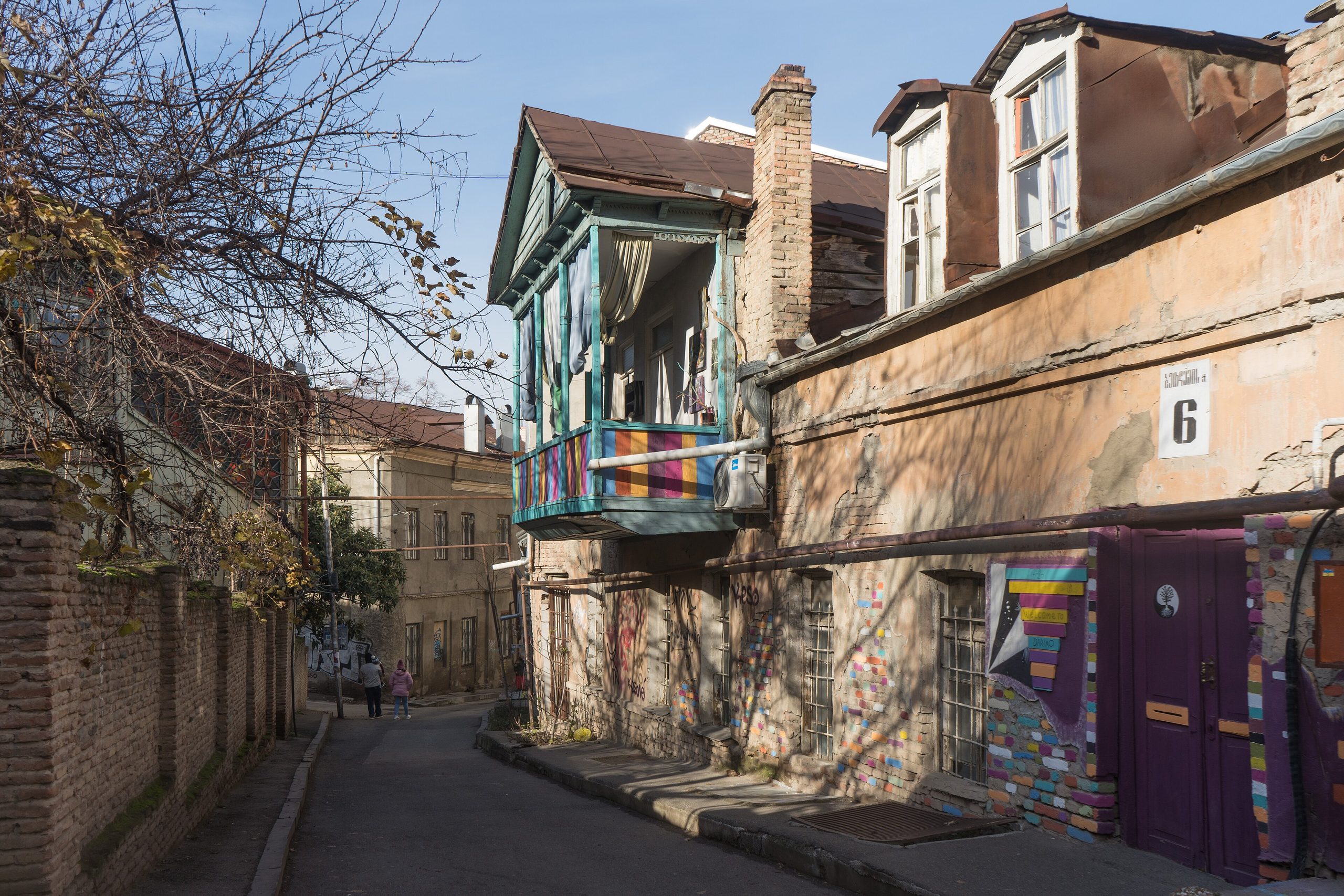
Old Tbilisi: Kala, Betlemi, Meidan and Shardeni Street
Old Tbilisi is the city of balconies and bath domes. Here is what to see, where to eat and whether to stay there.
Read the guide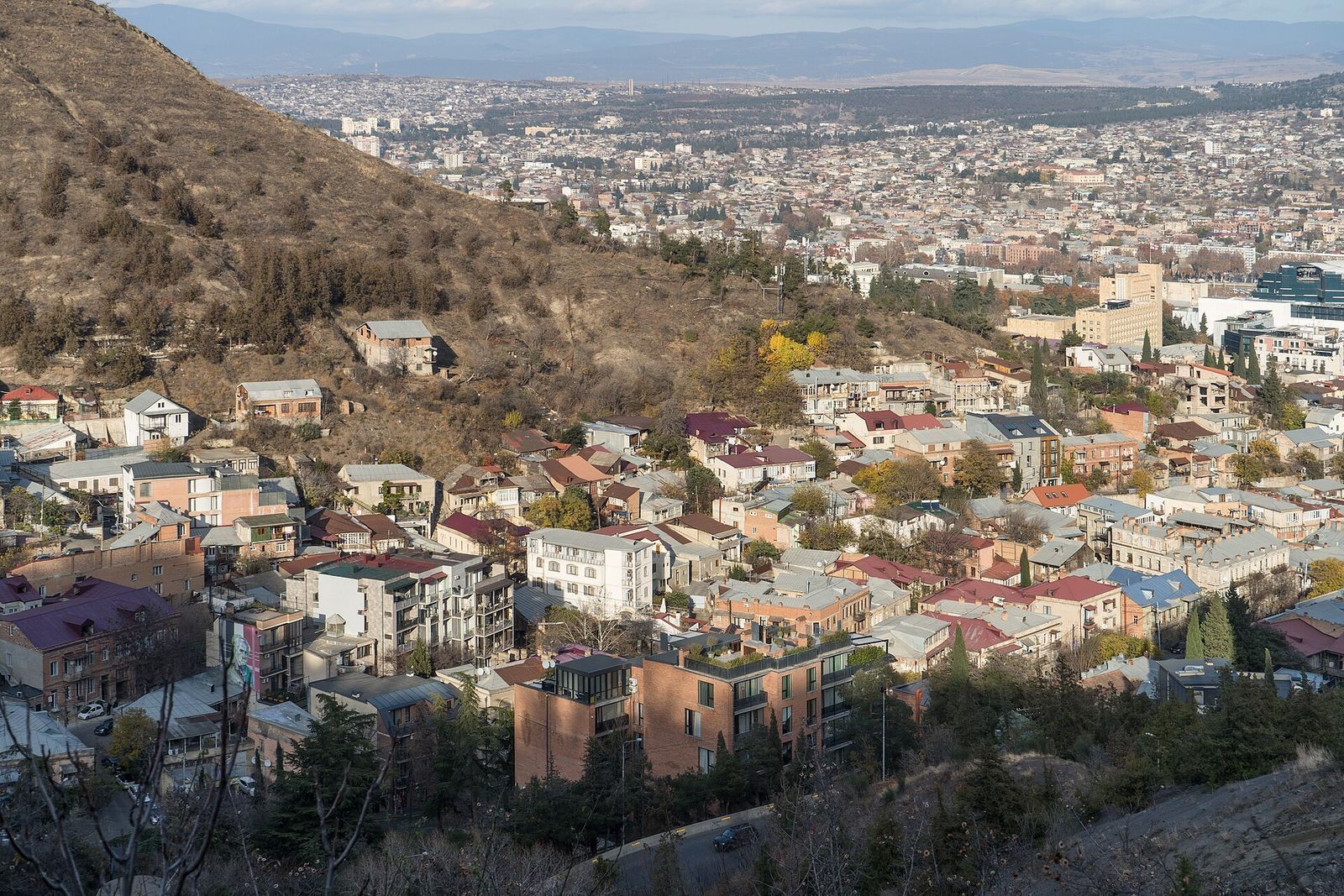
Sololaki, Tbilisi: Art Nouveau Entrances, Cafes and Where to Stay
Sololaki is the Art Nouveau quarter of Tbilisi. Here is what to see, where to eat and drink, and who should stay there.
Read the guideRustaveli Avenue and Freedom Square: What to See, Eat and Know
Rustaveli Avenue is the grand main street of Tbilisi. Here is what to see from Freedom Square on, and how long it takes.
Read the guide