Borjomi Day Trip from Tbilisi: Park, Pools and Getting There
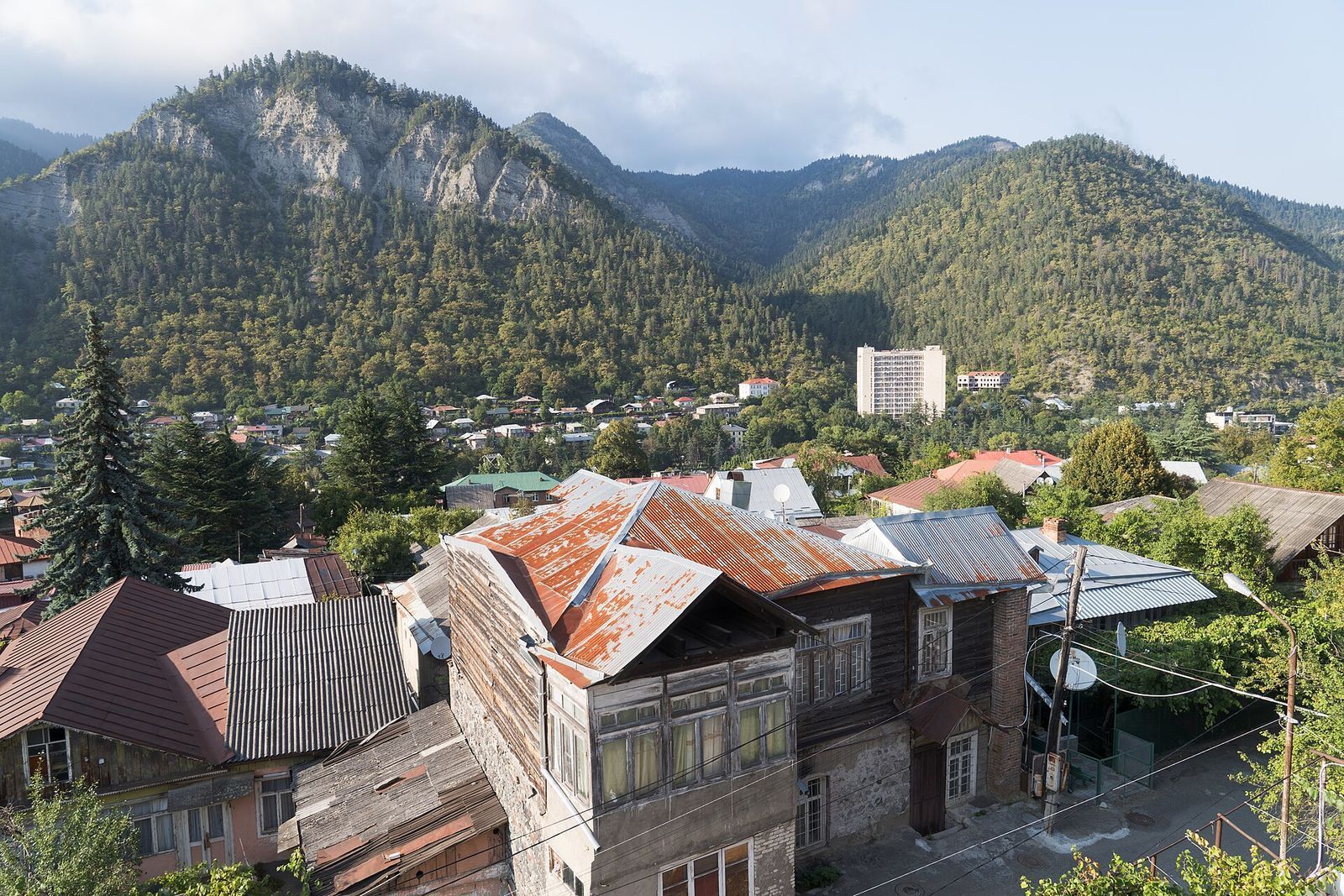
Borjomi is the spa town in a forested gorge about 150 km west of Tbilisi, known across the old Soviet world for its salty mineral water. As a day trip it gives you a 19th-century park with free springs, a cable car, a forest walk to open-air sulfur pools and a long ride home. Here's how to get there, what to see, and how to plan the day around the van back.
Is Borjomi worth a day trip from Tbilisi?
Yes, if you want a green, slow day out of the city and you don't mind 5 to 6 hours on the road. Borjomi is a faded spa town rather than a sight with a single headline, and the pleasure is in the small things: drinking warm mineral water straight from the spring, a ride up through the pines, an hour floating in a forest pool, and lunch on a street of old wooden houses.
It's the long one on the list of day trips from Tbilisi, so I'd put it after the obvious two. Here's how I'd decide:
- Go as a day trip if you have 4 or more days in Tbilisi, you've already done Mtskheta and Kazbegi, and you want forest and fresh air rather than another church.
- Go as a day trip if you like walking: the park, the forest path to the pools and the walk back add up to 8 or 9 km.
- Stay the night if you want the hiking trails of Borjomi-Kharagauli National Park, which start a taxi ride out of town and need a full day.
- Stay the night if you want to add Rabati Castle, Vardzia or Bakuriani; none of them fit after a Borjomi morning without a driver and a 14-hour day.
- Skip it if you only have 2 or 3 days in Georgia. A half day in Mtskheta or the mountain road to Kazbegi gives you more for the hours.
- Skip it if you're after a proper hot soak. The Borjomi pools are lukewarm, and the domed sulfur baths in Tbilisi are hotter, closer and open late.
How to get from Tbilisi to Borjomi
The marshrutka is the answer for most people: frequent, cheap and quicker than the train. Here are all five options side by side.
| Option | From | Time each way | Cost | Best for |
|---|---|---|---|---|
| Marshrutka | Didube bus station | 2.5 to 3 hours | About 12 GEL | Most day trippers |
| Train | Tbilisi Central Station | About 4 hours | Under 10 GEL | Overnight stays, slow travel |
| Taxi | Didube bus station | About 2 hours | About 200 GEL per car | Groups of 3 or 4 |
| Rental car | Anywhere | About 2 hours | Rental plus fuel | Adding the Green Monastery or Rabati |
| Group tour | Central Tbilisi | 10 to 15 hour day | About 100 to 180 GEL a person | Borjomi plus Vardzia in one go |
Marshrutka from Didube
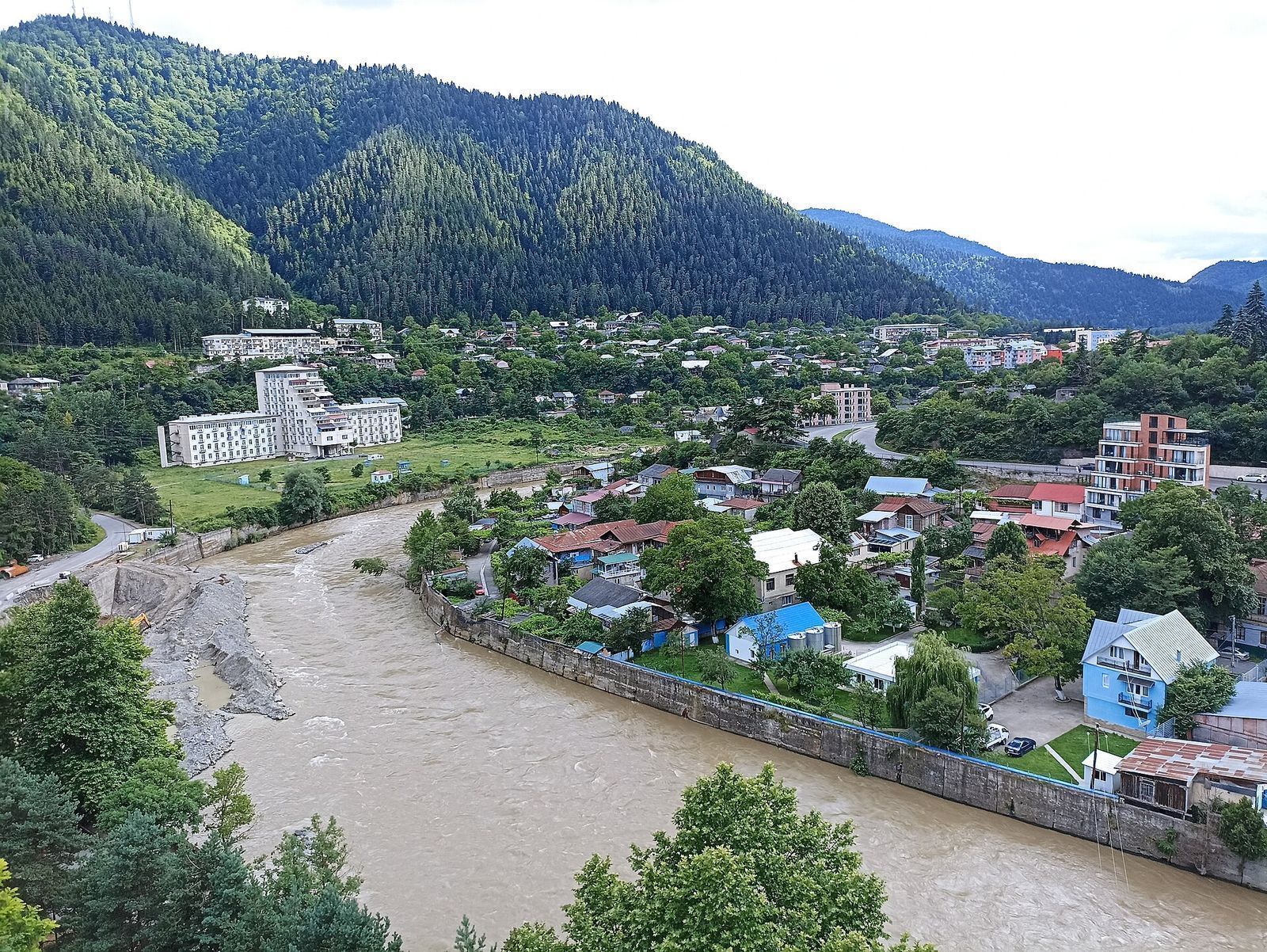
Vans to Borjomi leave from the Didube bus station, right beside Didube station on the Tbilisi metro. Come out of Didube metro, turn left and look for the Borjomi vans near the orange Bank of Georgia sign. They run roughly every hour from about 08:00 to 18:00, leave when they're full, and the fare of about 12 GEL is paid in cash to the driver.
The ride takes 2.5 to 3 hours and drops you at the Borjomi bus station, a 10 to 15 minute walk from the park. I'd be at Didube by 07:30 to get a seat on the first van out.
Train from Tbilisi Central Station
Two trains a day run from Tbilisi Central Station, by Station Square metro, to Borjomi. They're old, cheap at under 10 GEL and slow, taking about 4 hours with stops in Gori and the villages along the Mtkvari valley. Get off at Borjomi Park station, the stop closest to the center and the park. Tickets come from the counter or the machines at the station; check the current times on the trains in Georgia timetable before you plan around one.
Taxi or a driver
Taxi drivers wait at Didube and will do the run for about 200 GEL a car, and you can wait for other passengers to split it. A driver is the only easy way to add the Green Monastery or a stop in Gori on the same day. Driving yourself takes about 2 hours on the main highway, and a rental car in Georgia makes sense if Borjomi is the first stop of a loop west.
Group tours
Small-group tours from Tbilisi either do Borjomi on its own, from about 180 GEL a person for a 10 to 11 hour day, or pair it with Rabati Castle and Vardzia for around 100 GEL a person and up to 15 hours. Entry fees are usually extra. The Vardzia version is a lot of driving for a short look at each place, and I'd only pick it if you have one day and must see the cave city.
Borjomi Central Park and the mineral springs
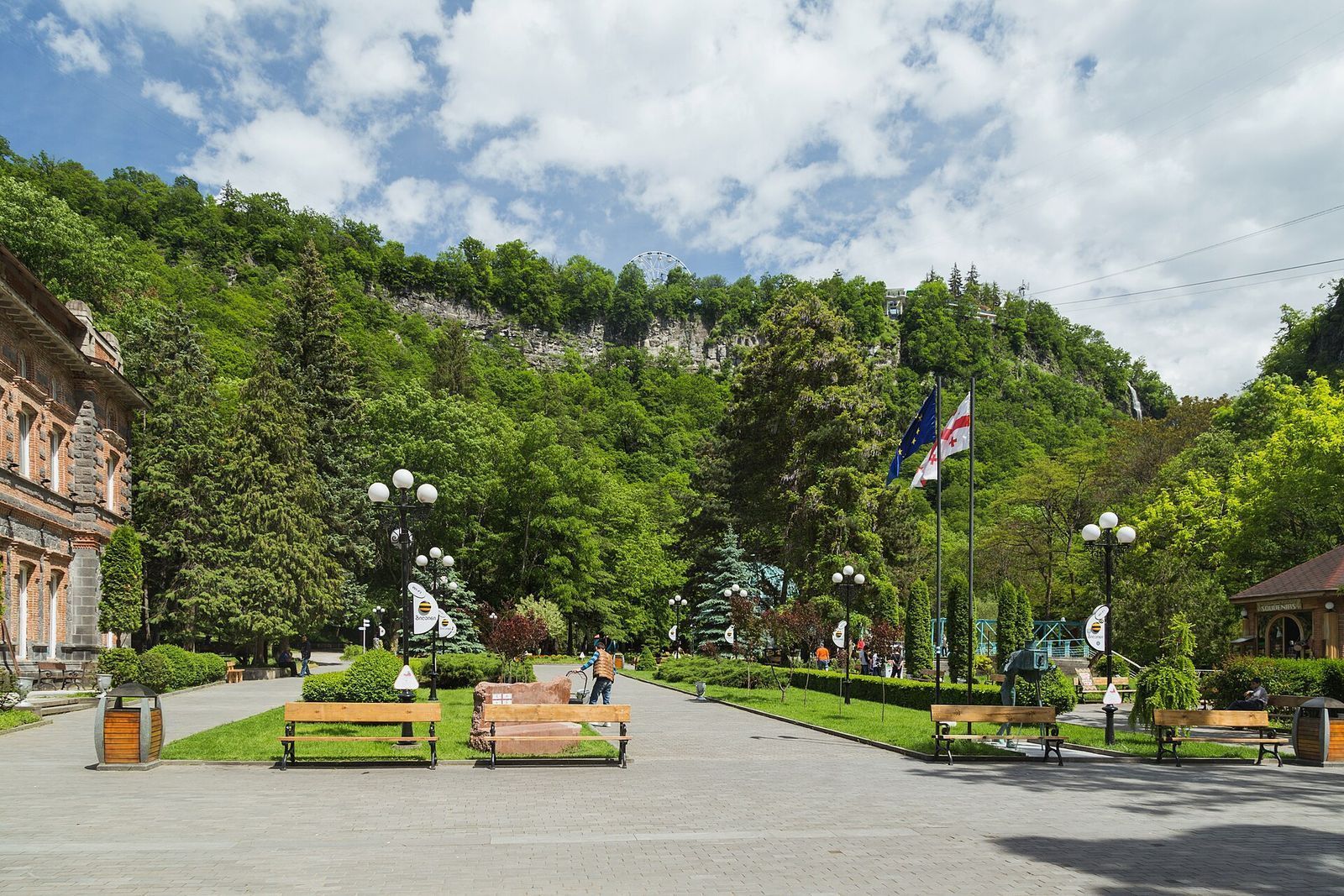
Central Park is why Borjomi exists as a resort. It runs up the narrow gorge of the Borjomula stream from the edge of town, a couple of kilometers of shaded paths, footbridges, cafes and old pavilions, laid out in the 19th century when the Russian imperial family turned Borjomi into a summer retreat. The gate charges a few lari in some seasons and nothing in others, and the springs inside are always free.
Some of the park is tired: a strip of children's rides, a rope park and a Ferris wheel that have seen better decades. Walk past them. The further up the gorge you go, the quieter and greener it gets.
The warm and cold springs
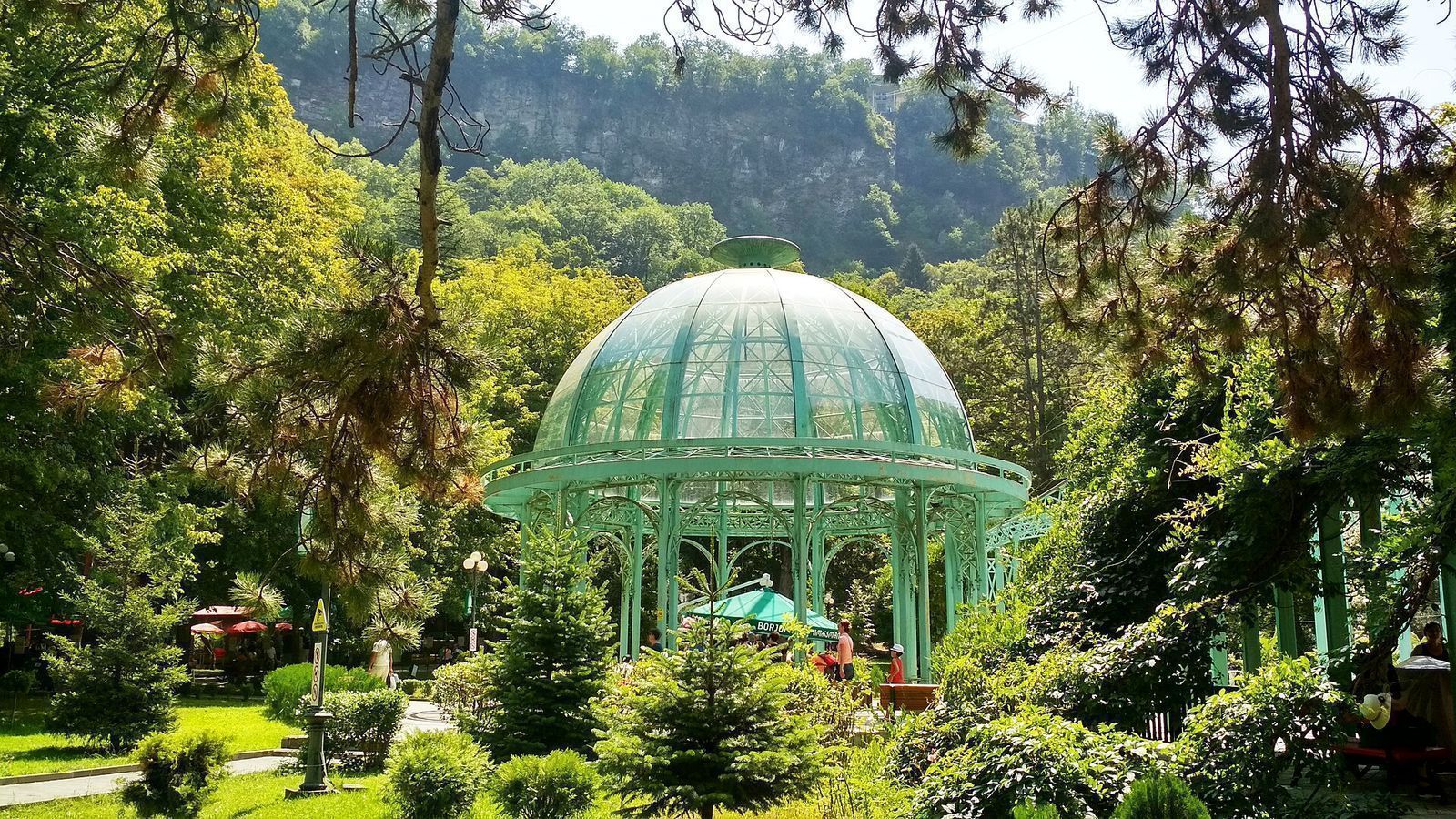
The main spring pavilion sits just inside the entrance, and this is where you taste Borjomi at the source. The warm spring comes out at about 35°C, salty, metallic and faintly sulfurous, and nothing like the cold, fizzy version in the green bottles. A second, cold spring is about 20 minutes further into the park, cooler and milder. Bring an empty bottle; locals fill up and carry it home.
The Prometheus statue and the waterfall
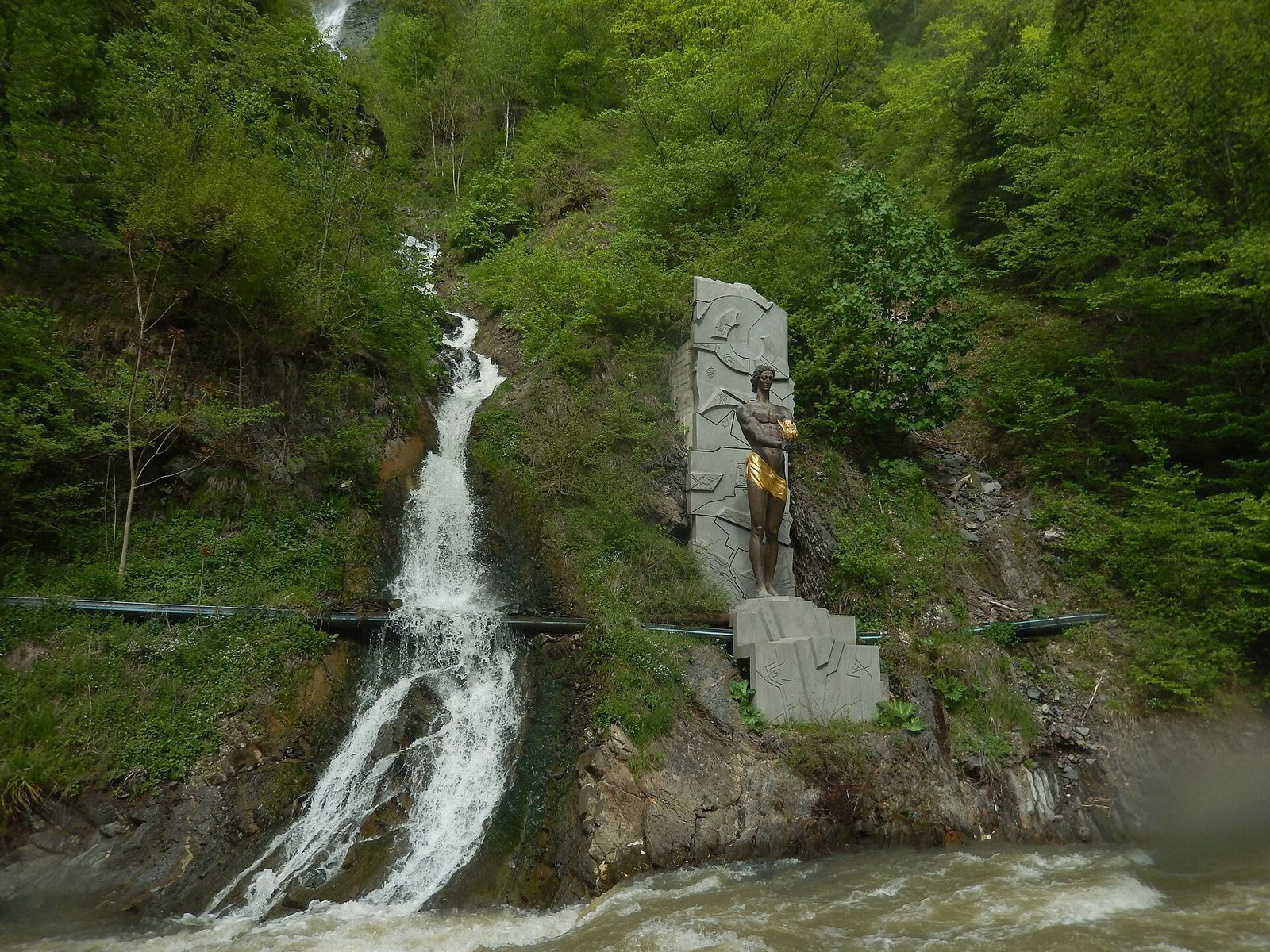
Across the Borjomula, at the foot of the wooded slope, a bronze Prometheus stands on a stone plinth in front of a tall carved slab, holding the stolen fire, picked out in gold, against his chest. It was cast in 2007 to a design by Davi Khmaladze. Officially it's Prometheus; many Georgians will tell you it's Amirani, the hero of a Georgian epic who was chained to a mountain in the Caucasus for defying the gods. A thin waterfall drops down the slope right beside the statue and into the stream, and the pair make one of the most photographed corners of the park.
The Borjomi cable car
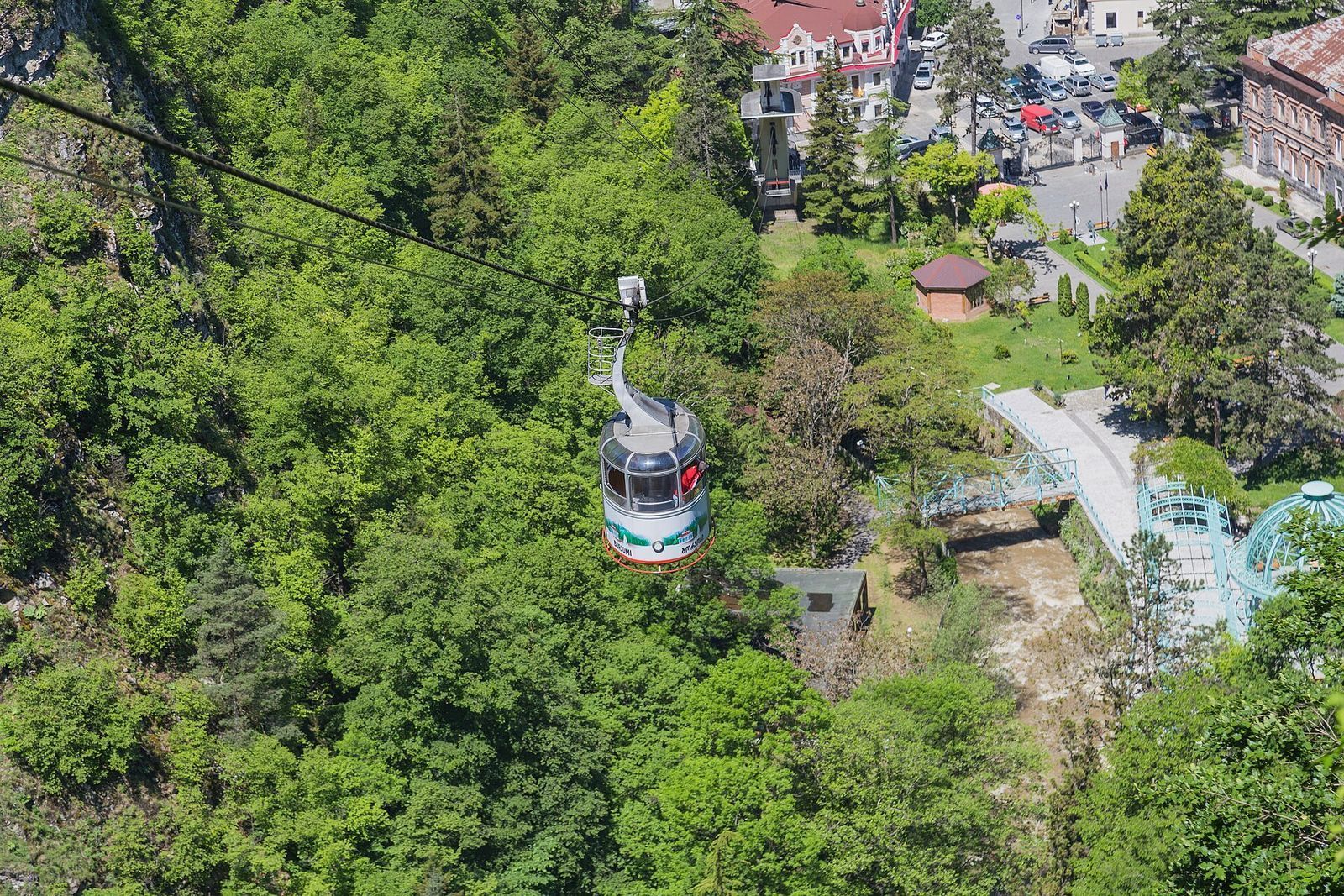
The cable car leaves from near the park entrance and climbs over the trees to a plateau on the ridge, where there's a Ferris wheel, a small church, a cafe and the best view in town: the roofs of Borjomi, the river and the forested ridges folding away to the west. A ride costs about 5 GEL one way and about 10 GEL return, and it runs from spring to autumn; don't count on it in winter.
Lines build up after lunch, when tour groups arrive, and waits of 20 to 30 minutes are common. Ride before 11:00 and you'll usually walk straight on.
The Borjomi sulfur pools
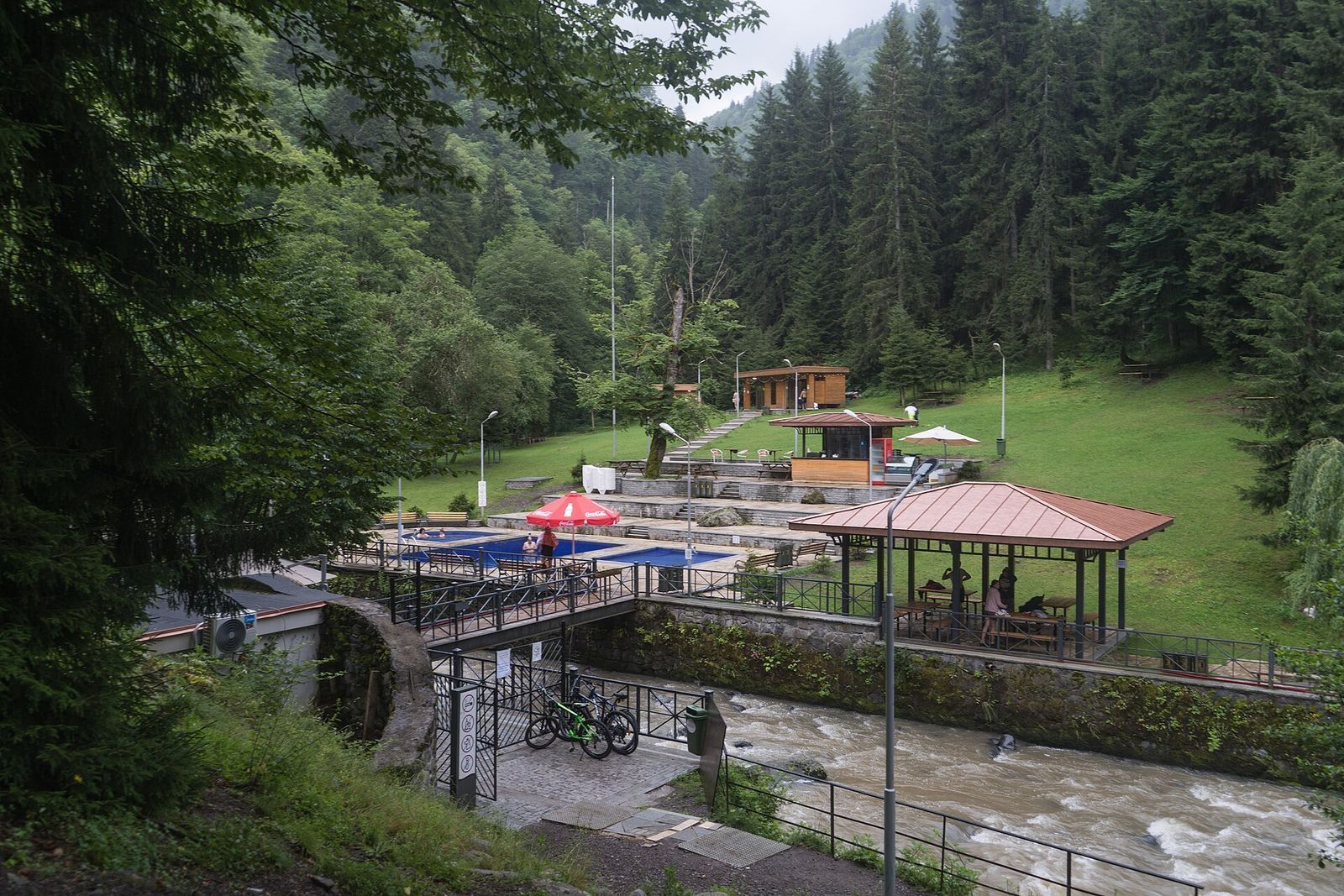
At the far end of the park, about 3 km from the entrance, three open-air pools sit in the forest by the stream, filled with spring water at about 30°C. Getting there is half the fun: a flat path along the Borjomula through the trees, about 30 to 40 minutes on foot from the gate, or the steeper trail down from the cable car.
Set your expectations: this is a warm swimming pool in a forest, not a hot bath. On a summer morning it's lovely, and in winter, with snow on the pines and steam on the water, it's at its best. Entry is 5 to 10 GEL, there are basic changing rooms, showers and a cafe with sunbeds, and in July and August the pools fill up by late morning, so go early.
There are three ways to soak in Borjomi, and they suit different people:
| Where | Water | Cost | Best for |
|---|---|---|---|
| Sulfur pools at the end of the park | About 30°C, open air | 5 to 10 GEL | The forest setting, summer mornings, winter snow |
| Thermal pool complex in town | About 35°C | 10 to 15 GEL an hour | A warmer soak without the walk |
| Private hotel mineral baths | Mineral water, private room | 30 to 60 GEL an hour for two | Couples, cold days |
Likani and the Romanov palace
Borjomi's royal connection is clearest in Likani, a village about 3 km downriver from the center. Here the Romanovs built a summer palace in the late 19th century, a wooden villa with towers and verandas in a park above the Mtkvari. It's now an official state residence, so you can't go inside, but you can walk the riverside park around it and see the palace through the trees.
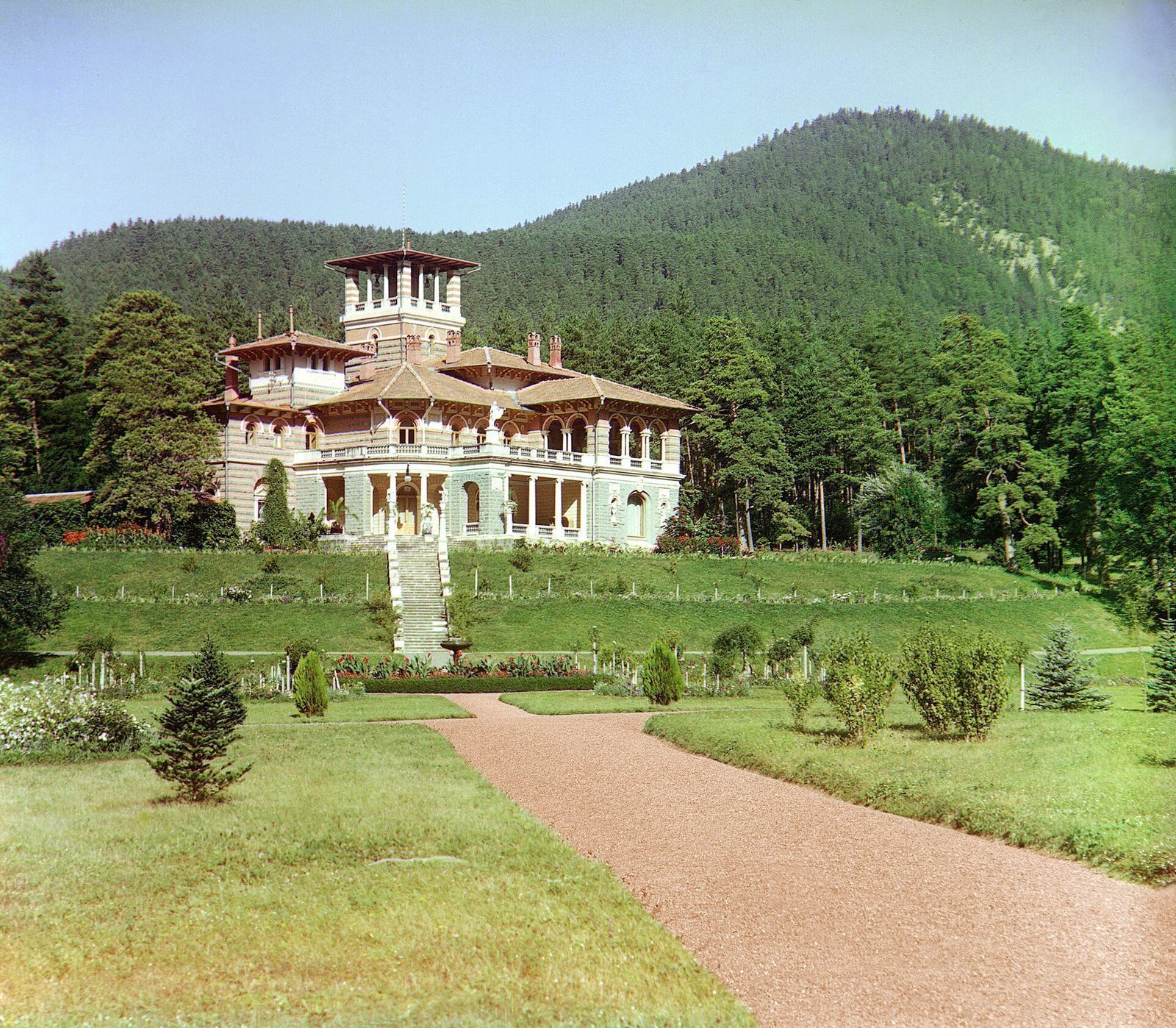
The photo above was taken around 1910, and the palace still looks much the same from the gates. City bus number 1 runs from the central square in Borjomi to Likani and back, or it's a pleasant 40-minute walk along the river. On a day trip I'd only fit it in if you skip the pools; with a night in town, it's the right gentle walk for the morning after.
Green Monastery and Borjomi-Kharagauli National Park
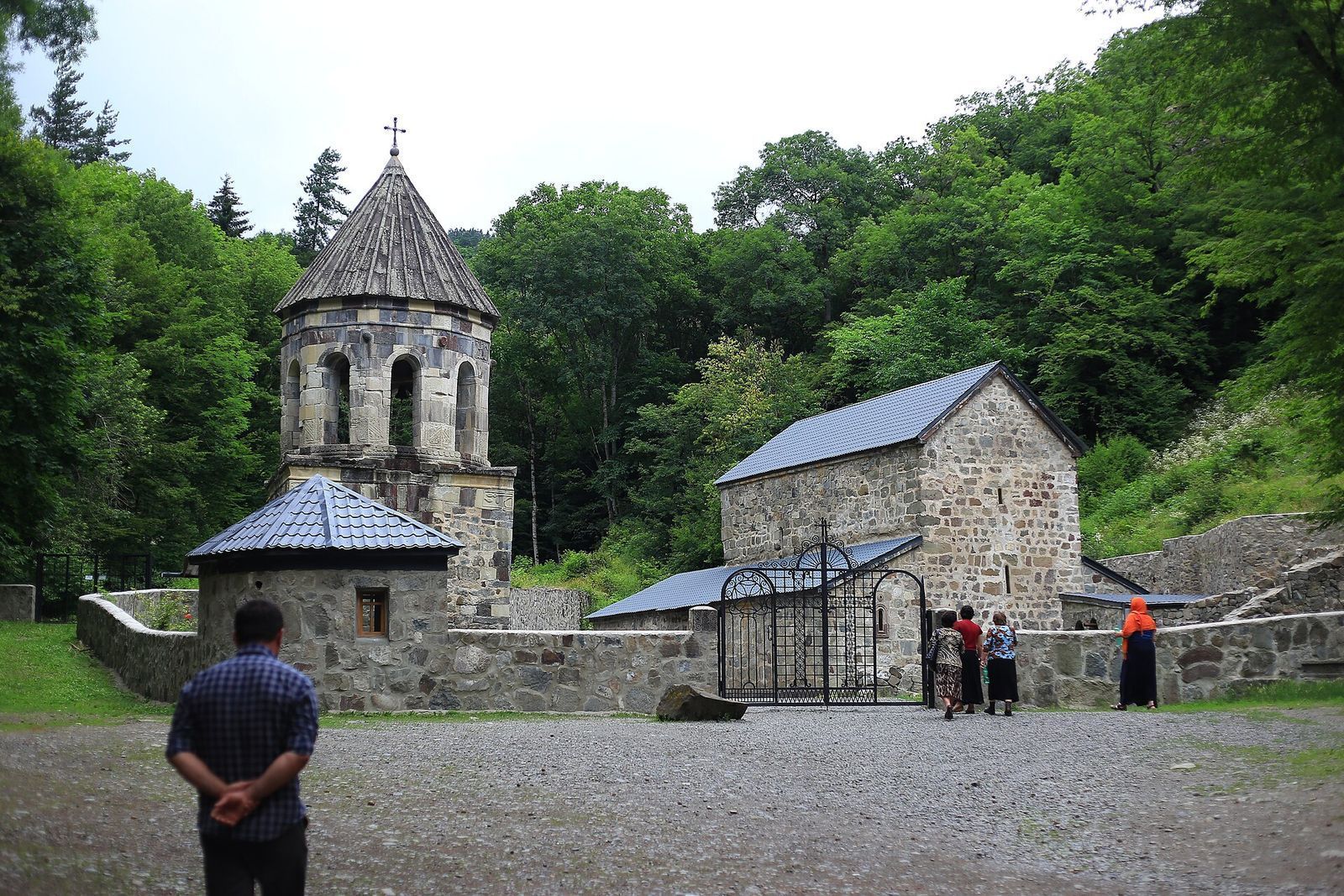
The Green Monastery, Mtsvane Monastery in Georgian, sits in the forest about 12 km from Borjomi, a small 9th-century church and bell tower built from green-tinged stone. It's a working monastery, quiet and shaded, and one of the prettiest small churches I know in Georgia. A taxi from town costs about 15 to 20 GEL each way. Cover shoulders and knees, and women usually cover their hair.
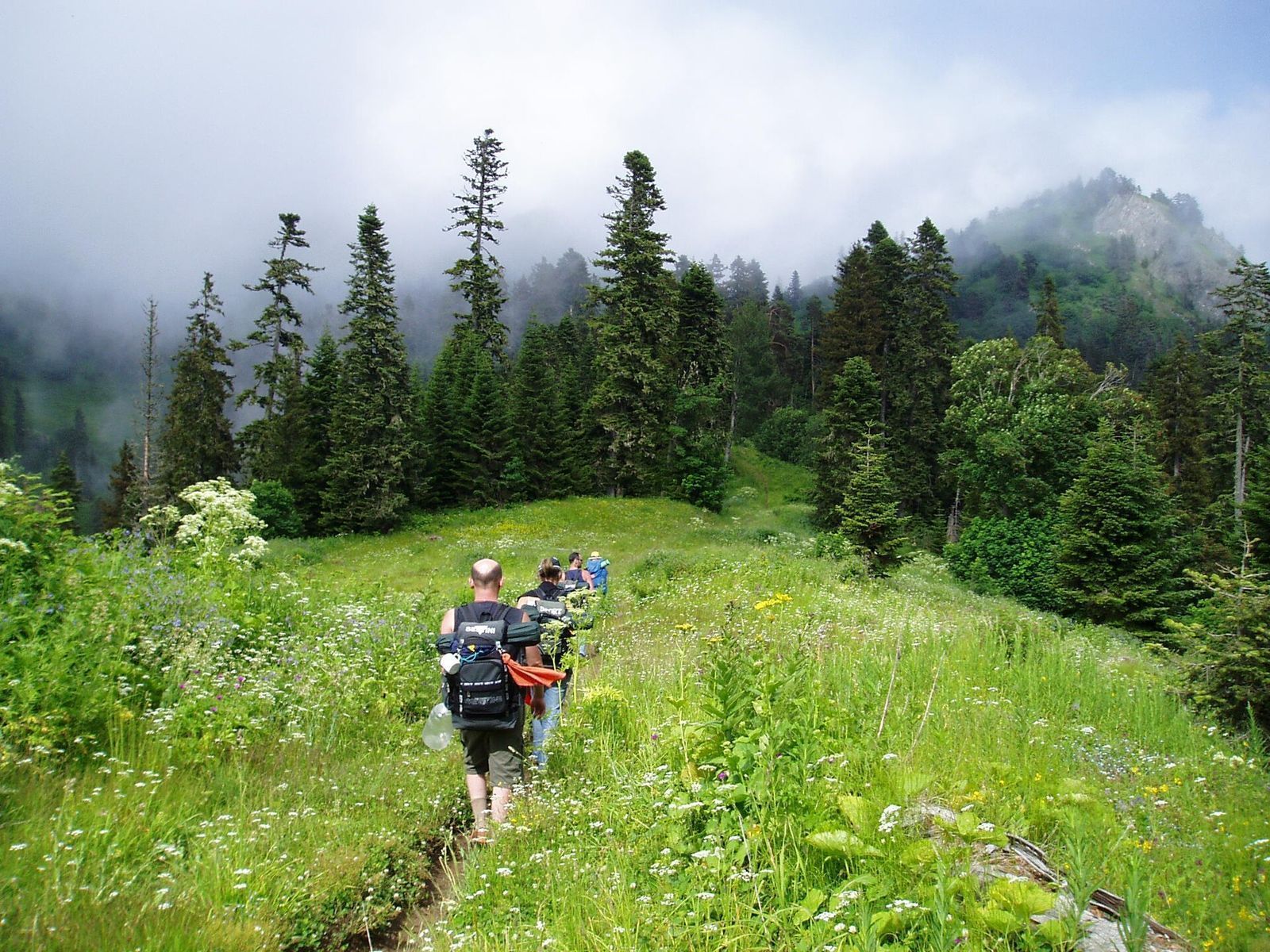
The monastery is also a gateway to Borjomi-Kharagauli National Park, one of the largest protected areas in the Caucasus, covering about 76,000 hectares of forest and alpine meadow. It has 12 marked trails, from 3 km walks to a 54 km trek with mountain shelters, and you register at the visitor center before you set off. The trail season runs from May to October.
On a day trip from Tbilisi, the park means a short walk at most. The good trails take 5 hours and more, and with 6 hours of driving there's no room for them. If hiking is the reason you're going, book a night in Borjomi and start early; it pairs well with the other day hikes near Tbilisi if you're building a walking trip.
A Borjomi day trip on the clock
This is the plan I'd follow by marshrutka, working back from the van home. It puts the cable car before the crowds, the pools before lunch, and leaves a buffer at the end.
| Time | What you do | Cost |
|---|---|---|
| 07:30 | Didube bus station, first van to Borjomi | About 12 GEL |
| 10:30 | Arrive at Borjomi bus station, walk 15 minutes to the park | Free |
| 10:45 | Warm spring at the entrance, fill your bottle | Free |
| 11:00 | Cable car up, view from the plateau | About 5 GEL |
| 11:45 | Walk down through the forest to the sulfur pools | Free |
| 12:30 | An hour in the pools | 5 to 10 GEL |
| 13:45 | Walk back down the park past the cold spring and Prometheus | Free |
| 14:45 | Late lunch in town | 25 to 50 GEL |
| 16:00 | Wander the old wooden streets, buy bottled Borjomi | A few GEL |
| 16:45 | Bus station, van back to Tbilisi | About 12 GEL |
| 19:30 | Back in Tbilisi |
That comes to about 60 to 90 GEL a person, lunch included. The vans back run until early evening, but the last seats go fast in summer, so I wouldn't count on anything after 18:00.
Combining Borjomi with Rabati, Vardzia, Gori or Bakuriani
Borjomi sits on the road south to some of Georgia's best sights, which is why so many tours bundle it. Here's what each combination costs you in hours.
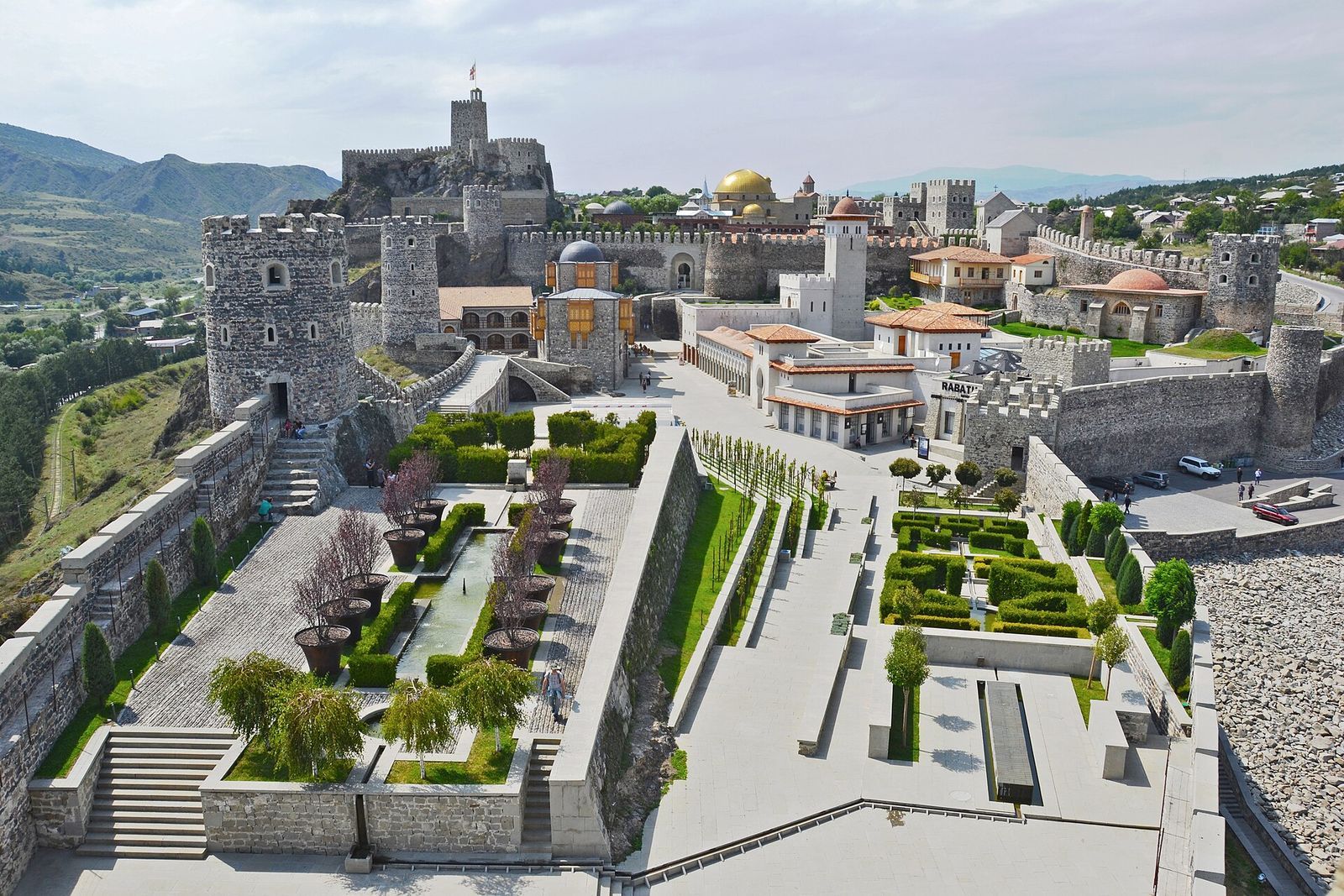
Rabati Castle in Akhaltsikhe. About 40 km past Borjomi, a restored fortress complex with a mosque, a church and towers. A circular day from Tbilisi through Borjomi and Akhaltsikhe runs about 350 km, leaving at 07:00 and getting back between 21:00 and 22:00. Doable with a driver; not by van.
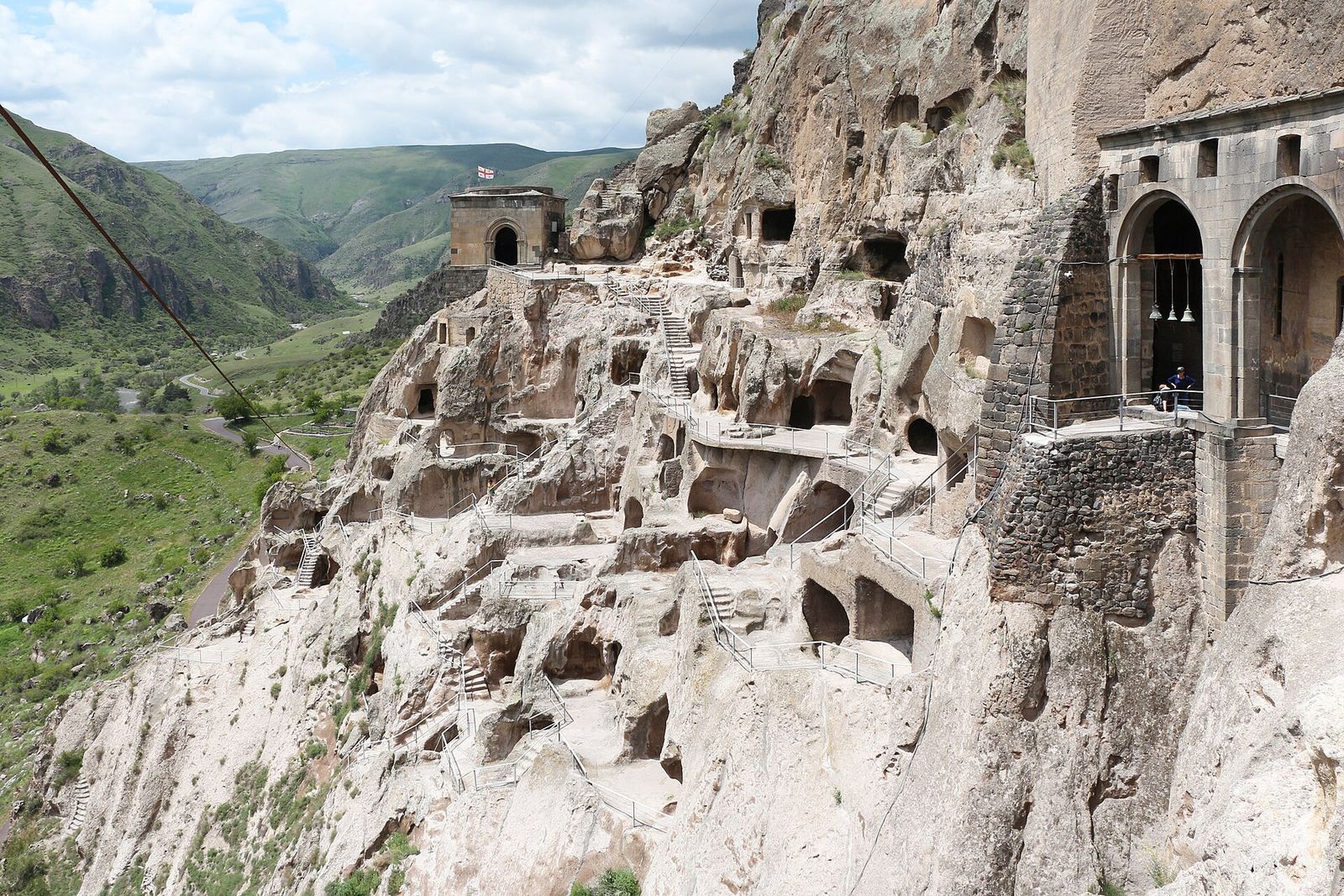
Vardzia. The Vardzia cave monastery is about 90 to 100 km beyond Borjomi, and by marshrutka it needs a change in Akhaltsikhe. As a day trip with Borjomi it's only possible on a long tour; I'd rather sleep in Borjomi or Akhaltsikhe and do Vardzia fresh.
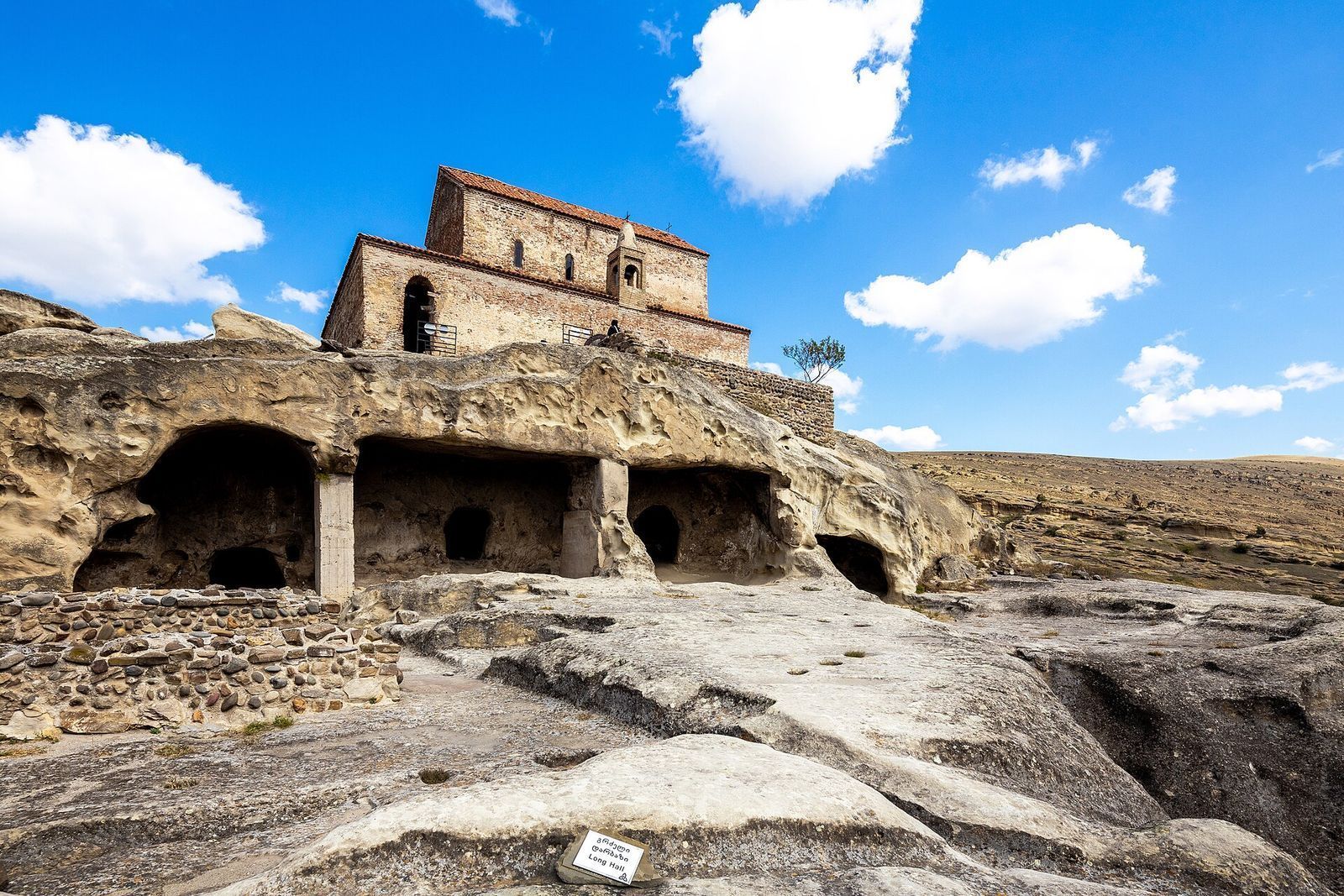
Gori and Uplistsikhe. Gori is on the way, and the cave town of Uplistsikhe near Gori adds 2 to 3 hours. With a driver, Gori on the way out and Borjomi in the afternoon is a full but fair day.
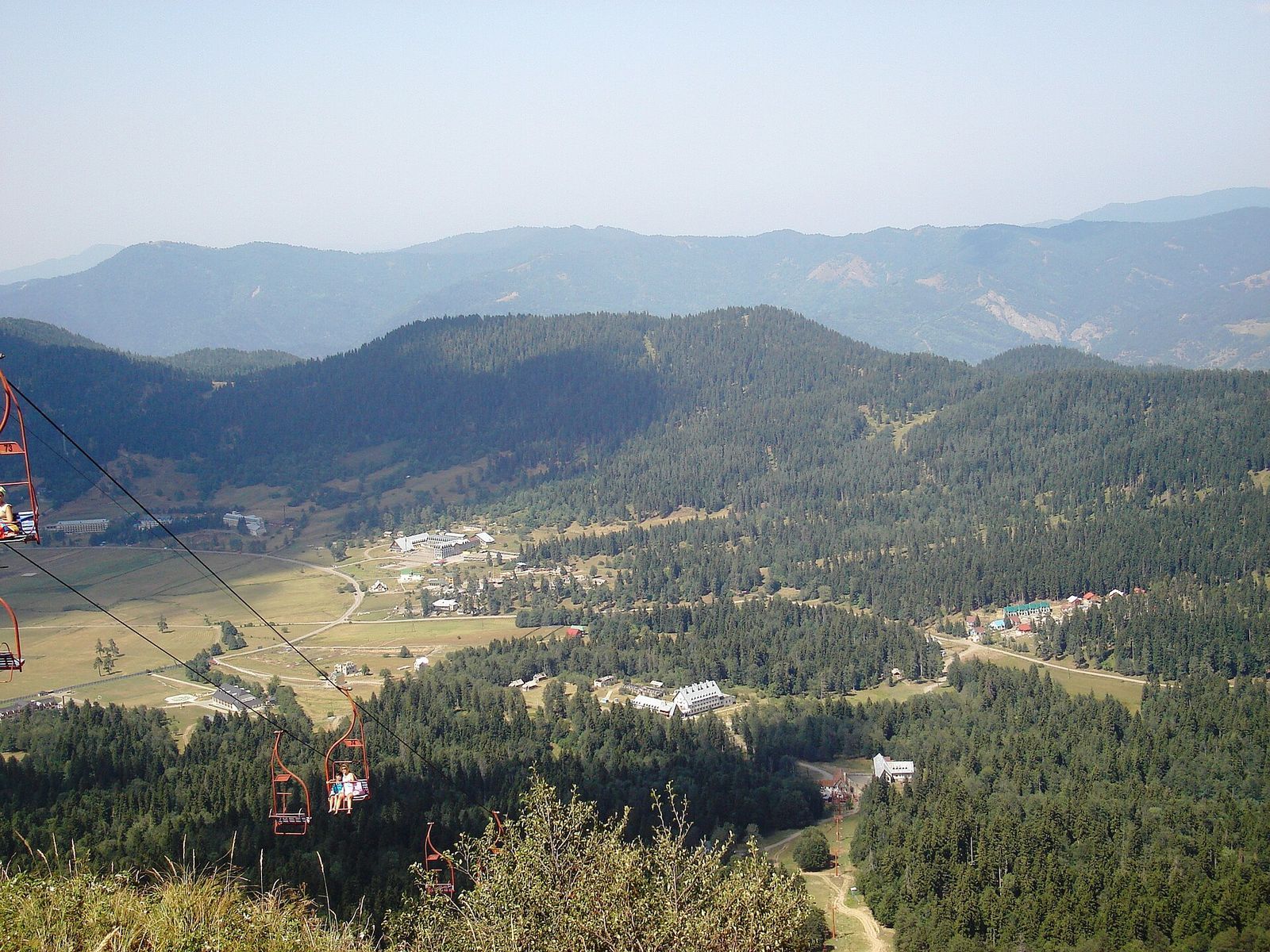
Bakuriani. The ski resort is 37 km up the road at about 1,700 m. The little narrow-gauge Kukushka train that once climbed there has not run for several seasons, so you go by taxi or minibus, and it belongs on a separate day.
Where to eat in Borjomi
Borjomi is a small town and the food is simple Georgian cooking: khinkali, khachapuri, grilled meat and trout from the mountain rivers. Lunch runs 25 to 50 GEL a person with a drink, a little cheaper than central Tbilisi. If the dishes are new to you, a primer on Georgian food before you go makes the menus easy.
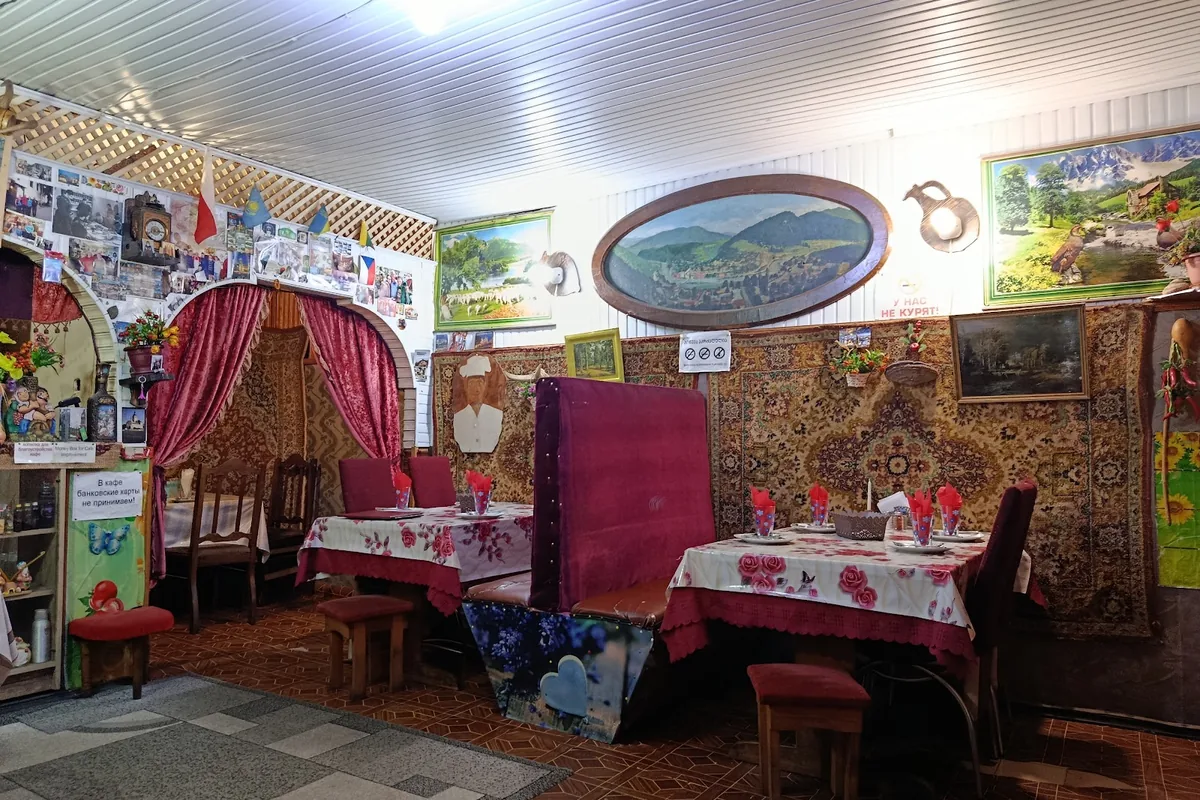
- Cafe Tourist. A locally run cafe that's good for soups and the Georgian salad with walnut dressing. It's the low-key, cheap lunch.
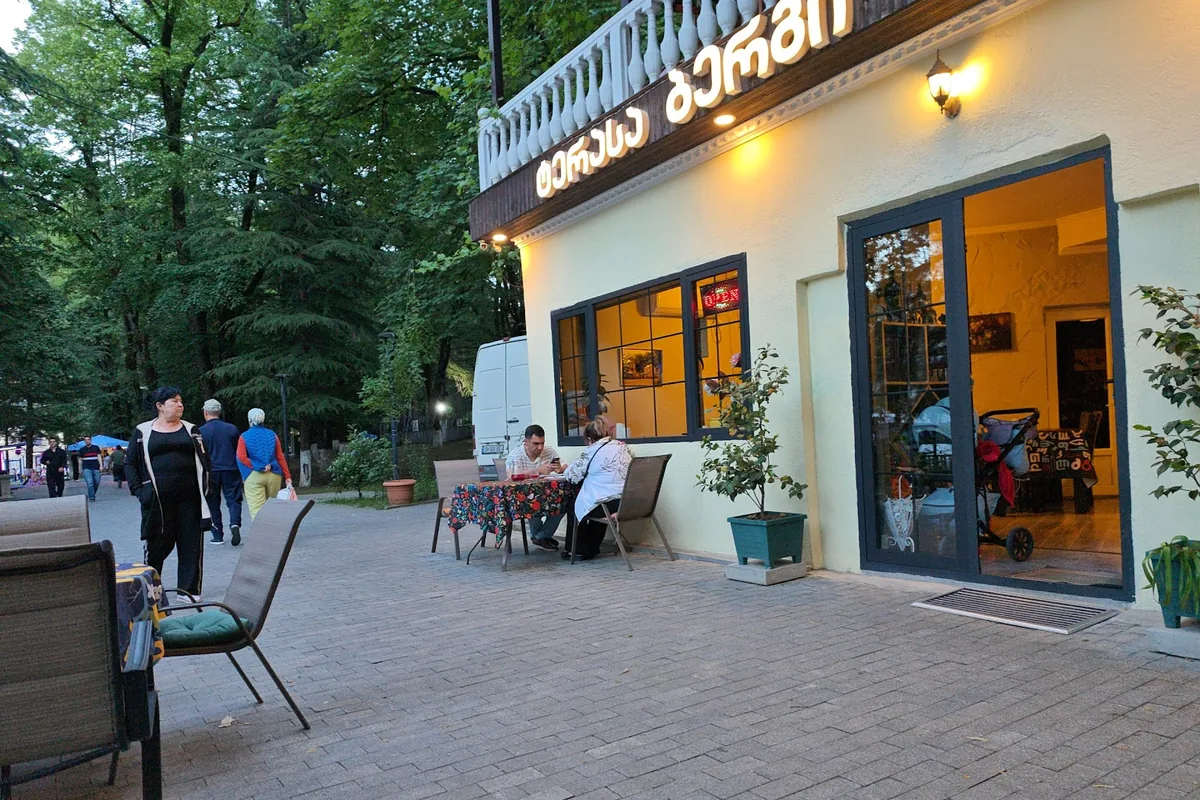
- Bergi. On the main street, with a traditional Georgian menu, a short wine list and tables out on the sidewalk. My pick for a slow late lunch after the pools.
- The park kiosks. Stalls by the entrance sell homemade lemonade and churchkhela, the walnut and grape-juice sweets, for about 3 to 5 GEL each. It's a better snack than anything at the rides, and if you like the lemonade you'll find the classic Georgian lemonade flavors in every Tbilisi shop.
Staying the night in Borjomi
A night turns Borjomi from a rushed day into a relaxed one. You get the park at its quietest in the early morning, time for a proper trail in the national park, and a sensible base for Vardzia or Rabati the next day.
| Where to stay | What it is | From |
|---|---|---|
| Guesthouses near the park | Family-run rooms, often with breakfast | 40 to 80 GEL a night |
| Guesthouse Metreveli | Family-run, about 10 minutes' walk from the center | Budget; breakfast extra |
| Crowne Plaza Borjomi | A historic building beside the mineral water park, with a mineral pool | About 180 GEL a night |
I'd book a guesthouse within walking distance of the park, eat at Bergi, and walk the park before the first vans from Tbilisi arrive.
Best time to visit Borjomi
May to October is the main season. The trails are open, the cable car runs, and late spring and early autumn are the sweet spot: green or golden forest, cool mornings and no queues. Spring and autumn are also the best time to visit Tbilisi, so it's easy to fit Borjomi into a trip then.
July and August are the busiest months. The town fills with Georgian families escaping the heat of the capital, the pools are crowded by late morning, and the cable car queue grows after lunch. Go on a weekday and start early.
Winter is the quiet season. The park and the springs stay open, the warm pools in the snow are the best thing in town, and Bakuriani's ski slopes are up the road. The cable car may not run, and the days are short, so a winter day trip means the park and the pools and little else.
Key takeaways
- Borjomi is a long but easy day trip: about 12 GEL and 2.5 to 3 hours each way by marshrutka from Didube.
- The springs in Central Park are free, and the warm spring at the entrance is where you taste the water at the source.
- Ride the cable car up for about 5 GEL before 11:00 and walk down through the forest to the 30°C sulfur pools.
- Plan the day around the van home: be at the Borjomi bus station by 17:00.
- Stay the night for the national park trails, Vardzia or Rabati, and skip Borjomi entirely if you only have 2 or 3 days in Georgia.
Frequently asked questions
Is Borjomi worth visiting?
Yes, if you have time beyond Tbilisi, Mtskheta and Kazbegi. The free mineral springs, the cable car and the forest pools make a relaxed day, but with 5 to 6 hours of travel it's the one to drop on a short trip.
How do I get from Tbilisi to Borjomi?
Take a marshrutka from Didube bus station, by Didube metro. Vans run roughly hourly from about 08:00 to 18:00, cost about 12 GEL and take 2.5 to 3 hours. The train from Tbilisi Central Station is cheaper but takes about 4 hours.
Is Borjomi Central Park free?
The springs are always free, and the park itself is free or a few lari at the gate depending on the season. The cable car (about 5 GEL one way) and the sulfur pools (5 to 10 GEL) are paid separately.
Can you swim in Borjomi?
Yes, in the open-air sulfur pools at the far end of Central Park, about 3 km from the entrance. The water is about 30°C, entry is 5 to 10 GEL, and you need your own swimsuit and towel. There are warmer thermal pools in town and private mineral baths in some hotels.
Can you drink the water from the Borjomi spring?
Yes. The warm spring at the park entrance and the cold spring further up are free and safe to drink. It's a strong medicinal water, so stick to a glass or two at a time.
How long do you need in Borjomi?
A full day covers the park, the cable car, the pools and lunch, which is about 6 hours in town and 12 hours door to door from Tbilisi. Add a night if you want to hike in the national park or visit the Green Monastery.
Is Borjomi worth visiting in winter?
Yes, if you want quiet and a warm soak. The park and the springs stay open and the pools are lovely in the snow, but the cable car may not run and the days are short.
Can you combine Borjomi and Vardzia in one day?
Only on a tour or with a driver, and it makes a 13 to 15 hour day. Vardzia is about 90 to 100 km beyond Borjomi, so I'd stay the night in Borjomi or Akhaltsikhe and see it the next morning.
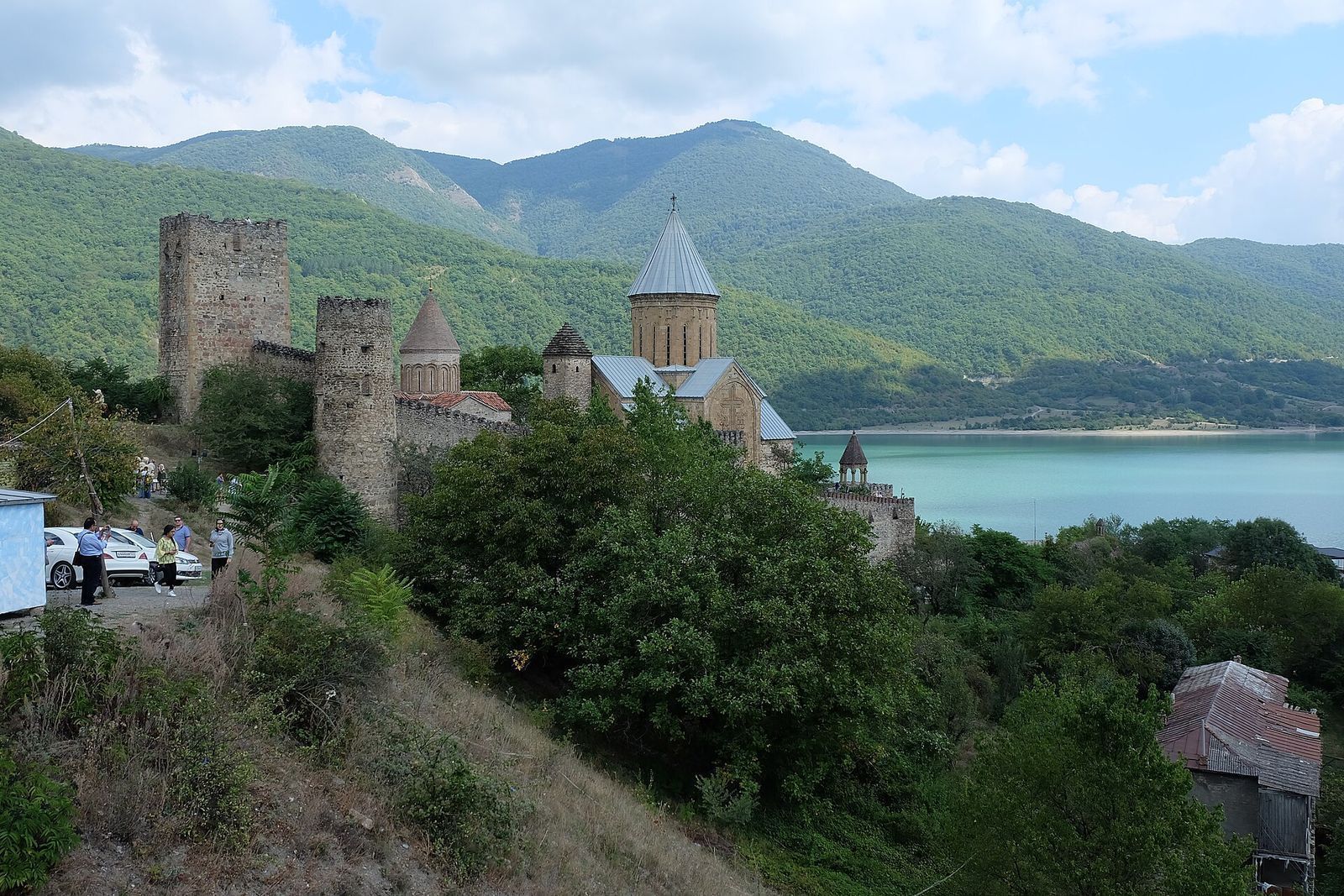
12 Best Day Trips from Tbilisi, With Prices and Timings
Tbilisi is known for its easy day trips. Here are the 12 best, how to reach each one and what a day out costs.
Read the guide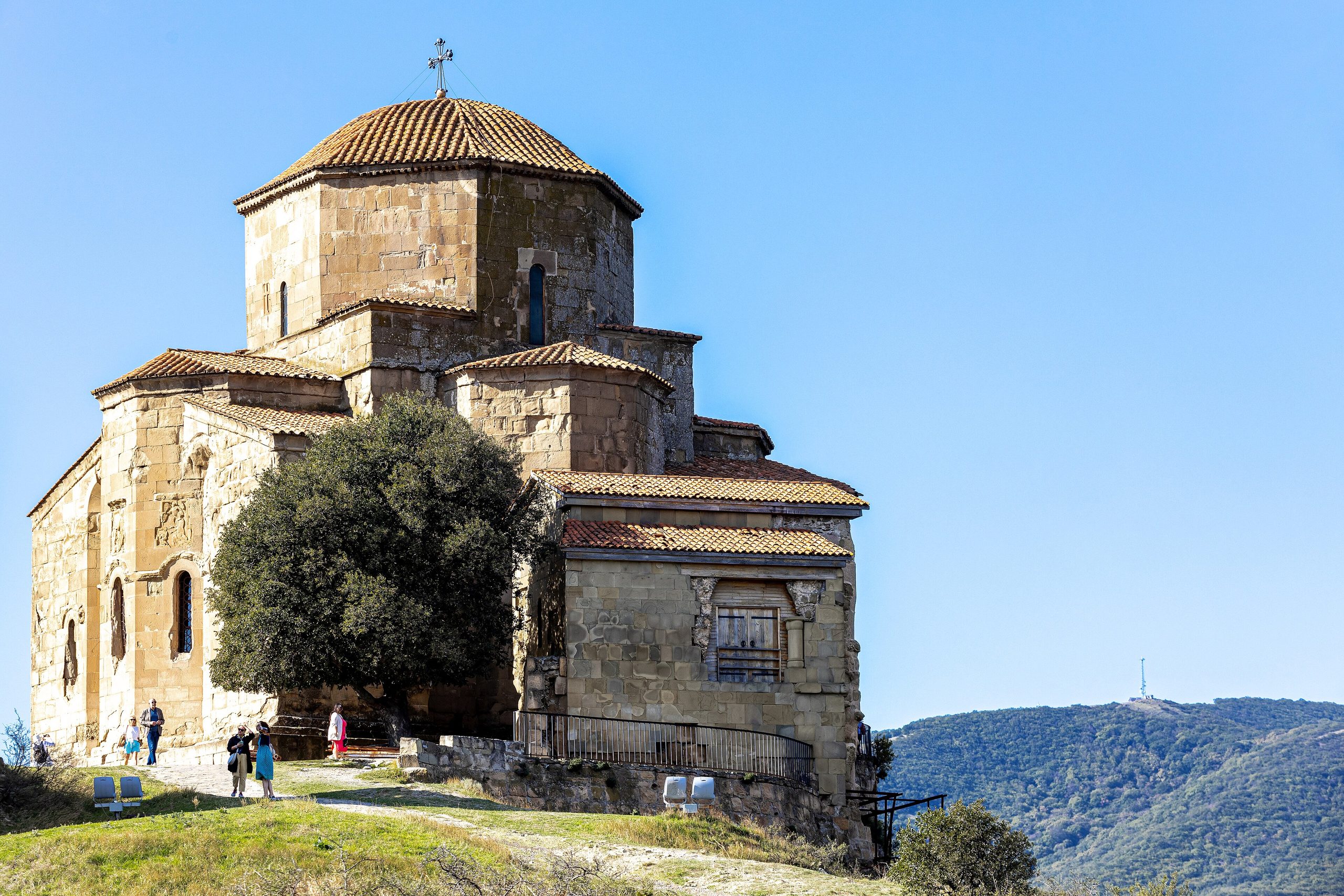
Mtskheta Day Trip from Tbilisi: Jvari, Svetitskhoveli and Getting There
Mtskheta is the easiest day trip from Tbilisi. Here is how to get there, what to see and how to fit it in half a day.
Read the guide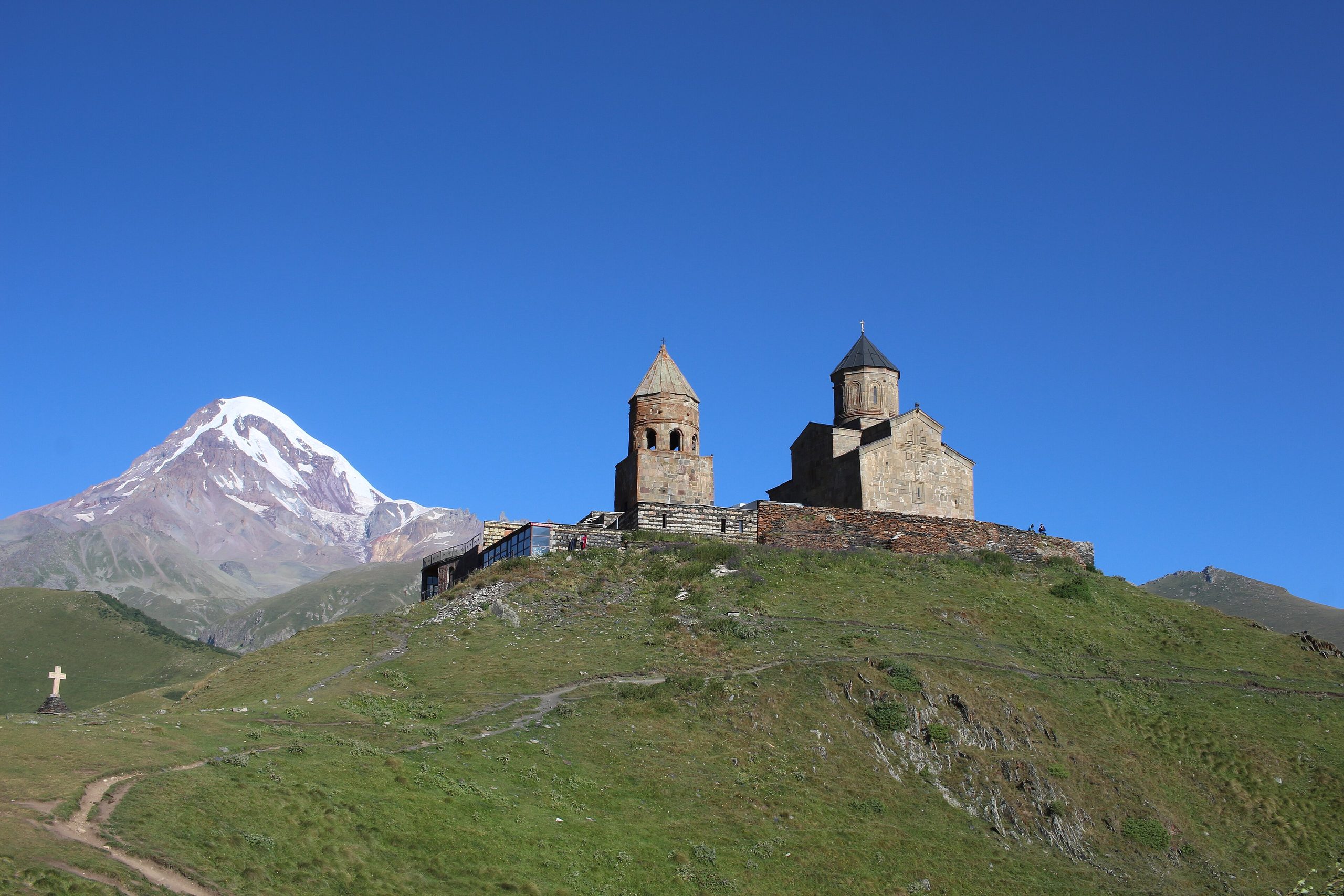
Kazbegi Day Trip from Tbilisi: Gergeti, Ananuri and the Military Highway
Kazbegi is the classic mountain day trip from Tbilisi. Here is the route, the stops, the costs and how to time it.
Read the guide