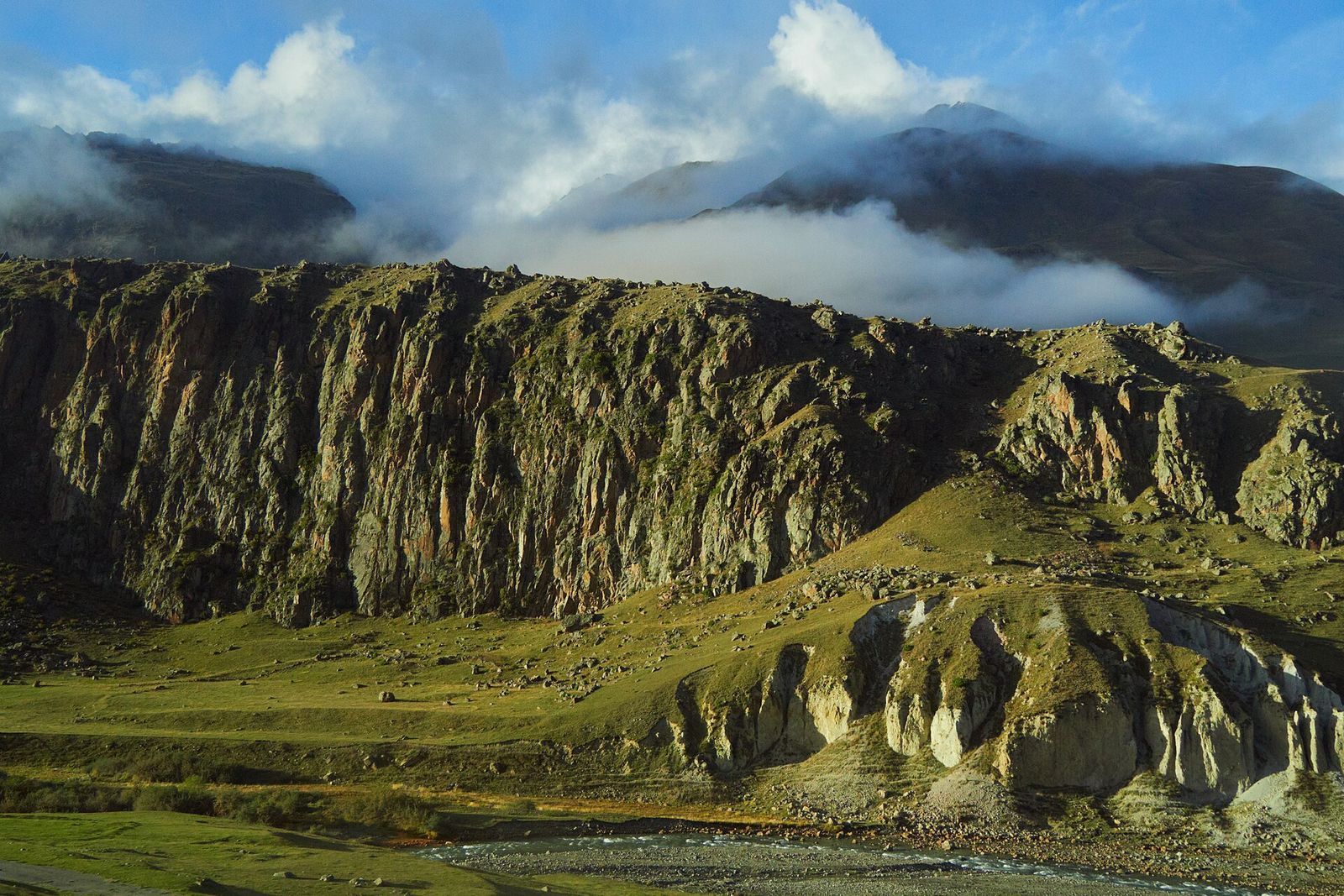
Georgia, Armenia and Azerbaijan Itinerary: 10 Days to 3 Weeks
The South Caucasus is known for fitting three very different countries into a small corner of the map, with Tbilisi in the middle of all of them. The catch is the borders: Armenia and Azerbaijan don't connect at all, and Azerbaijan's land border with Georgia only opens for the train. Here's how I'd route 10 days, 2 weeks and 3 weeks across Georgia, Armenia and Azerbaijan, with the legs, the visas and the order that works.
How many days you need for Georgia, Armenia and Azerbaijan
Two weeks is the shortest trip I'd plan for all three countries, and three weeks is when it stops feeling like a relay race. Each country has a capital that deserves 2 to 3 days and a short list of trips out of it, and every border hop costs you most of a day. Georgia gets the most time on any length of trip, because it has the most to see within a few hours of its capital.
| Trip length | Countries | How I'd split it | Pace |
|---|---|---|---|
| 7 days | Georgia and Armenia | 4 days Georgia, 3 days Armenia | Two capitals and one mountain day |
| 10 days | All three, capitals only | 3 Baku, 4 Tbilisi, 3 Yerevan | Quick, one day trip from each city |
| 10 days | Georgia and Armenia | 6 Georgia, 4 Armenia | Relaxed, all overland, no visa forms |
| 2 weeks | All three | 3 Azerbaijan, 6 Georgia, 5 Armenia | Steady, my pick for a first trip |
| 3 weeks | All three plus the regions | 5 Azerbaijan, 10 Georgia, 6 Armenia | Unhurried, with Svaneti and Sheki |
If you only have a week, I'd keep it to Georgia, or Georgia plus 3 days in Yerevan. A week-long Georgia itinerary already gets you Tbilisi, the high mountains and wine country without a single border queue, and Azerbaijan in particular needs at least 3 days to repay the visa and the flight.
Which borders are open between Georgia, Armenia and Azerbaijan
The borders decide your route before anything else does. Two of the three countries are still at odds, and Azerbaijan has kept its land borders shut to passengers since 2020, so only one of the three crossings works the way you'd expect.
| Border | Status in 2026 | How you cross |
|---|---|---|
| Georgia and Armenia | Open 24 hours at Sadakhlo to Bagratashen | Marshrutka, shared taxi, private driver or the night train |
| Georgia and Azerbaijan | Land border closed to passengers since 2020 | Only the Tbilisi to Baku train, or a 1-hour flight |
| Armenia and Azerbaijan | Closed, with no direct flights | Not possible; you go back through Georgia |
So Georgia is the hub. You can travel overland between Georgia and Armenia as often as you like, while Azerbaijan is a train-or-plane country from the Georgian side, and there is no way at all to go straight from Yerevan to Baku. The train between Tbilisi and Baku came back on 26 May 2026 after six years off, and from 1 November 2026 it runs twice a day in each direction. Tickets have been sold only to Azerbaijani citizens and to passports that enter Azerbaijan without a visa, so anyone on an e-visa flies.
The best order: Azerbaijan first, Armenia last
I'd start in Baku, cross to Georgia, then finish in Armenia. It's the only order that runs in a straight line, and it keeps the most awkward border for the start of the trip.
- No leg twice. Baku, then Tbilisi, then Yerevan, with every ride going forward, as long as you fly into Baku and home from Yerevan.
- Fewer questions at the Azerbaijani border. Officers ask about Armenia, and travelers who have already been there report a slower welcome. An Armenian stamp on its own won't get you refused, but a past trip to Nagorno-Karabakh without Azerbaijan's permission can, and arriving in Baku first takes the whole subject off the table.
- Armenia is the easiest country to leave. From Yerevan you can fly home, or ride the night train or a Sprinter van back to Tbilisi if your return flight leaves from there.
The reverse works as well: Yerevan first, overland to Tbilisi, then a flight to Baku and home from there. What doesn't work is putting Baku in the middle.
2-week Caucasus itinerary: Baku, Tbilisi, Kazbegi and Yerevan
This is the route I'd give a friend on a first trip: 3 days in Azerbaijan, 6 in Georgia and 5 in Armenia, with one night in the mountains and only two border crossings.
| Days | Base | What you do | Getting there |
|---|---|---|---|
| 1 to 3 | Baku | Old City, Heydar Aliyev Center, Gobustan | Fly into Baku |
| 4 to 6 | Tbilisi | Old Town, sulfur baths, Narikala, Mtskheta | Night train or a 1-hour flight |
| 7 and 8 | Kazbegi | Gergeti Trinity Church, the Military Highway | Marshrutka from Didube, about 3 hours |
| 9 | Tbilisi | Kakheti wine day: Sighnaghi and a winery | Back from Kazbegi on day 8 |
| 10 | Yerevan | Debed canyon monasteries on the way | Driver, or the 09:00 marshrutka |
| 11 to 13 | Yerevan | The city, Garni and Geghard, Khor Virap | Day trips by driver or tour |
| 14 | Home | Fly from Yerevan | Or the night train back to Tbilisi |
Days 1 to 3: Baku
Spend day 1 in Icherisheher, the walled Old City, around the Maiden Tower and its lanes of old caravanserais and mosques, then walk along the Caspian seafront as the Flame Towers light up on the hill behind you. From the airport, the Aero Express bus into the center costs 1.50 AZN and runs every 30 minutes around the clock.
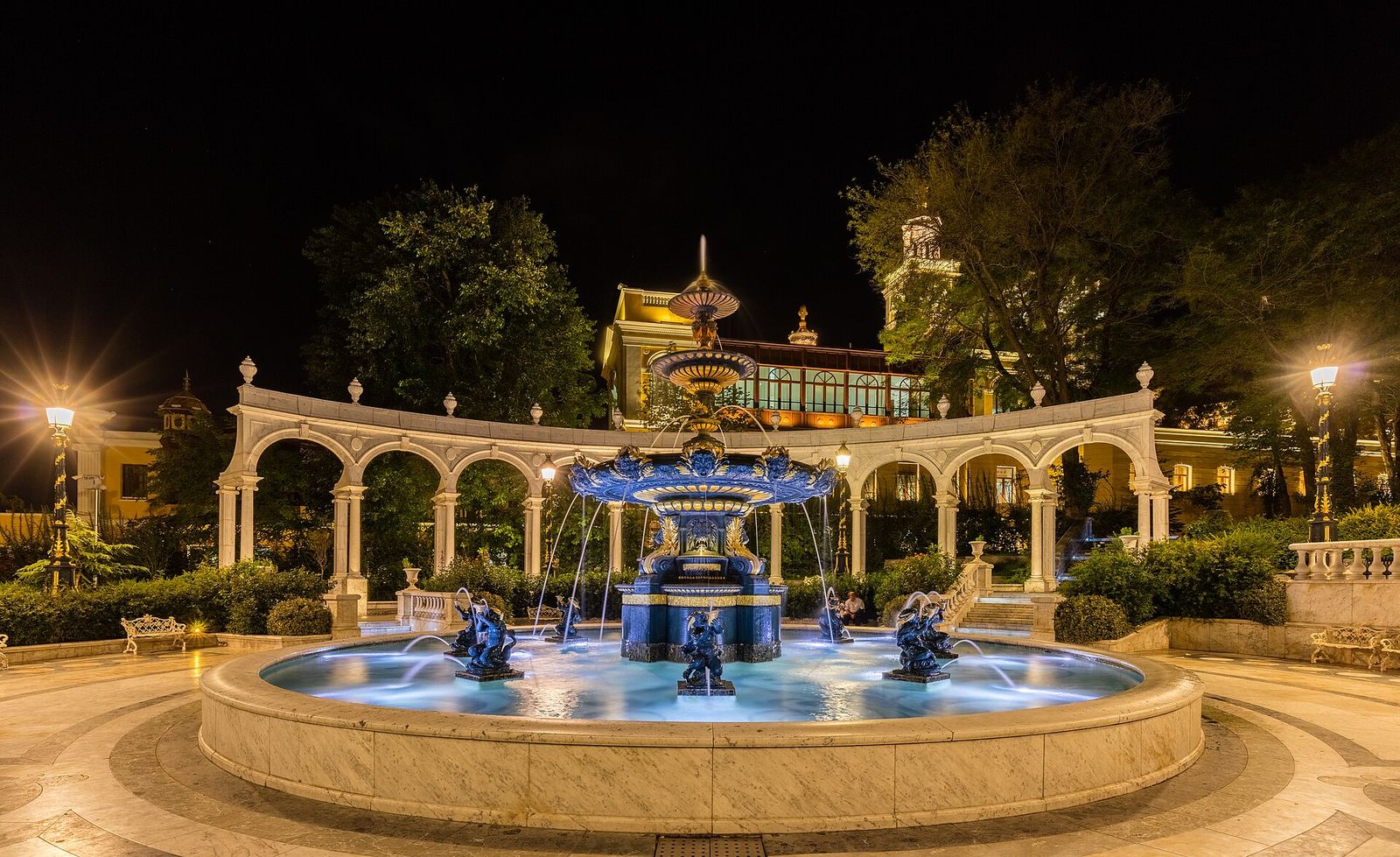
On day 2, take the half-day trip south to Gobustan for its rock carvings and the small mud volcanoes nearby. The carvings cover the boulders of a rocky hillside near the Caspian shore: hunters, dancers, animals and long reed boats full of rowers, cut into the stone over thousands of years.
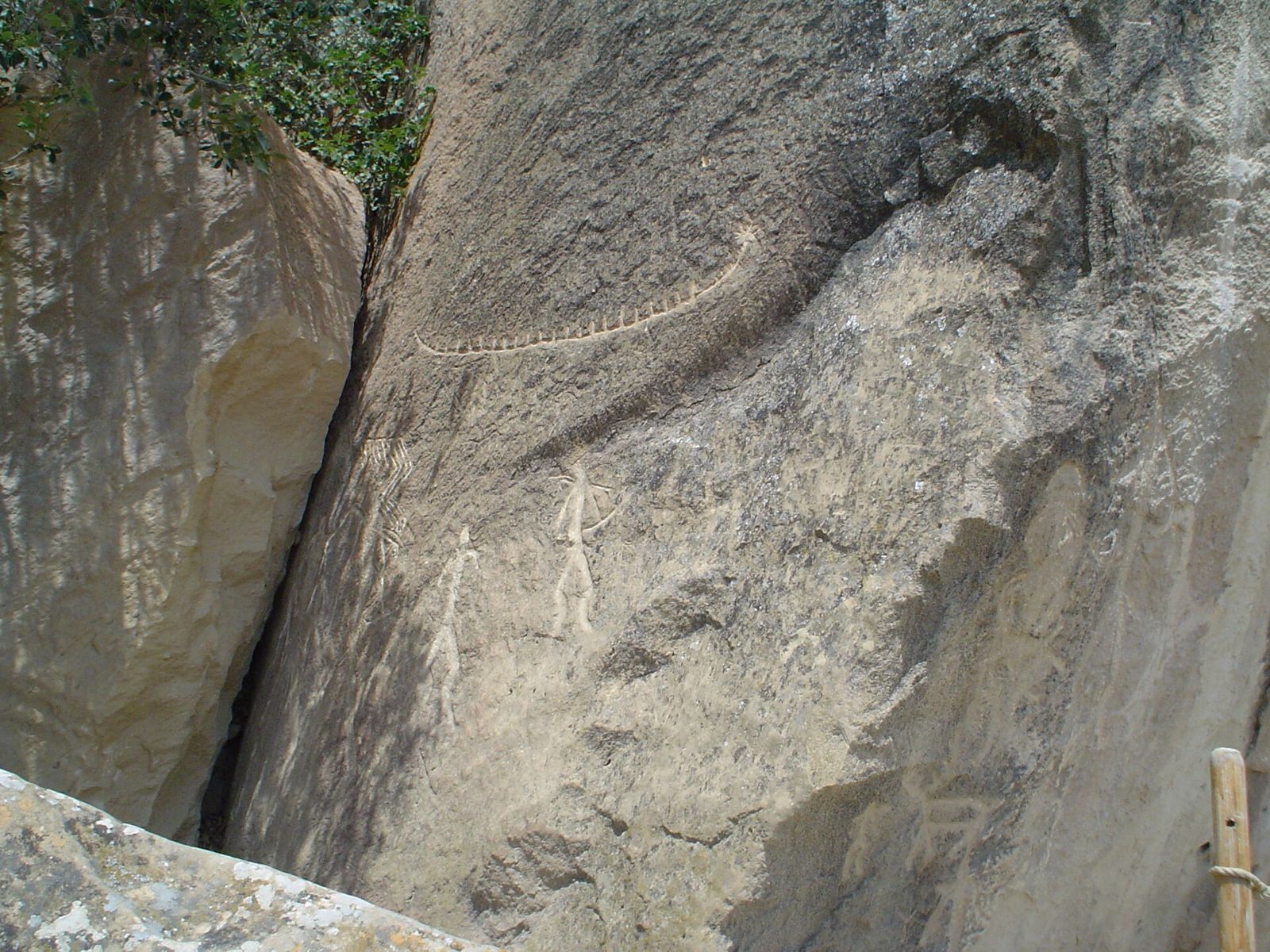
Back in Baku, spend the afternoon at the Heydar Aliyev Center, the white curving building by Zaha Hadid, and the Carpet Museum.
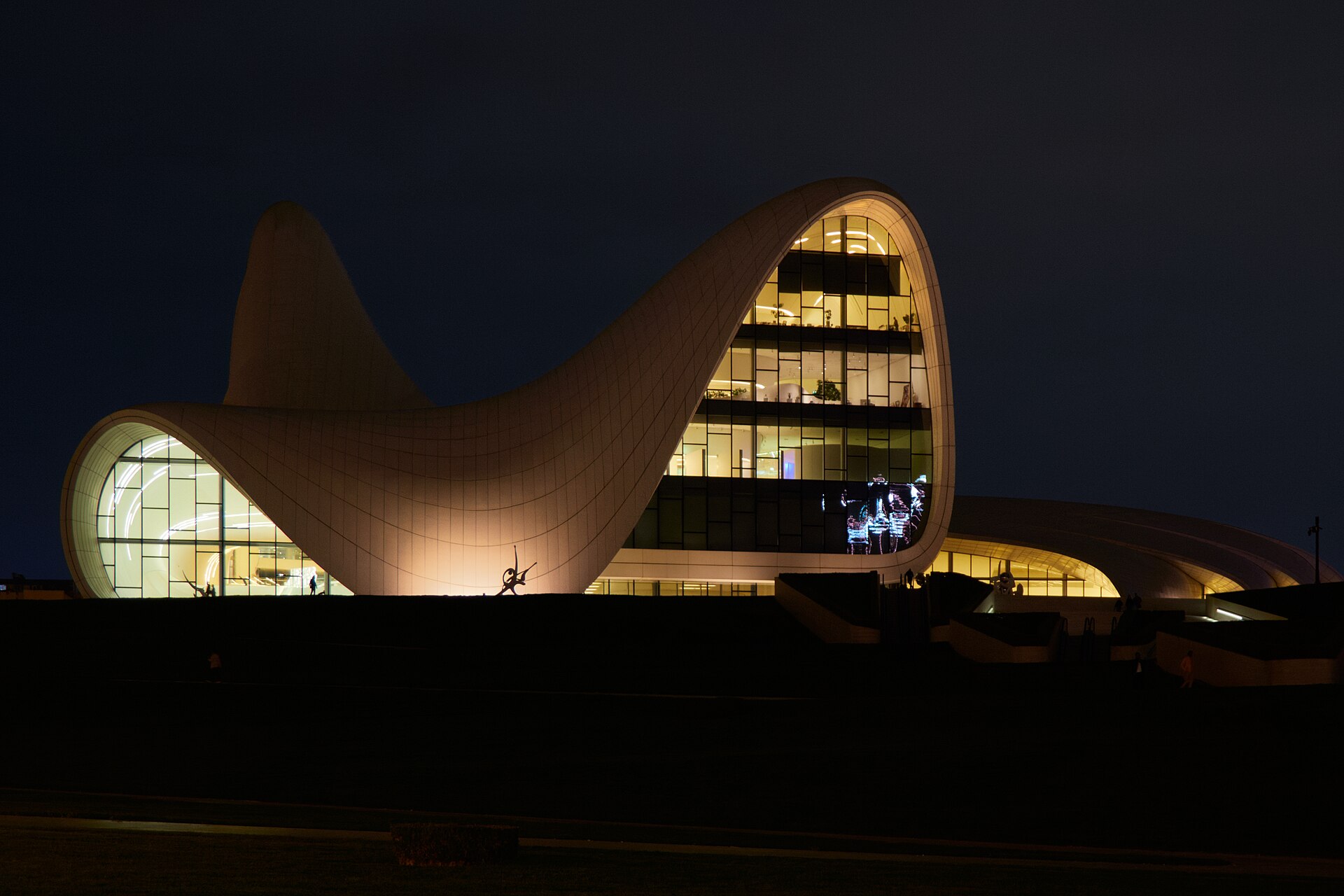
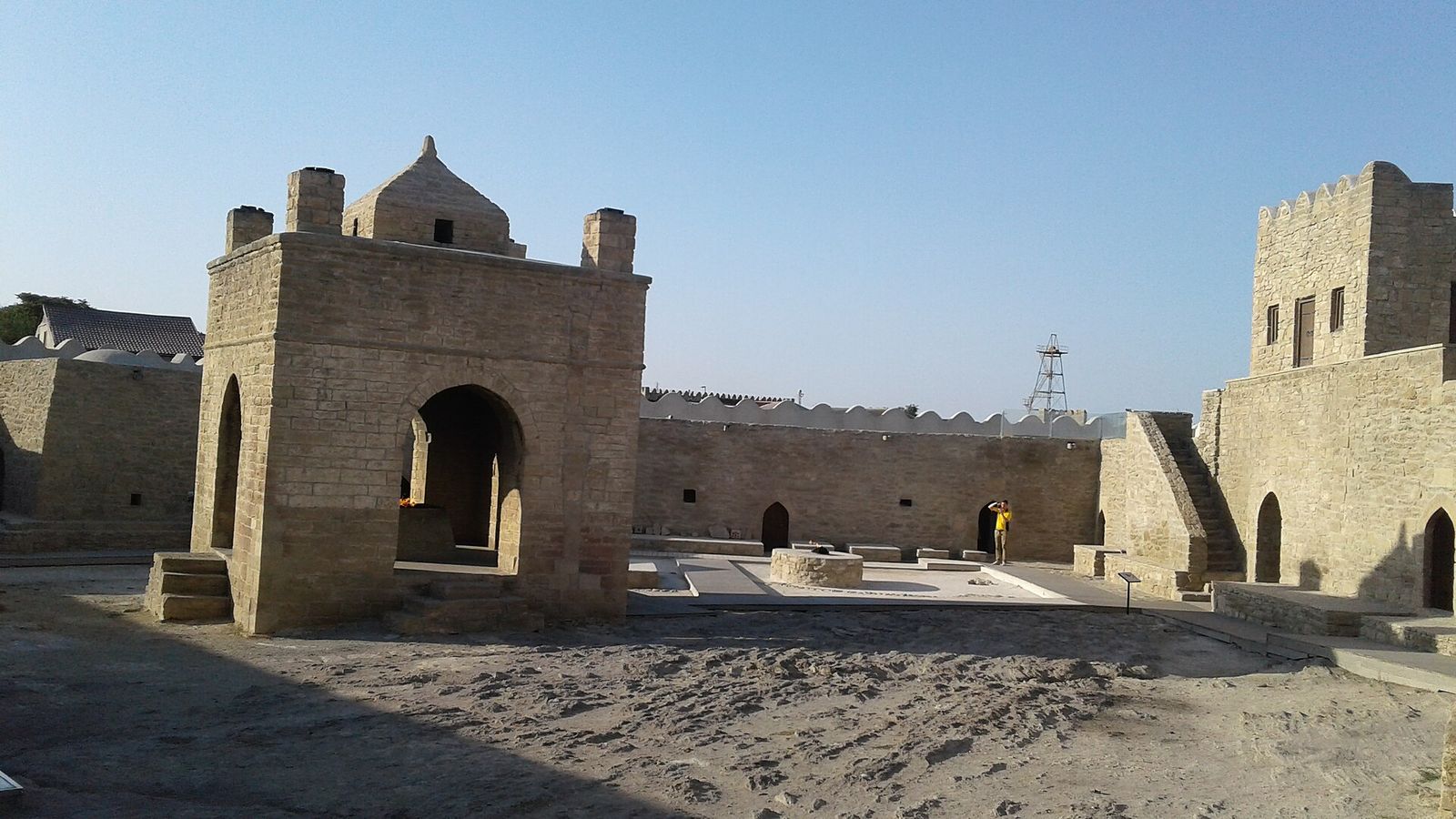
Day 3 belongs to the Absheron peninsula. Start at Ateshgah, the old fire temple in Surakhani: a walled courtyard of pilgrims' cells around a domed stone altar, where a flame still burns in the middle.
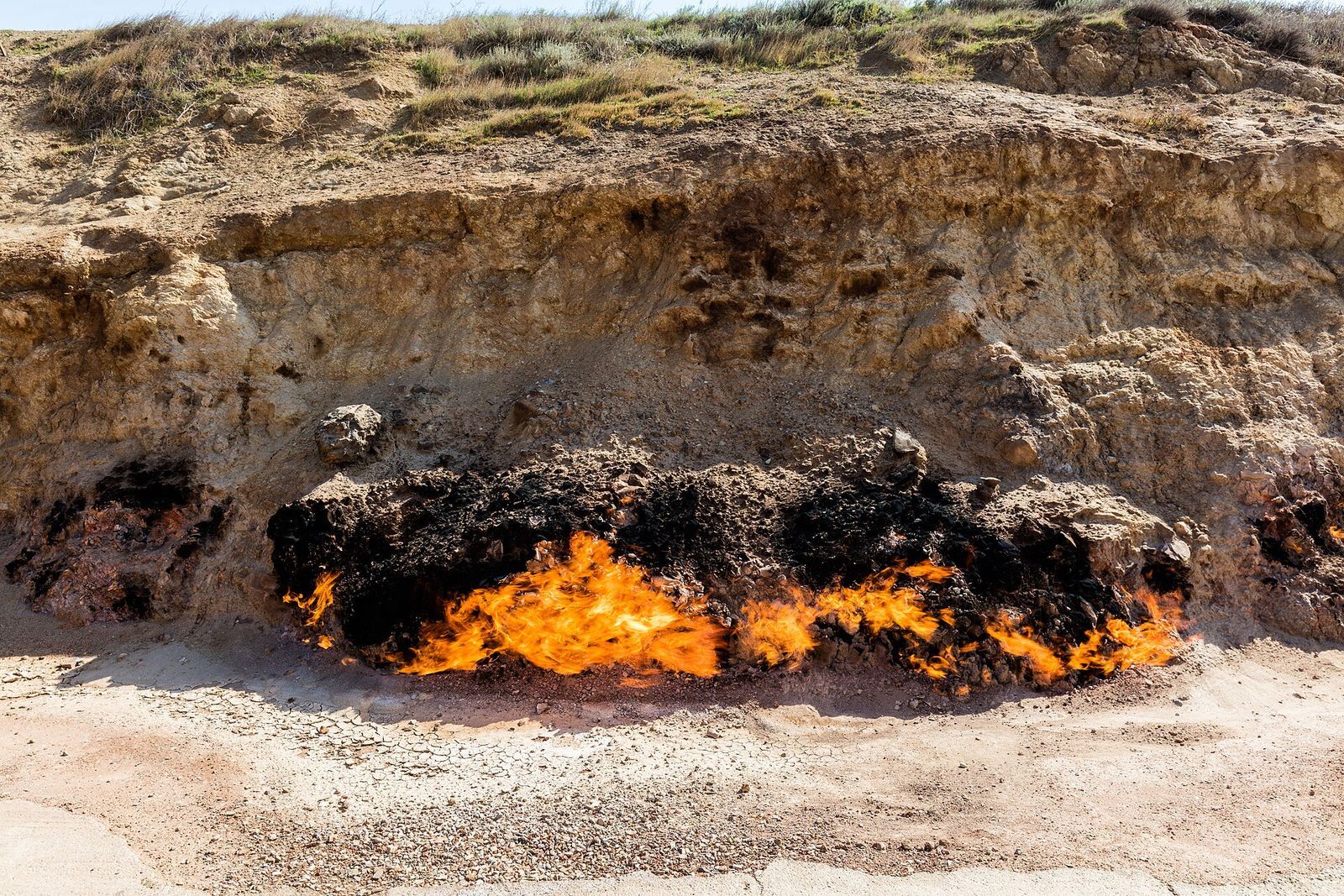
Then drive on to Yanar Dag, a hillside that has been burning on natural gas for as long as anyone remembers. Go late in the afternoon and stay until dark, when the flames along the foot of the bank look their brightest.
Day 4: the train or flight to Tbilisi
If your passport gets you on board, take the 23:00 night train on day 3 and wake up in Tbilisi at 08:41. On the Baku to Tbilisi train both border checks happen at your berth, so you never get off, and comfort class costs 77.50 AZN while standard berths start at 54 AZN. With an e-visa passport, fly instead: about an hour in the air, at roughly $65 to $240 one way.
Days 4 to 6: Tbilisi and Mtskheta
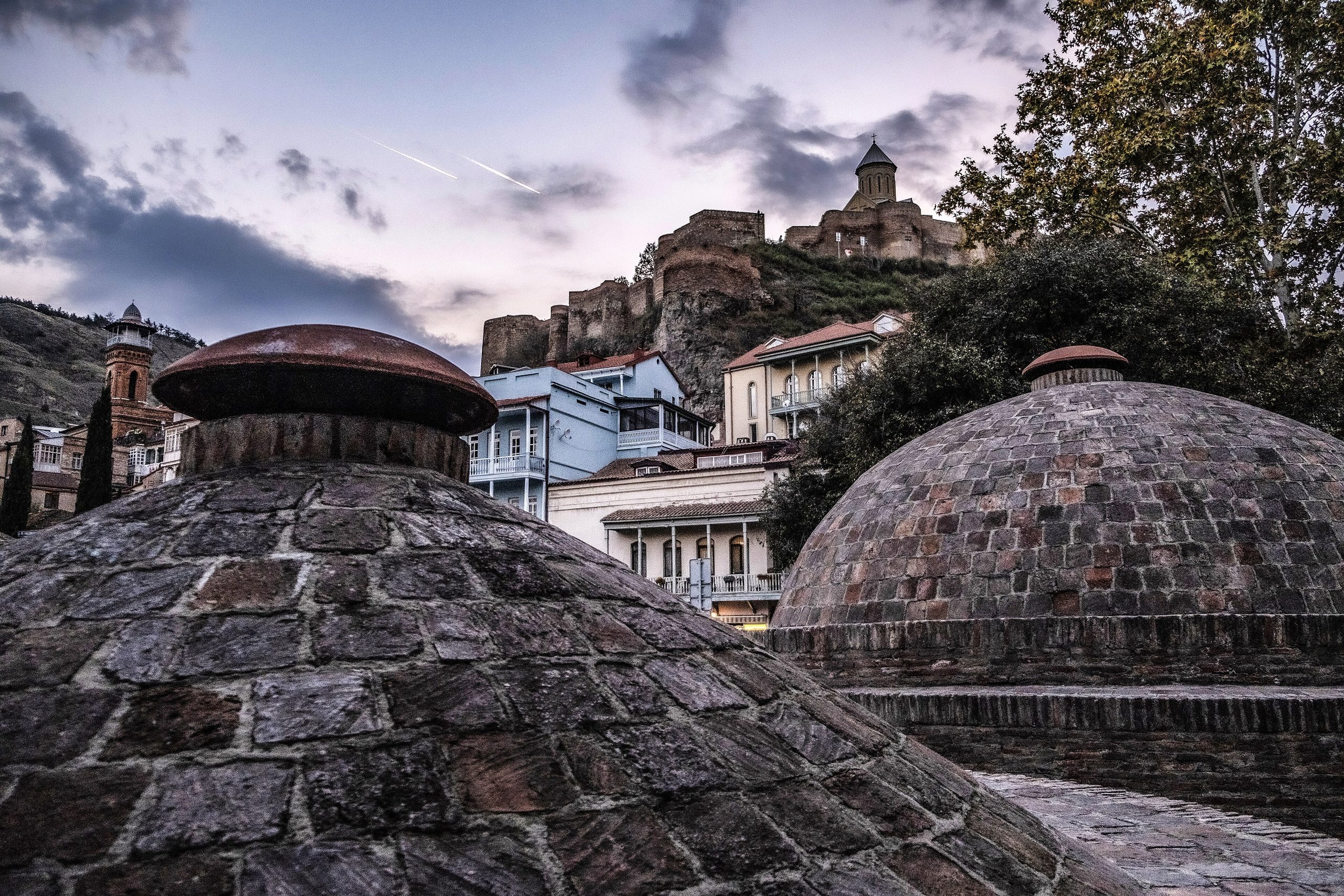
Keep your first Tbilisi day light after the train. Walk the Old Town, book a private room at the Abanotubani sulfur baths for the evening, and ride the cable car up to Narikala for the view over the river.
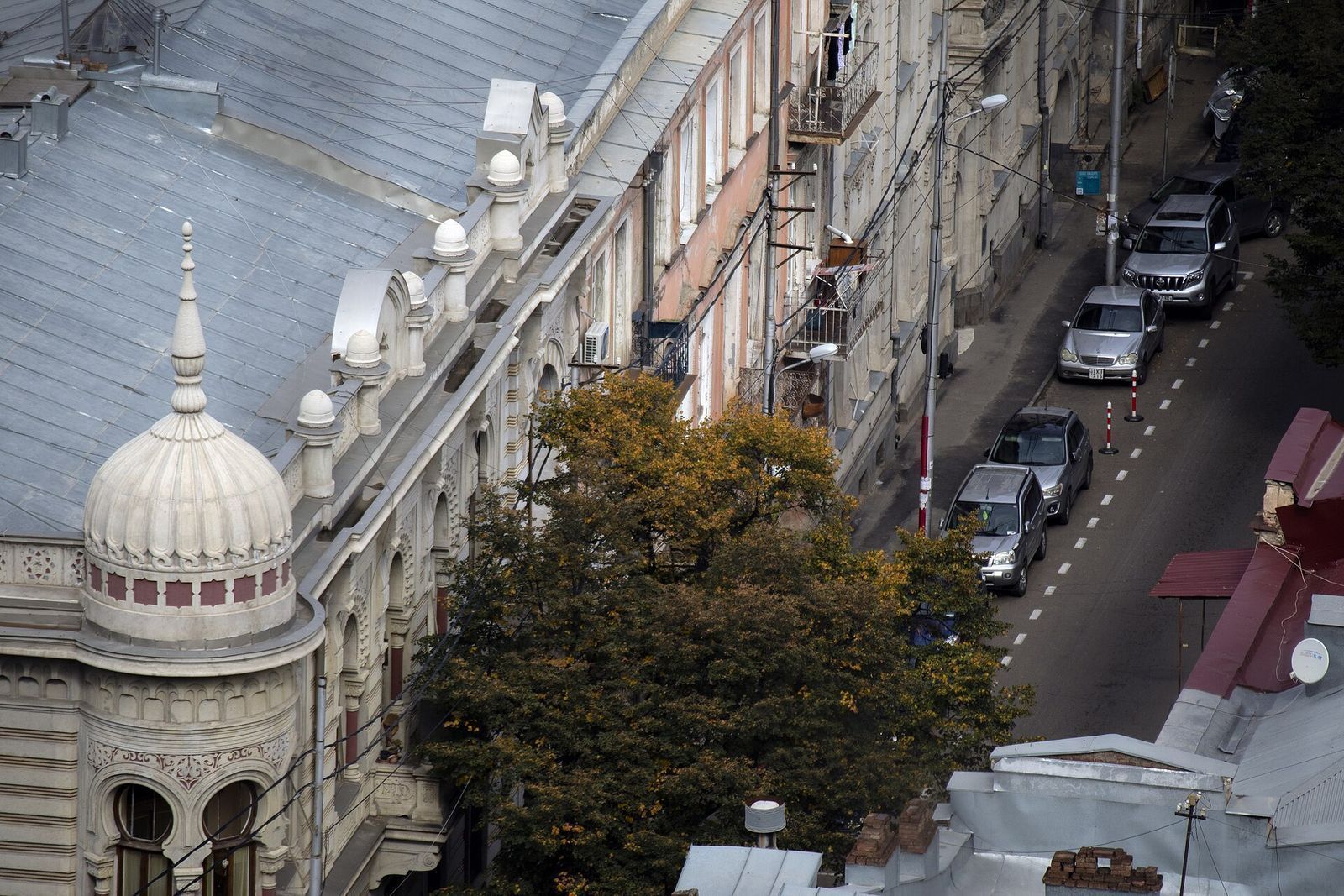
Day 5 is for Sololaki, the quarter of old merchants' townhouses below the ridge, with carved balconies and painted entrance halls behind the street doors.
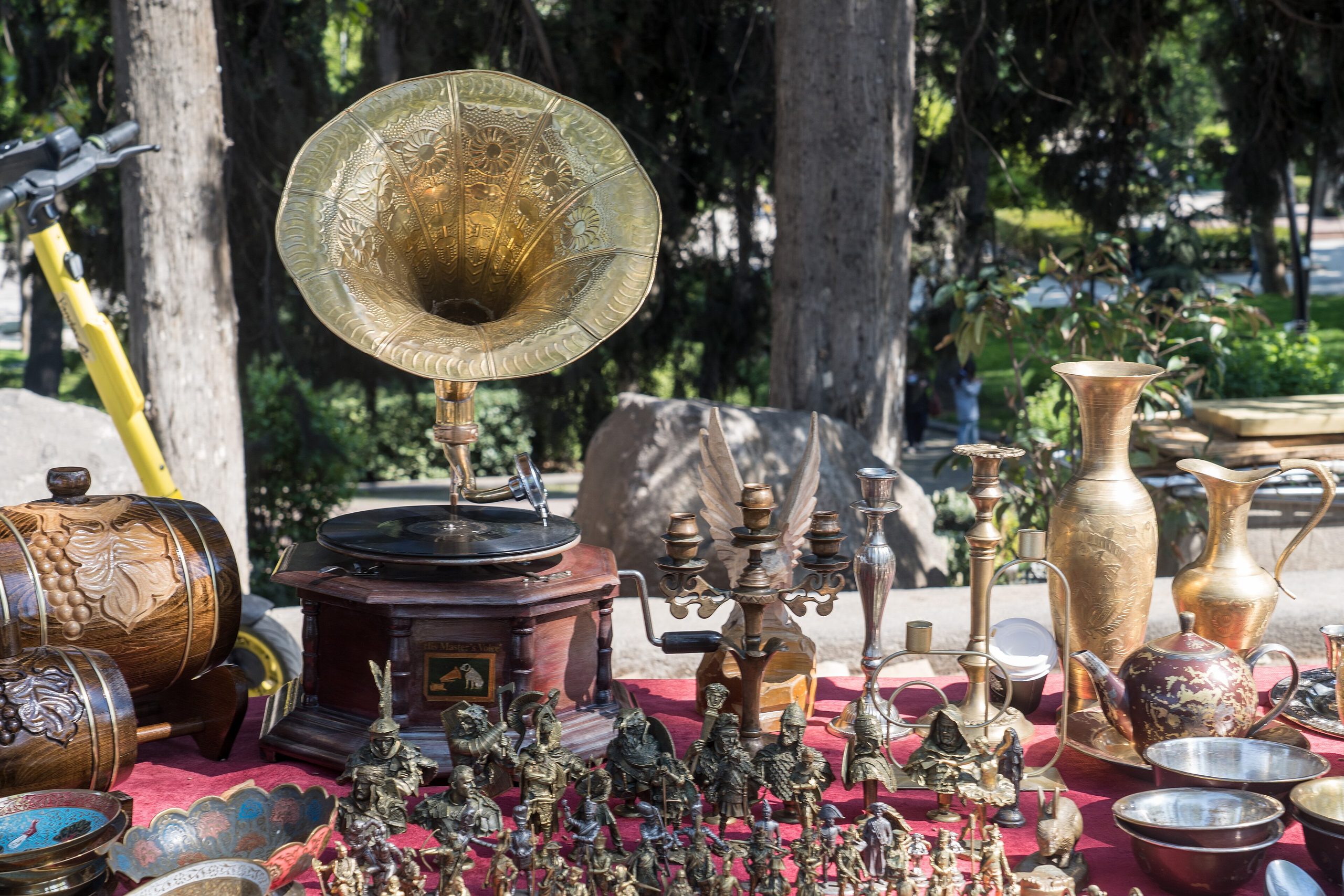
From there, walk down to the Dry Bridge market, where sellers lay out Soviet badges, old cameras, enamel and paintings by the bridge and in the park beside it.
Finish the day across town at Deserter's Market, by the central station, for spices, churchkhela and piles of fresh produce.
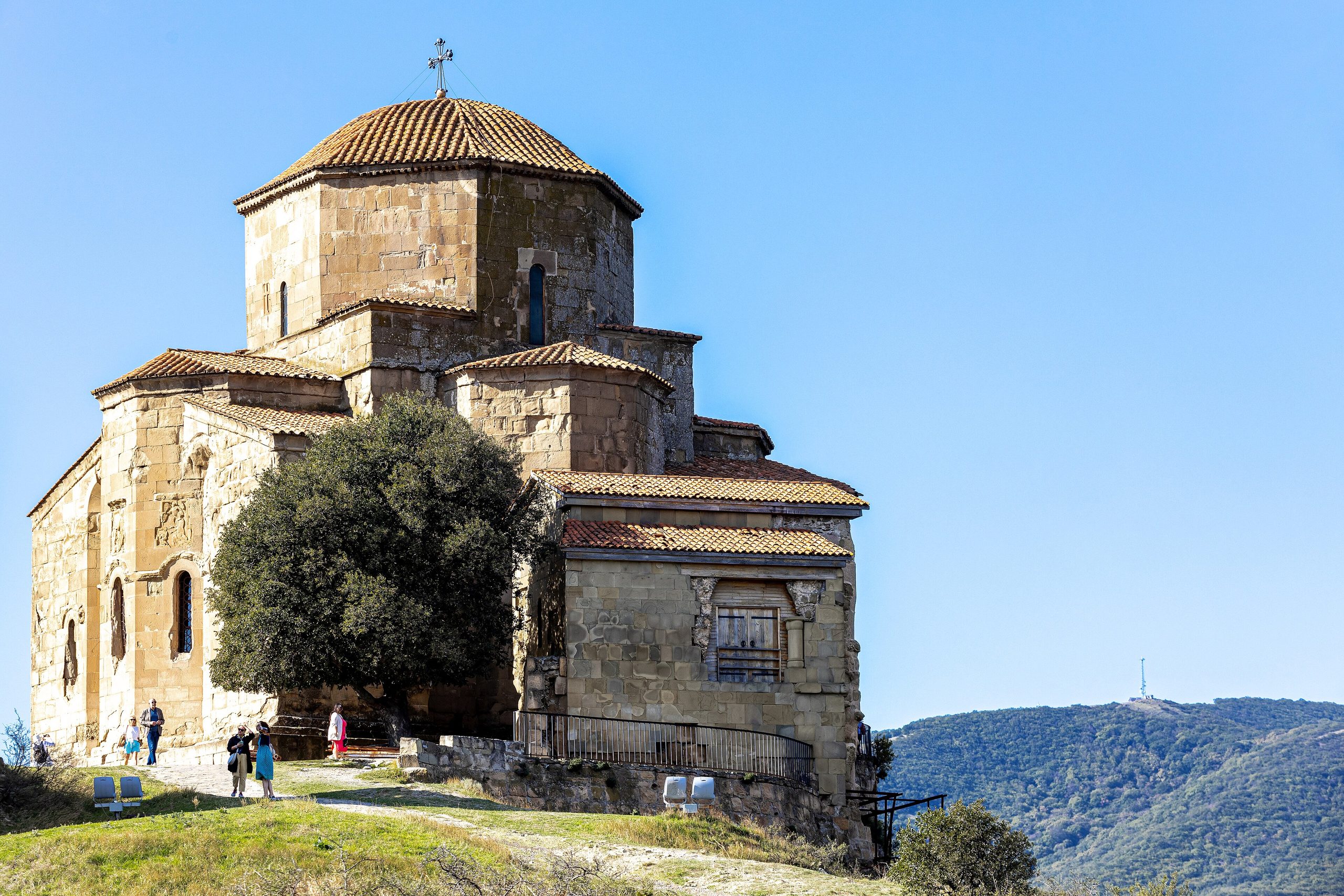
Day 6 is for Mtskheta, Georgia's old capital, 30 minutes away. Start at Jvari Monastery, the 6th-century church on the hill above the spot where the Aragvi river meets the Mtkvari.
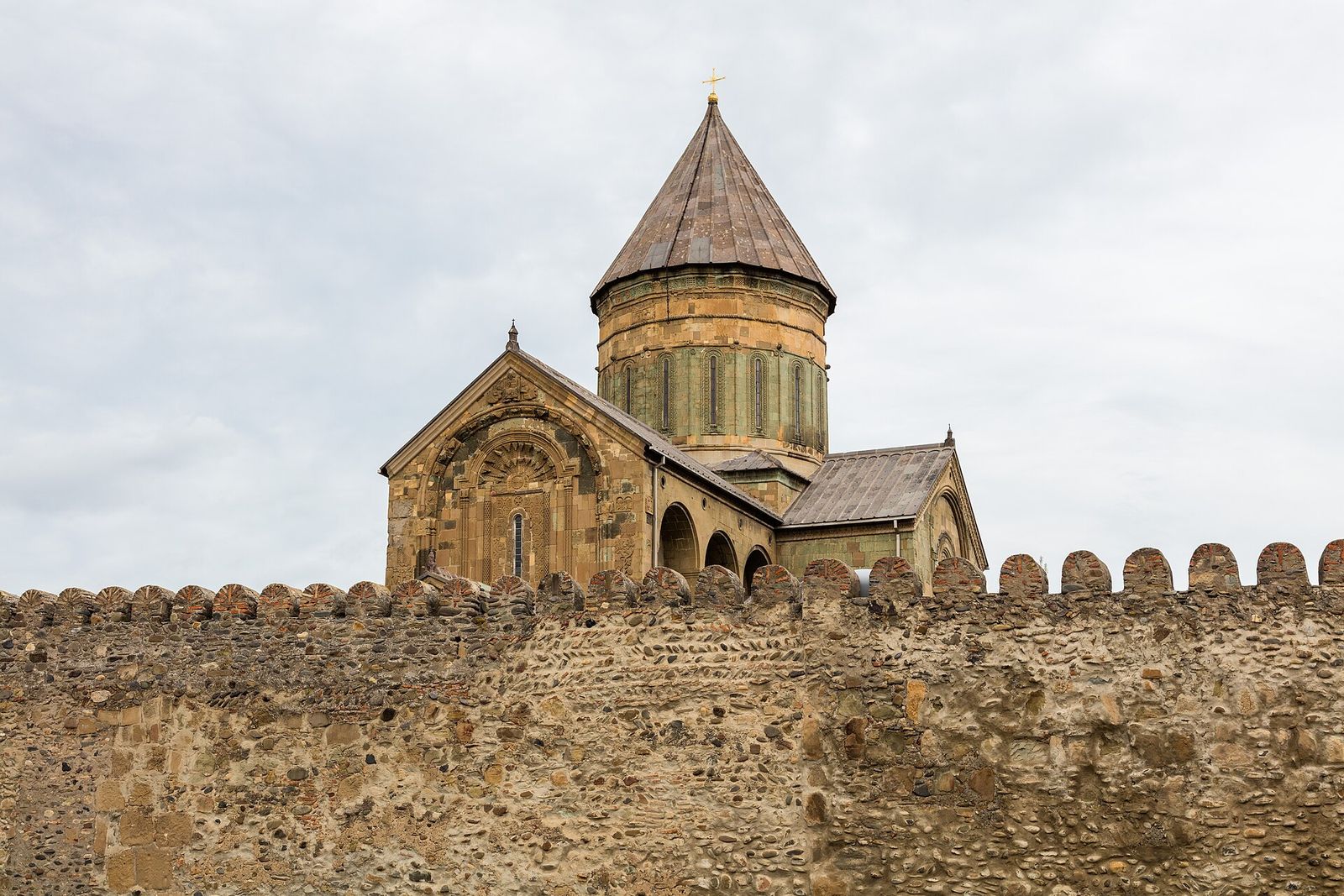
Then walk down into town to Svetitskhoveli Cathedral, built in the 11th century inside its own fortress wall, where tradition says Christ's robe is buried.
Three days is the least I'd give the city, and a full Tbilisi itinerary can fill five without repeating itself. If you're short on time, a Mtskheta day trip also works as a half day on the morning you leave for the mountains.
Days 7 and 8: Kazbegi
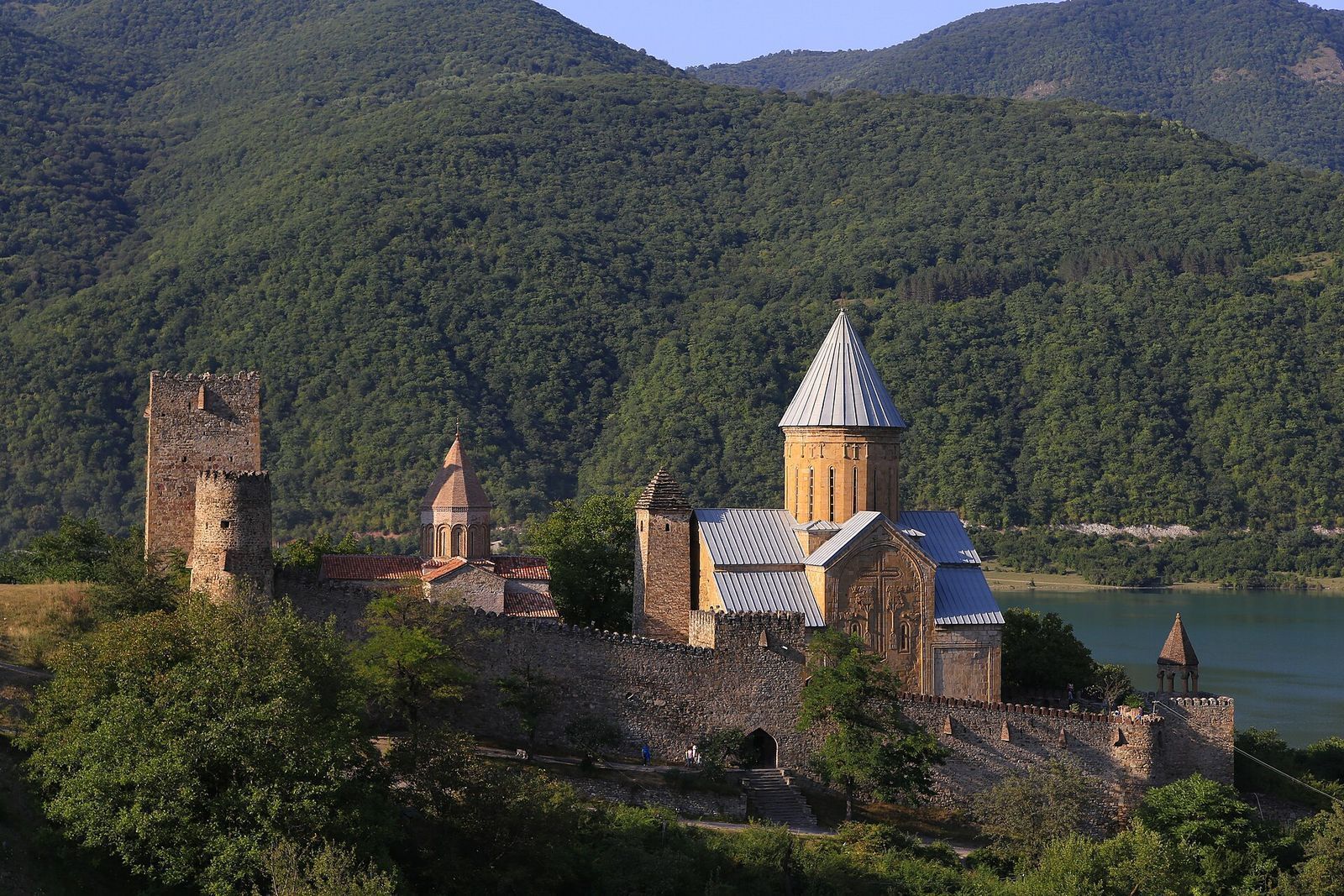
Marshrutkas to Kazbegi (Stepantsminda) leave Didube station about hourly from 07:00 to 17:00, cost 15 GEL and take about 3 hours if the pass is open. The road is the Georgian Military Highway, past Ananuri fortress, the Zhinvali Reservoir and the Jvari Pass, so a driver who stops along it is worth the extra money. Ananuri is the stop I'd never skip: a walled castle with two churches above the reservoir, 75 km out of Tbilisi.
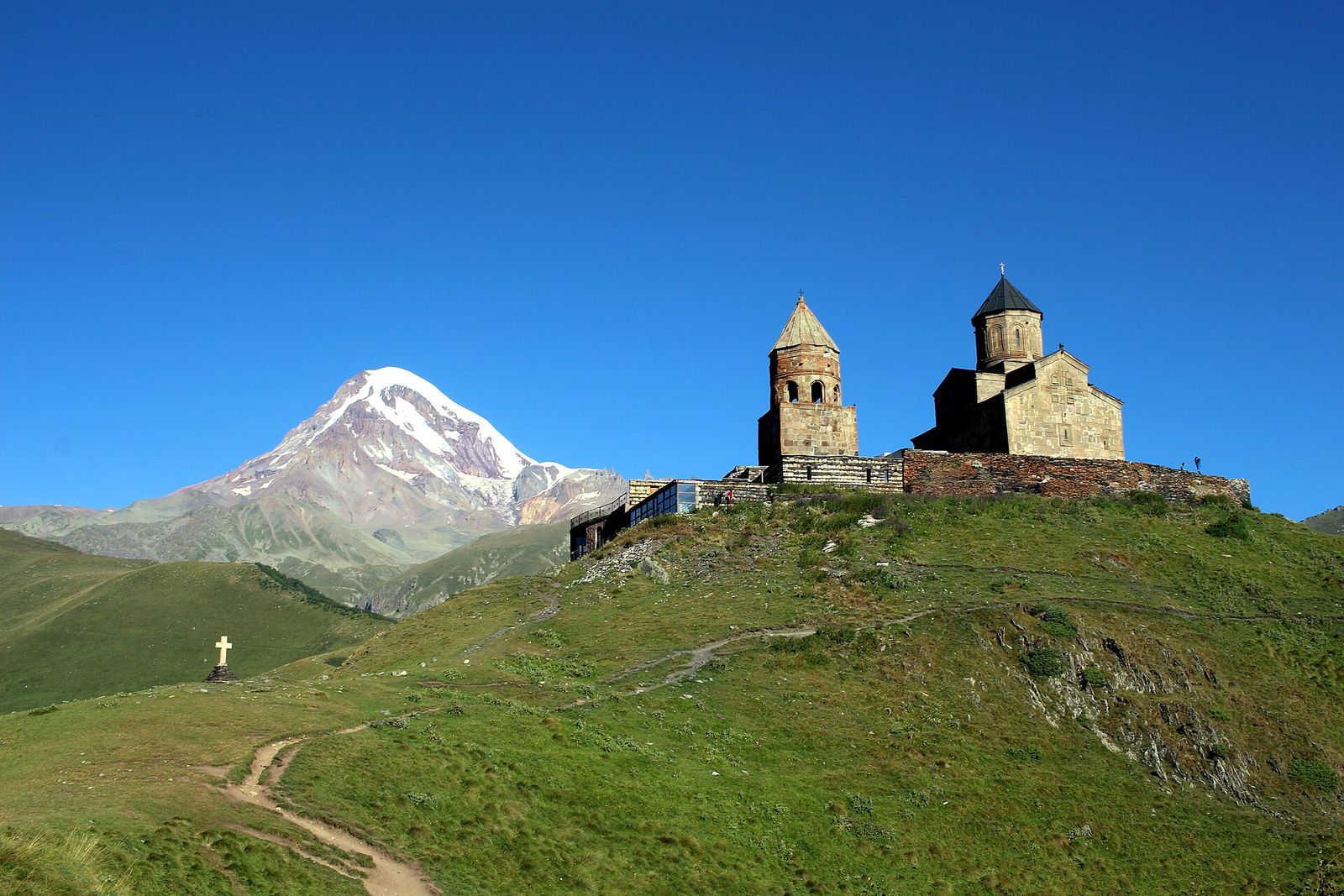
Stay the night. Gergeti Trinity Church is 2 hours up on foot or 30 GEL by 4x4, and the morning is when the cloud usually stays off Mount Kazbek. A Kazbegi day trip is possible from Tbilisi, but in two weeks you have room to do it properly.
Day 9: Kakheti wine country
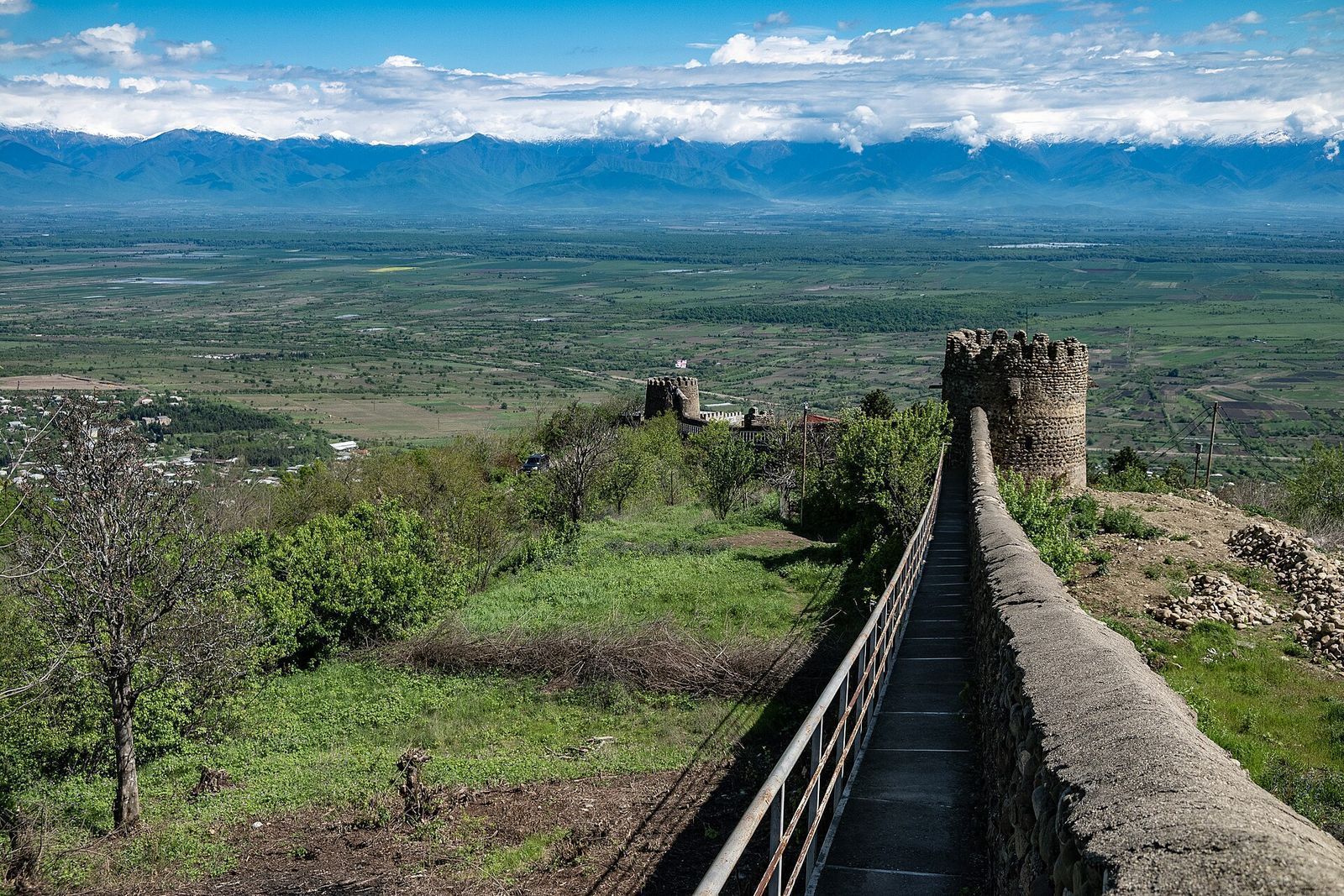
Back in Tbilisi, spend day 9 in Kakheti. Vans to Sighnaghi leave from Samgori metro, take about 2 hours and cost 10 to 15 GEL, and the walled hill town, Bodbe Monastery and a winery lunch make a full day. A guided Kakheti wine tour saves you the van and the question of who drives after the tasting.
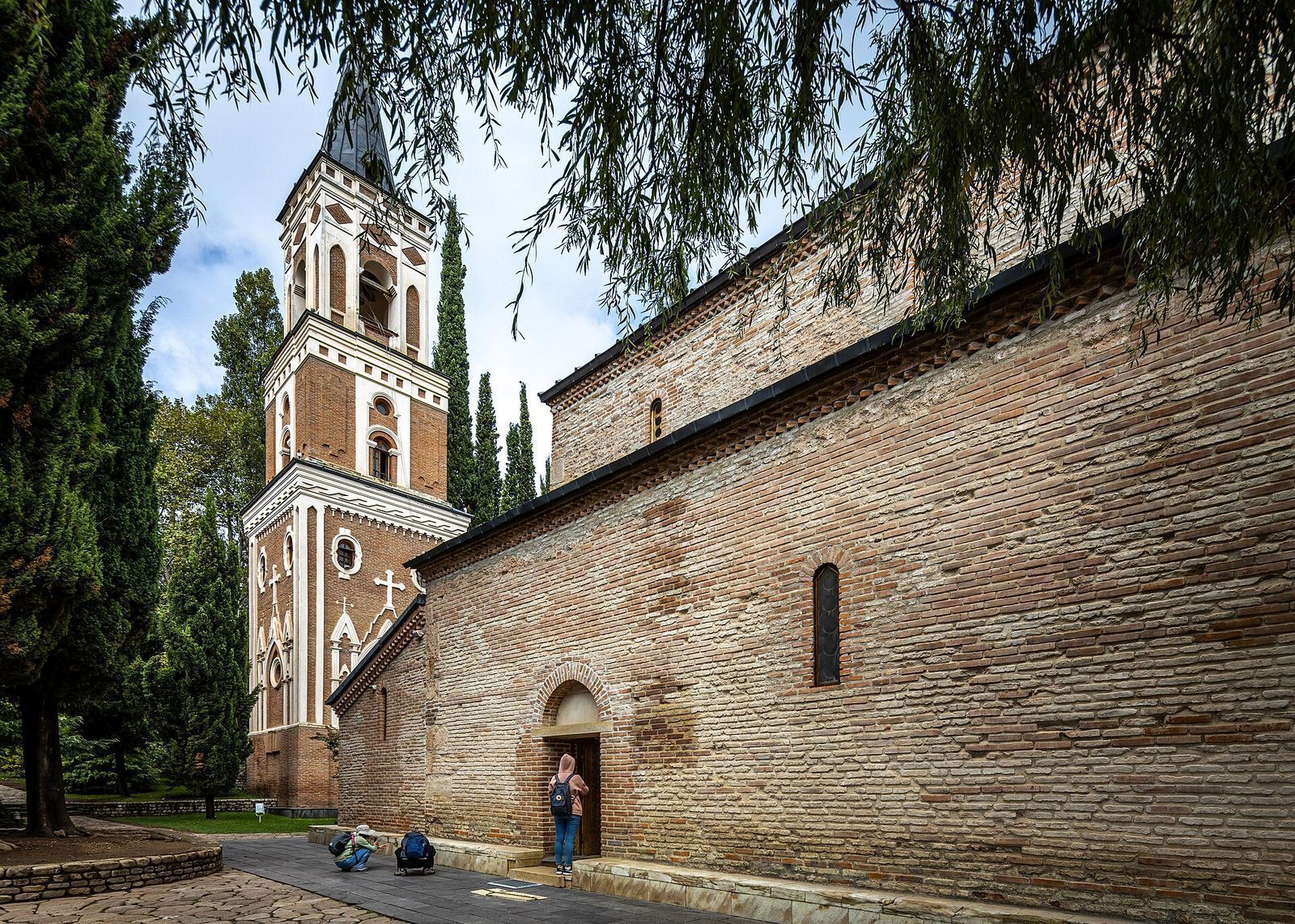
Bodbe Monastery is about 2 km from the center of Sighnaghi, a short taxi ride or a half-hour walk, and it holds the grave of St Nino, who brought Christianity to Georgia.
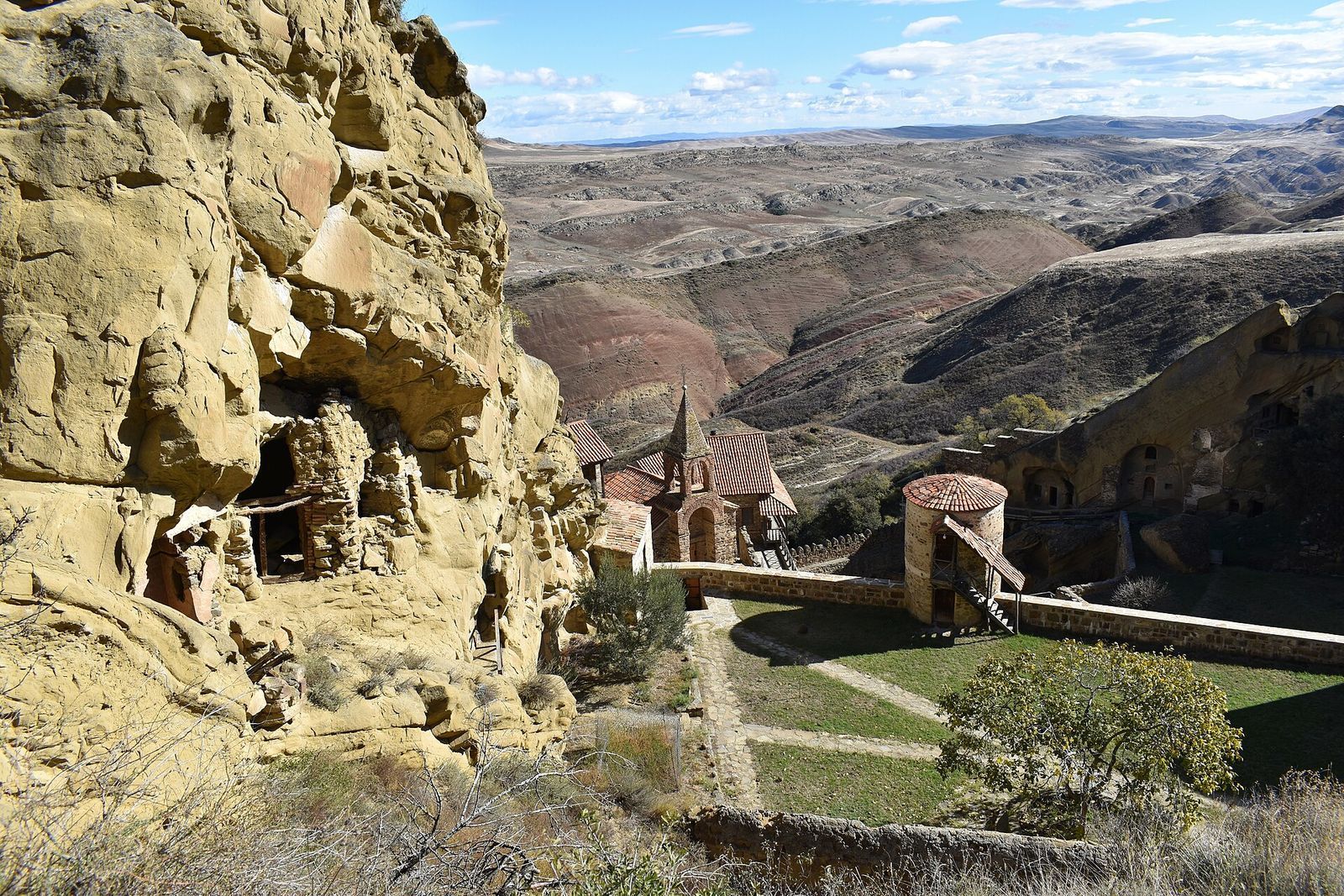
If wine does nothing for you, swap the day for David Gareja, the cave monastery out on the steppe by the Azerbaijani border, with monks' cells cut into the sandstone above a walled courtyard.
Day 10: Tbilisi to Yerevan through the Debed canyon
The cheap way south is the 09:00 marshrutka from Station Square: 35 GEL in cash and 5 to 6 hours, border included. Leave on a weekday if you can, since the Sadakhlo crossing takes 20 to 40 minutes on a weekday morning and 1 to 2.5 hours on Fridays and weekends. Vans from Tbilisi to Yerevan also leave Avlabari and Ortachala for 50 GEL, and the night train is the way to save a day: it leaves Tbilisi in the evening and arrives just over 10 hours later.
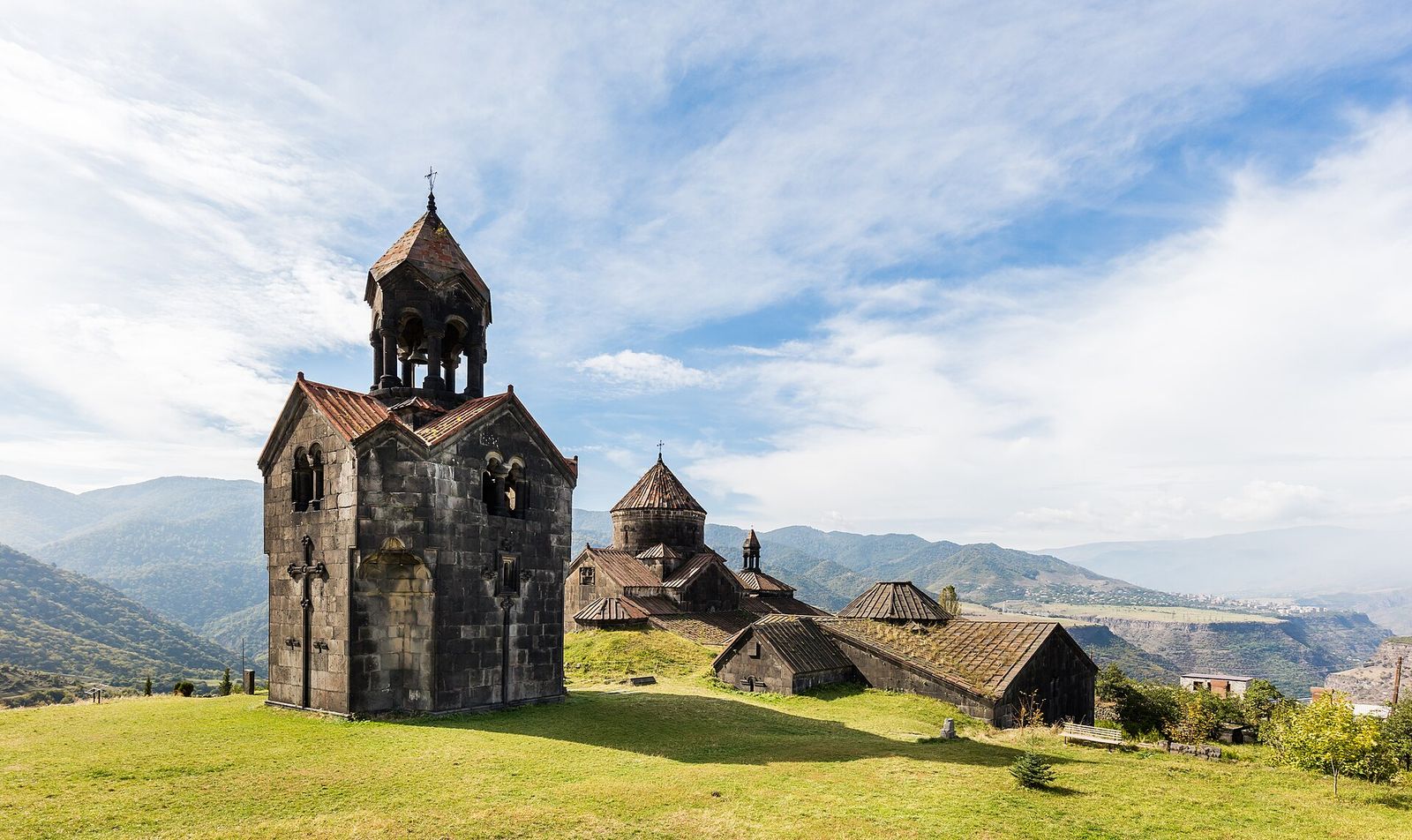
My pick is a driver for the day. The road follows the Debed canyon just over the border, and with your own car you can stop at Haghpat, a UNESCO-listed monastery on a plateau above the canyon, with a tall stone bell tower beside its churches.
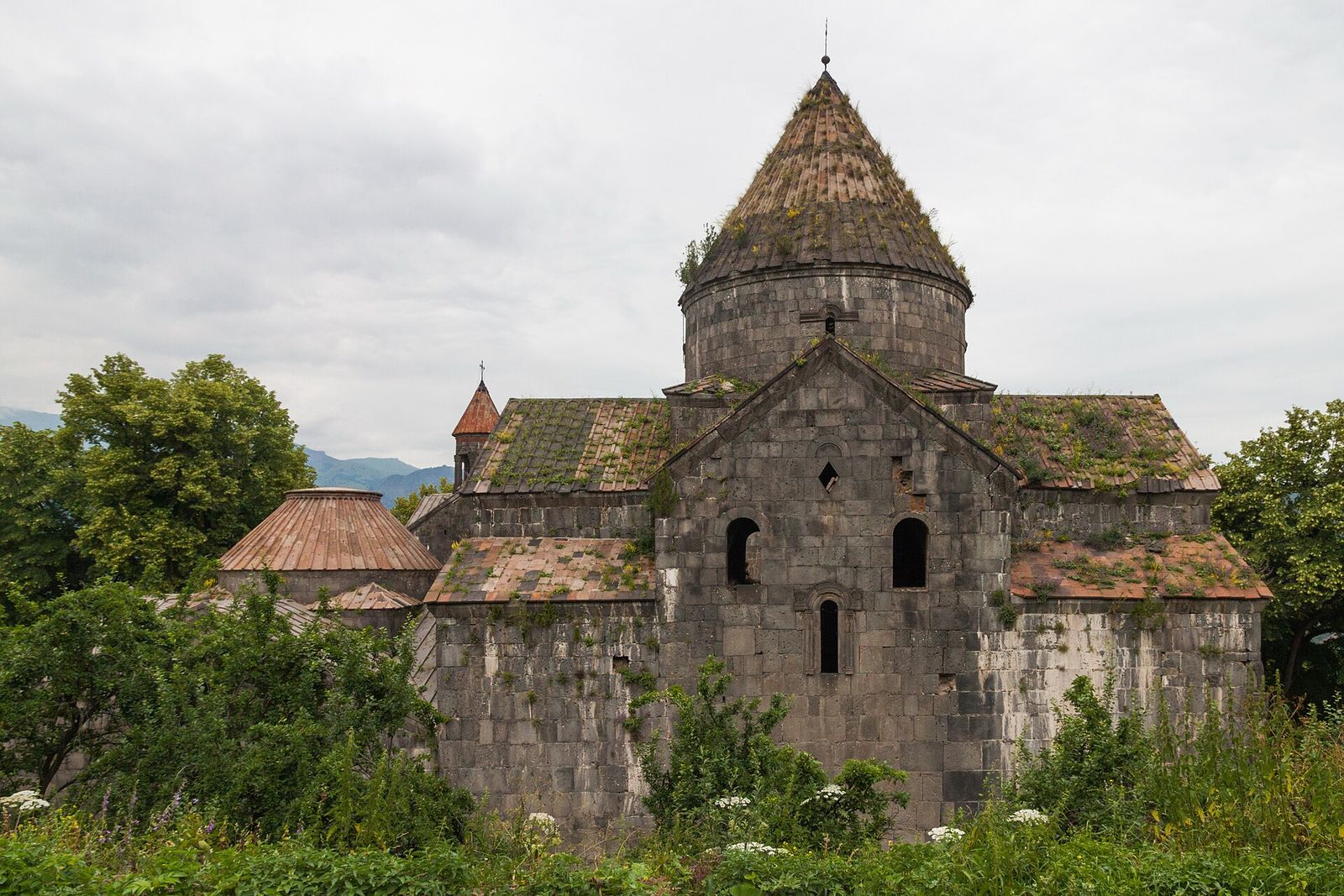
Sanahin, its partner on the same UNESCO listing, is a short drive away on the other side of the gorge. People usually see the pair on an Armenia day trip from Tbilisi, but with a driver you take them in on the way south and still reach Yerevan for dinner.
Days 11 to 13: Yerevan, Garni, Geghard and Khor Virap
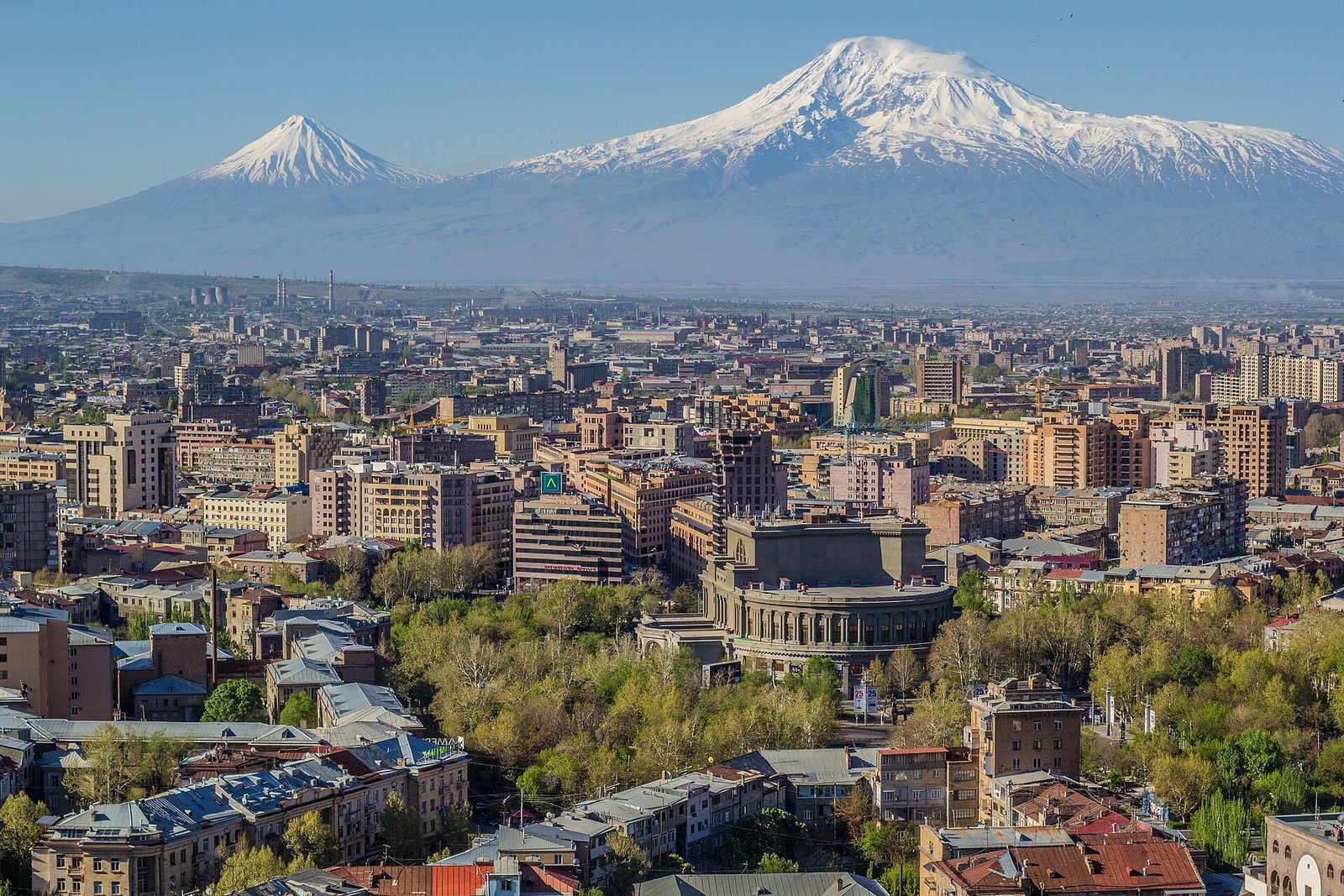
Give Yerevan itself a full day: climb the Cascade for the view of Mount Ararat, walk Republic Square, browse the Vernissage market, visit the Genocide Memorial and finish with a tour of the Ararat brandy factory.
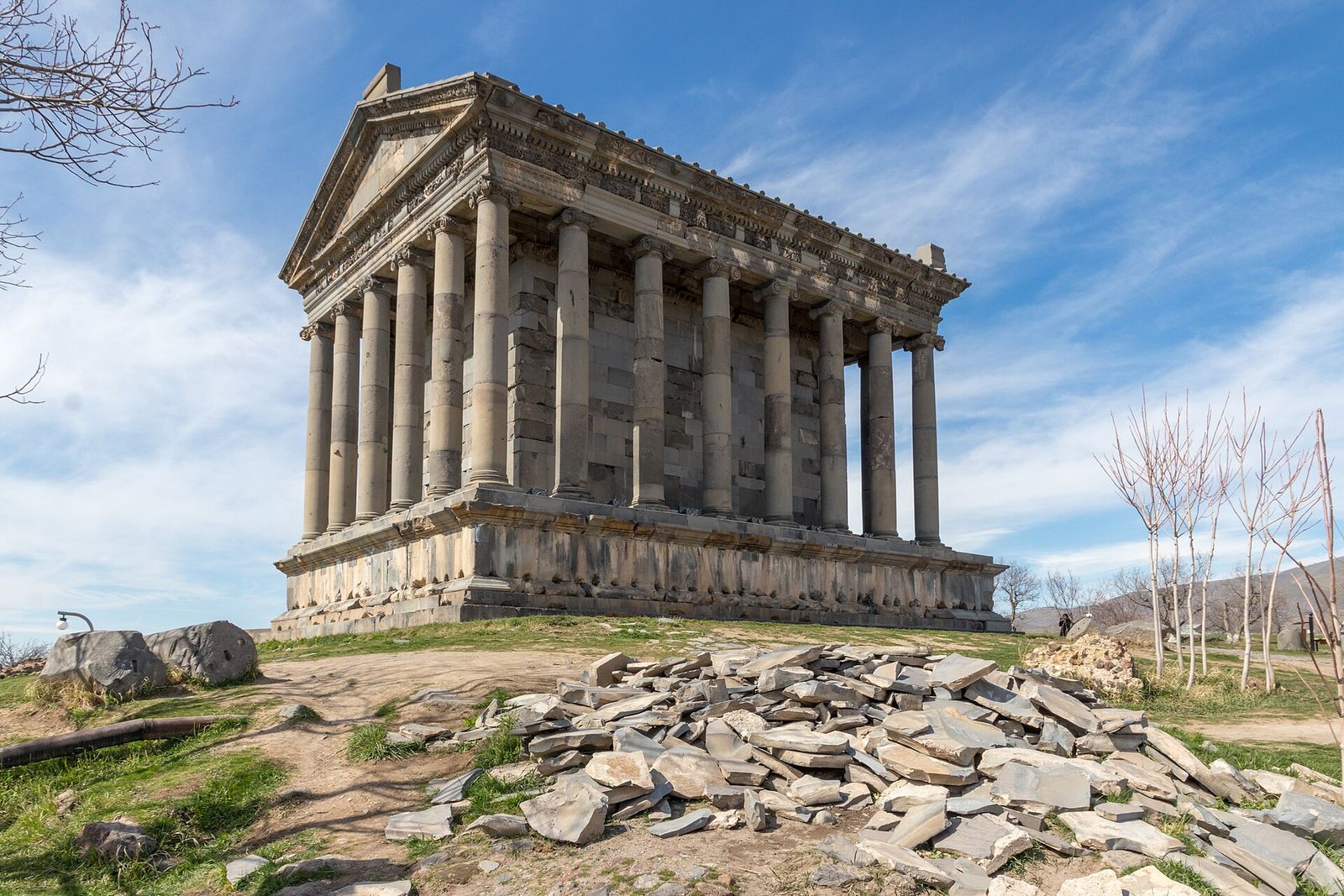
On day 12, hire a driver for Garni, the columned pagan temple on the edge of a gorge, the one Greco-Roman temple still standing in Armenia.
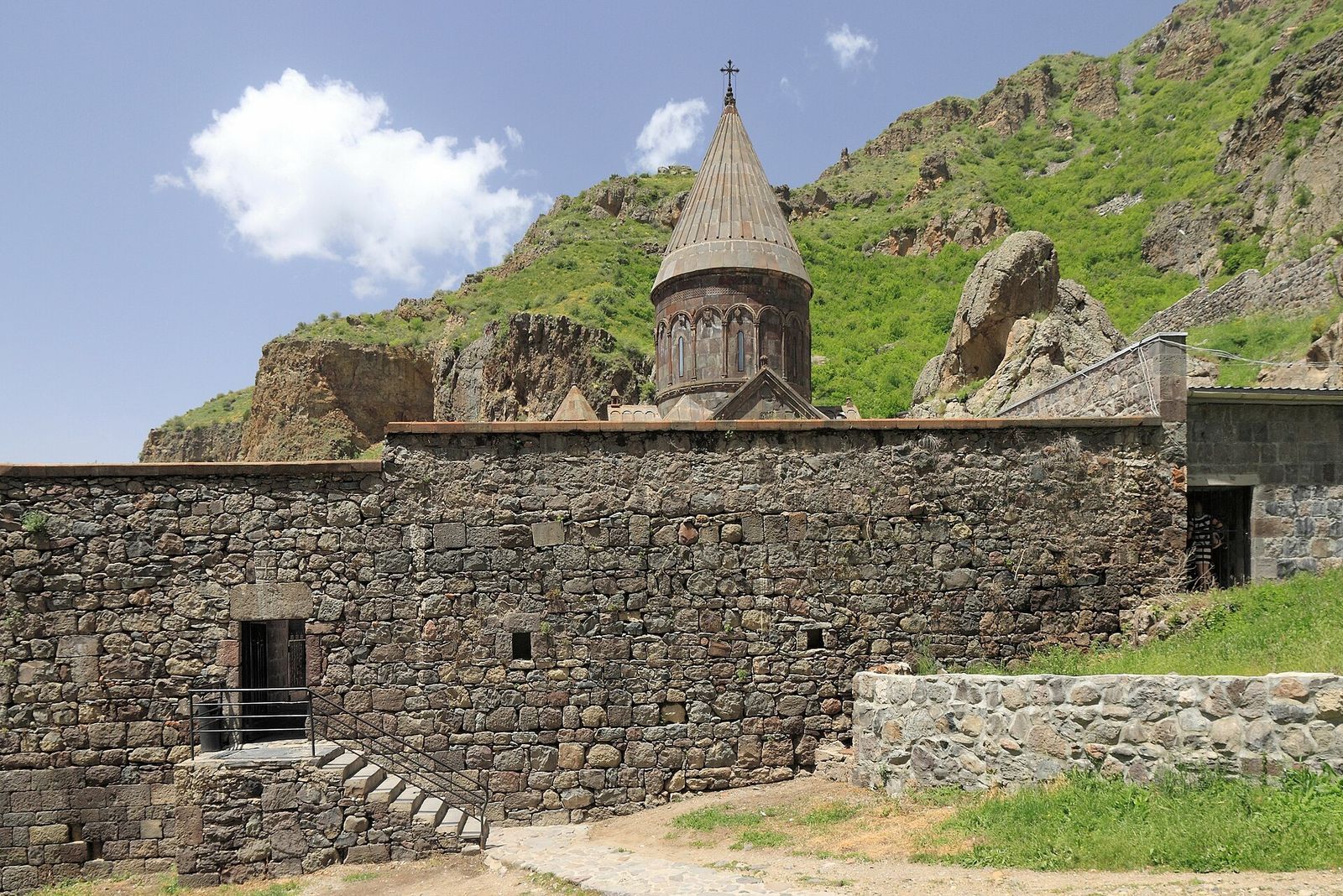
Geghard is a short drive further up the valley: a monastery partly carved into the cliff, with chapels cut straight out of the rock behind the main church.
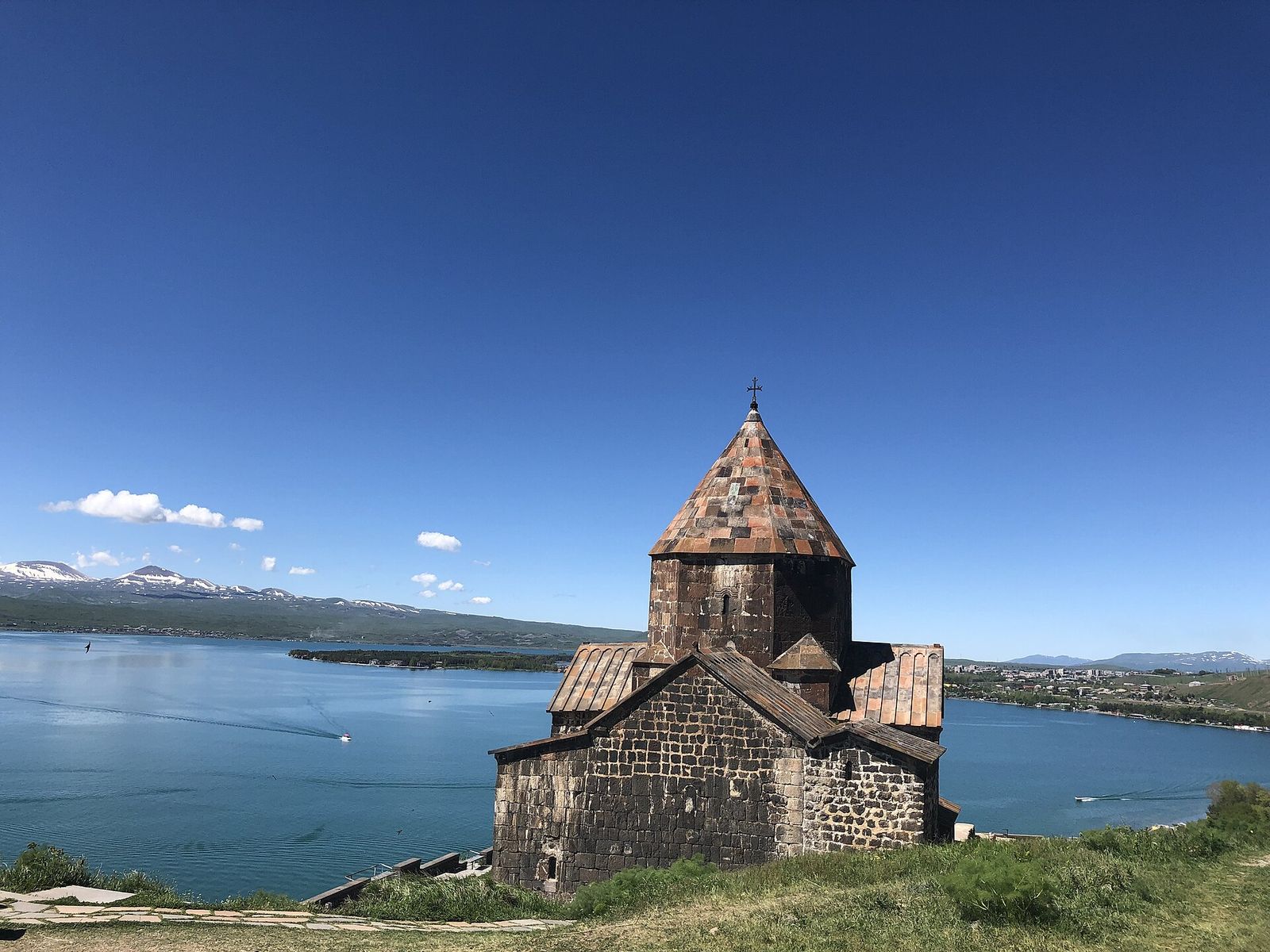
Add Lake Sevan and the Sevanavank churches on the same day if you start early. The dark stone churches stand on a peninsula high above the lake, and the view over the water from the top is the reason to make the detour.
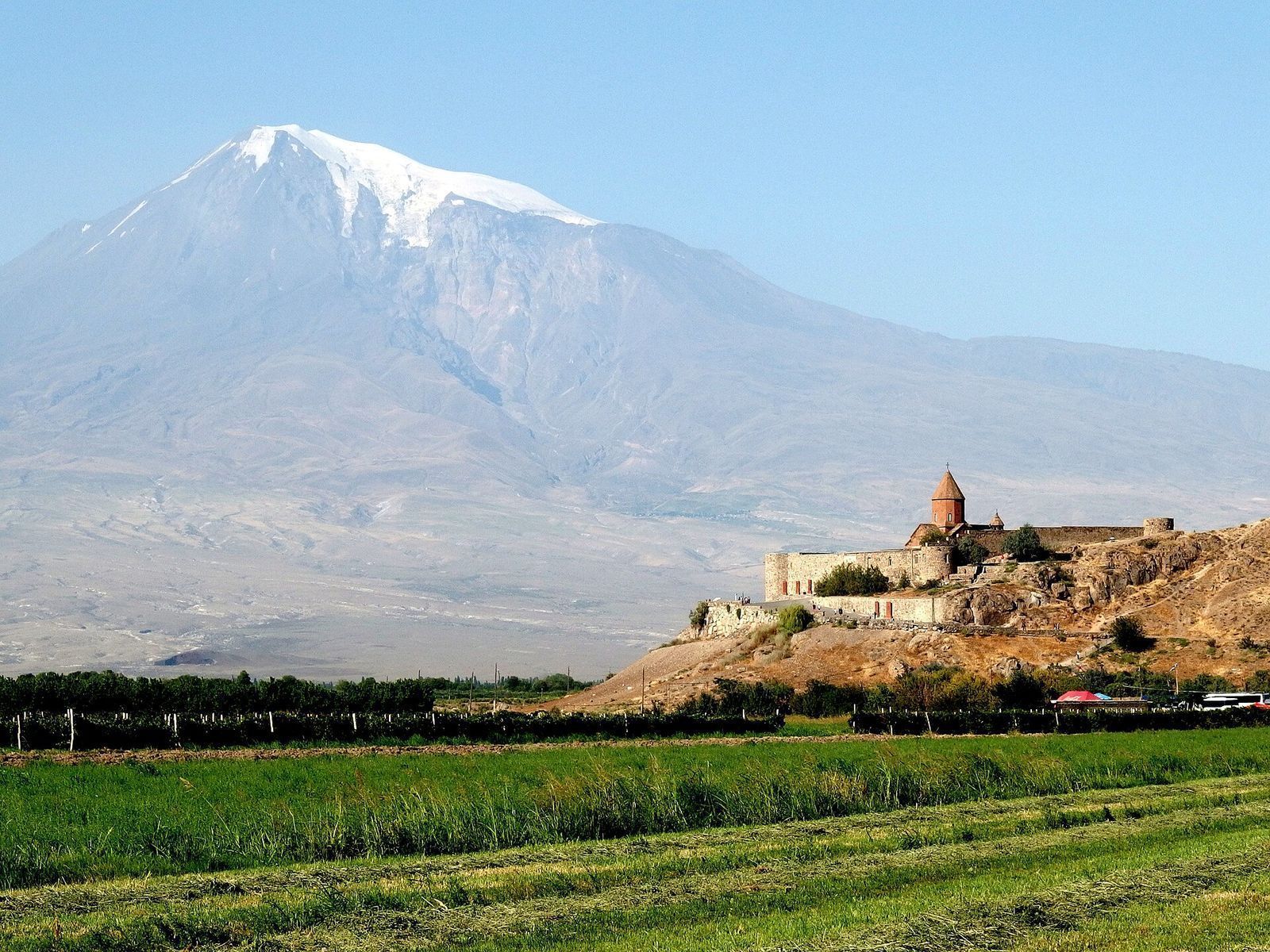
Day 13 heads south to Khor Virap, the monastery that faces Ararat across the Turkish border.
Carry on to Areni, the wine village in the Arpa valley, for a tasting of the local red at a winery or a roadside stall. A cave just outside the village is where archaeologists found the oldest known winery in the world.
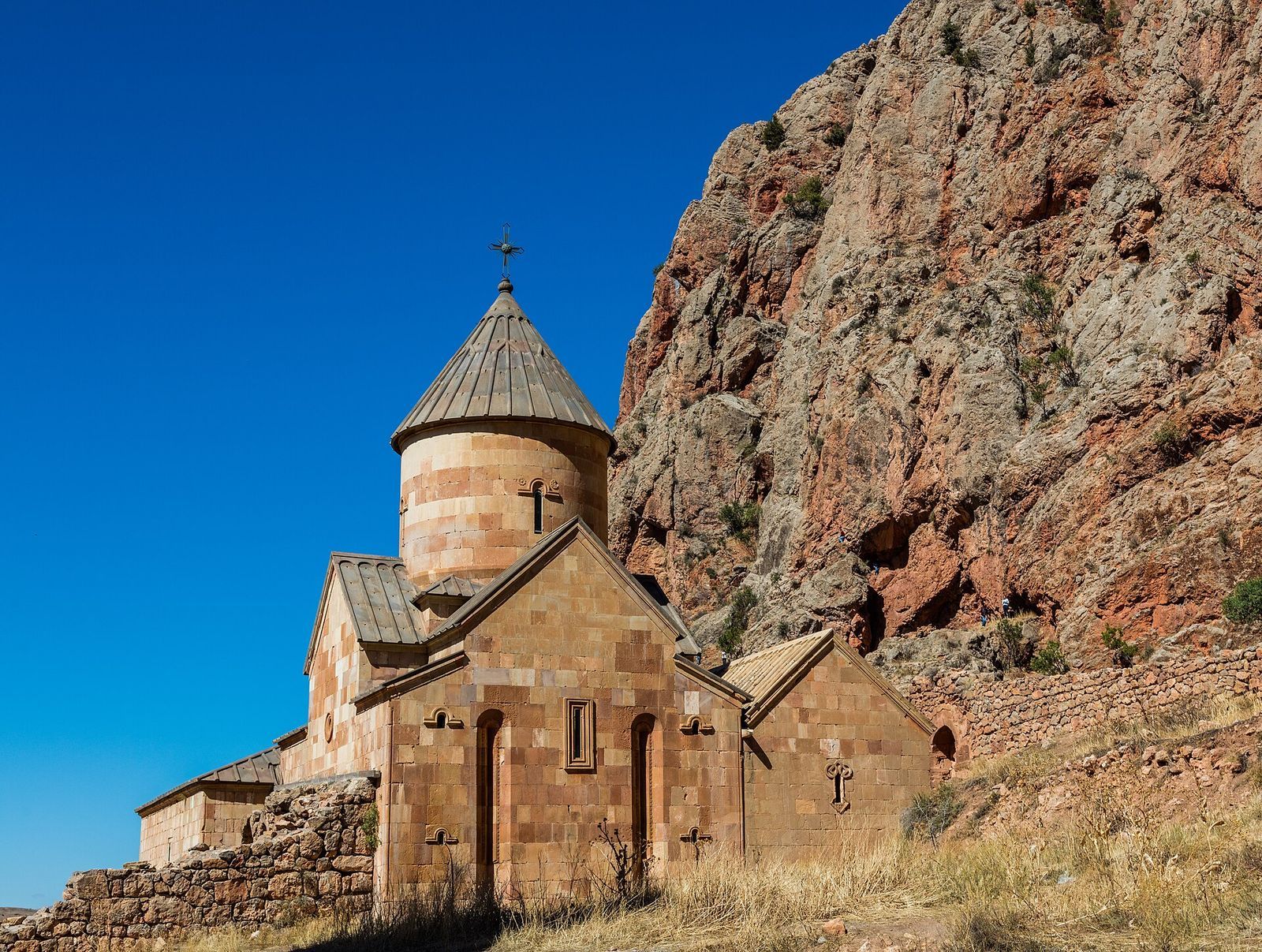
Just past Areni, a side gorge of red cliffs leads up to Noravank monastery, the last stop before the drive back to Yerevan.
Day 14: fly home or ride back to Tbilisi
Fly home from Yerevan, or head back north if your flight leaves from Tbilisi. Sprinter vans to Tbilisi leave Kilikia bus station for 8,000 AMD, and the night train gets you to Tbilisi Central Station in the morning.
10-day Caucasus itinerary: the three capitals
Ten days can cover all three countries if you keep to the capitals and treat everything else as a day trip. It's quick, with no night in the mountains, but you see Baku, Tbilisi and Yerevan properly.
| Days | Base | Day trip |
|---|---|---|
| 1 to 3 | Baku | Gobustan, plus Ateshgah and Yanar Dag |
| 4 to 7 | Tbilisi | Mtskheta, then one long day to Kazbegi or Kakheti |
| 8 to 10 | Yerevan | Garni and Geghard, with Lake Sevan if you start early |
Take the night train or the morning flight from Baku on day 3 or 4, and cross to Yerevan by marshrutka or driver on day 8. Fly home from Yerevan on day 10, or the morning after.
10 days without Azerbaijan: Georgia and Armenia
This is the trim I'd make for most people with 10 days. Georgia and Armenia need no visa for most Western passports, the whole trip runs overland, and you can start and finish in Tbilisi.
Spend days 1 to 3 in Tbilisi with Mtskheta, days 4 and 5 in Kazbegi, and day 6 in Kakheti. Cross to Armenia on day 7 through the Debed canyon, spend days 8 and 9 in Yerevan with Garni and Geghard, and take the night train back on day 9 or 10. If you'd rather end in the hills, swap a Yerevan day for Dilijan, a forested spa town that stays cooler than the rest of Armenia in summer.
3-week Caucasus itinerary: Sheki, Svaneti and southern Armenia
Three weeks lets you leave the capitals for the regions: Sheki in Azerbaijan, Svaneti in Georgia, and Dilijan and Tatev in Armenia.
| Days | Where | Highlights |
|---|---|---|
| 1 to 5 | Baku and Sheki | Old City, Gobustan, Khan's Palace of Sheki |
| 6 to 9 | Tbilisi and Kakheti | Old Town, Mtskheta, a night in Sighnaghi |
| 10 and 11 | Kazbegi | Gergeti Trinity Church, hikes above the village |
| 12 to 15 | Svaneti | Mestia, Ushguli, the Svan towers |
| 16 and 17 | Dilijan and Lake Sevan | Debed canyon on the way, forest walks |
| 18 and 19 | Yerevan | The city, Garni and Geghard |
| 20 and 21 | Southern Armenia | Khor Virap, Noravank, Tatev |
Days 1 to 5: Baku and Sheki
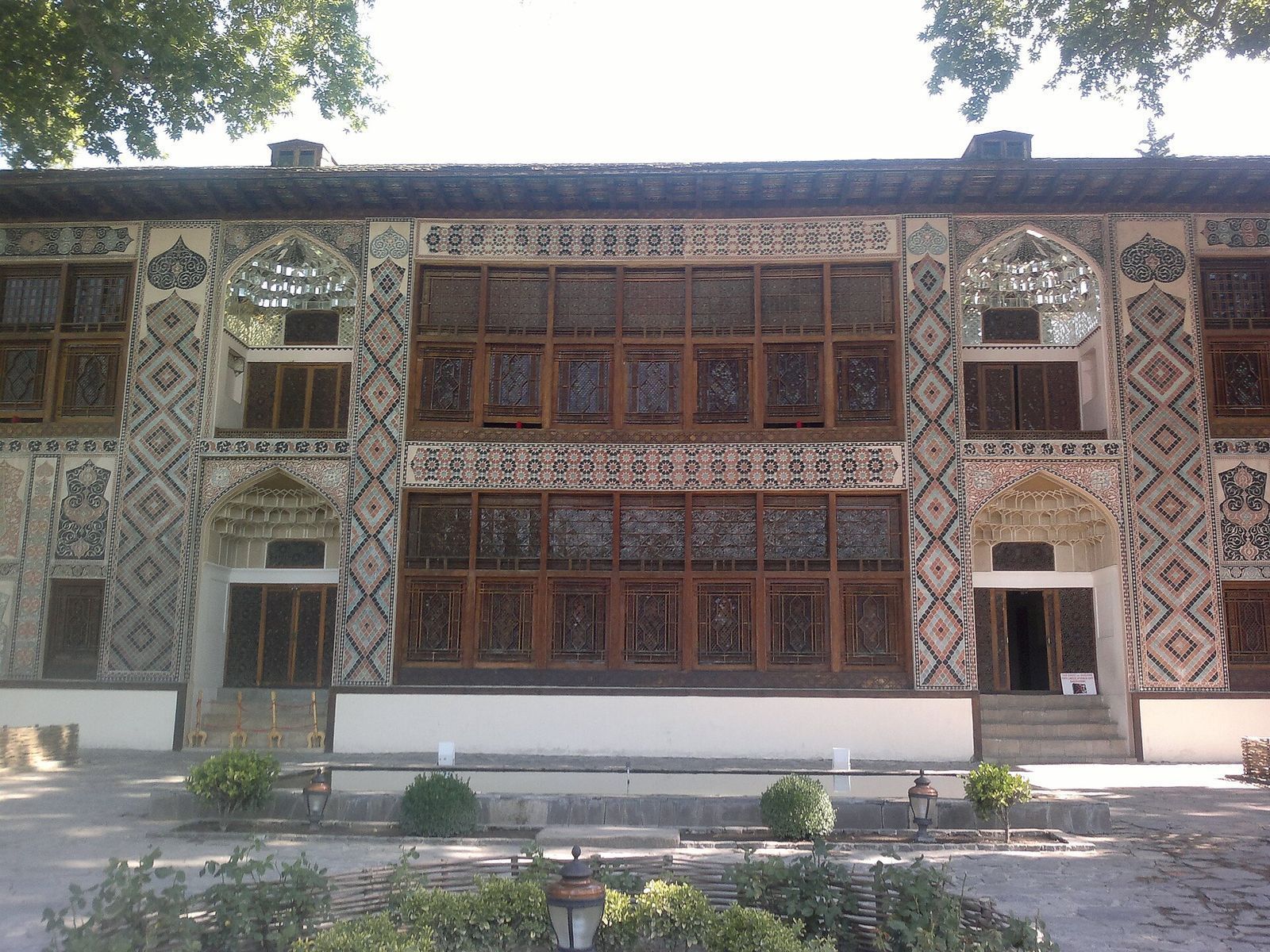
Give Baku 2 days, then take the night train northwest to Sheki: about 6 hours, around 23:30 from Baku, and 10 to 13 AZN for a berth in a four-berth compartment. Sheki is a silk town in the foothills, and its Khan's Palace, with a facade covered in painted tiles and stained-glass windows, is the most beautiful building I know of in Azerbaijan.
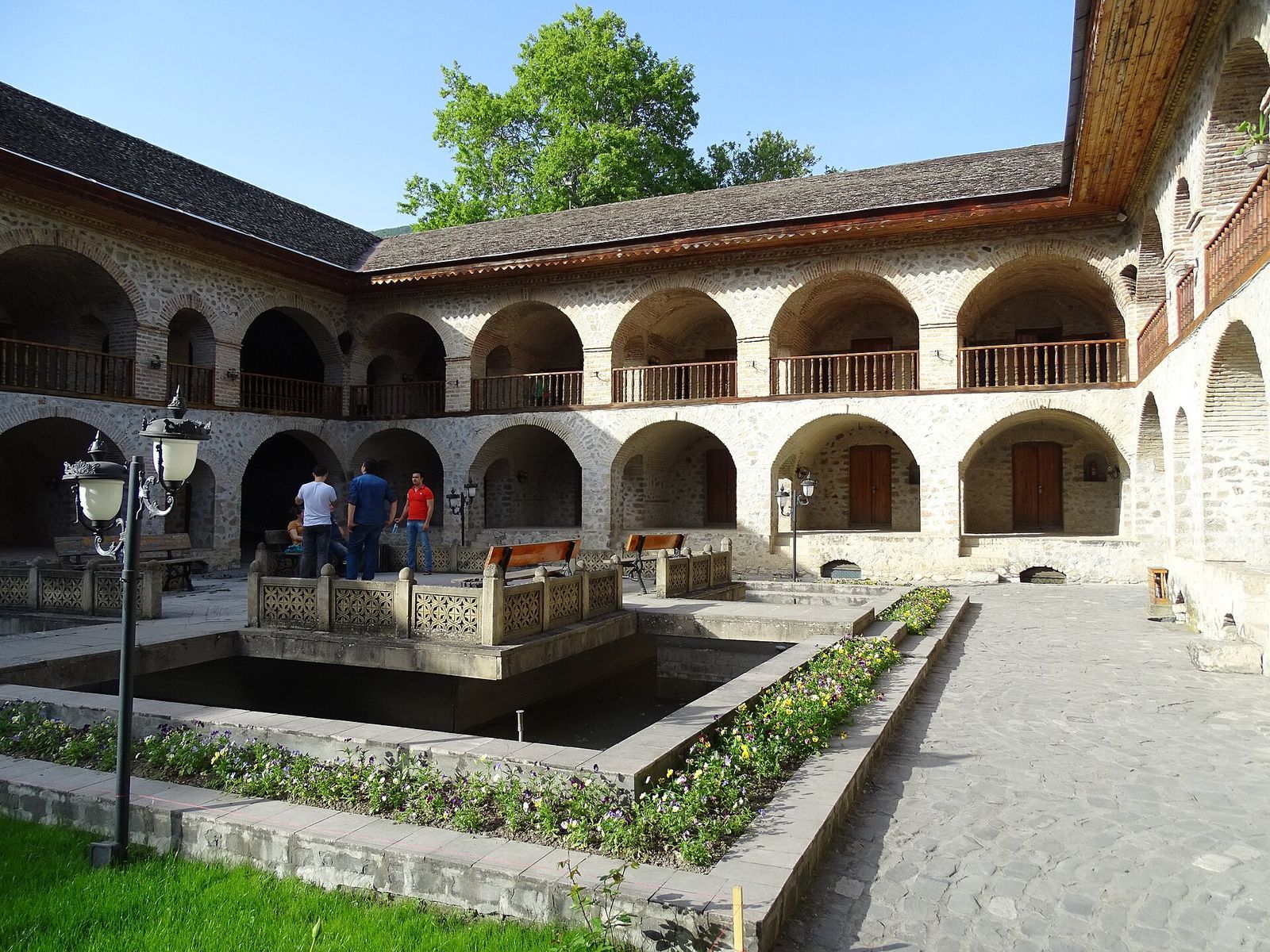
Then walk through the Upper Caravanserai, the old merchants' inn in the center, with two floors of stone arcades around its courtyard. It works as a hotel today, so you can sleep in a merchant's room for the night.
Return to Baku for the train or flight to Tbilisi. Sheki costs you two nights of travel, because the road from Sheki to the Georgian border stays closed to passengers. I'd still go: it's the place that shows you Azerbaijan outside the oil-money capital.
Days 6 to 15: Georgia with Svaneti
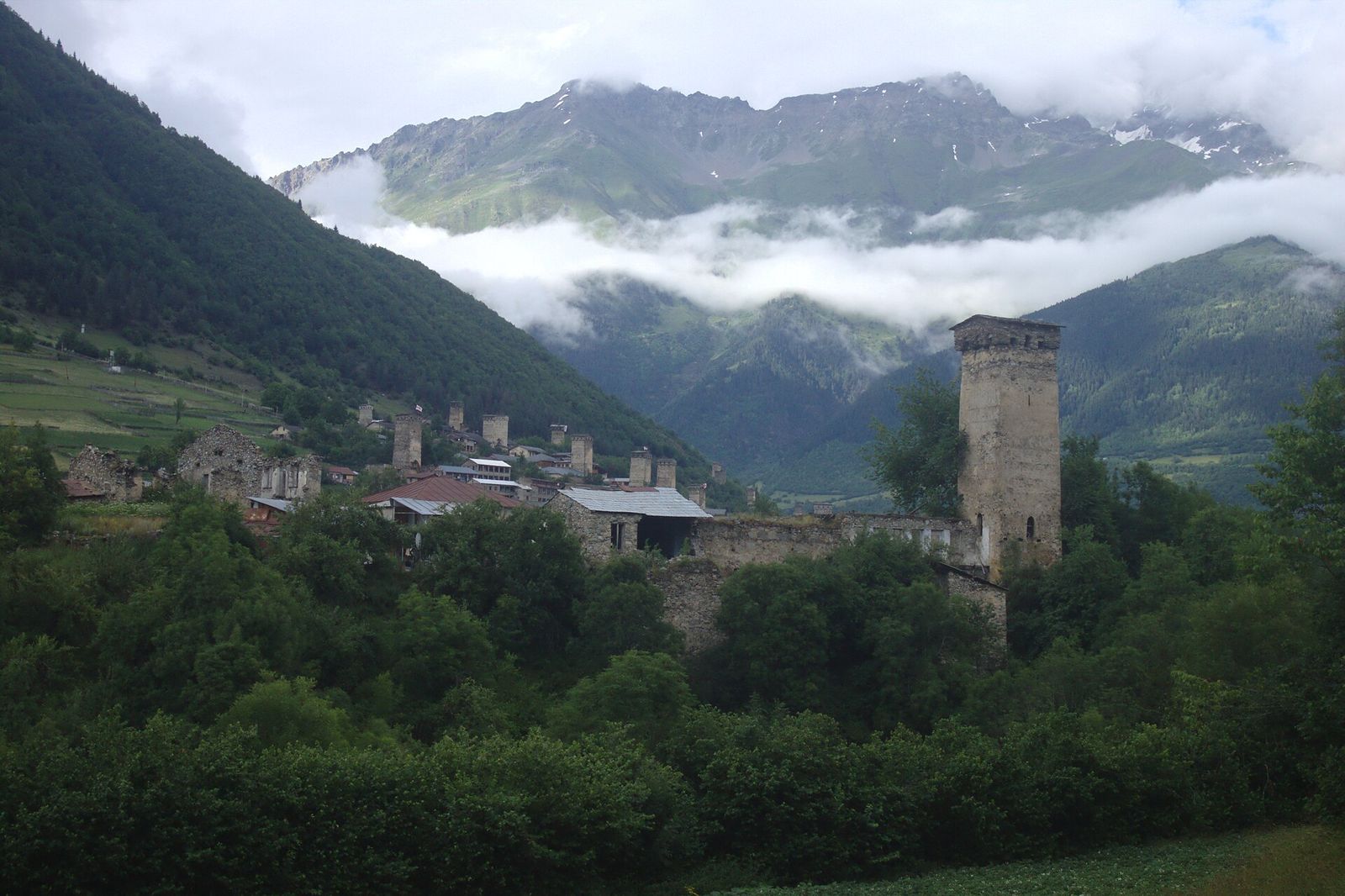
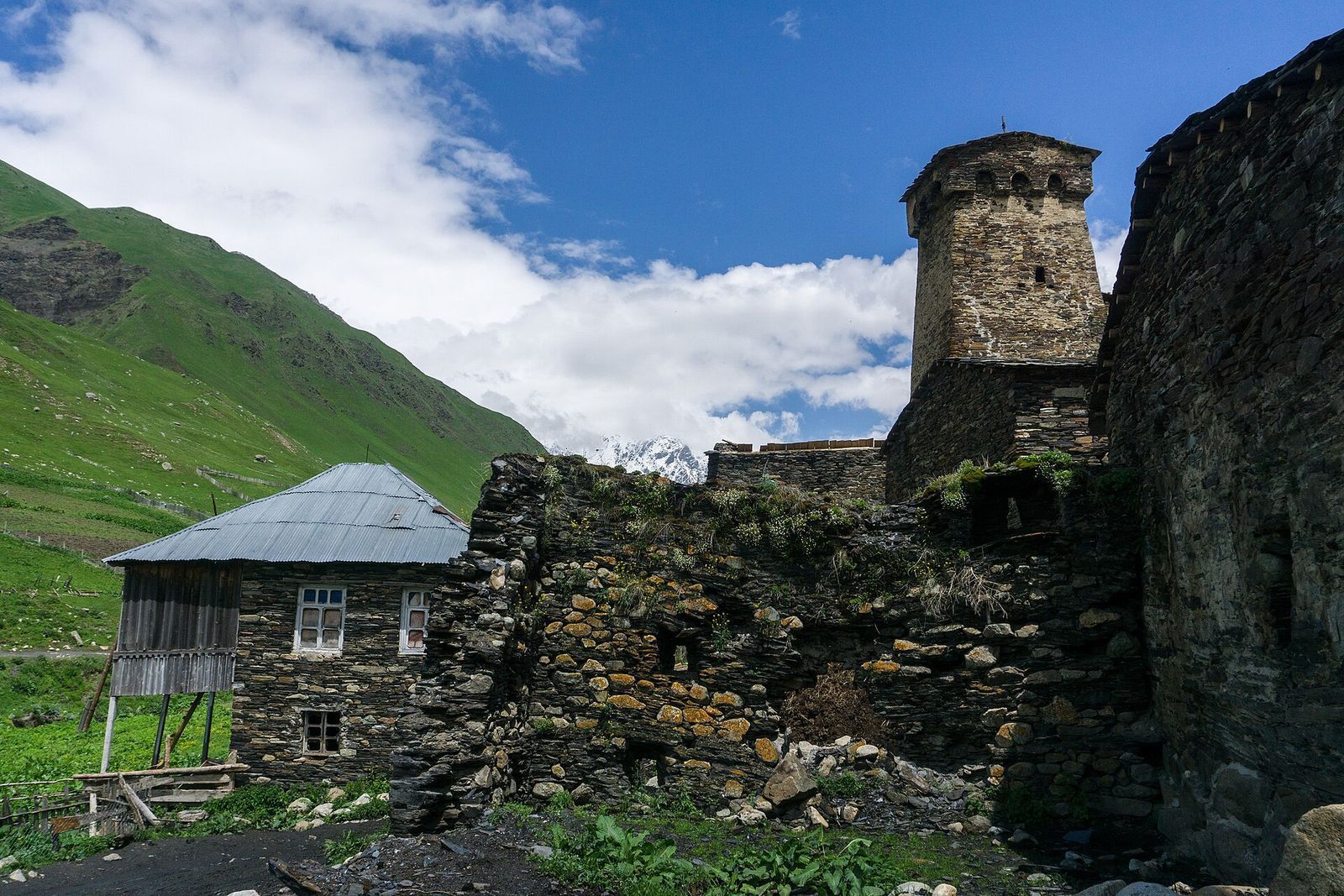
Give Tbilisi three days, sleep a night in Sighnaghi rather than day-tripping it, and take two days in Kazbegi so there's time for a hike above the village. Then go west to Svaneti, the highest corner of the Caucasus you can reach by road. The direct van to Mestia leaves Samgori at 07:00, costs 50 GEL and takes 8 to 9 hours, and the Tbilisi to Mestia trip can also be split with the day train to Zugdidi and a van up from there. Mestia is your base: a small town of stone Svan towers under the peaks, with the History and Ethnography Museum in the center and glacier trails starting close by.
From Mestia, Ushguli is about 90 minutes further up a rough road by 4x4, for about 40 GEL each way. Two nights in Mestia and one in Ushguli is enough for the towers, the museum and a glacier walk before the long ride back to Tbilisi on day 15, and Svaneti is at its best from June to September, when the hiking trails are clear of snow.
Days 16 to 21: Armenia from north to south
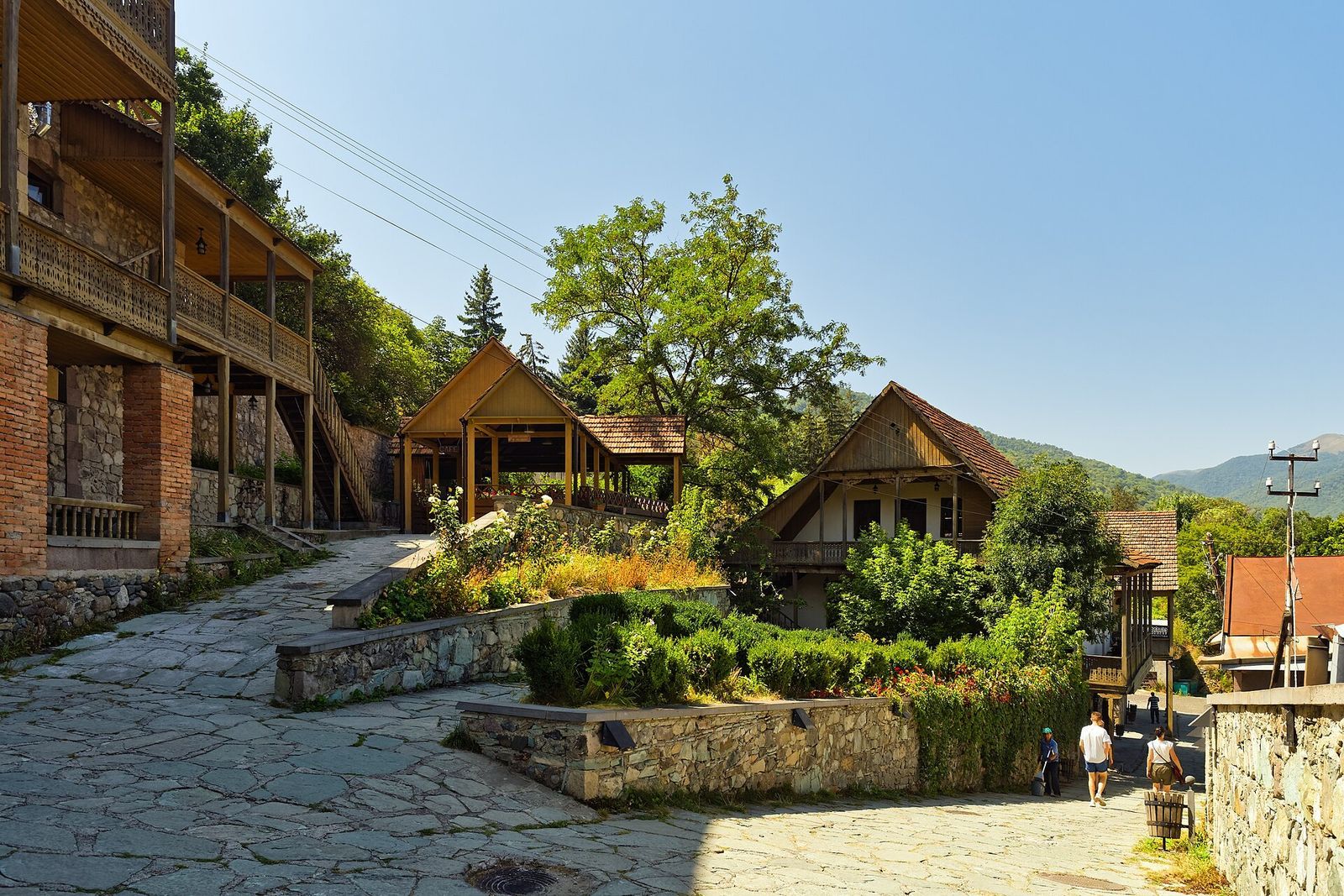
Cross into Armenia through the Debed canyon and sleep in Dilijan, a spa town in the forested hills, where the restored old houses of Sharambeyan Street now hold craft workshops.
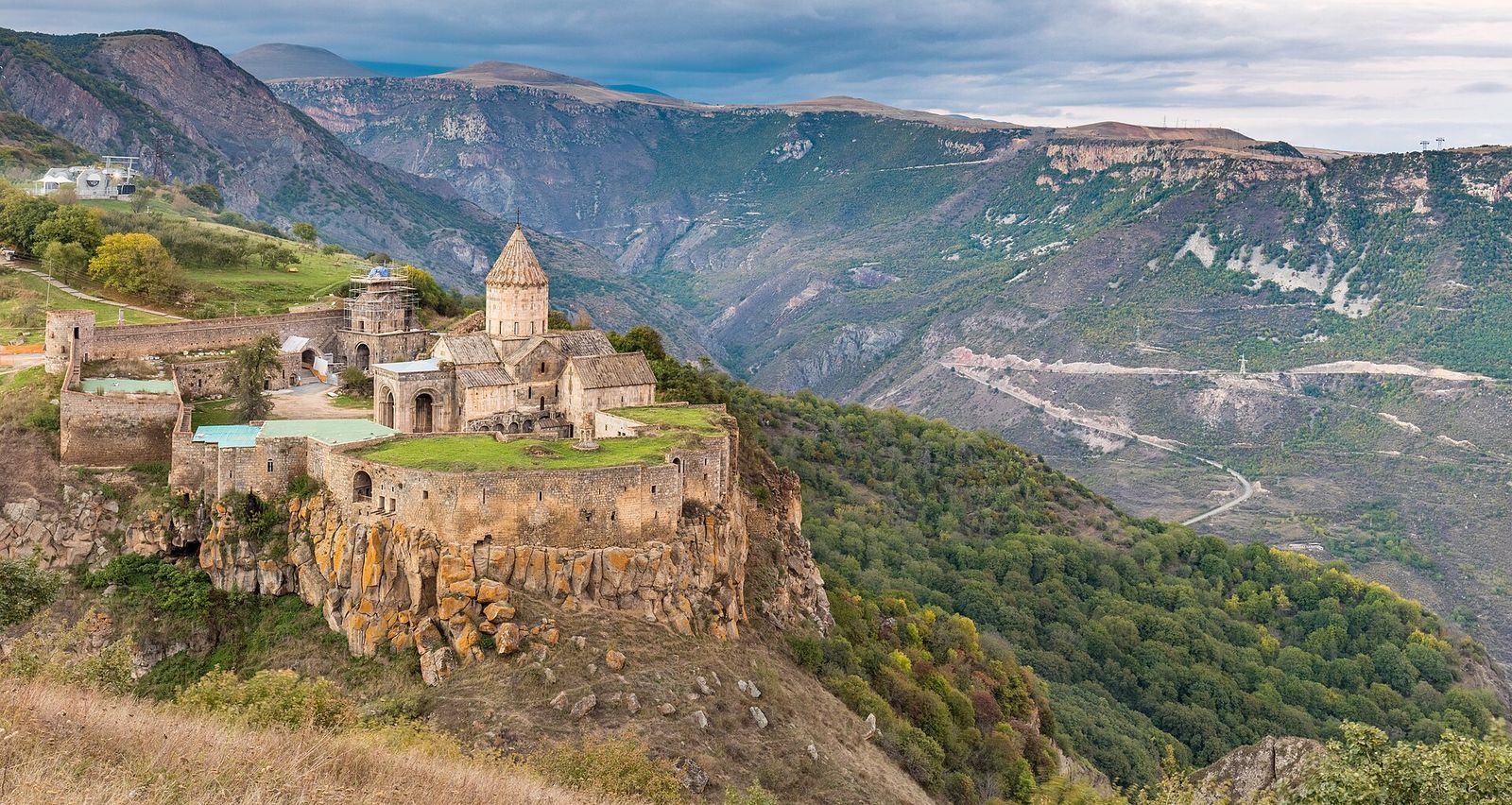
From Dilijan, drive past Lake Sevan to Yerevan for two days with Garni and Geghard. The last two days go south: Khor Virap and Noravank on the way, then Tatev, a monastery on a cliff edge that you reach by a long cable car over the gorge. Stay a night near Tatev and drive back to Yerevan for your flight.
Getting around the Caucasus: every leg, timed and priced
Inside Georgia and Armenia, you get around by marshrutka (shared minivan), train or a hired driver. The cross-border legs are where people get stuck, so here is every leg on these routes in one table.
| Leg | Best option | Time | Fare |
|---|---|---|---|
| Baku airport to the center | Aero Express bus, 24 hours | Every 30 minutes | 1.50 AZN |
| Baku to Sheki | Night train | About 6 hours | 10 to 13 AZN |
| Baku to Tbilisi | Day or night train, visa-free passports | 9.5 to 10 hours | From 54 AZN, 77.50 AZN comfort |
| Baku to Tbilisi | Flight | About 1 hour in the air | Roughly $65 to $240 |
| Tbilisi to Kazbegi | Marshrutka from Didube | About 3 hours | 15 GEL |
| Tbilisi to Sighnaghi | Marshrutka from Samgori | About 2 hours | 10 to 15 GEL |
| Tbilisi to Mestia | Marshrutka from Samgori, 07:00 | 8 to 9 hours | 50 GEL |
| Tbilisi to Yerevan | Marshrutka from Station Square, 09:00 | 5 to 6 hours | 35 GEL |
| Tbilisi to Yerevan | Night train | Just over 10 hours | About 95 to 110 GEL in a compartment |
| Yerevan to Tbilisi | Sprinter from Kilikia bus station | 5 to 6 hours | 8,000 AMD |
| Yerevan to Baku | No route | None | Go back through Tbilisi |
For the mountain legs, I'd hire a driver rather than drive yourself: Georgian roads are fast and overtaking is aggressive, and night driving in the mountains is a bad idea. Elsewhere, vans from Didube and Samgori and the trains west cover most of getting around Georgia without a car.
Visas and entry rules for Georgia, Armenia and Azerbaijan
For most Western travelers, Georgia and Armenia are stamp-and-go and Azerbaijan needs an e-visa. Check your own passport for each country before you book anything.
| Country | Most Western passports | Other passports | What to watch |
|---|---|---|---|
| Georgia | Visa-free for up to 365 days (more than 90 countries) | 90 days in 180, or an e-visa | Travel insurance mandatory since 1 January 2026 |
| Armenia | Visa-free for up to 180 days a year (EU, US, UK, Australia) | E-visa: $7 for 21 days, $34 for 120 days | The e-visa takes about 3 working days |
| Azerbaijan | E-visa: $20 plus a $6 fee, about 3 working days | Georgian, Turkish and most former Soviet passports visa-free | Carry the printout; it is checked when you leave too |
Georgia's insurance rule catches people out: since January 2026, every visitor needs health and accident cover for the whole stay, at least 30,000 GEL for treatment and hospitalization, and it can't be bought at the airport. The Georgia visa rules are the same whether you arrive by train, plane or marshrutka, and officers can ask for proof of insurance each time you come back in from Armenia or Azerbaijan, so a single travel insurance policy covering all three countries is the simple fix.
Apply for the Azerbaijani e-visa on the official ASAN Visa portal a few days before your flight.
Money, SIM cards and costs across the Caucasus
Each country has its own currency and none of them crosses a border: the manat (AZN) in Azerbaijan, the lari (GEL) in Georgia and the dram (AMD) in Armenia. Spend or change your lari before you leave Georgia, change into dram at the exchange desks at the Armenian border or in Yerevan, and take manat from a bank ATM when you land in Baku. Sorting out money in Georgia is easy, with exchange offices on almost every central street paying better than the airport.
Your phone needs a new plan in each country. A Georgian SIM stops working once you cross into Armenia, so buy a local SIM or an eSIM at each stop; Magti is the Georgia SIM card I'd pick for coverage in the mountains.
For costs, plan on about $75 to $95 per person a day at mid-range, with beds the biggest share and food and wine the next. Armenia is the cheapest of the three. In Georgia, two people spend about 250 to 350 GEL a day on a budget and 400 to 600 GEL a day traveling comfortably. Pay for marshrutkas, border vans and village guesthouses in cash, in the currency of the country you're in.
Best time for a Caucasus trip
May, June, September and October are the months I'd pick. Spring and autumn sit around 15 to 25 C in the lowlands, and the cities are pleasant for walking all day. Autumn adds the grape harvest in Kakheti, roughly September to mid-October, which makes it my favorite time for the Georgian leg.
Summer is peak season. Tbilisi can reach 38 to 40 C in July and August and prices go up, but it's the best time for the mountains: Kazbegi and Svaneti run 10 to 15 C cooler than the capital, Svaneti's trails are clear from June to September, and the Yerevan sleeper runs every night. Winter suits a capitals-only trip and skiing at Gudauri, Bakuriani or Mestia, but some mountain roads close, and winter in Tbilisi runs about 0 to 8 C, quiet and damp, with Christmas markets from mid-December into January.
Which Caucasus itinerary fits you
- First trip, 2 weeks: the 2-week route, Baku first and Yerevan last. It covers three capitals, one night in the high mountains and the wine country.
- E-visa passport and a tight budget: drop Azerbaijan and spend the time in Georgia and Armenia, all overland from Tbilisi.
- 10 days or less: capitals only if you must tick all three, otherwise Georgia and Armenia at an easier pace.
- Hikers: 3 weeks between June and September, with Kazbegi, Svaneti and Dilijan.
- Wine lovers: September or October, with a night in Sighnaghi and a day in Areni.
And when to skip:
- Skip Azerbaijan on a trip under 10 days. The visa and the flight in cost too much time for 2 days in Baku.
- Skip Svaneti outside June to September, or on any trip under 3 weeks. The drive alone is 8 to 9 hours each way.
- Skip the Friday border run to Armenia. A weekday morning crossing can save you 2 hours.
Key takeaways
- Georgia is the hub: the Armenia to Azerbaijan border is closed, so every three-country route goes through Tbilisi.
- Go Baku first, Georgia second and Armenia last, flying into Baku and home from Yerevan.
- Two weeks covers all three countries with 3 days in Azerbaijan, 6 in Georgia and 5 in Armenia; 3 weeks adds Sheki, Svaneti and Tatev.
- Azerbaijan needs an e-visa for most Western passports, and e-visa holders fly from Tbilisi rather than take the train.
- Budget about $75 to $95 per person a day, and carry manat, lari and dram for the cash legs.
Frequently asked questions
How many days do you need for Georgia, Armenia and Azerbaijan?
At least 2 weeks for all three countries, and 3 weeks if you want the regions as well as the capitals. With 10 days you can see the three capitals, but Georgia and Armenia alone make a more relaxed trip of that length.
Can you travel from Armenia to Azerbaijan?
Not directly. The border between Armenia and Azerbaijan is closed and there are no direct flights, so you travel back through Georgia: Yerevan to Tbilisi overland, then Tbilisi to Baku by train or plane.
Is the land border between Georgia and Azerbaijan open?
Only for the train. Azerbaijan has kept its land borders closed to passengers since 2020, so buses, marshrutkas, taxis and cars can't cross, but the Tbilisi to Baku train has run again since May 2026, for passports that don't need an Azerbaijani visa.
Should I visit Armenia or Azerbaijan first?
Azerbaijan first. The route then runs in a straight line from Baku through Georgia to Yerevan, and you arrive at the Azerbaijani border without any questions about a trip to Armenia.
How many days should I spend in Armenia?
Plan on 4 to 5 days on a two-week Caucasus trip: 2 days in Yerevan and 2 or 3 days out to Garni, Geghard, Lake Sevan and Khor Virap. Add 2 days for Tatev and the south, and another for Dilijan.
Is it safe to travel to the Caucasus?
Yes, for the routes in this guide. Violent crime against tourists is rare in all three countries, and in Georgia the real risks are taxi overcharging and traffic; Tbilisi's safety issues come down to the same things. Stay out of Abkhazia, South Ossetia and the Armenia to Azerbaijan border areas.
How much does a 2-week Caucasus trip cost?
About $75 to $95 per person a day at mid-range, so roughly $1,050 to $1,330 for 14 days before international flights. Armenia is the cheapest country of the three, and the Baku flight or train and the Azerbaijani e-visa are the extras to budget for.
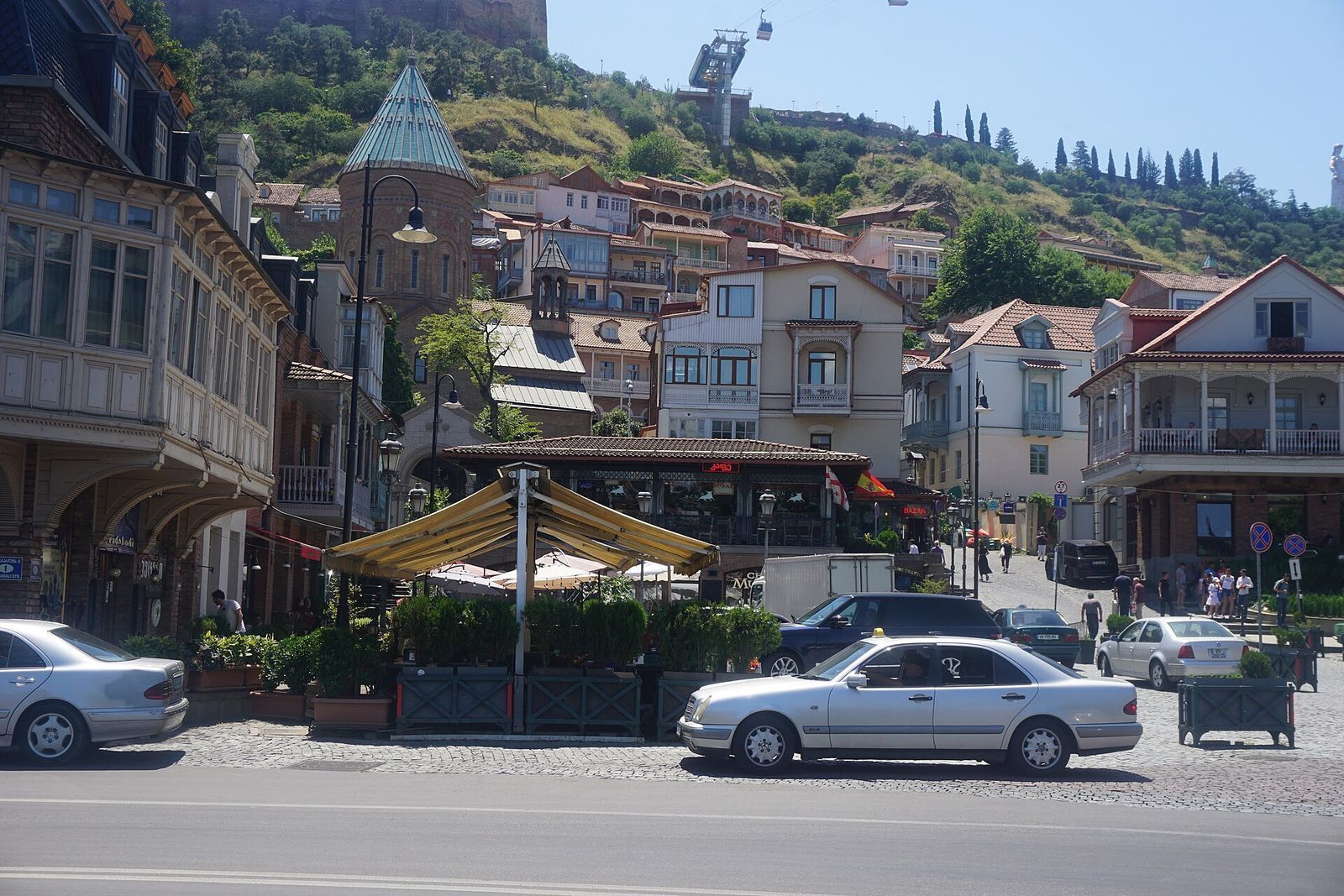
Tbilisi Travel Tips: What I'd Tell You Before a First Trip to Georgia
Tbilisi is known for wine, sulfur baths and long dinners. Here's what to know about entry, money, transport and safety.
Read the guide
Tbilisi Itinerary: How I'd Spend 1 to 5 Days in Tbilisi
Tbilisi is best over 3 full days. Here is how to spend 1 to 5, with routes, meals, day trips and costs.
Read the guide
The Best Time to Visit Tbilisi, Month by Month
Tbilisi is known for golden autumns and hot summers. Here is the weather by month, the crowds, and when I would go.
Read the guide