Armenia Day Trip from Tbilisi: Haghpat, Sanahin and the Debed Canyon
Tbilisi is one of the few capitals where a second country fits into a day trip. About 1.5 hours south, over the border at Sadakhlo, the Debed canyon in northern Armenia holds three medieval monasteries, two of them on the UNESCO list. Here's what you need to know about the route, the border, the ways to get there, what it costs and how the day runs on the clock.
Is an Armenia day trip from Tbilisi worth it?
Yes, if you like old churches and want to see a second country without packing a bag. The monasteries of the Debed canyon are darker, heavier and older-feeling than most of what you see around Tbilisi: black and grey basalt, carved cross-stones set into the floors, and long vaulted halls built for monks to study in. Haghpat and Sanahin share a UNESCO listing, both are free to enter, and you can see them in a single afternoon.
What you get is a sample, not Armenia. A single day only reaches the far north, the Lori region along the Debed River, and a good part of it goes on the road. If Yerevan, Lake Sevan or Armenia's south is what you're after, that's an overnight trip, and the overland route to Yerevan by train or marshrutka is the way to do it.
My view: for a first trip to Georgia of 5 days or more, it's one of the best day trips from Tbilisi, because nothing on the Georgian side looks like Haghpat. On a shorter trip I'd put Mtskheta and Kazbegi first and save Armenia for next time.
The Debed canyon route
Once you're over the border, the road follows the Debed River south into a deep, green canyon, with Soviet mining towns on the valley floor and the monasteries on ledges and plateaus above it. Everything worth stopping for sits within a short drive of the town of Alaverdi, which is what makes the canyon work as a day trip.
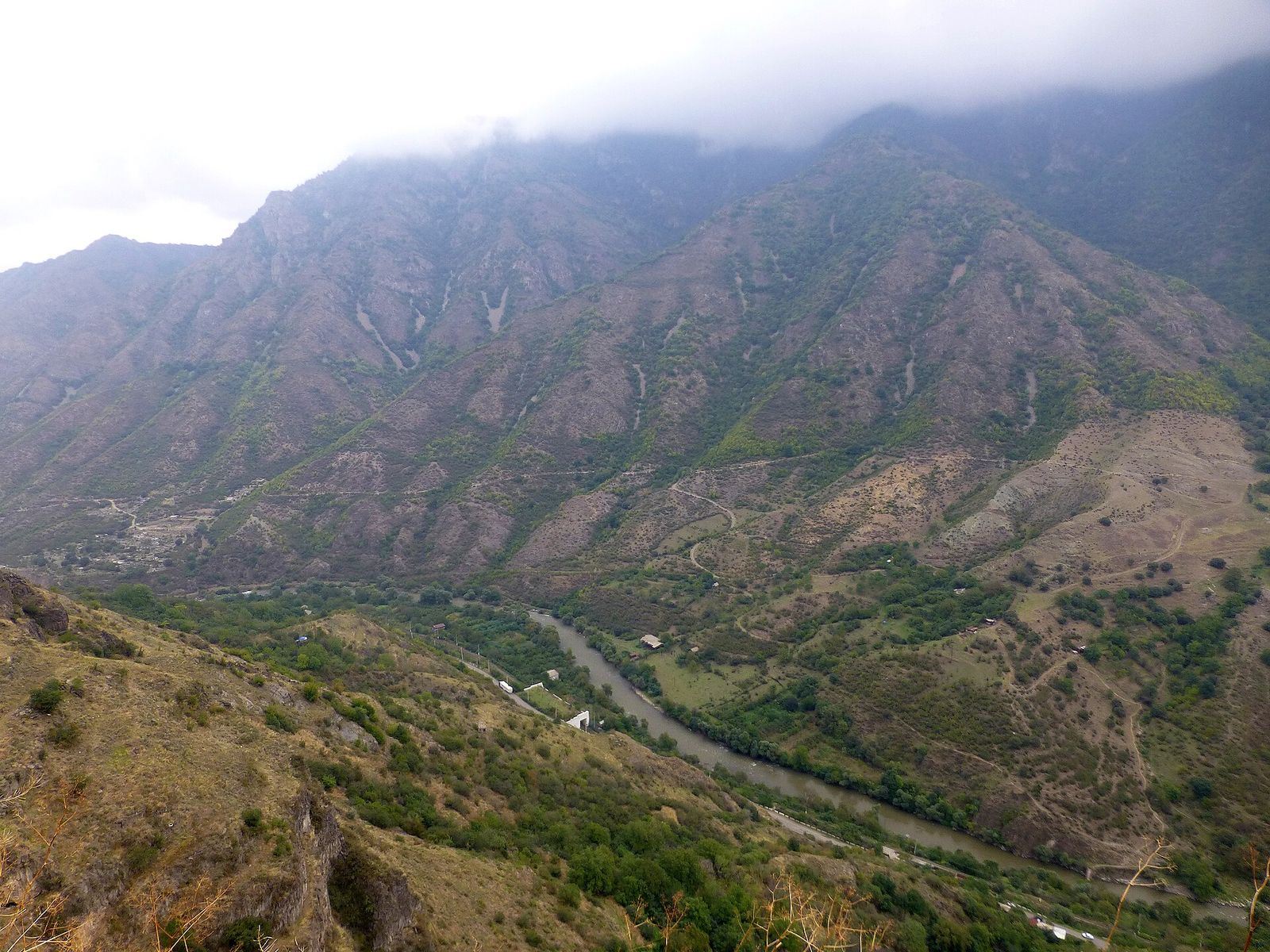
These are the stops, in the rough order a day trip reaches them:
| Stop | What it is | Built | Entry | Time to allow |
|---|---|---|---|---|
| Akhtala Monastery | A fortress monastery with a fresco-covered church | 10th century, church 13th century | Free | 45 minutes |
| Haghpat Monastery | UNESCO-listed monastery on a plateau above the canyon | 10th to 13th centuries | Free | 1 hour |
| Sanahin Monastery | Haghpat's UNESCO twin, a medieval center of learning | 10th century onward | Free | 1 to 2 hours |
| Mikoyan Brothers Museum | A small museum in Sanahin village with a MiG-21 outside | Soviet era | Ask at the door | 20 to 30 minutes |
| Sanahin Bridge | A basalt bridge over the Debed near Alaverdi | 1195 | Free | 10 minutes |
| Odzun Church | An early basilica just off the road | 5th to 7th centuries | Free | 30 minutes |
A group tour usually covers Akhtala, Haghpat, lunch, the Mikoyan museum and Sanahin. With a private driver you can swap in Odzun or the walk to Kobayr.
Haghpat Monastery
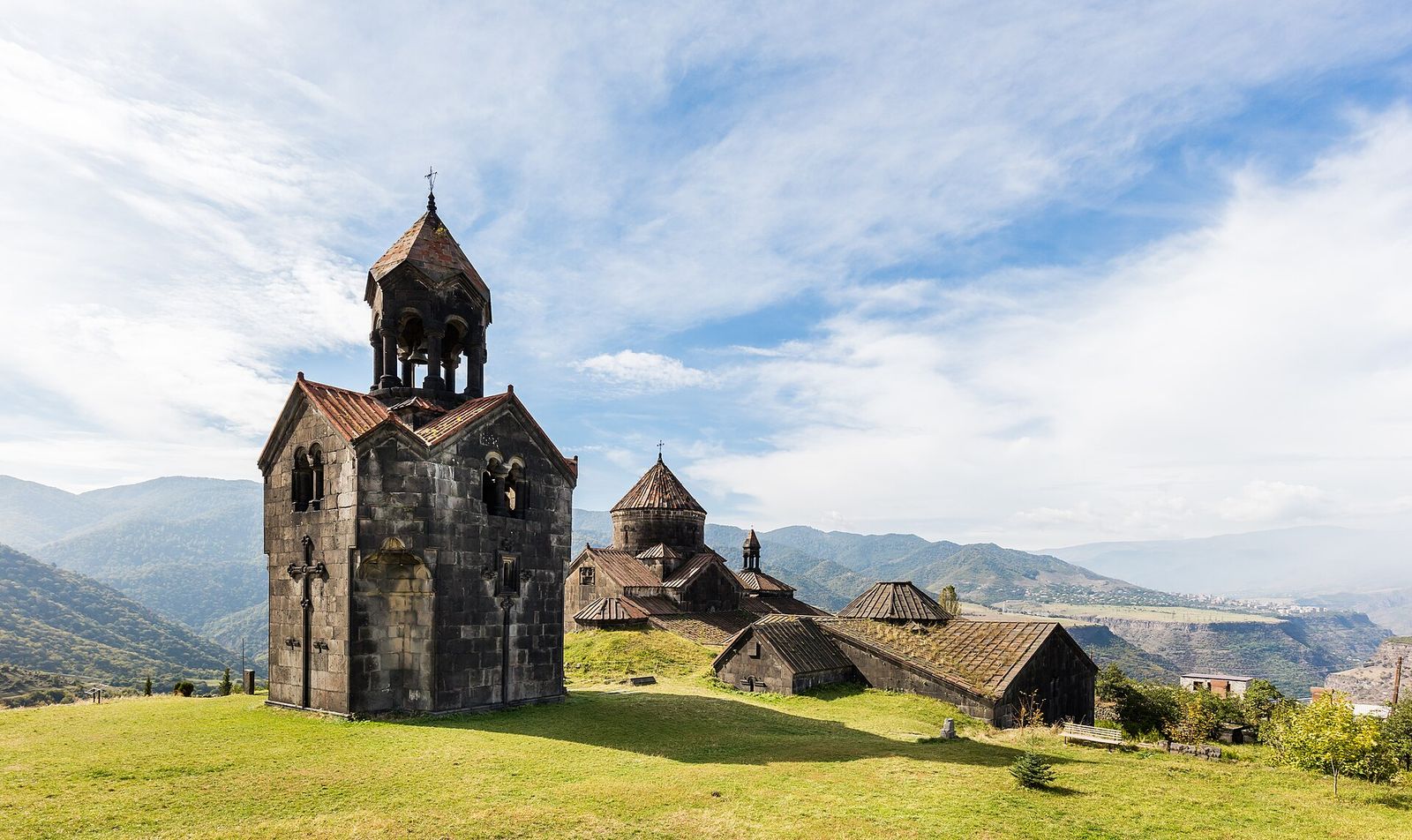
Haghpat is the reason most people make the trip, and it's my favorite stop of the day. The monastery sits on a grassy plateau high above the canyon, a cluster of stone churches, halls and a bell tower built between the 10th and 13th centuries, with the mountains rolling away behind it. It's still a working monastery, reopened in 1992.
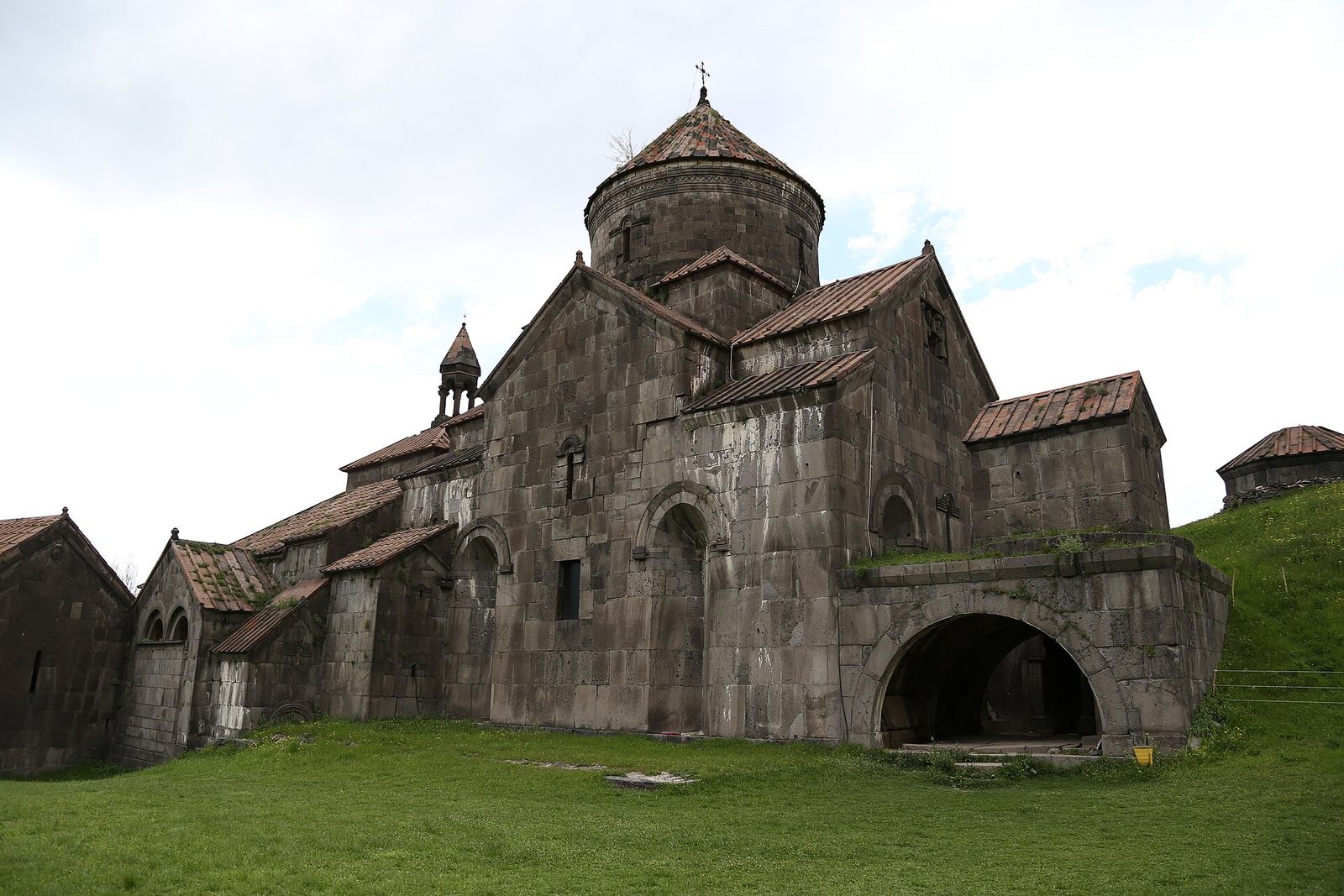
Inside, the main church opens into a gavit, a large vaulted entrance hall, and the floor is laid with old gravestones you walk straight over to get in. Look for the library building, which still carries scorch marks from the Mongol raids of the 13th century, and for the carved cross-stones, called khachkars, standing around the grounds. Give it an hour: 30 minutes for the churches and the rest for wandering the terraces and the view.
Most of the site is accessible by wheelchair, though some of the side chambers are reached by steps. There's no ticket office and no fee.
Sanahin Monastery, the bridge and the Mikoyan museum
Sanahin is Haghpat's twin across the canyon, founded in the 10th century and for centuries a center of learning, with scriptoria, a library and a school. Where Haghpat is all open sky, Sanahin feels like a stone village: a tight group of churches and halls joined by vaulted passages, with grass growing on the roofs and trees pressing in on every side.
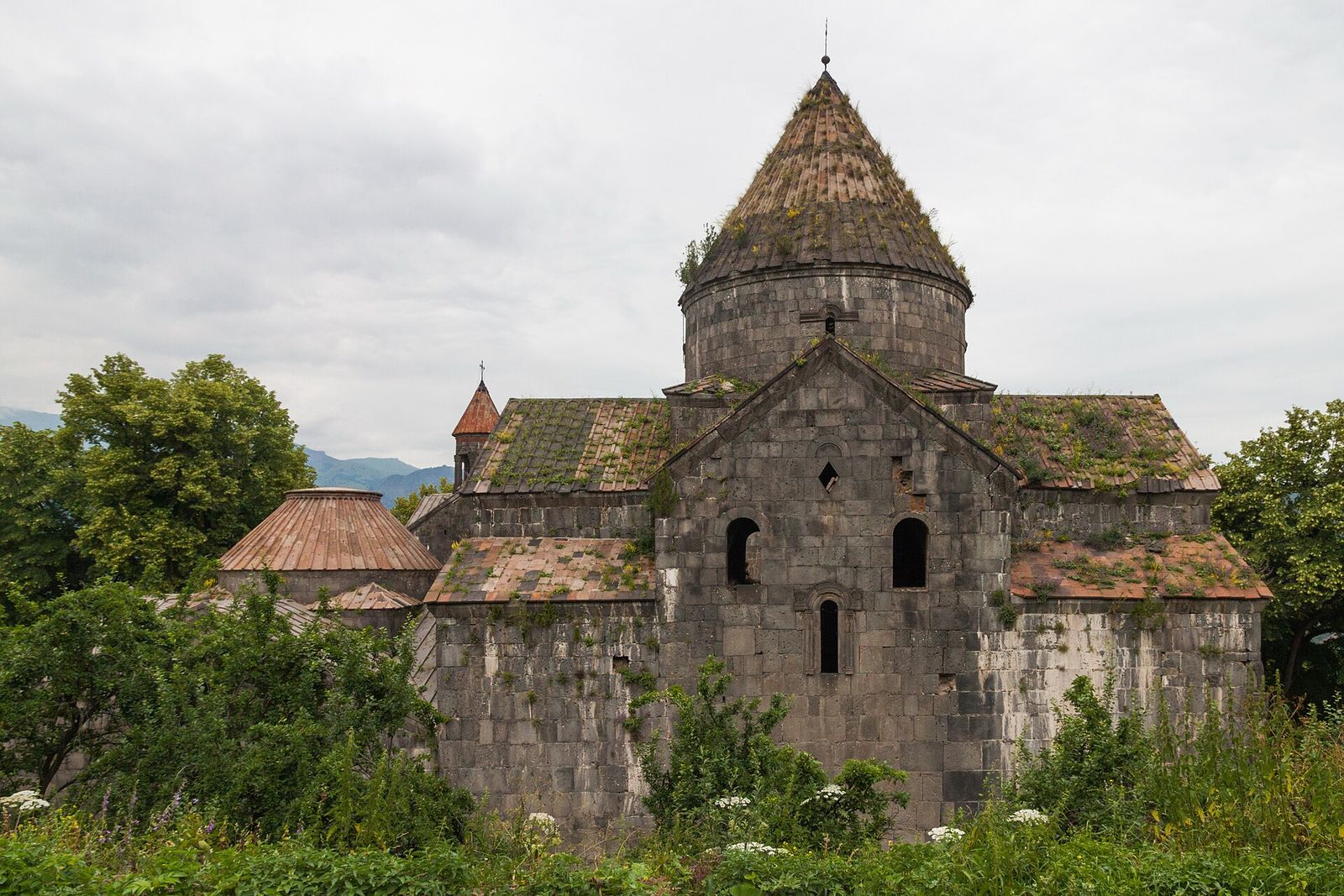
The oldest building is the Holy Mother of God church, and the largest is the Holy Savior church, Amenaprkich. The columned hall at the entrance is the part I remember best: dim, cool and lined with carved stone, the kind of room that makes you lower your voice without being asked. You'll also see cracks in the walls from the earthquakes this region gets. Allow an hour or two, more if you like to sit.
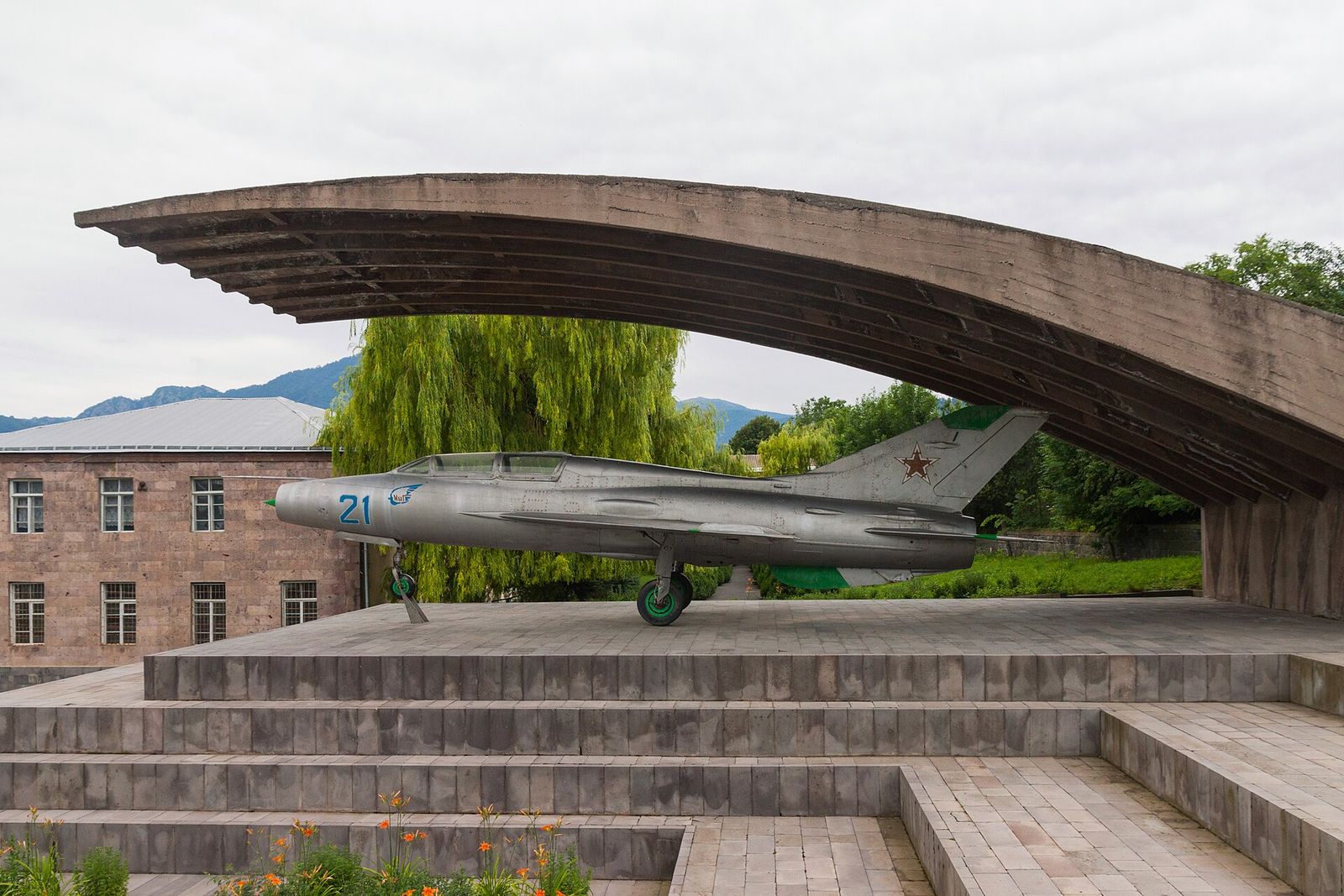
In Sanahin village, a few minutes from the monastery, the Mikoyan Brothers Museum honors two local boys who did well in the Soviet Union: Anastas Mikoyan, a long-serving Soviet politician, and Artem Mikoyan, who co-designed the MiG fighter jets. A full-size MiG-21 stands at the entrance, which is the photo everyone takes. It's a 20-minute stop and an odd, enjoyable break from churches.
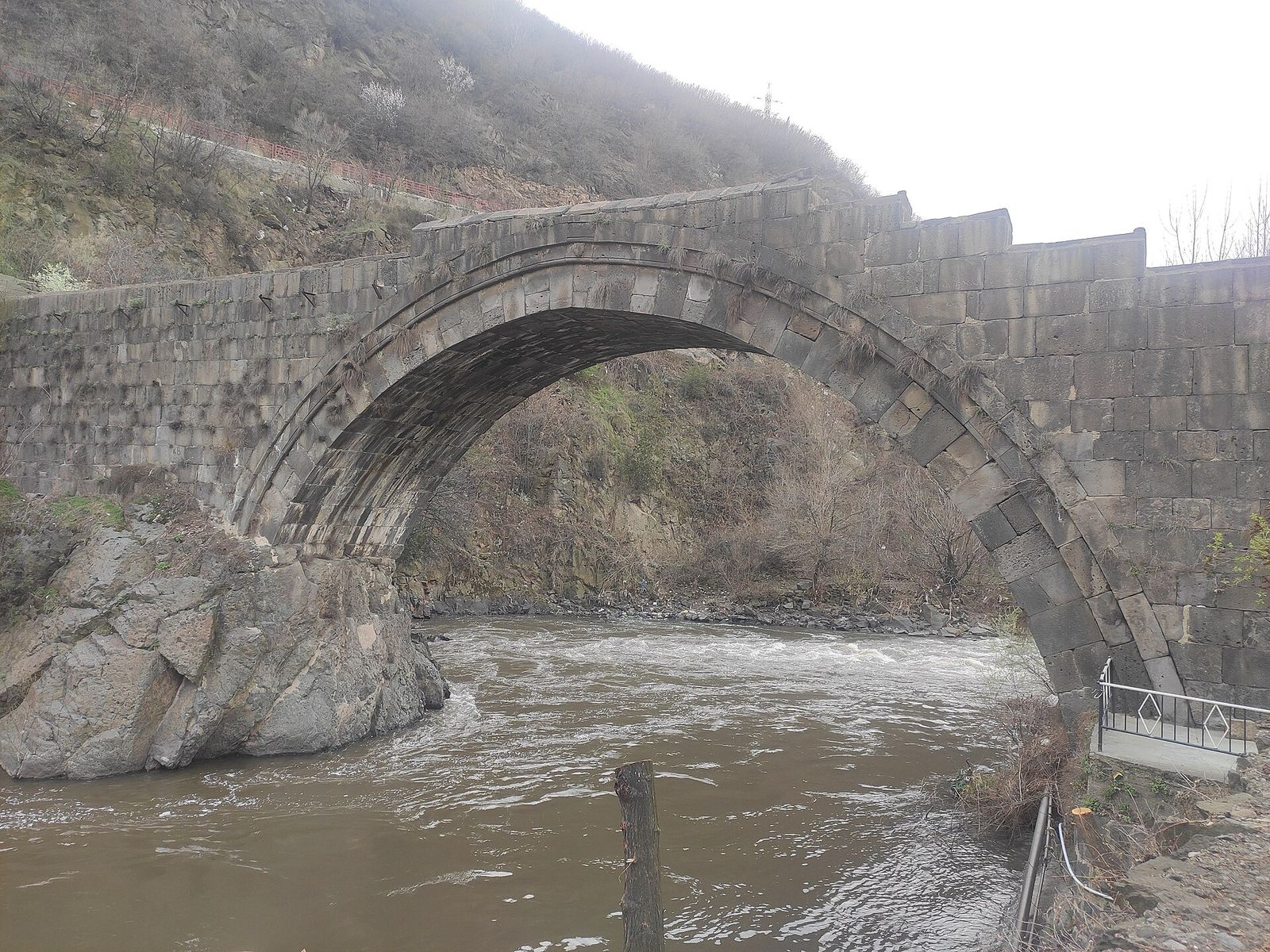
Down by the river near Alaverdi, Sanahin Bridge has carried traffic over the Debed since 1195. It's a single basalt span about 18.6 m long, still standing beside the modern road, and a 10-minute stop if your driver will pull over.
Akhtala Monastery and its frescoes
Akhtala is the first stop on most tours because it's the closest to the border. It's a monastery inside a fortress, on a rocky outcrop above the canyon, with the walls and towers of the old castle wrapping around the church. The monastery's roots go back to the 10th century, and its Holy Mother of God church dates from the 13th.
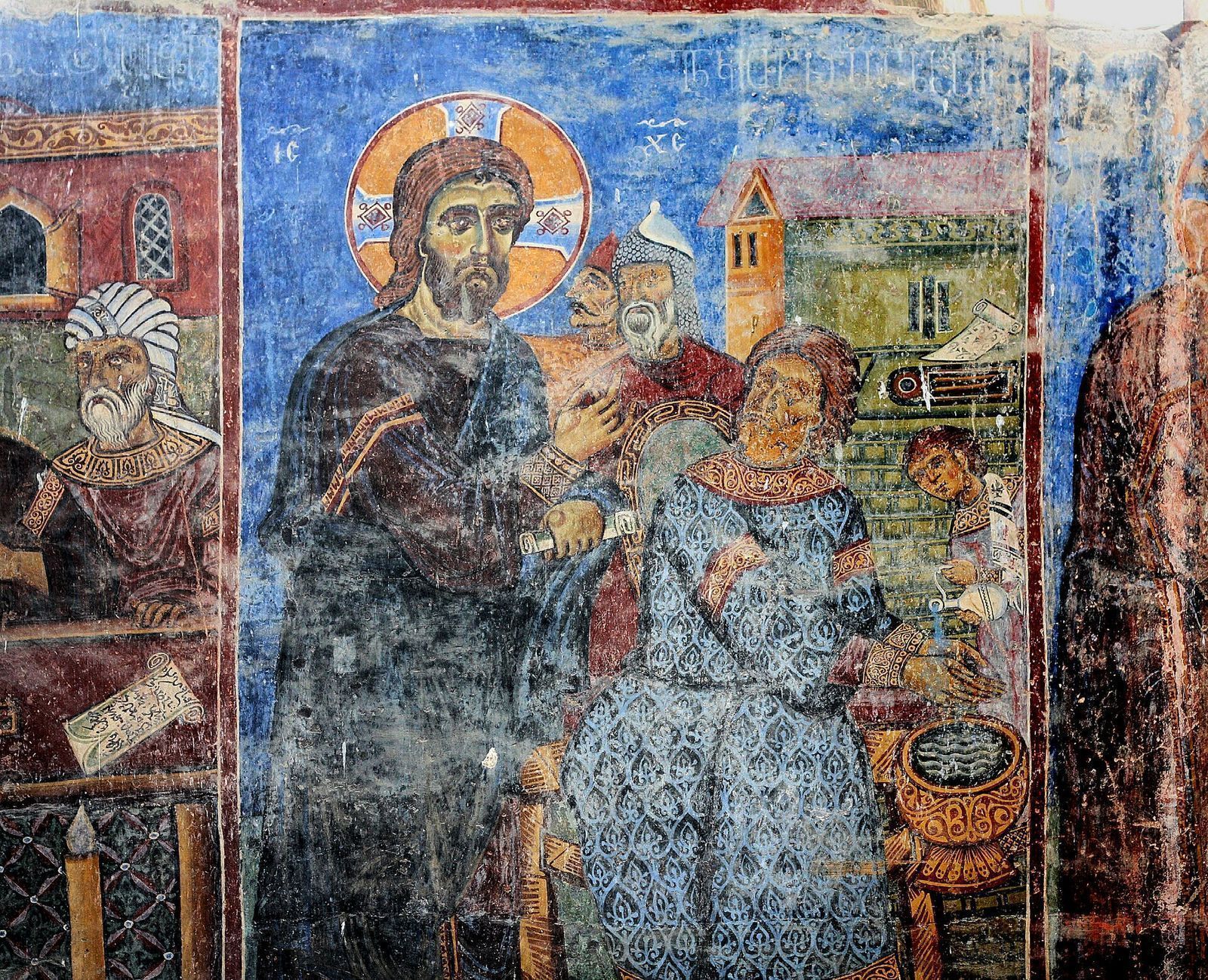
What makes Akhtala different is the paint. Most Armenian churches are bare stone inside, but Akhtala's walls are covered from floor to vault in frescoes in deep blues and reds, many with the faces scratched away over the centuries. It's the most colorful interior of the day, and it surprises people who've already seen a lot of churches in Georgia. Entry is free, and 45 minutes is enough.
The village around it is a former mining settlement with abandoned Soviet buildings at its edges, and in mid-August it hosts a khorovats (barbecue) festival that has run most years since 2009.
More stops in the Debed canyon
A group tour won't fit all of these, but with a private driver or a second day you can pick one or two.
Odzun Church
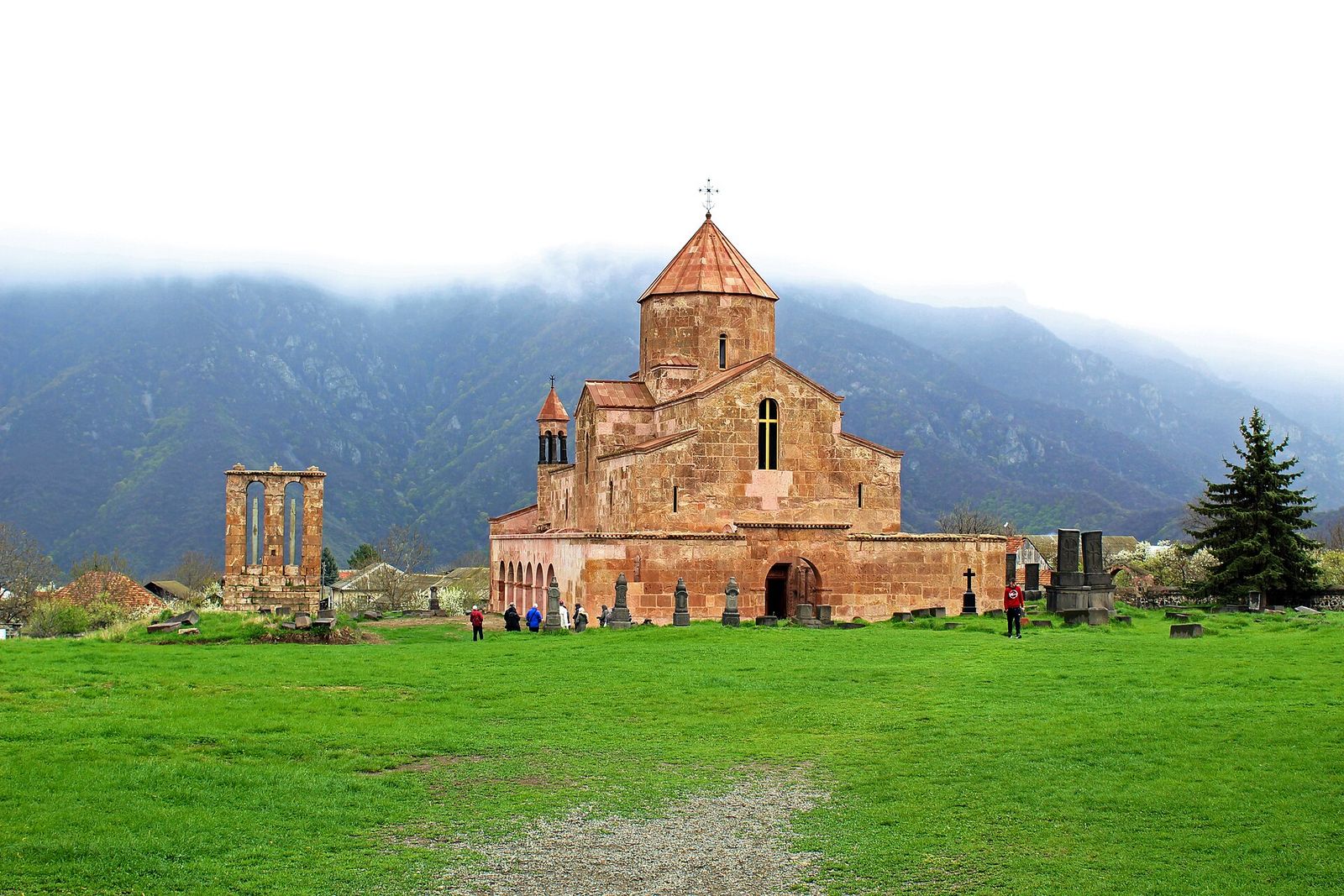
Odzun is one of the oldest churches in the region, a large basilica dating to the 5th to 7th centuries, right off the road in Odzun village on the plateau above Alaverdi. Outside stands a rare funerary monument of carved stone arches. It's free and takes 30 minutes, and the drive up gives a long view down the canyon.
Kobayr Monastery
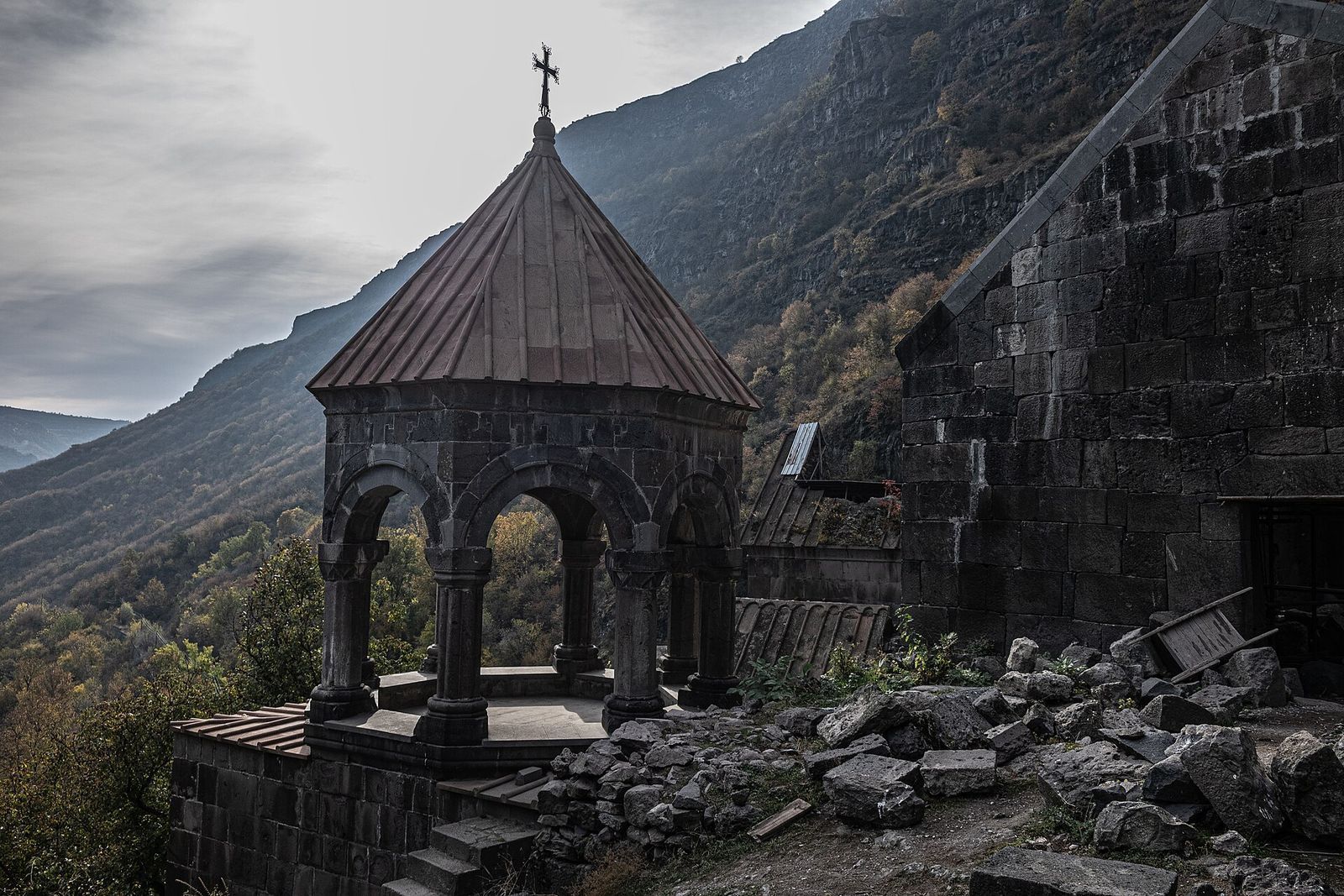
Kobayr is a 12th-century ruin on a ledge above the highway near the town of Tumanyan, reached by a short, easy hike. The walls carry inscriptions in both Georgian and Armenian, and the old bell tower looks straight across the canyon. It's the best stop on the route if you want a walk.
Alaverdi
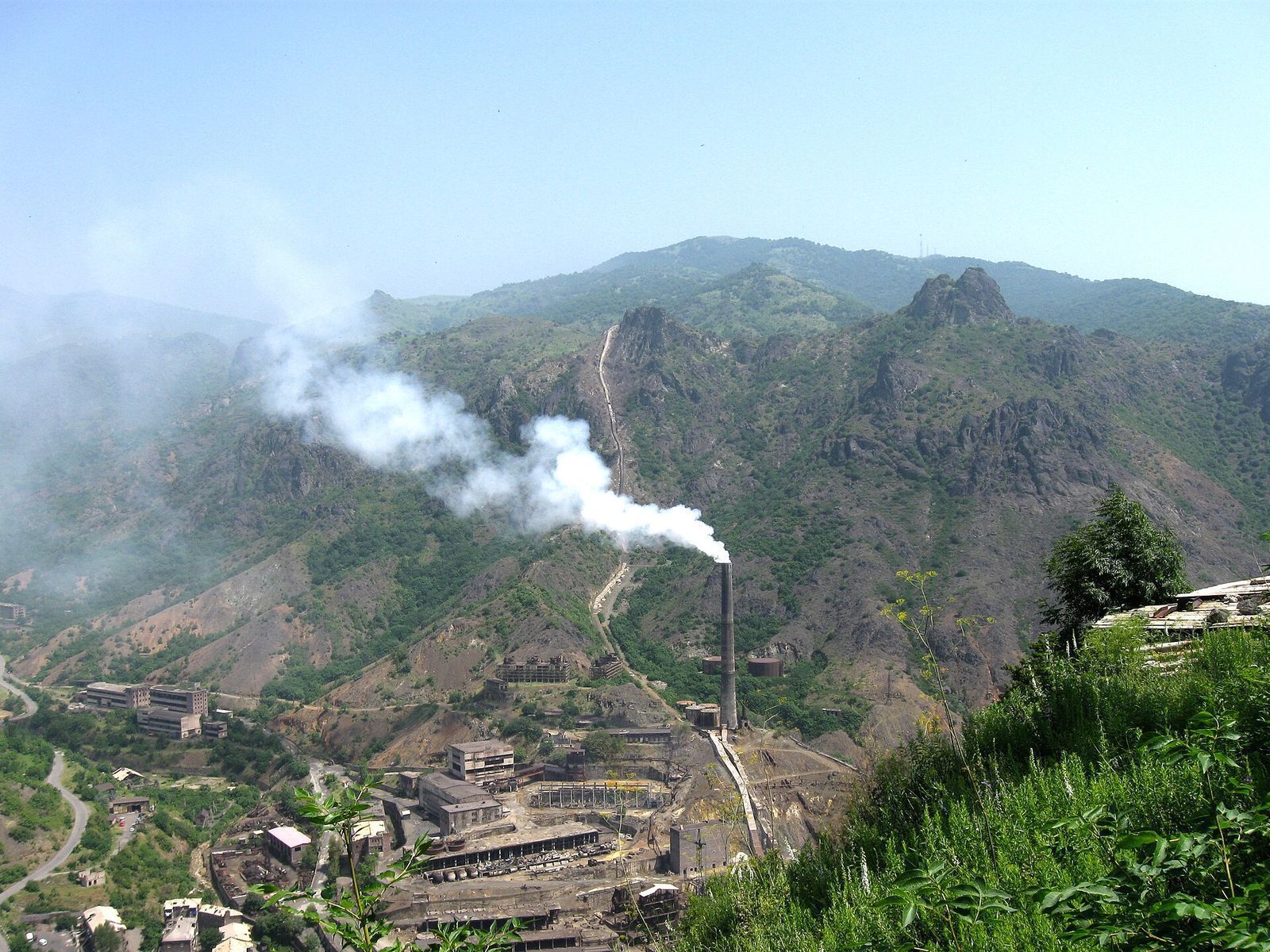
Alaverdi is the canyon's main town and the one you'll drive through most often. It grew up around a huge copper smelter, and parts of it look frozen in 1991: concrete blocks, rusting industrial halls and cable cars that have hung over the valley unused for more than three decades. It's not pretty, but it's the most Soviet place most visitors to Georgia will see, and it has the nearest bank to the border.
Tumanyan
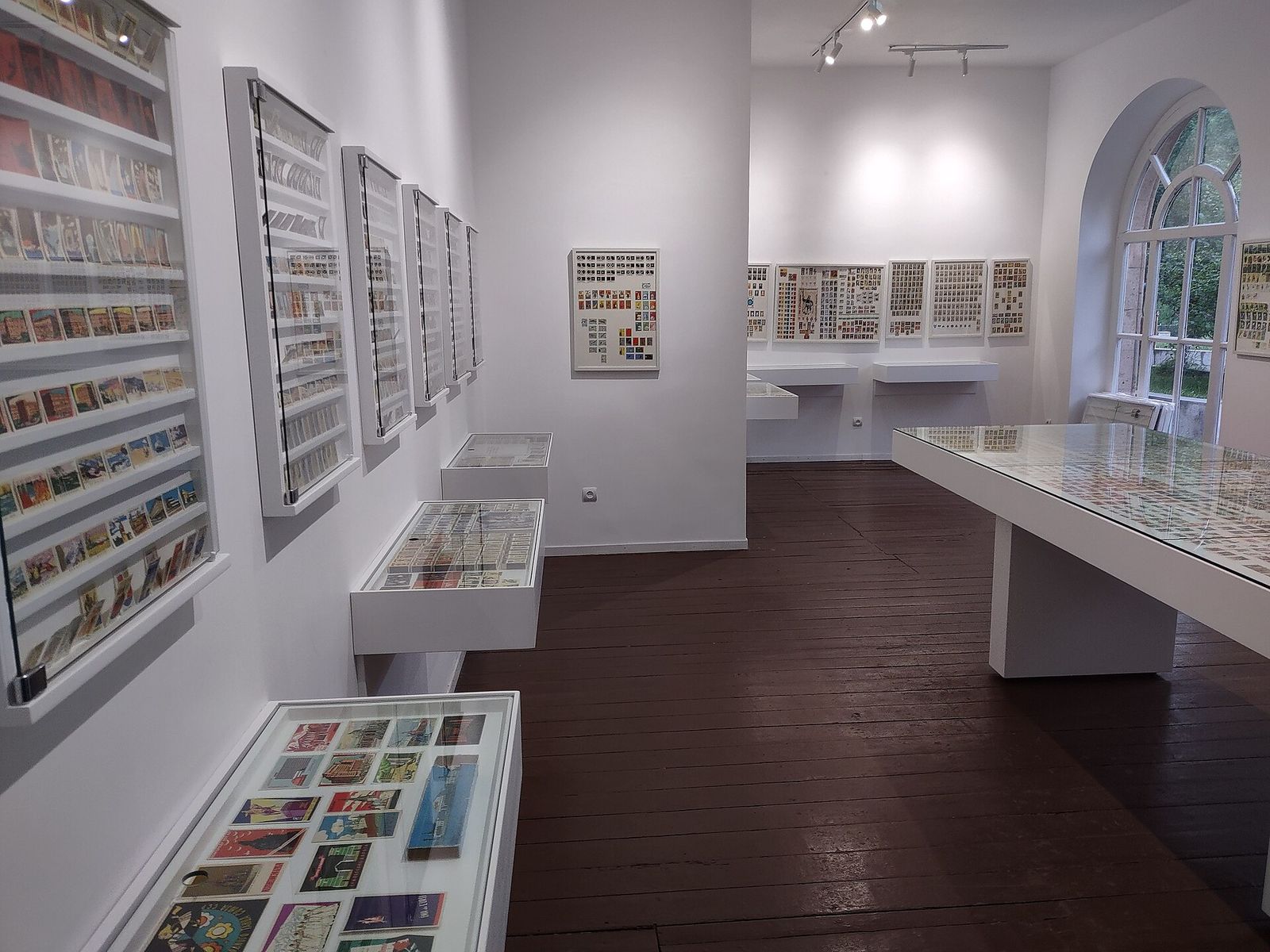
Further down the canyon, Tumanyan has the Matchbox Label Museum, a private collection of more than 8,000 matchbox labels with free entry and a guided tour for 1,000 AMD. It's a short, quirky stop for anyone who's had enough monasteries.
Crossing the border at Sadakhlo and Bagratashen
The crossing is Sadakhlo on the Georgian side and Bagratashen on the Armenian side, either side of a bridge over the Debed River. It's open 24 hours. The drive from Tbilisi takes about 1.5 hours, south through Marneuli and the flat farmland near the border.
On a tour or in a minibus, everyone gets out at the Georgian post, goes through exit control on foot with a passport, crosses the bridge and gets an Armenian entry stamp before meeting the vehicle on the other side. On a quiet weekday morning the whole thing takes 20 to 40 minutes. The officers rarely ask more than where you're going, and "a day trip to Haghpat" is an answer they hear all the time.
If your passport carries an Azerbaijan stamp, you may get a few extra questions on the Armenian side. Answer simply and keep your plans for the day easy to explain.
How to get to Armenia from Tbilisi for the day
There are four ways to do it, and for most people the answer is a group tour.
| Option | Cost | Time | Border | Best for |
|---|---|---|---|---|
| Group tour | From about $60 a person with lunch | 10 to 12 hours | The guide handles it | Solo travelers and couples |
| Private driver and guide | Per car, so cheaper per head in a group | As long as you like | The driver handles it | 3 or 4 people, extra stops |
| Rental car | Daily rental plus fuel | As long as you like | You do the paperwork | Only if the rental allows Armenia |
| Marshrutka to Alaverdi | 35 to 50 GEL each way toward Yerevan | A long day with tight connections | On foot with the van | One-way travelers heading on to Yerevan |
Group tours
Most group tours meet at Avlabari metro around 08:30 and leave at 09:00, run 10 to 12 hours and include lunch, often at a family home in one of the canyon villages. Prices run from about $60 a person for a group trip with lunch to roughly $160, depending on the operator. The guide sorts the border, explains what you're looking at in each church and keeps the day moving. It's the easiest way by a long way, and it's the one I'd book solo. A wider list of tours from Tbilisi includes several Armenia day trips.
Private driver and guide
A private car picks you up at your hotel and stops where you want, which is the only way to add Odzun, Kobayr or a long lunch at Mendz Er. You pay per car, so it makes sense for 3 or 4 people. Hotels and guesthouses in Tbilisi can usually arrange one; agree the price, the stops and the return time before you leave, and confirm the driver is set up to cross into Armenia.
Rental car
Driving yourself is possible on a narrow, winding canyon road, as long as the company behind your rental car in Georgia allows the car into Armenia and gives you the papers for it.
Marshrutka
Marshrutkas to Yerevan leave from Station Square, Avlabari and Ortachala bus station for 35 to 50 GEL, cross at Sadakhlo and drive straight through the Debed canyon. You can get off in Alaverdi and take a local taxi to the monasteries. The problem is coming back: vans heading north to Tbilisi often pass through already full, and you can't count on a seat. I'd use the marshrutka for a one-way trip, stopping in the canyon for a night on the way to Yerevan, and not for a same-day return.
My Armenia day trip on the clock
This is how a well-run tour day goes, and the plan I'd follow with a driver too. It works back from being in Tbilisi by about 20:00.
| Time | Where | What happens |
|---|---|---|
| 08:30 | Avlabari metro, Tbilisi | Meet the group, grab a window seat for the canyon |
| 09:00 | Leave Tbilisi | South through Marneuli toward the border |
| 10:30 | Sadakhlo to Bagratashen | Exit Georgia, walk the bridge, enter Armenia |
| 11:00 | Bagratashen | Change money or use the ATM after passport control |
| 11:30 | Akhtala | The fortress walls and the frescoes, 45 minutes |
| 12:45 | Haghpat | The monastery and the canyon view, 1 hour |
| 14:00 | A canyon village | Lunch, about 1 hour |
| 15:30 | Sanahin | The monastery, then the MiG-21 at the Mikoyan museum |
| 17:00 | Alaverdi | A slow drive through town, the old bridge if there's time |
| 18:00 | Bagratashen to Sadakhlo | Leave Armenia, re-enter Georgia |
| 19:30 to 20:00 | Tbilisi | Back in the city for a late dinner |
Every border wait over 40 minutes comes straight out of the monastery time, which is why midweek matters so much. In winter, with short days, I'd keep the same order and cut the time at each stop so the canyon road is done before dark.
Where to eat in the Debed canyon
Lunch is part of the day, and the food is close enough to Georgian to feel familiar and different enough to be interesting.
- A family lunch. Many tours stop at a village home for a long table of khorovats (Armenian barbecue, usually pork and chicken), vegetable fritters, cheeses, salads and fresh bread. It's the meal people talk about afterwards.
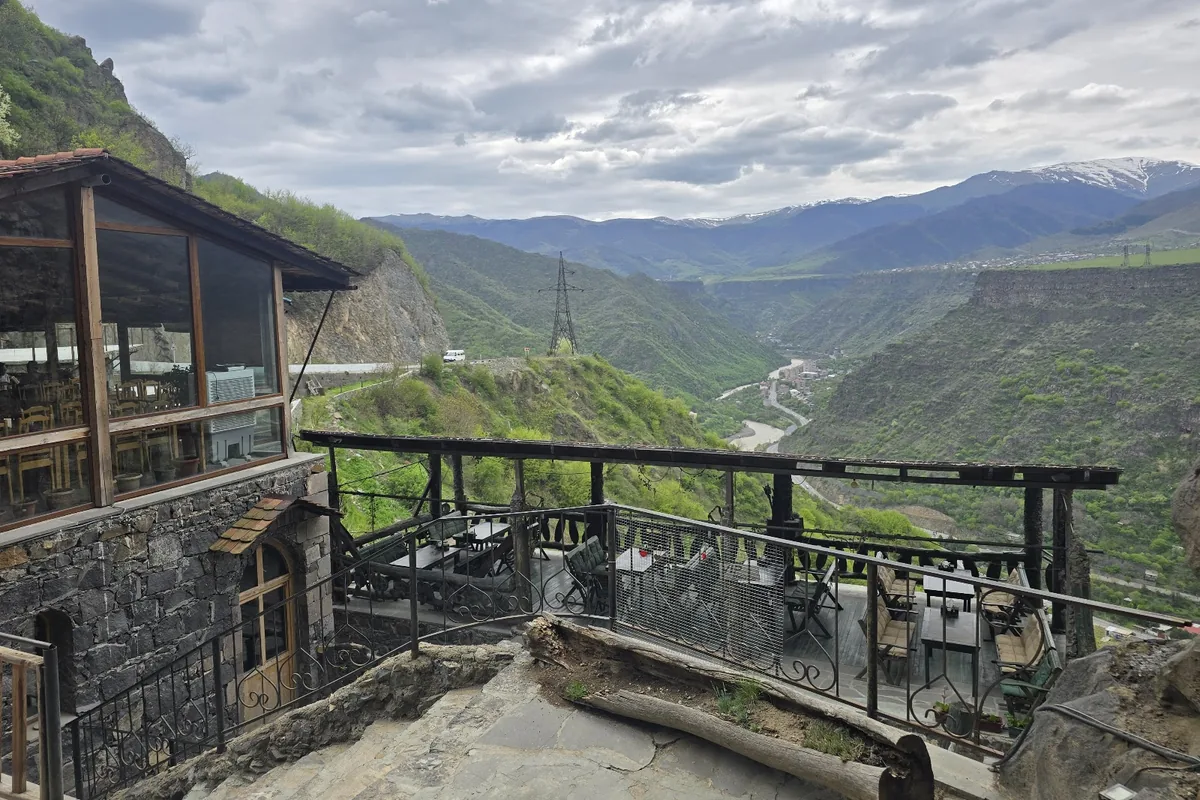
- Mendz Er. A cave restaurant above Alaverdi in what used to be a goat barn, with a cave said to run more than 300 m into the rock, plus a small museum and workshops. Order the egh u jil, a kind of Armenian fondue. This is my pick if you're with a driver.
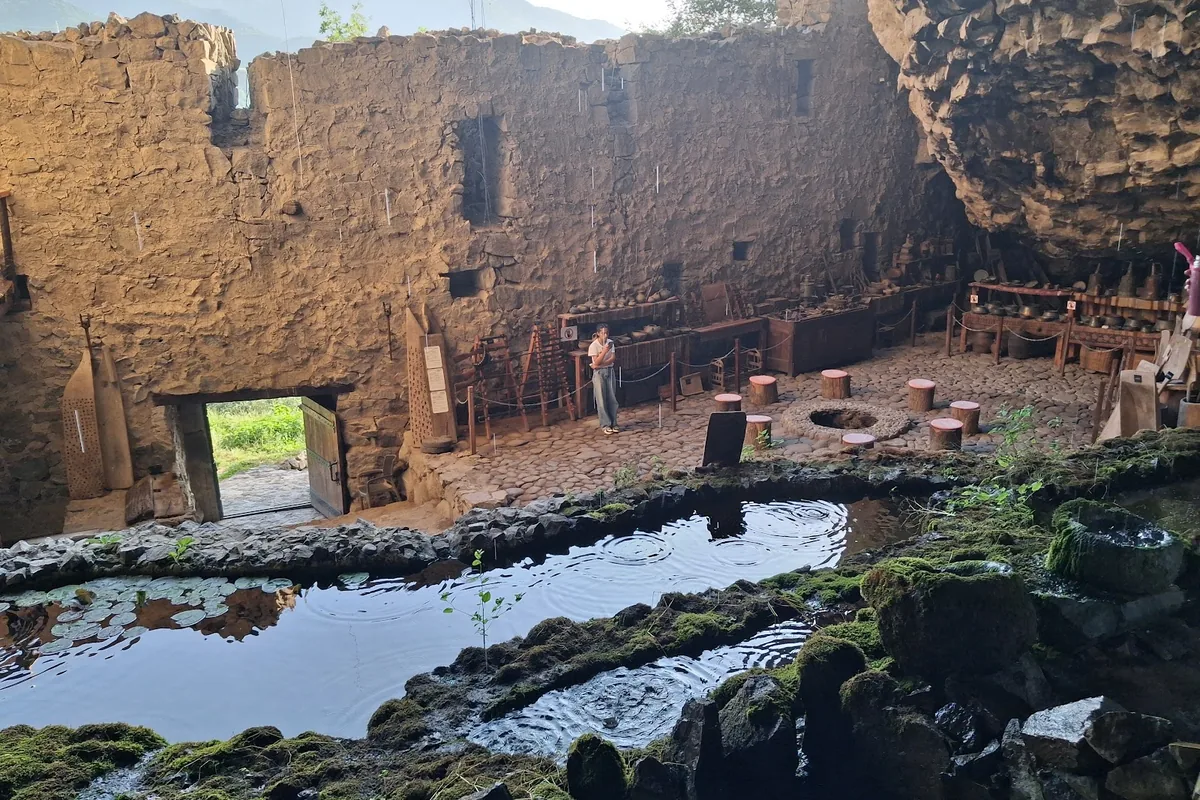
- Zarni Parni. A cave area near Haghpat with a restaurant of its own, a simpler option when Mendz Er is out of the way.
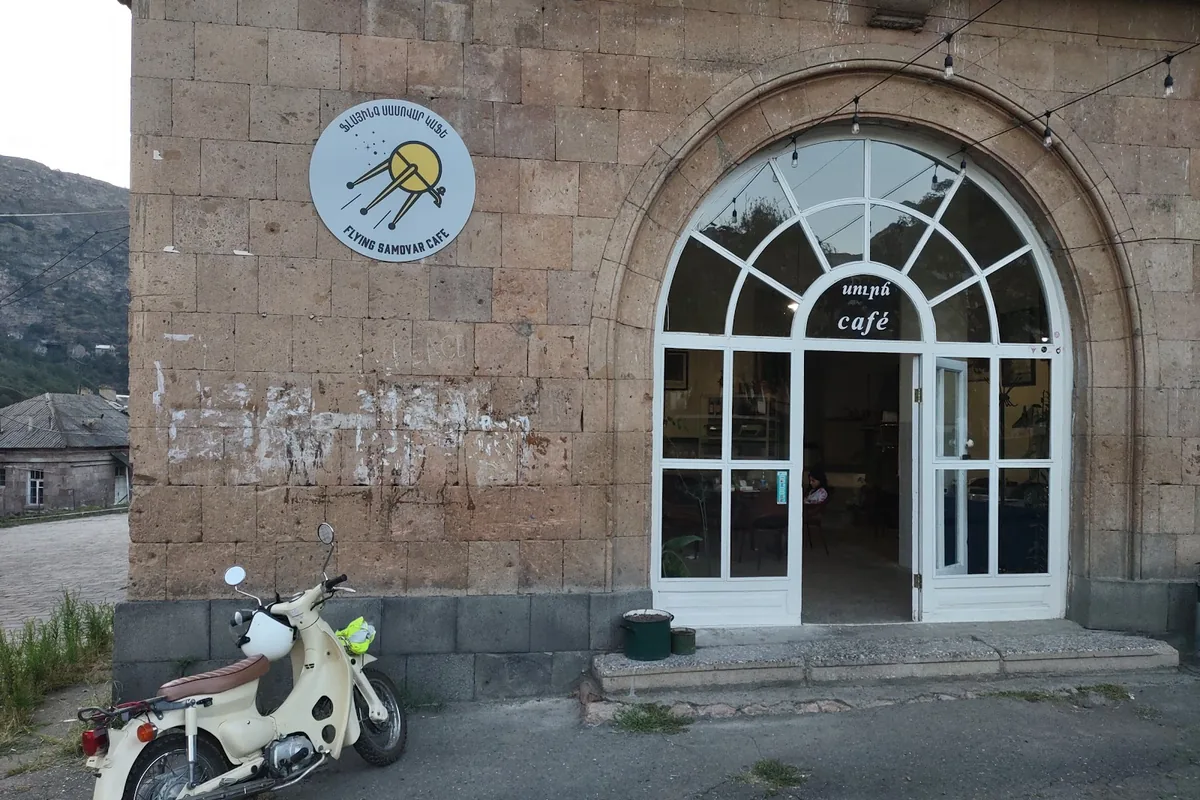
- Flying Samovar. A Soviet-themed cafe in Tumanyan for coffee, sandwiches and snacks, useful on a route that heads further down the canyon.
Armenia is generally cheaper than Georgia, so lunch costs less than you'd pay for the same table in Tbilisi. Check the bill: a service charge of about 10% is often added already.
Money, phones and passports for Armenia
Three small things decide whether the day runs smoothly.
Money. Armenia uses the dram (AMD). There's an ATM right after passport control at Bagratashen, and a supermarket near the border changes cash; US dollars and euros get a better rate there than lari. Plenty of places in the canyon take cash only, so I'd change enough for lunch, a coffee and the odd museum ticket before leaving the border. The next bank is in Alaverdi.
Phones. Your Georgian SIM stops working once you cross, unless you've bought a roaming add-on. Download offline maps of Lori before you leave, and if you rely on your phone, an eSIM that covers both countries is the easy fix; a Georgian SIM or eSIM bought for Georgia alone won't do it.
Passports. Bring your passport, not a copy. UK and US passport holders enter Armenia without a visa for up to 180 days, and many other nationalities are visa-free too. Canadians need a visa, which can be bought at the border. Check your own nationality before you book, because a tour can't take you across without it.
Best time for an Armenia day trip
Late spring to mid-autumn is the season, roughly May to October. Summer is warm and settled, and the canyon is deep green. My favorite time is October, when the woods around Sanahin and the slopes below Haghpat turn yellow and red, the light is soft and the tour vans thin out.
Winter and early spring are less predictable. Snow is possible in the canyon, days are short, and the plateau at Haghpat can be cold and windy even when Tbilisi is mild. Tours still run, but bring warm layers and expect less time at each stop.
Whatever the season, leave as early as you can and travel midweek. The border queue, not the distance, is what makes this a long day.
Which Armenia trip to pick
- Solo or as a couple, first time in the region: book a group tour from Avlabari. It's the cheapest, the border is handled, and you get lunch included.
- A group of 3 or 4: hire a private driver and guide, add Odzun or Kobayr, and do the route in reverse to beat the tour vans.
- You love driving: rent a car only if the contract allows Armenia in writing, and plan to be back over the border before dark.
- You're heading to Yerevan anyway: skip the day trip. Take the marshrutka or a driver south, stop in the Debed canyon on the way, and see the rest of the country on a proper Georgia and Armenia itinerary.
- Your only free day is a Friday, Saturday or Sunday: think twice. Up to 5 hours of border queues on a 12-hour day leaves very little at the monasteries.
- You have under 5 days in Georgia: skip it for now. A Kazbegi day trip or Mtskheta shows you more of the country you came to see.
- You want Yerevan in a day: don't. It's about 17 hours of mostly driving. Go for at least two nights instead.
Key takeaways
- A day trip from Tbilisi reaches the Debed canyon in northern Armenia: Haghpat, Sanahin and Akhtala, all free to enter.
- Expect 10 to 12 hours, with about 1.5 hours to the Sadakhlo border each way.
- Group tours from about $60 a person with lunch are the easy option; a private driver suits groups of 3 or 4.
- Go Tuesday to Thursday: the border takes 20 to 40 minutes midweek and up to 2.5 hours on weekends.
- Bring your passport, dollars or euros for dram, and offline maps, since your Georgian SIM stops working.
Frequently asked questions
Can you do a day trip to Armenia from Tbilisi?
Yes. The border at Sadakhlo is about 1.5 hours south of Tbilisi, and the Debed canyon monasteries are a short drive beyond it, so a tour or driver gets you there and back in 10 to 12 hours. A day only covers northern Armenia, not Yerevan.
How much does an Armenia day trip from Tbilisi cost?
Group tours start at about $60 a person with lunch and run to around $160, depending on the operator. A private driver and guide costs more in total but is priced per car, so it evens out for 3 or 4 people. The monasteries themselves are free.
Do I need a visa to go to Armenia from Georgia?
It depends on your passport. UK and US citizens enter Armenia visa-free for up to 180 days, as do many other nationalities, while Canadians need a visa, which can be bought at the border. Bring your passport itself, not a copy.
How long does the Georgia to Armenia border crossing take?
On a weekday morning, 20 to 40 minutes for both sides together. On Fridays, weekends and public holidays it can take 1 to 2.5 hours. You walk across the bridge between the two posts and rejoin your vehicle on the other side.
Can you visit Yerevan on a day trip from Tbilisi?
Technically yes, but it means about 17 hours with most of it on the road. Yerevan is about 5 to 6 hours from Tbilisi each way by marshrutka, so it deserves at least two nights; take the night train or a morning van and stay over.
Which is better, Haghpat or Sanahin?
See both if you can, since they're only about 10 km apart. Haghpat has the better setting, on an open plateau with views down the canyon, while Sanahin is more atmospheric inside, a tight cluster of halls and churches in the trees. If you only have time for one, pick Haghpat.
What currency do I need for Armenia?
Armenian dram (AMD). Lari aren't accepted, but there's an ATM right after passport control at Bagratashen, and US dollars or euros change at a better rate than lari. Carry cash, since many places in the canyon don't take cards.
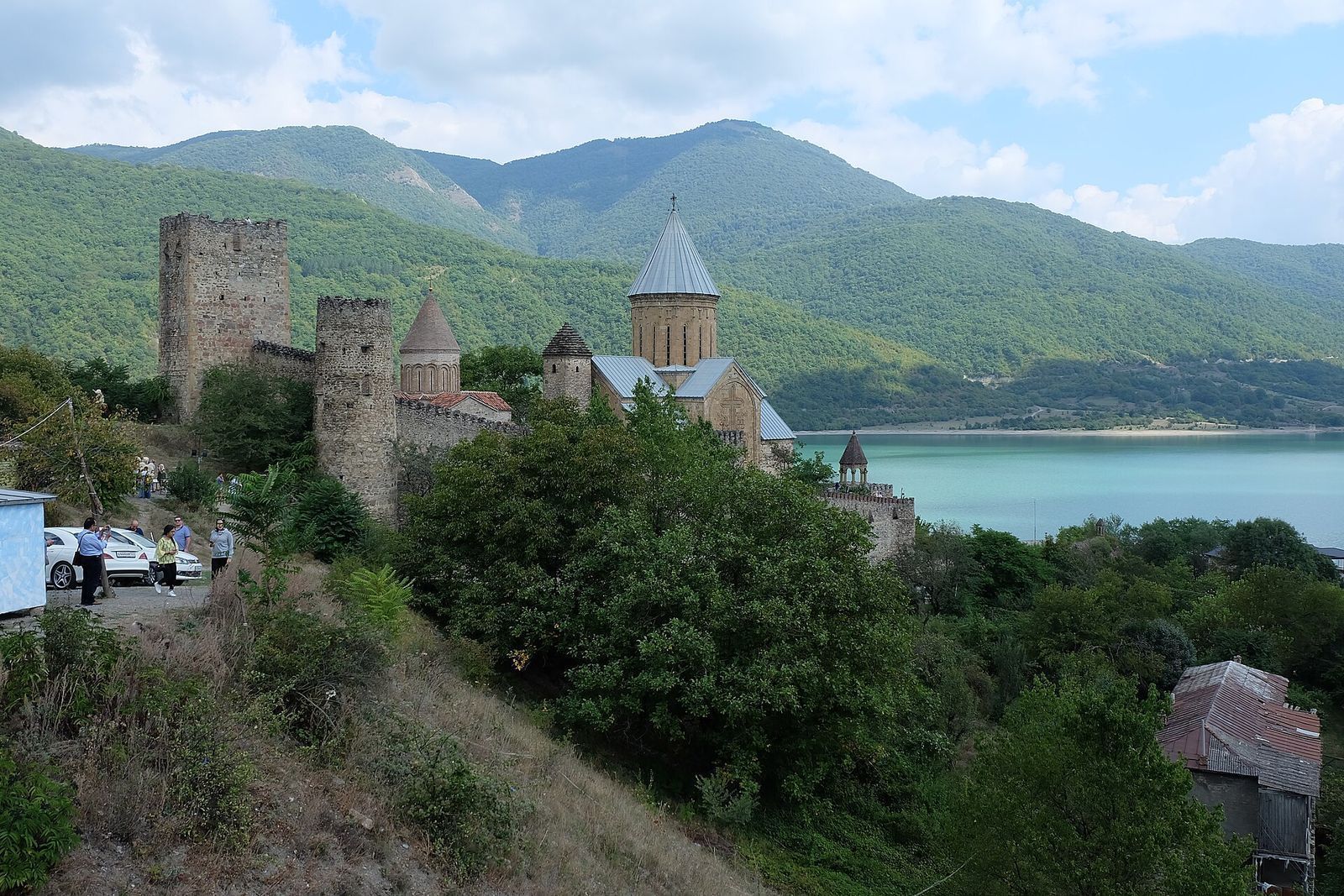
12 Best Day Trips from Tbilisi, With Prices and Timings
Tbilisi is known for its easy day trips. Here are the 12 best, how to reach each one and what a day out costs.
Read the guide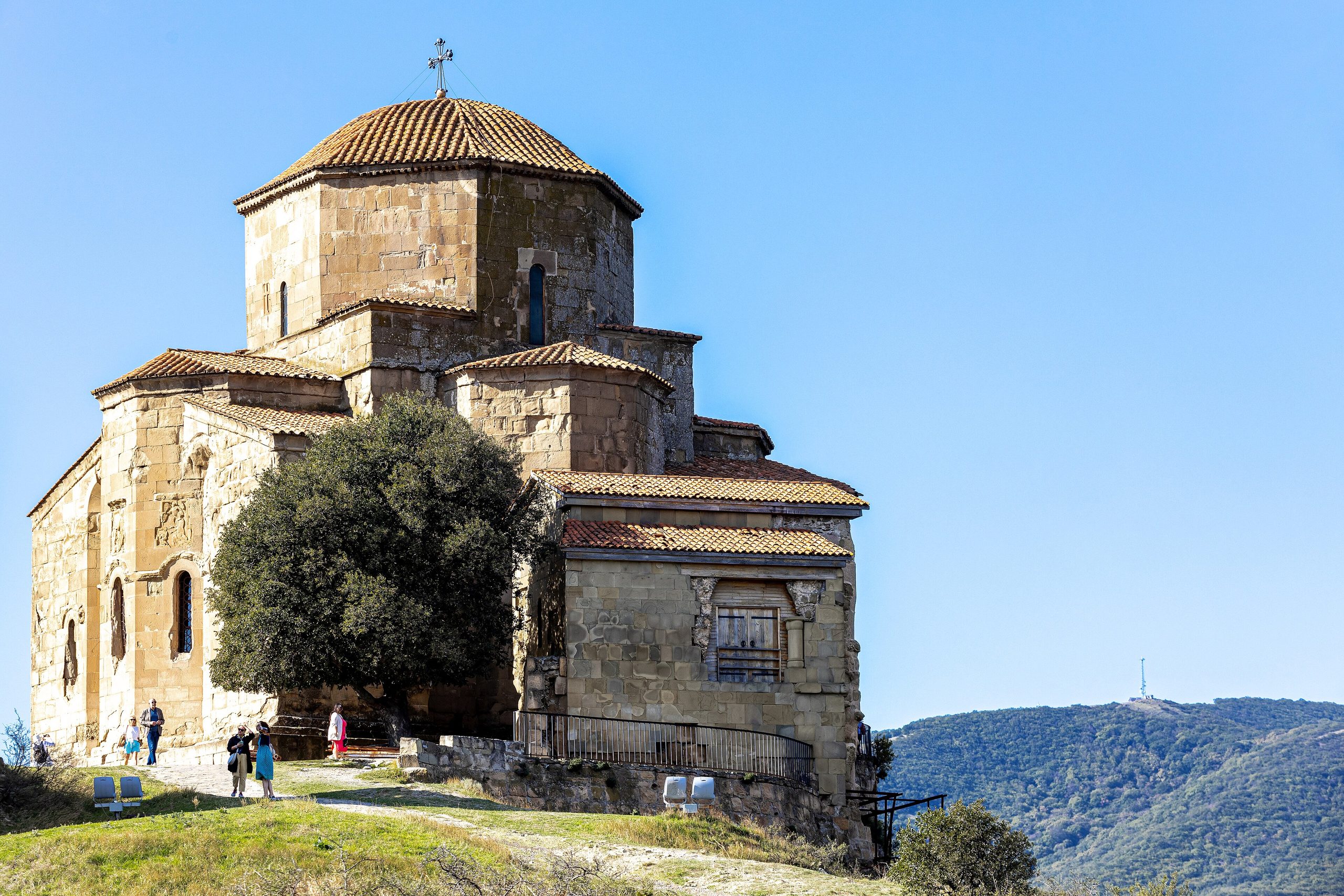
Mtskheta Day Trip from Tbilisi: Jvari, Svetitskhoveli and Getting There
Mtskheta is the easiest day trip from Tbilisi. Here is how to get there, what to see and how to fit it in half a day.
Read the guide
Kazbegi Day Trip from Tbilisi: Gergeti, Ananuri and the Military Highway
Kazbegi is the classic mountain day trip from Tbilisi. Here is the route, the stops, the costs and how to time it.
Read the guide