What to Pack for Georgia: A Packing List and What to Wear by Season
Georgia is known for steep cobbled streets, churches with real dress rules and weather that can swing 15 degrees between Tbilisi and the mountains on the same day. This is my packing list for a trip in 2026: what people wear in Tbilisi, what to wear in churches, the shoes that survive the old town, what to pack in each season, and the documents and gadgets you can't buy at the border.
What to wear in Tbilisi
Tbilisi dresses like any relaxed European capital. Nobody expects visitors to follow a dress code on the street, and you'll fit in with jeans, trousers, simple tops, a jacket and clean sneakers. Locals lean toward dark and neutral colors, especially older people, while younger Tbilisians wear more denim and lighter shades. If you pack mostly black, gray, navy and beige, you'll blend in without trying.
Evenings are casual too. A good pair of sneakers is fine in the city's wine bars and most of its smarter restaurants, and I've rarely seen a man in a suit and tie outside an office or a wedding. If you're planning a fine dining night or the opera, one smart shirt or a simple dress covers it. Locals do dress up for special occasions, so a supra at someone's home is a good reason to look neat.
Shorts are fine in the city in summer, for men and women, and you'll see plenty of them in July and August. The only places where they cause trouble are churches and monasteries, which is why a scarf in your day bag pays for its space many times over. Dress a little more conservatively outside Tbilisi, where villages are more traditional and the church rules are enforced more strictly.
What to wear in Georgian churches
This is the one dress code in Georgia that really applies to visitors. Orthodox churches and monasteries expect modest clothes, and the rules are the same in a city cathedral, a hilltop monastery or a tiny village chapel. You'll visit more of them than you expect: Tbilisi's old churches sit on almost every walk, and most day trips end at one.
| Who | What to cover | What to avoid |
|---|---|---|
| Women | Shoulders, knees and hair; a skirt or trousers below the knee | Sleeveless tops, low necklines, shorts, short skirts |
| Men | Shoulders and legs; long trousers | Shorts, tank tops, a hat inside |
| Everyone | Speak quietly, no photos where signs ask | Walking in during a service to take pictures |
Most churches keep a basket of headscarves and wraps at the door, lent for free, and some have long wrap skirts for women in trousers or shorts. They aren't always there, and at a busy church the basket can be empty, so I carry my own light scarf every day. It covers hair or shoulders in seconds and folds into a pocket. A long skirt or loose trousers you can pull on over shorts is the other easy fix for summer.
The right shoes for Georgia
If you pack one thing well, make it your shoes. The lanes of Old Tbilisi are cobbled, steep and in places polished smooth by centuries of feet, and they turn slippery after rain. The walks up to Narikala and the viewpoints are stairs and switchbacks, and the sidewalks in the newer districts are uneven, with high curbs. You'll walk more than you plan to, most of it uphill or downhill.
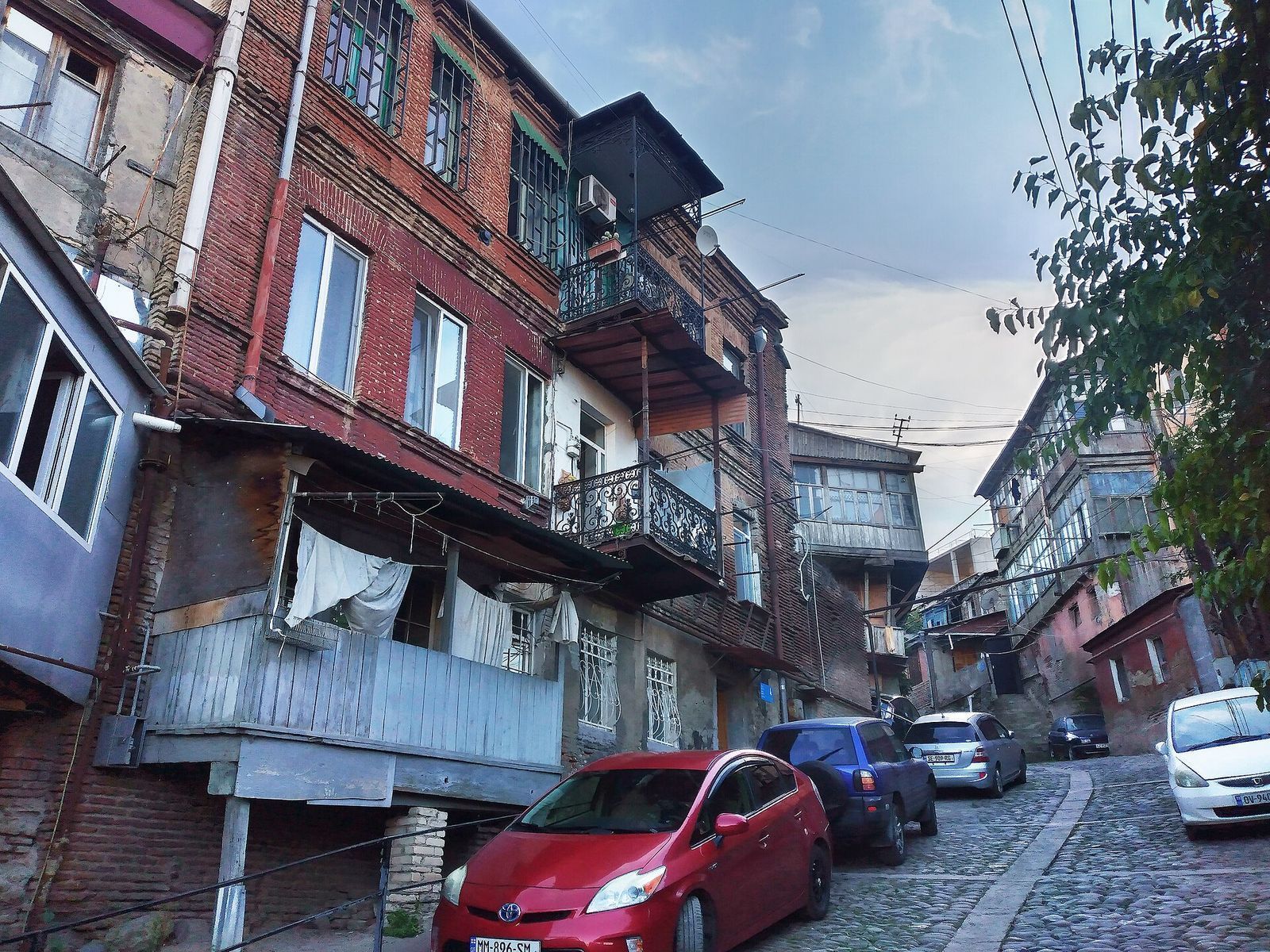
Here's how I'd split the shoes for a typical trip:
| Shoe | Where it earns its place | Skip it if |
|---|---|---|
| Sneakers or walking shoes with grip | Every day in Tbilisi, wine bars and restaurants included | Never; this is the one pair you can't skip |
| Hiking shoes or boots | Kazbegi, Svaneti, Tusheti and the Gergeti walk | You're staying in Tbilisi and the wine country |
| Walking sandals with a back strap | Tbilisi from June to September, Batumi | You're traveling from November to March |
| Waterproof ankle boots | Tbilisi from December to February, the mountains in spring | You're traveling in summer |
| Flip-flops or pool sliders | The sulfur baths, Batumi's beach, hostel showers | Never as walking shoes |
Leave the heels at home. Cobbles and stilettos don't mix, and even locals going out on Saturday night tend to wear block heels or smart flats in the old town.
What to pack for Georgia by season
Georgia has four real seasons, and the gap between Tbilisi and the mountains is bigger than most people plan for. The table uses average lows and highs for Tbilisi and for Kazbegi, the mountain trip most visitors take.
| Month | Tbilisi low to high | Kazbegi low to high | What to pack |
|---|---|---|---|
| January | 2 to 6 C | -5 to 2 C | Warm coat, hat, gloves, waterproof boots |
| February | 3 to 8 C | -4 to 3 C | Warm coat, layers, waterproof boots |
| March | 6 to 13 C | -2 to 5 C | Warm jacket, sweater, umbrella |
| April | 10 to 18 C | 2 to 10 C | Light jacket, sweater, umbrella |
| May | 14 to 23 C | 5 to 15 C | Rain jacket, light layers, one warm top |
| June | 18 to 28 C | 8 to 18 C | Summer clothes, a light layer for evenings |
| July | 21 to 33 C | 10 to 20 C | Light, loose clothes, sun hat, fleece for the mountains |
| August | 21 to 33 C | 10 to 20 C | Light, loose clothes, sun hat, fleece for the mountains |
| September | 17 to 28 C | 6 to 16 C | Summer clothes plus a jacket for evenings |
| October | 12 to 21 C | 2 to 12 C | Jeans, sweater, light jacket |
| November | 7 to 13 C | -2 to 5 C | Warm jacket, sweater, umbrella |
| December | 3 to 8 C | -5 to 2 C | Warm coat, hat, gloves, waterproof boots |
Those are averages, and the day itself swings a lot. In April or October the afternoon can be 8 or 9 degrees warmer than the early morning, so layers you can take off by lunch beat one heavy coat. If you're still picking dates, the best time to visit Tbilisi is late April to June or September to October, and those are also the easiest months to pack for.
Spring: March to May
Spring is changeable. March can still feel wintry, April brings blossom and mild days, and May is warm but one of the wettest months of the year. Pack jeans or trousers, a couple of sweaters or cardigans, a light jacket and a packable rain jacket or compact umbrella. Add a dress or lighter shirts from May, and a warm layer for any trip to the mountains, where snow can linger on the passes into spring.
Summer: June to August
Summer is hot and dry. July and August average highs of 33 C, heat waves push the city to 38 to 40 C, and Tbilisi sits in a bowl of hills with no breeze. Pack loose linen and cotton, shorts and skirts for the city, a long skirt or light trousers for churches, a sun hat, sunglasses and plenty of sunscreen. Evenings stay warm in the city, so the jacket is only for the mountains, and there you really need it. Tbilisi in summer is about planning around the heat, and lighter clothes do half of that work.
Autumn: September to November
Autumn is my favorite season to pack for. September still feels like summer in the daytime, with cooler evenings that want a light jacket. October is jeans and sweater weather, with a light coat for the evenings, and November turns colder and rainier, so a warm jacket and an umbrella go back in the bag. If you're heading to Kakheti for the harvest, add shoes you don't mind getting muddy in a vineyard.
Winter: December to February
Tbilisi winters are milder than most people expect, with gray days of 2 to 8 C and nights around freezing. It rarely snows in the city, and when it does the snow usually melts within a day, so rain is more likely than a white street. Pack a warm coat, a wool sweater or two, a hat, gloves, a scarf and waterproof ankle boots, plus thermal layers if you're heading to the mountains. Old buildings can be drafty and some guesthouses are cold at night, so warm sleepwear isn't a silly idea. Tbilisi in winter is a city of sulfur baths and warm restaurants, and you'll spend as much time indoors as out.
Packing for the mountains: Kazbegi, Svaneti and Gudauri
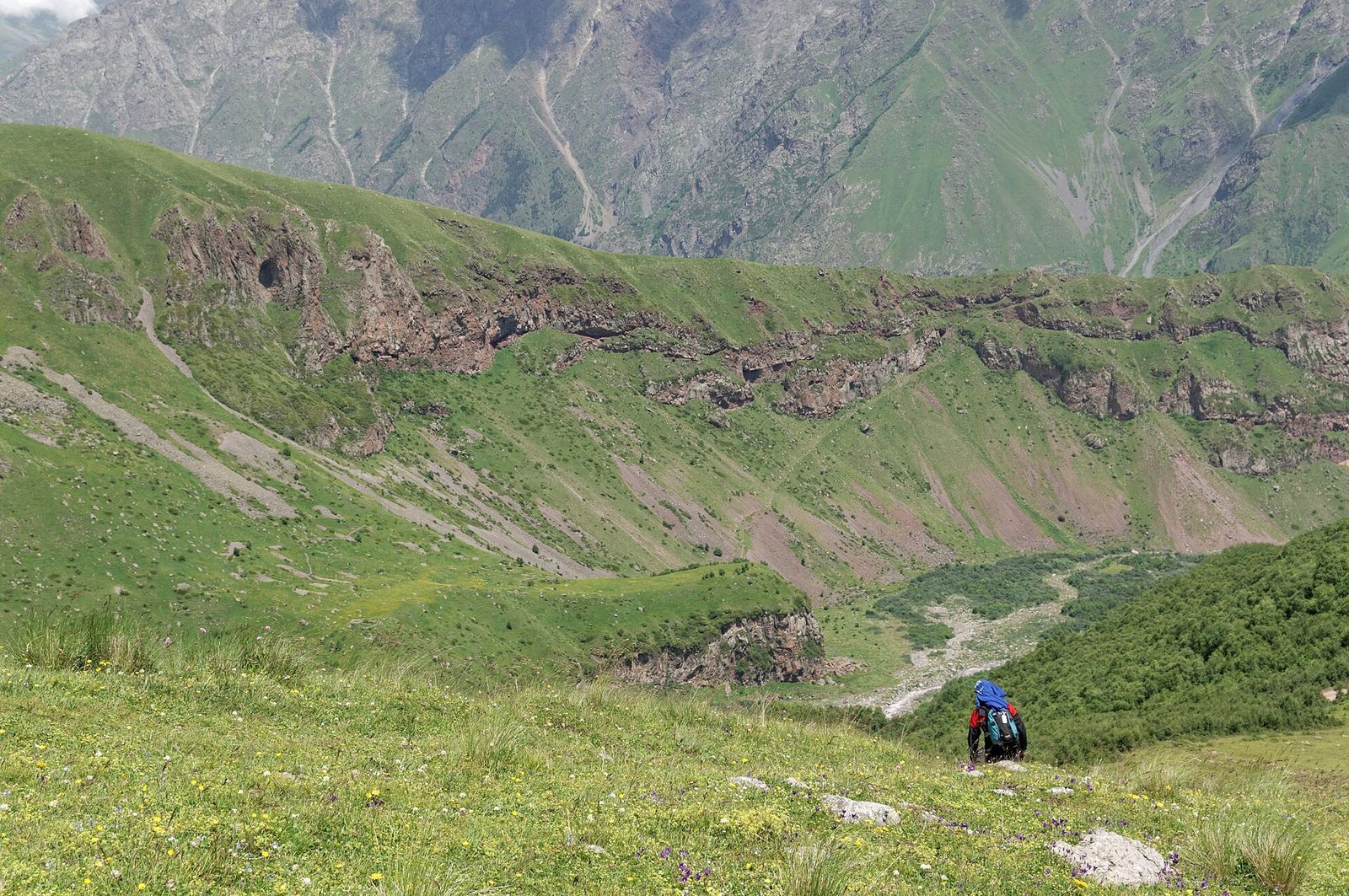
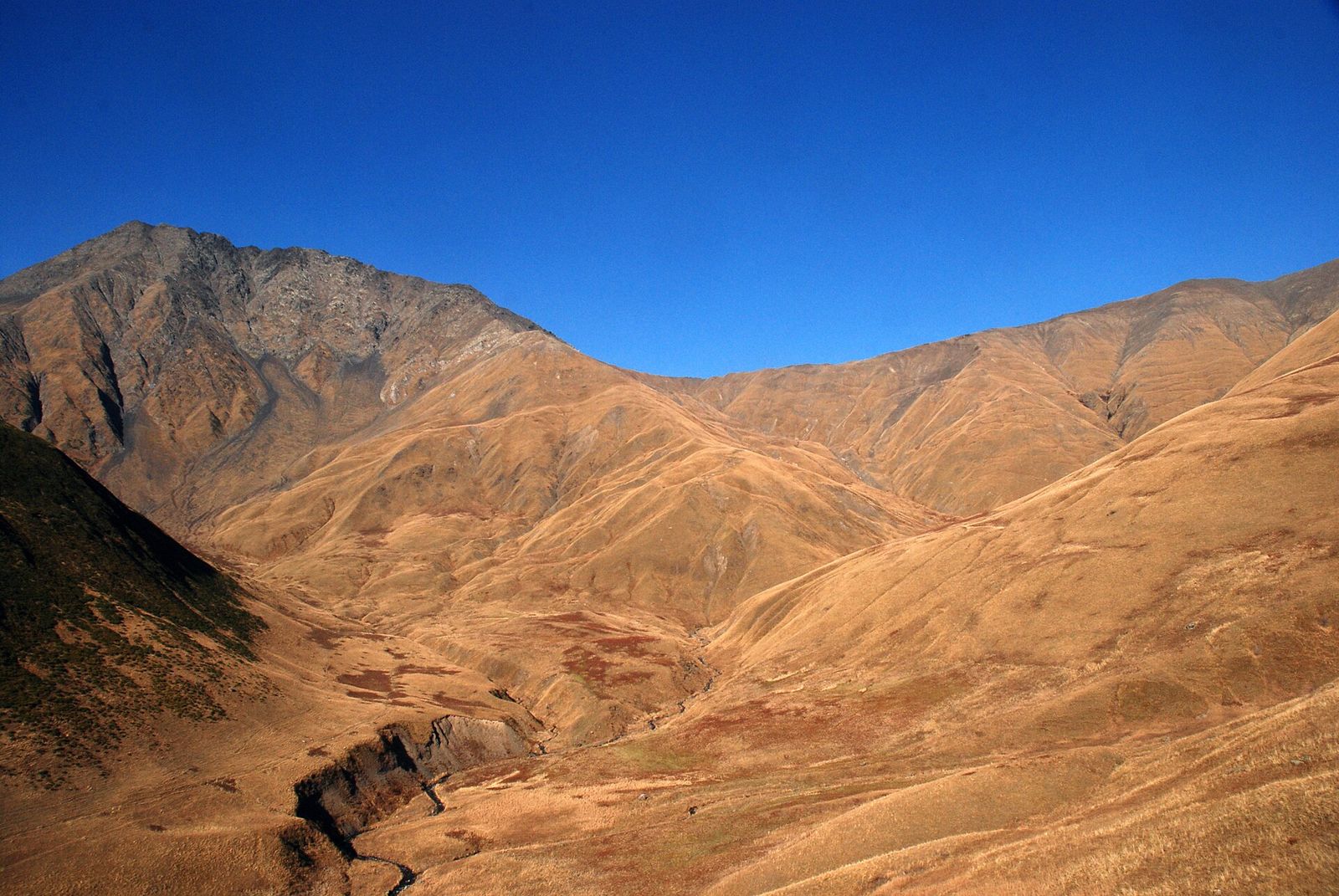
The mountains run 10 to 15 C cooler than Tbilisi all year, and the wind at the high passes makes it feel colder still. Gergeti Trinity Church stands at 2,170 m above Stepantsminda, and the viewpoint at the Friendship Monument is windy even in August. On a day trip to Kazbegi in July, Tbilisi can hit 33 C while Kazbegi tops out around 20 C, and the passes on the way feel colder than that.
For a mountain day trip, I pack:
- A warm layer, a fleece or thin down jacket, even in summer.
- A rain shell, because mountain weather turns fast and showers build in the afternoon.
- Hiking shoes with grip if you're walking anywhere, including the 1.5-hour Gergeti hike with about 500 m of climb.
- Sunscreen and sunglasses, since the sun is stronger at altitude even on a cool day.
- Something for car sickness, because the hairpins up to Gudauri and over the Jvari Pass are long.
- Snacks, water and some cash, as cafes are spread out and village shops often take cash only.
For longer trips to Svaneti or Tusheti, add proper hiking boots, a warm hat and fleece for the evenings, which are cold at 2,000 m and up even in August. In winter, the ski resort at Gudauri rents gear, so you only need thermal layers, ski socks, gloves and a warm jacket.
Packing for Batumi and the Black Sea
Batumi is a different climate from Tbilisi: humid and subtropical, with far more rain than the capital, and warm sea from June to early September. Pack the same summer clothes as for Tbilisi plus swimwear, a light rain jacket or umbrella in any season, and something that dries fast.
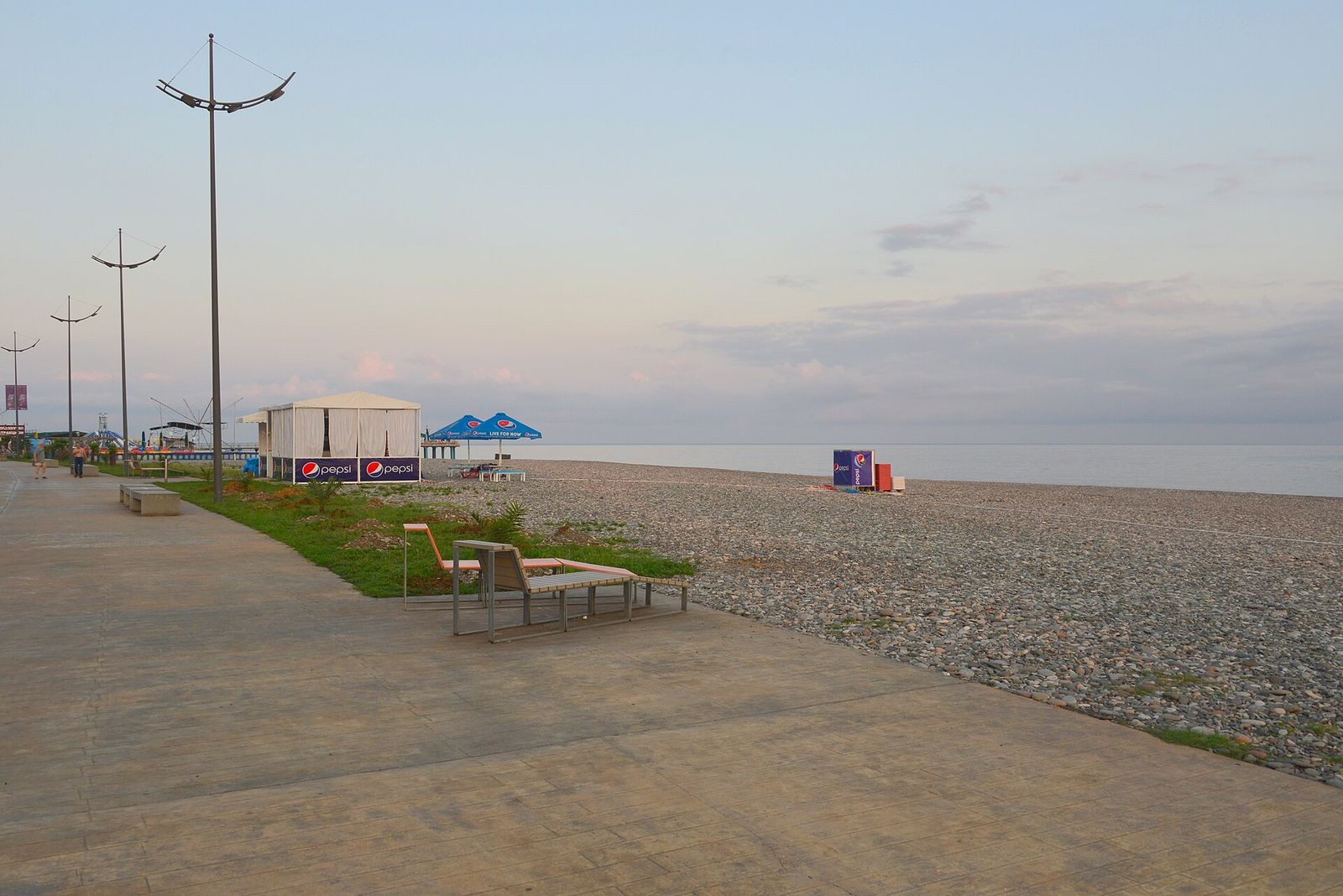
The city beach runs for more than 7 km and it's pebbles all the way, not sand. I'd bring water shoes or at least sliders, because walking into the sea barefoot is slow and painful, and the water deepens quickly a few meters out. A beach towel is optional, since a sunbed costs about 10 GEL. If Batumi is on your route, it's also the one place on the trip where a pair of flip-flops counts as real footwear.
Documents, insurance and money
The documents are the part of the packing list you can't fix after landing.
- Passport. Citizens of more than 90 countries, including the US, UK, EU states, Canada and Australia, enter visa-free for up to 365 days. Keep a photo of the main page on your phone and in cloud storage.
- Travel insurance. Since 1 January 2026 every visitor needs health and accident cover for the whole stay, with at least 30,000 GEL for treatment and hospitalization. A printout or a PDF on your phone both count, and border officers can ask to see it. 30,000 GEL is about $11,000, so almost any standard travel insurance policy clears the minimum.
- Two bank cards. Visa and Mastercard work in about 90% of places in Tbilisi, including cafes, museums and Bolt rides. American Express is accepted far less, and Mir cards don't work at all.
- Some cash. Carry 50 to 100 GEL for markets, bakeries, marshrutkas, village guesthouses and public toilets. You don't need to bring lari from home: ATMs are everywhere in Tbilisi, and the best way to handle money in Georgia is to withdraw in town, not at the airport.
- A driving license, plus an international driving permit, if you plan to rent a car.
Plugs, adapters and your phone
Georgia uses Type C and F sockets, the round two-pin European plugs, at 230 V and 50 Hz. Travelers from the EU need nothing. From the US, UK, Canada or Australia, pack an adapter, and check that your chargers handle 230 V; phone and laptop chargers almost always do, hair straighteners and older devices sometimes don't. I bring one adapter and a short multi-socket extension, since hotel rooms rarely have enough outlets by the bed.
A power bank earns its space on any day trip and on long days of map-reading in the old town. For data, an unlocked phone lets you buy a local SIM at the airport: Magti's stand in arrivals is open 24/7, needs only your passport, and sells a tourist package of 15 GB for 20 GEL. An eSIM works too for a short city stay, and the trade-offs of a SIM card in Georgia come down mostly to coverage in the mountains, where Magti is strongest. Download offline maps of Tbilisi and any mountain area before you go, because signal drops in the valleys.
Toiletries, medicine and the sulfur baths
You can buy almost anything you forget. Tbilisi has pharmacies on nearly every main street, the big chains are PSP and GPC, many stay open late, and supermarkets stock the usual toiletries. Still, I'd bring:
- Your own prescription medicines, in their original packaging, with enough for the whole trip.
- Sunscreen, from April to October, and all year in the mountains.
- Insect repellent for summer, especially for evenings outside the city and on the coast.
- A small first-aid kit: bandages for blisters from the cobbles, painkillers, rehydration salts and stomach tablets for the first days of rich food.
- Tissues and hand sanitizer, as public toilets are basic and not always stocked.
- A refillable water bottle. Tap water in Tbilisi is safe to drink, though hard and chlorinated, and 1.5 liters of bottled water costs 1 to 2 GEL if you'd rather start with that.
If you're booking the sulfur baths, pack an old swimsuit, since the sulfur water can stain fabric, and a pair of flip-flops. Towels and slippers often cost extra at the bathhouse, a few lari each, so bringing your own saves a little money and a lot of fuss.
My day bag in Tbilisi
Most days I carry a small backpack or a crossbody bag that zips shut. Tbilisi is safe, but pickpockets work the crowded food markets, so keep your wallet and phone in a front pocket or a zipped compartment. This is what's in mine:
- A light scarf for churches
- A refillable water bottle
- A packable rain jacket in spring and autumn, a sun hat in summer
- A power bank and cable
- A card plus 50 GEL or so in cash
- A Metromoney card for the metro, buses and cable cars, which costs 2 GEL and can be bought at any metro station
- Sunglasses and sunscreen
- Tissues and hand sanitizer
What to leave at home
Georgia is easy to underpack for and easy to overpack for. These are the things I'd leave behind:
- Heels and smart shoes you can't walk in. Sneakers work almost everywhere, and the old town ruins anything else.
- A suit or formal wear, unless you're going to a wedding. Smart casual covers fine dining and the opera.
- Large amounts of cash. Cards work almost everywhere in Tbilisi and ATMs are easy to find; only remote areas like Tusheti have no ATM at all.
- A water filter. City tap water is drinkable, and bottled water is cheap.
- A full bathroom of toiletries. Pharmacies and supermarkets sell everything, often for less than at home.
- Revealing clothes for the countryside. They're fine in Tbilisi in summer, but in villages and at monasteries they draw more attention than you want.
Leave space in your bag instead. Georgian wine, churchkhela, spices and enamel jewelry fill a suitcase faster than you'd think, and I've never left with as much room as I arrived with.
The Georgia packing checklist
Use this as a final check before you zip the bag. It assumes a 7 to 10 day trip with a mix of Tbilisi and day trips.
| Category | Pack |
|---|---|
| Documents | Passport, insurance proof (PDF and printout), 2 bank cards, 50 to 100 GEL cash, driving license if renting |
| Clothes | Layers for the season, long trousers or a long skirt, a light scarf, one smart outfit, a warm layer for the mountains |
| Shoes | Sneakers or walking shoes with grip, plus hiking shoes, sandals or winter boots by season, and flip-flops |
| Weather | Packable rain jacket or compact umbrella, sun hat and sunglasses in summer, hat and gloves in winter |
| Tech | Type C or F adapter, power bank, unlocked phone, offline maps |
| Health | Prescriptions, sunscreen, insect repellent, small first-aid kit, tissues and sanitizer |
| Extras | Refillable water bottle, day bag that zips shut, old swimsuit for the baths |
One last thing that isn't in the suitcase: a feel for Georgian etiquette goes further than anything you pack, especially at a supra or in a village church.
Key takeaways
- Comfortable shoes with grip are the most important thing you pack, because Old Tbilisi is steep, cobbled and slippery.
- Carry a light scarf every day for churches, and wear long trousers or a long skirt on monastery days.
- Pack layers: Tbilisi swings from 2 to 6 C in January to 21 to 33 C in July, and the mountains are 10 to 15 C cooler.
- Bring a Type C or F adapter, proof of insurance with 30,000 GEL of cover, and a card plus 50 to 100 GEL in cash.
- Smart casual covers everything in Tbilisi, so leave the heels and the suit at home and save the space for wine.
Frequently asked questions
What should I wear in Tbilisi?
Wear what you'd wear in any relaxed European city: jeans or trousers, simple tops, a jacket for the season and comfortable sneakers. Locals favor dark and neutral colors, and smart casual is enough even for good restaurants. Keep a scarf with you for churches.
Can you wear shorts in Tbilisi?
Yes, shorts are fine in the city in summer for both men and women. They aren't allowed in churches and monasteries, so on days with church visits wear long trousers or a long skirt, or carry something to pull on over the shorts.
Do women have to cover their heads in Georgian churches?
Women are expected to cover their hair, shoulders and knees in Orthodox churches and monasteries. Most churches lend headscarves and wraps for free at the entrance, but they can run out, so carrying your own light scarf is easier.
What plug type does Georgia use?
Georgia uses Type C and F plugs, the round two-pin European kind, at 230 V and 50 Hz. Travelers from the US, UK, Canada and Australia need an adapter, while plugs from most of the EU work as they are.
What shoes should I bring to Georgia?
Bring one pair of comfortable sneakers or walking shoes with good grip for Tbilisi's cobbles and hills. Add hiking shoes for Kazbegi or Svaneti, walking sandals for summer, and waterproof boots for winter.
Do I need a jacket in Georgia in summer?
Not in Tbilisi, where summer evenings stay warm and days reach 33 C. You do need one in the mountains, which run 10 to 15 C cooler, and Kazbegi's passes are windy even in August, so pack a fleece and a rain shell for any mountain trip.
What should I wear in Tbilisi in winter?
Pack a warm coat, sweaters, a hat, gloves and waterproof ankle boots for days of 2 to 8 C and nights around freezing. Snow is rare in the city and usually melts within a day, so expect rain more than snow.
Do I need cash in Georgia?
Yes, a little. Cards work in about 90% of places in Tbilisi, but markets, bakeries, marshrutkas, village guesthouses and public toilets often take cash only, so keep 50 to 100 GEL on you and withdraw from ATMs in town.
Tbilisi Travel Tips: What I'd Tell You Before a First Trip to Georgia
Tbilisi is known for wine, sulfur baths and long dinners. Here's what to know about entry, money, transport and safety.
Read the guide
Tbilisi Itinerary: How I'd Spend 1 to 5 Days in Tbilisi
Tbilisi is best over 3 full days. Here is how to spend 1 to 5, with routes, meals, day trips and costs.
Read the guide
The Best Time to Visit Tbilisi, Month by Month
Tbilisi is known for golden autumns and hot summers. Here is the weather by month, the crowds, and when I would go.
Read the guide