Things to Do in Batumi: The Seafront, Old Town, Beaches and Day Trips
Batumi is Georgia's city on the Black Sea, known for its long seafront boulevard, its strange skyline of glass towers and its summer beach crowds. It's about 5 hours from Tbilisi by train, and two or three days covers it well. Here's what to see and do in Batumi in 2026, what each sight costs, which beaches to pick and the day trips I'd take.
Batumi at a glance
Batumi is the capital of Adjara, in Georgia's southwest corner, about 370 km from Tbilisi and 20 km from the Turkish border. Of all the places to visit in Georgia outside the capital, it's the one built for a beach holiday, and it feels like a different country from Tbilisi: palms instead of plane trees, sea air instead of sulfur, casinos instead of wine cellars.
It's really two cities in one. Old Batumi is a grid of low 19th and early 20th century buildings with Art Nouveau and Art Deco facades and carved wooden balconies, with cafes spilling onto its squares. New Batumi runs south along the coast as a line of glass towers, hotels and casinos, some finished and some not. The boulevard ties the two together along the sea.
I think of it as Georgia's summer city. In July and August it fills with holidaymakers, the beach bars run late and the sea is warm; in winter much of the seafront goes quiet. What it does better than anywhere else in the country is put a beach, a subtropical garden and a Roman fortress within half an hour of each other.
Here's every sight in this guide on one page, with what it costs and whether I'd make the effort.
| Sight | Where | Cost | Time | My verdict |
|---|---|---|---|---|
| Batumi Boulevard | The whole seafront | Free; bikes 5 to 8 GEL an hour | 2 hours or more | Yes, toward sunset |
| Ali and Nino statue | North end of the boulevard | Free | 20 minutes | Yes, after 19:00 |
| Alphabet Tower | Miracle Park | Lift about 20 GEL | 30 minutes | Better from below |
| Argo cable car | Old Town to Mount Anuria | About 39 GEL | 1 hour | Yes, before sunset |
| Piazza and Europe Square | Old Town | Free | 1 hour | Yes, with a coffee |
| Dancing fountains | Lake Ardagani, New Batumi | Free | 30 minutes | If you're nearby |
| Botanical Garden | Green Cape, 9 to 10 km north | 25 GEL | 2 to 3 hours | My favorite in Batumi |
| Gonio-Apsaros Fortress | Gonio, south of the city | 15 GEL | 1.5 hours | Yes, with a swim |
| Dolphinarium | May 6 Park | About 20 GEL | 1 hour | With kids |
| Makhuntseti waterfall | About 30 km inland | Free | Half a day | Yes, with a car or tour |
Things to do on the Batumi seafront
Most of what people come to Batumi for sits on one long strip by the sea. You can walk the northern end, from the port to May 6 Park, in an evening, and cycle the rest.
Walk or cycle Batumi Boulevard
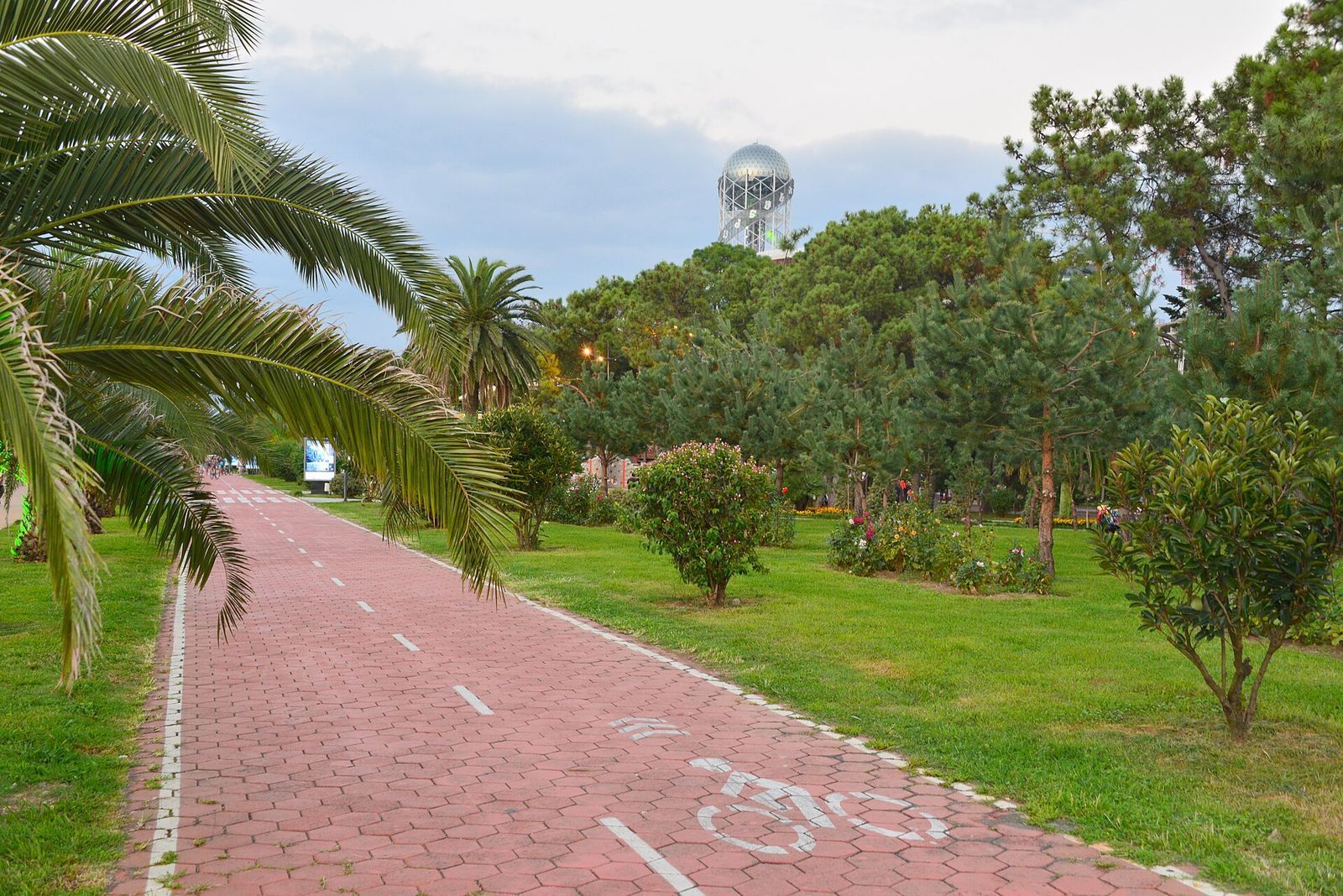
Batumi Boulevard dates to 1884 and runs about 7 km along the sea, from the port and Miracle Park in the north to the newer towers in the south. It's a long park of palms, pines and lawns with a red cycle lane through the middle, the beach on one side and cafes, sculptures and fountains along the way. It's at its best in the early evening, when families come out to walk, the low sun hits the towers and the beach bars start filling up.
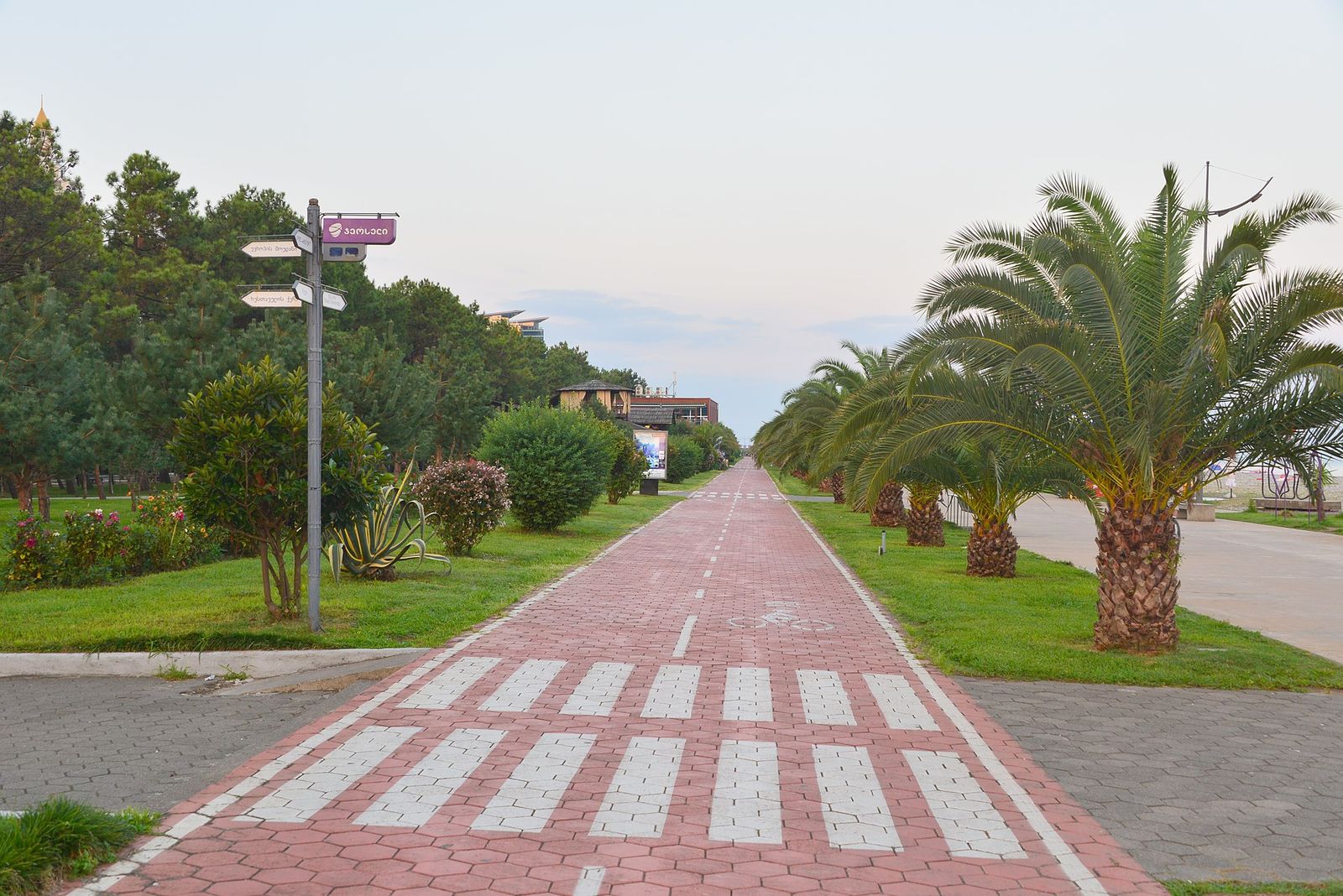
The easiest way to see the whole length is by bike. Rental stands along the boulevard charge about 5 to 8 GEL an hour, and the cycle lane is flat from end to end. Keep riding to the southern end and you reach the fence of Batumi airport, one of the best plane-spotting spots in Europe: check the arrivals board and get there 15 to 20 minutes before a landing.
The Ali and Nino statue
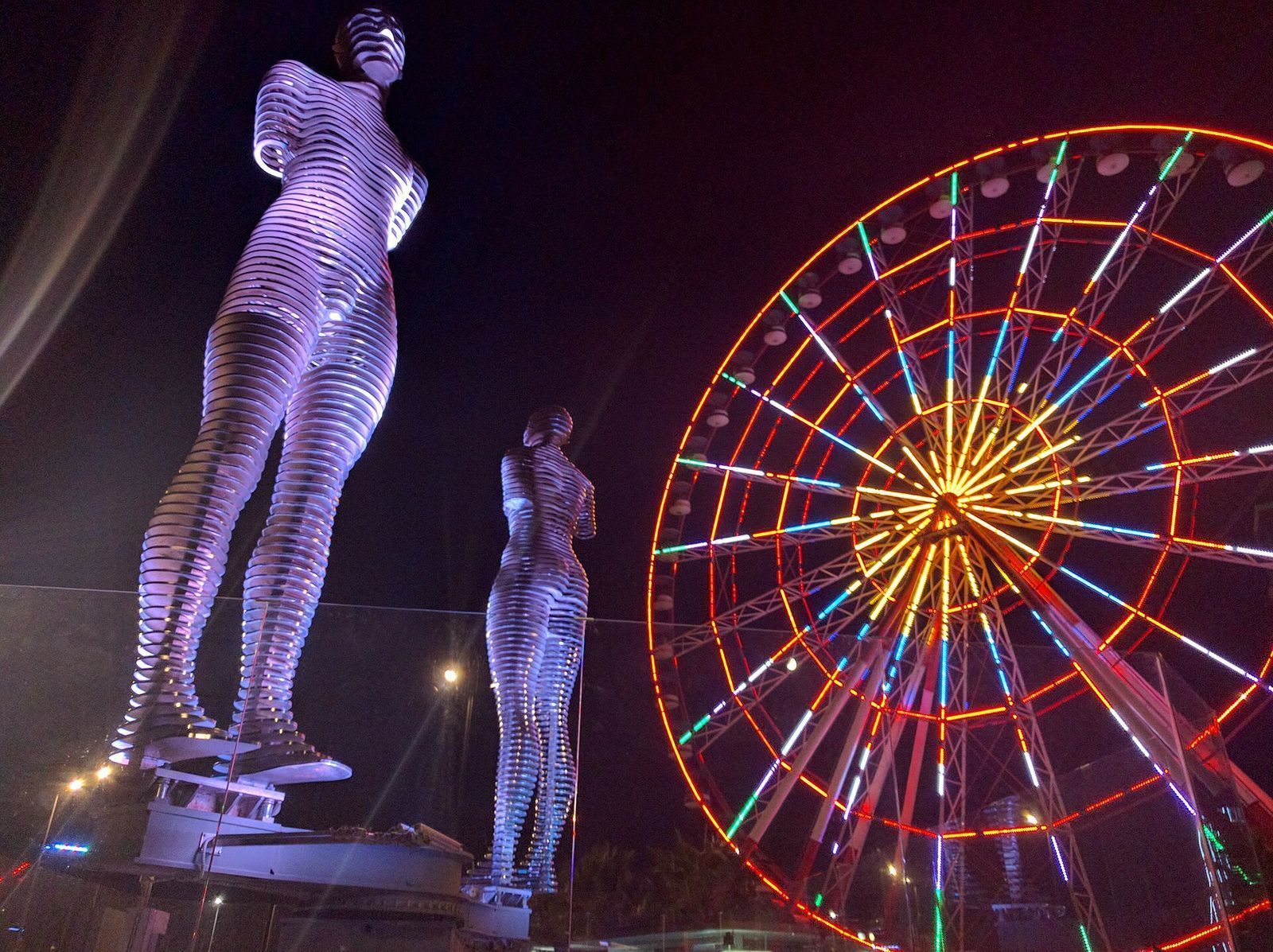
At the north end of the boulevard, two 8 m steel figures stand by the water. Ali and Nino, by the Georgian artist Tamara Kvesitadze, went up in 2011 and take their names from the lovers in the novel Ali and Nino. Every evening from around 19:00 the two figures start to move, sliding toward each other, passing through each other and drifting apart again, and one full cycle takes about 10 minutes.
It's the most photographed thing in Batumi, and it's one sight I'd say lives up to the photos. It's free, and the waterfront around it is the best place on the boulevard to sit and watch the sea.
The Alphabet Tower and Miracle Park
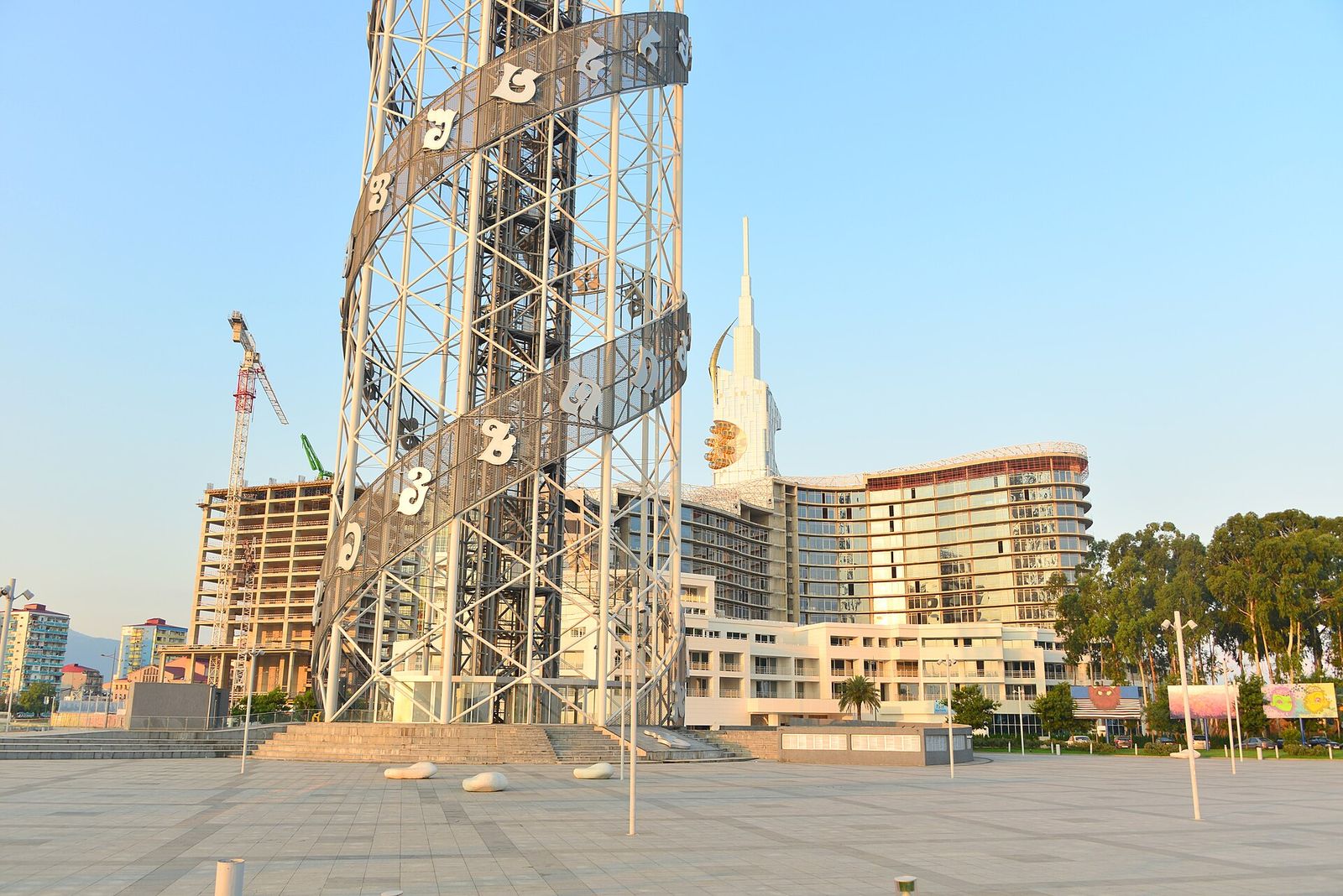
The Alphabet Tower is the 130 m steel spiral next to Ali and Nino, wrapped in the 33 letters of the Georgian alphabet. A lift goes to a glass-walled top for about 20 GEL, but the top floor is mostly a restaurant, and I think the tower looks better from the boulevard than the city looks from the tower. Put that money toward the Argo cable car instead.
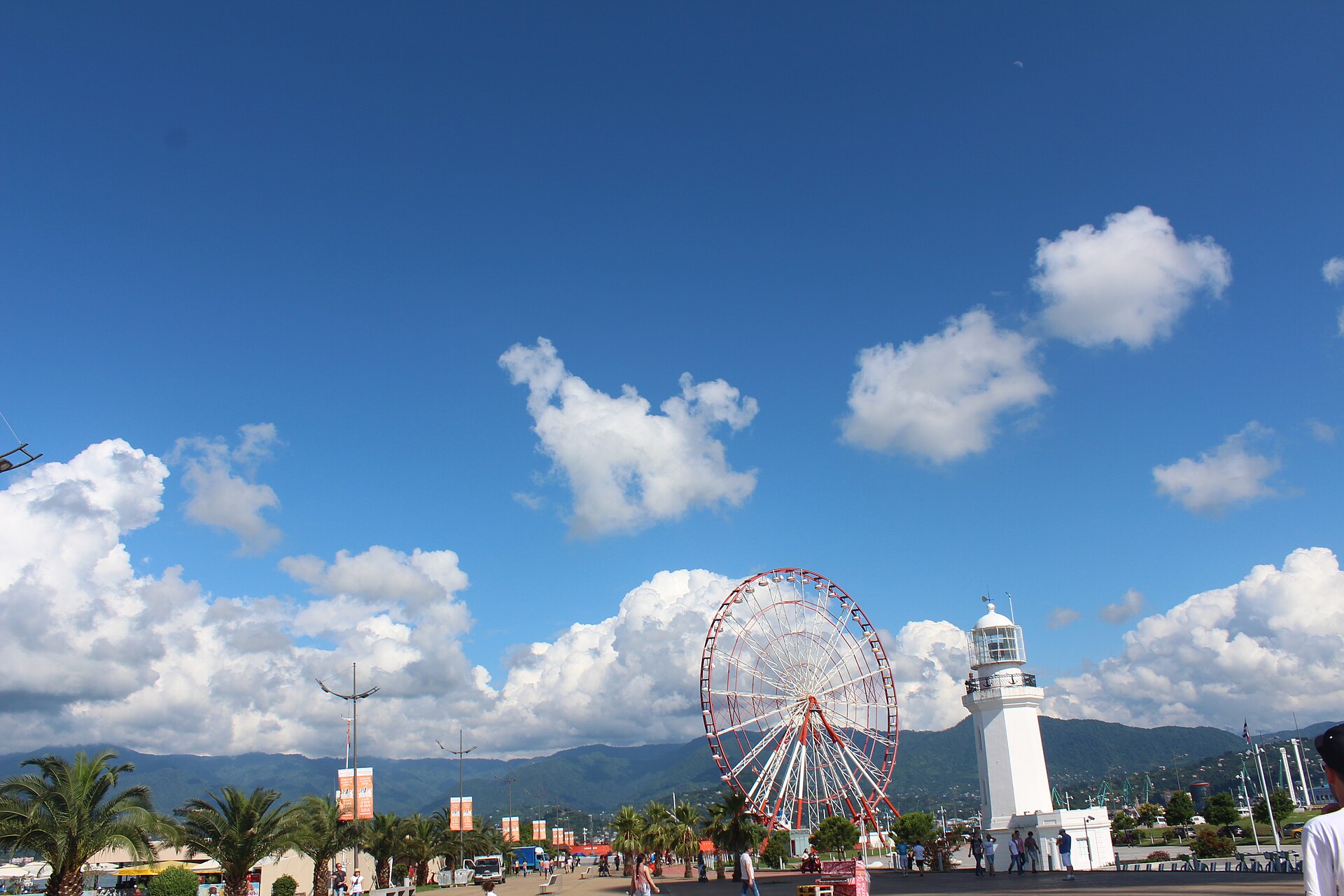
Miracle Park around it has a working Ferris wheel that costs a few lari and a lighthouse from 1882. Behind it rises Batumi Tower, about 200 m tall, with a Ferris wheel built into its side at roughly the 100 m mark; it reportedly doesn't turn, so it's one to look at from the ground.
The dancing fountains at Lake Ardagani
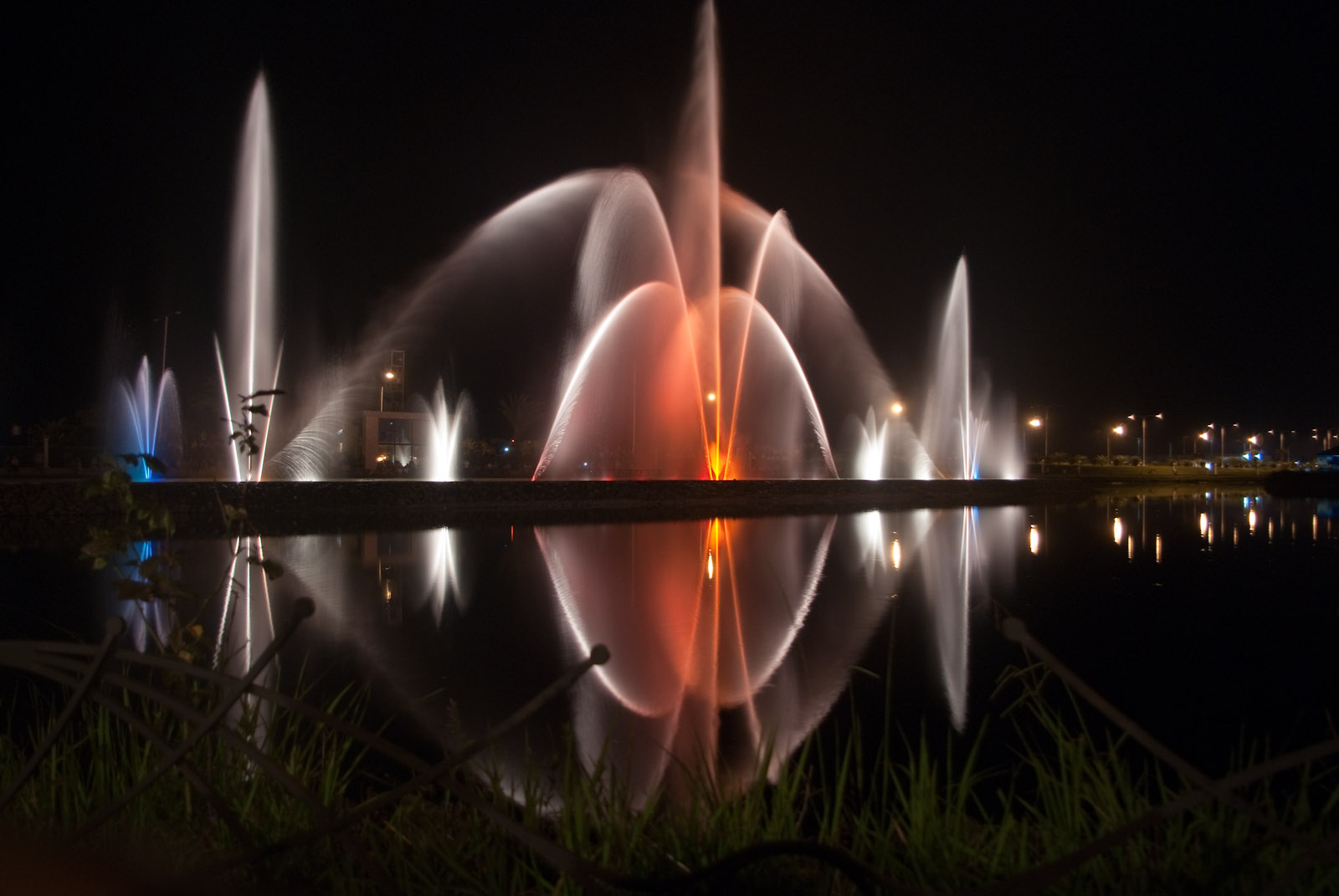
In New Batumi, the lake beside the boulevard has a fountain show with music and lasers every evening from about 21:00, roughly May to October. It's free and pleasant if you're staying nearby, but I wouldn't cross town for it. The park around the lake has a small Japanese garden with a pond and gazebo, free to walk in.
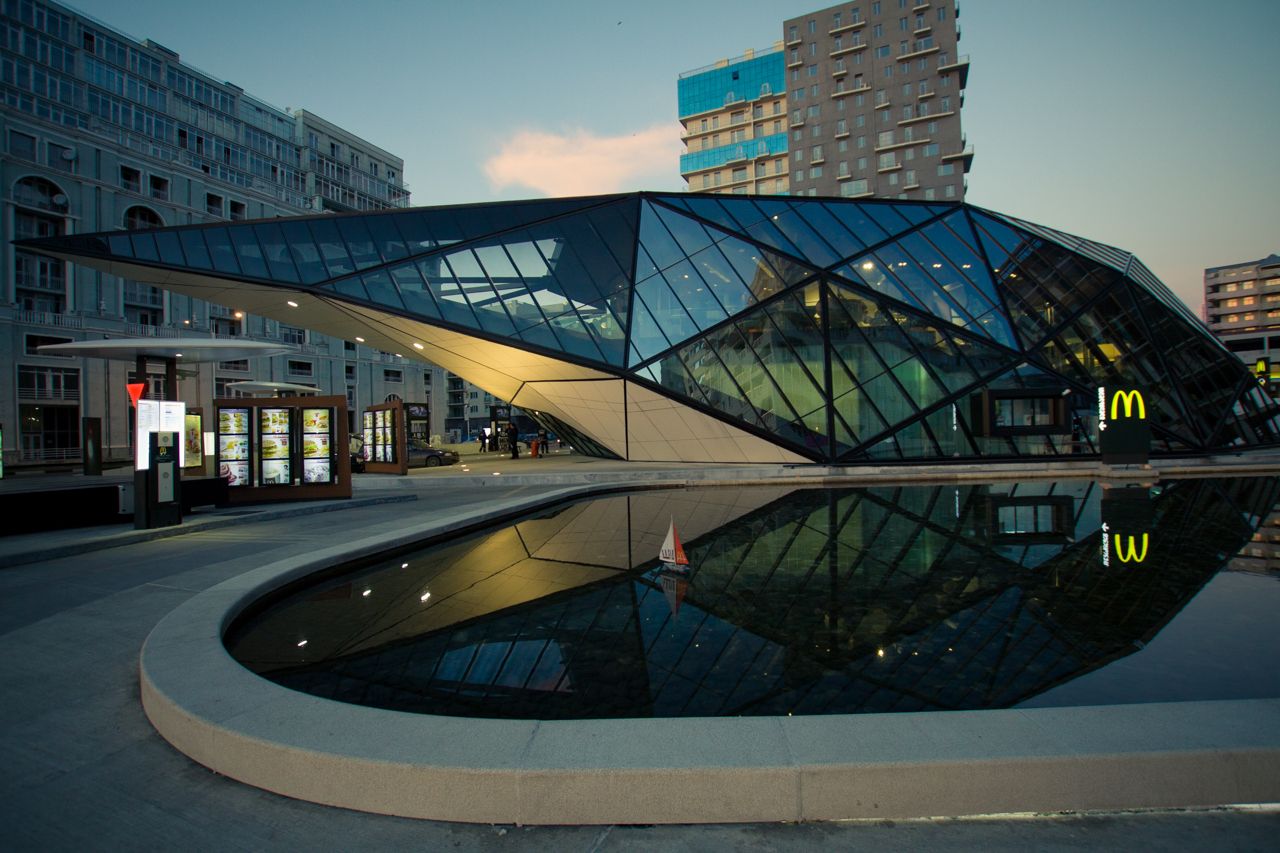
Across the road, the glass McDonald's built over a petrol station, with a garden on its roof, has won design awards. It's the one fast food stop in Georgia I'd tell you to look at.
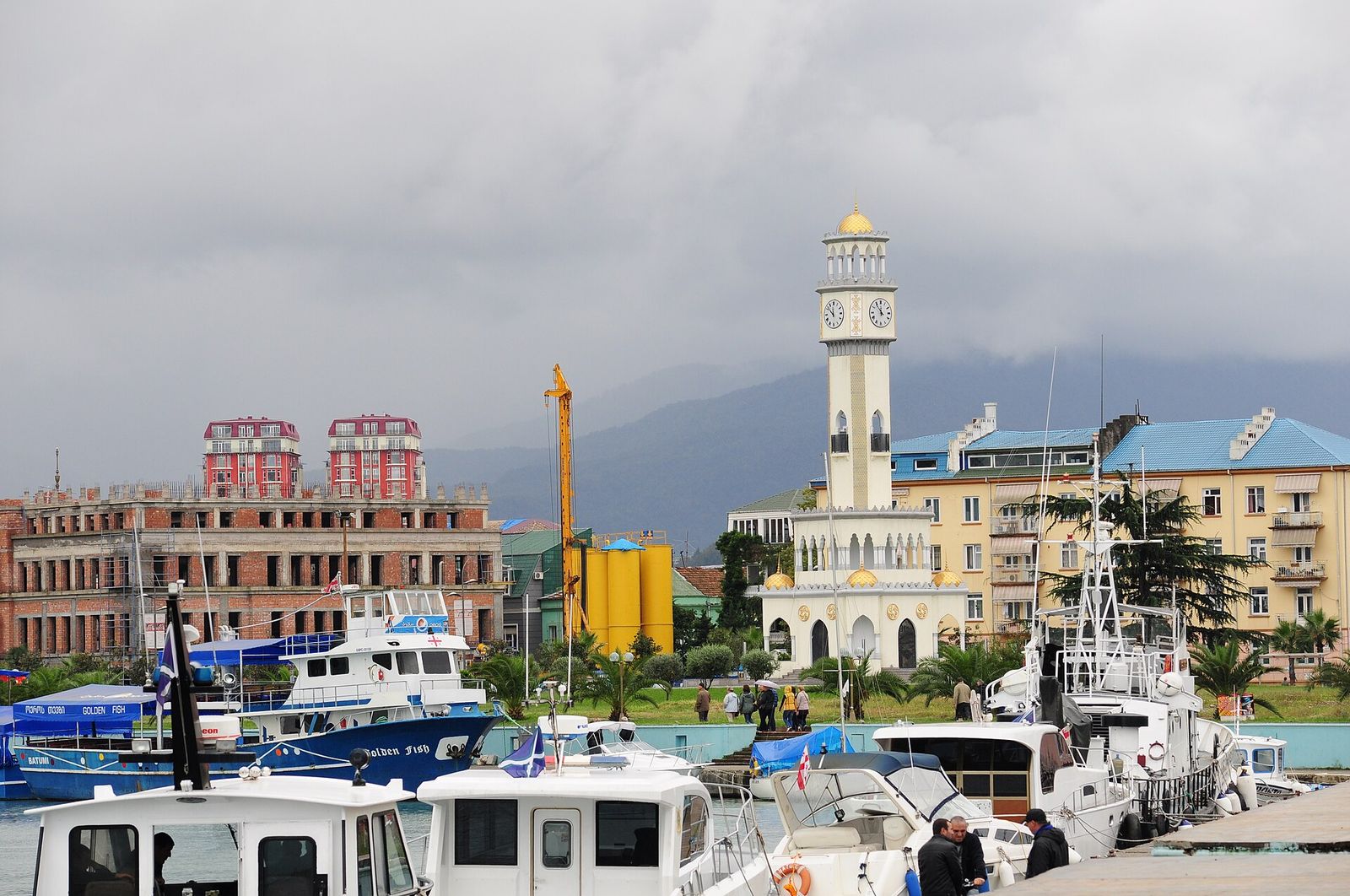
The Argo cable car to Mount Anuria
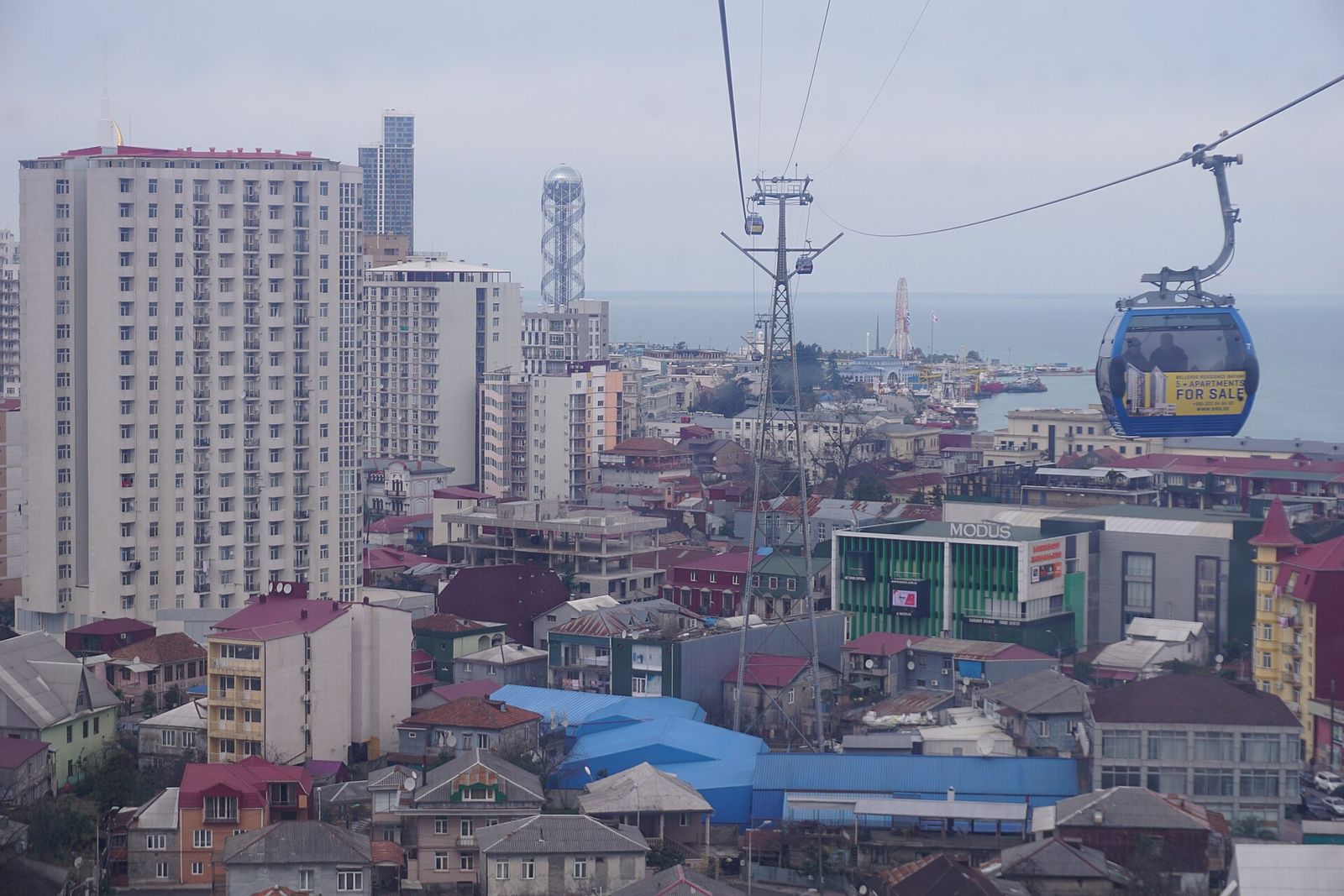
The Argo cable car climbs about 2.5 km from the edge of the Old Town to the top of Mount Anuria, 250 m above the sea, in about 15 minutes. From the top you see the whole curve of the bay: the Old Town's roofs, the towers of New Batumi, the port and the green mountains behind. There's a restaurant and cafe at the top station serving Georgian food and wine.
A ticket costs about 39 GEL for adults and 9 GEL for children aged 5 to 12, and under-5s ride free. It's a much longer ride than the 2.50 GEL hop up to Narikala on Tbilisi's cable cars, and the price reflects it. The cable car runs all year until late in the evening.
Ride it about an hour before sunset. You see the city in daylight on the way up, watch the sun go down over the sea from the top, and come down as the towers light up below you.
Old Batumi: the Piazza, Europe Square and the old streets
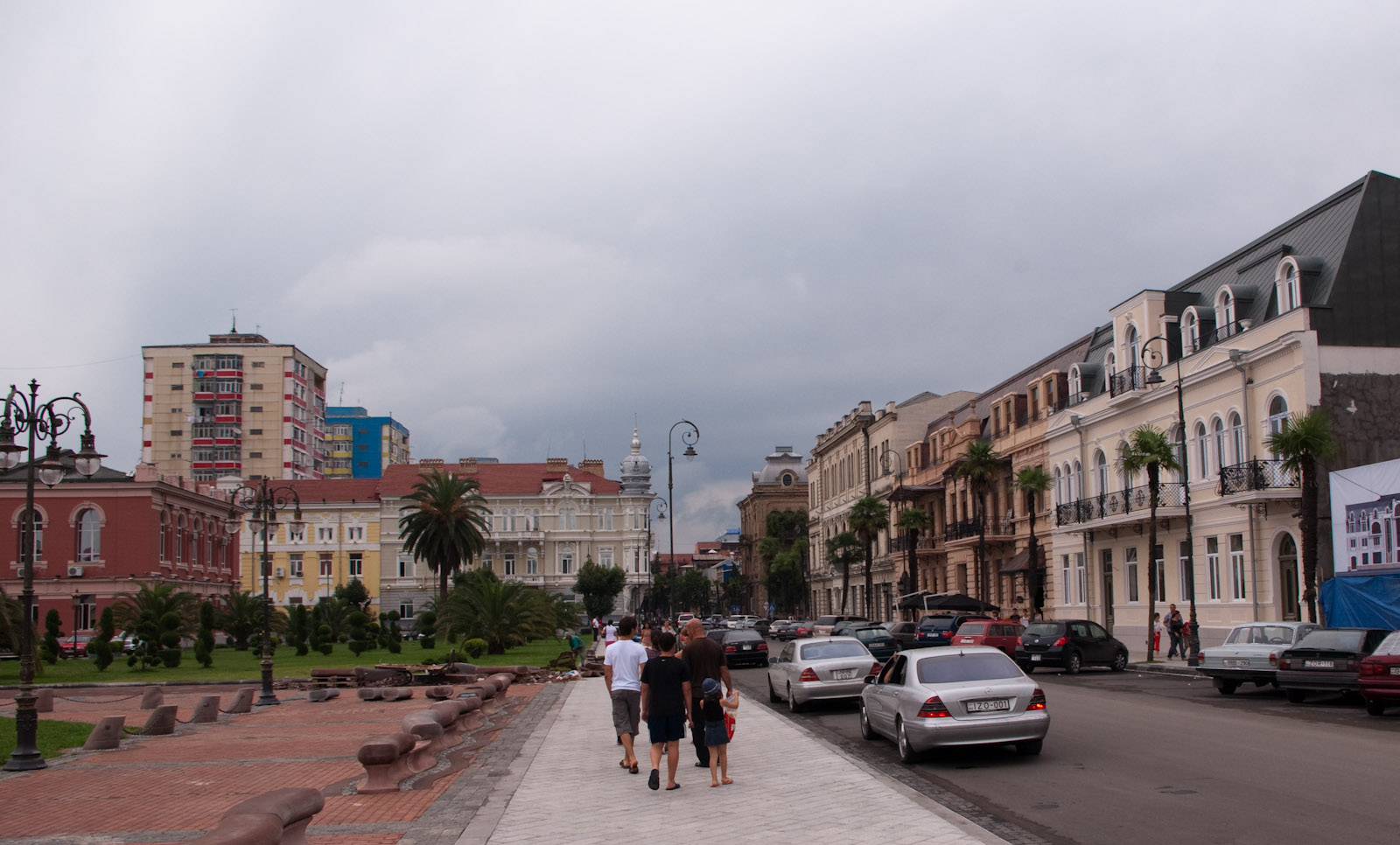
Old Batumi is where I'd spend most of my walking time. The streets between the port and the boulevard are full of restored 19th century houses, Art Nouveau and Art Deco facades and wooden balconies, and they're compact enough to cover in a morning without a map.
The Piazza
The Piazza is a newer square built in an Italian style, closed in by arcades, a clock tower and cafe terraces. Its floor has a marble mosaic of more than 100 m², made of around 3 million pieces, and figures appear on the clock tower at noon and at 15:00. In summer there's live music in the evenings.
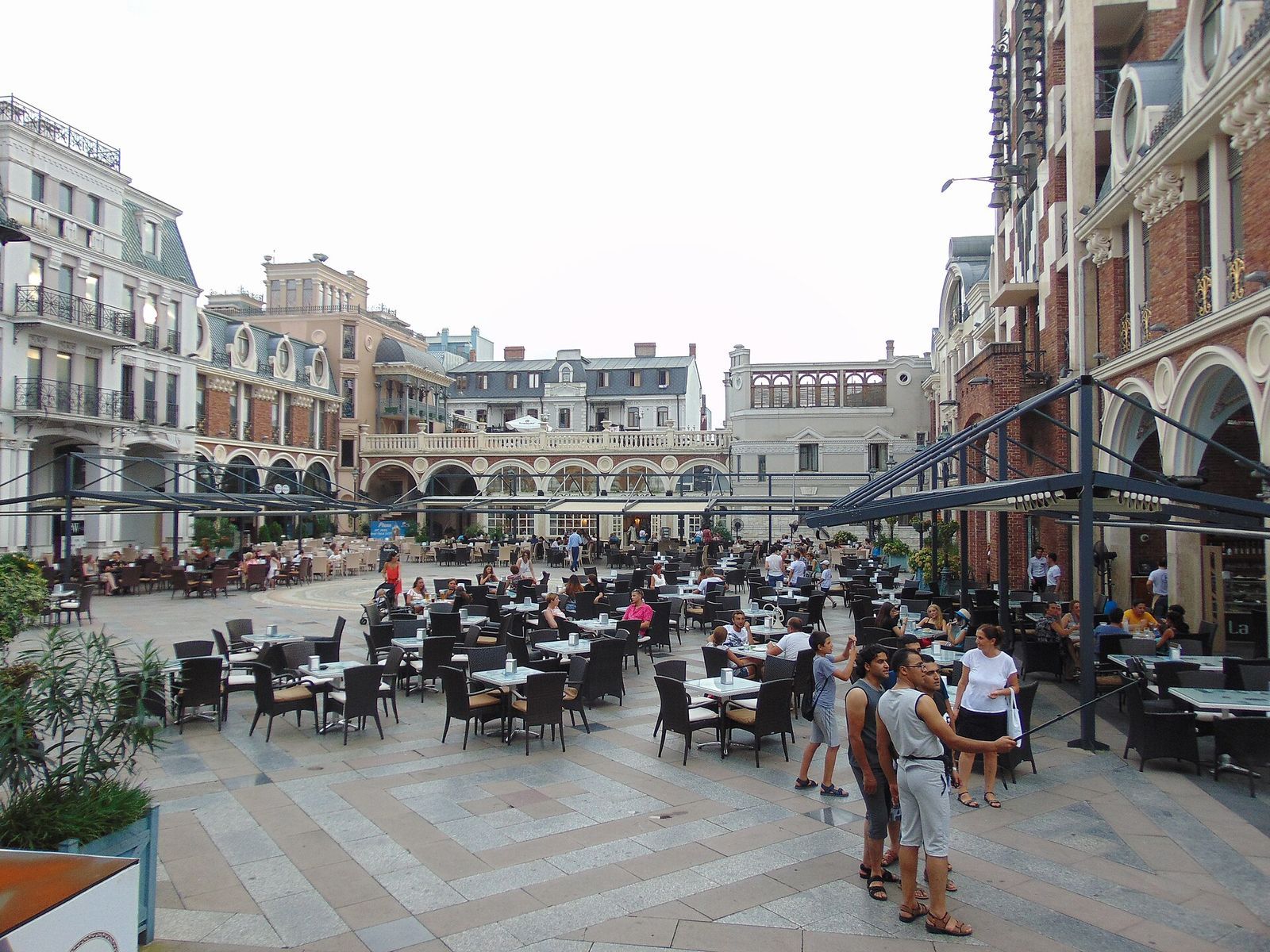
It's touristy, and a coffee here costs more than one a street away. I still think it's the nicest place in Batumi to sit with a coffee, especially in the morning before the terraces fill.
Europe Square and the Medea statue
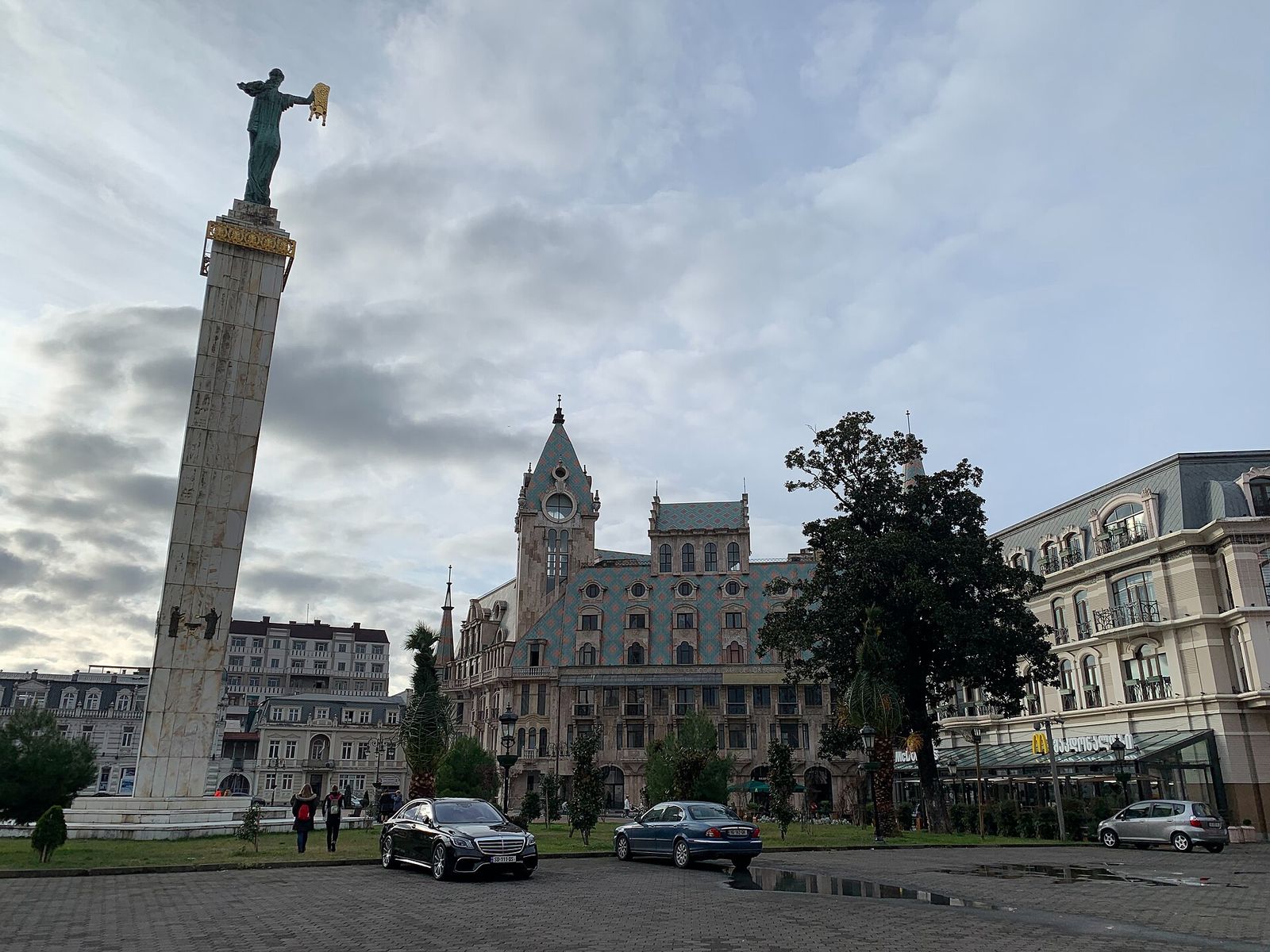
A few minutes' walk away, Europe Square is the main square of the Old Town. In the middle stands a tall column with a statue of Medea holding the Golden Fleece, a nod to the Greek myth of the Argonauts, who sailed to Colchis on this coast to steal it; the cable car takes its name from their ship. One building on the square carries a working astronomical clock that shows the position of the sun, the phases of the moon and the zodiac sign. In winter the square gets the city's main Christmas tree and its New Year events.
Churches, a mosque and a synagogue
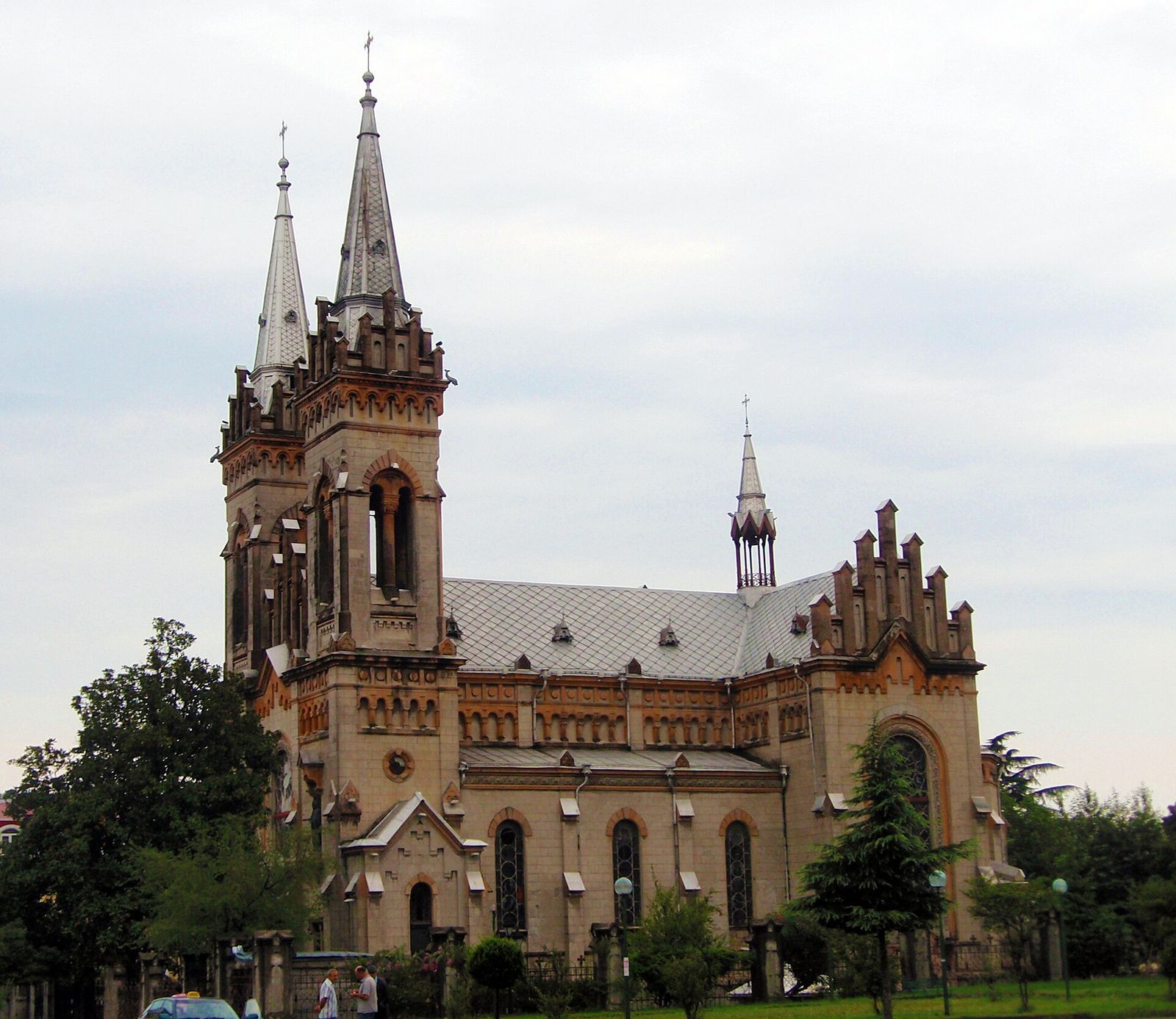
Batumi has long been a port of many faiths, and the Old Town shows it: Georgian Orthodox churches, a synagogue, the Greek church of St Nicholas and an Armenian church all stand within a few hundred meters of each other. The standout is the Cathedral of the Mother of God, a neo-Gothic church built in the early 20th century as a Catholic church and now Orthodox, with tall stained glass windows.
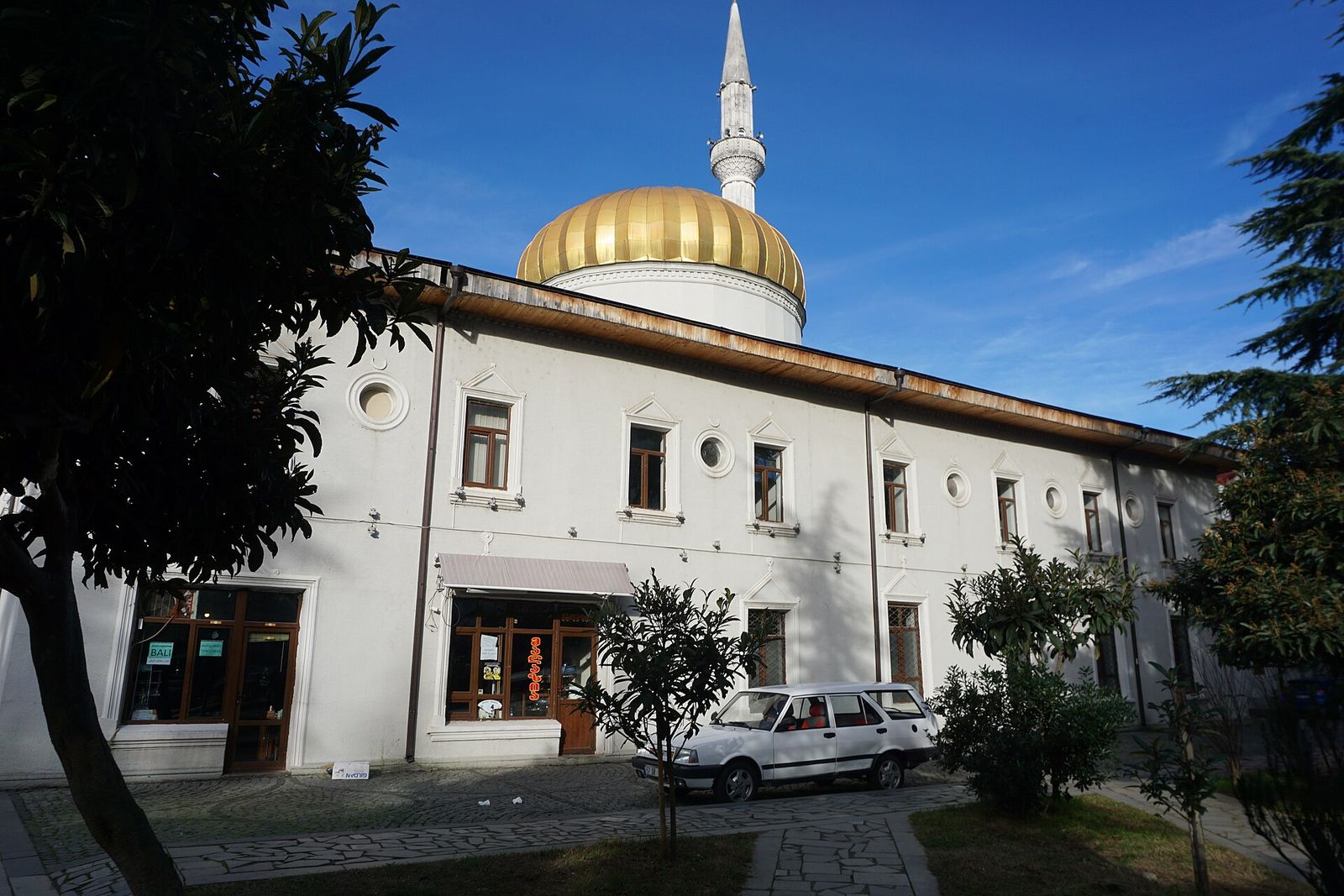
Orta Jame, with its white minaret, is the city's only working mosque, a reminder that Adjara spent centuries under Ottoman rule. Visit outside prayer times and cover your knees and shoulders, which works for the churches too.
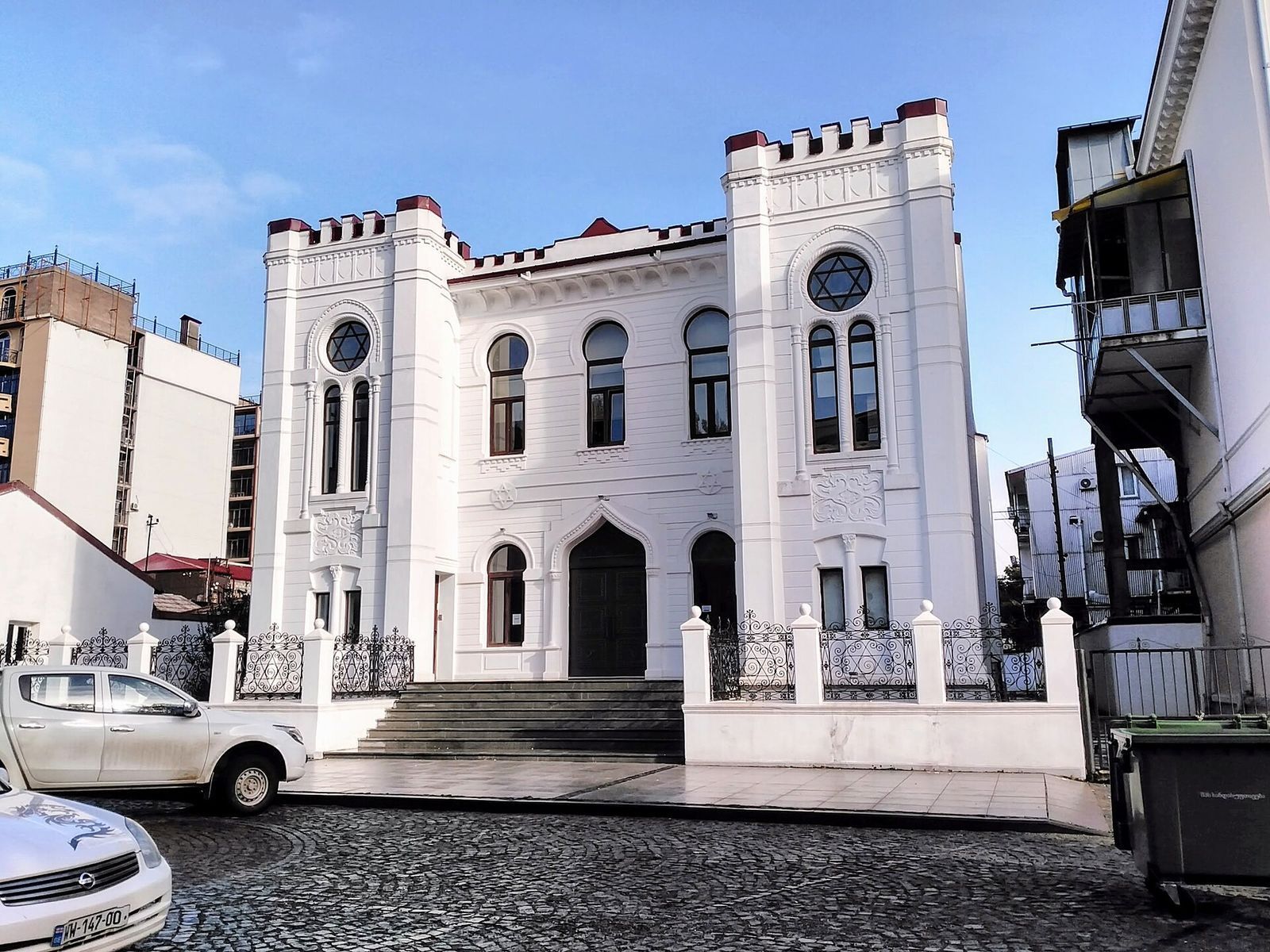
The synagogue is the white building with two crenellated towers and a Star of David in each round window. It opened in 1904 for the city's Ashkenazi Jews, served as a sports hall through the Soviet years and has been a working synagogue again since 1998.
Batumi beaches: pebbles in town, sand up the coast
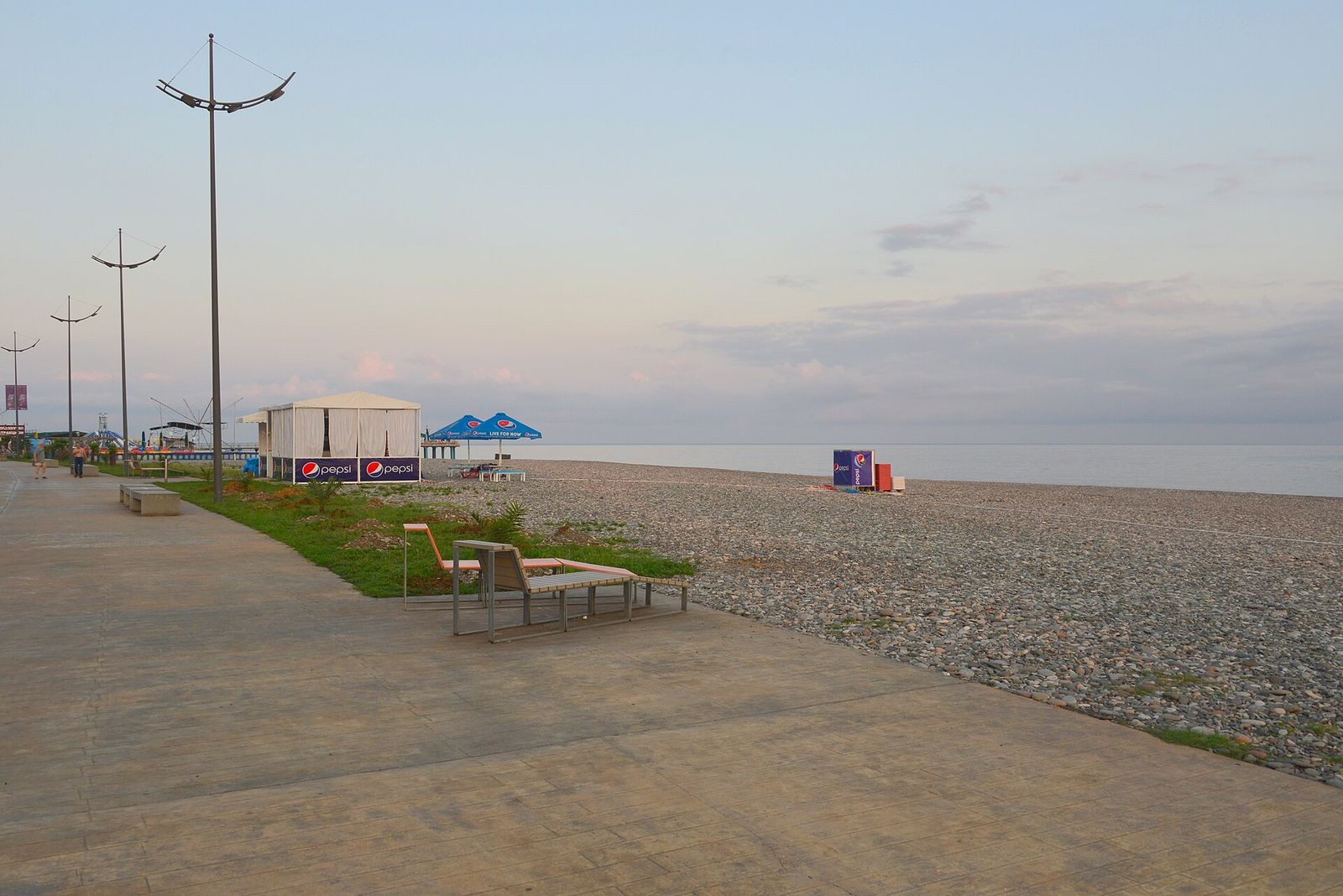
Batumi's city beach runs for more than 7 km along the boulevard, and it's pebbles all the way, not sand. Sunbeds cost about 10 GEL and umbrellas about 5 GEL. The water deepens quickly a few meters out and the sea can be rough, and after heavy rain the runoff makes it murky for a day or so.
For a better swim, head out of town:
| Beach | Distance from the center | What it's like | Go if |
|---|---|---|---|
| Batumi city beach | On the boulevard | Pebbles, steep drop, busy in summer | You want a swim without leaving town |
| Mtsvane Kontskhi (Green Cape) | About 9 km north, below the Botanical Garden | Quieter and cleaner than the city | You're visiting the garden anyway |
| Gonio and Sarpi | Up to 20 km south, at the Turkish border | Sarpi is a 500 m beach by a busy road | You're seeing Gonio fortress |
| Ureki | 55 to 60 km north | About 5 km of black magnetic sand, gentle slope, pine forest | You want sand and shallow water |
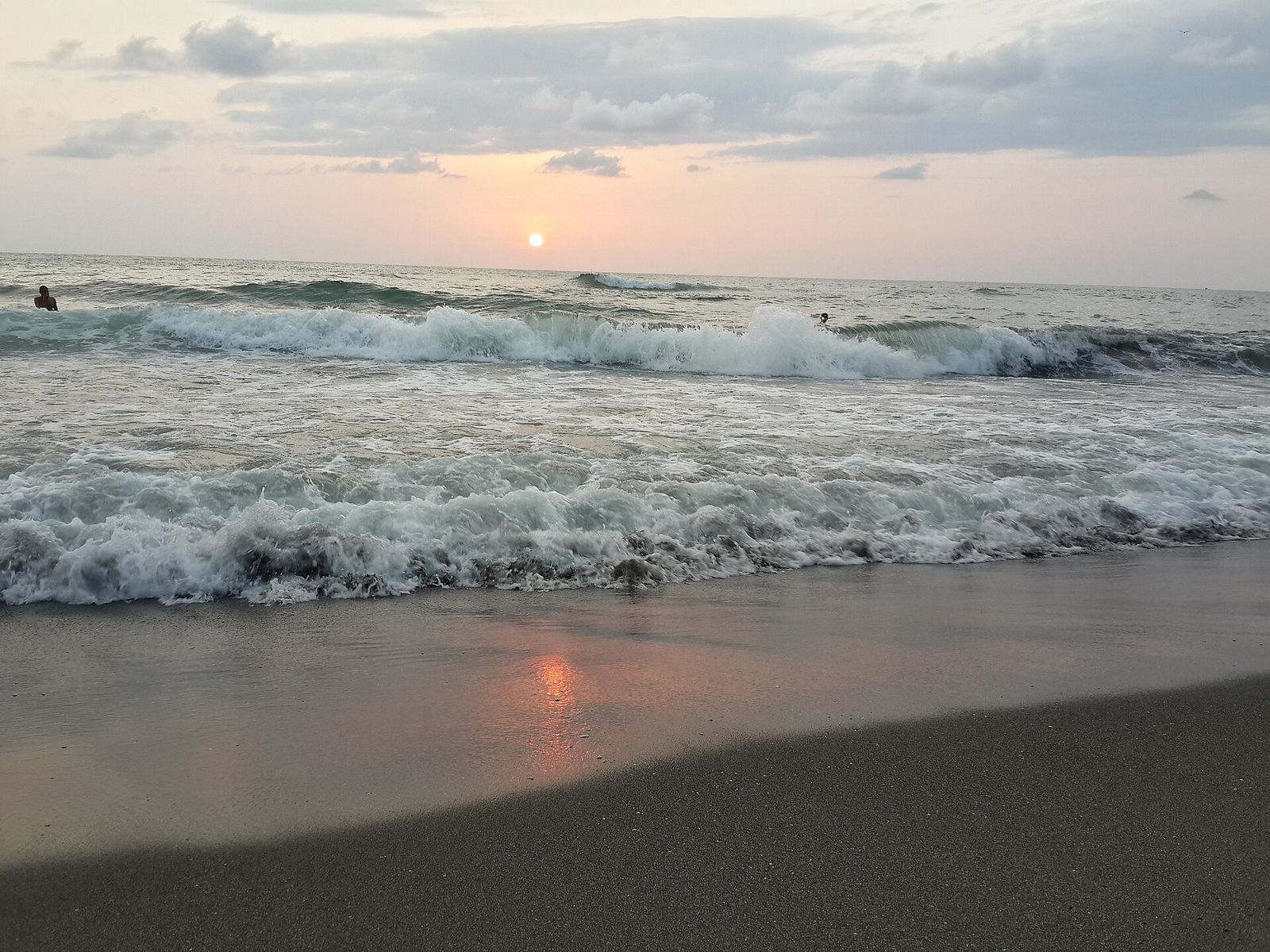
Ureki is the one I'd pick with children: the sand slopes gently into the sea and the water stays shallow for a long way out. It's also packed in July and August, and the dark sand gets everywhere.
Batumi Botanical Garden
The Botanical Garden is my favorite thing in Batumi. It sits on Mtsvane Kontskhi, the Green Cape, a forested headland about 9 to 10 km north of the center, and it has been kept since 1912. Paths wind down the slope through nine zones planted by region of the world, with plants from as far away as New Zealand and Mexico and the sea below you almost the whole way.
Entry costs 25 GEL. Allow 2 to 3 hours, and longer if you stop at the viewpoints, where the whole city lines up across the bay. Spring is the best season, when the garden is in flower, but it's green and worth the trip all year.
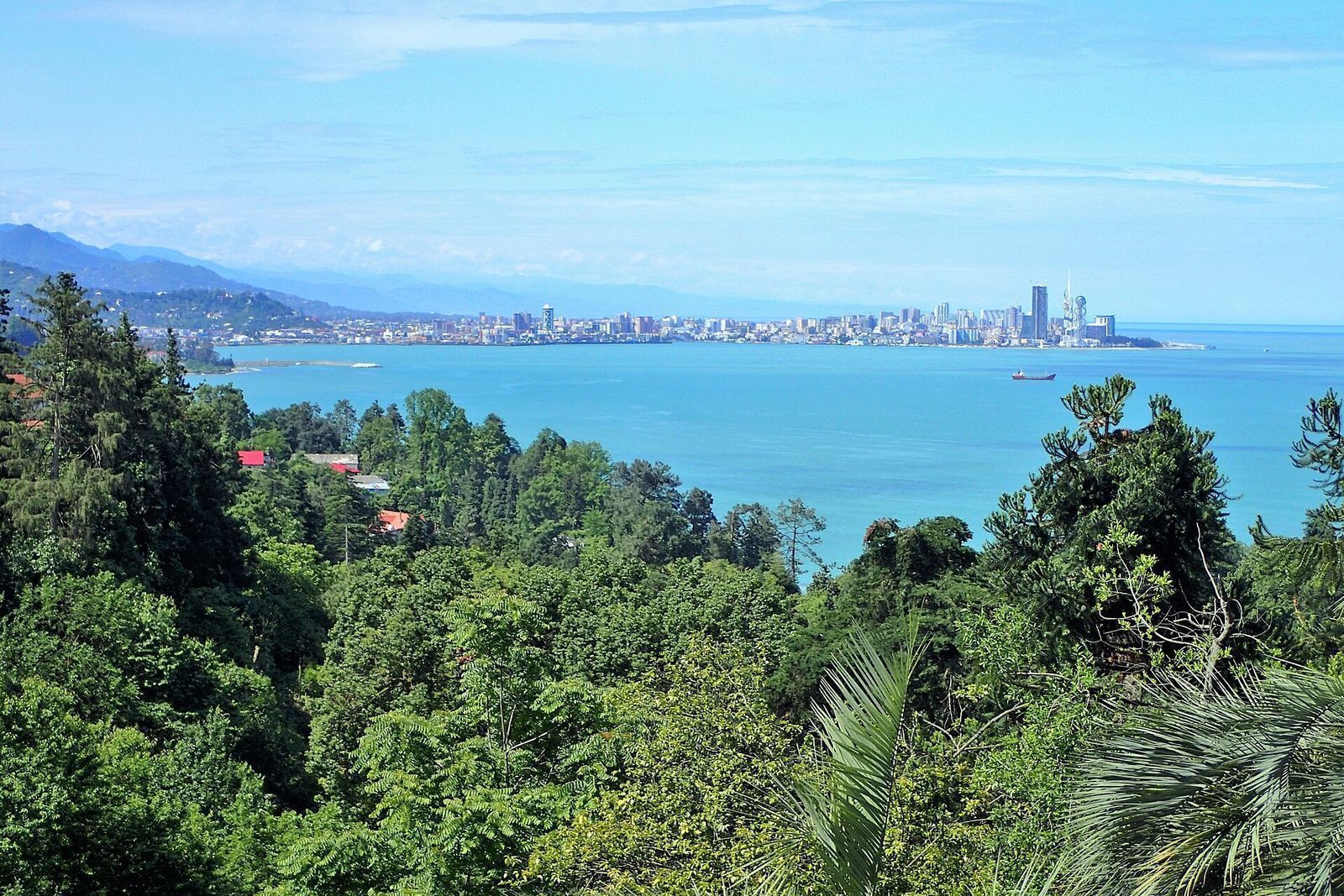
Take a Bolt rather than driving: parking at the garden is scarce. The garden is steep in places, and electric carts cover the main loop for 15 GEL.
Things to do in Batumi with kids
Batumi is an easy city with children, because so much of it is parks and seafront. These are the stops that work best.
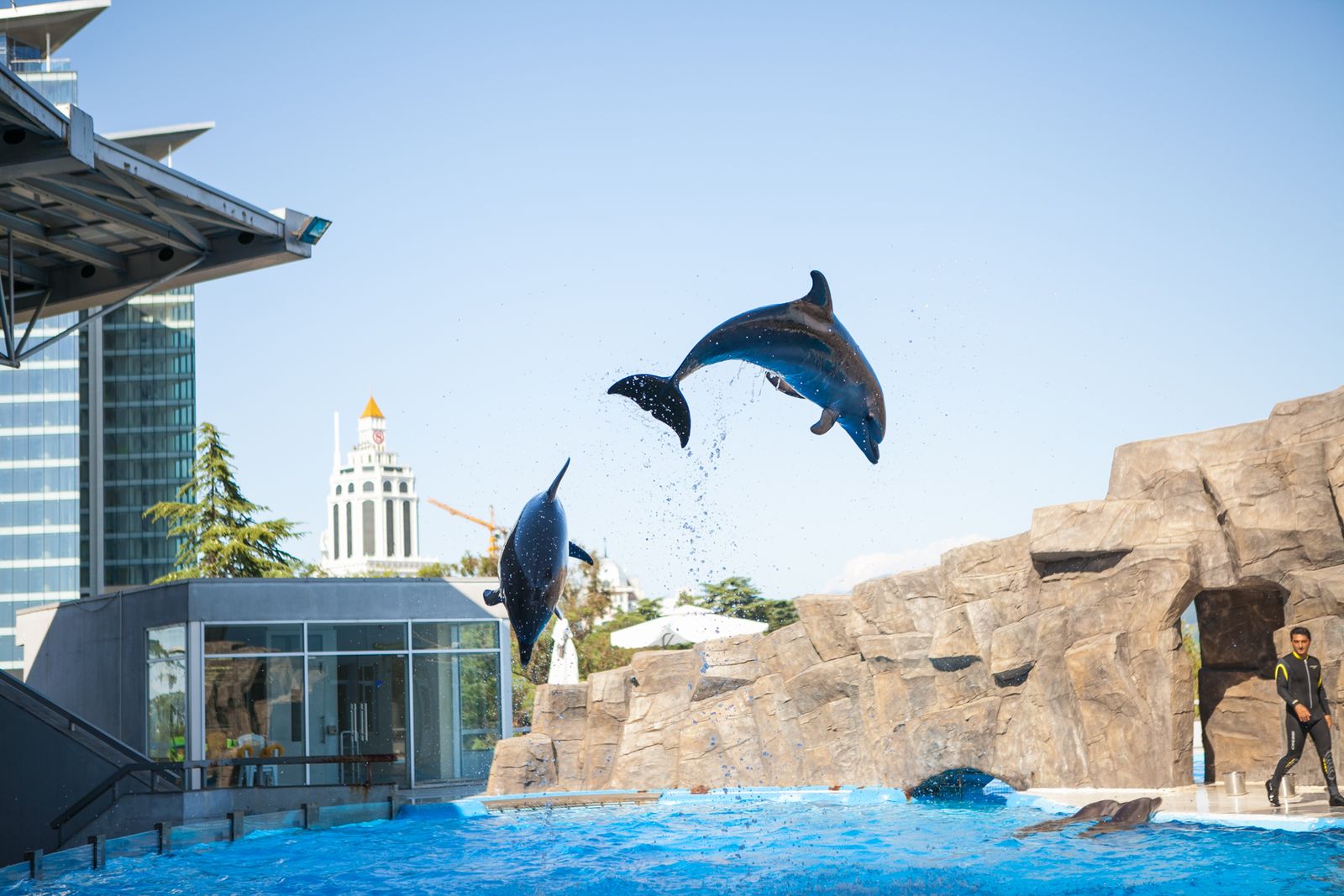
Batumi Dolphinarium, by May 6 Park, costs about 20 GEL and runs several shows a day.
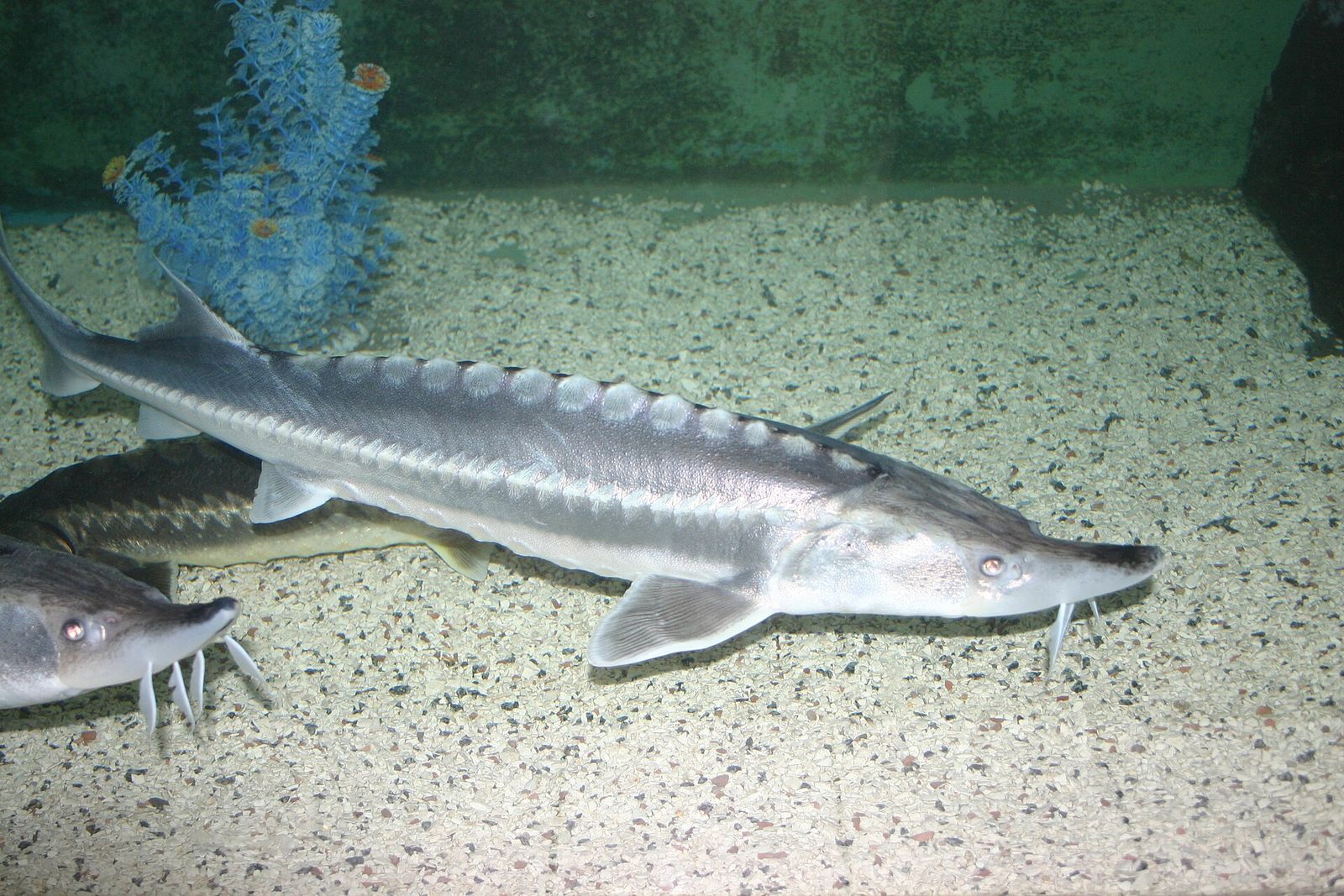
The aquarium nearby costs about 4 GEL. It's small and a bit retro, a good half hour on a rainy day.
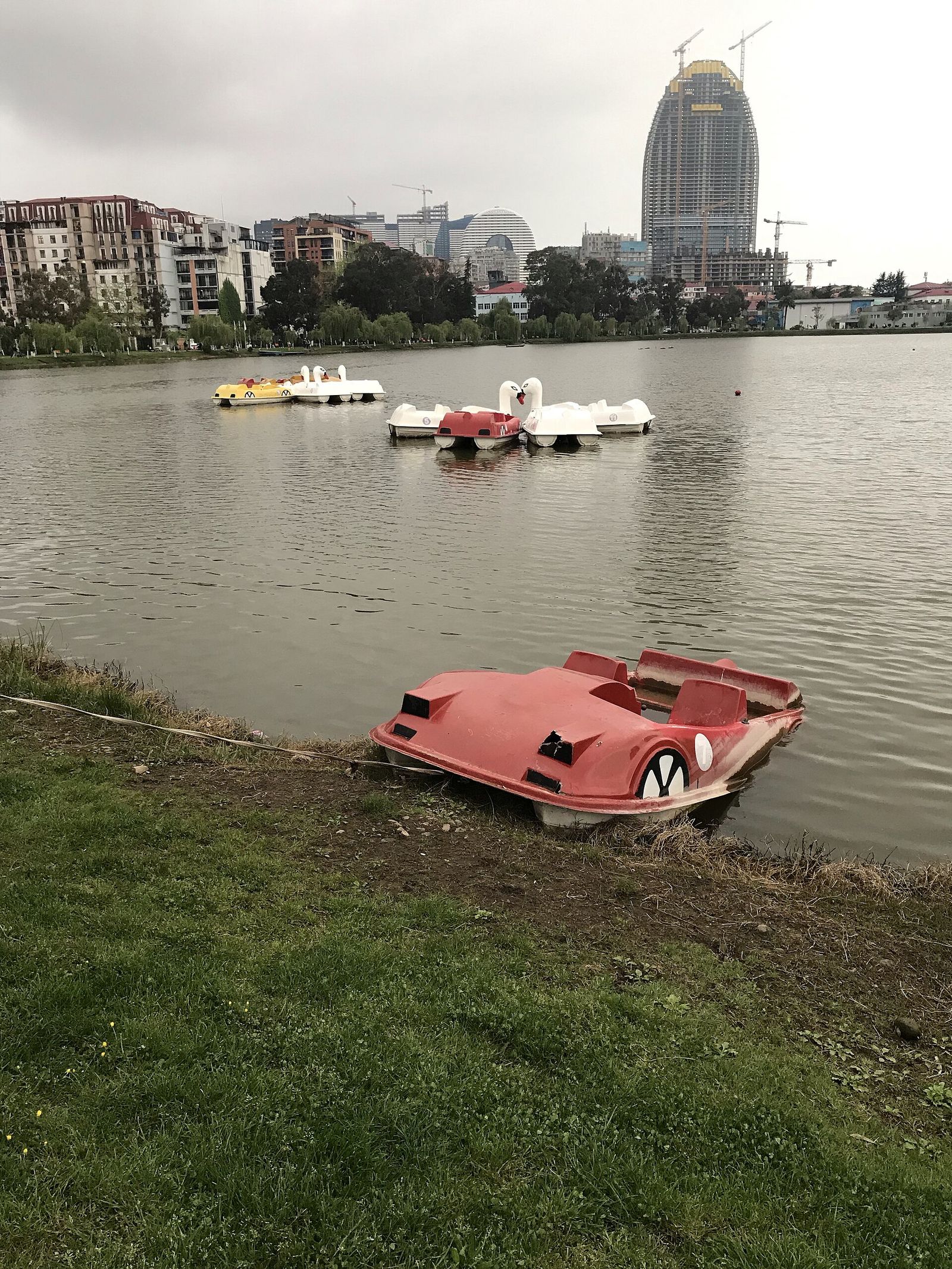
May 6 Park and Lake Nurigeli make up one of the oldest public parks in Georgia, with rowing boats and pedalos on the lake.
Lech and Maria Kaczynski Park has play areas and an odd sculpture of giant flip-flops on eggs that kids love.
Day trips from Batumi
Adjara is green, steep and wet, and its waterfalls, forests and old fortresses are all within an hour of the city. These are the trips I'd pick from:
| Trip | Distance | How to get there | Time | Why go |
|---|---|---|---|---|
| Gonio-Apsaros Fortress | South, toward the Turkish border | City bus 16, about 1 GEL | 2 hours with a swim | Roman walls and a beach next door |
| Makhuntseti waterfall | About 30 km inland | Car, taxi or tour | Half a day | The region's tallest falls, free |
| Mirveti waterfall | About 27 km | Car, then a 1 km walk | 2 to 3 hours | Quieter, over a suspension bridge |
| Mtirala National Park | About 30 km | Car or tour | Half to full day | Forest trails and waterfalls |
| Petra Fortress | North, at Tsikhisdziri | Car or taxi | 1 hour | Coastal ruins on the way to Ureki |
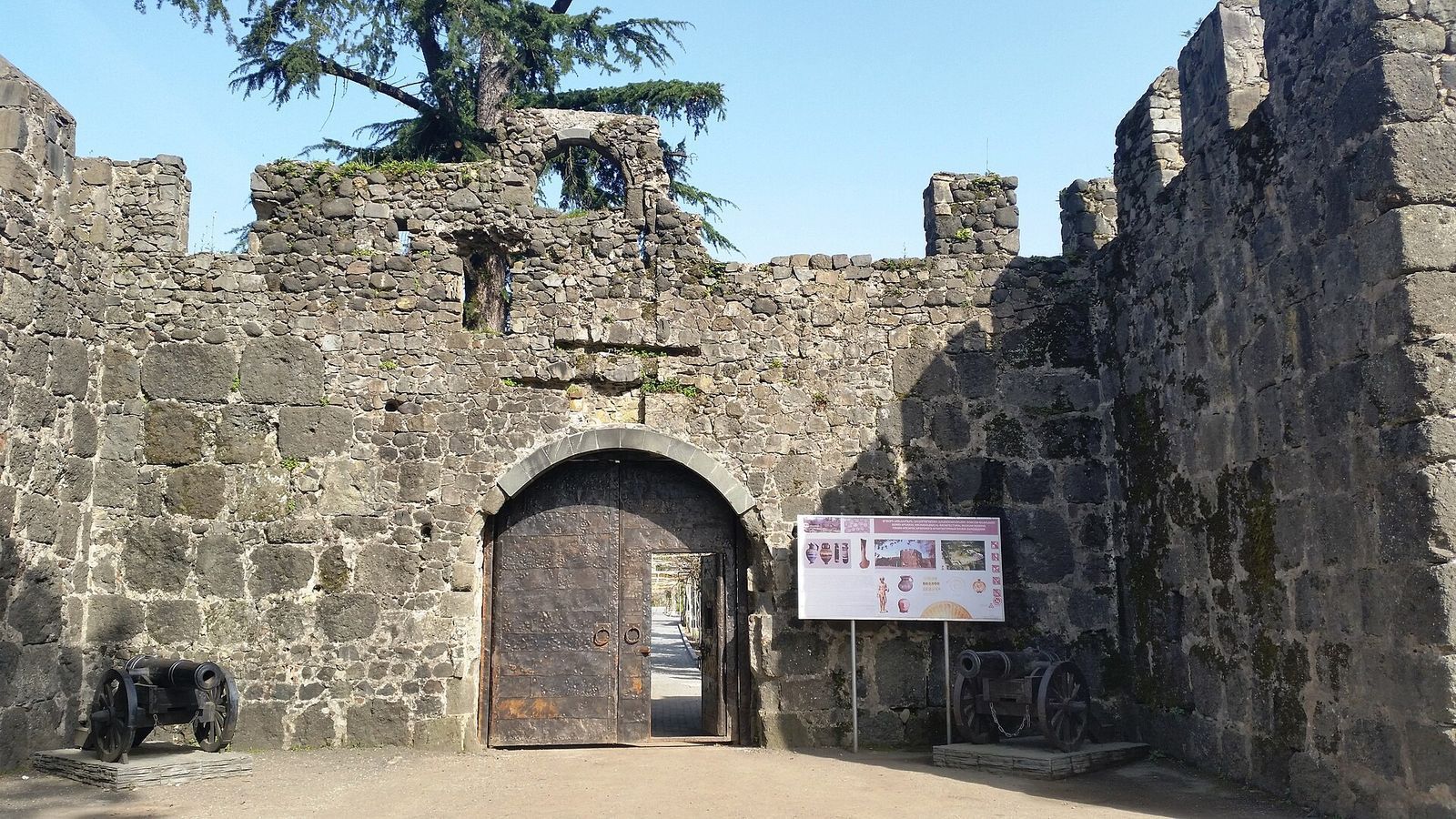
Gonio-Apsaros Fortress is the one I'd do first. It's a Roman fort first mentioned in the 1st century AD, with walls just under 1 km around and an interior you can walk in an hour. Entry costs 15 GEL, city bus 16 gets you there for about 1 GEL, and the beaches at Gonio and Sarpi are close enough to finish with a swim.
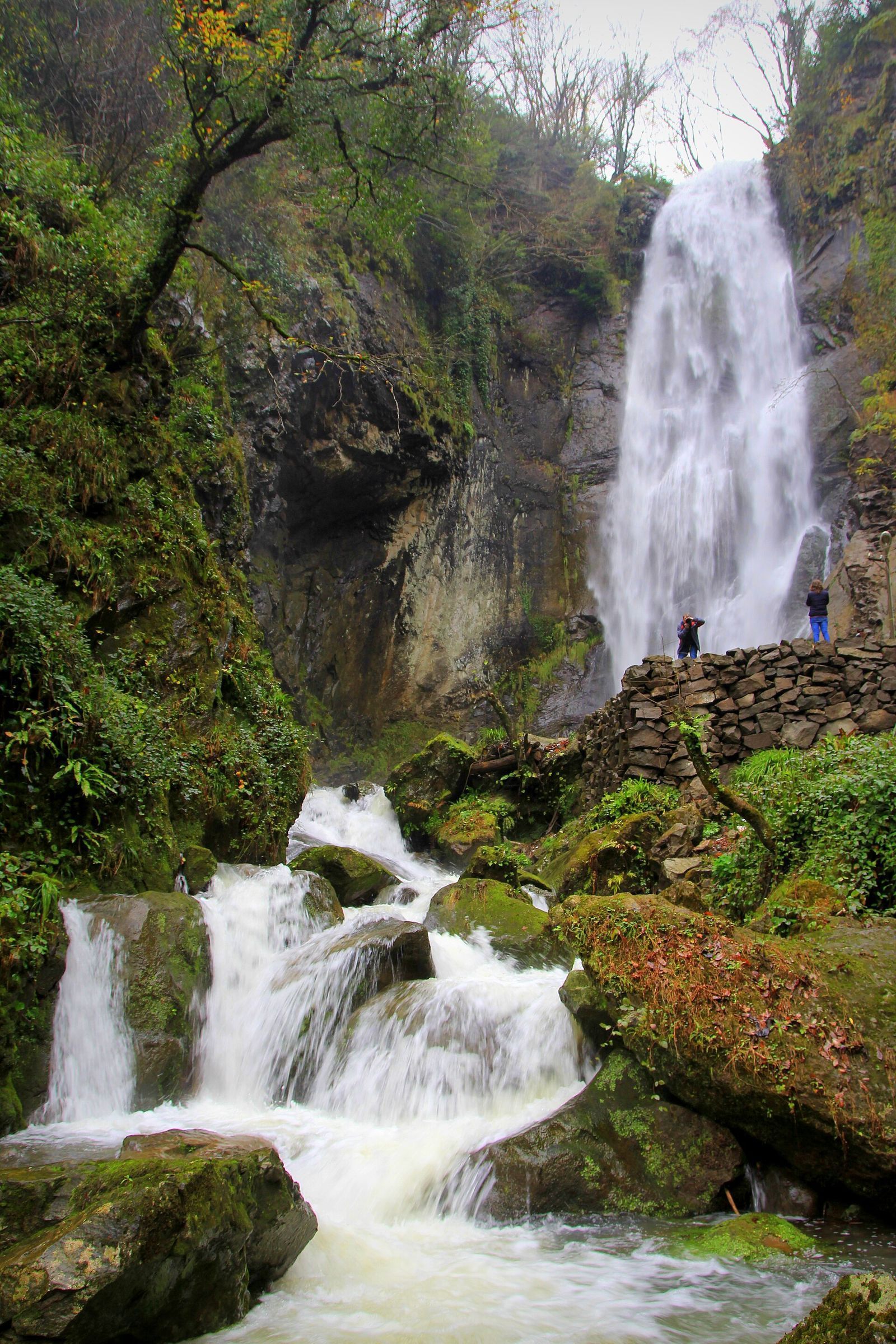
Makhuntseti waterfall is the tallest in the region and free to visit, about 100 m from the main road, with a pool at the bottom people swim in. The arched stone Queen Tamara Bridge over the river is a short way up the road, so the two make one stop.
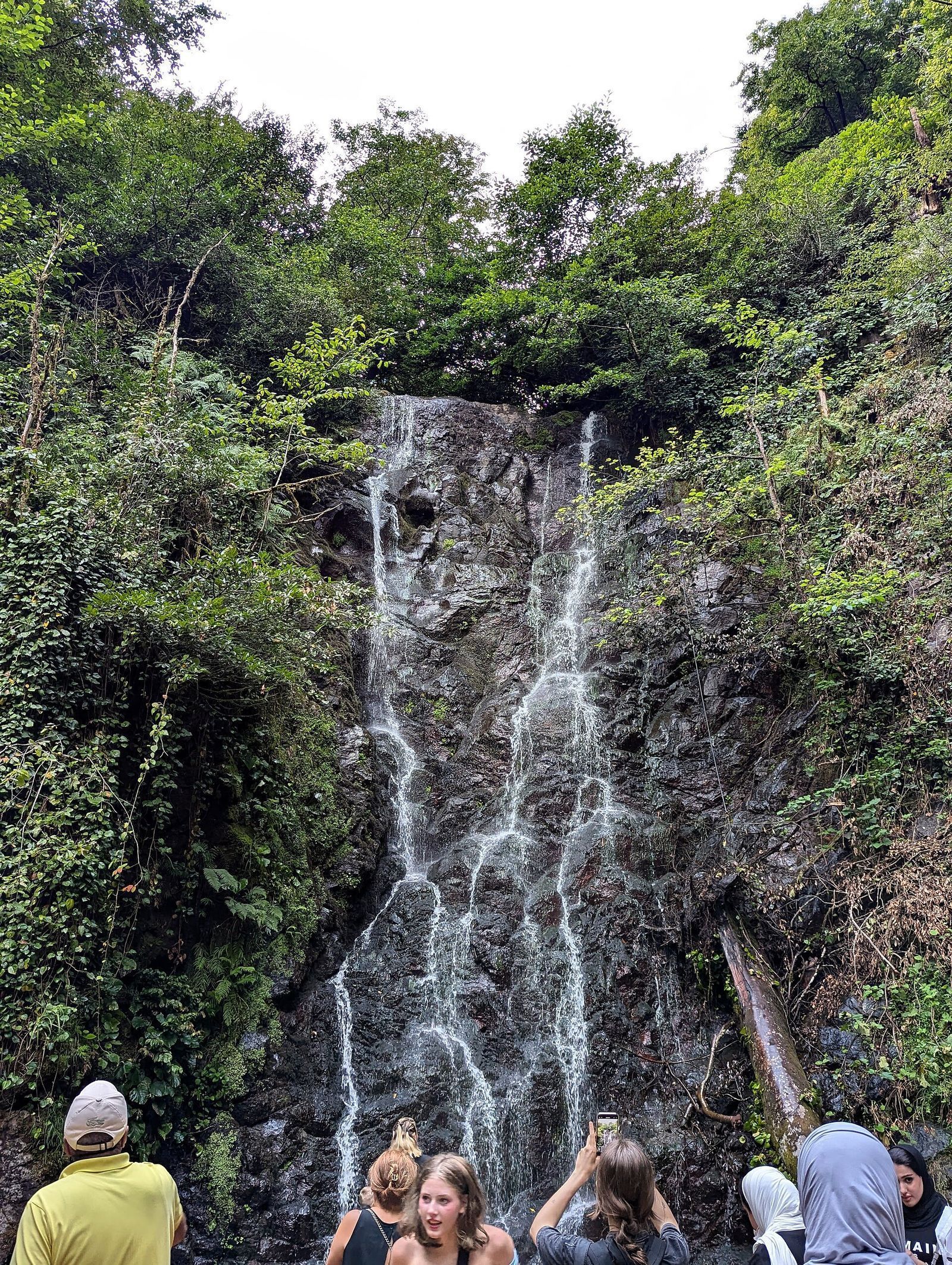
Mirveti waterfall is smaller and quieter, at the end of a 1 km walk that crosses a narrow suspension bridge; expect a few stray dogs at the trailhead.
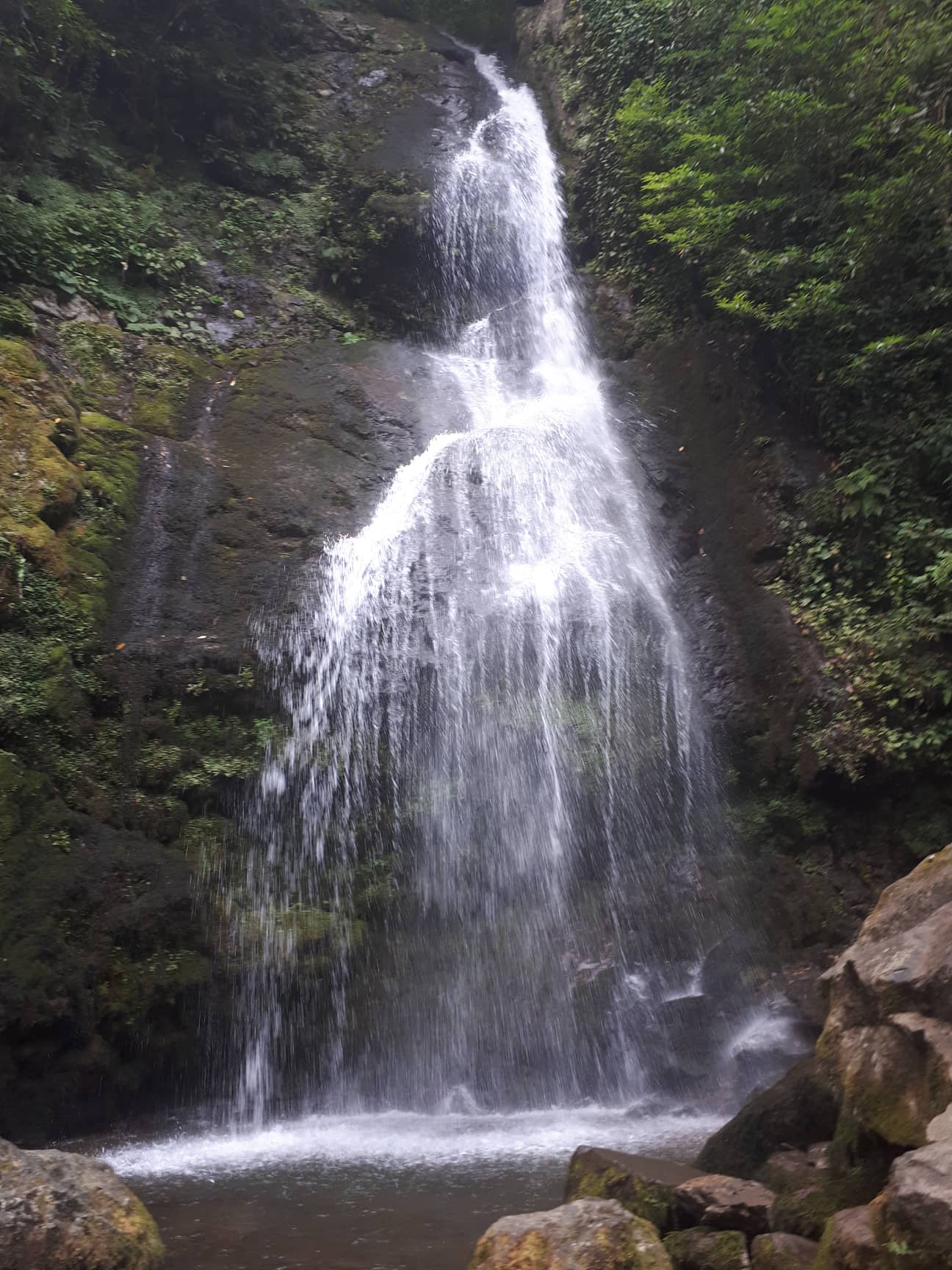
Mtirala National Park is subtropical forest with rivers and waterfalls. The trail to Tsablnari waterfall is about 1.5 km each way and easy, and the main loop runs about 12 km for a proper hike.
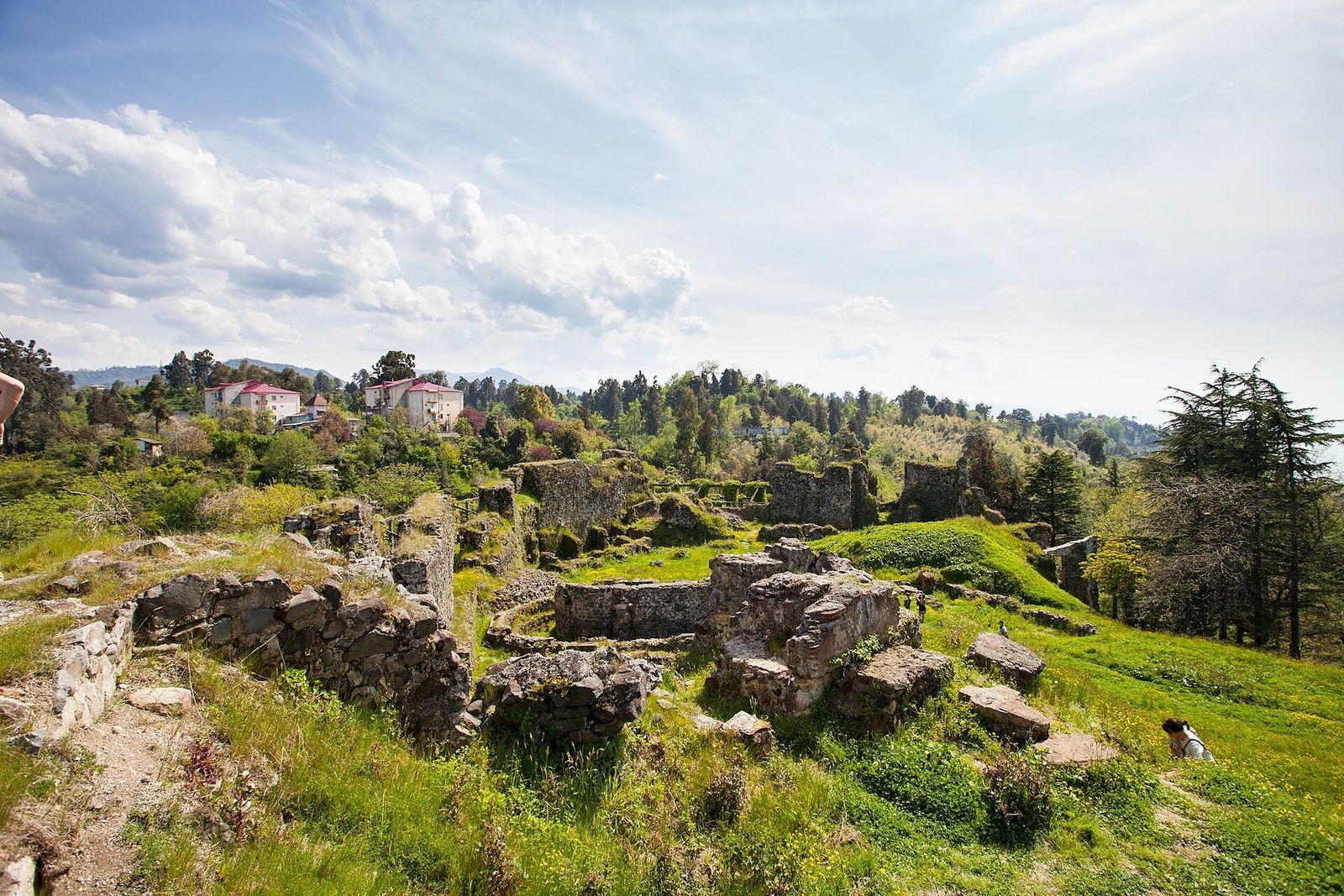
Petra Fortress is a ruin on the coast north of Batumi, thought to be part of a larger Roman-era town, and it's worth a stop on the drive back from Kobuleti or Ureki.
Farther afield, Batumi is a long day from Kutaisi, Martvili Canyon and Prometheus Cave, and in summer a direct early morning bus runs from Batumi to Mestia in Svaneti in about 6 hours. I'd sleep in Kutaisi rather than do either as a day trip.
What to eat in Batumi

Batumi is the home of adjaruli khachapuri, the boat-shaped bread filled with molten cheese and topped with a raw egg yolk and a lump of butter. You stir the egg and butter into the cheese, then tear off the crust and dip it. It costs 10 to 24 GEL depending on size and place. Tbilisi bakes plenty of adjarian khachapuri, but the shape started here, and it's the first thing I'd order in Batumi.
The rest of the Adjarian table is just as rich: borano (cheese melted in butter), achma (layered cheese bread, a little like lasagna), sinori (rolled thin bread baked with cottage cheese and butter) and chirbuli (eggs cooked with walnuts and tomatoes). Being on the coast, Batumi also has more seafood than anywhere else on a Georgian menu.
A few places to start with:
| Place | Go for | Notes |
|---|---|---|
| Shemoikhede Genatsvale | Adjaruli khachapuri | Prices below the city average |
| Pirosmani | Khinkali | Mid-range and always busy, so book or go early |
| Cafe Adjara | Baklava with ice cream | The dessert stop |
| Fox Coffee | Coffee | Most drinks under 11 GEL, local crafts on the wall |
| Nord Specialty Coffee | Specialty coffee | In the Old Town |
Best time to visit Batumi
The swimming season runs from June to October. The sea is about 23°C in June and reaches 26 to 27°C in July and August, when Batumi is at its busiest and priciest, and the Black Sea Jazz Festival brings in summer crowds of its own.
Batumi is wet. It gets about 2,200 mm of rain a year, and autumn is the wettest stretch, so a late September or October trip is a gamble on the weather even though the sea stays warm. May can still be cool and rainy. In winter the beach bars close and the boulevard goes quiet, which suits a walk and a khachapuri but not a beach trip.
My pick is June or the first half of September: a warm sea, long evenings, thinner crowds and lower prices than in August. Those months also line up with Tbilisi's best months, late spring and early autumn, if you're doing both cities in one trip.
How many days do you need in Batumi?
Two to three days. Two covers the city, the cable car and the Botanical Garden; a third adds Gonio and the waterfalls or a beach day in Ureki. A week only makes sense as a beach holiday. I wouldn't try Batumi as a day trip from Tbilisi: it's 5 hours each way on the fastest train, so plan for at least two nights.
Batumi works best at the far end of a Georgia itinerary that runs west from Tbilisi, with a night in Kutaisi on the way. This is the two-day plan I'd follow:
| Time | Day 1 | Day 2 |
|---|---|---|
| Morning | Old Town walk: Europe Square, the Piazza, the cathedral and Orta Jame | Botanical Garden, 2 to 3 hours, then a swim at Mtsvane Kontskhi |
| Lunch | Adjaruli khachapuri in the Old Town | Back in town for khinkali |
| Afternoon | Rent a bike and ride the boulevard south to the plane-spotting spot | Bus 16 to Gonio-Apsaros Fortress, then a swim at Gonio or Sarpi |
| Evening | Argo cable car an hour before sunset, then Ali and Nino after dark | Dancing fountains at Lake Ardagani, dinner in the Old Town |
With a third day, rent a car or join a tour for Makhuntseti and Mirveti waterfalls, or take the train north to Ureki for a day on the sand.
Getting to Batumi and getting around
From Tbilisi, the train is the way to go: about 5 hours from Tbilisi Central Station, from 35 GEL in second class, with at least two trains a day and more in summer. Coaches from Ortachala cost 40 GEL and take 6.5 to 7 hours, and marshrutkas from Didube cost 35 GEL. Summer trains sell out, so book as soon as sales open, about 20 days ahead; if they're gone, the coach is the next best way from Tbilisi to Batumi.
The train and coaches arrive at Batumi Central Station, about 4 km from the Old Town. A Bolt into the center costs about 8 to 10 GEL; don't try to walk it, as the road has no footpath.
In town, the Old Town and the northern boulevard are easy on foot. Bolt and Yandex work in Batumi just as they do for taxis in Tbilisi, and a ride across the center costs a few lari, while street taxis often ask 2 to 3 times the app fare. Carry some lari in small notes for marshrutkas, sunbeds and the beach cafes.
Where to stay in Batumi
I'd stay in or near the Old Town, within a few blocks of the boulevard. Everything in this guide except the Botanical Garden and the day trips is then a walk away, the restaurants are better and the streets stay lively in the evening without the noise of the beach clubs.
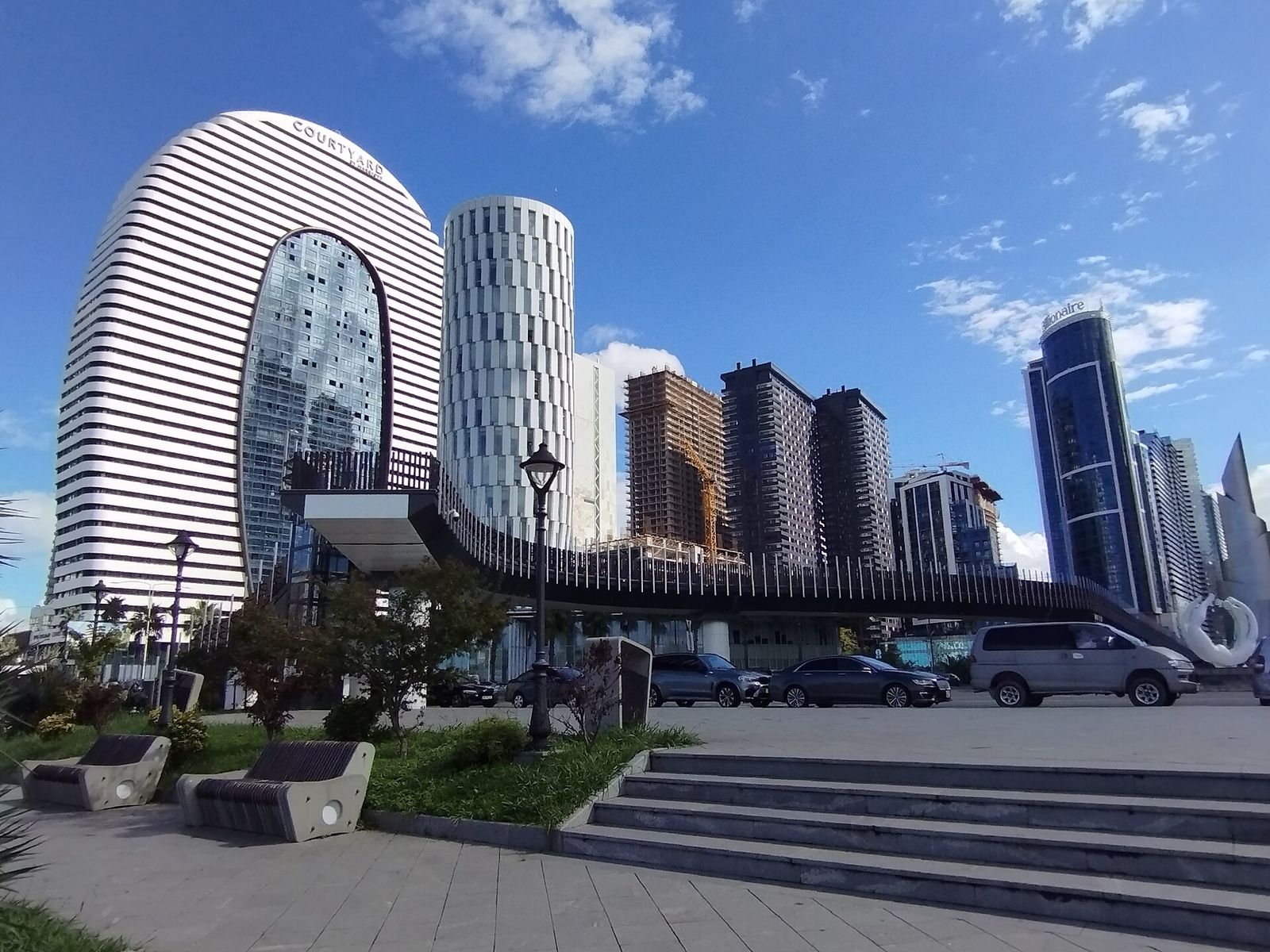
New Batumi, along the southern seafront, is where the big hotels with pools and sea views are, and it suits a beach holiday more than sightseeing. I'd skip the short-let apartments in the new towers there: the photos sell the view, but some of the buildings are still unfinished, parking is scarce and the Old Town is a taxi ride away. A guesthouse about 20 minutes' walk from the Old Town is the budget middle ground.
Key takeaways
- Batumi's best sights are free: the boulevard, Ali and Nino after 19:00, the Piazza and Europe Square.
- Ride the Argo cable car (about 39 GEL) an hour before sunset and skip the Alphabet Tower lift.
- The city beach is pebbles with a steep drop; go to Ureki for sand and to Mtsvane Kontskhi for cleaner water.
- The Botanical Garden (25 GEL) and Gonio-Apsaros Fortress (15 GEL, bus 16) are the two trips I'd never skip.
- Give Batumi two to three days, ideally in June or early September.
Frequently asked questions
Is Batumi worth visiting?
Yes, if you want the sea as part of a Georgia trip. Batumi has the country's best seafront, a subtropical botanical garden, a Roman fortress and waterfalls within an hour, and it's the home of adjaruli khachapuri. If you only care about old churches, wine and mountains, spend those days elsewhere in Georgia instead.
How many days do you need in Batumi?
Two to three days is enough for most people. Two days covers the boulevard, the Old Town, the cable car and the Botanical Garden, and a third adds Gonio fortress, the waterfalls or a beach day in Ureki.
What is Batumi famous for?
Batumi is famous for its seafront boulevard, the moving Ali and Nino statue and a skyline of unusual towers like the Alphabet Tower. It's also the birthplace of adjaruli khachapuri and Georgia's main beach resort in summer.
Does Batumi have sandy beaches?
No, Batumi's city beach is pebbles. For sand, go about 55 to 60 km north to Ureki, which has around 5 km of black magnetic sand that slopes gently into the sea.
When is the best time to visit Batumi?
June and the first half of September are the best times to visit Batumi. The sea is warm, around 23°C in June and still warm in September, and the crowds and prices are lower than in July and August.
Can you visit Batumi as a day trip from Tbilisi?
Not comfortably. The fastest train takes about 5 hours each way, so a day trip leaves almost no time in the city; plan on at least two nights.
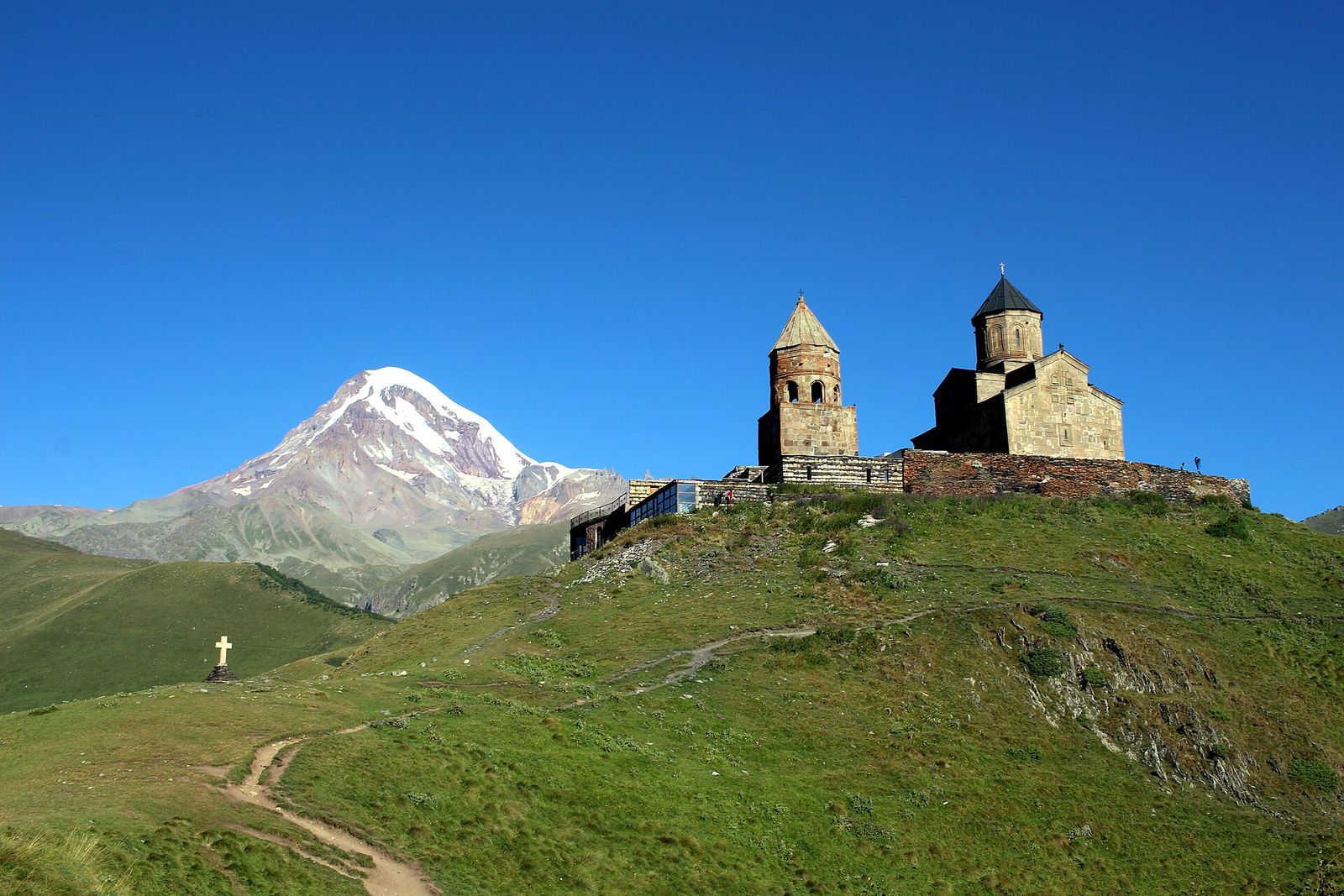
12 Best Places to Visit in Georgia in 2026, From Kazbegi to Batumi
Georgia is known for its mountains, wine and cave towns. Here are the 12 best places to visit and how to reach them.
Read the guide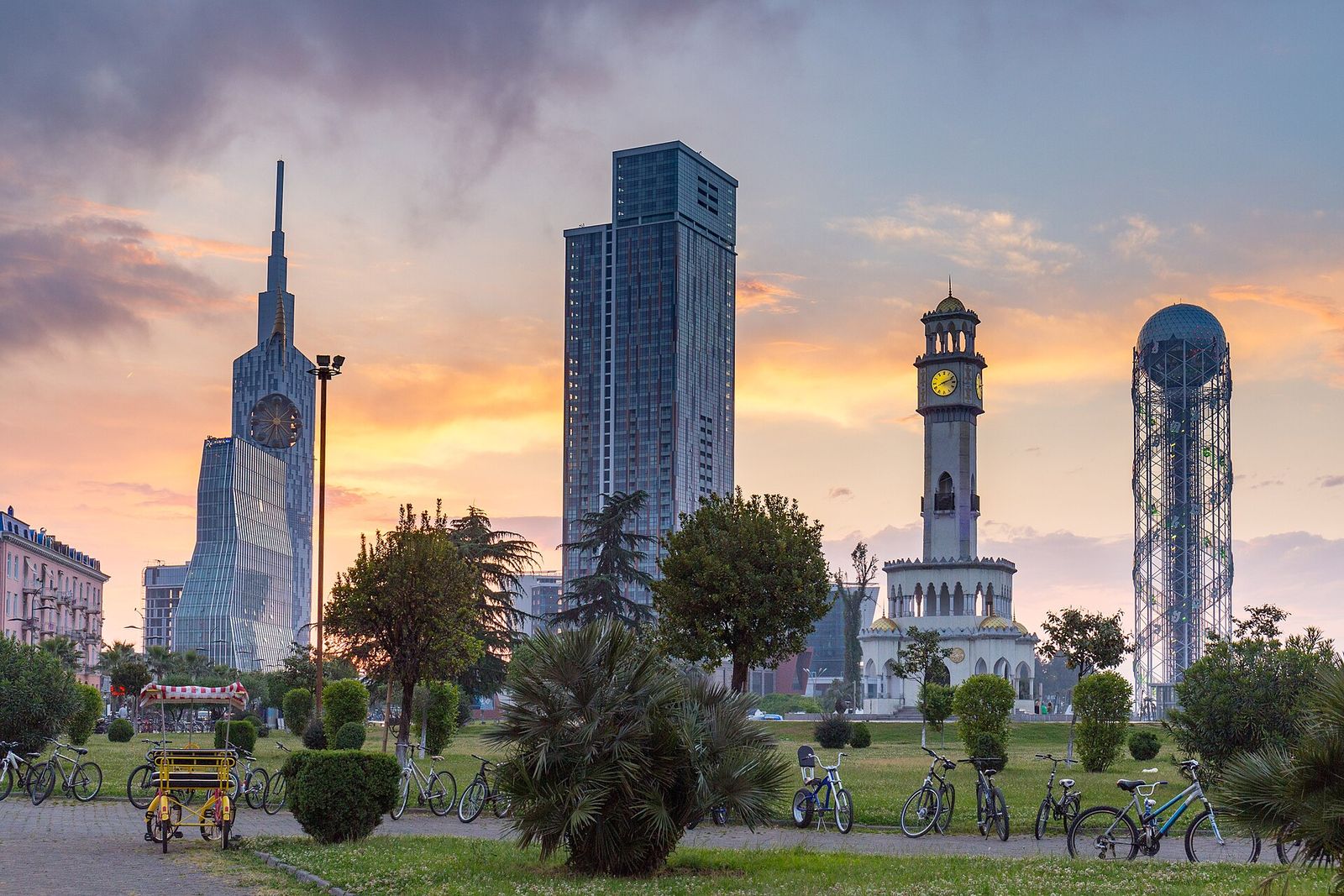
Tbilisi to Batumi: Train, Bus, Marshrutka, Flight or Drive
Batumi is Georgia's Black Sea city. Here is every way to get there from Tbilisi, with times, fares and my pick.
Read the guide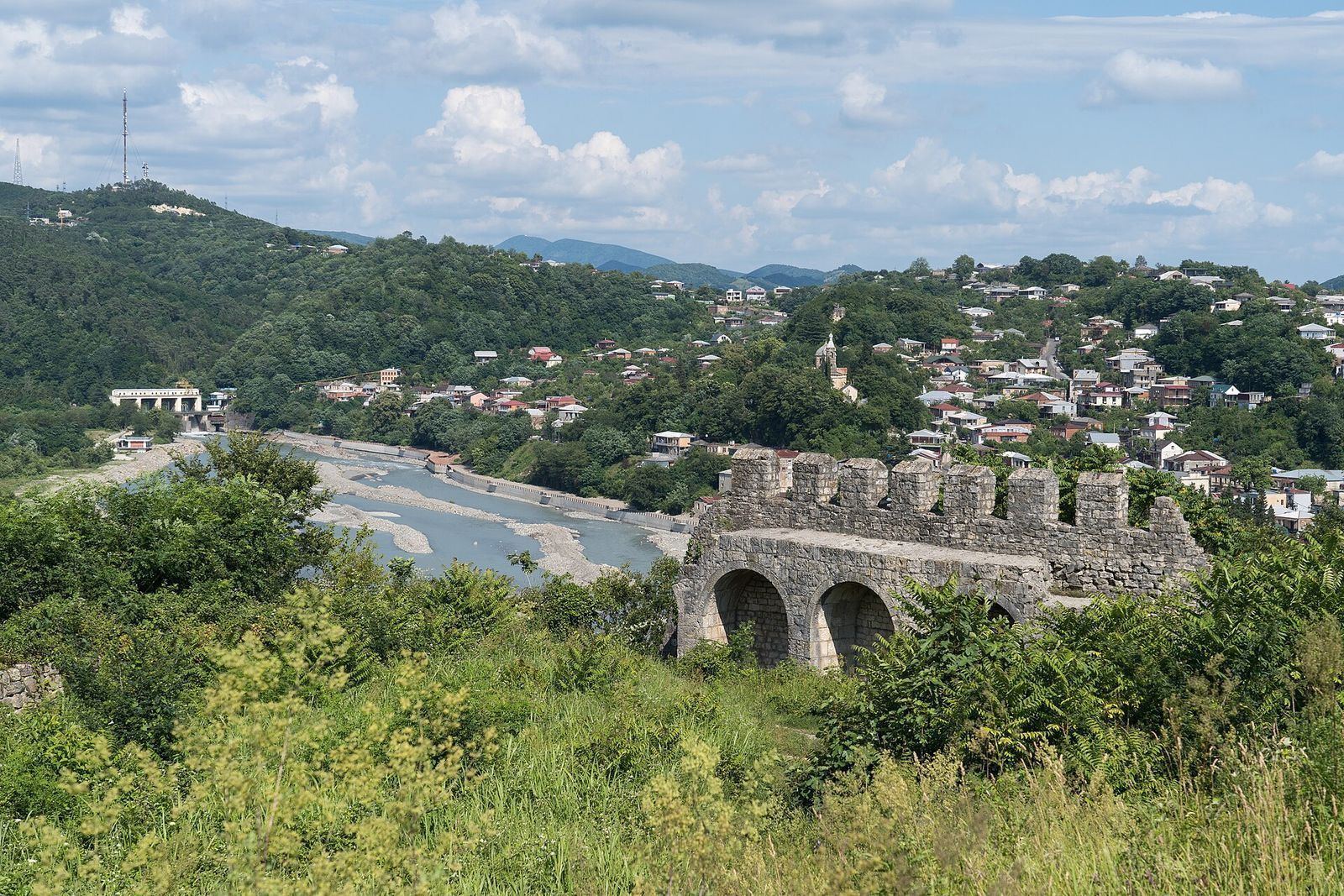
Tbilisi to Kutaisi: Train, Marshrutka, Bus and Car in 2026
Kutaisi is Georgia's second city, 226 km west. How to get there by train, marshrutka or car, and what each one costs.
Read the guide