Rustaveli Avenue and Freedom Square: What to See, Eat and Know
Rustaveli Avenue is the grand main street of Tbilisi: about 1.5 km of opera house, theatres, museums and the Parliament, running from Freedom Square to Rustaveli Square. Here's what you need to know about the sights in the order you pass them, how long the walk really takes, where to eat a block off the avenue, and what to expect in front of Parliament in 2026.
Rustaveli Avenue at a glance
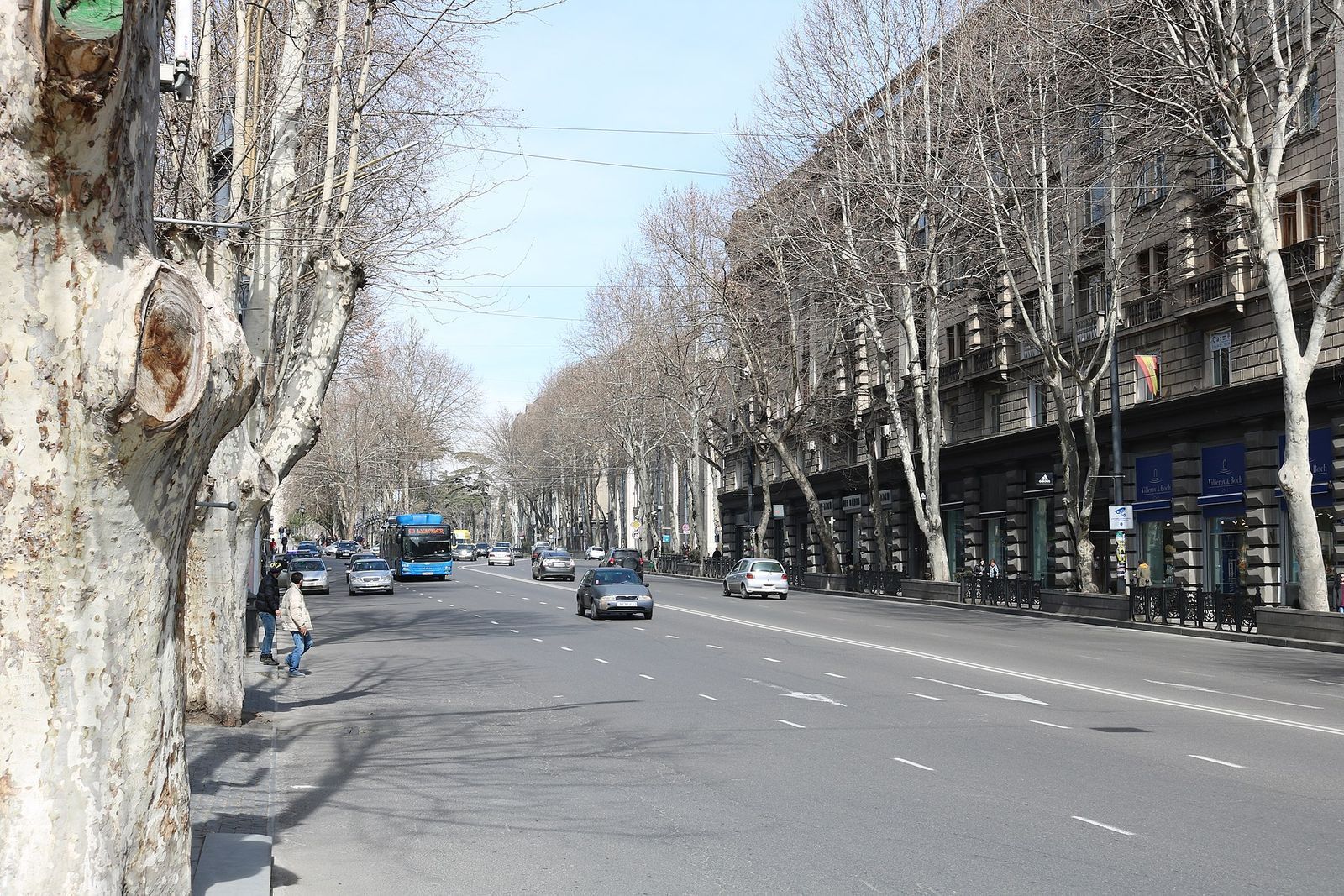
Rustaveli Avenue is the main boulevard of Tbilisi and its most formal street. It starts at Freedom Square, the big roundabout under the gold St George, and runs about 1.5 km to Rustaveli Square. Plane trees shade both sidewalks, and the buildings swing between 19th-century neoclassical facades and heavy Soviet blocks.
Nearly everything a first-timer wants in this part of town sits on it or a few steps off it: the Opera, the Rustaveli Theatre, the Parliament, the Georgian National Museum, the National Gallery and Kashveti Church. Locals say Rustaveli Street and Rustaveli Avenue for the same road, and Freedom Square also appears as Liberty Square, which is the name you'll see on many metro maps.
I think of it as the other face of the city. Old Tbilisi is wooden balconies, brick domes and lanes that bend for no reason. Rustaveli is the capital the Russian Empire and then the Soviet Union built: wide, straight, grand and a little stiff. Walk it once in daylight and once after dark and you've seen both.
Freedom Square: where the avenue starts
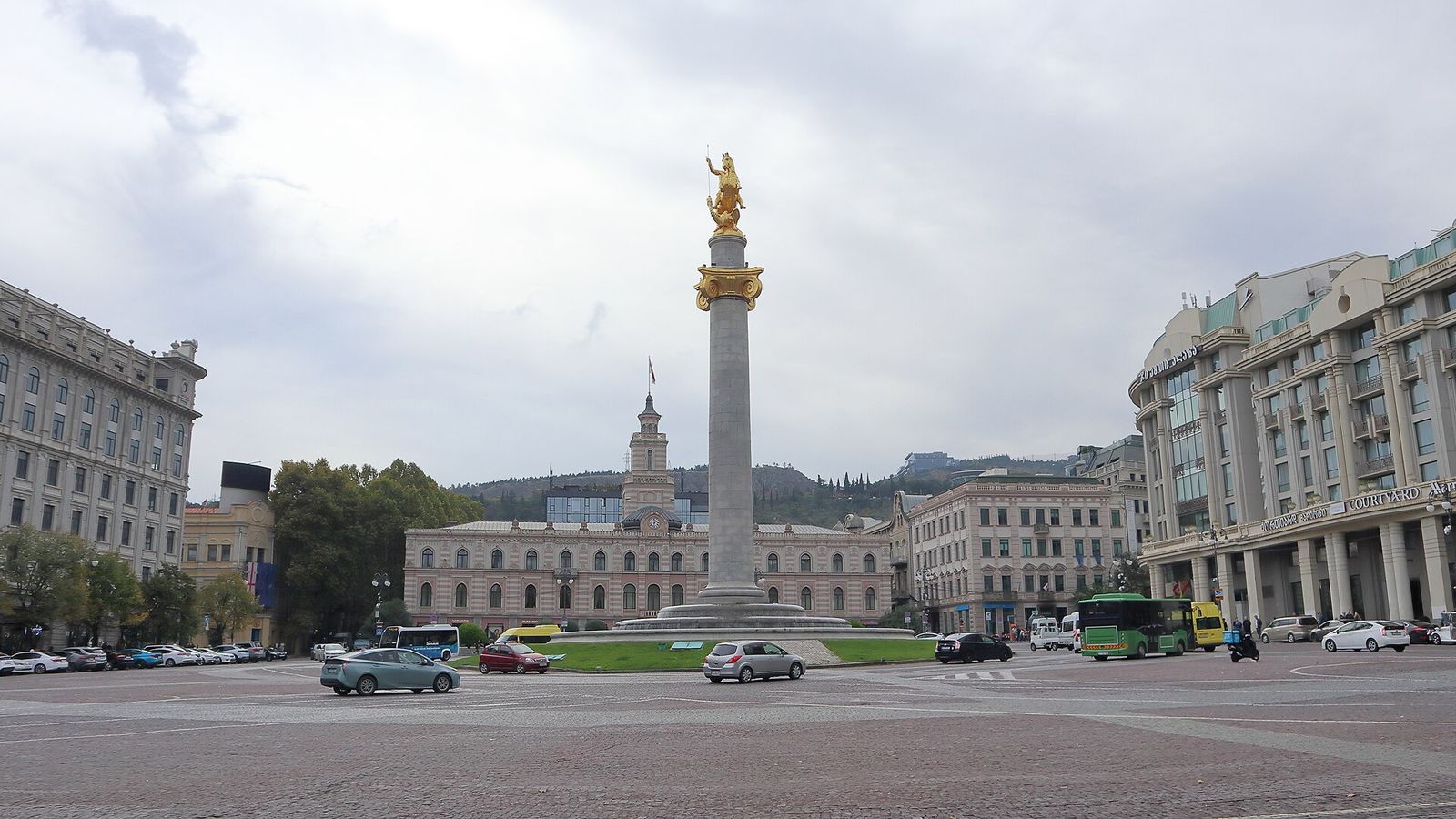
Freedom Square is the hinge of central Tbilisi. City Hall, with its clock tower, closes one side, the Courtyard by Marriott curves around another, and in the middle stands the St George monument: a 29 m column topped by a 5.6 m gilded St George slaying the dragon. It went up in 2006 on the spot where a statue of Lenin was pulled down in August 1991, and the square itself was called Yerevan Square before that.
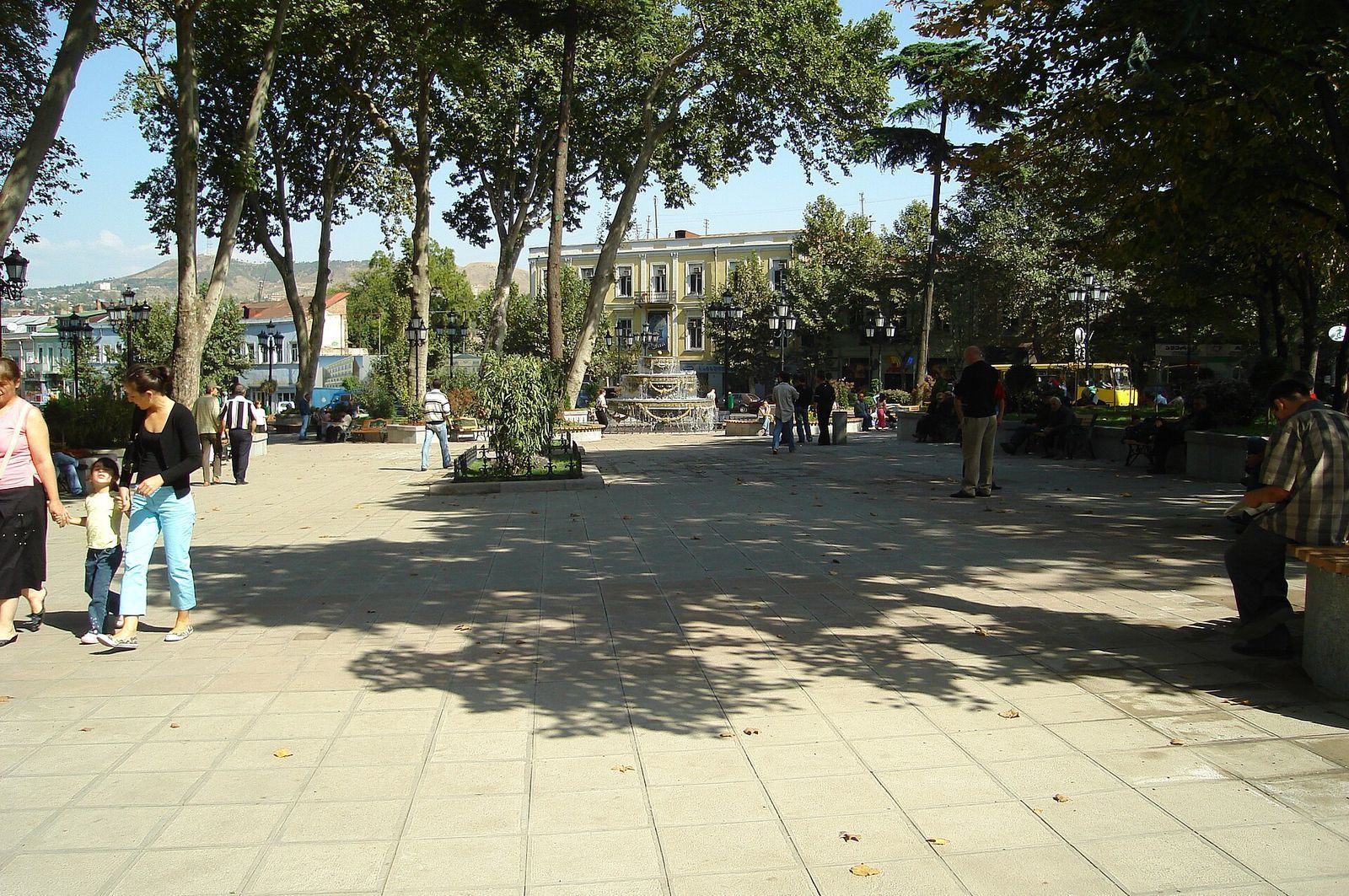
Pushkin Garden, the small park on one corner of the square, was laid out in 1884, and its Pushkin monument from 1892 was paid for by the people of the city. The square itself is a roundabout full of traffic, so you see it from the edges. The tip-based free walking tours in Tbilisi meet here every day at 12:00, and the Georgian Bus coaches from Kutaisi airport drop passengers at the same park.
Three neighborhoods meet at the square. Sololaki and its painted entrance halls start right here, Kote Abkhazi Street runs downhill to Meidan in the Old Town in about 8 minutes, and Rustaveli Avenue heads off the other way.
What to see on Rustaveli Avenue
The sights sit within a few hundred meters of each other, so the avenue works as one walk with a few doors to go through. Here is what you pass from Freedom Square, and what I'd do at each.
| Sight | Why stop | Cost | My call |
|---|---|---|---|
| St George monument | Gilded saint on a 29 m column | Free | Photo from the edge of the square |
| Pushkin Garden | 1884 park, walking tours at 12:00 | Free | Quick stop |
| Georgian National Museum | Colchian gold, the Soviet Occupation Hall | 40 GEL | Go in |
| Youth Palace | The former Vorontsov Palace, where independence was declared in 1918 | Free to look | Photo stop |
| Parliament | Arched stone facade, floodlit at night | Not open to visitors | Look from across the avenue |
| Kashveti Church | Murals by Lado Gudiashvili | Free | Go in |
| National Gallery | The main Pirosmani collection | 25 GEL | Go in if you love painting |
| Melik-Azaryants House | 1915 building with teardrop-shaped windows | Free | Look up |
| Rustaveli Theatre | Georgian drama for more than 130 years | Show tickets | Facade, or a show |
| Opera and Ballet Theatre | Moorish facade, restored and reopened in 2016 | Tickets from 20 GEL | Book a ballet night |
| Academy of Sciences | Rustaveli Square end, cable car behind it | Cable car fare | Ride up at sunset |
The Freedom Square end: the museum and the palace
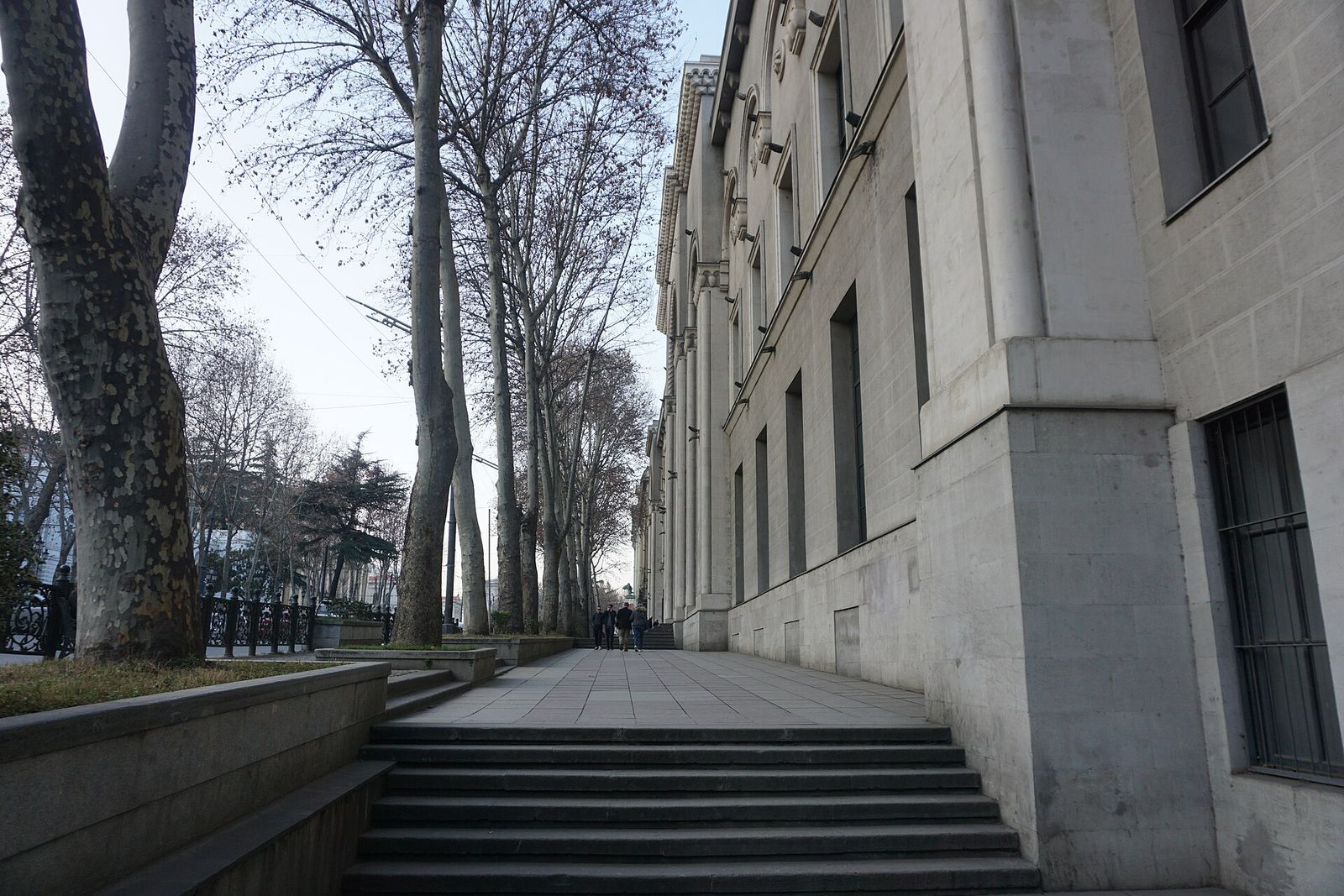
The Georgian National Museum at 3 Rustaveli Avenue is the one paid stop I'd make on the avenue. It costs 40 GEL for foreigners, opens Tuesday to Sunday from 10:00 to 18:00 with last tickets at 17:30, and one ticket covers the gold of ancient Colchis and the Soviet Occupation Hall. Give it 1.5 to 2 hours.
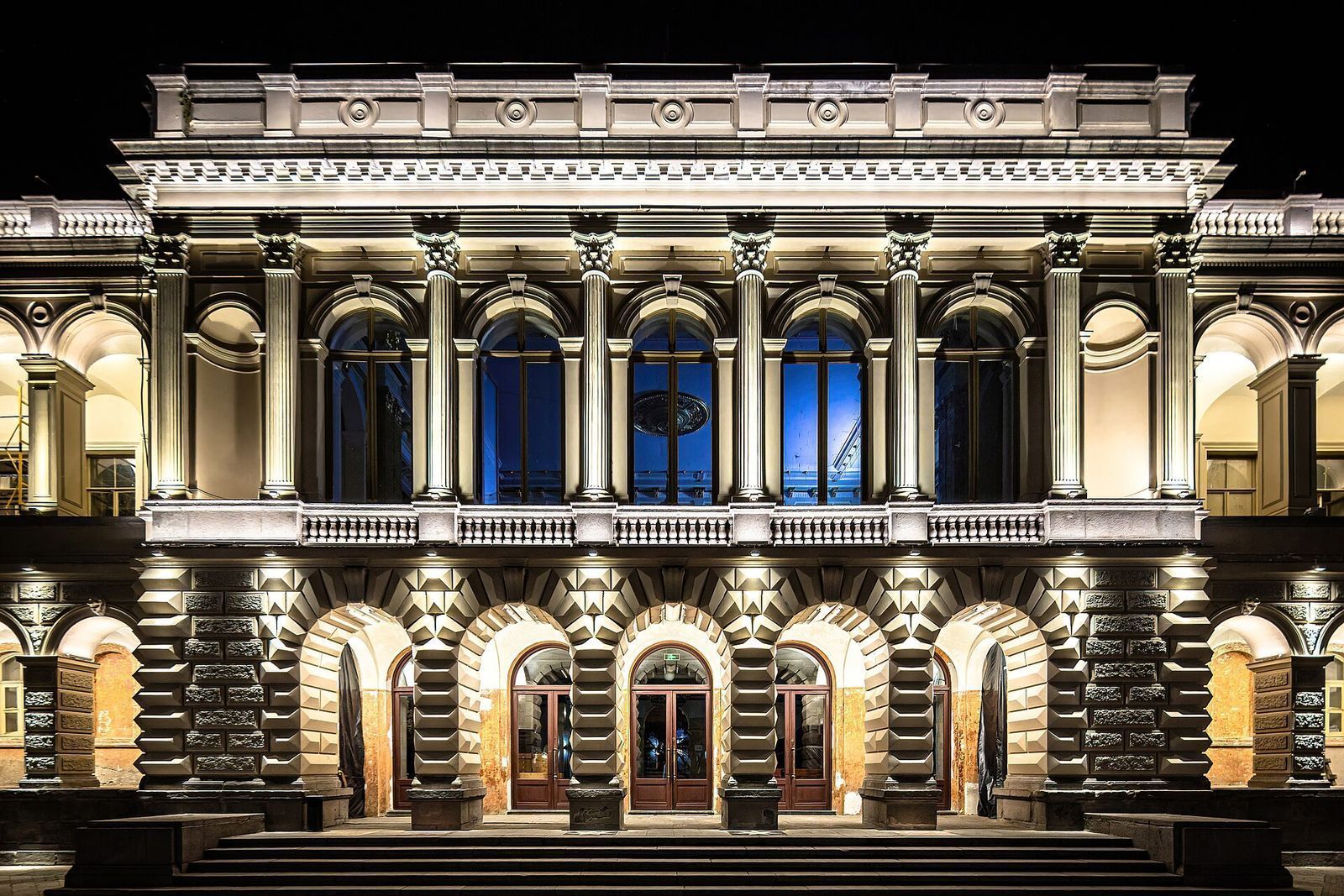
Nearby stands the Youth Palace, built as the Vorontsov Palace for the Russian viceroys who ran the Caucasus. Georgia declared its independence inside it on 26 May 1918, and that date is still the national holiday.
The middle: Parliament, Kashveti Church and the National Gallery
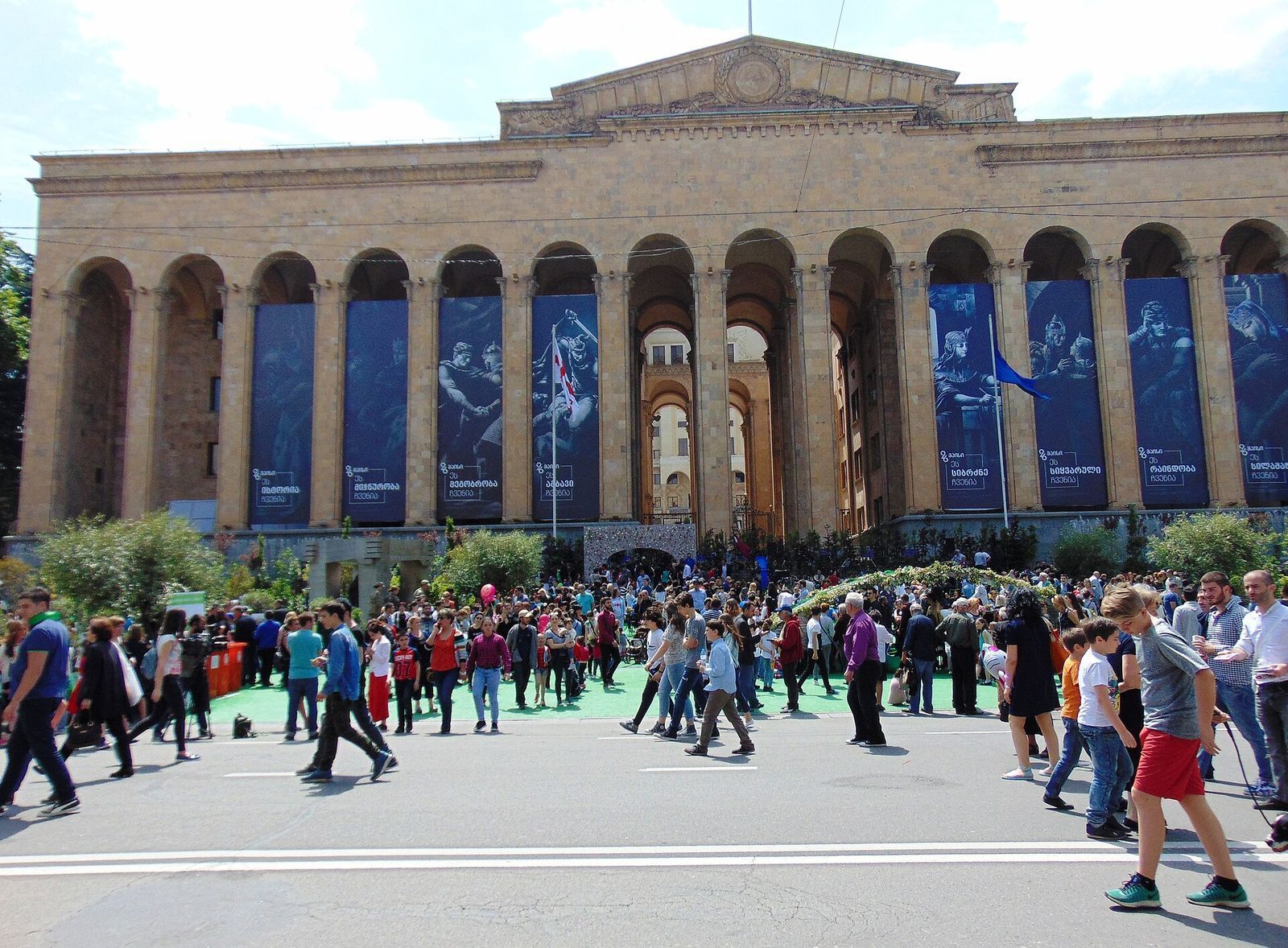
The Parliament building is the long stone block with the tall arches, built in stages from the 1930s and finished in 1953. It's not open to visitors, so you look at the facade from across the avenue; it's at its best after dark, when the arches are lit. On 26 May, Independence Day, the avenue in front of it is the main stage of the celebrations.
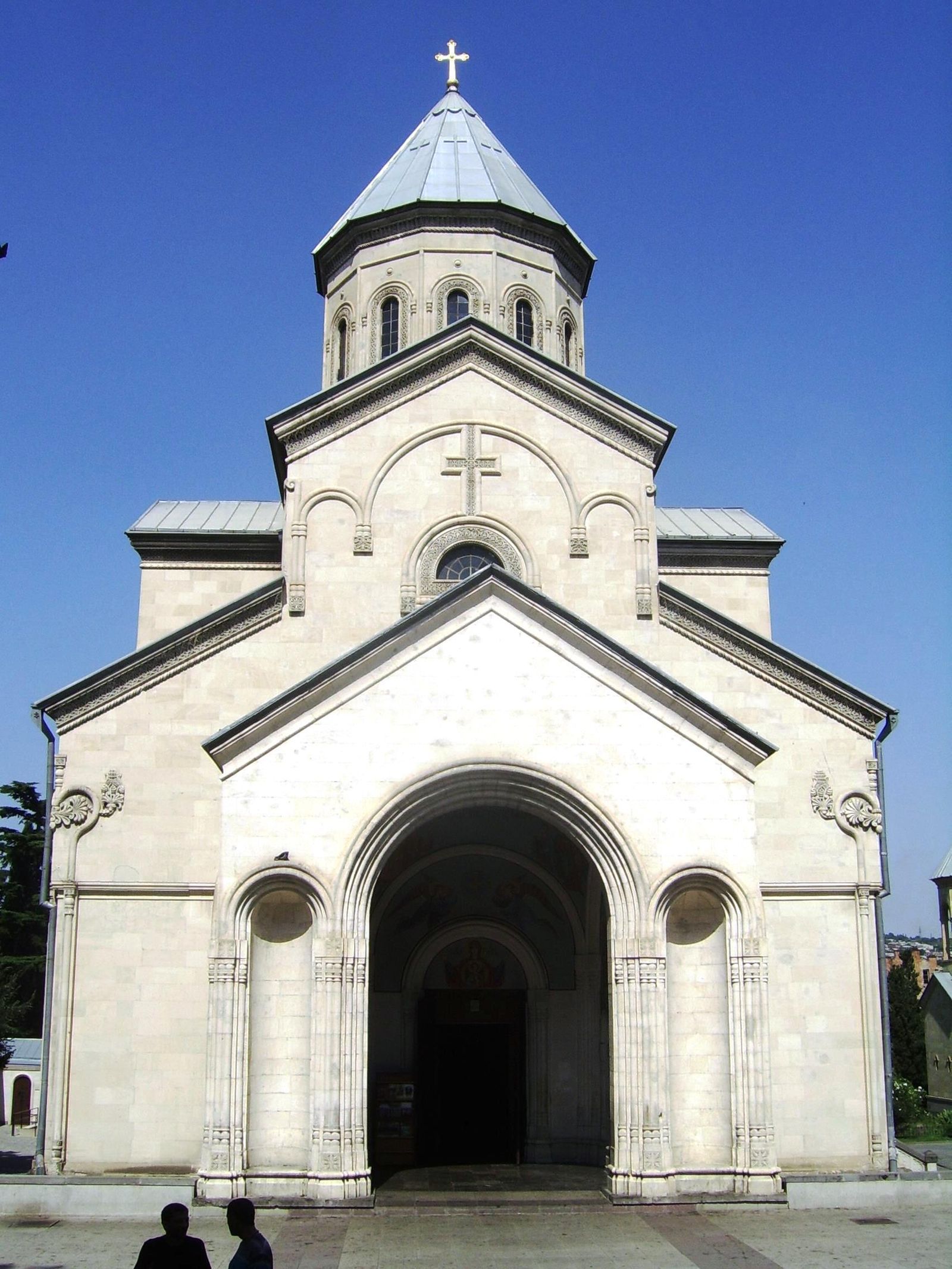
Kashveti Church faces Parliament across the avenue. The current church went up between 1904 and 1910, designed by Leopold Bielfeld, on the site of an older church with the same name. The name comes from a legend about a monk, David of Gareja, falsely accused of fathering a woman's child: he said that if he was innocent she would give birth to a stone, and she did. Kashveti joins the Georgian words for stone and giving birth. Step inside for the murals by Lado Gudiashvili, one of the great Georgian painters of the 20th century. Women cover hair and shoulders, and men take off hats.
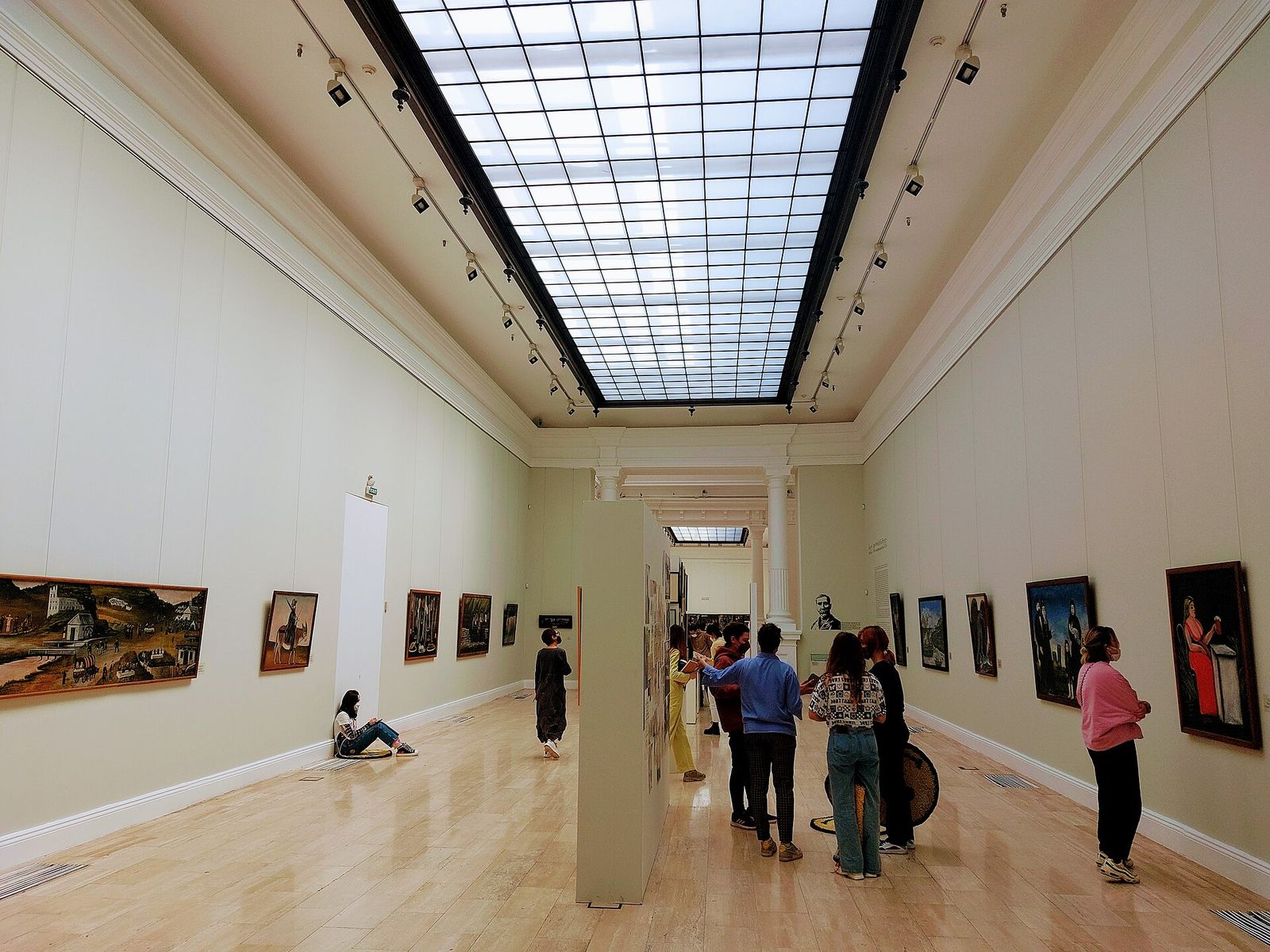
Next to the church, the National Gallery is still called the Blue Gallery by most locals. It was a museum of military glory until 1917 and now has 2 permanent and 6 temporary exhibition halls, with the main collection of Niko Pirosmani, the self-taught painter whose tavern signs and animals you'll see on souvenirs all over town. Entry is 25 GEL.
The theatre stretch: Rustaveli Theatre and the Opera
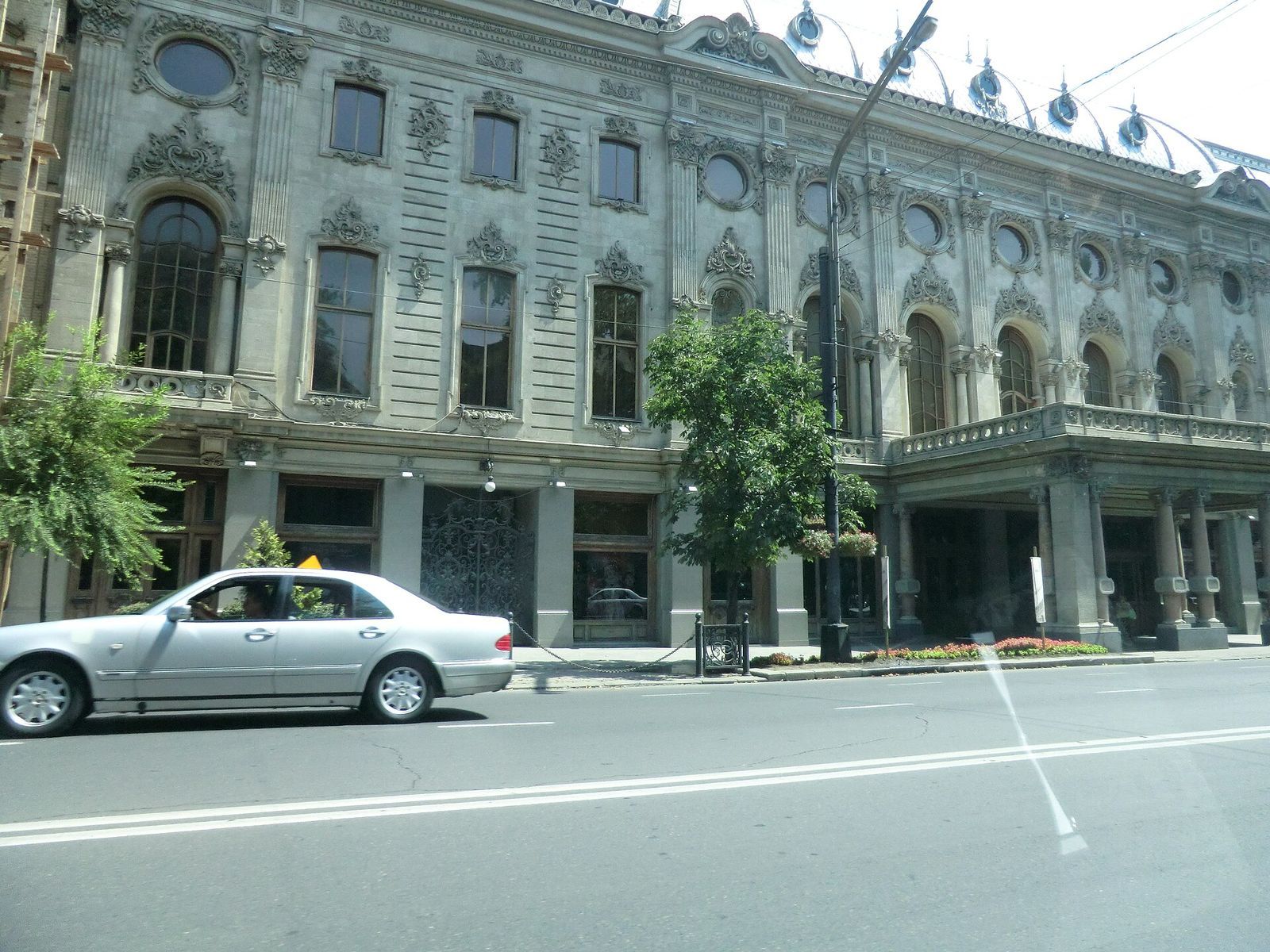
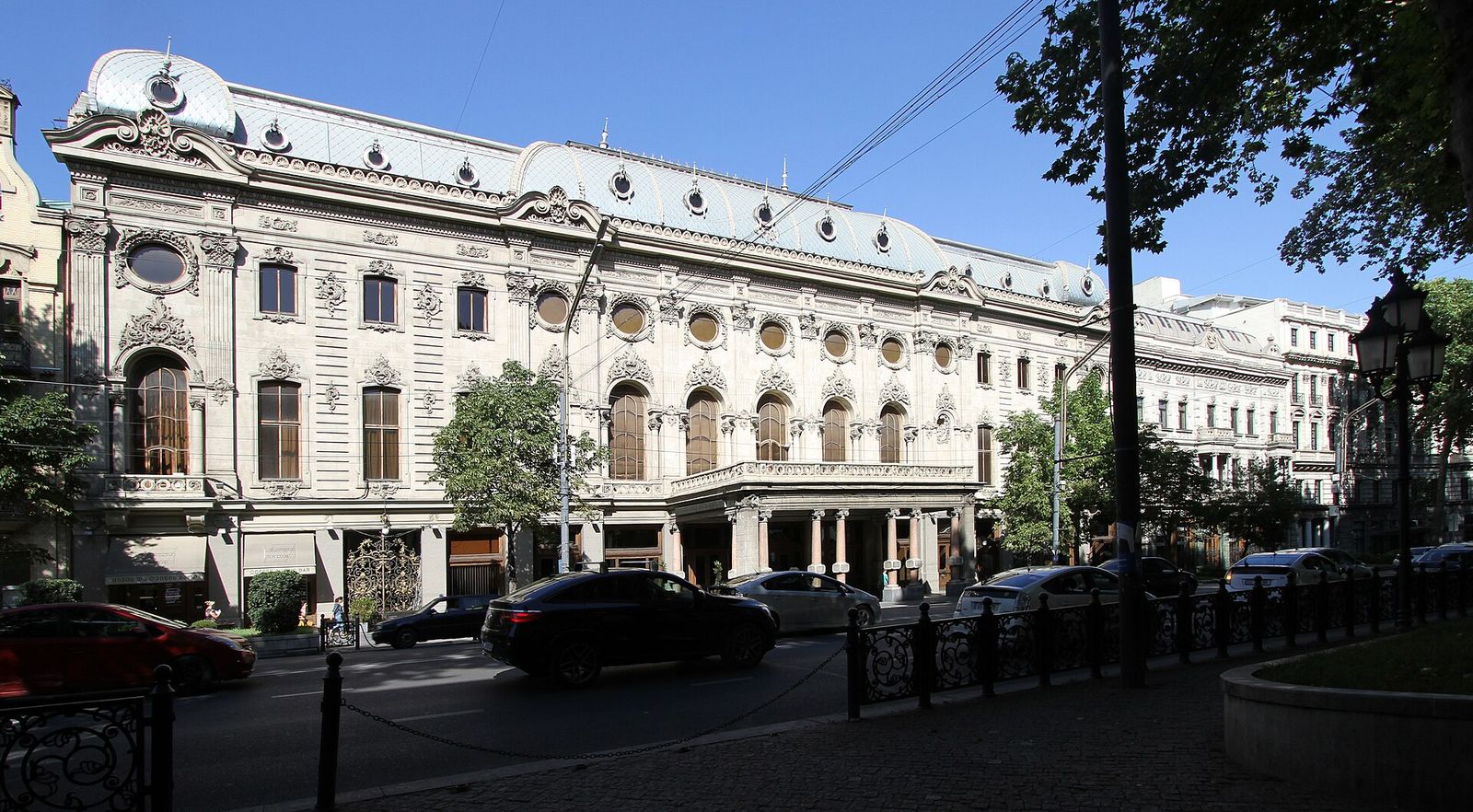
The Rustaveli Theatre is the ornate cream building with the iron gates and the round windows, and it has staged Georgian drama for more than 130 years. Even if you never see a play, the facade is one of the best on the avenue, and Salobie Bia, a good Georgian restaurant, sits beneath it.
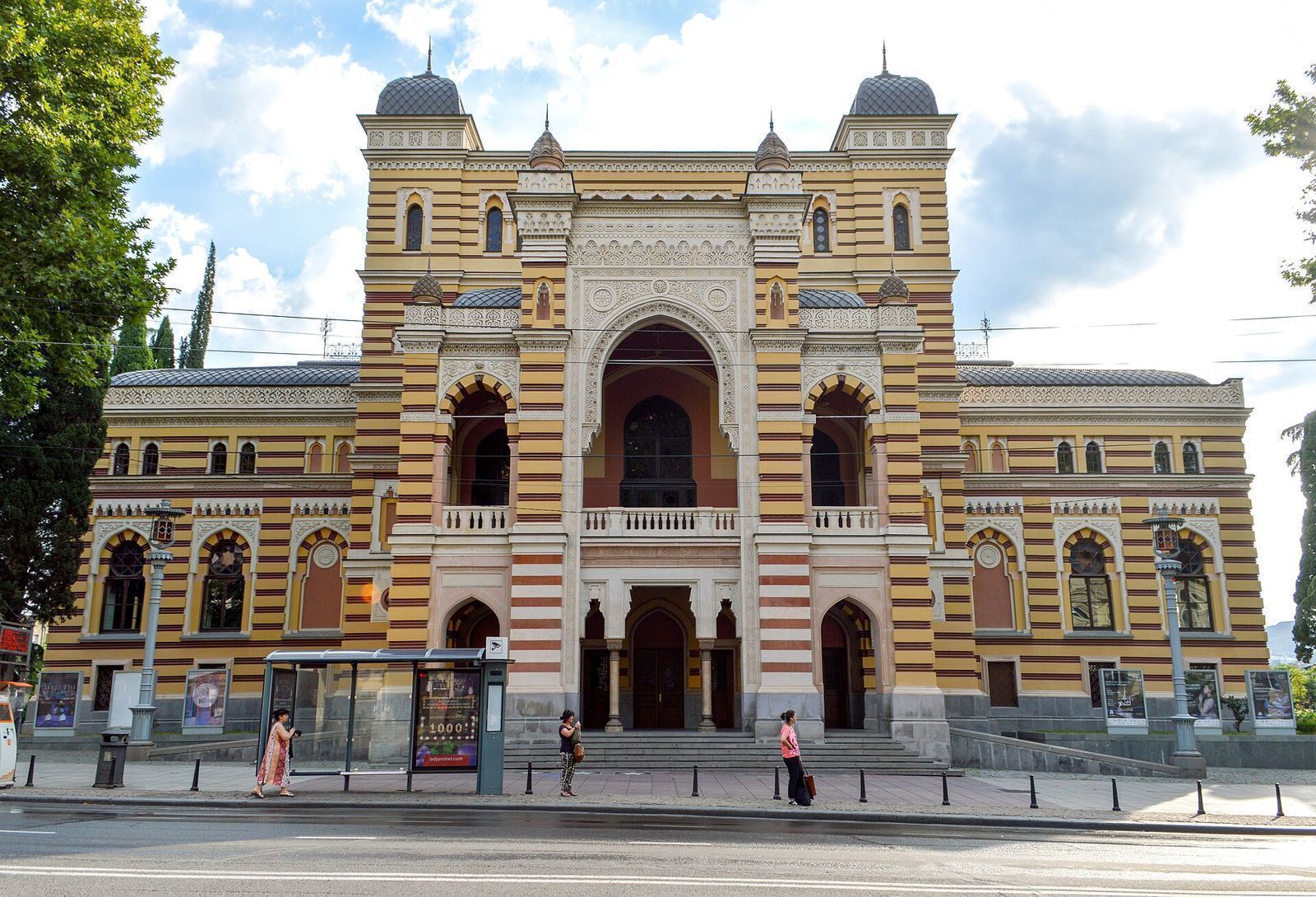
A couple of hundred meters on, the Paliashvili Opera and Ballet Theatre is the building you won't mistake for anything else: striped yellow and red stone in a Moorish style, put up in the late 19th century after the first theatre burned, then restored and reopened in 2016. Ballet is the reason to go inside, and seats start at about 20 GEL, which makes the opera and theatre in Tbilisi one of the cheapest big nights out in the city.
The Rustaveli Square end: the Academy and the cable car
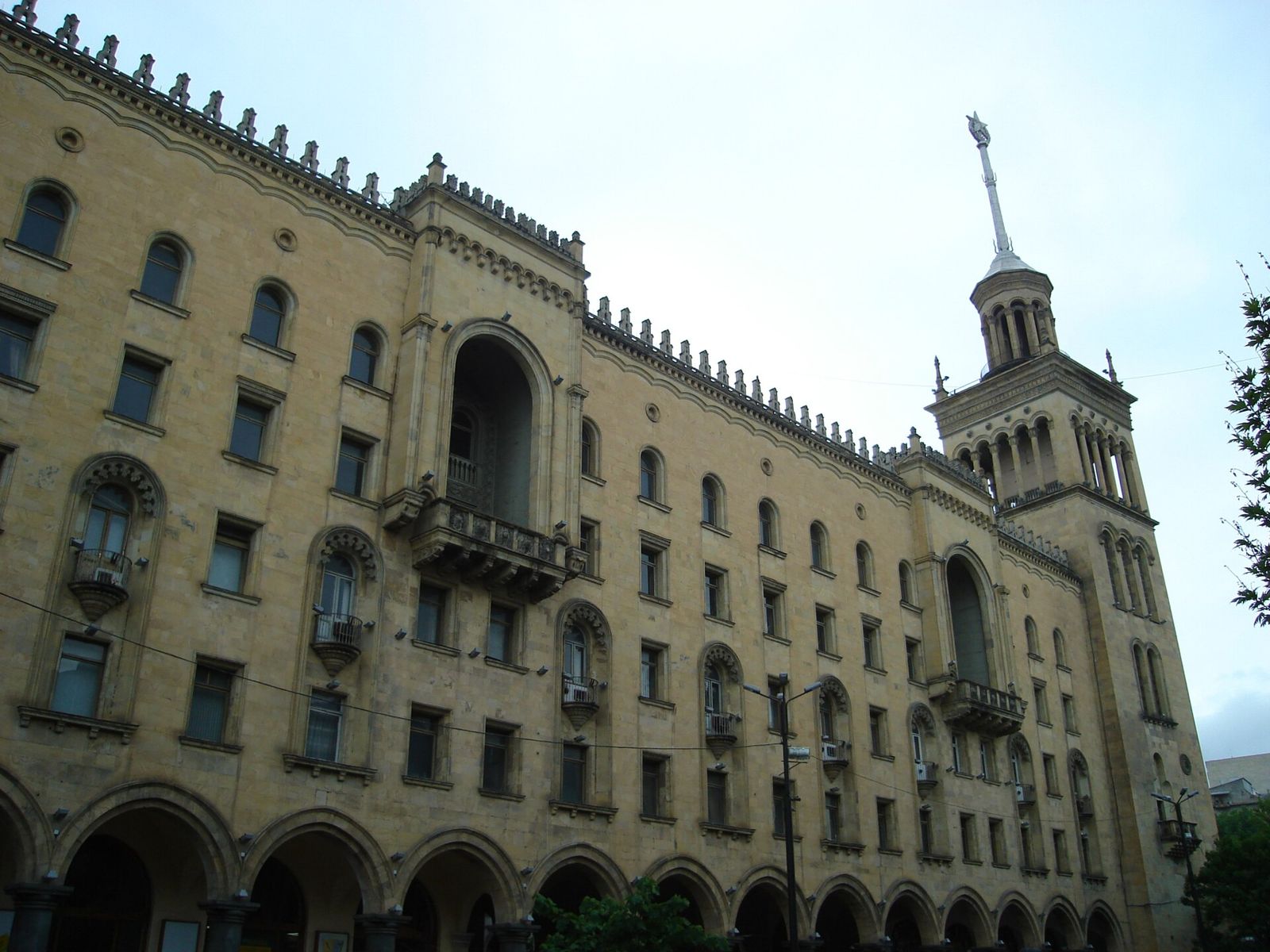
The avenue ends at Rustaveli Square, a loud junction under the Academy of Sciences, with Rustaveli metro on the square. The Academy is the long Stalin-era block in soft volcanic tuff, with an arcade of arches along the sidewalk and a tall spired tower on the corner. Walk through the arcade rather than past it, because the courtyard behind it holds the cable car station.
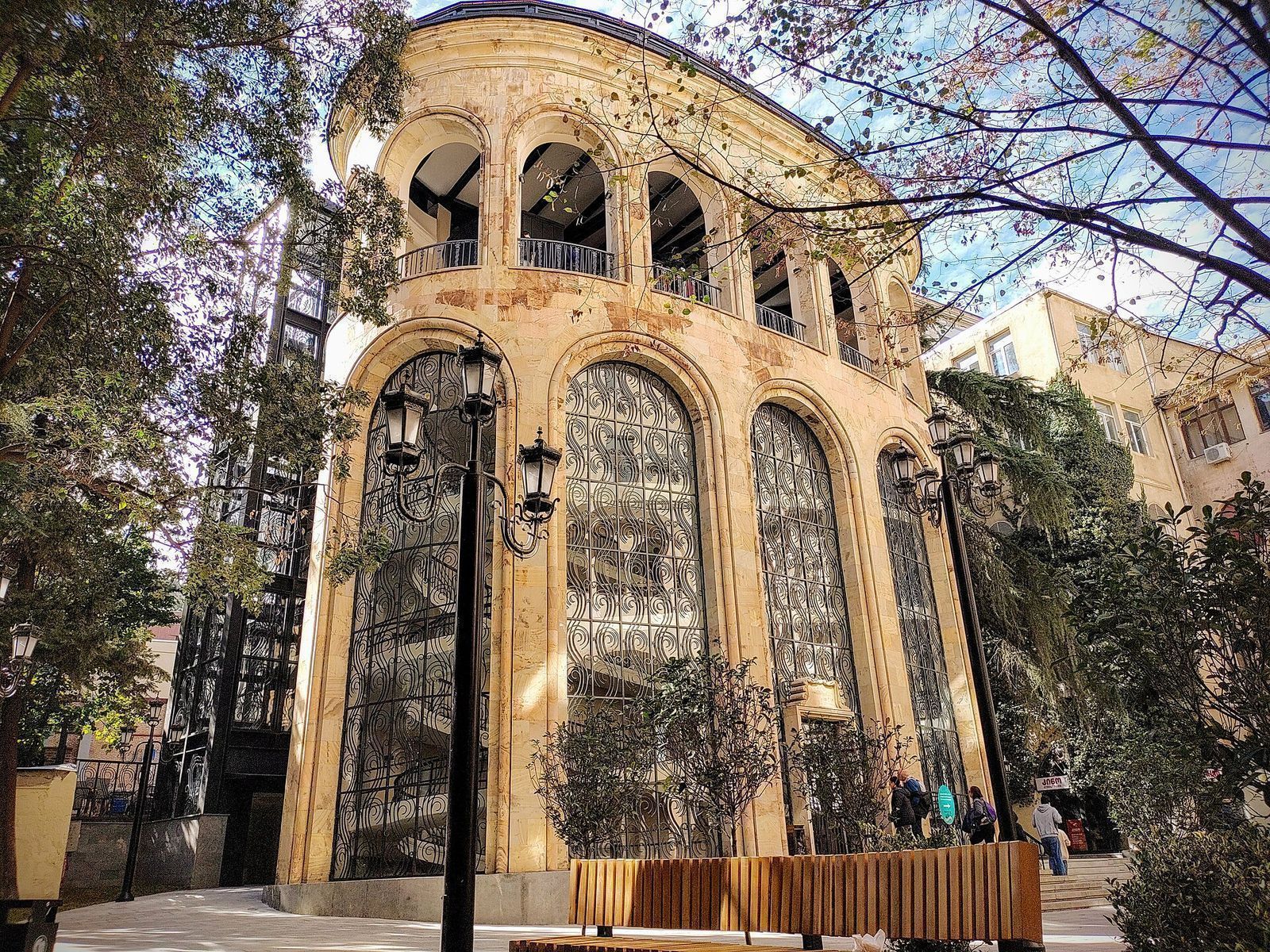
Behind the Academy, a cable car has climbed to Mtatsminda Park since October 2024, and the ride takes about 4 minutes. This is where I'd finish a late-afternoon walk: up the mountain for sunset, then down by funicular.
How long it takes to walk Rustaveli Avenue
About 1 hour at a gentle pace if you only walk and look, and 2 hours or more once you add a gallery or the inside of Kashveti. An evening walk to see the lights takes 40 to 50 minutes. Mornings give you soft light on the facades and fewer people; after dark the Opera, Parliament and theatre are floodlit and the avenue looks its grandest.
In July and August, when 35°C is common, walk before 10:00 and keep to the shady side under the plane trees. Here are the three ways I'd do it:
| Plan | What you do | Time | Cost per person |
|---|---|---|---|
| The quick walk | Freedom Square to Rustaveli Square, inside Kashveti on the way, metro back | About 1 hour | 1 GEL for the metro |
| The museum day | The walk plus the National Museum and the National Gallery | Half a day | 65 GEL, or 50 GEL with the museum pass |
| The evening walk | Floodlit Opera and Parliament, dinner a block off, cable car up Mtatsminda | 40 to 50 minutes walking | Dinner and the cable car fare |
| The opera night | Early dinner near the theatre, then a ballet | An evening | Tickets from 20 GEL |
For a first trip, the quick walk slots neatly into the first morning of a Tbilisi itinerary, with the Old Town in the afternoon.
Getting to Rustaveli Avenue
The avenue has a metro station at each end, Freedom Square and Rustaveli, both on Line 1. A ride on the Tbilisi metro costs 1 GEL on a Metromoney card, which needs a 2 GEL deposit, and trains run from 06:00 to midnight.
From the Old Town it's an easy walk: about 8 minutes up Kote Abkhazi Street from Meidan to Freedom Square, or 20 to 25 minutes from the sulfur baths. A Bolt from the baths costs about 3 to 4 GEL, and most rides across the center cost 3 to 8 GEL; taxis in Tbilisi are cheap enough that I'd ride uphill and walk down. From Vake, a taxi to Rustaveli takes about 20 minutes and costs 10 to 12 GEL.
Getting from the airport to the city center takes 25 to 30 minutes by car to Freedom Square. Bus 337 stops at Freedom Square after about an hour, runs from about 07:00 to 23:00 and takes payment by a tapped bank card or transit card, never cash.
Rustaveli Avenue in 2026: rallies and roadworks
Since late 2024, rallies have gathered in front of the Parliament building, mostly in the evenings, and in 2026 they still happen most days. They center on the stretch by Parliament. Daytime sightseeing, the museums and public transport run as normal, and the rest of the city carries on as usual.
I'd see the Parliament and Kashveti stretch in daylight, and after dark walk between Freedom Square and the theatres by the streets one block back. For visitors, the honest answer to whether Tbilisi is safe is yes, with that one stretch to keep clear of at night.
Where to eat and drink near Rustaveli Avenue
The restaurants right on the avenue charge for the address. Walk one street back, into Sololaki, Vera or the lanes behind the theatres, and the prices drop while the food gets better. These are the places I'd use before and after the walk.
Coffee, pastries and lunch
| Place | Where | What to order | Best for |
|---|---|---|---|
| 1. Baba Bakery | 4 Machabeli St, a minute from Freedom Square | Croissants, cruffins, kouign-amann | A quick pastry and cappuccino |
| 2. Salobie Bia | 17 Rustaveli Ave, beneath the Rustaveli Theatre | Lobio in a clay pot, kubdari | A calm Georgian lunch on the avenue |
| 3. Pasanauri | Near Rustaveli and Freedom Square metros | Khinkali close to the original Pasanauri recipe | A cheap, filling lunch |
| 4. Fantastic Douqan | A courtyard on Tabukashvili St, behind the theatre | Khinkali, baked pumpkin with walnuts | A late dinner under the vines |
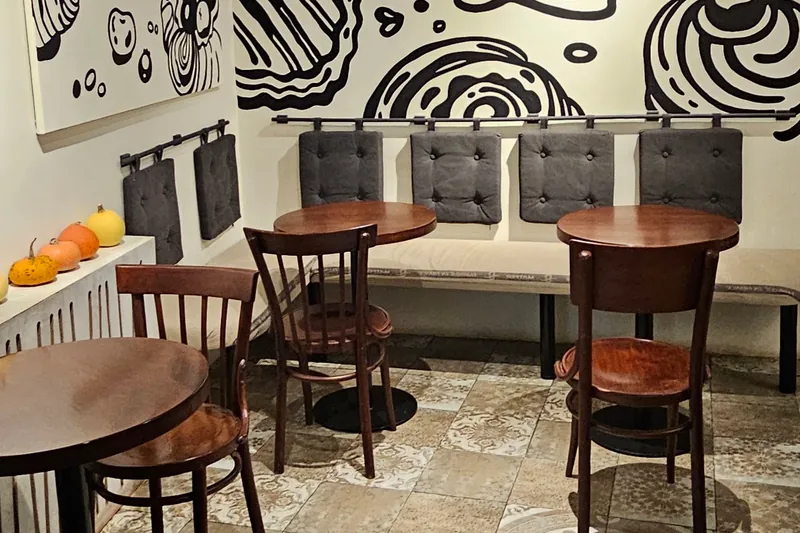
Baba Bakery is where I start a Rustaveli morning. It bakes its croissants, cruffins and kouign-amann in house, a cappuccino costs 10 to 12 GEL, and laptops are fine.
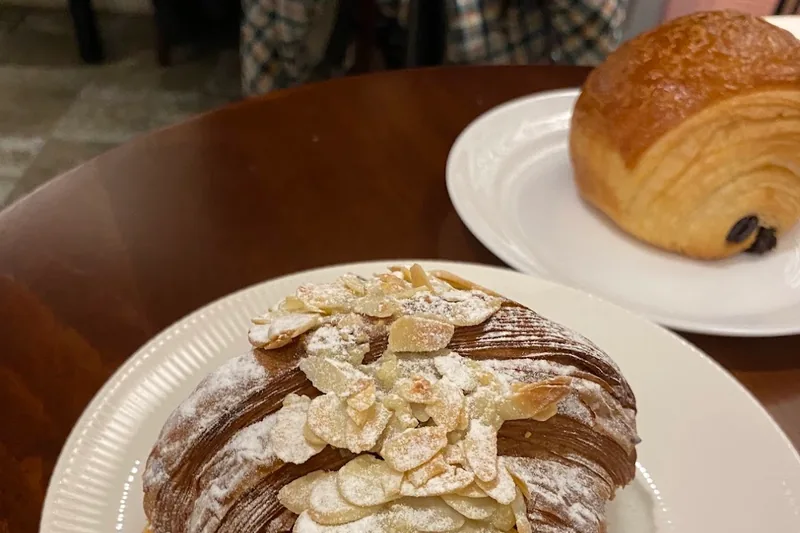
The almond croissant is the one I'd take. It's a minute from the square, which makes it my pick for a fast breakfast in Tbilisi before the walk.
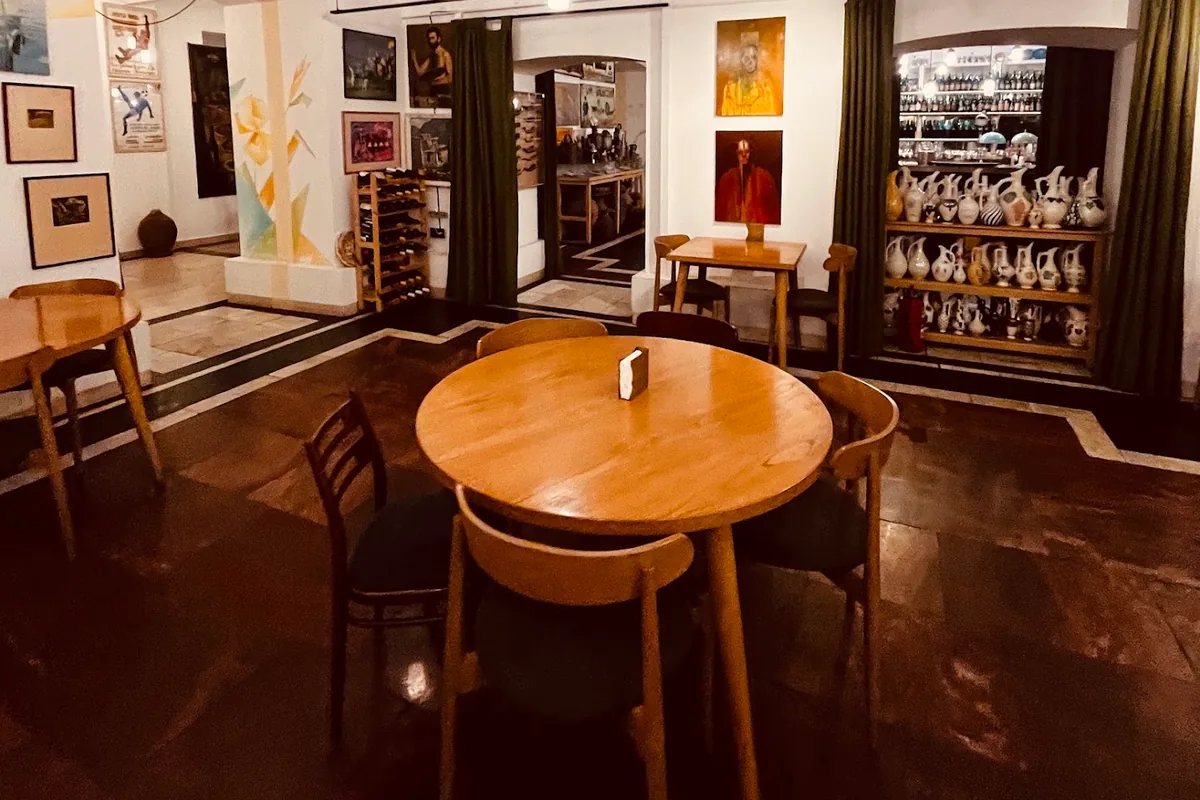
Salobie Bia is the one place right on the avenue I'd sit down at. It's calm and central, and a little pricier than neighborhood places.
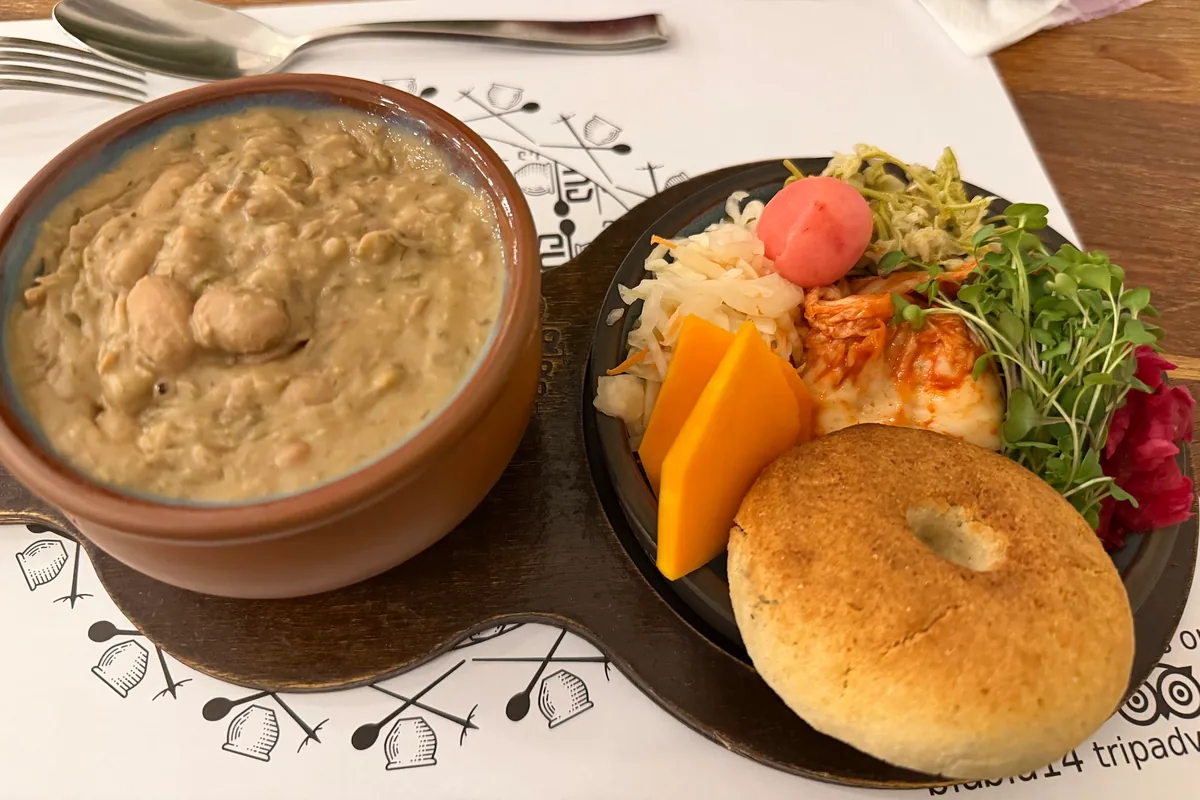
Order the lobio in a clay pot, which comes with pickles and mchadi, plus kubdari and ghomi with sulguni.
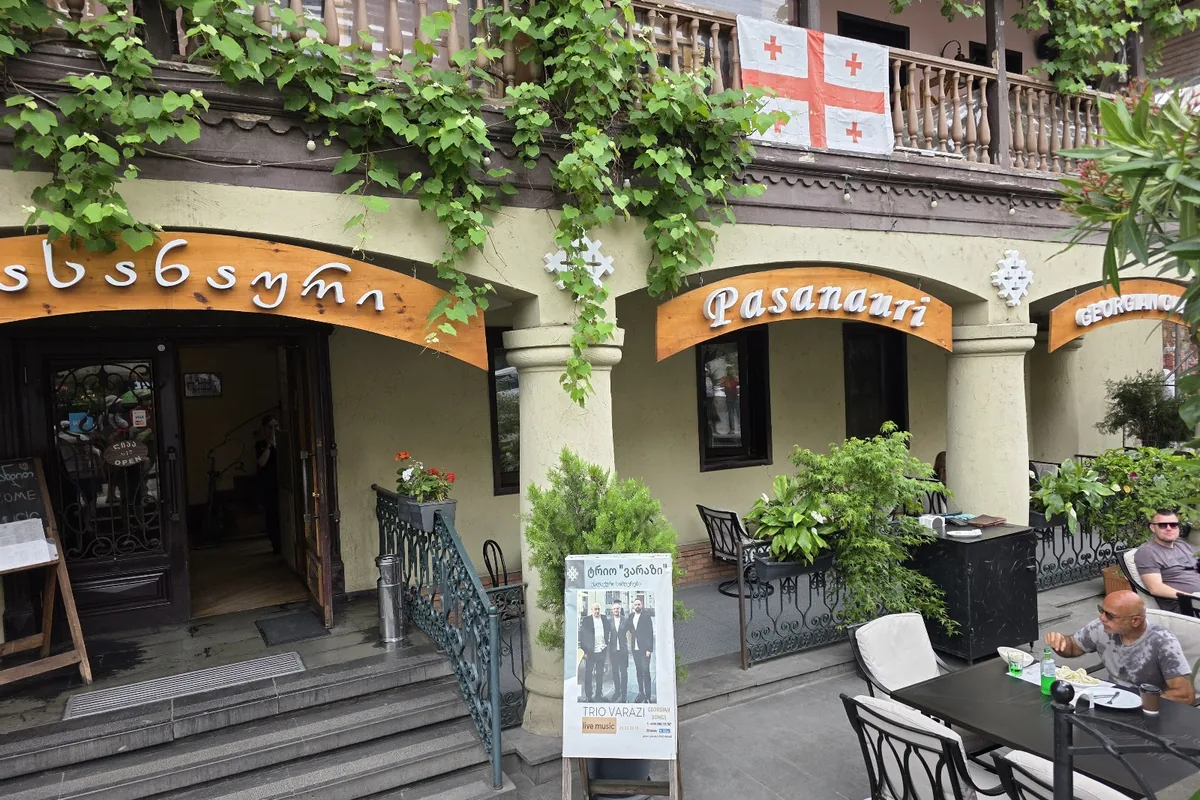
Pasanauri has branches on Griboedov, Leonidze and Baratashvili streets, all near the two metro stations, and it's my quick answer when someone asks for the best khinkali in Tbilisi close to the avenue.
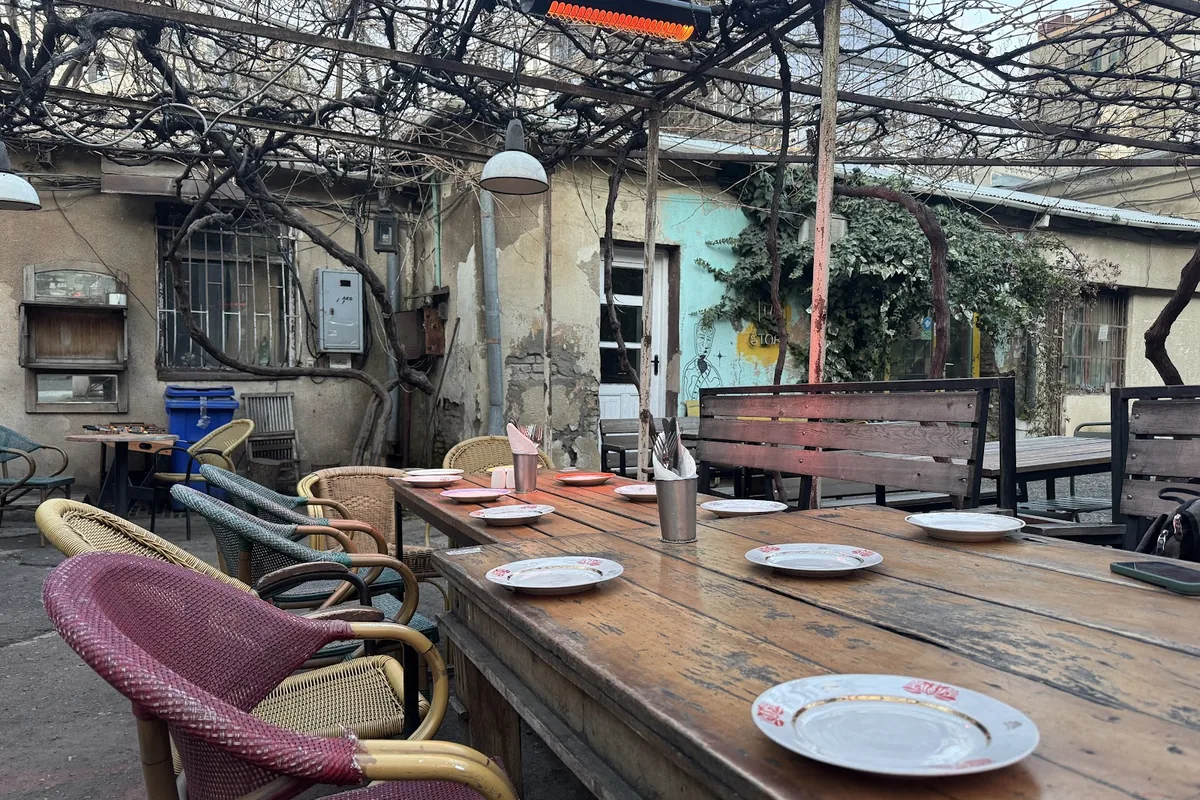
Sofia Melnikova's Fantastic Douqan sits in a courtyard behind the Rustaveli Theatre and opens from 12 PM to 2 AM. Order the khinkali and the baked pumpkin with walnuts, and expect VAT on top of the menu prices.
Drinks after the walk
| Bar | Where | What to order | Best for |
|---|---|---|---|
| 1. Apotheka Bar | Leonidze St, near Freedom Square | The Penicillin | A cocktail in a 1902 pharmacy |
| 2. Lado by Valiko Mansion | Gudiashvili Square | The Yellow Mellow | A vintage room before a club |
| 3. Warszawa | 19 Pushkin St, by Freedom Square | A beer or a chacha shot | The cheapest round in the center |
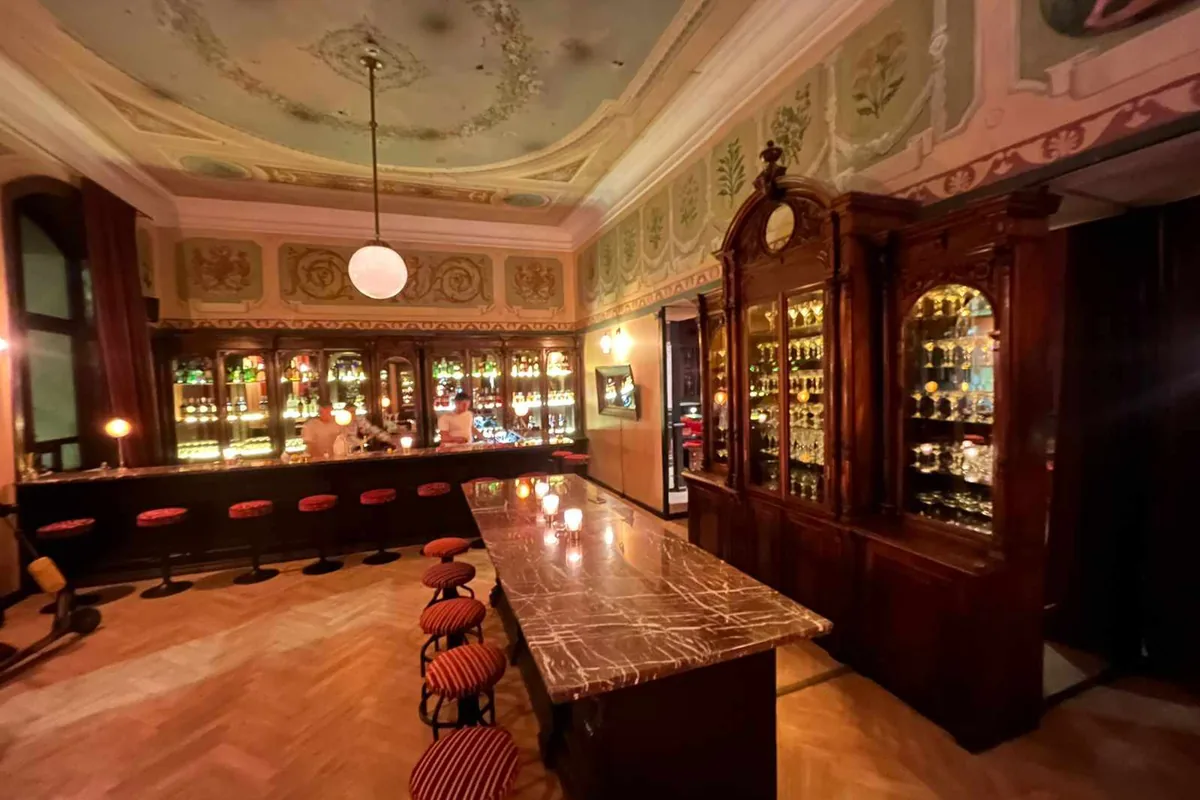
Apotheka Bar is my first stop after a Rustaveli evening, a few minutes from Freedom Square. It fills a pharmacy from 1902 on Leonidze Street with an Art Nouveau interior and bartenders in white lab coats, and the drinks are named like medicine: Penicillin, Valeriana, Aspirin. Of all the cocktail bars in Tbilisi, it has the most theatrical room.
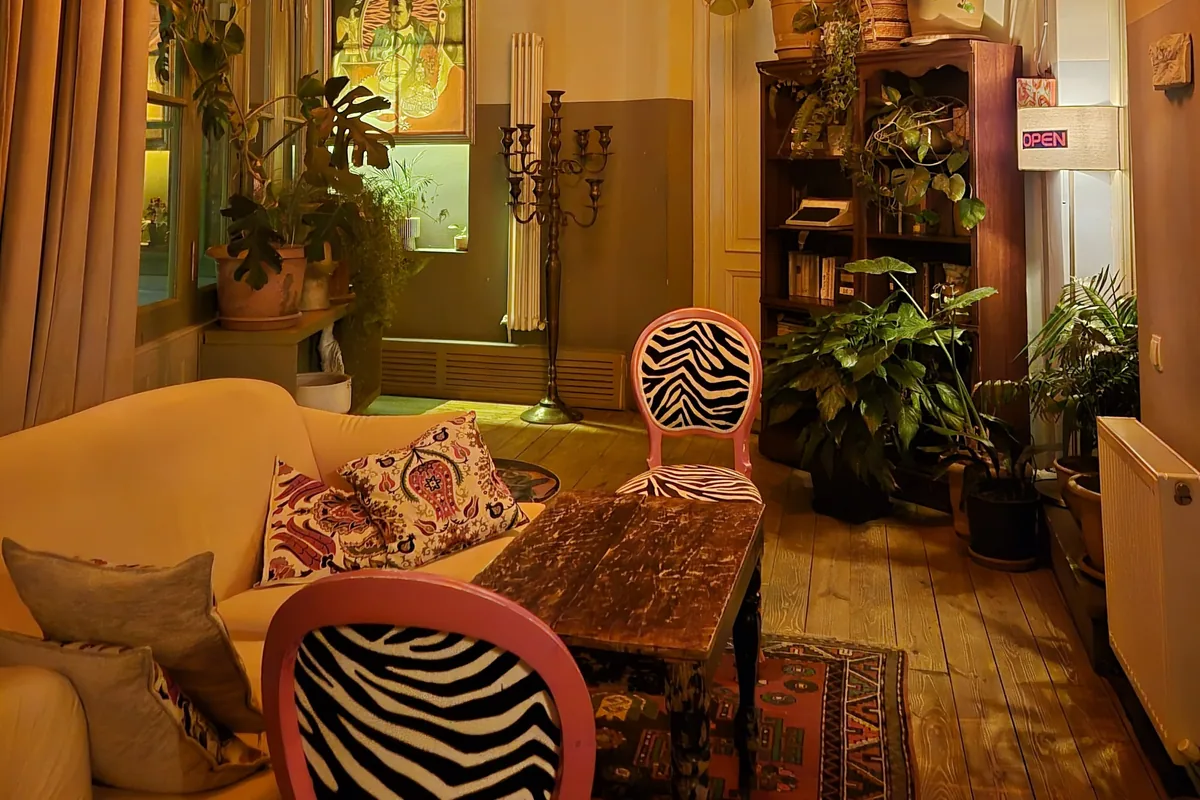
Lado by Valiko Mansion is a vintage, eclectic bar on Gudiashvili Square, with light food and the Yellow Mellow as its signature cocktail.
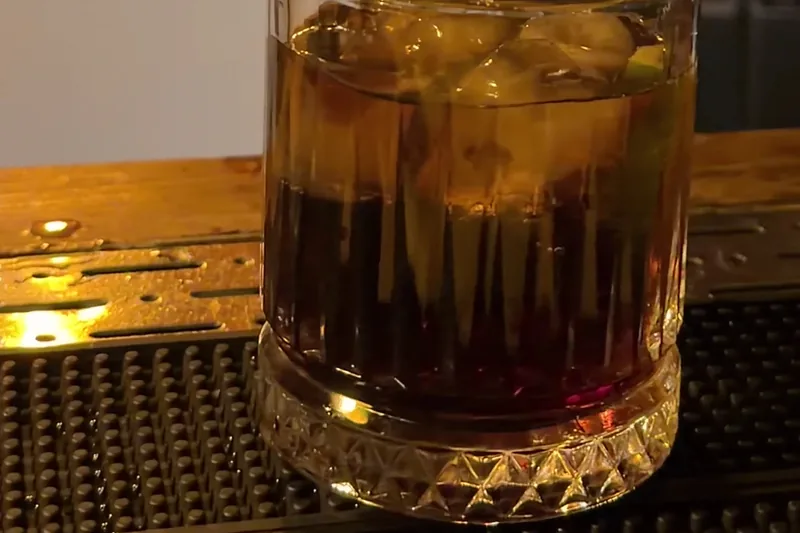
It's quiet on weeknights and full of a pre-club crowd on Fridays and Saturdays, so pick the night by the mood you want.
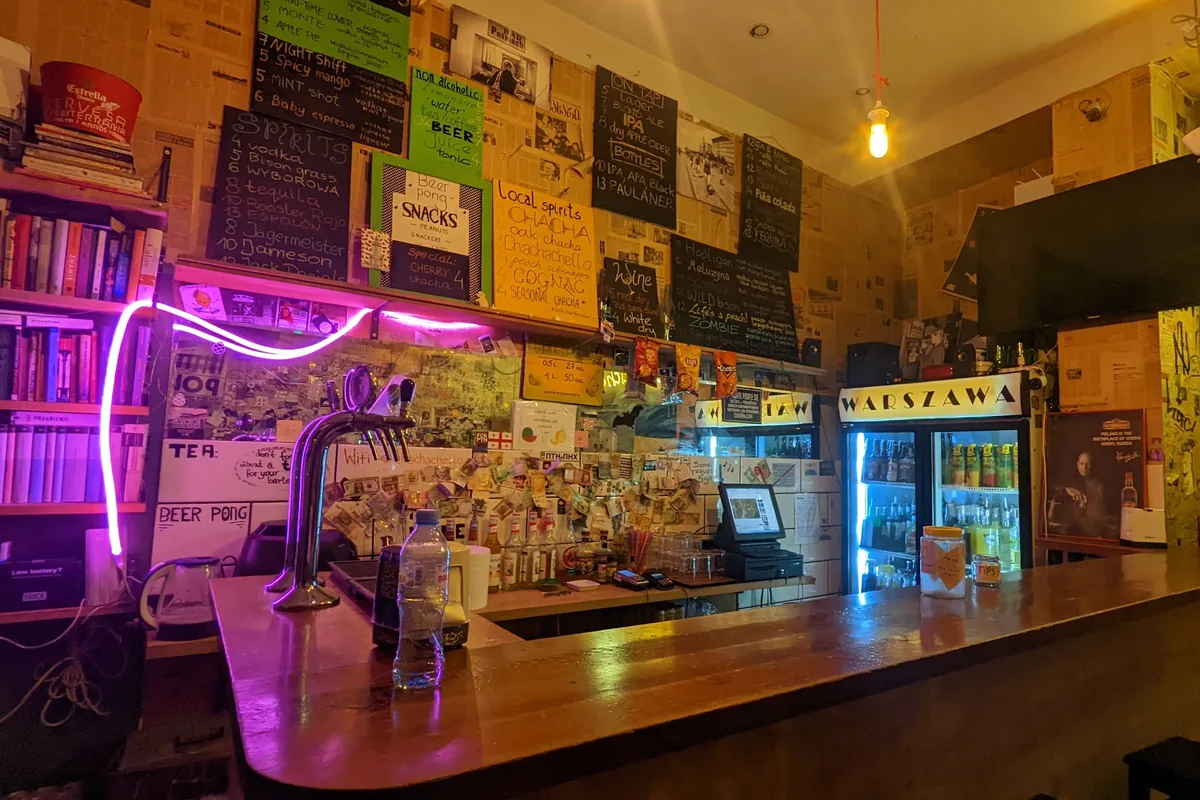
Warszawa is a tiny Polish-themed bar at 19 Pushkin Street, walls papered with old Polish newspapers, a handful of seats and the crowd spilling onto the sidewalk.
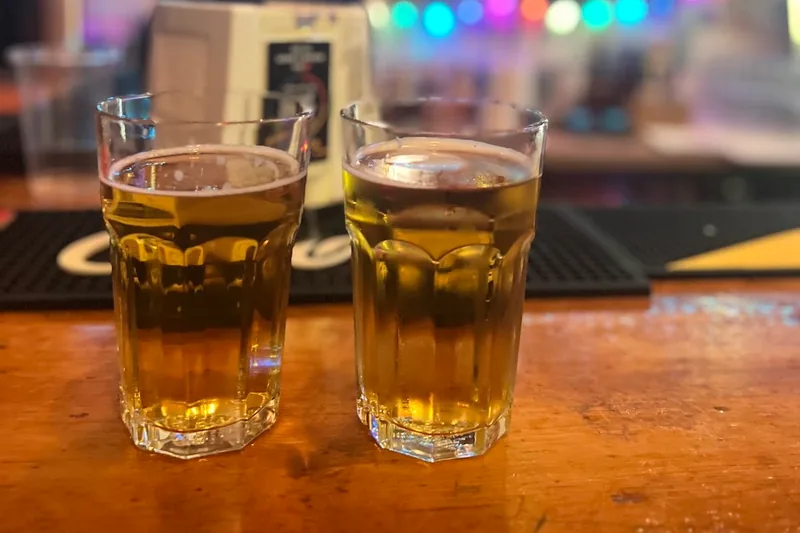
Order a beer or a chacha shot. Its drinks are among the cheapest in the center.
Staying on or near Rustaveli Avenue
The avenue is where Tbilisi's big, formal hotels sit, with the best transport in the city on the doorstep. A 3-star hotel around Rustaveli costs about 120 to 200 GEL a night, and the five-star towers cost far more. Book 2 to 4 weeks ahead for May, June, September and October.
Stay here if you are:
- On a first trip and short on time: two metro stations, the museums and the Old Town are all on foot.
- After a big hotel: pools, spas and international chains cluster on and around the avenue.
- Here for the opera or ballet: you walk home after the curtain.
- Planning day trips: the metro reaches Didube bus station without a change.
Skip it if you want lanes, balconies and bars on your doorstep; Sololaki or the Old Town suit that better. Hotels near Parliament also get the noise of the evening rallies.
| Hotel | Where | Why I'd book it |
|---|---|---|
| The Biltmore Tbilisi | 29 Rustaveli Ave | Glass tower with pools, a spa and Xeme on the 31st floor |
| Tbilisi Marriott | 13 Rustaveli Ave | Opened in 1915 as the Majestic; marble, chandeliers, the Majestic Bar |
| Courtyard by Marriott | 4 Freedom Square | 118 rooms and an indoor pool, right on the square |
| Monograph Freedom Square | 5/7 Pushkin St | Art throughout, a rooftop terrace bar, a balcony over the square |
| Shota @ Rustaveli | 1 Shevchenko St, by the Rustaveli Theatre | Boutique hotel with a pool and sauna, 9.2 on Booking |
| Radisson Blu Iveria | 1 Republic Square | 18 floors near the Rustaveli Square end, 8.8 on Booking |
For a cheaper bed, Pushkin 10 by Freedom Square has 4 and 8-bed dorms, and choosing where to stay in Tbilisi comes down to the formal center or the old lanes. Vera, with its cafes and wine bars, is a 5 to 10 minute walk from the avenue, which makes it my favorite base for anyone who likes Rustaveli's transport but not its traffic.
A short history of Rustaveli Avenue
The avenue began as the Digomi road, leading out of the walled city. In the 1840s the Russian viceroy turned it into a formal boulevard, Russian officials built their residences along it, and it took the name Golovin Prospekt. It was later renamed after Shota Rustaveli, the medieval poet who wrote Georgia's national epic, "The Knight in the Panther's Skin".
The buildings tell the rest. Pushkin Garden dates from 1884, the Opera from the late 19th century, Kashveti Church and the Melik-Azaryants House from the early 1900s, and the Parliament from the Soviet decades between the 1930s and 1953, one of the landmarks of Soviet architecture in Tbilisi. The avenue had a big renovation in the 2000s, and the St George column replaced Lenin in 2006.
It has always been the stage for big public moments. Georgia protests here and celebrates here, and every 26 May the Independence Day celebrations fill the avenue in front of Parliament, one of the bigger dates among the festivals and holidays in Georgia.
What's near Rustaveli Avenue
A few places sit just off the avenue and fit into the same walk.
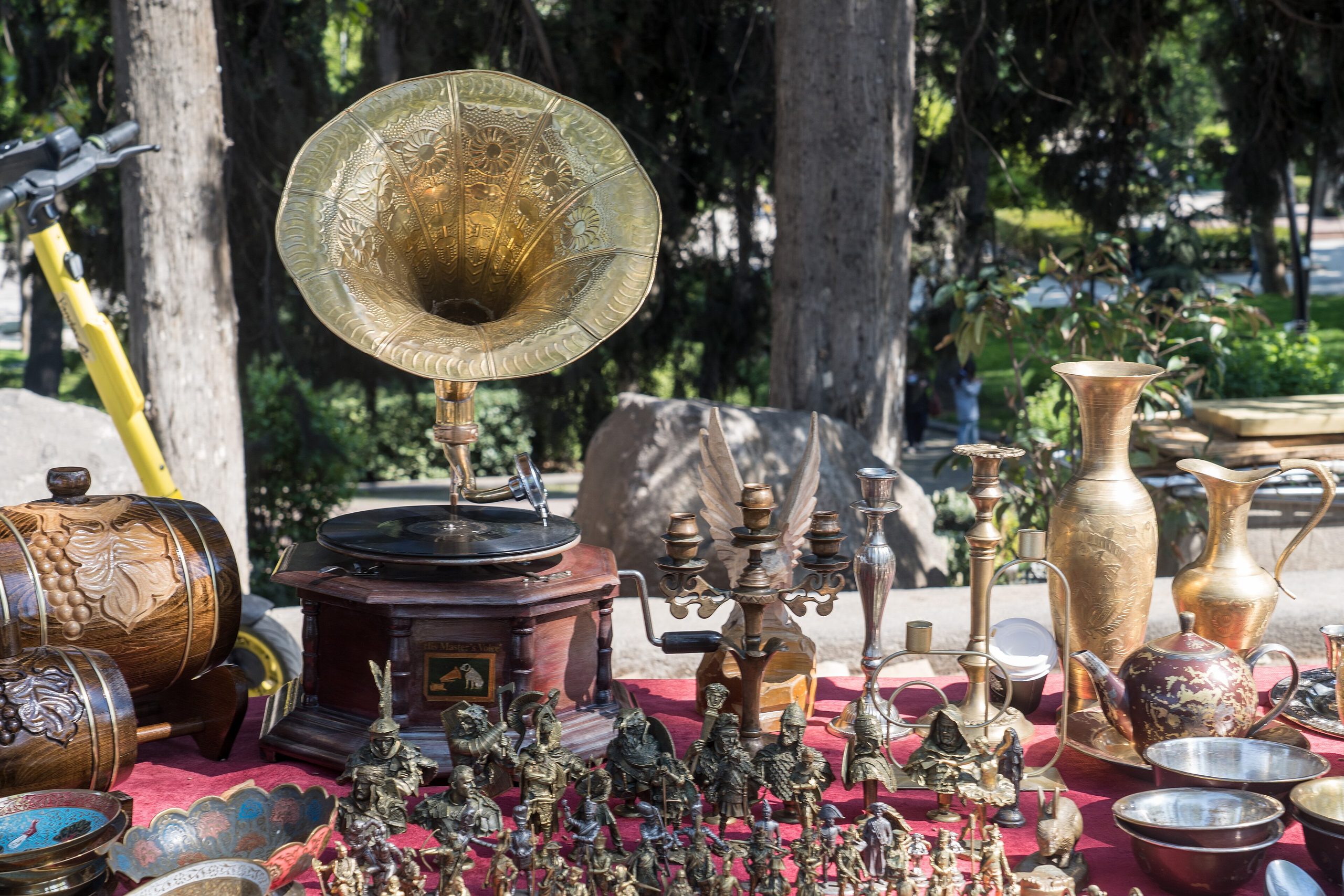
The Dry Bridge market sits between the avenue and the river, about 12 minutes on foot from Freedom Square metro. The Dry Bridge flea market runs daily from about 10:00 to 17:00, with the full weekend market from about 11:00.
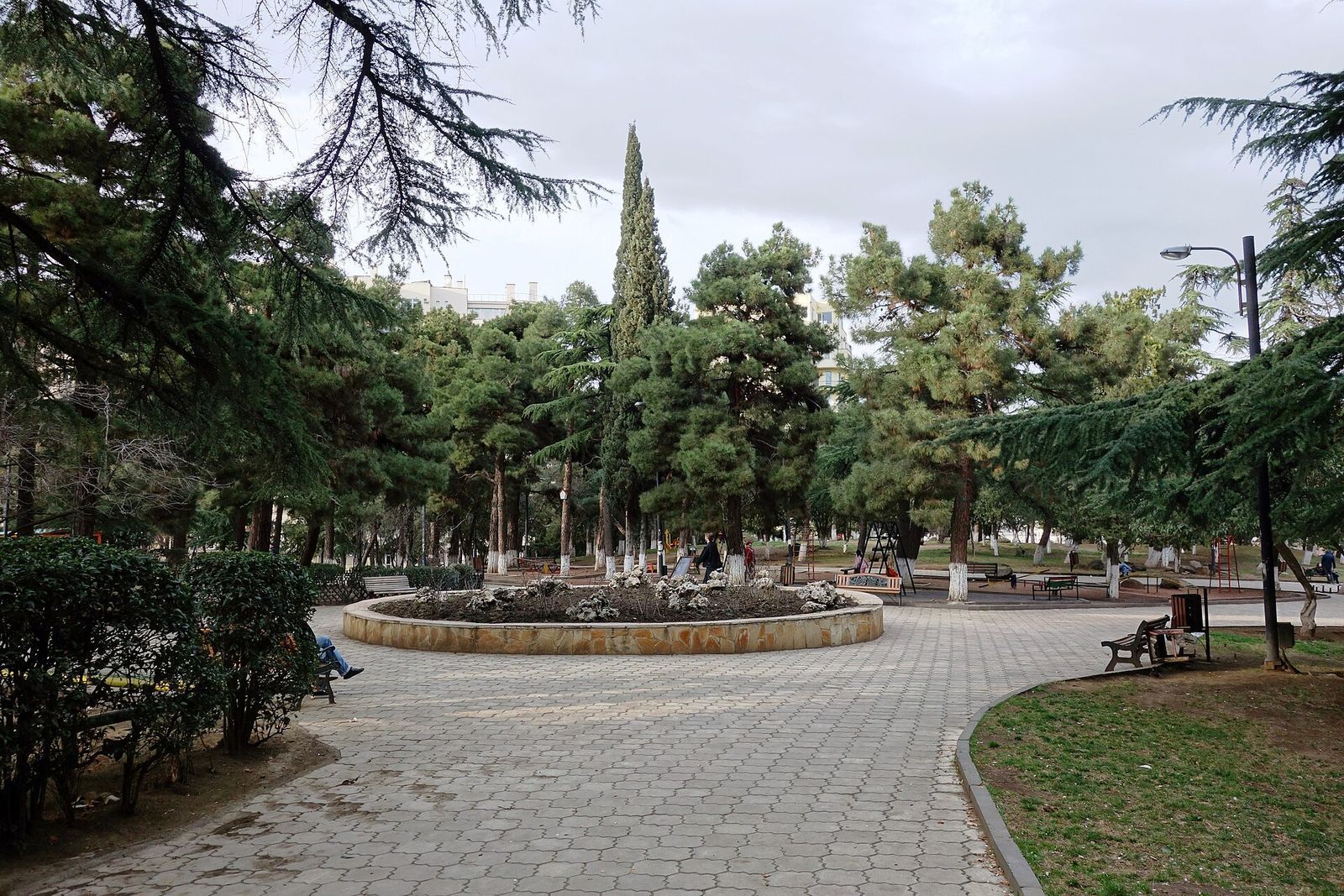
Vera starts just past the Rustaveli Square end, with Vera Park under the pines and streets of cafes and wine bars around it.
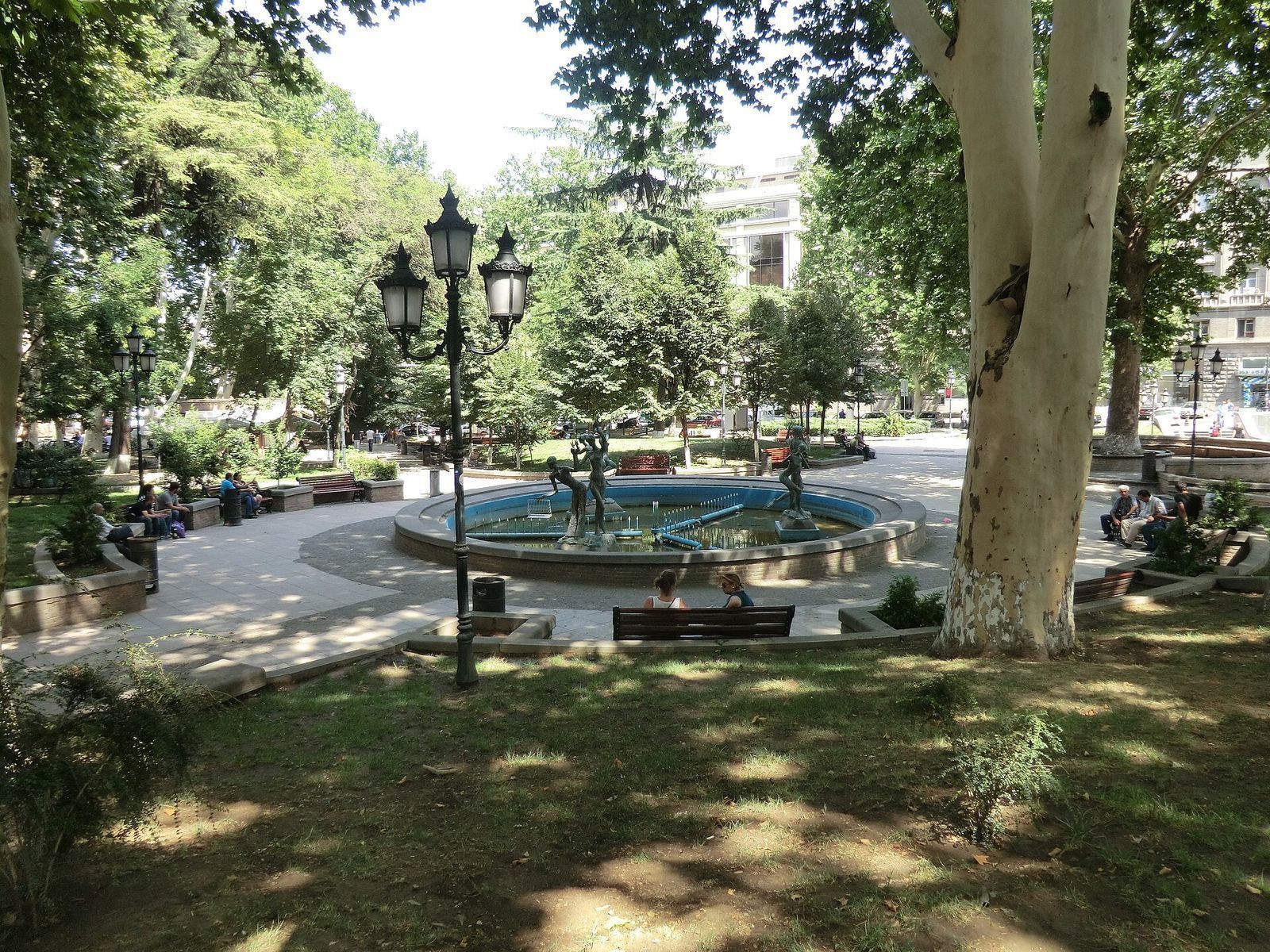
Orbeliani Square is a quieter detour: a shady garden of plane trees and benches around a fountain.
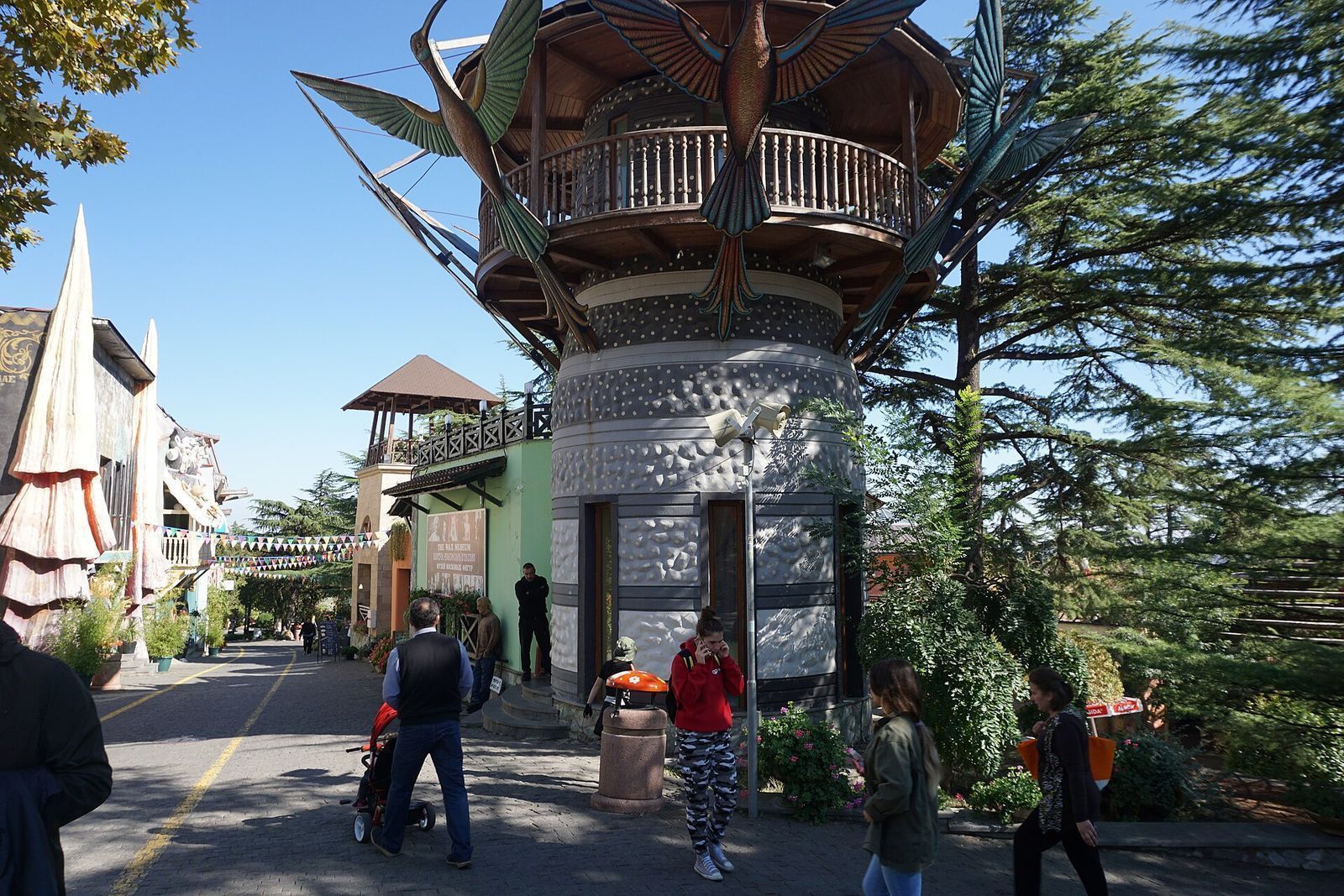
Mtatsminda is the hill above the avenue, and the cable car behind the Academy of Sciences takes you up to its park.
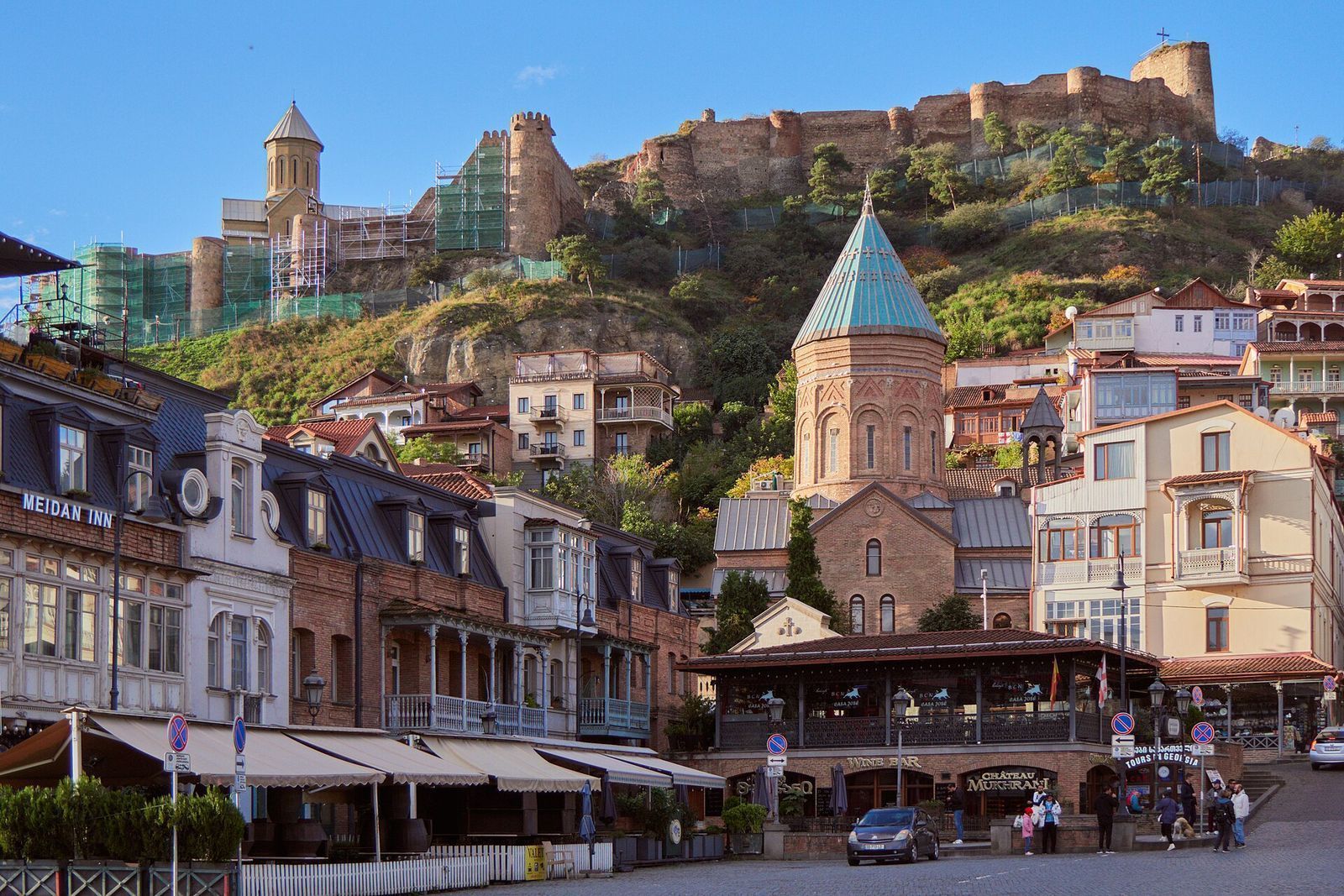
The Old Town is about 10 minutes downhill from Freedom Square, and Kote Abkhazi Street brings you out at Meidan, under Narikala Fortress.
Key takeaways
- Rustaveli Avenue is about 1.5 km long, from Freedom Square to Rustaveli Square, with a metro station at each end.
- The walk takes about 1 hour, or 2 hours and more with museums; mornings suit the facades and evenings the lights.
- The Georgian National Museum (40 GEL, closed Mondays) is the one paid stop I'd make, and Kashveti Church is the free one.
- Eat and drink one street back: Baba Bakery for coffee, Fantastic Douqan for khinkali and Apotheka Bar for cocktails are all a few minutes from the avenue.
- Rallies gather most evenings in front of Parliament, so see that stretch by day.
Frequently asked questions
How long is Rustaveli Avenue?
Rustaveli Avenue is about 1.5 km long. It runs from Freedom Square to Rustaveli Square, with Freedom Square and Rustaveli metro stations at either end.
How long does it take to walk Rustaveli Avenue?
About 1 hour at a gentle pace without going inside anything. Allow 2 hours or more if you visit the National Museum or the National Gallery, and 40 to 50 minutes for an evening walk to see the floodlit buildings.
Is Rustaveli Avenue worth visiting?
Yes, for an hour or two. It's the grandest street in Tbilisi, it holds the Opera, the National Museum and the Parliament, and it's free to walk; pair it with the Old Town on the same day.
What is Freedom Square in Tbilisi known for?
Freedom Square is known for the St George monument, a 29 m column with a gilded St George slaying the dragon, put up in 2006 where a Lenin statue stood until 1991. It's also where Rustaveli Avenue starts, where City Hall stands and where the free walking tours meet at 12:00.
Which metro station is closest to Rustaveli Avenue?
Both ends have one: Freedom Square (often shown as Liberty Square) at the start and Rustaveli at the other end, both on Line 1. A ride costs 1 GEL on a Metromoney card.
Is it safe to walk Rustaveli Avenue?
Yes, by day it's as safe as anywhere in central Tbilisi. In 2026 rallies gather most evenings in front of the Parliament building, so I'd keep to the parallel streets on that stretch after dark.
Can you go inside the Parliament of Georgia?
No, the Parliament building on Rustaveli Avenue is not open to visitors. You see the facade from across the avenue, best after dark when the arches are floodlit.
Why is it called Rustaveli Avenue?
It is named after Shota Rustaveli, the medieval poet who wrote "The Knight in the Panther's Skin", Georgia's national epic. Before that it was called Golovin Prospekt.
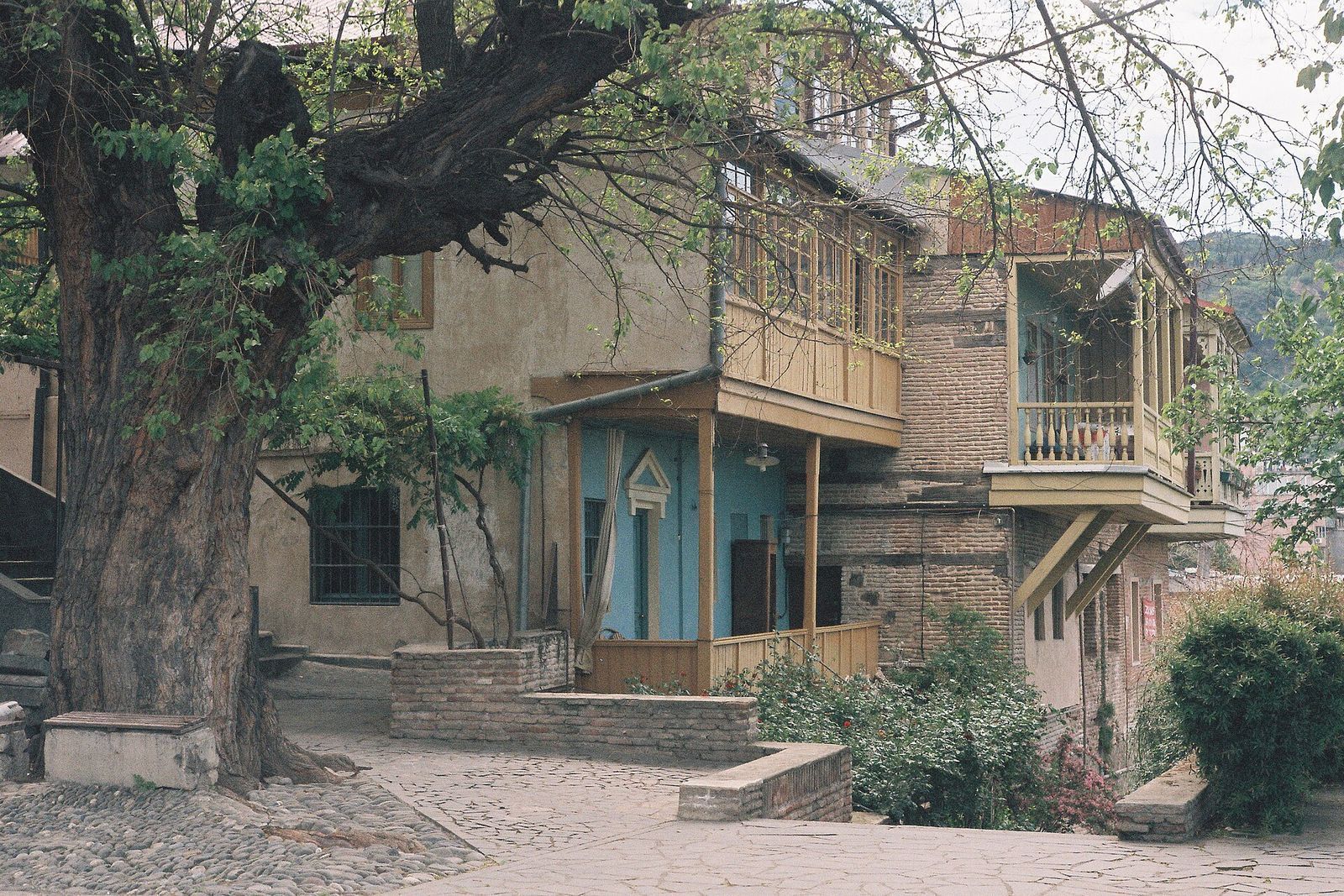
Tbilisi Neighborhoods: The 8 Best Areas and What Each One Is Like
Tbilisi is known for its old quarters. Here are the 8 best areas to explore, what each one is like and who it suits.
Read the guide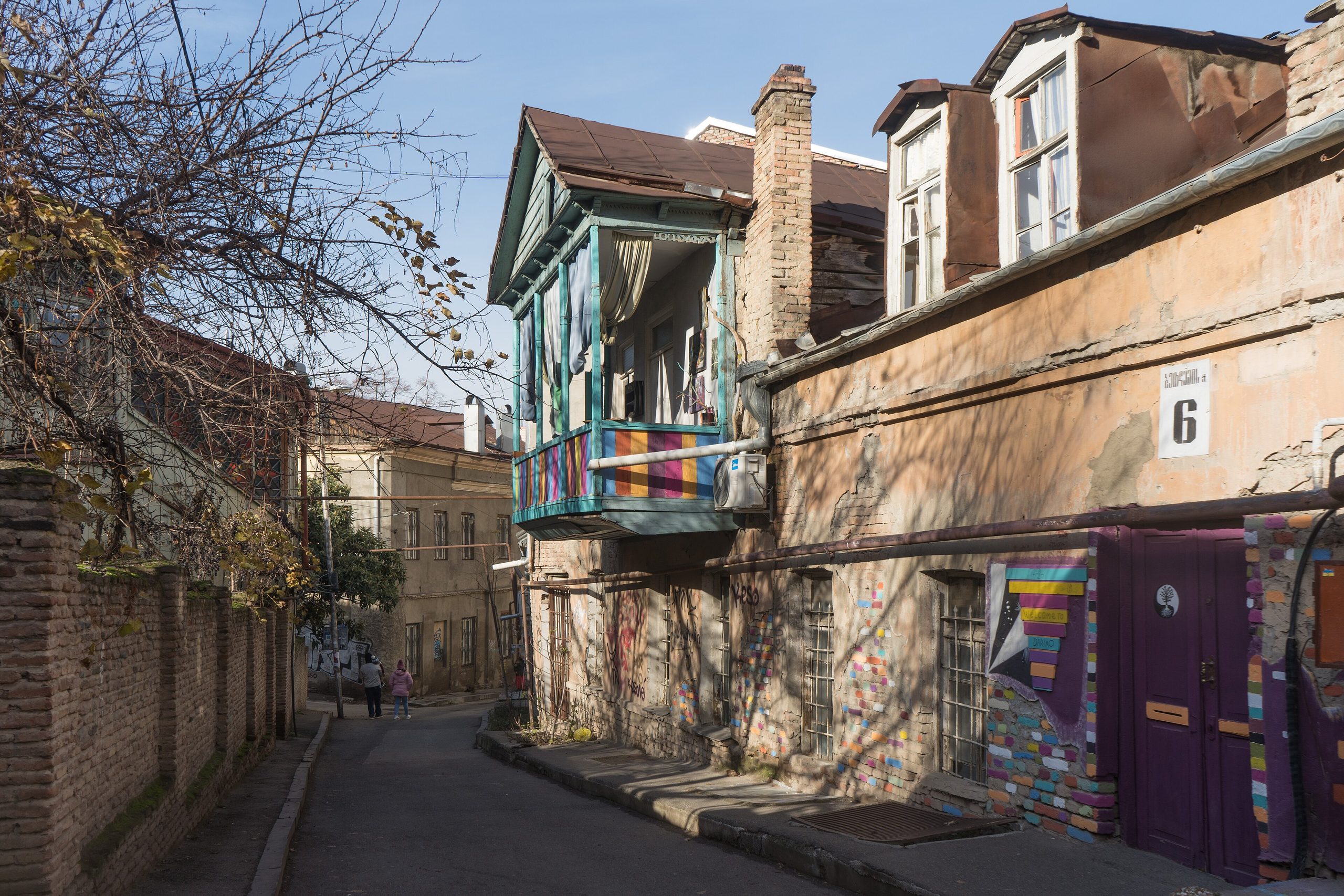
Old Tbilisi: Kala, Betlemi, Meidan and Shardeni Street
Old Tbilisi is the city of balconies and bath domes. Here is what to see, where to eat and whether to stay there.
Read the guide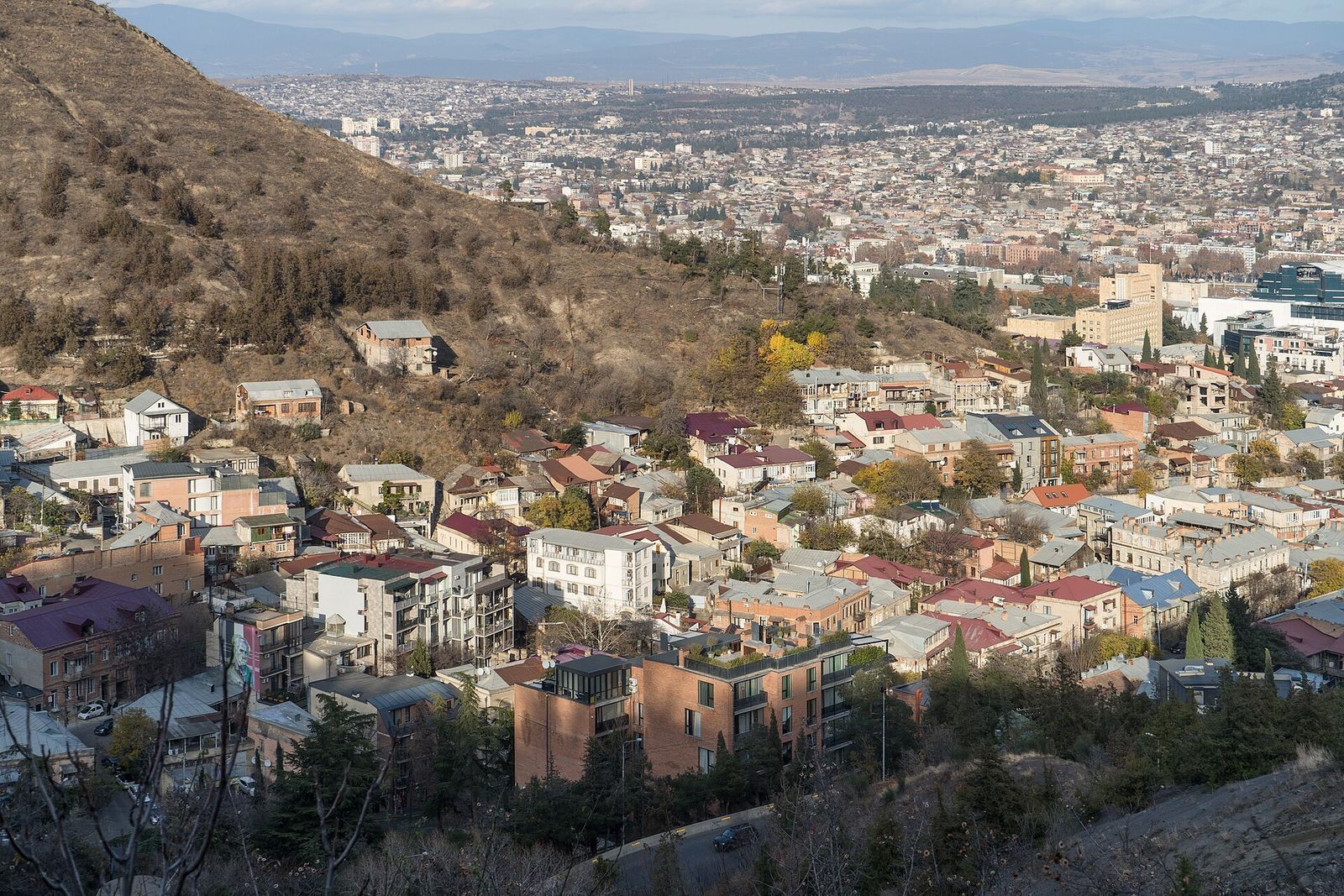
Sololaki, Tbilisi: Art Nouveau Entrances, Cafes and Where to Stay
Sololaki is the Art Nouveau quarter of Tbilisi. Here is what to see, where to eat and drink, and who should stay there.
Read the guide