Basic Georgian Phrases for Travelers, with Pronunciation
Georgian is known for two things visitors notice in their first hour: an alphabet that looks like no other, and a hello, gamarjoba, that literally wishes you victory. You can get by in Tbilisi with English, but a few Georgian words change how people treat you. Here's what you need to know: the phrases I'd learn first, how to say them, and the ones for cafes, toasts, taxis and markets.
The 12 Georgian phrases to learn first
If you only have the flight to practice, learn these. I've put them in the order I use them on a normal day in Tbilisi, and the script column is there so you can show your phone when your accent lets you down.
| English | Georgian | Say it like | Script |
|---|---|---|---|
| Hello | gamarjoba | gah-mar-jo-ba | გამარჯობა |
| Thank you | madloba | mad-lo-ba | მადლობა |
| Please | tu sheidzleba | too sheh-eedz-leh-ba | თუ შეიძლება |
| Yes | ki | kee | კი |
| No | ara | ah-ra | არა |
| Sorry | bodishi | bo-dee-shee | ბოდიში |
| Goodbye | nakhvamdis | nakh-vam-dees | ნახვამდის |
| How much is it? | ramdeni ghirs? | ram-deh-nee ghirs | რამდენი ღირს? |
| The bill, please | angarishi, tu sheidzleba | an-ga-ree-shee | ანგარიში, თუ შეიძლება |
| Cheers | gaumarjos | ga-oo-mar-jos | გაუმარჯოს |
| Delicious | gemrielia | gem-ree-eh-lee-a | გემრიელია |
| I don't understand | ar mesmis | ar mes-mees | არ მესმის |
Nobody expects a visitor to get these right. Georgians hear so little of their own language from foreigners that a clumsy madloba still lands better than a perfect thank you.
Gamarjoba: how to say hello in Georgian
Gamarjoba (გამარჯობა) is the hello you'll hear dozens of times a day. It comes from the Georgian word for victory, so every time you say it you're wishing the other person a win. It works at any hour, with anyone, from the bakery to a church gate.
The reply is gagimarjos (gah-gee-mar-jos), "may victory be yours". Answering a gamarjoba with gagimarjos instead of a second gamarjoba is the small move that gets a grin. To greet a group, or someone older you want to be polite with, add a t: gamarjobat, and the reply becomes gagimarjot.
Georgian also has greetings for each part of the day. Mshvidobisa means "of peace", so good morning is literally "morning of peace".
| When | Georgian | Say it like | The reply |
|---|---|---|---|
| Morning | dila mshvidobisa (დილა მშვიდობისა) | dee-la mshvee-do-bee-sa | dila mshvidobis |
| Evening | saghamo mshvidobisa (საღამო მშვიდობისა) | sa-gha-mo mshvee-do-bee-sa | saghamo mshvidobis |
| Good night | ghame mshvidobisa (ღამე მშვიდობისა) | gha-meh mshvee-do-bee-sa | ghame mshvidobis |
The cluster mshv looks impossible on paper. Say it as m-shv, fast, and nobody will mind.
After hello comes rogor khar? (ro-gor khar), how are you, for a friend or someone your age; to an older person or a group it's rogor khart? The answer is kargad (kar-gad), fine, followed by shen? (and you?) or the polite tkven? If the chat keeps going, me mkvia Anna is "my name is Anna", ra gkvia? is "what's your name?", and pirvelad var sakartveloshi, "it's my first time in Georgia", is the line that gets people talking.
For goodbye, nakhvamdis (nakh-vam-dees) means "until we see each other". The casual bye you'll hear leaving a shop is kargad, the same word as "fine".
Handshakes are normal when you meet someone. Friends greet with a hug or a single kiss on the cheek, and like most Georgian etiquette, the safe move as a visitor is to follow the older person's lead.
Madloba: how to say thank you in Georgian
Madloba (მადლობა, mad-lo-ba) is thank you, and it's the word I'd practice most. Say it to the waiter, the taxi driver and the woman who points you to the right bus stop. For a bigger thanks, didi madloba means thank you very much; didi is "big".
The reply you'll hear is arapris (ah-ra-prees), you're welcome, literally "for nothing". You'll also hear gmadlobt (gmad-lobt), the formal "I thank you", from shop staff and older people. I use madloba with everyone and gmadlobt with anyone older than my parents or in uniform. The gm at the start is a mouthful, so don't stress if madloba is all you manage.
| English | Georgian | Say it like | Script |
|---|---|---|---|
| Thank you | madloba | mad-lo-ba | მადლობა |
| Thank you very much | didi madloba | dee-dee mad-lo-ba | დიდი მადლობა |
| Thank you (formal) | gmadlobt | gmad-lobt | გმადლობთ |
| You're welcome | arapris | ah-ra-prees | არაფრის |
| Please | tu sheidzleba | too sheh-eedz-leh-ba | თუ შეიძლება |
| Please (formal, old-fashioned) | getaqva | geh-tak-va | გეთაყვა |
| Sorry | bodishi | bo-dee-shee | ბოდიში |
| Excuse me | ukatsravad | oo-kats-ra-vad | უკაცრავად |
| No, thank you | ara, madloba | ah-ra mad-lo-ba | არა, მადლობა |
Tu sheidzleba literally means "if it's possible", which is why it goes at the end of a request: erti qava, tu sheidzleba, one coffee, please. Bodishi is sorry for bumping into someone or interrupting; ukatsravad is the excuse me for squeezing past on a crowded metro or catching a waiter's eye.
Ara, madloba is the most useful pair of words on the restaurant strips of the old town, where hosts wave menus at everyone who walks by. Said with a smile, it ends the pitch politely.
Yes, no and other everyday Georgian words
Ki (kee) is yes and ara (ah-ra) is no. Diakh (dee-akh) is the polite yes, and kho is the casual "yeah" you'll hear all over Tbilisi, often doubled: kho, kho. Kargi (kar-gee) means OK or good, and it's the word to say when a waiter repeats your order back.
| Word | Say it like | Meaning | Where you'll hear it |
|---|---|---|---|
| ki / diakh | kee / dee-akh | yes / yes (polite) | Everywhere |
| kho | kho | yeah | Friends, taxi drivers |
| ara | ah-ra | no | Everywhere |
| kargi | kar-gee | OK, good | Agreeing to a plan |
| ar vitsi | ar vee-tsee | I don't know | When you ask for directions |
| aba | ah-ba | well, so, come on | Starting a sentence or a toast |
| batono / kalbatono | ba-to-no / kal-ba-to-no | sir / madam | Polite address, or "pardon?" |
| genatsvale | geh-nats-va-leh | dear, darling | Older people, warmly |
| vaime | vai-meh | oh no, oh my | Something spilled or surprising |
Genatsvale is my favorite Georgian word. It roughly means "I'd suffer in your place", and older Georgians use it the way a grandmother anywhere would say "dear". You'll hear it from market sellers and waiters; you don't need to say it back, but you'll smile anyway.
Aba ra! is "of course!", and batono turns up constantly: it's "sir", but also "yes?" when someone calls your name and "here you go" when a shopkeeper hands you change. Kalbatono is the same word for a woman.
Georgian phrases for restaurants and cafes
This is where I use the most Georgian, because ordering is easy to practice and staff are patient. Menus in central Tbilisi nearly always come in English, so you rarely need to read Georgian, but asking, thanking and paying in it goes down well.
| English | Georgian | Say it like | Script |
|---|---|---|---|
| The menu, please | meniu, tu sheidzleba | meh-nee-oo | მენიუ, თუ შეიძლება |
| I'd like... | ... minda | meen-da | ... მინდა |
| One coffee | erti qava | er-tee ka-va | ერთი ყავა |
| Tea | chai | chai | ჩაი |
| Water (still / sparkling) | tsqali (ugazo / gaziani) | tska-lee (oo-ga-zo / ga-zee-a-nee) | წყალი (უგაზო / გაზიანი) |
| Wine (red / white / amber) | ghvino (tsiteli / tetri / karvisperi) | ghvee-no (tsee-teh-lee / teh-tree / kar-vees-peh-ree) | ღვინო (წითელი / თეთრი / ქარვისფერი) |
| Beer | ludi | loo-dee | ლუდი |
| Bread | puri | poo-ree | პური |
| Is it spicy? | tskharea? | tskha-reh-a | ცხარეა? |
| I'm vegetarian | vegetarianeli var | veh-geh-ta-ree-a-neh-lee var | ვეგეტარიანელი ვარ |
| Without meat | khortsis gareshe | khor-tsees ga-reh-sheh | ხორცის გარეშე |
| It was delicious | dzalian gemrieli iqo | dza-lee-an gem-ree-eh-lee ee-ko | ძალიან გემრიელი იყო |
| The bill, please | angarishi, tu sheidzleba | an-ga-ree-shee | ანგარიში, თუ შეიძლება |
| Can I pay by card? | baratit sheidzleba? | ba-ra-teet sheh-eedz-leh-ba | ბარათით შეიძლება? |
Dishes keep their Georgian names on English menus, so khachapuri, khinkali and pkhali are words you'll learn by eating them. At a khinkali house you order by the piece, which is where the numbers further down earn their keep: ati khinkali, 10 dumplings, is a sensible first order for 2 people, and you can always add more.
Vegetarians in Tbilisi have it easier than in most of the region: khortsis gareshe, without meat, gets you a long list of bean, eggplant and walnut dishes. If you're allergic to nuts, learn nigozi (nee-go-zee), walnut, because walnut paste goes into pkhali, the eggplant rolls and satsivi. Nigozze alergia makvs means "I'm allergic to walnuts".
Dzalian gemrieli iqo is the phrase I save for the end of a meal at a family-run place; the cook often comes out to hear it. Before you add a tip, check the bill for a service charge, because many Tbilisi restaurants include one and tipping in Georgia beyond that is relaxed.
Toasting phrases: gaumarjos, alaverdi and bolomde
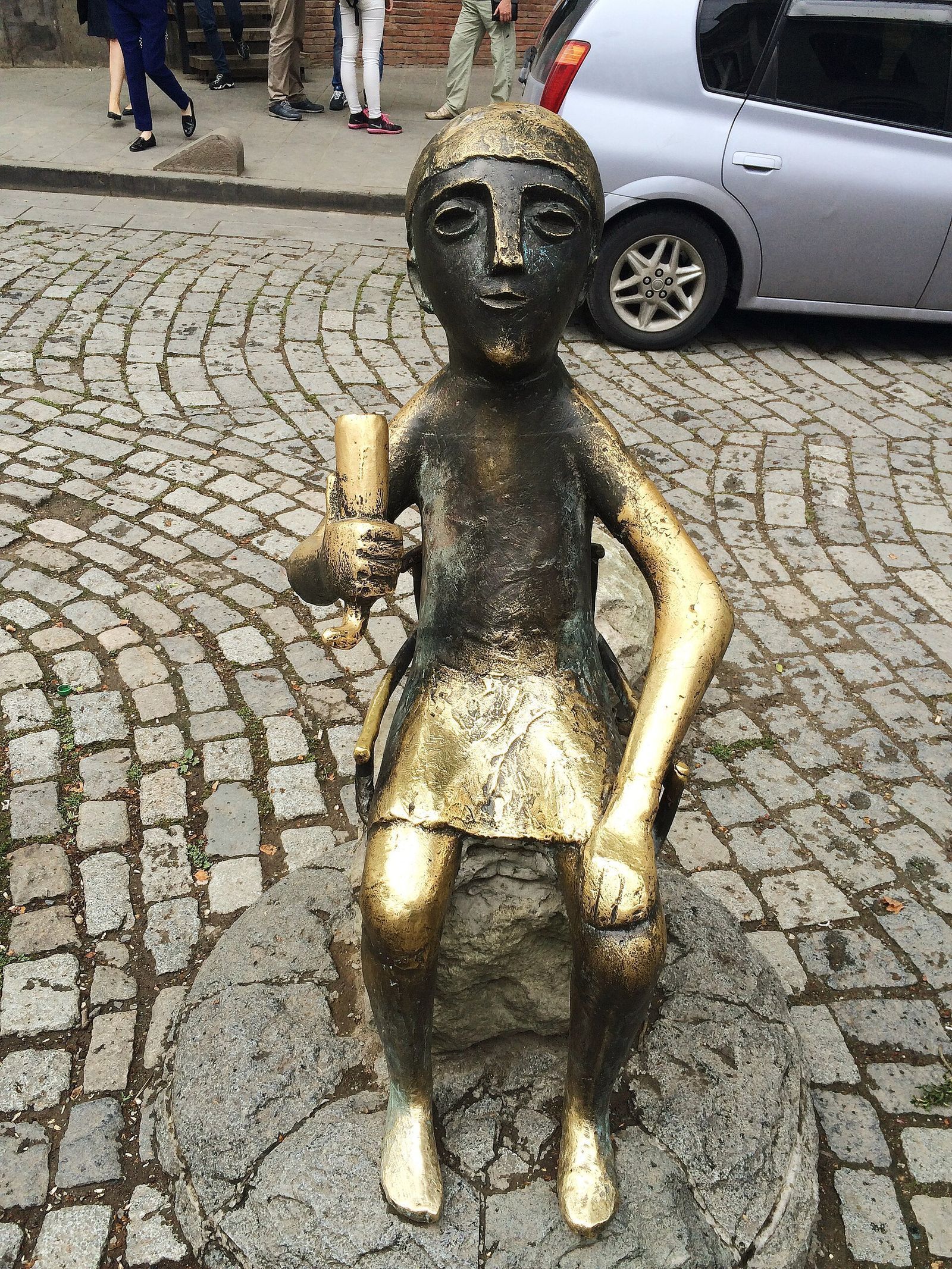
Georgian dinners run on toasts, and the vocabulary is short. Gaumarjos (ga-oo-mar-jos) is cheers, from the same victory root as gamarjoba. At a supra, the Georgian feast, a toastmaster called the tamada leads every toast: to peace, to parents, to those who have died, to friendship and to the guests.
| Word | Say it like | Meaning |
|---|---|---|
| gaumarjos | ga-oo-mar-jos | Cheers, "to victory" |
| tamada | ta-ma-da | The toastmaster |
| supra | soo-pra | The feast, and the tablecloth it's laid on |
| alaverdi | a-la-ver-dee | Passing the toast to someone to add to it |
| bolomde | bo-lom-deh | To the bottom: drink the whole glass |
| qantsi | kants-ee | Drinking horn |
| ghvino / chacha | ghvee-no / cha-cha | Wine / grape brandy |
Alaverdi is the word I'd learn if you're invited to a family table. The tamada proposes a toast, then hands it to someone with alaverdi, and that person adds their own words before drinking. If it comes to you, raise your glass, say something short and true about your hosts, and finish with gaumarjos.
Bolomde means drink to the bottom. When someone says it, they mean the whole glass, which with chacha, the grape brandy, is a commitment. You can sip wine between toasts; with chacha, pace yourself and eat.
Georgian phrases for taxis, marshrutkas and directions
Most of getting around Tbilisi needs no Georgian: metro signs carry English, and an app taxi already knows your destination. The words below help in the last 100 meters, and on a marshrutka, the city minibus, where you call out to the driver when you want to get off.
| English | Georgian | Say it like | Script |
|---|---|---|---|
| Where is...? | ... sad aris? | sad ah-rees | ... სად არის? |
| Left | martskhniv | marts-khneev | მარცხნივ |
| Right | marjvniv | marj-vneev | მარჯვნივ |
| Straight on | pirdapir | peer-da-peer | პირდაპირ |
| Stop here, please | ak gamicheret | ak ga-mee-cheh-ret | აქ გამიჩერეთ |
| Stop! | gaacheret! | ga-a-cheh-ret | გააჩერეთ! |
| At the next stop | shemdeg gacherebaze | shem-deg ga-cheh-reh-ba-zeh | შემდეგ გაჩერებაზე |
| How much? | ramdeni? | ram-deh-nee | რამდენი? |
| Airport | aeroporti | a-eh-ro-por-tee | აეროპორტი |
| Train station | sadguri | sad-goo-ree | სადგური |
| Old Tbilisi | dzveli tbilisi | dzveh-lee tbee-lee-see | ძველი თბილისი |
To get off a marshrutka, call shemdeg gacherebaze as your stop comes up, or a clear gaacheret! if it's already there. In a taxi, keep pirdapir, martskhniv and marjvniv for the end of the ride, when the app's pin lands on the wrong side of a one-way street and ak gamicheret gets you out where you want.
Taxi apps in Tbilisi show the fare before you book, so the only Georgian you need with the driver is gamarjoba when you get in and madloba when you get out.
Georgian numbers and shopping phrases
Georgian counts in twenties, which sounds harder than it is. Learn 1 to 10, then 20, and the rest builds itself: 30 is otsdaati, "twenty and ten"; 40 is ormotsi, "two twenties"; 50 is ormotsdaati, "two twenties and ten".
| Number | Georgian | Say it like | Script |
|---|---|---|---|
| 1 | erti | er-tee | ერთი |
| 2 | ori | o-ree | ორი |
| 3 | sami | sa-mee | სამი |
| 4 | otkhi | ot-khee | ოთხი |
| 5 | khuti | khoo-tee | ხუთი |
| 6 | ekvsi | ekv-see | ექვსი |
| 7 | shvidi | shvee-dee | შვიდი |
| 8 | rva | rva | რვა |
| 9 | tskhra | tskhra | ცხრა |
| 10 | ati | a-tee | ათი |
| 20 | otsi | o-tsee | ოცი |
| 30 | otsdaati | ots-da-a-tee | ოცდაათი |
| 50 | ormotsdaati | or-mots-da-a-tee | ორმოცდაათი |
| 100 | asi | a-see | ასი |
Prices are in lari, Georgia's currency, split into 100 tetri. Tetri also means white, so the same word turns up on your coins and on the wine list.
| English | Georgian | Say it like |
|---|---|---|
| How much does it cost? | ramdeni ghirs? | ram-deh-nee ghirs |
| That's too expensive | dzalian dzviria | dza-lee-an dzvee-ree-a |
| A little cheaper? | tsota damikelit | tso-ta da-mee-keh-leet |
| I'd like this one | es minda | es meen-da |
| Cash | naghdi puli | nagh-dee poo-lee |
Bargaining is normal at the Dezerter Bazaar and the flea markets, and pointless in shops with printed prices. Tsota damikelit, knock a little off, said with a smile once you've heard the price, works better than any number you could counter with. If the seller writes the price on a calculator, which happens a lot, you can skip the numbers and just say madloba.
Emergency and health phrases in Georgian
I hope you never need these, but they take a minute to save to your phone.
| English | Georgian | Say it like | Script |
|---|---|---|---|
| Help! | damekhmaret! | da-mekh-ma-ret | დამეხმარეთ! |
| I need a doctor | ekimi mchirdeba | eh-kee-mee mchir-deh-ba | ექიმი მჭირდება |
| I feel unwell | tsudad var | tsoo-dad var | ცუდად ვარ |
| Pharmacy | aptiaki | ap-tee-a-kee | აფთიაქი |
| Hospital | saavadmqopo | sa-a-vad-mko-po | საავადმყოფო |
| Police | politsia | po-lee-tsee-a | პოლიცია |
| I'm lost | davikarge | da-vee-kar-geh | დავიკარგე |
| I'm allergic to... | ...ze alergia makvs | a-ler-gee-a makvs | ...ზე ალერგია მაქვს |
Pharmacies are on almost every block in central Tbilisi, and the big chains keep branches open 24 hours, so aptiaki is the word you'll use most from this table. Tbilisi is a safe city for visitors, and the phrase you're likeliest to need is tsudad var, the morning after one chacha too many.
How to pronounce Georgian and read the signs
Georgian looks harder to say than it is, because it's spelled exactly as it sounds. Each of the 33 letters of the Mkhedruli alphabet makes one sound, every time, with no silent letters and no capitals. The tricky part is a handful of sounds English doesn't have:
- kh is the throaty sound in Scottish "loch" or German "Bach": khinkali, nakhvamdis.
- gh is a soft gargle, close to a French r: ghvino (wine), ghame (night).
- q in spellings like qava and tsqali is a deep k from the back of the throat; a plain k gets you understood.
- Popped consonants: Georgian has sharp, clicked versions of k, p, t, ts and ch, made with a burst of air. You'll hear the difference, but you don't need to make it.
- Clusters like mshv, gv and tskh: say every letter, quickly, with no extra vowel squeezed in.
- Stress is light and even, so don't hammer any syllable.
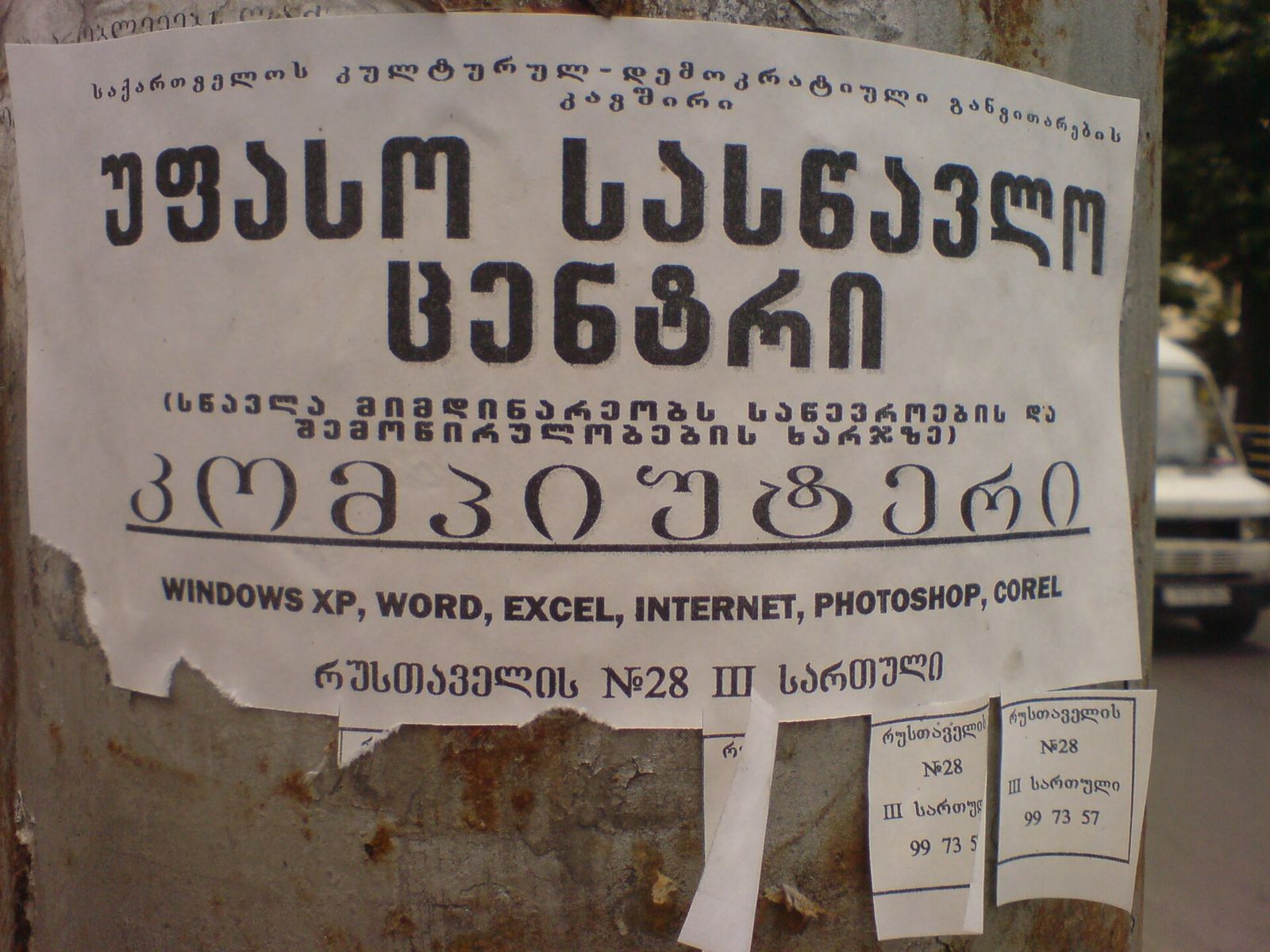
Learning to read the Georgian alphabet takes a few evenings, and it pays off fastest on signs. Even if you skip the alphabet, these are the words worth recognizing by shape:
| Sign | Say it like | Meaning |
|---|---|---|
| ღიაა | ghi-a-a | Open |
| დაკეტილია | da-keh-tee-lee-a | Closed |
| შესასვლელი | sheh-sas-vleh-lee | Entrance |
| გასასვლელი | ga-sas-vleh-lee | Exit |
| ტუალეტი | too-a-leh-tee | Toilet |
| ქალები / კაცები | ka-leh-bee / ka-tseh-bee | Women / Men |
| აფთიაქი | ap-tee-a-kee | Pharmacy |
| ფასდაკლება | pas-dak-leh-ba | Sale |
| ხინკალი | khin-ka-lee | Khinkali |
Do people speak English in Tbilisi?
Yes, and more every year. Most younger people in central Tbilisi speak some English, and almost everyone working in hotels, cafes and bars does. Older Georgians are more likely to speak Russian, which they learned at school in Soviet times.
That changes fast outside the capital. Once your trip goes beyond Tbilisi to villages and mountain guesthouses, your host may speak Georgian and Russian only, and the phrases on this page go from a nice gesture to the way you order dinner.
Should you use Russian? It works, especially with older taxi drivers and market sellers, but I wouldn't open with it. The 2008 war and Russia's occupation of two Georgian regions make it a sensitive language for many Georgians, especially younger ones, who would rather speak English with a visitor. My rule: open with gamarjoba, carry on in English, close with madloba, and switch to Russian only if that's the language the other person picks.
Key takeaways
- Gamarjoba (hello, reply gagimarjos) and madloba (thank you, reply arapris) are the 2 words to learn first.
- Add tu sheidzleba (please), ki and ara (yes and no) and ramdeni ghirs? (how much?) and you can order, shop and pay in Georgian.
- Toast with gaumarjos, pass a toast on with alaverdi, and never toast with beer.
- Georgian is spelled as it sounds, so the script is worth showing on your phone when your accent fails.
- English is common in central Tbilisi; open in Georgian or English rather than Russian.
Frequently asked questions
What does gamarjoba mean?
Gamarjoba means hello, and it comes from the Georgian word for victory, so it wishes the other person a win. It's the everyday greeting at any time of day, with anyone. To greet a group or someone older, say gamarjobat.
How do you respond to gamarjoba?
Reply with gagimarjos, which means "may victory be yours". To a group or an older person, say gagimarjot. Answering with gamarjoba is fine too, but gagimarjos is what Georgians say to each other.
How do you say thank you in Georgian?
Thank you in Georgian is madloba (mad-lo-ba), and thank you very much is didi madloba. The formal version is gmadlobt, which you'll hear from shop staff and older people. The reply is arapris, you're welcome.
How do you say cheers in Georgian?
Cheers is gaumarjos (ga-oo-mar-jos), from the same victory root as gamarjoba. At a feast the toastmaster, the tamada, leads each toast, and alaverdi passes a toast on to someone else. Toast with wine or chacha, not beer.
How do you say goodbye in Georgian?
Goodbye is nakhvamdis (nakh-vam-dees), which means "until we see each other". In shops and between friends you'll often hear kargad, the same word as "fine", used as a casual bye. Good night is ghame mshvidobisa.
Is Georgian hard to learn?
Georgian is hard to master, with complex verbs and sounds English doesn't have, but the travel basics are easy. It's spelled exactly as it sounds, so once you know how a phrase is written you can say it. The 12 phrases at the top of this page cover most of a trip.
Do people in Tbilisi speak English?
Yes, most younger people and almost everyone in hotels, restaurants and bars in central Tbilisi speak some English. Older Georgians more often speak Russian. Outside the capital English gets rarer, so a few Georgian phrases help more there.
What does genatsvale mean?
Genatsvale is a term of affection that roughly means "I'd suffer in your place", used like dear or darling. Older Georgians say it to friends, family and often to customers. It's warm, not flirtatious.
Georgian Culture and Traditions: A Visitor's Guide to Customs, Feasts, Faith and Song
Georgian culture is known for feasts, wine and song. Here's what visitors should know about its customs and traditions.
Read the guide
A Short History of Georgia and Tbilisi, From the Falcon Legend to Today
Tbilisi has been burned and rebuilt for 1,500 years. Here is Georgia's story in short, and where to see it today.
Read the guide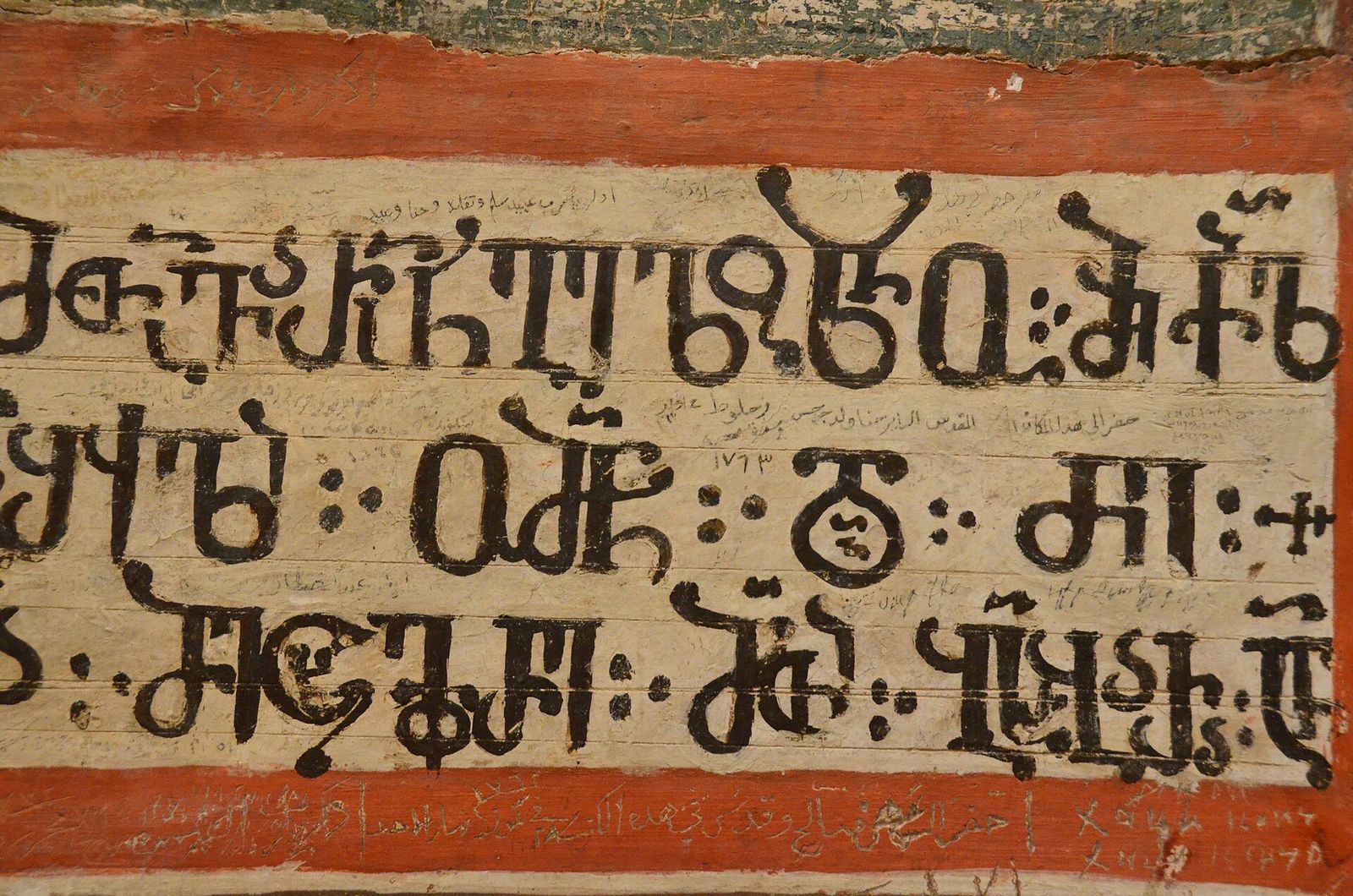
The Georgian Alphabet: 33 Letters, Three Scripts and Where to See Them
Georgia writes in its own alphabet. Here is how the 33 letters work, the three scripts and where to see them.
Read the guide