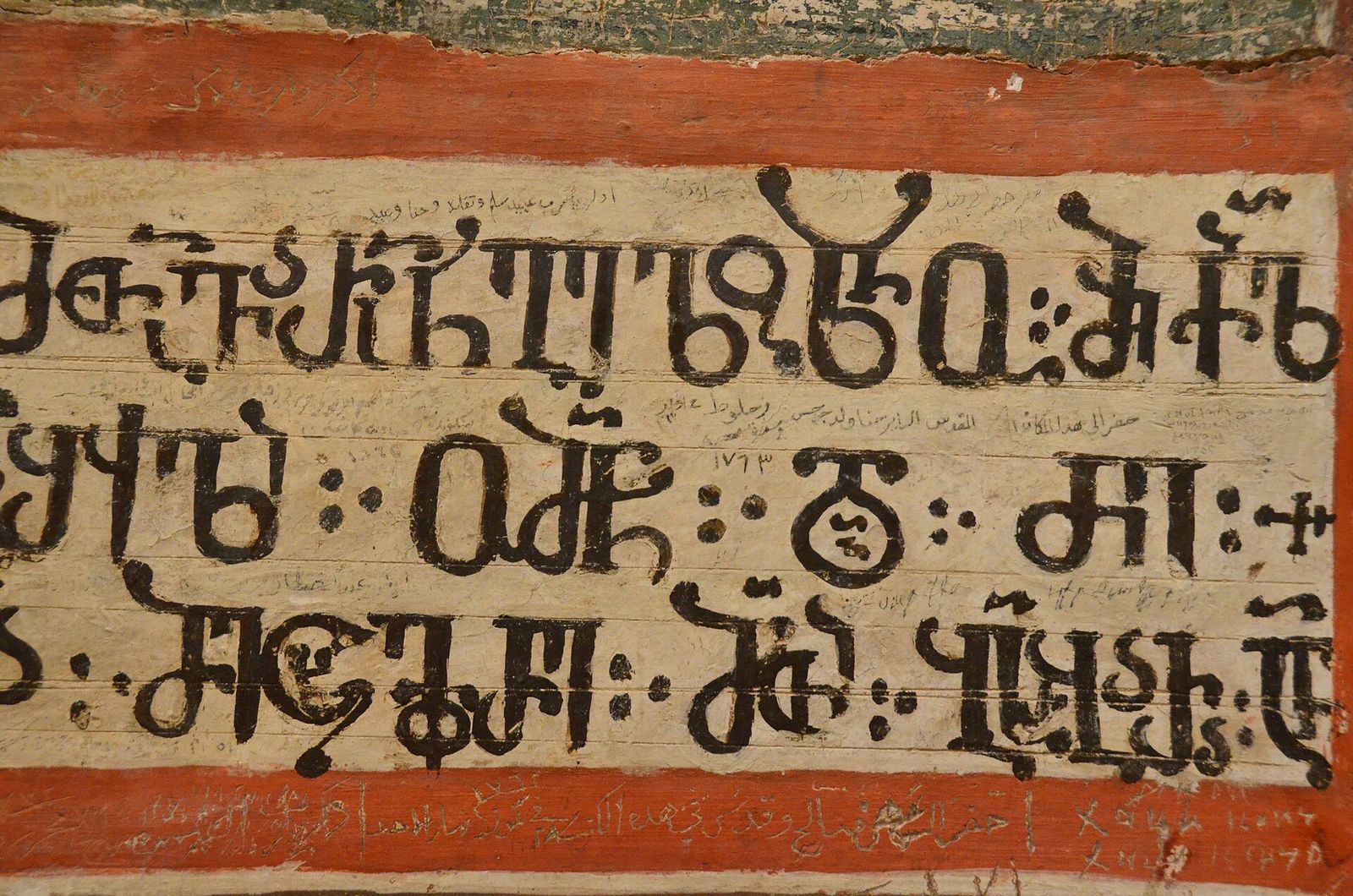
The Georgian Alphabet: 33 Letters, Three Scripts and Where to See Them
Georgia is known for its alphabet: 33 round, looping letters that look like no other script on earth, in use for more than 1,500 years. You see them on every sign in Tbilisi from the moment you land. Here's what you need to know about how the letters work, the three Georgian scripts, why there are no capitals, and where to see the oldest inscriptions in and around the city.
How many letters are in the Georgian alphabet?
Modern Georgian has 33 letters. The alphabet started out with 38, and 5 fell out of use as the sounds they stood for faded from everyday speech, which leaves the 33 you see on every shop front in Tbilisi today. Five of them are vowels: ა (a), ე (e), ი (i), ო (o) and უ (u). The other 28 are consonants, and a few of them stand for sounds English doesn't have.
The best news for a visitor: Georgian is written exactly the way it is spoken. One letter, one sound, every time, with no silent letters and no spelling exceptions to memorize. Once you know the 33 shapes you can read any word aloud, even when you have no idea what it means.
It reads left to right, like English. Every letter sits in the same middle band, and many of them reach up above it, down below it or both, which is what gives a line of Georgian its rolling, wave-like look. The city's own name is a good first word: თბილისი is t, b, i, l, i, s, i, with the same letter for i three times.
The three Georgian scripts: Asomtavruli, Nuskhuri and Mkhedruli
Georgian has been written in three scripts, one after the other, and all three are still in use in some form. They share the same letters and the same order; what changed over the centuries is the shape. Think of them as three handwriting styles of one alphabet rather than three alphabets.
| Script | Also called | What it looks like | Where you see it today |
|---|---|---|---|
| Asomtavruli (ასომთავრული) | Mrgvlovani, "the rounded one" | Tall, round letters of even height | Carved church inscriptions, icons, old stone |
| Nuskhuri (ნუსხური) | Nuskha-khutsuri | Smaller, slanted, angular letters | Church books and religious texts |
| Mkhedruli (მხედრული) | The everyday script | Flowing letters with tails above and below | Everything else: signs, menus, phones, newspapers |
Asomtavruli, the oldest script
Asomtavruli is the script of the earliest Georgian inscriptions, the ones carved in stone in the 5th century. Its letters are tall and round, built from circles and straight strokes, and they all stand the same height, so a line of Asomtavruli looks almost like an inscription in capitals. Its other name, mrgvlovani, means "rounded". Today it survives mainly in churches: on carved walls, around frescoes and as the labels on icons.
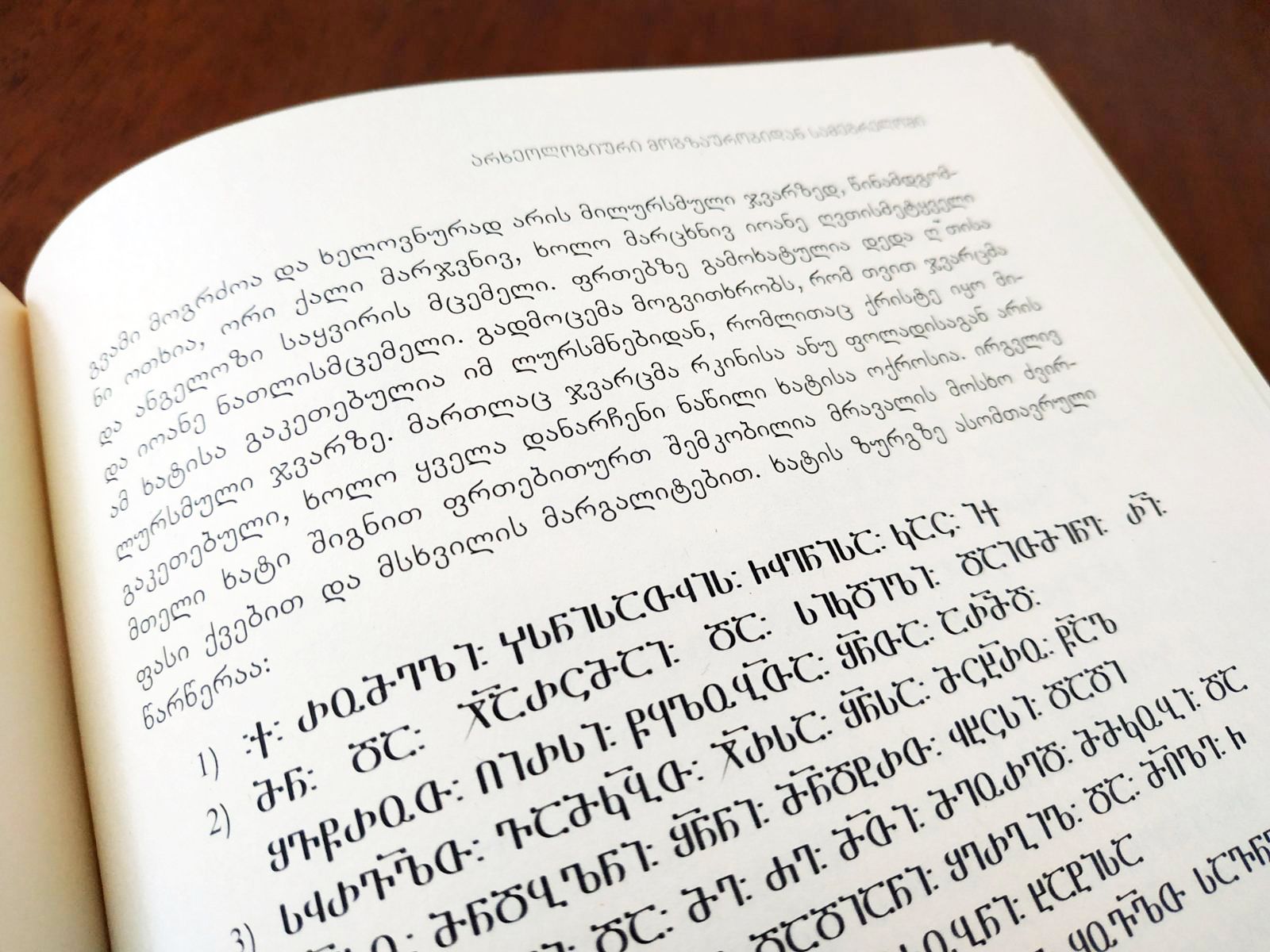
Nuskhuri, the monastery script
Nuskhuri is the smaller, angular script that monks used to copy books in monasteries and churches. Early Georgian books were written on calfskin, and Nuskhuri's small letters are the ones that fill many of those old pages. Like Asomtavruli, it lives on in religious use, so you mostly meet it in church books and on icons.
Mkhedruli, the script Georgians use today
Mkhedruli takes its name from mkhedari, which means "horseman" or "rider". It grew out of Nuskhuri and came into general use for secular writing around the 11th century, while the church kept its older scripts. Today it is simply how Georgian is written: every word on a menu, a street sign, a bank card terminal or a phone keyboard in Tbilisi is Mkhedruli. When people say "the Georgian alphabet", this is the one they mean.
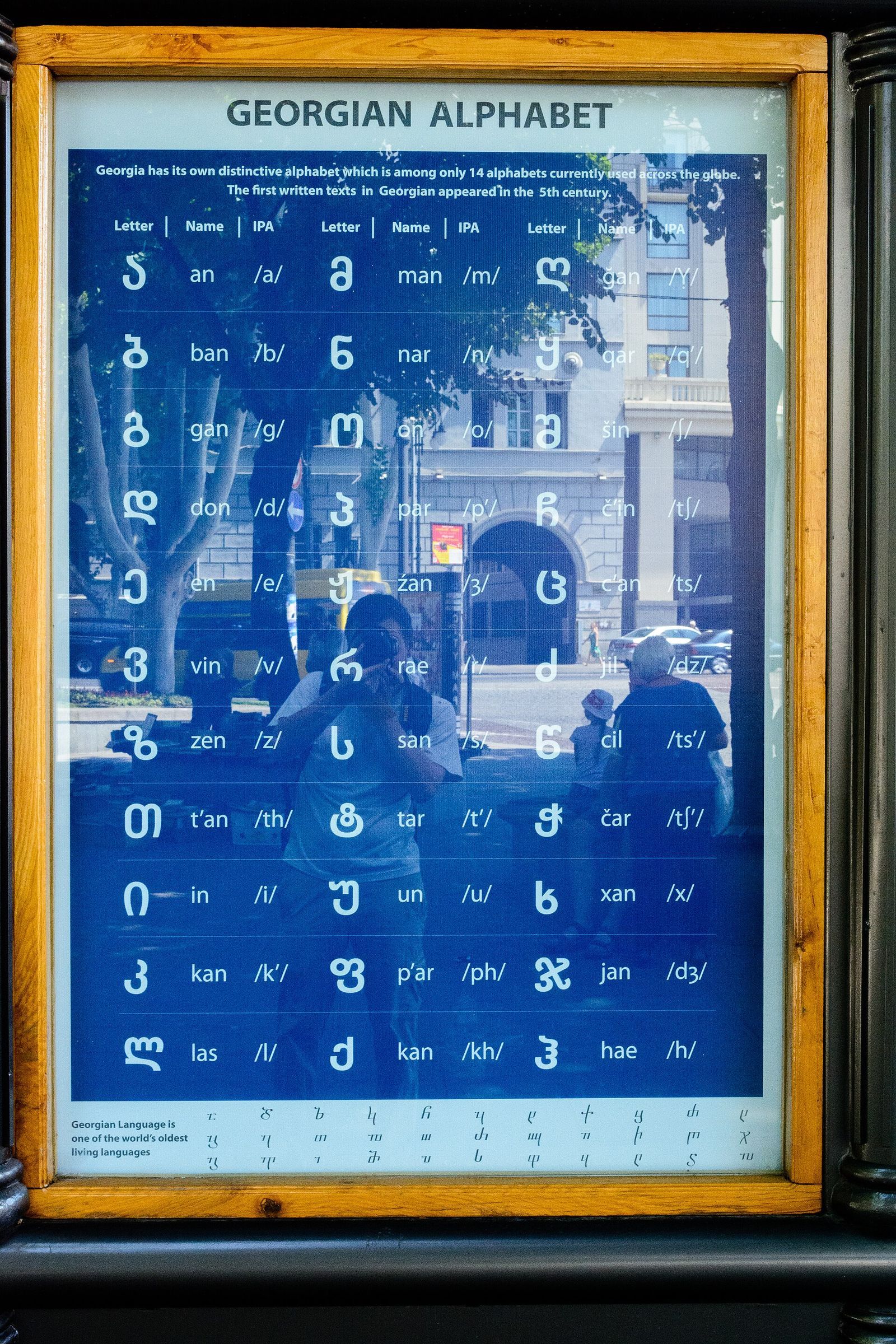
All 33 letters of the Mkhedruli alphabet
Here is the full modern alphabet in its traditional order, with each letter's name and the sound it makes. The names follow a simple pattern, and most of them start with the letter's own sound, which makes them easy to remember. The apostrophe marks a popped consonant (more on those below the table).
| Letter | Name | Sound | Say it like |
|---|---|---|---|
| ა | ani | a | a in "father" |
| ბ | bani | b | b in "bed" |
| გ | gani | g | g in "go" |
| დ | doni | d | d in "dog" |
| ე | eni | e | e in "bed" |
| ვ | vini | v | v in "van" |
| ზ | zeni | z | z in "zoo" |
| თ | tani | t | t in "top", with a puff of air |
| ი | ini | i | ee in "see" |
| კ | k'ani | k' | a popped k, no puff of air |
| ლ | lasi | l | l in "lamp" |
| მ | mani | m | m in "map" |
| ნ | nari | n | n in "net" |
| ო | oni | o | o in "or", kept short |
| პ | p'ari | p' | a popped p |
| ჟ | zhani | zh | s in "measure" |
| რ | rae | r | a rolled r |
| ს | sani | s | s in "sun" |
| ტ | t'ari | t' | a popped t |
| უ | uni | u | oo in "food" |
| ფ | pari | p | p in "pot", with a puff of air |
| ქ | kani | k | k in "kit", with a puff of air |
| ღ | ghani | gh | a soft gargle, close to a French r |
| ყ | q'ari | q' | a deep popped k from the back of the throat |
| შ | shini | sh | sh in "ship" |
| ჩ | chini | ch | ch in "church" |
| ც | tsani | ts | ts in "cats" |
| ძ | dzili | dz | ds in "adds" |
| წ | ts'ili | ts' | a popped ts |
| ჭ | ch'ari | ch' | a popped ch |
| ხ | khani | kh | ch in Scottish "loch" |
| ჯ | jani | j | j in "jam" |
| ჰ | hae | h | h in "hat" |
Most of the alphabet maps straight onto English sounds. The handful that don't come in two families: the throaty sounds, kh (ხ), gh (ღ) and the deep q' (ყ), and the popped consonants.
If I had to pick the first letters to learn, it would be the five vowels plus ბ, ლ, მ, ნ, რ and ს. Those eleven cover a surprising share of the words on any Tbilisi street, and they already let you spell out თბილისი, the city's name, apart from its first letter.
Where the Georgian alphabet came from
Georgian tradition gives the alphabet a royal origin. An 11th-century chronicler, Leonti Mroveli, credits King Parnavaz of Iberia with creating the first Georgian script in the 3rd century BC. It's a good story and a proud one, but it is a legend: nothing written in Georgian survives from that time.
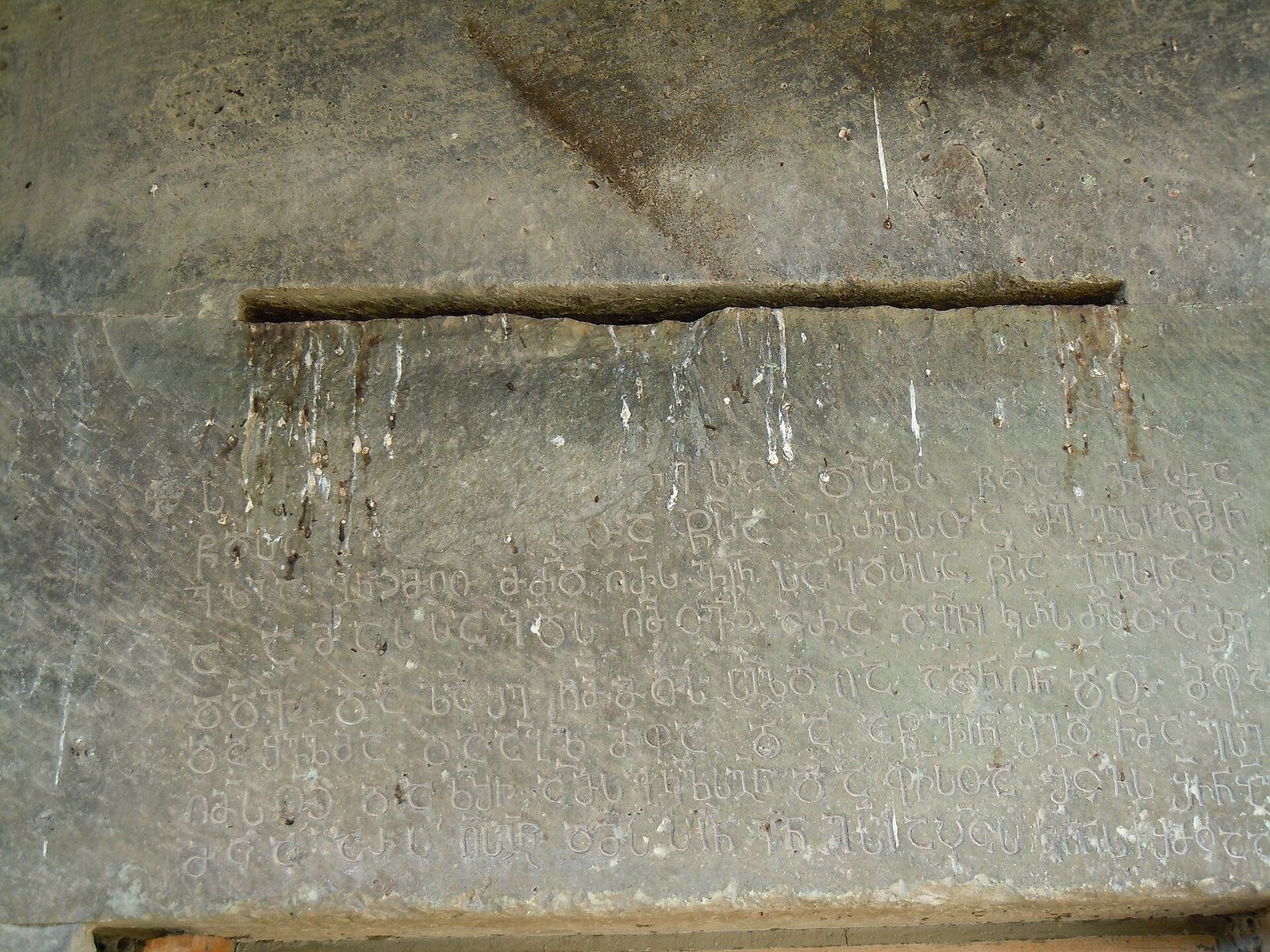
The evidence starts in the 5th century AD. The oldest dated Georgian inscription in Georgia is carved into the walls of Bolnisi Sioni, a stone basilica south of Tbilisi, and it dates to 494 AD. Georgian monks were writing far from home just as early, and some of the oldest Georgian inscriptions of all are in Palestine, from the 5th century, with more at Sinai from 864. Closer to Tbilisi, the inscriptions at Jvari (738) and Ateni Sioni (835) carry the record into the following centuries.
Literature comes from the same century. The Martyrdom of Shushanik, written in the 5th century, is the first Georgian hagiography and the oldest work of Georgian literature most people can name. Early books were written on calfskin, in Asomtavruli and later Nuskhuri, and copied by hand in monasteries.
Mkhedruli took over everyday writing around the 11th century, the century before Shota Rustaveli wrote his epic poem, still Georgia's most loved book. Over the following centuries 5 of the original 38 letters dropped out of use, leaving the 33 of today. The scripts lived through every chapter of Georgian history, from the Iberian kings through the invasions and the Russian empire, and the church kept the two older ones alive through all of it.
Does Georgian have capital letters?
No. Georgian is written with one set of letters, so there is no upper case and lower case, and names, sentence starts and place names all use the same shapes as every other word. For a learner that halves the work: 33 shapes and you're done.
What you will see on signs is Mtavruli, an all-caps style where every letter is drawn the same tall height, like a headline font. Shop signs, banners, book covers and newspaper headlines use it all the time, and it was added to Unicode, the standard behind every phone keyboard, in 2018. It works like a typeface choice: a whole sign is set in Mtavruli, rather than the first letter of a word being capitalized.
The result is that Georgian signs come in two looks. The rolling Mkhedruli with tails above and below, and the blockier, even-height Mtavruli. They are the same letters, so once you can read one, the other takes a few minutes to get used to.
The Georgian alphabet on the UNESCO list
The alphabet is officially heritage twice over. Georgia added it to its own list of national intangible heritage in 2015, and a year later, in 2016, UNESCO put "the living culture of three writing systems of the Georgian alphabet" on its Representative List of the Intangible Cultural Heritage of Humanity, at the committee session in Addis Ababa.
The wording matters. UNESCO listed the three scripts as a living culture, meaning they are still written, taught and used, not just carved into old stones. You can see that for yourself in Tbilisi: Mkhedruli on every shop, Mtavruli on the signs above them, and Asomtavruli on the icons inside any church on the same street.
Georgian Language Day and the 1978 protest
Georgians take the alphabet personally, and 14 April shows why. On 14 April 1978, the Soviet authorities proposed a new constitution for Soviet Georgia that dropped Georgian as the sole state language. Crowds marched down Rustaveli Avenue in protest, with estimates running from 15,000 to nearly 100,000 people, and Moscow backed down and kept Georgian as the state language.
Since 1990, 14 April has been marked as Georgian Language Day, also called Mother Language Day. It's a commemoration rather than a public holiday, so shops, museums and churches open as normal that day.
Where to see the Georgian scripts in and around Tbilisi
You can see all three scripts without leaving the city, and the oldest inscriptions are an easy day out. These are the places I'd go, from a five-minute look to a half-day trip.
| Place | What you see | Where | Time needed |
|---|---|---|---|
| Old Town churches | Asomtavruli on icons, frescoes and carved stone | Old Tbilisi | 10 minutes per church |
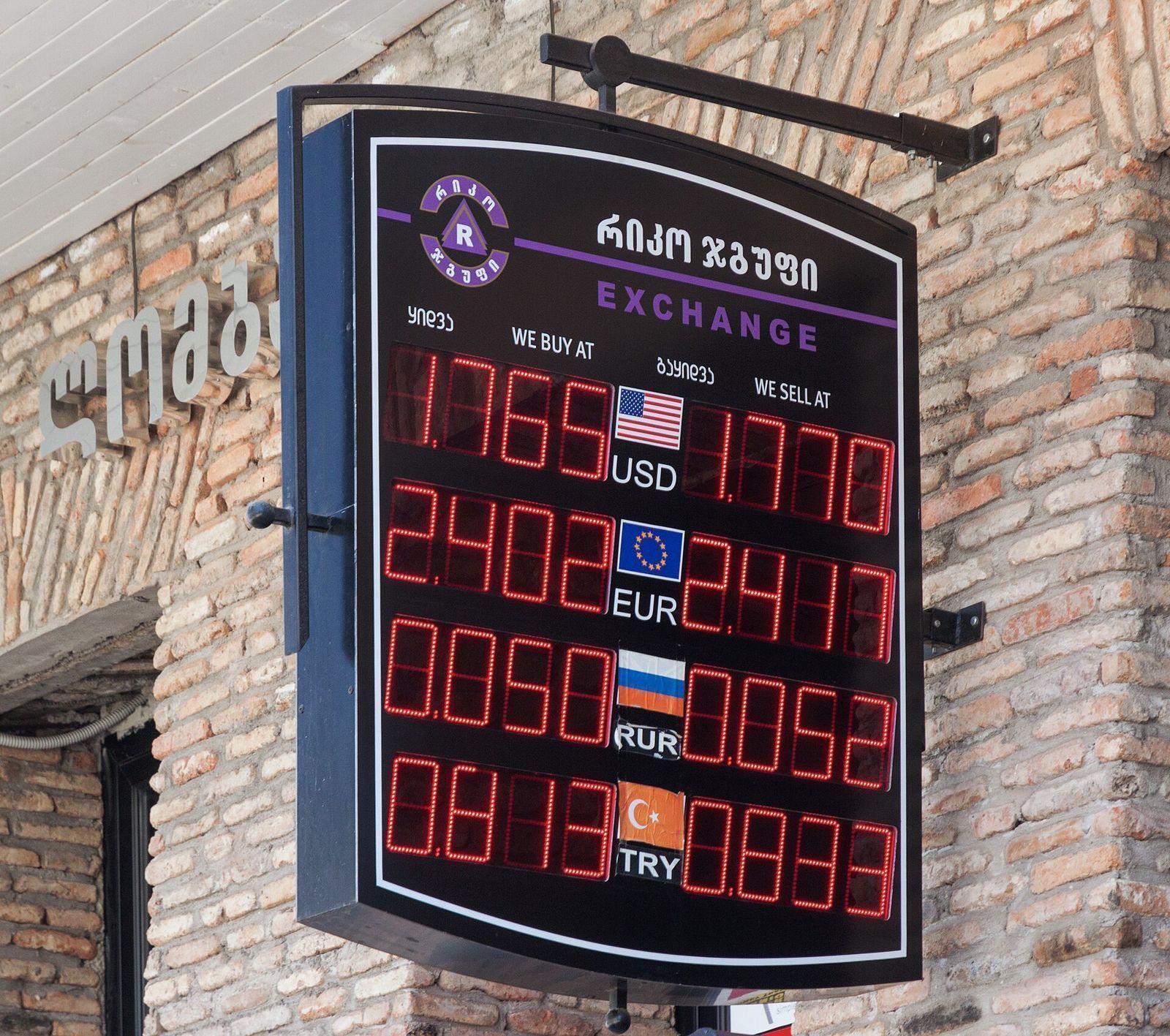
| Street signs, menus and shop fronts | Mkhedruli and Mtavruli side by side | Everywhere in the city | Every day of your trip |
| Georgian National Centre of Manuscripts | Old manuscripts in changing exhibitions | Aleksidze Street 1/3, Saburtalo | 1 hour |
| Jvari Monastery | Early inscriptions on the hilltop church | Above Mtskheta | Half a day with Mtskheta |
| Ateni Sioni | Inscriptions from 835 | South of Gori | A detour on a Gori trip |
| Bolnisi Sioni | The oldest dated Georgian inscription in Georgia, 494 AD | Bolnisi, south of Tbilisi | Half a day by car |
Old Town churches. The easiest place to meet Asomtavruli is inside any church in Old Tbilisi. Look at the icons and the painted walls: the saints' names and the short lines around them are in the old rounded letters, often abbreviated to a few letters. Pick a few from the city's oldest churches, cover your shoulders and knees, and look up.
The Georgian National Centre of Manuscripts. This is the archive for the country's old books and documents, in Saburtalo on Aleksidze Street. Its exhibition hall runs changing shows that have included the oldest written fragments in the collection, from the 5th to 8th centuries. It opens Tuesday to Sunday, 11:00 to 17:00, and it's the one place in the city where you see the scripts on parchment rather than stone.
Jvari, Ateni Sioni and Bolnisi Sioni. These are the inscription churches. Jvari, on its hill above Mtskheta, slots into the classic Mtskheta day trip and is the one I'd prioritize because you get the view as well. Ateni Sioni sits in a valley south of Gori, a short detour if you're already doing Gori and Uplistsikhe. Bolnisi Sioni is the pilgrimage for script fans: the 494 AD inscription is the oldest dated Georgian writing in the country, and the plain stone basilica around it is older than almost anything in Tbilisi.
Souvenirs. The alphabet is also Tbilisi's favorite souvenir motif. Letters turn up on magnets, posters, tote bags, mugs and silver jewelry, and an alphabet poster is one of the flattest, lightest Georgian souvenirs to pack. A small silver pendant with your initial in Mkhedruli is my favorite of the lot.
Is the Georgian alphabet hard to learn?
No. The letters look intimidating for about a day, and then they turn into one of the easiest scripts in the world to read aloud, because every letter has one sound and there are no capitals, silent letters or spelling traps. Most people who sit down with a table like the one above can sound out street signs within a few evenings. The hard part is the pronunciation of a few sounds, and the language itself, which is a different project altogether.
My approach: learn the vowels first, then the letters in your hotel's street name, then read every sign you pass. Tbilisi gives you constant practice. These are the words I'd start with, because you see them every day.
| Georgian | Sounds like | Meaning | Where you see it |
|---|---|---|---|
| თბილისი | Tbilisi | Tbilisi | Buses, trains, maps |
| საქართველო | Sakartvelo | Georgia | Passports, stamps, banners |
| ქუჩა | kucha | Street | Every street sign |
| გამზირი | gamziri | Avenue | Avenue signs, like Rustaveli's |
| მეტრო | metro | Metro | Station entrances |
| ბანკი | banki | Bank | Bank branches and ATMs |
| ღვინო | ghvino | Wine | Wine bars and menus |
| ყავა | qava | Coffee | Cafe signs and menus |
| ჩაი | chai | Tea | Menus |
| ლუდი | ludi | Beer | Bar signs and menus |
| ხაჭაპური | khachapuri | Cheese bread | Bakeries and menus |
The menu words are the most satisfying, because you get a reward right away. Spelling out ხაჭაპური letter by letter and landing on khachapuri is the moment the alphabet clicks for most people.
Reading Georgian and speaking it are separate goals. A dozen useful Georgian phrases like hello and thank you win more smiles than reading ever will, and knowing the letters means you can match the word on your phone to the word on the sign.
Key takeaways
- The Georgian alphabet has 33 letters, 5 of them vowels, and each letter always makes the same sound.
- Mkhedruli is the everyday script; Asomtavruli and Nuskhuri survive mainly on icons, inscriptions and church books.
- There are no capital letters, and Mtavruli is an all-caps style for signs and headlines.
- The oldest dated Georgian inscription in Georgia is at Bolnisi Sioni, from 494 AD, and UNESCO listed the three scripts in 2016.
- You can learn to read the letters in a few evenings and practice on every street sign, menu and metro station in Tbilisi.
Frequently asked questions
How many letters are in the Georgian alphabet?
The modern Georgian alphabet has 33 letters, 5 vowels and 28 consonants. The original alphabet had 38 letters, and 5 fell out of use over the centuries.
Does the Georgian alphabet have capital letters?
No, Georgian uses one set of letters with no upper and lower case. Signs and headlines often use Mtavruli, an all-caps style where every letter is the same height, but it applies to a whole word or sign, never to the first letter of a name.
How old is the Georgian alphabet?
The oldest surviving Georgian writing dates from the 5th century AD, and the oldest dated inscription in Georgia, at Bolnisi Sioni church, is from 494 AD. Georgian legend credits King Parnavaz with the first script in the 3rd century BC, but nothing that old survives.
What is Mkhedruli?
Mkhedruli is the script Georgians use today for everything from street signs to text messages. Its name comes from mkhedari, "horseman" or "rider", and it came into everyday use around the 11th century, growing out of the older Nuskhuri script.
Is the Georgian alphabet hard to learn?
No, the alphabet is the easy part of Georgian. Each letter makes one sound and there are no capitals or silent letters, so most people can read signs aloud after a few evenings of practice, even if a handful of sounds take longer to pronounce.
Is Georgian written left to right?
Yes, Georgian is written and read from left to right, like English. The letters sit on a middle band with tails reaching above and below it, which gives Georgian text its rolling look.
Is the Georgian alphabet a UNESCO heritage?
Yes. UNESCO added the living culture of the three Georgian writing systems, Asomtavruli, Nuskhuri and Mkhedruli, to its Representative List of Intangible Cultural Heritage in 2016, a year after Georgia put it on its own national list.
Do other languages use the Georgian alphabet?
Yes, Svan and Mingrelian, two related languages spoken in Svaneti and Samegrelo, are written with the same Georgian letters. In Tbilisi itself, everything you read is Georgian in Mkhedruli.
Georgian Culture and Traditions: A Visitor's Guide to Customs, Feasts, Faith and Song
Georgian culture is known for feasts, wine and song. Here's what visitors should know about its customs and traditions.
Read the guide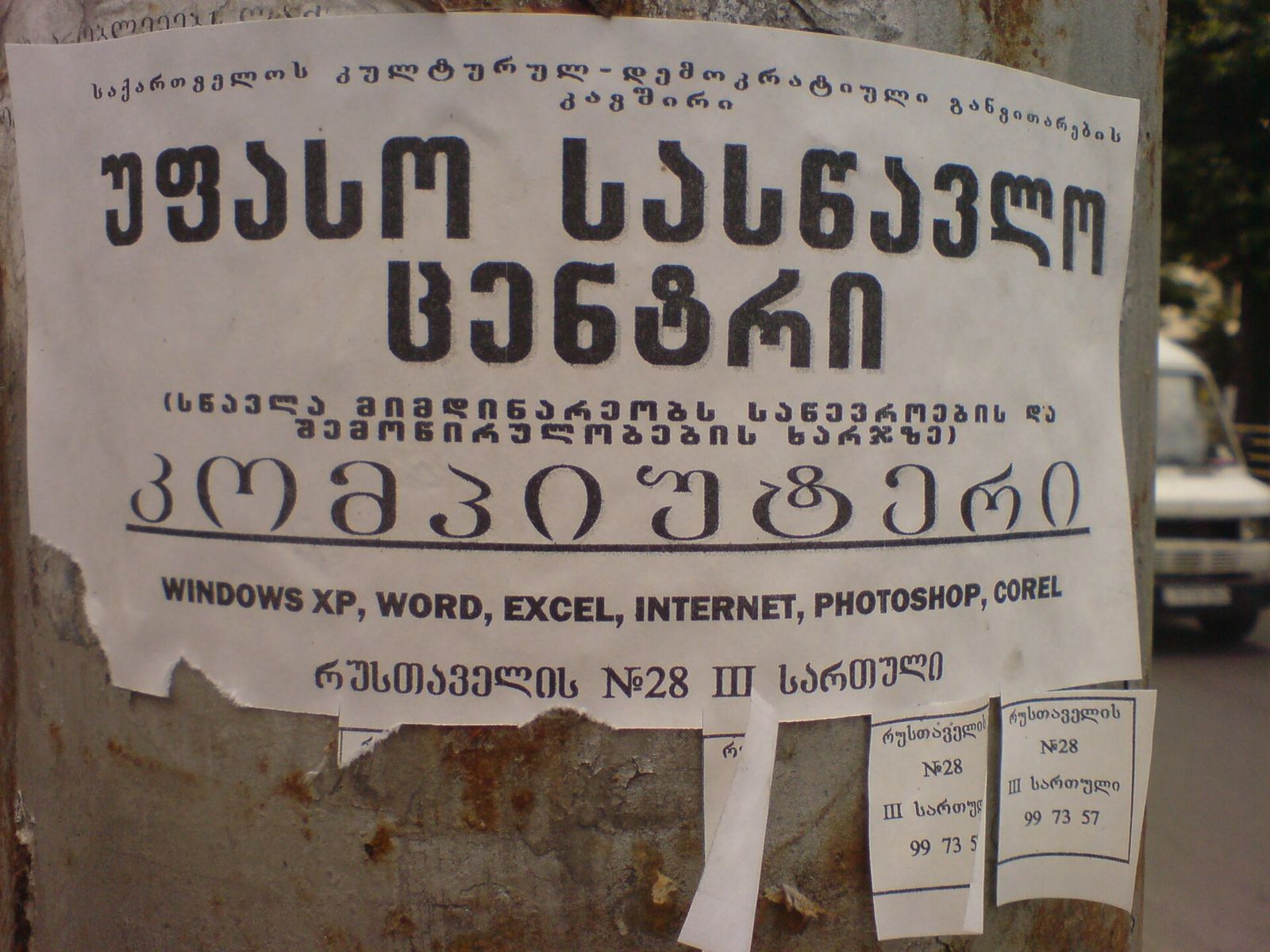
Basic Georgian Phrases for Travelers, with Pronunciation
Georgian has its own alphabet and a hello that means victory. Here are the phrases to learn and how to say them.
Read the guide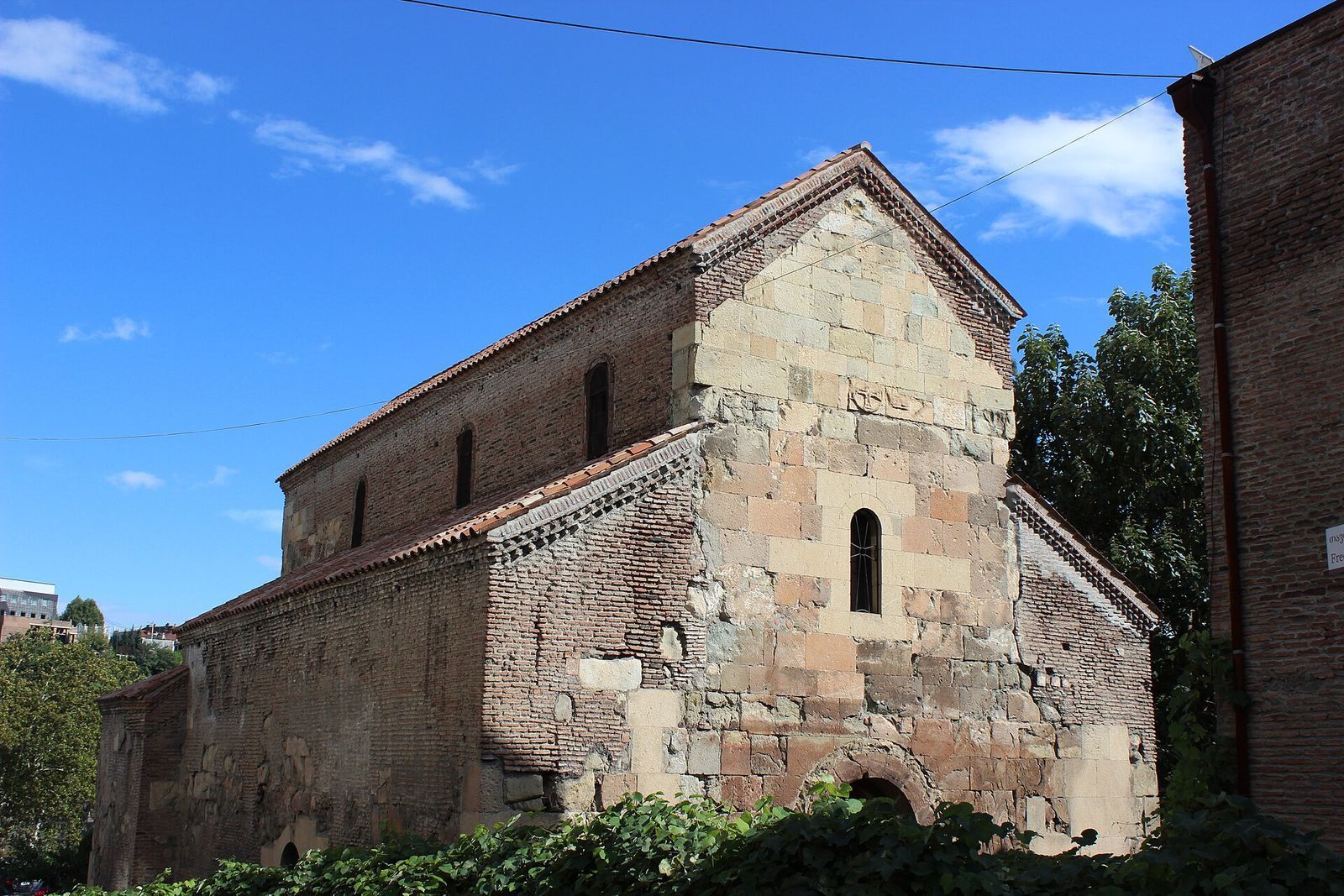
A Short History of Georgia and Tbilisi, From the Falcon Legend to Today
Tbilisi has been burned and rebuilt for 1,500 years. Here is Georgia's story in short, and where to see it today.
Read the guide