Narikala Fortress, Tbilisi: Getting Up, What Is Open and When to Go
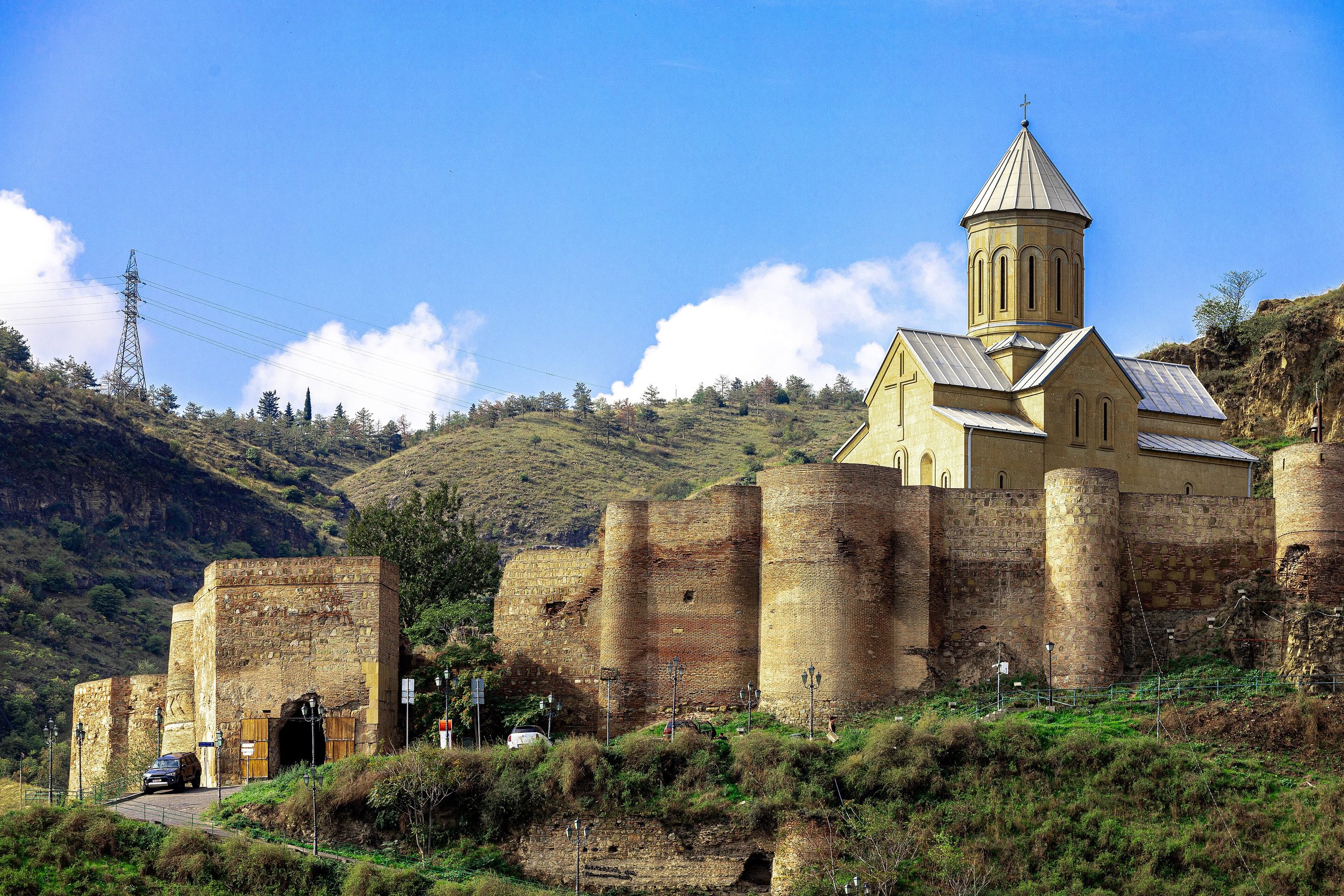
Narikala is the ruined fortress on the ridge above Old Tbilisi, the line of walls you see from every bridge and balcony in the center. It is free, the cable car gets you to the top in about 2 minutes, and the view over the river and the bath domes is my favorite in the city. Here's what you need to know about what is open in 2026, the ways up and down, and when to go.
Is Narikala Fortress open in 2026?
Partly. The upper fortress, with the towers and the highest stretch of wall on the rocky crest, has been behind construction fencing since late 2023, and there is still no reopening date as of October 2026. Everything around it is open: the cable car, the ridge path along the outside of the walls, the lower section by St Nicholas Church, the viewing terraces and the Mother of Georgia statue a short walk along the ridge.
So a Narikala visit in 2026 is a ridge walk with a fortress beside it, rather than a scramble along the ramparts. I still think it's the best hour you can spend in Old Tbilisi, because the view never depended on the towers.
| Part of Narikala | Status, October 2026 | Cost |
|---|---|---|
| Rike Park cable car | Running daily | 2.50 GEL one way |
| Ridge path and viewing terraces | Open around the clock | Free |
| Lower walls and St Nicholas Church | Open; the church in the daytime | Free |
| Upper walls and towers | Fenced off since late 2023, no reopening date | Closed |
| Mother of Georgia statue | Open, about 5 minutes along the ridge | Free |
| National Botanical Garden, behind the fortress | Open daily | 4 GEL |
The fencing changes what you photograph more than what you see. You still stand right under the walls, you still look down on the whole Old Town, and the fortress still looks complete from the river.
A short history of Narikala
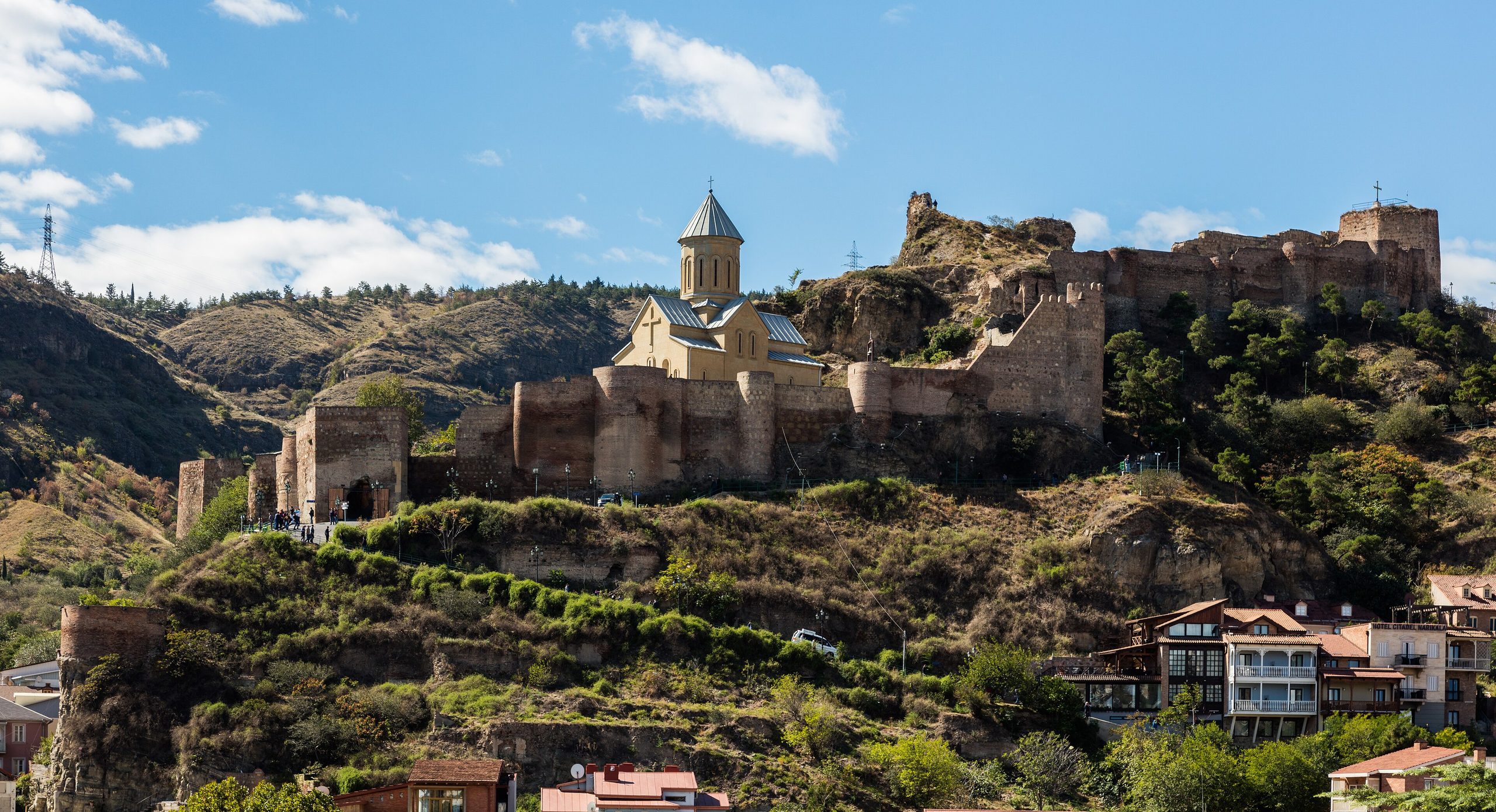
Narikala is older than almost everything around it. A citadel stood on this ridge by the 4th century, when Persian rulers held the town, and it went by the name Shuris-tsikhe, roughly "the fortress of envy". Arab emirs extended the walls in the 7th and 8th centuries, Georgian kings rebuilt and added to them for centuries after that, and the name used today is usually traced to Narin Qala, "little fortress".
The walls carry a layer from almost every power that held Tbilisi, from the Persians and Arabs to the Mongols and the Russians, and an hour along them makes the city's long run of sieges and rebuilds easier to picture than most chapters of Georgian history.
Most of what stood inside the walls was lost in 1827. The Russian army kept its ammunition in the fortress, and an explosion tore through the inner buildings; whether an accident or an earthquake set it off depends on who tells the story. The outer walls survived, which is why the silhouette from the river still reads as a whole fortress.
The one building inside that looks new is new. St Nicholas Church was rebuilt in the 1990s on the site of a much older church, and its pale stone stands out against the brown walls from anywhere in the Old Town.
What to see at Narikala
The visit has four parts, all within a 10-minute walk of the cable car's top station: the lower walls, the church, the terraces and the statue at the far end of the ridge.
The walls and the lower fortress
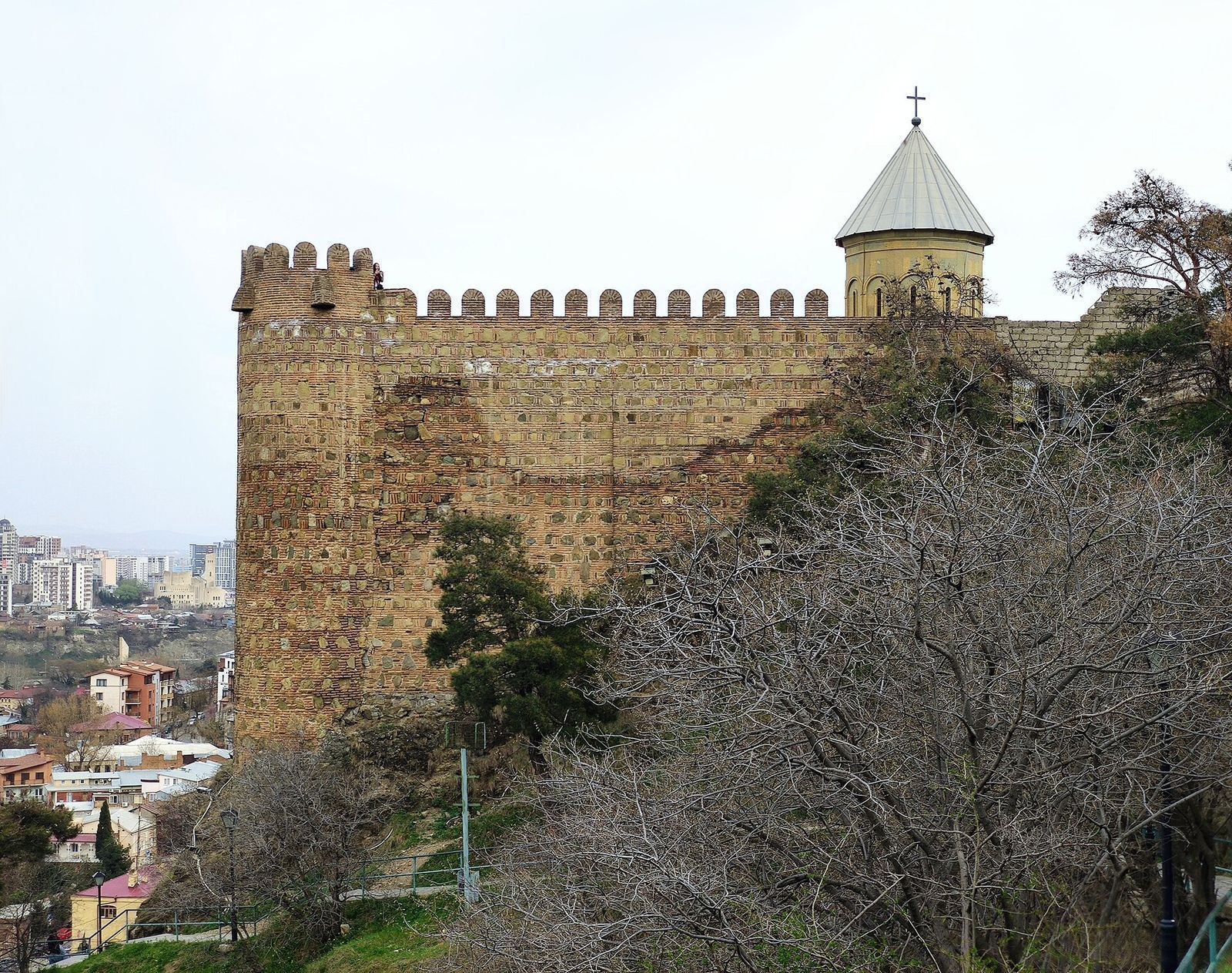
The fortress runs along the ridge in two sections, a lower one above the baths and an upper one on the rocky crest. From the ridge path you walk right under the lower walls and their round towers, and in places you can step through the old gateways onto the terraces inside. It's a ruin, with uneven stone, steep drops and very few railings, so watch your footing and keep children close.
St Nicholas Church
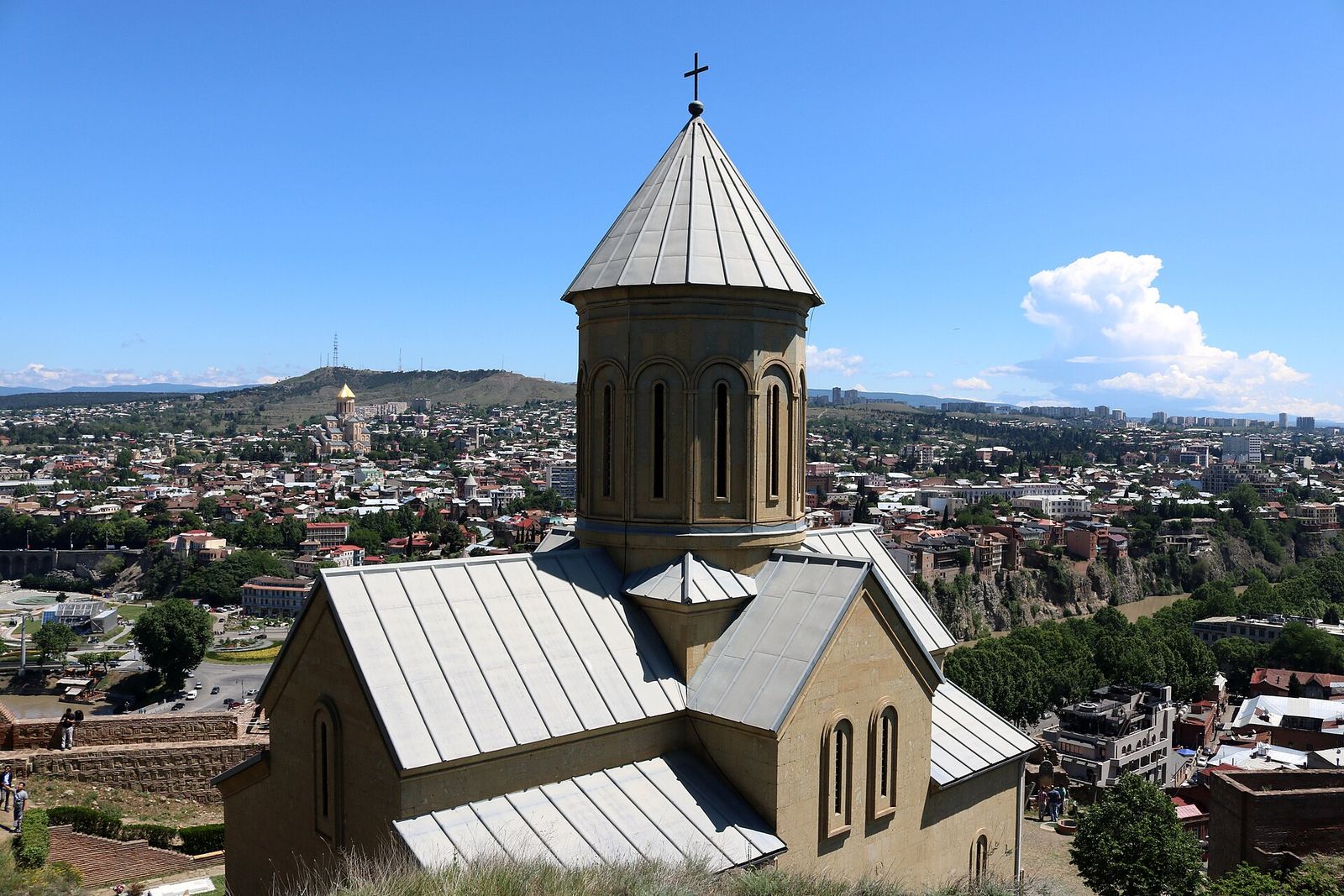
St Nicholas sits inside the lower walls, a short walk down from the cable car station. From outside it looks plain; inside, the walls are painted from floor to dome, and it is a working church where people come to light candles and pray. It is usually open in the daytime, roughly 11:00 to 18:00, and it's quiet enough that a 10-minute stop feels like a pause in the middle of the climb.
The viewing terraces and the view
This is why you came. From the terraces you look straight down on the brick domes of Abanotubani, across the Kura river to Metekhi Church on its cliff, the glass curve of the Bridge of Peace and the gold dome of Sameba cathedral on the hill behind. My favorite spot is the terrace just below St Nicholas, where the church dome sits in the corner of your photo and the Old Town falls away under it.
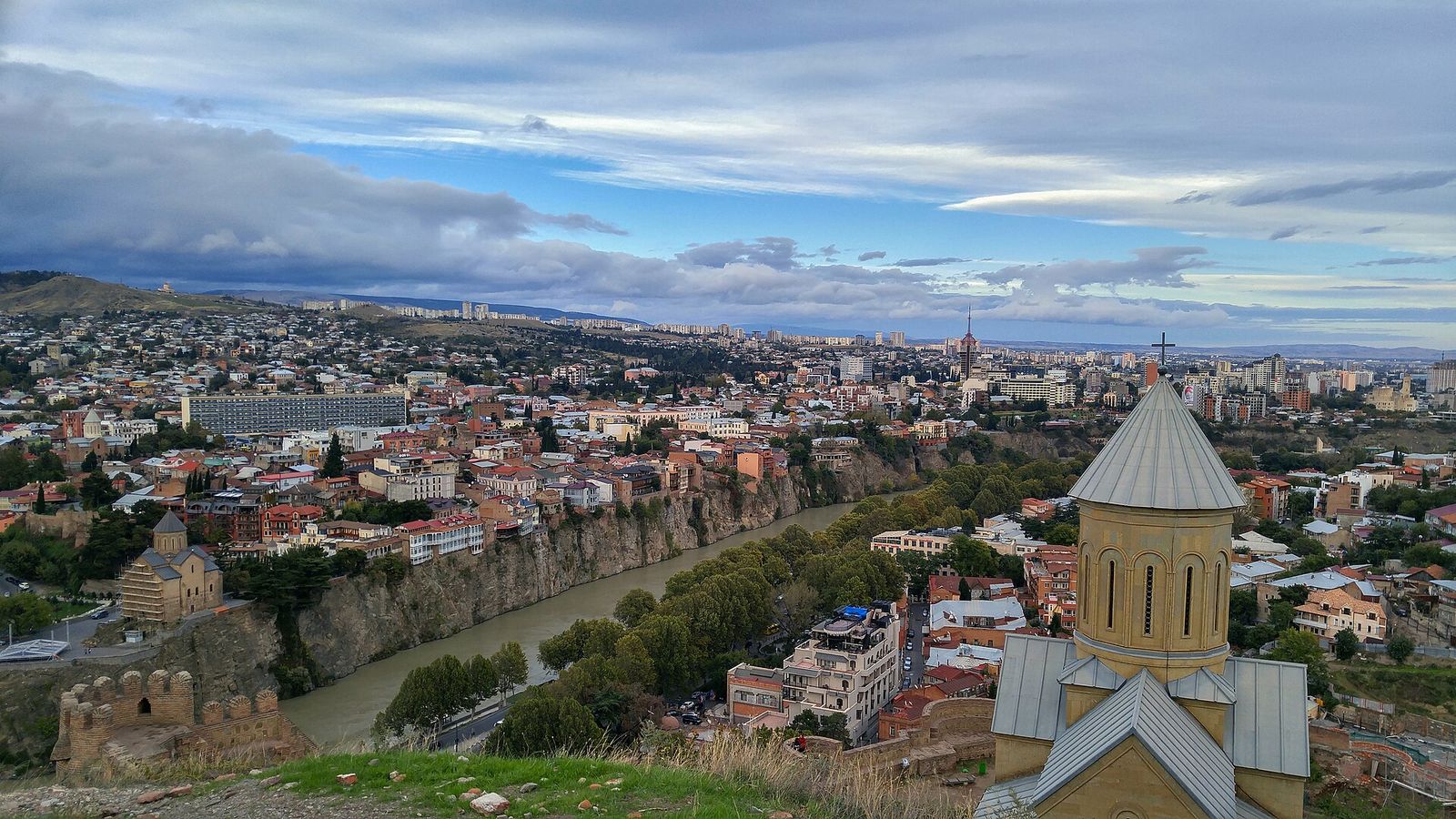
Narikala tops my list of Tbilisi viewpoints for one reason: it is the only one where the Old Town is right under your feet rather than across a valley. You can pick out the lanes you walked that morning, the bathhouse you booked and the bridge you'll cross for dinner.
The Mother of Georgia statue
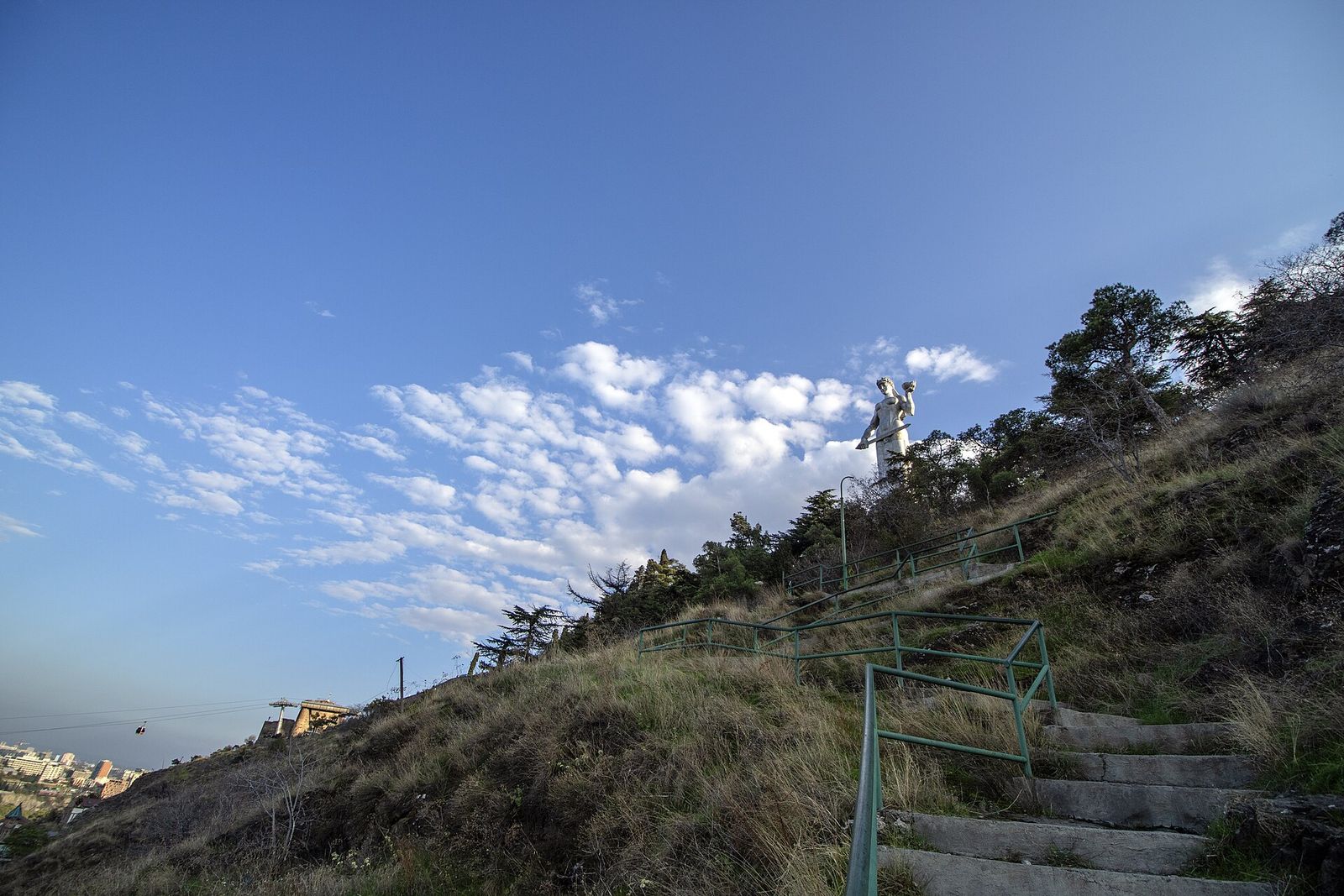
Follow the ridge path away from the river for about 5 minutes and you reach Kartlis Deda, the Mother of Georgia statue: a 20 m aluminum woman first put up in 1958, holding a bowl of wine for friends and a sword for enemies. It's how Tbilisi likes to describe itself, and up close she is bigger and plainer than she looks from the river. The path past her keeps going toward Sololaki, which makes her the natural turning point or the start of the walk down.
How to get to Narikala
There are three good ways up, and they all land on the same ridge. I'd ride the cable car up and walk down, which keeps the steep part downhill and leaves you at the baths or in Sololaki rather than back where you started.
| Way up | Starts at | Time | Cost | Best for |
|---|---|---|---|---|
| Cable car | Rike Park, by the Bridge of Peace | About 2 minutes in the air | 2.50 GEL one way | Hot days, kids, tired legs |
| Walk from Abanotubani | Meidan Square, up Orbiri Street | About 20 minutes | Free | The shortest climb from the Old Town |
| Walk from Sololaki | Asatiani Street, up the Betlemi stairs | About 20 minutes | Free | A quieter route past Betlemi Church |
The cable car from Rike Park
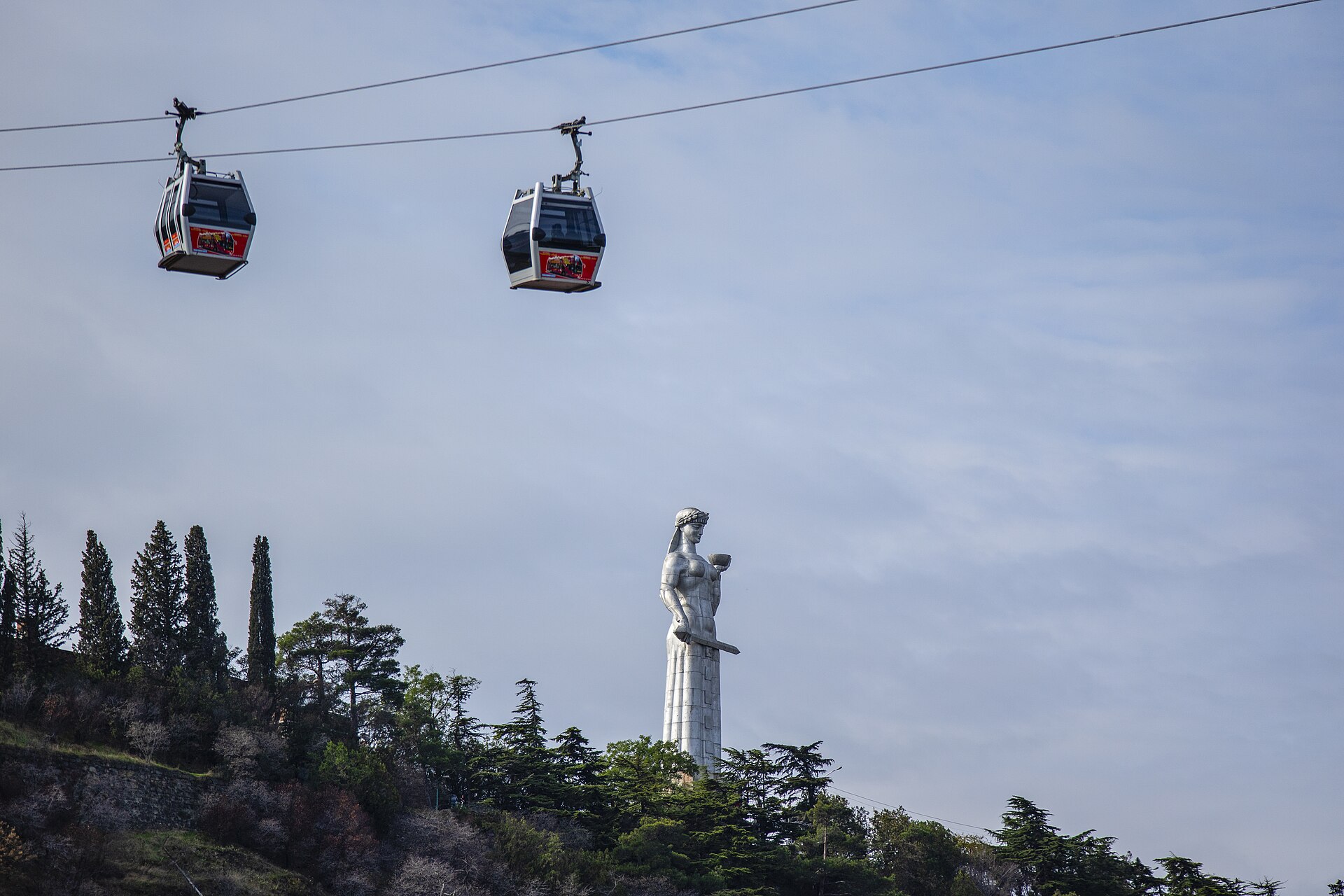
The cable car leaves from Rike Park on the left bank of the Kura, a few minutes' walk across the Bridge of Peace from the Old Town. The cabins run 686 m over the river and the bath district to a top station on the ridge, a ride of a little over 2 minutes. A one-way ride costs 2.50 GEL, paid by tapping a Metromoney card at the gate, and it runs daily from about 10:00 to 22:00, later on summer weekends.
It is one of several cable cars in Tbilisi, and the only one that crosses a river and an old town in the same ride. Grab a window spot: the cabin passes right over the domes of Abanotubani on the way up.
Walking up from Abanotubani
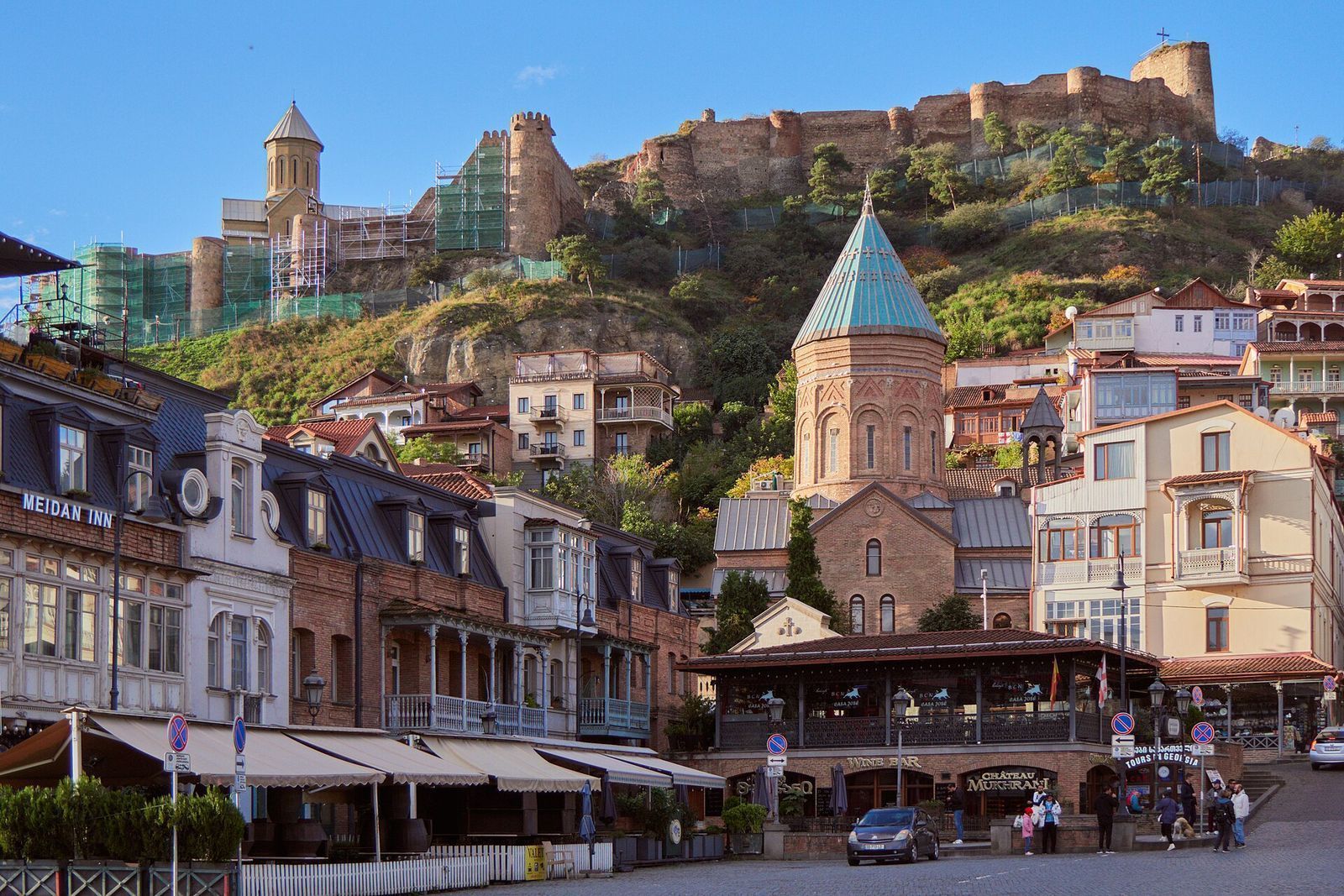
From Meidan Square at the bottom of the Old Town, walk up Orbiri Street with the bathhouse domes below you, past the minaret of the Jumah Mosque, and keep climbing as the lane turns into stairs and switchbacks. It joins the ridge path just below the walls. It's steep and paved, about 20 minutes at a steady pace, and in July and August I'd only do it before 10:00 or in the early evening.
There's a second, steeper staircase that climbs straight up behind the blue-tiled Orbeliani bathhouse, Chreli Abano. It's shorter and harder on the legs, and it's the one I'd use going down rather than up.
Walking up from Sololaki
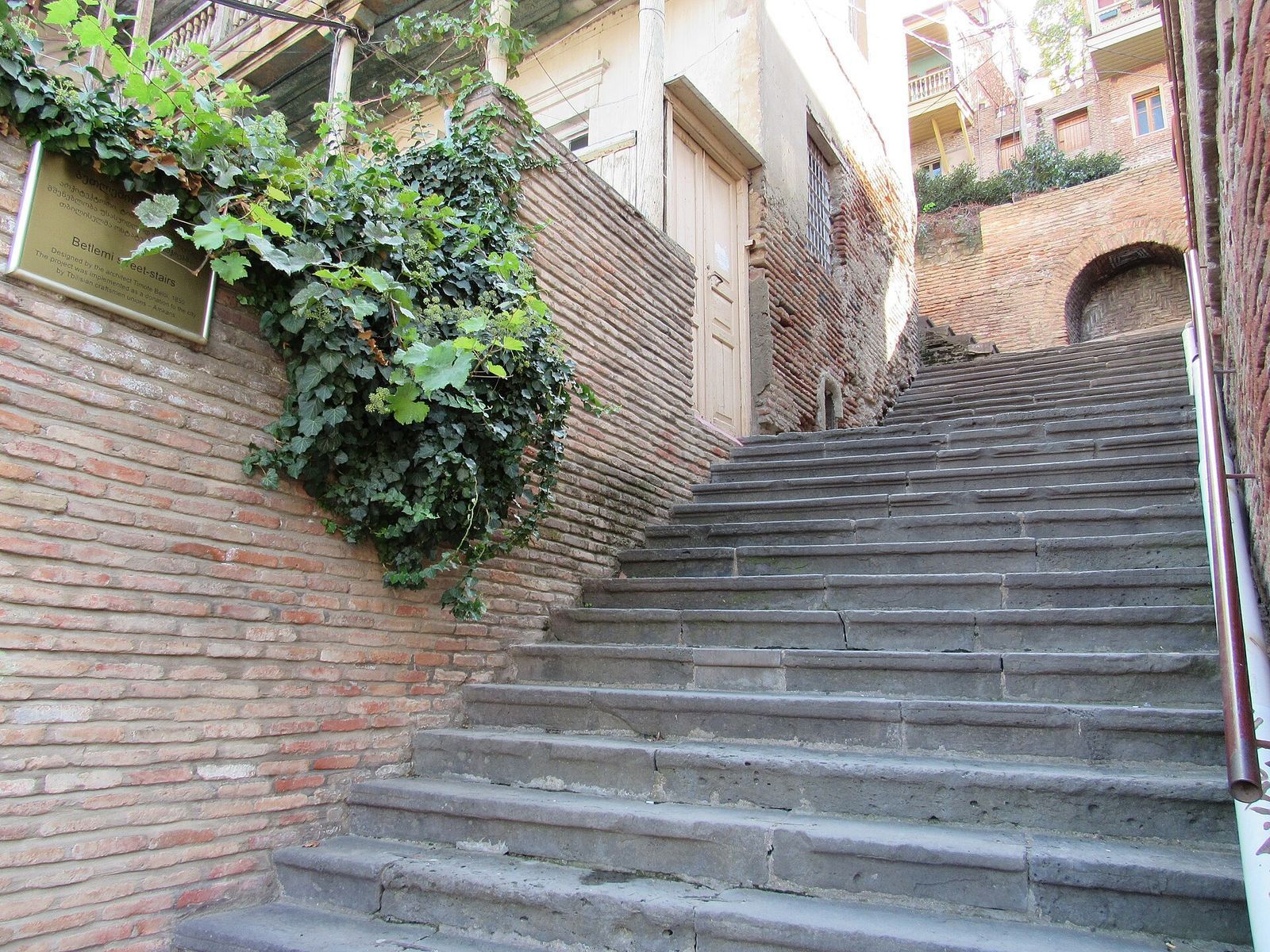
From Lado Asatiani Street in Sololaki, climb Betlemi Street and its 120 steps to Betlemi Church, then follow the path up through the trees to the Mother of Georgia and along the ridge to the fortress. It takes about 20 minutes, it gets more shade than the Abanotubani side, and you pass old Sololaki houses with carved wooden balconies on the way. This is the route I take on a hot afternoon.
Walking down from Narikala
Coming down is where Narikala earns its time, because each side of the ridge drops you somewhere different.
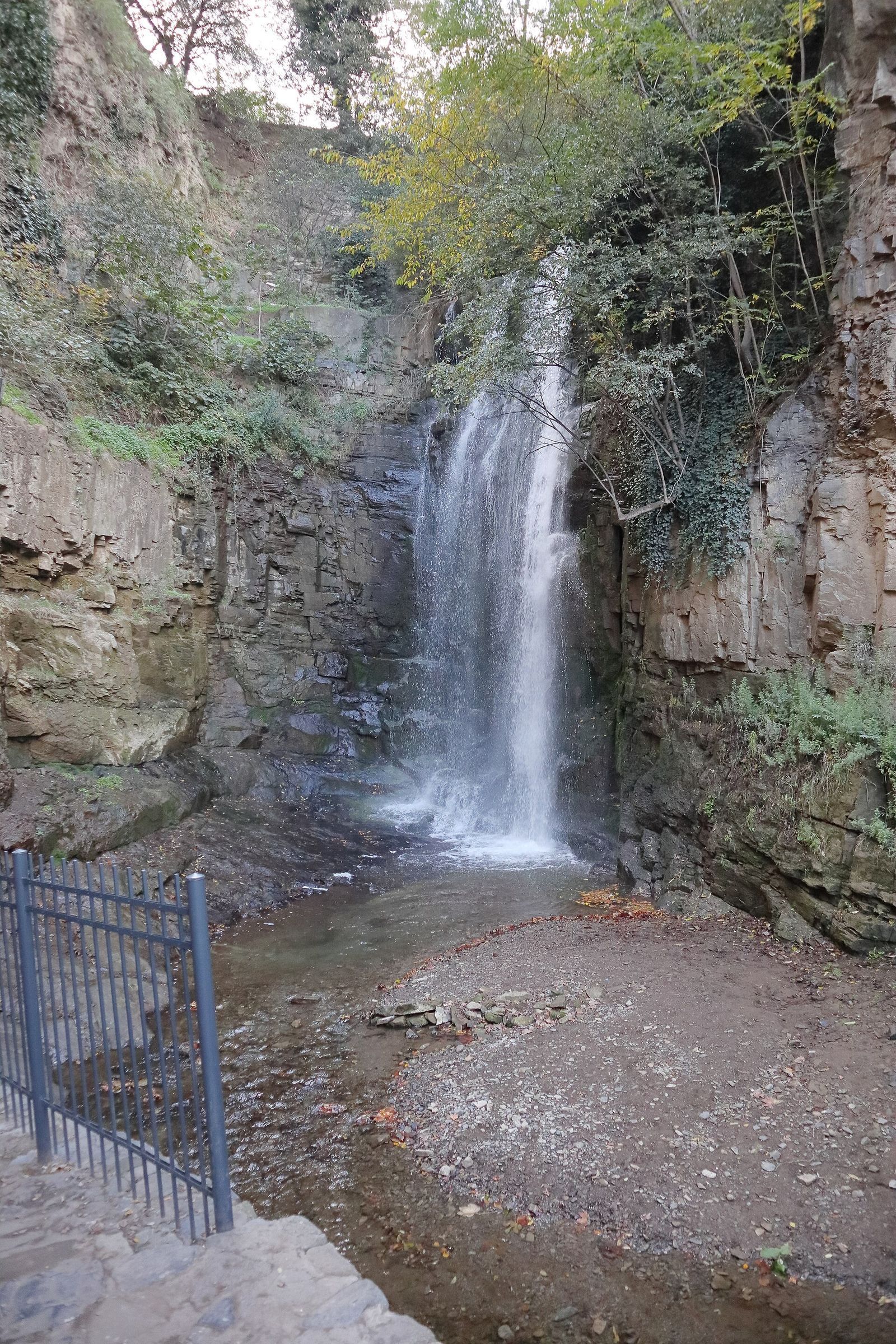
To the waterfall. The paths and stairs on the river side come down into Abanotubani, quicker than the climb. At the bottom, follow the walkway into the gorge behind the bathhouses to the small Leghvtakhevi waterfall, about 10 minutes on foot.
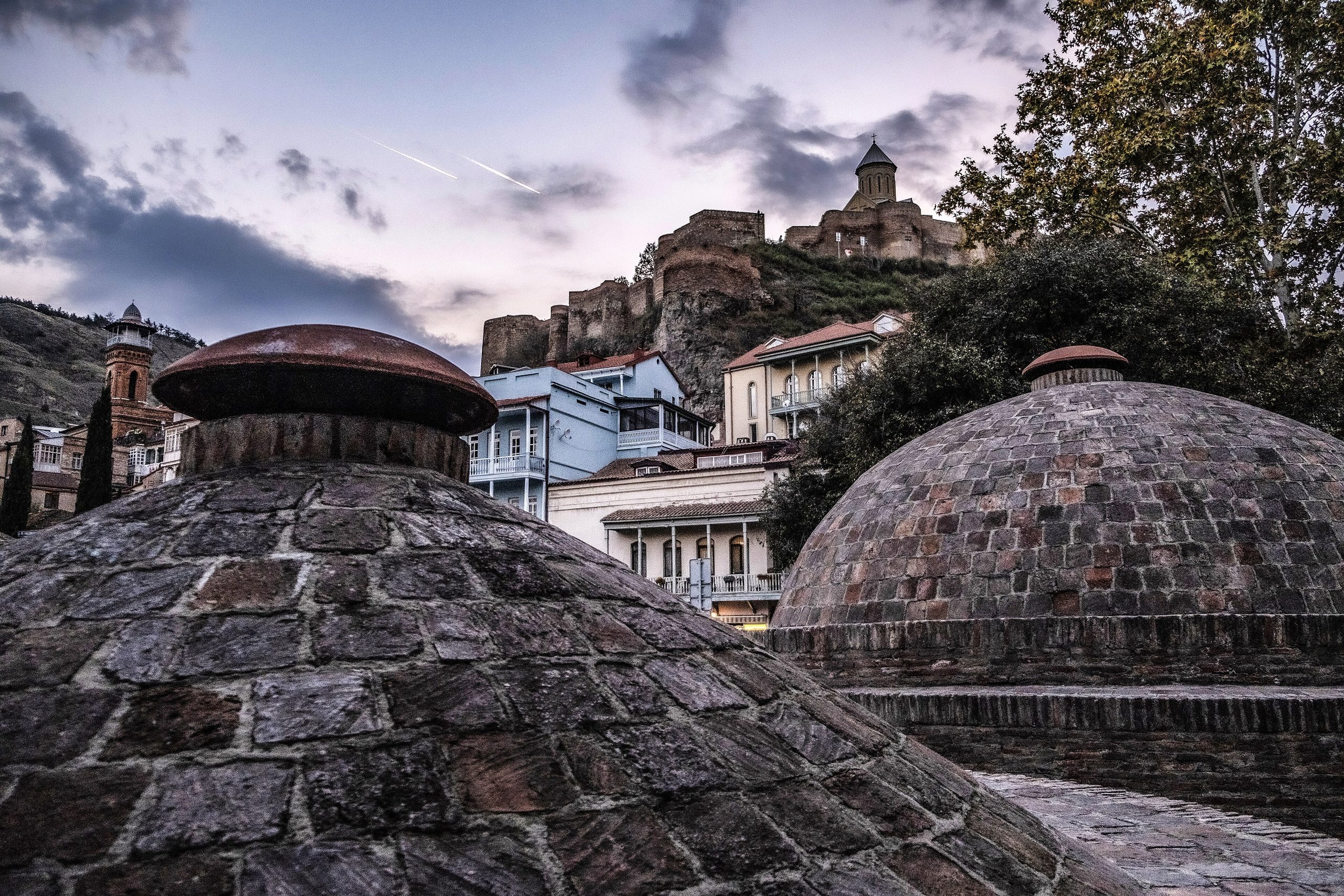
To the baths. Back at the bathhouses, book an hour in the sulfur baths, where private rooms start at 130 GEL an hour. After the climb and the walk down, it's the best way to end the day.
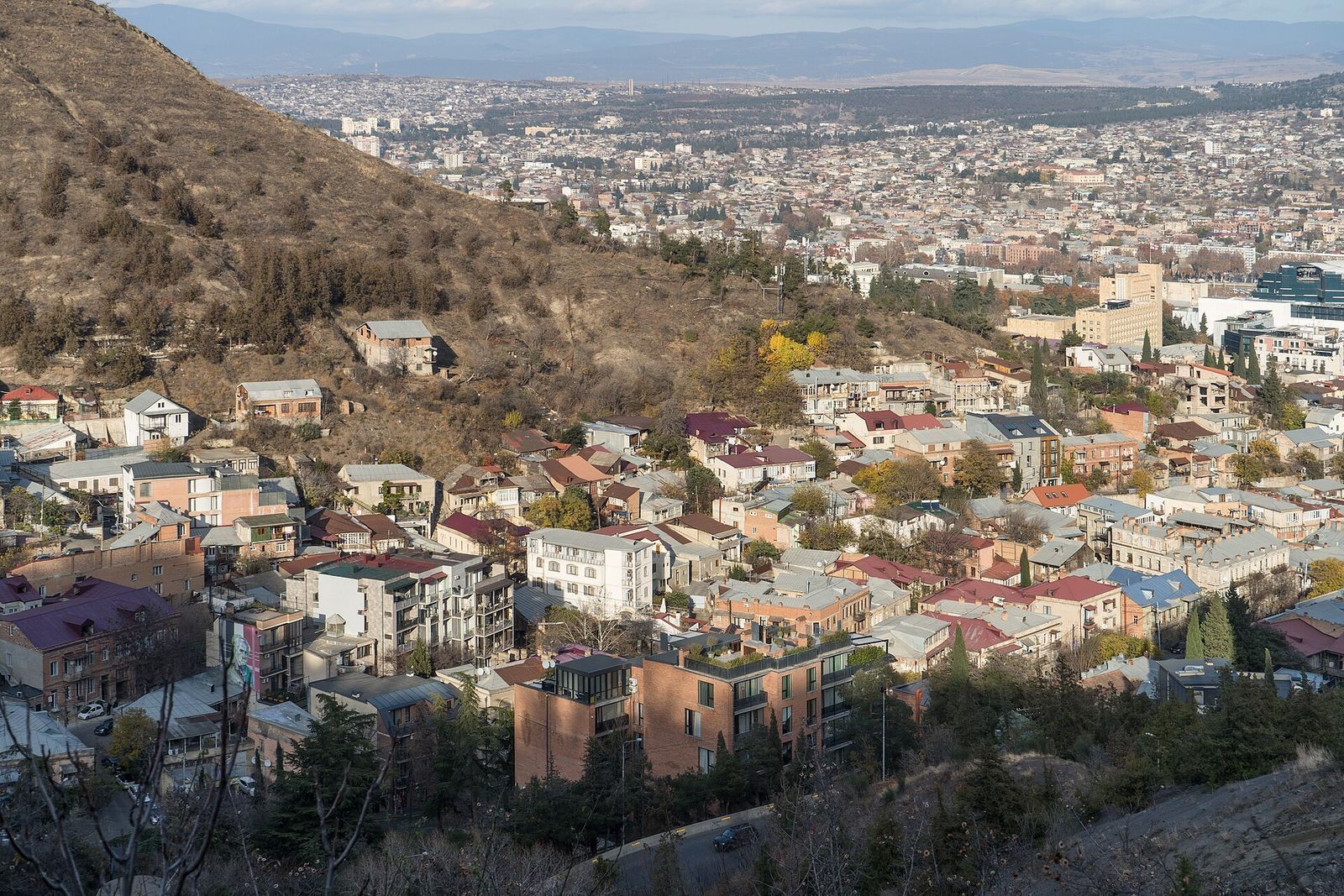
To Sololaki. Walk past the Mother of Georgia and take the Betlemi stairs down into Sololaki's lanes, which puts you a short walk from the cafes and wine bars around Asatiani and Leselidze streets.
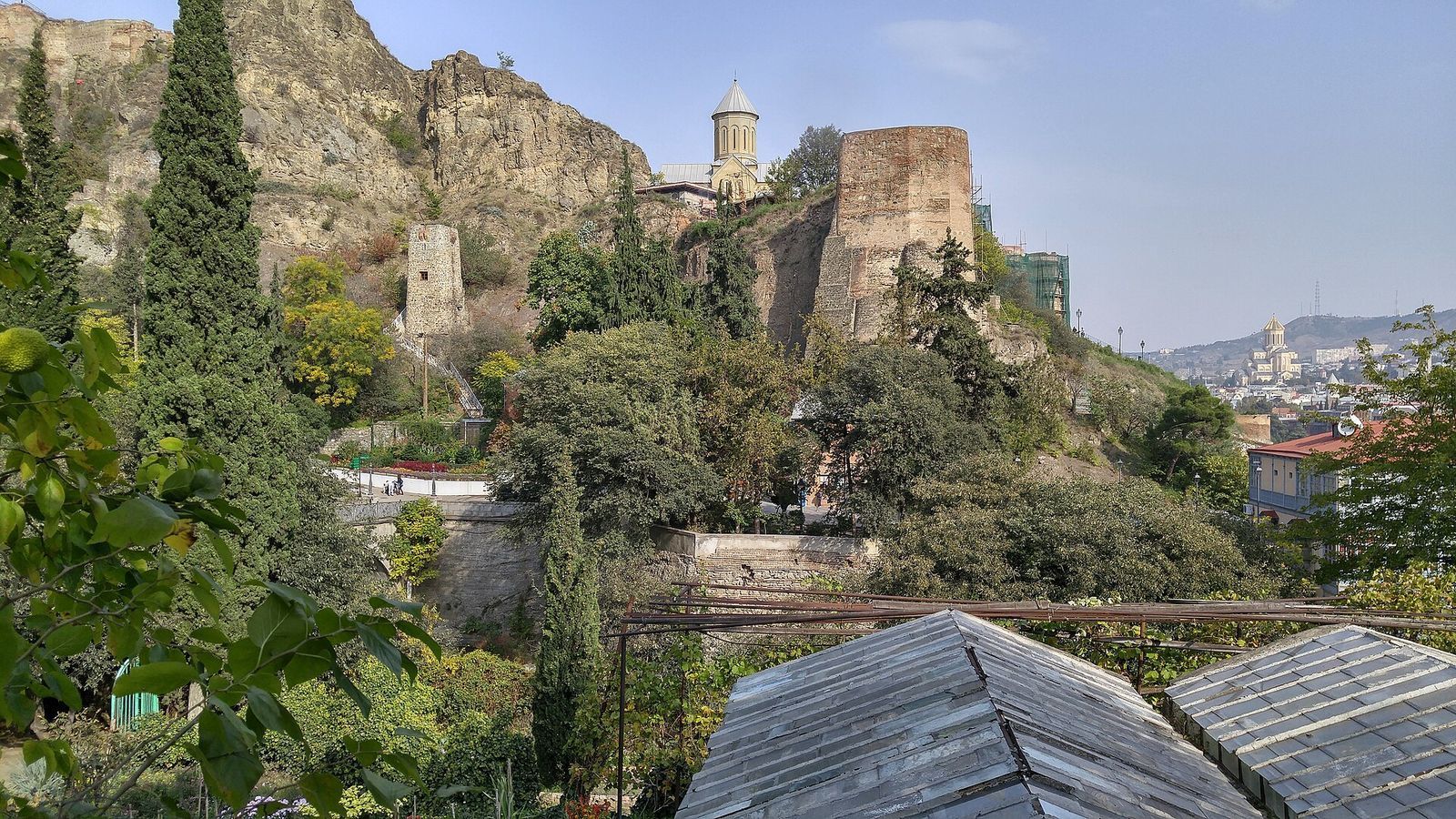
Into the Botanical Garden. The National Botanical Garden fills the gorge on the far side of the ridge, with an entrance near the fortress. Entry is 4 GEL and it closes at about 17:30, so do it first if you're coming up after lunch.
My half-day loop puts all of it together. It's about 3 hours with the bath, or under 2 without it.
| Stop | What you do there | Time |
|---|---|---|
| Rike Park cable car | The easy way up, over the river and the domes | About 2 minutes in the air |
| Terraces and St Nicholas Church | The view, the church, the lower walls | 45 minutes |
| Mother of Georgia | Along the ridge and back | 20 minutes |
| Walk down to Abanotubani | Paths and stairs on the river side | 15 minutes |
| Leghvtakhevi waterfall | Into the gorge behind the bathhouses and back | 20 minutes |
| Sulfur bath | An hour in a private room | 1 hour |
Best time to visit Narikala
Go in the hour before sunset. The light comes in low over Sololaki, the river turns gold, and once the sun drops the walls light up and the Bridge of Peace starts glowing below you. It is the busiest hour on the ridge, and still the one I'd pick.
Early morning is the other good slot: cooler, softer light and almost nobody on the terraces. The cable car starts at about 10:00, so a morning visit means walking up, which is no hardship before the heat.
Night is underrated. The walls are floodlit, the terraces empty out after the sunset crowd leaves, and the Old Town lights spread out under you. Walk down on the main paths to Abanotubani rather than the steeper side tracks.
By season, spring and autumn are the best time to visit Tbilisi, and Narikala is a big reason: the terraces have no shade, and on a July afternoon the ridge can pass 35°C. Winter is quiet and clear, and a cold, bright day gives the sharpest view of the year.
The best views of Narikala from below
Narikala looks its best from a distance, especially at night when the walls are lit. These are the spots I'd use to see the fortress rather than the view from it.
| Spot | Side of the river | Why go |
|---|---|---|
| Bridge of Peace and Rike Park | Both | The fortress with the cable cabins sliding over the river, best at dusk |
| Metekhi Church | Left bank | The classic frame: the river cliff, the Old Town and Narikala in one shot |
| Queen Darejan Palace balcony | Left bank | A high, side-on view across the Old Town to the walls |
| Abanotubani bath domes | Right bank | The walls straight above the brick domes, the closest look from below |
| Tabori Monastery | Right bank, higher up | A quiet look across at the fortress, about 45 minutes on foot from Chreli Abano |
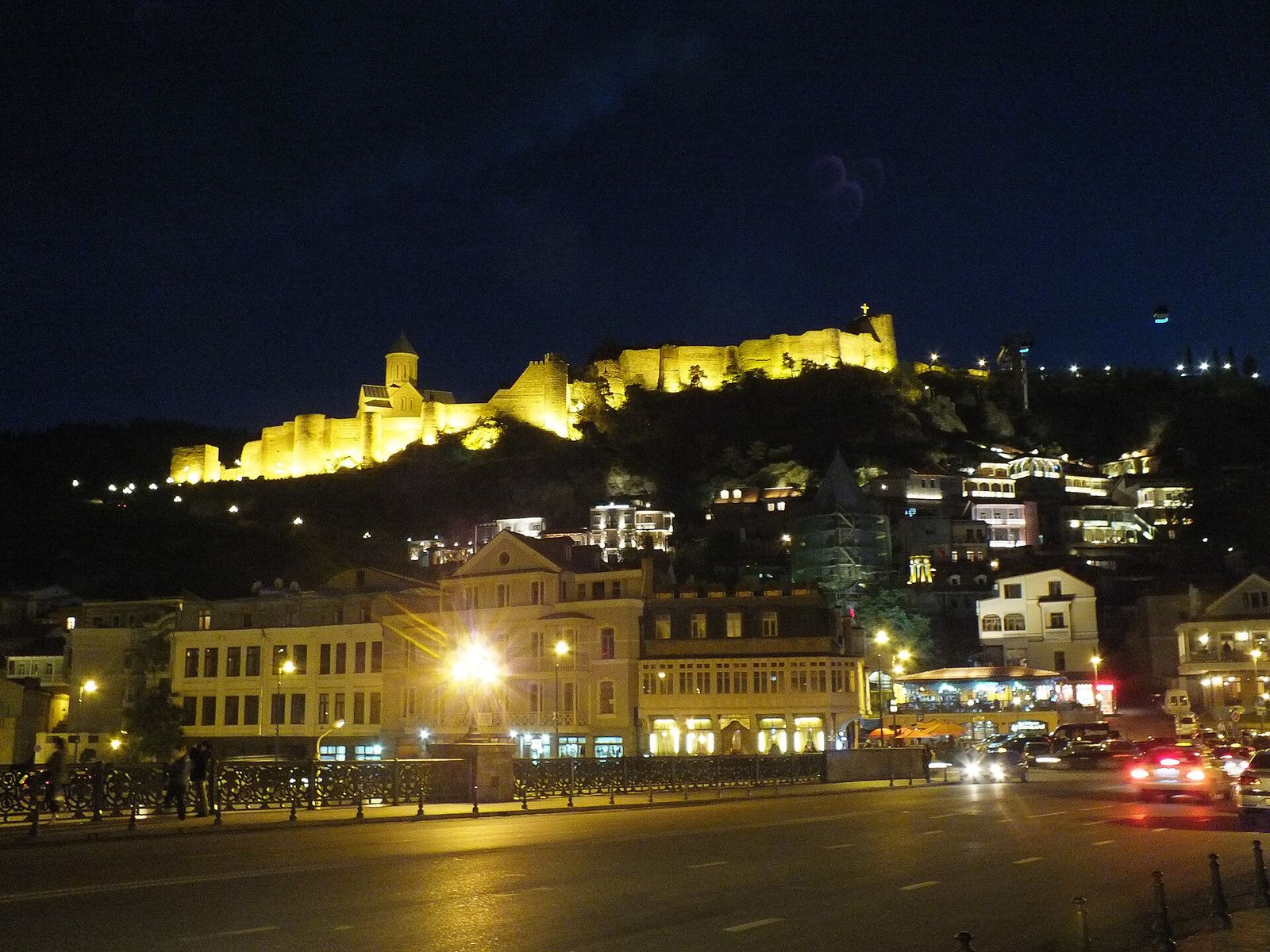
If you only have time for one, stand on the Metekhi side of the river after dark. The floodlit walls, the church on the ridge and the domes of the baths line up in a single frame, and it's the picture of Tbilisi most people take home.
Tips for visiting Narikala
- Wear proper shoes. The stone paths are steep and polished smooth by centuries of feet, and they turn slippery after rain.
- Bring water. There's very little to buy on the ridge, and none of the terraces have shade.
- Carry a scarf. It covers shoulders or hair for St Nicholas Church without a second trip to the hotel.
- Take the cable car both ways if walking is hard. The paths along the walls are stepped and uneven, so stay on the terraces nearest the top station.
- Pick Narikala over Mtatsminda for a daytime view. Mtatsminda Park is higher and takes in the whole city, but Narikala puts you right above the Old Town; save Mtatsminda for an evening.
Key takeaways
- Narikala is free, and the ridge, the lower walls and the terraces are open even with the upper towers fenced off.
- Ride the Rike Park cable car up for 2.50 GEL on a Metromoney card and walk down.
- Both walking routes up take about 20 minutes: Orbiri Street from Abanotubani or the Betlemi stairs from Sololaki.
- Go in the hour before sunset and finish at the baths or the waterfall below.
- The Mother of Georgia is about 5 minutes along the same ridge, so see both in one trip.
Frequently asked questions
Is Narikala Fortress open?
Partly. The ridge path, the lower walls, the viewing terraces and the Mother of Georgia statue are open, while the upper walls and towers have been fenced off for restoration since late 2023, with no reopening date as of October 2026. You still get the full view; you just can't climb the top towers.
Is Narikala Fortress free?
Yes. There's no ticket for the fortress, the ridge or St Nicholas Church. The only cost is the cable car up, 2.50 GEL one way on a Metromoney card.
What are the opening hours of Narikala?
The ridge and the outside of the fortress are open 24 hours a day. The cable car runs daily from about 10:00 to 22:00, later on summer weekends, and St Nicholas Church is usually open from about 11:00 to 18:00.
How do I get to Narikala Fortress?
Take the cable car from Rike Park, by the Bridge of Peace, or walk up in about 20 minutes. The two walking routes start at Meidan Square in Abanotubani, up Orbiri Street, and at Asatiani Street in Sololaki, up the Betlemi stairs.
How much is the cable car to Narikala?
A one-way ride from Rike Park costs 2.50 GEL, paid with a Metromoney card. The card itself costs 2 GEL with a refundable deposit, and one card can pay for a whole group.
How long do you need at Narikala?
Plan on 1.5 to 2.5 hours, including the walk down. Add an hour if you finish with a sulfur bath in Abanotubani, which is the best way to end it.
Can you walk down from Narikala to the sulfur baths?
Yes, and it's the best way down. The paths and stairs on the river side drop straight into Abanotubani, beside the bathhouses and the gorge that leads to the Leghvtakhevi waterfall.
Is Narikala worth visiting at night?
Yes. The walls are floodlit, the terraces are quieter than at sunset, and the Old Town and the Bridge of Peace light up below you. Walk down on the main paths to Abanotubani rather than the steeper side tracks.
25 Best Things to Do in Tbilisi in 2026 (With Prices)
Tbilisi is known for its sulfur baths, balconies and hilltop views. Here are 25 things to do, with prices and times.
Read the guideThe Sulfur Baths of Abanotubani: Prices, Bathhouses and Booking
Tbilisi is known for its sulfur baths. Here is what to know about the bathhouses, room prices and booking.
Read the guide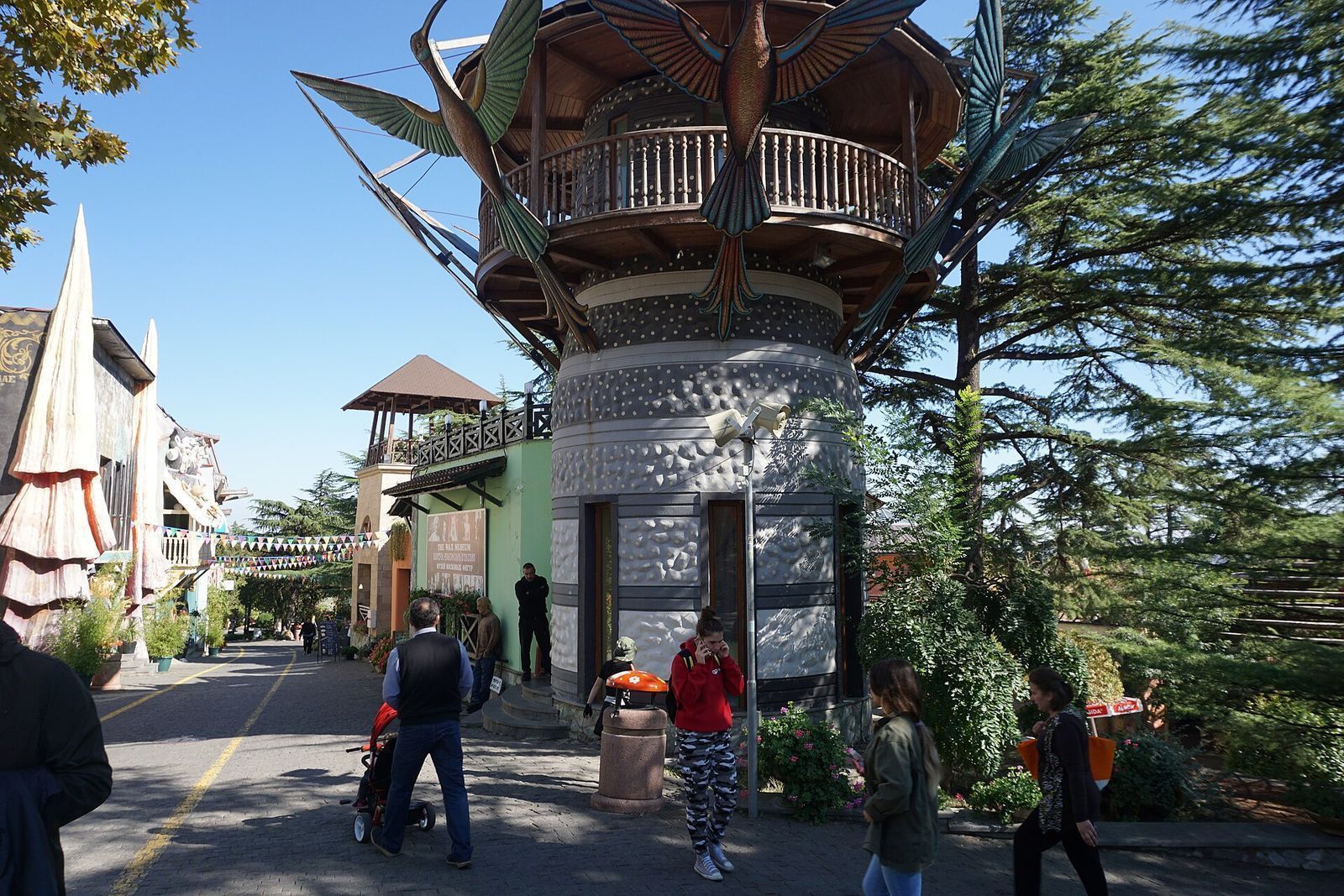
Mtatsminda Park and the Tbilisi Funicular: Getting Up, Prices and the View
Mtatsminda is the mountain with the best sunset view in Tbilisi. How to get up, what it costs and what to do at the top.
Read the guide