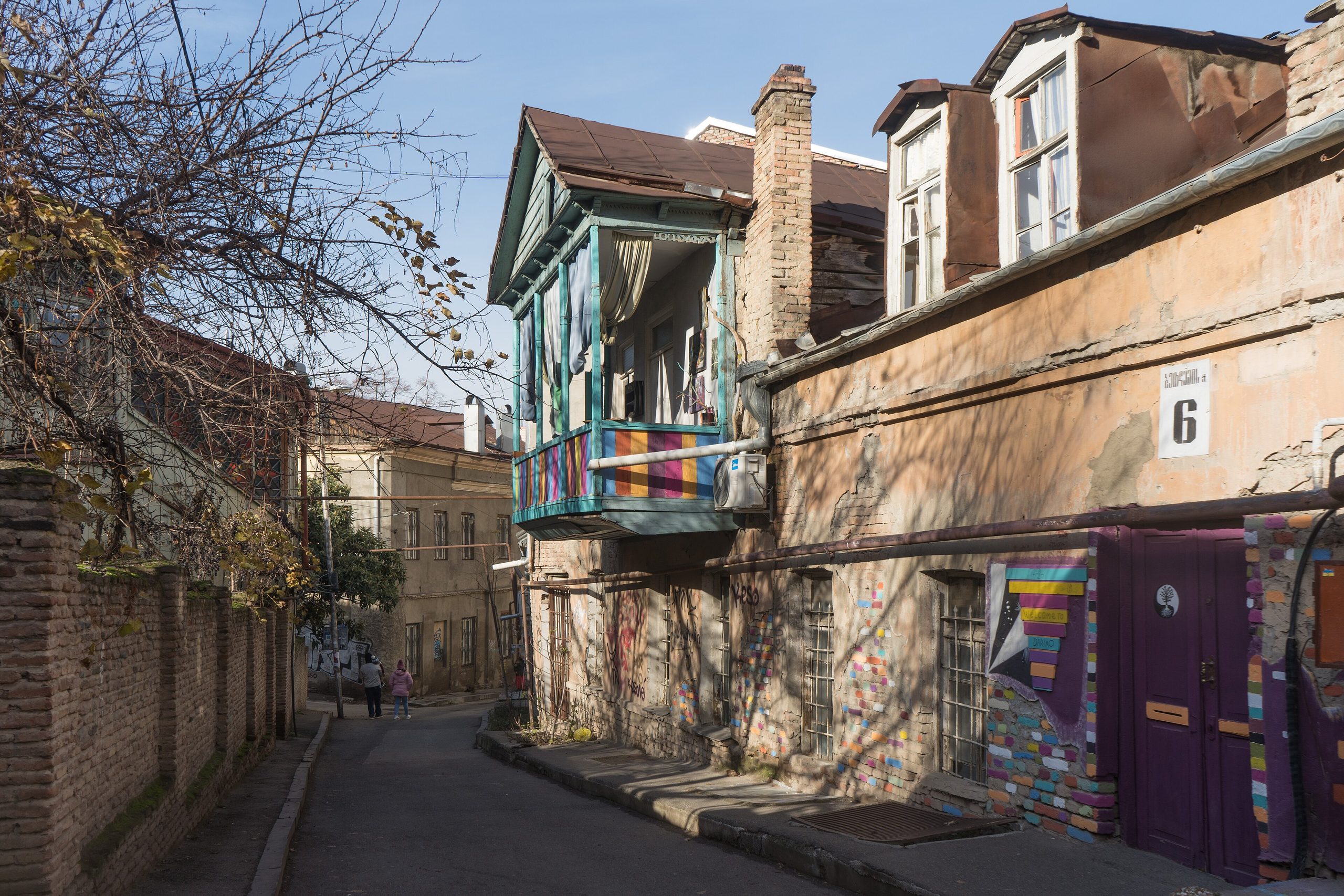
Old Tbilisi: Kala, Betlemi, Meidan and Shardeni Street
Old Tbilisi is the part of the city on every postcard: carved wooden balconies, the brick domes of the sulfur baths and steep lanes climbing toward the fortress ridge. Here's what you need to know about its five quarters, from Meidan and Abanotubani up through Kala, Shardeni Street and Betlemi, plus where I'd eat, where I'd sleep and the downsides of staying in the middle of it all.
What Old Tbilisi is and which quarters it covers
Old Tbilisi is the historic core of the city, on the right bank of the Mtkvari River under the Narikala ridge. It has no fixed border on the map. Its old quarters run into each other within a block or two, and locals use the names loosely.
Avlabari faces it across the river, and Sololaki climbs the hill behind it. Most of the big sights sit within a 10-minute walk of each other, which is why I tell first-timers to put the map away for the first hour and just wander.
| Quarter | What it is | Go for | Best time |
|---|---|---|---|
| Meidan | The square at the foot of the Old Town | The bazaar tunnels and the view up to the fortress | Morning |
| Abanotubani | The bath district under the brick domes | A sulfur bath and the waterfall gorge | Evening |
| Kala | The oldest part, the lanes around Sioni Cathedral | Churches, wine shops, balconies | Early morning |
| Shardeni Street | The pedestrian restaurant street in upper Kala | A drink outside and people watching | After dark |
| Betlemi | The stepped quarter climbing toward the ridge | The 120 Betlemi stairs, views and cats | Late afternoon |
The easiest self-guided walk through Old Tbilisi starts at Meidan, loops up through Kala and the ridge, and finishes on the river at the Bridge of Peace, so you never climb the same hill twice.
A short history of Old Tbilisi
People have lived on this stretch of the river since at least the 4th century. The founding story everyone in Tbilisi knows is the falcon legend: King Vakhtang Gorgasali of Kartli was hunting here when his falcon fell into a hot spring, and the springs became the reason for a city.
Gorgasali began building Tbilisi in the mid-5th century, and his successor Dachi made it the capital. The city was called Tiflis until 1936. In 1795 a Persian army sacked it and left it in ruins, so much of what stands in the Old Town today was rebuilt on a street plan far older than the houses along it.
By the 19th century the city's center had moved uphill to Sololaki and out along the new avenues. It has been a candidate for UNESCO World Heritage status since 2007.
Meidan: the square where most walks start
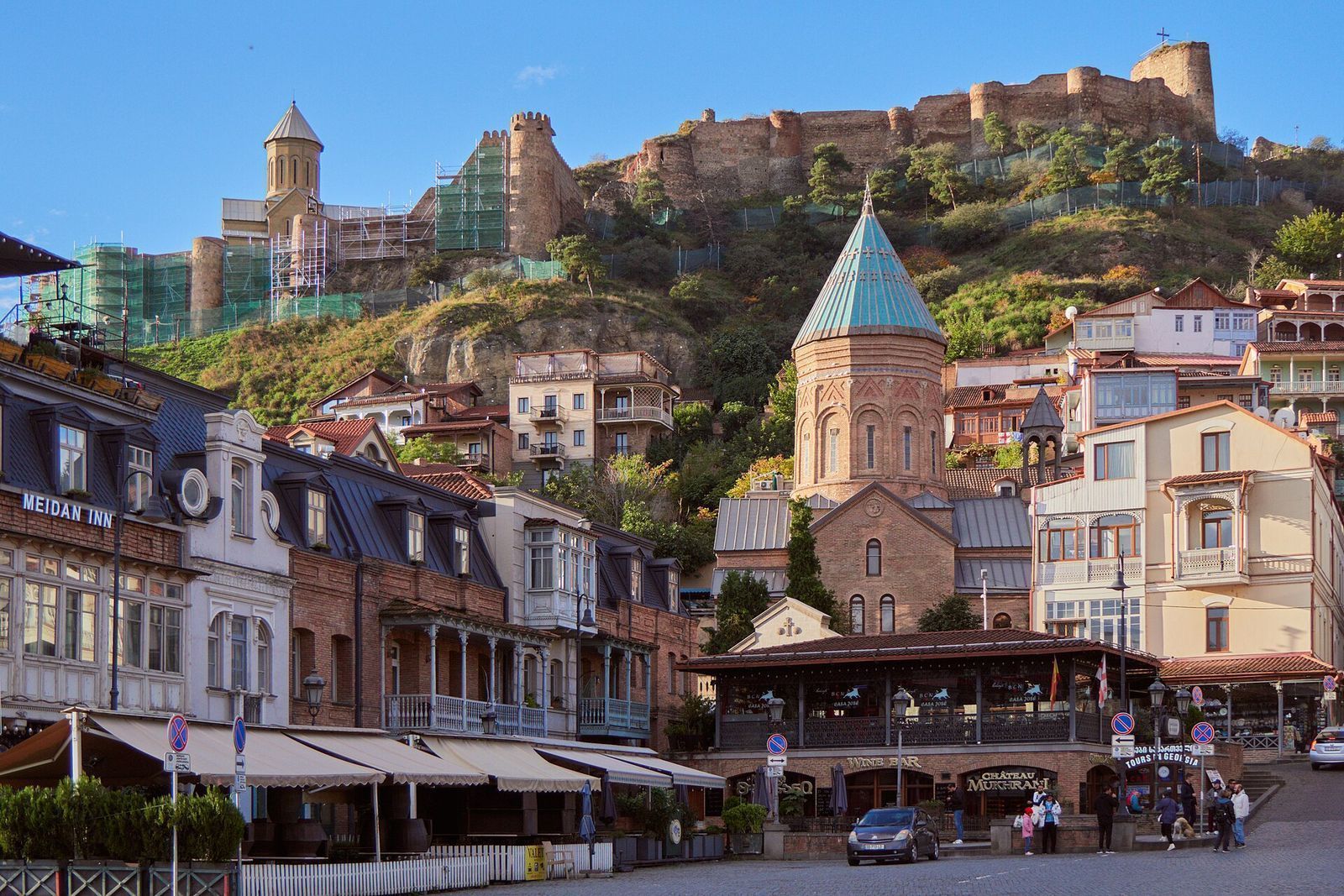
Meidan, also signed as Vakhtang Gorgasali Square, is the open square at the bottom of the Old Town and the natural place to start. Stand in the middle and you can see most of this guide at once: the fortress walls on the ridge, the green cone dome of the Armenian church of Saint George, and the lanes running off toward the baths and Kala.
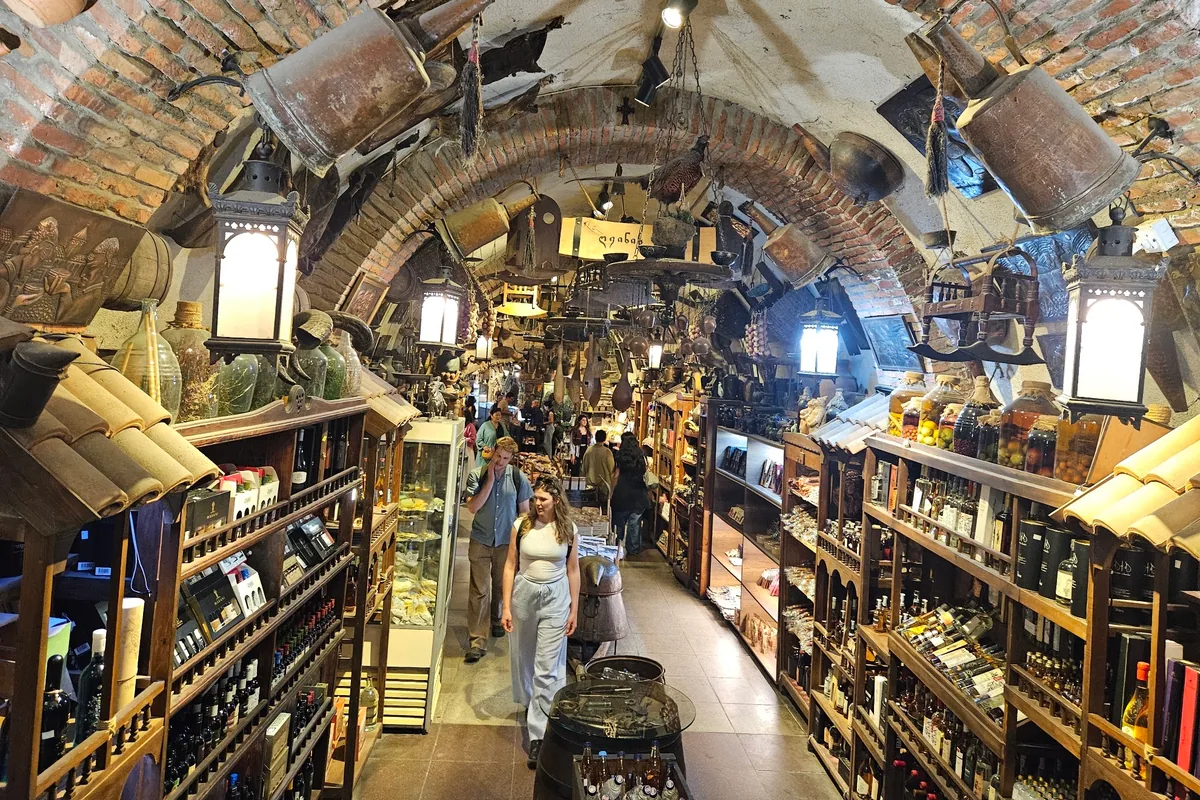
A restored caravanserai on the square now holds a museum and shops. Below it, the Meidan bazaar runs through brick tunnels selling crafts, spices, jams, wine and knitwear. I go down there for spices and jams to take home, and treat the rest as browsing.
From Meidan, the Metekhi bridge crosses the river toward Metekhi Church and Avlabari, and the baths are just around the corner the other way.
Abanotubani: the sulfur bath district
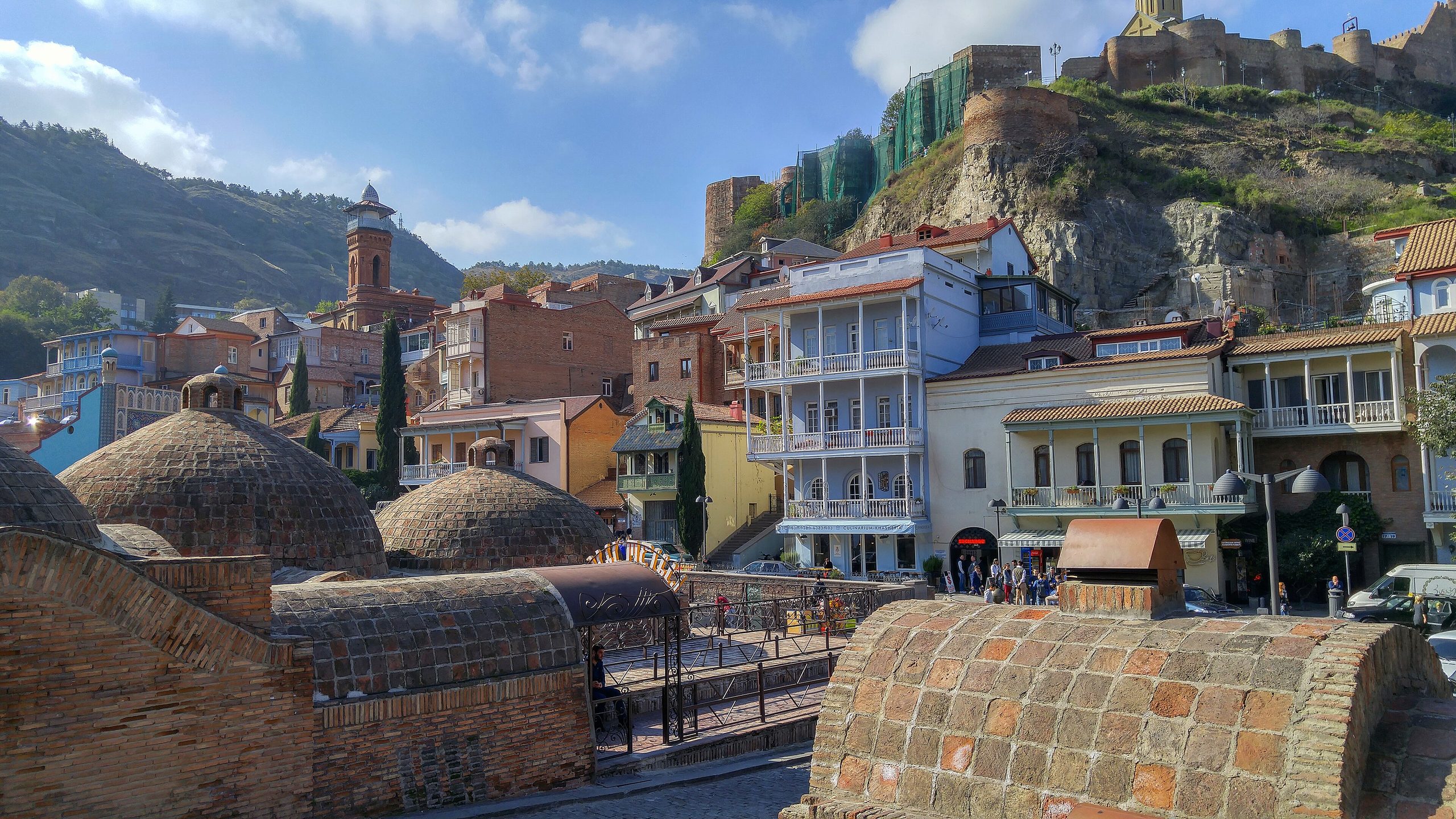
Abanotubani is the low corner of the Old Town where about ten bathhouses still run on the hot springs, under rows of brick domes. Before it took its present name it was Kharpukhi, then Seyidabad.
A private room costs from 130 GEL an hour at Chreli Abano, the blue-tiled bathhouse, and 150 GEL at Gulo's, which stays open until 03:00. The public hall at Bath No. 5 costs 6 to 10 GEL a person. Chreli Abano and King Erekle's Bath take no same-day online bookings, so I book any sulfur bath in Abanotubani the day before.
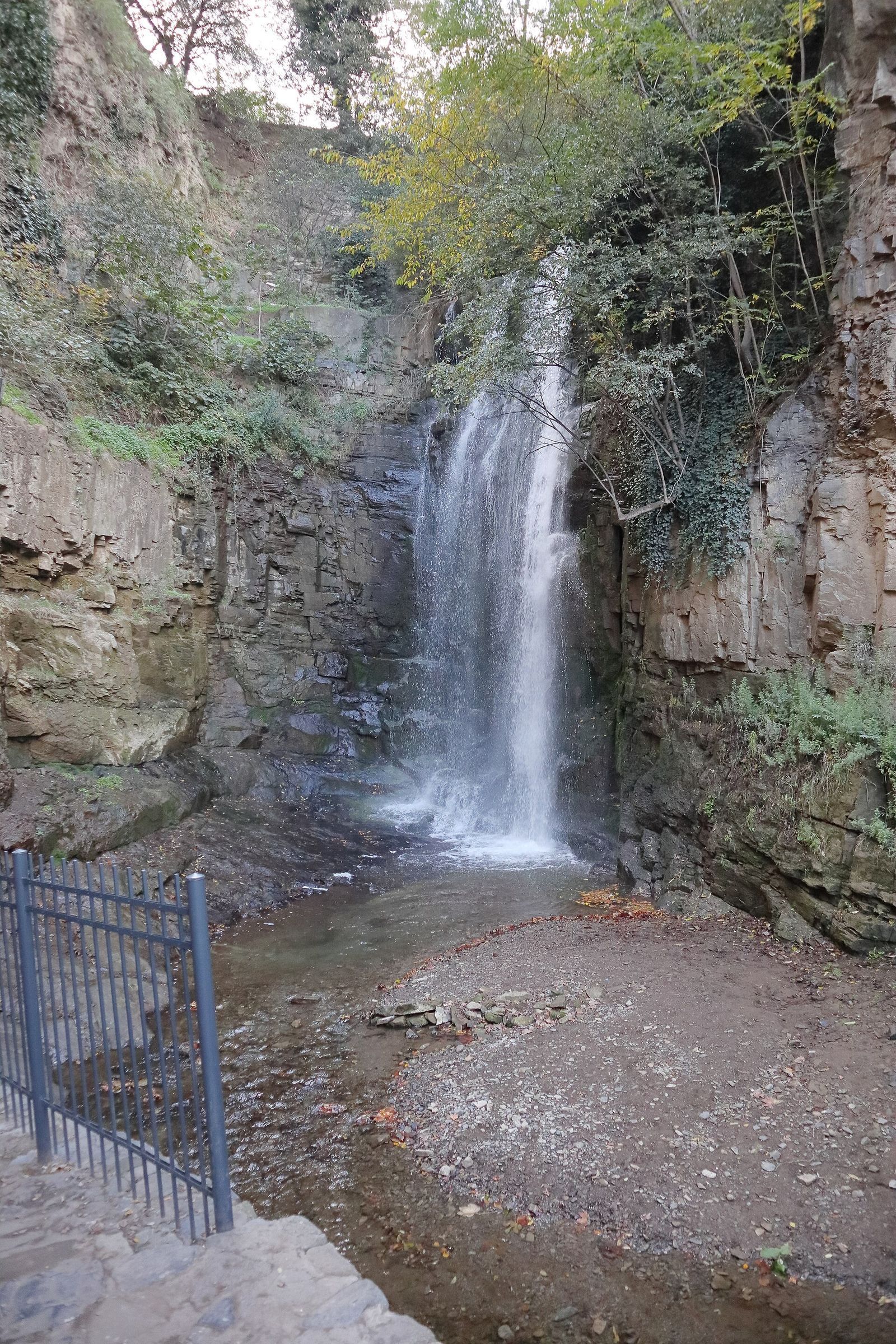
Walk past the baths and the lane narrows into Leghvtakhevi, a short gorge with a waterfall at its end. It's free, takes 15 to 20 minutes there and back, and closes after dark, so do it before your soak rather than after.
Kala and Shardeni Street
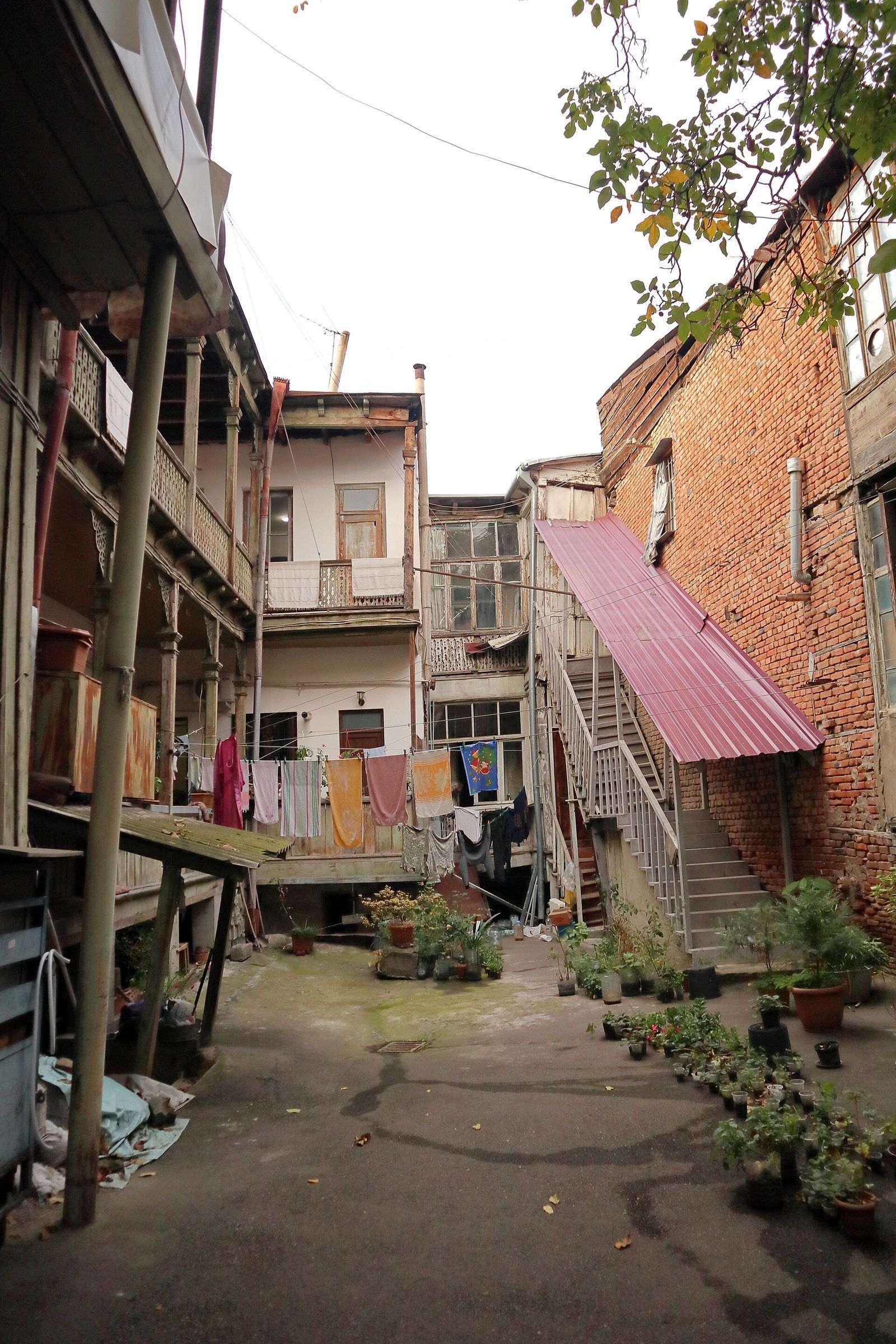
Kala is the oldest part of Old Tbilisi: the knot of lanes around Sioni Cathedral, Erekle II Street and the river. It's where you find the balconies people photograph, two-storey houses with outside staircases up to open wooden terraces.
Shardeni Street
Shardeni Street is the short pedestrian street in upper Kala, running from Gorgasali Square toward Sioni Street. It was once a narrow roofed lane called Dark Street, and now carries the name of Jean Chardin, the 17th-century French traveler. A small bronze Tamada statue, a toastmaster with a drinking horn, stands at its entrance.
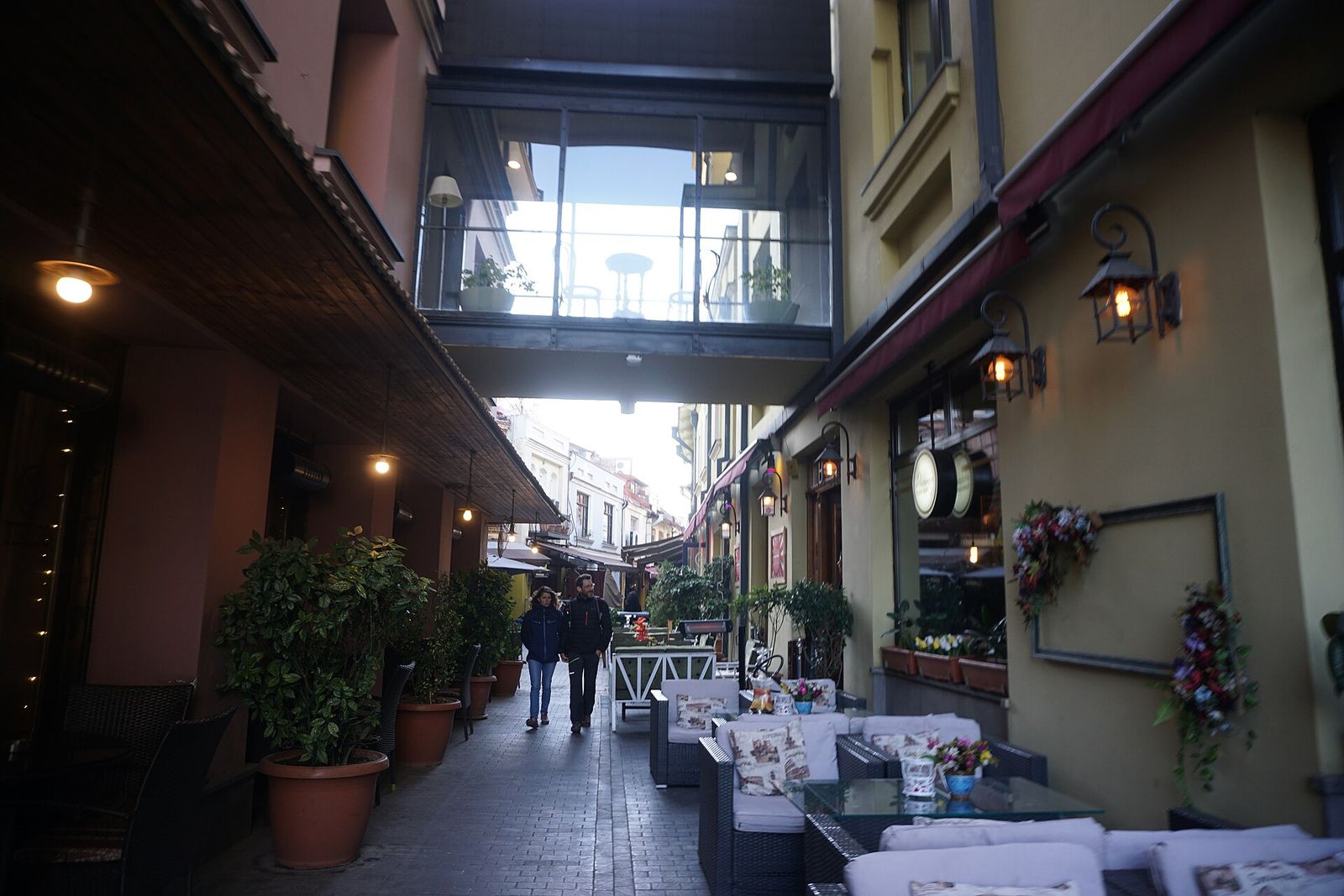
By day it's quiet: gallery windows, craft shops and rows of empty terrace chairs. After dark the bars spill onto the street, several put on live music, and the street fills up. That's the only time I'd walk it.
You pay for the address. A beer on Shardeni runs 9 to 14 GEL against 5 to 9 GEL in an ordinary bar, and a cocktail 20 to 30 GEL against 14 to 20 GEL. The food follows the same pattern, so I eat on the side lanes and come back to Shardeni for the walk.
Kote Afkhazi Street and the wine shops
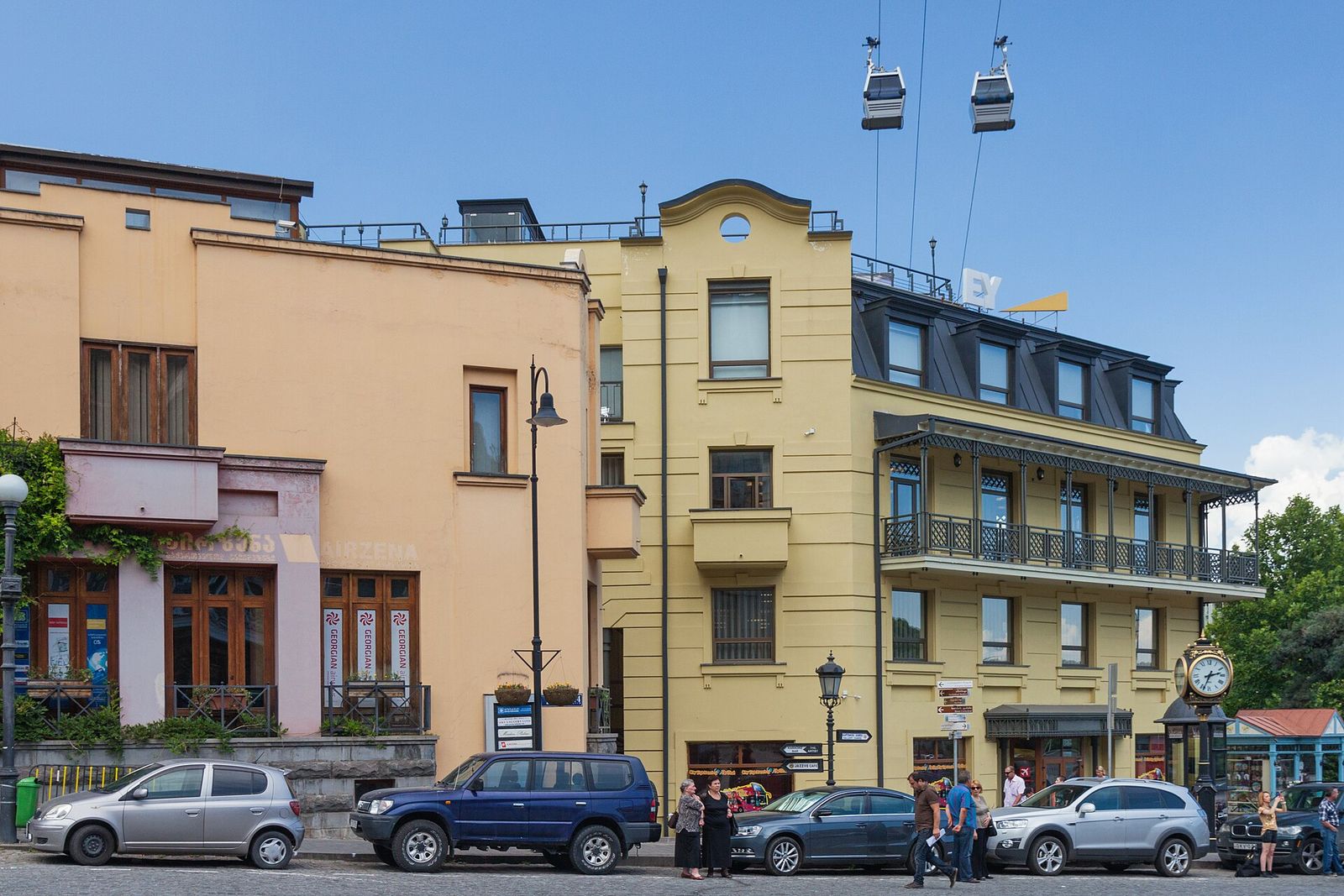
Kote Afkhazi Street, which plenty of people still call Leselidze, runs from Freedom Square down to Meidan and has about a dozen wine shops on it. Tastings are often free and buying a bottle is the polite thanks, which makes this street an easy first wine tasting in Tbilisi before you commit to a winery tour.
Betlemi: the stairs, the churches and the cats
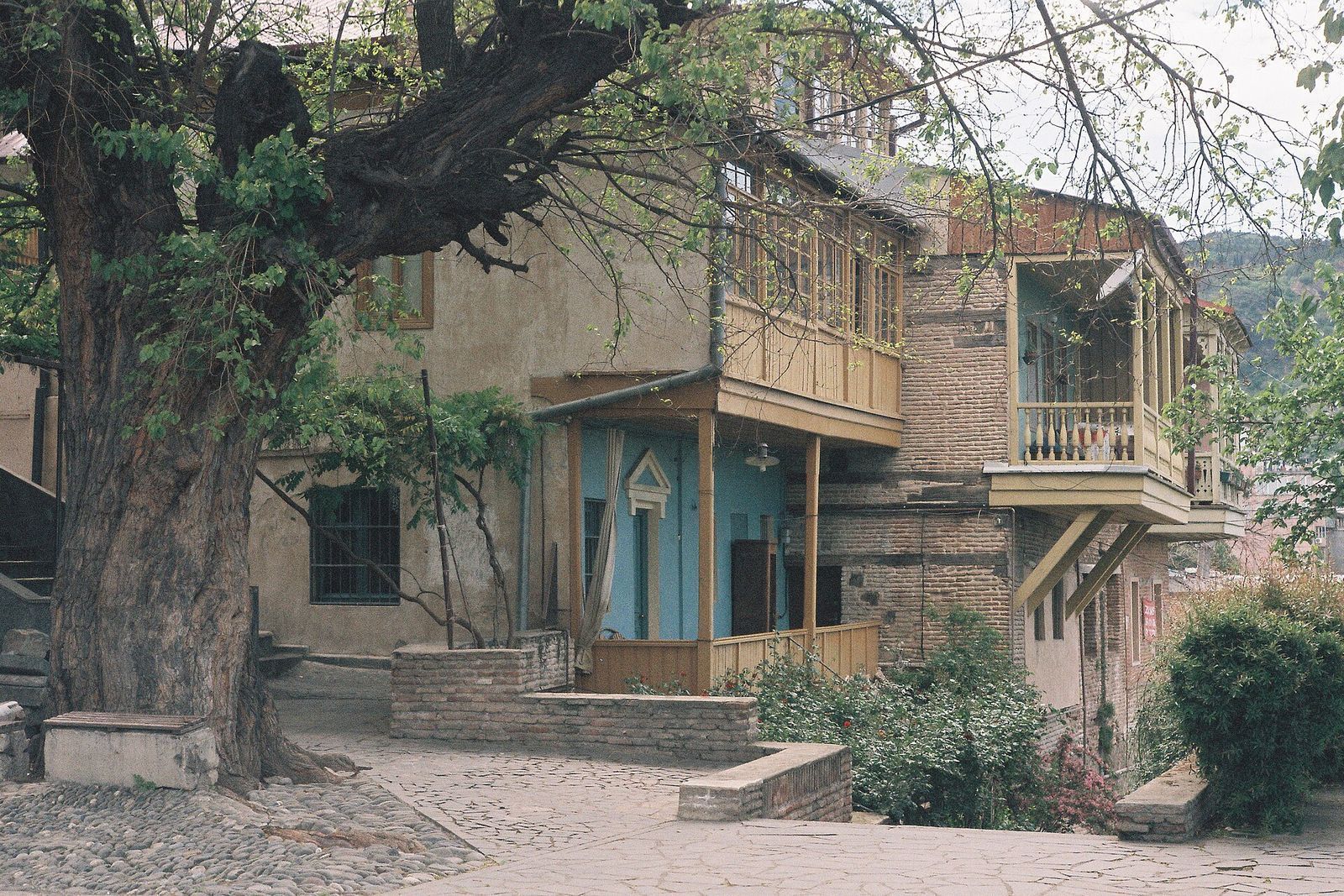
Betlemi is the quarter that climbs from the lanes above Meidan toward the ridge. Betlemi Street and the 120 Betlemi stairs lead up to two small churches side by side, a tree growing through the walls of a ruined house, and a terrace that looks straight back over the bath domes and the river.
This is my favorite part of Old Tbilisi. It's steep, it's residential, and I meet far fewer tour groups here than on Shardeni. Betlemi Rise carries on up to the Sololaki ridge, and the cats seem to own every second step.
From Betlemi, the walk up to the fortress ridge takes 15 to 20 minutes. If you want a drink with a view on the way down, Art Café at Betlemi 13 has a DJ and views from its top two floors.
Churches, a mosque and a synagogue in a few blocks
Few old towns fit this many faiths into so few streets, and every one of these sits within a short walk of Meidan.
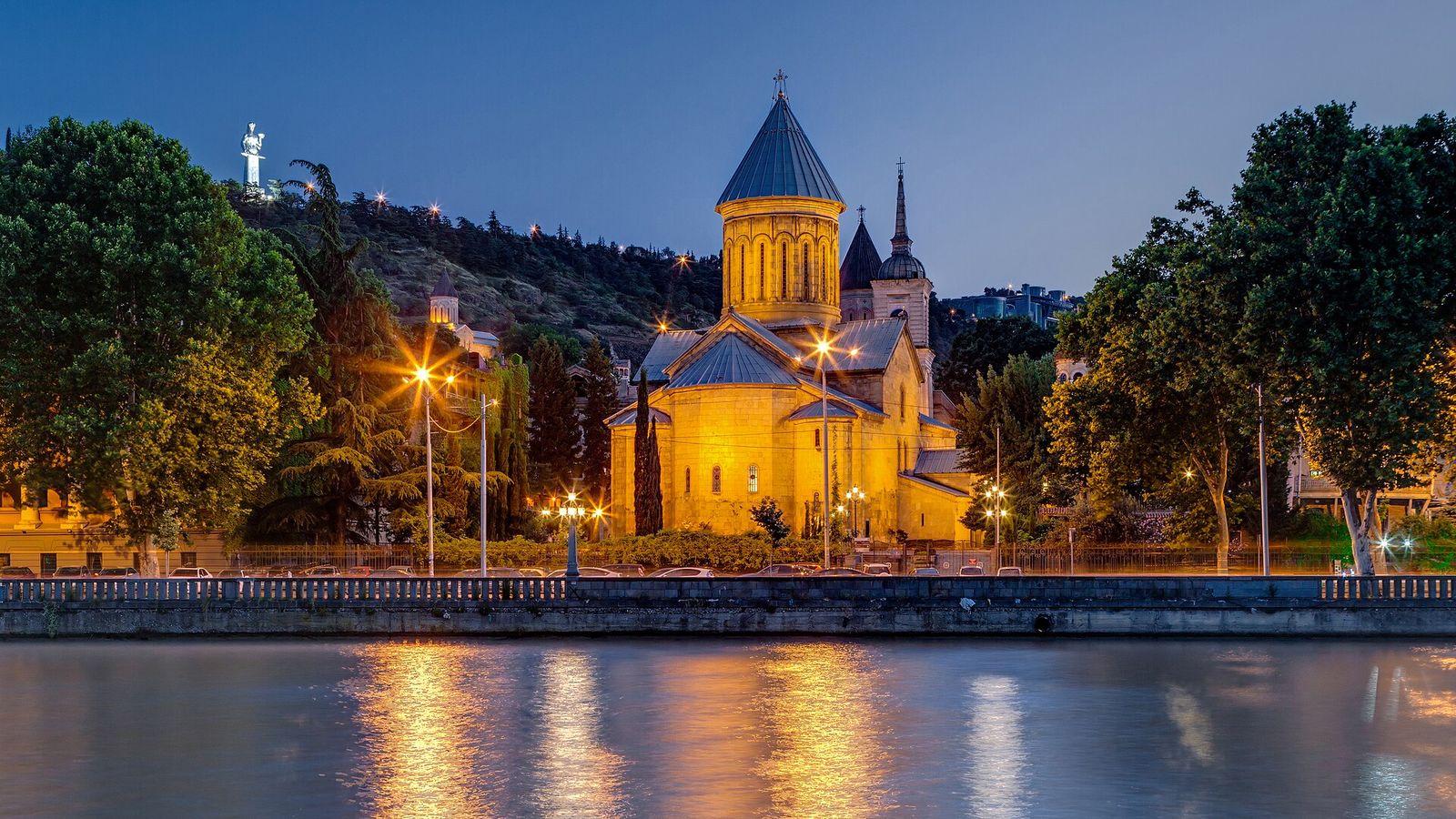
Sioni Cathedral, on Sioni Street, is the Georgian Orthodox cathedral that holds the cross of Saint Nino. It sits right by the river, so I pass it on almost every Old Town walk.
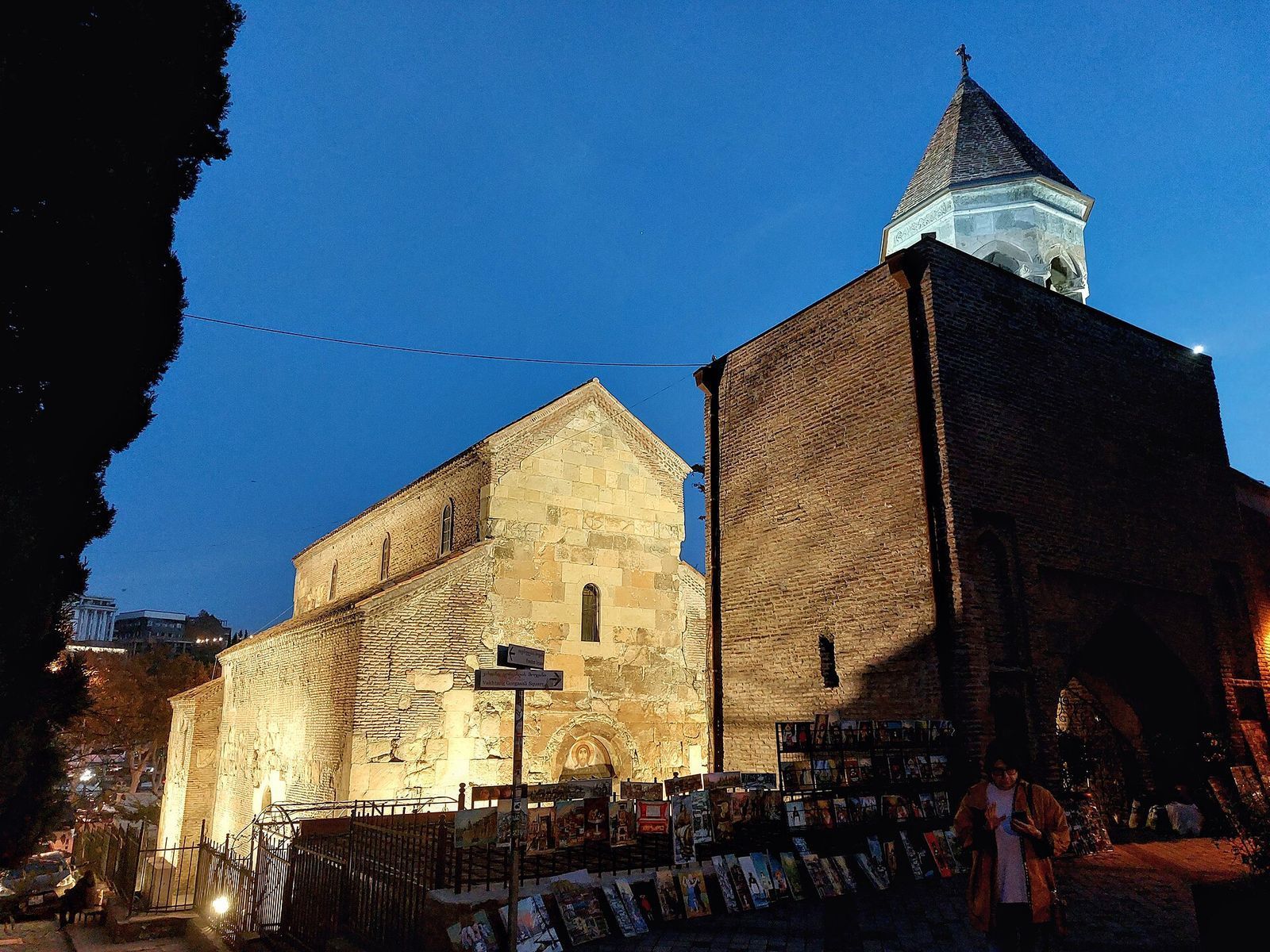
Anchiskhati Basilica is 3 minutes along the street from the clock tower. Of all the old churches in Tbilisi, it's the oldest still standing, and painters sell their work along its railings.
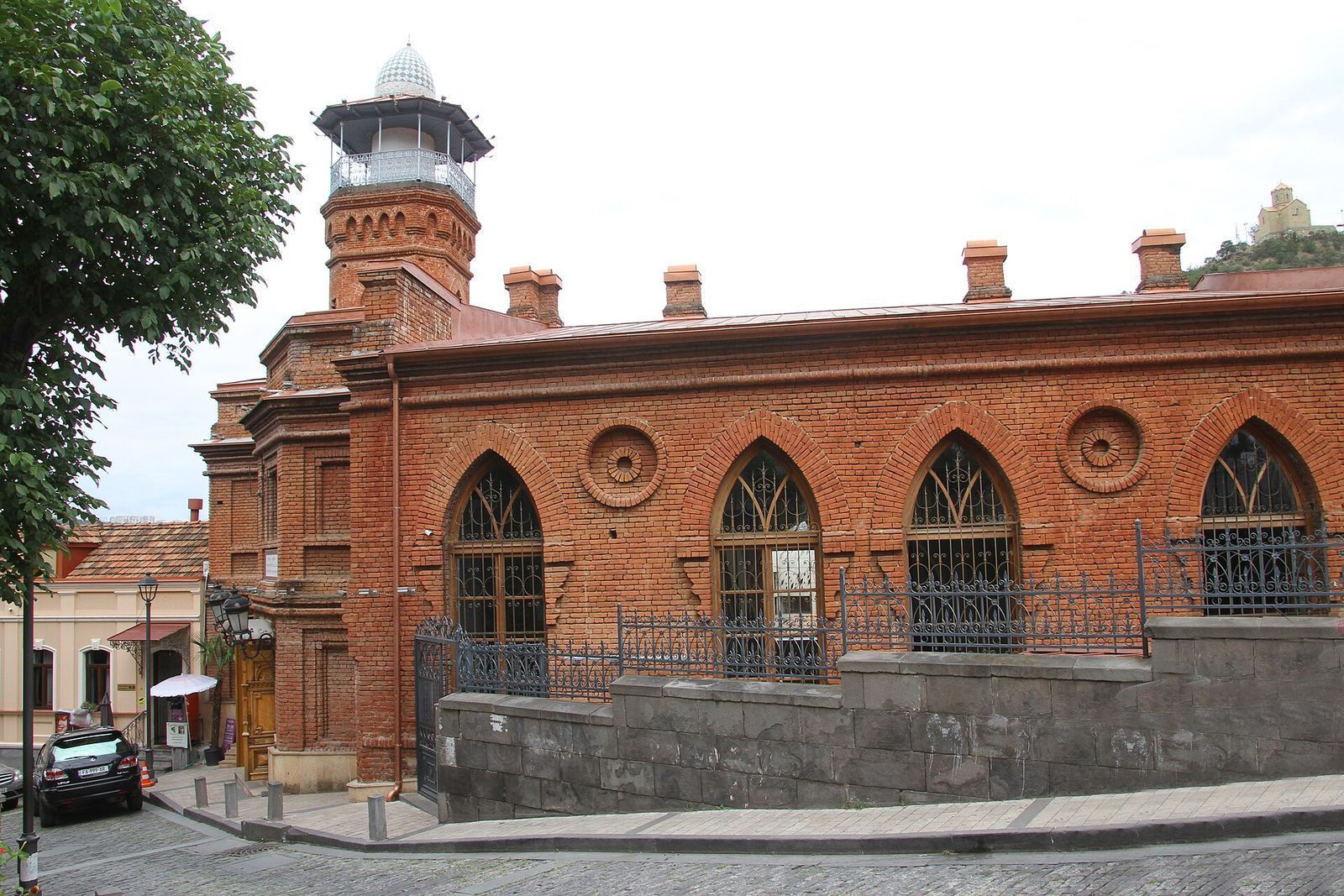
The Jumah Mosque on Botanikuri Street, by the baths, is the city's only working mosque, with a red-brick minaret you can see from the bath domes.
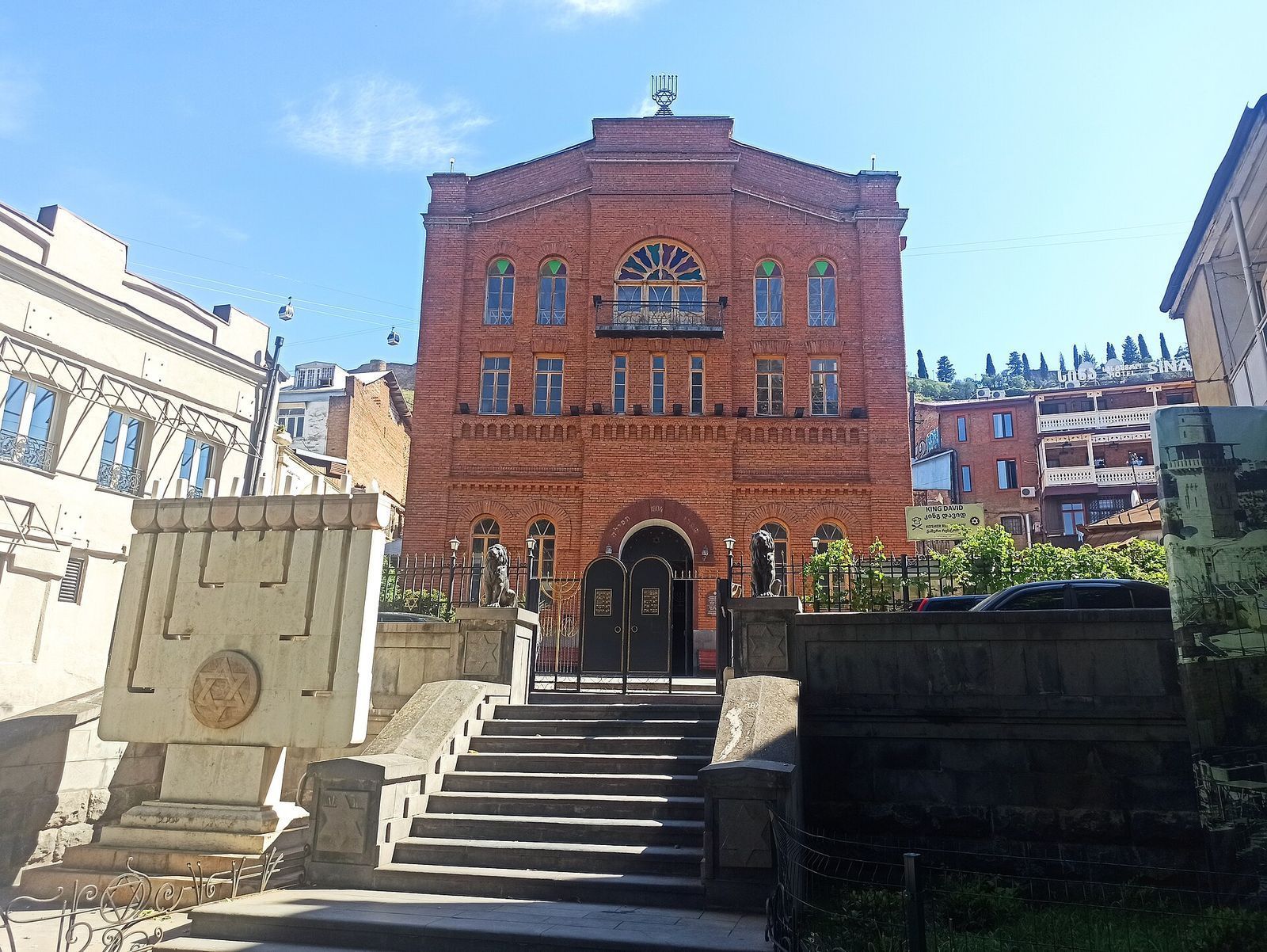
The Great Synagogue stands on Kote Afkhazi Street, a few minutes' walk from the mosque: a tall red-brick front with a menorah on the roof and a pair of stone lions at the gate.
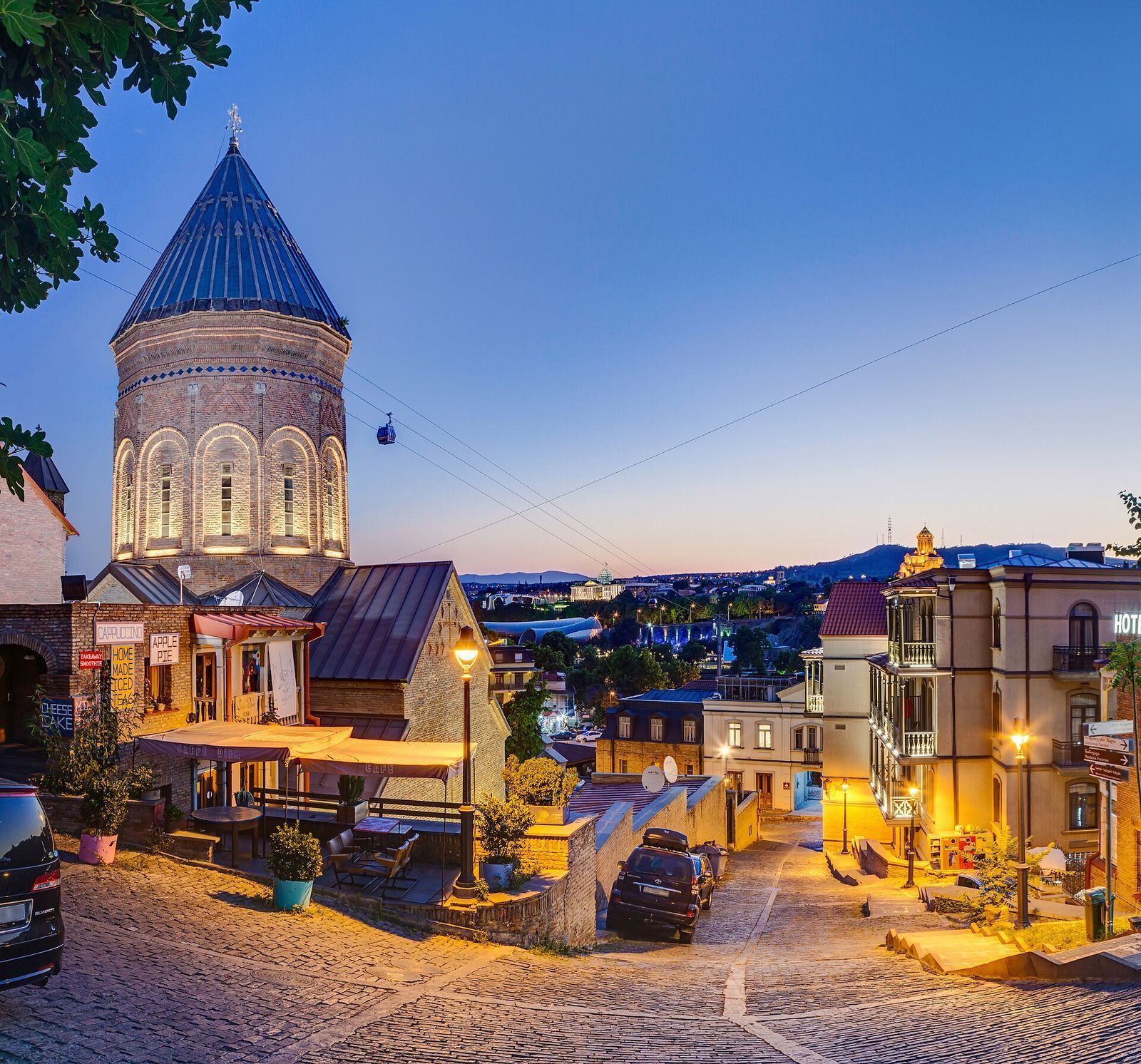
The Armenian church of Saint George rises above Meidan on its tall cone-roofed drum, and the cobbled lane beside it is one of the prettiest corners of the Old Town at dusk. Right next to the church, at 5 Samghebro St, Carpe Diem Café is a small artists' hangout with tables out on the lane and a resident cat.
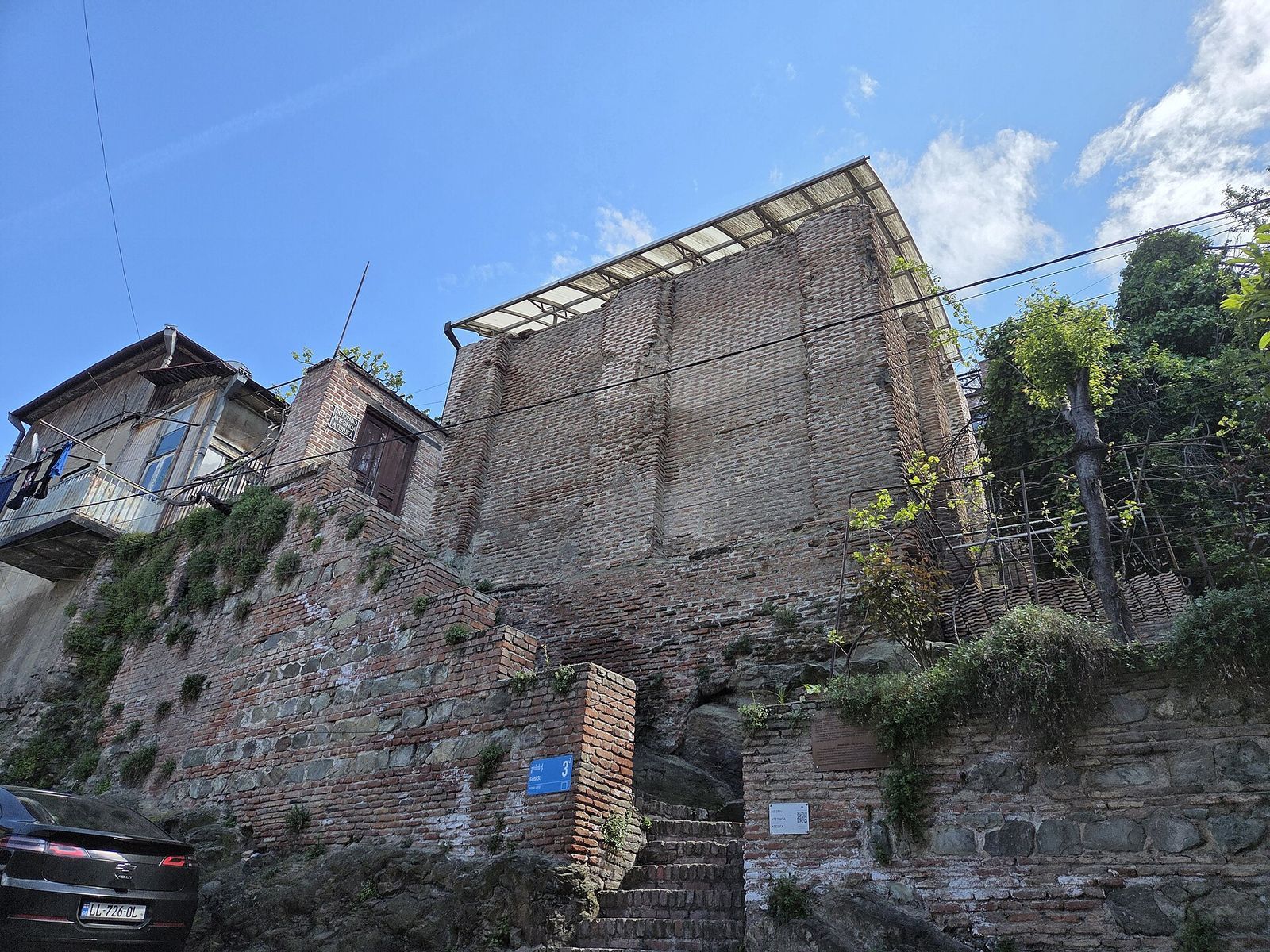
Atashgah, at 3 Gomi Street, is the remains of a Zoroastrian fire temple, a brick shell squeezed in among the houses on the slope.
Sioni and Anchiskhati are free to enter. Anchiskhati is the one I'd pick if you only step inside one church: it's small, plain and very old.
Narikala, the cable car and the sights on the edge of the Old Town
The big-ticket sights sit on the ridge above Old Tbilisi or along the river below it.
| Sight | Where | Cost | Good to know |
|---|---|---|---|
| Narikala Fortress | The ridge above Abanotubani | Free | Closed for restoration since late 2023; the ridge walk is open |
| Cable car | Rike Park to the ridge | 2.50 GEL each way | Under 2 minutes; 10:00 to midnight in summer, to 22:00 in winter |
| Mother of Georgia | On the ridge | Free | About 20 m tall |
| Botanical Garden | Behind the fortress | 4 GEL | Opens at 09:00 |
| Clock tower | Shavteli Street, Kala | Free | Puppet show at 12:00 and 19:00 |
| Metekhi Church | The cliff across the river | Free | 10 minutes on foot from Rike Park |
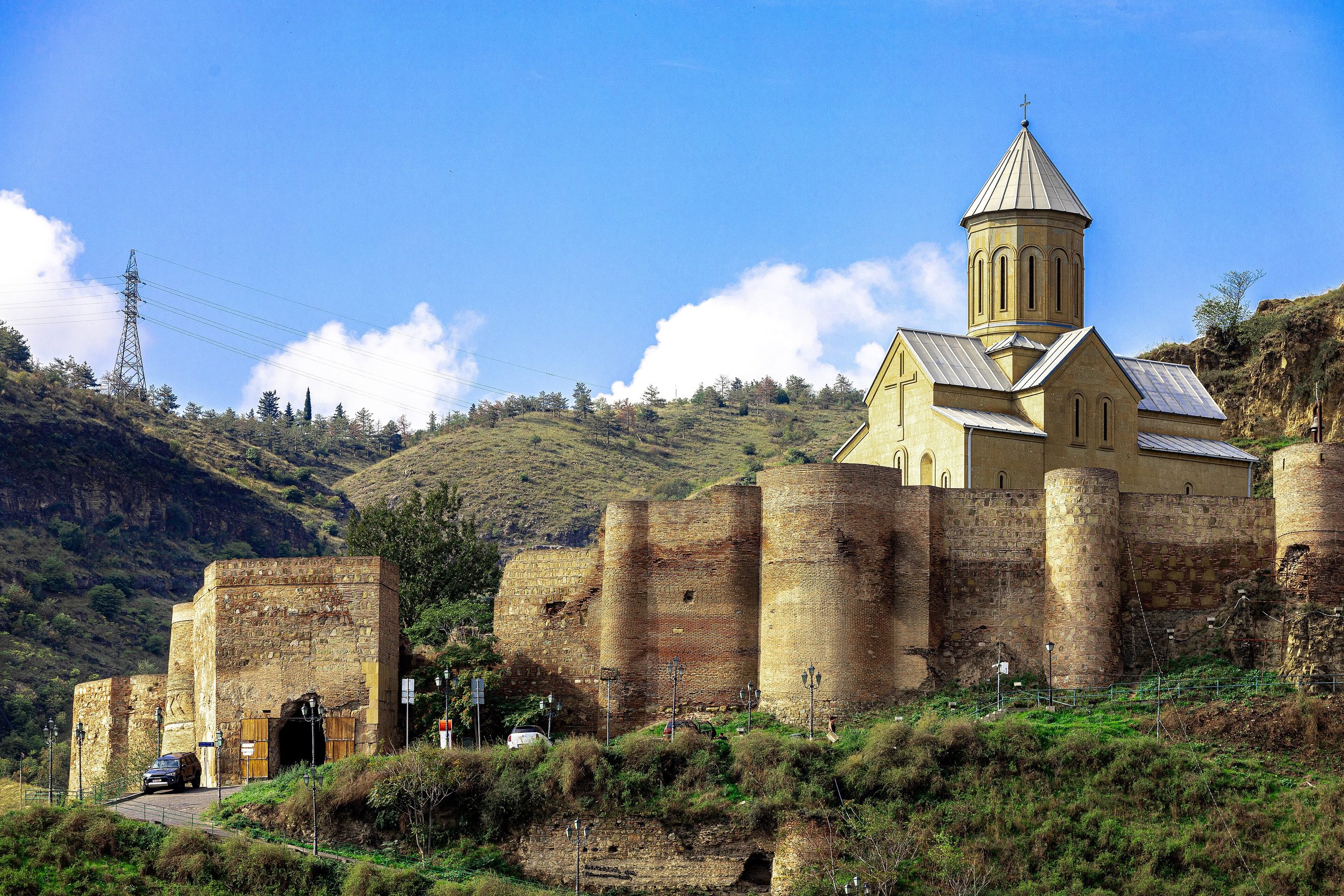
The walls of Narikala Fortress on the ridge have been fenced off for restoration since late 2023, with no reopening date. The path around them stays open, and the view over the domes, Kala and the river is the reason to go up anyway.
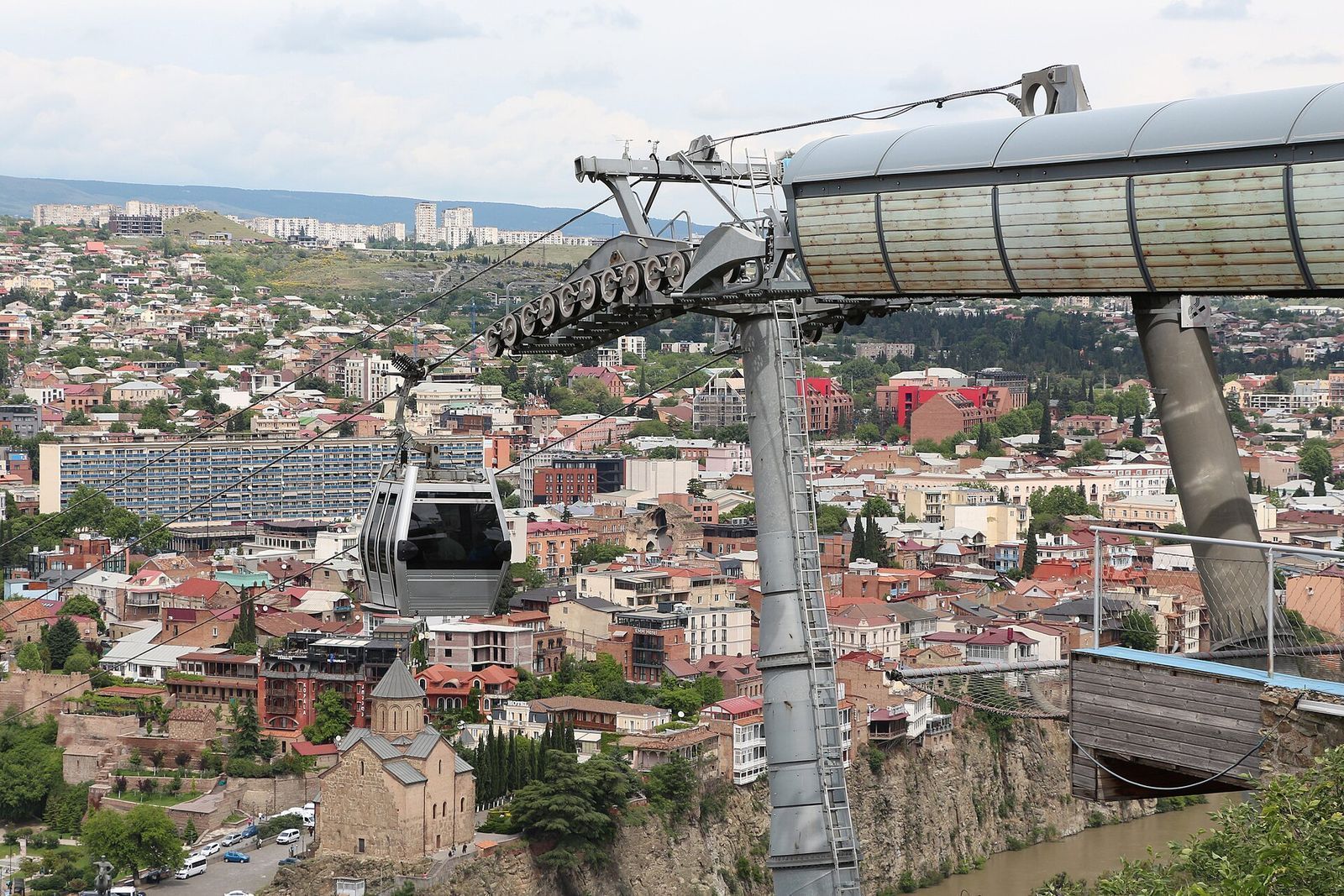
The quickest way up is the cable car from Rike Park, 2.50 GEL and under 2 minutes, running 10:00 to midnight in summer and to 22:00 in winter. On foot from Abanotubani it's about 20 minutes, and I'd ride up and walk down.
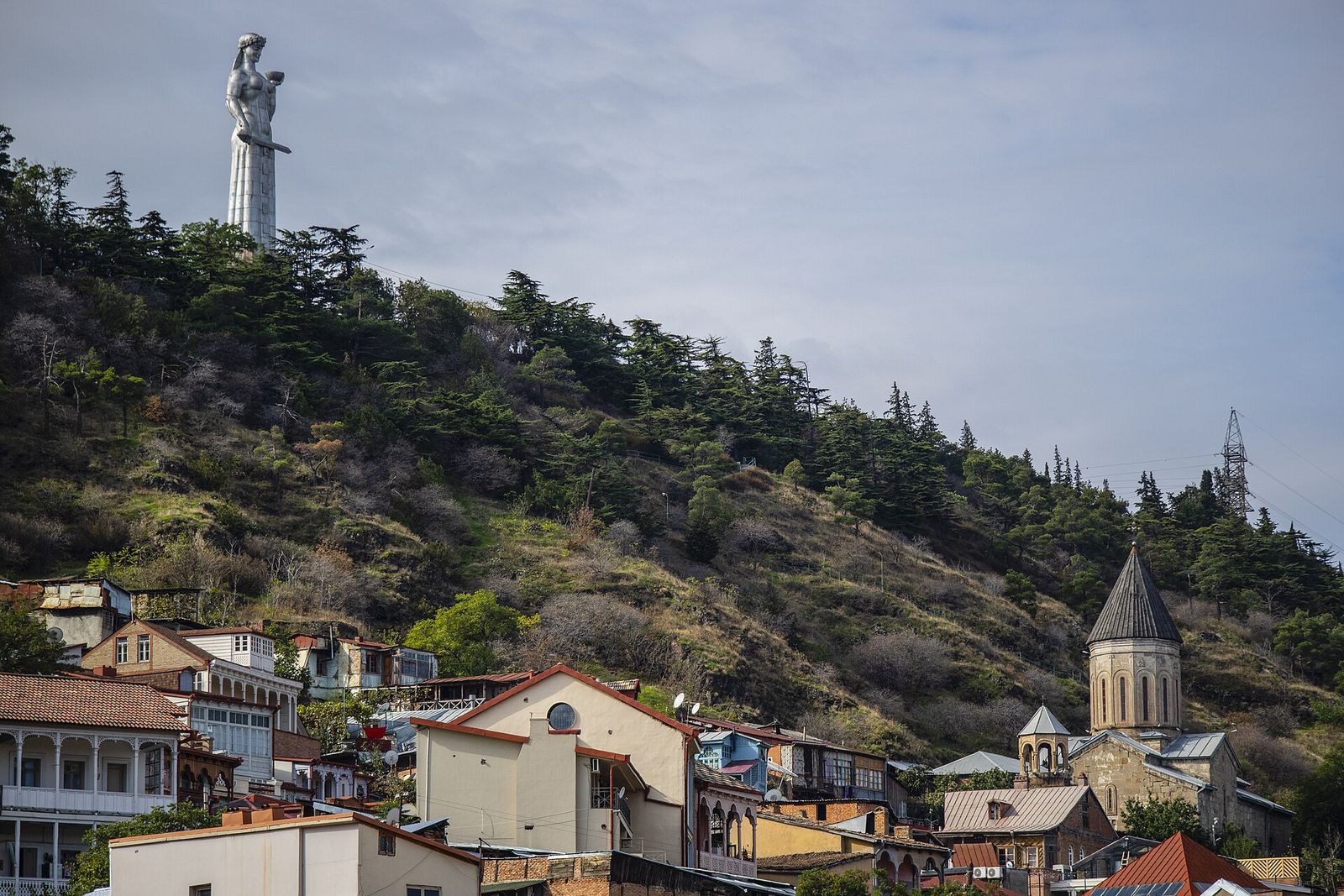
On the same ridge the Mother of Georgia statue stands about 20 m tall, holding a sword in one hand and a cup of wine in the other. You see her from most of the Old Town, and up close she's a short walk along the ridge from the cable car.
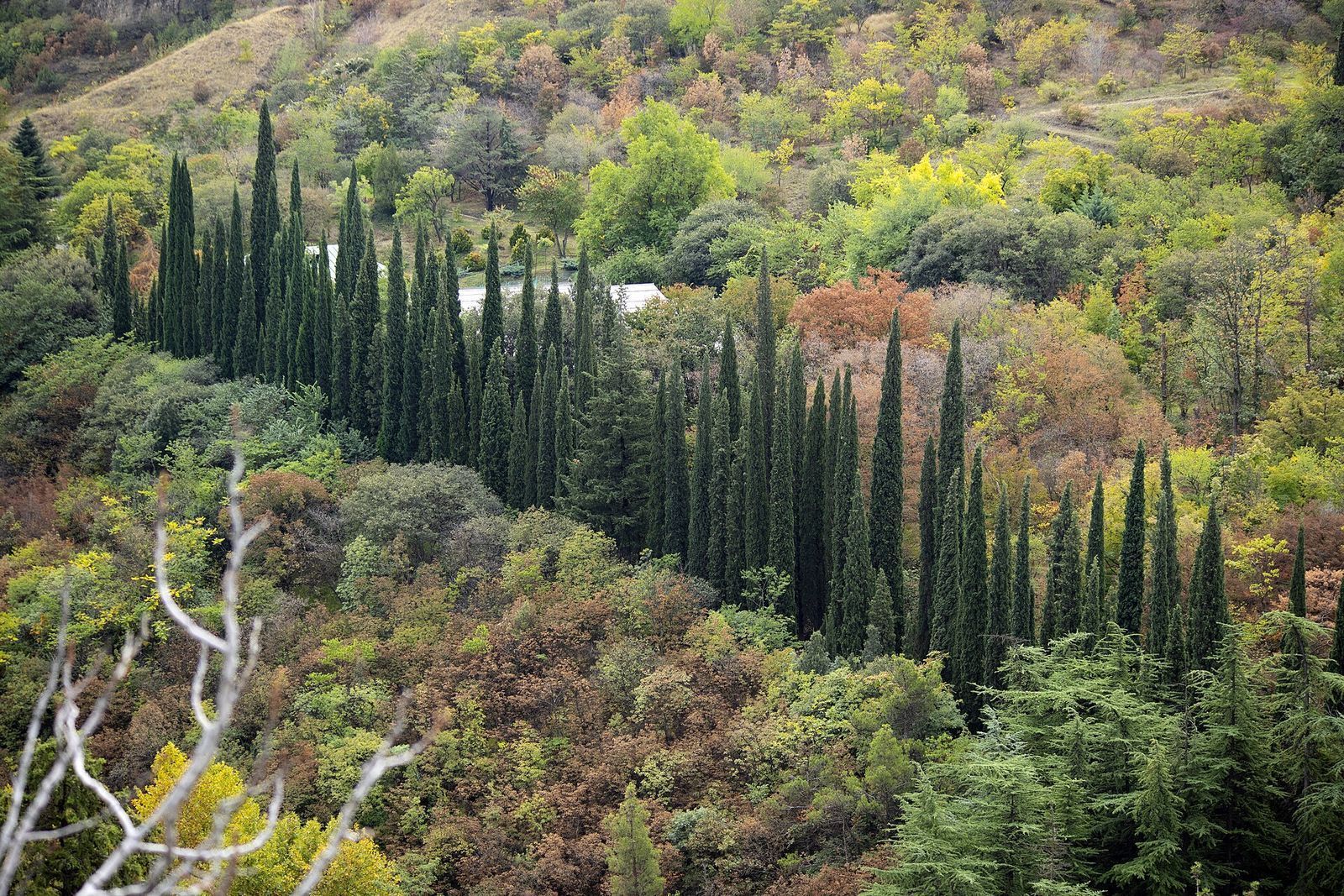
The botanical garden behind the fortress charges 4 GEL, opens at 09:00 and makes a shady detour on a summer morning.
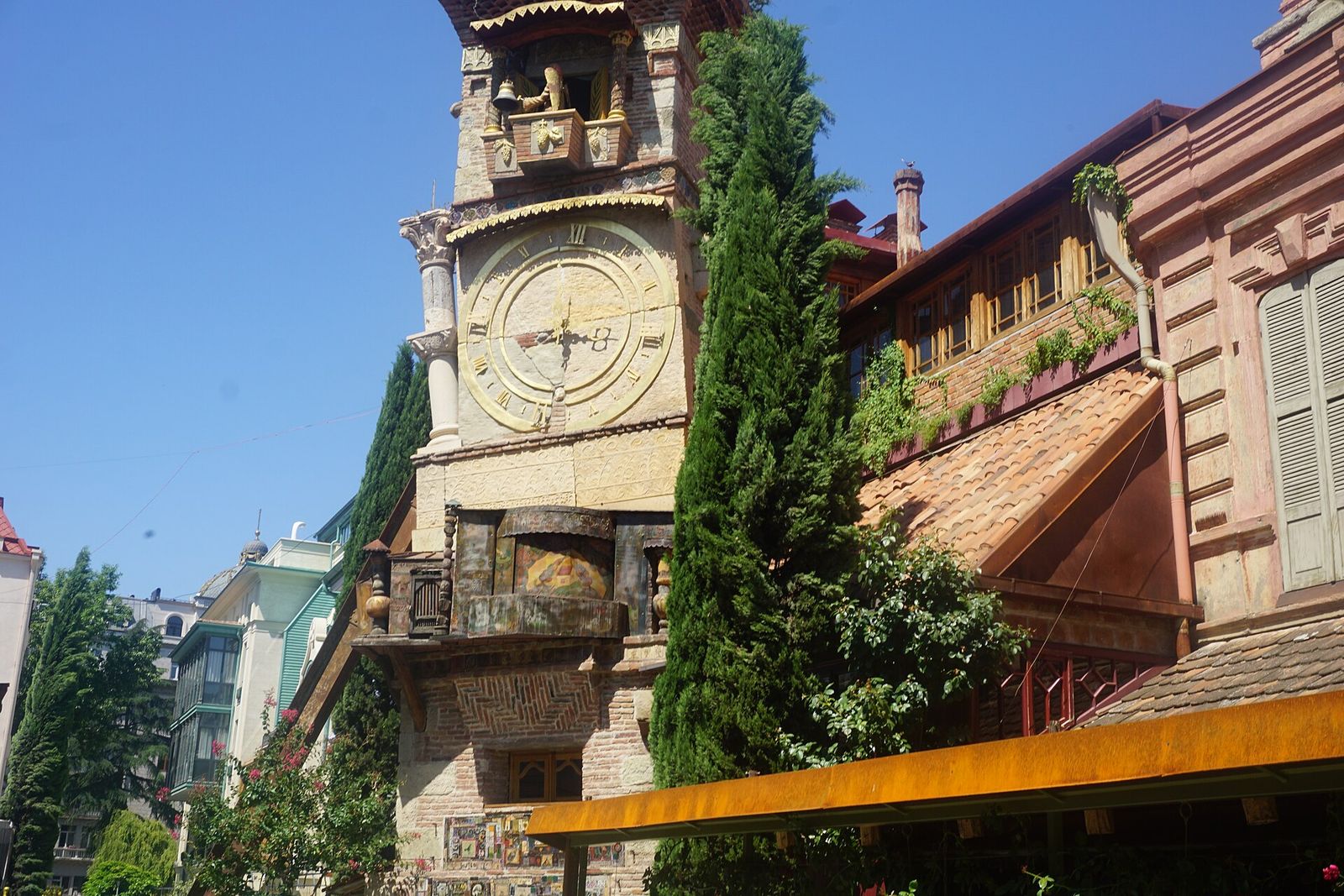
Back in Kala, the leaning clock tower by the Gabriadze theater opened in 2010 and runs a short puppet show at 12:00 and 19:00, with the Gabriadze cafe right next door.
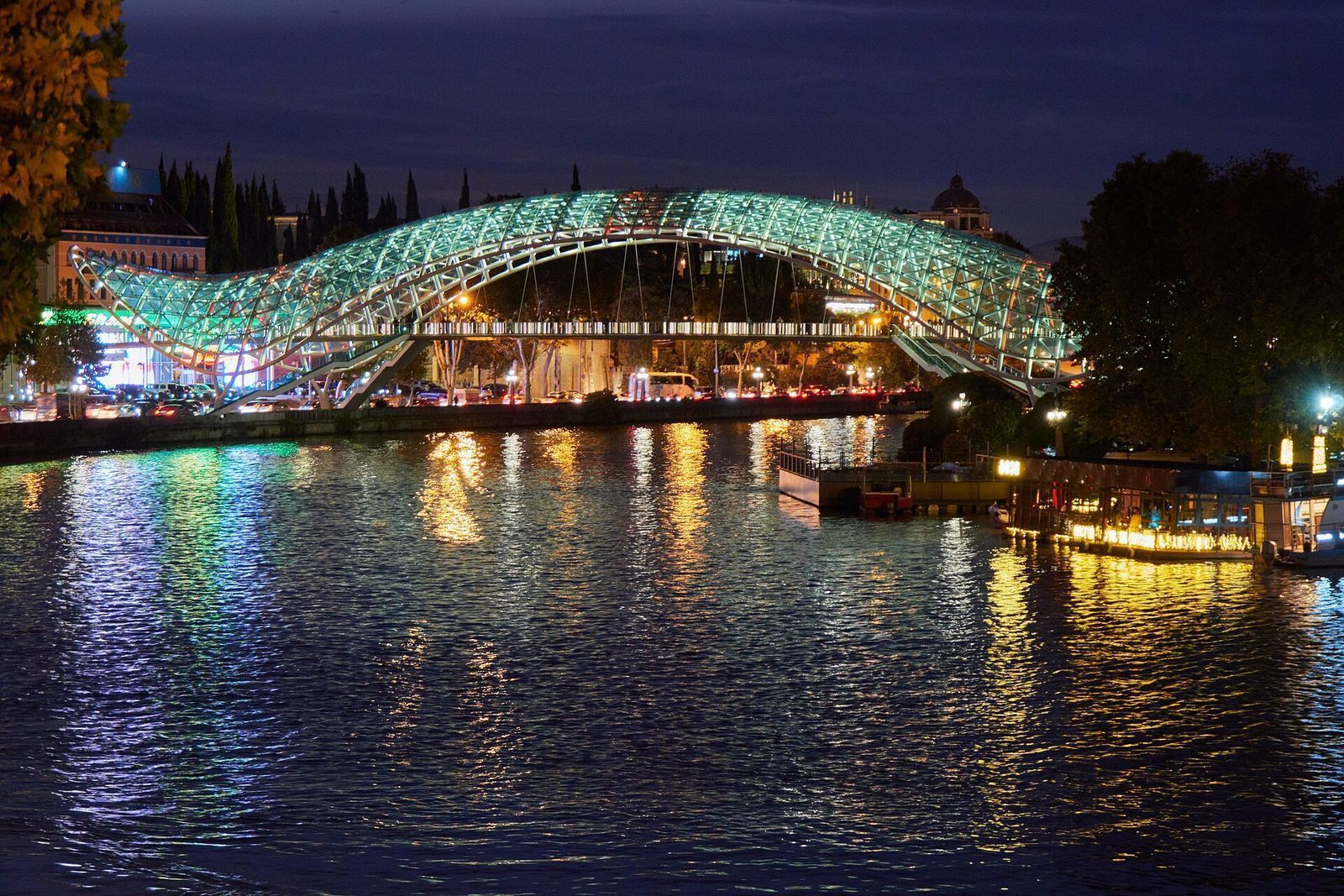
On the river, the glass Bridge of Peace links Kala to Rike Park and the cable car station. I cross it after dark, when its lights come on.
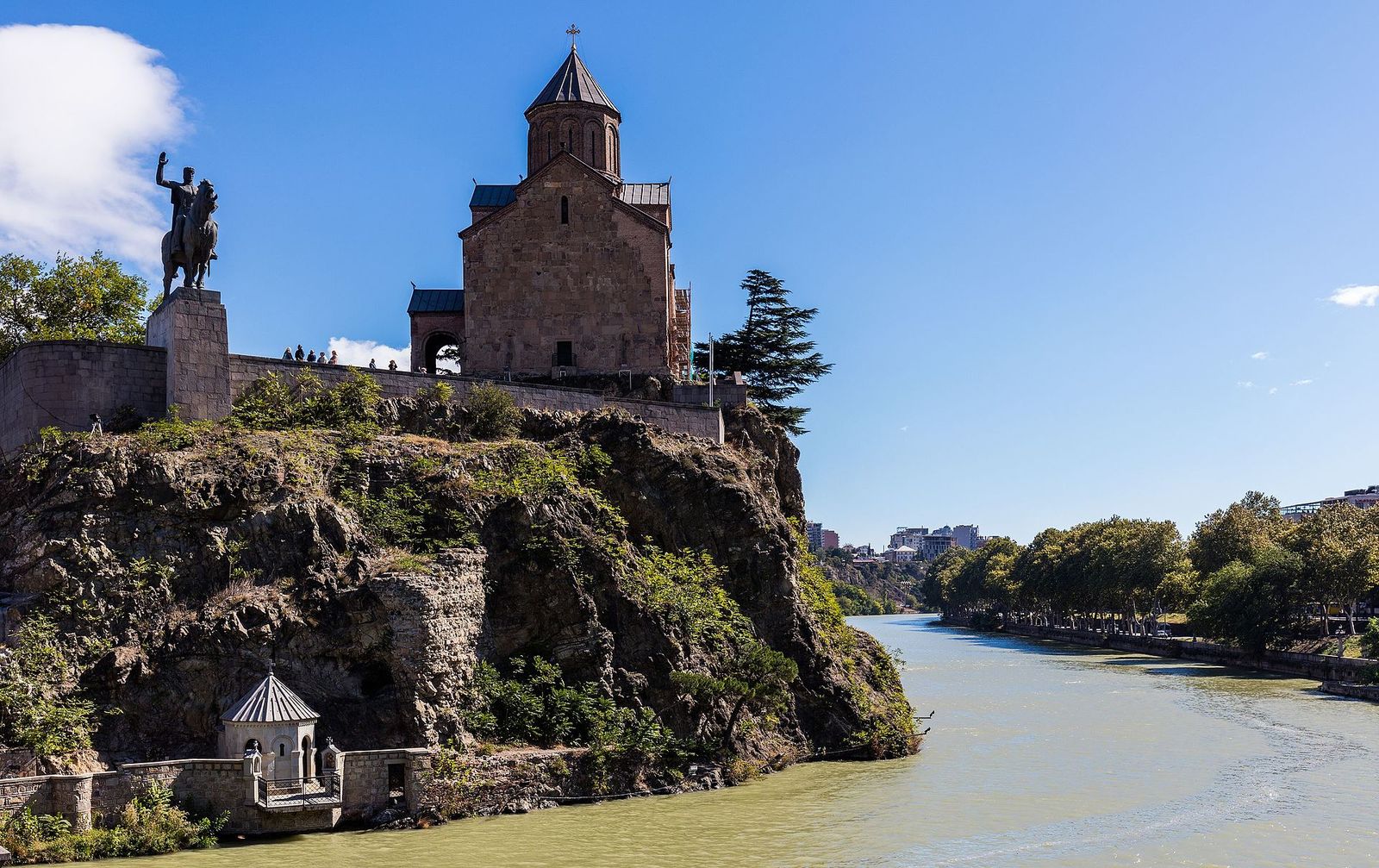
Metekhi Church sits on the cliff opposite, across the river in Avlabari, 10 minutes on foot from Rike Park, with the statue of King Vakhtang Gorgasali on horseback beside it.
Where to eat and drink in and around Old Tbilisi
For its size, Old Tbilisi has fewer good restaurants than Vera or Chughureti, and the places on the main squares lean on the view. These are the ones I'd actually go to.
| Place | Where | Go for |
|---|---|---|
| Cafe Leila | 18 Shavteli St | Vegetarian kharcho and chakapuli under muqarnas ceilings; cappuccino 9 GEL |
| Matasse 1822 | 40 Vertskhli St | Honey cake in a Tiffany-blue patisserie; cappuccino 10 to 15 GEL |
| Shemomechama | Abanotubani | Shkmeruli, pkhali and an open kitchen where you watch the khinkali folded |
| Deda Tbilisi | 6 Saiatnova St | Mtsvadi from a courtyard pit grill; book in summer and autumn |
| Chef Saradjeff | 11 Gorgasali St, below the baths | Food from Meskheti, including apokhti khinkali |
| Maspindzelo | 7 Gorgasali St | Live singing, 20 to 70 GEL a head, open round the clock Friday and Saturday |
| Khasheria | 9 Samghebro St | Khashi, the morning tripe soup |
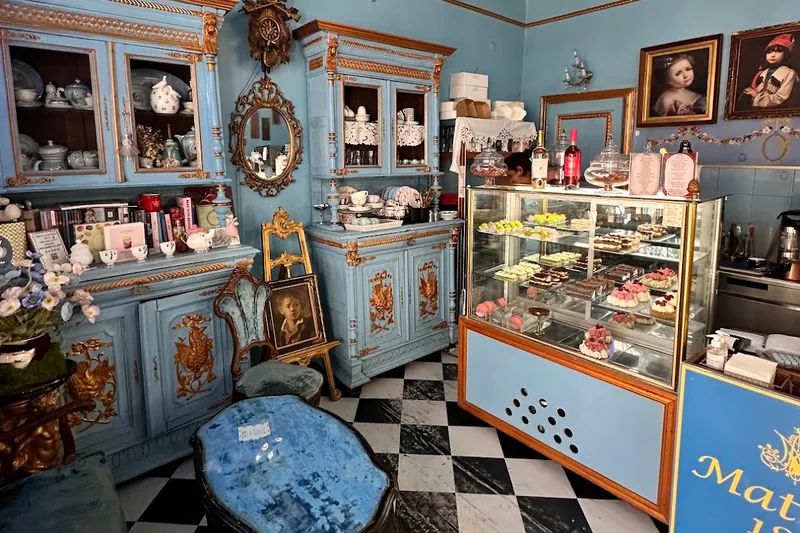
My sweetest Old Town mornings start at Matasse 1822 on Vertskhli Street, a Tiffany-blue patisserie with gilded cabinets and a case of cakes. I order the honey cake with a cappuccino, 10 to 15 GEL, and it's my favorite of the Old Town's breakfast spots.
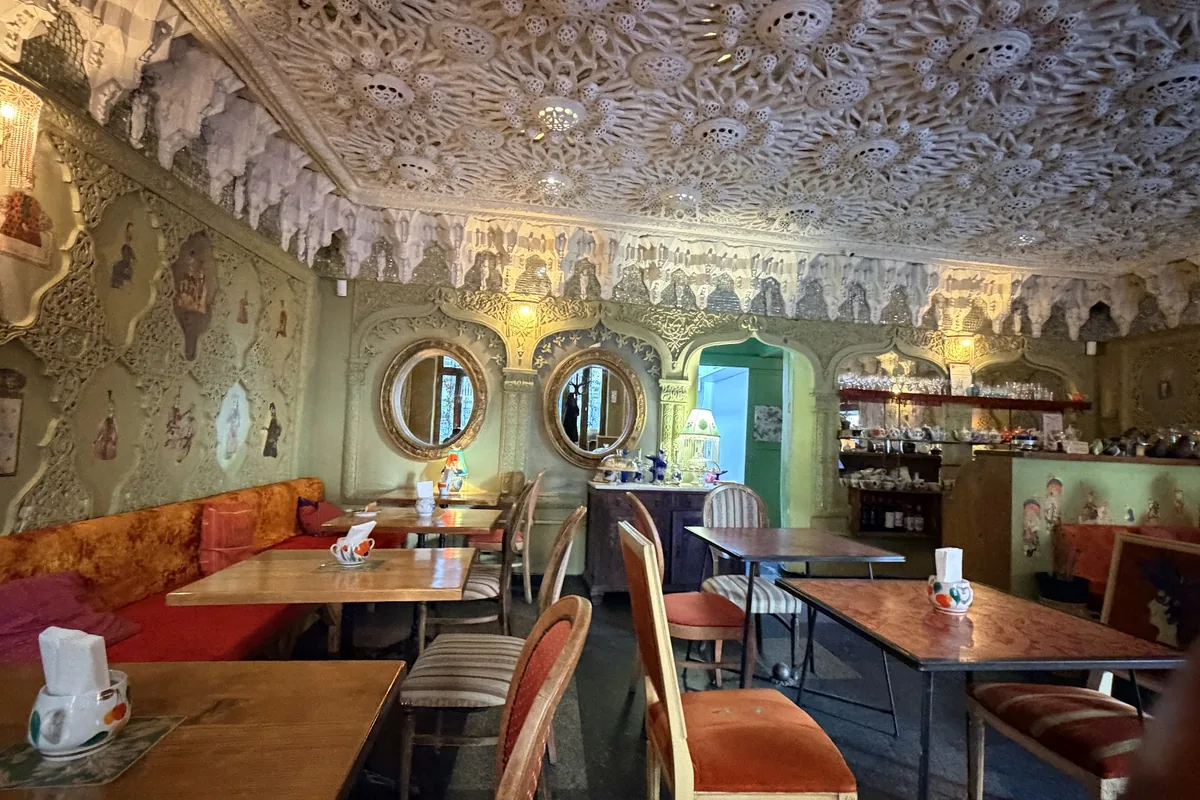
For lunch I walk to Cafe Leila at 18 Shavteli Street, opposite Anchiskhati Basilica. It's a vegetarian place in a former Soviet-era sweet shop, with muqarnas ceilings, mirrors and red banquettes, and I go for the mushroom kharcho with cornbread. It's open 11:00 to 23:00 and takes walk-ins, but it's busy and much photographed, so I get there early.
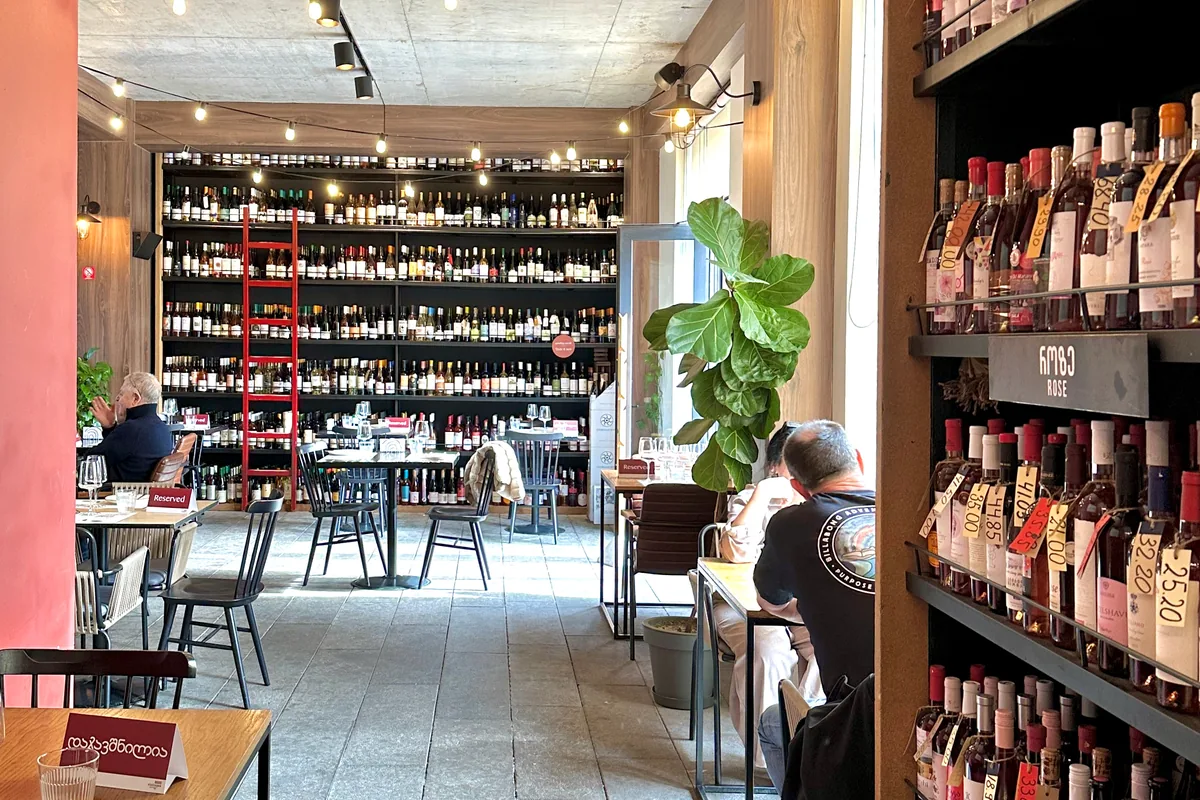
Inside the Old Town, 8000 Vintages on Kote Afkhazi Street opens at noon and pours wine by the glass for 8 to 16 GEL, with cheese boards and pkhali on the side. The walls are floor-to-ceiling bottles, so it doubles as a shop for anything you want to carry home.
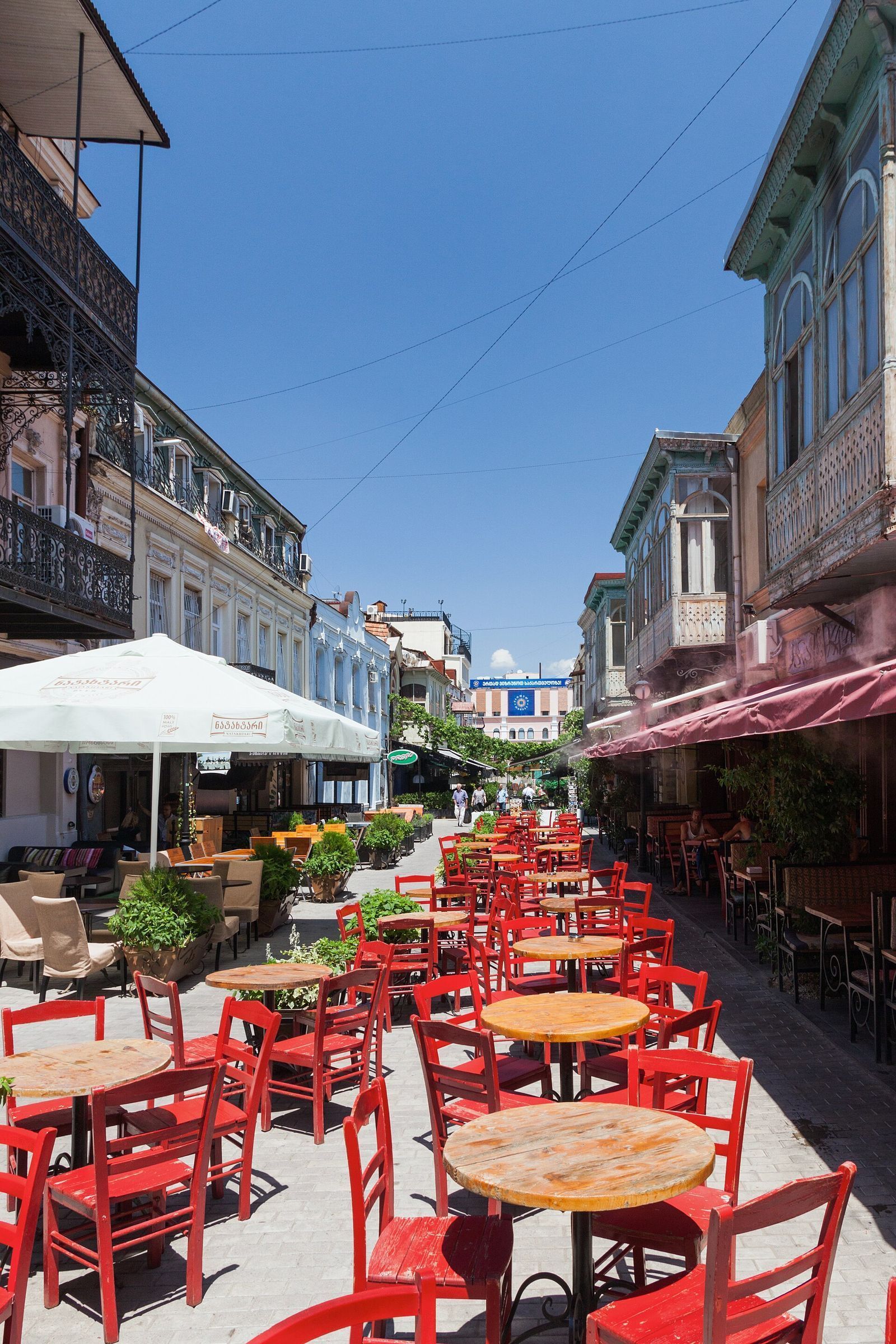
For a drink outside on a warm evening, Erekle II Street has the outdoor tables under string lights, a few minutes' walk from Shardeni.
Staying in Old Tbilisi: prices, hotels and who it suits
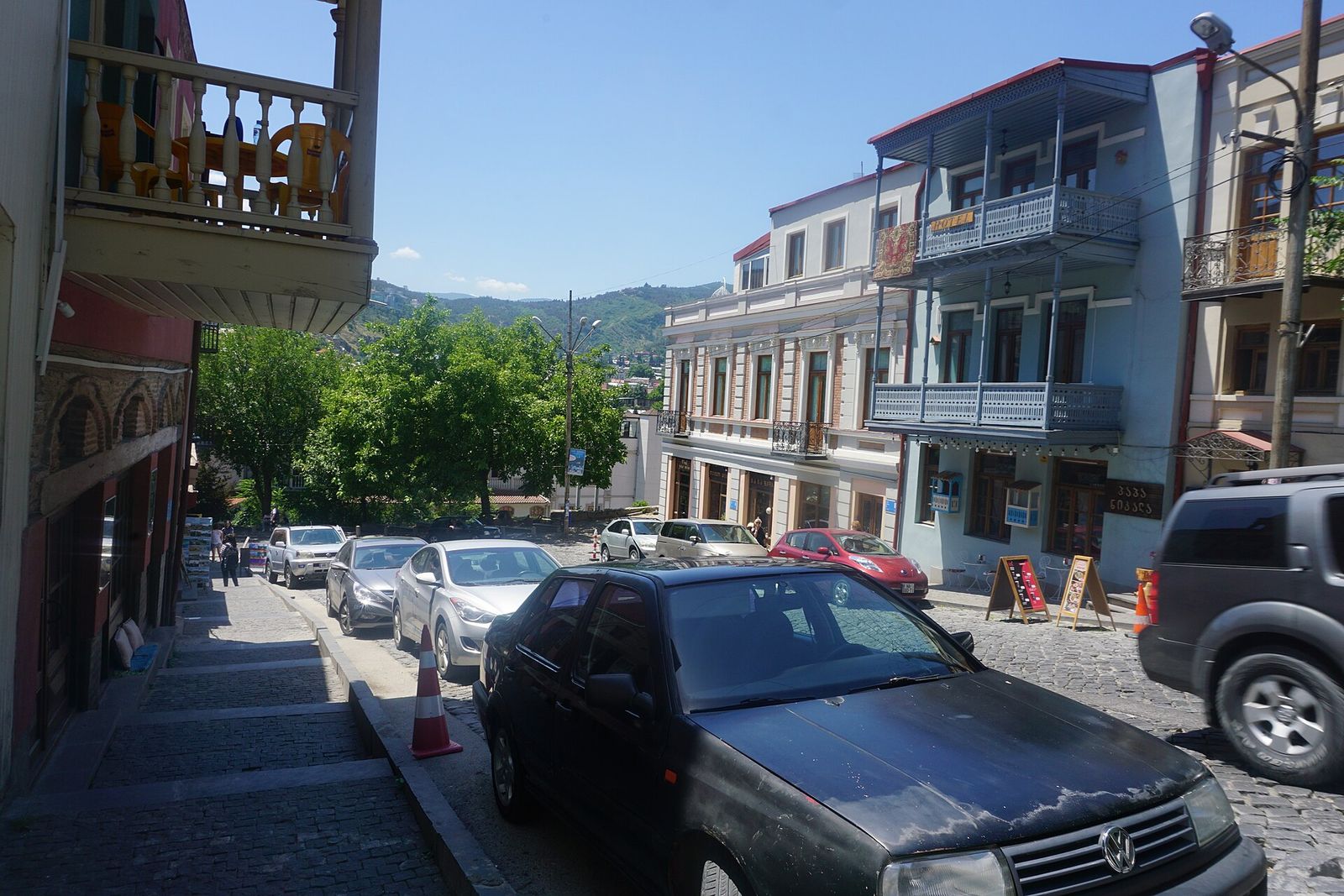
Old Tbilisi is the obvious base for a first trip of 2 to 4 days: you walk out of the door into the old streets, and everything in this guide is on foot. It's also the most crowded and most expensive area in the city in high season.
| Where you sleep | Price per night |
|---|---|
| Family guesthouse | 30 to 60 GEL per person |
| Apartment | 80 to 150 GEL |
| Boutique hotel | 150 to 300 GEL |
Guesthouses cluster around Shardeni and Abanotubani. Read the recent reviews for plumbing and noise before you book, and book 2 to 4 weeks ahead for May, June, September and October. In July and August, when 35°C is common, check the listing says air conditioning.
These are the hotels I'd shortlist.
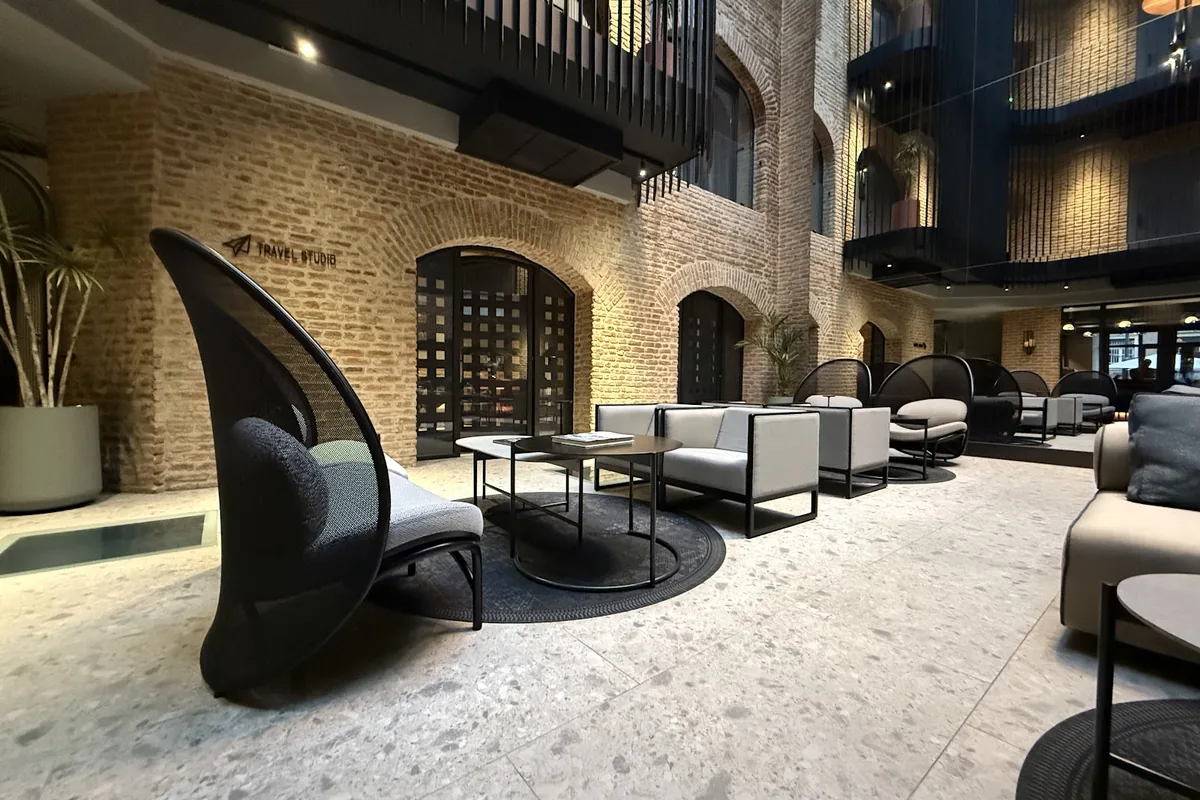
Qarvasla Hotel is the best-rated hotel on this list, 9.4 on Booking.
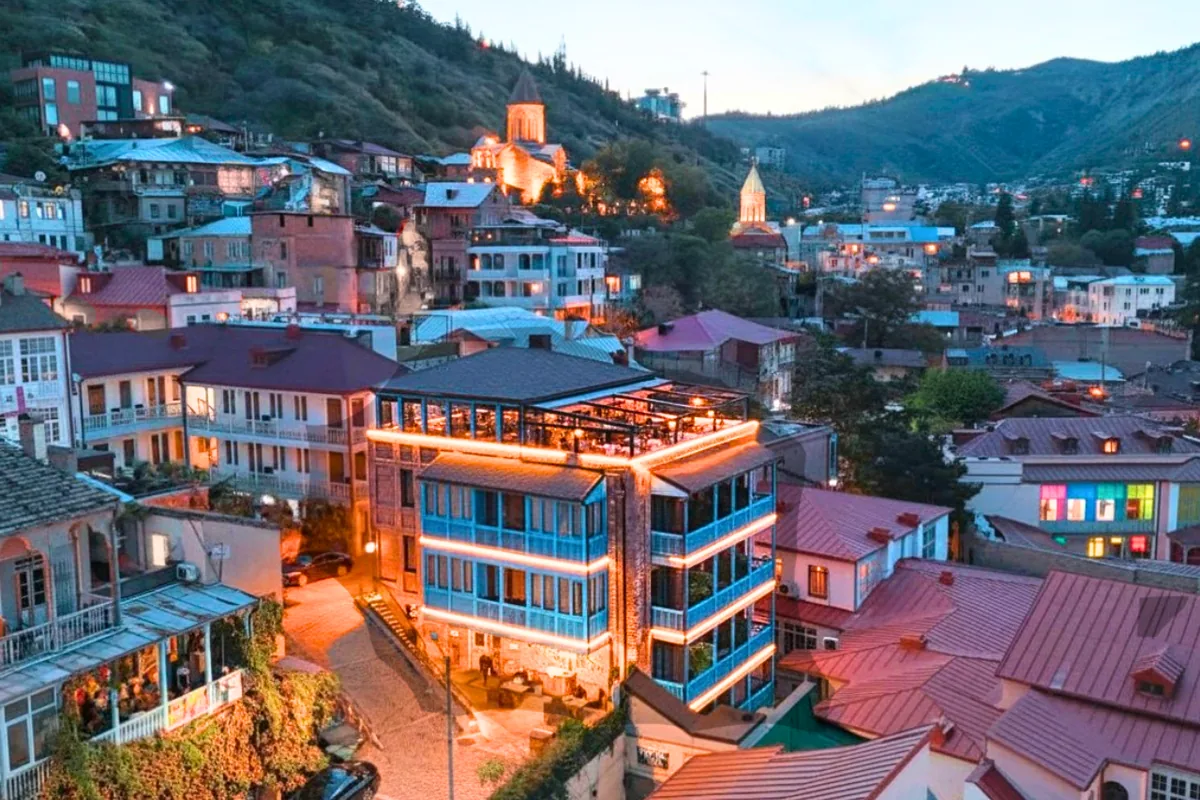
TbiliSee Hotel, at 24 Betlemi St, is a restored heritage building on the slope toward Narikala, with blue balconies, a terrace for every room and a rooftop bar. 9.3 on Booking.
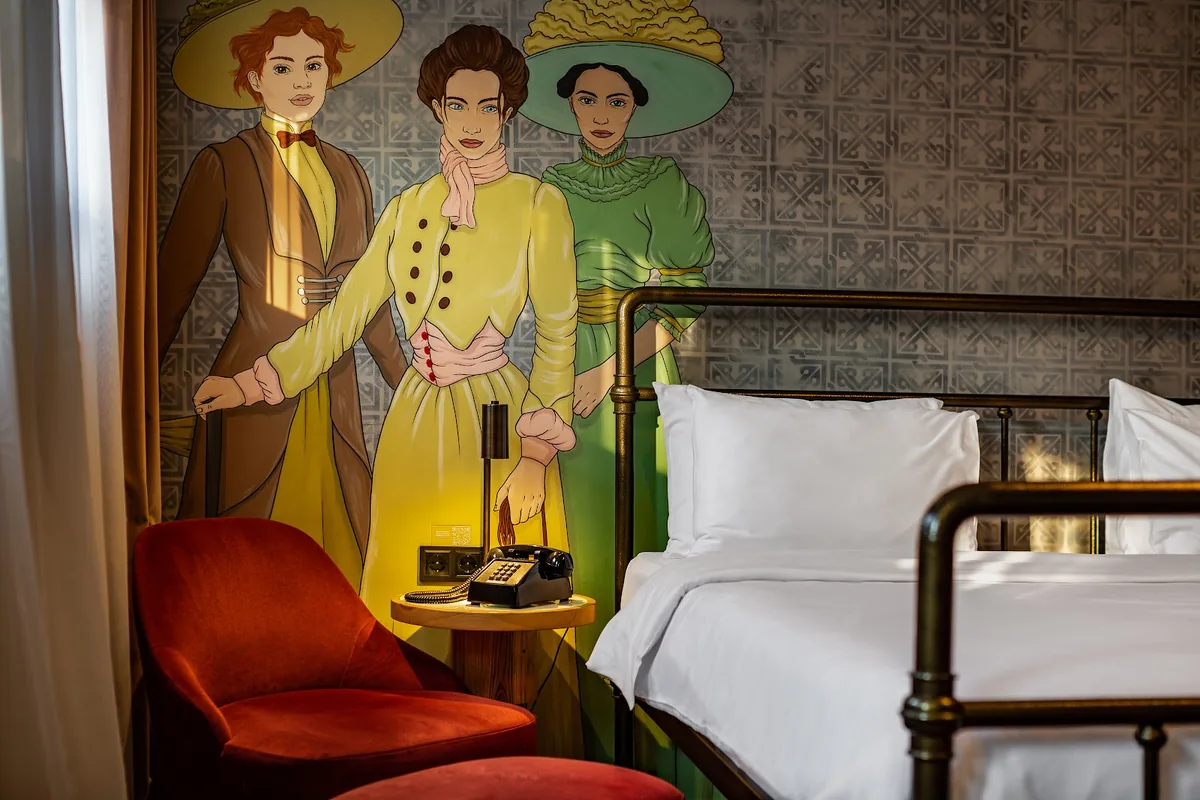
The House Hotel Old Tbilisi, at 15 Chakhrukhadze St, has 17 rooms with murals and handwoven rugs, a courtyard with open balconies and the Blue Fox restaurant in the garden.
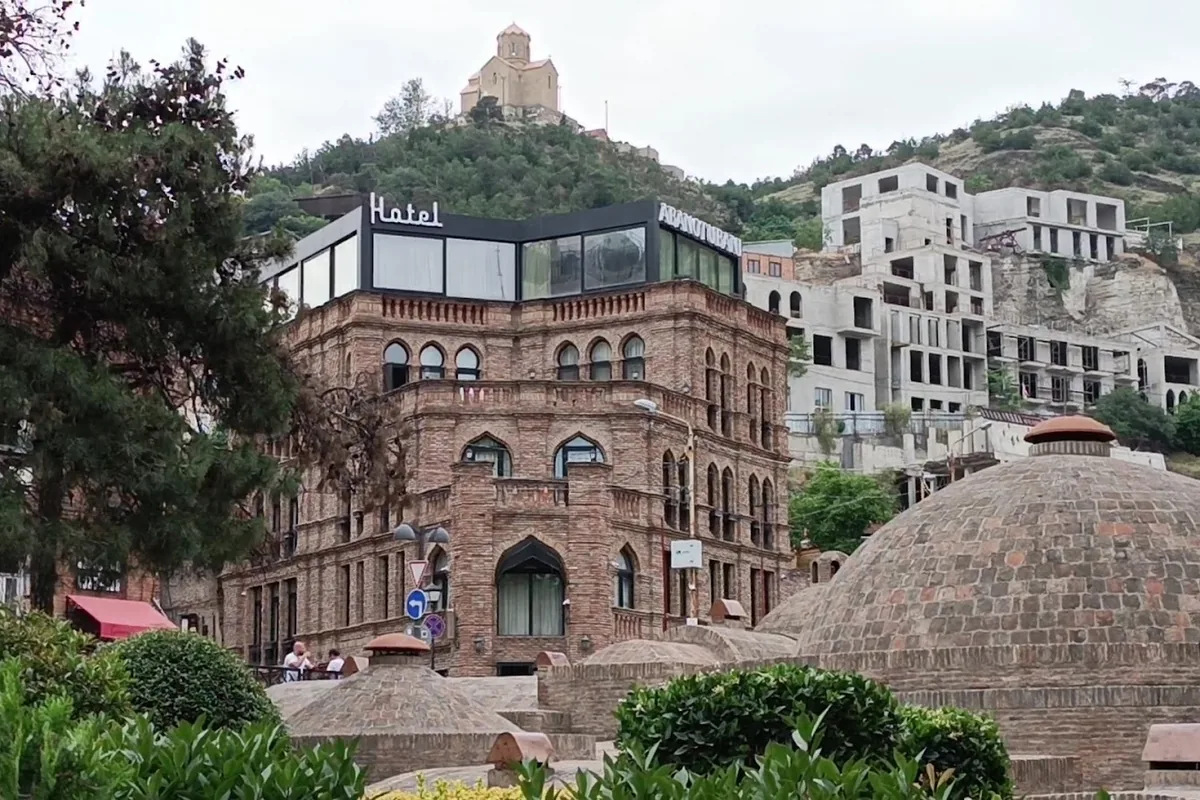
Hotel Abanotubani, at 3/9 Ioseb Grishashvili St, has soaking tubs in the rooms with views over the bath domes. Book the Superior King Room for the tub with a view, ideally in winter.
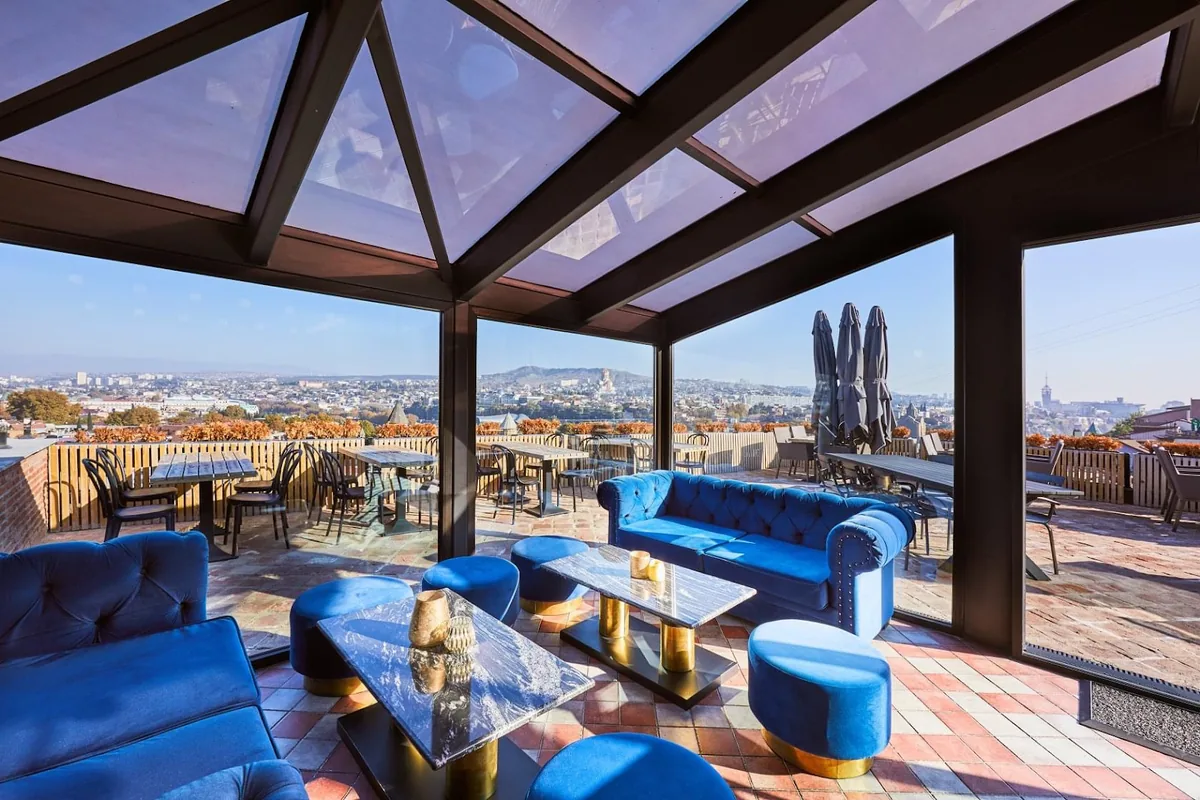
Amante Narikala Boutique Hotel sits below the fortress, with a rooftop terrace and bar. It's a couples' pick, 9.2 on Booking.
Who should stay in Old Tbilisi
- First-timers on a short trip: 2 to 4 days, no taxis needed for the sights.
- Couples: rooftop terraces, balconies and a private bath room 5 minutes from the door.
- Early risers: you're on the cobbles at 08:00, before the tour groups.
- Winter visitors: the baths on the doorstep are at their best on a cold night.
Who should stay somewhere else
- Light sleepers: weekend nights around Shardeni stay loud until 3am. Sololaki, just uphill, is quieter and a little cheaper at 60 to 200 GEL a night.
- Heavy suitcases and limited mobility: the lanes are steep and cobbled, plenty of old buildings have stairs and no lift, and taxis struggle to get down the narrow streets.
- Long stays on a tight budget: Marjanishvili and Chughureti run 50 to 100 GEL a night and have better food for the money.
Getting to Old Tbilisi and getting around
From Freedom Square metro, walk 8 minutes down Kote Afkhazi Street to Meidan. From Avlabari metro, it's 10 minutes across the Metekhi bridge. A metro or bus ride costs 1 GEL.
From the airport, 18 km away, a taxi to the Old Town costs 20 to 30 GEL. Bolt and Yandex Go both work. Ask the driver to drop you at Meidan rather than at your guesthouse door if it's up a narrow lane, because taxis struggle in the old streets.
Once you're here, walk. The Old Town is too tight and too steep for anything else, and there are few public toilets, so use the cafes.
Best time to visit Old Tbilisi and how long to spend
The best months for walking the Old Town are April to June and September to October. July and August regularly pass 35°C, and the stone lanes hold the heat.
Time of day matters more than the month. At 09:00 the streets are nearly empty and the light is soft on the balconies. By late morning the groups are out, and by evening Shardeni and the baths take over. In rain, the cobbles get slippery fast.
Here's how I'd split the time:
- Half a day: Meidan and the bazaar, the lanes of Kala, Sioni and Anchiskhati, then up the Betlemi stairs for the view.
- A full day: add the cable car to the ridge, the walk down through the botanical garden or Abanotubani, a private bath in the evening and dinner on a side lane.
- Two or more days: stay here, and walk it at different hours. The same lanes look completely different at 08:00 and at 22:00.
Key takeaways
- Old Tbilisi is five quarters within a 10-minute walk: Meidan, Abanotubani, Kala, Shardeni Street and Betlemi.
- Narikala is closed for restoration, but the ridge, the views and the 2.50 GEL cable car are open.
- Shardeni Street charges 9 to 14 GEL for a beer against 5 to 9 GEL in an ordinary bar; eat and drink a block away.
- Stay here for a first trip of 2 to 4 days at 80 to 300 GEL a night; light sleepers should pick Sololaki.
- Go early, wear shoes with grip and carry small lari notes for the street sellers.
Frequently asked questions
Is Old Tbilisi worth visiting?
Yes. Old Tbilisi is the part of the city most visitors come to see: the balconies, the bath domes, the churches and the views from the ridge are all here. The busiest strip, Shardeni Street, is touristy and overpriced, but the side lanes and Betlemi make up for it.
How long do you need in Old Tbilisi?
Half a day covers the streets at a relaxed pace, with a viewpoint and a coffee stop. A full day lets you add the cable car, the ridge and an evening sulfur bath. If you're staying here, walk it at different times over 2 or 3 days.
Is Narikala Fortress open in 2026?
No. Narikala has been closed for restoration since late 2023 and has no reopening date. The ridge path around the walls and the viewpoint stay open, and the cable car from Rike Park runs as usual.
Is Old Tbilisi safe at night?
Yes. The Old Town is safe day and night, and the lanes around Shardeni stay busy until late on weekends. Keep an eye on your bag in crowds, and order taxis in an app rather than flagging one down.
Is Old Tbilisi a good area to stay in?
It's the best area for a first trip of 2 to 4 days, because every sight is on foot. It's also the busiest and most expensive part of the city, loud on weekend nights and hard work with a heavy suitcase, so light sleepers and long stays do better in Sololaki or Marjanishvili.
What is Shardeni Street known for?
Shardeni Street is Old Tbilisi's pedestrian street of restaurants, bars, galleries and craft shops, with the Tamada statue at its entrance. It's at its liveliest after dark, when the bars put tables outside and play live music. Drinks there cost more than elsewhere: 9 to 14 GEL for a beer.
What is Kala in Tbilisi?
Kala is the oldest part of Old Tbilisi, the lanes around Sioni Cathedral and Erekle II Street, including Shardeni Street in upper Kala. It's where the classic carved balconies and the city's oldest church, Anchiskhati, are.
Is Old Tbilisi expensive?
It's the most expensive part of Tbilisi to sleep and drink in. Walking it is free, the cable car is 2.50 GEL and a public bath is 6 to 10 GEL, but rooms run 80 to 300 GEL a night and a Shardeni cocktail costs 20 to 30 GEL against 14 to 20 GEL in an ordinary bar.
Tbilisi Neighborhoods: The 8 Best Areas and What Each One Is Like
Tbilisi is known for its old quarters. Here are the 8 best areas to explore, what each one is like and who it suits.
Read the guide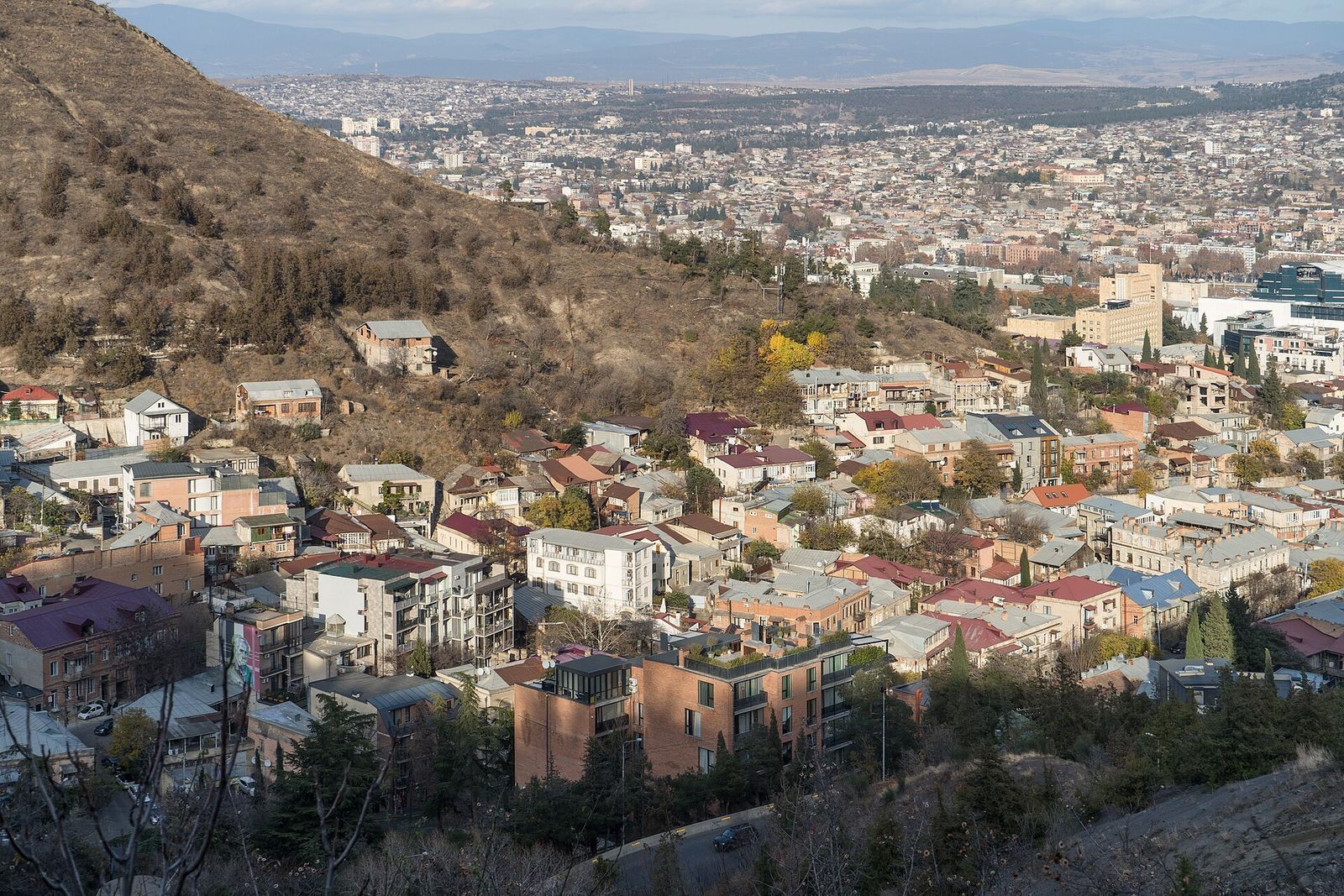
Sololaki, Tbilisi: Art Nouveau Entrances, Cafes and Where to Stay
Sololaki is the Art Nouveau quarter of Tbilisi. Here is what to see, where to eat and drink, and who should stay there.
Read the guide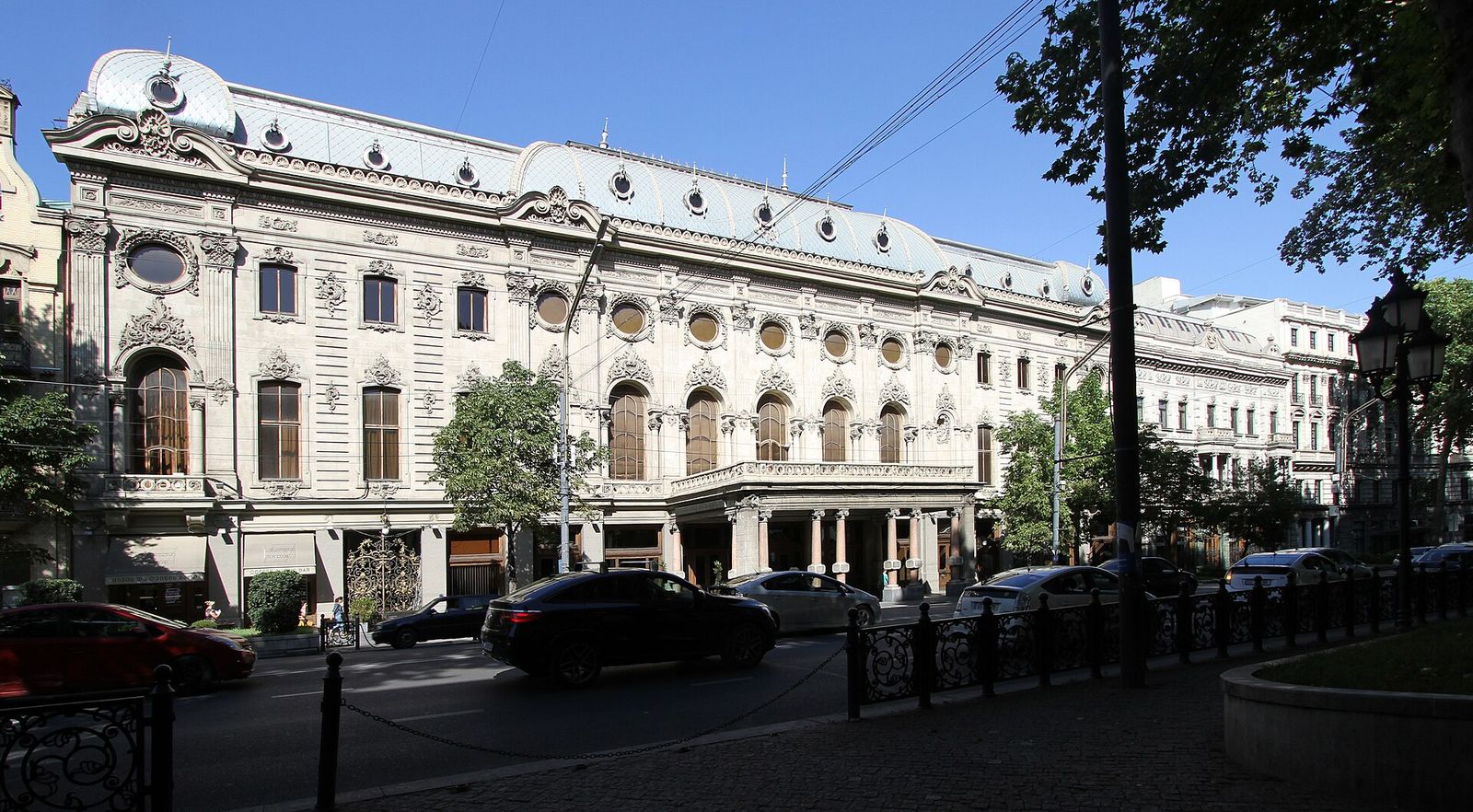
Rustaveli Avenue and Freedom Square: What to See, Eat and Know
Rustaveli Avenue is the grand main street of Tbilisi. Here is what to see from Freedom Square on, and how long it takes.
Read the guide