David Gareja Monastery Day Trip: Lavra, Udabno and Getting There
David Gareja is the strangest of the day trips from Tbilisi: a 6th-century monastery cut into a desert ridge on the Azerbaijan border, with striped red hills all around and no town in sight. Here's what you need to know about what is open in 2026, how to get there without a marshrutka, the Rainbow Hills and how I'd plan the day.
Is David Gareja worth the trip?
Yes, if you want to see a side of Georgia that looks nothing like Tbilisi. David Gareja (you'll also see it spelled Davit Gareji) is a complex of cave monasteries carved into the sandstone of Mount Gareja, out on the dry steppe of Kakheti near the Azerbaijan border. The drive alone is half the appeal: green Kakheti gives way to bare, rolling hills streaked in pink, ochre and rust, and by the time you reach the monastery the city feels very far away.
I'll be straight about the trade-off. The part of the complex that made David Gareja famous, the cave churches of Udabno with their medieval frescoes, is closed. What you get is Lavra, the working monastery at the foot of the ridge, plus the landscape around it. That is still a good day out, and I'd put it on any list for a second or third trip to Georgia. It is a long drive for an hour or two at the monastery, though, so it suits people who enjoy the road and the scenery as much as the destination.
What's open at David Gareja right now
The complex has several parts, and they are not equally reachable. Here is where things stand in 2026.
| Part | What it is | Open? | Time to allow |
|---|---|---|---|
| Lavra Monastery | The lower monastery, founded by Saint David, still home to monks | Yes, daily in daylight | 1 to 1.5 hours |
| Udabno Monastery | Cave churches and cells on the ridge, with the best frescoes | No, closed since 2019 | Not possible |
| The ridge walk | The path up and over the ridge to Udabno | No, border guards turn walkers back | Not possible |
| Rainbow Hills | Striped hills near Udabno village | Yes, open land | 30 to 60 minutes |
| Udabno village | A small village on the road in, with places to eat | Yes | Lunch stop |
Lavra Monastery: what you'll see
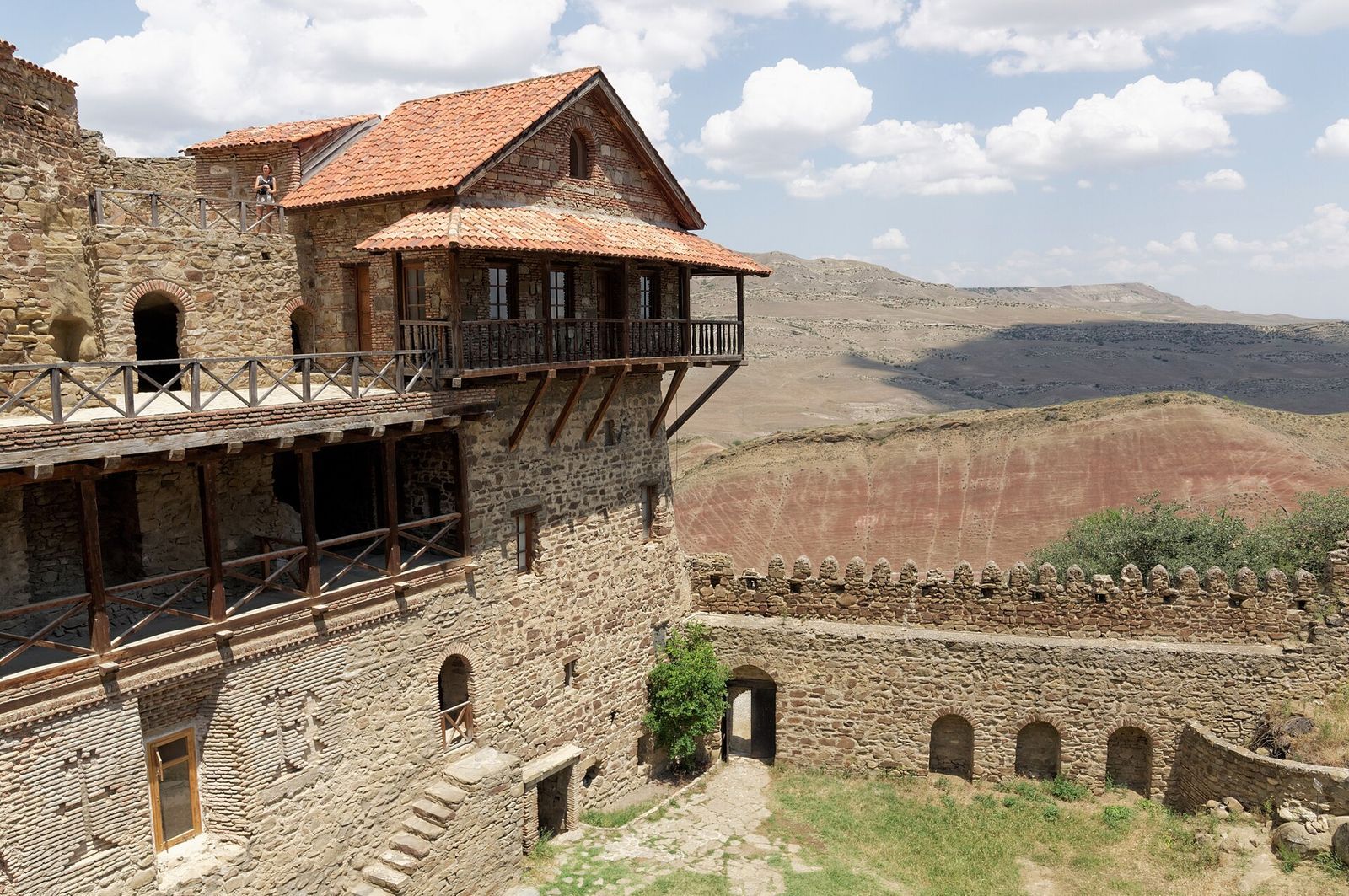
Lavra is where it all started and where it still goes on: monks have lived here, on and off, since the 6th century, and the monastery is active today. From the car park a steep dirt path climbs to a gate, and inside the walls you find a small courtyard of stone buildings with wooden balconies, set right against a cliff full of caves.
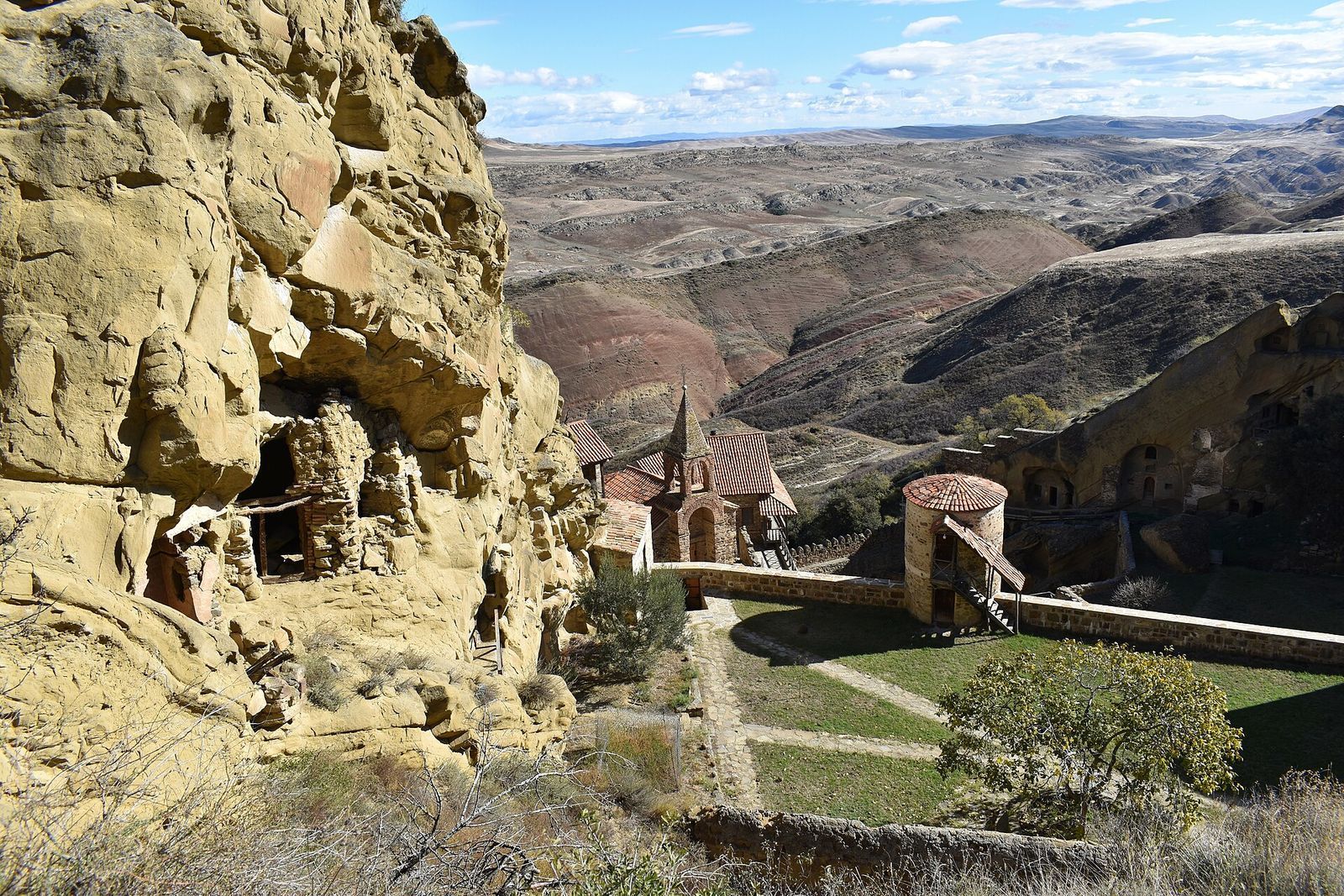
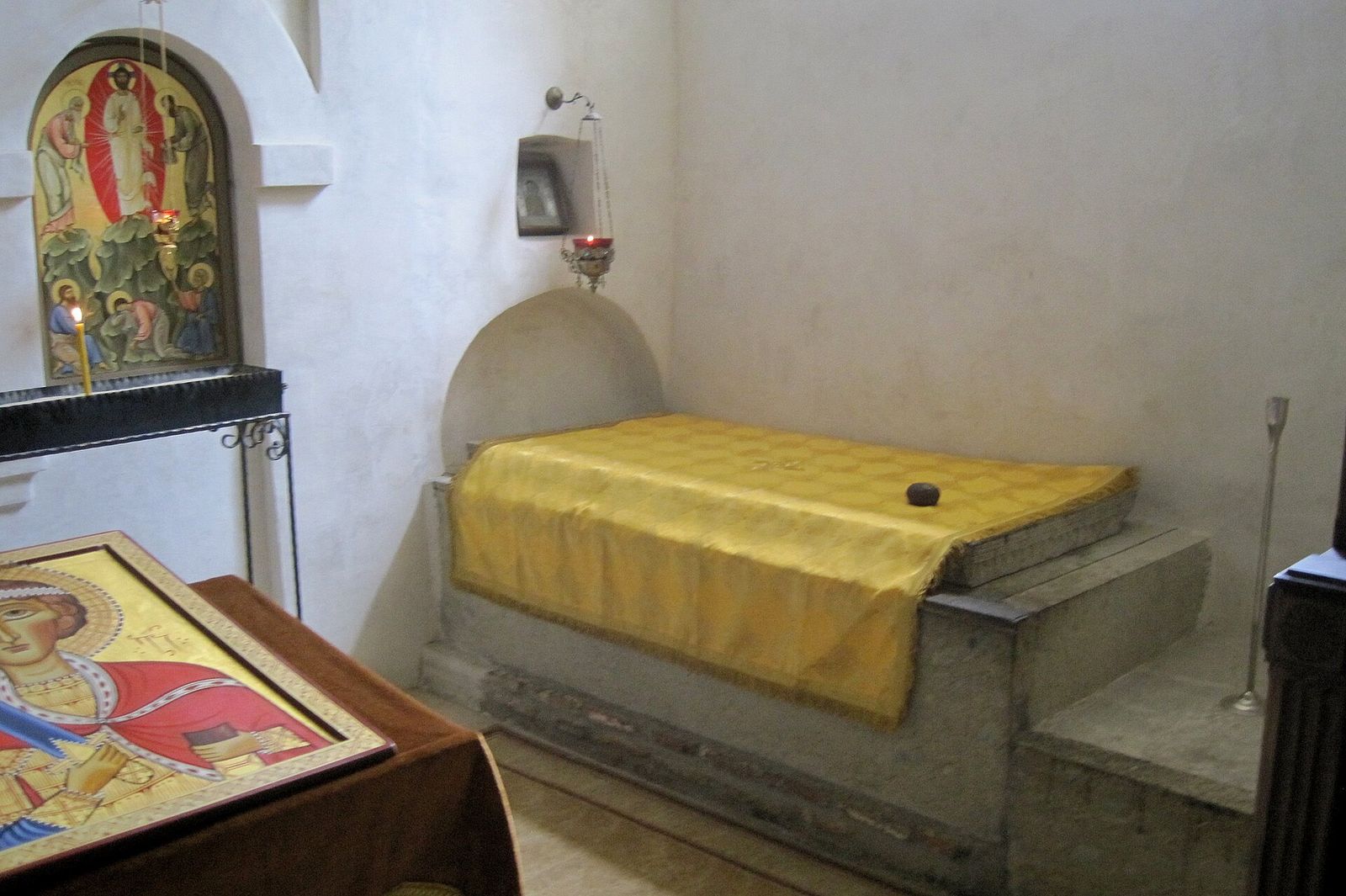
The heart of Lavra is the cave church that holds the tomb of Saint David and his disciples. It is dark, cool and small, and it is a working church, so step in quietly and keep your camera down if a service is on. Around the courtyard you can see the rock-cut cells where the monks lived and a refectory carved out of the cliff.
Two climbs are worth the effort. The first is to the 18th-century watchtower above the complex, which gives the best view down over the monastery roofs and out to the red hills; this is the view on most of the postcards. The second is the stone staircase cut into the rock that leads toward David's Tears, a spring the monks treat as holy. I'd give Lavra an hour to an hour and a half at an easy pace, longer if you like to sit somewhere shady and take in the silence.
Udabno Monastery and the Azerbaijan border
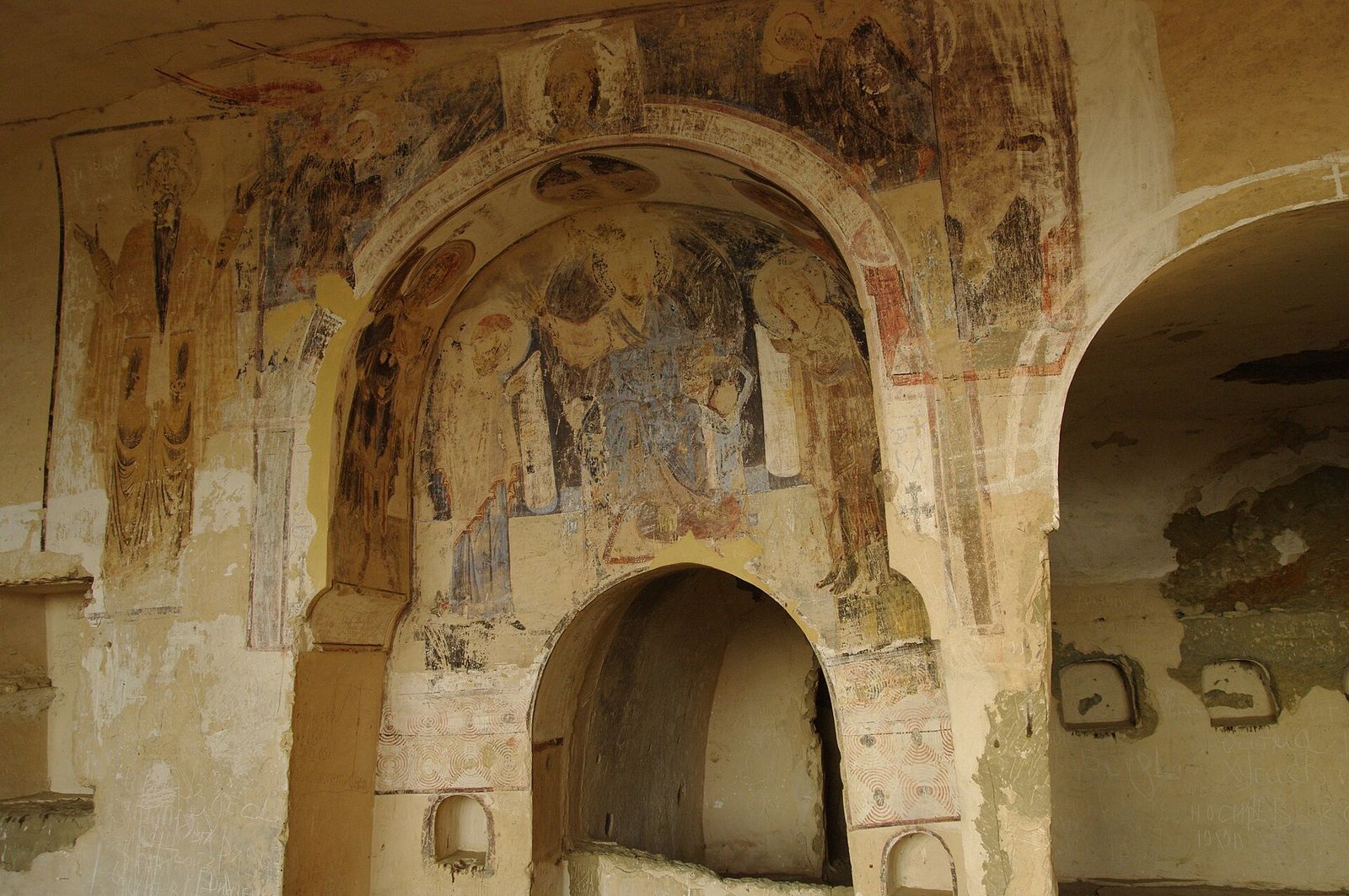
Udabno sits on the far side of the ridge above Lavra. Its name means "desert", and it is a long line of cave churches, cells and a refectory carved into the cliff face between the 8th and 10th centuries. This is where the great frescoes are: scenes from the Bible, from the life of Saint David and a Last Supper that is the most famous painting in the whole complex.
The problem is the border. The Soviet-era line between Georgia and Azerbaijan runs along the top of the ridge, so part of the complex, Udabno included, falls on the Azerbaijani side. Georgia considers David Gareja one indivisible holy site; Azerbaijan points to the old Soviet map. The two countries have been talking about it for decades, and after a tense summer in 2019 the walk to Udabno was shut. It has stayed shut since.
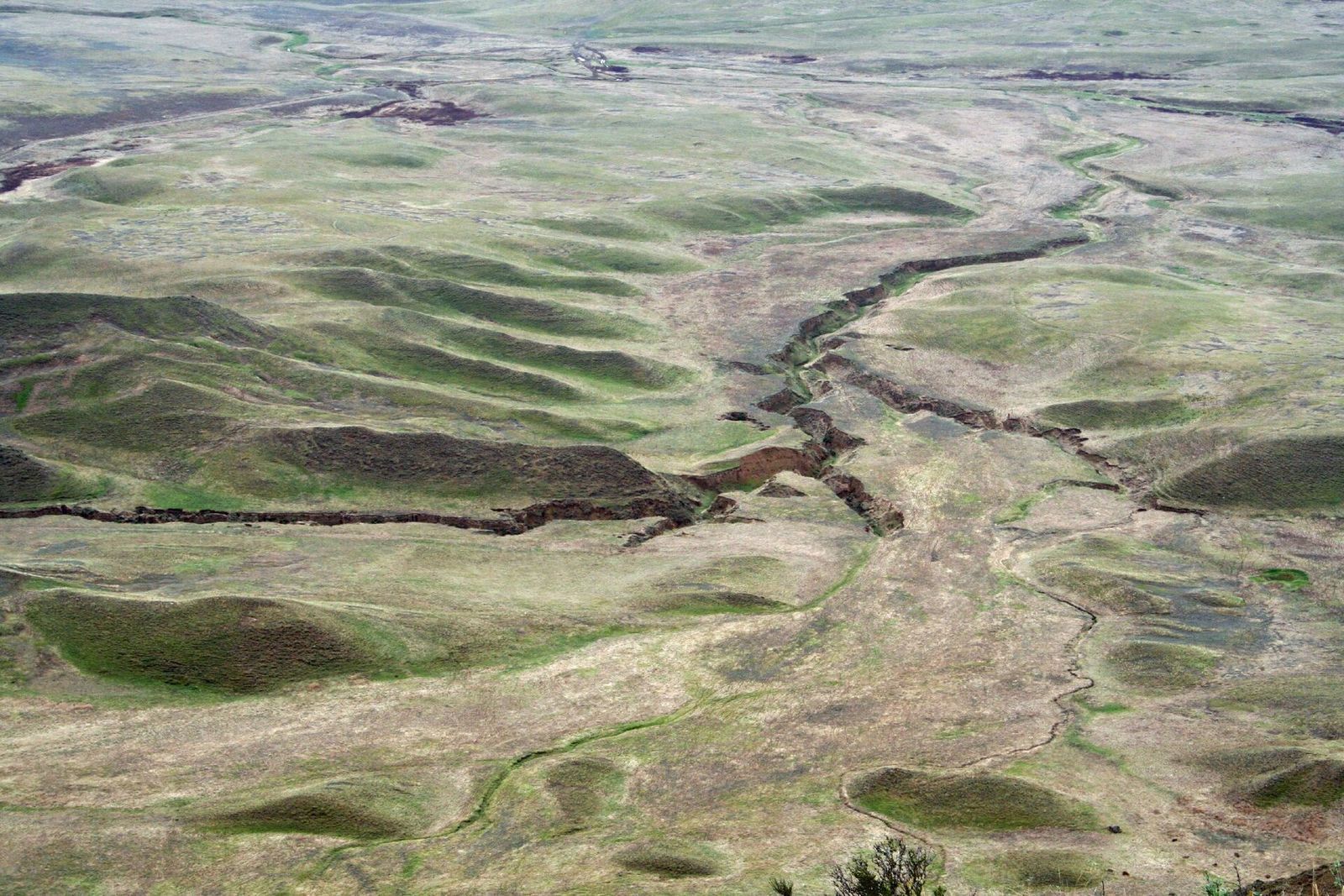
If it ever reopens, the walk is short but steep: about 2.5 km each way from Lavra with around 200 m of climbing, and the view from the ridge stretches far into the Azerbaijani plain. For now, Lavra and its watchtower are as high as you go. If cave churches with frescoes are the main reason you want to leave Tbilisi, Vardzia in the south of Georgia is the place that still delivers them in full.
A short history of David Gareja
The story starts with Saint David, one of the Assyrian Fathers, the monks who came from Mesopotamia in the 6th century and spread monastic life across Georgia. He settled in a cave on this dry ridge with his disciple Lukiane, and the legend says deer came down from the hills to give them milk. Followers arrived, and over the next centuries a whole chain of cave monasteries grew along the mountain.
The 11th to 13th centuries were the golden age, when Georgian kings funded the complex and much of the fresco painting was done. Then came the hard years: Mongol raids hit the complex, and in 1615 Persian troops killed 6,000 monks at Lavra, a massacre still remembered in Georgian church history. In the Soviet period the monasteries were emptied, and the army used the surrounding steppe for training, which only stopped in the 1990s after public protests.
Today David Gareja is on Georgia's UNESCO tentative list and is one of the most important pilgrimage sites in the country. If you want the wider picture of how Georgia's church and its kings shaped the country, Georgian history makes a lot more sense once you have stood in a place like this.
The Rainbow Hills and Udabno village
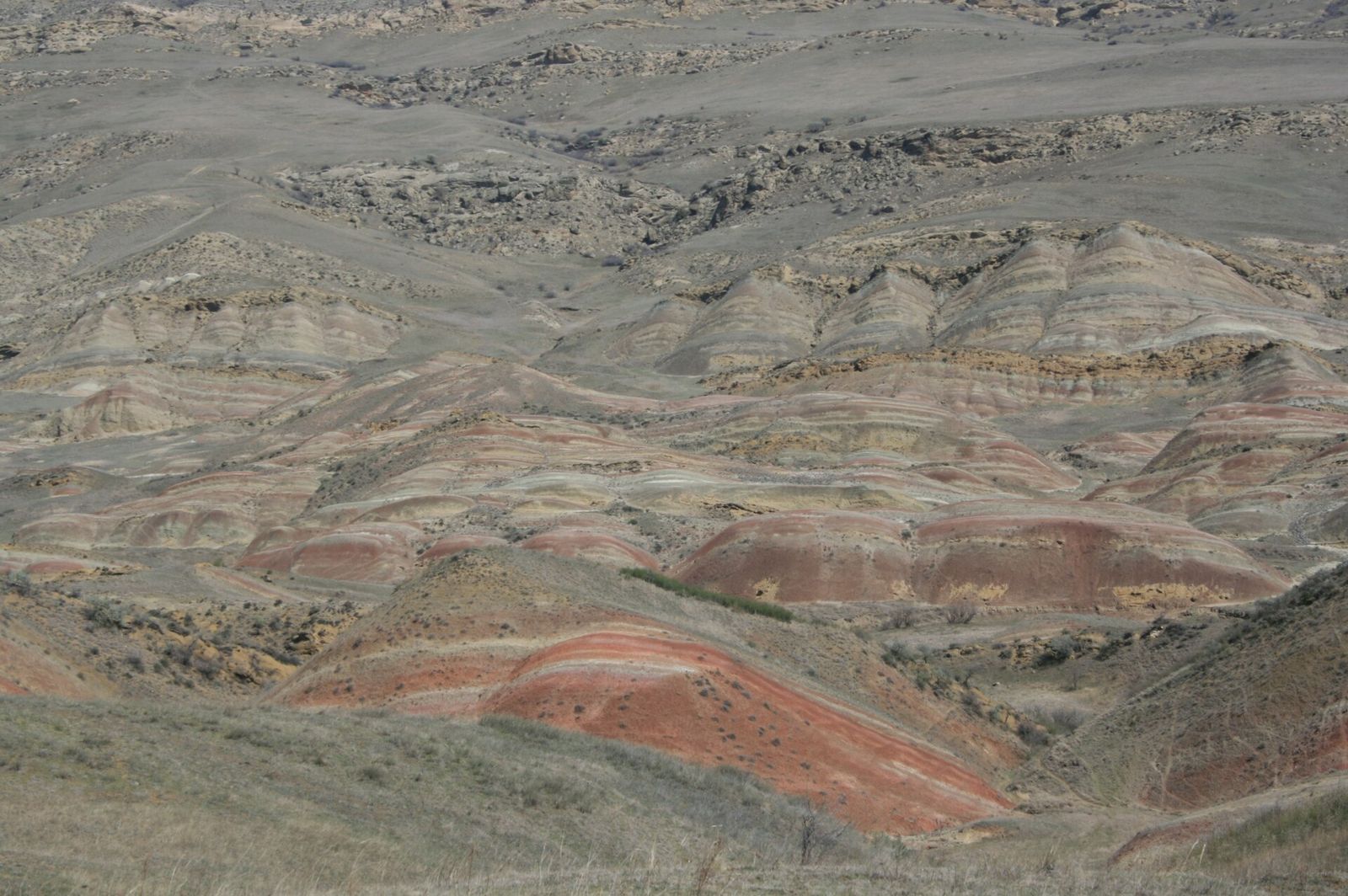
The other half of a David Gareja day is the land itself. Around Udabno village and along the road to the monastery, the hills are banded in pink, red, ochre and cream, the layers of old sediment laid bare by erosion. Tours call them the Rainbow Hills or Rainbow Mountains. They are not as loud as the photos online, but on a clear afternoon with low sun they are lovely, and you can see some of them from Lavra's watchtower.
Most drivers and tours stop for a short walk on the hills near Udabno village. Give it 30 to 60 minutes, wear proper shoes and stay on obvious tracks.
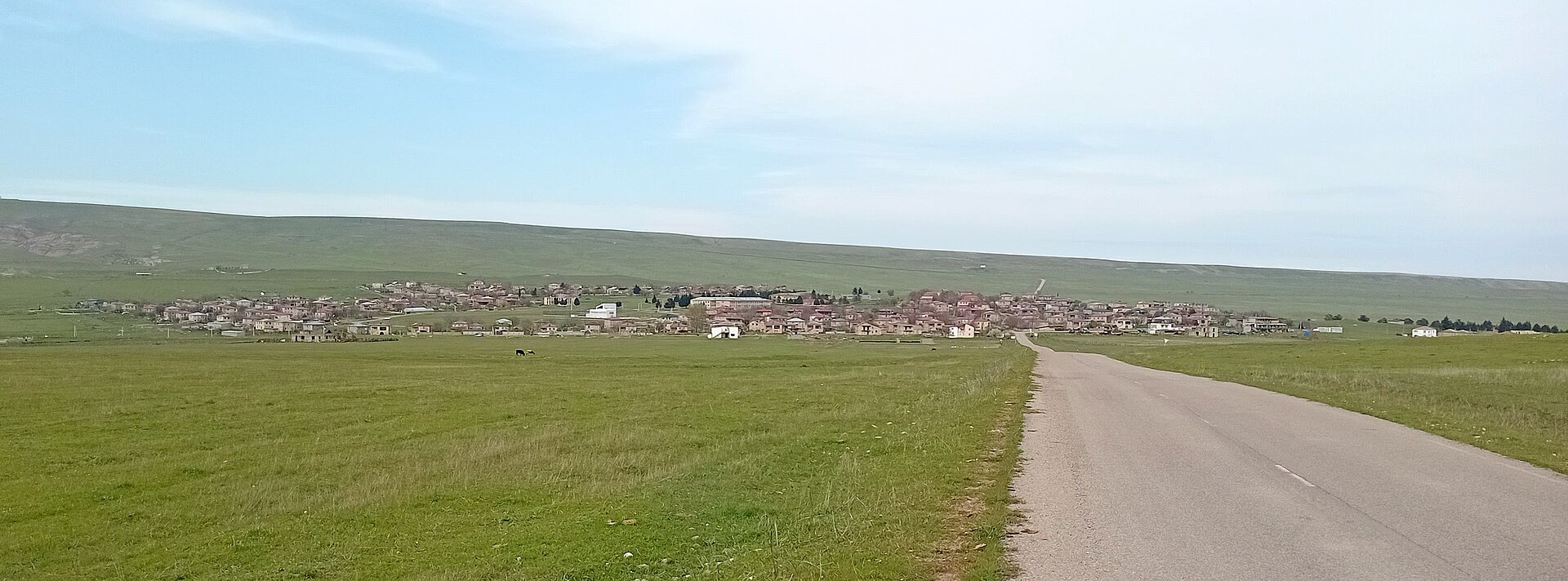
Udabno village itself is a small, windblown place on the steppe, and it is the only spot on the route with food. It has a couple of restaurants, Oasis Club being the best known, and they serve a decent Georgian lunch at prices a little above what you'd pay in Tbilisi. The Gareji Line shuttle and most tours stop here.
How to get to David Gareja from Tbilisi
There is no public bus or marshrutka to David Gareja, which is the first thing that surprises people. You have four options.
| Option | From | Cost | When it runs | Best for |
|---|---|---|---|---|
| Gareji Line shuttle | Pushkin Square, central Tbilisi | About 40 GEL return per person | About 11:00 daily, April to October | Solo travelers and couples |
| Driver with wait | Your hotel | 120 to 165 GEL per car | Any time you like | 3 to 4 people, early starts |
| Group tour | Central Tbilisi | From about $21 per person | Most days | Rainbow Hills included, no planning |
| Rental car | Wherever you pick it up | About 70 to 110 GEL a day plus fuel | Any time | Confident drivers |
Gareji Line shuttle
The Gareji Line is a minibus that runs from Tbilisi to the monastery and back every day from April to October. It leaves from Pushkin Square, the small park at the edge of Freedom Square, at about 11:00; be there by 10:45. A return seat costs about 40 GEL, paid in cash to the driver on the morning, and you cannot book ahead, so arrive early in summer when it fills.
It reaches the monastery around 12:30, gives you roughly 3 hours there, stops in Udabno village on the way back and has you in Tbilisi in the early evening. That timing puts you at Lavra in the heat of the day, which is the one real downside. Bring cash in small notes; the money in Georgia basics apply here, since nothing on the route takes cards reliably.
Driver or taxi
A driver for the day costs about 120 to 165 GEL per car, with waiting time at the monastery and the hills agreed before you set off. Split between 3 or 4 people it is cheaper than the shuttle, and it lets you leave at 08:00 and beat the heat. Book through a fixed-price driver app or your guesthouse. Agree the wait and the stops up front: there are no taxis at David Gareja, and you do not want to be negotiating a ride home in the desert.
Group tours
Group tours to David Gareja usually run about 7 hours and include the Rainbow Hills, with prices from about $21 per person on the booking sites; small-group and private tours with a guide cost more, roughly 90 to 150 GEL per person. A guide earns the money here, because the signs at Lavra are thin and the history is the point. The tours from Tbilisi that combine David Gareja with Kakheti wine country make for a very long day, so check the hours before you book.
Driving yourself
The road is paved all the way if you go through Sagarejo and Udabno village, and the route is well signposted. Do not follow a map app that sends you through Rustavi: that road is in poor shape and slow. If you are renting a car in Georgia for a few days, David Gareja is an easy self-drive with a car park right below the monastery.
My David Gareja day on the clock
This is how I'd do it with a driver, working around the heat and the light. With the shuttle the order is fixed for you, so this is the day to plan if you have the choice.
| Time | Leg | Cost | Note |
|---|---|---|---|
| 08:00 | Leave Tbilisi with a driver | 120 to 165 GEL per car | Via Sagarejo, not Rustavi |
| 09:45 | Arrive at Lavra | Free | Cool, quiet, before the tours |
| 09:45 to 11:15 | Lavra, the cave church, the watchtower | Free | 1.5 hours at an easy pace |
| 11:45 | Rainbow Hills near Udabno village | Free | 30 to 60 minute walk |
| 13:00 | Late lunch in Udabno village | Pay in cash | The only food on the route |
| 14:30 | Drive back to Tbilisi | Included | About 1.5 hours |
| 16:00 | Back in Tbilisi | Included | Evening free |
Split four ways, that is a full day for about 30 to 41 GEL each in transport plus lunch, and you never stand on the cliff at 14:00 in July.
What to wear and bring
Lavra is a working monastery, so the church dress code applies at the gate. Women cover their shoulders and knees and should bring a headscarf for the church; men wear long trousers. The same rules hold at every church in the country, and the rest of the church etiquette is simple: voices down, phones on silent and no photos of a service.
Beyond that, pack for the desert:
- Water, at least 1.5 liters per person, 2 liters in summer. There is no water at the site.
- Food, or at least snacks, if you are not stopping in Udabno village.
- Shoes with grip for the steep path up from the car park and the rock-cut steps.
- A hat and sunscreen. There is almost no shade anywhere.
- Your passport, because you are in a border zone.
- Cash for the shuttle, lunch and candles.
Best time to visit David Gareja
Spring and autumn are the seasons. April and May are my favorite: the steppe turns briefly green, wildflowers come out and the striped hills look their best against it. September and October are almost as good, with softer light and cooler days. Either way, aim for a clear day, because haze flattens the colors.
Summer is hard work. Temperatures reach 35 to 40°C in July and August, the monastery has no shade and the white rock throws the heat back at you. If summer is your only window, go with a driver and be at Lavra before 10:00. Winter is quiet and cold, sometimes with snow on the hills, and the shuttle does not run, so a driver or tour is the only way out.
Try to avoid big Orthodox holidays, when pilgrims fill Lavra and the narrow paths get crowded.
Shuttle, driver or tour: which to pick, and when to skip it
David Gareja is a commitment, so the right answer depends on your group and on what you are hoping to see. My rule of thumb:
- Take the Gareji Line if you are on your own or in a pair, it is April to October and you are fine with a fixed timetable and the midday heat.
- Hire a driver if there are 3 or 4 of you, it is summer, or you want the Rainbow Hills at your own pace. It is the best way to do the day.
- Book a tour if you want the history explained and the hills included without organizing anything.
- Drive yourself if you already have a car, and only on the Sagarejo road.
- Skip it if the Udabno frescoes are the reason you wanted to come. They are closed, and Vardzia or the rock-cut town at Gori and Uplistsikhe give you cave architecture without the disappointment.
- Skip it on a first trip of 2 or 3 days. A Mtskheta day trip takes half the time, and a Kazbegi day trip gives you more for the same long drive.
Combining David Gareja with Sighnaghi or wine
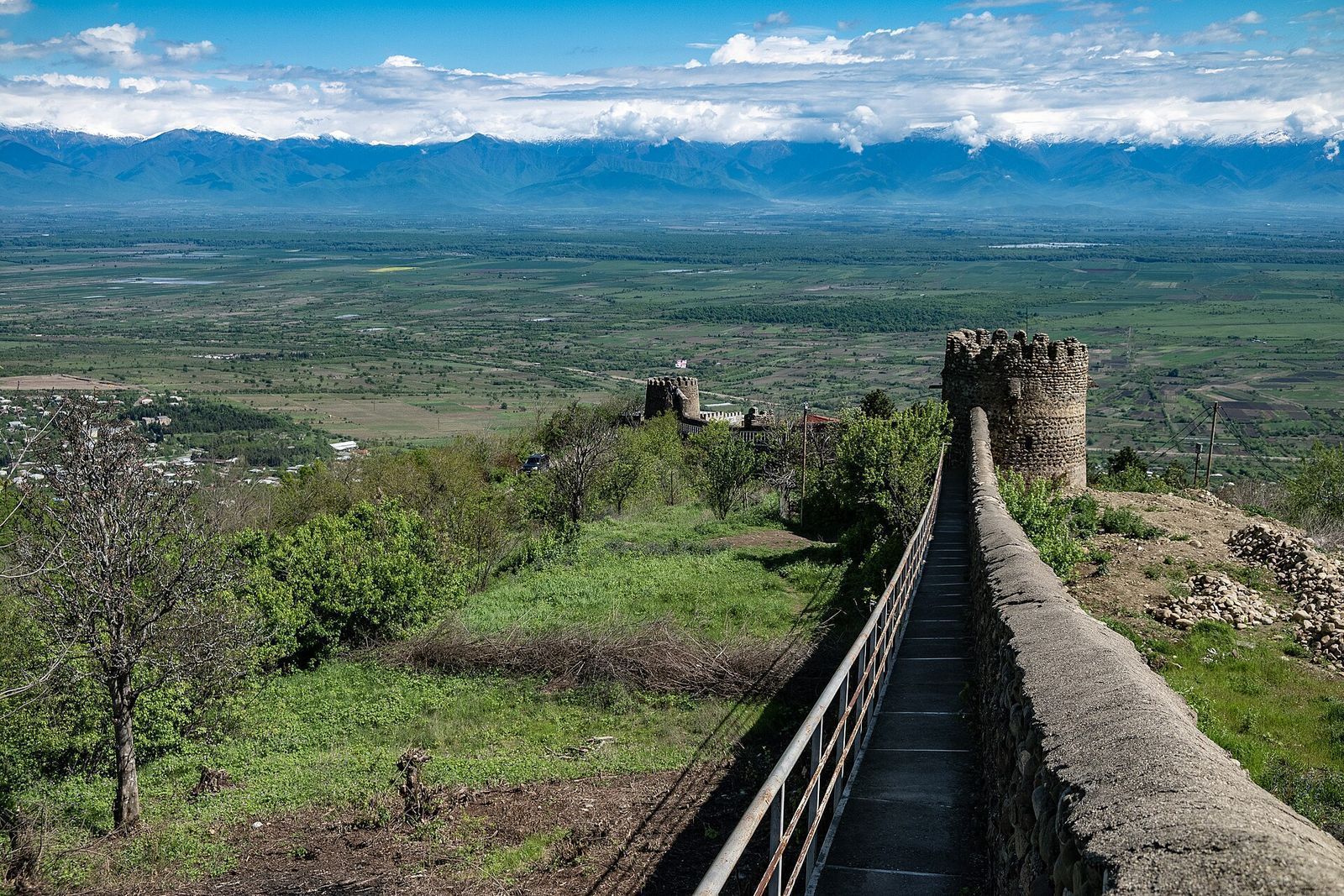
With a driver and an early start, you can pair David Gareja with Kakheti, but it makes a 10 to 12 hour day. The usual combination is Lavra in the morning, then the drive north to the walled hill town of Sighnaghi for the afternoon and sunset. It works, but you spend most of the day in the car, and I'd rather give Sighnaghi its own day.
A cleaner plan is David Gareja on one day and a Kakheti wine tour on another. The shuttle cannot do any combination, since it runs to David Gareja and back only.
What a David Gareja day trip costs
Transport is the only real cost, since the monastery is free. Here is the per-person price by group size.
| Option | Price | Per person, solo | Per person, 2 people | Per person, 4 people |
|---|---|---|---|---|
| Gareji Line shuttle | About 40 GEL return per seat | 40 GEL | 40 GEL | 40 GEL |
| Driver with wait | 120 to 165 GEL per car | 120 to 165 GEL | 60 to 83 GEL | 30 to 41 GEL |
| Rental car | About 70 to 110 GEL a day plus fuel | 70 to 110 GEL | 35 to 55 GEL | 18 to 28 GEL |
| Group tour | From about $21 per person | From $21 | From $21 | From $21 |
Add lunch in Udabno village and your water. For a pair, the shuttle and a driver come out close, and the driver buys you a cooler, quieter morning at Lavra.
Key takeaways
- David Gareja is a free, 6th-century cave monastery about 2 hours southeast of Tbilisi, on the Azerbaijan border.
- Lavra is open; Udabno and the ridge walk have been closed since the 2019 border dispute.
- There is no marshrutka: use the Gareji Line shuttle (about 40 GEL return), a driver (120 to 165 GEL per car) or a tour.
- Carry water, cover up for the church and bring your passport; there is no food, water or shade at the site.
- Go in spring or autumn, see Lavra first and finish with the Rainbow Hills and lunch in Udabno village.
Frequently asked questions
How do I get to David Gareja from Tbilisi?
Take the Gareji Line shuttle from Pushkin Square at about 11:00 (April to October, about 40 GEL return), hire a driver for 120 to 165 GEL per car, or book a tour. There is no marshrutka, and the drive takes 1.5 to 2 hours each way.
Is Udabno Monastery open?
No. Udabno and the ridge walk to it have been closed since the 2019 border dispute between Georgia and Azerbaijan, and border guards turn walkers back. Lavra, the lower monastery, is open every day.
How long do you need at David Gareja?
Plan 1 to 1.5 hours at Lavra and 7 to 8 hours for the whole day from Tbilisi. Adding the Rainbow Hills and lunch in Udabno village fills the rest.
Is David Gareja worth visiting?
Yes, for the desert landscape, the striped hills and a working cave monastery unlike anything else near Tbilisi. If the closed Udabno frescoes were your main reason, Vardzia is the better trip.
Is there a marshrutka to David Gareja?
No. No public bus or marshrutka goes to the monastery, so your choices are the seasonal Gareji Line shuttle, a driver, a tour or a rental car.
Is it safe to visit David Gareja near the Azerbaijan border?
Yes, Lavra is a normal pilgrimage site with monks and visitors every day. Bring your passport, stay on the paths and keep away from border posts and soldiers.
Can you combine David Gareja with Sighnaghi?
Yes, with a driver and an early start, but it is a 10 to 12 hour day. The shuttle only runs to David Gareja and back, so it cannot do the combination.
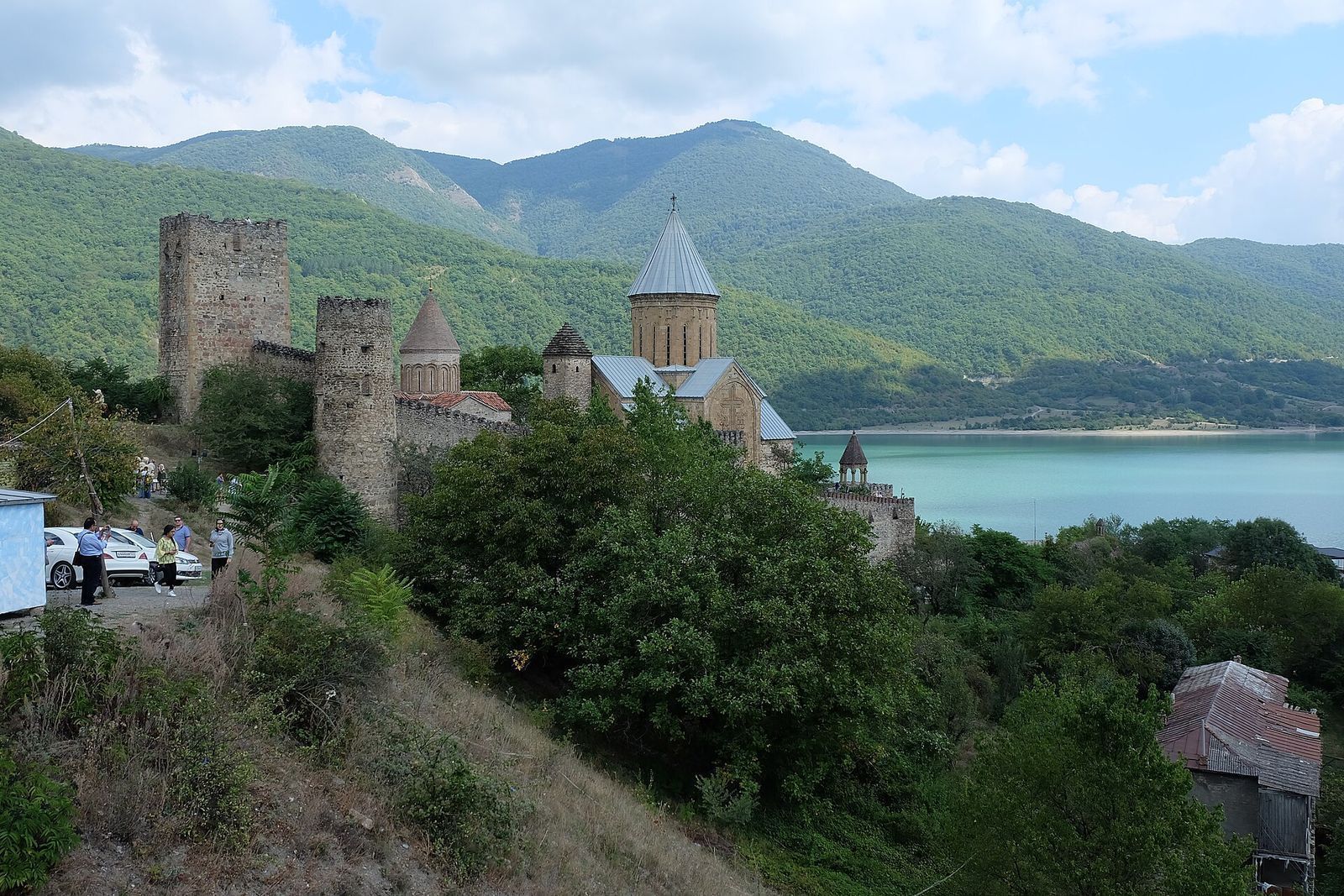
12 Best Day Trips from Tbilisi, With Prices and Timings
Tbilisi is known for its easy day trips. Here are the 12 best, how to reach each one and what a day out costs.
Read the guide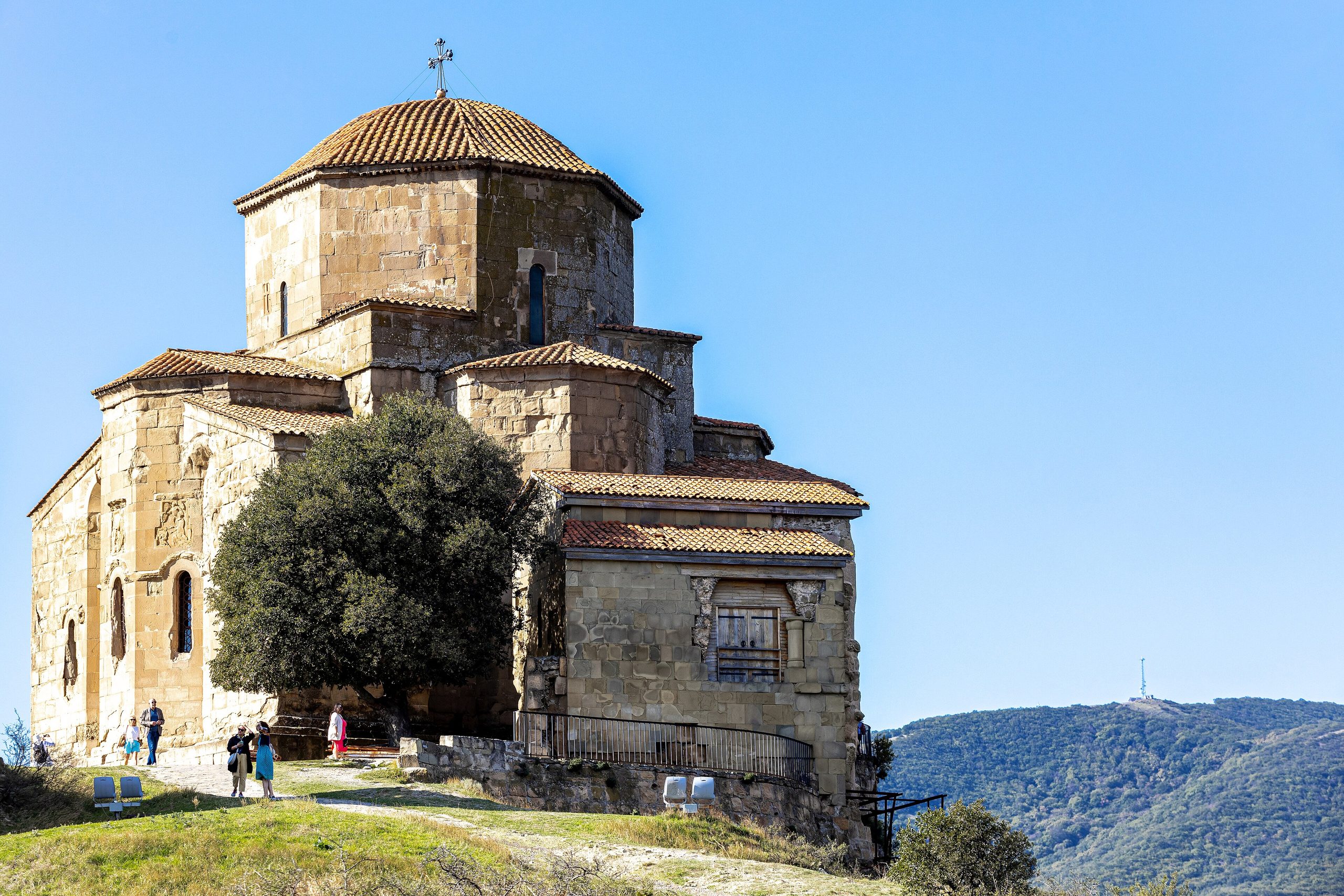
Mtskheta Day Trip from Tbilisi: Jvari, Svetitskhoveli and Getting There
Mtskheta is the easiest day trip from Tbilisi. Here is how to get there, what to see and how to fit it in half a day.
Read the guide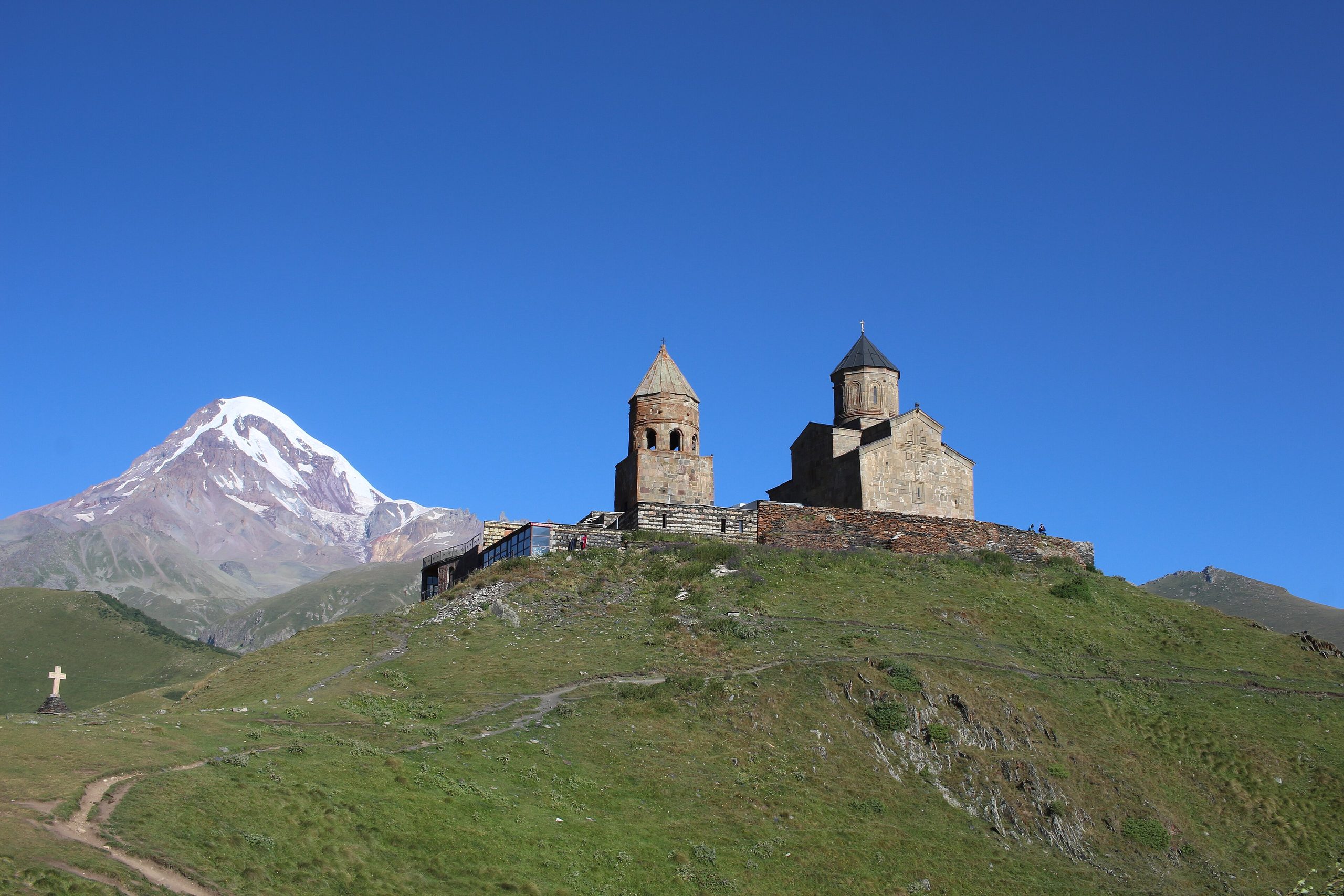
Kazbegi Day Trip from Tbilisi: Gergeti, Ananuri and the Military Highway
Kazbegi is the classic mountain day trip from Tbilisi. Here is the route, the stops, the costs and how to time it.
Read the guide