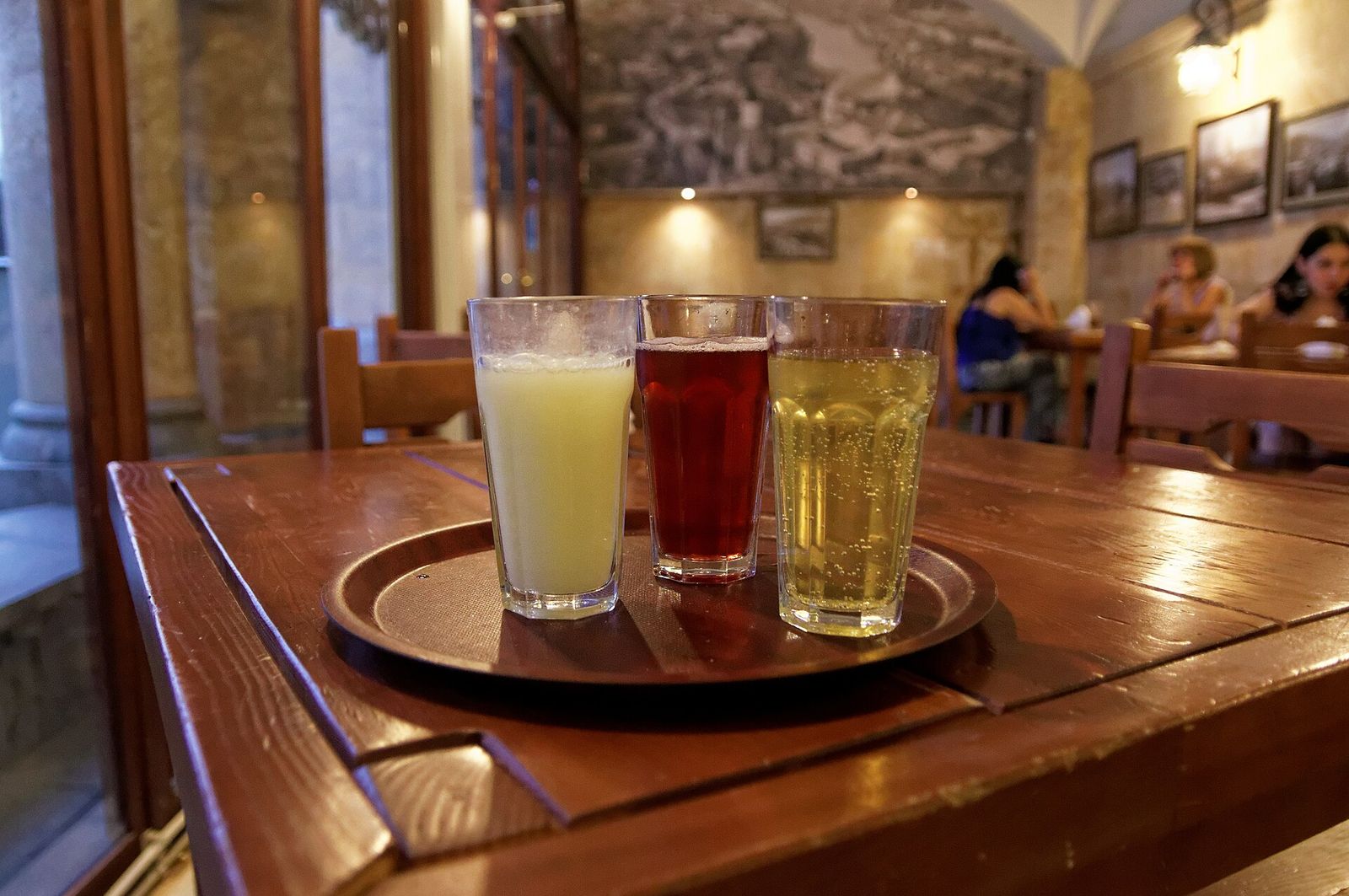
Lagidze Water: Georgian Lemonade and Tarragon Soda in Tbilisi
Tbilisi is known for its wine, but the drink every Georgian grows up on is Lagidze water: soda water poured over a natural fruit or herb syrup, mixed in the glass at a fountain counter. The bright green tarragon one is the famous flavor. Here's what you need to know about the flavors, the story behind them, where to drink it in Tbilisi and which bottles to take home.
What is Lagidze water?
Lagidze water is a Georgian soft drink made from two things: a shot of natural syrup, fruit or herb, and fizzy soda water. At a Lagidze counter it is made in front of you. You pick a flavor, the syrup goes into the glass first, and the soda goes on top from the fountain tap.
It is also sold in bottles, but the fountain glass is the original, and to me the better one. The pour is fresh, the fizz is sharper, and you can ask for two flavors in one glass.
The name comes from Mitrofan Lagidze, who created the syrups, and the company still carries his name. You will see it spelled Lagidze, Laghidze and Lagidze Waters on menus and signs. It is all the same drink.
Lagidze set out to make soft drinks from natural fruit, with no alcohol. That is why a pitcher of it sits on family tables next to the wine: it is what the kids drink, what the driver drinks, and what anyone skipping the toasts drinks. On a list of Georgian drinks it is the one with no hangover attached.
The taste is sweeter and more concentrated than most sodas you know. The counters are generous with the syrup and go easy on the soda, so a glass comes out rich, fruity and very sweet. The fruit tastes like fruit, though, not like a lab's idea of fruit, and that is the reason the drink has outlived a century of competitors.
The story of Lagidze water, from Kutaisi to Rustaveli Avenue
The story starts in 1887 in Kutaisi, in western Georgia. Mitrofan Lagidze was a young pharmacist's apprentice there, and pharmacies at the time flavored their soda water with imported essences. He started mixing in syrups made from real fruit and herbs instead. His tarragon syrup was first meant as a remedy for the stomach, and it caught on far beyond the pharmacy counter.
By 1900 he had his own plant in Kutaisi, and the drink was popular across western Georgia. In 1902 he traveled to Germany and France to study how soft drinks were made there, and he began bringing in glass bottles from France. The label he designed showed his mother in a traditional Georgian headdress.
Tbilisi came next. The first Lagidze shop in the capital opened in 1906 at 24 Rustaveli Avenue, and its soda fountain became one of the city's institutions. Generations of Tbilisi families stopped there for a glass on a walk down the avenue.
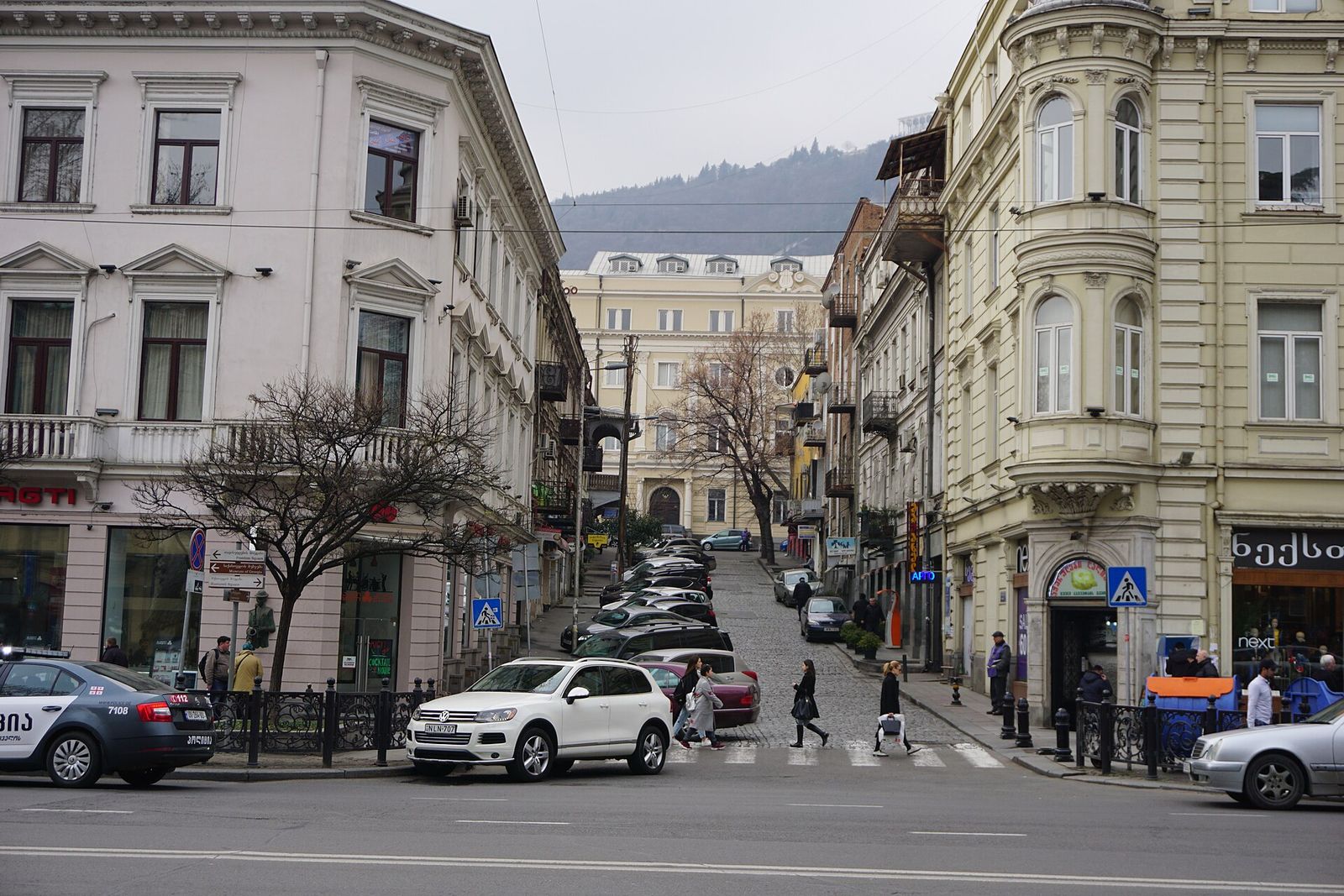
The Soviet years kept the drink going. A Lagidze plant opened in Tbilisi in 1927, with Lagidze himself as its director. In the 1980s, tarragon soda was mass produced and sold across the whole Soviet Union as tarkhun, which is why people from Riga to Yerevan still know the green bottle.
Then there is the legend every Tbilisi guide tells. Stalin, so the story goes, was offered Coca-Cola by the American president and answered by sending back Lagidze water. Nobody has ever pinned down the date, and I treat it as a legend, but it is a good one to tell over a glass.
Lagidze lived to 91, and his descendants still run the business. In 2014, the craft and culture of Lagidze water went onto Georgia's national list of intangible cultural heritage.
Lagidze flavors: what to order
A Lagidze counter lists a long row of syrups. Tarragon, chocolate and cream are the three best sellers. Ginger, laurel and coffee are the oddballs, and not every counter has them.
| Flavor | What it tastes like | My take |
|---|---|---|
| Tarragon | Sweet and herbal, with a licorice and anise edge; bright green | The one to try first |
| Pear | Soft, ripe pear, the gentlest of the lot | My pick for a second glass |
| Cream | Vanilla and cream, like a cream soda | Best mixed with chocolate |
| Chocolate | Cocoa syrup with fizz, stranger than it sounds | Order it half and half with cream |
| Lemon | Classic sweet lemonade | The safe choice for kids |
| Grape | Several grape varieties, deep and jammy | Good with food |
| Cherry | Tart and sweet, dark red | Best on a hot afternoon |
| Feijoa | Perfumed and tropical | The most Georgian taste after tarragon |
| Quince | Floral and honeyed | Order it if you see it |
| Ginger, laurel, coffee | The rare ones | For a second or third visit |
If you only have one glass, make it tarragon, because that is the flavor Georgians mean when they talk about Lagidze. If you have two, add pear. If you have a sweet tooth and three, finish with the chocolate and cream mix.
The flavors change a little with the counter and the season, so read the board behind the taps before you order. The menu usually lists the syrups by name, often with a small picture of the fruit.
Tarragon lemonade (tarkhuna): the green one
Tarkhuna is the local name for tarragon, the herb as well as the soda. It is the drink most visitors mean when they search for Georgian lemonade, and the one that turns up across the old Soviet world.
The taste surprises people. It is sweet and grassy, with a note of black licorice and anise that comes from the tarragon itself. Some first-timers call it a medicinal sugar bomb. I'd still order it once, because nothing at home tastes quite like it, and if it is not for you, pear is the easy retreat.
The neon green color comes from food coloring, not from the herb. A tarragon syrup made only from leaves gives a much paler drink, closer to the color of weak green tea.
Tarragon soda is not only Georgian today. After the Soviet years spread it around, Armenia began making its own tarragon lemonade, Lithuania sells one as Tarchunas, and several Russian producers bottle it. Some versions add woodruff to the tarragon. The Lagidze recipe from 1887 is the original, and in Georgia, Lagidze and Natakhtari both make it.
Tarragon is also an everyday herb in Georgian cooking. Fresh sprigs come on the herb plate at the start of a meal, and the leek and tarragon pie called pkhlovana is on the menu at Puri Guliani, the khachapuri place where I drink my tarragon soda with lunch.
Where to drink Lagidze water in Tbilisi
A fountain glass beats a bottle every time, and Tbilisi has a few places to get one. Some of the addresses that circulate online are years out of date, so here is where I'd go in 2026.
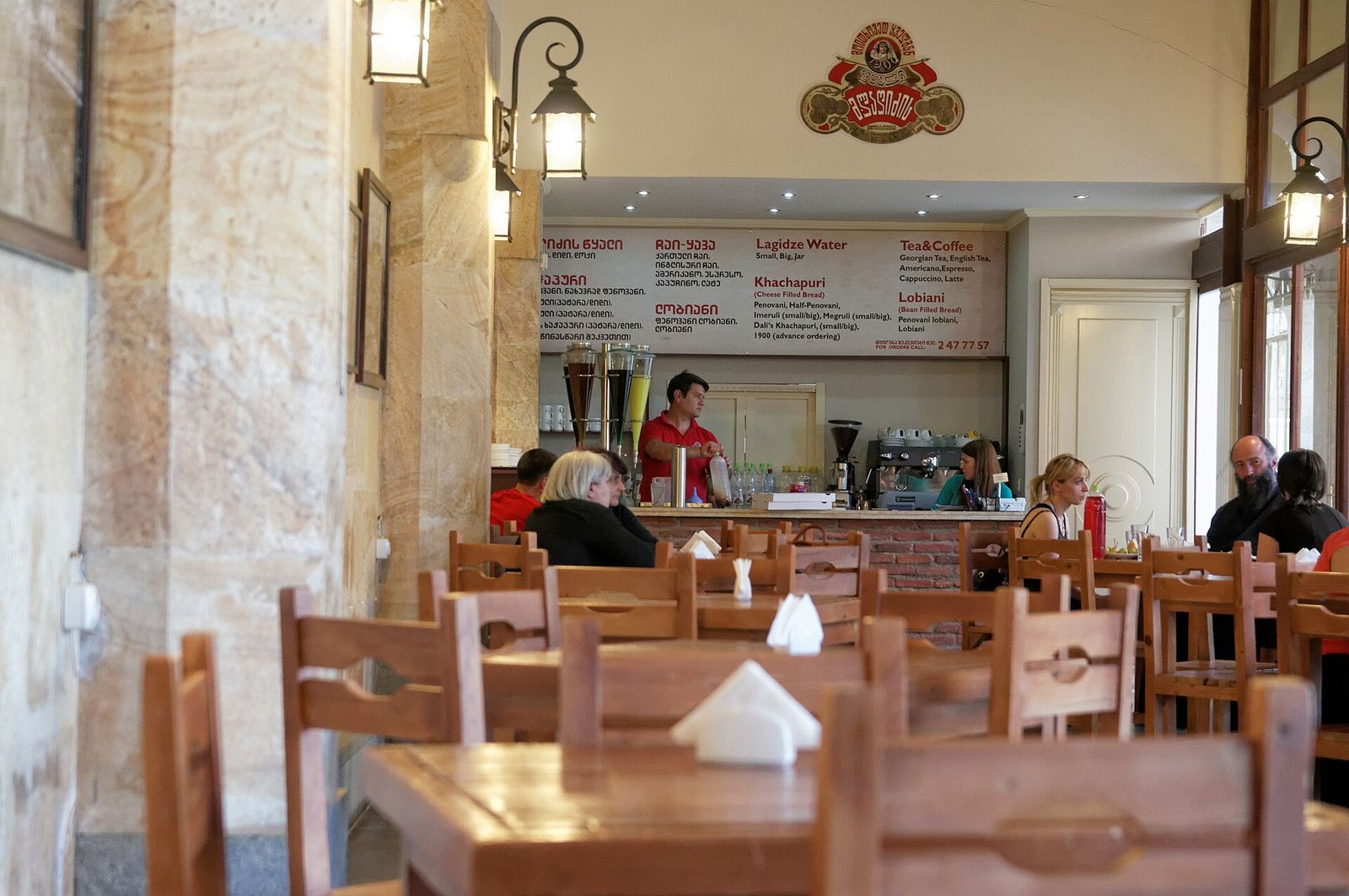
Lagidze Water cafe on Paliashvili Street, Vake
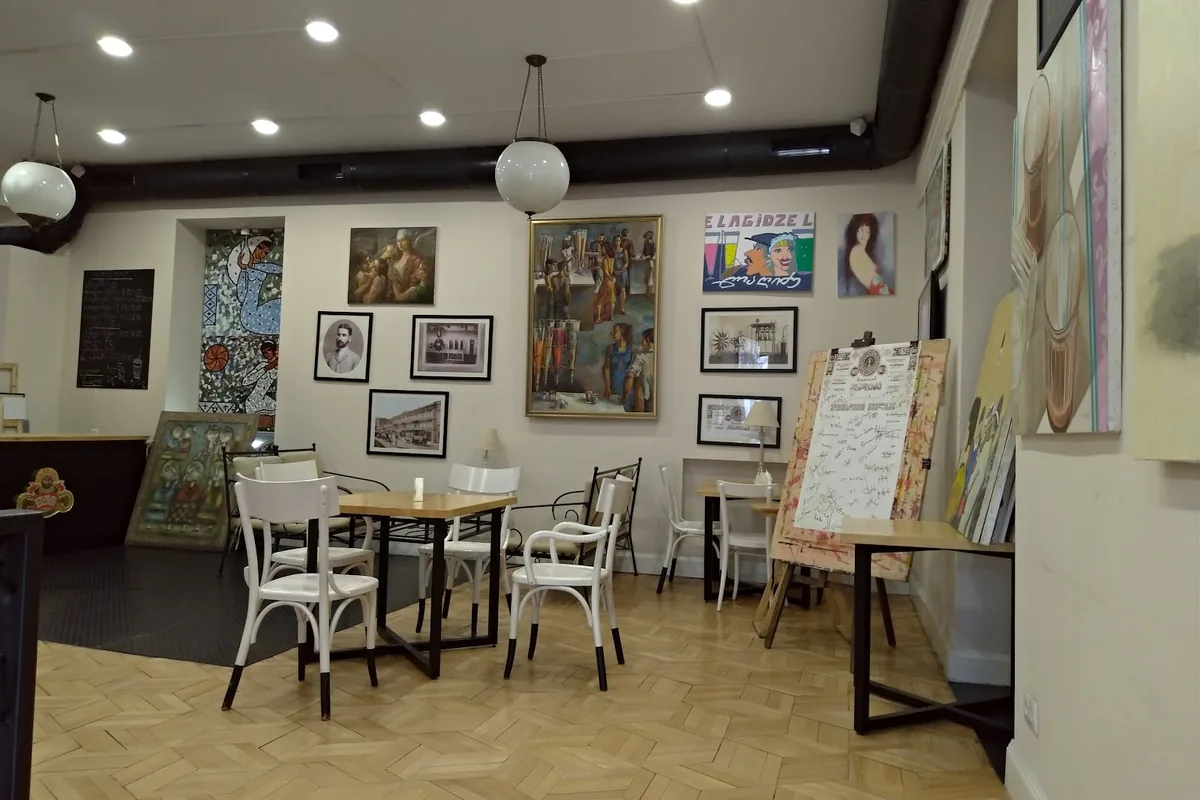
The newer Lagidze cafe sits at 32 Zakaria Paliashvili Street in Vake, the leafy residential district west of the center, and runs from 10:00 to 22:00. This is the one I'd send anyone to: the syrup taps are behind the counter, the glass is mixed in front of you, and the kitchen turns out hot khachapuri and lobiani to go with it.
It is a cafe for a quick stop, not a long meal. Order a glass at the counter, take a khachapuri, and make it the start or the end of a walk in Vake Park.
The old addresses: Rustaveli Avenue and Sameba
Two famous addresses still show up in older guides. The original fountain at 24 Rustaveli Avenue closed years ago. In 2018 the city said it would try to bring the Rustaveli cafe back, but the building is in private hands, so don't count on a glass there.
The second is the cafe that opened in 2013 in the courtyard of Holy Trinity Cathedral, known locally as Sameba. It made an easy stop after the cathedral, but it has since been reported closed.
Georgian restaurants with Lagidze on the menu
Plenty of Georgian restaurants list Lagidze or "lemonade" on the drinks page. Puri Guliani, near the Dry Bridge, pours it with its Adjarian khachapuri, and the combination is one of my favorite cheap lunches in the city.
Elsewhere, ask whether the lemonade comes from a fountain or a bottle. A bottle is fine, but if a place has syrup taps, that is the glass to order.
What to eat with Lagidze water
Lagidze water was always a food drink. The cafes built their menus around hot bread, and Georgians drink it at the table the way other countries drink cola with lunch. These are the pairings I keep coming back to.
| Dish | Flavor I'd order | Why it works |
|---|---|---|
| Adjarian khachapuri | Tarragon | The herb cuts through the butter and cheese |
| Lobiani, bean-filled bread | Pear | Soft and sweet against the salty beans |
| Khinkali | Lemon or tarragon | Cold and fizzy against hot broth |
| Grilled mtsvadi | Cherry | Tart enough to stand up to the meat |
| Churchkhela or cake | Chocolate and cream | A dessert in a glass |
Khachapuri is the classic match. The Lagidze cafes serve the two together, and a glass with a hot cheese bread is one of the cheapest good meals in Tbilisi. If you are hunting for the best khachapuri in Tbilisi, take a lemonade with every one you try.
With khinkali, locals drink beer or lemonade, not wine. The dumplings are salty and the broth is hot, so a cold fizzy glass does more than a red ever will. It is the order I'd copy at any khinkali house.
Lagidze water is also the easiest win for anyone traveling to Tbilisi with kids. Children get their own colorful glass while the adults drink wine, and choosing a flavor from the board is half the fun.
Bottled Georgian lemonade and soda
Bottled lemonade is everywhere in Tbilisi: corner shops, supermarkets, bakeries and the fridge at every restaurant. These are the brands you will see.
| Brand | Known for | Good to know |
|---|---|---|
| Lagidze | The original syrups, sold at its cafes and in bottles | The fountain glass still beats the bottle |
| Natakhtari | Bottled lemonades, tarragon included | Also one of Georgia's big beer names |
| Zedazeni | Lemonades in tall glass bottles, grape among them | Also a brewer |
| Borjomi and Nabeghlavi | Salty mineral water | Not lemonade, a different drink |
Natakhtari and Zedazeni both brew beer too, and you will find their beers next to the lemonades in the same fridge; the Georgian beer brands and the soda brands overlap more than you'd expect. In a shop, the lemonades are the brightly labeled bottles with a picture of the fruit on the front.
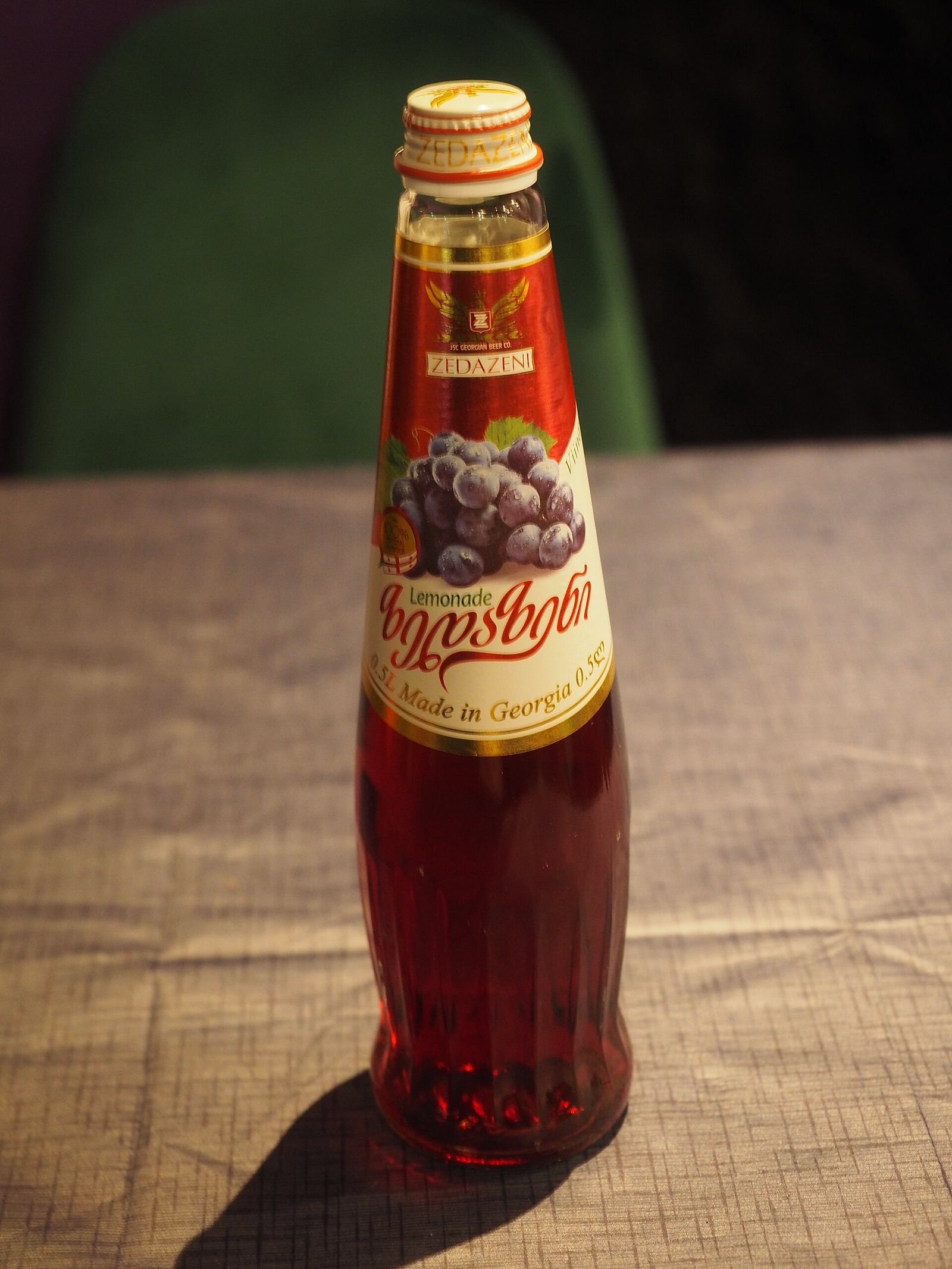
Don't mix up lemonade with mineral water. Borjomi and Nabeghlavi are the salty, naturally fizzy waters Georgians drink for the stomach and the morning after, and Borjomi mineral water has its own fans and its own spa town. Order one expecting a sweet soda and you get a shock.
Lagidze bottles also travel. The company exports to Russia, Ukraine, the Baltic states, Poland and Armenia, and Georgian restaurants abroad often stock Georgian lemonades, so a taste of Tbilisi may turn up closer to home than you think.
Making tarragon lemonade at home
Once you are home and missing it, tarragon lemonade is easy to make, because everything depends on the syrup. Boil fresh tarragon leaves with sugar, water and lemon until you have a green, fragrant syrup, then let it cool and strain out the leaves. Some home cooks blend the leaves in first for a stronger taste, and some add lime.
To serve, put a splash of syrup in a tall glass and top it with very cold soda water. Taste, and add syrup until it is as sweet as you like; the Tbilisi counters go heavy, so for a fountain copy, go heavier than feels right.
Skip the food coloring. A homemade glass comes out pale and herbal rather than neon, and it tastes closer to the 1887 idea than most bottles do. The same method works for pear or cherry: cook the fruit down with sugar, strain it, and top it with soda.
Key takeaways
- Lagidze water is a natural syrup topped with soda water, mixed in the glass, and it has been made in Georgia since 1887.
- Tarragon is the famous green flavor; pear and the chocolate and cream mix are the next two to try.
- For the fountain version in Tbilisi, go to the Lagidze Water cafe at 32 Zakaria Paliashvili Street in Vake, 10:00 to 22:00.
- Drink it with khachapuri, lobiani or khinkali, and buy a few bottles of Lagidze, Natakhtari or Zedazeni lemonade to take home.
Frequently asked questions
What is Lagidze water made of?
Lagidze water is made of a natural syrup, fruit or herb, topped with carbonated soda water. The syrup goes into the glass first and the soda goes on top, usually from a fountain tap at the counter. The bottled versions are the same idea, mixed at the plant.
What does tarkhuna taste like?
Tarkhuna tastes sweet and herbal, with a licorice and anise note from the tarragon. It is sweeter than most Western sodas. Some people love it at first sip and some find it medicinal, so try a glass before you buy a crate.
Why is tarragon soda green?
Tarragon soda is green mainly because of added food coloring. Tarragon leaves alone give a much paler green, so the neon shade of the bottled drinks is a dye. Homemade tarragon lemonade usually comes out pale and herbal.
Is tarragon lemonade Georgian or Armenian?
Tarragon lemonade is Georgian in origin: Mitrofan Lagidze made his tarragon syrup in Kutaisi in 1887. The drink spread across the Soviet Union as tarkhun, and Armenia, Russia and Lithuania all make their own versions today.
Does Georgian lemonade have alcohol?
No, Georgian lemonade has no alcohol. Lagidze water and the bottled lemonades are soft drinks, which is why they sit on family tables for kids, drivers and anyone skipping the wine and chacha.
Where can I drink Lagidze water in Tbilisi?
The surest place is the Lagidze Water cafe at 32 Zakaria Paliashvili Street in Vake, open 10:00 to 22:00. Puri Guliani pours it with khachapuri, and many Georgian restaurants list it on the drinks menu. The old Rustaveli Avenue fountain closed years ago.
Can you buy Lagidze water outside Georgia?
Yes, in some countries. Lagidze exports to Russia, Ukraine, the Baltic states, Poland and Armenia, and Georgian restaurants and shops abroad often stock Georgian lemonades. Elsewhere, a homemade tarragon syrup with soda water is the closest substitute.
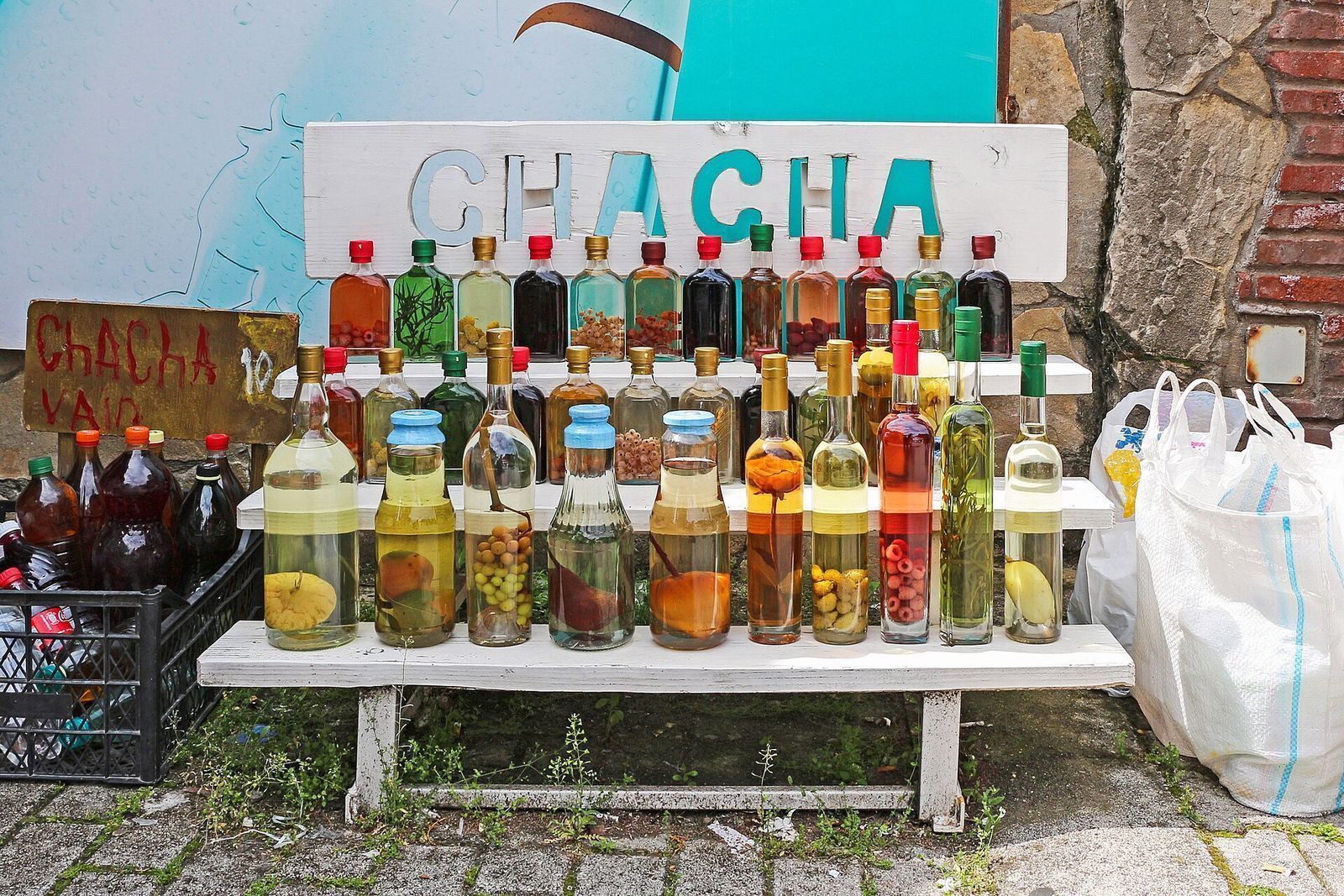
Georgian Drinks: What to Drink in Georgia and Where to Try It in Tbilisi
Tbilisi is known for its qvevri wine. Here's what to drink in Georgia, from amber wine to chacha, and where to try it.
Read the guide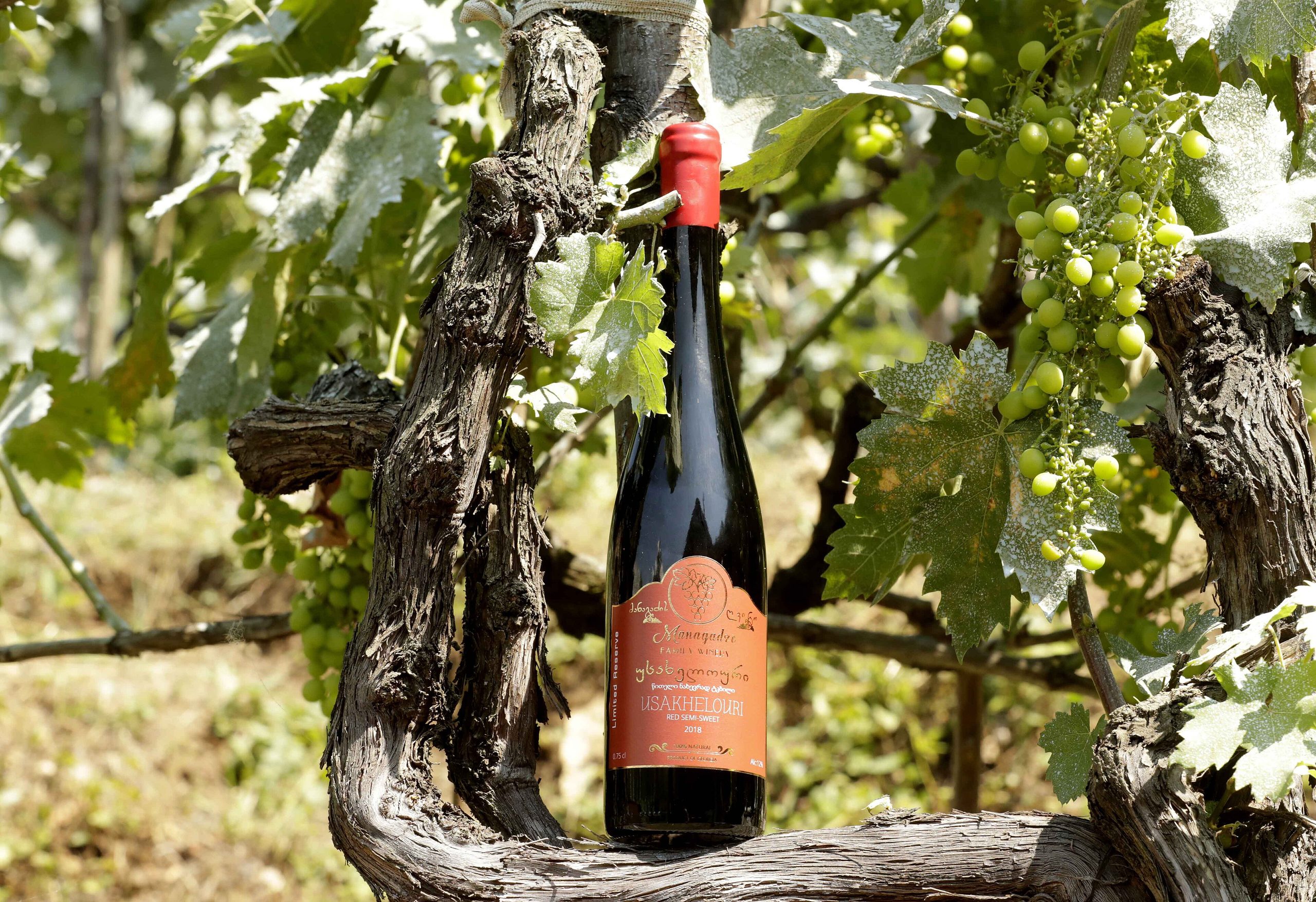
Georgian Wine Guide: Regions, Styles and What to Order
Georgia is known for 8,000 years of winemaking. Here is what to know about its styles, regions, prices and bars.
Read the guide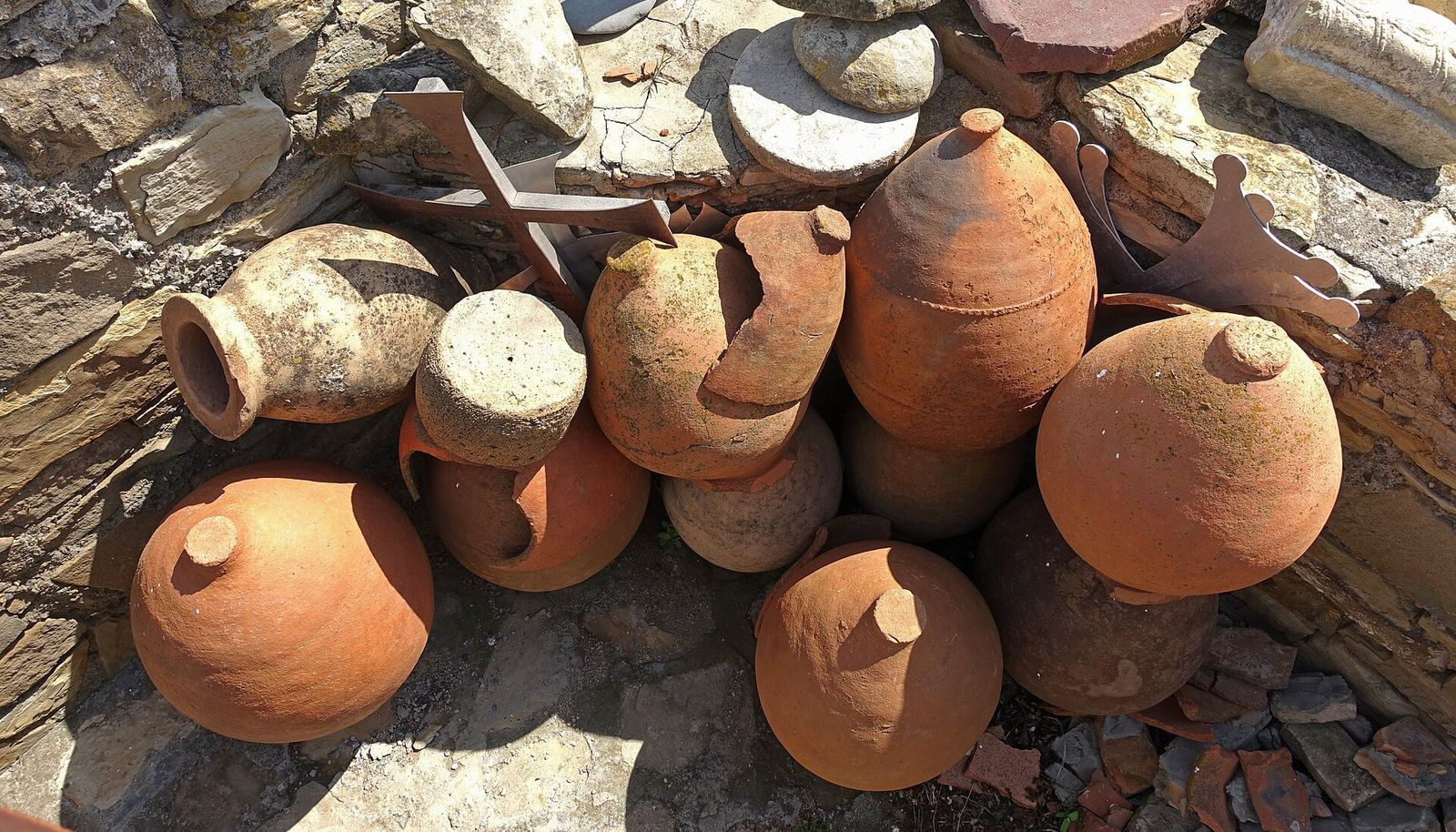
Qvevri Wine: How Georgia Makes Wine in Buried Clay Jars
Georgia is known for qvevri wine. Here is what the clay jars are, how the wine tastes and where to try it in Tbilisi.
Read the guide