Dry Bridge Market, Tbilisi: A Guide to the City's Flea Market
Tbilisi is known for its flea market on the Dry Bridge: a daily spread of Soviet cameras, war medals, old silver, porcelain and paintings, laid out on a bridge that no longer crosses a river. It's my favorite place in the city to lose a Saturday morning. Here's what you need to know about where the stalls are, when to go, what's worth buying, how to haggle and getting anything old home.
What is the Dry Bridge Market?
The Dry Bridge Market is a flea market, antiques market and painters' market rolled into one, spread across a short stone bridge and the parks at either end of it. It sits in central Tbilisi, a little north of Old Tbilisi, on the same side of the river.
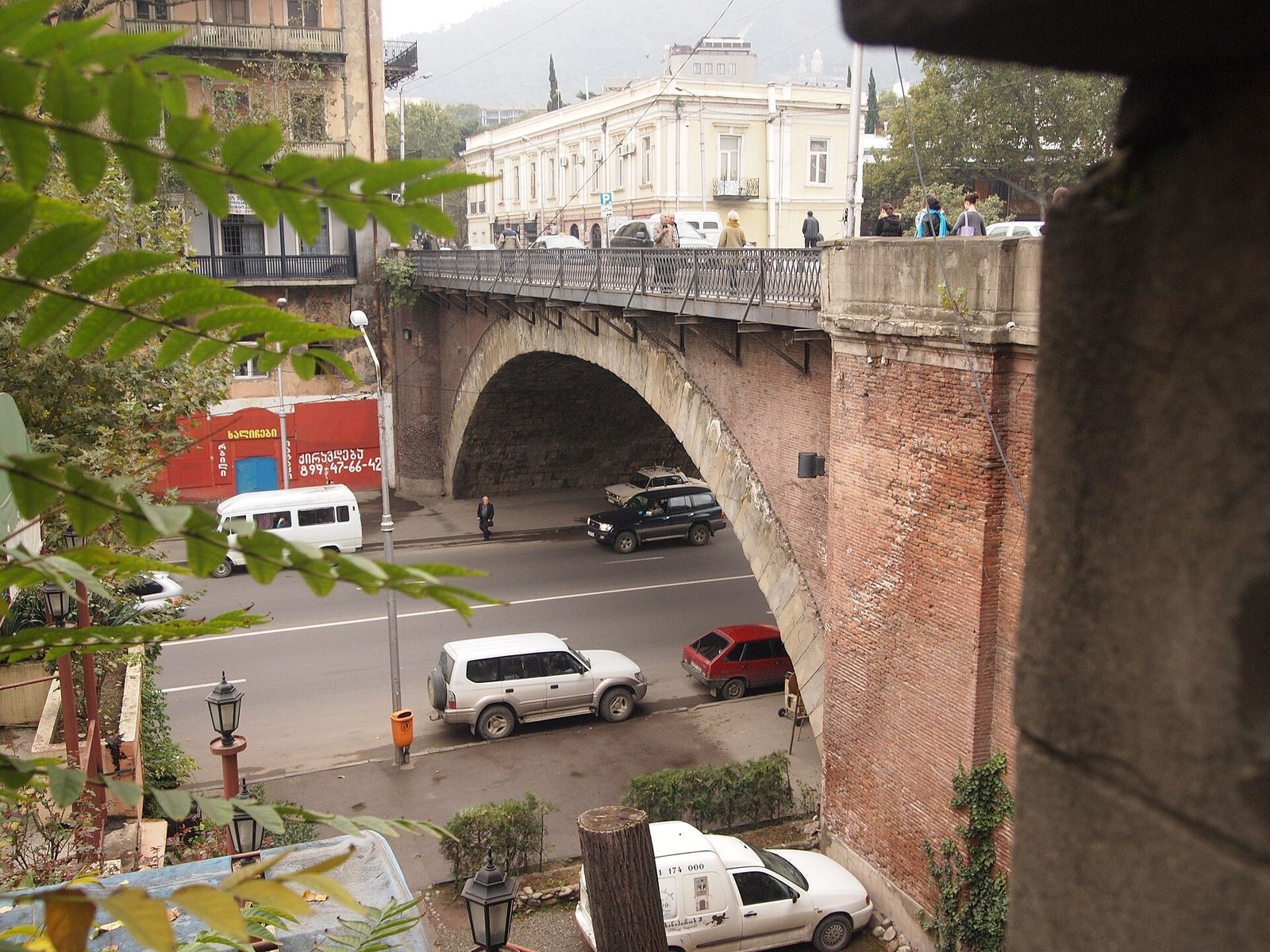
The bridge itself is older than the market by more than a century. It went up in the mid-19th century, when Count Vorontsov governed the Caucasus, to a design by the Italian architect Giovanni Scudieri. In 1933 the river channel underneath was filled in to build the embankment road, and since then the bridge has crossed a street rather than water. Hence the name.
The market came much later. In the early 1990s, after the Soviet Union collapsed, people in Tbilisi were short of money, electricity and almost everything else, and many of them carried family belongings down to the bridge to sell. Medals, cameras, dinner services and books left whole households here. That chapter of Georgian history is still on the tables: a lot of what you see is exactly the kind of thing a family would have owned in 1985.
Today it's tidier and aimed squarely at visitors. Dedaena Park reopened in 2021 after a renovation, the vendors now have purpose-built racks and stalls, and a share of the sellers are resellers rather than people clearing out their own flats. Some still lay their wares on a carpet on the pavement, which is where I find the strangest things.
Where the Dry Bridge Market is and how to get there
The market sits between Rustaveli Avenue and the river. The bridge runs from Atoneli Street on the city side down toward Saarbrucken Square, with 9 March Park to the west and Dedaena Park to the east along the Right Embankment.
From the center, walking is the easy answer. Liberty Square, the nearest station on the metro, is about 850 meters away, roughly 12 minutes on foot. My route is through Orbeliani Square and down Atoneli Street, which drops you at the top of the bridge.
Buses 320 and 323 stop on Italia Street, at the top of the market. A ride from Liberty Square in a Bolt taxi costs about 5 GEL; ask to be dropped at the Atoneli Street end and walk across the bridge. Coming from the left bank, from Marjanishvili or Avlabari, get dropped near Saarbrucken Square instead.
Opening hours and the best time to go
The market is open every day of the year from about 10:00 to 17:00. The only fixed closures are big holidays, 1 January and Orthodox Easter Sunday. Everything is outdoors, so heavy rain or snow keeps most vendors at home, and a wet Tuesday can mean a handful of tables.
Weekends are the market at full size. More vendors set up, more locals come to browse, and the antiques tables fill out. Mondays tend to be half empty. Spring and summer are the busiest seasons, but a dry winter weekend still draws a decent crowd.
| When | What to expect | My verdict |
|---|---|---|
| Weekend, 11:00 to 16:00 | Every stall out, the biggest choice, the most people | The best time to go |
| Weekend, before 11:00 | Vendors still unpacking, quieter browsing | Fine for serious collectors |
| Weekday morning | Fewer stalls, easy browsing, more time with sellers | Good if you hate crowds |
| Monday | Often half full | Go another day if you can |
| Any rainy day | Most of the market stays home | Skip it |
The four parts of the market
First-timers often walk the bridge, see a few tables of medals and leave, missing half the market. It has four distinct parts, and the best of them is the one you can't see from the bridge.
| Part | Where | What you'll find |
|---|---|---|
| The flea market | Both footpaths of the bridge, then west along 9 March Park | Soviet memorabilia, cameras, coins, records, curiosities |
| The antiques market | Downstairs, entered from the Right Embankment opposite 9 March Park | Porcelain, silverware, brass, light fittings, older pieces |
| The painters' market | Along the embankment through 9 March Park and Dedaena Park | Original paintings, unframed canvases, copies of Pirosmani |
| Crafts and books | Dedaena Park, by the riverfront | Felt, knitwear, drinking horns, ceramics; a small book market some days |
The flea market on the bridge
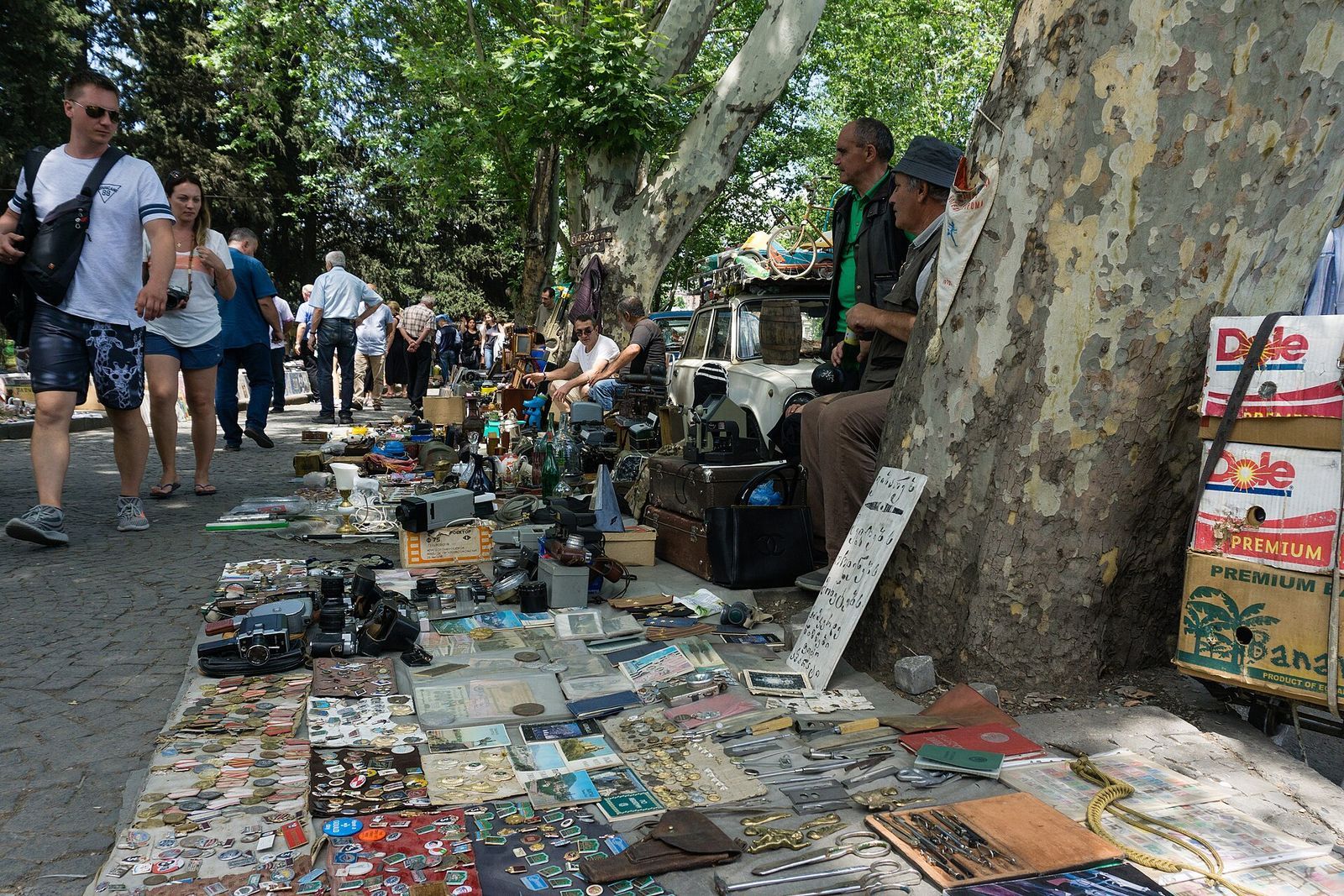
This is the part everyone photographs. Tables line both footpaths of the bridge and carry on west along the edge of 9 March Park, stacked with medals, badges, Lenin busts, old telephones, coins, stamps and matchboxes. It's the most fun to browse and the most tourist-priced.
The antiques market downstairs
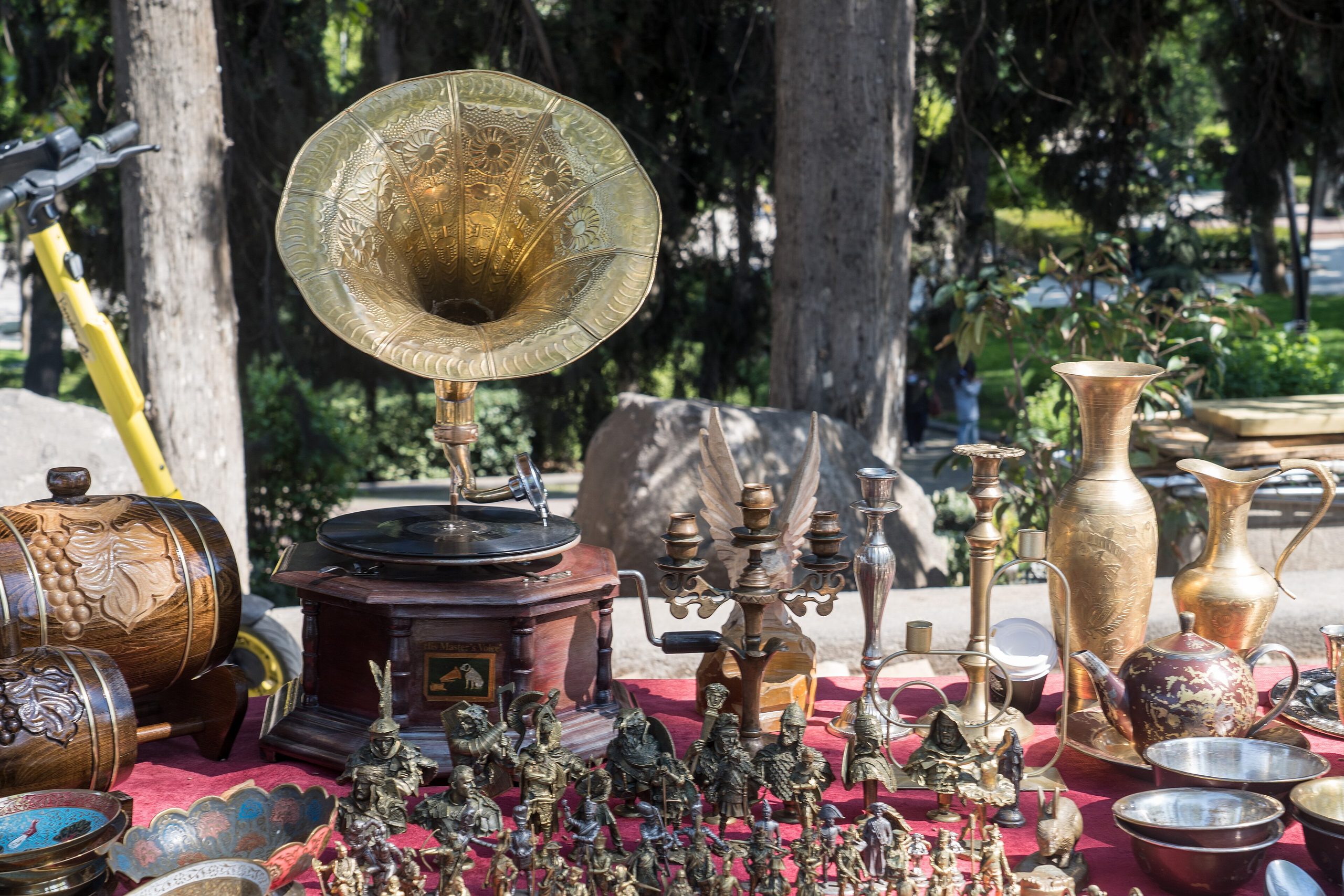
Look for the sign and the stairs on the Right Embankment, opposite 9 March Park. Down there the tables are heavier: porcelain dinner services, silver cutlery, brass candlesticks, chandeliers, antique door knobs and the odd pocket watch. If you are hunting for something genuinely old rather than something Soviet, start here.
The painters' market
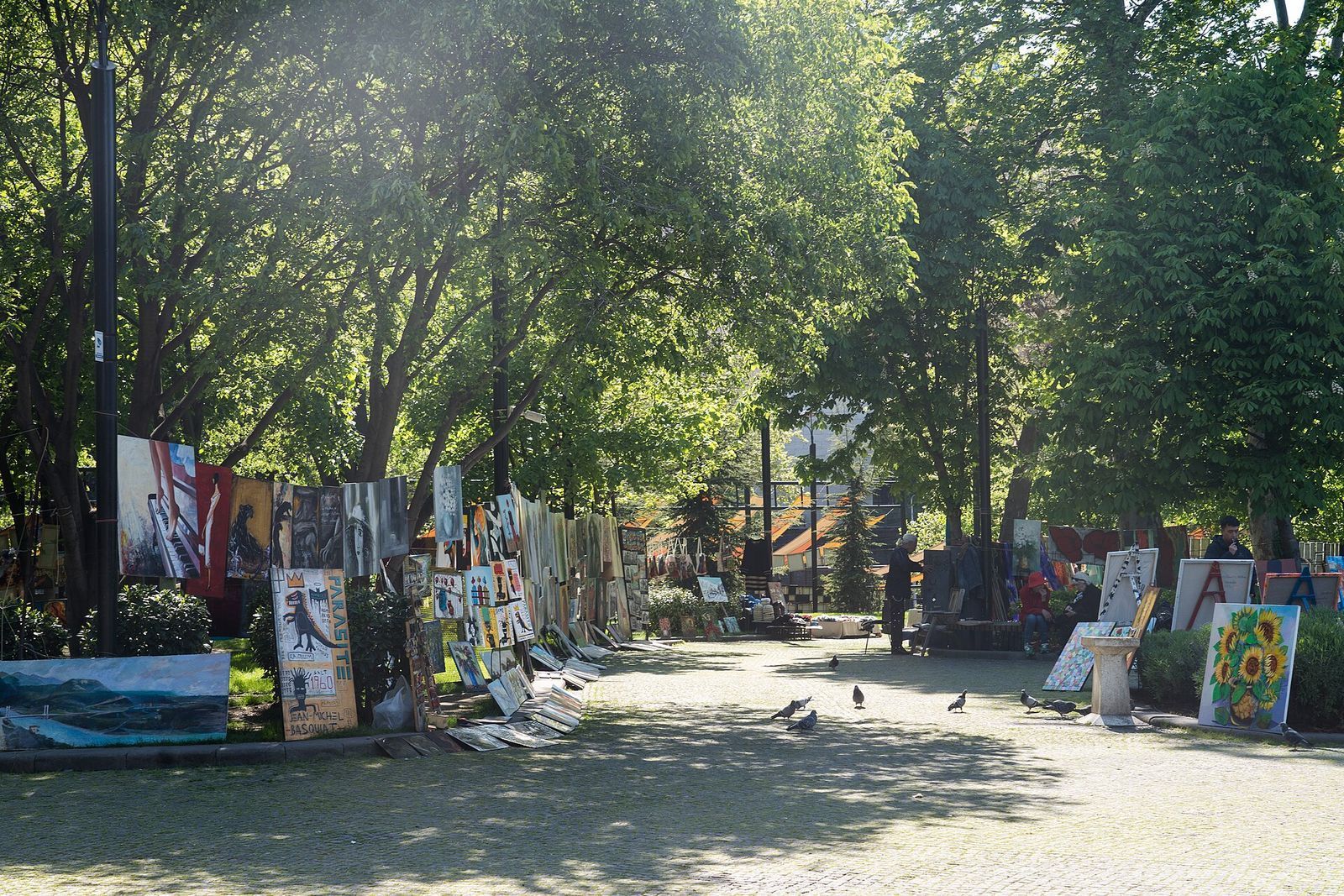
Along the embankment, painters prop their canvases against the trees and railings of both parks. Most of it is landscapes of Old Tbilisi, still lifes and copies of Niko Pirosmani, the self-taught painter whose naive style is on half the souvenirs in the city. Prices start at about 20 to 30 GEL for a simple painting and climb into the thousands for serious work.
Crafts and books in Dedaena Park
Dedaena Park, on the east side, is where the handmade stalls gather: felted shawls, wool socks, slippers, drinking horns, ceramics and miniature clay qvevri.
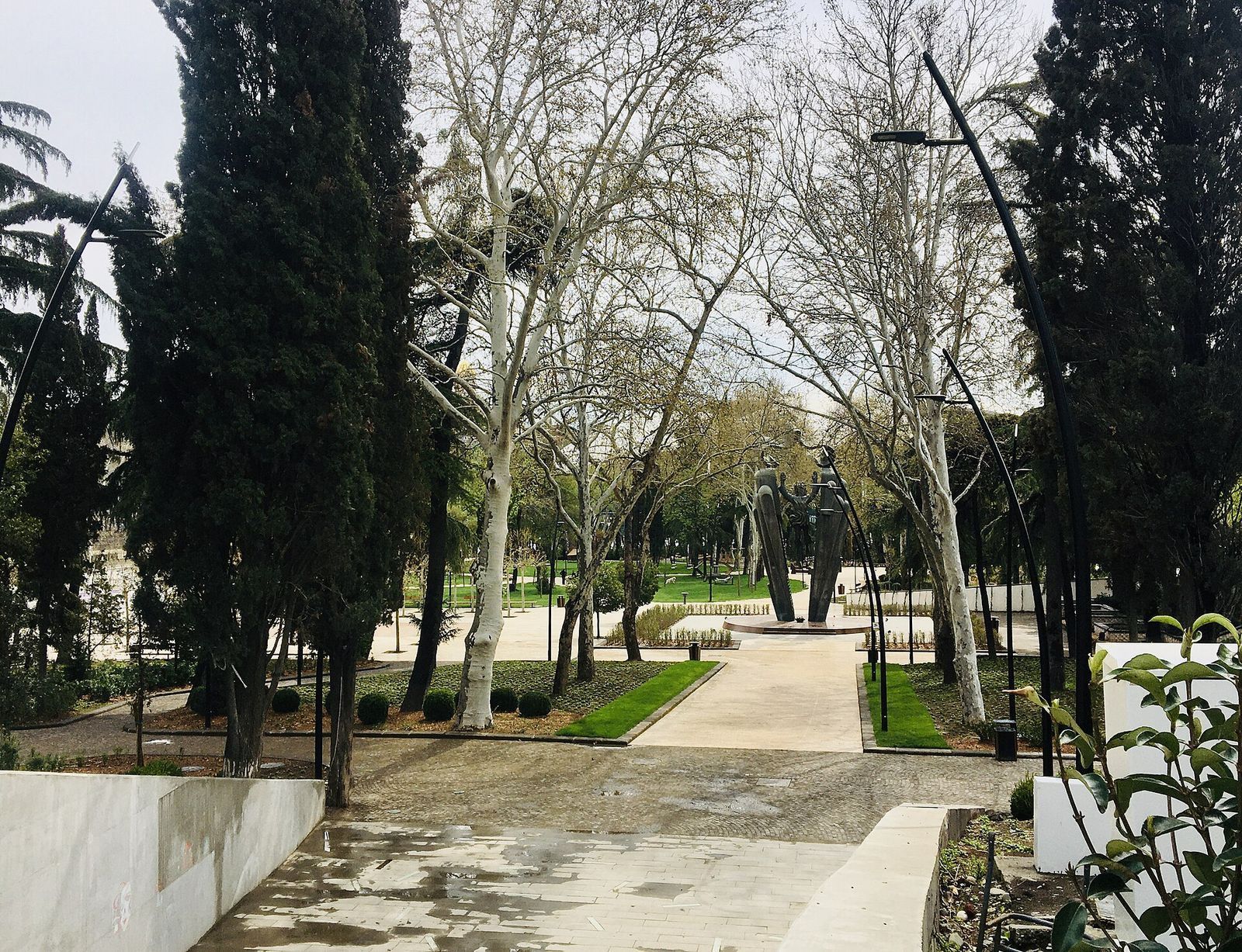
There's also a small book market on the riverfront, though it opens some days and not others.
What to buy at the Dry Bridge Market
The honest answer is whatever makes you laugh or stop. Nothing here is essential, and the joy is in the odd find. That said, a few categories are reliably good, and each has one thing to check before you pay.
| What to buy | Good finds | Check before paying |
|---|---|---|
| Soviet film cameras | Zenit and FED cameras, old lenses | The shutter fires and the lens is clean inside |
| Soviet memorabilia | Medals, badges, ID books, New Year decorations | Many medals are reproductions; ask, and price it as one if unsure |
| Porcelain and silver | Dinner services, teapots, cutlery, crystal | Chips, hallmarks, and how you'll pack it |
| Jewelry | Old silver, amber, enamel pieces | Hallmarks on silver; amber can be plastic |
| Carpets and kilims | Older Caucasian kilims among the new rugs | Most are new; old ones need export paperwork |
| Paintings | Old Tbilisi scenes, still lifes | Copies are copies; pay copy prices |
| Crafts and souvenirs | Felt, knitwear, backgammon boards, drinking horns | Handmade vs factory-made |
Soviet film cameras and lenses
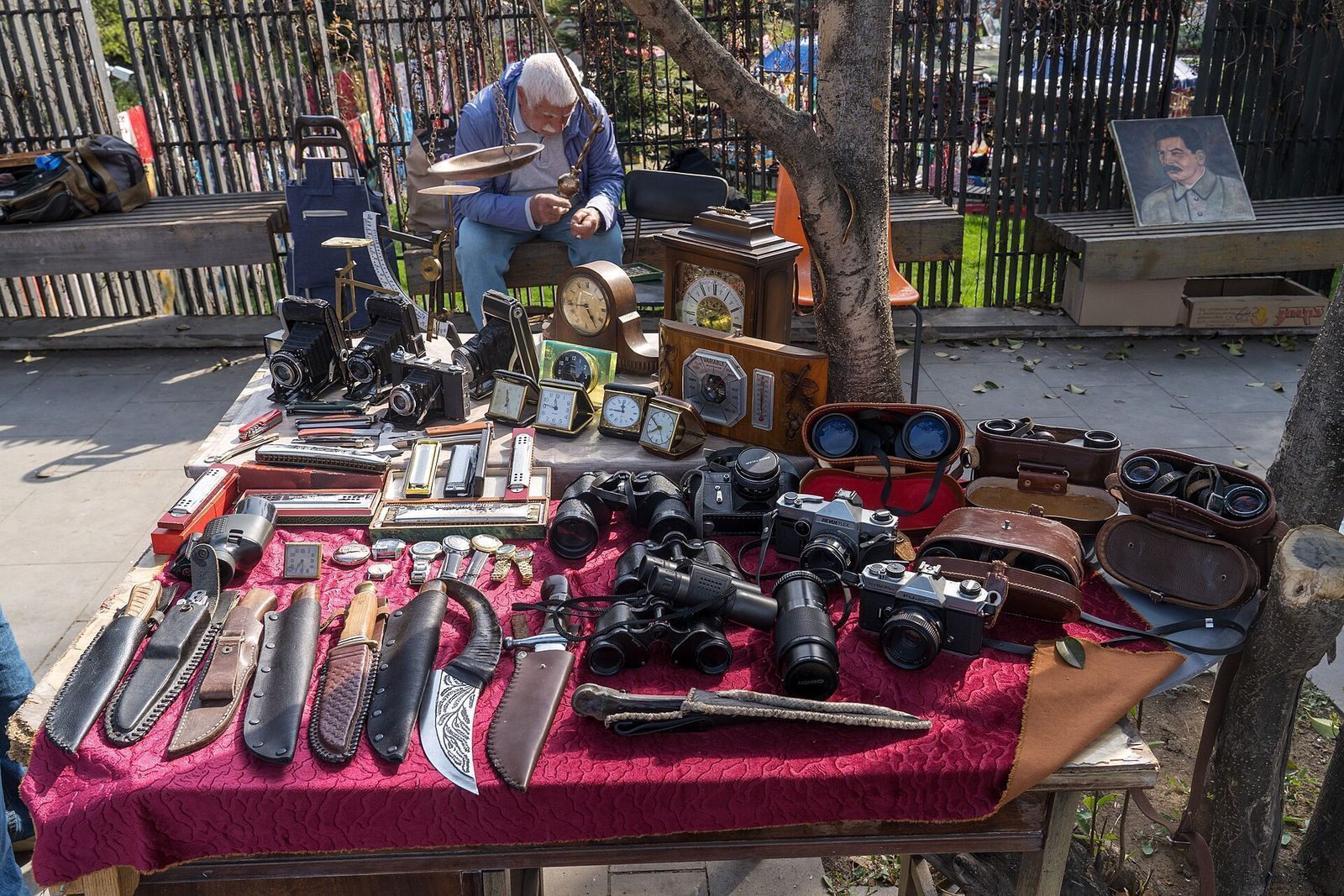
Cameras are the Dry Bridge classic. Zenit and FED cameras from Soviet factories are on almost every other table, along with lenses, light meters, binoculars and the occasional bellows camera that looks older than the bridge. If you shoot film, this is the best hunting ground in the city. Bring a roll if you want to test one; failing that, fire the shutter at a few speeds and look through the lens toward the sky for haze or fungus.
Soviet memorabilia
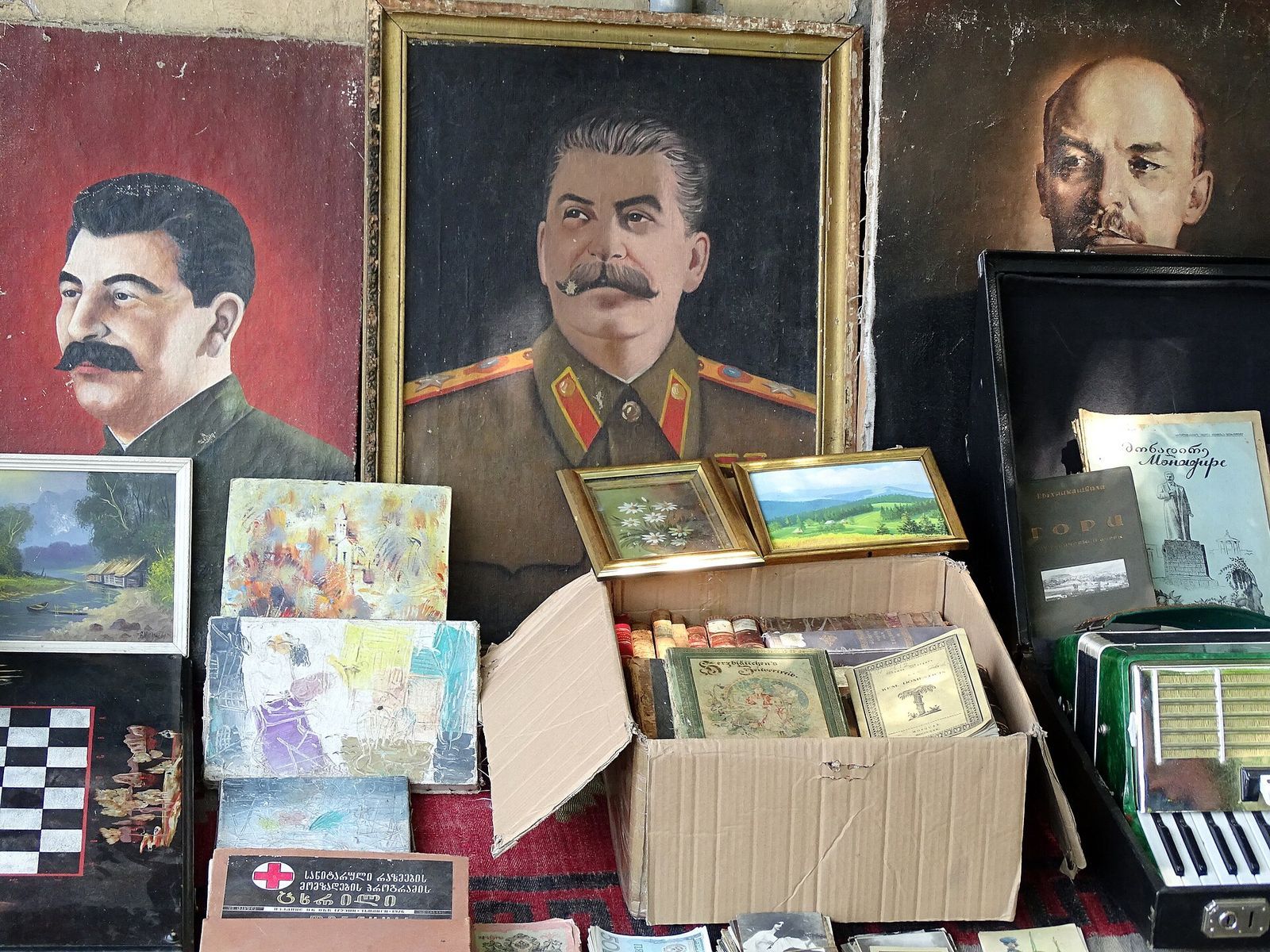
This is the heart of the flea market: war medals, Soviet ID books, old family photographs, hammer-and-sickle badges, Soviet telephones, New Year tree decorations and greeting cards, and portraits of Stalin and Lenin in every size. Stalin was born in Georgia, in Gori, and his face turns up here more than anywhere else I know. I find the family photographs the most moving thing on the bridge; somebody's grandparents, sold by the stack.
Porcelain, silver and brass
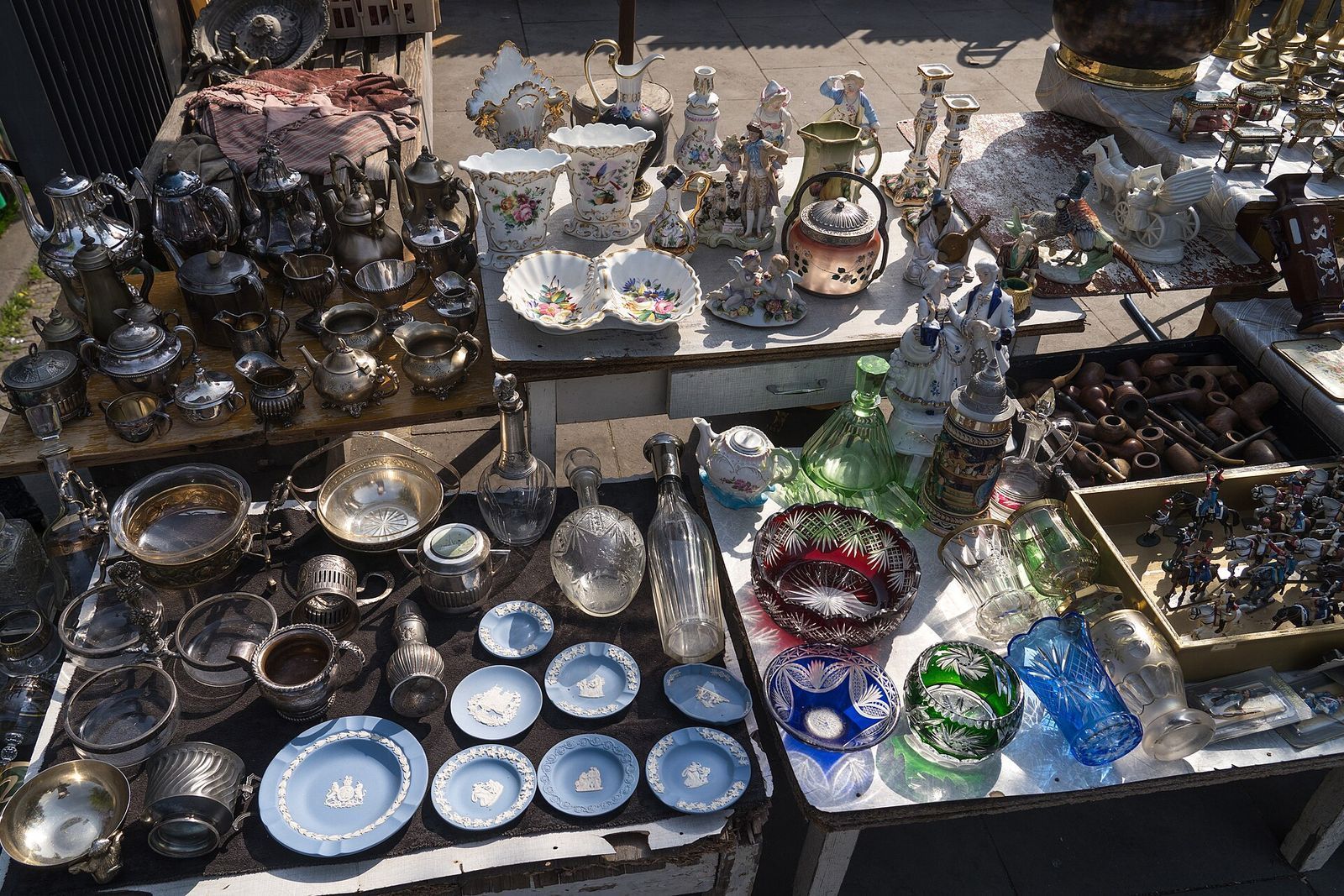
The antiques section downstairs is the place for teapots, cameo plates, cut crystal, silver cutlery and brass, from candlesticks to full samovars. Soviet porcelain figurines are a good small buy: light, cheap to ship and very particular to their time. Check for chips under good light, and look for hallmarks on anything sold as silver.
Jewelry
Several vendors sell jewelry, both new and secondhand, and the old silver is some of the nicest stock on the bridge. You'll also see amber and enamel pieces.
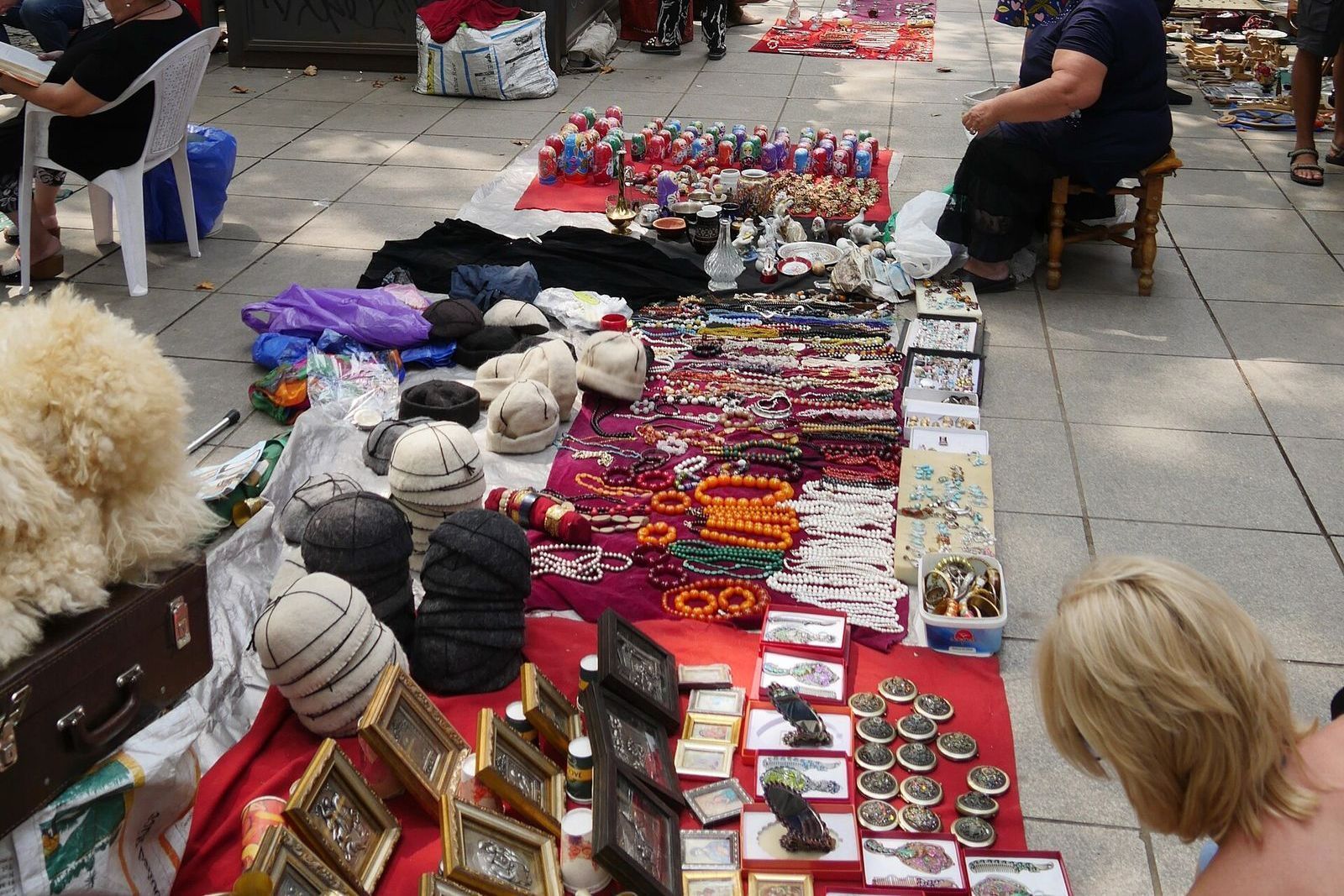
Georgian cloisonne enamel, minankari, has a long history here, and a small enamel pendant is one of the better gifts in the market. New minankari is easy to find, and the antique kind is rarer and priced to match.
Carpets and kilims
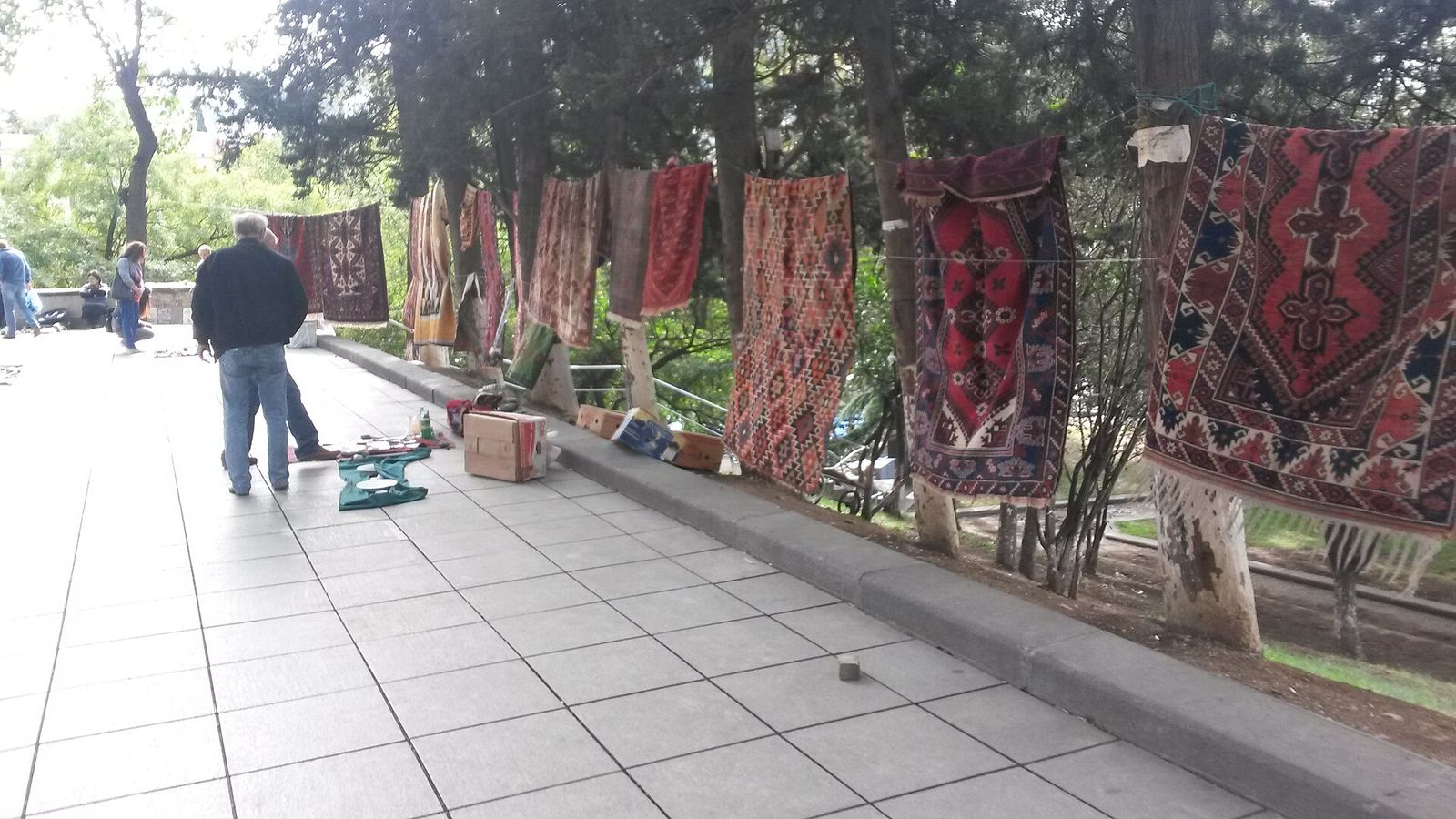
Most of the rugs on sale are new. Now and then an older Caucasian kilim turns up among them, and those are worth a look if you know carpets. If you don't, buy a new one for what it is and enjoy it.
Paintings
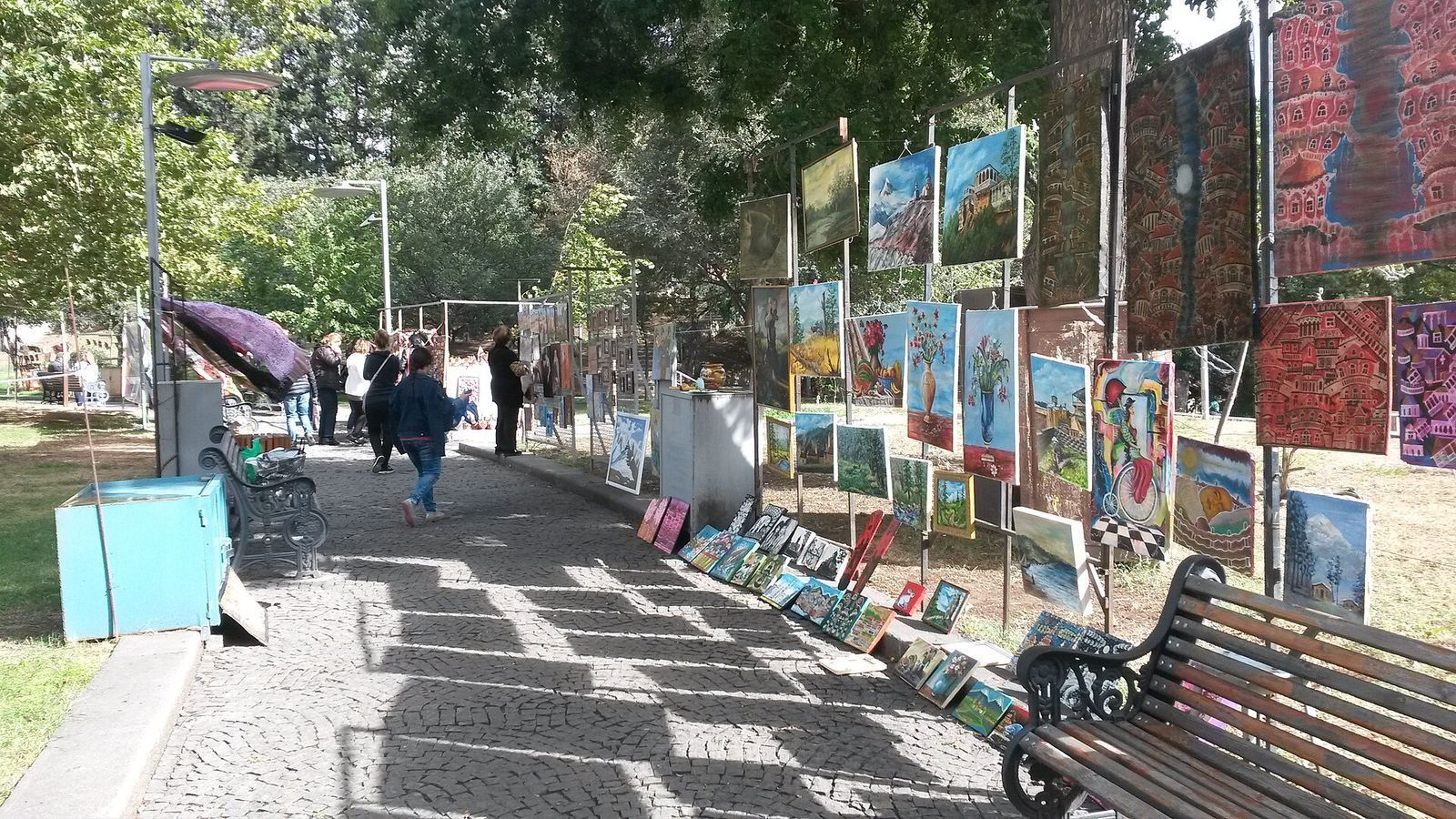
The painters' market is the place for a Tbilisi landscape to hang at home. I'd buy an original by a living painter over another Pirosmani copy every time: you pay similar money for something nobody else owns.
Crafts and souvenirs
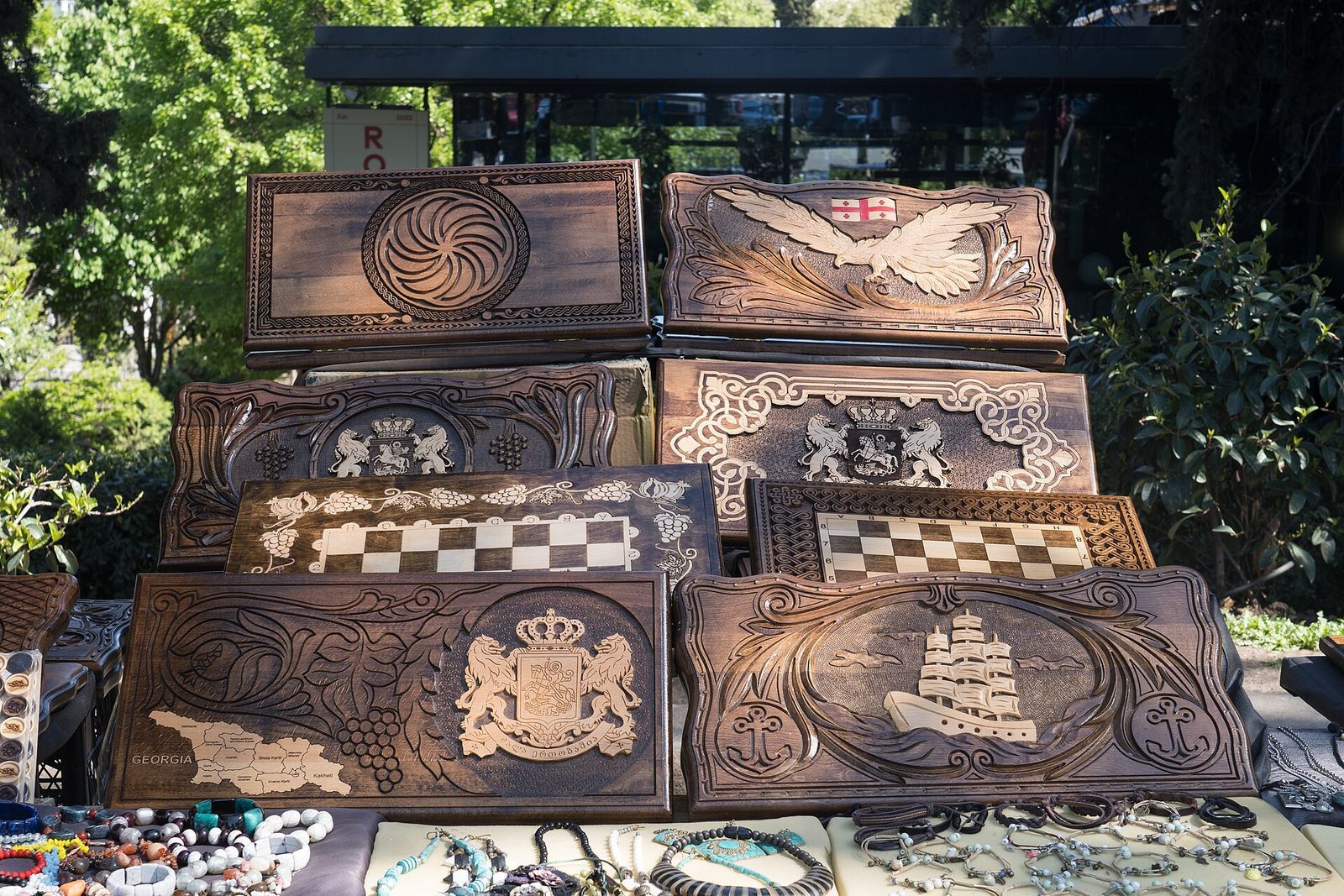
For gifts, the handmade stalls in Dedaena Park are the best value: felt slippers and toys, knitted wool socks, drinking horns, miniature qvevri and painted backgammon boards. The felt work and the enamel stalls are a quick look at the Georgian crafts you'll otherwise pay boutique prices for on the Old Town lanes.
How to haggle at the Dry Bridge Market
Haggling is expected here, and most vendors enjoy it. The first price you hear carries a tourist premium, and nobody will be offended if you offer less. What does go down badly is grinding a pensioner down over 5 lari on a 20 lari item.
My approach is simple. Ask the price, pick it up, put it down, and ask if that's the best they can do. Offer a number you'd be happy with, meet somewhere in the middle, and walk on with a smile if you can't agree. You'll often get called back. Buying two or three things from the same table is the easiest way to a better price.
Cash, toilets and photos
The market runs on cash. Bring lari in small notes, because a 100 GEL note for a 15 GEL purchase is a good way to hear that there's no change. There are ATMs in the streets around the top of the bridge, but it's easier to arrive with cash already in your pocket.
The vendors are relaxed about photos of their tables, and many are happy to pose. Ask before taking a portrait, and take no for an answer. You'll probably hear a seller joke that a photo costs 500 euros; it's an old line on the bridge, and a smile is the right response.
Wear comfortable shoes. Between the bridge, both parks and the stairs down to the antiques section, a full lap is more walking than it looks.
Taking antiques home: export paperwork
Georgia restricts the export of cultural items, and old carpets, icons and genuine antiques can need a permit to leave the country. For a Soviet badge, a camera or a new painting, nobody at the airport will blink. For an old kilim, an icon or a piece of period silver, it's a different story.
Experienced vendors know the rules and can often arrange the permit or tell you if a piece needs one. Ask before you pay, not after. If the seller shrugs at the question on an expensive old piece, I'd treat that as the answer and buy something new instead. For souvenirs with no age to them, a Georgian souvenir bought new is the stress-free option, since new goods need no permit.
Pack fragile buys yourself. Porcelain and crystal travel best wrapped in clothes in the middle of your carry-on, and most vendors will give you newspaper but not much more.
What to do near the Dry Bridge
The market fits neatly into a half-day. Browse for an hour or two, then head off in one of three easy directions.
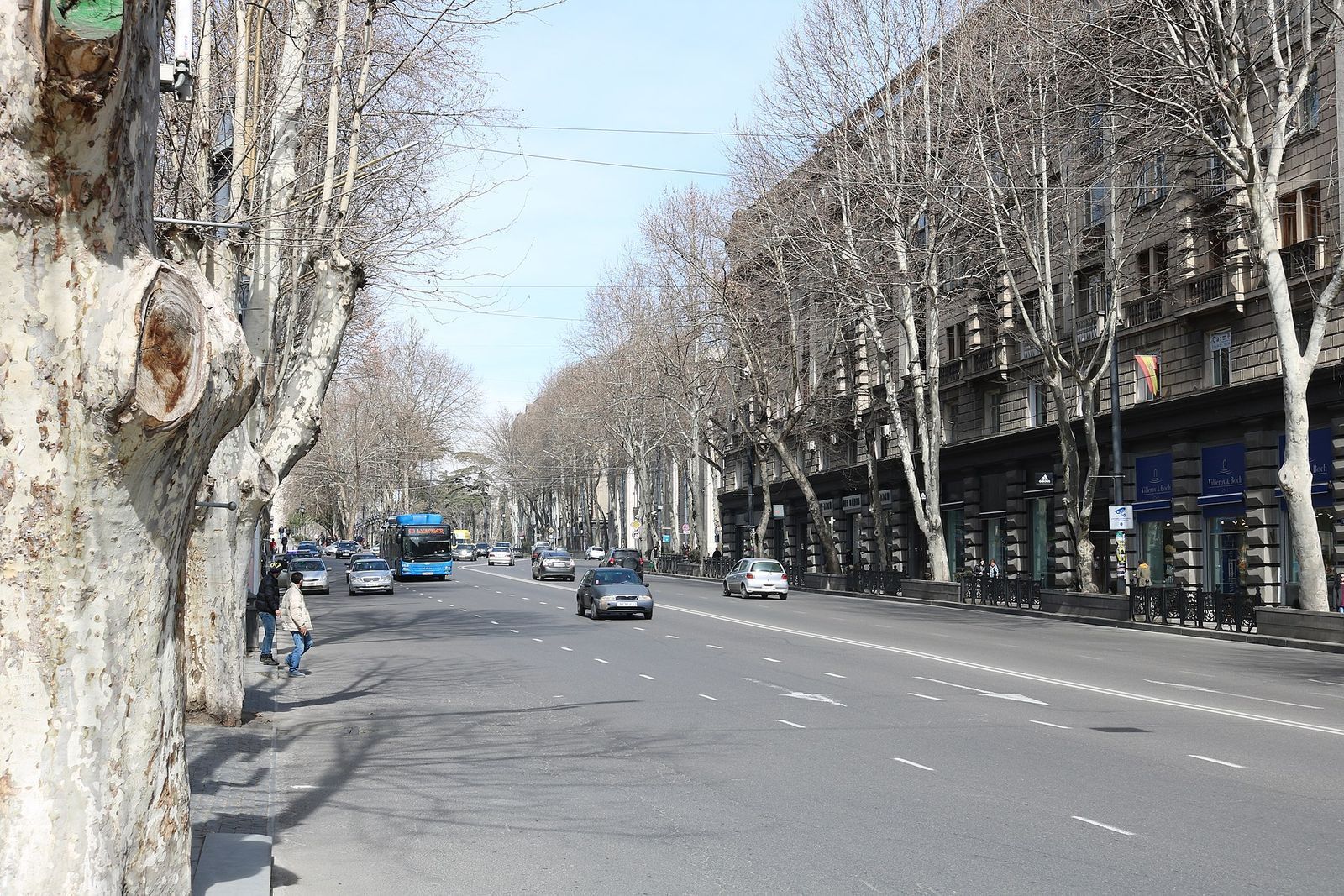
Uphill to Rustaveli Avenue. A few minutes up from the bridge, Rustaveli Avenue has the opera house, the Georgian National Museum and the city's grandest stretch of architecture.
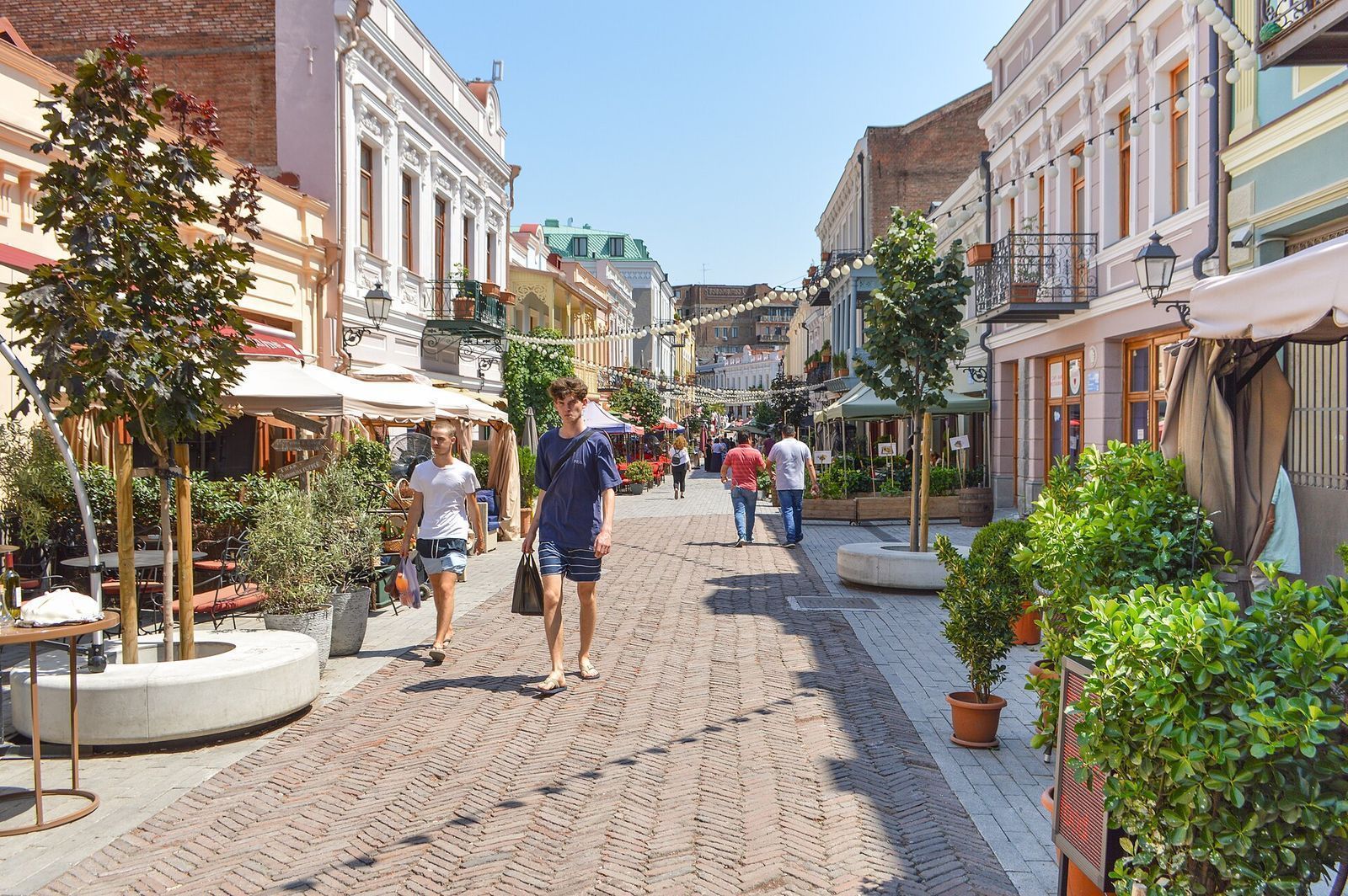
Across the river to Marjanishvili. Cross over the bridge at Saarbrucken Square to the 19th-century streets of Marjanishvili for a late lunch on Aghmashenebeli Avenue.
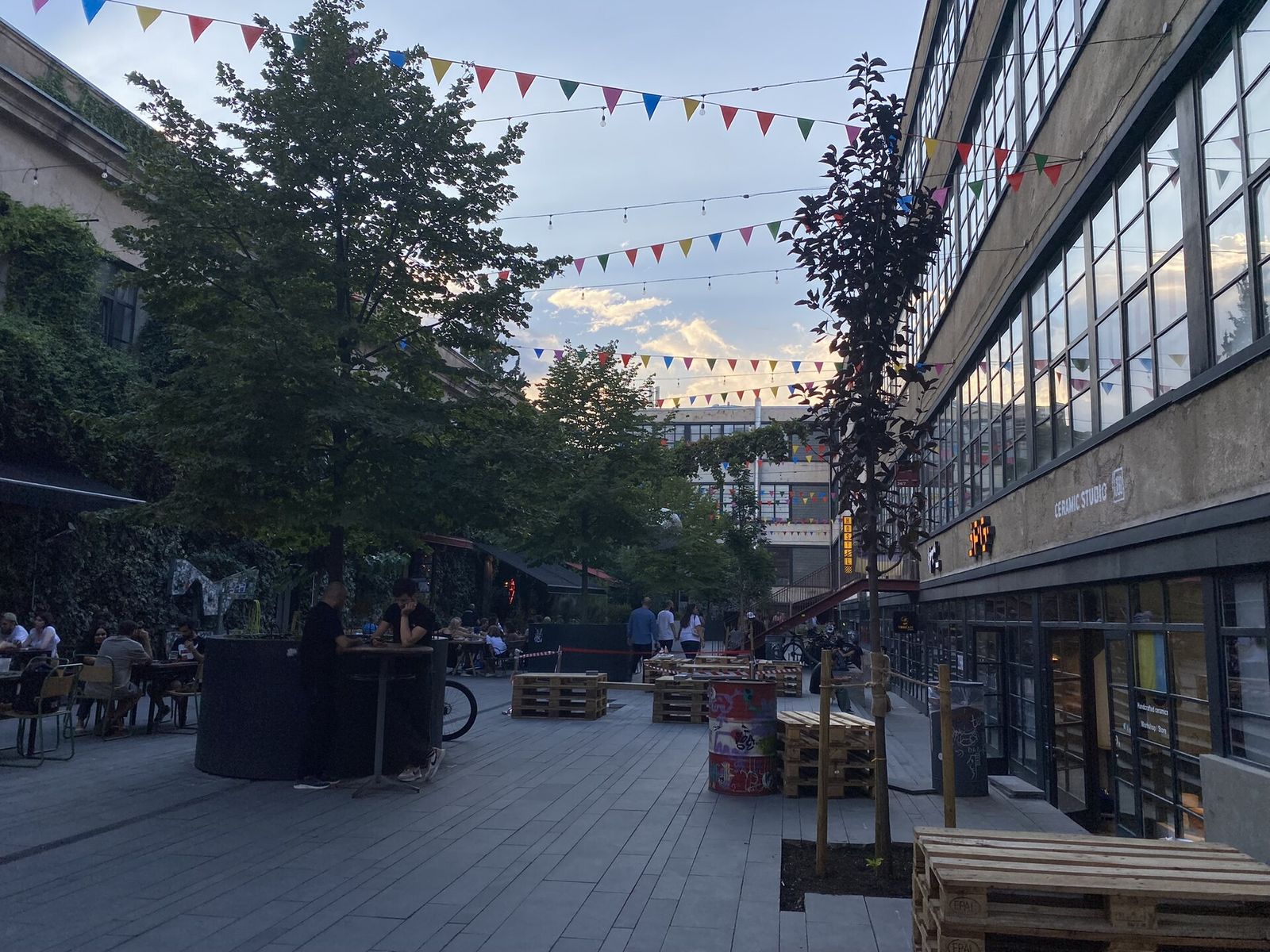
From there, carry on to Fabrika, the old Soviet sewing factory turned hostel, with bars and cafes around its courtyard.
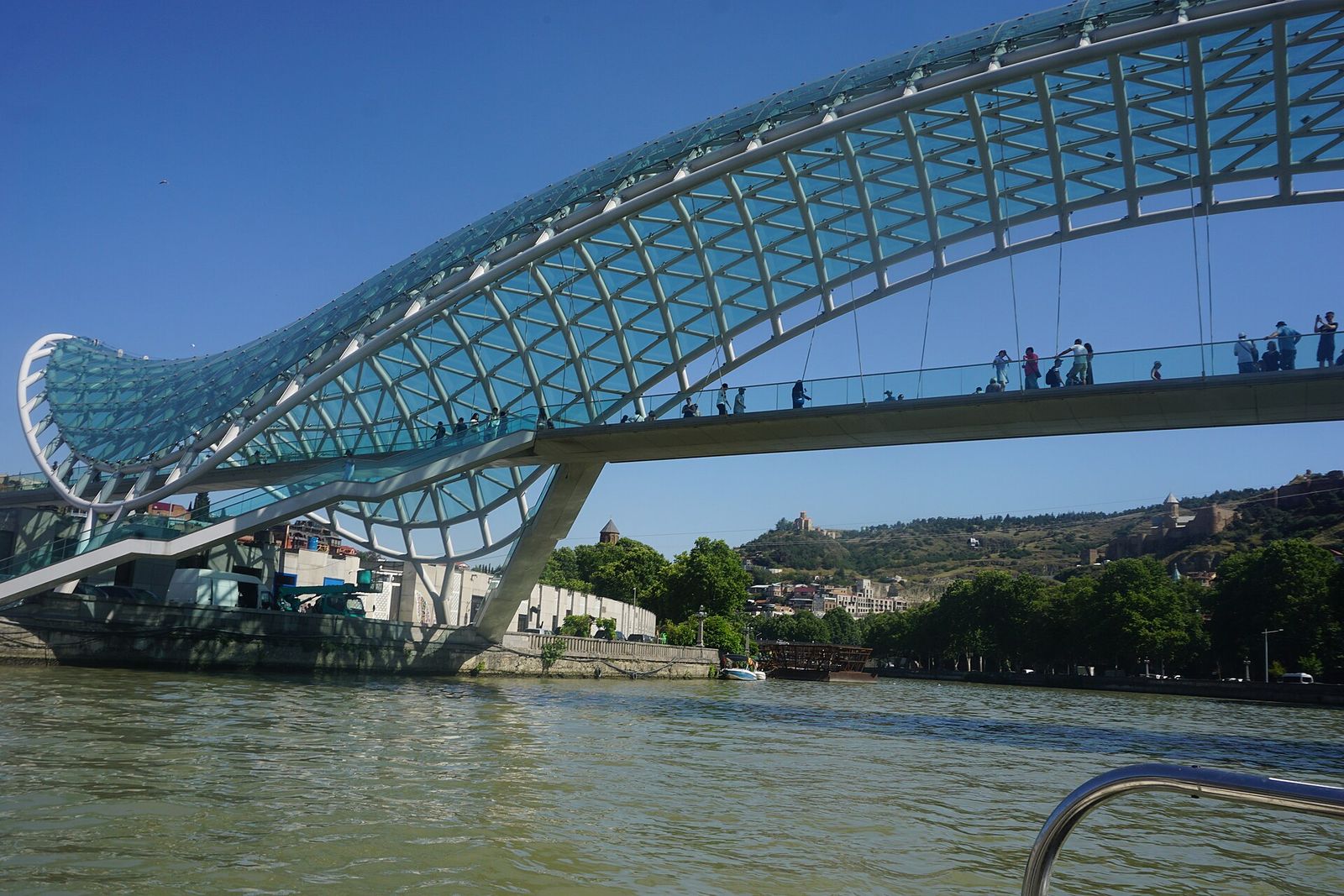
Along the river south. Follow the embankment down to the Bridge of Peace and the Old Town, about the best walk in the center on a sunny afternoon.
Other flea markets and antique shops in Tbilisi
The Dry Bridge is the best known market in the city, but it isn't the biggest or the most local. If you catch the bug, there's more.
The antique shops at the top of the bridge. Several small antique shops sit at the Atoneli Street end, and they're worth a look for pricier, better-sorted pieces.
Chugureti antique shops. Across the river, a cluster of antique shops in the Chugureti district sells mostly porcelain and tableware, in dark, dusty rooms that reward a slow look.
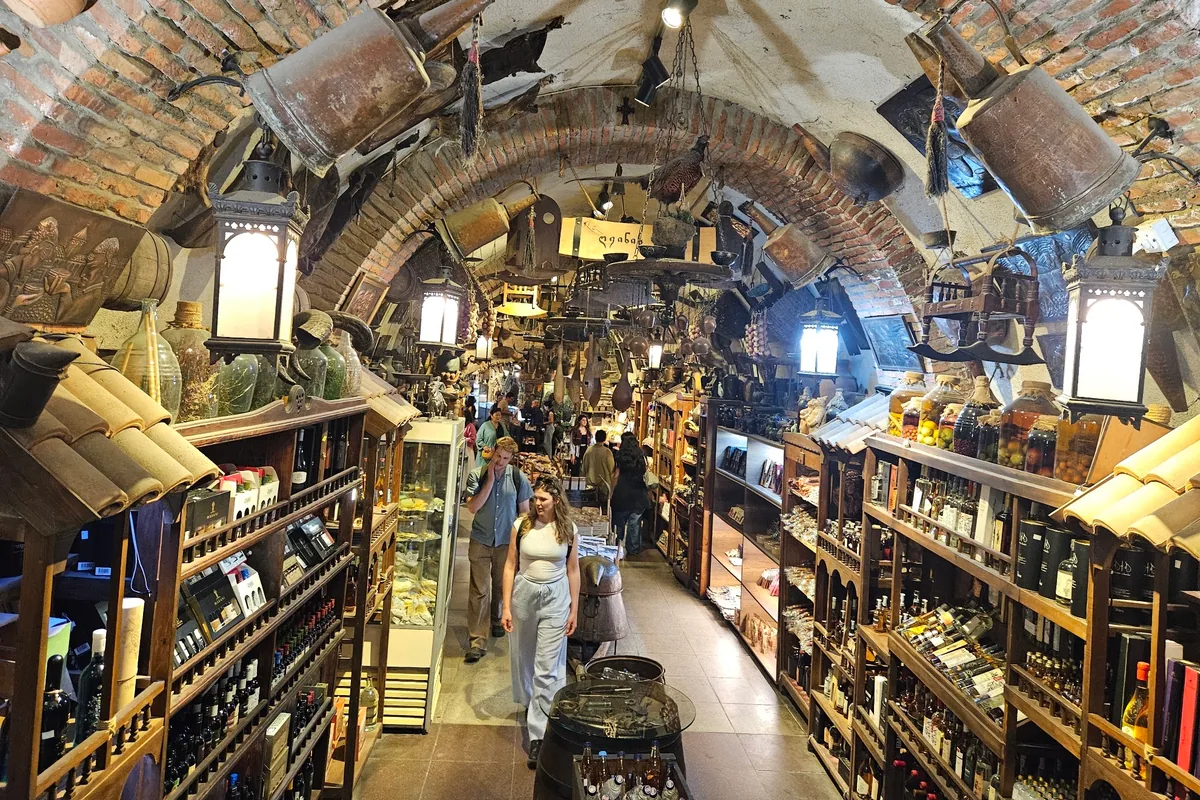
Meidan Bazaar. The underground bazaar near Gorgasali Square in the Old Town sells souvenirs, spices and crafts. It's new stock, not antiques, but easy to combine with a walk through the old streets.

The Dezerter Bazaar. The big food market near Station Square: churchkhela, spices, cheese and produce. No antiques, but the best market in the city for food.
Every market in the city gets its own write-up in the best markets in Tbilisi, from the Dry Bridge to the produce halls.
Key takeaways
- Dry Bridge Market is open daily from about 10:00 to 17:00, and the full market is out on Saturday and Sunday from late morning.
- It has four parts: the flea market on the bridge, the antiques downstairs, the painters along the parks and the crafts in Dedaena Park.
- Soviet cameras, memorabilia, old silver, porcelain and paintings are the best buys, and copies are common, so ask and pay accordingly.
- Bring cash in small notes, haggle politely, and know your top price before you ask.
- Ask about export paperwork before you buy old carpets, icons or genuine antiques.
Frequently asked questions
What days is the Dry Bridge Market open?
It's open every day of the year except major holidays such as 1 January and Orthodox Easter Sunday. Weekends bring the most vendors, and Mondays are often half empty. Heavy rain or snow keeps most sellers at home on any day.
What time does the Dry Bridge Market open and close?
Vendors set up from about 10:00 and pack up around 17:00. The best window is 11:00 to 16:00, when the stalls are fully out. By early evening most tables are gone.
Is the Dry Bridge Market worth visiting?
Yes, even if you buy nothing. It's free, it's 12 minutes on foot from Liberty Square, and an hour among the Soviet cameras, medals and family photographs says more about recent Tbilisi than most museums.
Can you pay by card at the Dry Bridge Market?
No, it's cash only. Bring lari in 10 and 20 GEL notes, since sellers often can't change a 100. There are ATMs in the streets near the top of the bridge.
Can you bargain at the Dry Bridge Market?
Yes, bargaining is expected, and the first price usually carries a tourist premium. Offer less, meet in the middle and stay friendly. Buying several things from one seller is the easiest way to a better price.
Is the Dry Bridge Market open in winter?
Yes, the market runs year round, and a dry winter weekend still draws a good crowd of vendors. Rain and snow are the problem, not the cold. If you're visiting Tbilisi in winter, keep a dry, sunny day for the market.
Why is it called the Dry Bridge?
Because it no longer crosses water. The bridge was built in the 19th century over a channel of the river, and in 1933 that channel was filled in to make the embankment road, leaving the bridge over a street.
Shopping in Tbilisi: Where to Shop, What to Buy and What It Costs
Tbilisi is known for its flea markets, bazaars and wine. Here's where to shop, what to buy and what it costs.
Read the guide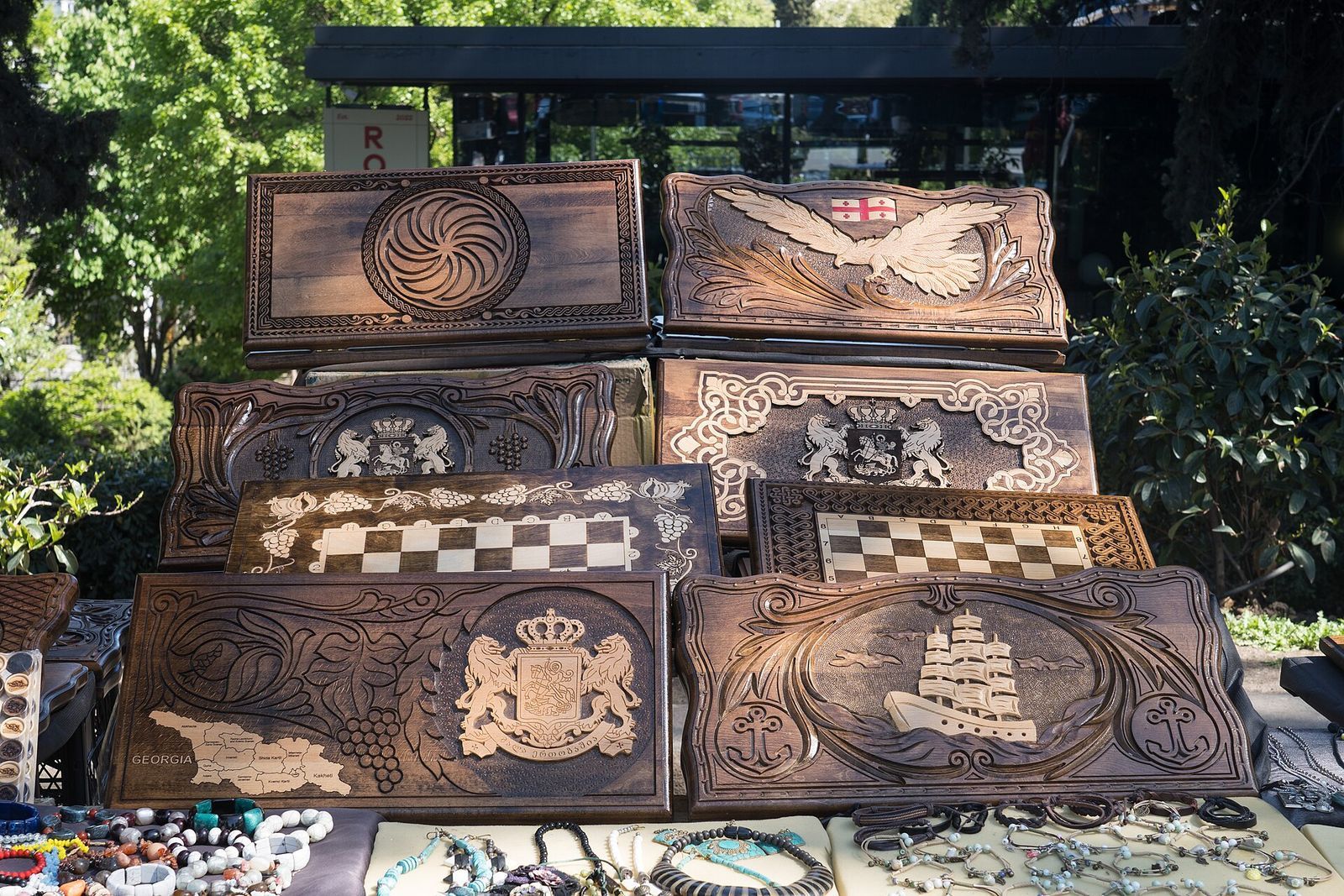
Georgian Souvenirs Worth Buying in Tbilisi
Georgia is known for its wine, churchkhela and crafts. Here is what to buy in Tbilisi, what it costs and where to shop.
Read the guide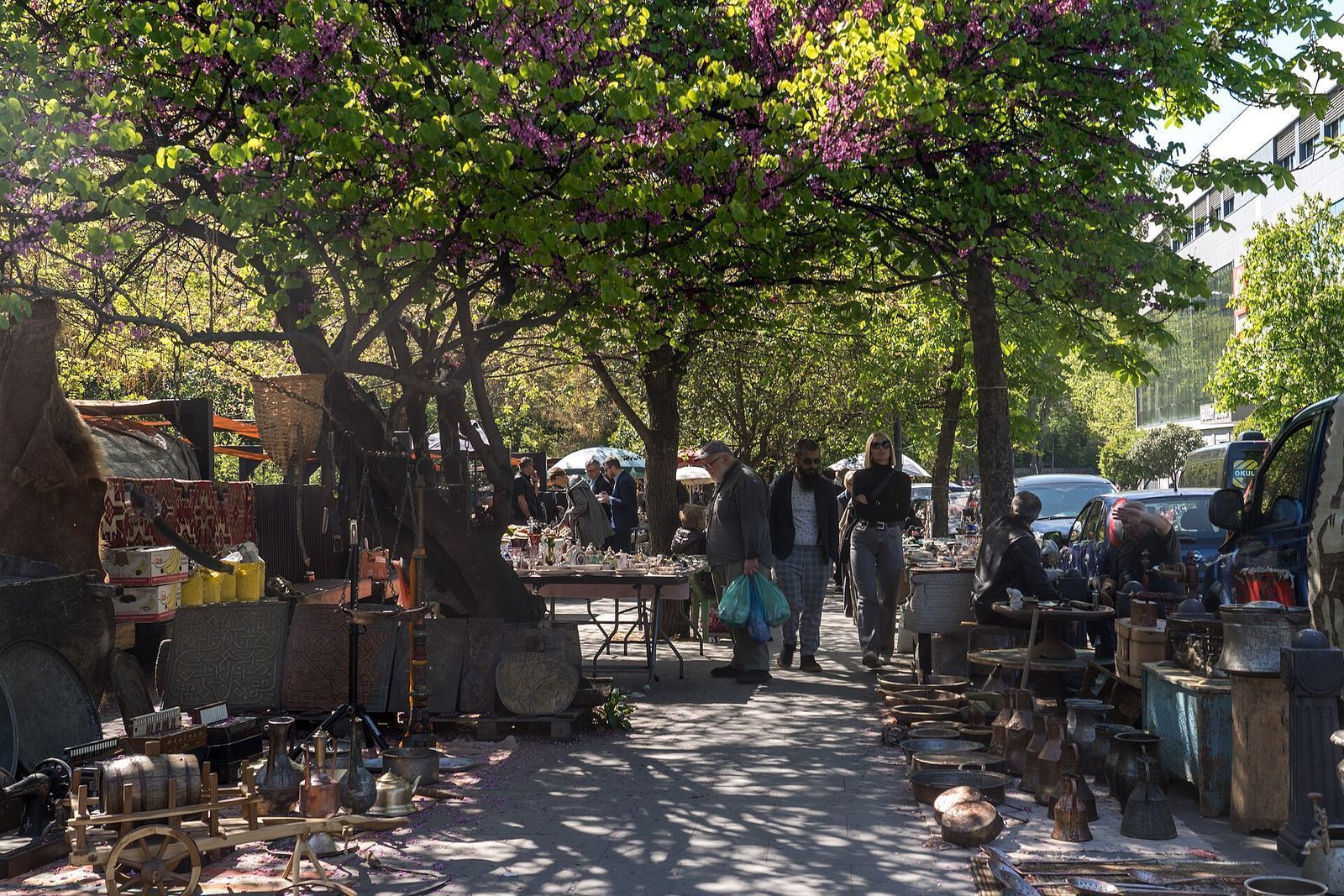
The Best Markets in Tbilisi: Bazaars, Flea Markets and Food Halls
Tbilisi is known for its bazaars and flea markets. Here are the best ones, what they sell and when to go.
Read the guide