Tbilisi in Winter: Weather, Snow and What to Do from December to February
Tbilisi is known for mild winters: grey, chilly days of 2 to 8 C, snow that rarely sticks, and a holiday season that runs from New Year's Eve to Orthodox Christmas on 7 January. Here's what you need to know about the weather from December to February, the chance of snow, what to do when it's cold, the day trips that still work and what to pack.
Is Tbilisi worth visiting in winter?
Yes, if you come for the city rather than the countryside. Winter is when Tbilisi goes back to being itself: about 5 times fewer visitors than in summer, no queue at the baths, cheaper rooms and a run of holidays you won't see in any other season. The days are short and often grey, but rarely bitter, and this is a city built for long afternoons in wine cellars, bathhouses and museums.
I'd come in winter if any of these sound like you:
- You like a city to yourself. The Old Town, the fortress and the museums are at their emptiest from mid-January to February.
- You're on a budget. Rooms cost 30 to 50% less than in summer, and the hills, churches and markets are free all year.
- You want the holidays. New Year's Eve and Christmas on 7 January are the two biggest dates in the Georgian year.
- You want to ski. Gudauri is about 2 hours up the road, and Tbilisi makes an easy base either side of the slopes.
Skip it if you want long evenings on terraces, green hills or mountain hiking. Kazbegi and Svaneti are under snow from December, and the best time to visit Tbilisi with the countryside in the plan is still late April to June or September to October.
Tbilisi weather in winter
Tbilisi is mild by the standards of the rest of Georgia. Daytime averages stay in single figures from December to February, nights sit around freezing, and a cold snap can push them a few degrees below. Winter is fairly dry next to spring, so you get more grey days than wet ones.
| Month | Average low to high | Crowds | Room prices | What's on |
|---|---|---|---|---|
| December | 3 to 8 C | Low, then busy from 25 December | Cheap until the New Year week | Lights, Christmas markets, New Year's Eve |
| January | 2 to 6 C | Busy to the 7th, then very low | Cheap after the 14th | Christmas, Old New Year, Epiphany |
| February | 3 to 8 C | The lowest of the year | About half of summer rates | Baths, opera, peak ski season |
What catches people out is the light rather than the cold. It's dark by about 17:00 in December, and the shortest days carry about 9 hours of daylight, so a winter day here has a short outdoor window and a long evening.
Does it snow in Tbilisi?
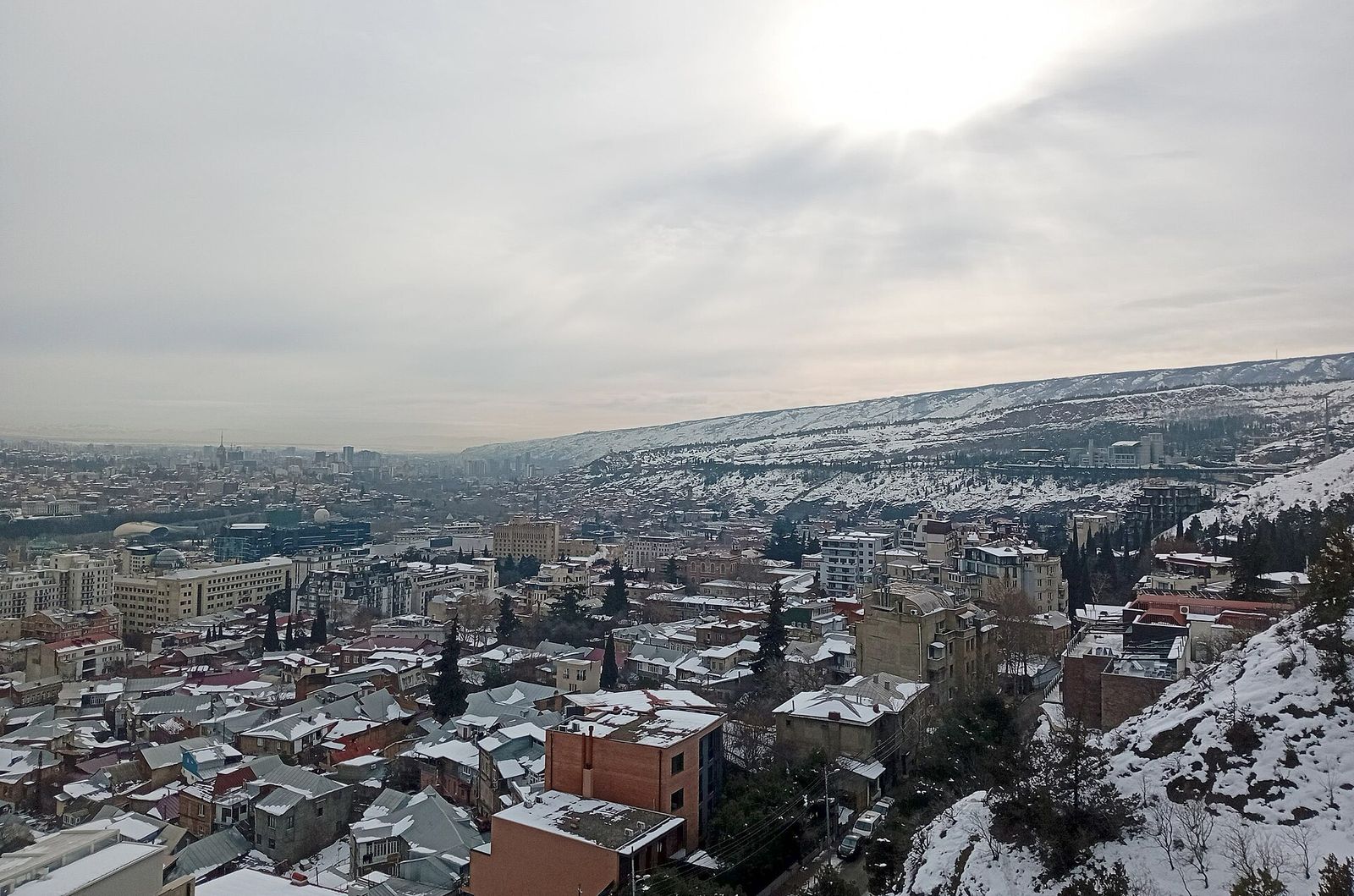
Yes, but not much and not for long. Most winters bring a few snowy days, usually a light fall overnight that whitens the roofs and hills and melts by the afternoon. January and February are likelier than December, and late falls happen too: in March 2022 snow stayed on the city for about a week.
When it does settle, Tbilisi is at its prettiest for half a day, with white bath domes, dusted balconies in Sololaki and the slopes of Mtatsminda bright above the rooftops. Get out early, because by lunchtime the lanes are slush.
If snow is the point of the trip, plan on the mountains. Gudauri, Kazbegi, Bakuriani and Mestia are reliably white from December, and the closest is a morning's drive away.
Tbilisi in December, January and February
December builds toward New Year, early January is a run of holidays, and the rest of January and February is the quietest, cheapest stretch of the year.
Tbilisi in December
The first two weeks of December are among the calmest of the year, with days of 3 to 8 C and life moving indoors to cafes, galleries and the opera. In mid-December the city switches on its lights: the main tree and the Christmas market go up at First Republic Square by Rustaveli metro, and lights hang over Rustaveli Avenue, Freedom Square and the streets of Vera and Sololaki. Last winter the market ran from 12 December to 14 January.
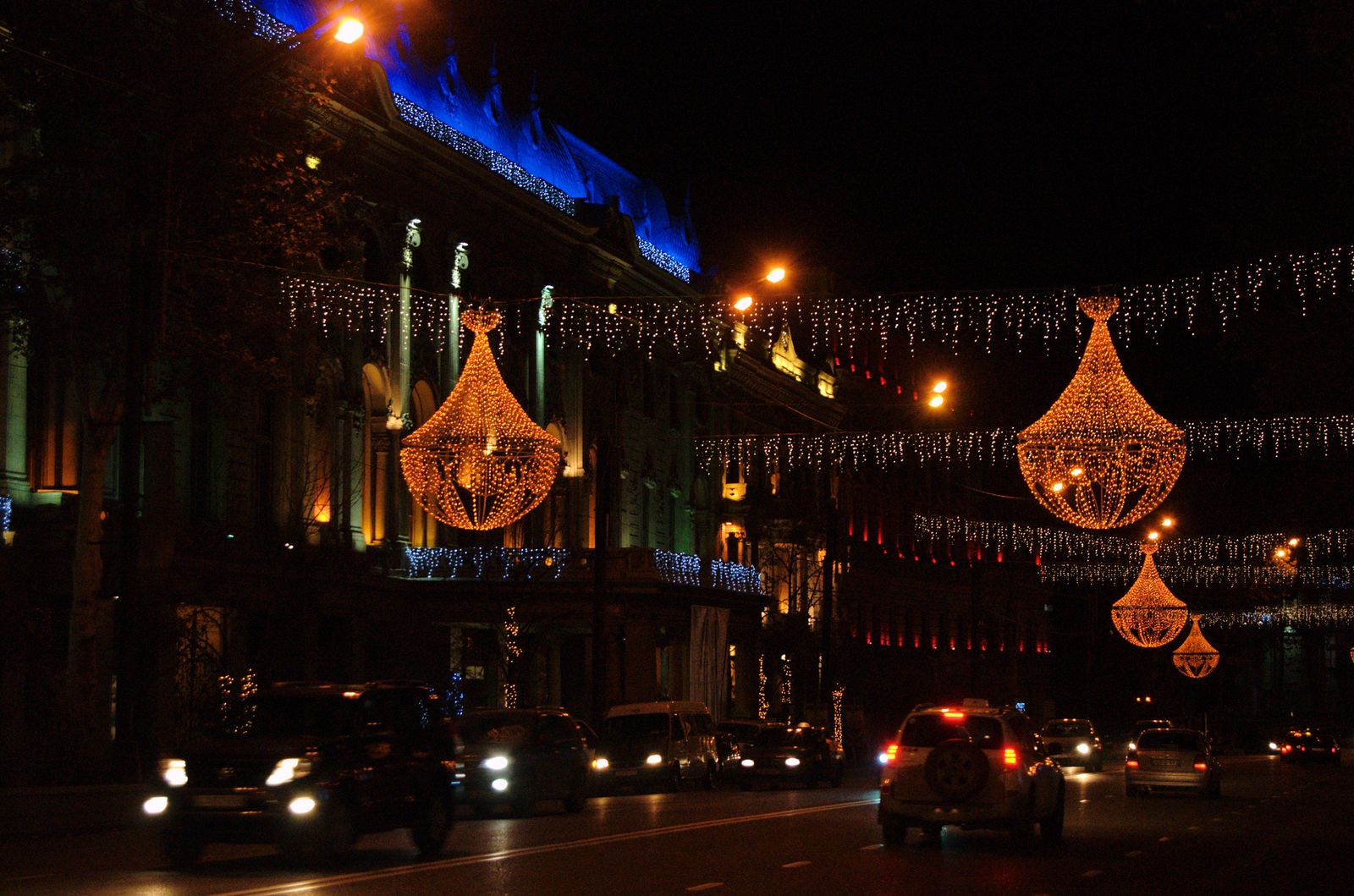
Georgian Christmas is on 7 January, so 25 December is an ordinary working day here. The big night is New Year's Eve: families sit down to a feast at about 23:00, there's a free concert at First Republic Square, and at midnight fireworks go up from balconies and courtyards across every neighborhood. There's no official show, so the trick is to watch from a hill, where New Year's Eve in Tbilisi looks like the whole city lighting up at once.
Tbilisi in January
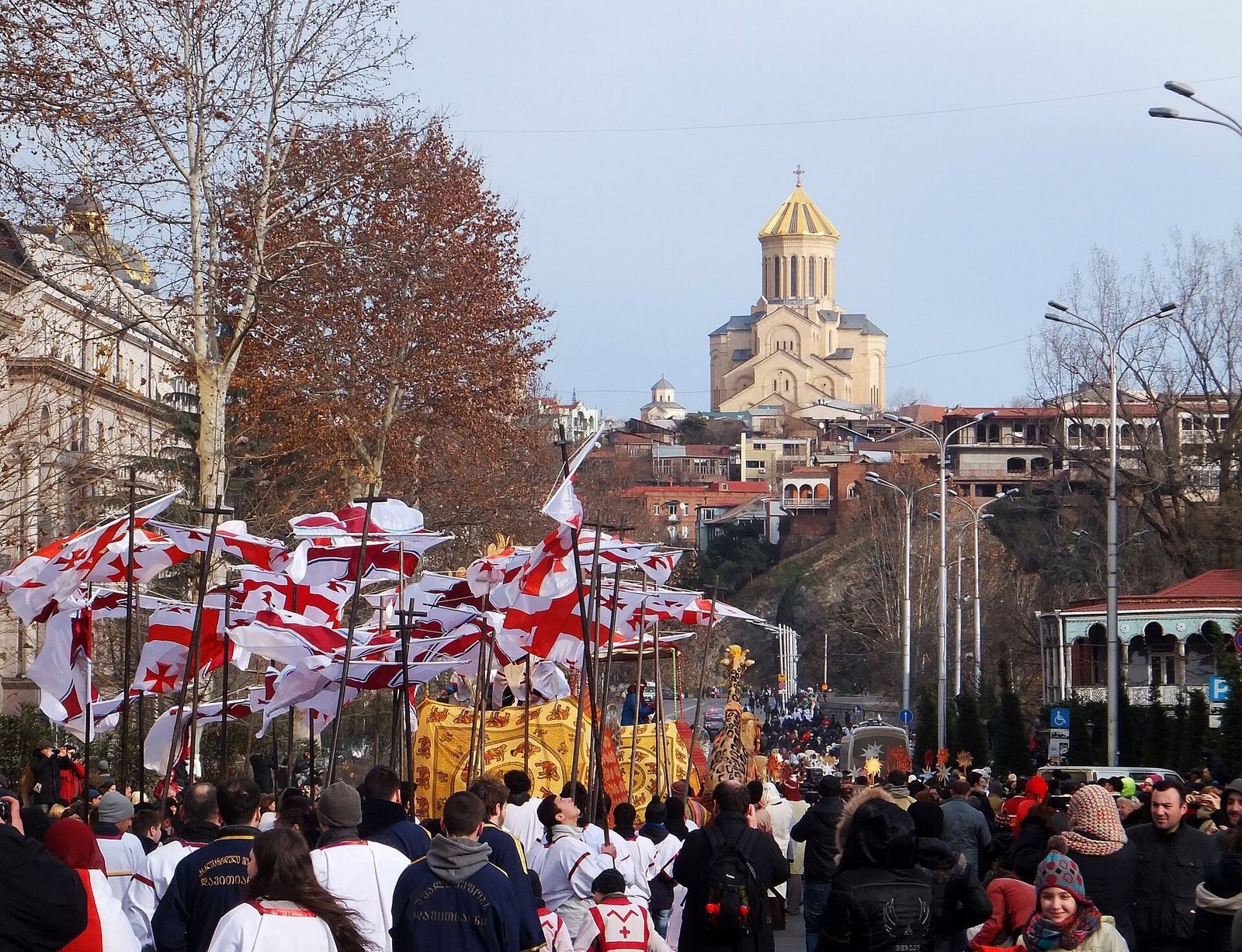
January is the coldest month, at 2 to 6 C, and the first week is all holiday. New Year's Day and Bedoba, the "day of fate" on 2 January, are public holidays, and the city is slow and half shut. Christmas follows on 7 January: a liturgy runs through the night at Holy Trinity Cathedral, and from around 12:00 to 13:00 the Alilo procession walks from First Republic Square to the cathedral with church choirs, banners and children dressed as shepherds and angels. It's free to watch or join.
The season ends with Old New Year on the night of 13 to 14 January and Epiphany on the 19th, when the last chichilaki, the shaved hazel-wood Christmas trees, are burned on the eve. After that the city goes quiet, and the second half of January is one of the best-value times to be here.
| Date | What happens | What it means for you |
|---|---|---|
| Mid-December | Lights, the main tree and the market open at First Republic Square | The season starts |
| 25 December | Western Christmas | A normal working day |
| 31 December | New Year's Eve, a free concert and fireworks at midnight | The biggest night of the year |
| 1 and 2 January | New Year's Day and Bedoba | Public holidays; a slow city |
| 7 January | Orthodox Christmas and the Alilo procession | Public holiday; the procession is free |
| 13 to 14 January | Old New Year | Celebrated, but a working day |
| 19 January | Epiphany | Public holiday; the season ends |
No other season packs as many of the festivals in Georgia into so few weeks, and none of them cost anything to watch.
Tbilisi in February
February is the calmest month of the year, grey and chilly at 3 to 8 C but easy with a warm coat. Rooms cost about half their summer price, the baths have no queue, the opera season is in full swing, and Gudauri has its best snow. Berikaoba, the old masked folk carnival, can fall in late February or March. It's the month I'd pick for slow travel: a museum in the morning, a long lunch, an hour in a bath and a glass of amber wine in a cellar.
Things to do in Tbilisi in winter
Winter rearranges the to-do list rather than shrinking it. The outdoor sights get short visits on bright days, and the bathhouses, museums, theaters and cellars move to the front.
Soak in a sulfur bath
The sulfur baths in Abanotubani are the best answer to a cold day. The water comes out of the ground at 38 to 40 C, the brick domes steam in the winter air, and an hour in a private room keeps you warm for the rest of the evening.
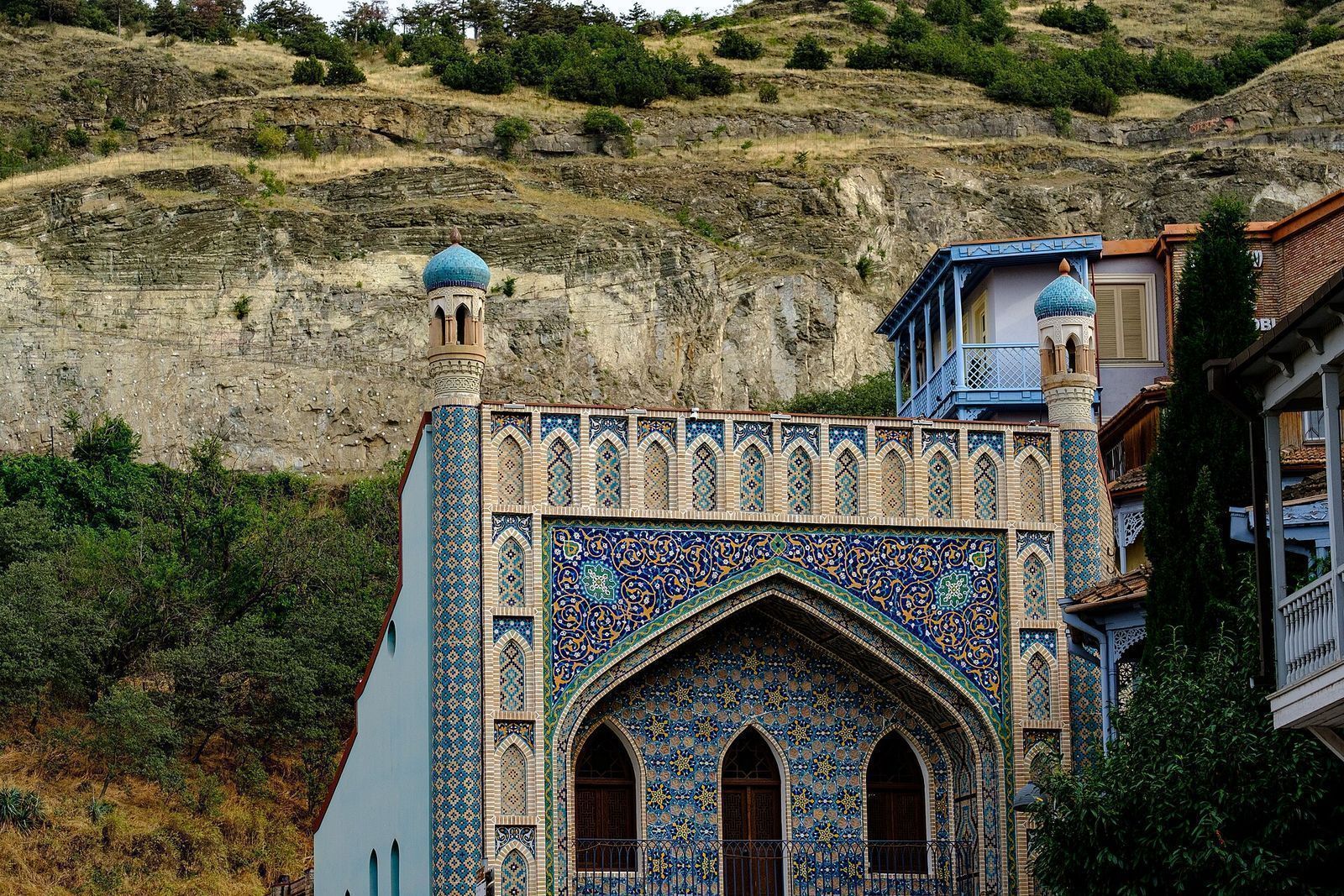
Private rooms cost 120 to 300 GEL an hour, priced per room. For a couple I'd book Chreli Abano, the blue-tiled Orbeliani bathhouse, from 130 GEL; for up to 4 friends, Royal Bath's Room 5 at 150 GEL works out at 37.50 GEL each. The public halls cost about 6 to 30 GEL a person, and a kisa scrub is 15 to 20 GEL in cash.
Spend a cold afternoon in the museums
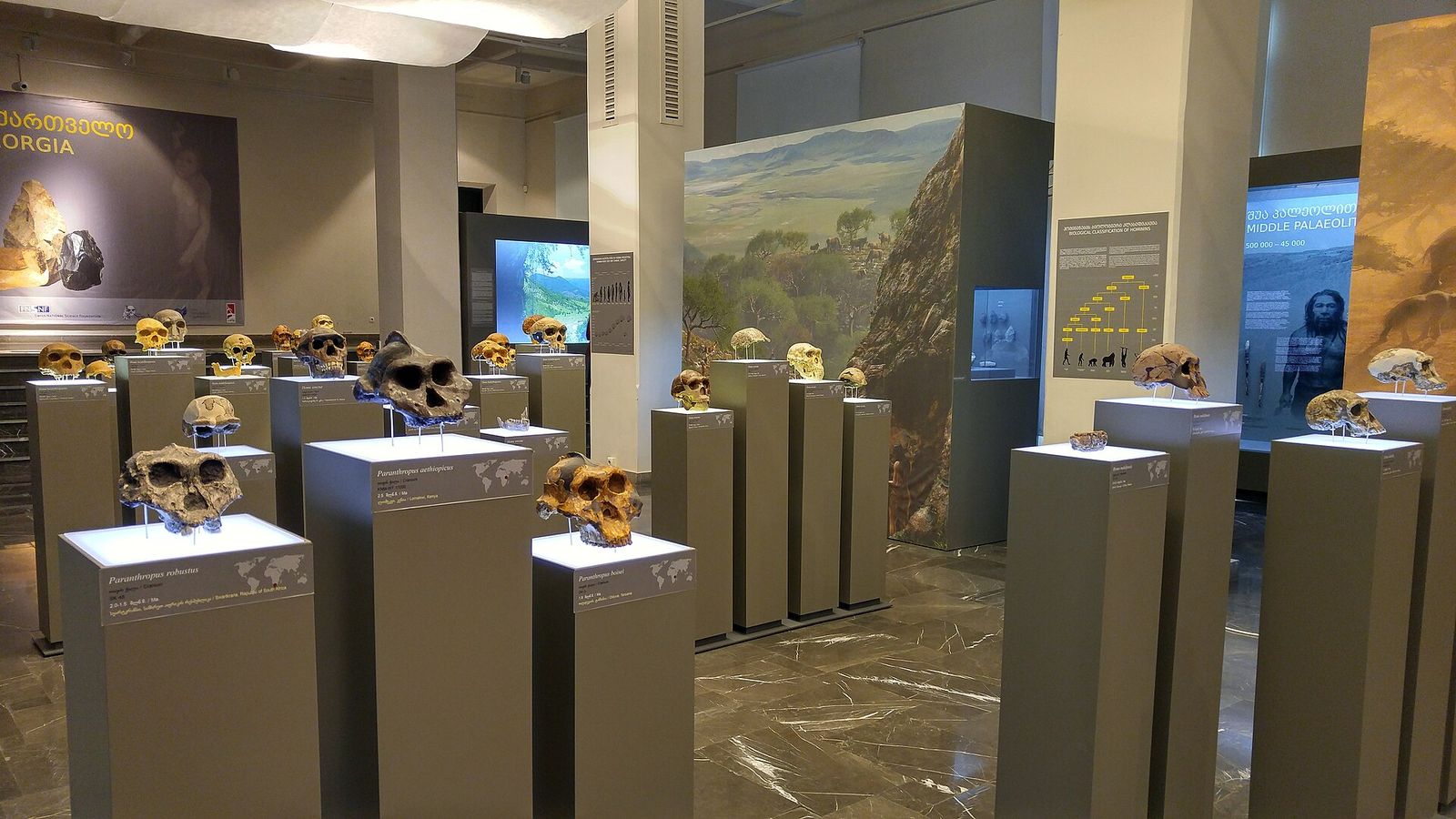
A grey day is museum weather. The Georgian National Museum on Rustaveli Avenue is the one to see, at 40 GEL for foreigners, with the Colchian gold and the Soviet Occupation Hall on one ticket.
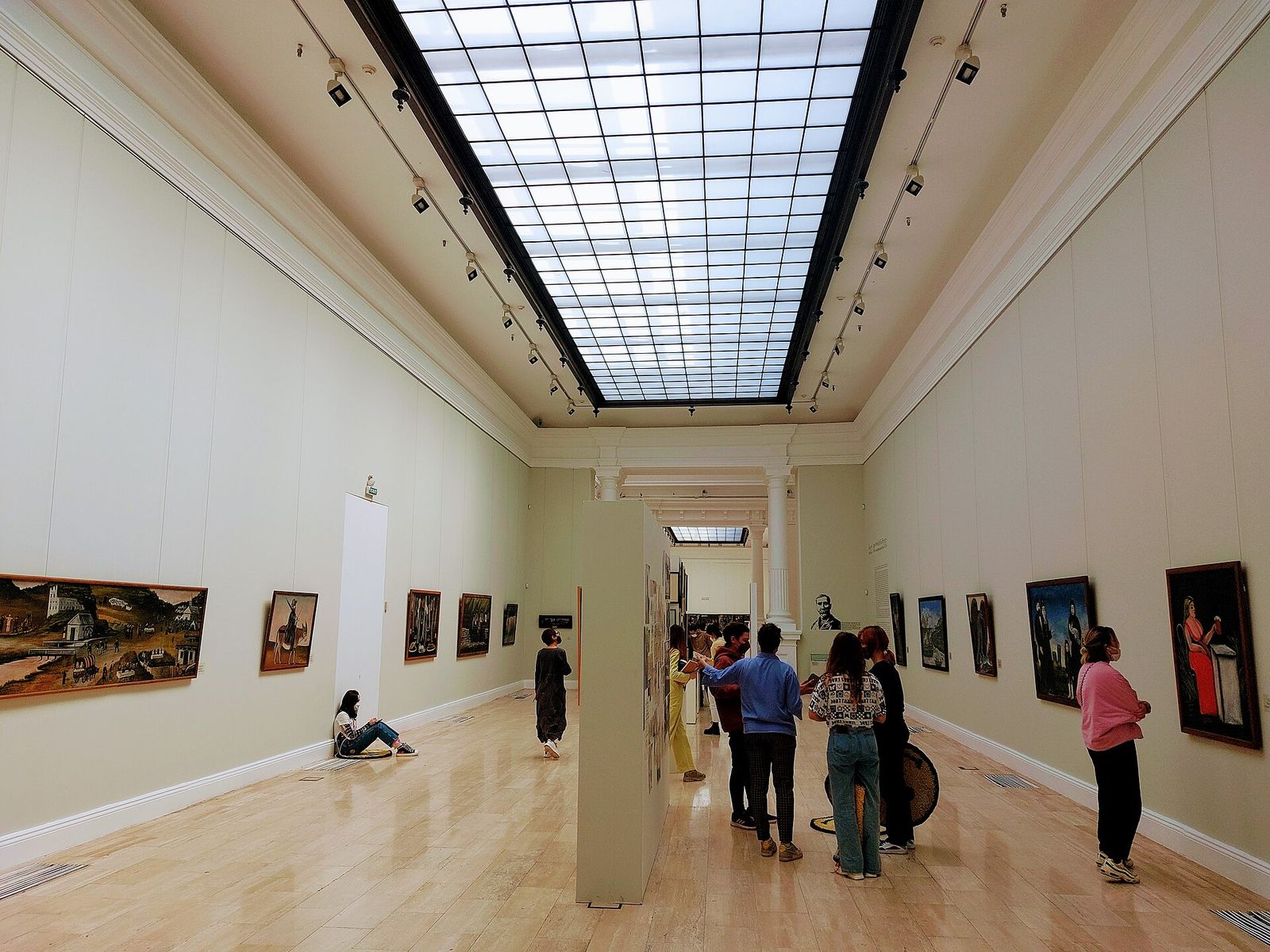
The National Gallery next door, at 25 GEL, has the Georgian painters, and the two fill a morning. Keep the open-air ethnographic museum for a dry, bright day, because it's all outdoors.
Go to the ballet or the puppet theater
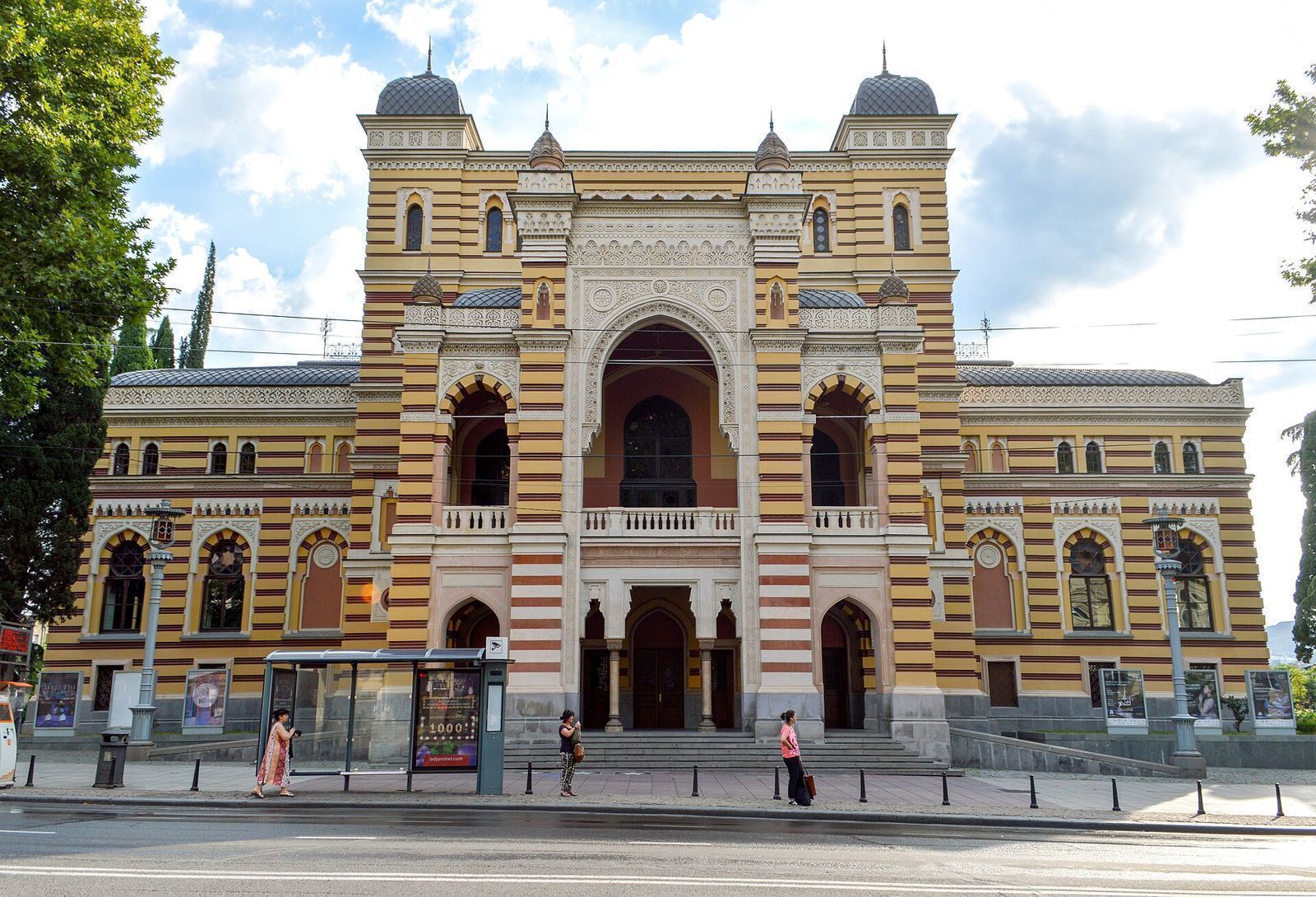
Winter is the heart of the theater season, which runs from autumn to July. The Opera and Ballet Theatre at 25 Rustaveli Avenue is the big night out, with seats from about 20 GEL in the upper tiers, sold as e-tickets on opera.ge and tkt.ge, and ballet is the easiest pick for a visitor.
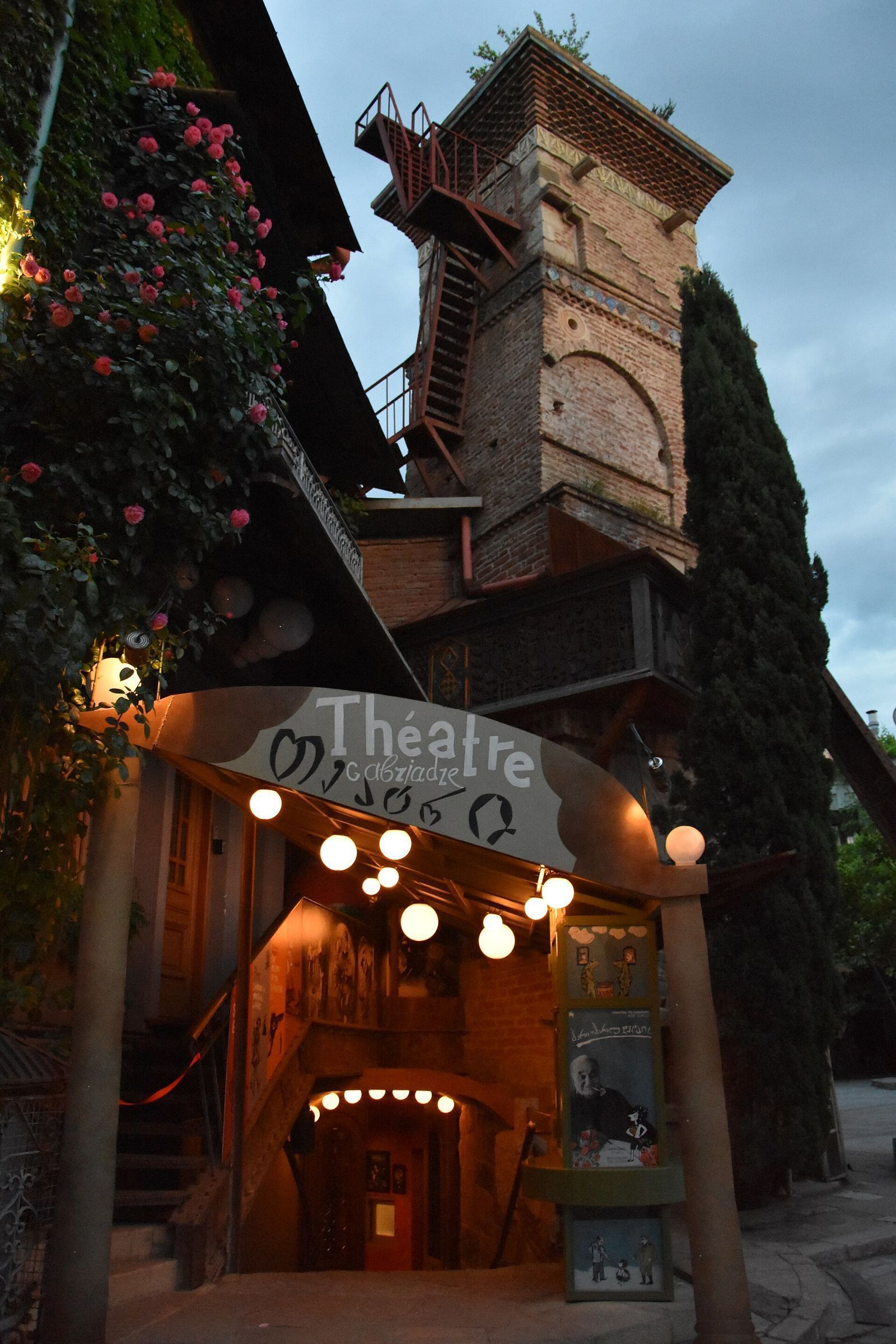
My favorite small ticket in town is the 80-seat Gabriadze Marionette Theatre in the Old Town, at roughly 10 to 60 GEL, which sells out days ahead.
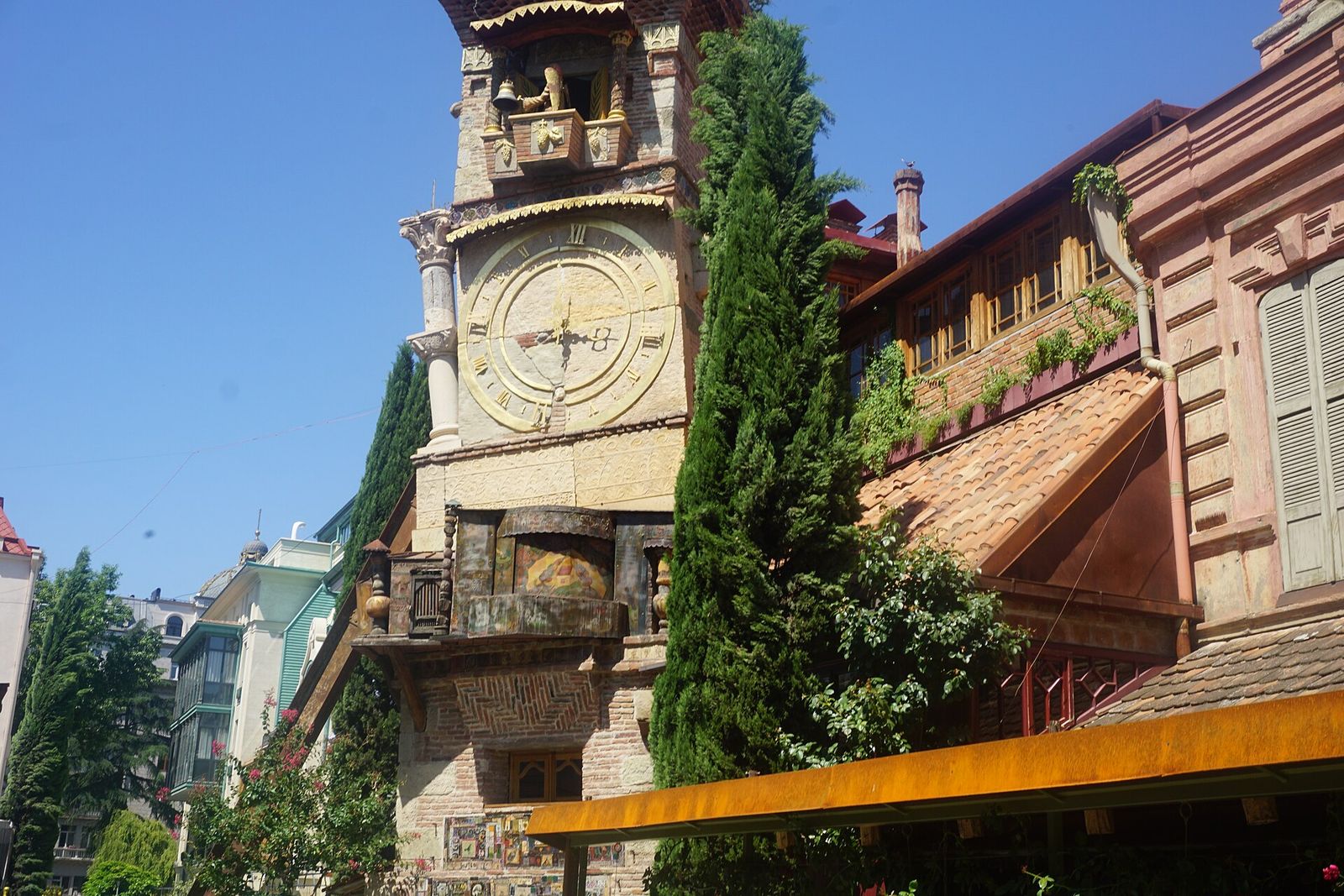
If you miss it, the Gabriadze clock tower next door runs a free 15-minute puppet show every day at 12:00 and 19:00. Between the ballet and the puppets, an evening of opera and theater in Tbilisi can cost less than dinner.
Walk the hills on a clear day
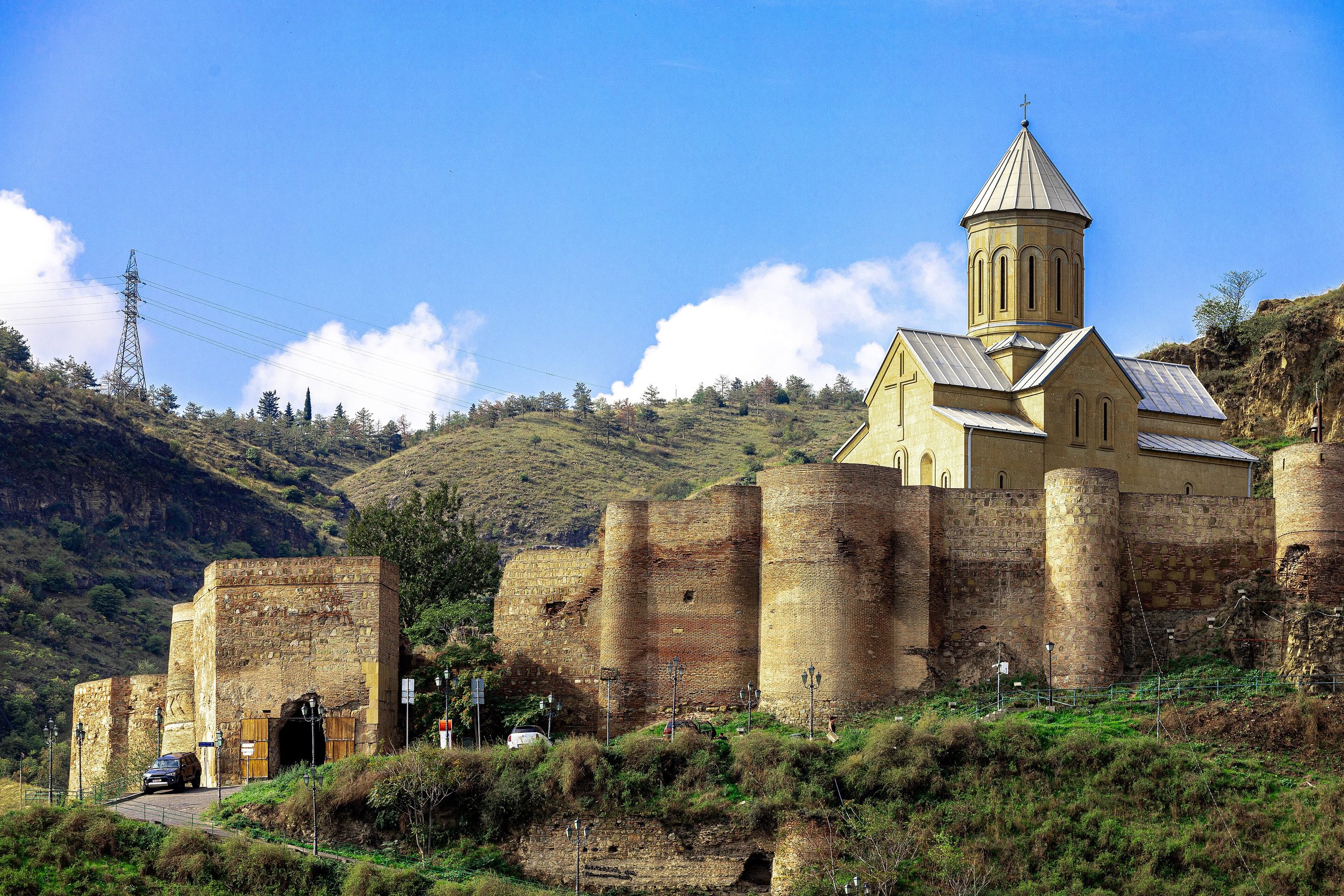
A cold, bright day gives the sharpest views of the year, and the hills are emptier than in any other season. Ride the cable car from Rike Park up to Narikala Fortress for 2.50 GEL on a Metromoney card, in mid-afternoon rather than at sunset, which comes early.
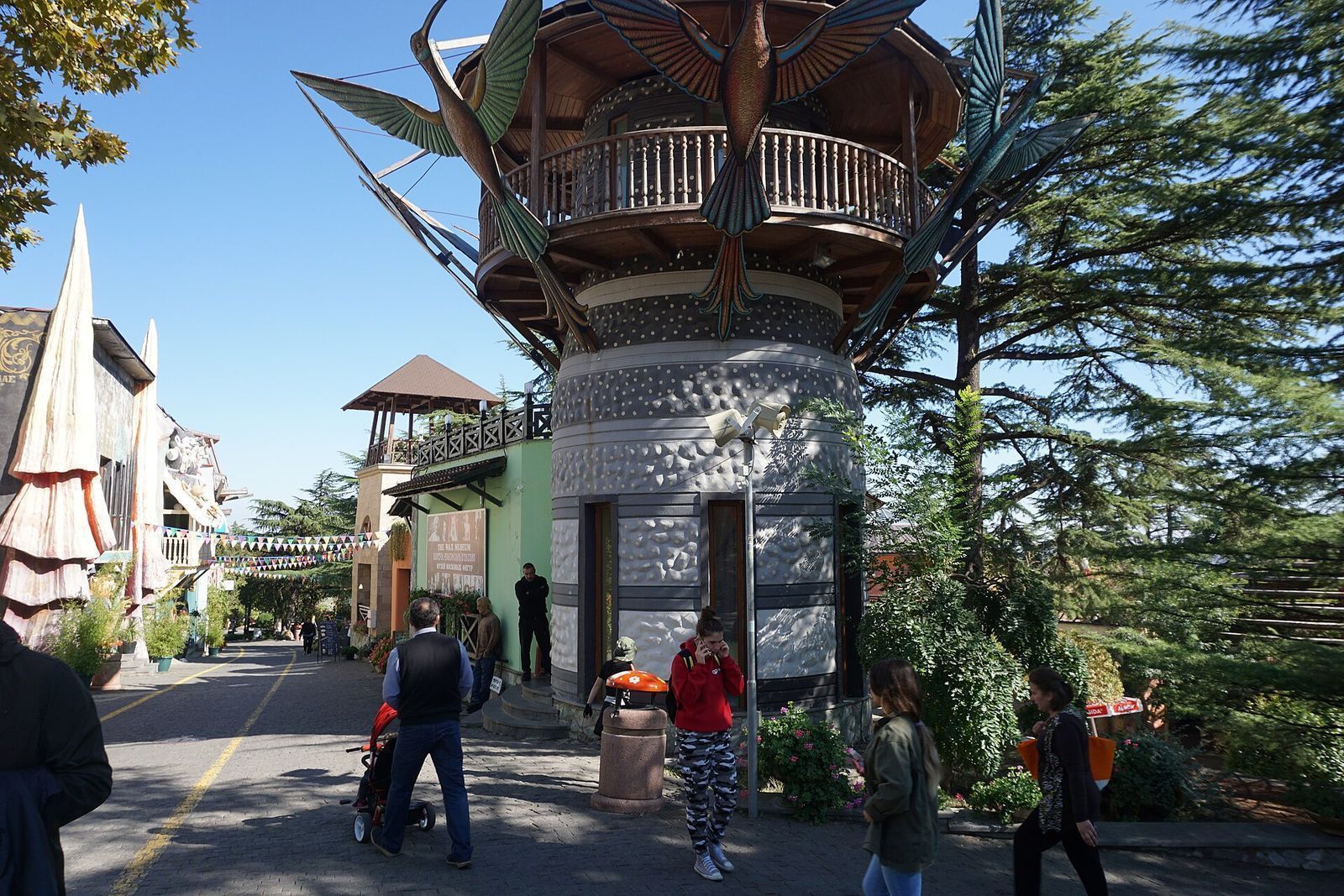
For the highest view, the funicular to Mtatsminda Park costs about 10 to 12 GEL one way on a park card.
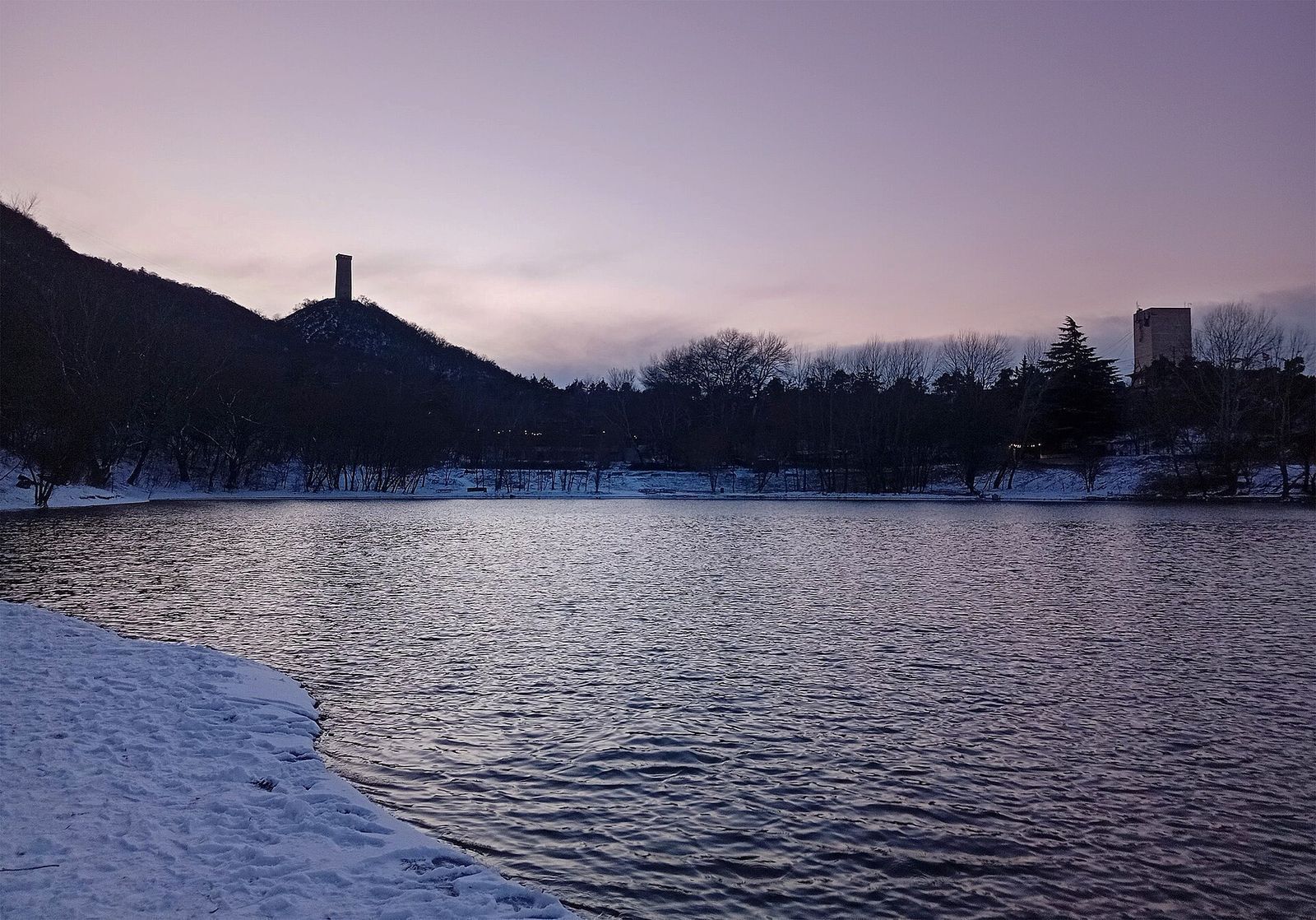
My winter pick is Turtle Lake, on the hill above Vake. The cable car from Vake Park costs 1 GEL, the boats and beach are shut, and a lap of the shore path takes 20 to 30 minutes. After a snowfall the woods around the water stay white long after the city has melted.
Eat Georgian winter food
Georgian food was made for cold weather. The dish I order most in winter is lobio, kidney beans with coriander, walnut and garlic, served hot in a clay pot with mchadi cornbread and pickles. Kharcho is a beef soup with rice, sour plum and walnut, and satsivi, poultry in a cold, spiced walnut sauce, is made mostly for winter and the New Year table. Most of the walnut-heavy classics of Georgian food taste better in January than in July.
December is the month for gozinaki, toasted walnuts set in honey, sold homemade at the markets and boxed in every sweet shop, and churchkhela, walnuts on a string dipped in thickened grape juice, is one of the few Georgian desserts you can carry in a coat pocket. At the Christmas market, warm your hands on a cup of mulled wine. On a wet afternoon, a wine tasting in Tbilisi gives you the qvevri wines of Kakheti without the drive.
Where to warm up: cozy places to eat and drink
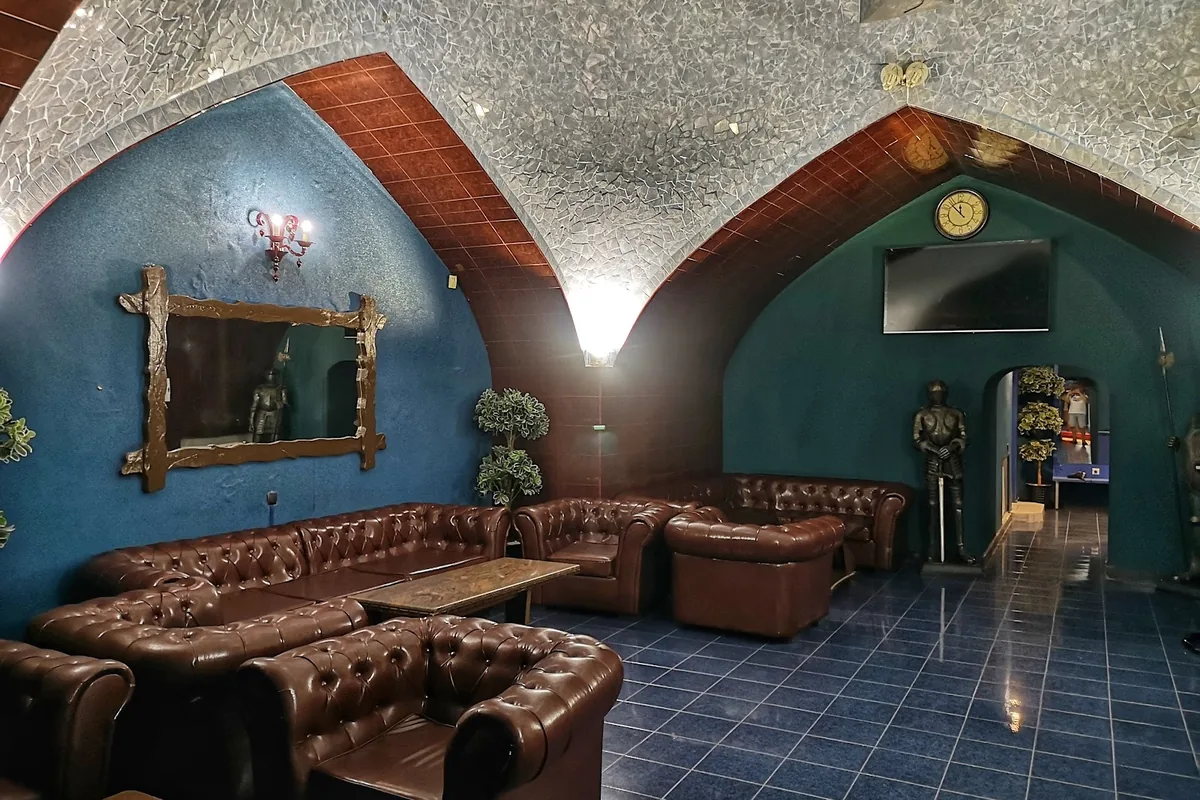
These are the four rooms I head for when the wind comes down the river: two brick cellars for wine, a bean house for lunch and a painted cafe for the afternoon.
Vino Underground
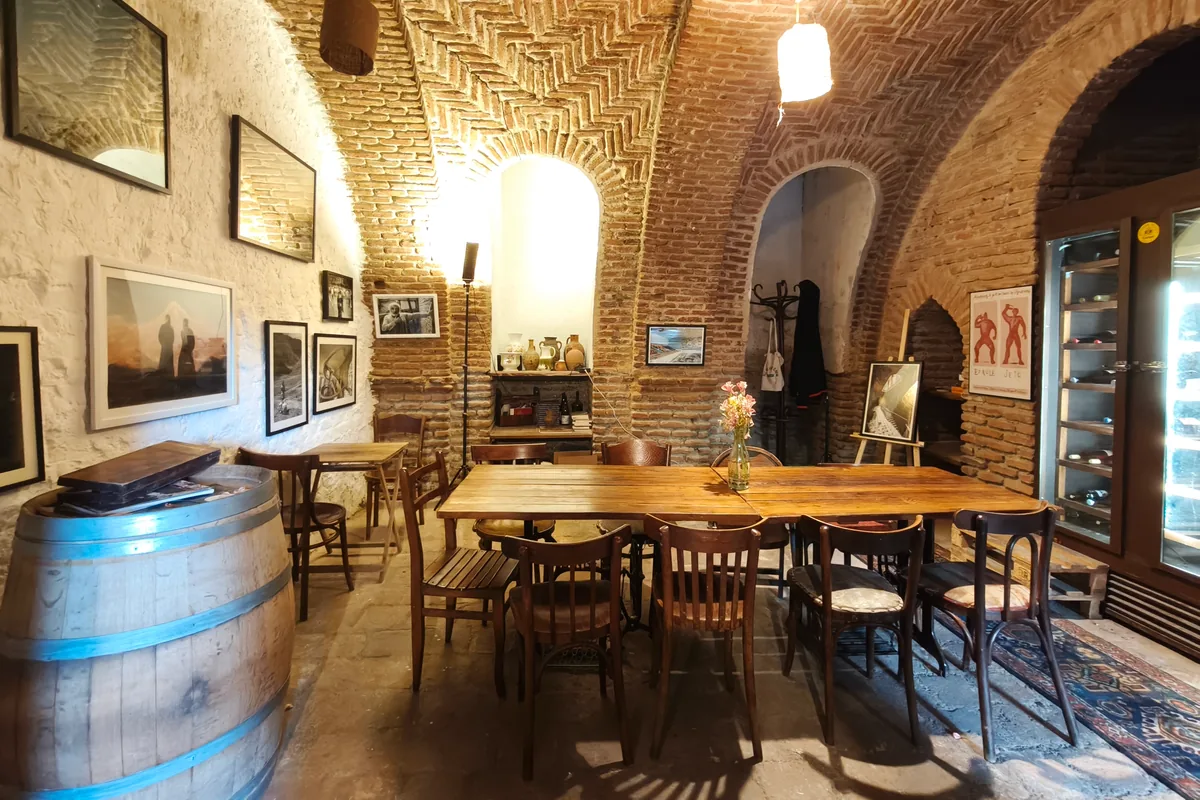
A brick-walled basement on Galaktion Tabidze Street, a few minutes from Freedom Square, and my favorite place to spend a cold evening. It was the first natural wine bar in Tbilisi, opened by 6 winemakers, and the list leans on small producers making amber wine in clay qvevri.
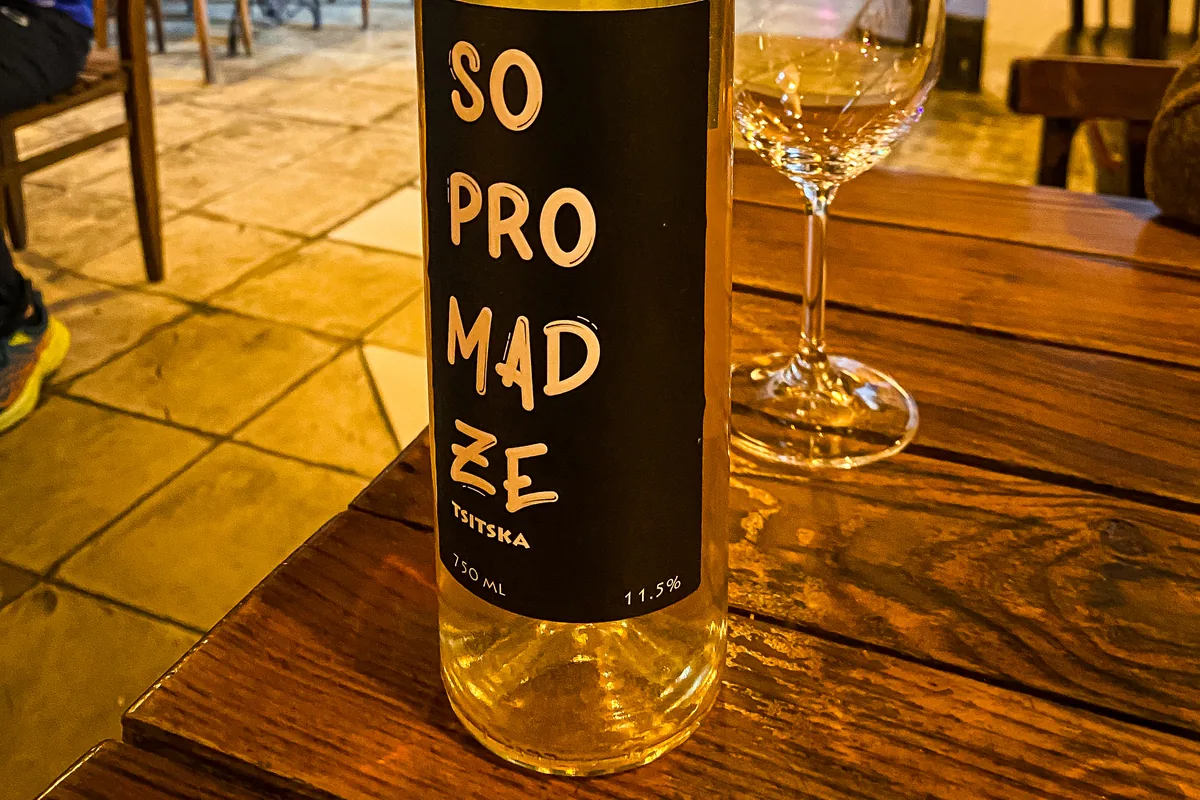
Glasses cost 10 to 20 GEL and bottles 35 to 120 GEL. It opens at 14:00 daily, which suits a winter afternoon that ends at 17:00. Come to drink, snack and talk, not for a full dinner.
Sadzvele Wine Hub
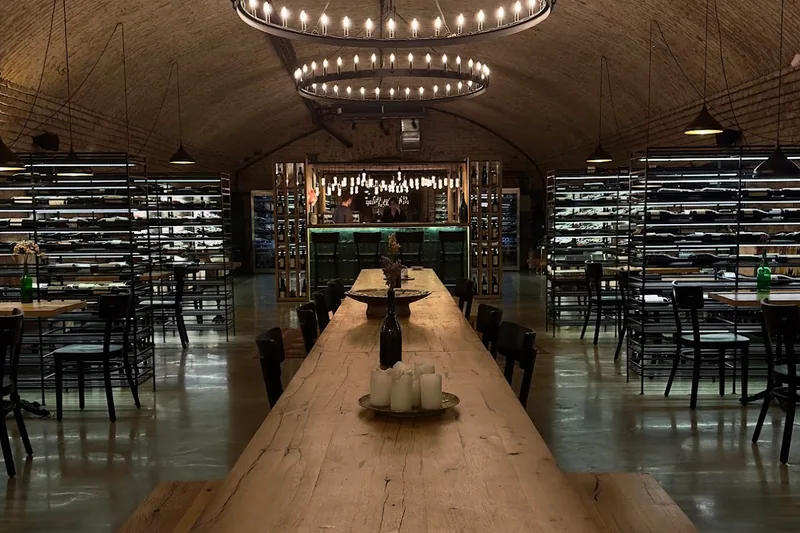
Sadzvele opened in fall 2024 inside the 1896 Wine Factory N1 building on Vasil Petriashvili Street, as a wine bar, wine school and event room in one. The vaulted cellar, with its long communal table and chandeliers, is the coziest room I know on a January night.
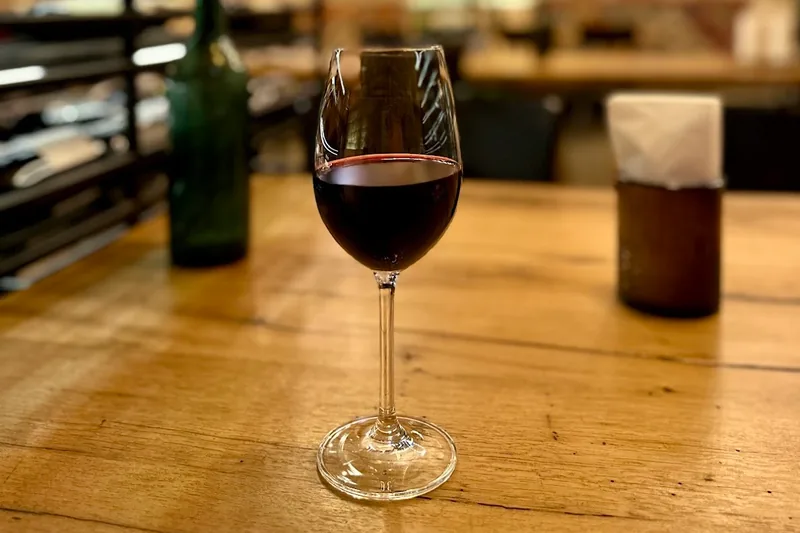
There are about 200 wines, qvevri on display and the factory's oldest cellar behind glass. Book a tasting if you want someone to walk you through the grapes.
Salobie Bia
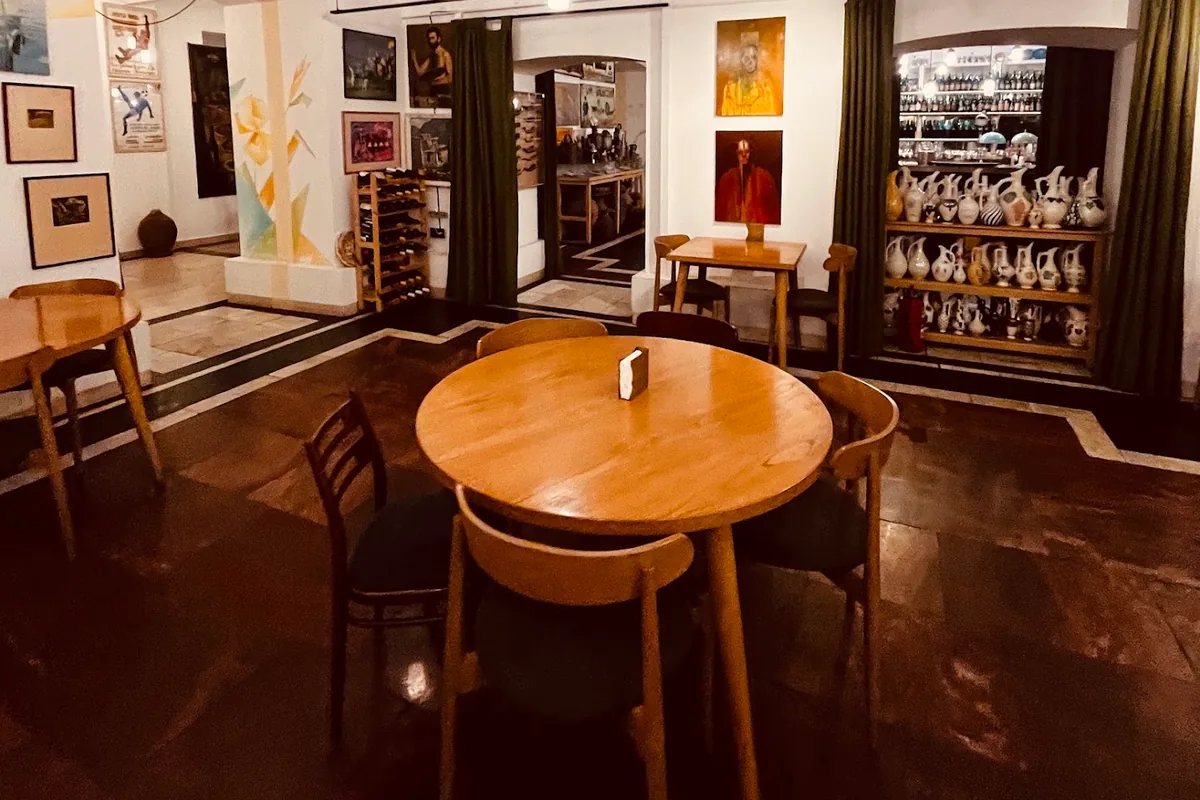
Salobie Bia sits beneath the Rustaveli Theatre at Rustaveli Avenue 17, a short walk up the avenue from the National Museum, which makes it my lunch on a museum day. It's a calm room built around beans, exactly what you want when it's 4 C outside.
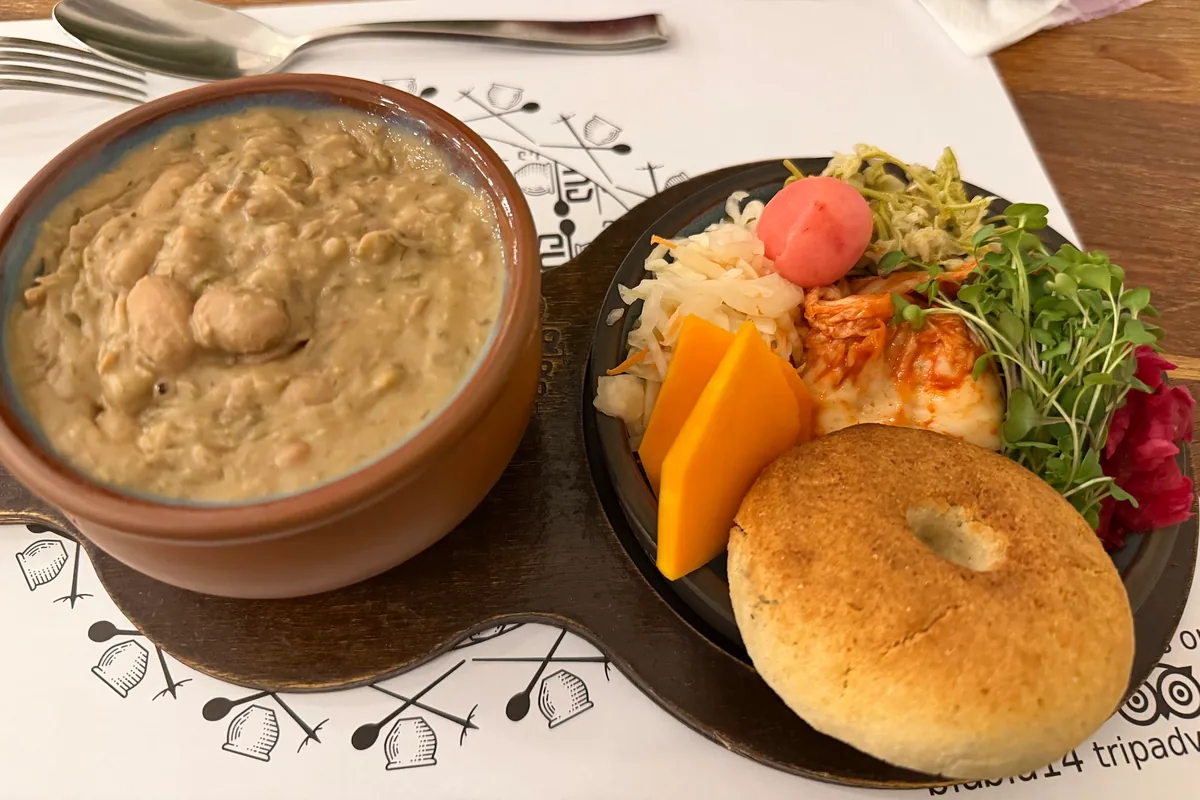
Order the lobio in a clay pot with pickles and mchadi, then add kubdari, the Svan meat bread, or ghomi with sulguni. It costs a little more than a neighborhood place; the location is what you pay for.
Cafe Leila
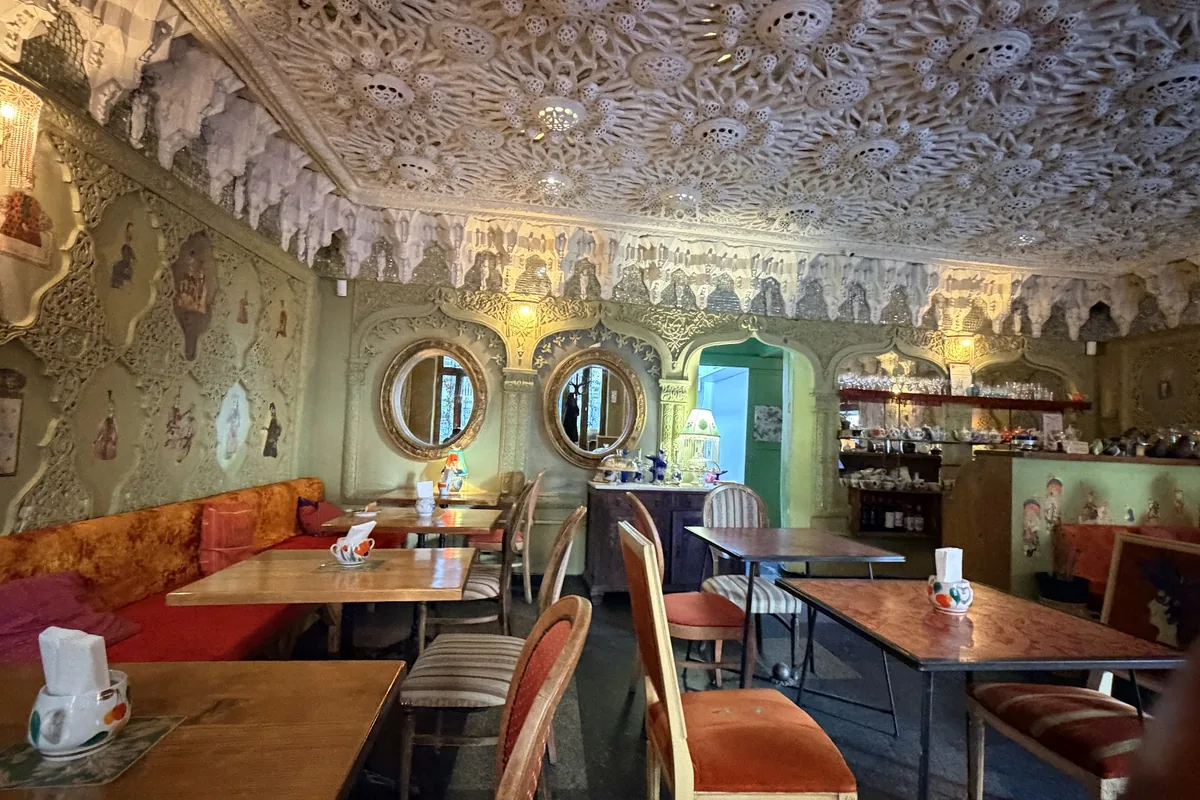
Cafe Leila, at 18 Shavteli Street opposite Anchiskhati Basilica, fills a former Soviet-era sweet shop with painted ceilings and red banquettes. It's open 11:00 to 23:00 daily, a cappuccino is 9 GEL, and it's on the same street as the clock tower, so I time a visit around the 12:00 puppet show.
The mushroom kharcho with blackberry sauce and cornbread is the dish to order on a cold day, and nothing on the menu is fried. It's busy and much photographed, so come for lunch and keep the quieter cafes in Tbilisi for a laptop afternoon.
Day trips from Tbilisi in winter
Winter narrows the list of day trips without emptying it. Anything low and close works as well as ever, the wine country is quiet and clear, and the mountains bring the one real winter risk: the road.
| Trip | Distance and time | Winter verdict |
|---|---|---|
| Mtskheta | About 25 km, 20 to 30 minutes by van | Easy all winter; low road, free churches |
| Sighnaghi and Kakheti | About 110 km, about 2 hours by van | Quiet towns and the clearest views of the snowy Caucasus |
| Borjomi | About 150 km, 2.5 to 3 hours | Warm open-air sulfur pools in the snow |
| Gudauri | About 120 km, 2 to 2.5 hours | Skiing from late December to mid-April |
| Kazbegi | 157 km, 2.5 to 3 hours | Lovely under snow, but the pass can close; stay a night |
| Svaneti | 8 to 9 hours by road, about 1 hour by plane | Skiing at Tetnuldi and Hatsvali; several days |
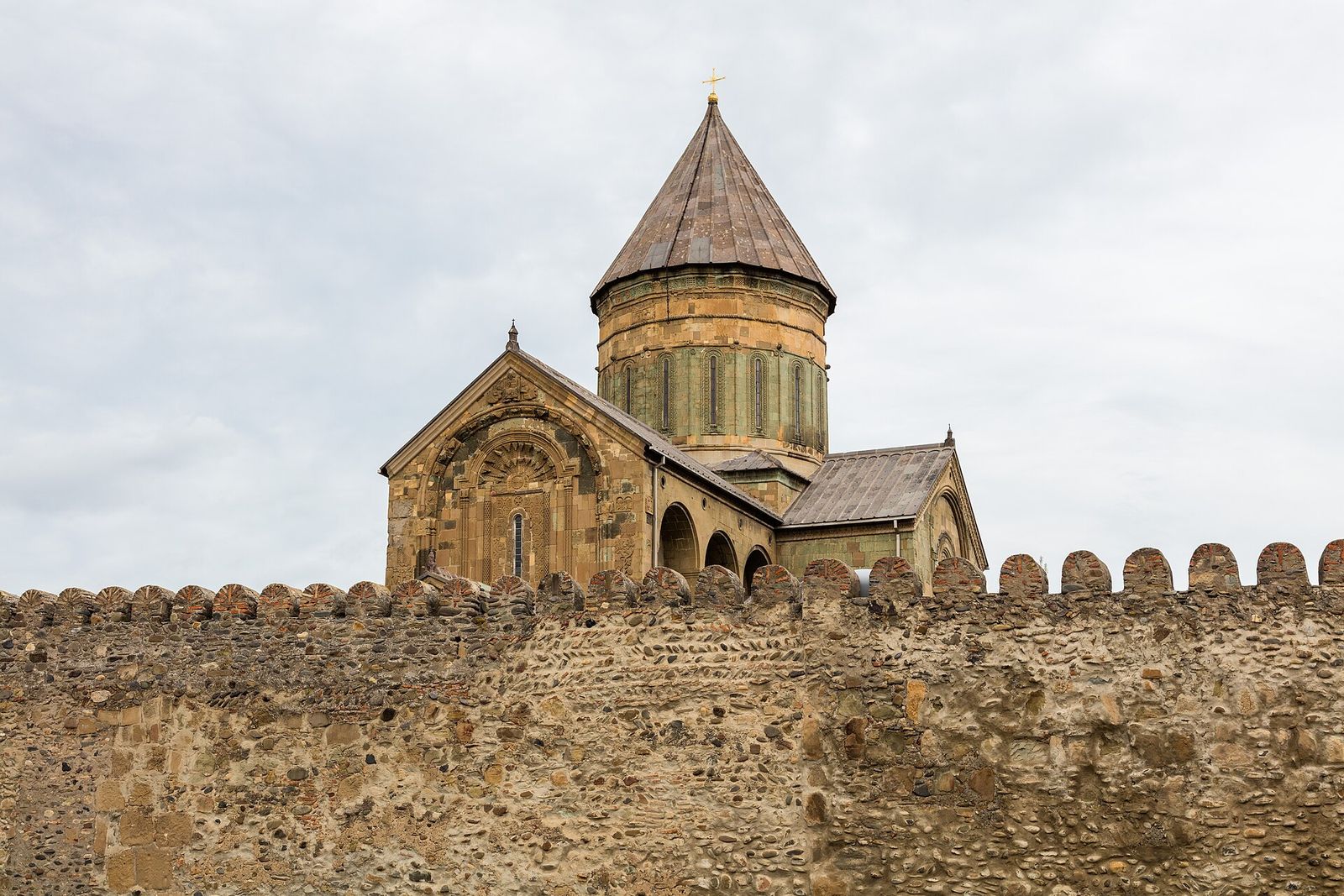
The easiest winter day out is Mtskheta, where a van from Didube costs about 2 GEL and the three churches are free.
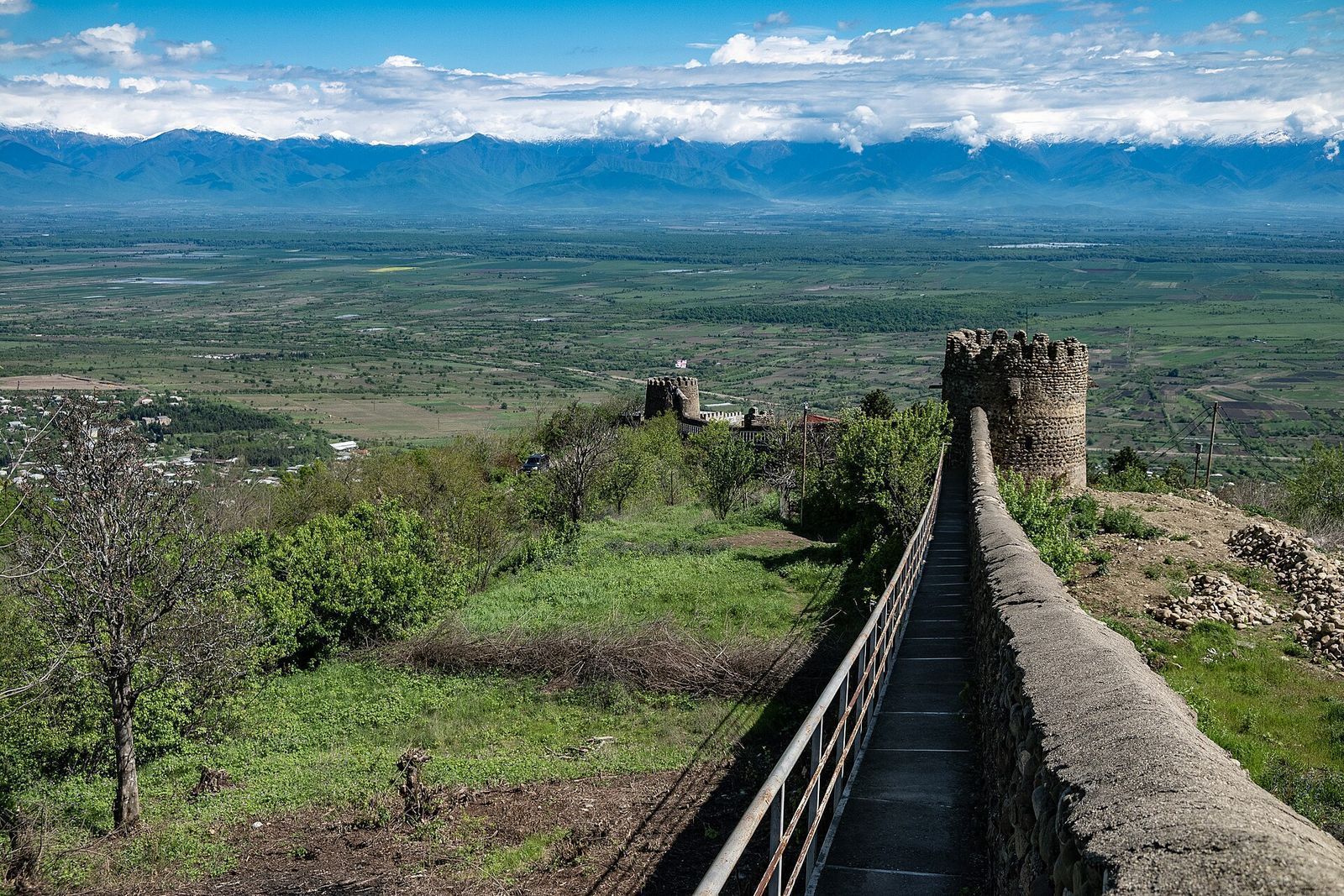
On a clear day I'd pick Sighnaghi: you'll have the town walls to yourself, and the mountains across the Alazani Valley are at their sharpest of the year.
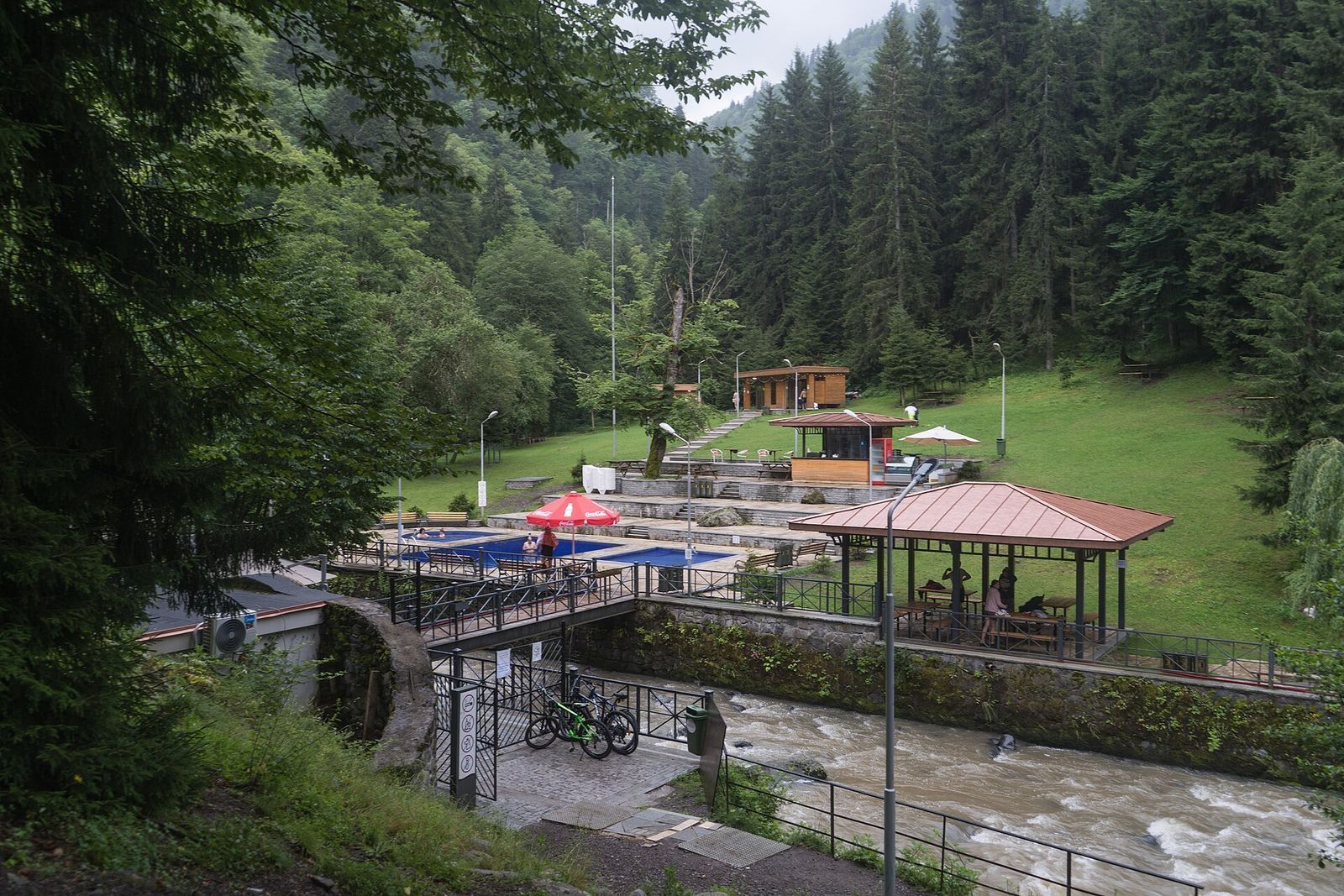
Borjomi is the surprise, with open-air sulfur pools at about 30 C for 5 to 10 GEL that are better with snow on the pines than in July.
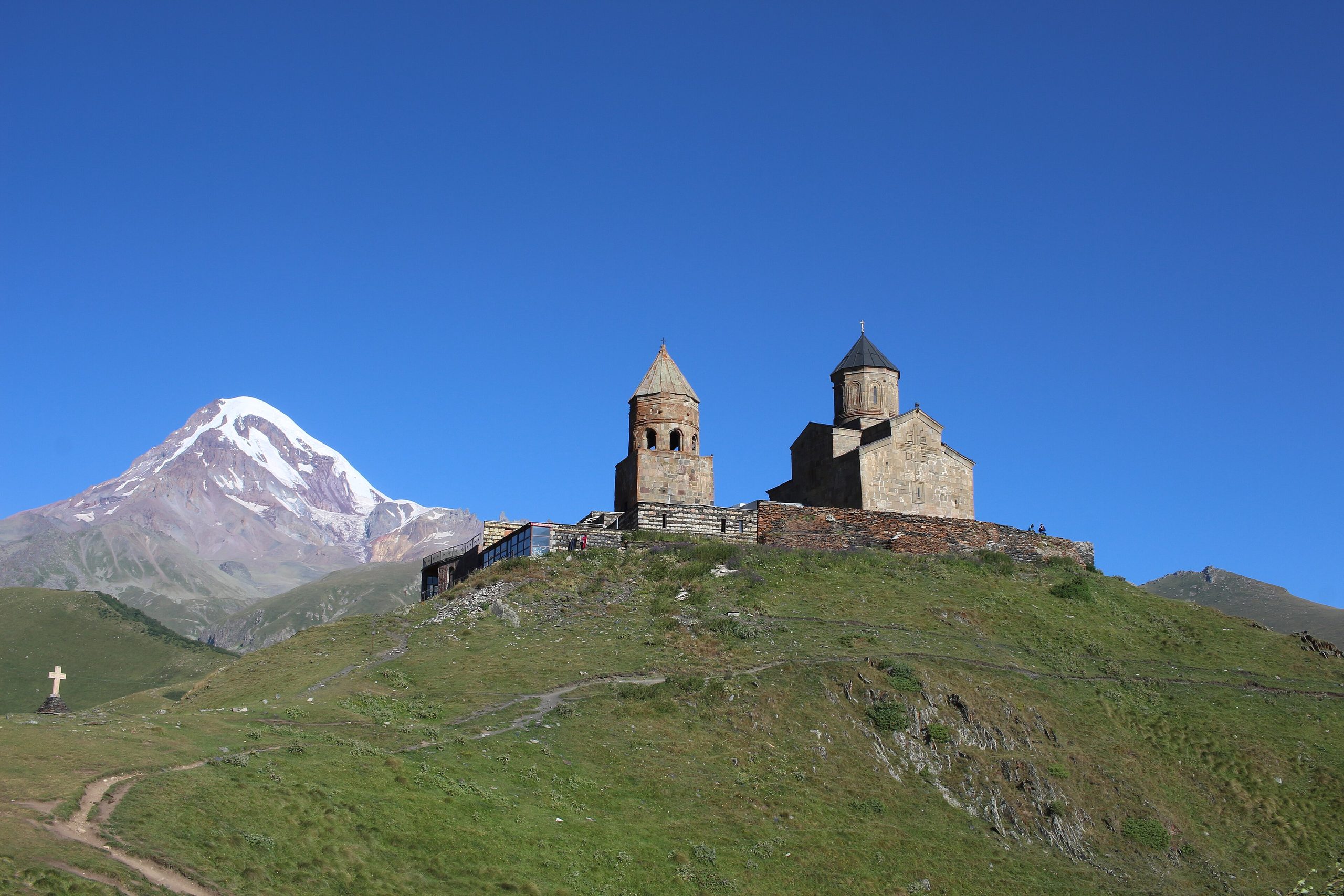
Snowy Kazbegi, with Gergeti Trinity Church above a white valley, is one of the best sights in Georgia, but I'd treat it as an overnight trip. The hike to Gergeti Trinity Church works when the snow on the trail is well trodden, and the 4x4s up may need chains.
Skiing near Tbilisi
Gudauri is Georgia's main ski resort and the only one close enough for a day trip, about 120 km north of Tbilisi. The season runs from late December to mid-April, with the best snow in January and February and lifts from about 10:00 to 17:00; last winter the resort opened on 28 December and closed on 19 April.
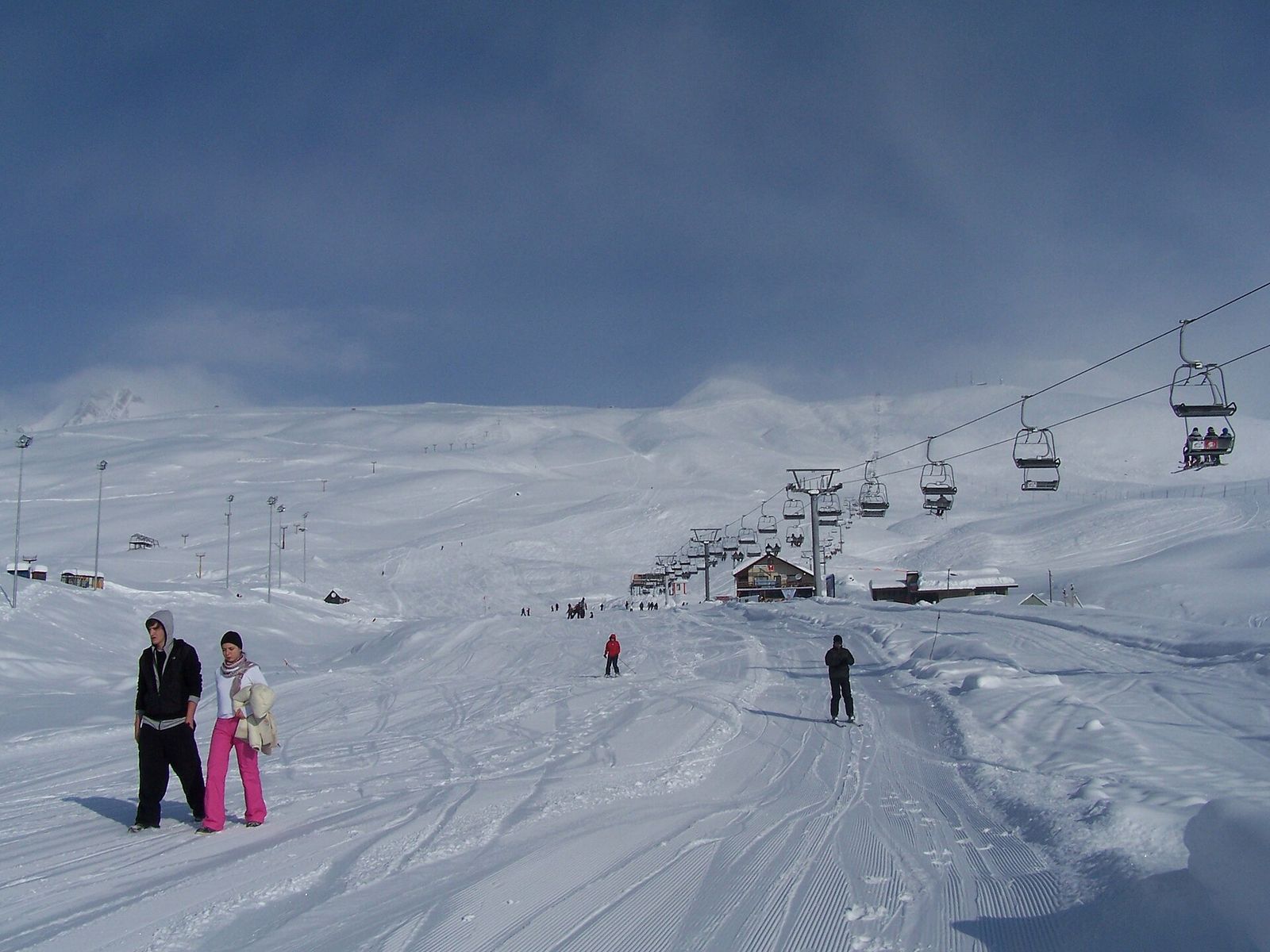
A day pass costs about 70 GEL and a full rental set about 50 GEL, so a ski day by van comes to about 150 GEL before lunch. The Kazbegi marshrutka from Didube drops you there for about 15 GEL, and a private transfer at 150 to 180 GEL a car is what I'd split between 3 or 4 skiers with gear. Most runs are red or black, so first-timers should book a lesson at about 100 to 120 GEL.
Further out, Bakuriani sits 37 km past Borjomi at about 1,700 m, and Svaneti has the most dramatic skiing in the country, a long trip from the capital.
Winter prices and booking
From November to February rooms cost 30 to 50% less than in summer, and after Old New Year on 14 January many fall to about half their summer rate. Transport costs the same all year, and a Tbilisi trip on a budget goes furthest in February. New Year's Eve dinner is the expensive night, a fixed menu at about 150 to 200 GEL a head in the Old Town and 200 to 350 GEL with a view, booked 3 to 4 weeks ahead.
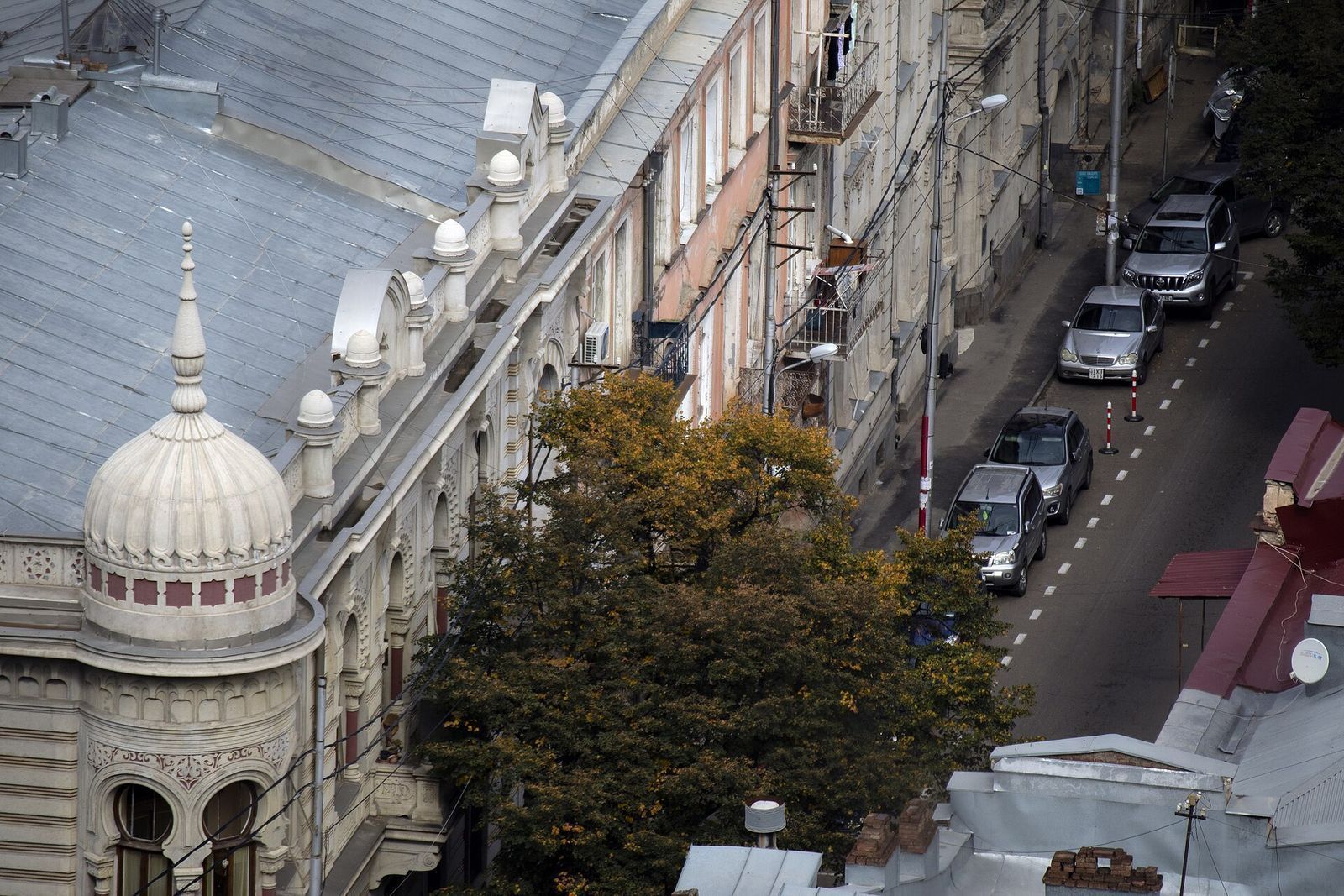
I'd stay in the Old Town or Sololaki in winter, so the baths, the museums and dinner are a short walk away on a cold night. In an old house or guesthouse, ask how the room is heated before you book; the best hotels in Tbilisi are warm, but a high-ceilinged apartment with one small radiator is a chilly place to spend January.
What to pack for Tbilisi in winter
Indoors, Tbilisi is warm: cafes, restaurants, museums and malls are all heated. So pack for the walks between them, in layers you can peel off.
- A warm, waterproof coat. A proper winter coat covers the city; save the ski jacket for the mountains.
- Layers underneath. A sweater or fleece over a thin top, for overheated wine bars.
- Shoes with real grip. The Old Town and Sololaki are steep, and their stone turns slick in rain, frost or slush. Insulated boots and wool socks earn their space.
- Hat, scarf and gloves. The wind on the hills and bridges is colder than the thermometer says.
- A scarf for churches. Women cover their hair and shoulders in the churches of Tbilisi, and a winter scarf does the job.
- An umbrella and a plug adapter. Grey days bring drizzle, and Georgia uses the European Type C and F plugs.
Ski gear, helmets and avalanche kits are all for rent at Gudauri, so keep the packing list for Georgia to city clothes plus one warm layer for the mountains.
Key takeaways
- Tbilisi winters are mild, at 2 to 8 C by day from December to February, and it's dark by 17:00 in December.
- Snow falls a few times most winters but rarely lasts a day; for reliable snow, go to Gudauri, Kazbegi, Bakuriani or Svaneti.
- December has the lights and markets, New Year's Eve is the big night, and Christmas and the Alilo procession fall on 7 January.
- Fill the days with sulfur baths, museums, the ballet and cellar wine bars, and save the hills for clear afternoons.
- Rooms cost 30 to 50% less than in summer, except from 25 December to 3 January, which needs booking 2 to 3 months ahead.
Frequently asked questions
Does it snow in Tbilisi?
Yes, a few times most winters, but the snow is usually light and melts within a day. January and February are the likeliest months, and hill suburbs such as Kojori get more of it than the center.
Is Tbilisi worth visiting in winter?
Yes, for a city break. You get far fewer visitors, rooms 30 to 50% cheaper than in summer, the holiday season and the best weather of the year for a sulfur bath. It's the wrong season for hiking.
How cold is Tbilisi in January?
January is the coldest month, with average days of 2 to 6 C and nights around freezing. A cold snap can push nights a few degrees below zero, but bitter cold is rare.
Is December a good time to visit Tbilisi?
Yes. The first half is quiet and cheap, and the second half brings the lights, the Christmas markets and New Year's Eve. Avoid 25 December to 3 January unless you book 2 to 3 months ahead.
What should I wear in Tbilisi in winter?
A warm, waterproof coat, layers you can take off indoors, and shoes with grip for the steep, slippery lanes. Add a hat, scarf and gloves for the wind on the hills.
Can you ski near Tbilisi?
Yes. Gudauri is about 120 km and 2 to 2.5 hours from Tbilisi, with a season from late December to mid-April and a day pass of about 70 GEL. Bakuriani and the Svaneti resorts are further and need an overnight stay.
Is the road to Kazbegi open in winter?
Usually, but the Jvari Pass between Gudauri and Kobi can close after heavy snow for hours or days. Check with your driver the night before and the morning of the trip, and start back by 14:30.
Are the sulfur baths open in winter?
Yes, all year, and winter is their best season. Private rooms cost 120 to 300 GEL an hour per room, and I'd book an evening slot a day ahead at weekends.
Tbilisi Travel Tips: What I'd Tell You Before a First Trip to Georgia
Tbilisi is known for wine, sulfur baths and long dinners. Here's what to know about entry, money, transport and safety.
Read the guide
Tbilisi Itinerary: How I'd Spend 1 to 5 Days in Tbilisi
Tbilisi is best over 3 full days. Here is how to spend 1 to 5, with routes, meals, day trips and costs.
Read the guide
The Best Time to Visit Tbilisi, Month by Month
Tbilisi is known for golden autumns and hot summers. Here is the weather by month, the crowds, and when I would go.
Read the guide