Bridge of Peace and Rike Park, Tbilisi: Lights, Views and What to Do
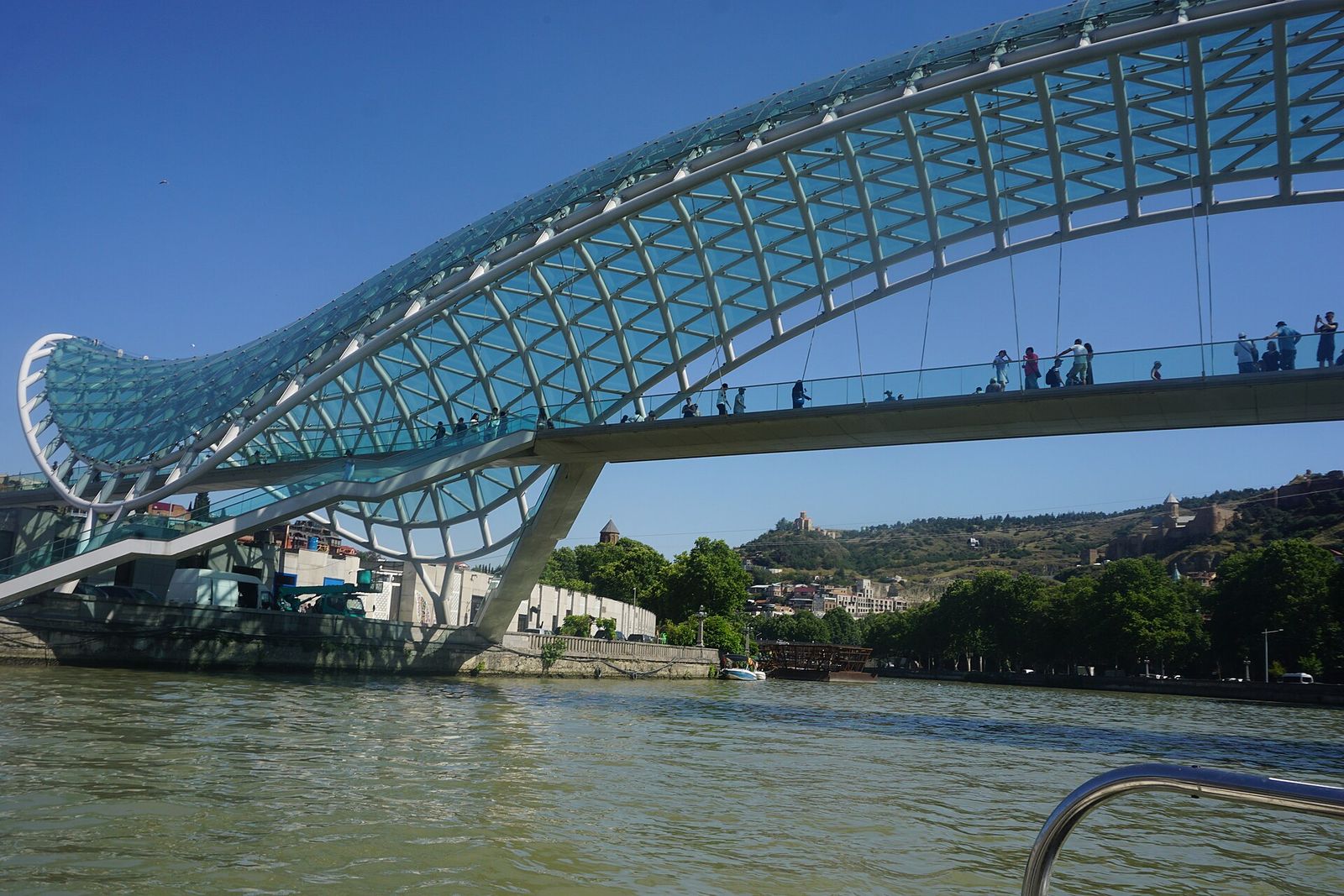
The Bridge of Peace is the curved glass footbridge over the Kura river, the modern landmark that links Old Tbilisi with Rike Park on the left bank. It is free, it takes a few minutes to cross, and after dark its canopy lights up in slow waves. Here's what you need to know about the lights, the views, Rike Park and the cable car that leaves from it.
Bridge of Peace at a glance
The bridge is short, so on its own it is a 10-minute stop. What makes it worth planning around is where it sits: between the Old Town lanes and Rike Park, right under Narikala, with Metekhi Church on its cliff downstream. Almost every evening walk through central Tbilisi crosses it at some point, and I'd make sure yours does it after the lights come on.
What the Bridge of Peace is
The Bridge of Peace is a pedestrian bridge, steel underneath and glass on top, with a wavy canopy that rises and dips along its length. It opened on 6 May 2010. The Italian architect Michele De Lucchi designed it, and the French lighting designer Philippe Martinaud planned the lights. The structure was built in Italy and shipped to Tbilisi in about 200 trucks, then assembled over the river with the lighting fitted on site.
The city commissioned it as a modern link between the Old Town and the newer left bank, and the name was meant as a gesture of peace, given less than two years after the 2008 war with Russia. Locals have a less flattering name for it: the shape of the canopy earned it the nickname "Always Ultra", after the sanitary pad brand. You'll hear it said with a grin by the same people who walk across it every week.
Not everyone welcomed it. Architects and opposition politicians argued that a glass and steel bridge had no place in the middle of the historic center and that it pulls the eye away from older landmarks. Sixteen years on it is one of the most photographed things in the city, and it sits alongside the presidential palace, the Rike Park tubes and the other glass buildings of the late 2000s and 2010s that changed Tbilisi's architecture more than anything since the Soviet era.
The Bridge of Peace at night
The bridge is pleasant in daylight and much better at night. The canopy holds about 50,000 LEDs, and they switch on 90 minutes before sunset and stay on until 90 minutes after sunrise. After dark the canopy looks like a glowing sea creature lying across the river, and the reflections run all the way down the water to Metekhi.
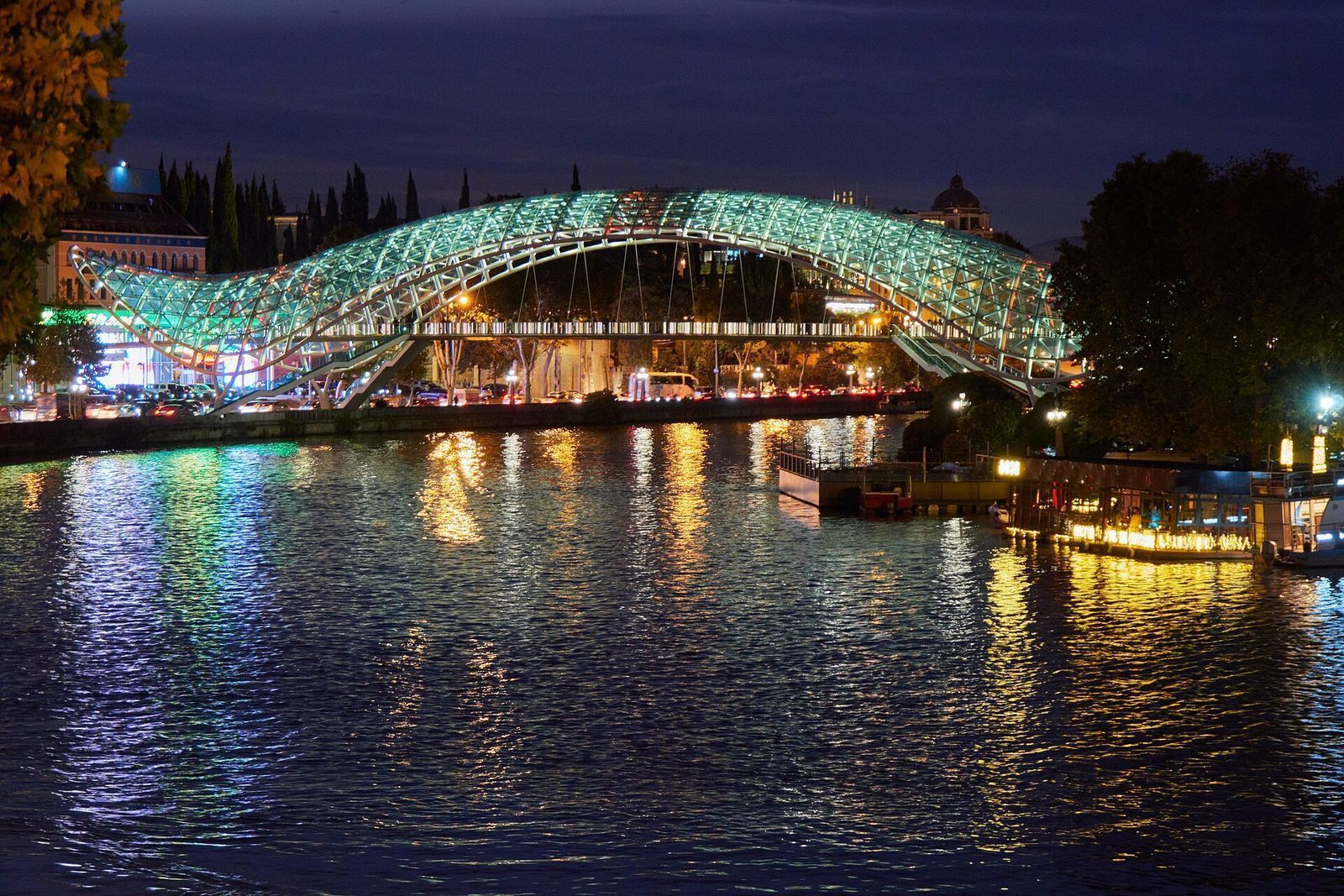
The canopy runs four light programs, switching every hour:
- Waves of light moving from one bank to the other.
- Bands of light starting at both ends, meeting in the middle and fading to black.
- The outline lighting up first, then the whole canopy, then going dark.
- A twinkle, with groups of lights flickering on and off across the roof.
The handrails have their own trick. There are 240 motion sensors along the walkway, and the LEDs in the glass rail light up as you pass, so it feels as if each person switches the bridge on as they walk. Kids love it, and so do most adults once they notice.
What you see from the Bridge of Peace
Stop in the middle of the bridge and turn around slowly. It is one of the few places in the center where you stand low by the water and still see most of the skyline, which is why I put it on any list of Tbilisi viewpoints for people who don't want to climb.
| Look toward | What you see |
|---|---|
| South, on the ridge above the Old Town | Narikala Fortress, the cable car cabins and the Mother of Georgia statue |
| Downstream, on the left-bank cliff | Metekhi Church and the statue of King Vakhtang Gorgasali |
| Across, on the left bank | Rike Park, the two big steel tubes and the glass dome of the former presidential palace |
| East, on the hill behind Avlabari | The gold dome of Sameba cathedral |
| Upstream | Baratashvili Bridge and the riverside road |
| West, behind the Old Town | The Old Town rooftops and Mtatsminda with its TV tower |
The view toward Narikala is the one people come for. From under the canopy, the fortress walls sit on the ridge straight ahead, the cable cabins slide across the gap, and at dusk the floodlights pick out the walls one section at a time.
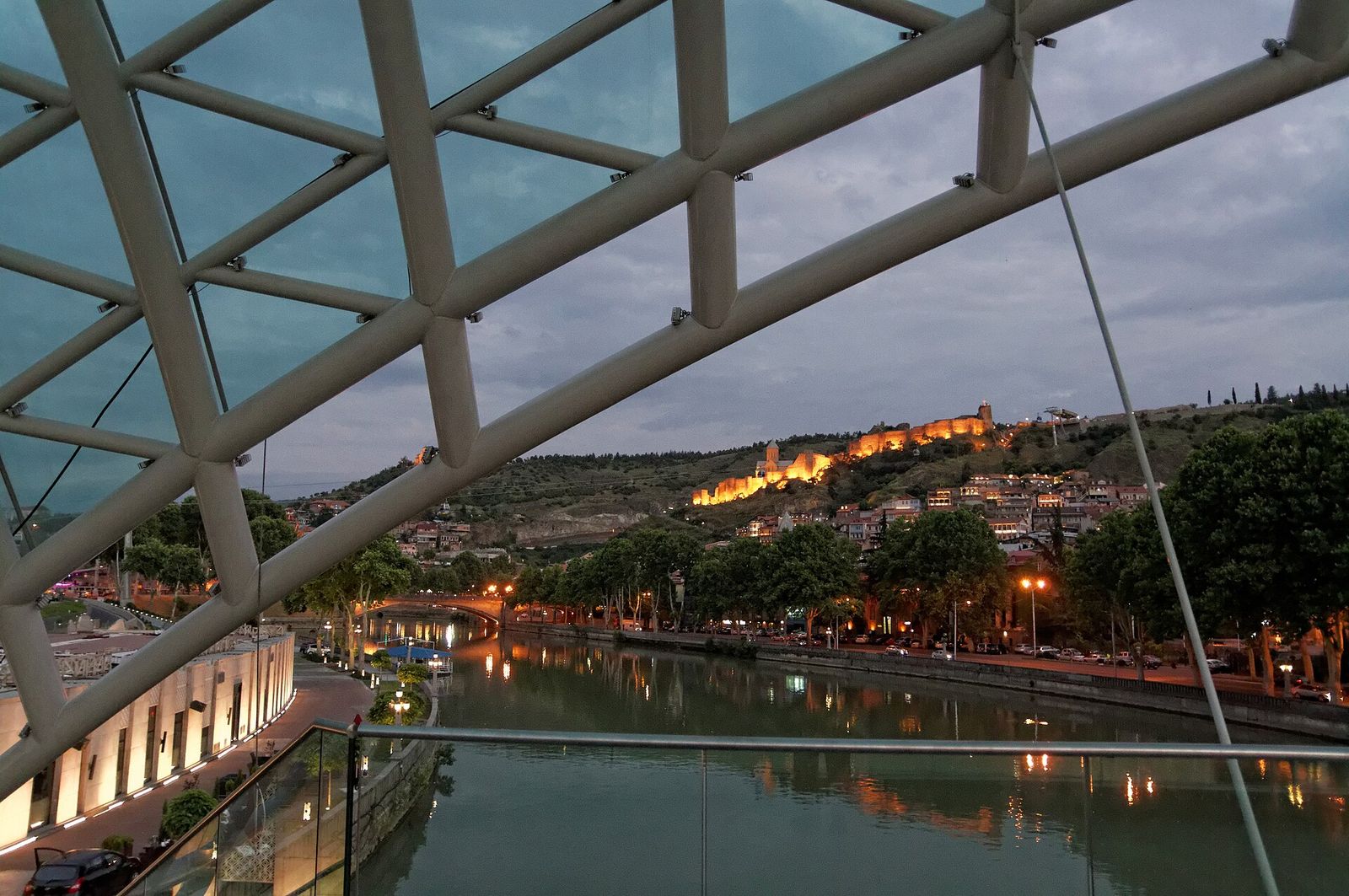
The Old Town end of the bridge drops you onto the riverside a short walk from the leaning Gabriadze clock tower and the lanes around Shavteli Street. Most first-timers come at the bridge from this side and cross toward Rike Park, which also means you walk toward the best view.
Rike Park
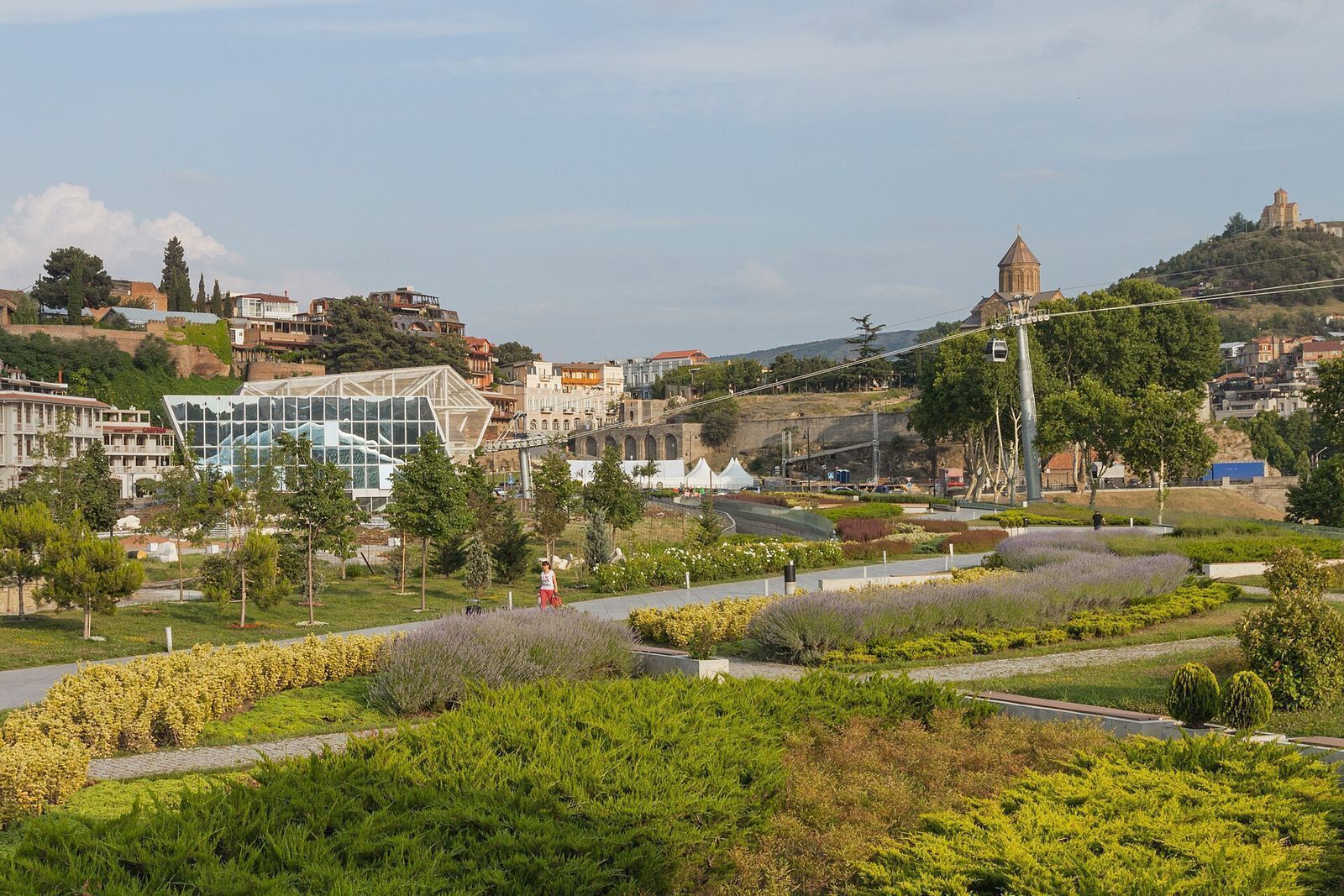
Rike Park fills the left bank of the Kura at the far end of the bridge. It is a modern, landscaped park with lawns, flower beds, paved paths, benches and playgrounds, and it is free and open at all hours. It isn't a park you'd cross town for on its own, but it is the best place in the center to sit by the river, and it is where the cable car to Narikala starts.
What to do in Rike Park
- Sit by the river. The lawns and benches along the water face the Old Town and the fortress, and on a warm evening this is where half of Tbilisi seems to be.
- Watch the musical fountain. The big fountain in the middle of the park plays with music and colored lights on summer evenings, with kids lined up at the edge.
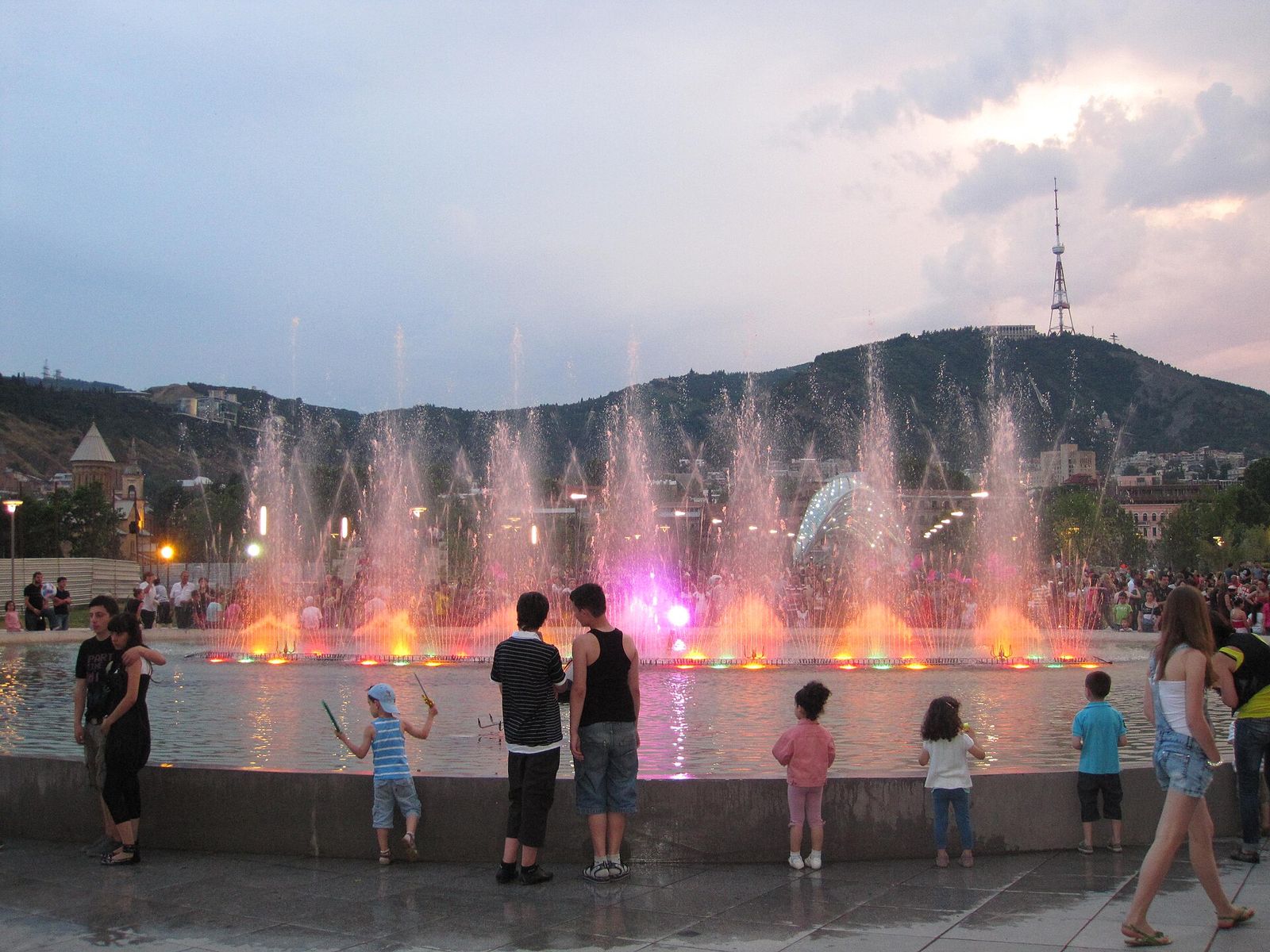
- Let the kids run. The playgrounds and open lawns make Rike Park the easiest stop in the center for Tbilisi with kids, and the cable car ride is the reward at the end.
- Catch some music. On some summer evenings, especially Fridays, the park hosts live music and Georgian dancing.
- Look up at the tubes. The two enormous silver tubes at the upstream end of the park, beside the bridge, were designed by the Italian architect Massimiliano Fuksas as a concert hall and exhibition center. They read best from the bridge, where you see their full length.
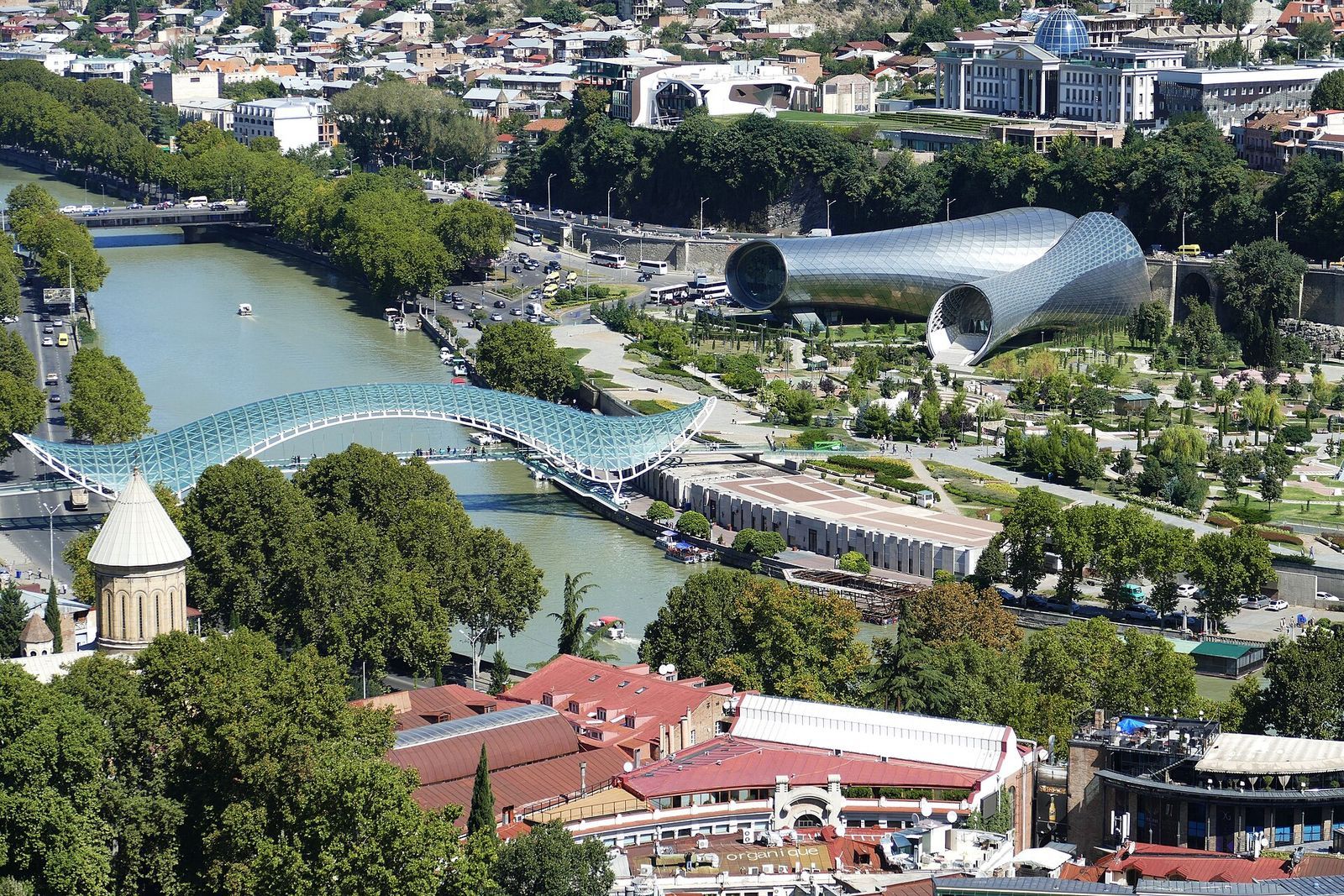
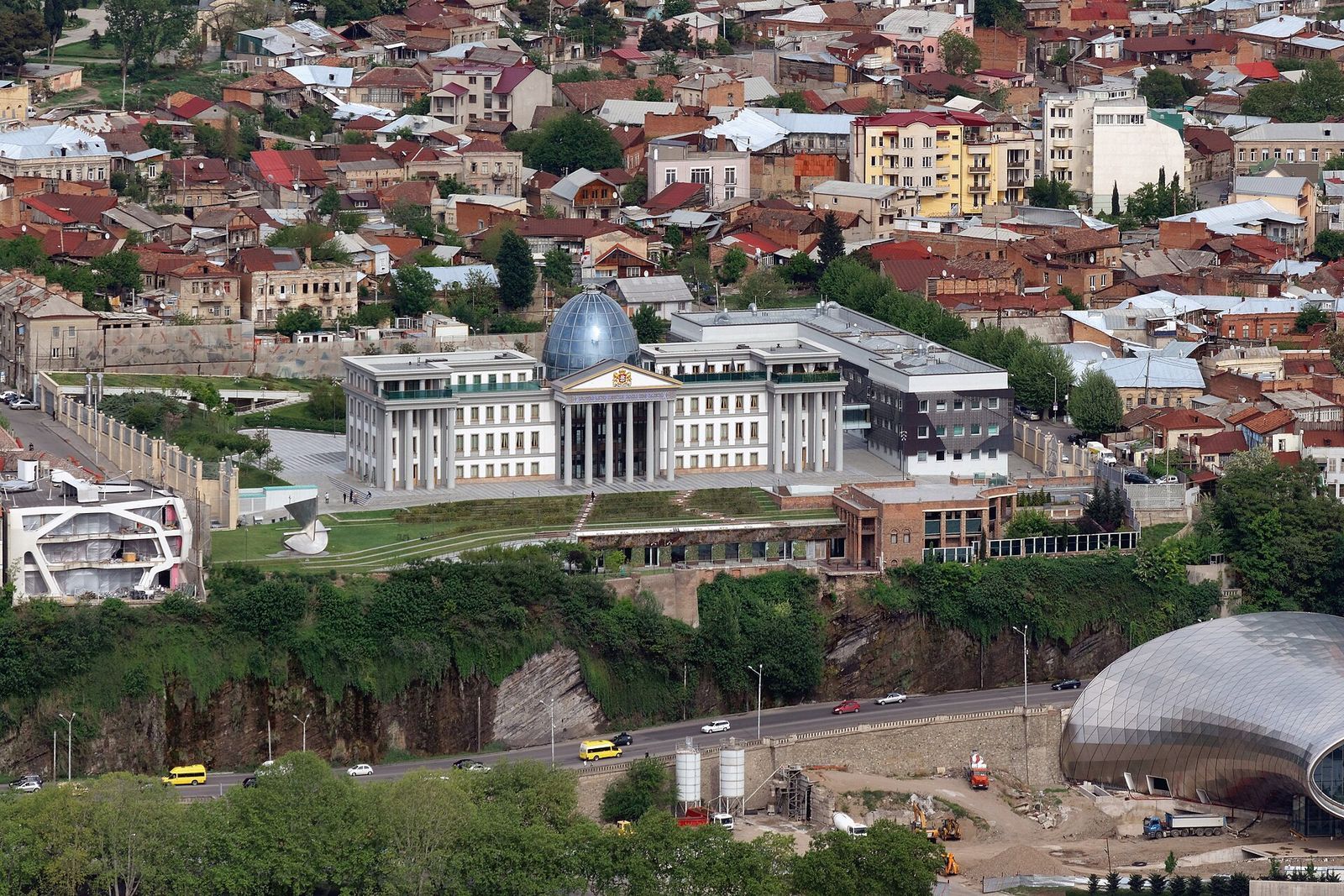
Above the park, on the hill, is the former presidential palace with its glass dome, another De Lucchi building from the same years as the bridge. You can't visit it, but it is part of the skyline from everywhere on the river. Behind it, the lanes of Avlabari climb toward Sameba.
Europe Square and the Berlin Wall
Europe Square is the round plaza at the downstream end of Rike Park, by the Metekhi bridge and below Metekhi Church. It is mostly a traffic circle with flags and flower beds, so you'll walk through it rather than to it.
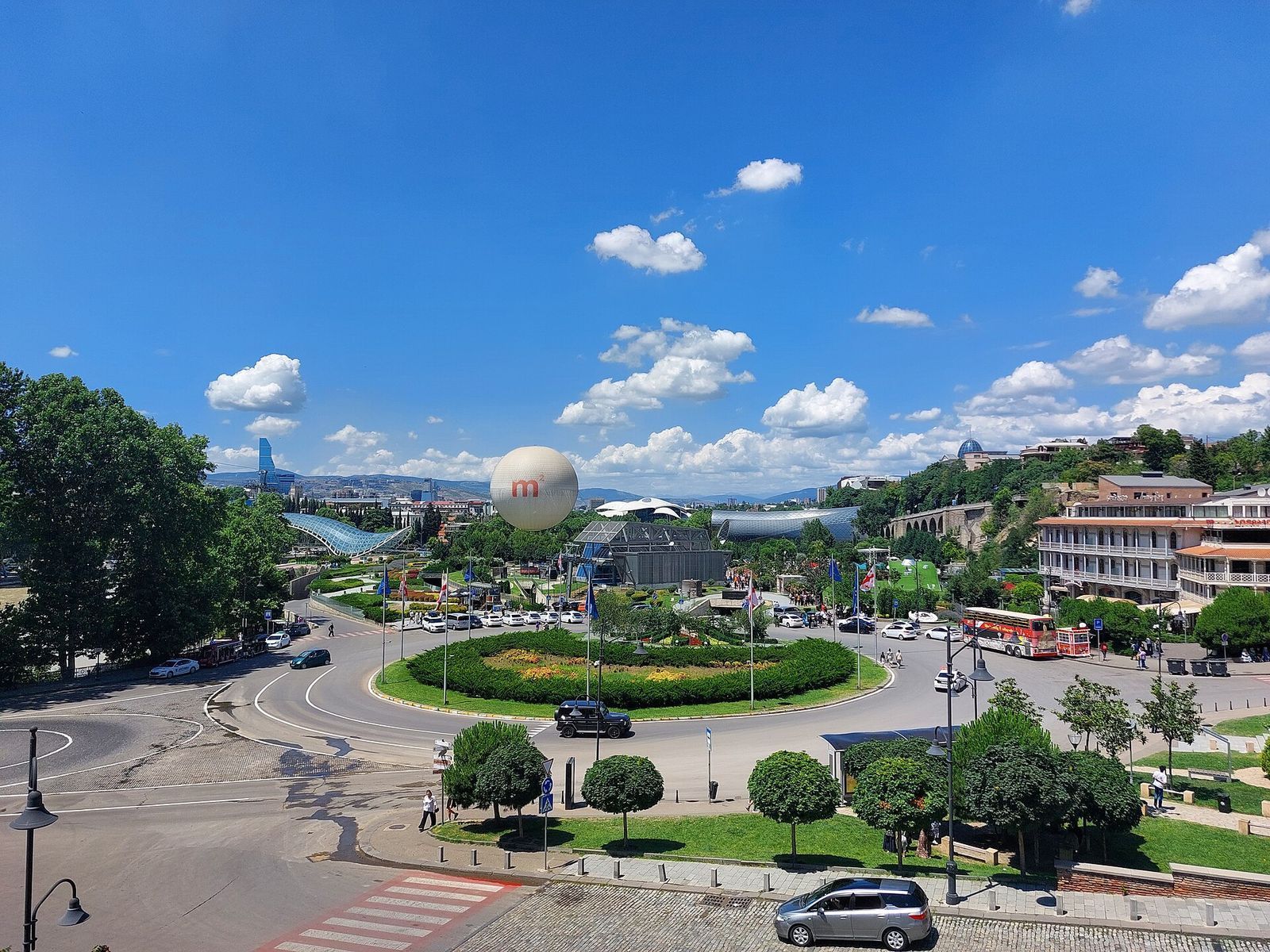
The one thing to stop for is the section of the Berlin Wall, placed here in 2017, a short walk from the cable car station.
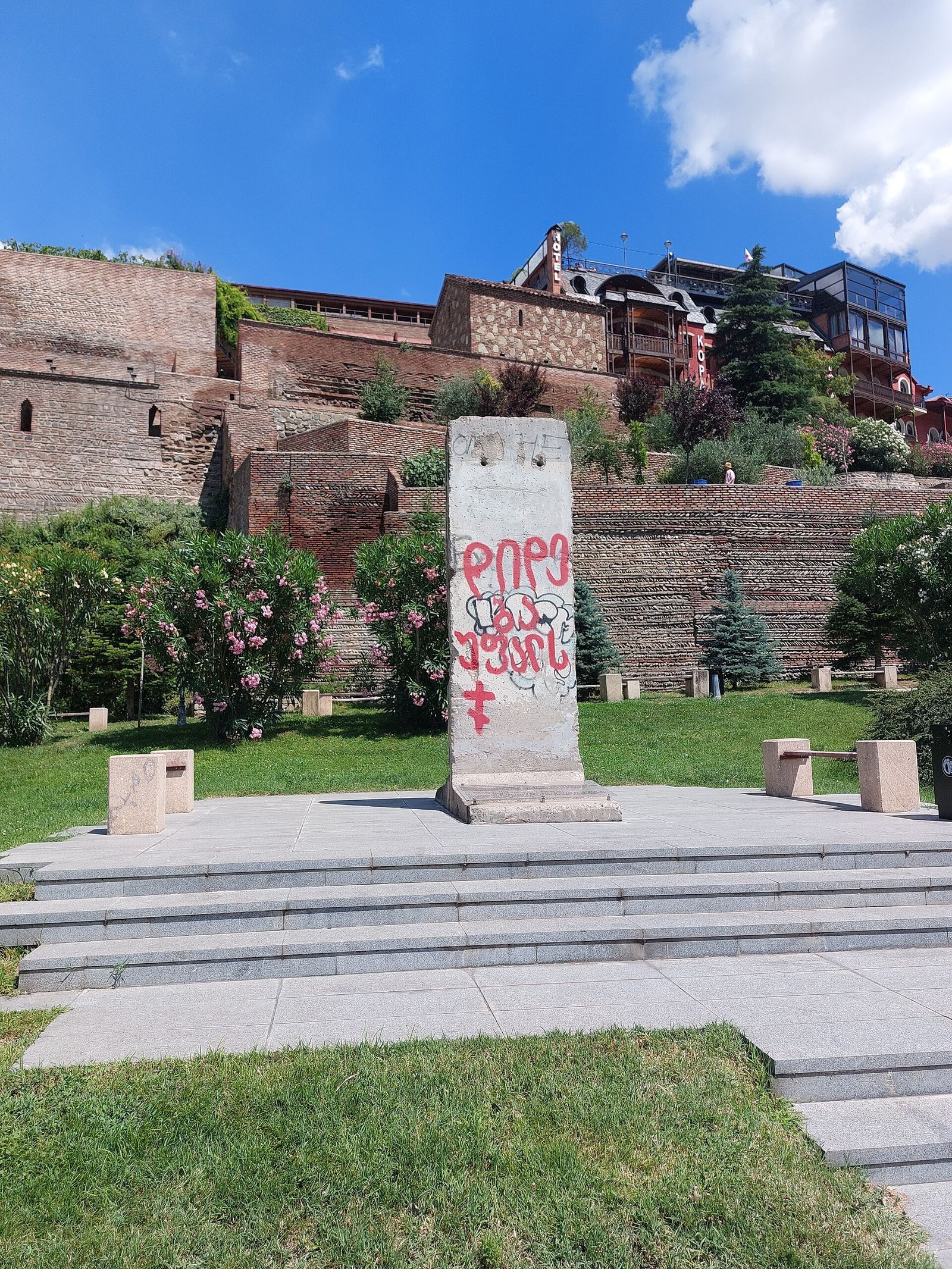
From Europe Square, the Metekhi bridge crosses back to Meidan Square and the bath district, and a path climbs to Metekhi Church on the cliff. That makes the square the hinge of the classic loop: Old Town, Bridge of Peace, Rike Park, Europe Square, Metekhi, and back over the river to the sulfur baths.
The cable car from Rike Park to Narikala
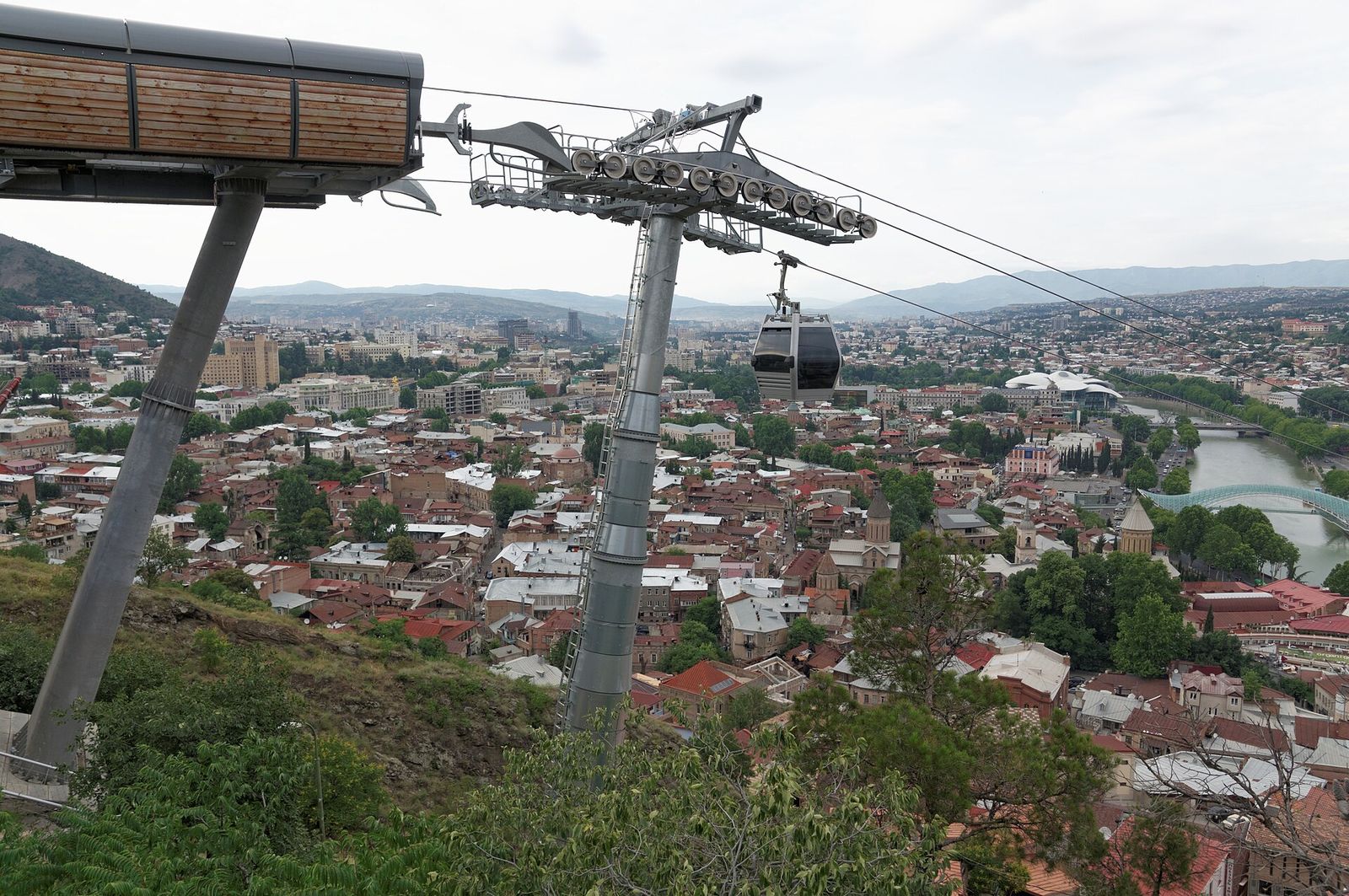
The lower station of the Rike to Narikala cable car stands in Rike Park, by the Bridge of Peace and below the presidential palace. The cabins run 686 m over the river and the bath district to the top station on the ridge, a ride of a little over 2 minutes, and the view of the bridge from above is one of the best you'll get of it.
| Cable car detail | What to know |
|---|---|
| Fare | 2.50 GEL one way, tap again for the ride down |
| How to pay | A Metromoney card at the gate; the card costs 2 GEL with a refundable deposit |
| Hours | Daily from 10:00; to midnight in summer, to 22:00 from 1 November |
| Ride | 686 m, a little over 2 minutes |
| At the top | The Narikala ridge, St Nicholas Church and the Mother of Georgia statue |
At the top you're a few minutes from the walls of Narikala Fortress, and the Mother of Georgia statue is about 5 minutes along the same ridge. I'd ride up and walk down: the paths on the river side drop straight into Abanotubani, and you never have to queue for the ride back.
The line is longest in the hour before sunset, when everyone has the same idea. If you want the sunset from the ridge, ride up earlier than you think you need to, and come back down to the bridge on foot after dark when the lights are on. The Tbilisi cable car lines all stop in strong wind and thunderstorms, so on a stormy day walk up instead.
How to get to the Bridge of Peace and Rike Park
The bridge is in the middle of everything, and you'll most likely reach it on foot. Both ends are within walking distance of a metro station on the same line.
| Starting point | How to get there | Time |
|---|---|---|
| Freedom Square | Walk down through the Old Town lanes to the river and cross the bridge to Rike Park | About 15 minutes to Rike Park |
| Liberty Square metro | The station is on Freedom Square, so follow the same walk down | About 15 minutes |
| Avlabari metro | Walk down the slope from the station toward the river and Rike Park | A short walk downhill |
| Abanotubani and the baths | Cross the Metekhi bridge to Europe Square and follow Rike Park upstream | A short walk |
| The Narikala ridge | Ride the cable car down to Rike Park | A little over 2 minutes |
If you're staying in the Old Town, just walk. If you're coming from Vake, Saburtalo or Vera, the metro to Liberty Square and the walk down through the Old Town is the nicer way in; Avlabari is quicker if you want to start in Rike Park and go straight for the cable car.
Best time to visit the Bridge of Peace
Go at dusk and stay until after dark. The lights come on 90 minutes before sunset, so by the time the sky turns deep blue the canopy is fully lit, the Narikala walls are floodlit above you and the river reflects all of it. That is the hour I'd build an evening around.
Early morning is the other good time: no crowds, soft light on the Old Town side and the river to yourself. Midday in July and August is the worst, with the glass and the paving throwing back the heat and no shade until you reach the trees in Rike Park.
By season, spring and autumn are the most comfortable for a long evening on the river. Summer evenings are the liveliest, with the fountain running and music in the park. Winter is quiet and cold, but the lights come on before 17:00, so even a short winter day ends with the bridge glowing.
An evening route around the Bridge of Peace
This is the loop I'd give anyone with one evening in central Tbilisi. It ties the bridge, the park, the cable car and the fortress together, and it ends where dinner and the baths are. Start about 2 hours before sunset.
| Stop | What you do | Time |
|---|---|---|
| Old Town lanes | Walk down from Freedom Square past the clock tower to the river | 30 minutes |
| Bridge of Peace | Cross in daylight toward Rike Park | 10 minutes |
| Rike Park | The fountain, the riverside lawns and a look at the tubes | 20 minutes |
| Cable car up | Rike Park to the Narikala ridge | A little over 2 minutes |
| Narikala ridge | Sunset over the Old Town, St Nicholas Church, the terraces | 45 minutes |
| Walk down | Paths on the river side down to Abanotubani | 15 minutes |
| Back to the bridge | Along the right bank to the Bridge of Peace, now lit up | 15 minutes |
If you'd rather skip the climb, reverse the idea and keep it low: cross the bridge at sunset, walk through Rike Park to Europe Square, climb the short path to Metekhi Church for the view back at the lit bridge, then cross the Metekhi bridge to dinner in Abanotubani. It costs nothing, and it fits in about an hour and a half; it is one of my favorite free things to do in Tbilisi.
Is the Bridge of Peace worth visiting?
Yes, as part of a walk, and especially after dark. On its own, in the middle of the day, it is a pretty bridge you cross in 3 minutes. Built into an evening with Rike Park, the cable car and Narikala, it is one of the best free hours in Tbilisi.
It suits you best if you are:
- On a first visit and want the classic Tbilisi evening: river, fortress, lights.
- Traveling with kids, who get the motion-sensor rail, the fountain, the playgrounds and a cable car ride in one stop.
- On a budget, since the bridge and the park are free and the cable car is 2.50 GEL.
- Not keen on climbs, because it gives you the skyline without a single stair.
- Into photography, with the canopy, the floodlit walls and the reflections all at blue hour.
You can skip it, or just pass through, if you only care about old architecture: the Old Town, the churches and the baths will hold you longer, and you'll cross the bridge on the way to the cable car anyway. Sameba cathedral on its hill above Avlabari is a better use of a spare hour in daylight.
Key takeaways
- The Bridge of Peace is a free, 156 m glass footbridge between the Old Town and Rike Park, open around the clock.
- Its LEDs come on 90 minutes before sunset, so cross at dusk and stay until after dark.
- Rike Park is free, with lawns, a musical fountain, playgrounds and the cable car to Narikala.
- The cable car costs 2.50 GEL one way on a Metromoney card; ride up and walk down to the baths.
- Shoot the bridge from the Metekhi Church terrace or the Rike embankment at blue hour.
Frequently asked questions
Is the Bridge of Peace free?
Yes. The Bridge of Peace and Rike Park are both free and open 24 hours a day. The only thing you pay for nearby is the cable car to Narikala, 2.50 GEL one way.
What time does the Bridge of Peace light up?
The lights switch on 90 minutes before sunset and stay on until 90 minutes after sunrise. The canopy cycles through four light programs, changing every hour, so it looks different each time you cross.
Who designed the Bridge of Peace in Tbilisi?
The Italian architect Michele De Lucchi designed it, and the French lighting designer Philippe Martinaud created the lights. The bridge was built in Italy and opened in Tbilisi on 6 May 2010.
How long is the Bridge of Peace?
It is 156 m long. Crossing takes 2 or 3 minutes at a walk, or closer to 10 if you stop in the middle for the views and photos.
Why is it called the Bridge of Peace?
The city named it as a gesture of peace and a link between Tbilisi's old and new districts. It opened in 2010, less than two years after the 2008 war with Russia.
What is there to do in Rike Park?
You can sit on the lawns by the river, watch the musical fountain, let kids loose on the playgrounds and ride the cable car up to Narikala. On some summer evenings there's live music and Georgian dancing.
How do I get to Rike Park?
Walk across the Bridge of Peace from the Old Town, about 15 minutes from Freedom Square, or walk down from Avlabari metro on the left bank. You can also ride the cable car down from the Narikala ridge.
Is the Bridge of Peace worth seeing at night?
Yes, night is the best time. The canopy and the handrails light up, Narikala is floodlit above you and the reflections fill the river, which makes it the moment to cross.
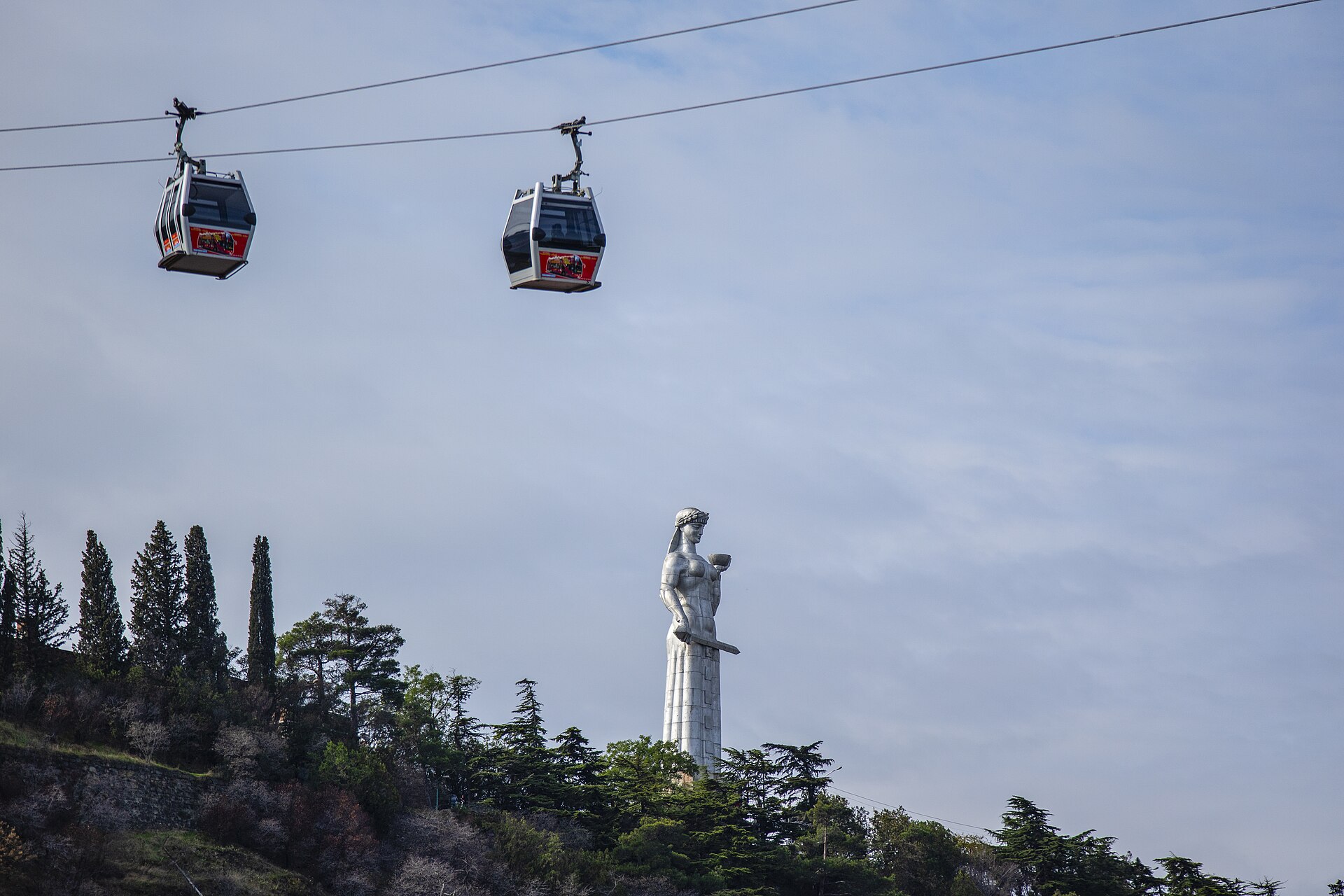
25 Best Things to Do in Tbilisi in 2026 (With Prices)
Tbilisi is known for its sulfur baths, balconies and hilltop views. Here are 25 things to do, with prices and times.
Read the guide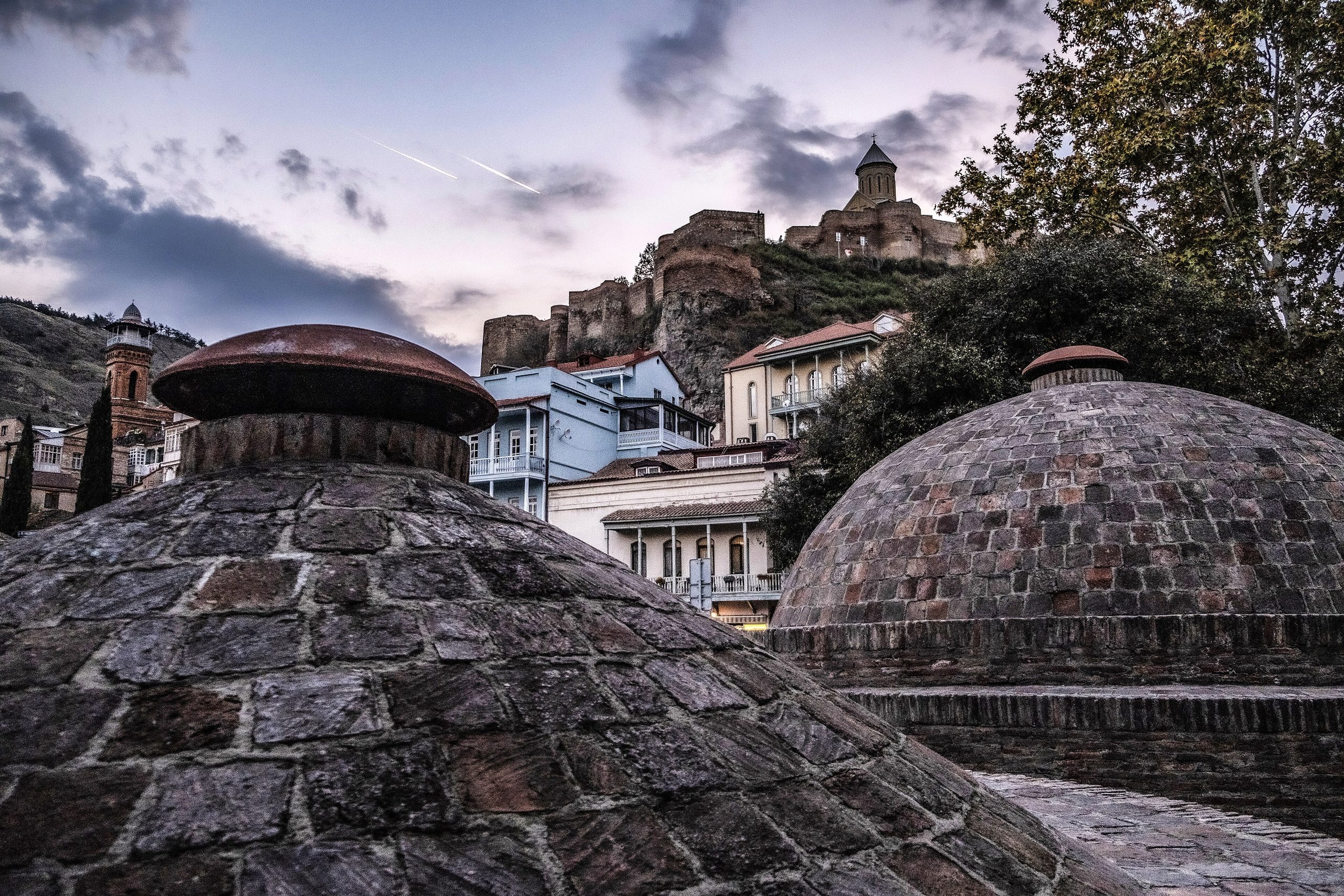
The Sulfur Baths of Abanotubani: Prices, Bathhouses and Booking
Tbilisi is known for its sulfur baths. Here is what to know about the bathhouses, room prices and booking.
Read the guide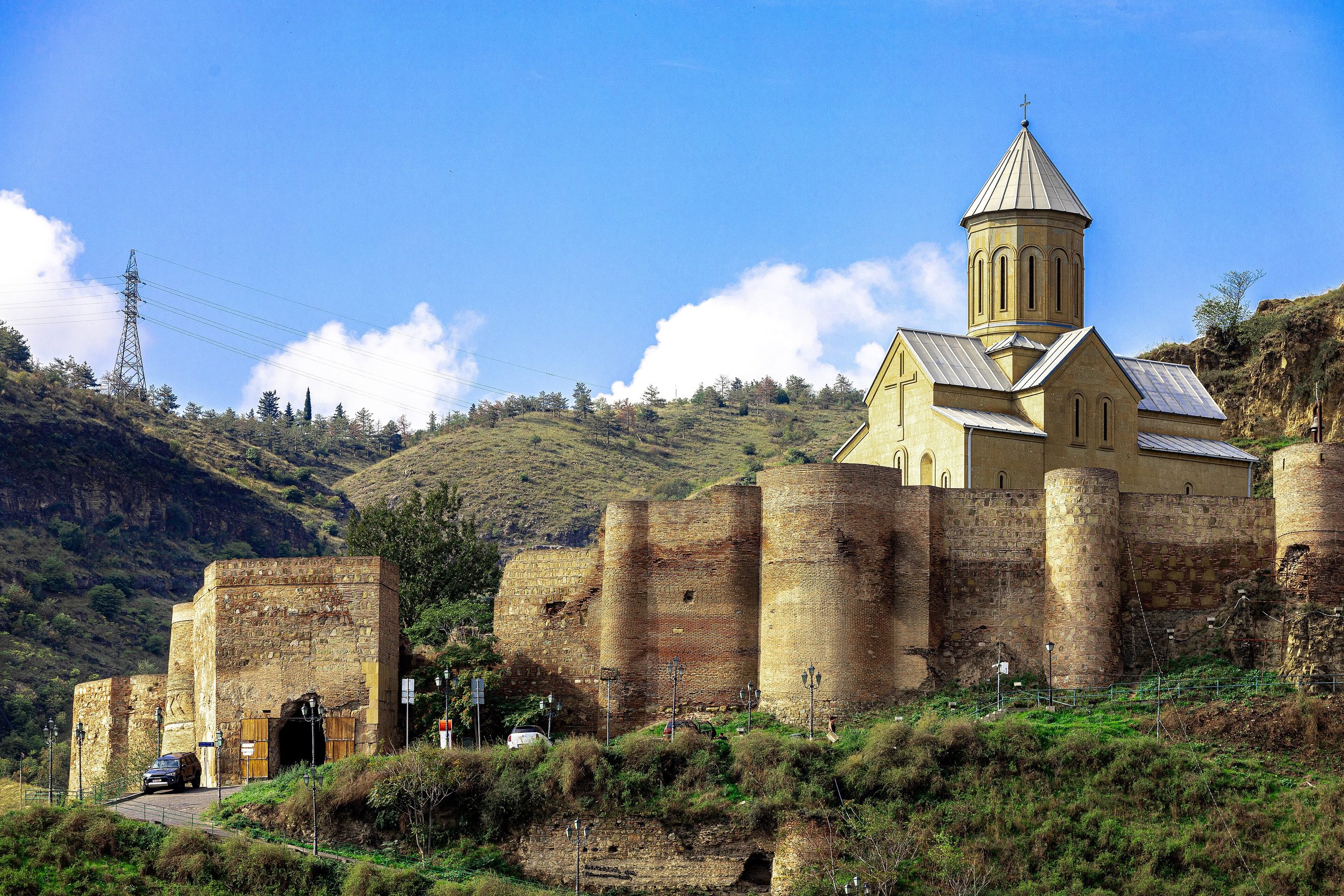
Narikala Fortress, Tbilisi: Getting Up, What Is Open and When to Go
Narikala is the fortress above Old Tbilisi. Here is what is open in 2026, how to get up and when to go for the view.
Read the guide