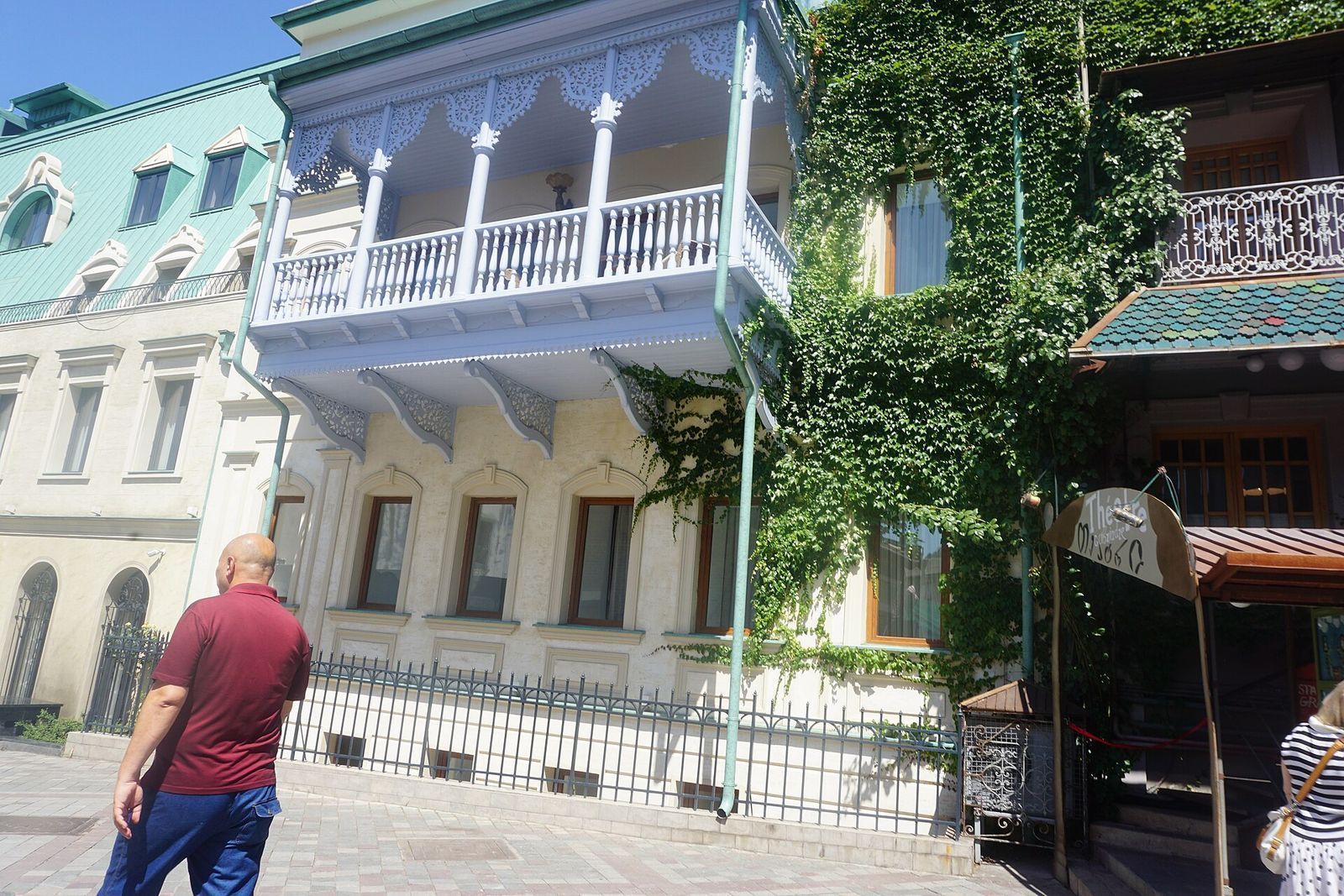
Tbilisi Architecture: Carved Balconies, Art Nouveau Entrances and Mirror Halls
Tbilisi is known for its carved wooden balconies, the lace-like galleries that hang over the Old Town lanes, and for the painted Art Nouveau entrance halls hidden behind Sololaki's front doors. Here's where to see each style street by street, how to look inside a hallway without upsetting anyone, and how to visit the mirror halls at the Academy of Arts.
Tbilisi architecture styles at a glance
Tbilisi looks the way it does because it has been rebuilt so many times. In 1795 Agha Mohammad Khan's Persian army burned the city to the ground, and most of what you see in the Old Town went up in the 19th century, after Russia annexed eastern Georgia in 1801 and Tiflis became the main city of the Russian Caucasus. The rebuilt town kept its old habits: brick houses stacked on steep lanes, flat roofs, and wooden balconies facing the street or the yard.
Then the money arrived. In the late 19th and early 20th centuries the city grew past its old walls, and merchants, oil barons and brandy makers put up European facades in Sololaki, Mtatsminda and Chughureti. They borrowed from everywhere: neoclassical columns, Moorish arches, Art Nouveau curves. The Soviets added Stalinist avenues and, later, raw concrete. Walk from the baths to Rustaveli Avenue and you pass through most of Georgian history in roughly the order it happened.
| Style | When | Where to see it | Look for |
|---|---|---|---|
| Old Tbilisi wooden houses | Mostly 19th century, after 1795 | Abanotubani, Kala, Betlemi, Avlabari | Carved balconies, glassed-in shushabandi, outside staircases |
| Italian courtyards | Late 19th and early 20th century | Sololaki, Mtatsminda, Chughureti | Wooden galleries and spiral stairs behind a European front |
| Moorish revival and eclectic | Late 19th century | Rustaveli Avenue, Ivane Machabeli Street | Striped stone, horseshoe arches, oriental ornament |
| Art Nouveau | Mid-1890s to 1918 | Sololaki, Chughureti, Aghmashenebeli Avenue, Rustaveli Avenue | Curved corners, iron flowers, carved doors, painted entrance halls |
| Stalinist and Soviet modernist | 1930s to 1980s | Rustaveli Avenue, Saburtalo, the Bank of Georgia building | Columns and arcades, then concrete blocks |
My advice is to think of Tbilisi as two cities on one hillside. The Old Town below is all wood, brick and balconies, a town that faces inward and outward at the same time. Sololaki and Rustaveli above it are the European city the merchants built, polished on the street side and full of surprises once you get past the front door.
Tbilisi's carved wooden balconies
The balconies are the first thing most visitors photograph in Tbilisi, and they deserve it. They hang off the brick and plaster houses of the Old Town in rows, painted white, sky blue, mint and pink, with carved lattice along the rails and fretwork under the eaves. Some run the full length of a house on thin wooden columns. Others are boxed in with small panes of glass, a style called shushabandi, which turns the balcony into a sunroom.
They were built for living rather than for show. In a hot, dry city the balcony gave shade and caught the breeze, and on summer nights whole families slept out on them. It was also where you talked to the neighbors, hung the washing and kept an eye on the street. The carved latticework owes as much to the city's Persian and Ottoman neighbors as to anything Georgian, which suits a town that changed hands so often.
On the grander 19th-century houses the wood gives way to cast iron. Look up as you walk and you'll find iron railings with flowers, scrolls and even sculpted figures, often on the same street as a wooden balcony two doors down.
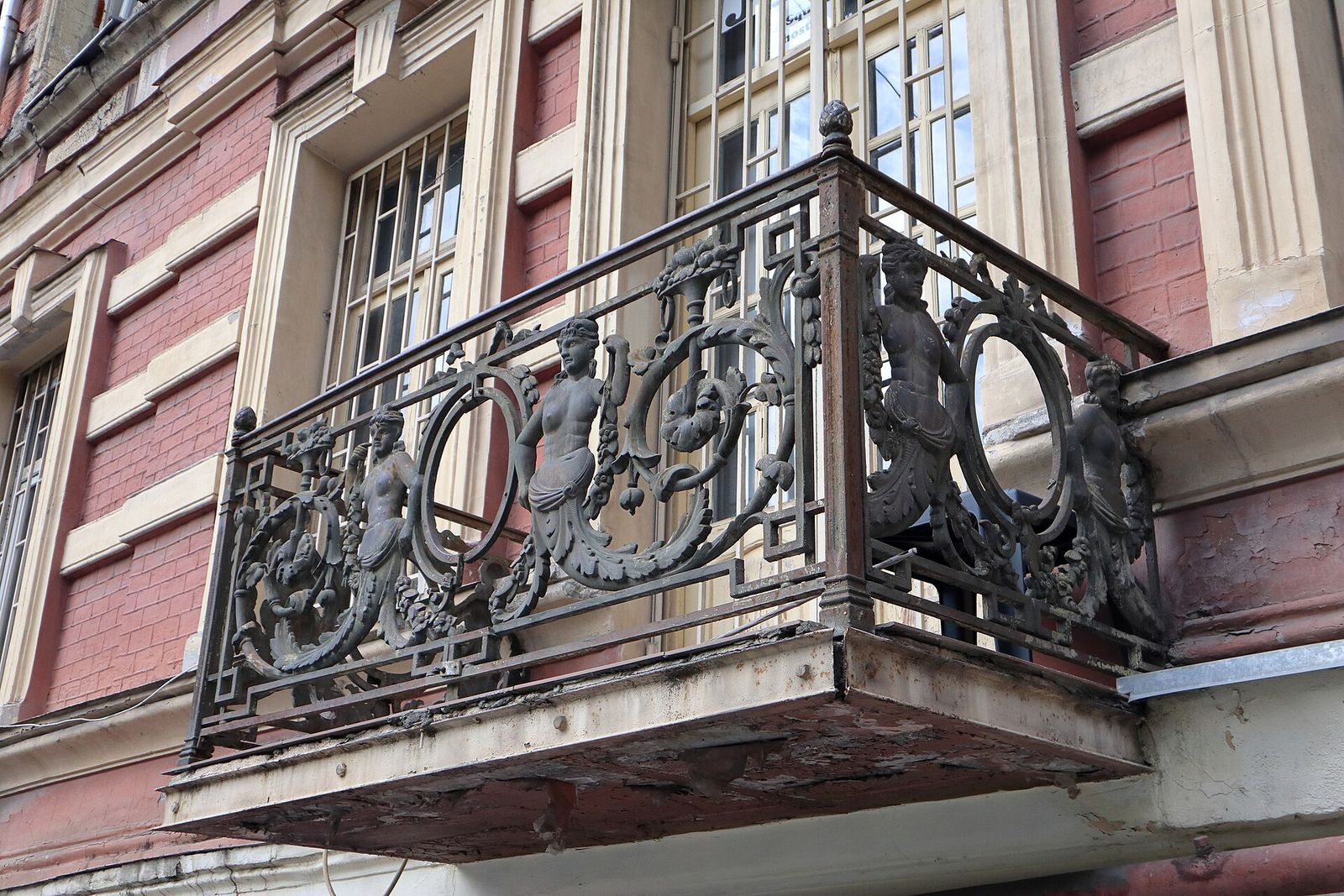
Plenty of balconies are in rough shape. The restored stretches of Kala gleam in fresh pastel paint, but a few streets away you'll see galleries sagging on their posts and glass panes held in with tape. I like both: the restored lanes show what the city looked like, and the tired ones show how people still live in it.
Where to see the best balconies
Most of the best balconies are in a small patch of the Old Town between the baths and Sololaki, so you can see all of them on foot. These are the streets I'd walk first.
| Street or square | Area | What to look for |
|---|---|---|
| Abano Street | Abanotubani | No. 23 has a lattice balcony on wooden Doric columns around the whole house; no. 27 has a painted balcony with stars, planes and trucks among the ornament |
| Samghebro Street | Abanotubani | One of the oldest streets, already on the 1876 city plan; no. 6 is a classic balcony-and-glass house |
| Botanikuri Street | Abanotubani, up toward the Botanical Garden | Balconies painted pink, green and duck-egg blue, past the brick Jumah Mosque |
| Gudiashvili Square | Where Kala meets Sololaki | A see-through wooden balcony on one side, classical columns and a colored-glass balcony on the other |
| Ioane Shavteli Street | Kala, by the clock tower | Restored balconies with lace fretwork over a pedestrian lane |
| Betlemi Street and stairs | Betlemi | Old houses with carved balconies on the climb toward the ridge |
| The back lanes of Avlabari | Left bank | Unrestored, uneven balconies leaning over quiet streets |
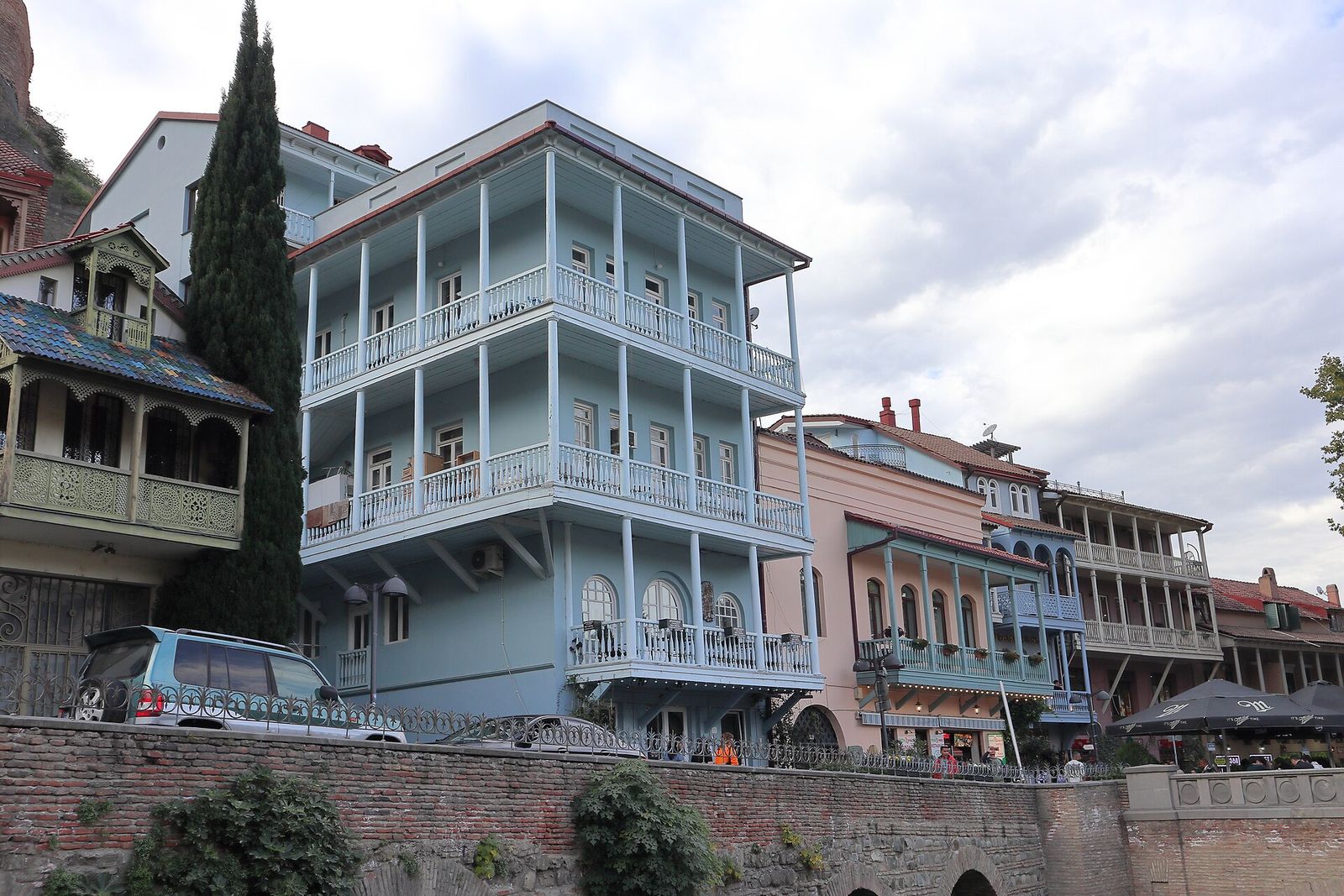
Abano Street runs between the brick domes of the sulfur baths and is probably as old as the first bathhouses, which makes it the place I'd start. The balcony at no. 23 wraps the whole house on thin wooden columns, so you can follow it around every floor.
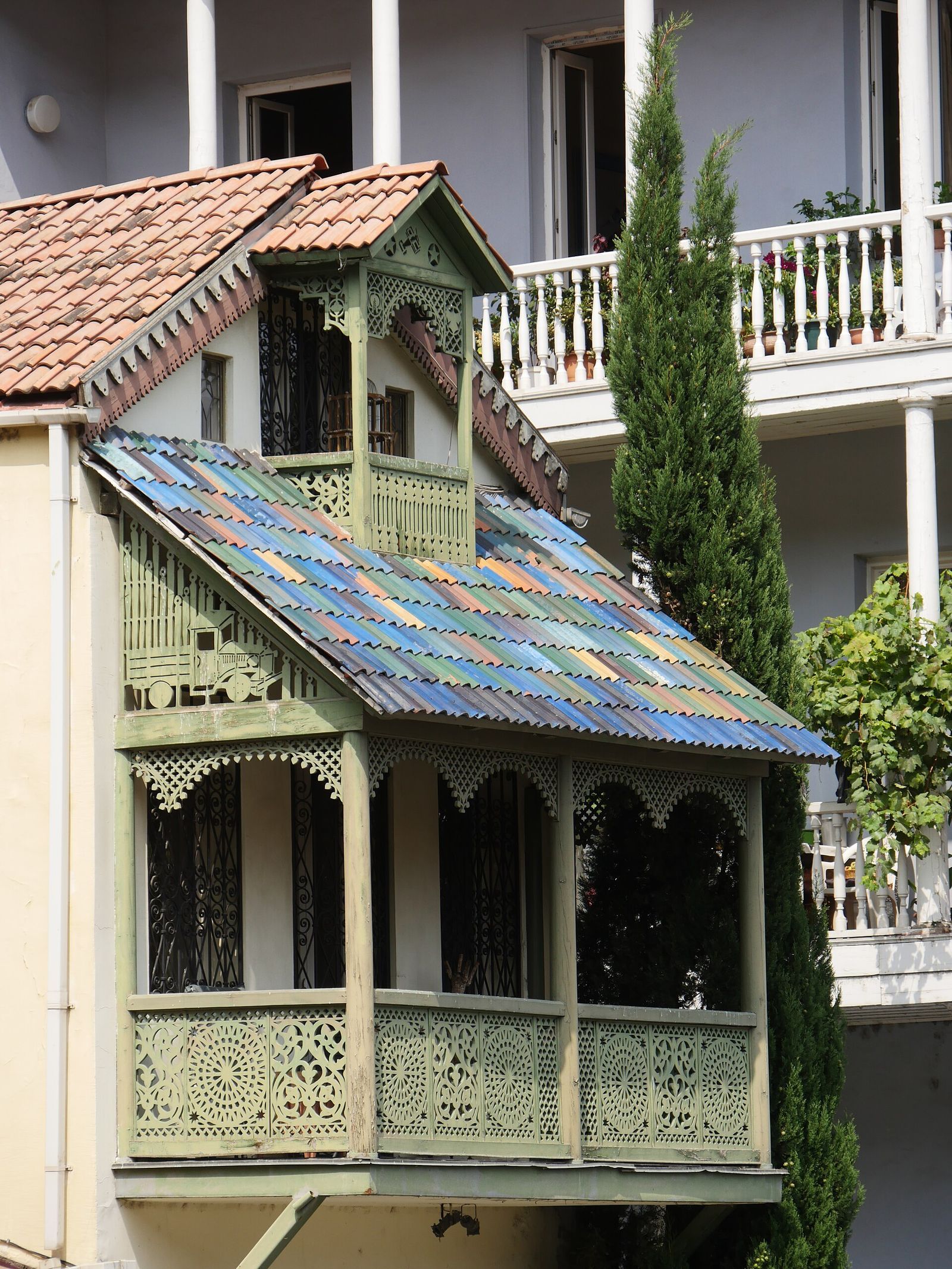
The balcony at no. 27 is my favorite in the city: someone worked stars, an airplane and a truck into the old fretwork, and it makes me smile every time.
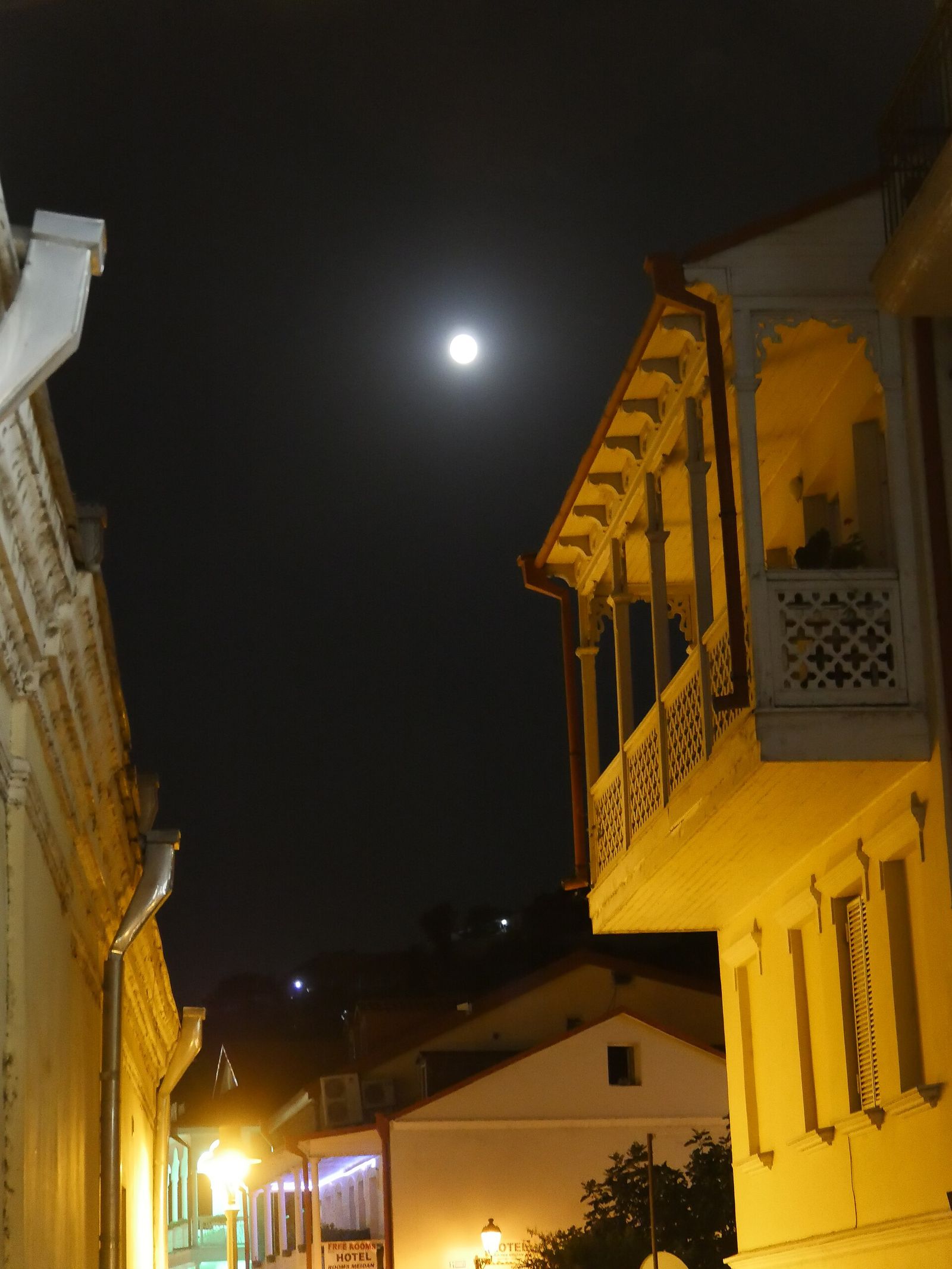
Samghebro Street is best seen from a distance. Its row of balcony houses lines up perfectly from the Metekhi plateau across the river, one of the Tbilisi viewpoints where the Old Town looks like a stage set.
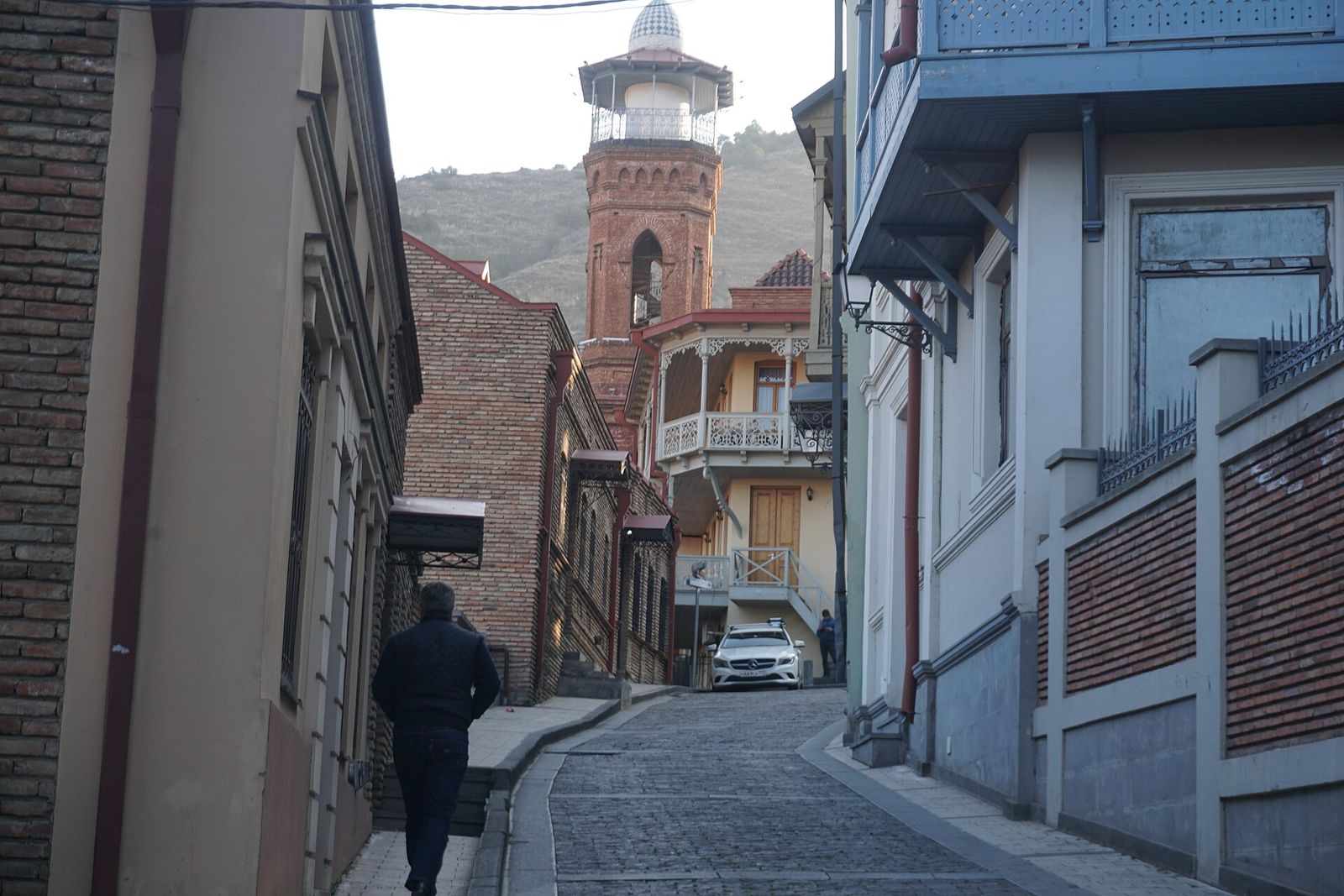
Botanikuri Street is the opposite, a lane you walk right under the balconies, climbing from the baths past the minaret of the Jumah Mosque toward the National Botanical Garden.
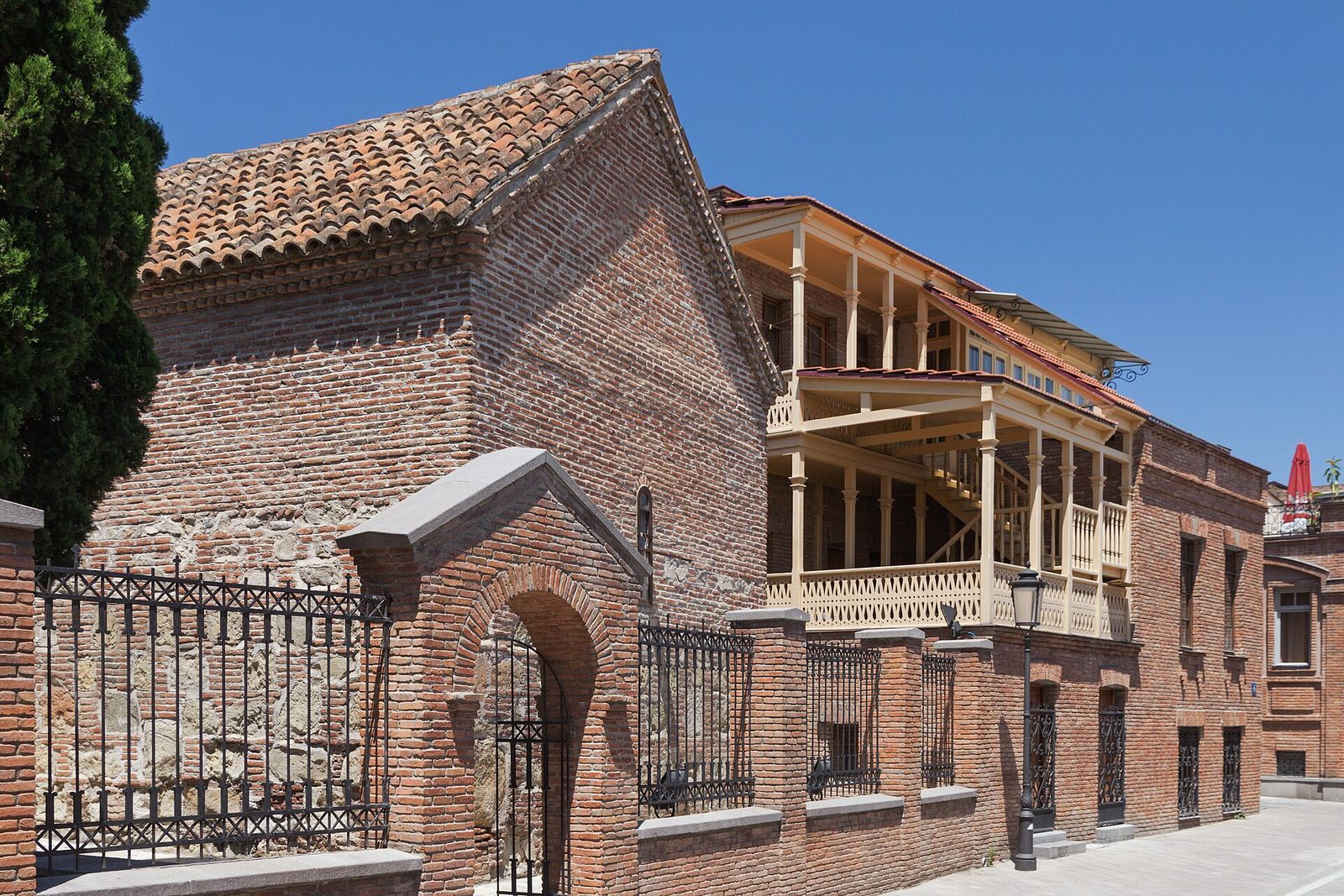
On the north side of Kala, Ioane Shavteli Street has some of the best restored balconies in the city, a few steps from the leaning clock tower of the puppet theater.
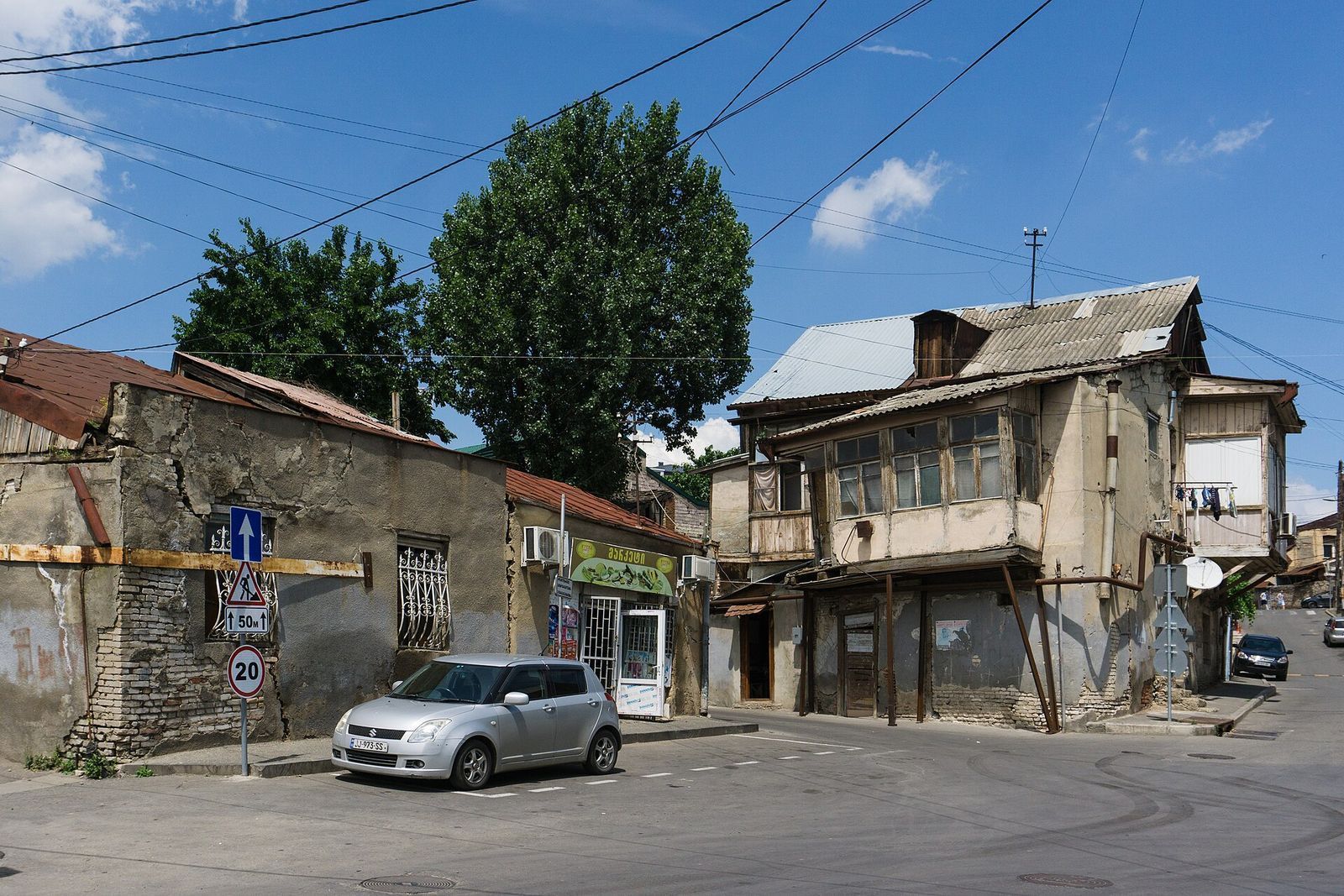
For balconies nobody has repainted, cross the river to Avlabari, where the old houses on the back lanes lean at angles that would never pass an inspection.
Italian courtyards behind the facades
When wealthy Tbilisi families took up European fashions in the 19th century, the wooden balconies didn't disappear. They moved indoors. Merchants in Sololaki, Mtatsminda and Chughureti put a stone or stucco facade on the street and kept an open courtyard behind it, wrapped in carved wooden galleries, spiral staircases and trellises, sometimes with a fountain or a glassed-in shushabandi room. From the pavement you see a neat European townhouse; walk through the arch and you're back in old Tiflis.
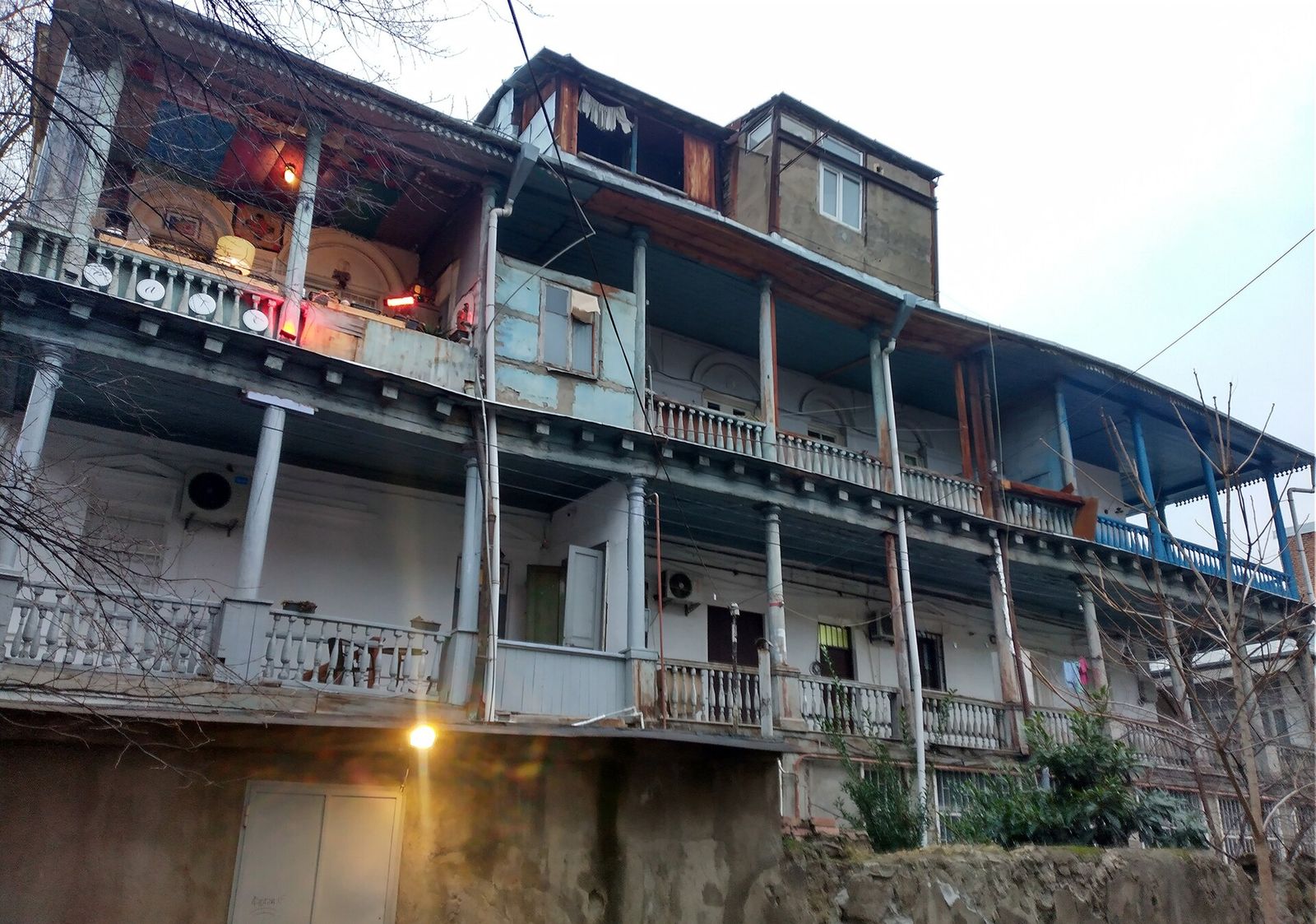
After the Soviet takeover the merchants were evicted, and their houses were nationalized and split into communal flats. One family's mansion became home to 10 to 15 families, who shared a basement, a well, a sink, a bathroom and a tone, the round clay bread oven. Georgians, Armenians, Azeris, Russians, Jews and Greeks lived along the same galleries, and the yard was where they held a supra on summer evenings, played backgammon, borrowed sugar and traded gossip.
Locals call these "Italian courtyards", and the name has nothing to do with the architecture. Italian neorealist films with Marcello Mastroianni and Sophia Loren were hugely popular in Soviet Tbilisi, and audiences saw their own noisy, crowded yards in the courtyards of southern Italy on screen. The nickname stuck. The yards are quieter now, with fewer families and more satellite dishes, but the galleries, the washing lines and the cats are still there.
Art Nouveau buildings in Tbilisi
Art Nouveau reached Tbilisi in the mid-1890s and ran until the end of Russian rule in 1918. The money came from the merchant class, from brandy, oil and trade, and local craftsmen gave the international style a Georgian accent, adding carved wooden balconies and local ornament to the curving stone facades. It wasn't only for mansions. The city built Art Nouveau banks, a hospital, a maternity home, the Conservatory of Music, a library, a carriage depot, a pawnshop, a canteen and even a slaughterhouse.
These are the buildings I'd make time for, all within walking distance of Freedom Square except the last.
| Building | Address | Built | What to look for |
|---|---|---|---|
| Writers' House of Georgia | 13 Ivane Machabeli Street, Sololaki | 1903 to 1905 | Carl Zaar's mansion for brandy maker David Sarajishvili: Art Nouveau curves with Neo-Baroque detail |
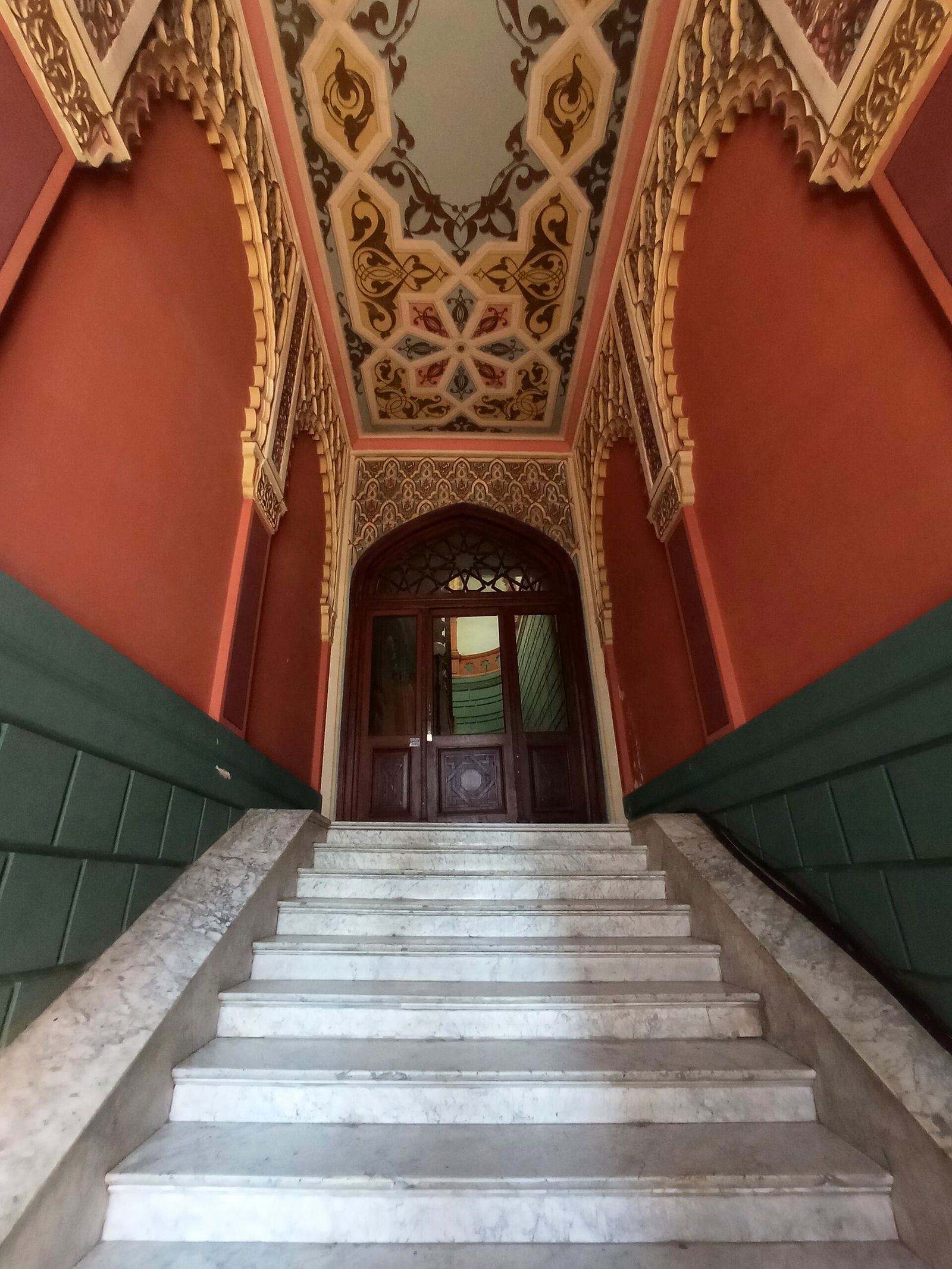
| Kalantarov House | 17 Ivane Machabeli Street, Sololaki | 1910 | Moorish and Islamic motifs, and an entrance hall like an oriental palace |
| Melik-Azaryants House | 37 Rustaveli Avenue, near Rustaveli metro | 1912 to 1915 | Teardrop-shaped windows, carved stone garlands, Czech sculpted reliefs, wooden balconies at the back |
| Former Mutual Credit Society | Giorgi Leonidze Street | Art Nouveau era | A bank front built to impress depositors |
| Former Apollo Theatre | Davit Aghmashenebeli Avenue | Art Nouveau era | An old theater front on the city's best street for Art Nouveau doors |
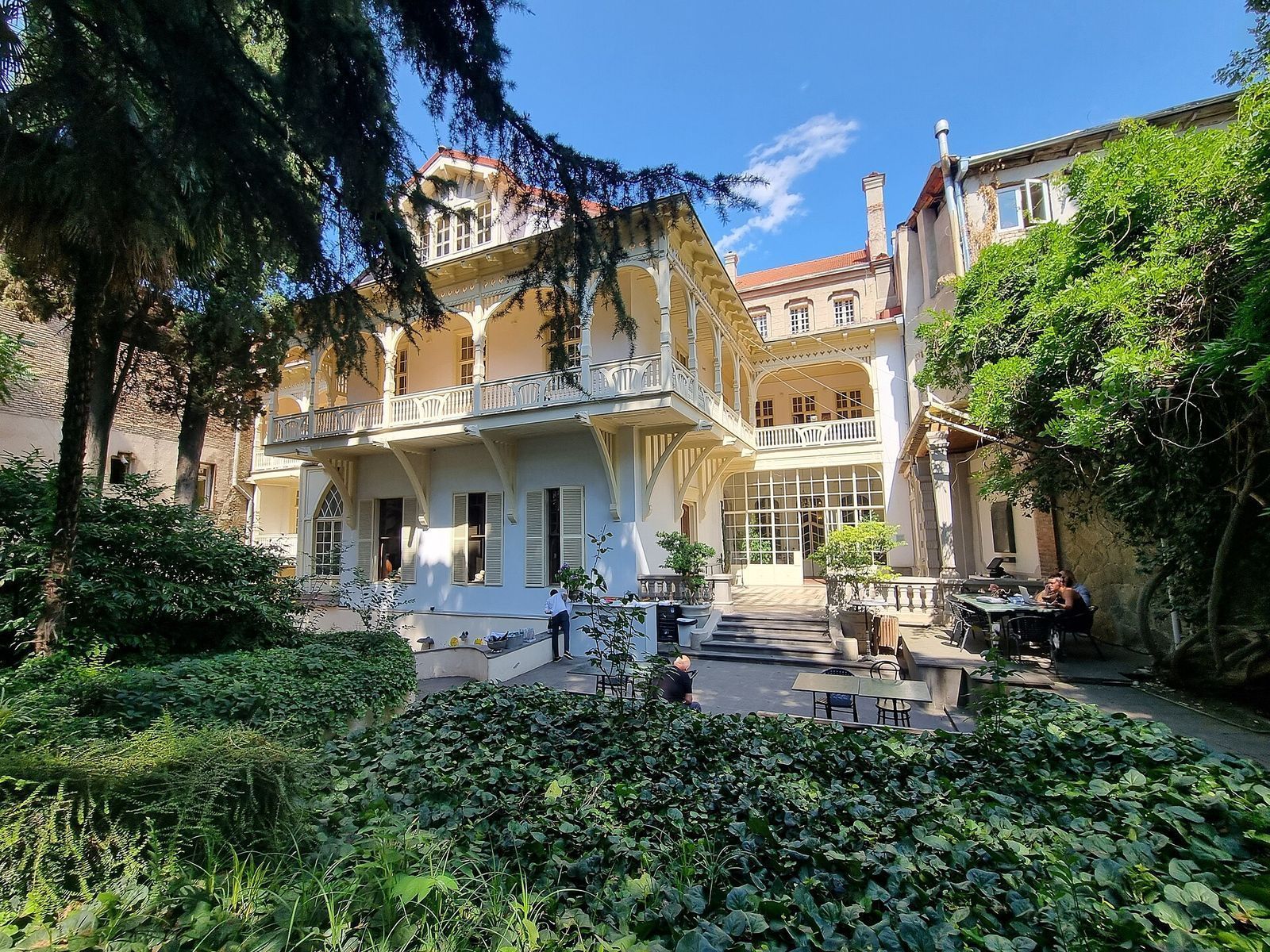
The Writers' House is the one to go inside. The German architect Carl Zaar built it for David Sarajishvili, the man behind Georgian brandy, and it is now a literary museum, one of the few Art Nouveau mansions in the city where you can walk through the rooms.
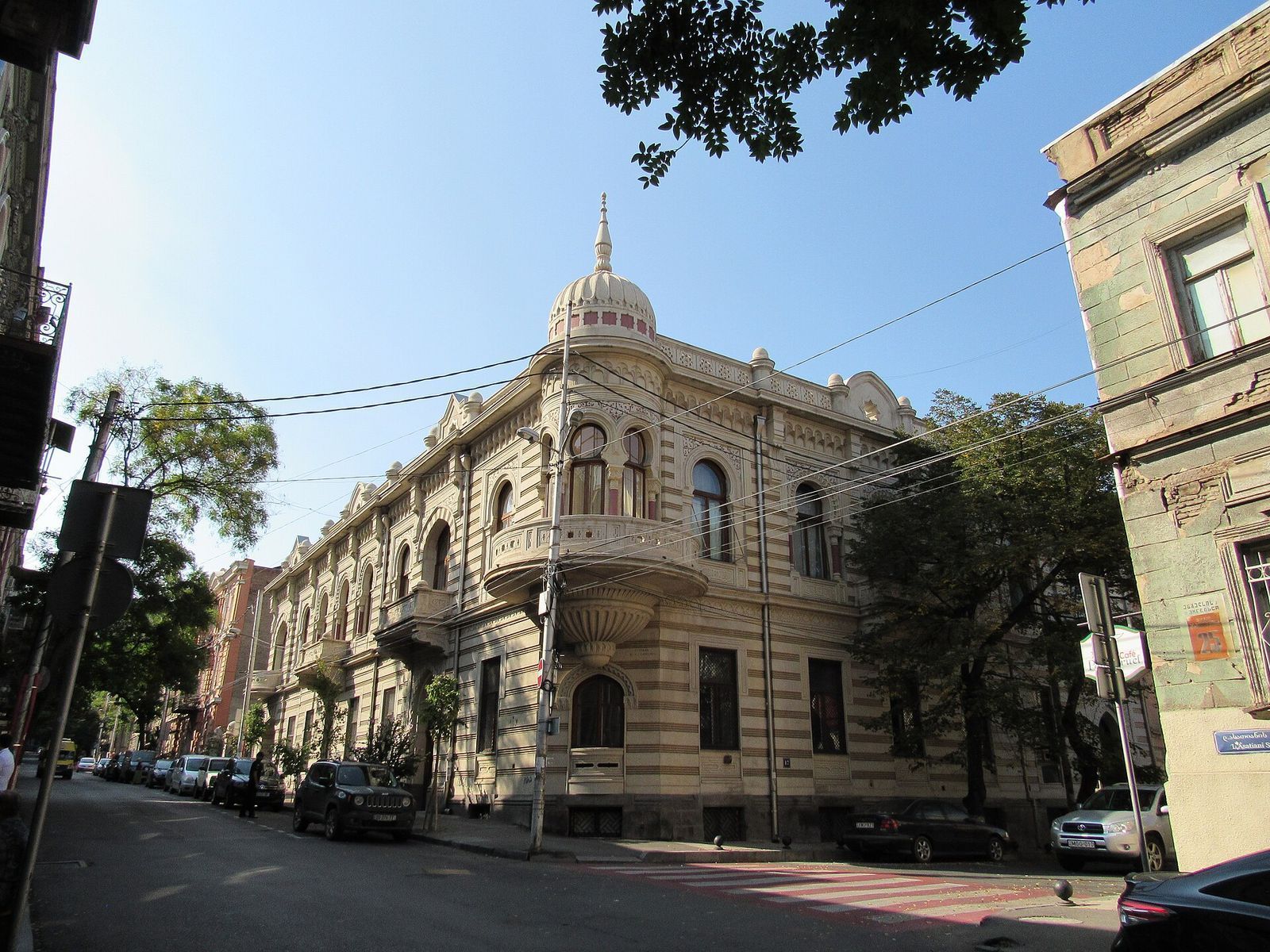
On the same street, at no. 17, stands the Kalantarov House, built in 1910 by the engineer Ghazar Sarkisian for the Baku oil magnate Mkrtich Kalantarov, so one short stretch of Machabeli Street gives you two very different ideas of luxury.
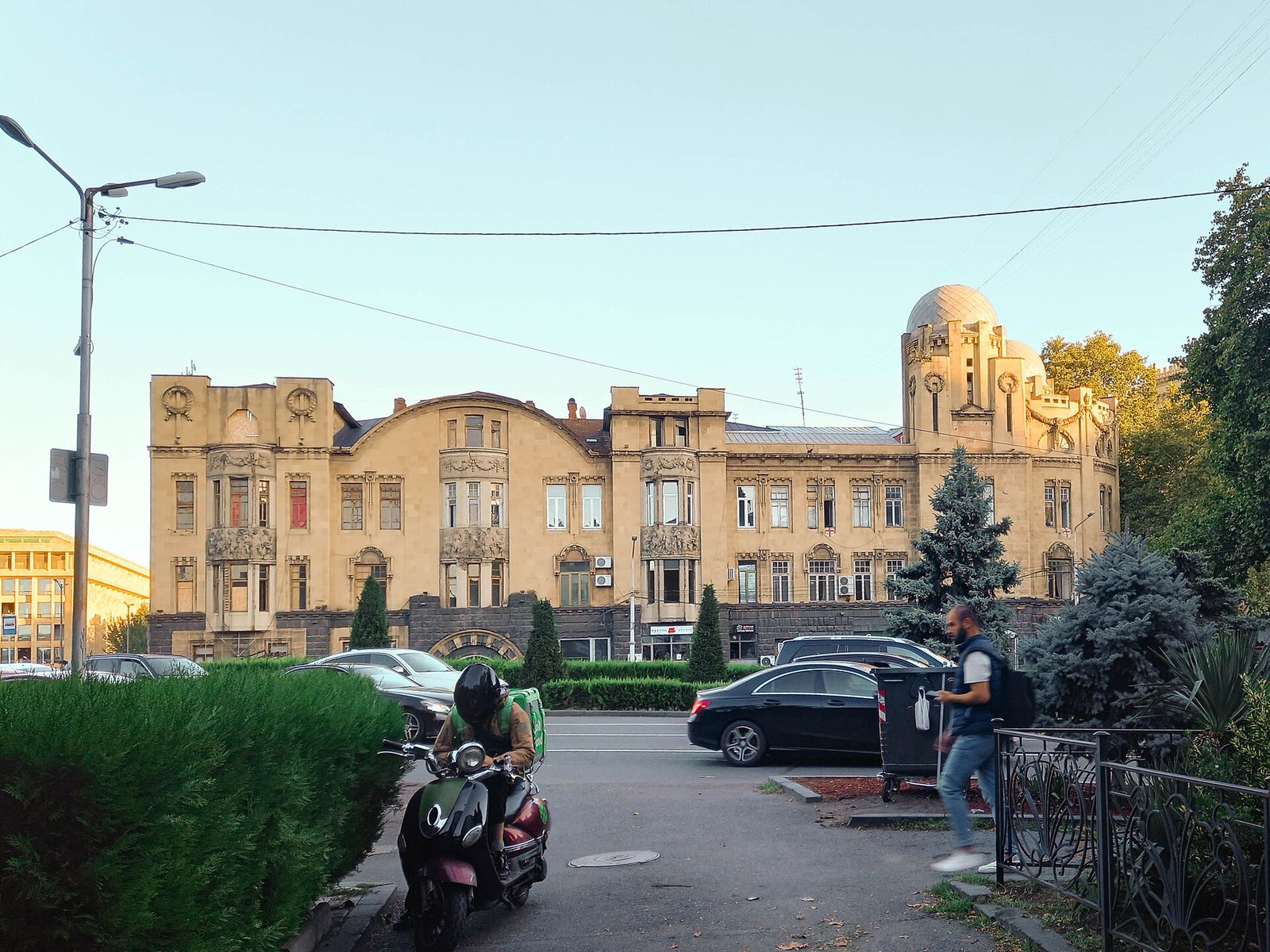
The Melik-Azaryants House is the long, ornate building at the Rustaveli metro end of Rustaveli Avenue. When it opened it held hotel rooms, shops, a photo studio, a cinema, an art gallery and a garden, which made it something close to a shopping mall a century early. The story goes that its owner shaped the windows like teardrops in memory of his daughter. Today it houses the A. Shalikashvili Pantomime Theatre, and its back side still has the old wooden balconies.
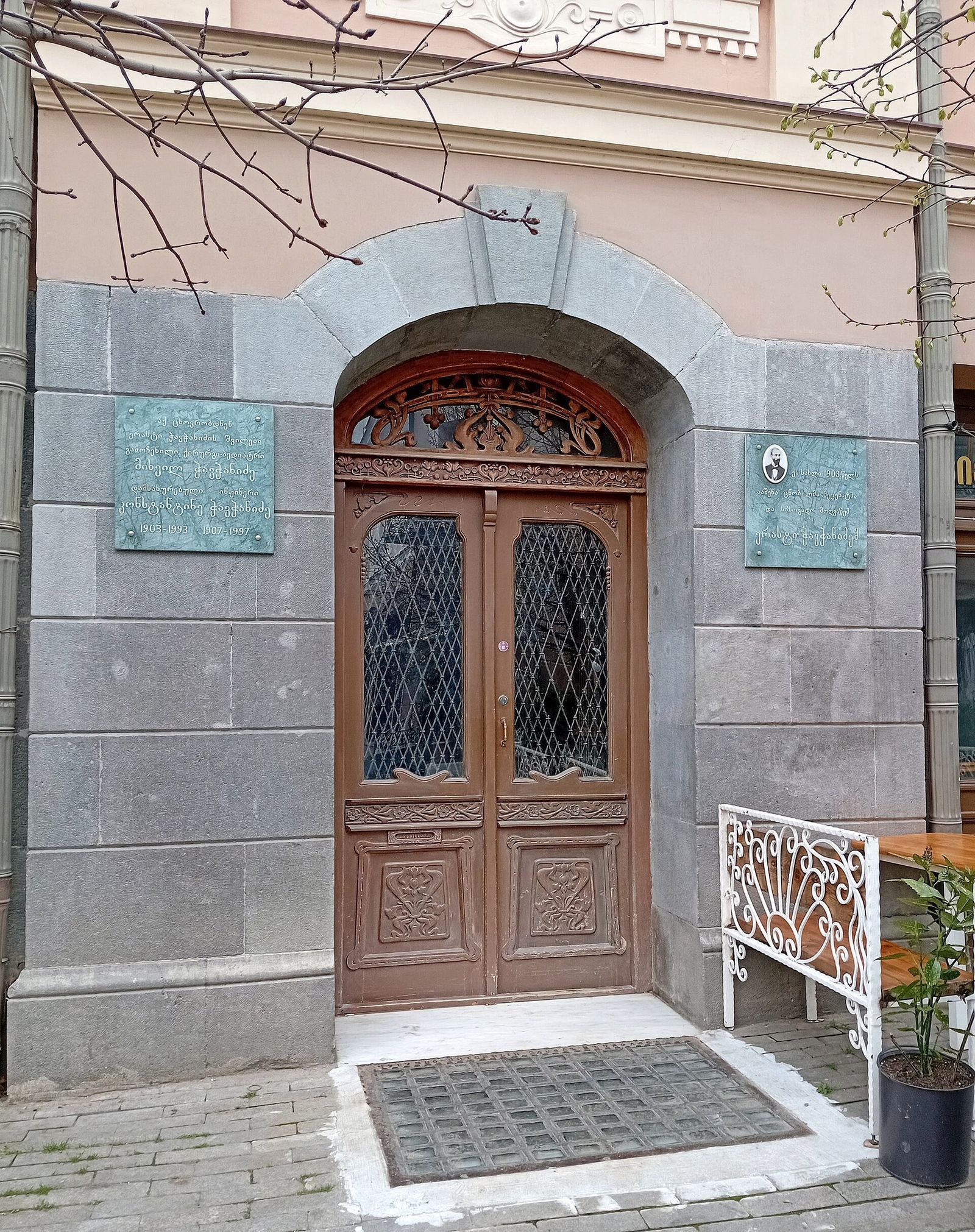
For Art Nouveau doors, cross the river to Davit Aghmashenebeli Avenue in Marjanishvili and Chughureti, the old German quarter once called Neu-Tiflis. The corner buildings sweep around in curves, and the carved wooden doors along the avenue are the best run of them anywhere in Tbilisi. It's a short metro ride from Rustaveli, and I'd give it a separate morning.
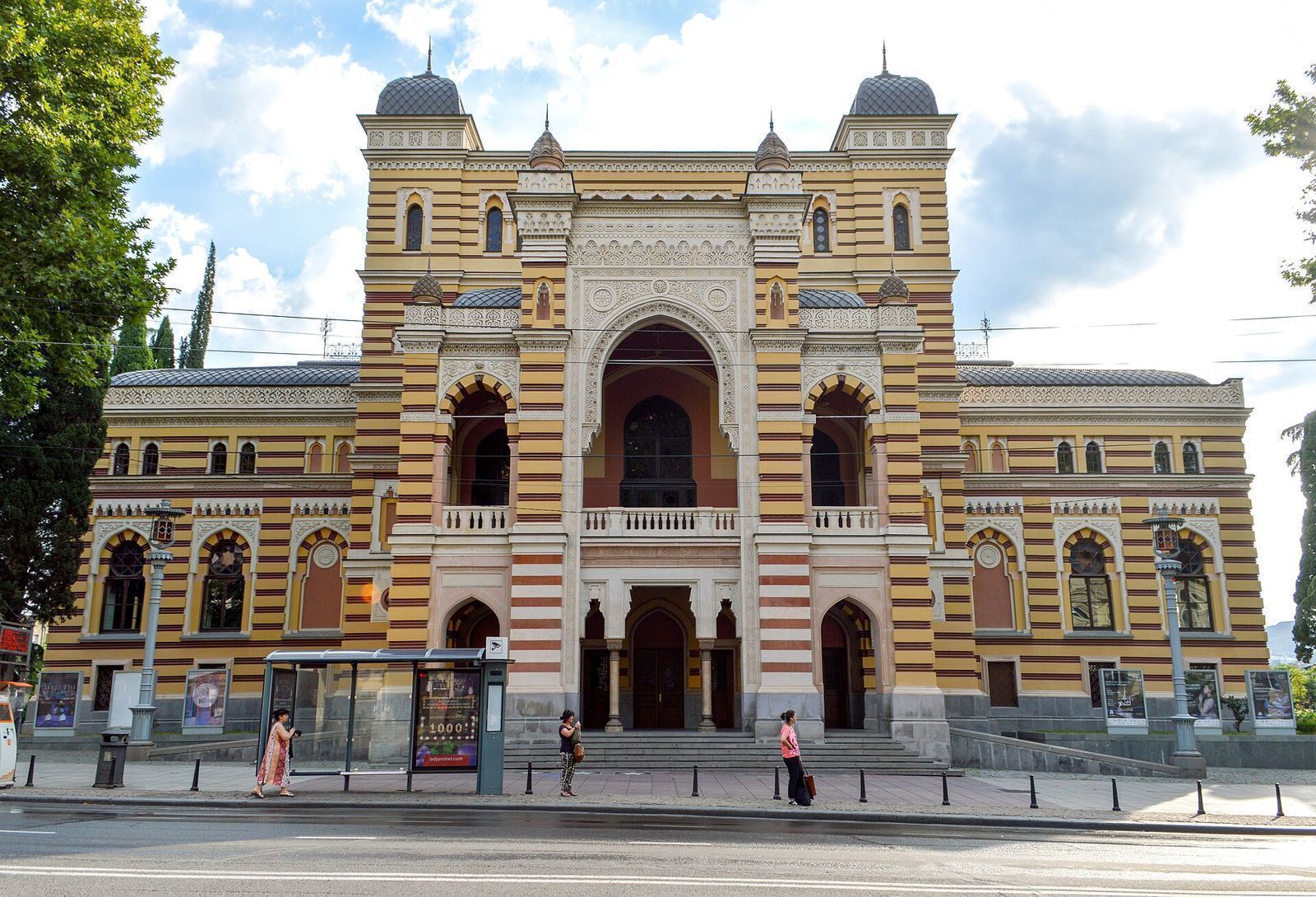
Tbilisi's taste for the East didn't stop at Art Nouveau. The Opera and Ballet Theatre on Rustaveli Avenue is the showpiece of the city's Moorish revival, with striped stone, horseshoe arches and little domes. The building went up in the late 19th century after the first theater burned, and it reopened in 2016 after a long restoration.
Sololaki's painted entrance halls
This is where Tbilisi's merchant architecture gets personal. Behind the heavy front doors of Sololaki, the owners built entrance halls to impress anyone who called: walls and ceilings painted from floor to cornice, marble steps, wrought-iron banisters, and mosaic floors with stars and geometric patterns. In one hall the word SALVE, "welcome", is set into the floor tiles at the door. The styles run from pseudo-Baroque and Renaissance motifs to Classicism and Art Nouveau, often in the same building.
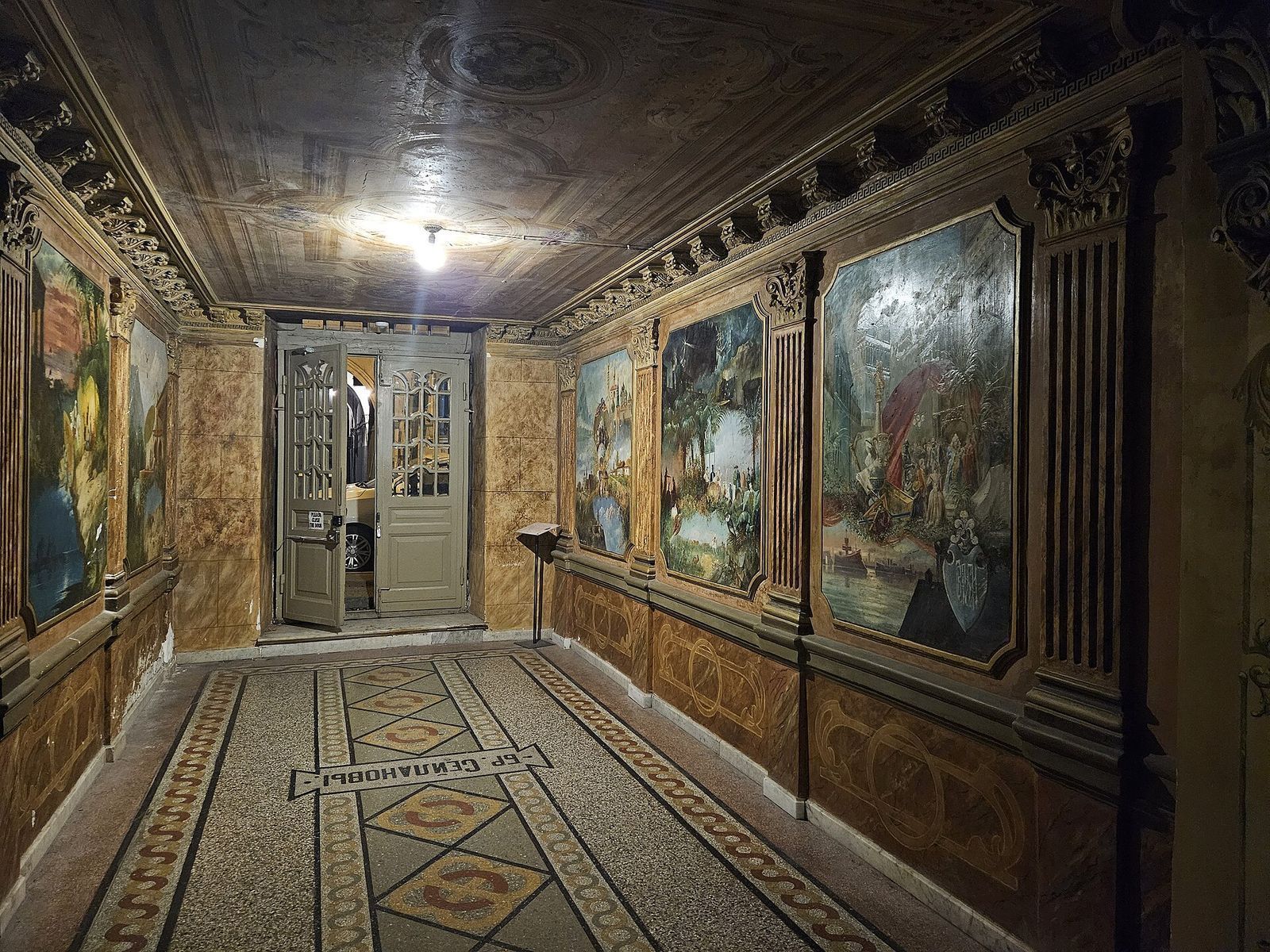
Most of the grand halls are in Sololaki, the merchant quarter on the slope below Mtatsminda, with more in Chughureti, Mtatsminda and Vera. The restored ones are the easiest place to start: Galaktion Tabidze Street 13 and 18, where the paintings at no. 18 date to 1911, and Ivane Machabeli Street 17, the Kalantarov house, whose entrance hall still looks like a fairy-tale palace from the East.
The rest tell a sadder story. When each house was split among 10 to 15 Soviet families, nobody owned the hallway, so nobody looked after it. Most halls were neglected for decades, and many are now damaged, with paint flaking off the ceilings and tiles missing from the floors. A few keep their original decoration almost intact, and finding one of those through an open door is my favorite thing to do in Sololaki.
How to see an entrance hall
These are apartment buildings, not museums. Front doors are often locked, and the usual way in is to wait for a resident to come out, smile, and point at the ceiling. Look from the bottom of the stairs rather than climbing them, keep your voice down, and keep it to a couple of minutes. Nobody owes you a look, and most residents are kind about it if you are quick and quiet.
If you'd rather not knock on doors, a guide solves the access problem. Small-group Art Nouveau walks start at Rustaveli metro, last about 3 hours with up to 5 people, cost 45 EUR a person, and cover the painted Sololaki hallways and the Academy mirror halls. A shorter 1.5-hour walk focused on Sololaki costs 25 EUR. Among the guided tours in Tbilisi, these are the ones I'd pick for architecture.
The mirror halls at the Tbilisi State Academy of Arts
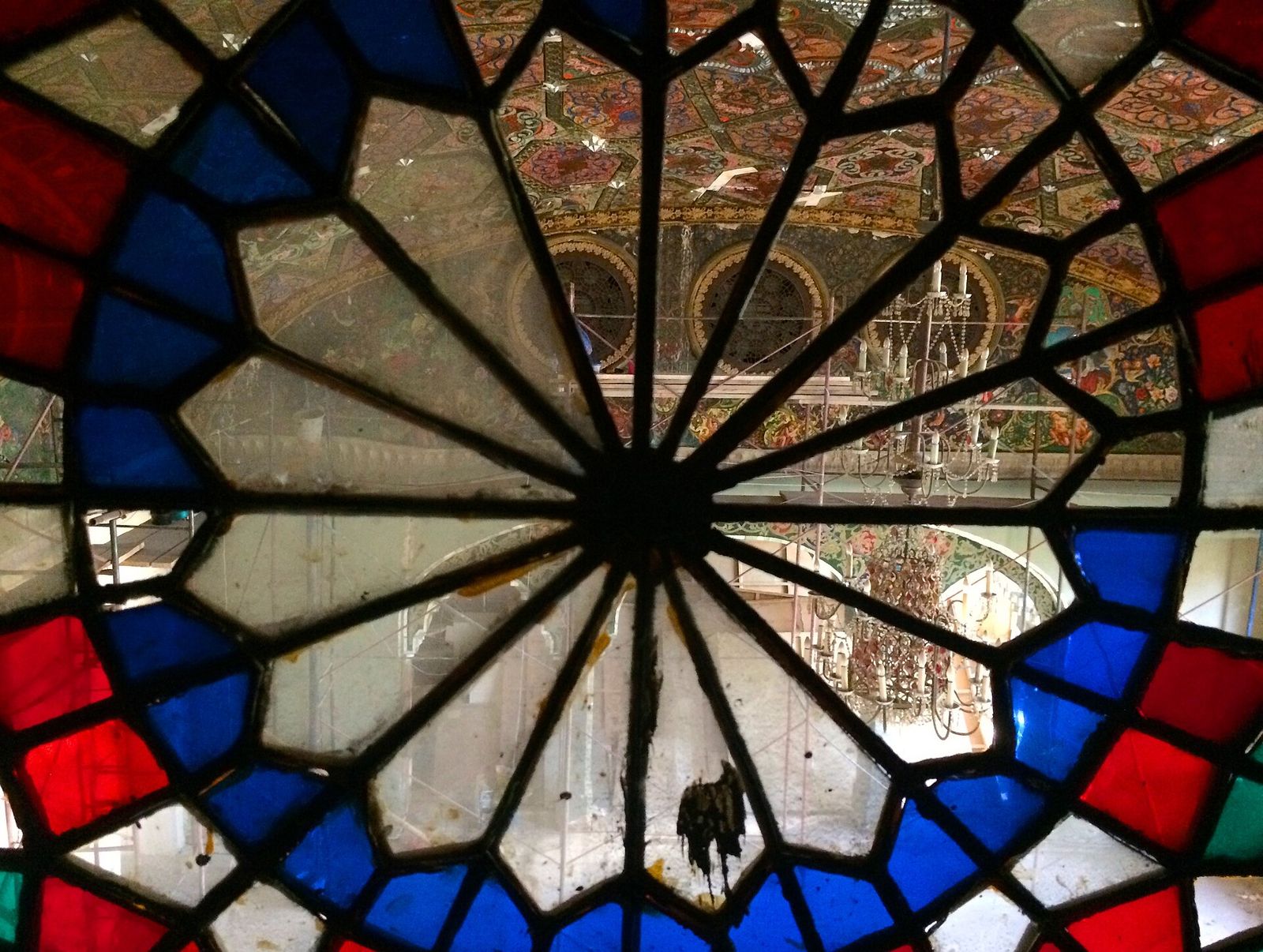
The mirror halls are the reason to step inside the Academy of Arts. The building started life as a private mansion, built between 1856 and 1860 for a wealthy merchant, and its main rooms were decorated by Qajar artists invited from Iran. Walls and ceilings are covered in mirror mosaic, thousands of small cut pieces set in patterns that look like the inside of a Persian palace. Mirrored rooms were a fashion in rich Tbilisi homes in the mid-19th century, and this is the best set you can walk into today.
Getting there is part of the fun. Just off Rustaveli Avenue, near the Zara store, a staircase decorated with about 2,000 painted tiles climbs up toward the Academy. It's easy to walk past, so watch for the flash of color on the steps.
Set your expectations before you go. The Academy is a working art school with a museum inside, and there's very little art on display; you're paying for the rooms. Parts of the building close without notice, and the whole place shuts to visitors during exam and holiday seasons.
Soviet buildings in Tbilisi
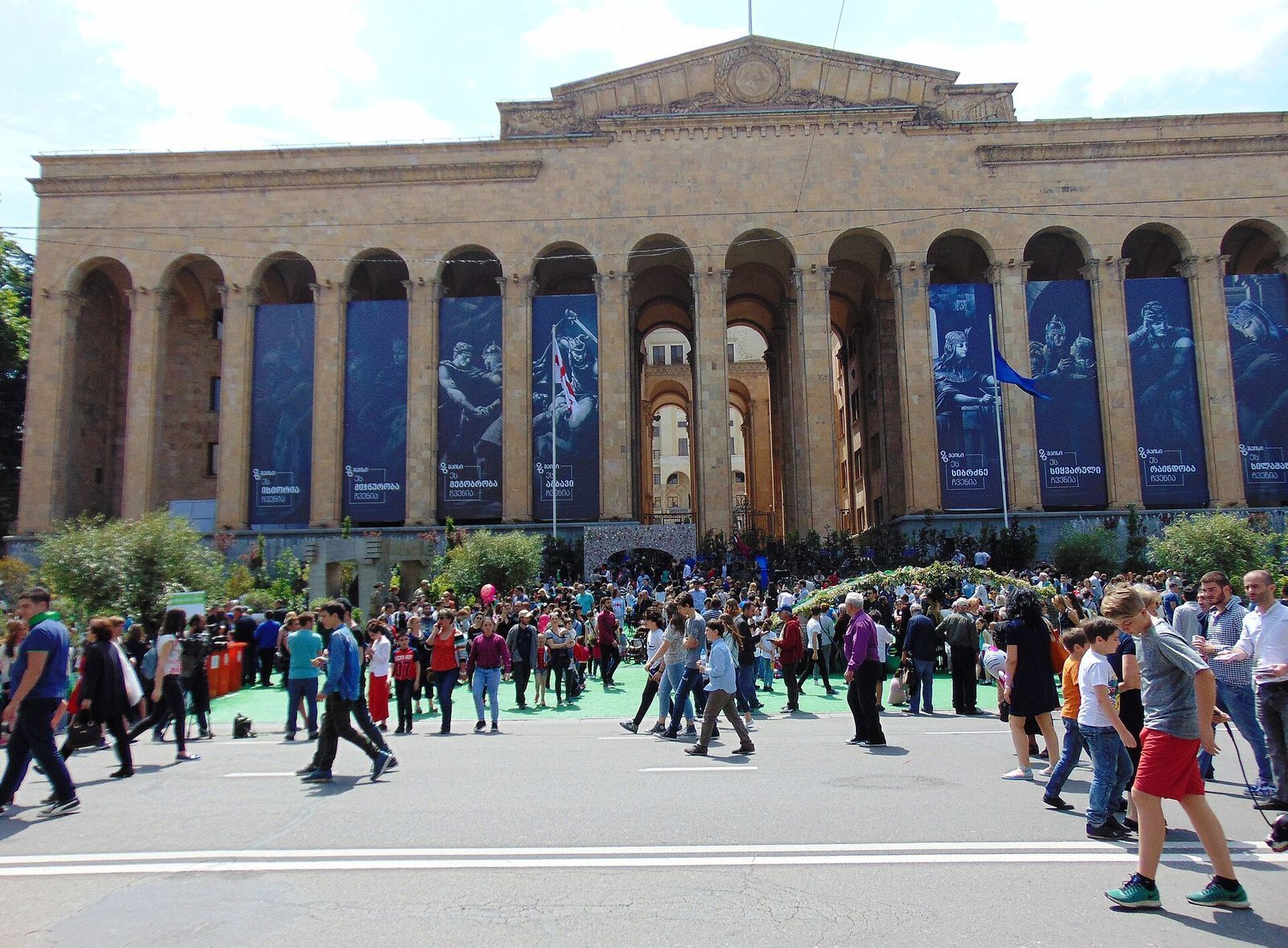
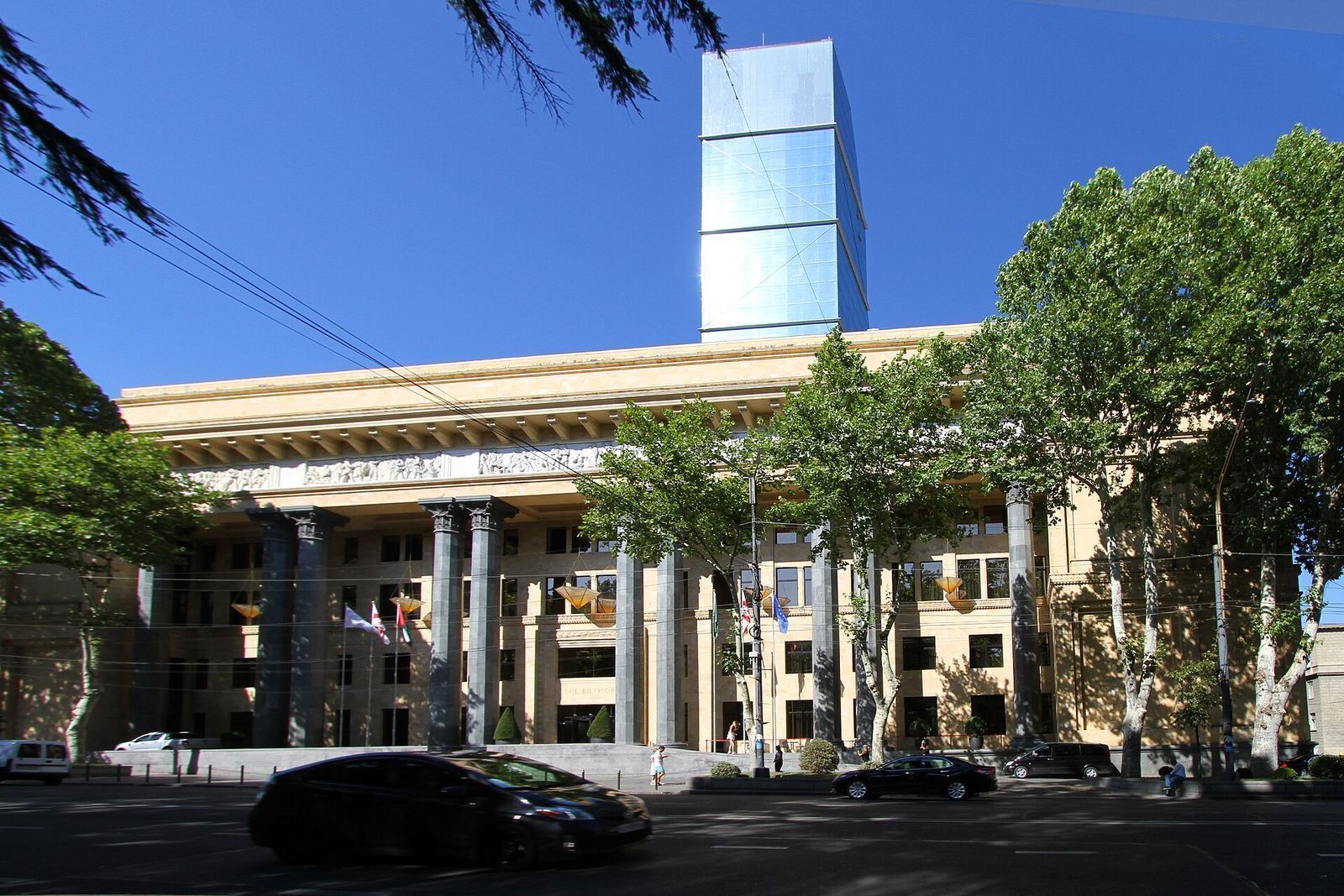
The 20th century added its own layer. On Rustaveli Avenue, the Parliament (built 1933 to 1953) and the former Marx-Engels-Lenin Institute, now the Biltmore Hotel (1934 to 1938), are Stalinist set pieces with columns and arcades, a short walk from the Art Nouveau mansions. The concrete blocks of Tbilisi's Soviet architecture, from the Bank of Georgia headquarters to the Nutsubidze Skybridge in Saburtalo, sit too far from the old center to fold into a walk with the balconies, so I'd give them a separate day.
A self-guided architecture walk
My route starts at the clock tower in Kala and finishes on Rustaveli Avenue, so the wooden balconies come first and the Art Nouveau last. It takes half a day at an easy pace with the Academy, and it overlaps the first stretch of an Old Tbilisi walking tour if you've done that already.
| Stop | Area | What you see there |
|---|---|---|
| 1. Ioane Shavteli Street | Kala | Restored carved balconies by the leaning clock tower |
| 2. Samghebro Street | Abanotubani | Balcony-and-glass houses, including no. 6 |
| 3. Abano Street | Abanotubani | The balconies at nos. 23 and 27, between the bath domes |
| 4. Botanikuri Street | Abanotubani | Pastel balconies on the lane up past the Jumah Mosque, then back down |
| 5. Gudiashvili Square | Kala and Sololaki | Wooden and colored-glass balconies on one square |
| 6. Galaktion Tabidze Street | Sololaki | Restored painted entrance halls at nos. 13 and 18 |
| 7. Ivane Machabeli Street | Sololaki | The Writers' House at no. 13, the Kalantarov House at no. 17 |
| 8. Giorgi Leonidze Street | Near Freedom Square | The former Mutual Credit Society |
| 9. Rustaveli Avenue | Freedom Square to Rustaveli metro | The Academy mirror halls, the Opera House, Melik-Azaryants House |
The streets between stops 5 and 8 are where I slow down. Sololaki's best details are small: a mascaron over a door, an iron gate shaped like a vine, a hall glimpsed through a half-open door. Walk the side streets as well as the ones on the list, and look into every open archway you pass.
Tips for seeing Tbilisi architecture
- Go early. The balconies have the best light in the morning, the lanes are empty, and in July and August the Old Town streets turn hot by midday.
- Wear proper shoes. Sololaki and Abanotubani are steep, with uneven paving, narrow pavements and plenty of stairs.
- Don't lean on old balconies or railings. Many of these buildings need urgent repair, and a 19th-century gallery is not built for a group photo.
- Avoid Mondays for the Academy. The mirror halls are closed, so put the balcony streets on Monday and the interiors on another day.
- Carry some lari. The Academy charges 12 GEL at the cashier, and the Writers' House museum has its own ticket.
- Shoot from across the street or across the river. A long view shows the whole balcony and the house under it; standing right below shows you only the floorboards.
Key takeaways
- Tbilisi's look comes from rebuilding after 1795 and the merchant money of Russian rule, which gave it wooden balconies below and European facades above.
- The best carved balconies are on Abano, Samghebro and Botanikuri streets, Ioane Shavteli Street and Gudiashvili Square.
- Sololaki's painted entrance halls are in private homes; start with Galaktion Tabidze 13 and 18 and Ivane Machabeli 17, and go quietly or with a guide.
- The Academy of Arts mirror halls cost 12 GEL, are closed on Mondays, and close without notice during exams and holidays.
- One half-day walk from the clock tower to Rustaveli Avenue covers all of it.
Frequently asked questions
What style is Tbilisi architecture?
Tbilisi has no single style; it is a mix. The Old Town is 19th-century brick and wood with carved balconies, Sololaki and Rustaveli Avenue add European, Moorish revival and Art Nouveau buildings from about 1890 to 1918, and the Soviets added Stalinist and concrete modernist work after that.
Why do Tbilisi houses have wooden balconies?
For shade, air and space to live in a hot city. Families cooled off, socialized and slept on their balconies on summer nights, and the carved latticework reflects the city's Persian and Ottoman neighbors. Glassed-in versions, called shushabandi, work as sunrooms.
Where are the best balconies in Tbilisi?
In Abanotubani and Kala. Abano Street (nos. 23 and 27), Samghebro Street, Botanikuri Street, Ioane Shavteli Street and Gudiashvili Square have the best concentration, and the back lanes of Avlabari across the river have the unrestored ones.
Can you go inside the Sololaki entrance halls?
Sometimes. They are in private apartment buildings, so you can look in when a door is open or a resident lets you in, and you should keep it short and quiet. A small-group Art Nouveau walk is the reliable way to see several in one go.
Where are the mirror halls in Tbilisi?
At the Tbilisi State Academy of Arts, just off Rustaveli Avenue. The halls were decorated by Qajar artists from Iran in a mansion built between 1856 and 1860, and you reach the Academy up a staircase covered in about 2,000 painted tiles near the Zara store.
How much does it cost to see the Academy of Arts mirror halls?
Entry is 12 GEL, paid at the cashier. The museum is open Tuesday to Sunday, closed on Mondays and during some events, and the building closes to visitors during exam and holiday seasons.
What is an Italian courtyard in Tbilisi?
It is a shared yard behind a 19th or early 20th-century house, ringed by wooden galleries and stairs. The name comes from Soviet-era audiences who saw their own crowded yards in Italian neorealist films, not from the architecture.
Is there an architecture tour in Tbilisi?
Yes. Small-group Art Nouveau walks start at Rustaveli metro, run about 3 hours for 45 EUR a person, and include painted Sololaki hallways and the Academy mirror halls; a 1.5-hour Sololaki walk costs 25 EUR.
Georgian Culture and Traditions: A Visitor's Guide to Customs, Feasts, Faith and Song
Georgian culture is known for feasts, wine and song. Here's what visitors should know about its customs and traditions.
Read the guide
Basic Georgian Phrases for Travelers, with Pronunciation
Georgian has its own alphabet and a hello that means victory. Here are the phrases to learn and how to say them.
Read the guide
A Short History of Georgia and Tbilisi, From the Falcon Legend to Today
Tbilisi has been burned and rebuilt for 1,500 years. Here is Georgia's story in short, and where to see it today.
Read the guide