Tbilisi Botanical Garden: Waterfall, Entry Fee and Routes
Tbilisi's National Botanical Garden fills the gorge behind Narikala Fortress, a few minutes' walk from the sulfur baths, and most people come for its waterfall. A ticket is 4 GEL, the shade makes it the coolest place in the Old Town on a July afternoon, and it's my favorite way down from the ridge. Here's what you need to know about the entry fee, the entrances, the waterfall and the best route through.
Botanical Garden entry fee and opening hours
The garden is one of the cheapest good afternoons in Tbilisi. You pay at the gate, and the same ticket covers the whole garden, including the waterfall, the bridges and the gardens on the slopes.
| Ticket | Price |
|---|---|
| Adult | 4 GEL |
| Student | 1 GEL |
| Schoolchild | 0.5 GEL |
| Family ticket | 6 GEL |
| Children under 6 | Free |
At 4 GEL it's not quite one of the free things to do in Tbilisi, but it's the closest thing to it with a waterfall attached. The opening hours change with the season, and the closing time is the one that catches people out:
| Season | Opening hours |
|---|---|
| 1 October to 1 March | 09:00 to 17:30 |
| 1 March to 1 April | 09:00 to 18:00 |
| 1 April to 1 September | 09:00 to 20:00 |
| 1 September to 1 October | 09:00 to 19:00 |
The garden is open daily, Mondays included, which makes it a good plan for the day the museums are shut.
How to get to the Botanical Garden
The garden sits in the Tsavkisis-Tskali gorge on the far side of the Narikala ridge, right on the edge of Old Tbilisi. It has three ways in, and the one you pick decides if the walk runs uphill or down.
| Entrance | Where it is | Best for |
|---|---|---|
| Lower (main) gate | Botanikuri Street, above Abanotubani | Arriving on foot from the baths; ticket office, map board, restrooms and a small cafe |
| Upper gate | Beside Narikala Fortress, on the ridge | Arriving by cable car and walking downhill |
| Leghvtakhevi side | The gorge behind the bathhouses | A shortcut from the baths, but not always open |
Walking to the lower gate
From Meidan Square, walk into Abanotubani past the brick domes of the baths, turn up Botanikuri Street past the minaret of the Jumah Mosque, and keep climbing to the gate at the end of the road. It takes about 15 minutes and it's uphill the whole way, though never steep.
Coming in from Narikala
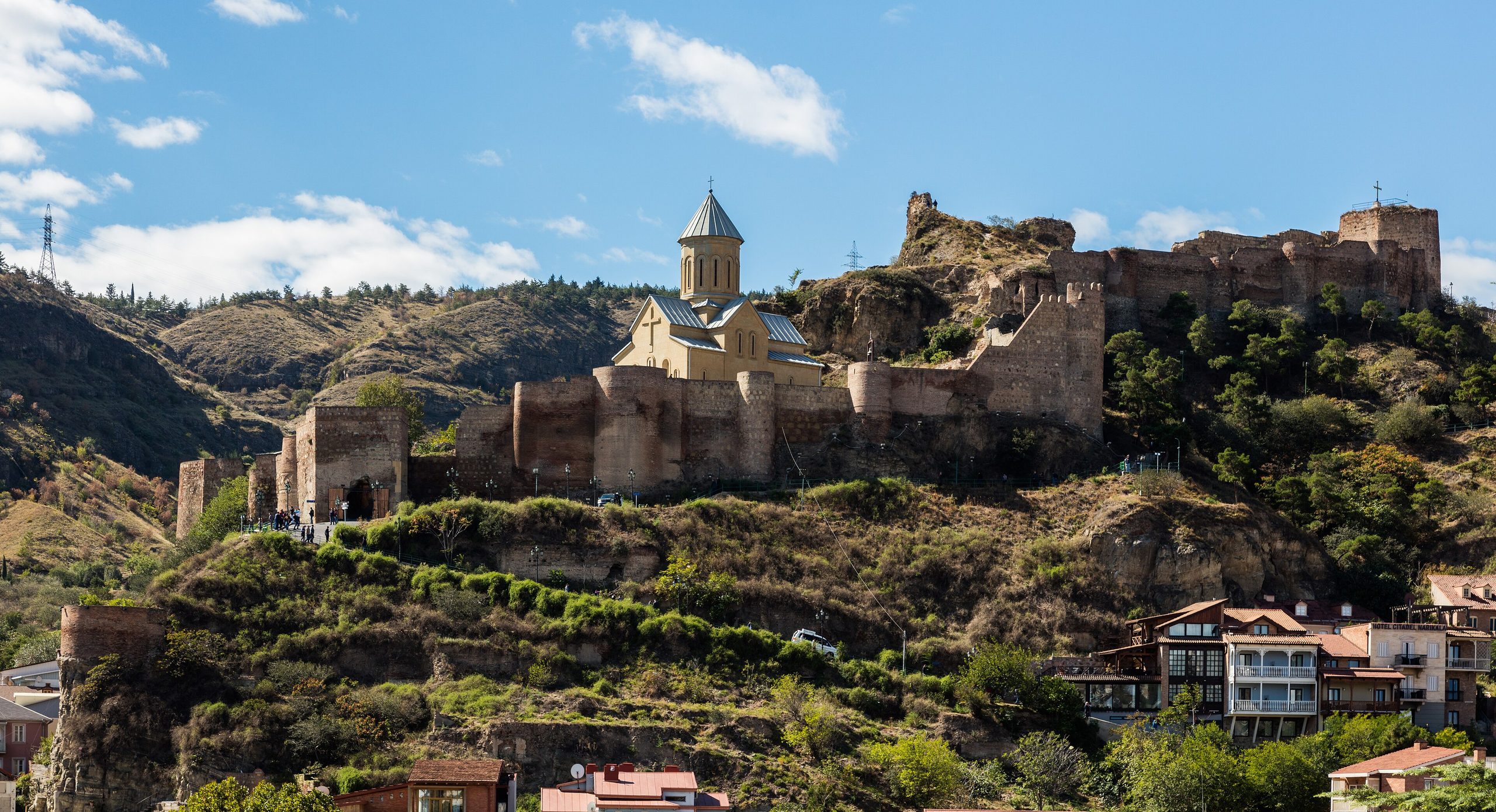
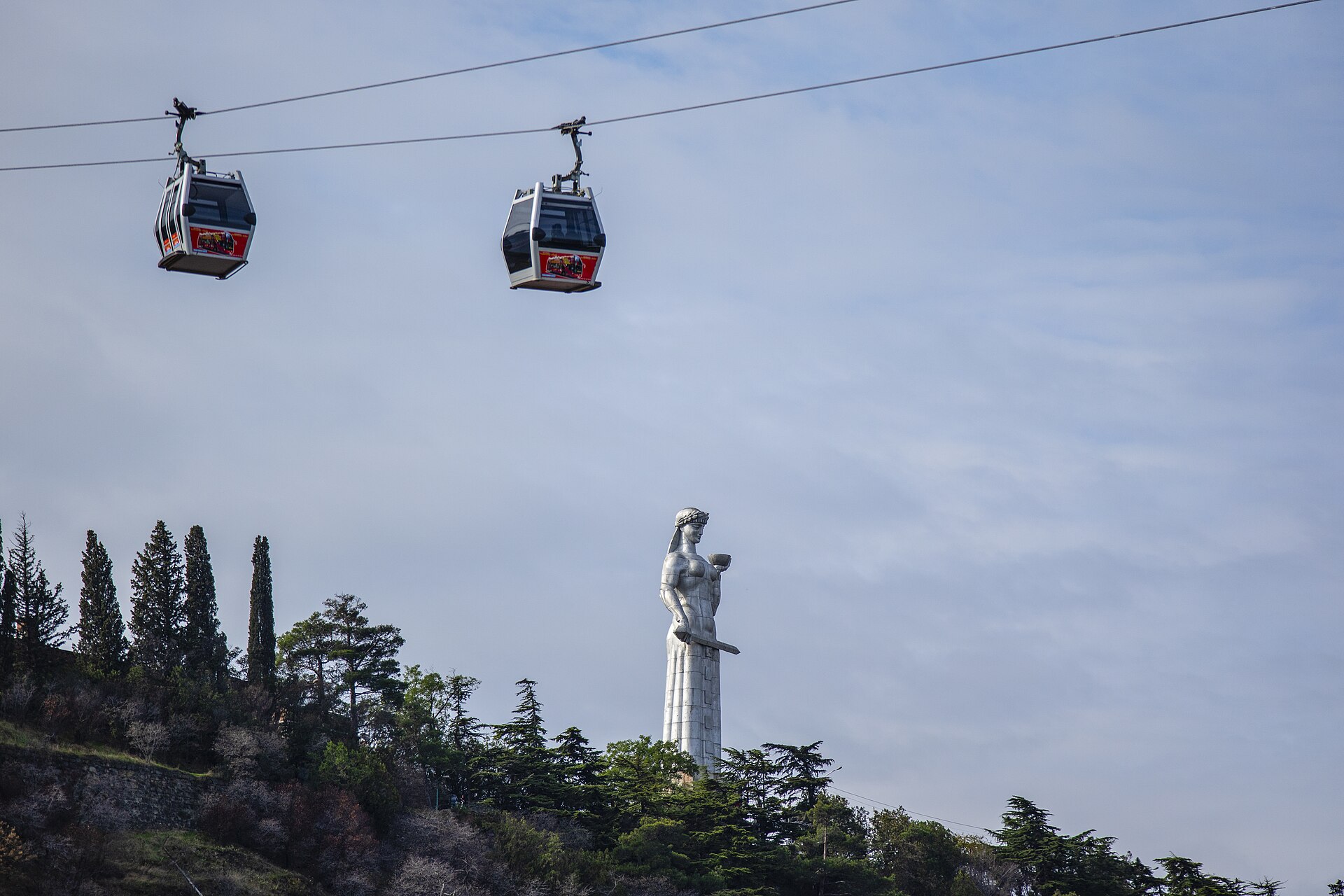
Ride the Rike Park cable car up to the ridge for 2.50 GEL on a Metromoney card, follow the "Botanical Garden" signs past the fortress walls and take the stairs down to the upper gate. Of all the cable cars in Tbilisi, this is the one that turns the garden into a downhill walk.
By taxi or metro
A taxi from the center to the lower gate costs about 5 to 7 GEL, and a Bolt taxi drops you right at the entrance. Avlabari is the nearest station on the Tbilisi metro, but the walk from there is 40 to 45 minutes, so I'd only use it if you're going to Rike Park for the cable car anyway.
The Botanical Garden waterfall
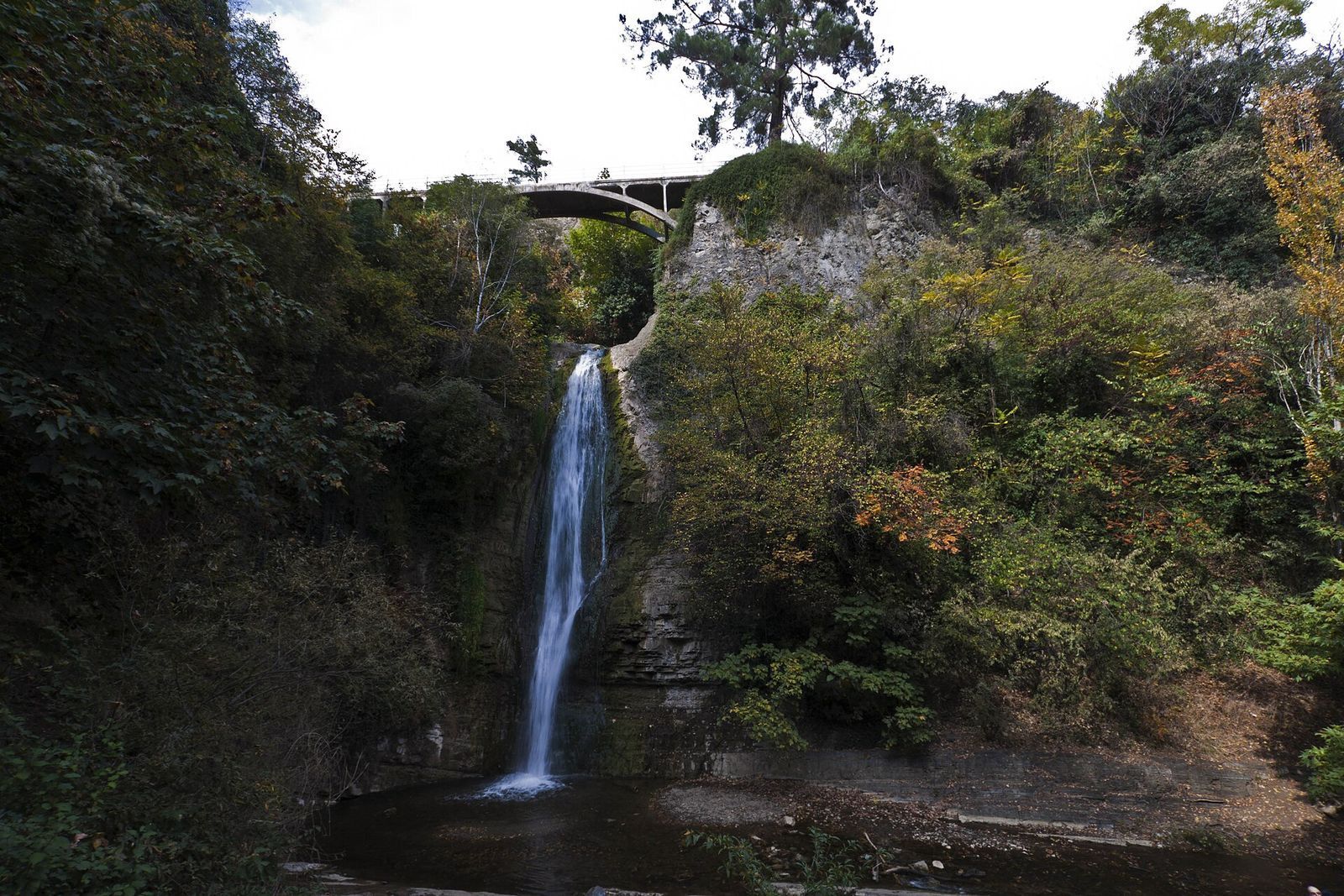
The waterfall is the reason most people come, and it deserves it. The Tsavkisis-Tskali stream drops about 22 m over a cliff into a rocky pool, with a high arched footbridge crossing the gorge above it. It runs all year, it's at its strongest in spring after the snowmelt, and it's still flowing in the dry heat of August, when the spray is the coolest thing in the city.
How to find the waterfall
From the lower gate, the waterfall is a short walk up the gorge: follow the path along the stream, and there's a viewpoint just to the left of the main entrance where you can see down into the gorge first. From Narikala and the upper gate, it's about 20 minutes downhill on stepped paths, and you cross the high bridge on the way, so you see the falls from above before you reach the pool.
The pool at the bottom is where everyone takes the photo, and it gets busy at weekends from late morning. The bridge gives the better picture to my eye, with the whole drop of the water under you and the gorge walls on either side.
Two waterfalls, one stream
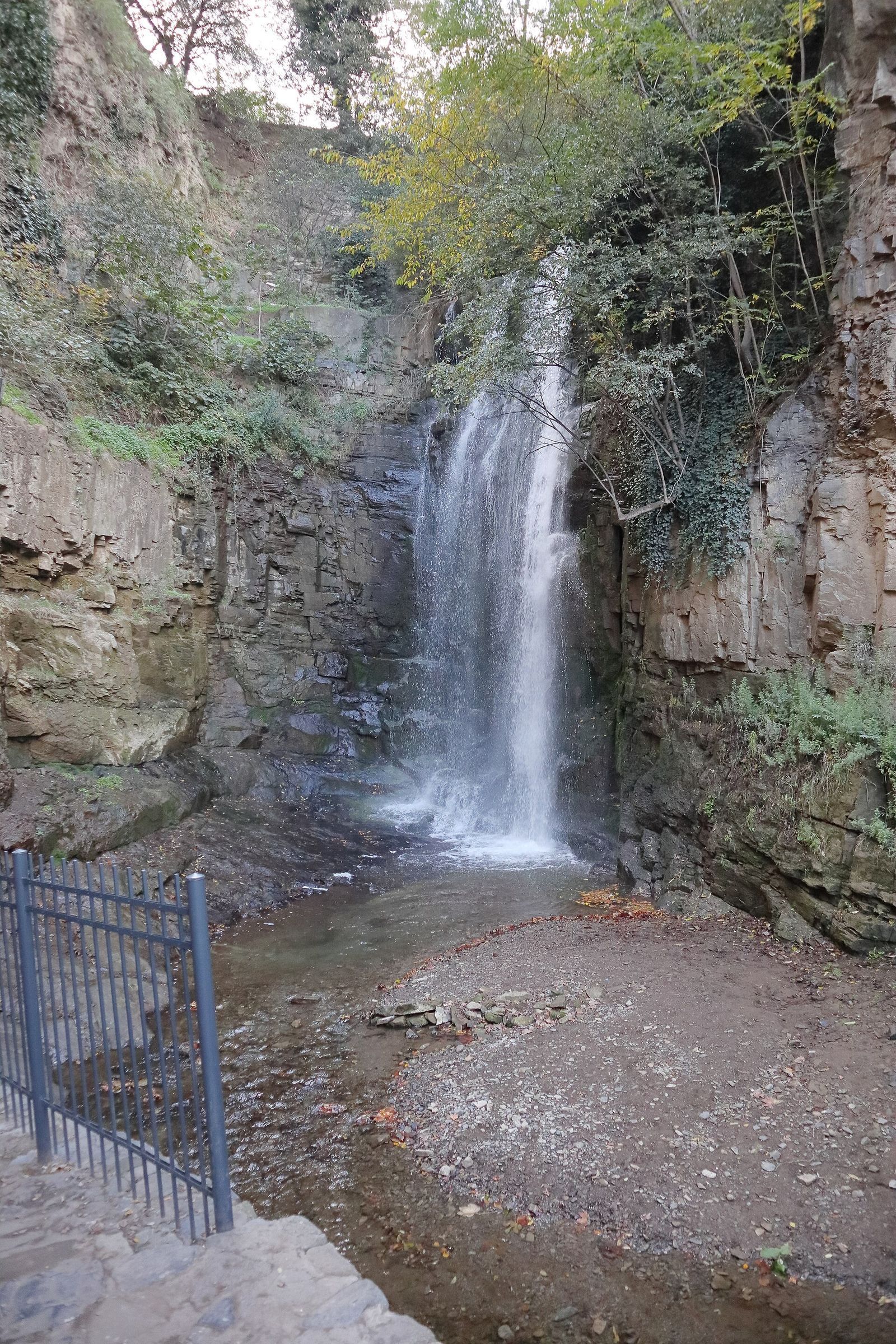
Tbilisi has a second waterfall that often gets mixed up with this one. The same stream leaves the garden, runs down through the Leghvtakhevi gorge behind the sulfur baths and drops over a smaller fall right at the edge of Abanotubani. Both are good; they're different trips.
| Botanical Garden waterfall | Leghvtakhevi waterfall | |
|---|---|---|
| Where | Inside the garden, in the Tsavkisis-Tskali gorge | Behind the bathhouses in Abanotubani |
| Height | About 22 m | Much smaller |
| Cost | 4 GEL garden ticket | Free |
| Hours | Garden hours only | Always open |
| Walk from Meidan Square | About 15 minutes to the gate, then up the gorge | About 10 minutes along the gorge walkway |
If you're short on time and already at the sulfur baths, the Leghvtakhevi fall is a 10-minute detour. If you want the real waterfall, the gorge, the bridges and an hour in the shade, pay the 4 GEL.
What to see in the Botanical Garden
The garden covers 128 hectares, though only part of that is planted and open to visitors, and the rest is wild slope and forest. It holds more than 3,500 plant species, from Caucasus natives to palms and cacti. Here's what I'd make time for.
The main alley and the flower beds
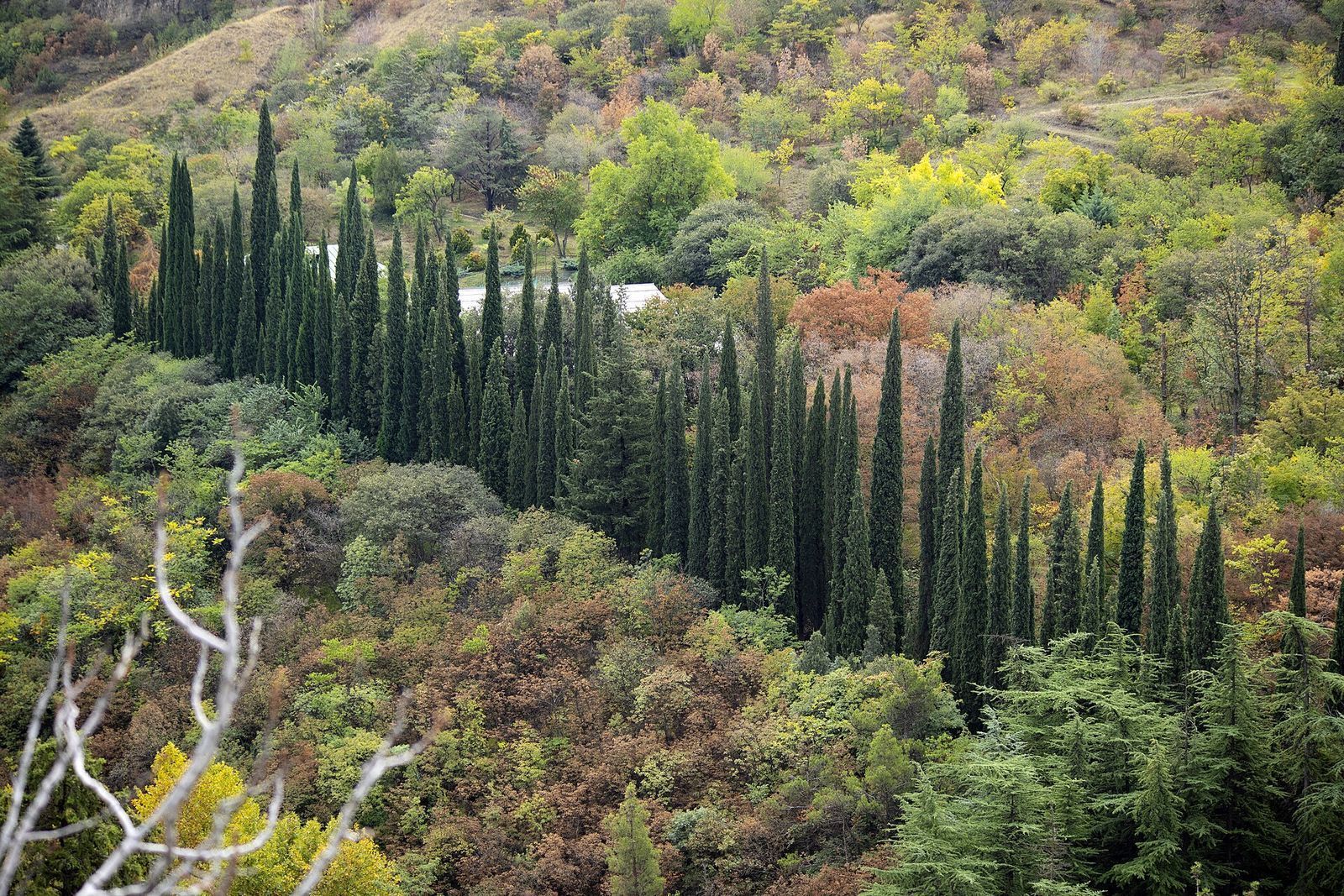
The lower part of the garden is the tidy part: a wide paved alley under old trees, lined with cypresses and flower beds. It's flat, it's shaded, and it's where you'll see local families walking with prams on a Sunday.
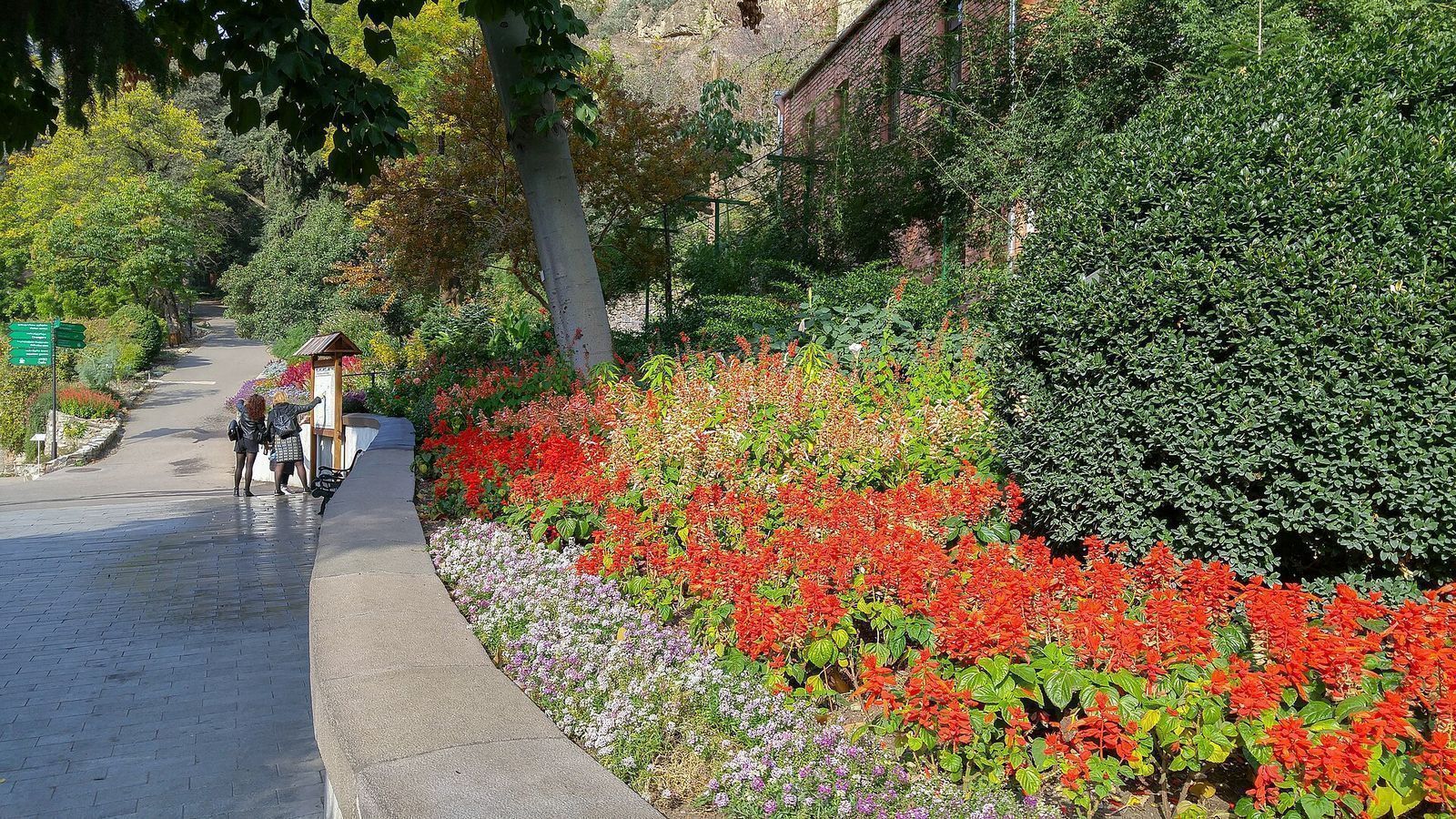
The rose garden and the Japanese garden
The rose garden has more than 100 varieties and is at its best in May, when it's the most colorful corner of the garden.
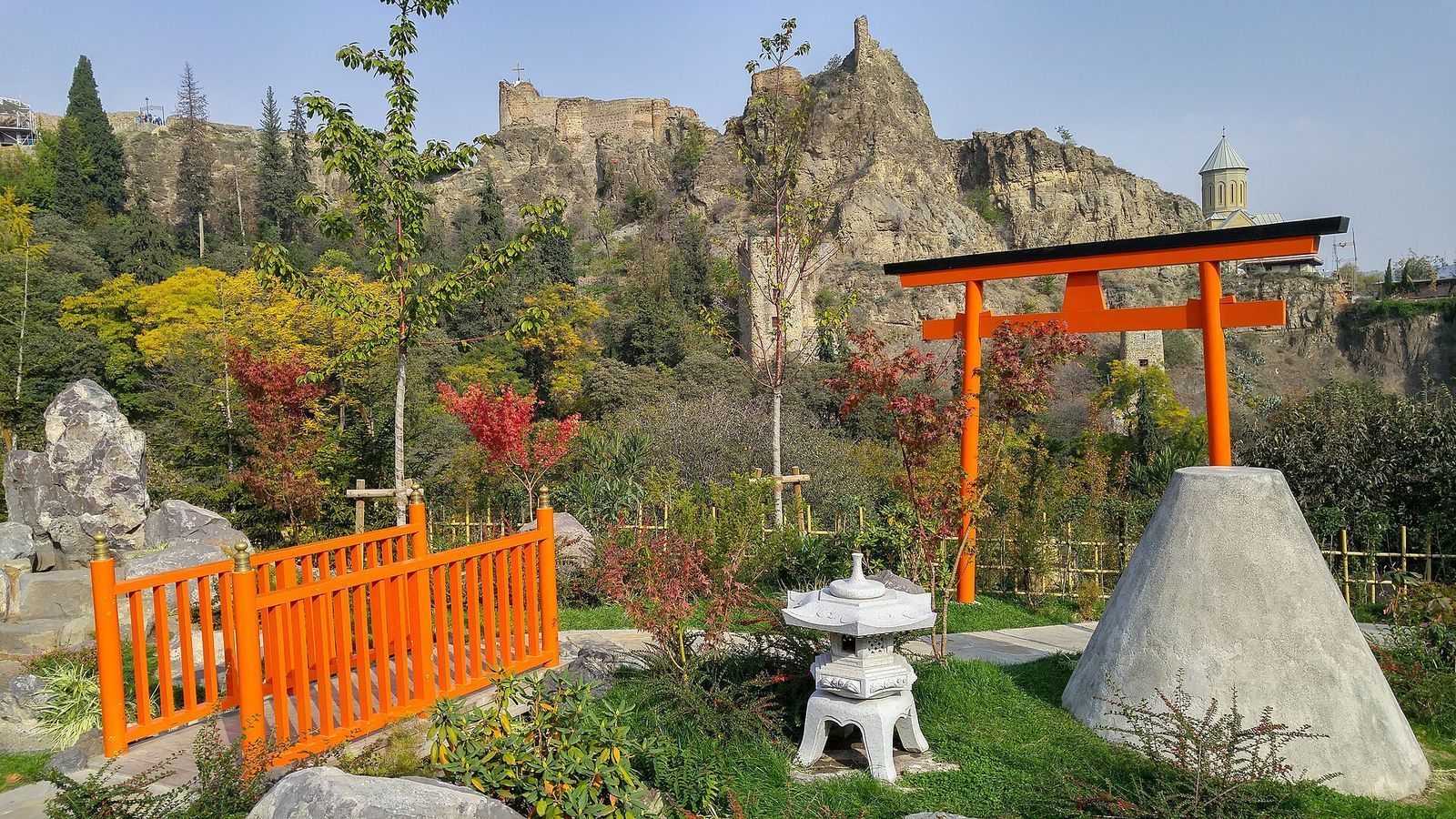
The Japanese garden sits nearby, smaller and quieter, and it's my pick for a 10-minute sit-down in the middle of the walk.
The bamboo grove and the bridges
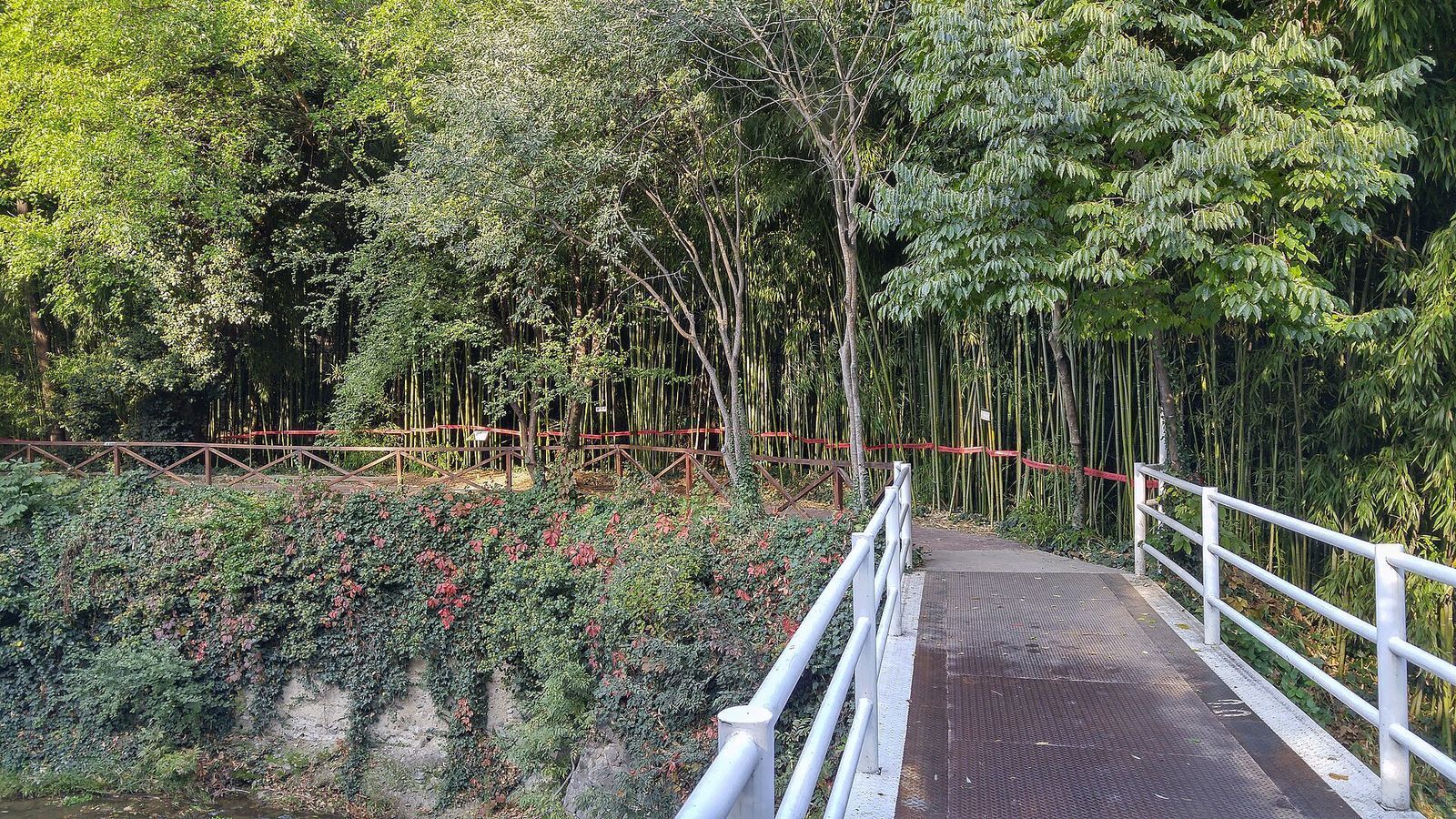
Further into the gorge, a grove of bamboo grows 8 to 10 m tall beside the stream, crossed by white-railed footbridges. It's the most photographed spot after the waterfall, and on a hot day it's noticeably cooler than the paths above it.
The greenhouses under the fortress walls
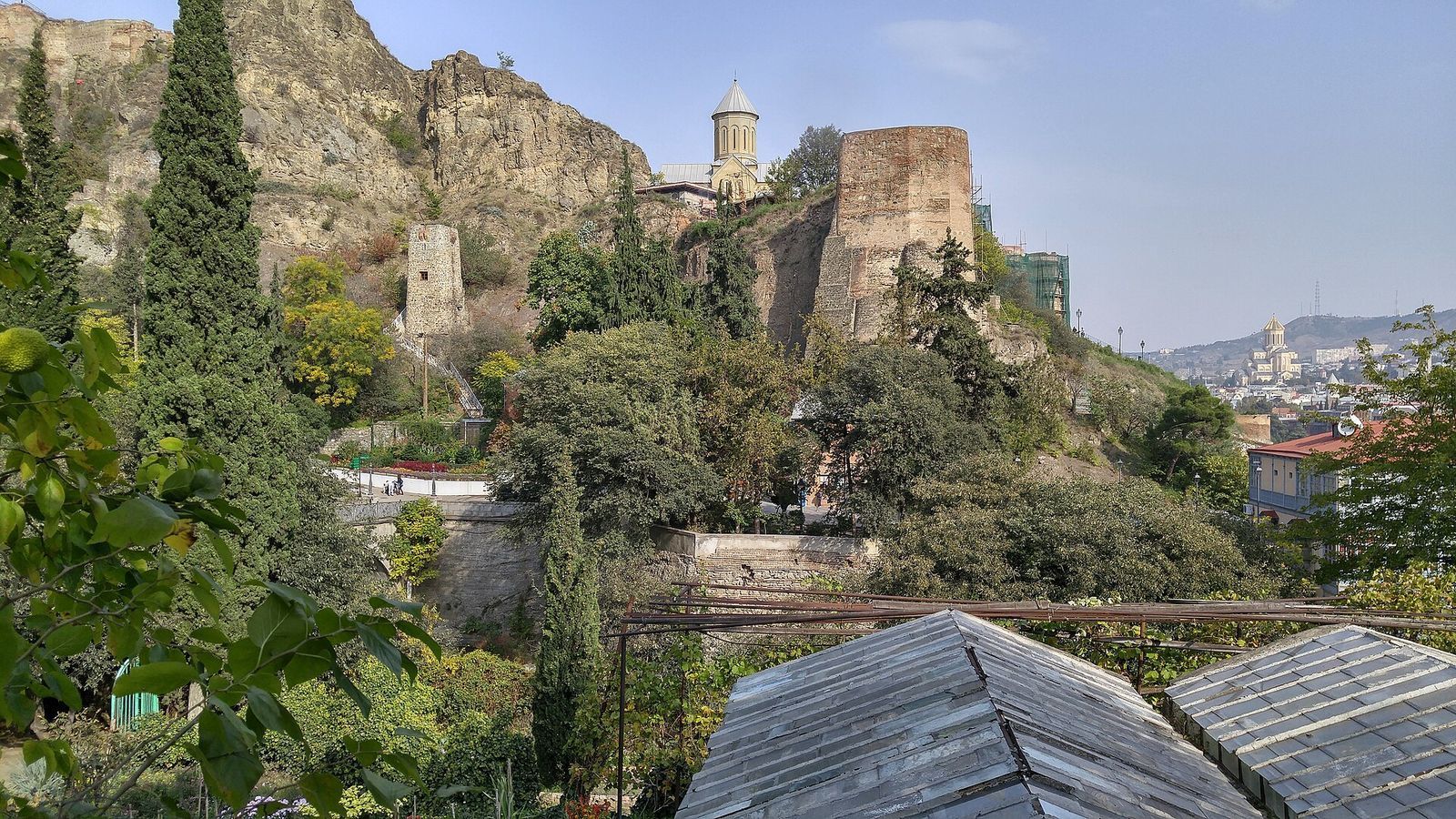
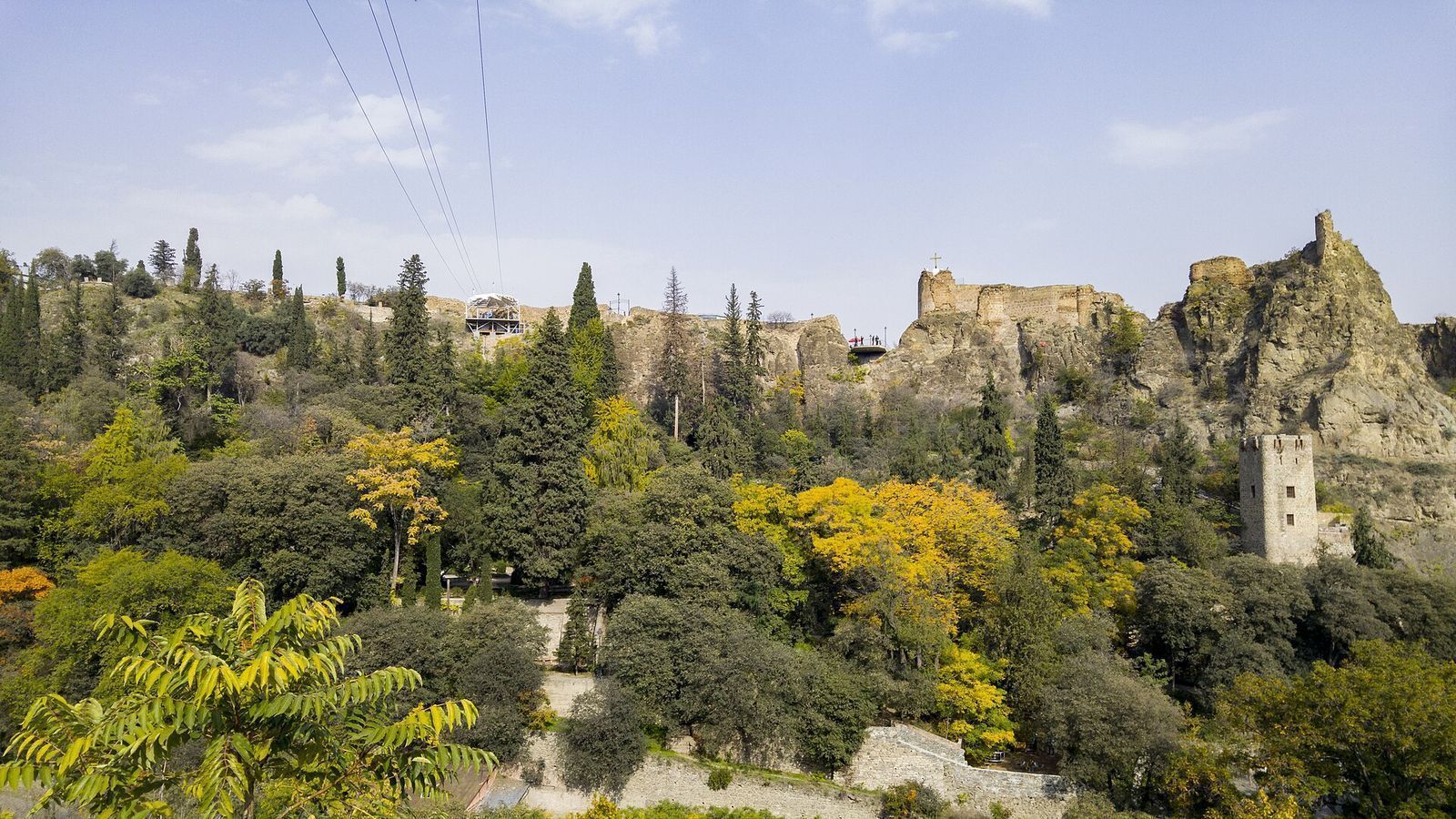
In the upper garden, the greenhouses sit right under the walls and towers of Narikala, with St Nicholas Church on the ridge above. This is where the garden and the fortress feel like one place: the old defense towers run down into the garden itself. The subtropical greenhouse holds the plants that would never survive a Tbilisi winter outdoors.
The plant collections
Most visitors come for the scenery, but the collections are why the garden exists. These are the ones you'll walk past without trying:
| Collection | What you'll see |
|---|---|
| Conifers | Firs, spruces, cedars and pines, with cypresses along the main paths |
| Caucasus flora | Yew, rhododendrons, hornbeams and fig trees from the Georgian hills |
| Exotics | Palms, cacti and the bamboo grove |
| Apothecary garden | Medicinal herbs grown in labeled beds |
| Lotus pond | Lotuses in flower in July and August, with shaded benches beside it |
A short history of the garden
Long before it was a botanical garden, this gorge was a royal garden. Georgian kings kept gardens here from the 17th century, watered by the same stream that feeds the waterfall. In 1845 the gardens were turned into a botanical garden and a center for plant research, and they've been one ever since; today it's the National Botanical Garden of Georgia.
That long history is why the garden feels older and wilder than a city park. The paths follow the gorge rather than a plan, and the trees are huge.
Routes through the garden: 1 hour, 2 hours or half a day
The garden is big and steep enough that it pays to know what you're doing before you walk in. These are the three routes I'd use, depending on time and legs.
| Route | Time | What it covers | Effort |
|---|---|---|---|
| Quick | 50 to 60 minutes | Lower gate, the main alley and the waterfall pool, then back out | Flat, easy |
| Highlights | About 2 hours | Upper gate from Narikala, the upper viewpoint, the Japanese garden, the rose garden, the waterfall, out at the lower gate | About 150 m of descent on steps |
| Full | 3 to 4 hours | The highlights plus the eastern forest, the subtropical greenhouse, the bamboo grove and the gorge trail | Steady walking with steps and climbs |
The highlights route is the one I'd give a first-time visitor. It's all downhill, it saves the waterfall for the second half, and it leaves you at the bottom of the gorge a few minutes from a cold drink in Abanotubani.
Narikala, the garden and the baths in one afternoon
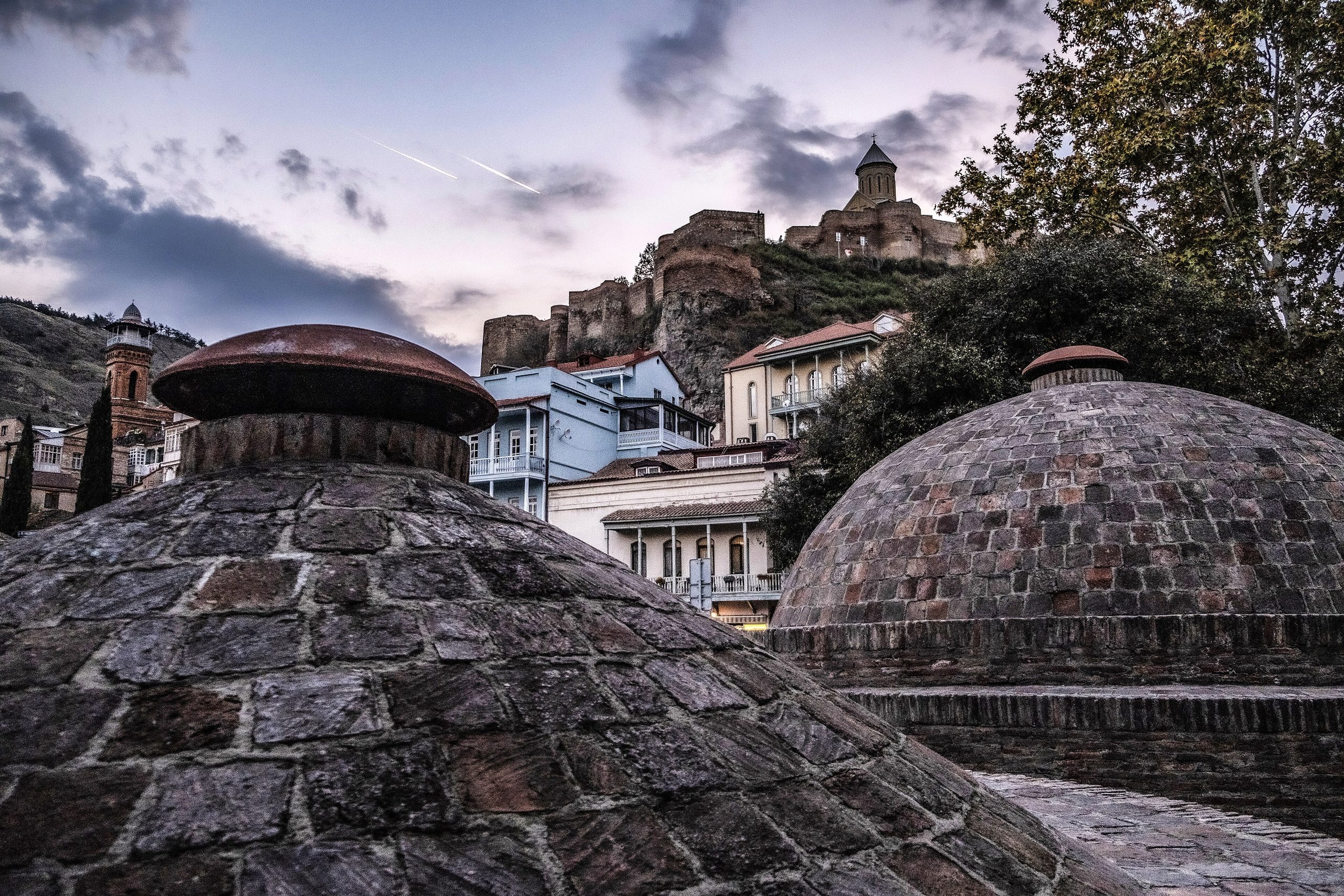
The garden is at its best as part of a loop with the fortress above it and the baths below it. This is the half day I'd plan, about 4 hours with the bath:
| Stop | What you do there | Time |
|---|---|---|
| Rike Park cable car | The ride over the river to the ridge | A few minutes |
| Narikala and the terraces | The view over the Old Town, St Nicholas Church | 45 minutes |
| Mother of Georgia | A short walk along the ridge and back | 20 minutes |
| Upper gate to the waterfall | Downhill through the gardens and over the high bridge | 1.5 to 2 hours |
| Lower gate to Abanotubani | Down Botanikuri Street past the Jumah Mosque | 10 minutes |
| Sulfur bath | A private room to finish | 1 hour |
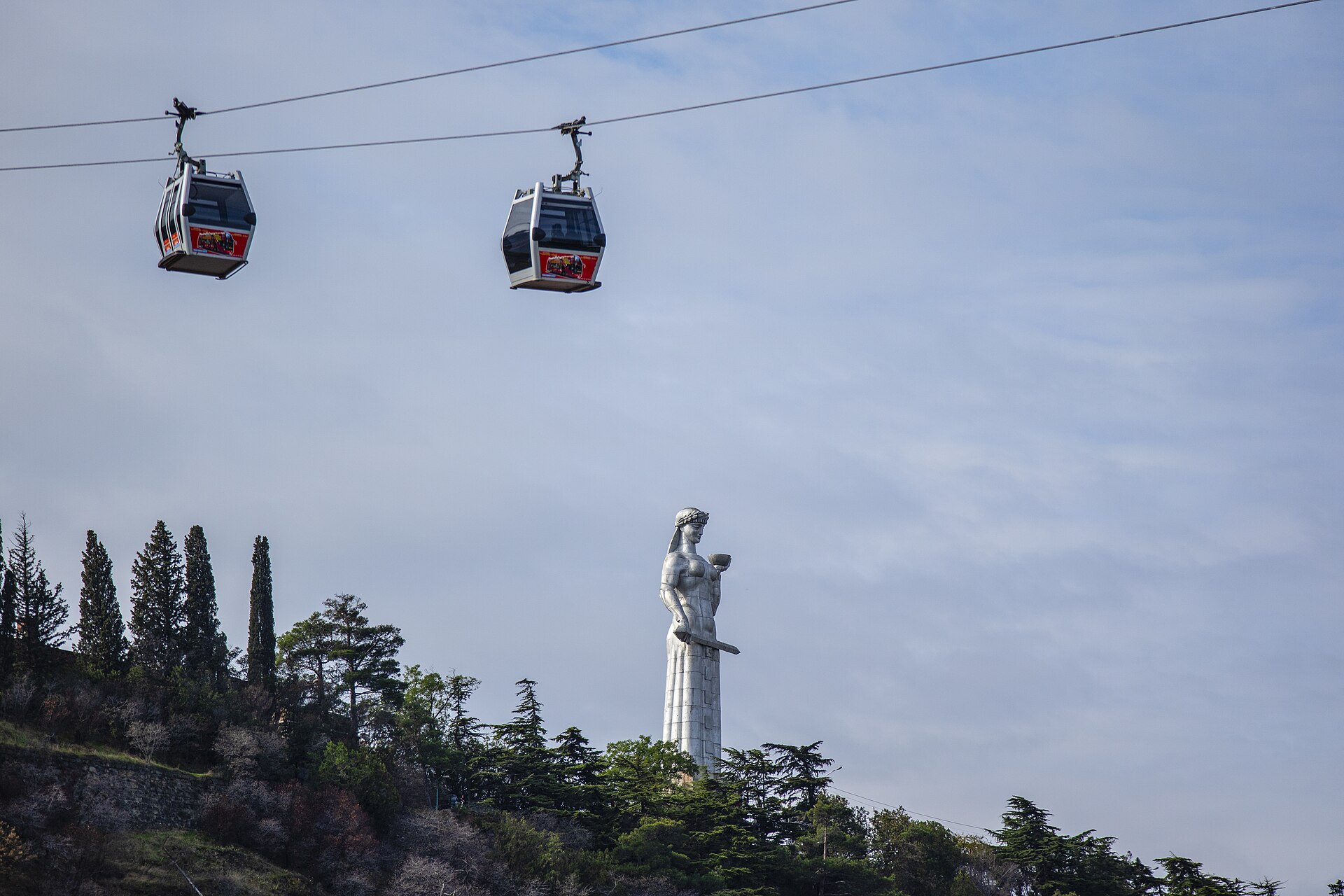
The detour to the Mother of Georgia statue is optional, but it's only 5 minutes from the cable car and you'll be walking past the start of it anyway.
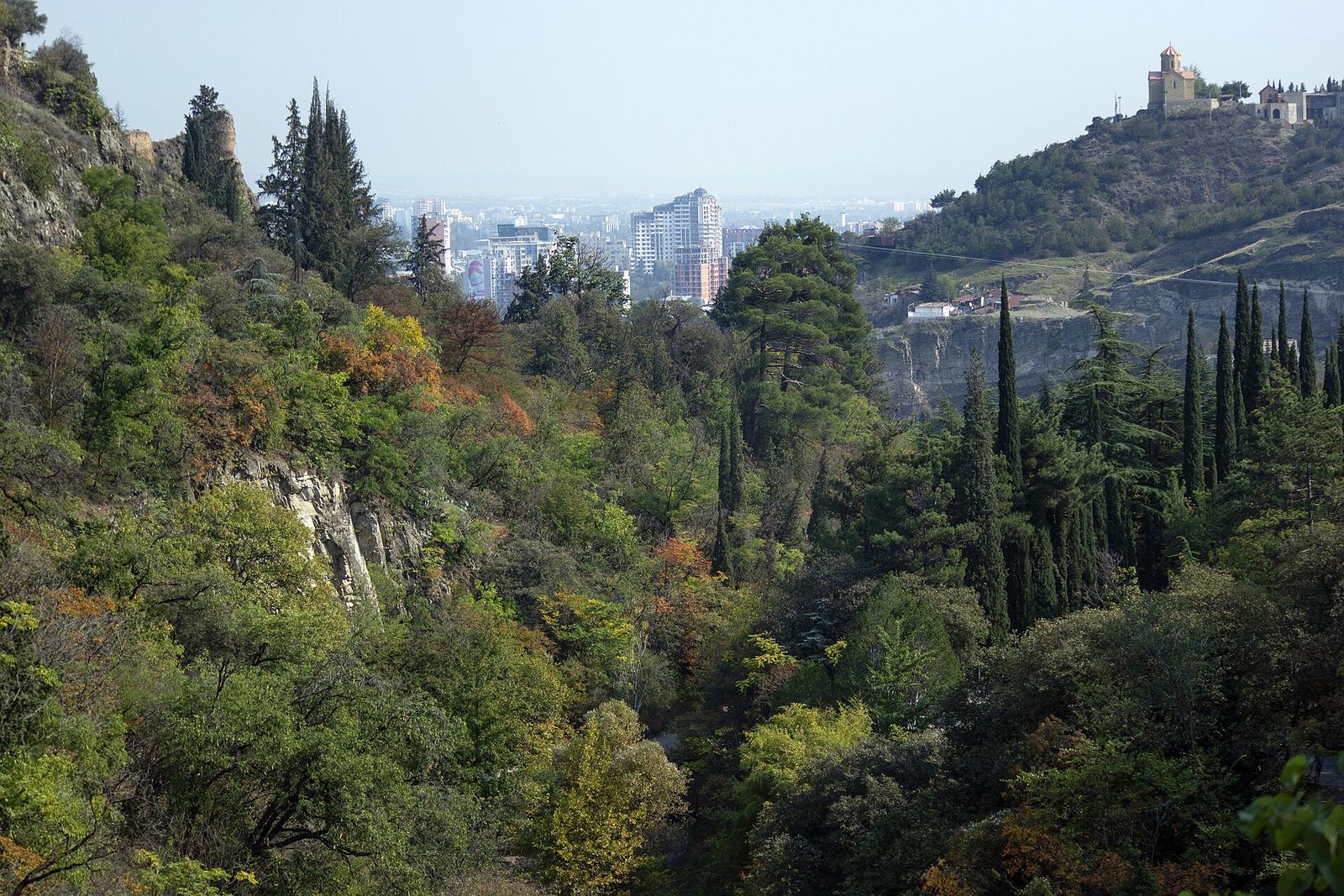
The upper slopes are one of the quieter Tbilisi viewpoints: the green gorge in front, the Old Town roofs below and the modern city beyond, and you'll often have it to yourself.
Best time to visit the Botanical Garden
Spring is the garden's season. From April the trees leaf out and the beds fill, May brings the roses and the strongest waterfall of the year, and the paths are comfortable to walk at any hour. If you're in Tbilisi in spring, it's the first green place I'd send you.
| Months | What's on | My verdict |
|---|---|---|
| April and May | Blossom, the rose garden in May, the waterfall at full strength | The best time of year |
| June to August | Deep shade, the lotus pond in July and August, open until 20:00 | Go early or after 17:00 |
| September and October | Autumn color on the slopes, softer light | A close second |
| November to March | Bare trees, the waterfall still running, closes at 17:30 or 18:00 | Skip it if your trip is short |
Autumn is the season I'd pick for photos. In Tbilisi in autumn, the slopes turn gold and red against the dark cypresses, the light comes in low over the gorge, and the waterfall is quieter but still running.
For the time of day, go in the morning for the empty paths, or in the last two hours before closing in summer, when the heat breaks and the light gets good. Weekend afternoons are the busiest, with families picnicking under the trees and a line for photos at the pool.
Tips for visiting the Botanical Garden
- Wear proper shoes. The paths away from the main alley are steep, stepped and uneven, and the rock by the waterfall is slippery.
- Bring water and a snack. Drink and ice cream stands only open in summer, and the small cafe by the lower gate, with coffee at 4 to 6 GEL, is the only reliable stop.
- Use the lower gate for facilities. The restrooms, the map board and the cafe are all at the main entrance on Botanikuri Street.
- Pack a picnic. Locals spread out under the trees on summer weekends, and there's plenty of shade.
- Plan around the steps with small children. The main alley works with a stroller, but the gorge paths and the waterfall do not. The garden is still one of the best outings for Tbilisi with kids once they can walk.
- Try the zip line if you want speed. A zip line runs from the Narikala ridge down into the garden, and a ride costs about 30 GEL with the garden ticket included.
Is the Tbilisi Botanical Garden worth visiting?
Yes, for most people, and especially if you're already going to Narikala. It's cheap, it's next to the sights you were going to see anyway, and it gives an Old Town day a green, quiet middle.
It's a good fit if:
- You're walking down from Narikala. The garden turns the trip down from the ridge into the best walk in the Old Town.
- You're visiting between April and October. The flowers, the shade and the waterfall are all at their best.
- You want a break from churches and museums. It's open daily, Mondays included.
- You like a short hike without leaving the city. The full route is 3 to 4 hours of real walking.
- You're traveling on a budget. At 4 GEL, nothing else in the center gives you this much for the price.
Skip it if:
- You're in Tbilisi for one day in winter. The trees are bare and the garden closes at 17:30.
- Steps are hard for you. The flat main alley is pleasant, but the waterfall and the gorge paths mean stairs.
- You only want the waterfall photo. The free Leghvtakhevi fall behind the baths is 10 minutes from Meidan Square.
Key takeaways
- Entry is 4 GEL for adults, 1 GEL for students and free for children under 6, and the garden is open daily from 09:00.
- Closing time changes with the season, from 17:30 in winter to 20:00 in summer.
- The 22 m waterfall is inside the garden and flows all year, strongest in May.
- Ride the cable car to Narikala, enter by the upper gate and walk down: about 2 hours for the highlights.
- Spring and autumn are the best seasons; in summer go early or late for the shade.
Frequently asked questions
How much is the entry fee for Tbilisi Botanical Garden?
Entry is 4 GEL for adults. Students pay 1 GEL, schoolchildren 0.5 GEL, a family ticket is 6 GEL, and children under 6 go free. The ticket covers the whole garden, including the waterfall.
What are the Tbilisi Botanical Garden opening hours?
The garden opens daily at 09:00. It closes at 17:30 from October to February, 18:00 in March, 20:00 from April to August and 19:00 in September, so check the date before you plan a late visit.
Where is the waterfall in Tbilisi Botanical Garden?
The waterfall is in the Tsavkisis-Tskali gorge inside the garden, a short walk up the stream from the lower gate on Botanikuri Street. From the upper gate by Narikala, it's about 20 minutes downhill, and you cross the high footbridge above the falls on the way.
How do I get from Narikala Fortress to the Botanical Garden?
Follow the "Botanical Garden" signs from the ridge past the fortress walls and take the stairs down to the upper gate. It's a short walk from the top cable car station, and you pay the 4 GEL ticket at the gate.
How long do you need at Tbilisi Botanical Garden?
Plan on about 2 hours for the waterfall, the rose garden and the Japanese garden. A quick visit to the waterfall from the lower gate takes under an hour, and the full garden with the far trails takes 3 to 4 hours.
Is Tbilisi Botanical Garden worth visiting?
Yes, especially between April and October and if you're already going to Narikala. It costs 4 GEL, the waterfall and the bamboo grove are some of the prettiest spots in the city, and it's one of the things to do in Tbilisi that stays open on Mondays.
Is the Botanical Garden waterfall the same as the one by the sulfur baths?
No. They're on the same stream, but the Leghvtakhevi waterfall behind the baths is smaller, free and always open, while the 22 m Botanical Garden waterfall sits inside the garden and needs the 4 GEL ticket.
25 Best Things to Do in Tbilisi in 2026 (With Prices)
Tbilisi is known for its sulfur baths, balconies and hilltop views. Here are 25 things to do, with prices and times.
Read the guideThe Sulfur Baths of Abanotubani: Prices, Bathhouses and Booking
Tbilisi is known for its sulfur baths. Here is what to know about the bathhouses, room prices and booking.
Read the guide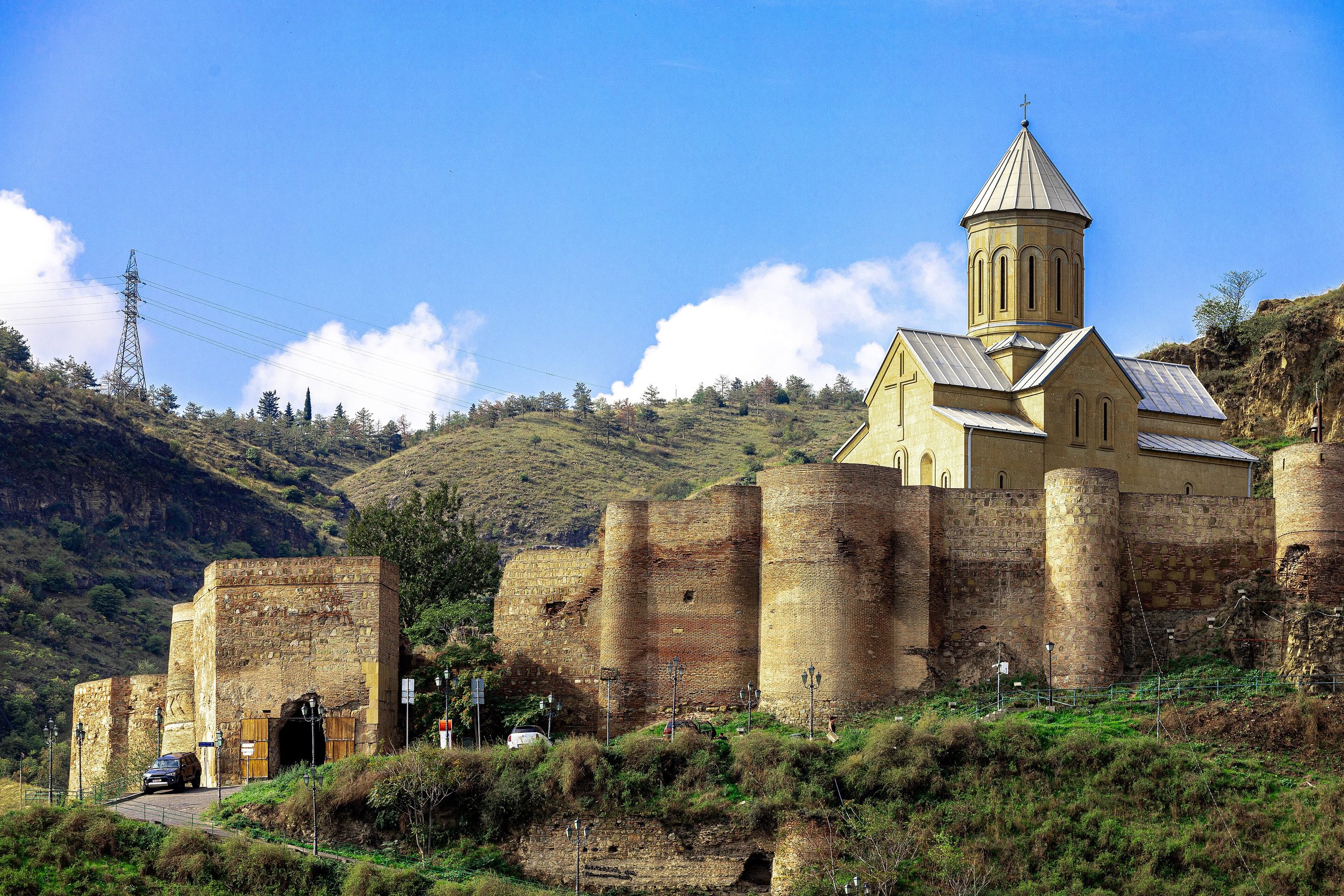
Narikala Fortress, Tbilisi: Getting Up, What Is Open and When to Go
Narikala is the fortress above Old Tbilisi. Here is what is open in 2026, how to get up and when to go for the view.
Read the guide