Vardzia Cave Monastery: Day Trip from Tbilisi, Tickets and Rabati
Vardzia is the cave monastery cut into a cliff above the Mtkvari river in the 12th century: 13 levels of cells, tunnels, wine cellars and a frescoed church, about 4 hours south of Tbilisi. It's the most impressive day out from the capital and also the longest. Here's how to get there, what the ticket covers, how to fit it into one day with Rabati Castle, and when to stay the night instead.
What is Vardzia?
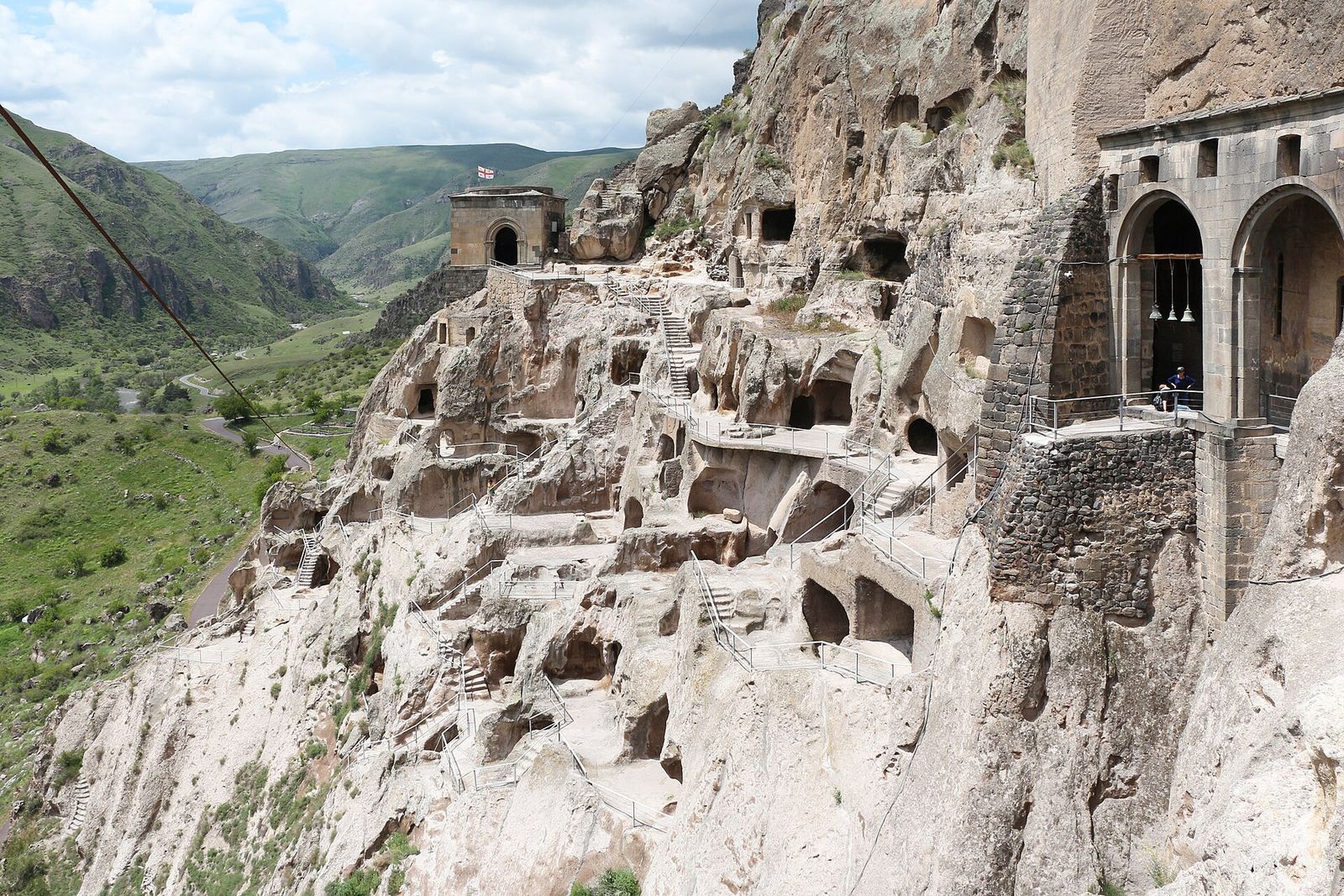
Vardzia is a whole monastery town carved into the face of Erusheti mountain in Samtskhe-Javakheti, the southern region near the Turkish border. Work started under King George III in 1156, and his daughter Tamar, the first woman to rule Georgia in her own right, finished it between 1184 and 1186. At its height it ran about 500 m along the cliff and 13 levels deep, with churches, chapels, a pharmacy, a bakery, a library, wine cellars and thousands of rooms, reached by one hidden tunnel from the river.
It was built as a fortress as much as a monastery, a place the kingdom could fall back to in a war. What you see today is the inside of that fortress. An earthquake in 1283 sheared off the outer face of the cliff and destroyed more than two thirds of the town, which is why the rooms now open to the air like a giant honeycomb. In 1551 the Persian Shah Tahmasp I sacked it and drove most of the monks out. A small community came back in the 19th century, and monks still live and pray in the cells at the far end today.
The name comes with a legend every guide tells. Young Tamar is said to have wandered off in the unfinished caves, and when her uncle called for her she shouted back "Ak var, dzia", "I'm here, uncle". The builders kept the phrase, and Vardzia stuck. It's one of the stories that makes the history of Georgia feel personal, because Tamar is everywhere on this site, down to her portrait in the main church.
How to get to Vardzia from Tbilisi
There are three real options, and the right one depends on whether you want this as one long day or two easier ones. Vardzia has no direct bus from Tbilisi, so every route goes through Akhaltsikhe, the regional town an hour short of the caves.
| Way to go | Time each way | Cost | Day trip? | Best for |
|---|---|---|---|---|
| Hired driver or rental car | About 4 hours | Rental about 100 to 150 GEL a day, plus fuel | Yes | Couples and groups who want their own order and stops |
| Guided tour | About 4 hours | From about 175 GEL a person | Yes | Solo travelers and anyone who wants the history explained |
| Marshrutka to Akhaltsikhe, then taxi | 5 to 5.5 hours | About 15 GEL, plus 60 to 80 GEL for the taxi | No, plan a night | Budget travelers with two days |
By car or hired driver
This is how I'd do it. The road runs west from Tbilisi on the main highway, turns south through Borjomi and Akhaltsikhe, then follows the Mtkvari gorge for the last hour, past Khertvisi Fortress and the village of Aspindza. It's a paved road all the way and an easy drive in daylight, and a car lets you take the stops in the order that dodges the tour buses.
If you don't want to drive, hire a driver for the day with a fixed per-car price agreed before you leave; split between three or four people it often costs less than a tour. If you do want to drive, renting a car in Georgia is cheap, and a compact runs about 100 to 150 GEL a day.
On a guided tour
Day tours from Tbilisi usually bundle Vardzia with Rabati Castle and a short stop in Borjomi, leave around 08:00 and get back after 21:00. Group and private tours start at about 175 GEL a person. The upside is a guide who can explain the frescoes and the water system; the downside is that most tours reach Vardzia at the same time, in the middle of the afternoon.
By marshrutka and taxi
Marshrutkas, the shared minibuses that do most of the work of getting around Georgia, leave for Akhaltsikhe from Didube bus station roughly every hour from about 08:00. They cost about 15 GEL and take 3.5 to 4 hours. From Akhaltsikhe, a taxi to Vardzia and back, with the driver waiting while you walk the caves, costs about 60 to 80 GEL for the car. There are also a couple of vans a day from Akhaltsikhe to Vardzia for about 7 GEL, but they leave around midday and come back in the early afternoon.
Vardzia as a day trip or an overnight
Of all the day trips from Tbilisi, Vardzia is the longest I'd still do in one go. My rule is simple: if you have a car, a driver or a tour seat, Vardzia works as a day trip, and it's a good one. If you're on public transport, or you also want the smaller cave sites around it, give it two days and sleep in Akhaltsikhe or by the river near the caves.
- Day trip: you have wheels, you're happy with a 13 to 14 hour day, and Vardzia plus Rabati is enough.
- Overnight: you're on marshrutkas, you want Vanis Kvabebi or Upper Vardzia too, or you'd rather be at the gate at 10:00 opening.
- Two nights with Borjomi: you're heading west anyway, to Kutaisi or the coast, and can take the region on the way.
- Skip it for now: you have only 3 or 4 days in Georgia. A 500 km round trip eats a whole day, and Uplistsikhe near Gori gives you a cave town 80 km from Tbilisi in half a day.
If your trip is long enough to fit it, Vardzia slots best into a route around Georgia that heads west, since Akhaltsikhe is only a couple of hours from Borjomi and the road to Kutaisi.
A Vardzia day trip on the clock
Here's the day I'd plan with a car or driver. It flips the tour order: Vardzia first, while the coach groups are still at Borjomi and Rabati, then Rabati on the way home, when the tours have moved on to the caves.
| Time | Stop | Time there | Notes |
|---|---|---|---|
| 07:00 | Leave Tbilisi | Coffee and pastries for the car | |
| 10:40 | Khertvisi Fortress | 15 to 20 minutes | Photo stop on the road, 16 km before Vardzia |
| 11:15 | Vardzia ticket office | 2.5 hours | Shuttle up, walk the one-way route |
| 13:45 | Lunch by the river below Vardzia | 1 hour | Trout and local khinkali |
| 14:45 | Drive back to Akhaltsikhe | 1 hour | |
| 15:45 | Rabati Castle | 1 to 1.5 hours | Walls, mosque, citadel |
| 17:15 | Leave Akhaltsikhe | Borjomi is a 30 to 40 minute leg stretch if you have energy | |
| 21:00 | Back in Tbilisi | About 14 hours in total |
Vardzia tickets, opening hours and the shuttle
You buy the ticket at the office by the car park, then either walk the steep road up to the first caves or ride the small electric shuttle. Pay in cash to be safe.
| Item | Price |
|---|---|
| Entry ticket | 15 GEL |
| Children under 6 | Free |
| Audio guide | 15 GEL, shareable by 2 people |
| Guide on site | About 45 GEL |
| Shuttle from the ticket office to the caves | About 2 to 5 GEL |
| Season | Opening hours |
|---|---|
| May to September | 10:00 to 19:00 |
| March, April, October to mid-November | 10:00 to 18:00 |
| Mid-November to February | 10:00 to 17:00 |
Arrive at least 2 hours before closing. The route through the cliff is one way, and you don't want to rush the tunnels at the end. The audio guide is worth it if you're not on a tour: without it, the cellars and cells start to look alike after the first level.
What to see inside Vardzia
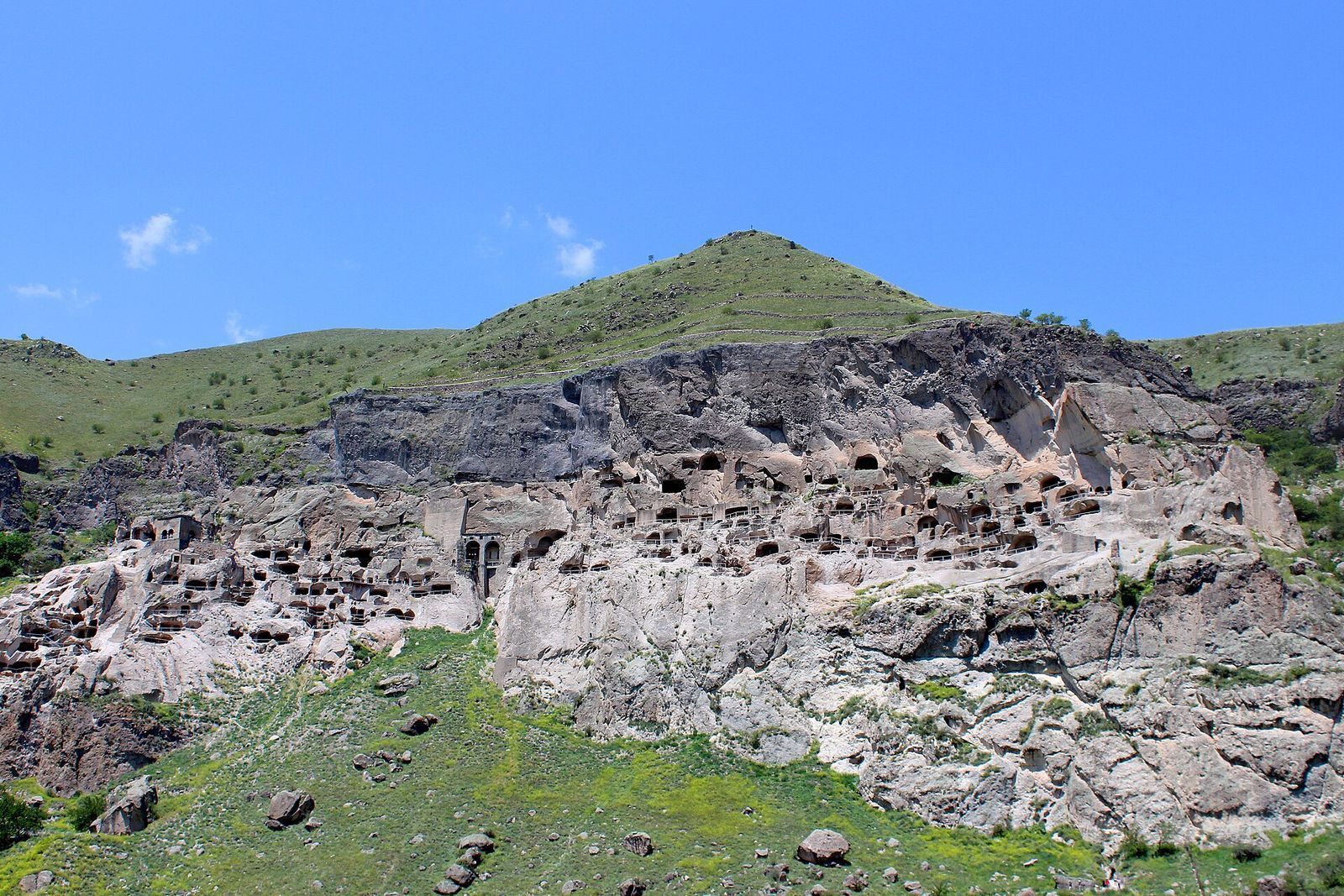
The visit is a single path along the cliff, up and down stairs and through tunnels, from the first caves to the church in the middle and on to the bell tower at the far end. Count on 2 hours at a steady pace and 3 if you stop for every view.
The cells, tunnels and stairways
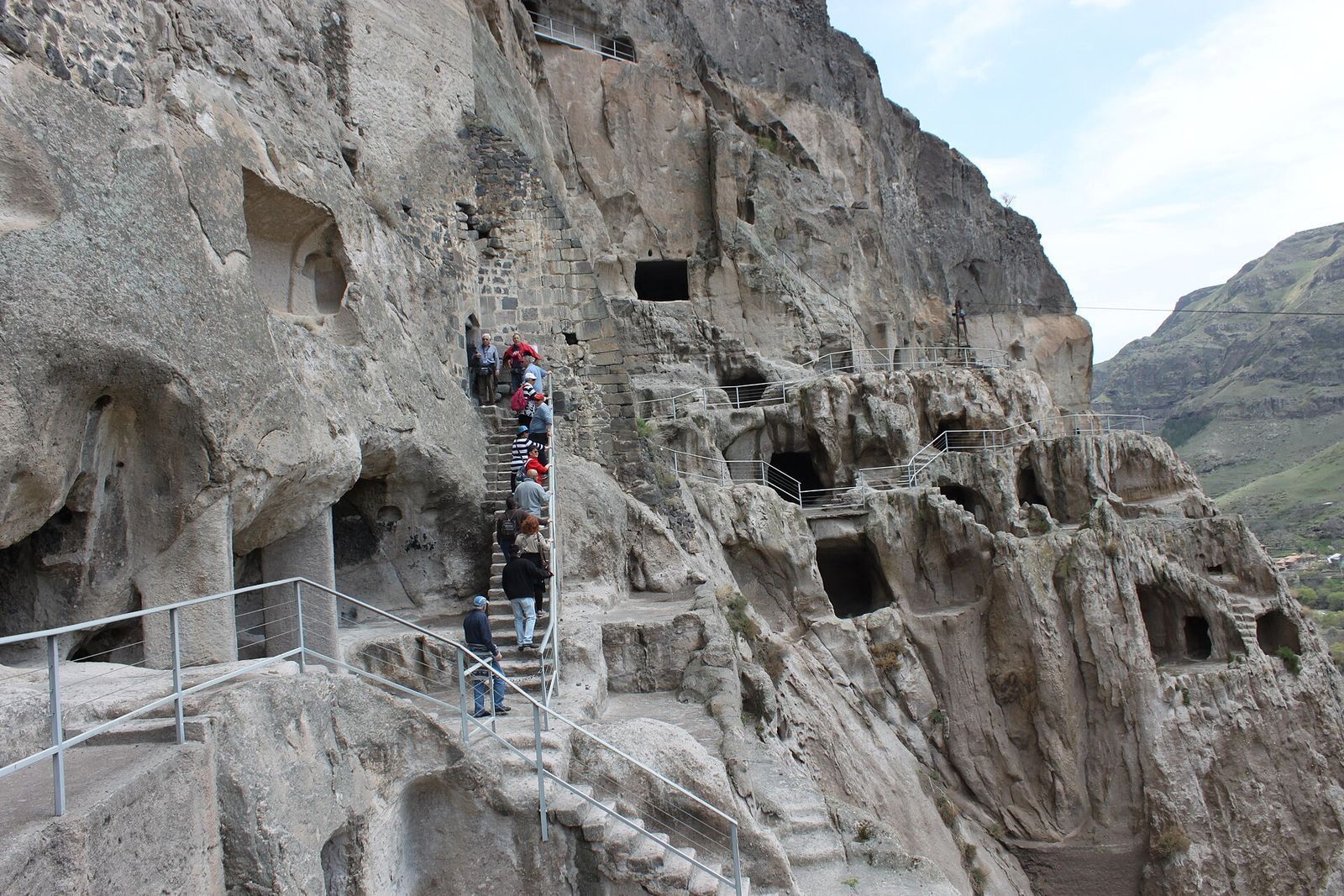
The first half of the route is the town itself: rooms cut in rows, each with a doorway, a sleeping niche and sometimes a little shelf or oven. Some open straight onto a drop to the valley, others connect through passages so low that tall people walk bent double. A few of the tunnels are dark and narrow, so the phone torch earns its keep here. The views back across the gorge from the open rooms are the best part of the walk.
The Church of the Dormition
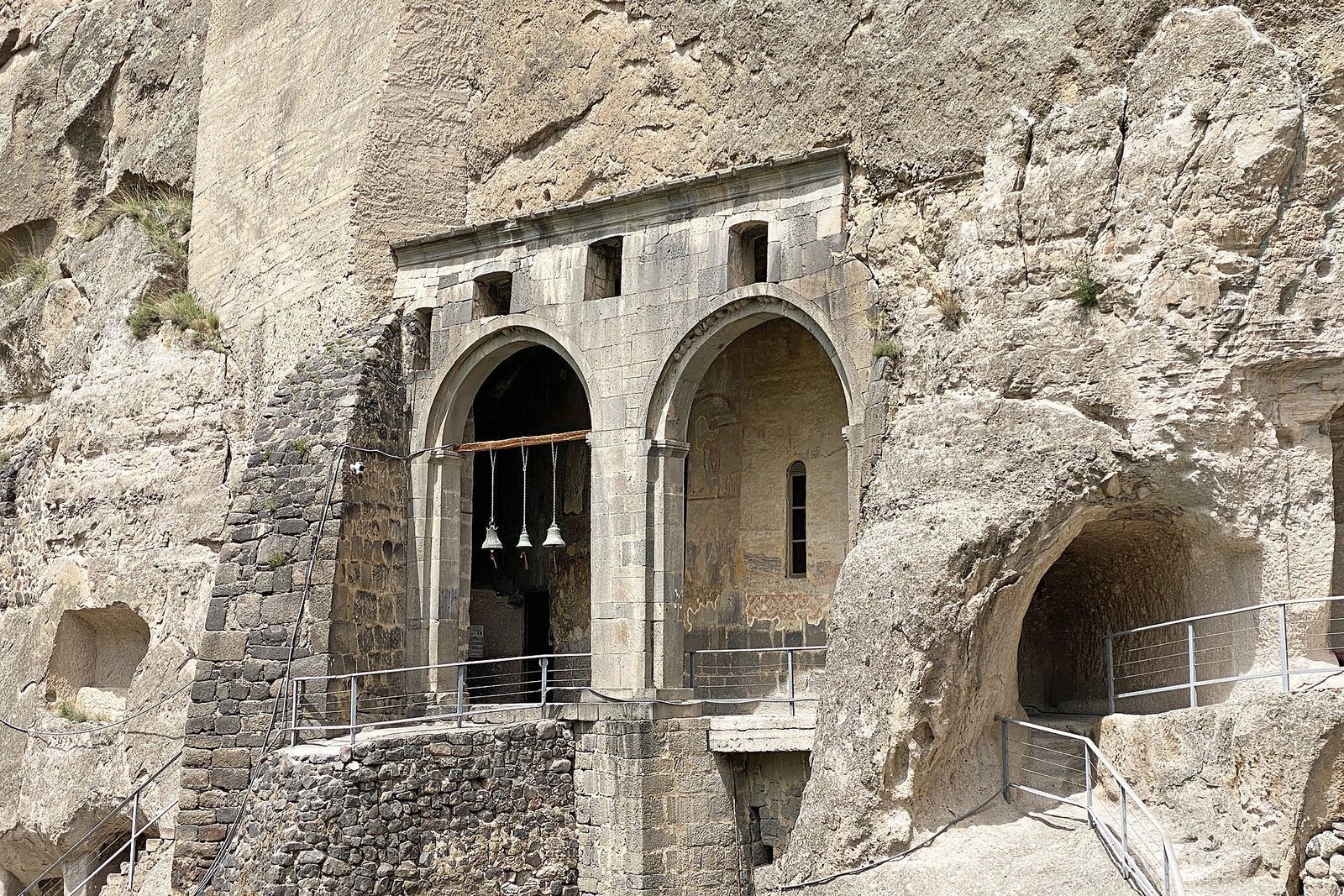
The main church sits halfway along, cut deep into the rock behind an arched porch. Its walls, ceiling and arches are covered in 12th-century frescoes, and on the north wall you'll find Tamar herself, painted next to her father George III. It's one of the very few portraits of her made in her lifetime, and seeing her face in the place she built is the moment that makes the long drive make sense. Photos are not allowed inside, and in the low season the church is sometimes locked; ask one of the monks and they may open it.
The wine cellars and the water system
Scattered through the levels are wine cellars with clay jars sunk into the floor, the same buried-vessel method that still makes qvevri wine today. The monks also brought spring water into the mountain through a channel about 3.5 km long, with cisterns cut into the rock. One spring still drips inside the cliff, known as the Tears of Tamar, and it keeps the same temperature all year.
The bell tower and the end of the route
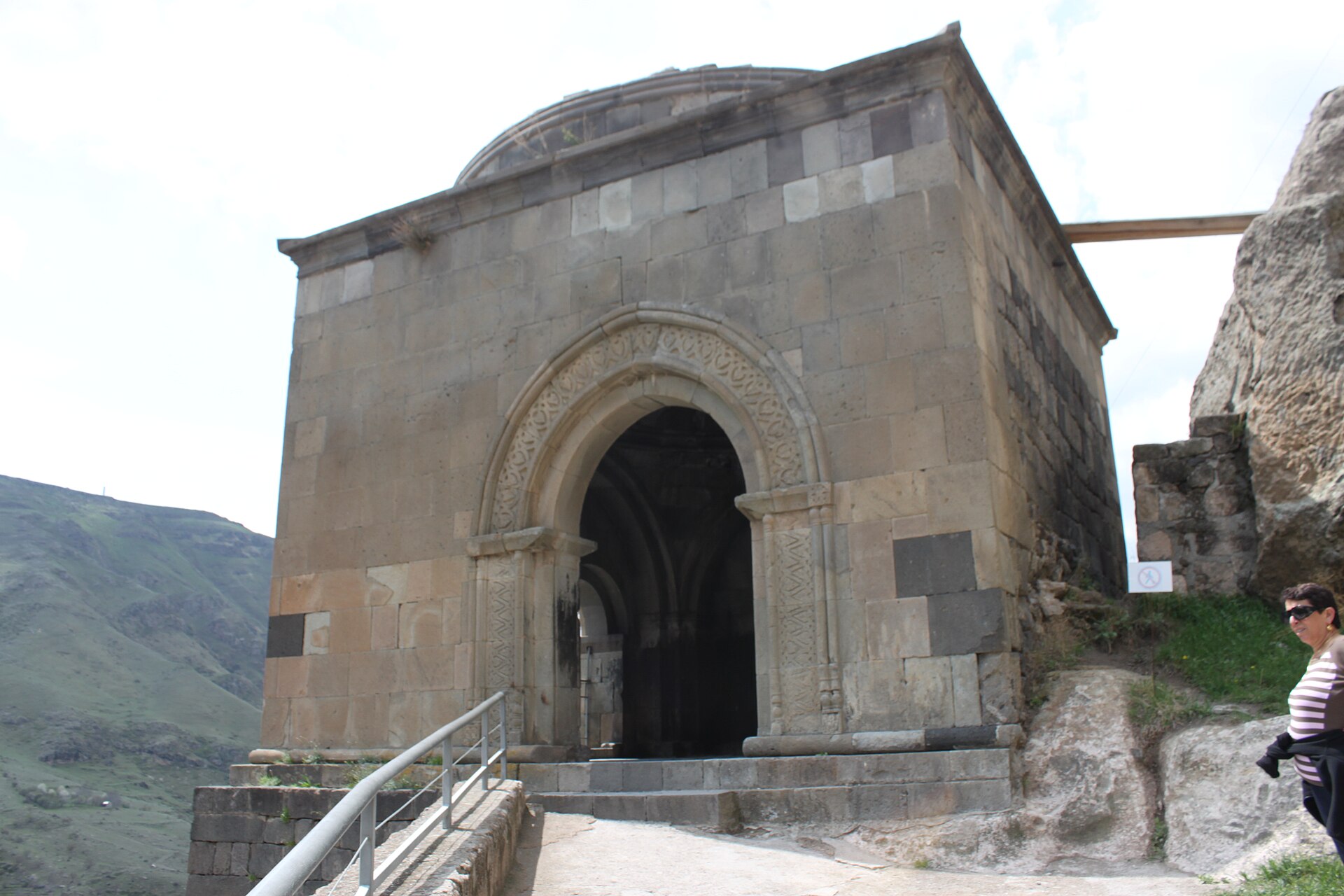
The path finishes near the arched bell tower at the far end of the cliff, with the best view down the Mtkvari valley, then winds back down to the exit. The cells where the monks live today are closed to visitors; keep your voice down as you pass them.
Rabati Castle in Akhaltsikhe
Rabati is the walled old town of Akhaltsikhe, an hour before Vardzia on the same road, and the second half of almost every Vardzia day. A fortress stood here by the 9th century under the name Lomsia; by the end of the 12th it was called Akhaltsikhe, "new fortress". Later it became the seat of the Ottoman governors, which is why you find a mosque with a gold dome, a minaret, a church and a synagogue inside the same walls.
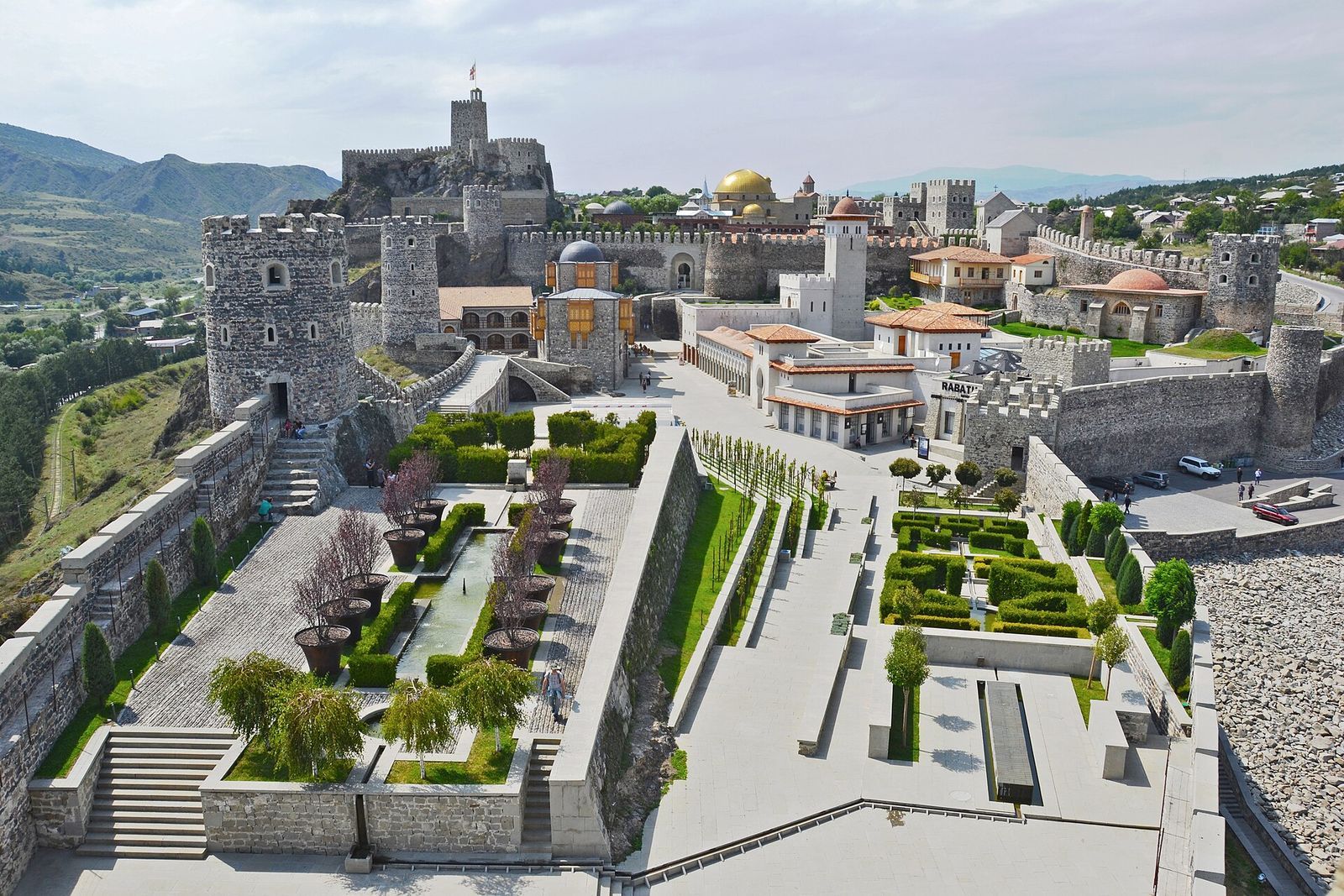
Today it looks almost new. A big restoration rebuilt the walls, the towers and the palace buildings, laid out formal gardens and added a hotel and cafes inside, and in places it feels closer to a film set than a ruin. I like it anyway, for the walk along the walls and the view from the citadel over the town and the hills. Entry is 15 GEL, and 1 to 1.5 hours covers it, including the climb to the top tower.
Other stops on the Vardzia road
The Mtkvari gorge between Akhaltsikhe and Vardzia is packed with fortresses and smaller cave sites. On a day trip, Khertvisi is the only one I'd add. With a night in the area, the rest are easy.
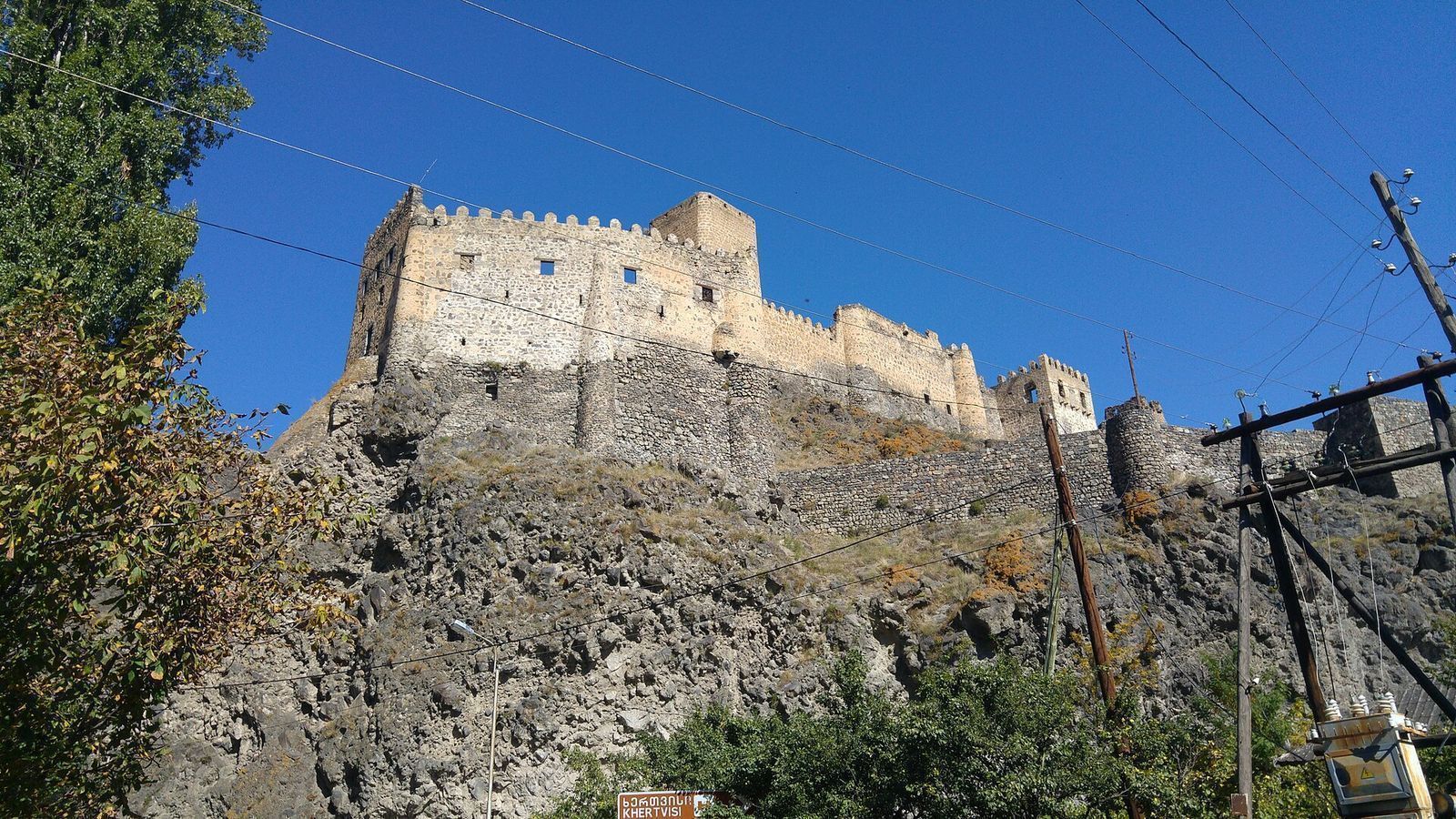
- Khertvisi Fortress: a castle on a rock where two rivers meet, 16 km and about 20 minutes before Vardzia. It is one of the oldest fortresses in Georgia, with a church dated 985 and walls rebuilt in 1354. You can see it from the road, and a short climb gets you inside.
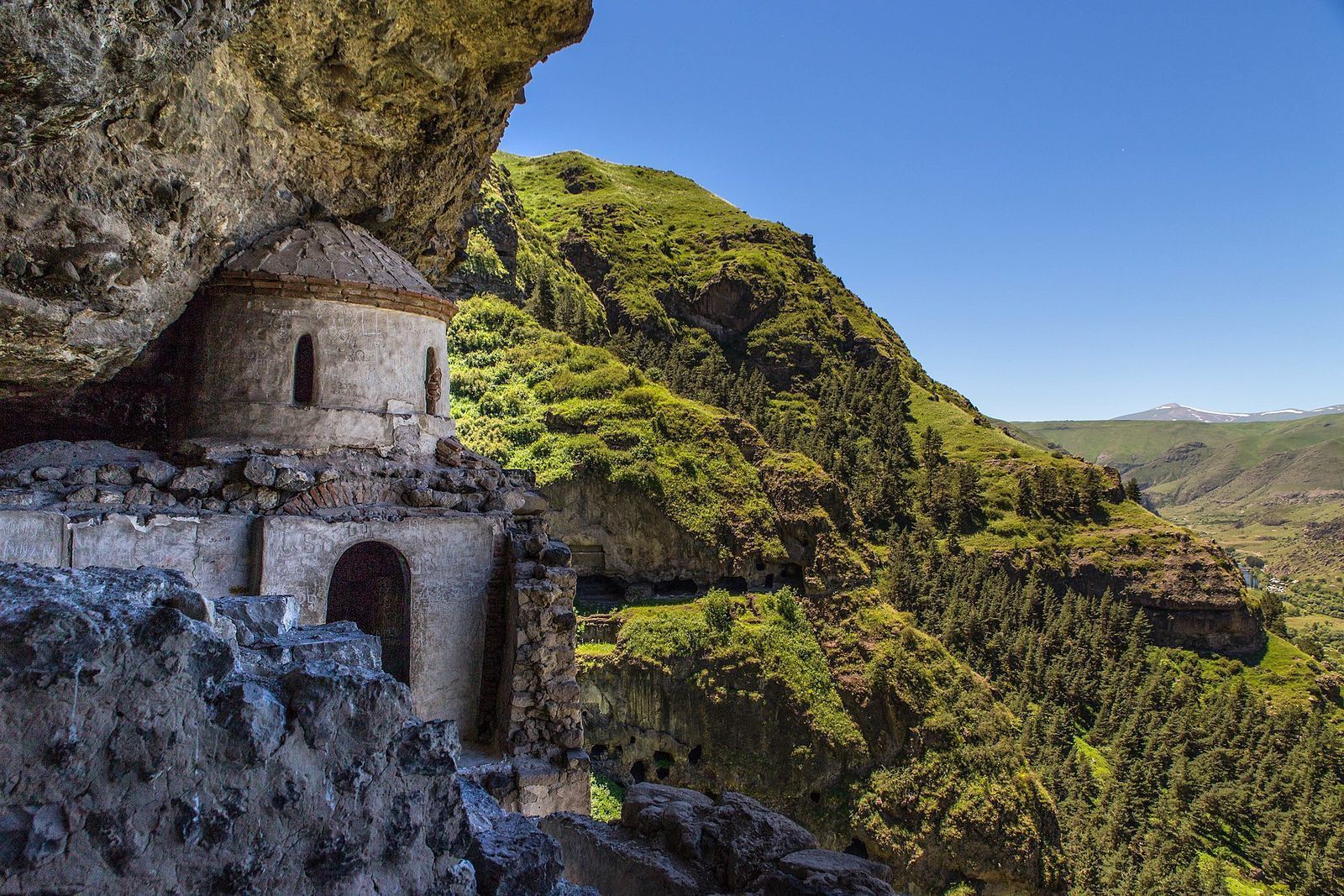
- Vanis Kvabebi: an 8th-century cave monastery about 3 km from Vardzia, older and far emptier, with two churches, a defensive wall built in 1204 and tunnels on several levels.
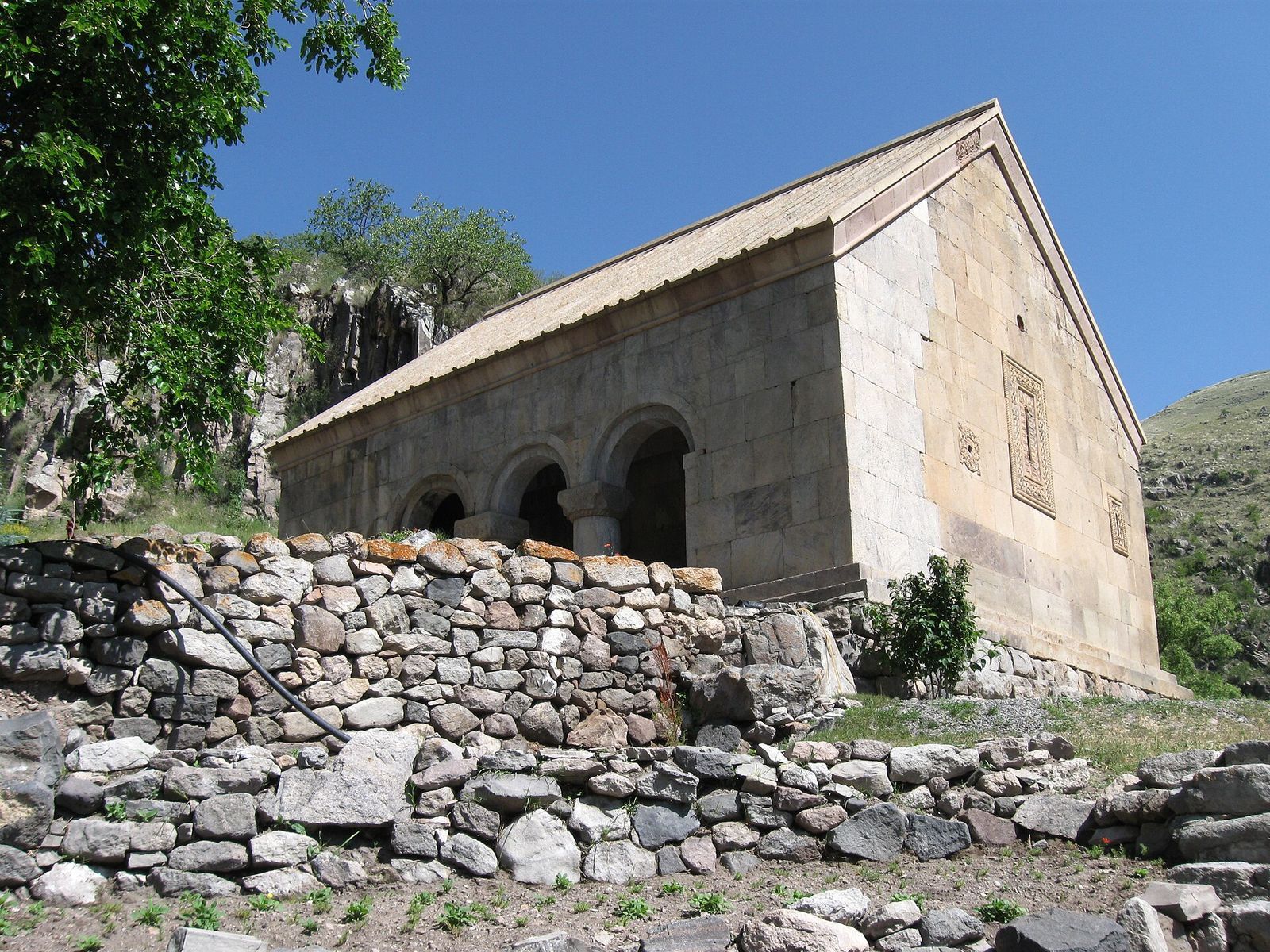
- Upper Vardzia: an 11th-century nunnery a couple of kilometers past the main site, where the nuns farm and keep bees.
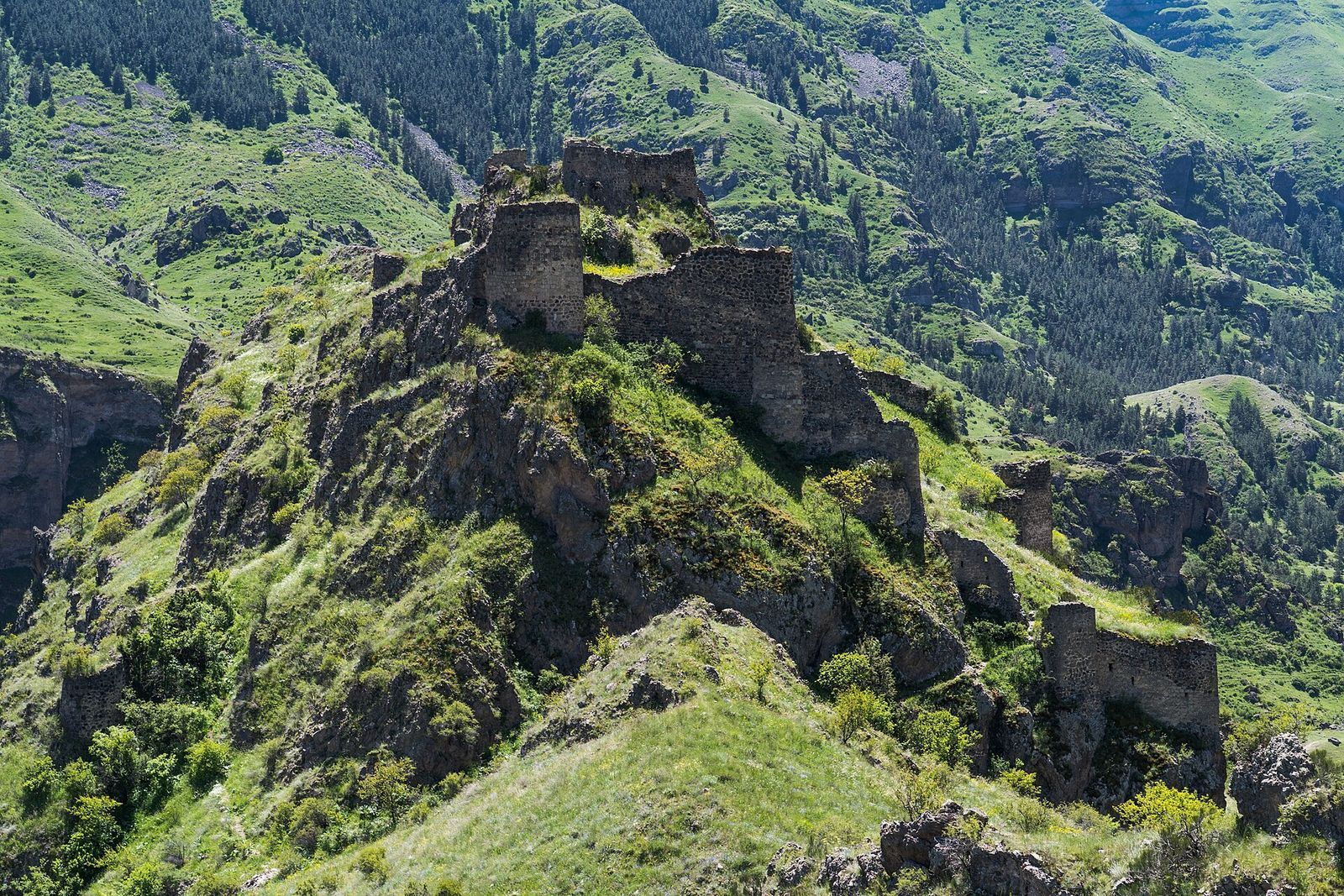
- Tmogvi: a ruined castle on the clifftop about 10 km from Vardzia, first recorded in the 9th century, for a scramble with nobody else around.
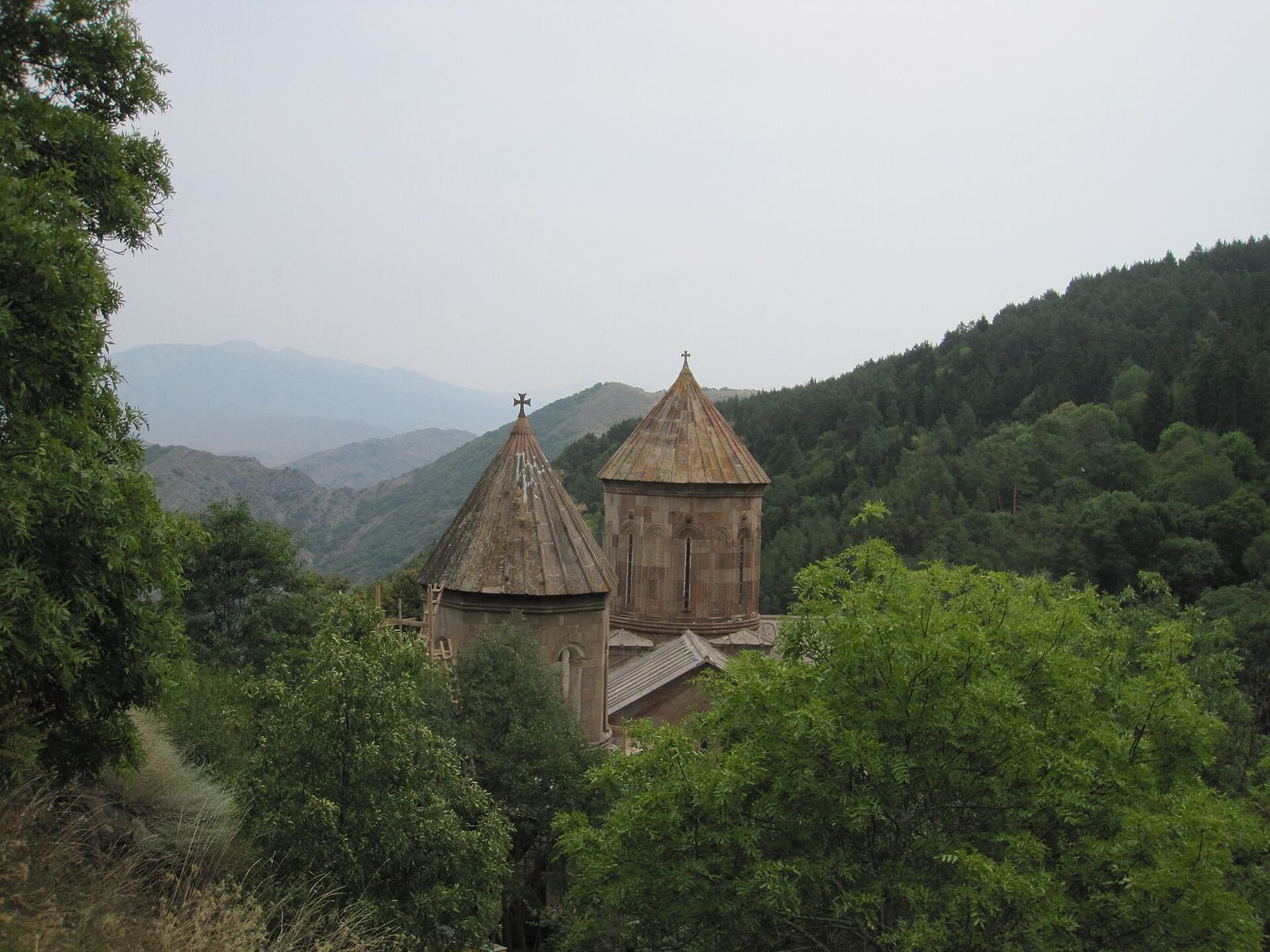
- Sapara Monastery: a forest monastery on a cliff 13 km from Akhaltsikhe, with frescoes and a carved stone iconostasis. It is free and very quiet.
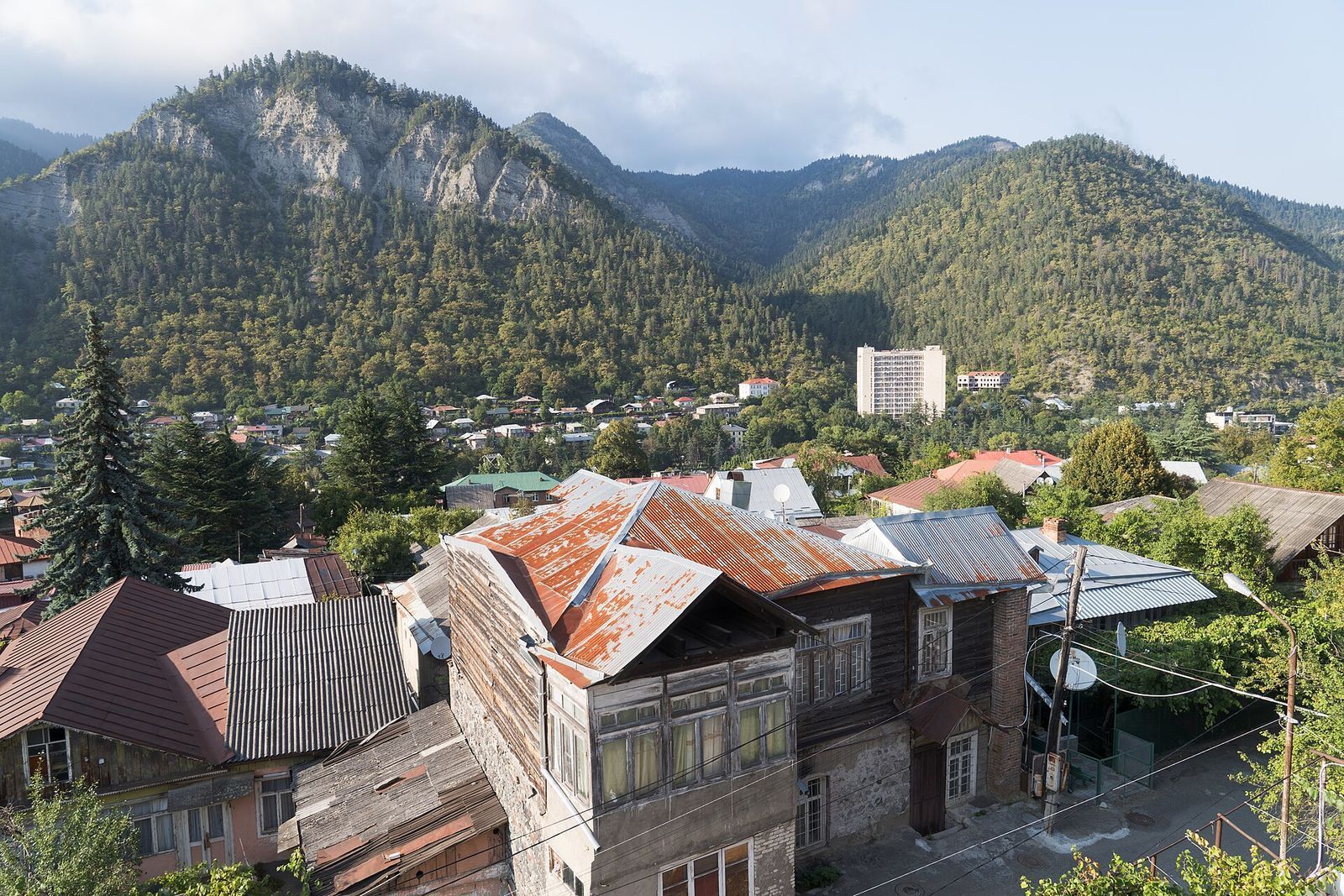
- Borjomi: the spa town on the main road, with its mineral water park and a free spring.
If Vardzia leaves you wanting more rock-cut monasteries, David Gareja on the Azerbaijani border is the other great one, in desert rather than gorge.
Where to eat and stay near Vardzia
Food near the caves is simple and seasonal. In the warm months there are cafes and riverside restaurants at the bottom of the site serving grilled trout from the Mtkvari, and that's where I'd eat on a day trip. In winter many of them close, so pack lunch.
Samtskhe-Javakheti has its own dishes, and they're worth ordering if you see them: apokhti khinkali, small dumplings filled with dried, salted meat; tenili, a stringy white cheese made in fine threads; and goose soup. They're regional and hard to find anywhere else in the Georgian kitchen, so try them here.
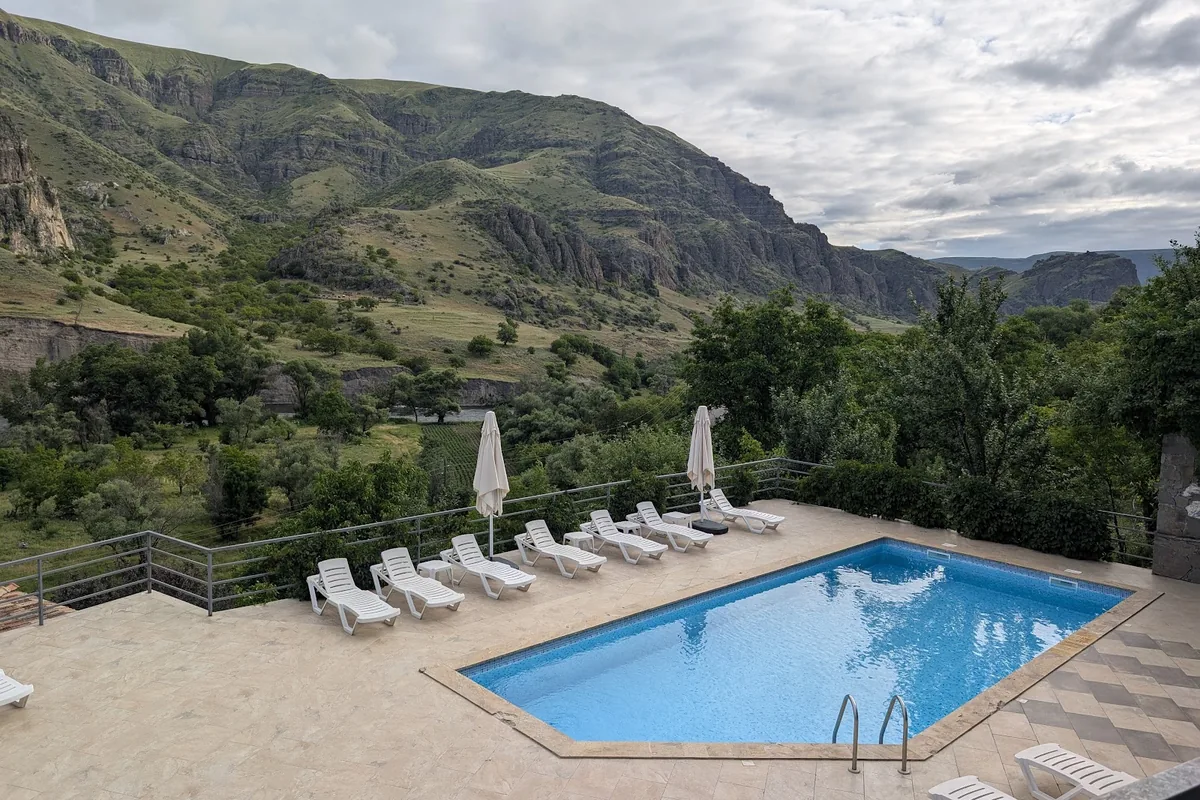
For a night near the caves, Vardzia Resort is the one proper hotel in the valley, with a restaurant and a seasonal pool, and a handful of family guesthouses sit in the villages 7 or 8 km away. Akhaltsikhe has more choice and cheaper rooms, and it's the better base if you're on public transport, since the vans back to Tbilisi run from there all day.
Best time to visit Vardzia and what to wear
April to October is the season, with daytime temperatures from about 14 to 30°C. May, June and September are my pick: green hills, warm days and fewer people than in August, which is both the hottest and the busiest month. In winter the site stays open with shorter hours and sometimes snow on the cliff, and you'll have it almost to yourself.
Whatever the month, wear walking shoes, not sandals: the route is all uneven stone stairs and narrow tunnels, and it isn't suitable for wheelchairs or strollers. Bring water and snacks, since only a few points on the route have drinking water and there's no shade on the open ledges. Pack the scarf and long trousers or a long skirt for the church, plus a light layer: the gorge cools off fast in the late afternoon.
Key takeaways
- Vardzia is a 12th-century cave town of 13 levels, built under George III and Queen Tamar between 1156 and 1186.
- It's about 4 hours from Tbilisi each way, so treat it as a 14 hour day with a car or tour, or a two-day trip by public transport.
- The ticket is 15 GEL, the audio guide 15 GEL, and the site needs 2 to 3 hours.
- Pair it with Rabati Castle in Akhaltsikhe, and visit Vardzia first to stay ahead of the tour groups.
- Come between April and October, in good shoes and with shoulders and knees covered.
Frequently asked questions
Can you do Vardzia as a day trip from Tbilisi?
Yes, with a car, a hired driver or a tour. Expect about 4 hours each way and a 13 to 14 hour day with Rabati Castle included. By public transport it doesn't work in one day; plan a night in Akhaltsikhe.
How much does it cost to visit Vardzia?
The entry ticket is 15 GEL, and children under 6 go free. An audio guide adds 15 GEL, a guide on site about 45 GEL, and the shuttle from the ticket office a few lari.
How long do you need at Vardzia?
Plan on 2 to 3 hours. The one-way route through the cliff takes about 2 hours at a steady pace, and longer if you use the audio guide or stop at every view. Arrive at least 2 hours before closing.
How do you get to Vardzia by public transport?
Take a marshrutka from Didube bus station in Tbilisi to Akhaltsikhe, about 15 GEL and 3.5 to 4 hours. From Akhaltsikhe, a taxi to Vardzia and back with waiting time costs about 60 to 80 GEL, or catch one of the two or so daily vans for about 7 GEL.
Is Vardzia worth visiting?
Yes, if you have at least a week in Georgia. It's the largest and most dramatic cave monastery in the country, with a fresco of Queen Tamar painted in her lifetime. On a short trip, Uplistsikhe is the closer cave town.
Who built Vardzia?
King George III began Vardzia in 1156, and his daughter Queen Tamar completed it between 1184 and 1186. It served as both a monastery and a fortress, and monks still live there today.
Is Vardzia hard to walk?
It's moderate. The route is steep stone stairs, ledges and some low, narrow tunnels, so it suits anyone reasonably fit in good shoes, but it isn't accessible for wheelchairs or strollers. The shuttle saves the first steep climb from the ticket office.
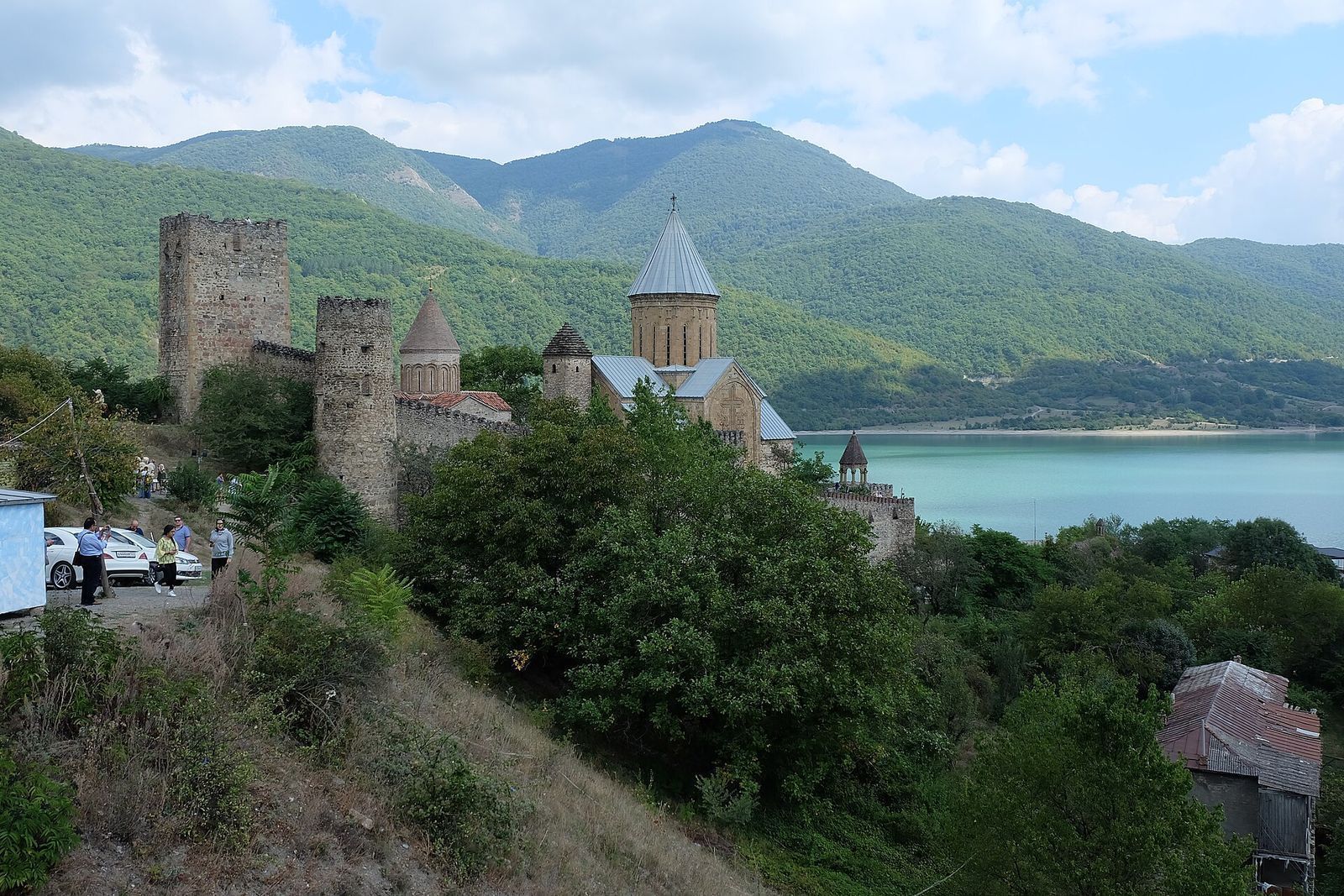
12 Best Day Trips from Tbilisi, With Prices and Timings
Tbilisi is known for its easy day trips. Here are the 12 best, how to reach each one and what a day out costs.
Read the guide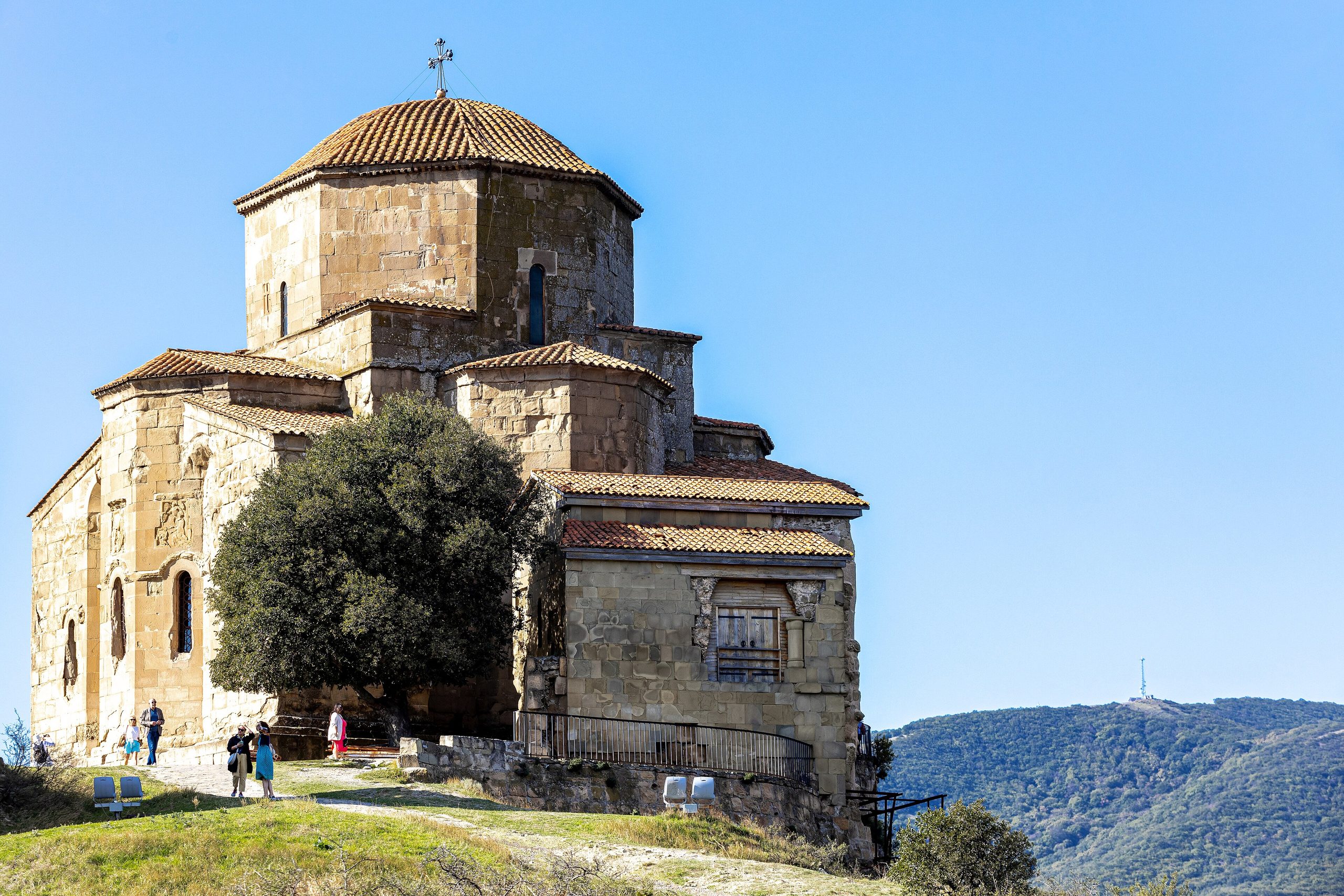
Mtskheta Day Trip from Tbilisi: Jvari, Svetitskhoveli and Getting There
Mtskheta is the easiest day trip from Tbilisi. Here is how to get there, what to see and how to fit it in half a day.
Read the guide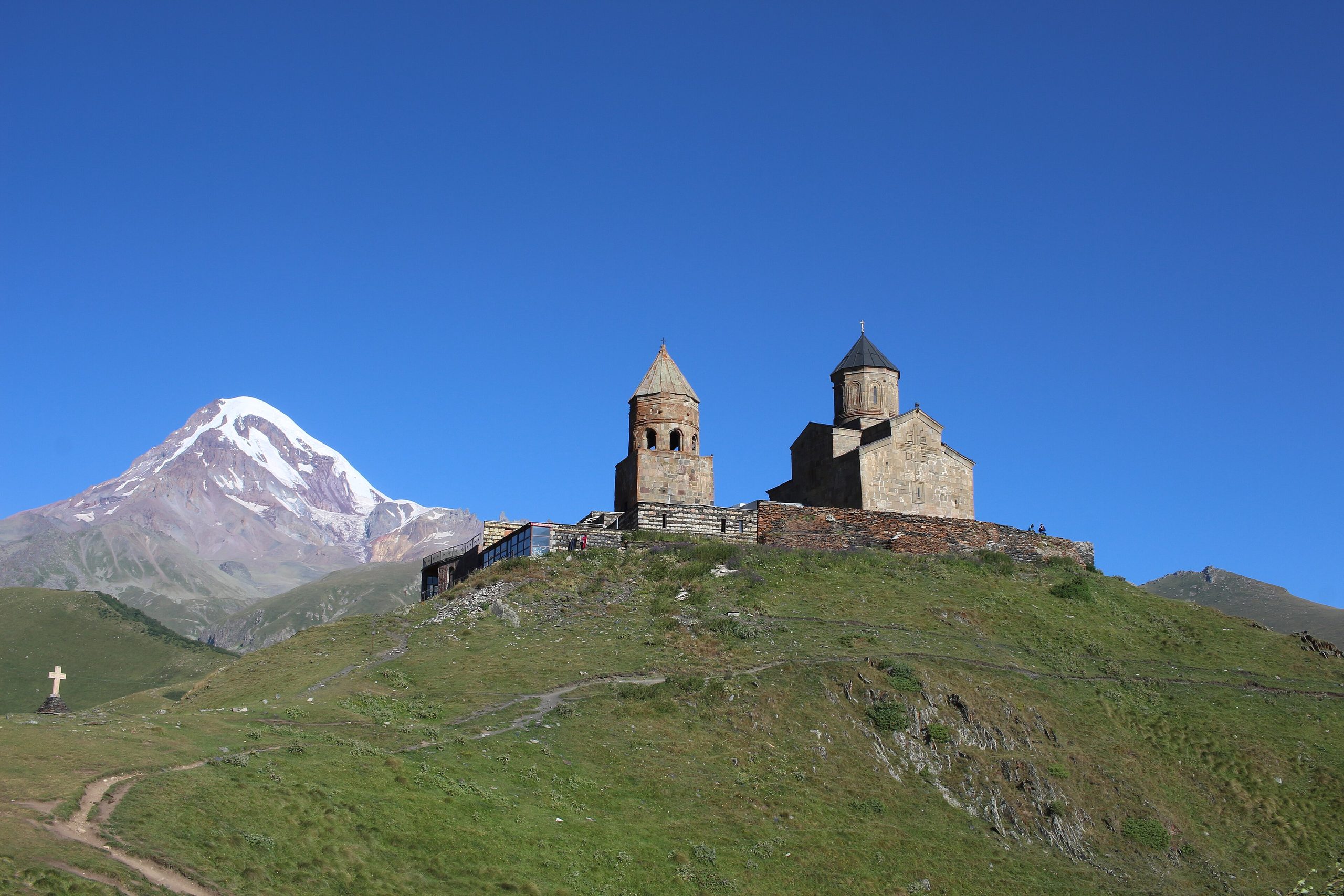
Kazbegi Day Trip from Tbilisi: Gergeti, Ananuri and the Military Highway
Kazbegi is the classic mountain day trip from Tbilisi. Here is the route, the stops, the costs and how to time it.
Read the guide