Sololaki, Tbilisi: Art Nouveau Entrances, Cafes and Where to Stay
Sololaki is Tbilisi's old merchant quarter, the grid of steep streets that climbs from Freedom Square toward the ridge above the Old Town. It's known for its Art Nouveau facades and for the painted entrance halls that sit behind ordinary front doors. Here's what you need to know about the entrances to look for, the cafes and bars I'd pick, how to walk it in a morning, and whether it's the right base for your trip.
Where Sololaki is and what it feels like
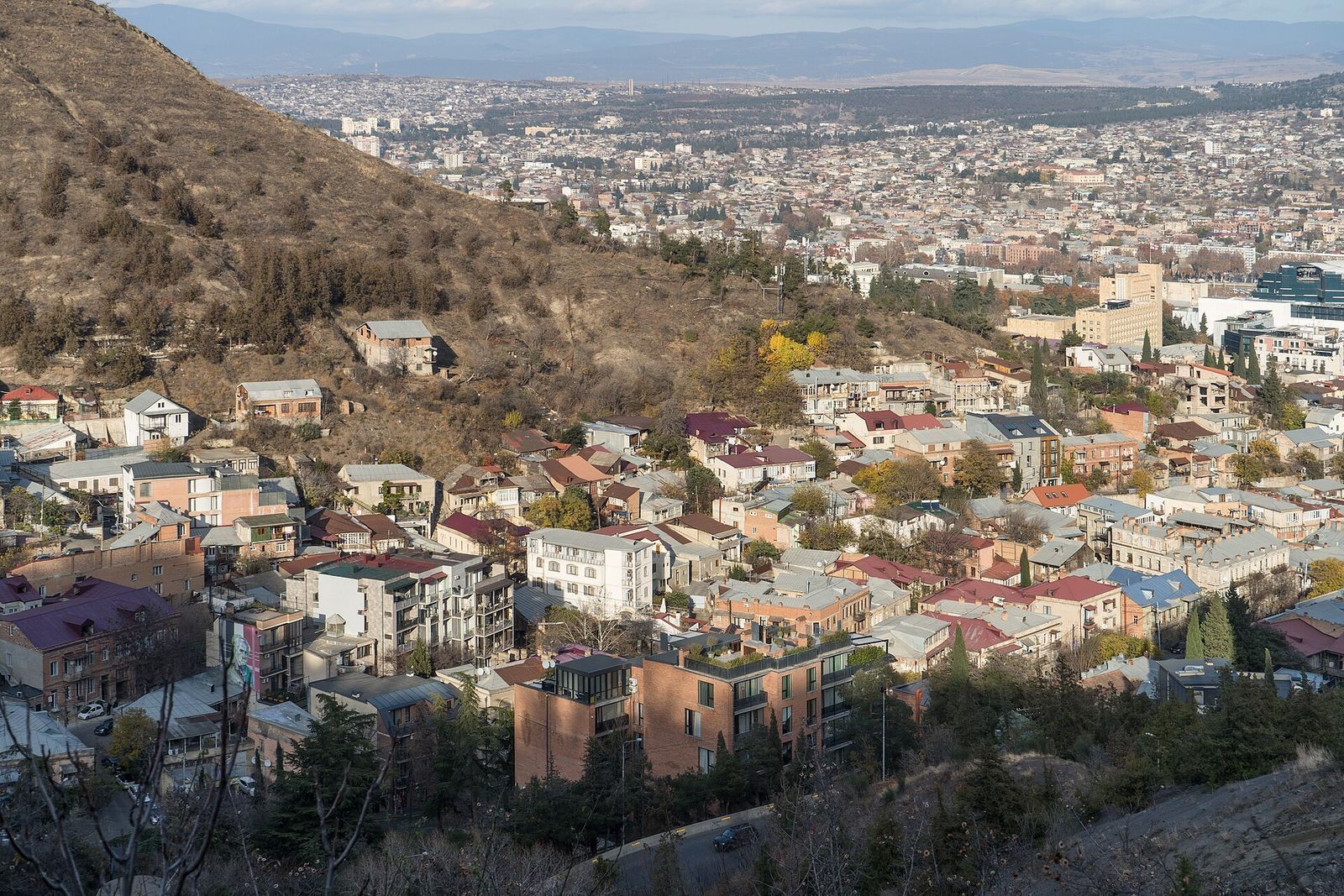
Sololaki sits between Old Tbilisi and Rustaveli Avenue, on the slope that runs up from Freedom Square toward the Sololaki ridge. The ridge is where the Mother of Georgia statue stands and where the walls of Narikala fortress run along the top. Below it, the streets are laid out in a neat grid, so you rarely get lost, but most of them go uphill.
What I like about it is the mix. Sololaki has fewer tourists and more residents than the Old Town, quieter streets and more local restaurants, yet the Old Town is a 5-minute walk downhill. You'll see grand 19th-century houses with peeling plaster next to freshly restored ones, wooden balconies over courtyards, washing lines, cats on the steps and cafes in old garages.
The sidewalks are narrow and uneven in places, and some streets turn into staircases. Wear shoes with grip, especially after rain.
A short history of Sololaki
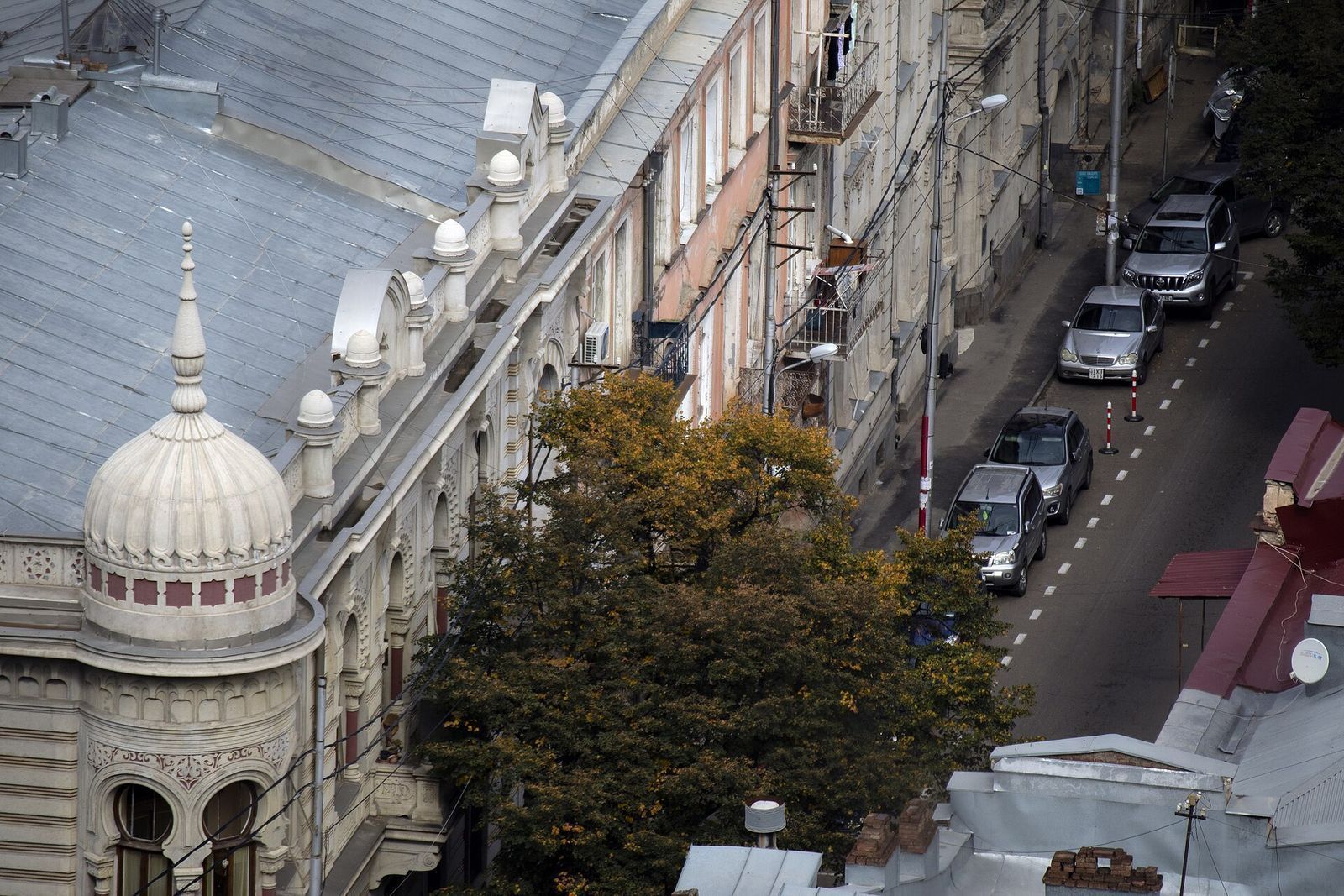
In the late 19th and early 20th centuries Tbilisi grew past its old walls, and the city's center moved up the slope into Sololaki. This was Russian Empire Tbilisi, and the money belonged to merchants and the new bourgeoisie. They built European-style mansions with Art Nouveau facades, Italian-style courtyards and grand stairwells, and they spent the most on the part every guest walked through: the entrance hall.
Art Nouveau reached Tbilisi from Europe and flourished between about 1890 and 1915. In Sololaki it shows up less as whole buildings and more as details: ironwork on balconies, carved doors, stained glass, mosaic floors and painted ceilings.
Then came the Soviet years. A house built for one family was split into flats for 10 to 15 families, and nobody owned the shared entrance any more. Most halls were neglected and many are damaged today, which is why a restored one feels like such a find. Sololaki is still a neighborhood in the middle of that story, part crumbling, part restored, and I like it better that way.
The Sololaki entrance halls
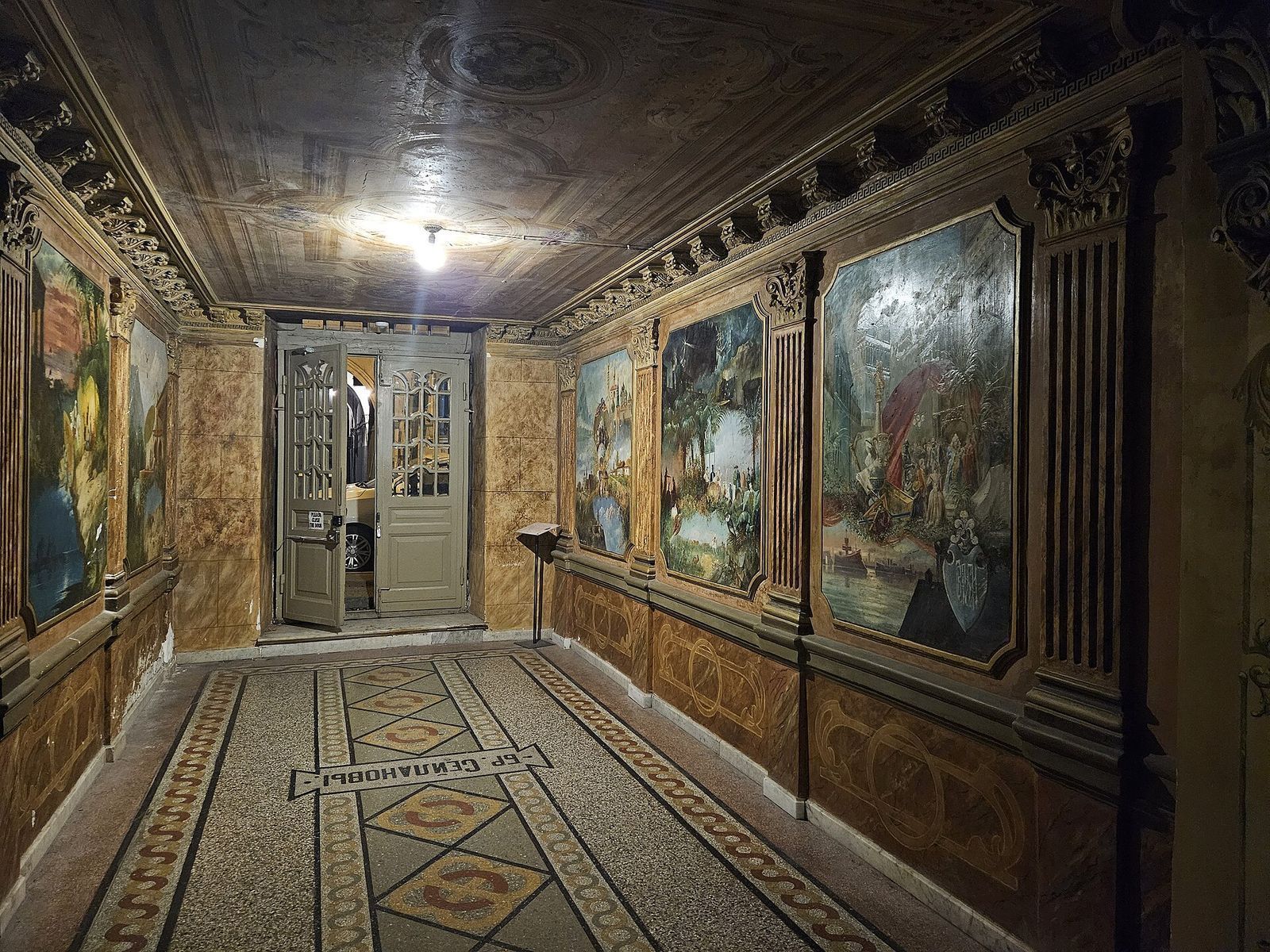
The entrance halls are the reason most people come. Behind a plain wooden door you can find painted walls and ceilings, marble steps, wrought-iron banisters, stained glass and mosaic floors, one of them with the word "SALVE" set into the floor. Some are Art Nouveau, some lean Persian or neo-classical, and each one was the merchant's way of showing guests what he was worth before they reached the flat.
These are the addresses I'd start with. They are working apartment buildings, so doors are sometimes locked; if one is shut, move on to the next.
| Address | What's inside | My note |
|---|---|---|
| Galaktion Tabidze St 18 | Entrance paintings from 1911, stained glass, a painted ceiling | Restored; the one to see if you see one |
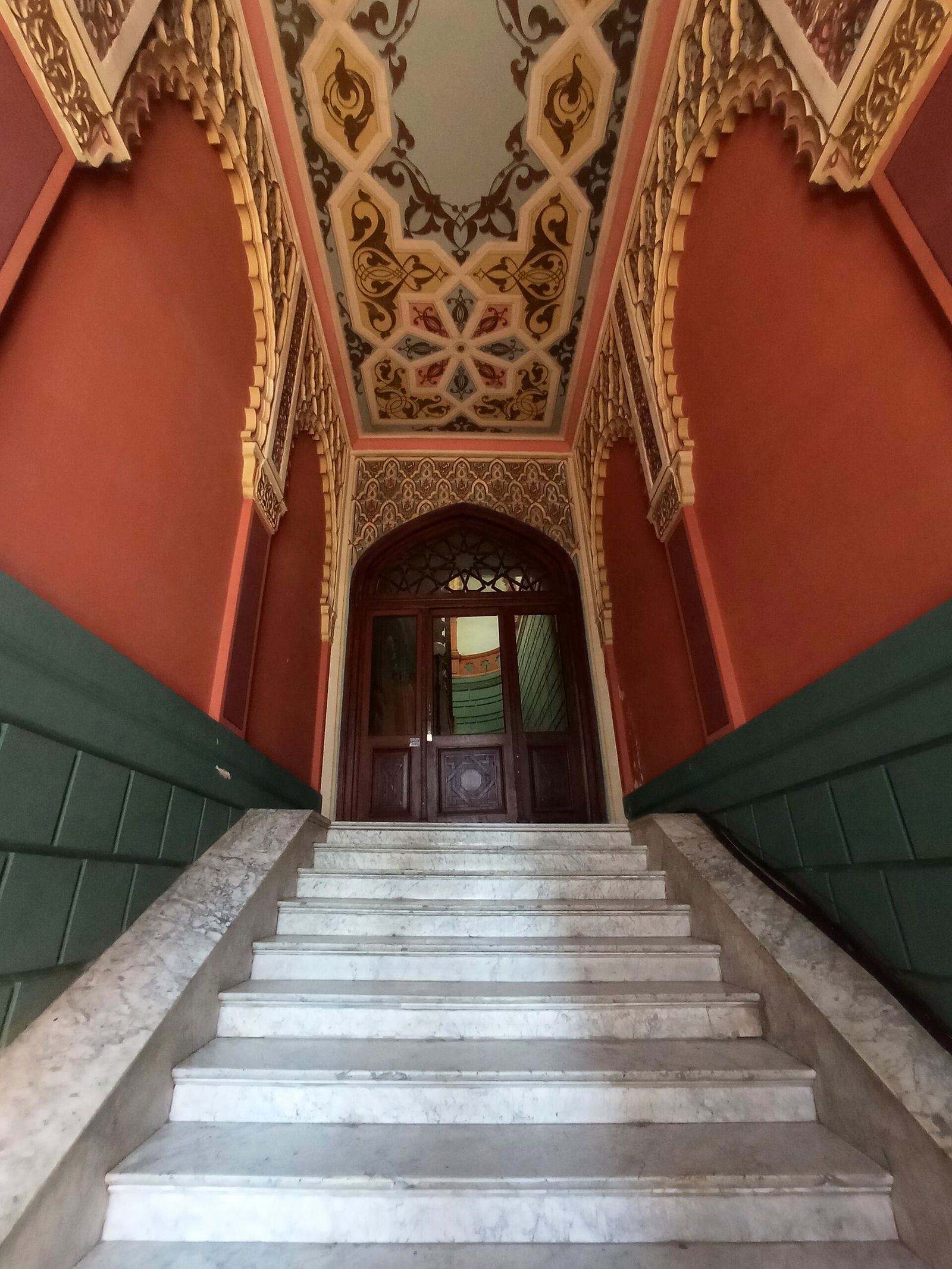
| Ivane Machabeli St 17 | A Persian-style hall that looks like an oriental palace | Restored; the most surprising |
| Ivane Machabeli St 13 | Wall paintings and a richly decorated ceiling | The Writers' House, with a garden cafe |
| Galaktion Tabidze St 13 | Restored original decoration | Same street as number 18 |
| Lado Asatiani St 17 | A mosaic floor with neo-classical touches | Look down as you step in |
| Geronti Kikodze St 9 | Strong Art Nouveau detailing | Pair it with Chacha Time at number 5 |
Number 17 on Ivane Machabeli Street is the hall people don't expect. Behind an ordinary door, red walls rise to carved, scalloped arches and a painted geometric ceiling over a flight of marble steps, and the whole thing looks more like a Persian palace than a Tbilisi apartment block.
The best of them are restored, and the rest are worth a look for the bones: the floor tiles, the ironwork and the shape of the staircase survive even where the paint has gone. Carved balconies and painted entrances turn up all over the older parts of the city, but Sololaki has the densest run of them, which makes it the heart of Tbilisi's architecture for anyone who loves old houses.
Facades, courtyards and the Writers' House
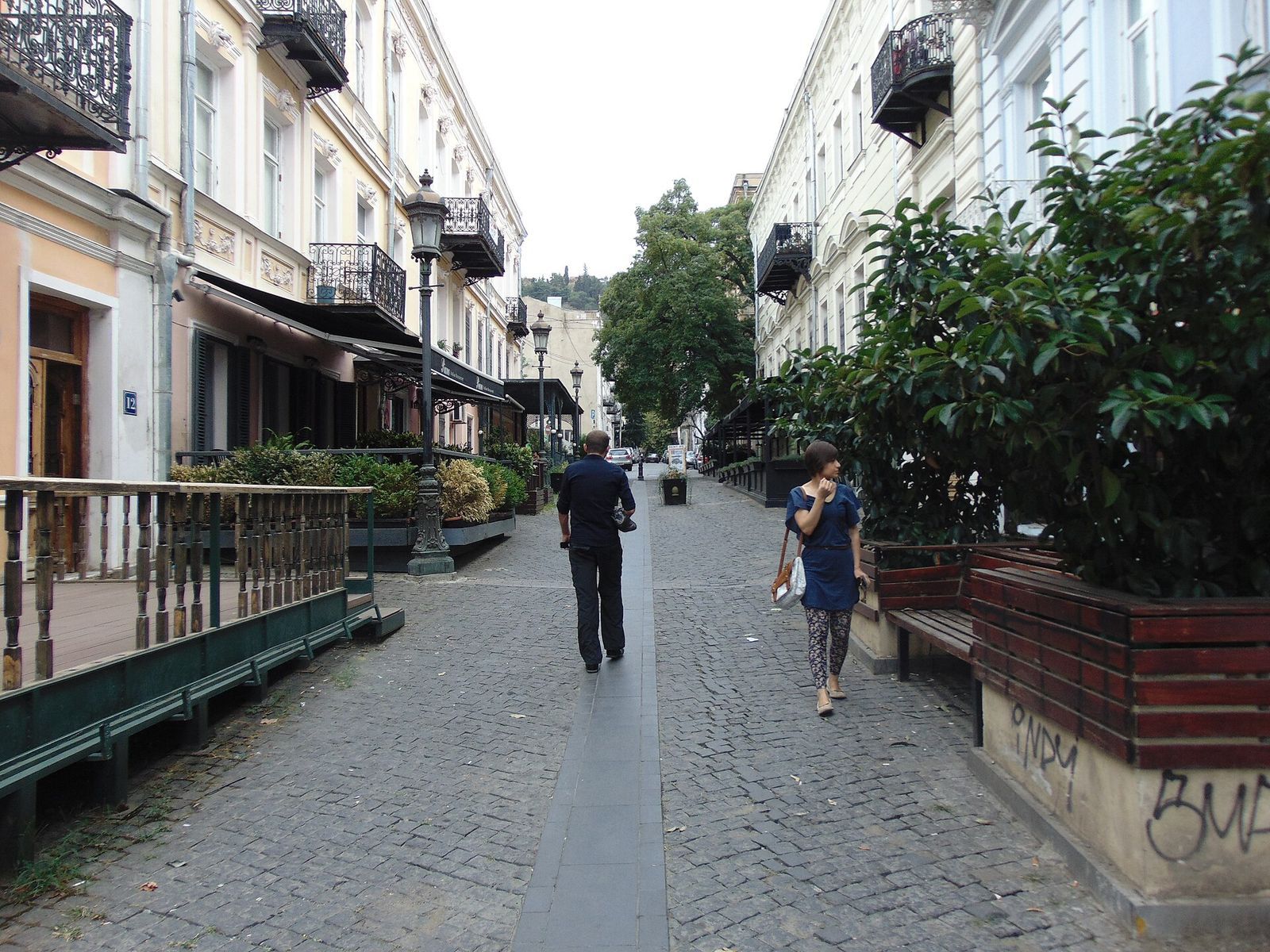
Back out on the street, keep looking up. Sololaki's facades carry the same money as the halls: wrought-iron balconies, carved stone around the windows, Art Nouveau curves next to sober neo-classical fronts. Ivane Machabeli Street, Galaktion Tabidze Street and Lado Asatiani Street are where I'd walk slowest.
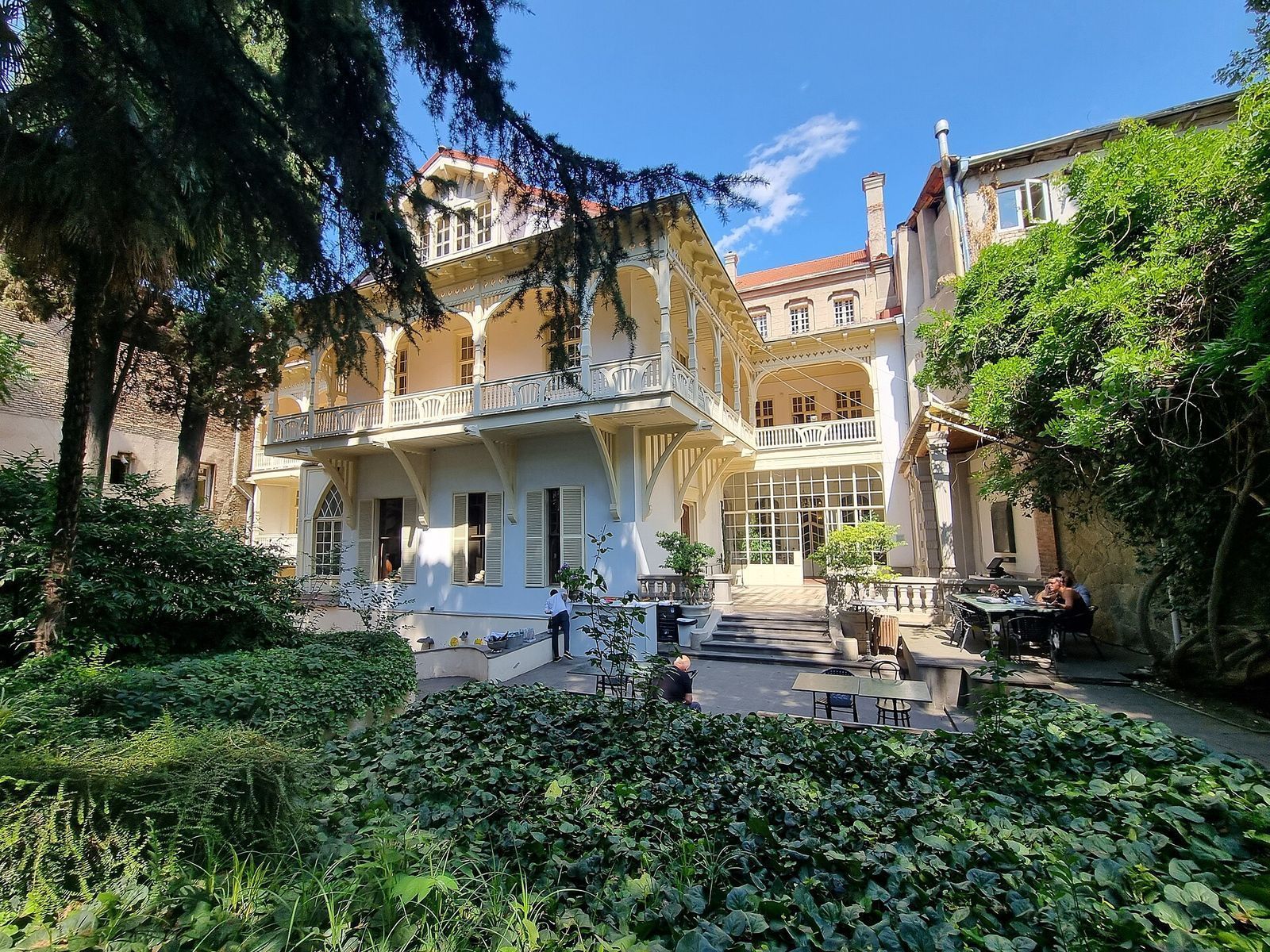
The showpiece is the Writers' House of Georgia on Ivane Machabeli Street, a mansion built in 1905 for the brandy maker and philanthropist David Sarajishvili. It mixes Art Nouveau and neo-baroque, and its garden holds Cafe Littera, one of the nicest places to eat in the area. Book a table days ahead if you want dinner there.
Guides around here also point out the old National Bank of Georgia building and its link to Stalin, the only Gothic-style house in Tbilisi, and a flat with a "haunted" reputation. They make good stories on a guided walk.
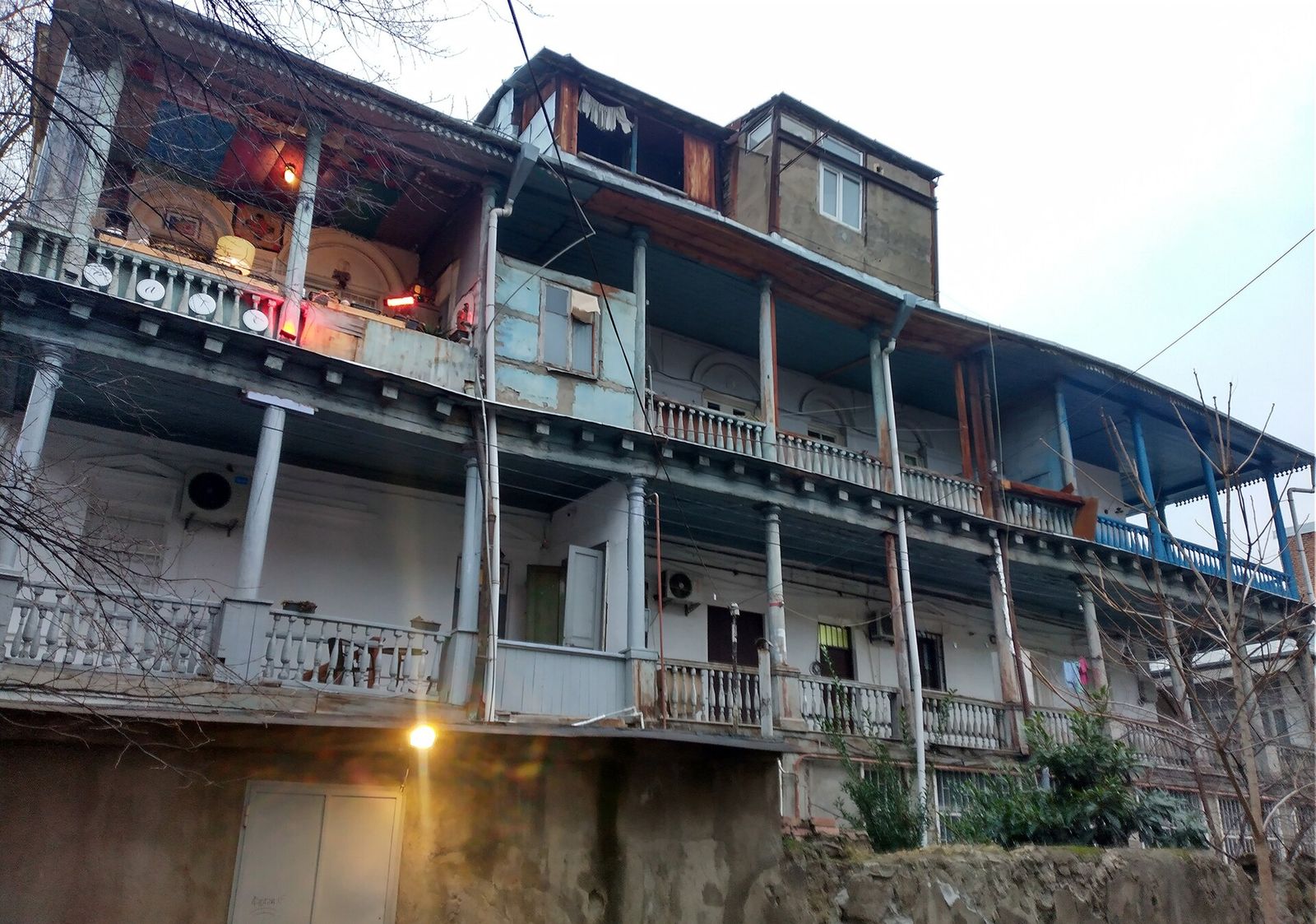
Then there are the courtyards. Push through an archway and you'll often find an Italian-style yard ringed with wooden galleries, stairs and balconies, with laundry, grapevines and someone's cat. They show how most of Sololaki lives today, and they're my favorite part of the neighborhood.
Walking Sololaki in a morning
Sololaki is small, so you don't need a set route. Here's the loop I'd do on a first visit, about 2 to 3 hours with coffee and the ridge.
I'd start at Freedom Square around 09:00 with a croissant from Baba Bakery, a minute up Ivane Machabeli Street. From there, walk up Machabeli past the Writers' House and number 17, cut across to Galaktion Tabidze Street for numbers 13 and 18, then drift over to Lado Asatiani Street for number 17 and a second coffee in the Shavi courtyard at number 28.
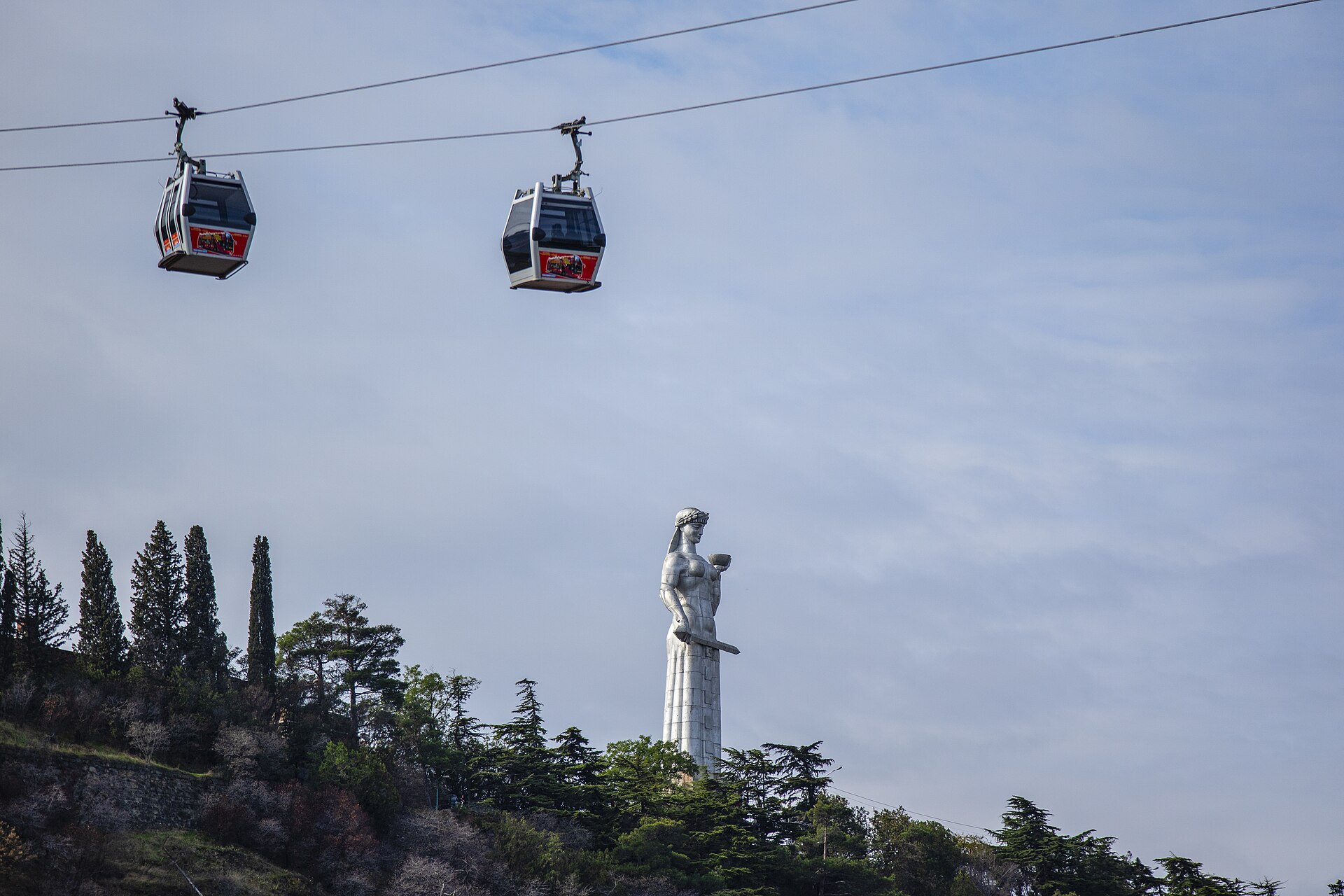
From the top of the grid, paths climb to the ridge. The walk up to the Mother of Georgia statue and along the ridge takes about 20 minutes and gives you the view over the Old Town, the river and Sameba. The National Botanical Garden sits on the far side of the ridge, 4 GEL in, and opens at 09:00. From the ridge you can ride the cable car down to Rike Park for 2.50 GEL or walk down through the Old Town lanes to the baths.
If you'd rather stay low, the same loop works without the ridge, and it ends 5 minutes from Freedom Square and the start of the Old Tbilisi walking tour route through Meidan and Abanotubani.
Sololaki walking tours
If the entrance halls are your main reason to come, a guided walk is the easy way in. Small-group Art Nouveau and Sololaki walks start from Freedom Square, usually in the morning, with groups of around 5 people. Expect about 1.5 hours for a Sololaki-only walk and 2.5 hours for a wider Art Nouveau route, at roughly 25 to 45 EUR per person.
The value is access. Guides know which doors open, which residents don't mind, and the stories behind the bank, the Gothic house and the haunted flat. On your own you'll see the facades and whichever halls happen to be open. I'd do the tour on day 1 or 2, then come back alone to the halls you liked best.
The best bars in Sololaki
Sololaki is one of the best places in Tbilisi for a drink. Galaktion Tabidze Street and Shalva Dadiani Street alone hold enough bars for a whole night, all within a few minutes of each other.
1. Crossroads Bar
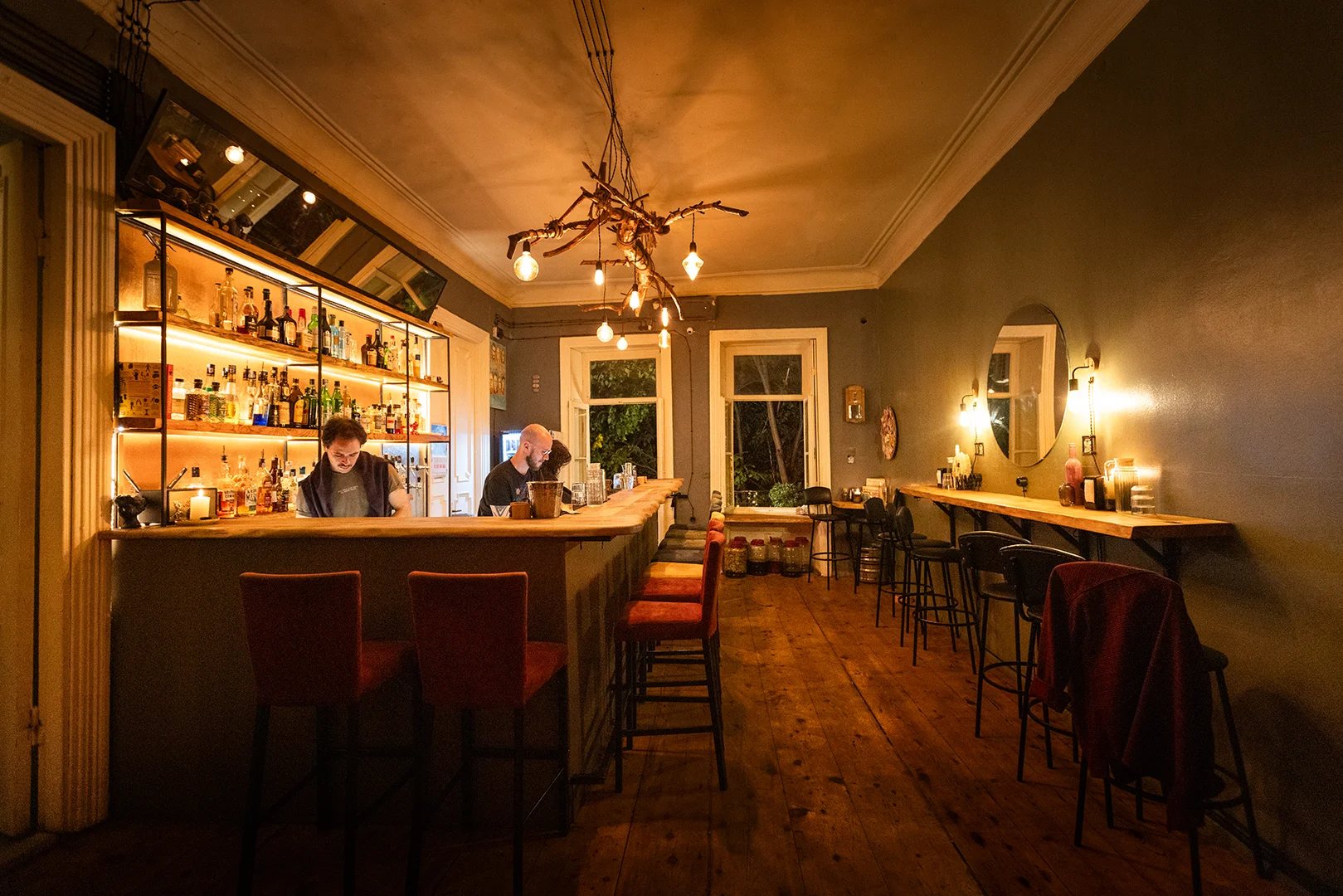
Crossroads Bar, at 30 Shalva Dadiani St, is my first stop and the best cocktail bar in Tbilisi to make new friends: a very open, social room with a real mix of expats and locals. Order the Pinelet (gin, pinecone liqueur, lime) or the smoky Walnut Ember.
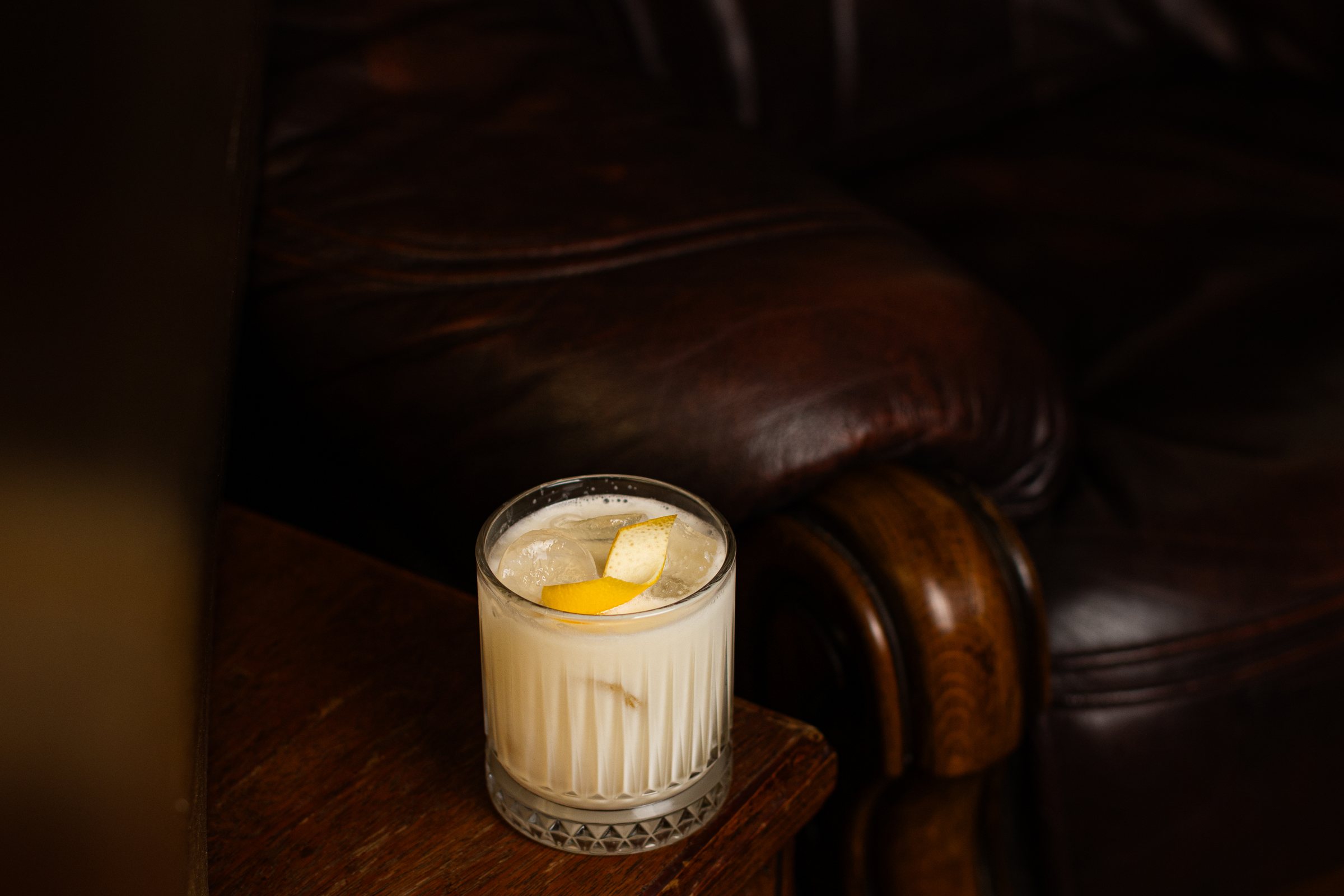
Time your visit to the week: expat meetup on Wednesday, karaoke on Tuesday and Sunday, live music on Thursday. The kitchen runs until midnight, with mini quiches at 7 GEL.
2. 41° Art of Drinks
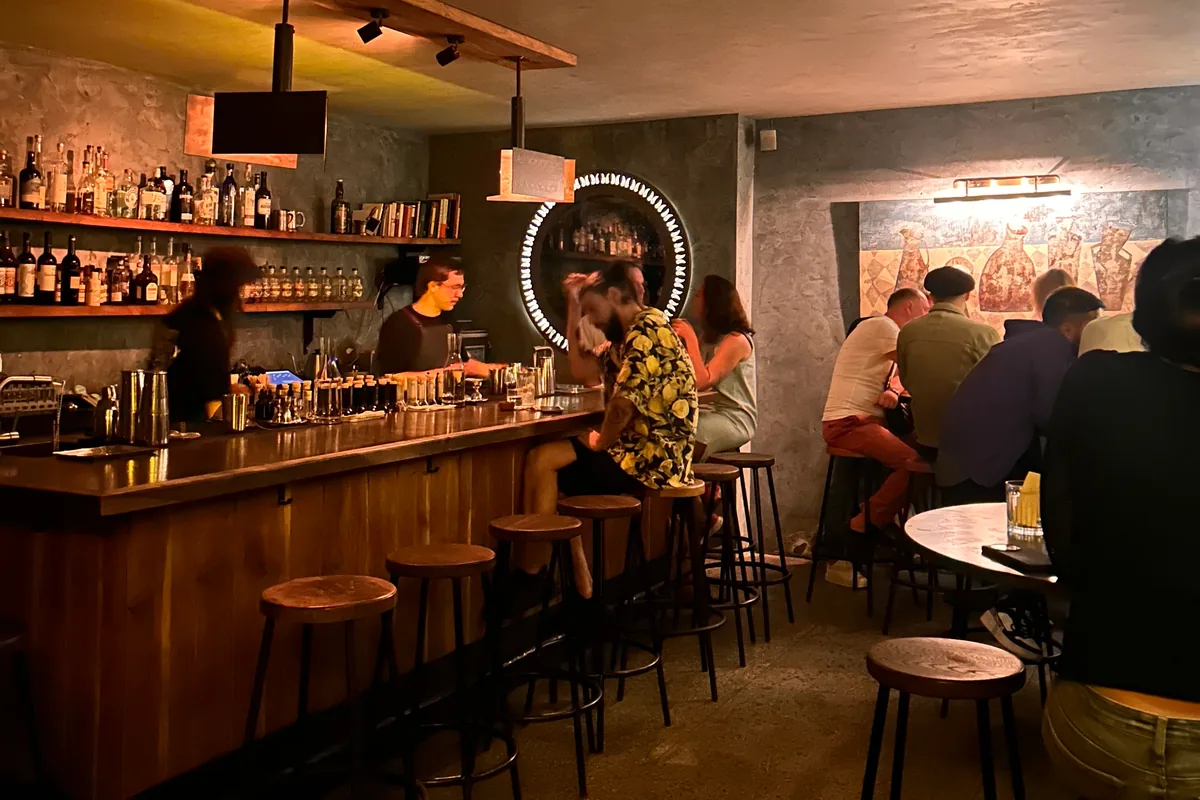
At 19 Galaktion Tabidze St, you slide open a metal door and go down into a brick basement that seats about 25. The house menu is handwritten in a diary and changes roughly monthly.
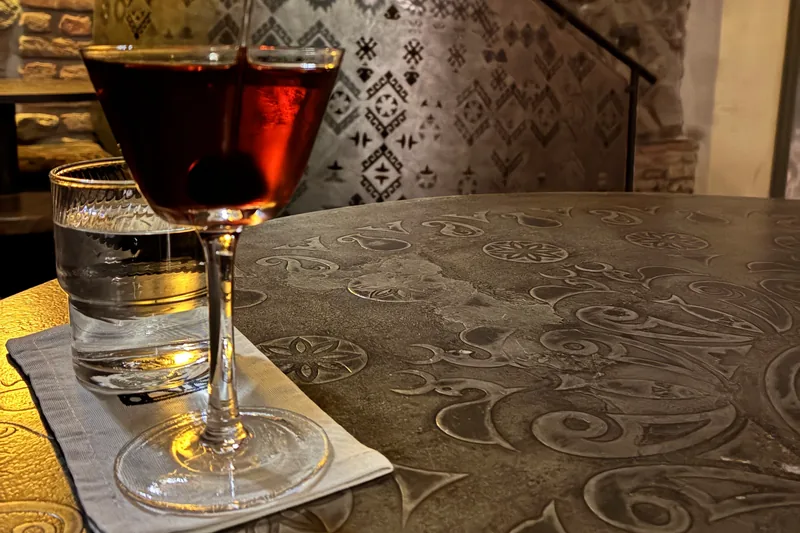
The bartenders will happily build you something off-menu if you tell them what you like. Best for a small group that wants to talk cocktails.
3. Ambavi
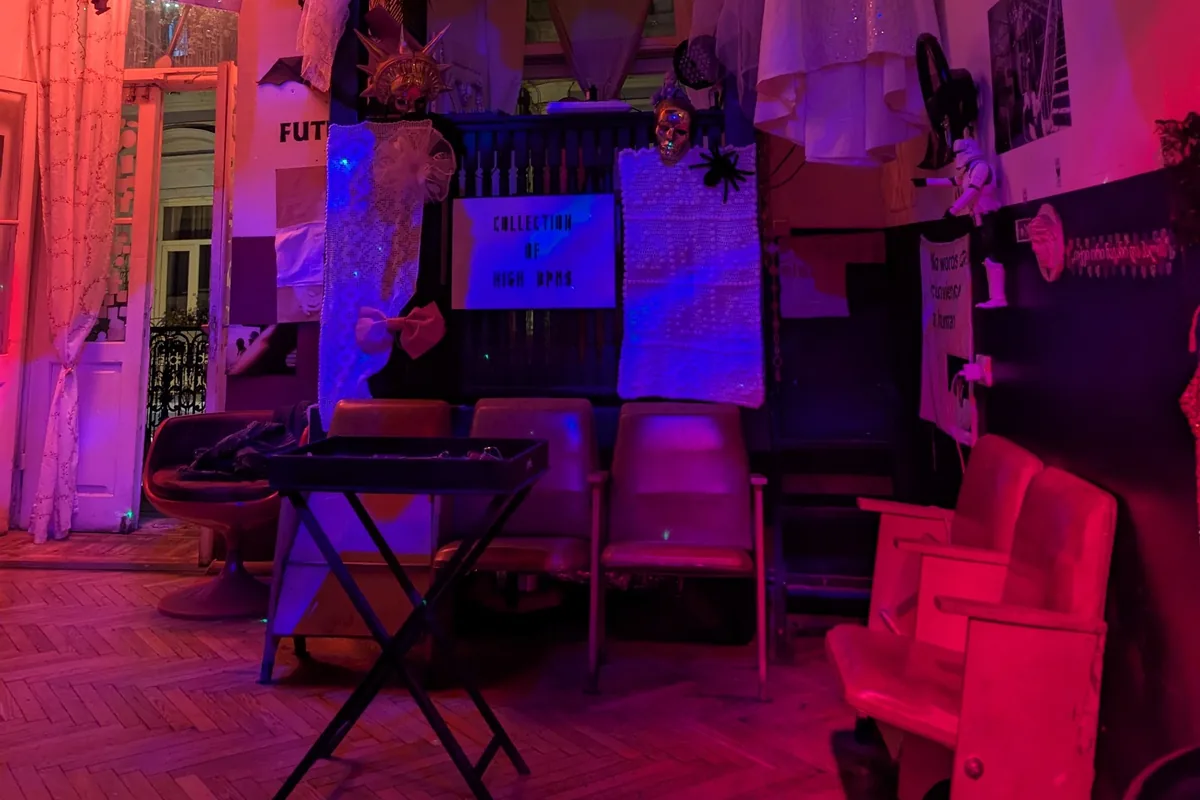
Ambavi, at 12 Galaktion Tabidze St, is a speakeasy in what looks like a residential building: climb to the top floor and knock or ring. A doorman lets people in only when there's room. Inside it's red light, vintage cinema chairs and a DJ, so come for the late, louder end of the night.
4. Chacha Time
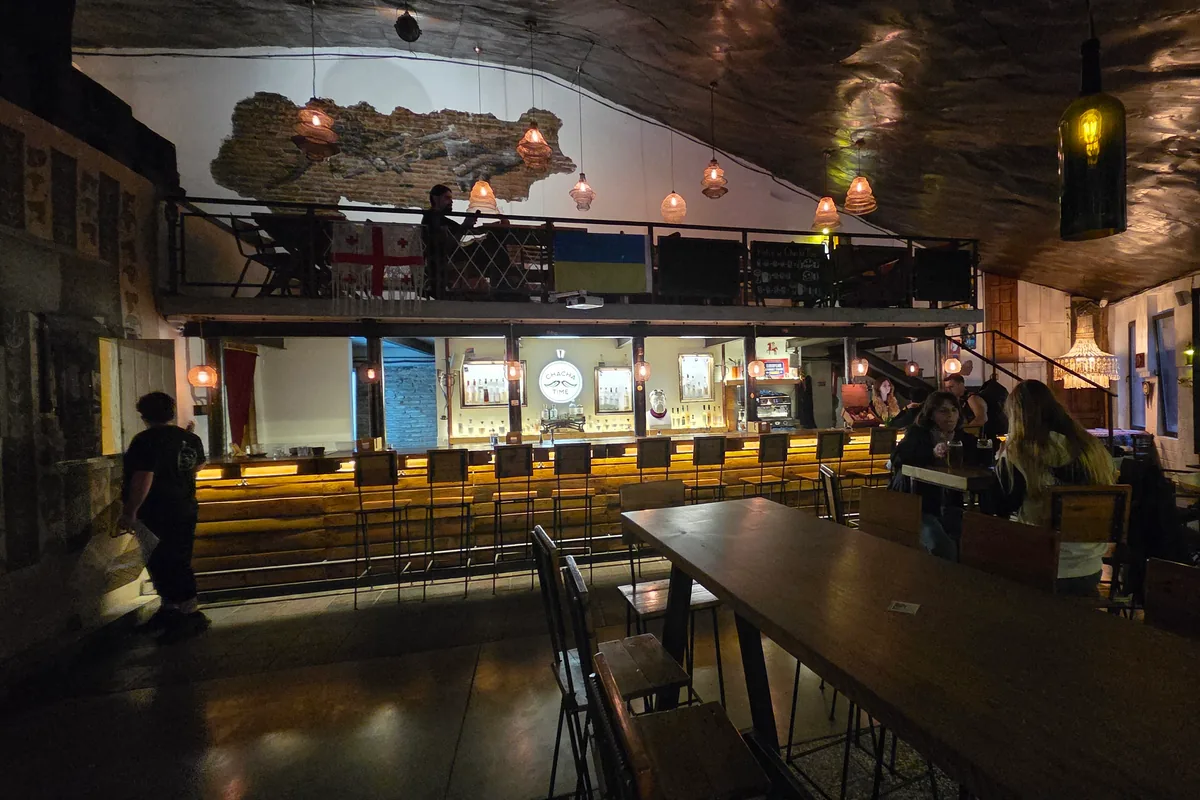
Chacha Time, at 5 Geronti Kikodze St, pours more than 40 chachas from across Georgia, in 25 ml measures or as tasting flights.
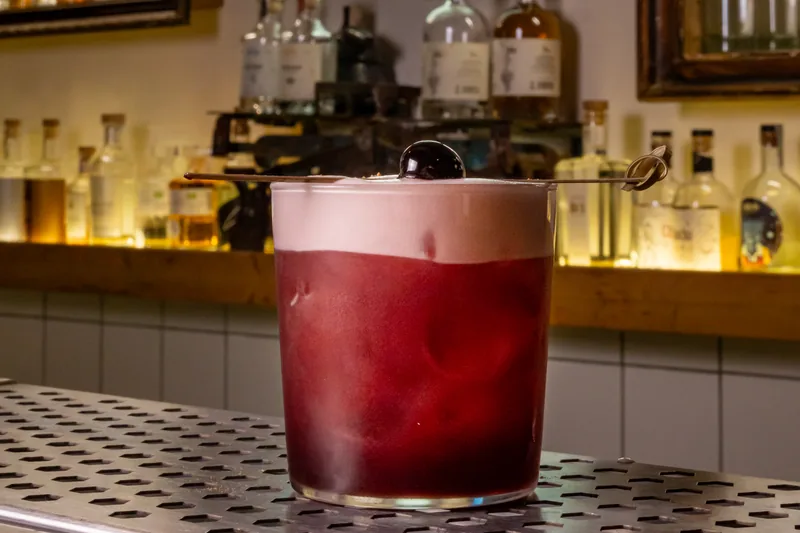
The Old Georgia is an Old Fashioned made with chacha aged in smoked oak. Go on a weekday if you want the staff to walk you through Georgian chacha properly.
5. Vino Underground
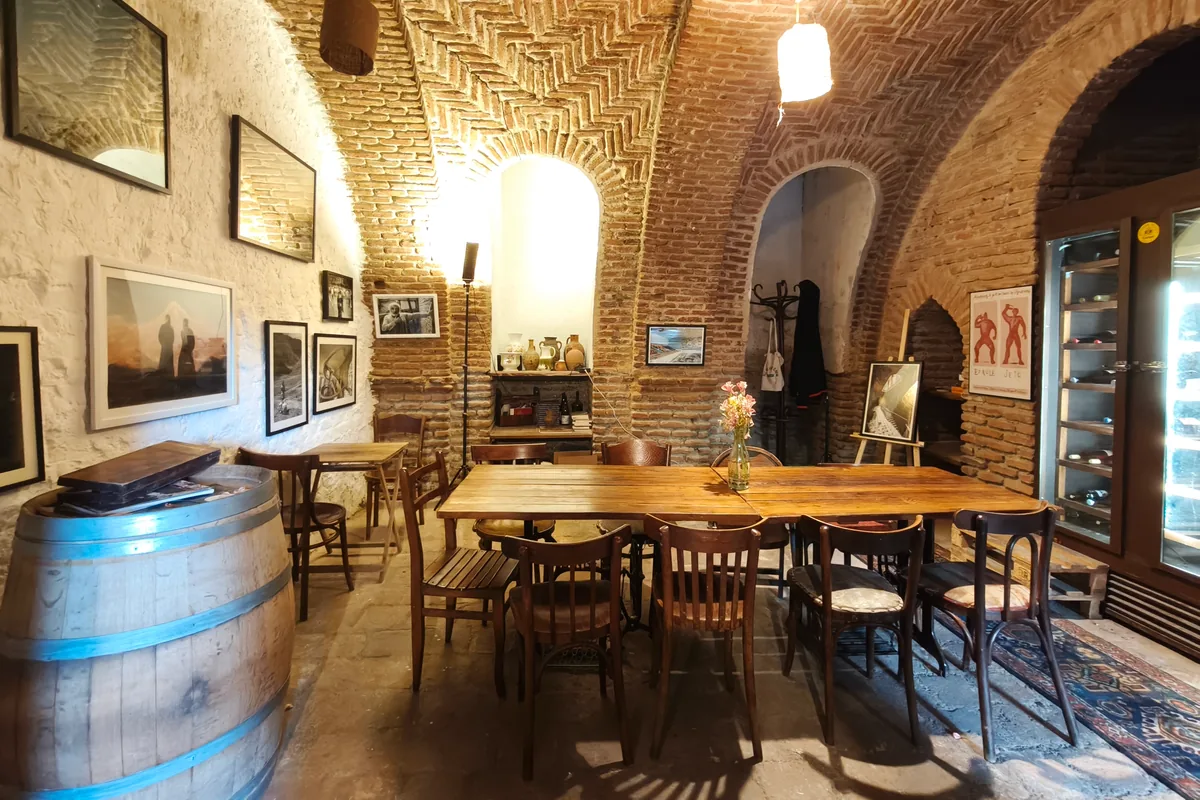
Vino Underground, at 15 Galaktion Tabidze St, a few doors down from 41°, was the first bar in town devoted to natural wine. It opens at 15:00 and runs to 23:00 Sunday to Thursday and to midnight on weekends.
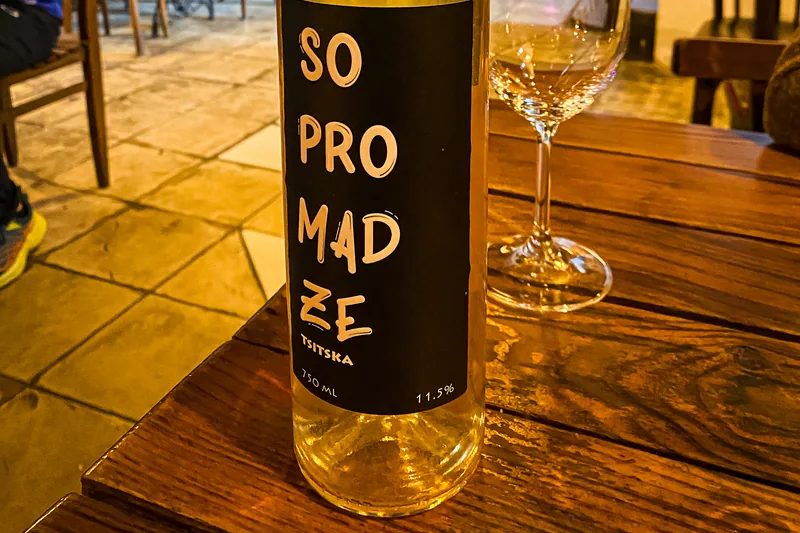
A glass runs 10 to 20 GEL, and the list leans toward small qvevri producers. It's the pick on this list for natural wine.
6. Abragi
Abragi is a Georgian craft beer bar on Shalva Dadiani St, the same street as Crossroads, with many drafts you won't find anywhere else in the city. Ask for a mini tasting before you commit to a pint. Good for a beer drinker in a cocktail crowd.
For a full night out in this part of town, I'd start with cocktails on Shalva Dadiani Street, move to 41° or Ambavi on Tabidze, and finish with a chacha flight on Kikodze. Few streets in town pack in as many cocktail bars in Tbilisi as Galaktion Tabidze, and Vino Underground belongs on any shortlist of Tbilisi wine bars.
Cafes and brunch in Sololaki
Sololaki has some of the best-looking cafe rooms in the city: frescoed ceilings, old garages, courtyards. A cappuccino costs 9 to 12 GEL in the cafes below.
1. Crossroads Bistro
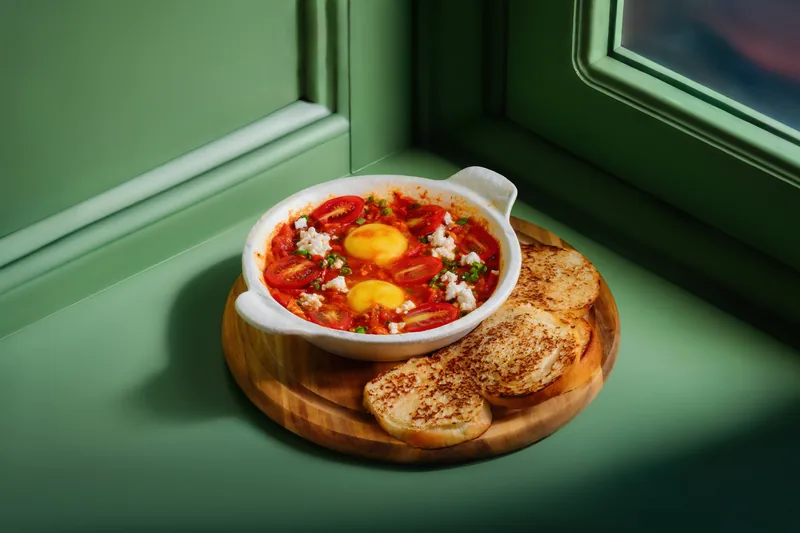
Crossroads Bistro, at 30 Shalva Dadiani St, is my first pick for brunch and for a working morning. Order the draniki (potato pancakes), the syrniki or the shakshuka.
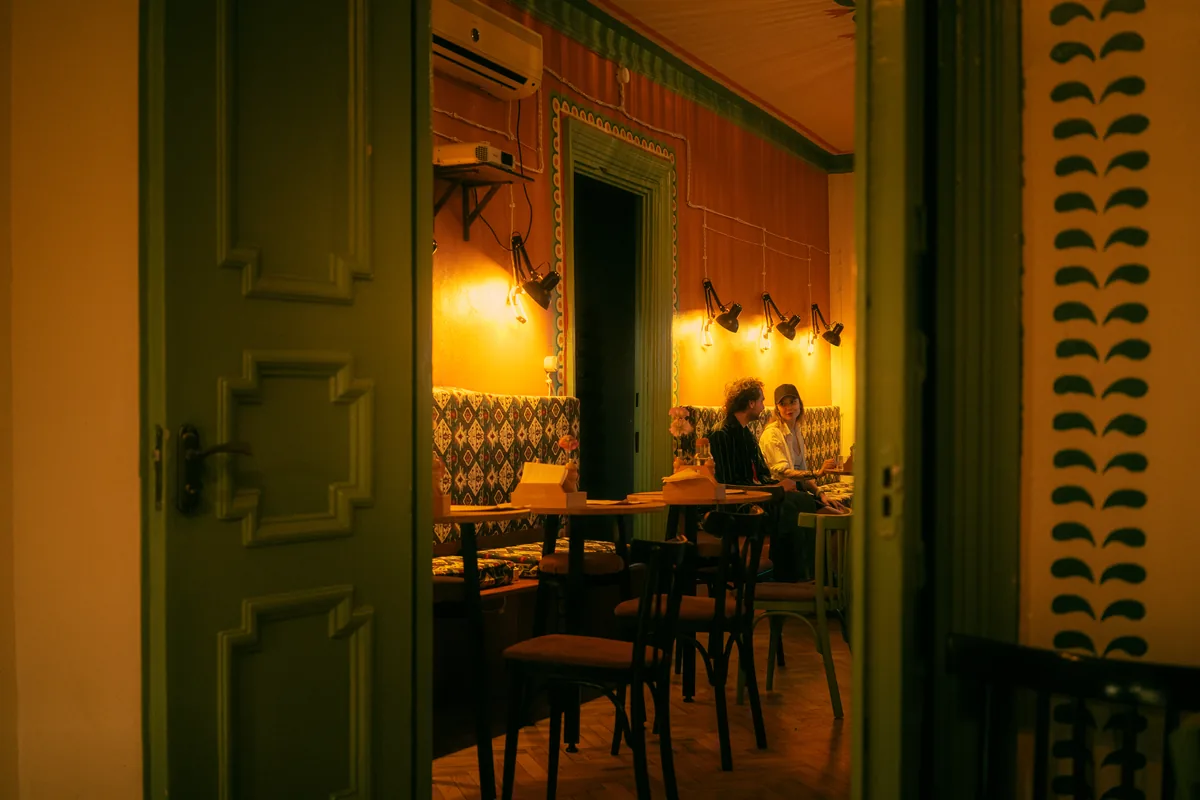
The dining room is calm, with patterned banquettes, laptops are welcome by day, and coffee runs until 11 PM, so it works for a late espresso too.
2. Shavi Coffee Roasters
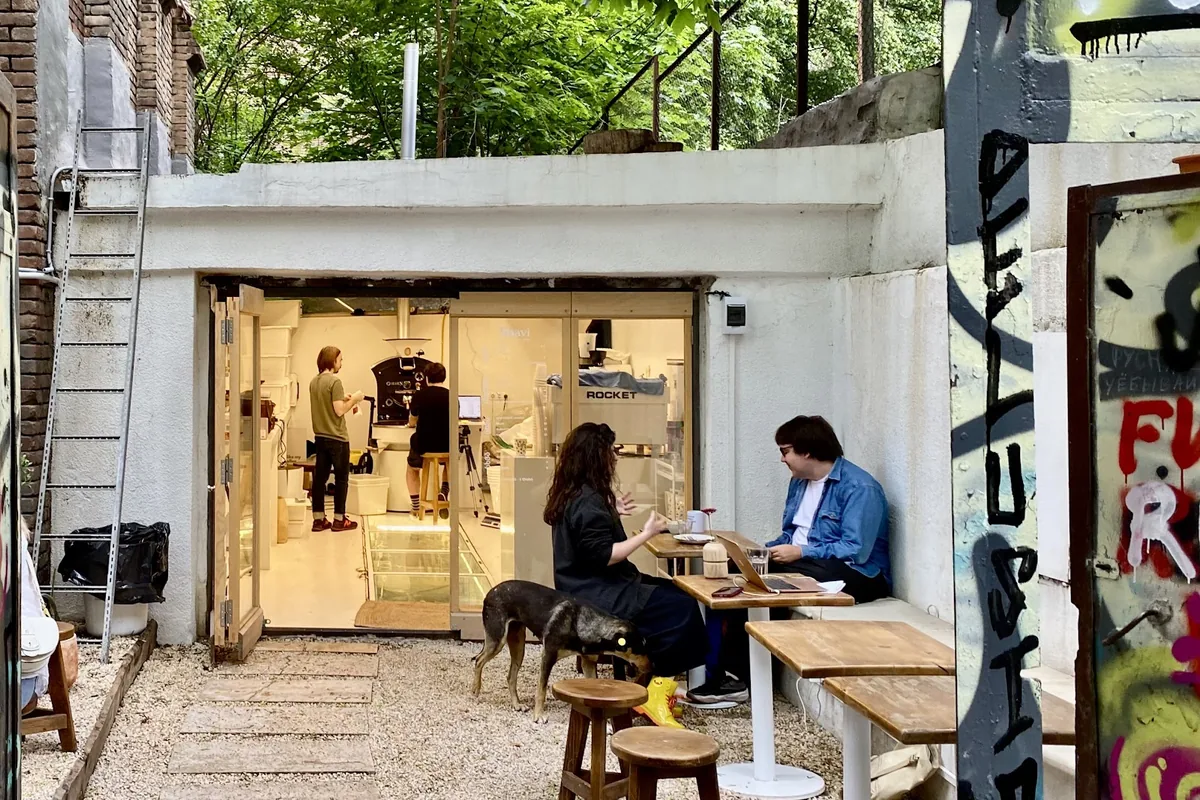
Shavi's Sololaki branch, at 28 Lado Asatiani St, is a shaded courtyard behind a former garage, with serious coffee and both hand brew and batch brew on offer. It's my favorite room for a slow second coffee on a walk, and the courtyard is lovely in summer.
3. Coffee Place
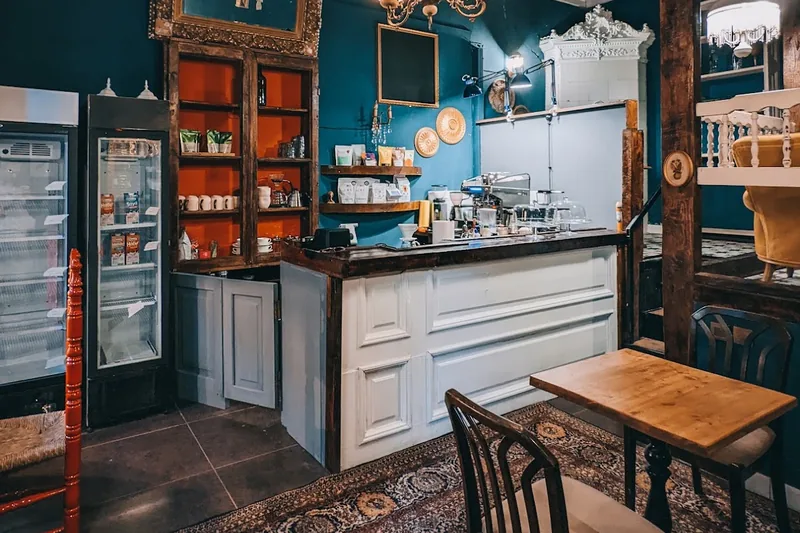
Coffee Place, at 24 Galaktion Tabidze St, is fully plant-based, under frescoed ceilings, with oat, coconut and banana milk as standard.
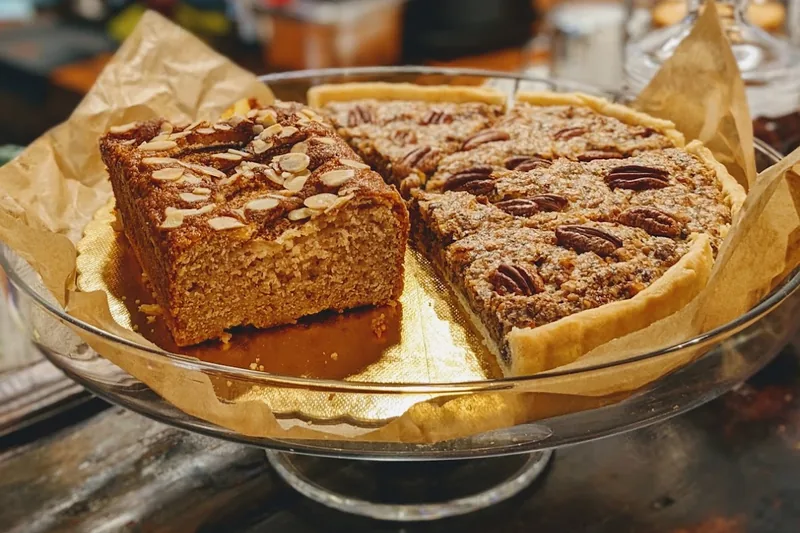
A cappuccino is 12 GEL and laptops are fine. The pick if you drink dairy-free or want the prettiest ceiling.
4. Grind
Grind, at 14 Ivane Machabeli St, is an underground, minimal coffee bar that opened in 2026, with V60, cold brew, matcha and filled donuts. A cappuccino is 9 GEL, the cheapest on this list, and laptops are fine.
5. Baba Bakery
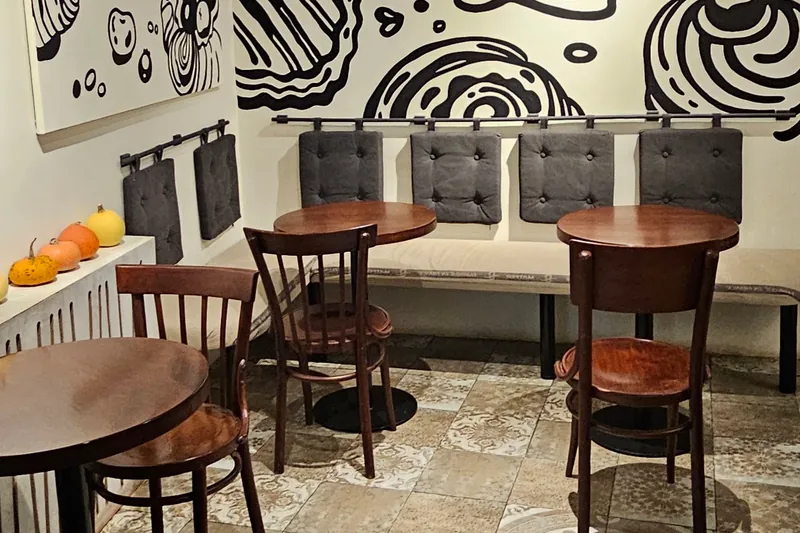
Baba Bakery, at 4 Ivane Machabeli St, a minute from Freedom Square, bakes croissants, cruffins and kouign-amann in house.
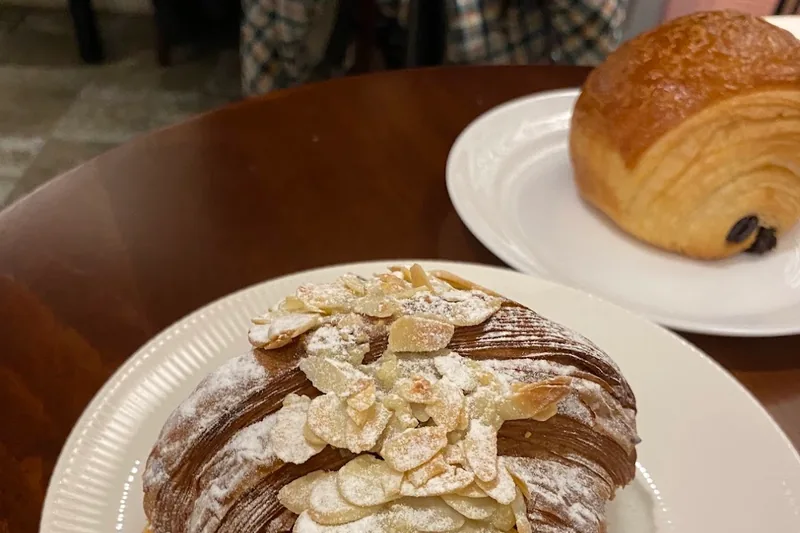
A cappuccino is 10 to 12 GEL. It's where I'd grab breakfast before the walk.
Vera has more of the serious cafes in Tbilisi, but Sololaki has the best rooms.
Where to eat in Sololaki
For a proper meal, these are the four I'd send a friend to.
| Restaurant | Where | What to order | Good for |
|---|---|---|---|
| Cafe Littera | Ivane Machabeli St 13, in the Writers' House garden | The changing Georgian-fusion menu | A special dinner; book days ahead |
| Iasamani | Lado Asatiani St 33 | Oyster mushrooms with cherry and pomegranate sauce | Vegetarians; more than half the menu is meat-free |
| Klike's Khinkali | Chitadze St 1, behind Parliament | Meat, mushroom or nadughi khinkali | Broth lovers and vegetarians |
| Amo Rame | Sololaki | Peppery Pshavi-style meat, or nadughi | Hand-made mountain recipes |
Sololaki has 2 of the better khinkali spots in Tbilisi within a short walk of each other. If Amo Rame is full, Klike's is the fallback.
Staying in Sololaki: who it suits
Sololaki is my top pick for a first trip if you want to walk everywhere and still sleep well. You're 5 minutes from the Old Town, 5 minutes from Rustaveli, and on a residential street the moment you turn off Tabidze or Dadiani. Rooms run 60 to 200 GEL a night, with mid-range boutique hotels at 120 to 200 GEL.
Stay in Sololaki if you are:
- A first-timer. The Old Town, Freedom Square and Rustaveli Avenue are all walkable, and Liberty Square metro is at the bottom of the hill.
- Into architecture. The entrance halls and courtyards are on your doorstep, so you can look at them at 08:00 before anyone else.
- A couple. Quiet streets, good cafes and some of the city's best cocktail and wine bars within 5 minutes.
- Out late but a light sleeper. The bars are on a few streets; the side streets go quiet at night.
Skip it if you are:
- Carrying heavy bags or pushing a pram. The hills and stairs are real.
- Set on river views or the bath domes. Stay in the Old Town for those.
- On a long, tight-budget stay. Marjanishvili and Saburtalo cost less.
Here's how Sololaki compares with the other central areas:
| Area | Per night | Feel | Hills | Nearest metro |
|---|---|---|---|---|
| Sololaki | 60 to 200 GEL | Quiet, local, Art Nouveau, great bars | Steep, with stairs | Liberty Square |
| Old Town | 80 to 300 GEL | Busiest and most touristy, loud on weekend nights | Cobbles, some climbs | Liberty Square or Avlabari |
| Mtatsminda and Vera | 100 to 200 GEL | Cafes, wine bars, long stays | Steep upper streets | Rustaveli |
| Marjanishvili | 50 to 100 GEL | Food, nightlife, best value | Mostly flat | Marjanishvili |
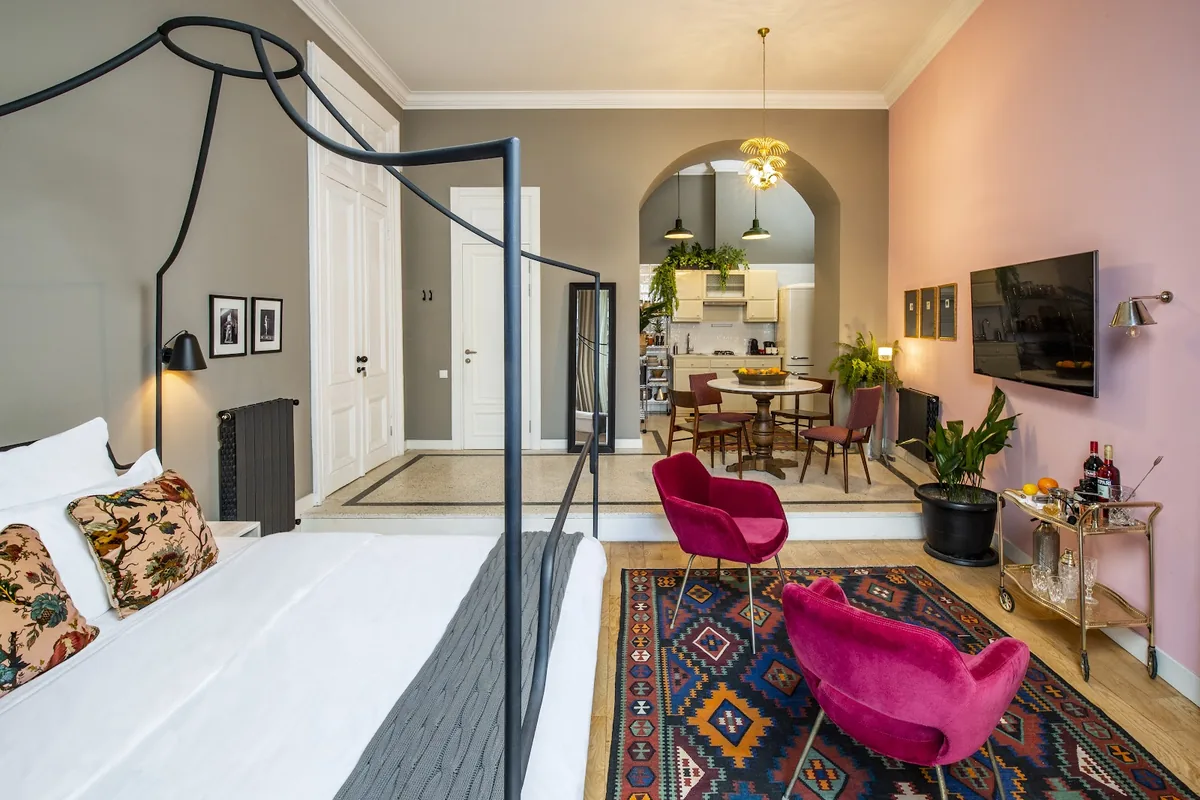
For hotels, I'd look at Communal Sololaki first: a 13-room townhouse with bold colors, original parquet and a shared breakfast table, rated 9.1 on Booking.
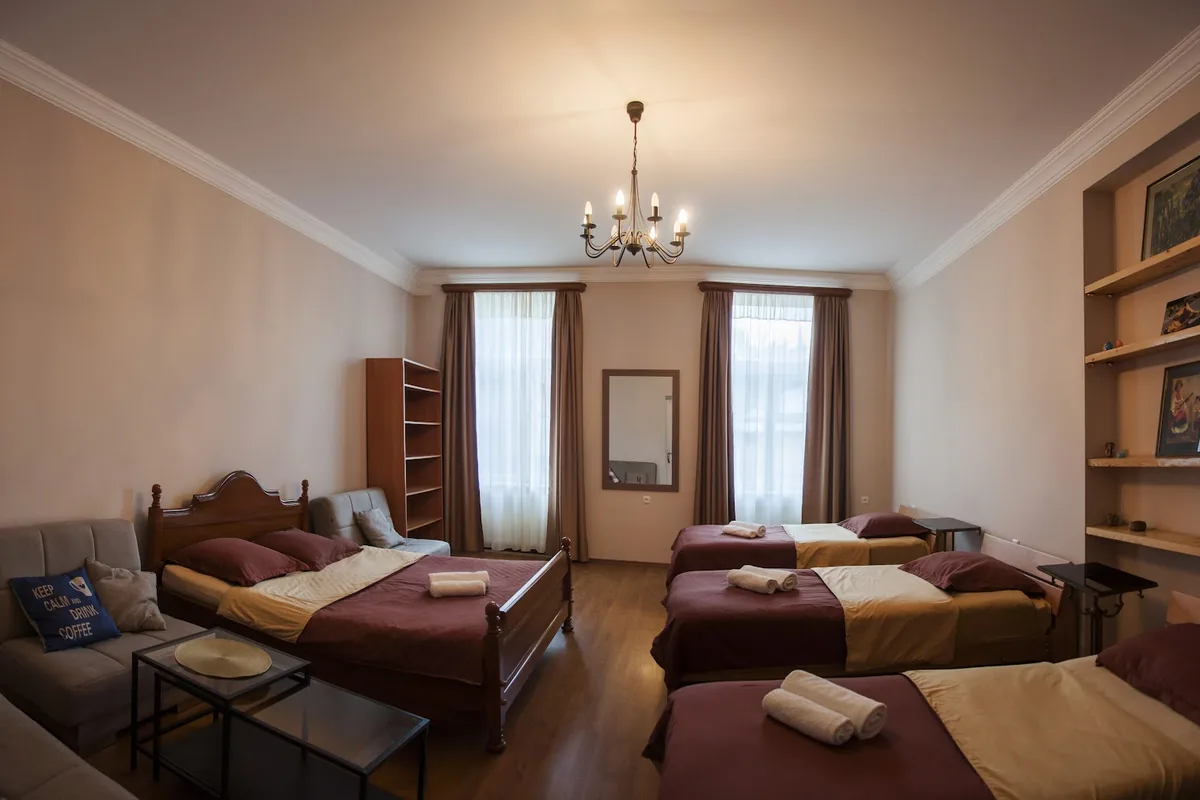
Guest House Lile (9.1) is the cheap guesthouse option, with shared-bathroom doubles at about 60 to 70 GEL.
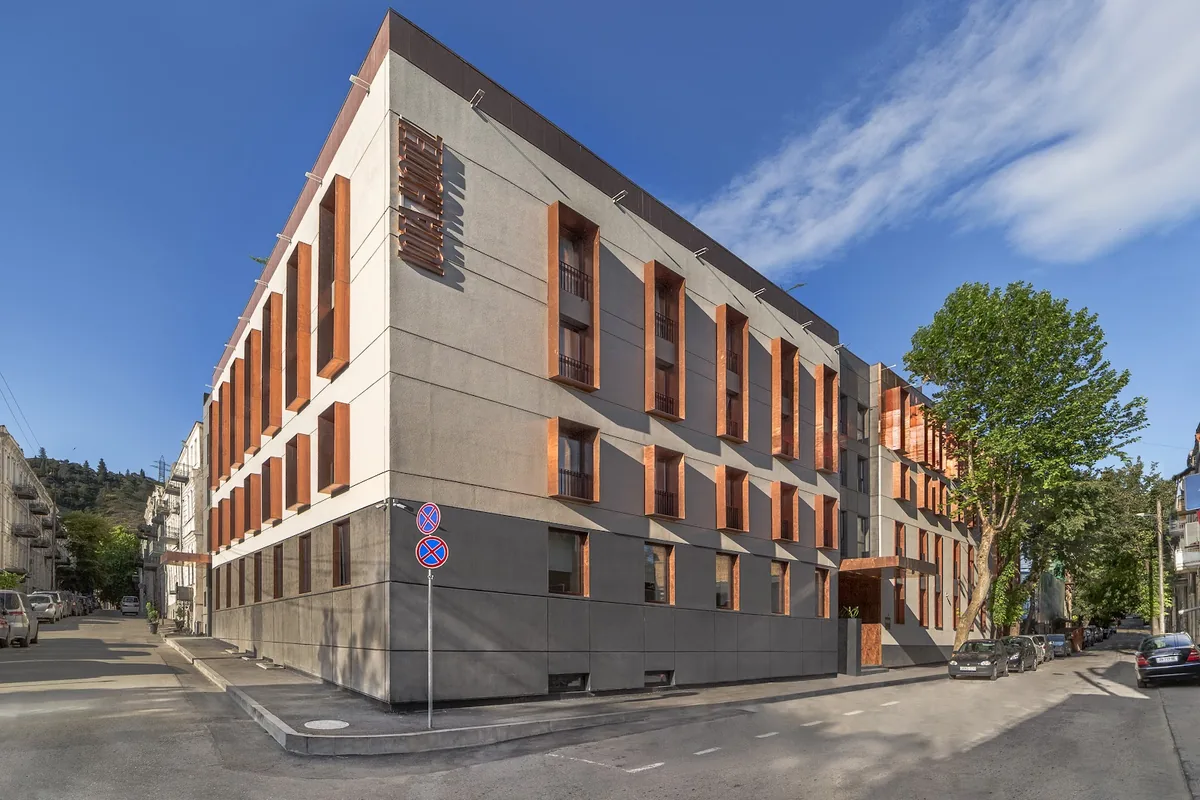
IOTA Hotel Tbilisi (8.5) is a minimalist option near Freedom Square.
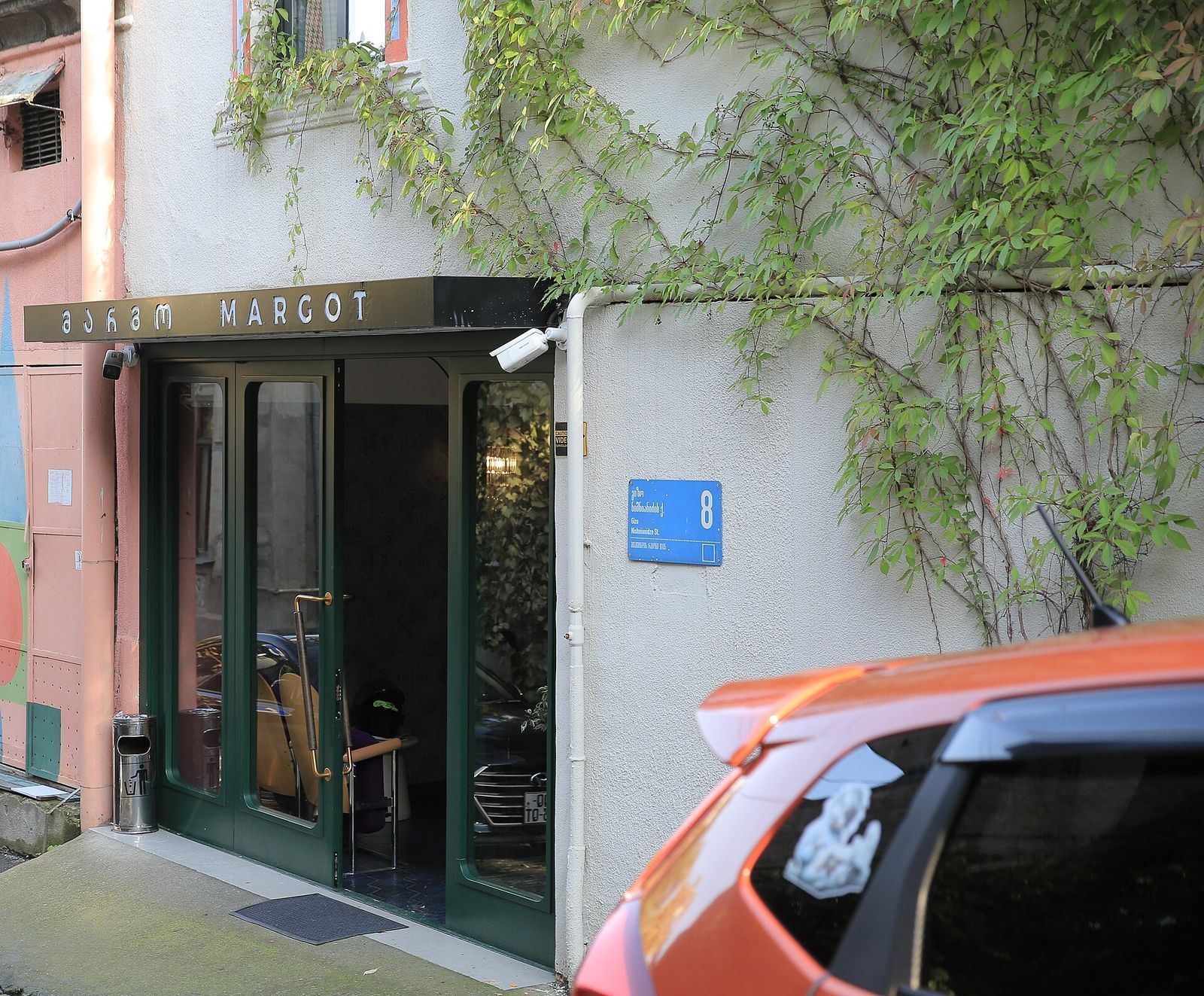
Margot Sololaki (8.3) is a 15-room 4-star at about 250 to 320 GEL a night, at the top edge of the quarter rather than in the Art Nouveau grid. Vera and the Old Town are the other two areas I'd weigh up when deciding where to stay in Tbilisi without a car.
Getting to Sololaki
Sololaki starts at Freedom Square, so the easiest way in is the Tbilisi metro to Liberty Square (Tavisuplebis Moedani) station, 1 GEL a ride. From the station, Ivane Machabeli Street and Galaktion Tabidze Street climb straight into the neighborhood.
From the airport, a Bolt taxi to the center costs about 20 to 30 GEL, and the 337 bus stops at Freedom Square. The Galleria Tbilisi mall near Freedom Square and the small grocery stores in the grid cover anything you forgot to pack.
Coming from the Old Town, just walk uphill: it's about 5 minutes from the bottom of Sololaki to the lanes around Meidan. From the top, the ridge and the cable car down to Rike Park are about 20 minutes on foot.
Key takeaways
- Sololaki is the quiet, central quarter between Freedom Square, the Old Town and the ridge, 5 minutes from the main sights.
- The entrance halls are the highlight: Galaktion Tabidze 18 and Ivane Machabeli 17 first, and only through open doors.
- A small-group walk of 1.5 to 2.5 hours is the best way into the halls you can't open yourself.
- It's my pick for a first-trip base at 60 to 200 GEL a night, as long as you can handle stairs.
Frequently asked questions
What is Sololaki known for?
Sololaki is known for its Art Nouveau architecture and its painted entrance halls. Merchants built the quarter in the late 19th and early 20th centuries, and the stairwells, courtyards and facades they left are what visitors come for today. It's also one of the city's best areas for cafes and cocktail bars.
Can you go inside the entrance halls in Sololaki?
Yes, if the door is open. The halls are shared spaces in residential buildings, so step in quietly, stay on the ground floor and leave if asked. A guided walk is the reliable way to see the best ones, because guides know which doors open.
Is Sololaki a good area to stay in Tbilisi?
Yes, it's one of the best bases for a first trip. It's quieter and a little cheaper than the Old Town, rooms run 60 to 200 GEL a night, and you can walk to the Old Town and Rustaveli Avenue in minutes. The trade-off is the hills and stairs.
Is Sololaki better than the Old Town for a first visit?
For sleeping, I think so. The Old Town has the river views and the baths on your doorstep, but it's busier, pricier and loud on weekend nights, while Sololaki is 5 minutes uphill and much calmer. For sightseeing you'll spend time in both anyway.
How long do you need in Sololaki?
Plan 2 to 3 hours for the entrance halls, facades and a coffee, or half a day if you add the walk up to the ridge and the Mother of Georgia. A guided Sololaki walk takes about 1.5 hours.
How do you walk from Sololaki to Narikala?
Climb to the top of the Sololaki grid and take the paths up to the ridge, about 20 minutes on foot. The fortress itself is closed for restoration, but the ridge path and viewpoints are open, and the cable car takes you down to Rike Park for 2.50 GEL.
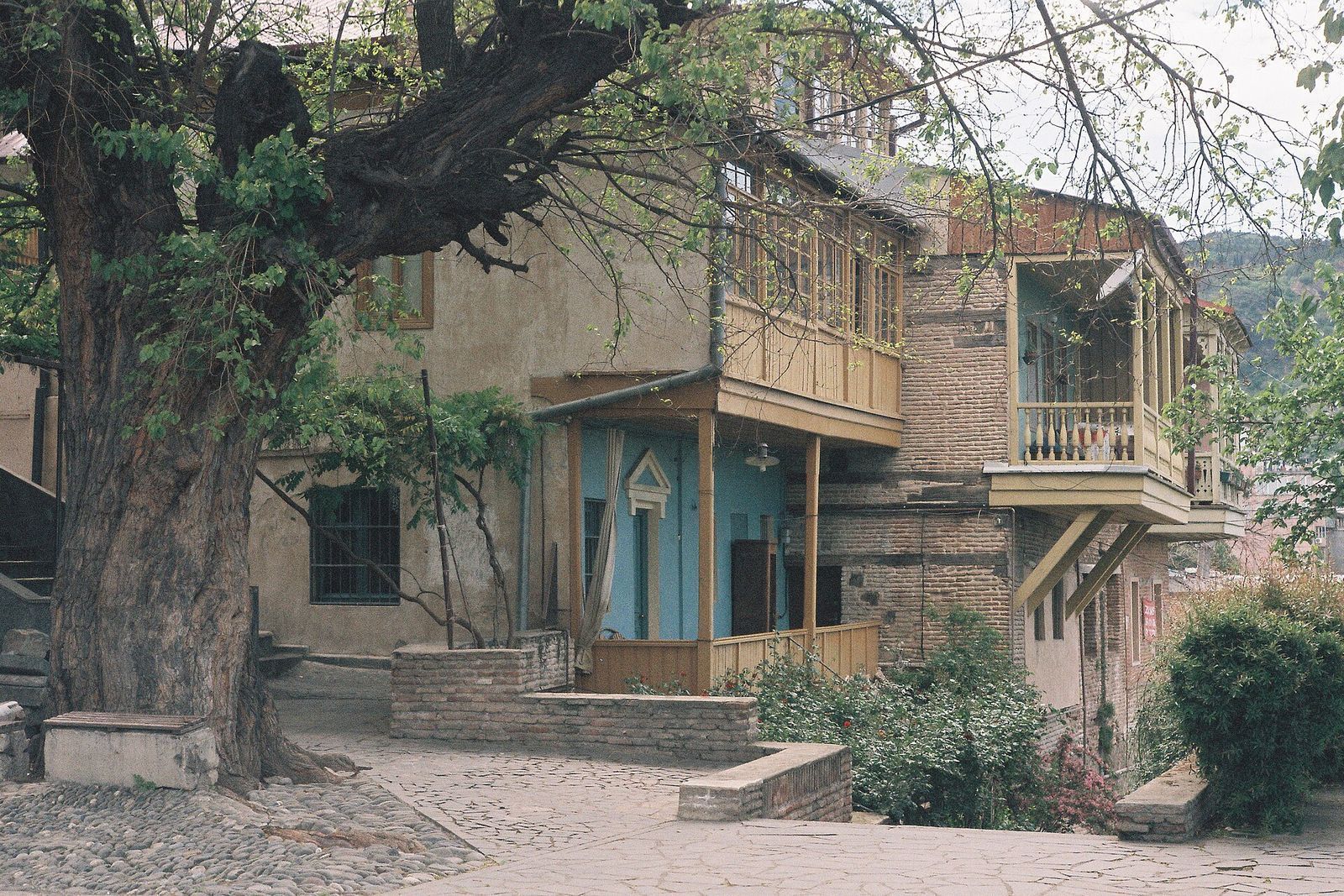
Tbilisi Neighborhoods: The 8 Best Areas and What Each One Is Like
Tbilisi is known for its old quarters. Here are the 8 best areas to explore, what each one is like and who it suits.
Read the guide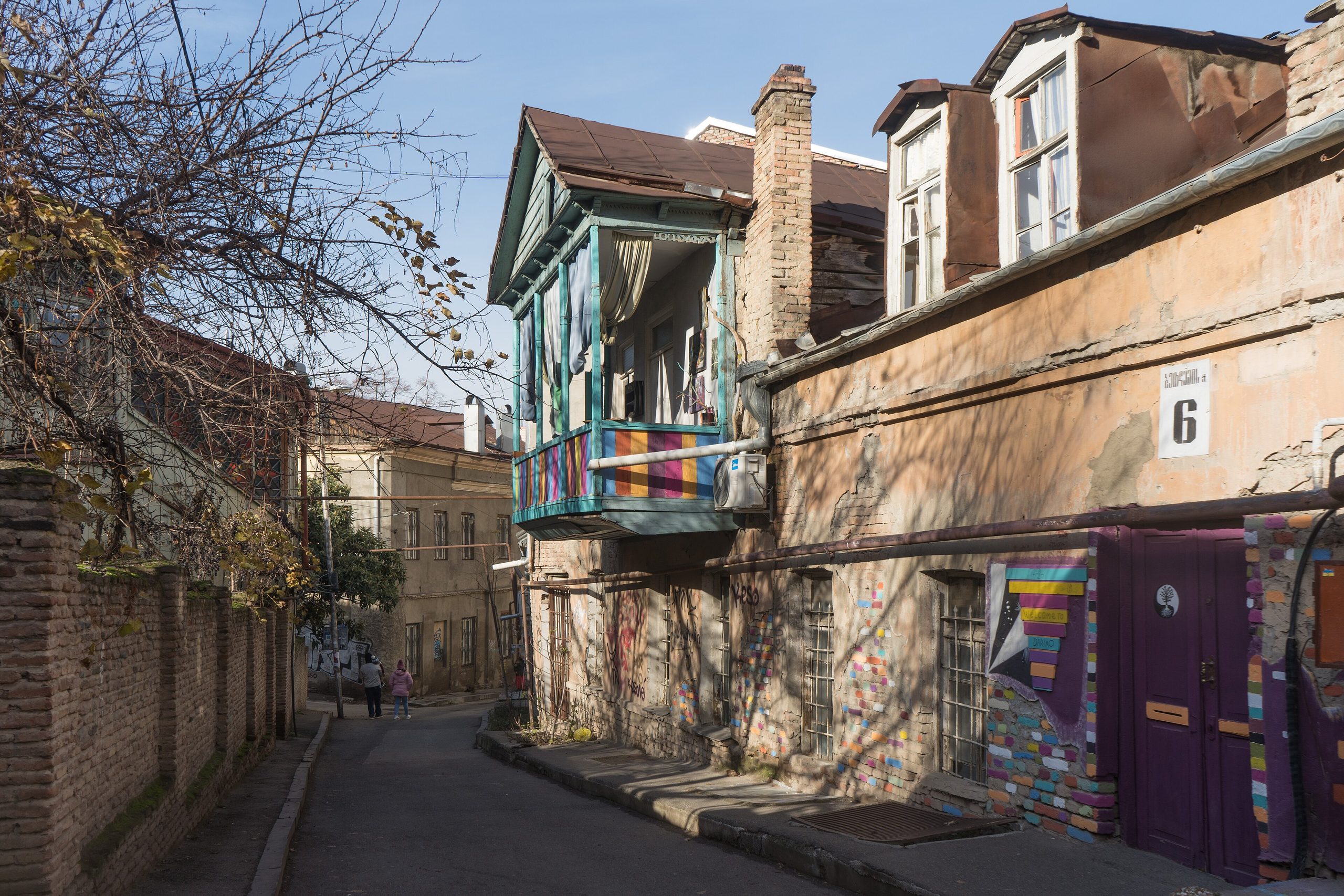
Old Tbilisi: Kala, Betlemi, Meidan and Shardeni Street
Old Tbilisi is the city of balconies and bath domes. Here is what to see, where to eat and whether to stay there.
Read the guide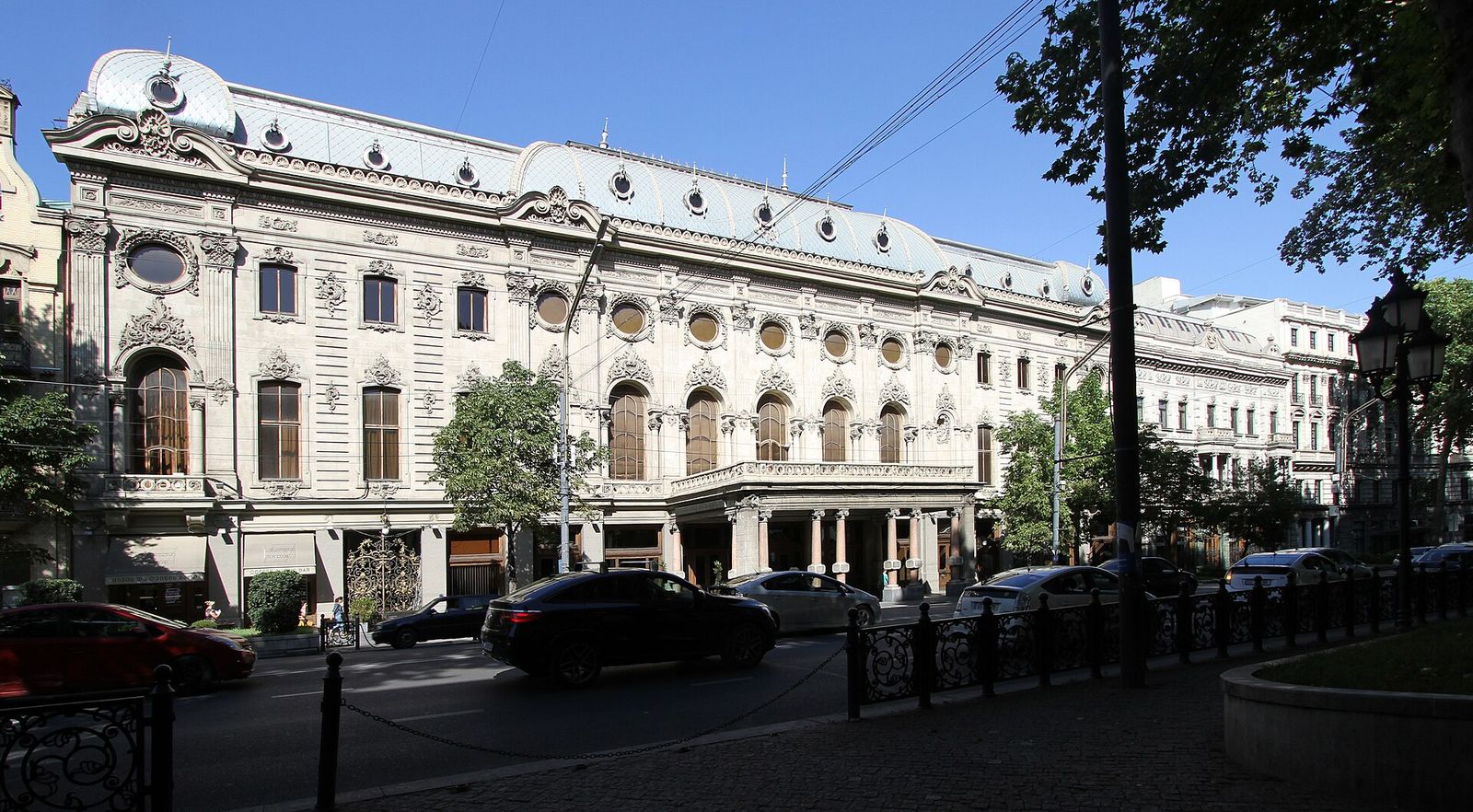
Rustaveli Avenue and Freedom Square: What to See, Eat and Know
Rustaveli Avenue is the grand main street of Tbilisi. Here is what to see from Freedom Square on, and how long it takes.
Read the guide