Mother of Georgia (Kartlis Deda): The Statue Above Tbilisi
Kartlis Deda, the Mother of Georgia, is the 20 m aluminum woman standing on the ridge above Old Tbilisi with a bowl of wine in one hand and a sword in the other. She is free, open around the clock and about 5 minutes on foot from Narikala Fortress. Here's what the statue stands for, the ways up to her, what you see from her feet and where to look at her from below.
What is the Mother of Georgia statue?
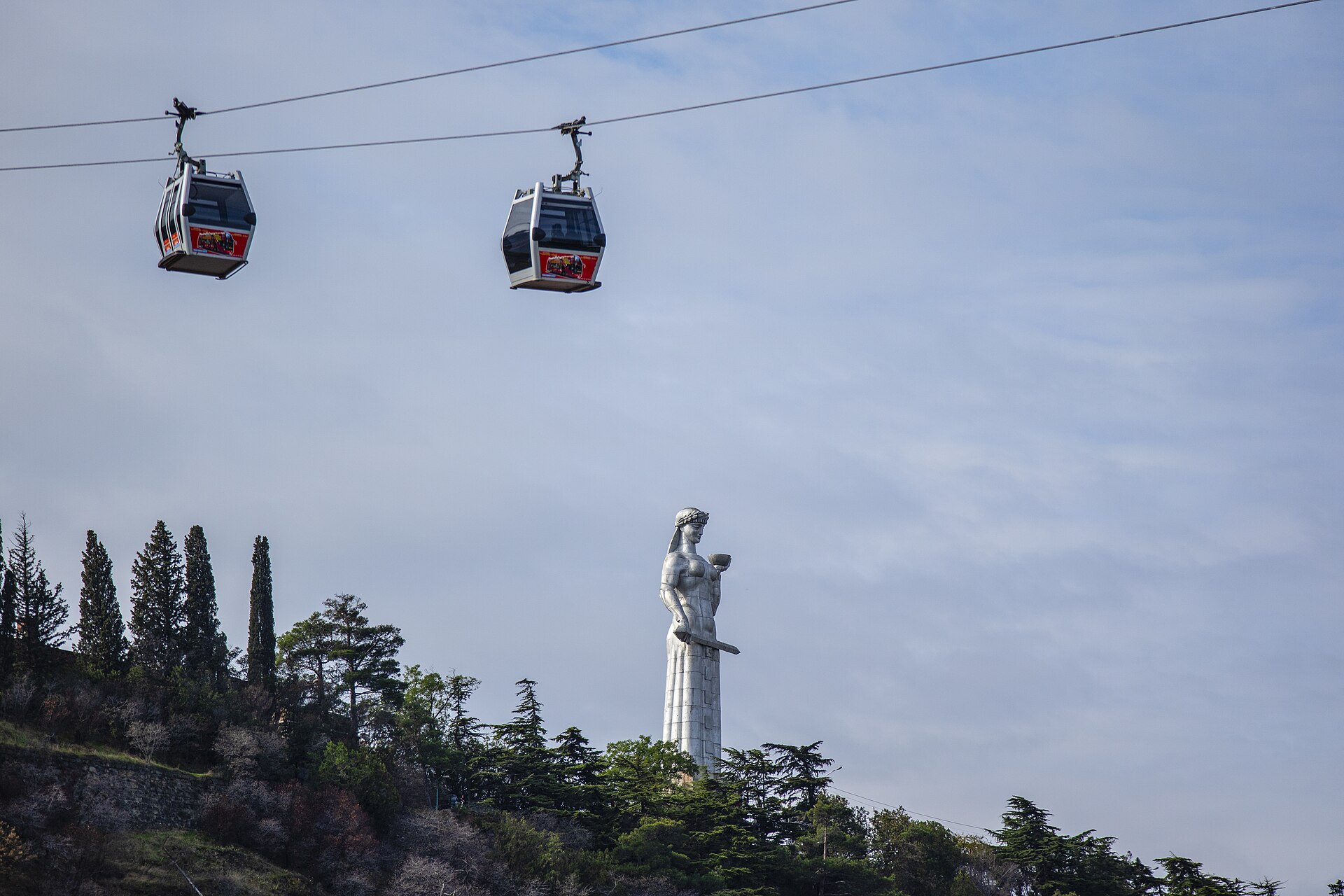
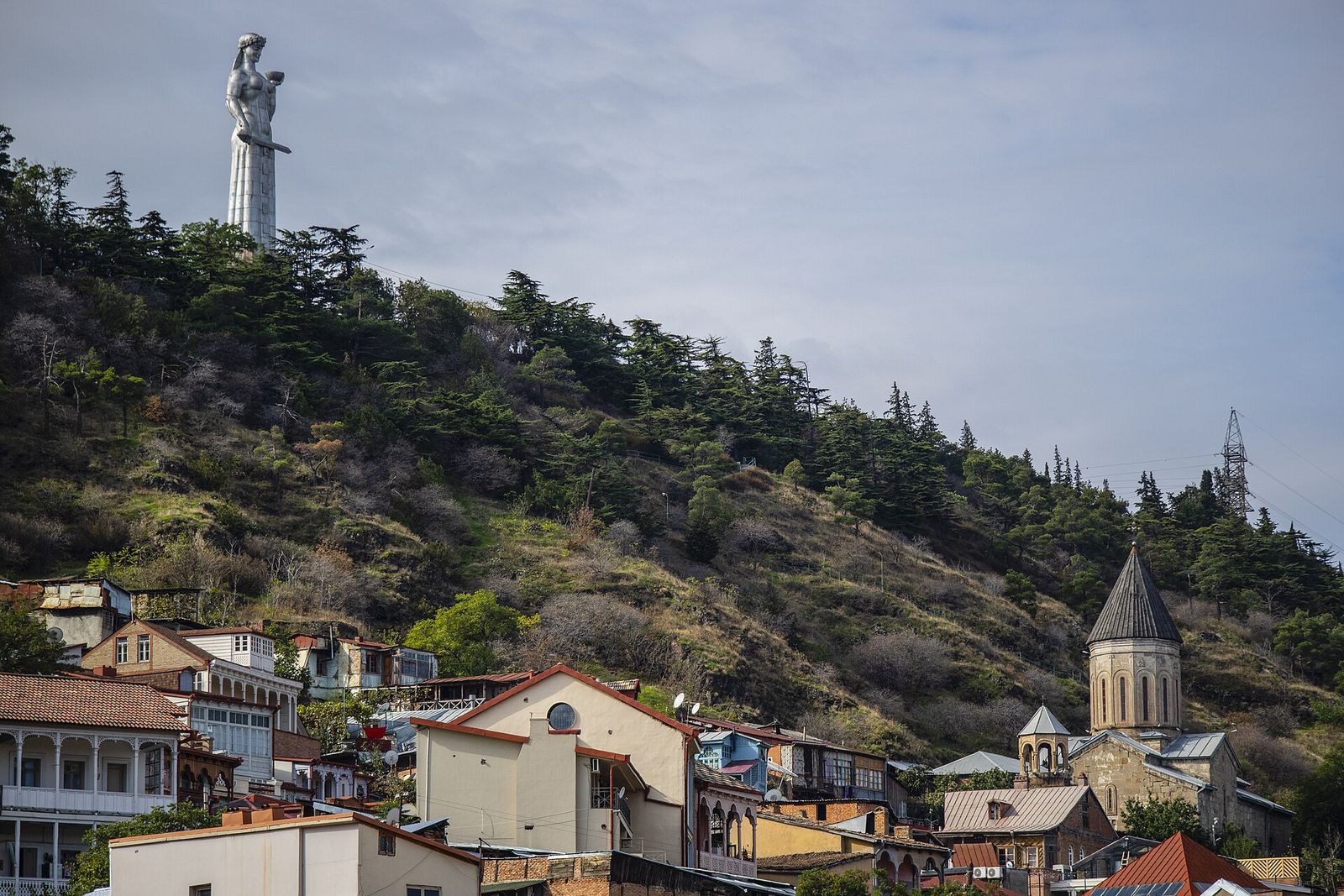
The Mother of Georgia is a giant aluminum statue of a woman in a long robe on Sololaki Hill, the ridge that runs above Old Tbilisi from Narikala toward Mtatsminda. She stands about 20 m tall, roughly a six-story building, and you can see her from the river, the bridges and half the balconies in the center.
Her Georgian name is Kartlis Deda. Kartli is the historic heartland of eastern Georgia, the region around Tbilisi, so the literal meaning is "Mother of Kartli". In English you'll see Mother of Georgia, Mother Georgia, Mother of Kartli and Mother of Georgians, and they all mean this statue. Locals mostly just say Kartlis Deda.
She is a monument, not a museum. There is no ticket, no gate and no opening time; you walk up a path and she is there, with a small paved terrace around her plinth and the whole city below.
What the wine bowl and the sword mean
The statue is how Tbilisi likes to describe itself. In her left hand she holds a bowl of wine to greet anyone who arrives as a friend. In her right hand she holds a sword for anyone who arrives as an enemy. Hospitality and a long memory for invaders, in one figure.
It is an easy symbol to read in a city that was taken, burned and rebuilt by Persians, Arabs, Mongols and Russians over 15 centuries, and that still treats a guest at the table as close to sacred. The wine is not decoration either. Georgia is one of the oldest wine-making countries on earth, and the bowl she raises is the same gesture a host makes at the start of a Georgian supra, the long feast of toasts that every visitor eventually gets pulled into.
History of Kartlis Deda
Kartlis Deda went up in 1958, the year Tbilisi celebrated its 1,500th anniversary. The sculptor was Elguja Amashukeli, who called the work "Capital"; the public ignored that and named her Kartlis Deda, and the name stuck. He later received the Shota Rustaveli State Prize, Georgia's top arts award, for it.
The first version was wooden and meant to be temporary, built for the anniversary year. People liked her too much to take her down, so in 1963 the wooden figure was clad in aluminum to protect it from the weather. In 1997 the old statue was replaced by a new aluminum one in the same design, which is the figure you see today.
She belongs to the late Soviet wave of monumental public art, and her flat, stylized robe and square-cut face are pure 1950s. Next to the Brutalist blocks in the newer districts she looks gentle, but she comes from the same playbook, and she's a good first stop if Soviet architecture in Tbilisi is on your list.
How to get to the Mother of Georgia
There are three good ways up, and all of them end on the same ridge path. My pick is the cable car up and the Betlemi stairs down, which keeps the climb out of your legs and drops you in Sololaki for a coffee.
| Way up | Starts at | Time | Cost | Best for |
|---|---|---|---|---|
| Cable car plus ridge walk | Rike Park, by the Bridge of Peace | About 2 minutes in the air, then 5 minutes on foot | 2.50 GEL one way | Hot days, kids, tired legs |
| Betlemi stairs | Lado Asatiani Street, Sololaki | About 20 minutes | Free | The most direct walk, with shade and two churches |
| Up through Abanotubani and Narikala | Meidan Square, up Orbiri Street | About 25 minutes | Free | Seeing the baths, the fortress and the statue in one climb |
The cable car and the ridge walk
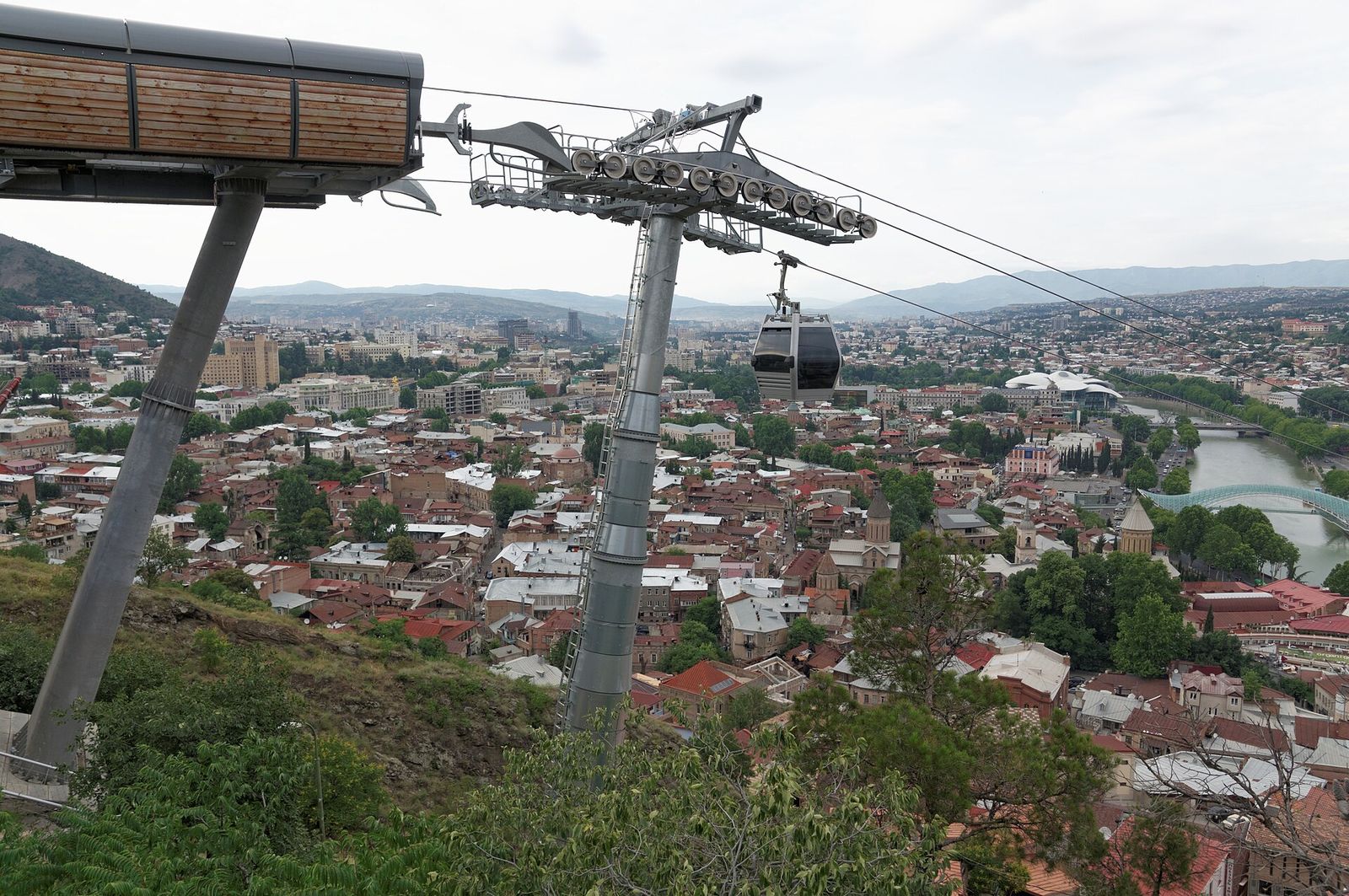
The Rike to Narikala cable car leaves from Rike Park on the left bank of the Kura and crosses the river and the bath district in a little over 2 minutes. A one-way ride is 2.50 GEL, paid with a Metromoney transport card at the gate, and it runs daily from about 10:00 to 22:00, later on summer weekends. From the top station, follow the paved ridge path away from the river, past the fortress walls, and the statue appears ahead of you in about 5 minutes.
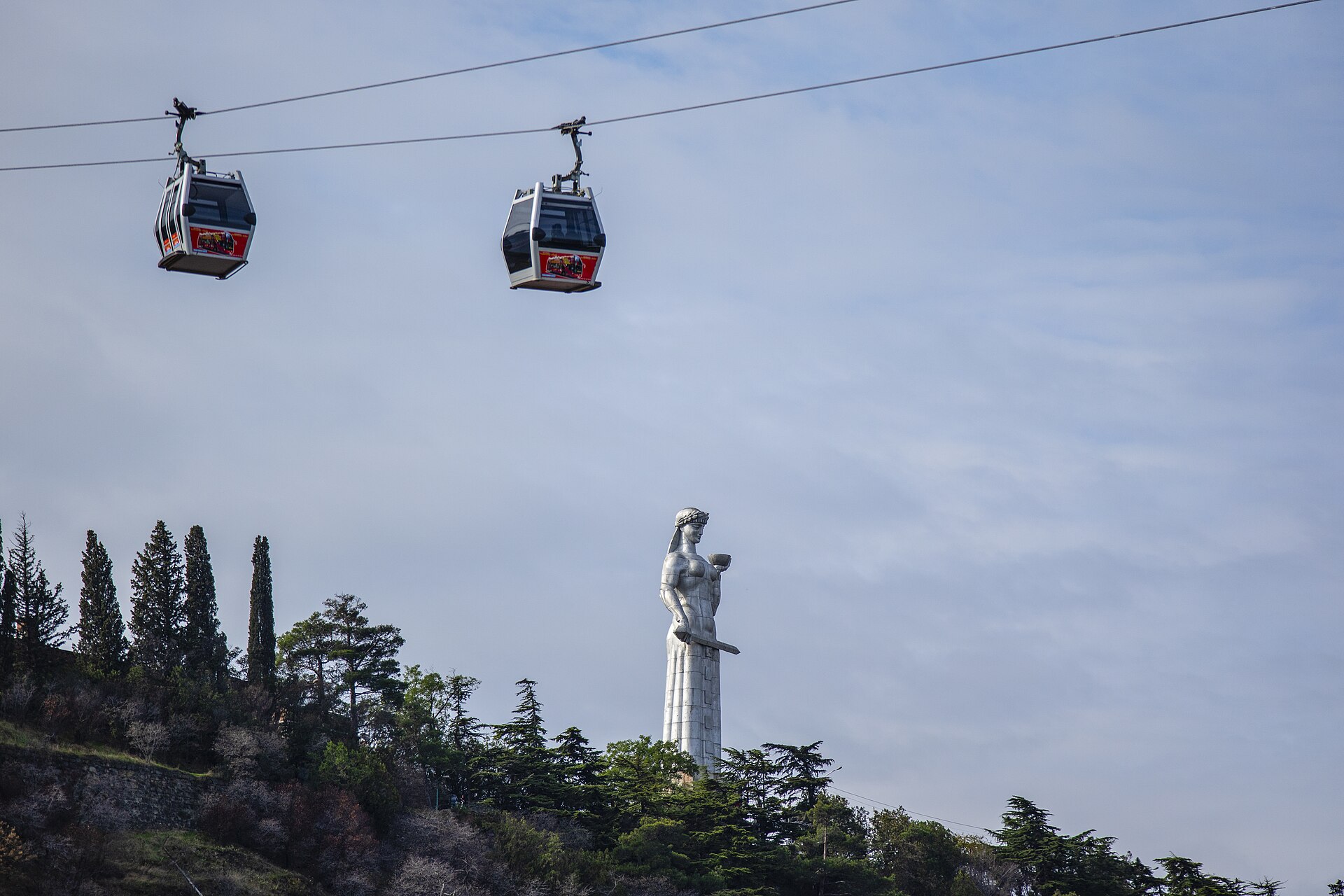
From the cabin you see her ahead on the ridge, side-on against the sky, with the bowl raised over the Old Town. Grab a seat facing the hill.
Walking up the Betlemi stairs from Sololaki
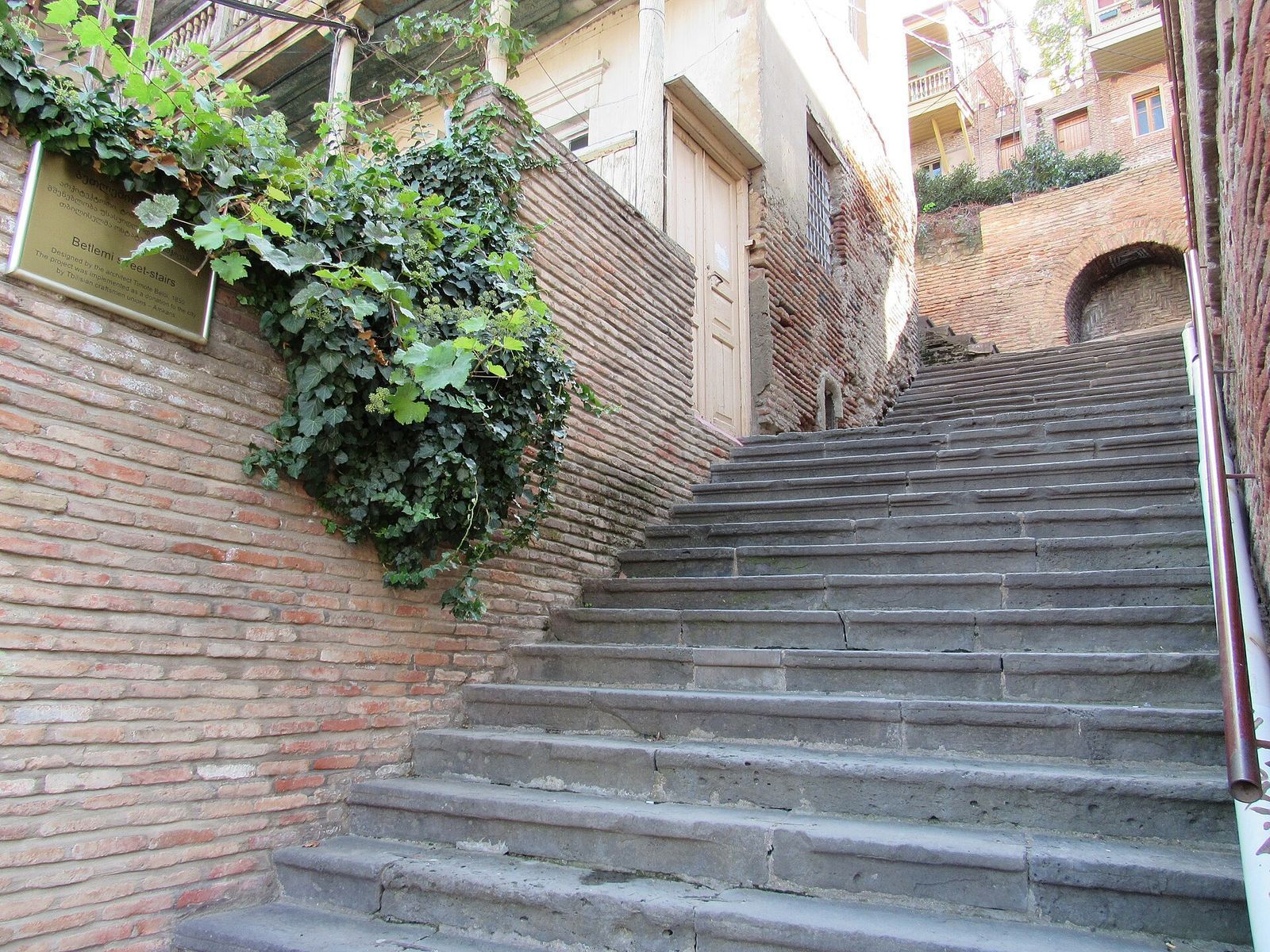
From Lado Asatiani Street in Sololaki, find Betlemi Street and climb its 120 steps past old houses with carved wooden balconies. You pass Lower Betlemi Church, then Upper Betlemi Church higher up, and a path through the pines brings you out right below the statue. It's steep but paved, about 20 minutes at a steady pace, and it gets more shade than any other route up.
This is the walk where she looms. She appears and disappears over the rooftops at every turn of the stairs, getting bigger each time.
Walking up from Abanotubani through Narikala
From Meidan Square at the foot of the Old Town, climb Orbiri Street above the bathhouse domes, past the minaret of the Jumah Mosque, and keep going as the lane turns into stairs. It joins the ridge just below Narikala's walls, and from there it's the same 5-minute walk along the ridge to the statue. Allow about 25 minutes in total, and in July and August only do it before 10:00 or in the early evening.
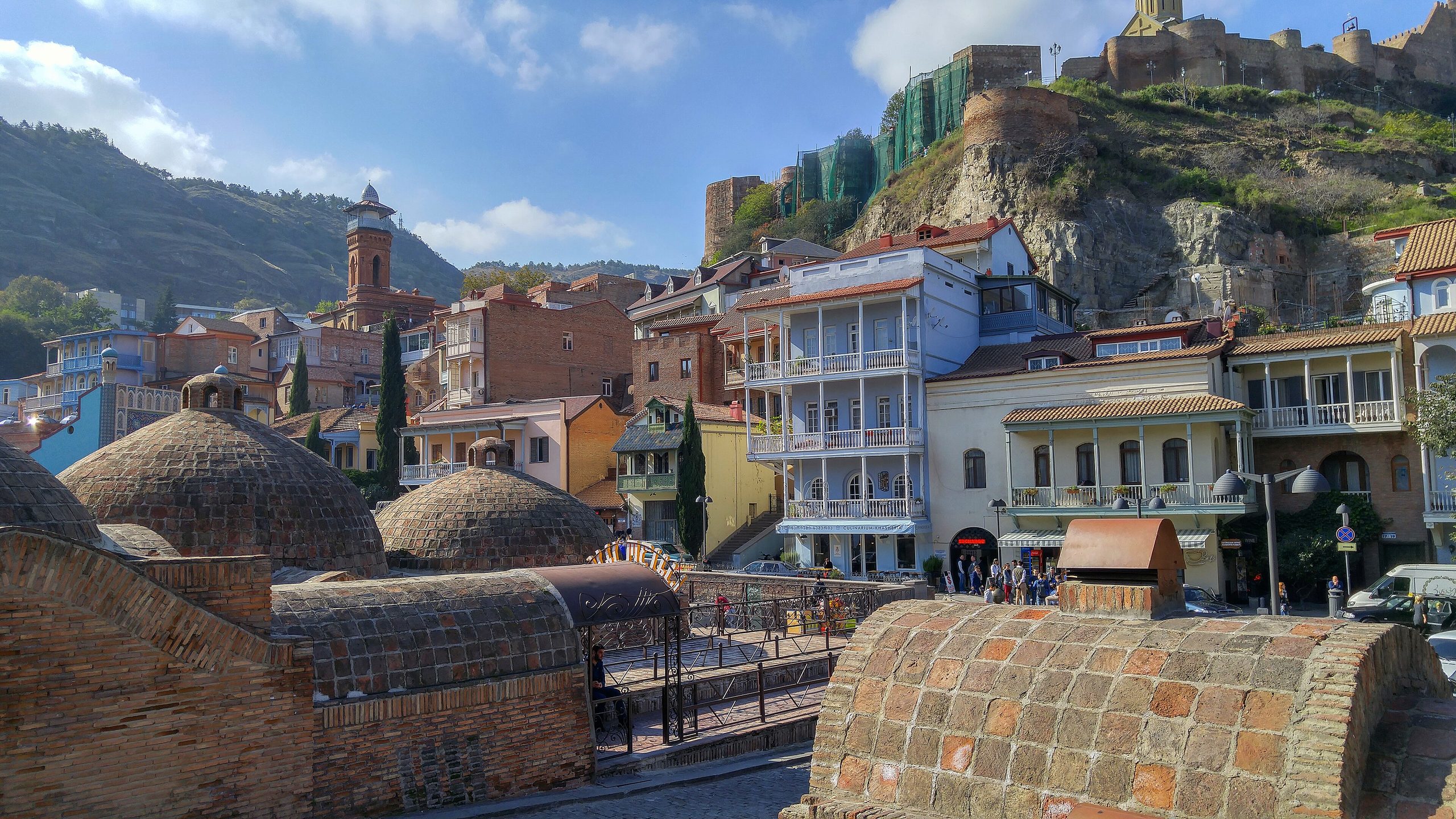
What you see at the statue
Up close she is bigger and plainer than she looks from the river. You can make out the aluminum panels of her robe, and from her feet you mostly see the underside of the bowl. The statue is the reason you came, but the view is what you'll remember.
From the terrace around her plinth you look over the rooftops of Sololaki and the Old Town, down to the Kura, across to the glass curve of the Bridge of Peace and up to the gold dome of Holy Trinity Cathedral on the far hill. Look the other way and Mtatsminda rises above Sololaki with its TV tower on top. It's less dramatic than the view from Narikala's terraces, because the Old Town sits a little further off, but it's quieter and takes in more of the modern city.
Most people take the photo and turn back toward the cable car. I'd rather keep going down the Betlemi side, where the path drops through the pines and the city opens up between the trees.
Mother of Georgia and Narikala in one visit
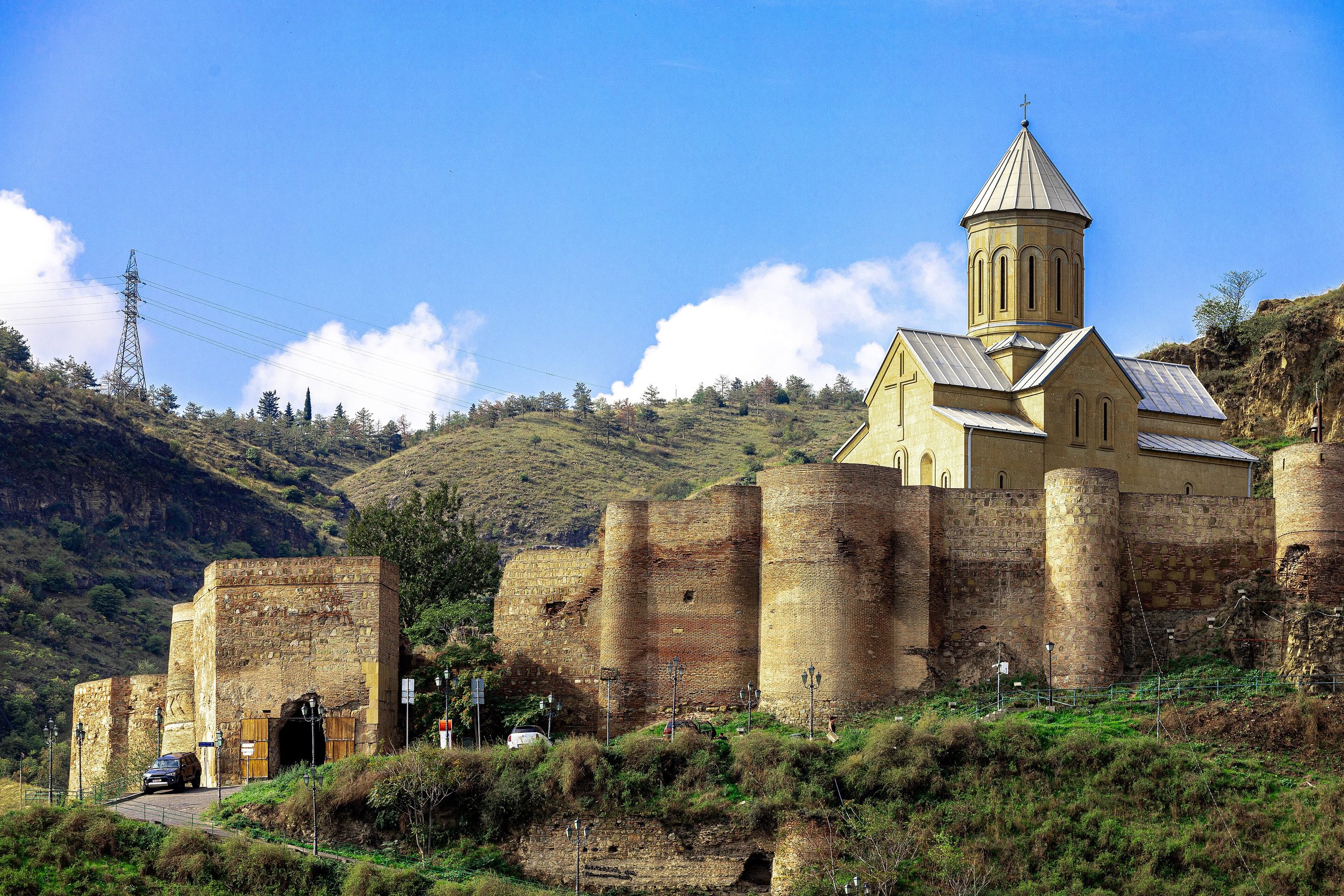
The statue and Narikala share a ridge, so nobody should make two trips. This is the half-day loop I'd do, starting at the river and ending in Sololaki. It takes about 2 hours without stops for coffee.
| Stop | What you do there | Time |
|---|---|---|
| Rike Park cable car | The ride up over the river and the bath domes | About 2 minutes in the air |
| Narikala terraces and St Nicholas Church | The best view of the Old Town, the lower walls, the church | 45 minutes |
| Ridge walk to the Mother of Georgia | The paved path past the walls | 5 minutes |
| Mother of Georgia | The statue, the terrace and the view over Sololaki | 20 minutes |
| Betlemi stairs down | Upper and Lower Betlemi churches, the balconied lanes | 20 minutes |
| Sololaki | Coffee or a glass of wine on Asatiani or Leselidze streets | As long as you like |
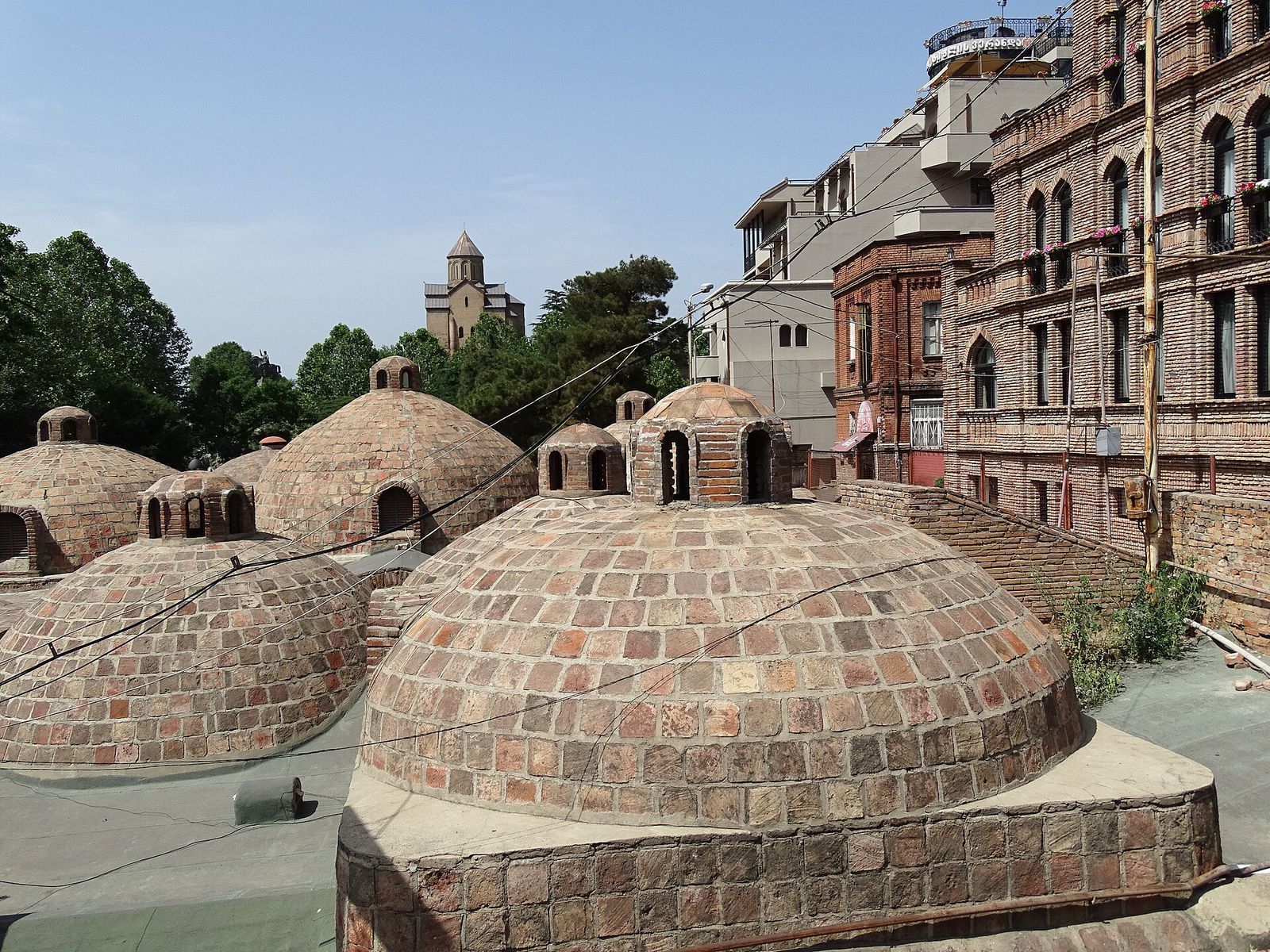
If you'd rather end in a hot pool, reverse the bottom half: go back past Narikala and take the paths down the river side into Abanotubani, where an hour in a private room at the sulfur baths is the best possible finish to a hill walk.
What to see near the Mother of Georgia
The slope below the statue is one of the oldest corners of the city, and a lot fits within a few hundred meters. Distances below are straight-line from the statue; the walking routes zigzag, so add a few minutes.
| Sight | Distance from the statue | Why stop |
|---|---|---|
| Upper Betlemi Church | About 80 m | The church on the slope just below her |
| Atashgah fire temple | About 115 m | The ruined brick walls of a Zoroastrian fire temple, inside a residential courtyard at 3 Gomi Street |
| Lower Betlemi Church | About 130 m | The church with the conical dome on the Betlemi stairs |
| Narikala Fortress | About 290 m | The walls, St Nicholas Church and the best Old Town view |
| Great Synagogue | About 300 m | The brick synagogue on Leselidze Street |
| Jvaris Mama Church | About 320 m | One of the oldest churches in the Old Town, painted inside |
| Gudiashvili Square | About 320 m | Sololaki's restored square of old houses and balconies |
| National Botanical Garden | Just over the ridge | Gorges, a small waterfall and shade, 4 GEL entry |
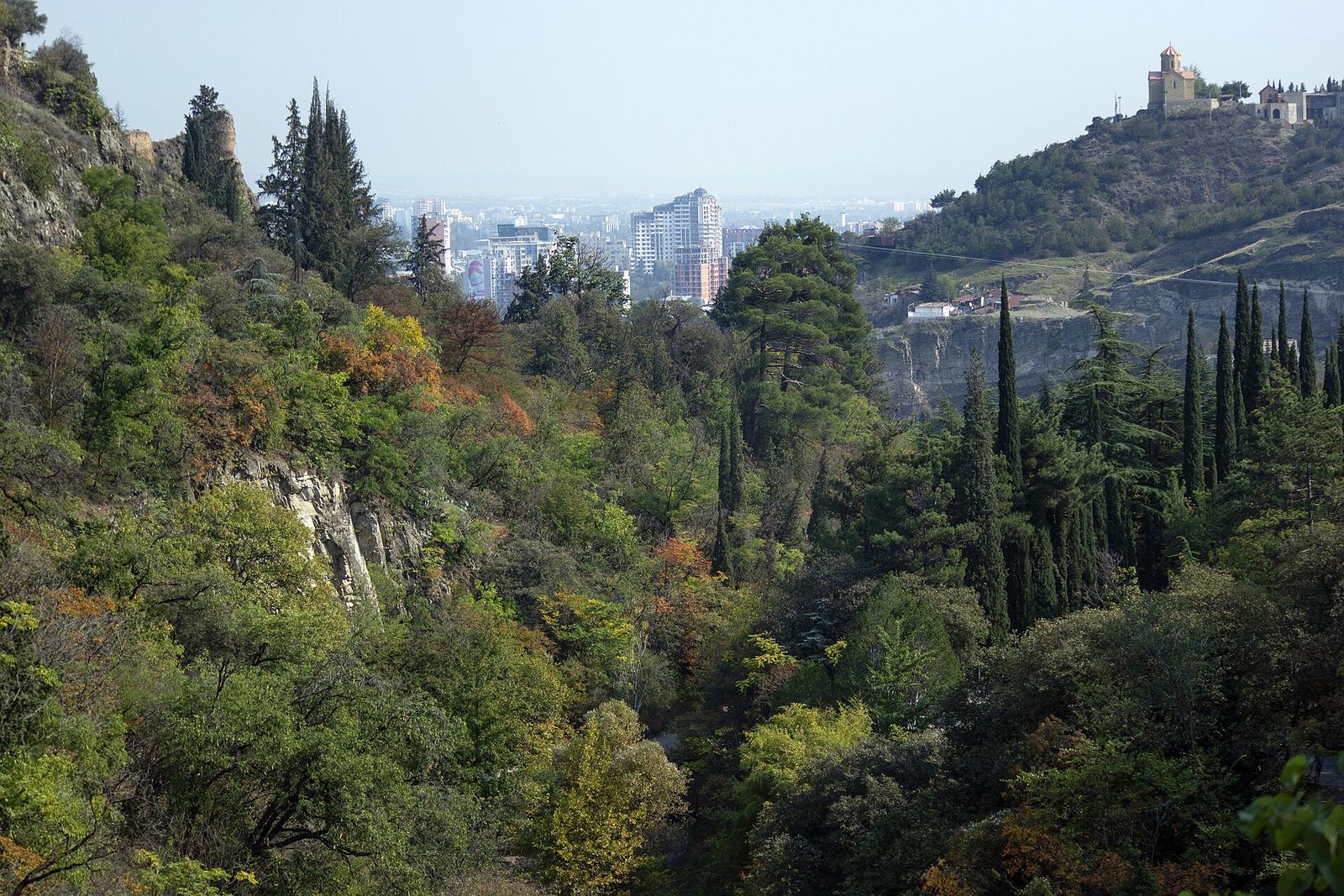
The National Botanical Garden fills the valley on the far side of the ridge, with an entrance near Narikala. It closes at about 17:30, so if you want both the garden and a sunset at the statue, do the garden first.
Where to see the Mother of Georgia from below
Kartlis Deda was built to be seen from the city, and she looks best from a distance. These are the three spots I'd use to frame her.
From the Bridge of Peace and Rike Park. By day the cable cabins slide up toward the ridge with the statue behind them. Stay on the bridge until dark: the floodlights come on along Narikala's walls, and she becomes a small white figure at the end of that glowing line. That ridge at night is the picture of Tbilisi most people take home.
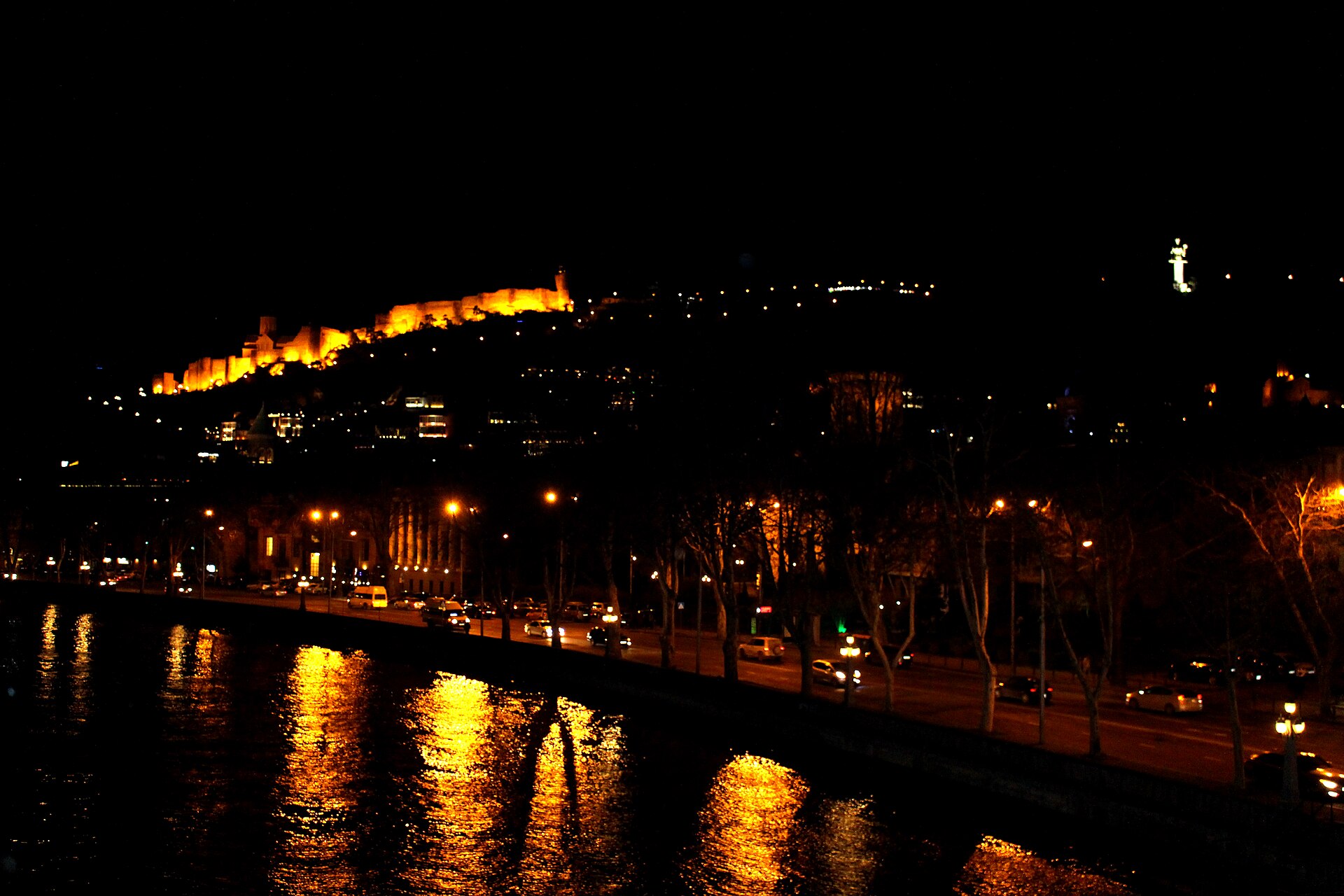
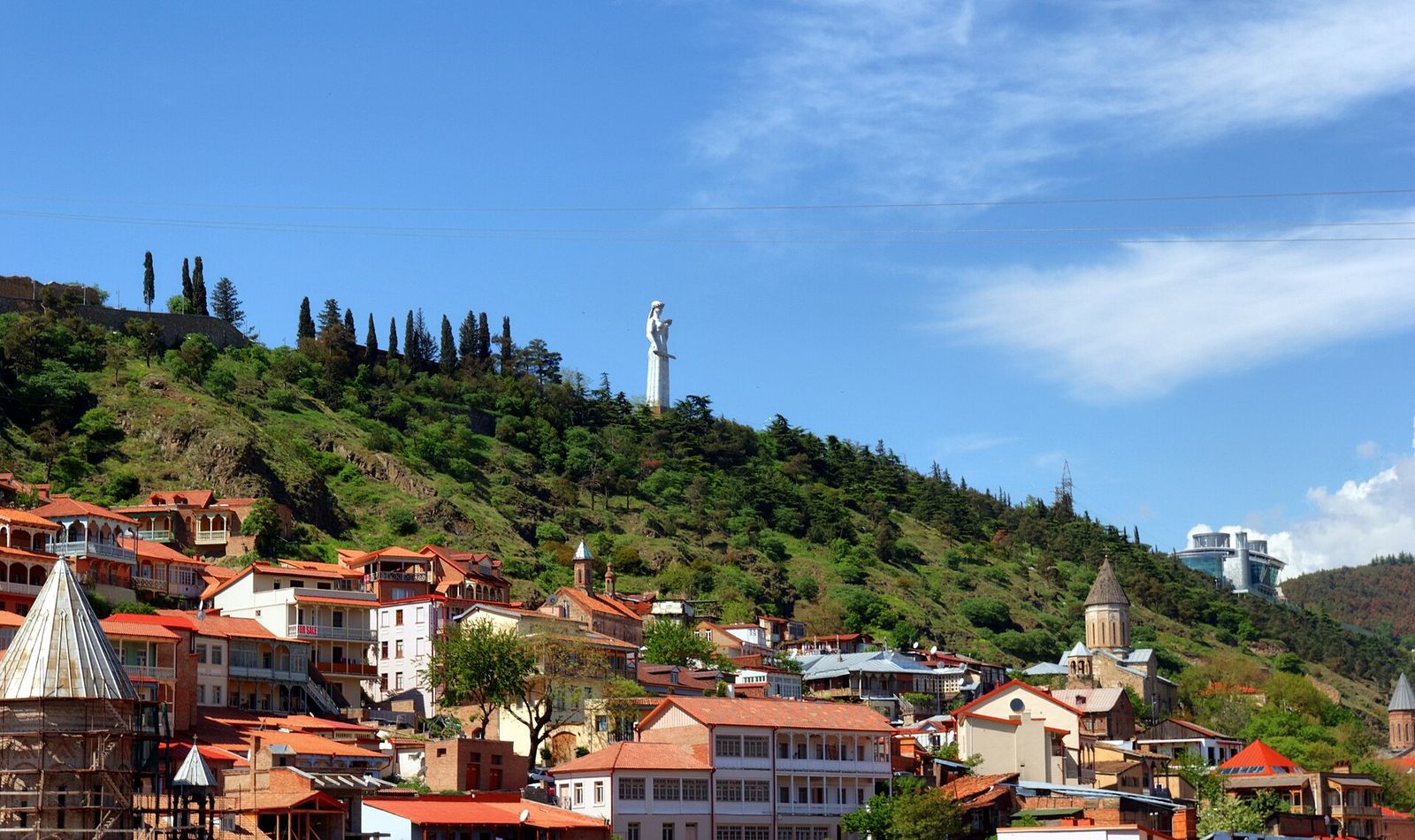
From Metekhi Church. The classic shot from the left bank. From the terrace by the church you look straight across the Kura at the Old Town, its balconied houses climbing the slope and the statue standing over the rooftops at the end of the ridge.
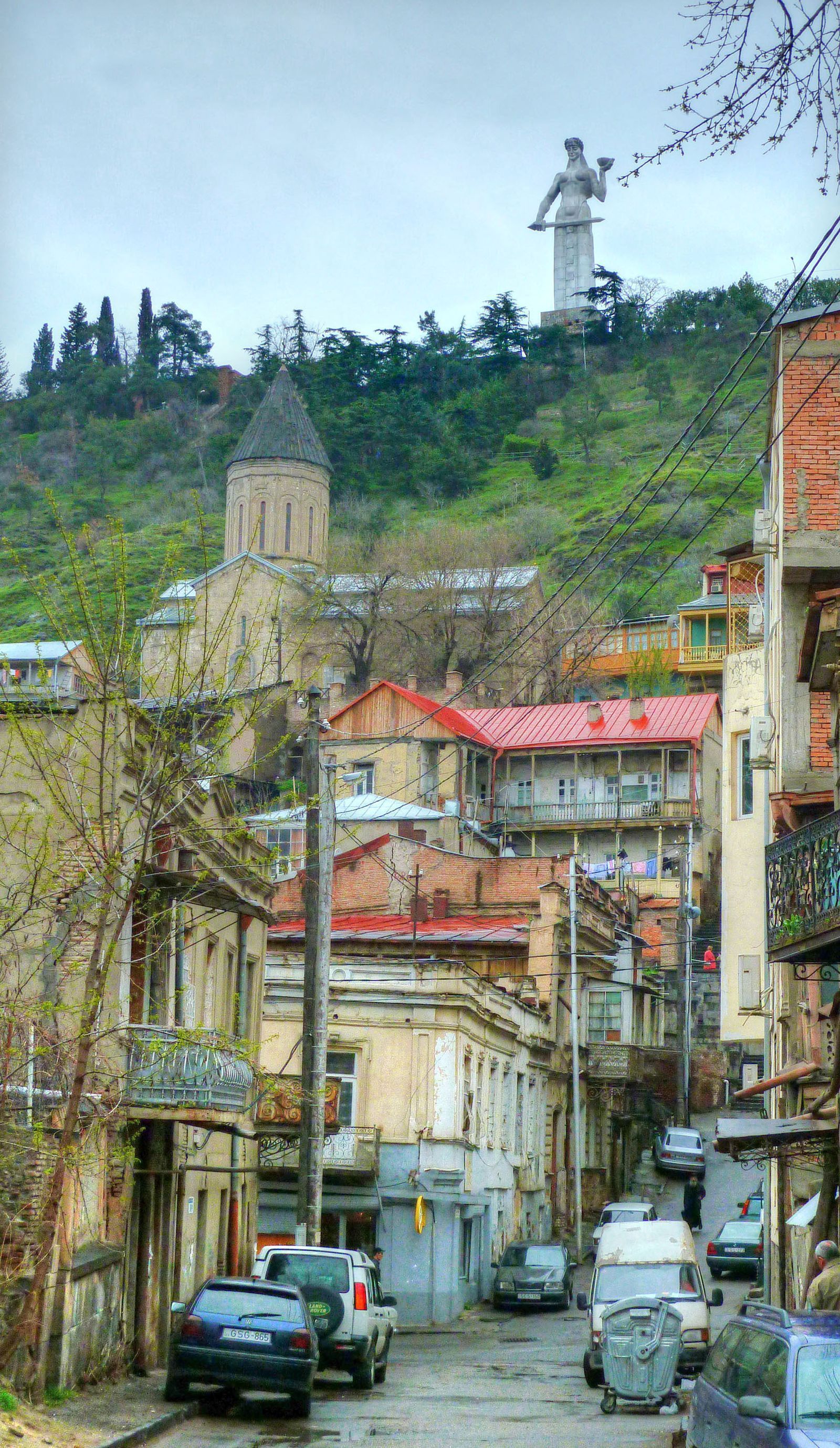
From the Betlemi lanes. Look straight up the narrow streets of Betlemi and she fills the gap between the balconies, the shot that makes her look the size she is.
You also catch her on the skyline from the bath domes in Abanotubani, and ahead of you on the ridge during the cable car ride up. Narikala and the statue both make my list of Tbilisi viewpoints as places to look from, but for the statue herself, the street-level views are the better photos.
Best time to visit the Mother of Georgia
Go in the hour before sunset. The light comes in low and warm over Sololaki, the aluminum turns gold instead of gray, and you can watch the city light up from the terrace before walking down. It's also the busiest hour on the ridge and at the cable car.
Early morning is the quiet alternative: cool air, soft light and the ridge almost to yourself. The cable car doesn't start until about 10:00, so a morning visit means the Betlemi stairs, which is the better route anyway before the heat.
By season, spring and autumn are the best time to visit Tbilisi, and the ridge is a big reason. There's no shade around the statue, and a July afternoon up there can pass 35°C. Winter is quiet and often clear, and a cold, bright day gives the sharpest view of the year.
Is the Mother of Georgia worth visiting?
Yes, as part of the ridge walk. On her own she's a 20-minute stop: you look up, take the photo and enjoy the view. Combined with Narikala and the Betlemi stairs she becomes one of the best two hours in the city, and it costs at most 2.50 GEL, which puts it high on any list of free things to do in Tbilisi.
It suits you if:
- You're doing Narikala anyway. She's 5 minutes further along the same path.
- You like a walk with a payoff. The Betlemi stairs are the best short climb in the center.
- You want the city in one look. The terrace view takes in the Old Town, the river and the modern center together.
- You're on a budget. The statue, the ridge and the churches are all free.
You can skip it if:
- You can't manage steps or uneven paths. Even from the cable car, the last stretch is a rough ridge path.
- You only want the statue. She looks better from Rike Park or the Betlemi lanes than from her feet.
Key takeaways
- Kartlis Deda is a 20 m aluminum statue from 1958, replaced in 1997, holding wine for friends and a sword for enemies.
- She is free and open around the clock on Sololaki Hill, 5 minutes along the ridge from Narikala.
- Ride the Rike Park cable car up for 2.50 GEL and walk down the 120 Betlemi stairs into Sololaki.
- Go in the hour before sunset, and see the statue and Narikala in the same 2-hour loop.
- For photos of the statue herself, the views from Rike Park, Metekhi and the Betlemi lanes beat the view from her feet.
Frequently asked questions
What does the Mother of Georgia statue represent?
She represents the Georgian character as the city likes to see it: a bowl of wine for guests who come as friends and a sword for those who come as enemies. The statue went up in 1958 for Tbilisi's 1,500th anniversary and has been the city's symbol ever since.
How tall is the Mother of Georgia statue?
The statue is about 20 m tall, roughly the height of a six-story building. She stands on the top of Sololaki Hill, so she looks far taller from the river and the Old Town below.
What does Kartlis Deda mean?
Kartlis Deda means "Mother of Kartli". Kartli is the historic region of eastern Georgia around Tbilisi, which is why the name is usually rendered in English as Mother of Georgia.
How do I get to the Mother of Georgia?
Take the cable car from Rike Park to the Narikala ridge for 2.50 GEL, then walk about 5 minutes along the ridge path. Or walk up the 120 Betlemi stairs from Lado Asatiani Street in Sololaki, which takes about 20 minutes.
Is the Mother of Georgia free to visit?
Yes. There is no ticket, no gate and no opening time; she stands on an open hilltop. The only possible cost is the cable car up, 2.50 GEL one way on a Metromoney card.
Who made the Mother of Georgia statue?
The Georgian sculptor Elguja Amashukeli designed it. The first wooden version went up in 1958, was clad in aluminum in 1963, and was replaced by a new aluminum statue in the same design in 1997.
Can you walk from Narikala to the Mother of Georgia?
Yes, it's about a 5-minute walk along the paved ridge path from the fortress and the cable car top station. Most visitors see both in one trip and walk down the Betlemi stairs into Sololaki afterward.
25 Best Things to Do in Tbilisi in 2026 (With Prices)
Tbilisi is known for its sulfur baths, balconies and hilltop views. Here are 25 things to do, with prices and times.
Read the guide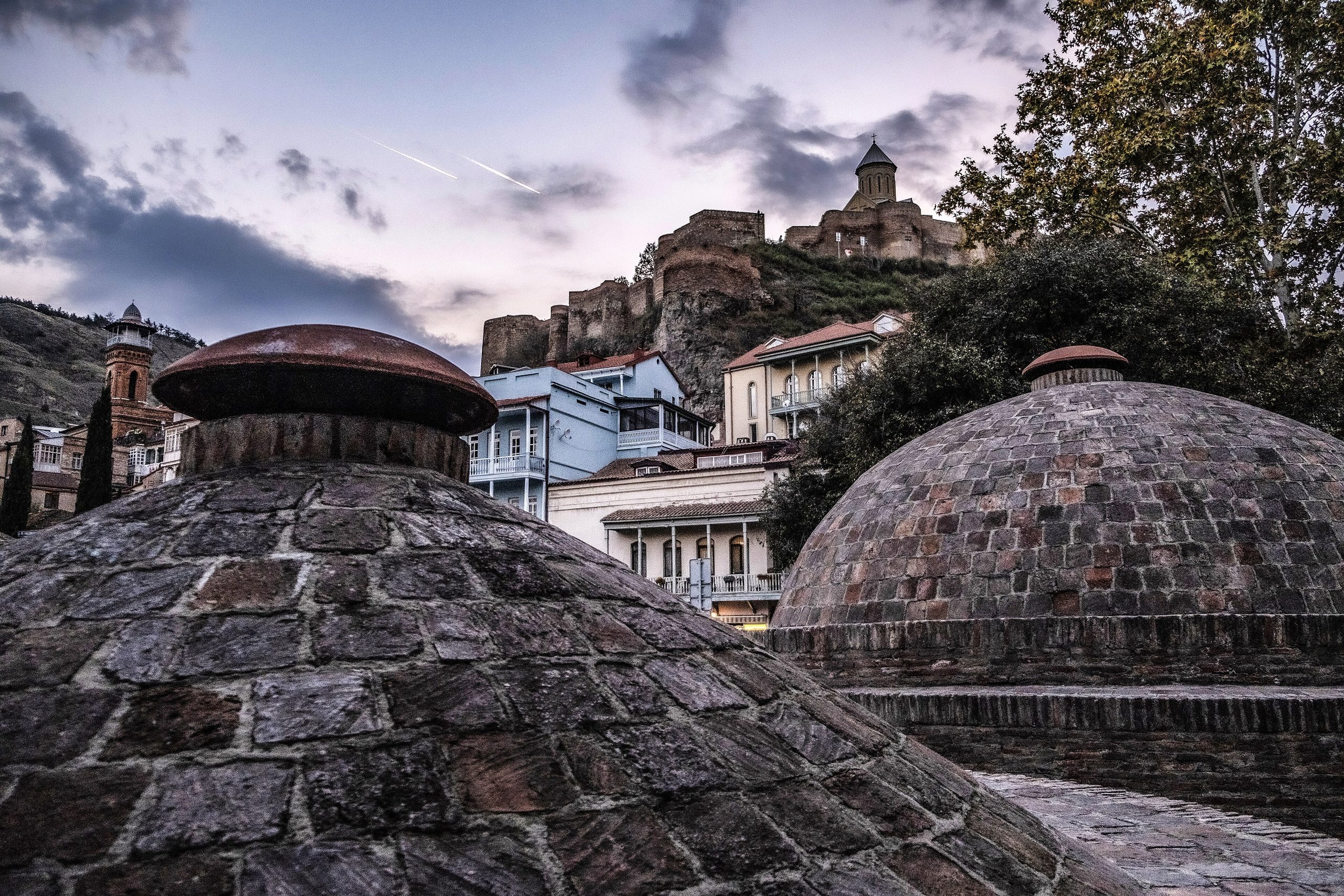
The Sulfur Baths of Abanotubani: Prices, Bathhouses and Booking
Tbilisi is known for its sulfur baths. Here is what to know about the bathhouses, room prices and booking.
Read the guideNarikala Fortress, Tbilisi: Getting Up, What Is Open and When to Go
Narikala is the fortress above Old Tbilisi. Here is what is open in 2026, how to get up and when to go for the view.
Read the guide