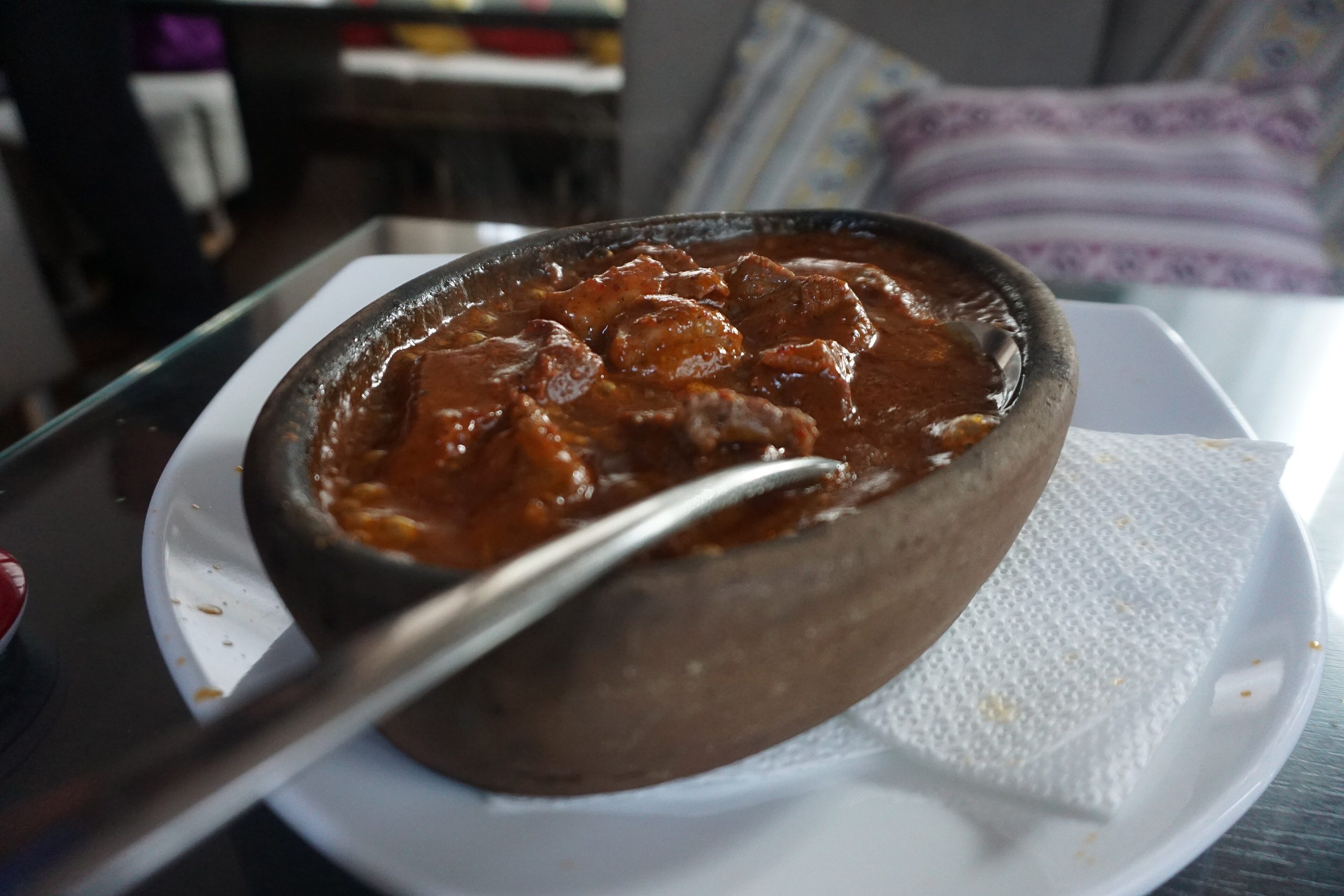
Georgian Food: The Dishes to Try in Tbilisi
Georgia is known for khachapuri and khinkali, and both live up to their reputation. The table goes much further, though: walnut-rich vegetable plates, sour plum stews, mountain dumplings and regional dishes most visitors never order. Here's what to eat first, what each dish actually is, what it costs in Tbilisi, how ordering works and where I'd go for each one.
The Georgian dishes to order first
If you only have a few meals in Tbilisi, this is the shortlist I'd work through. Georgian cooking leans hard on walnuts, garlic, fresh coriander, tarragon, pomegranate, sour plum and a lot of cheese, and these dishes show off all of it. The last column is where I'd send a friend for that specific dish.
| Dish | What it is | Meat or veg | Where I'd order it |
|---|---|---|---|
| Adjaruli khachapuri | A boat of bread filled with cheese, a raw egg yolk and butter | Vegetarian | Retro, Saburtalo |
| Imeruli khachapuri | Round, sealed cheese bread, the everyday one | Vegetarian | Any bakery, Cafe Daphna |
| Khinkali | Twisted dumplings full of spiced meat and broth | Meat, or mushroom, potato and cheese | Pictograma, Klike's Khinkali |
| Pkhali | Spinach, beetroot or cabbage pounded with walnut, topped with pomegranate | Vegan | Shavi Lomi's gobi platter |
| Badrijani nigvzit | Fried eggplant rolled around walnut paste | Vegan | Ethno Tsiskvili, Maspindzelo Express |
| Lobio | Kidney beans with coriander, walnut and garlic in a clay pot | Vegan | Salobie Bia |
| Mtsvadi | Grilled cubes of pork, veal or lamb with raw onion | Meat | Georgian House, Tsetskhli Ainto |
| Shkmeruli | Fried chicken baked in a garlic and milk sauce | Meat | Ghebi, Shemomechama |
| Chakapuli | Lamb or veal stewed with tarragon, sour plums and white wine | Meat | Shemomechama, Barbarestan |
| Kharcho | Beef soup with rice, sour plum and walnut | Meat | Mapshalia |
| Elarji | Cornmeal cooked with sulguni cheese until it stretches | Vegetarian | Mapshalia, Amra |
| Ajapsandali | Eggplant, tomato and pepper stew, June to October | Vegan | Ninia's Garden |
| Kubdari | Bread stuffed with spiced chopped meat, from Svaneti | Meat | Salobie Bia, Shavi Lomi |
| Churchkhela | Nuts on a string dipped in thickened grape must | Vegan | Dezerter Bazaar |
If that table looks heavy on walnuts, you've read it right. Walnut paste turns up in pkhali, badrijani, lobio, satsivi and kharcho, and it gives Georgian food its rich, nutty base. It's also why so many dishes here are vegan without trying to be.
Khachapuri: Georgia's cheese bread
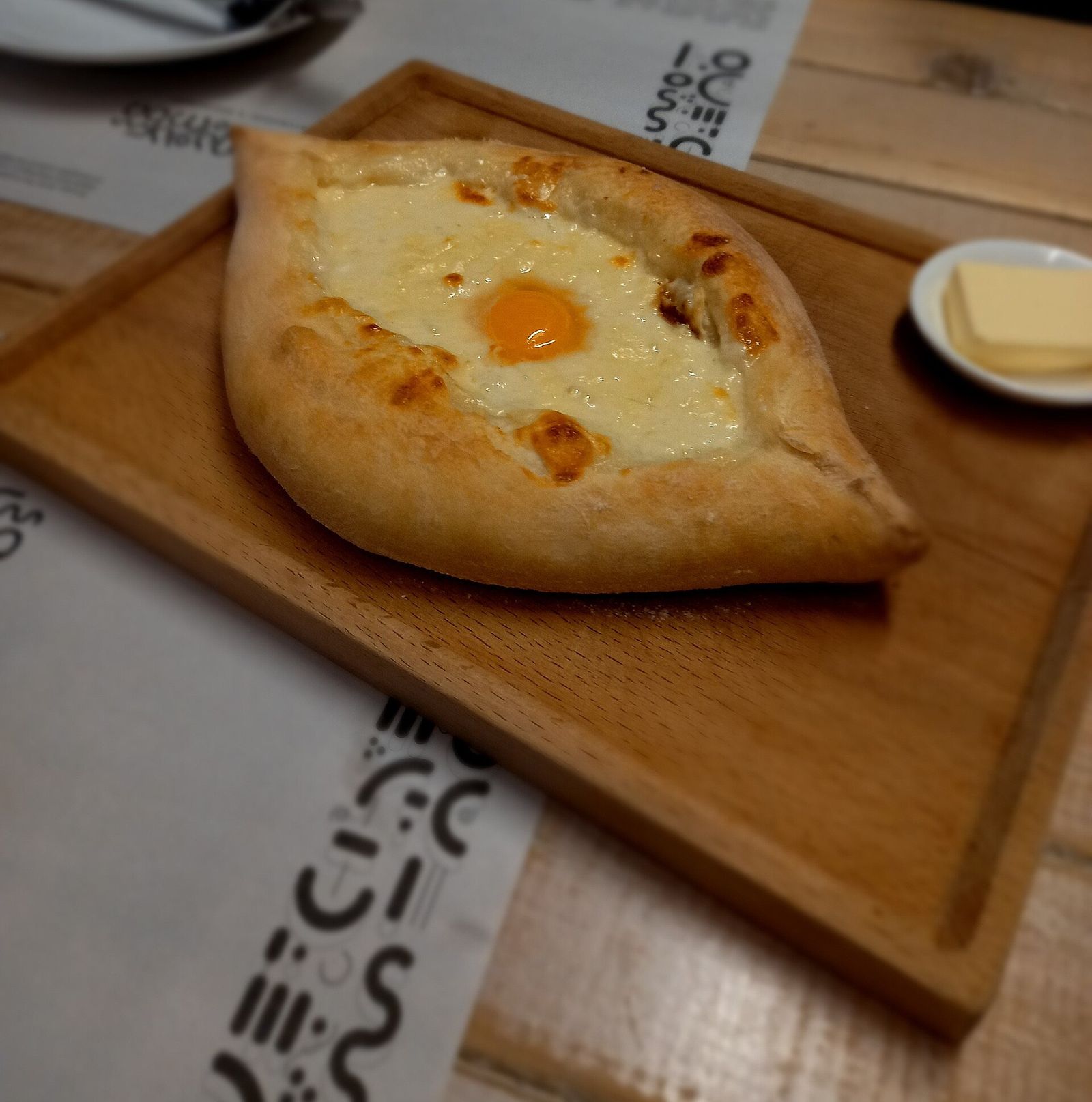
Khachapuri is bread baked around cheese, and every region has its own version. The famous one is Adjaruli, from the Black Sea coast: an open boat of dough filled with molten cheese and finished with a raw egg yolk and a knob of butter. You stir the yolk and butter into the cheese with a fork, then tear off the crust at the pointed ends and dip it in. It's rich enough that one large Adjaruli feeds two people with a salad on the side.
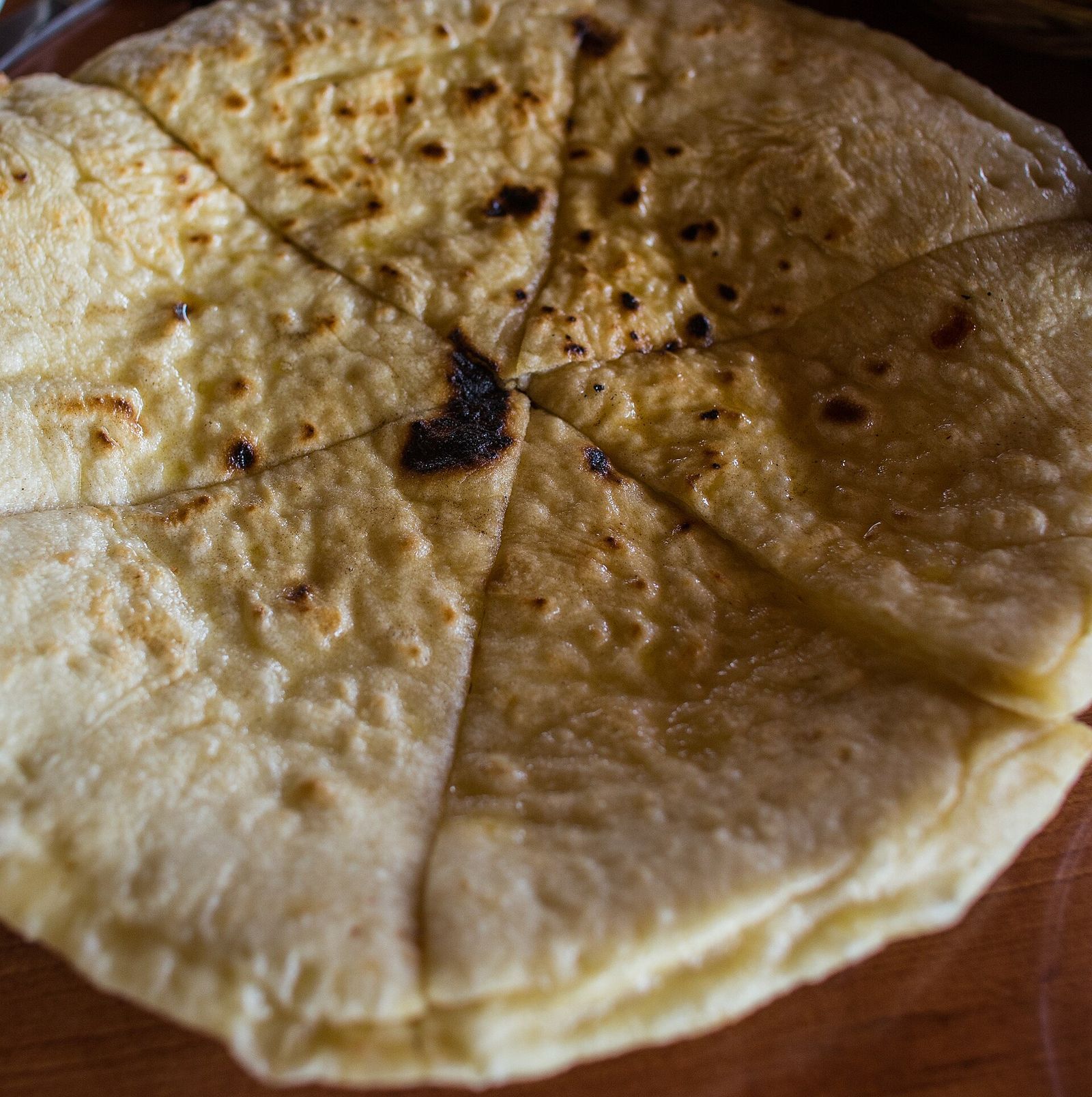
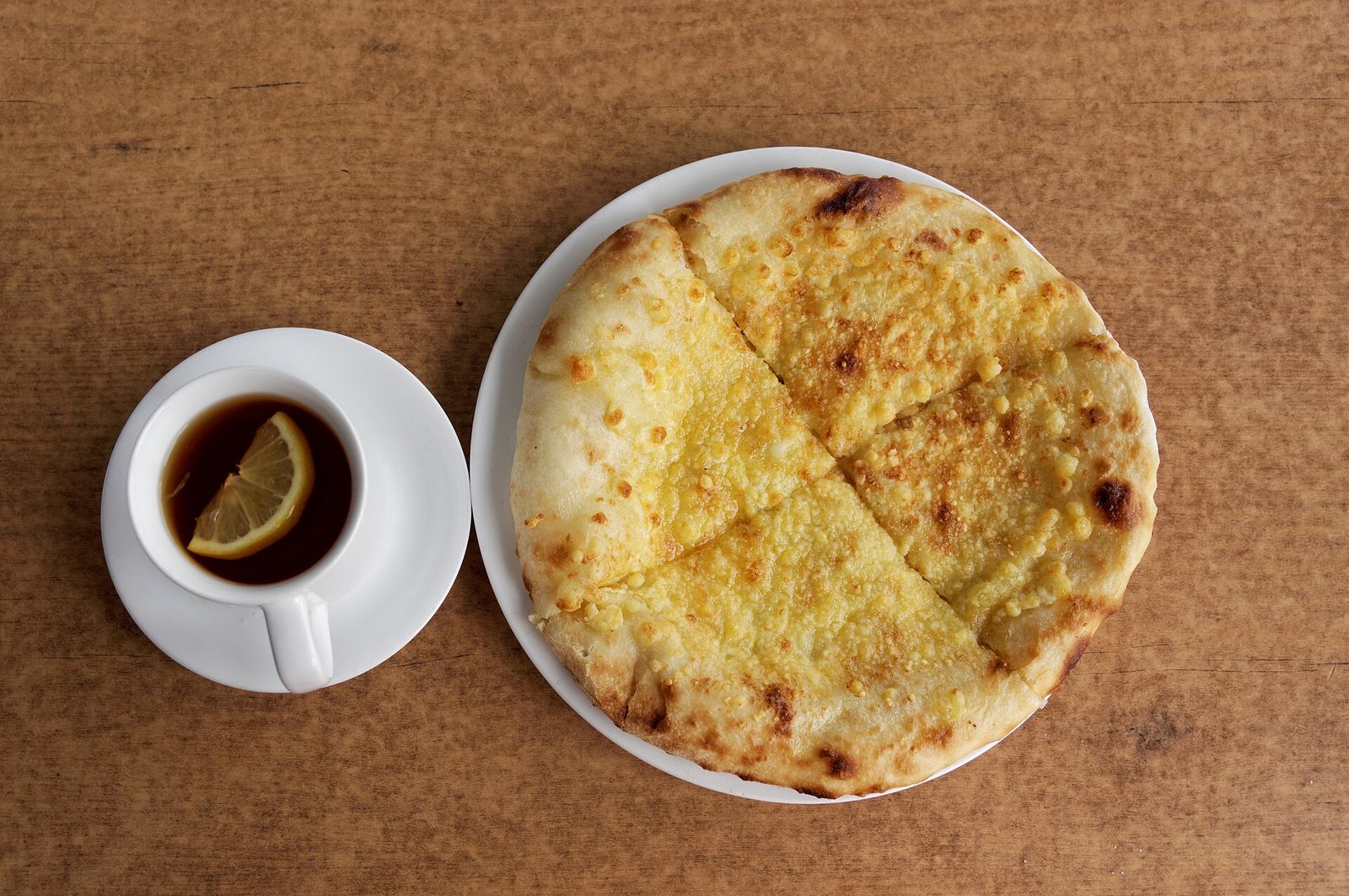
The one Georgians eat most often is Imeruli: round, sealed, with cheese inside, sold whole or by the slice at every bakery in the city.
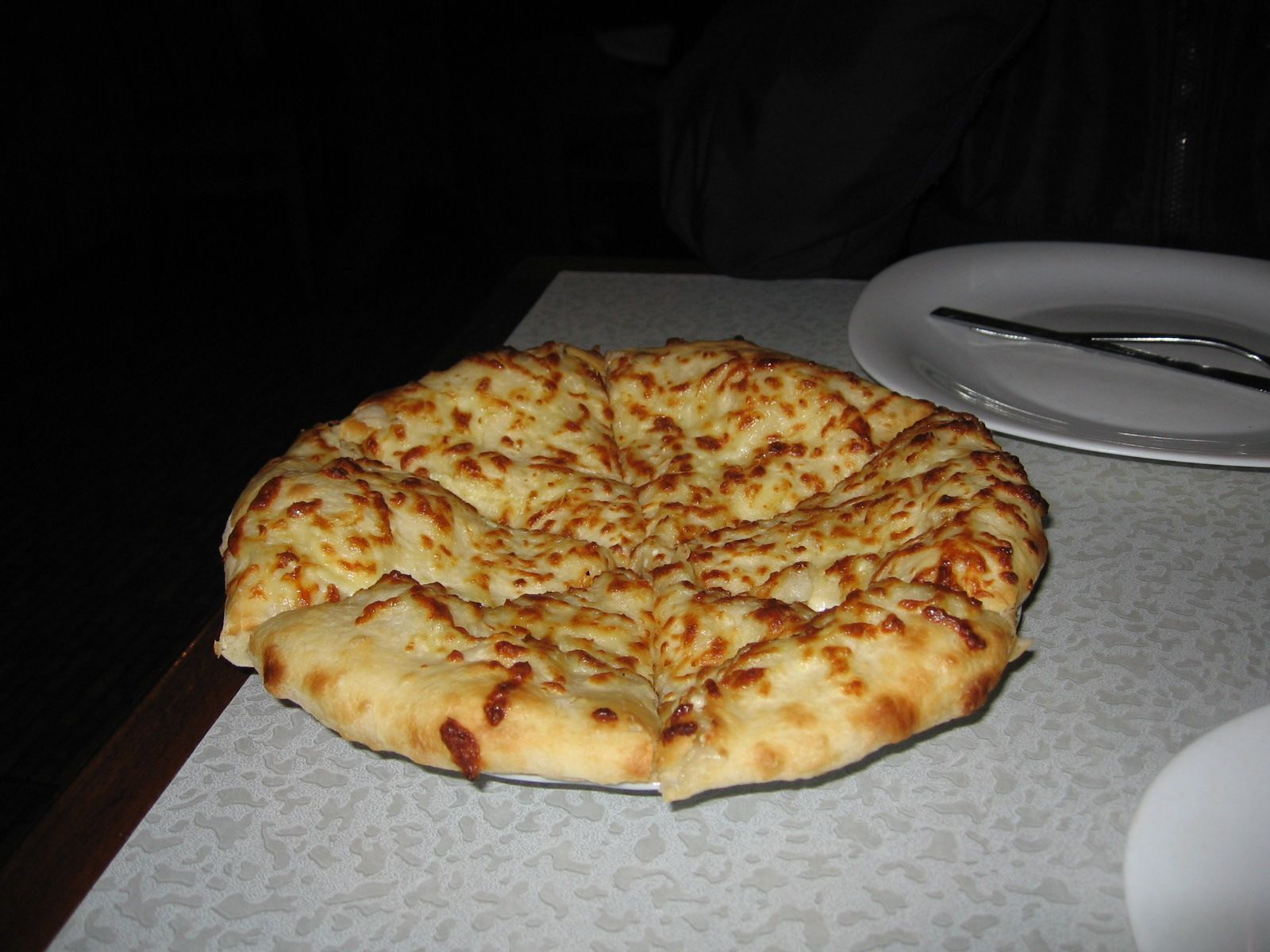
Megruli is its cheesier cousin from Samegrelo, with a second layer of cheese baked on top. My rule is simple. Order Adjaruli once for the experience, then eat Imeruli and Megruli for the rest of the trip.
| Style | What it looks like | Where I'd try it in Tbilisi |
|---|---|---|
| Imeruli | Round and sealed, cheese inside | Any bakery, Sormoni, Cafe Daphna |
| Adjaruli | Open boat with cheese, egg yolk and butter | Retro, Puri Guliani, Cafe Stamba |
| Megruli | Like Imeruli, with more cheese baked on top | Mapshalia, Dadiani, Oro |
| Penovani | Flaky puff pastry square with cheese inside | Bakeries, as a snack to eat while walking |
| Achma | Layers of soft dough and cheese, close to a lasagna | Bakeries and classic Georgian restaurants |
| Guruli | A crescent with chopped boiled egg inside | Mostly around New Year |
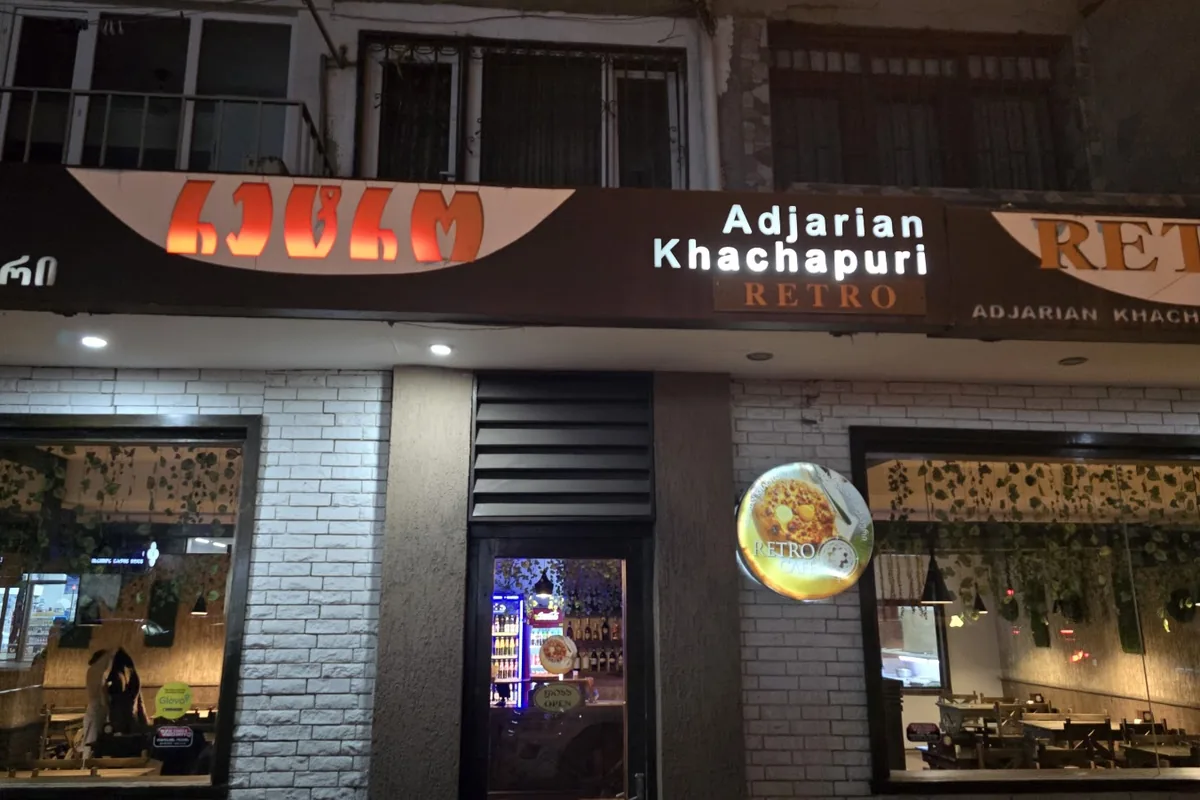
Retro in Saburtalo is where I'd eat Adjaruli khachapuri in Tbilisi for the first time: the large one costs about 20 GEL and two people struggle to finish it.
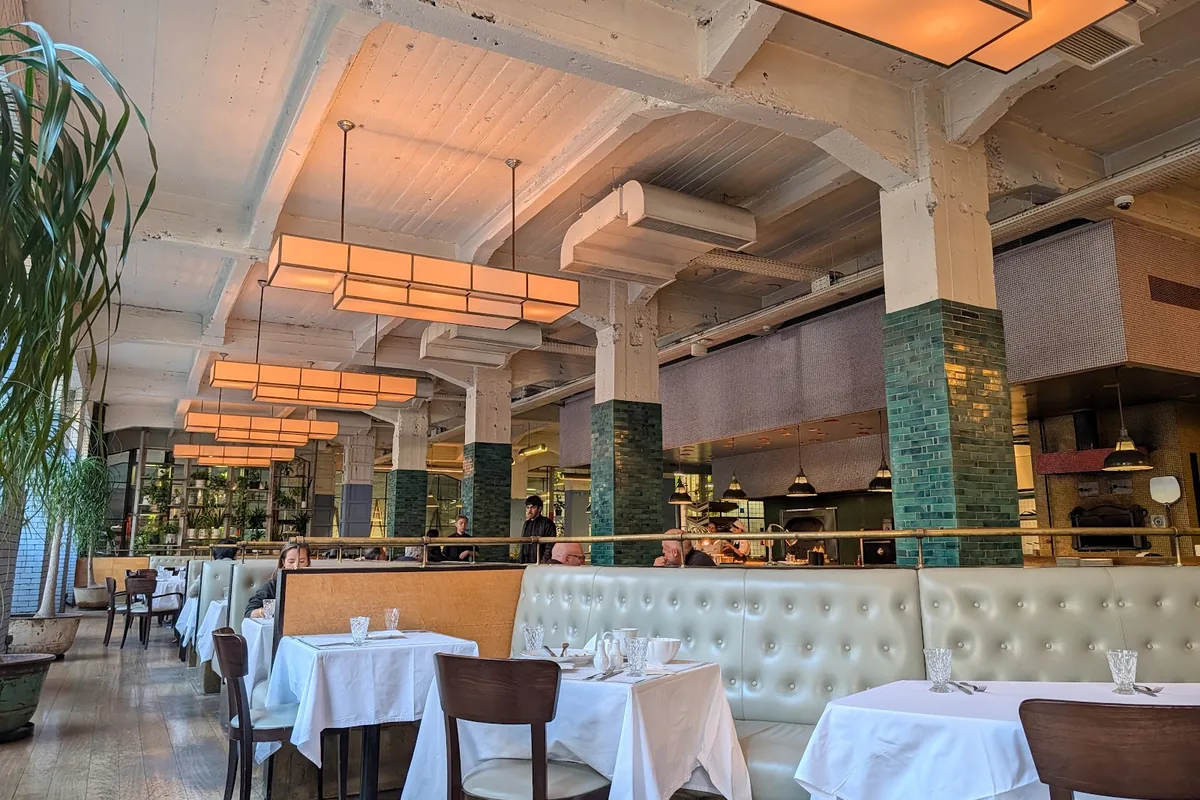
Cafe Stamba on Kostava Street makes a thinner, crispier version if you want something lighter. You'll also see lobiani on every bakery counter, which looks like khachapuri but is filled with beans instead of cheese.
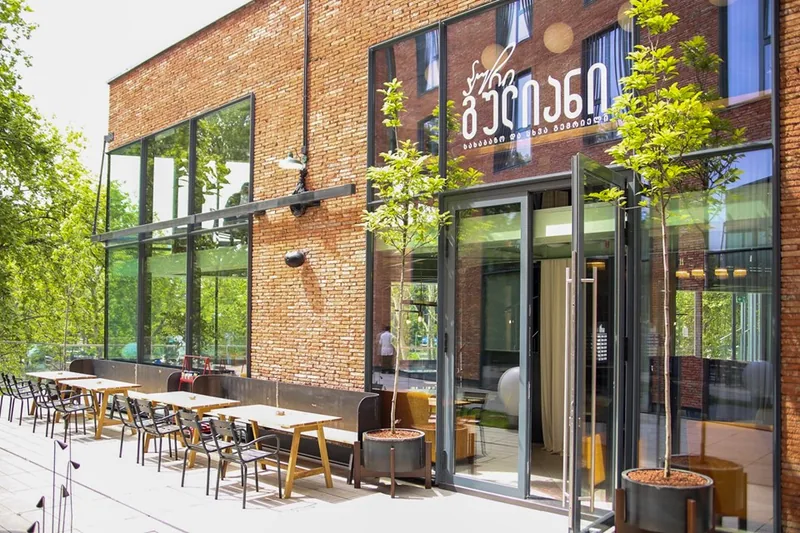
At Puri Guliani on Saarbrucken Square, ask for "tsomi gamotslili" and your khachapuri comes with less bread and more cheese.
Khinkali: the soup dumplings
Khinkali are twisted dumplings filled with spiced chopped meat and a mouthful of hot broth. They come from the eastern mountains (Pshavi, Khevsureti, Mtiuleti and Khevi), and there are two families. Mountain khinkali, called mokheuri or mtiuluri, keep it to meat, onion, chili, cumin and salt. The city version, kalakuri, adds parsley and coriander. Meat-free fillings are easy to find too: mushroom, potato, cheese, and spinach with nadughi, a soft whey cheese.
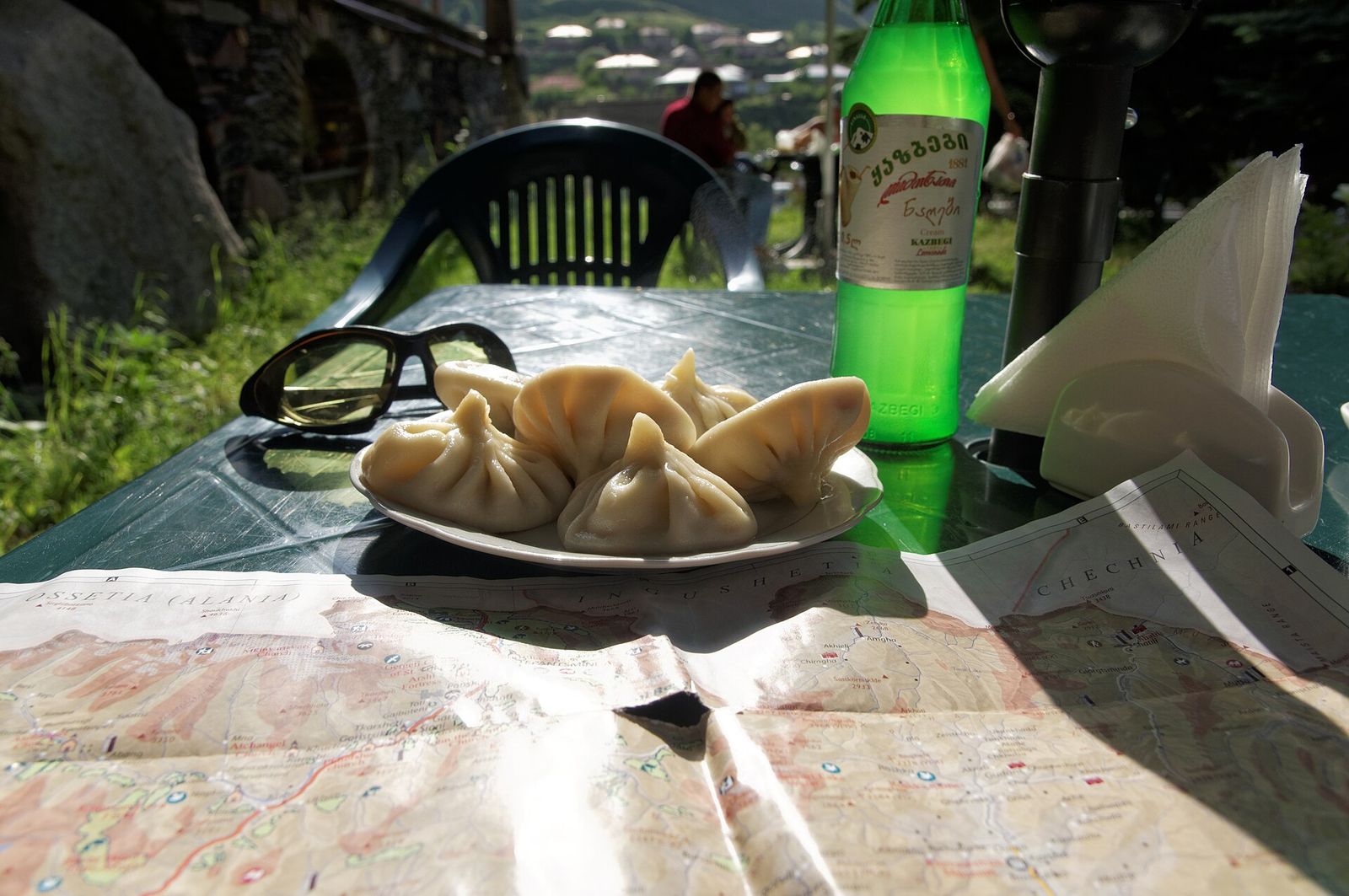
You eat them with your hands. Pick one up by the twisted top, bite a small hole in the side, drink the broth, then eat the rest and leave the top on your plate. The pile of tops is how locals count who ate the most. A knife and fork lets the broth run out across the plate, which is the one thing you don't want, though nobody minds a fork holding the top in a city restaurant.
Order at least five of a filling, even alone, and then in fives. Prices barely change across the city: about 2.40 to 3 GEL a piece, and 4 to 5 GEL for dambalkhacho, a strong aged mountain cheese filling. Hand-wrapped khinkali are the prized ones, though plenty of kitchens use machines.
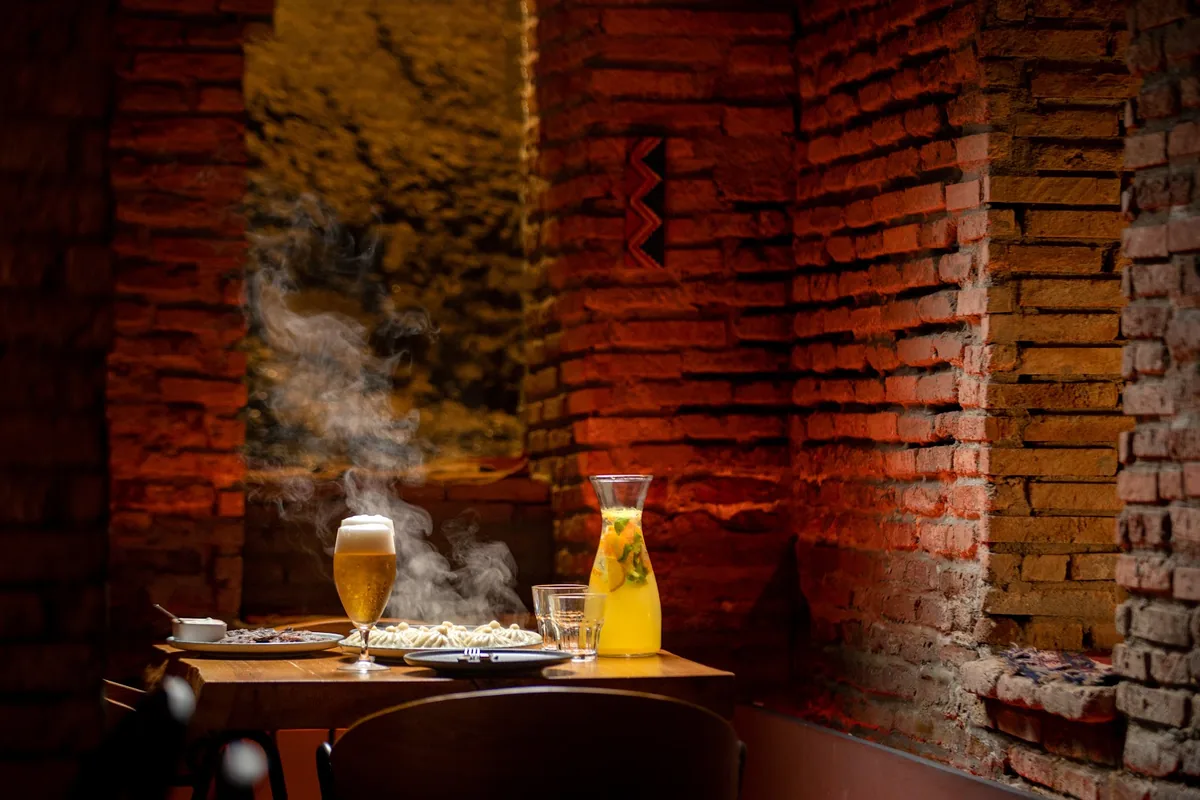
Pictograma under the Dry Bridge market wraps fatty Khevsureti-style ones by hand.
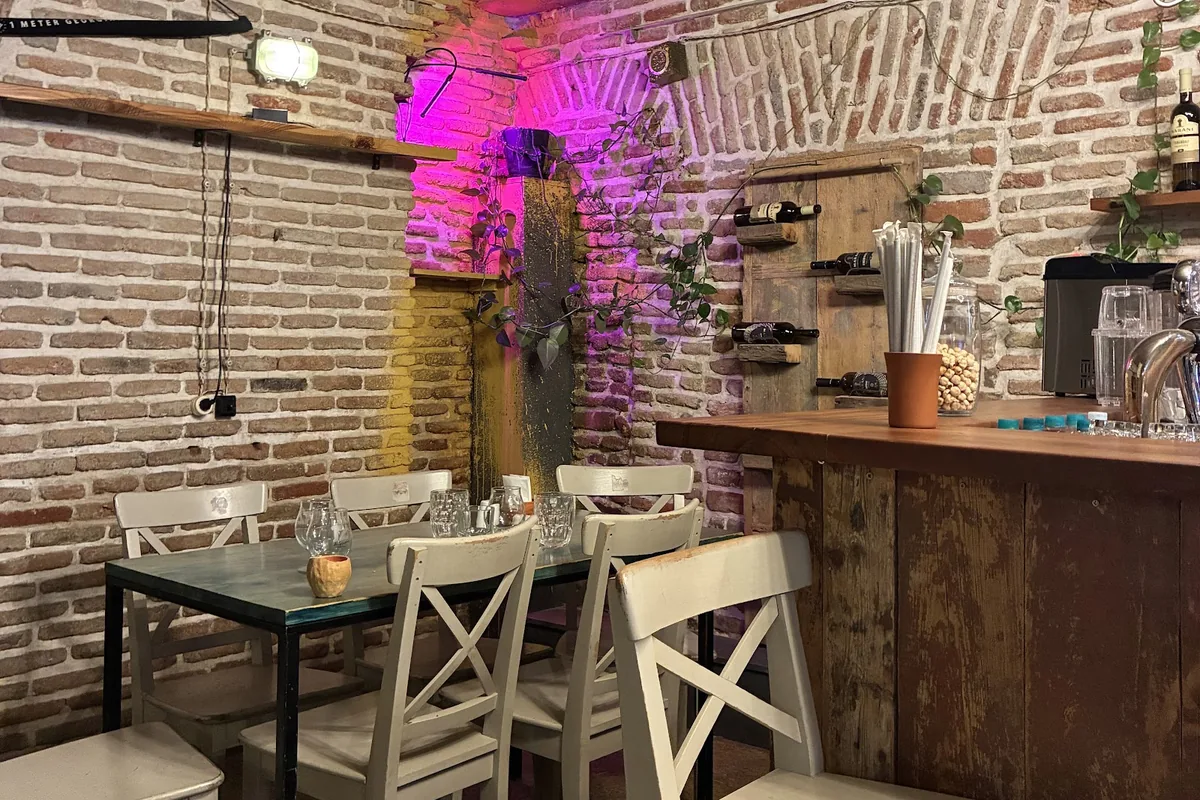
Klike's Khinkali behind Parliament makes the brothiest khinkali in Tbilisi and the best vegetarian fillings. I order the nadughi with butter there.
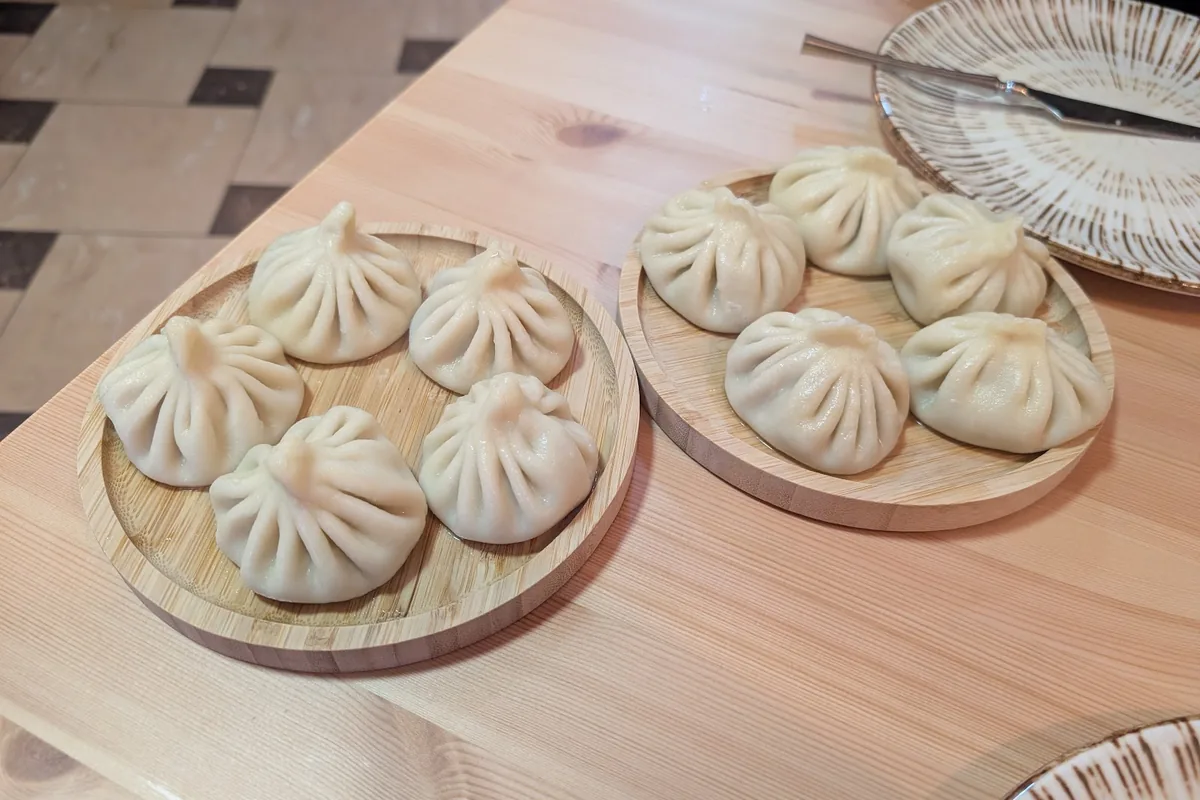
For halal khinkali, Leila's Khinkali on Shevchenko Street makes beef ones to a Pankisi Kist recipe.
Vegetable and walnut dishes
Georgian food is kinder to vegetarians than its meaty reputation suggests. The church calendar has long fasts, plus fasting on Wednesdays and Fridays, when observant Georgians skip meat, dairy and eggs, so the cuisine has a deep bench of vegetable dishes. Order a few of these as cold starters while the hot food cooks.
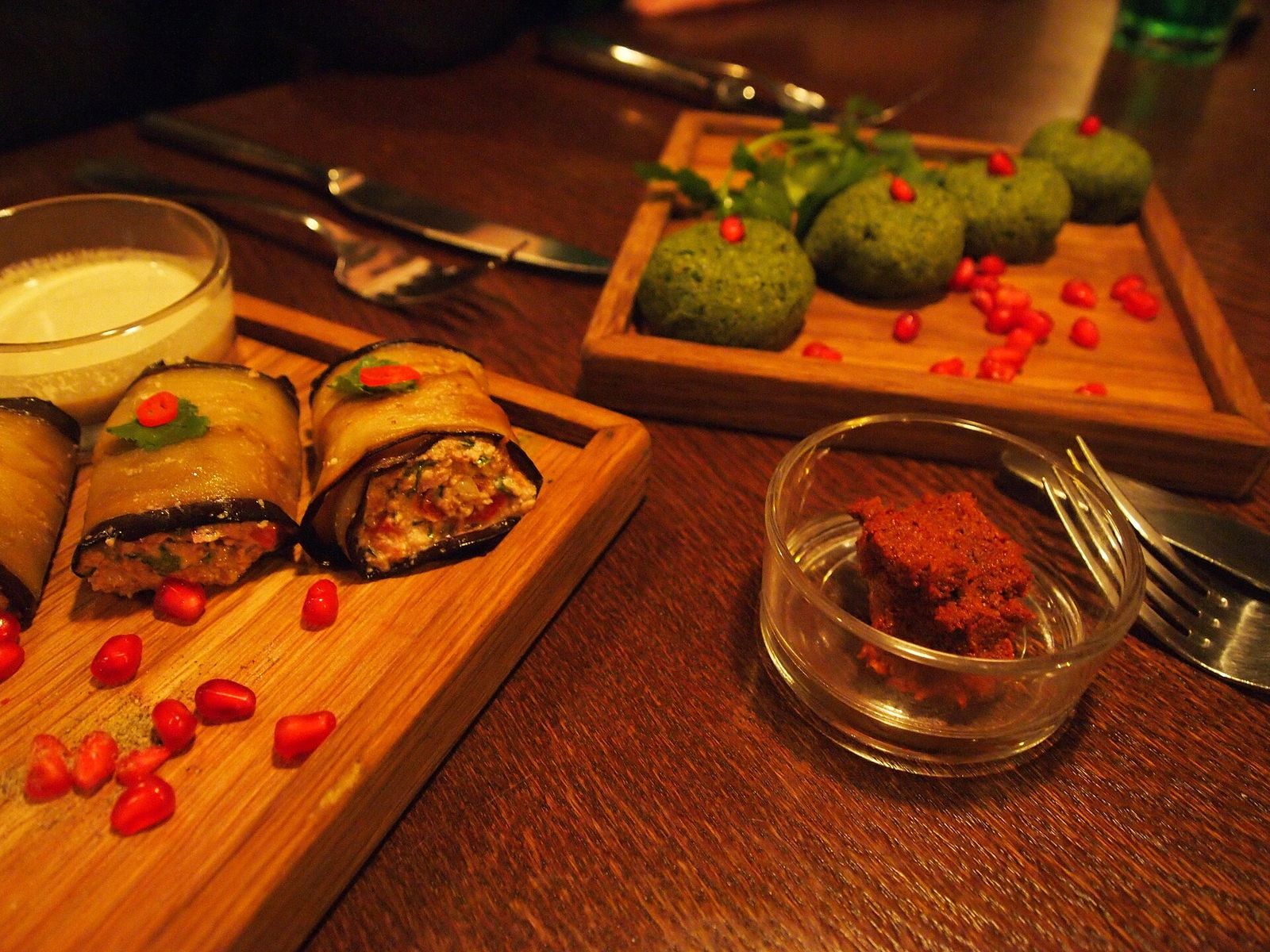
Pkhali: spinach, beetroot or cabbage pounded with walnut and garlic, shaped into balls and topped with pomegranate seeds. It usually comes as a plate of three colors.
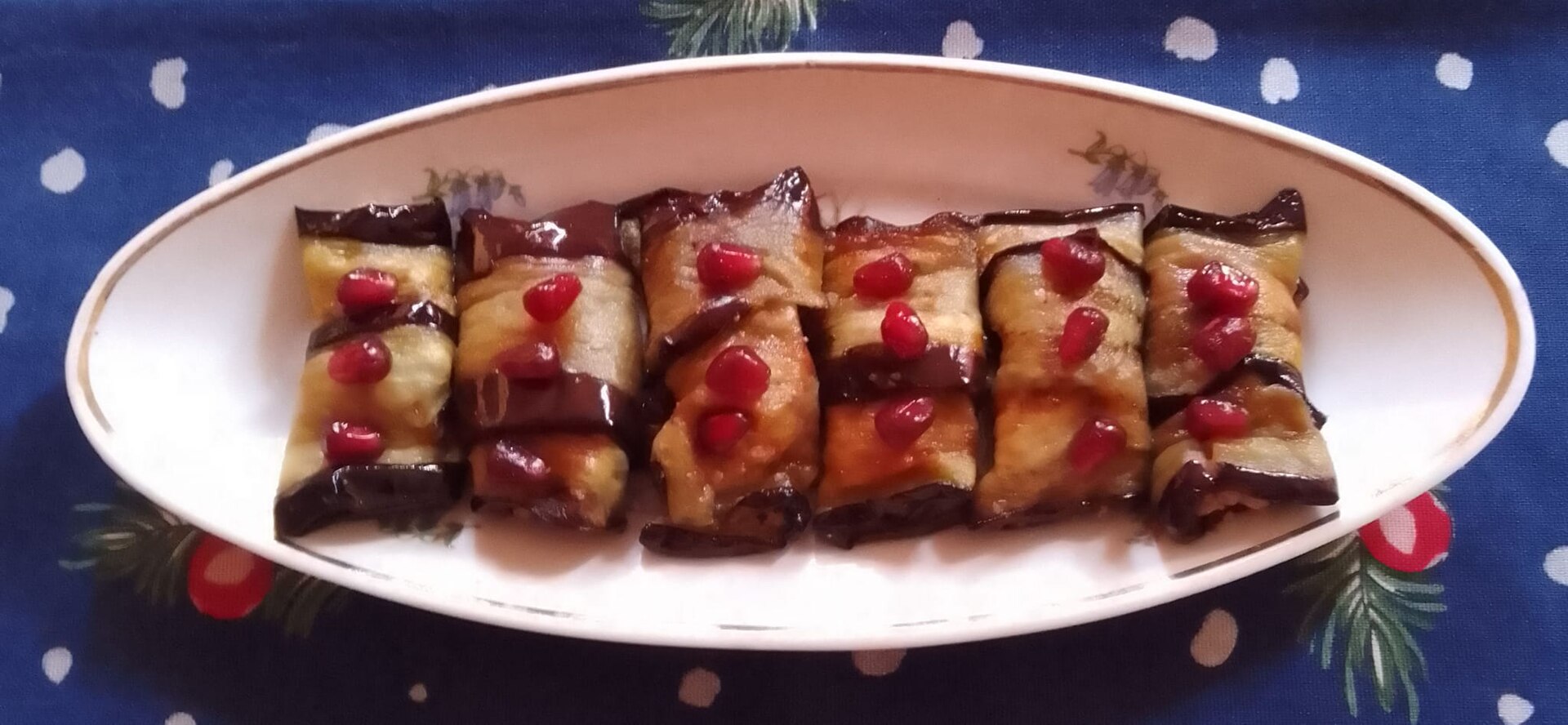
Badrijani nigvzit: thin slices of fried eggplant rolled around walnut paste. My favorite cold dish on any Georgian menu.
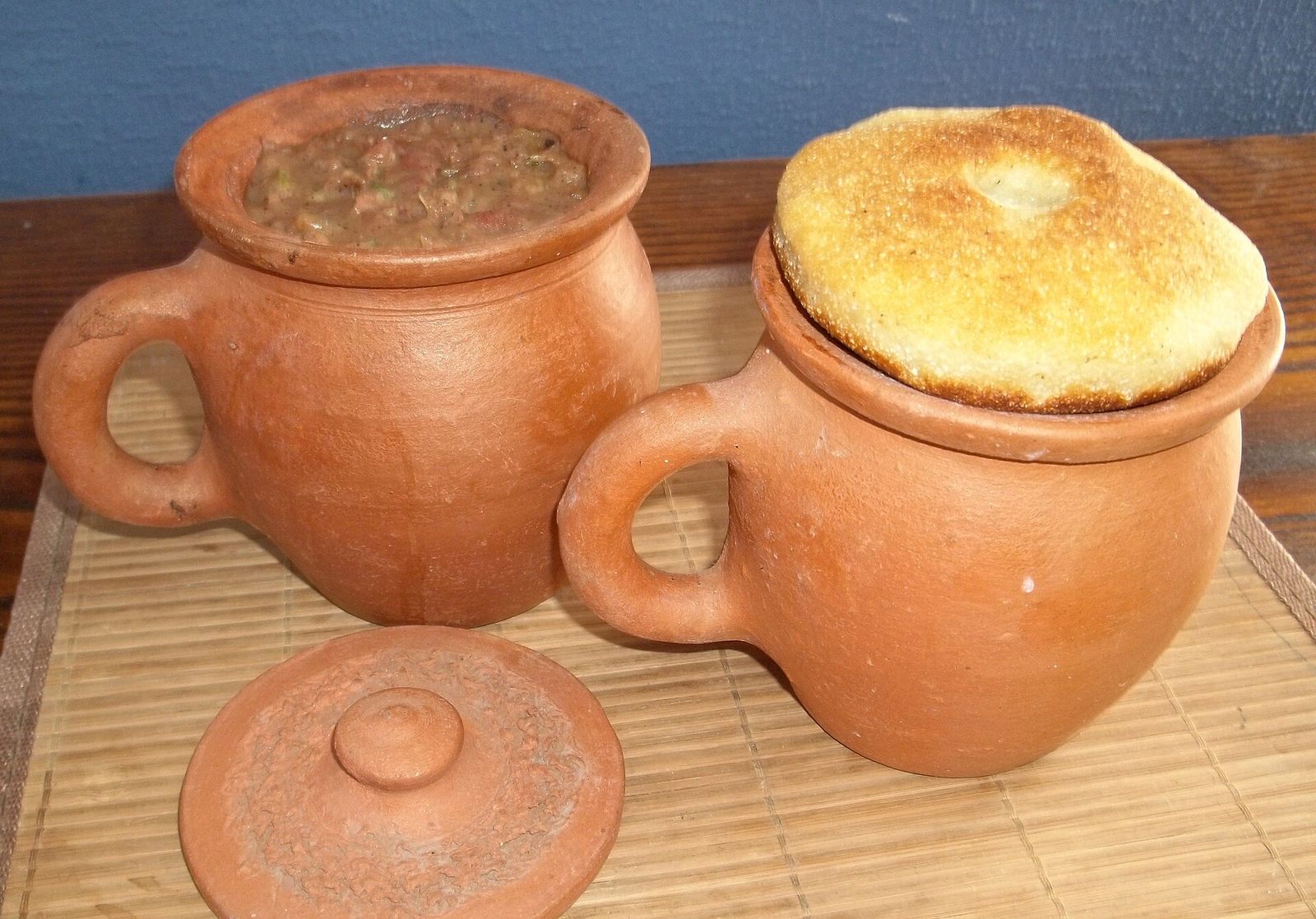
Lobio: kidney beans with coriander, walnut and garlic, served cold or hot in a clay pot with mchadi cornbread and pickles.
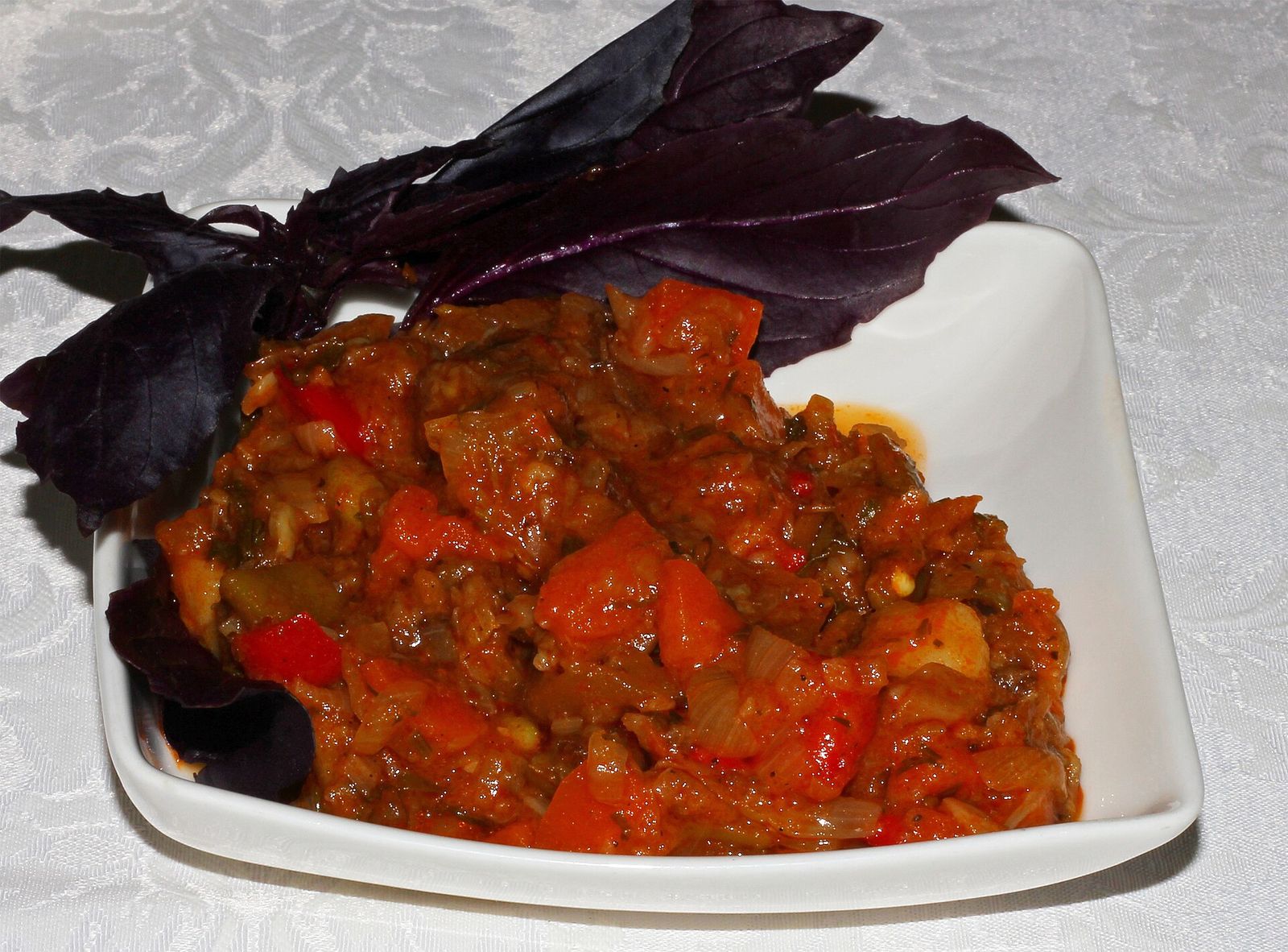
Ajapsandali: a soft stew of eggplant, tomato and pepper, best from June to October when the vegetables are in season.
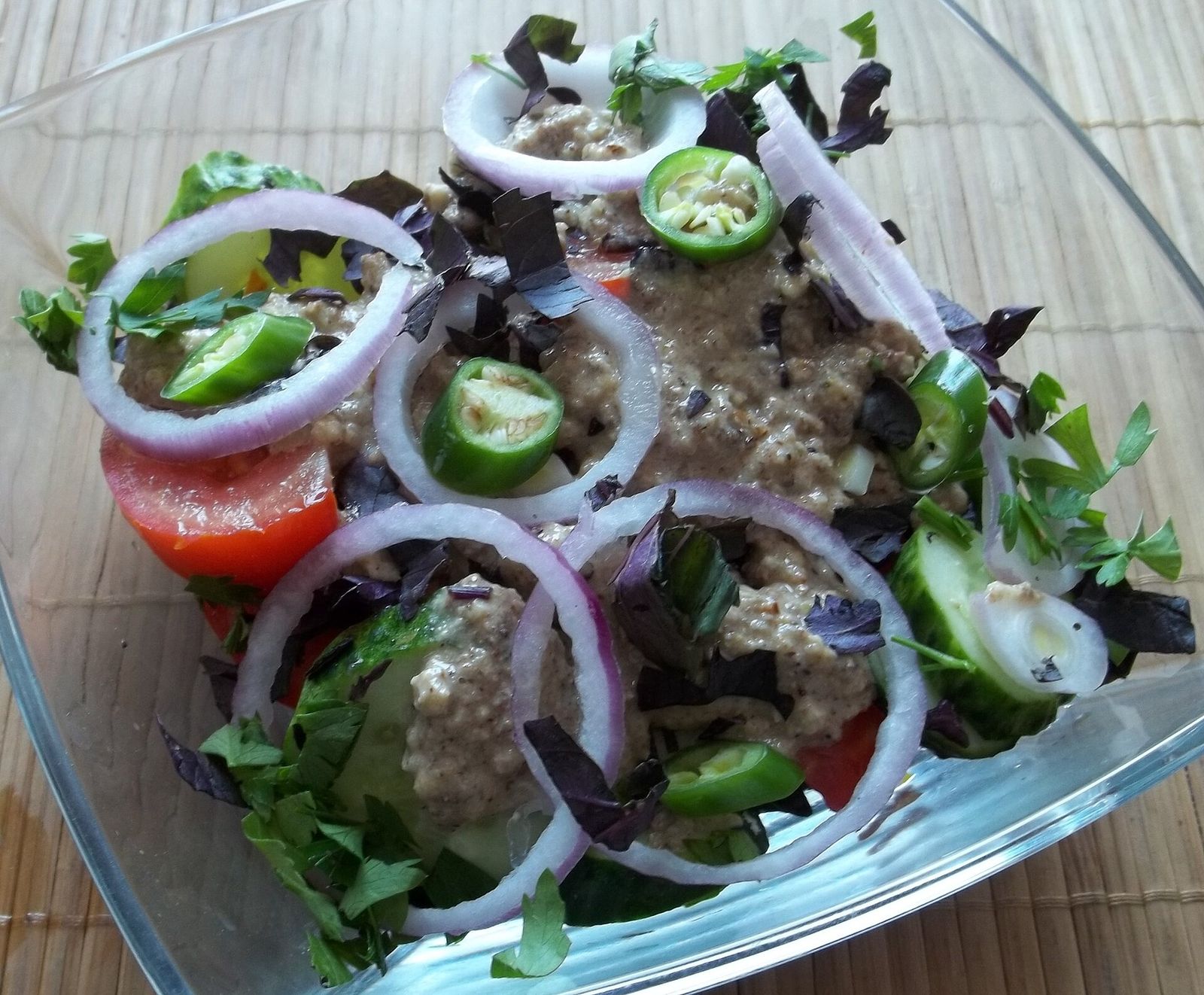
Georgian salad: chunky tomato and cucumber with herbs and red onion, often with a walnut dressing. In summer the tomatoes alone are a reason to order it.
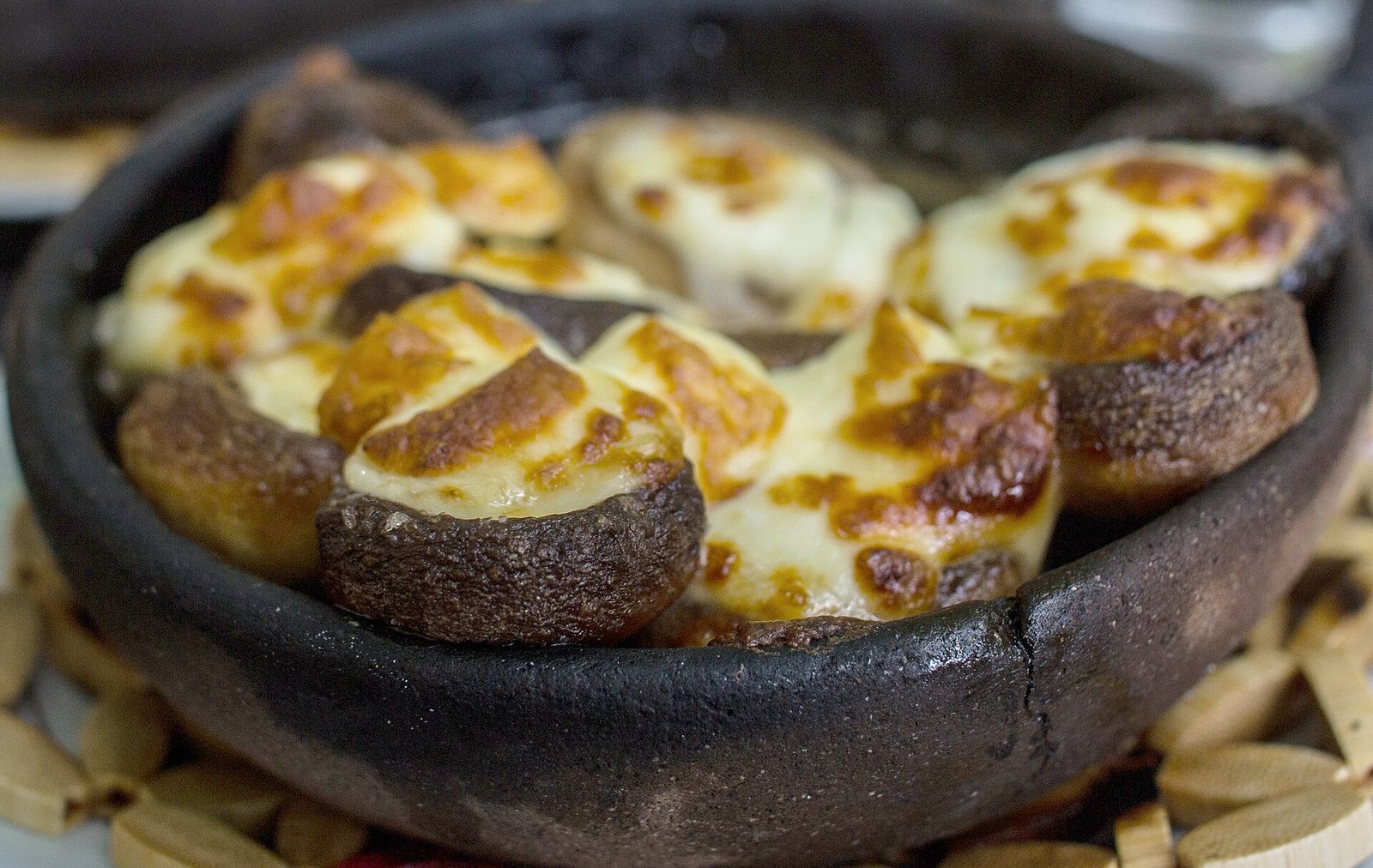
Mushrooms: whole mushroom caps filled with sulguni and baked in a clay ketsi until the cheese browns, served still sizzling.
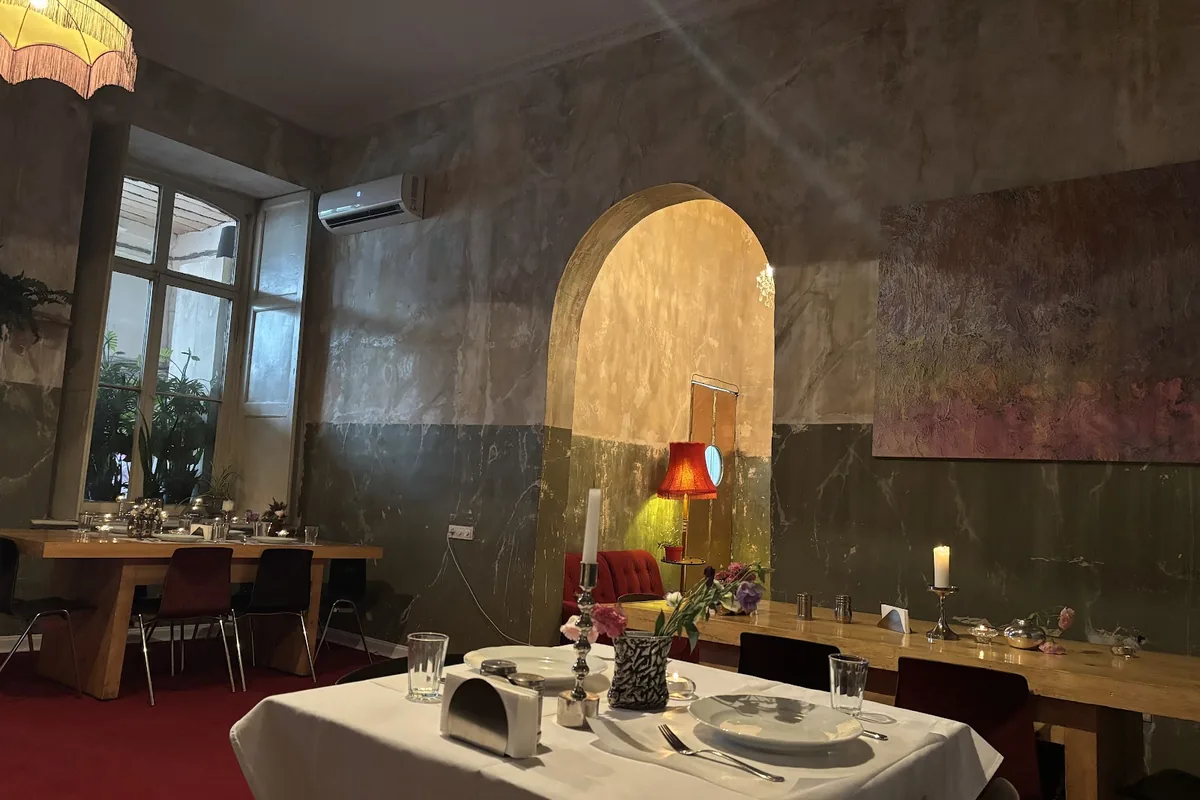
Iasamani in Sololaki, where more than half the menu is vegetarian or vegan, is my first stop for vegetarian food in Tbilisi: try the oyster mushrooms in cherry and pomegranate sauce.
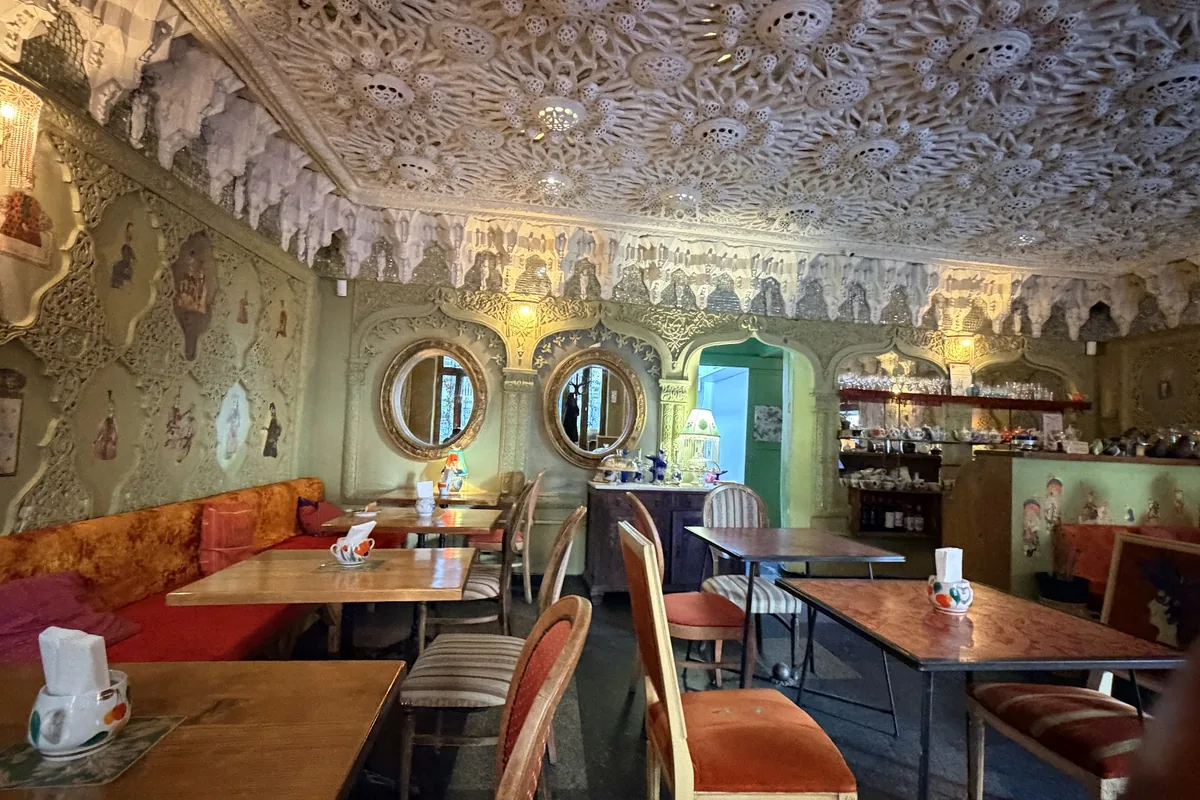
Cafe Leila in the Old Town fries nothing and makes meat-free versions of the classics, and its mushroom kharcho with blackberry sauce and cornbread is a good way to taste a meat classic without the meat.
Meat dishes, stews and soups
Meat is where Georgian cooking gets slow and saucy. Most of these come in clay dishes and are meant for sharing, with bread to mop up the sauce.
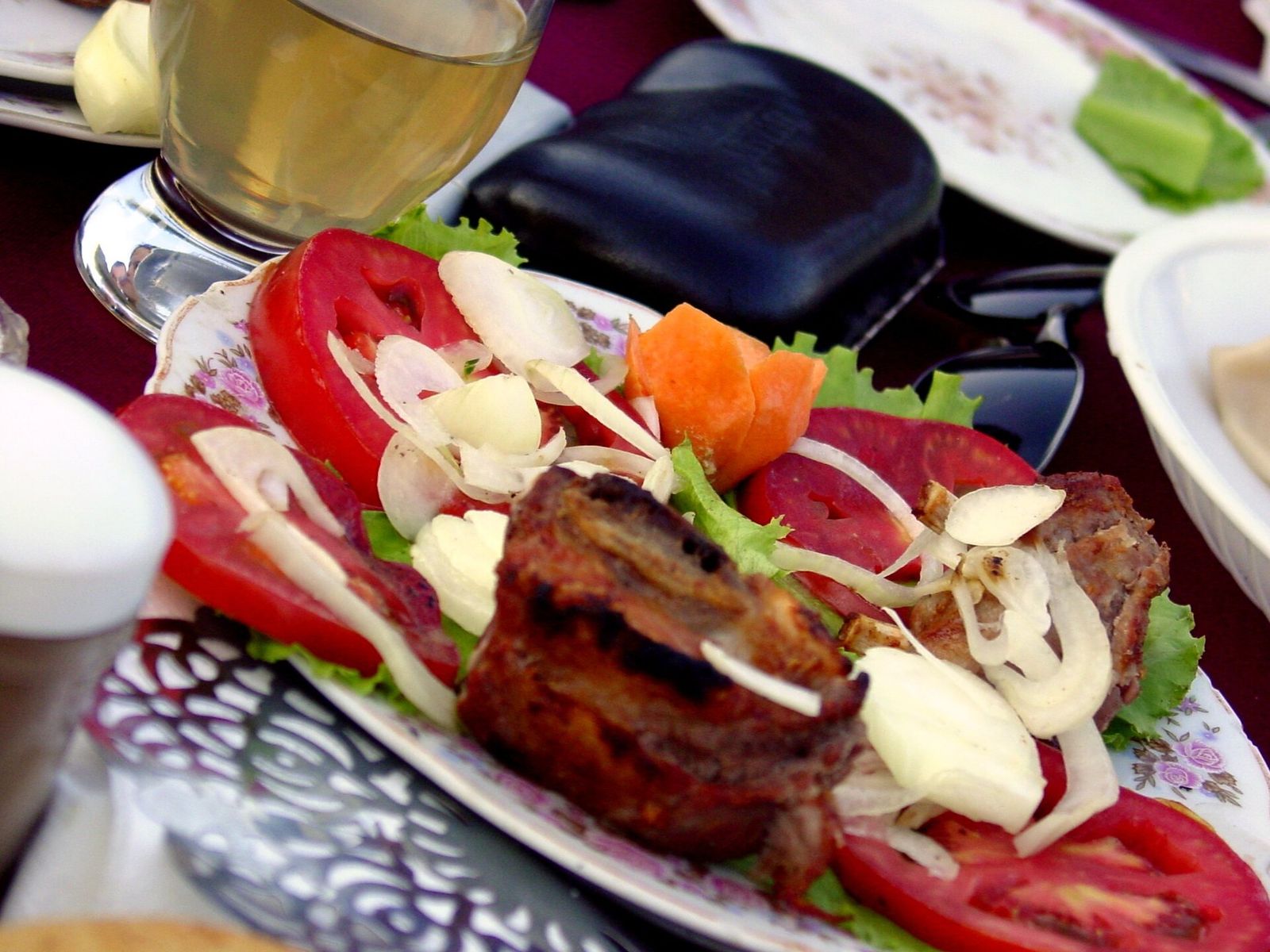
Mtsvadi: Georgian barbecue, cubes of pork, veal or lamb grilled and served with raw onion, pomegranate seeds and tkemali sauce. A portion is usually 4 to 6 pieces.
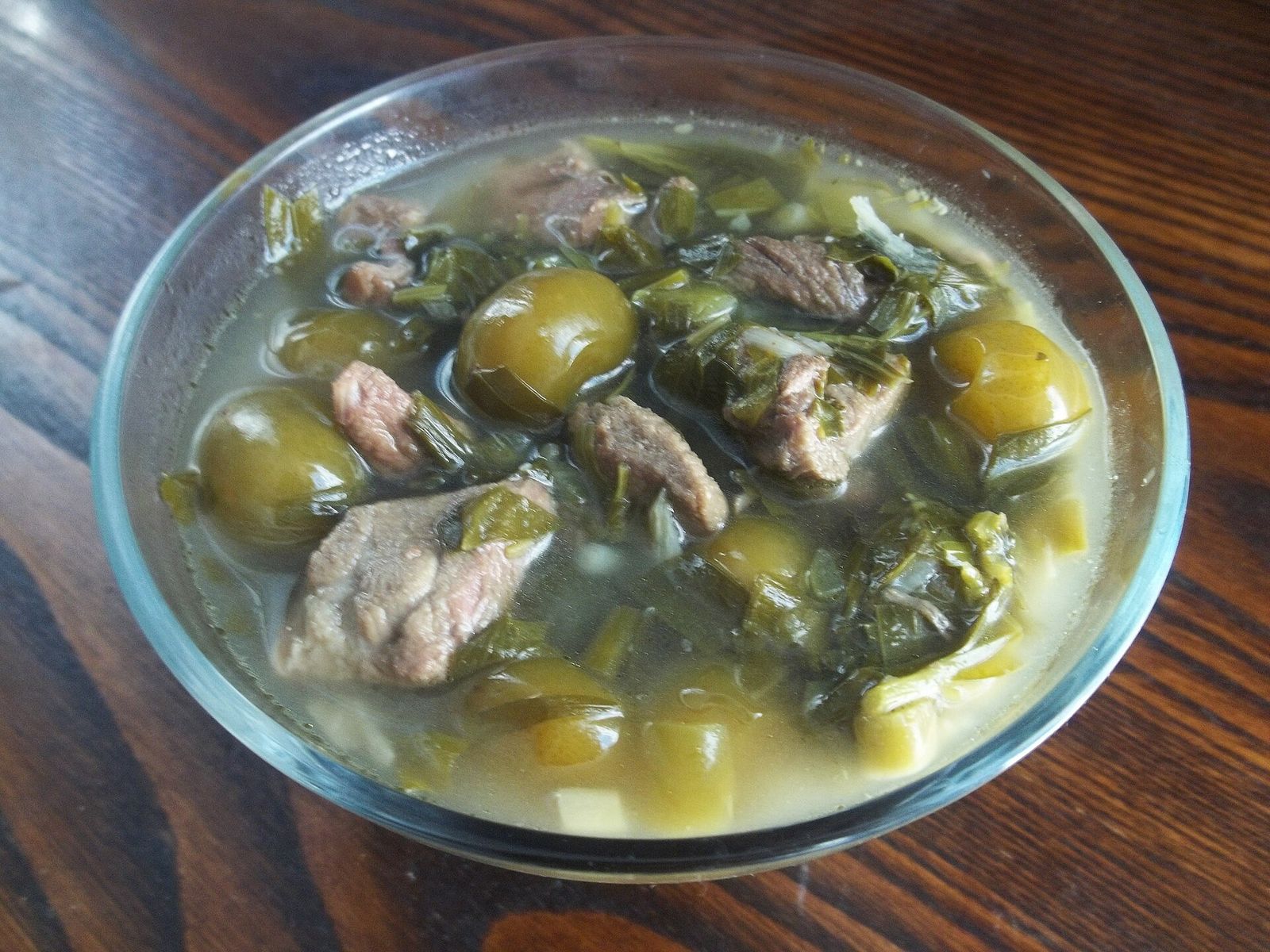
Chakapuli: lamb or veal stewed with tarragon, unripe cherry plums and dry white wine. It's a spring dish, but Tbilisi serves it all year, and it's my pick of the stews.
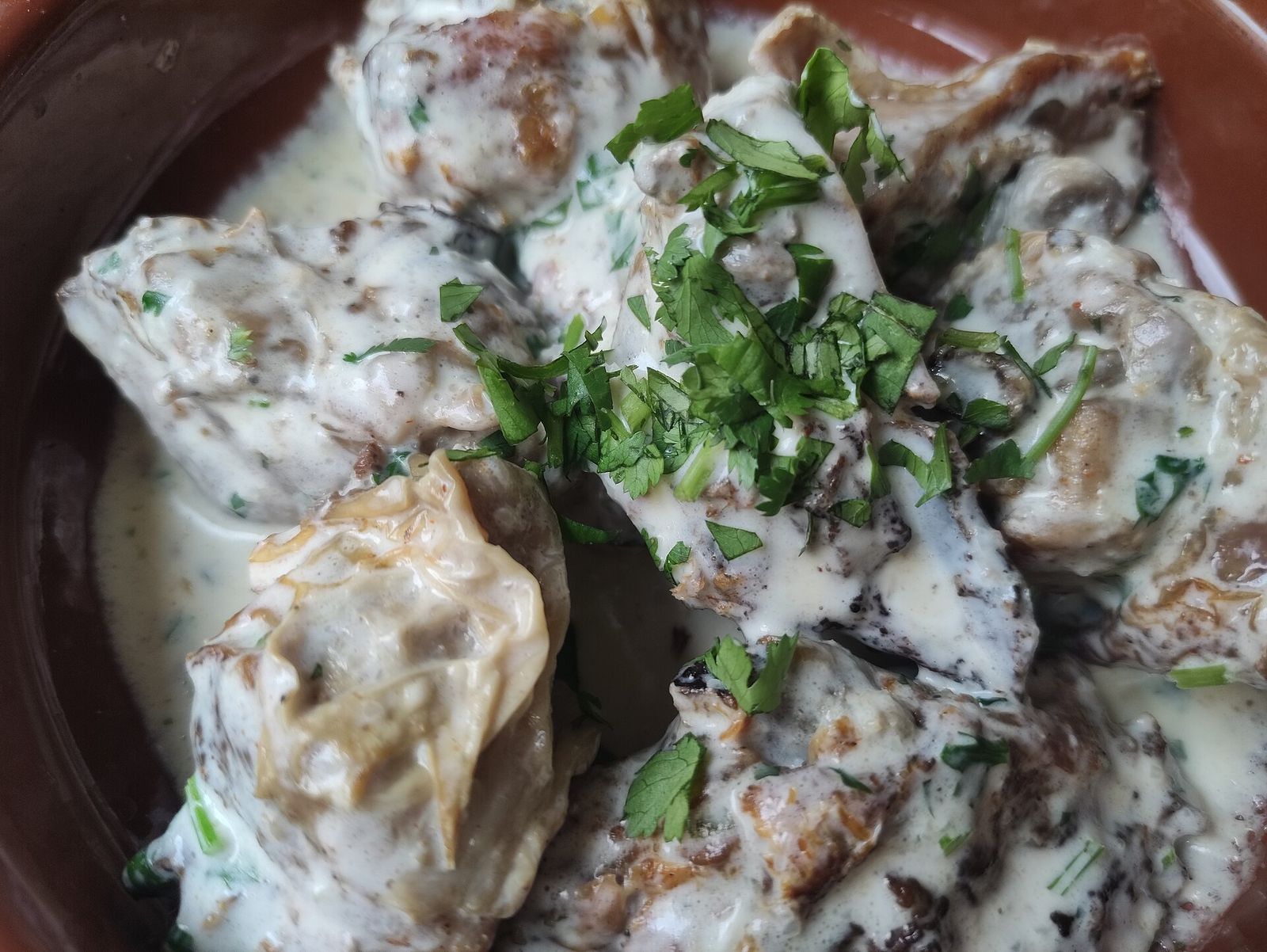
Shkmeruli: chicken fried and then baked in a garlic and milk sauce, from the Racha region. Garlic lovers only.
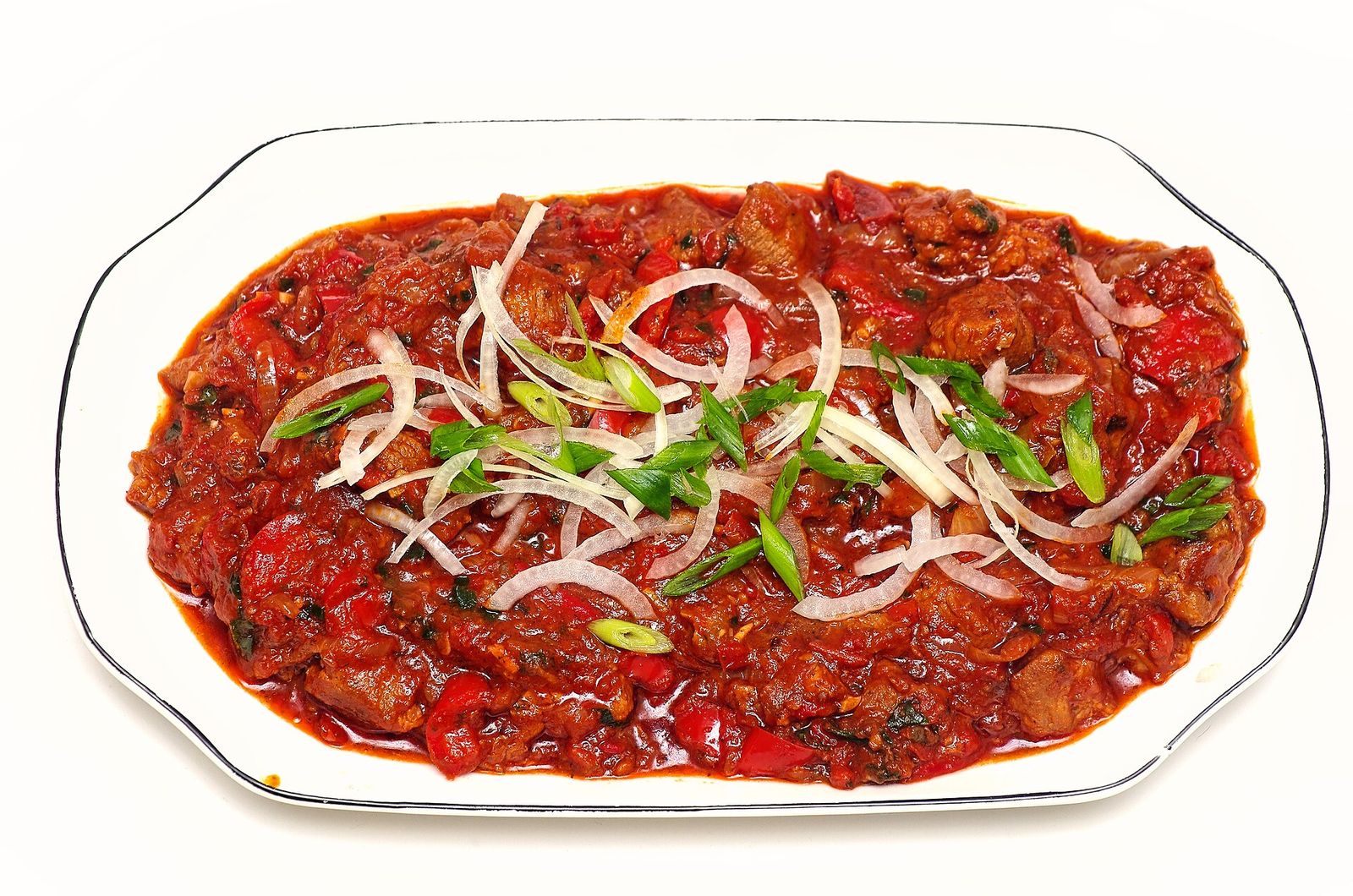
Chashushuli: beef or lamb fried and then simmered in tomato, chili and herbs, eaten with shotis puri.
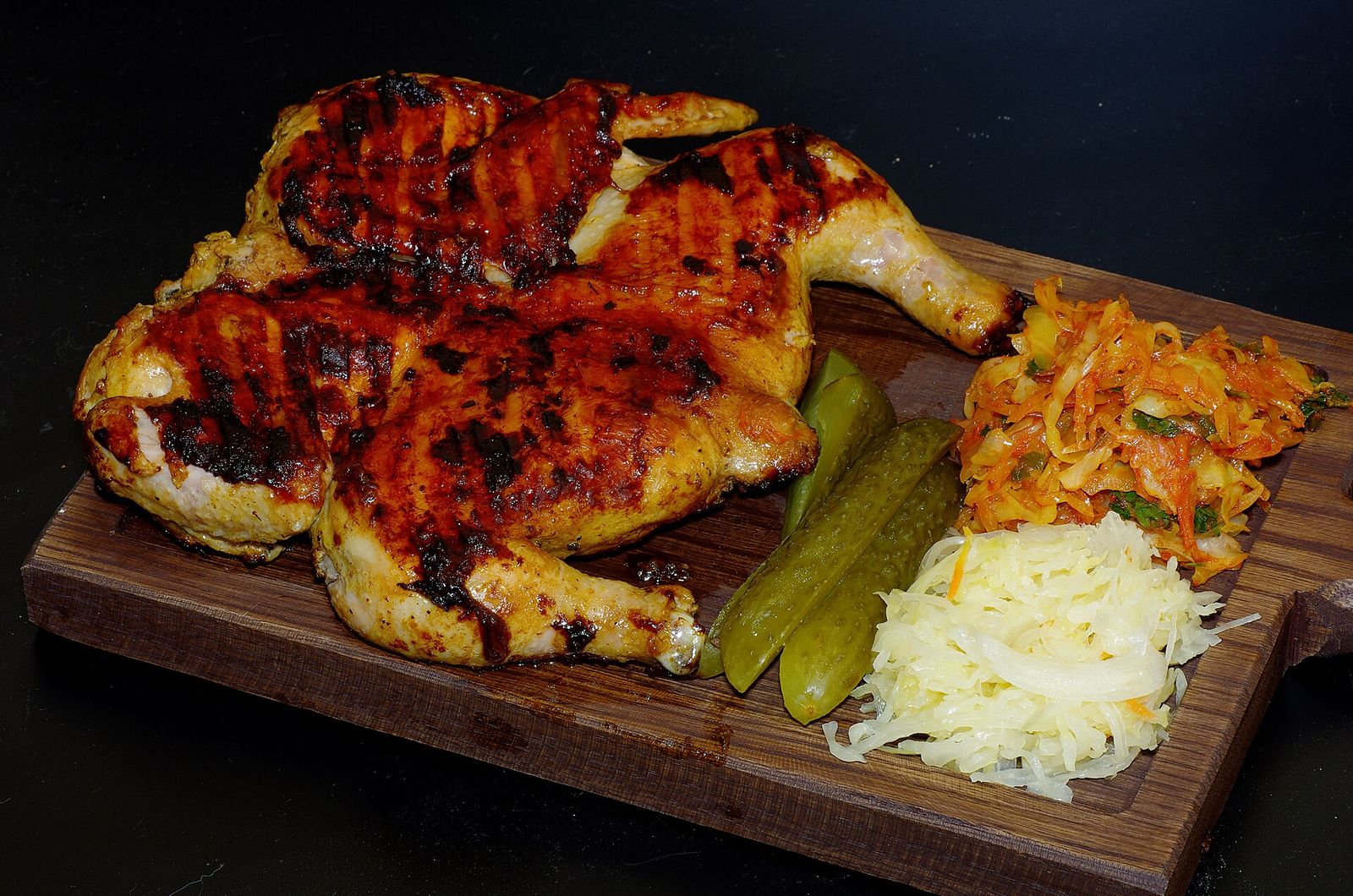
Chicken tabaka: a whole small chicken pressed flat and pan-fried until the skin crackles.
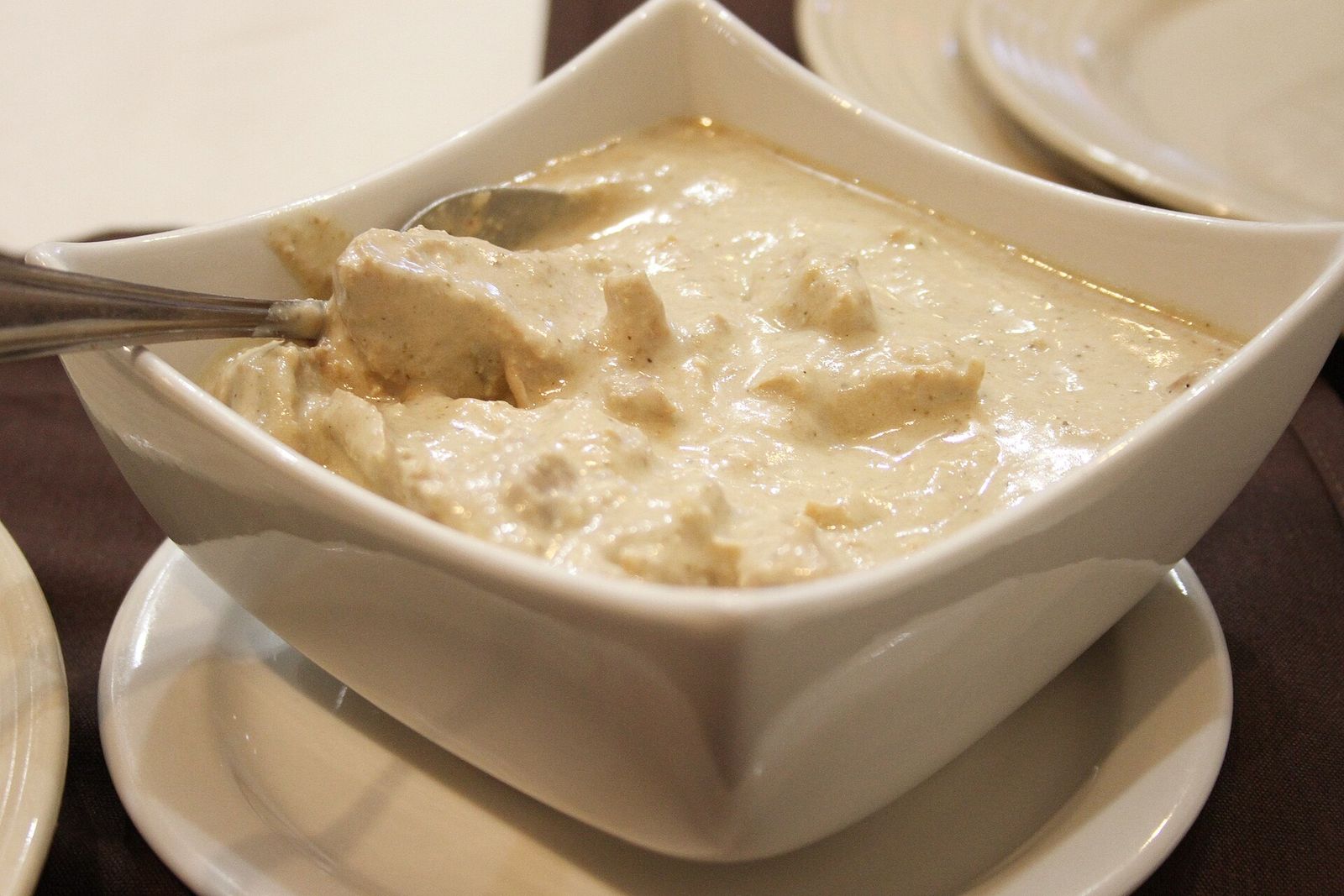
Satsivi: poultry in a cold, spiced walnut sauce, made mostly for winter and New Year.
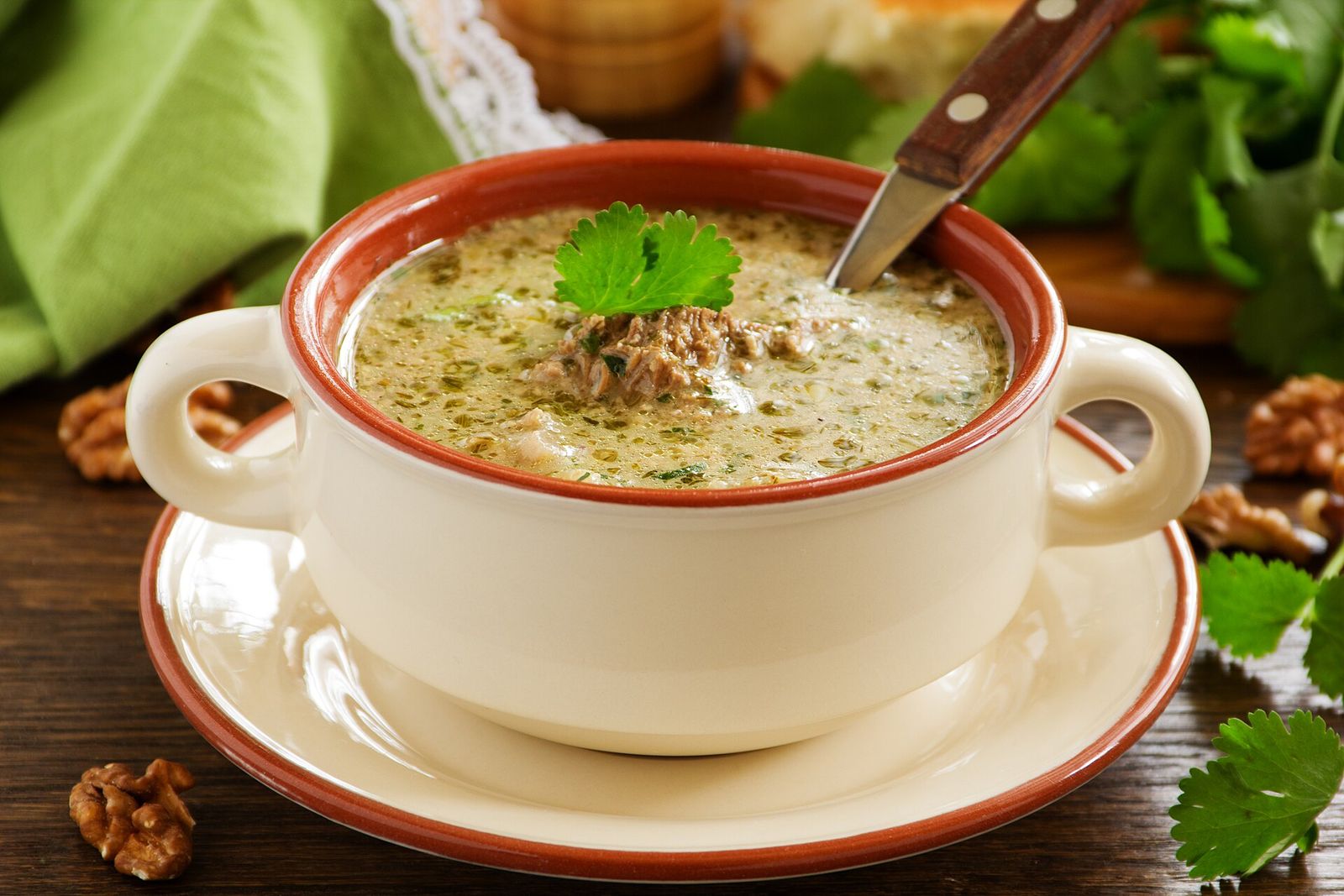
Kharcho: beef soup with rice, sour plum and walnut. The Megrelian version is a thick walnut stew served over ghomi, a cornmeal porridge.
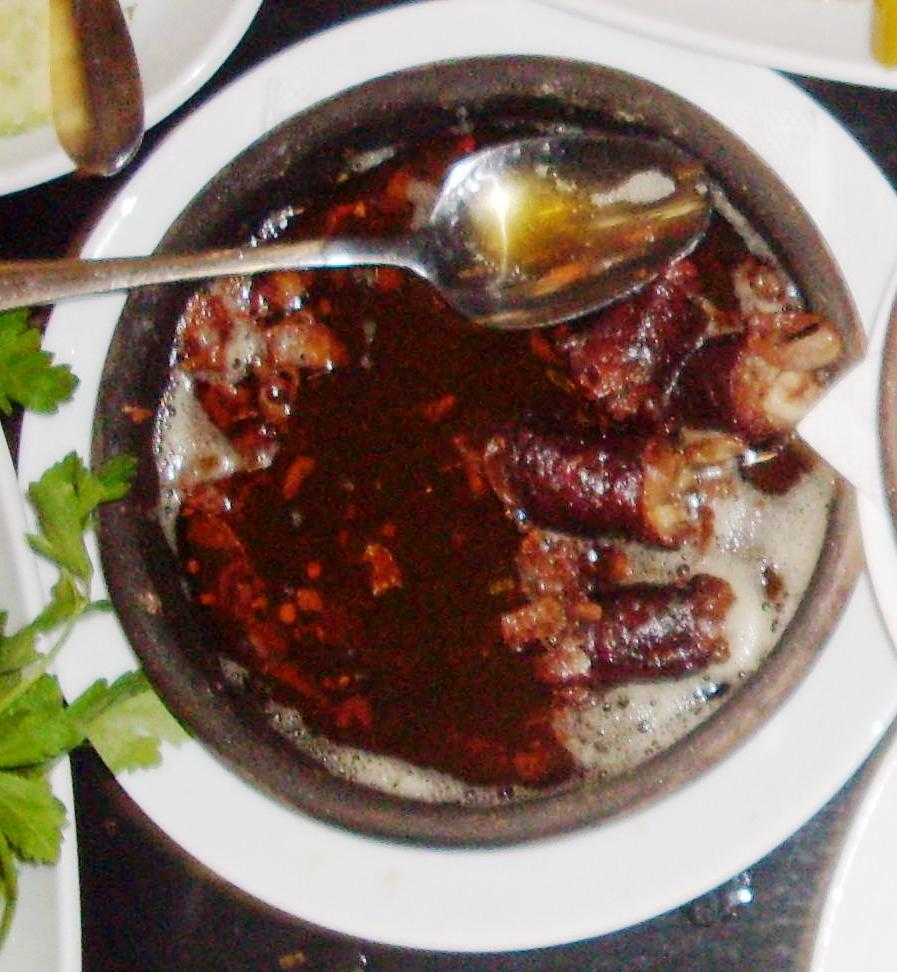
Kupati: spiced Megrelian sausage, good at Ghebi and Mapshalia.
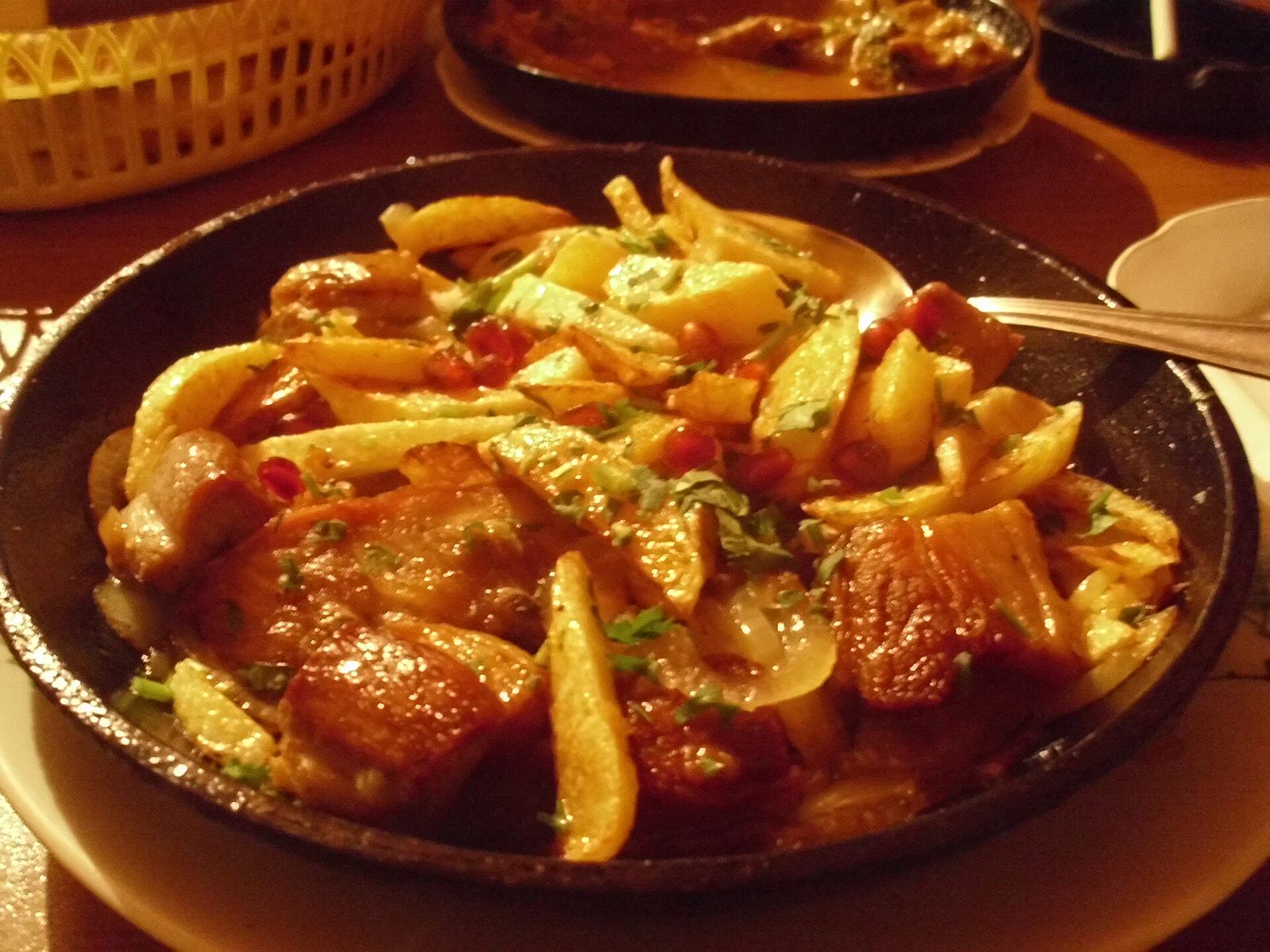
Ojakhuri: a family-style fry of pork and potatoes, the comfort food of Georgian canteens.
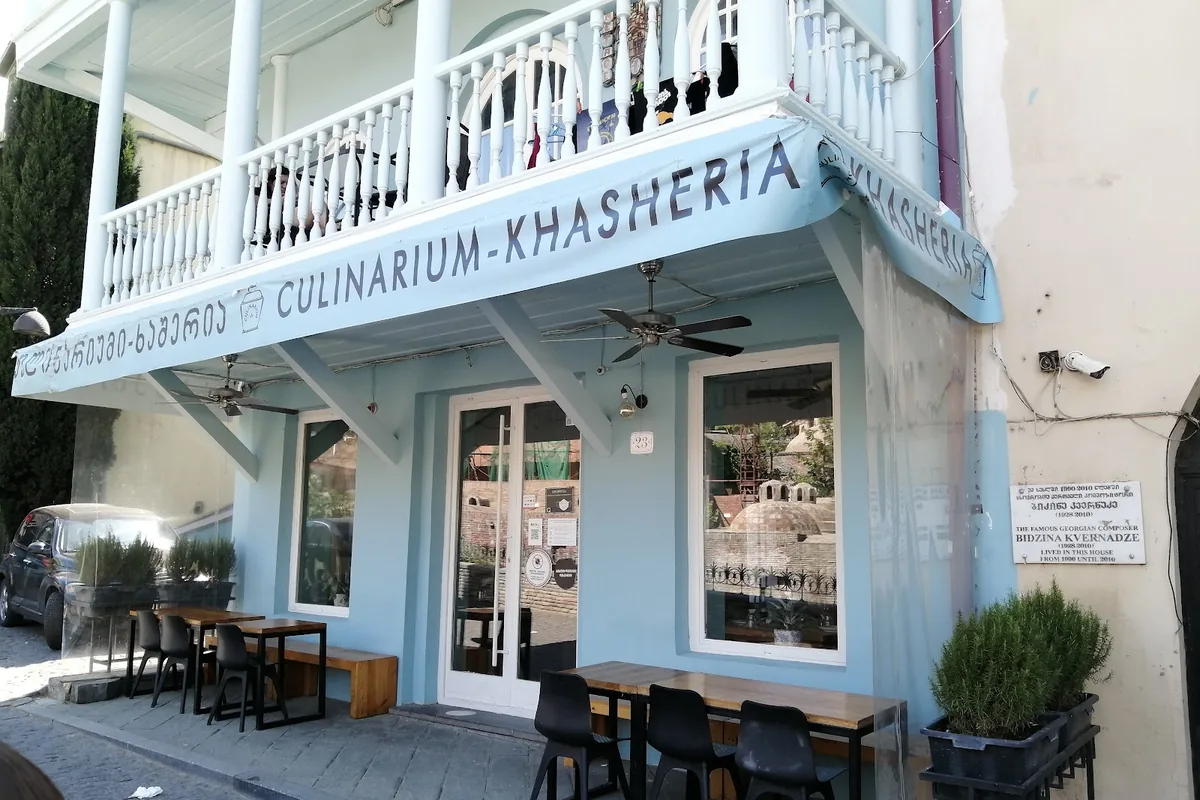
Khashi: tripe soup eaten early in the morning, traditionally after a long night. Khasheria in Abanotubani, which reopened in June 2026, is the place to try it.
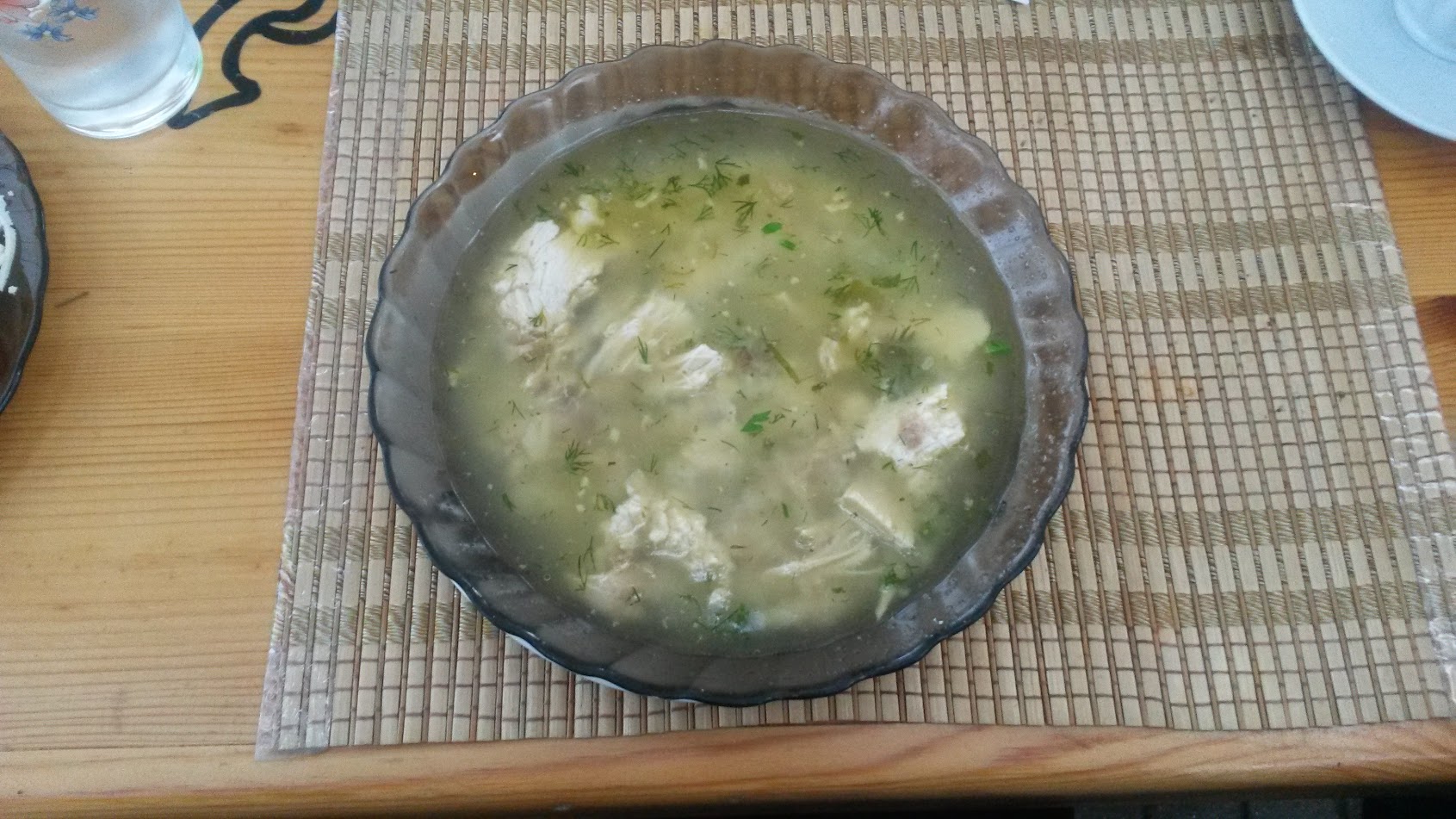
Chikhirtma: chicken soup thickened with egg, a gentle option at Khash-Khash in Chugureti.
Regional dishes to look for
Every Georgian region has its own kitchen, and Tbilisi has a restaurant for most of them. This is where eating here gets more interesting than the famous pair.
| Region | What to order | Where in Tbilisi |
|---|---|---|
| Samegrelo | Megrelian kharcho, elarji, gebzhalia, kupati, Megruli khachapuri | Mapshalia, Dadiani, Oro |
| Abkhazia | Abkhazura meatballs, ajika, Abkhazian khachapuri | Amra, Saburtalo |
| Svaneti | Kubdari, the meat-filled bread | Salobie Bia, Shavi Lomi |
| Racha | Shkmeruli, lobio | Ghebi, Aghmashenebeli Avenue |
| Adjara | Adjaruli khachapuri | Retro, Saburtalo |
| Kakheti | Mtsvadi, seasonal salads | Kakhelebi, Beliashvili Street |
| Mtiuleti and Khevi | Mountain khinkali, stews, khabizgina | Kade, Chugureti |
| Khevsureti | Small hand-wrapped meat khinkali | Pictograma, Dry Bridge |
| Meskheti | Khinkali with apokhti, a cured meat | Chef Saradjeff, below the baths |
| Pankisi | Halal beef khinkali | Leila's Khinkali, Mtatsminda |
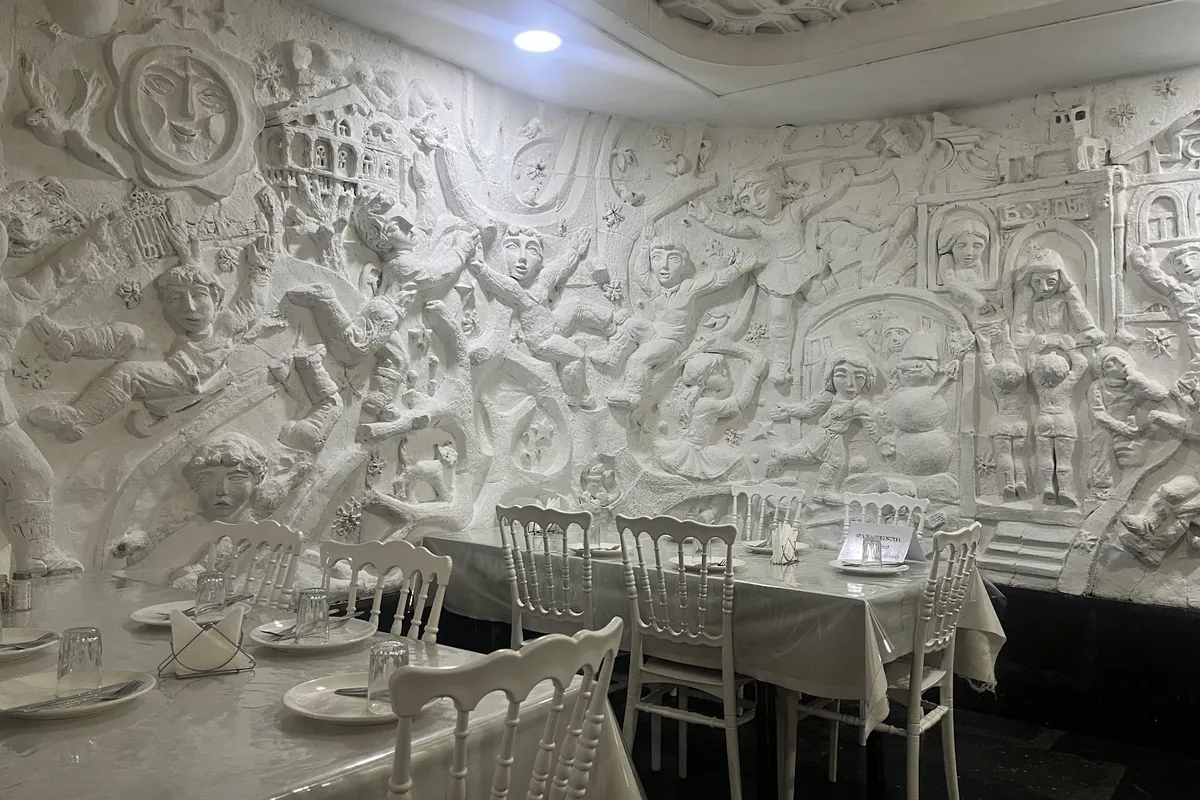
If you pick just one, make it Megrelian. Mapshalia on Aghmashenebeli Avenue is a no-frills canteen where elarji with bazhe and a bowl of kharcho cost less than a cocktail elsewhere.
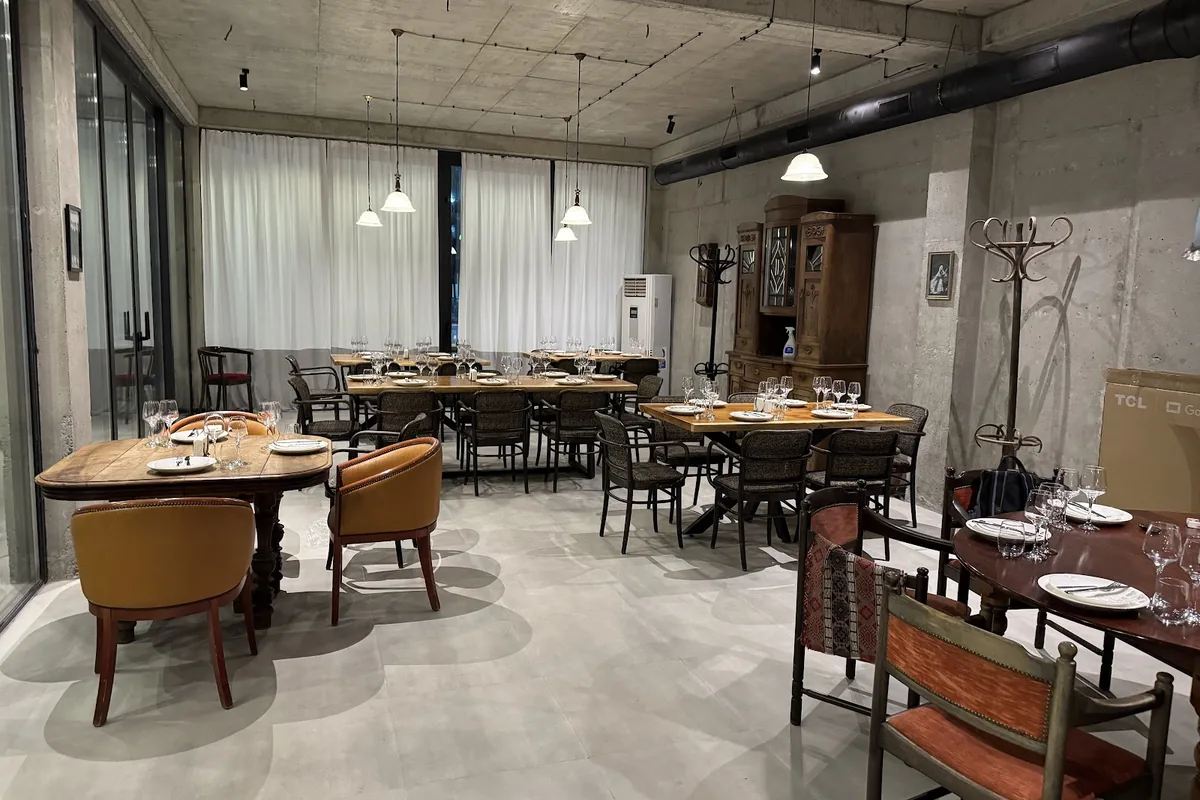
Amra near State University metro is the city's Abkhazian specialist and the only place I know serving Sokhumi ice cream.
Bread, cheese and sauces
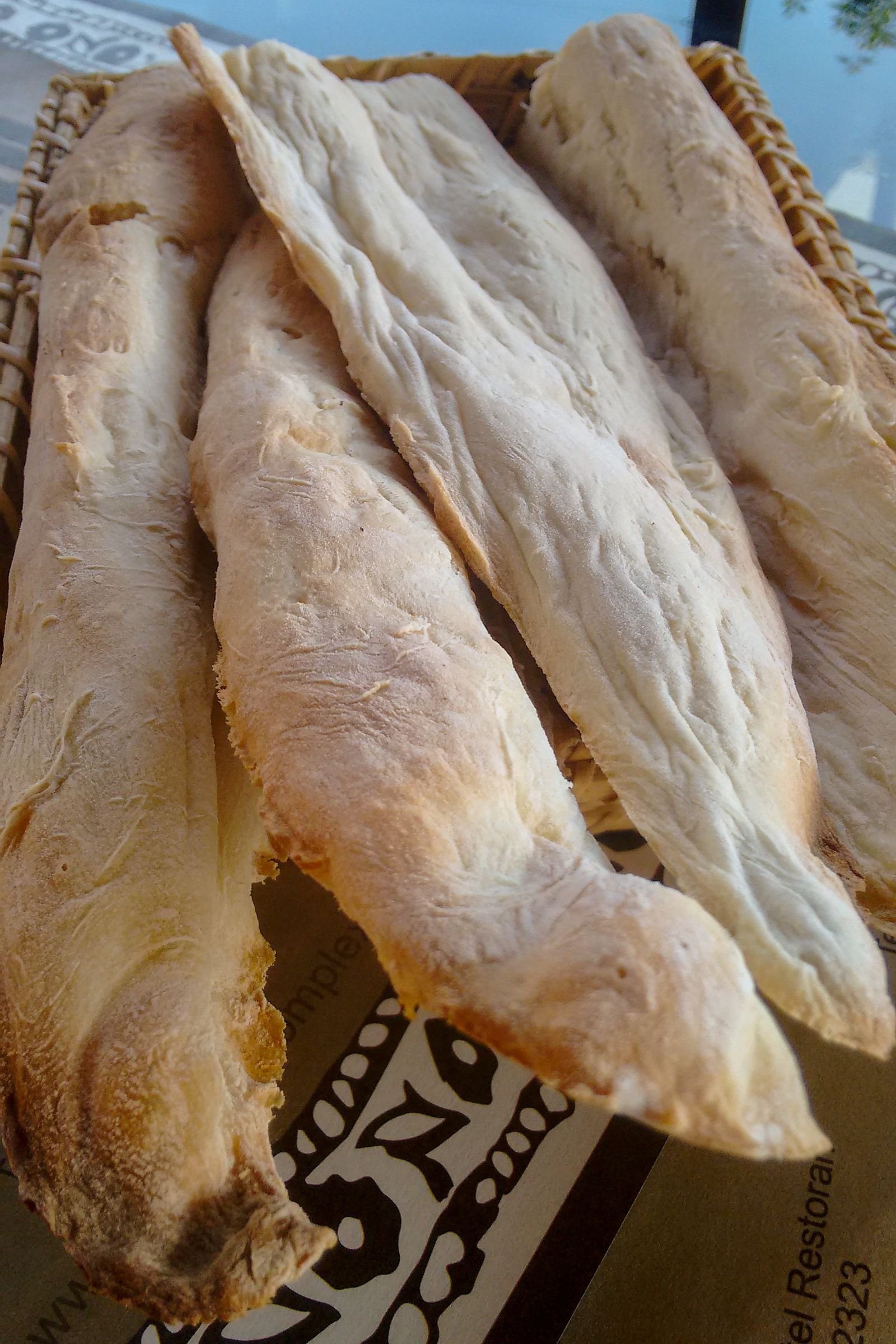
Bread is on every Georgian table. Shotis puri is the long, canoe-shaped loaf slapped onto the inside wall of a round clay oven called a tone, and tonis puri is the same family. A hot loaf costs 1 to 2 GEL at a bakery window, and buying one straight from the tone is the best cheap street food in Tbilisi, along with a khachapuri or lobiani at 3 to 8 GEL.
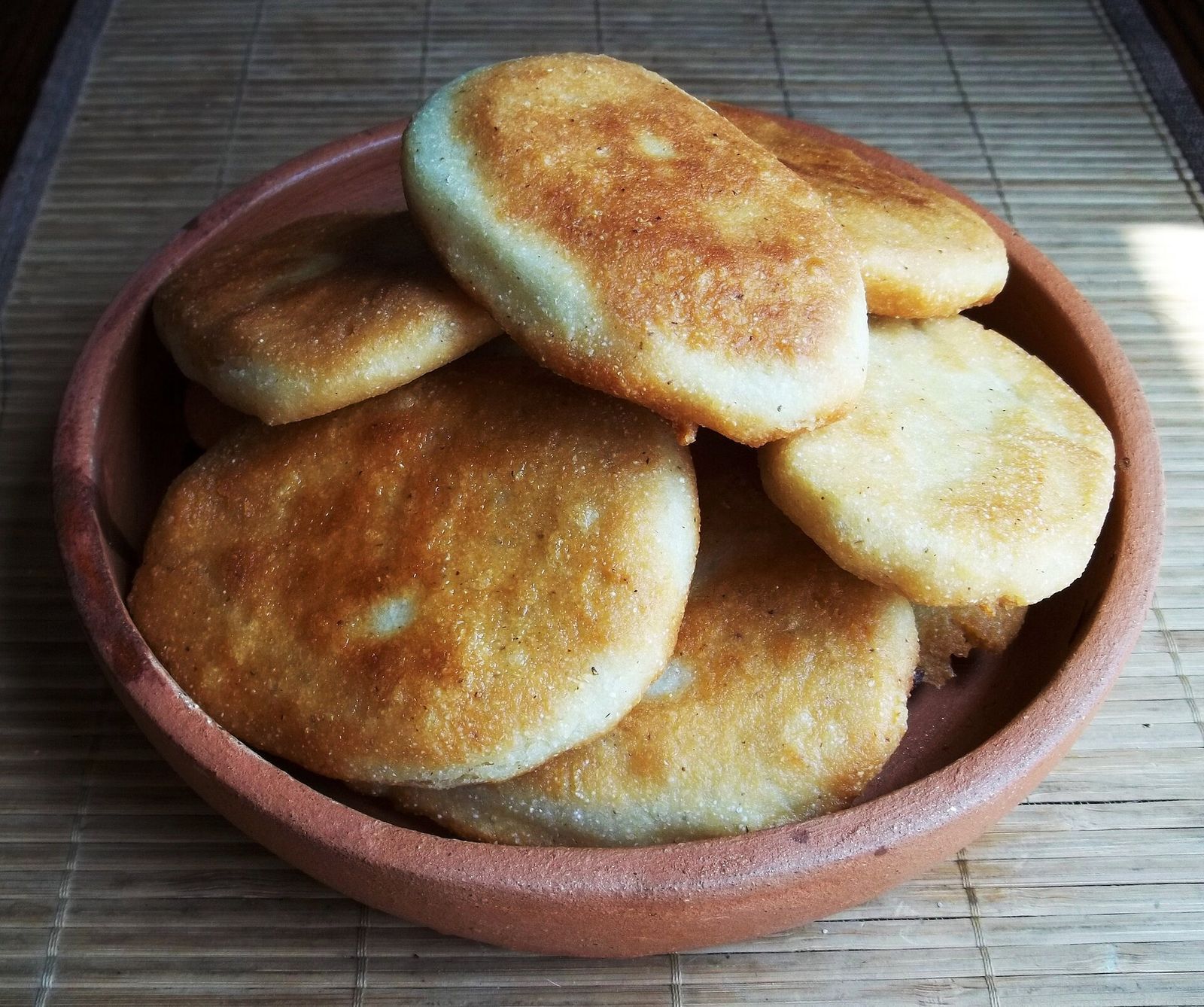
Mchadi is a dense cornbread from the west, ordered by the piece and eaten with lobio.
These are the cheeses you'll meet most.
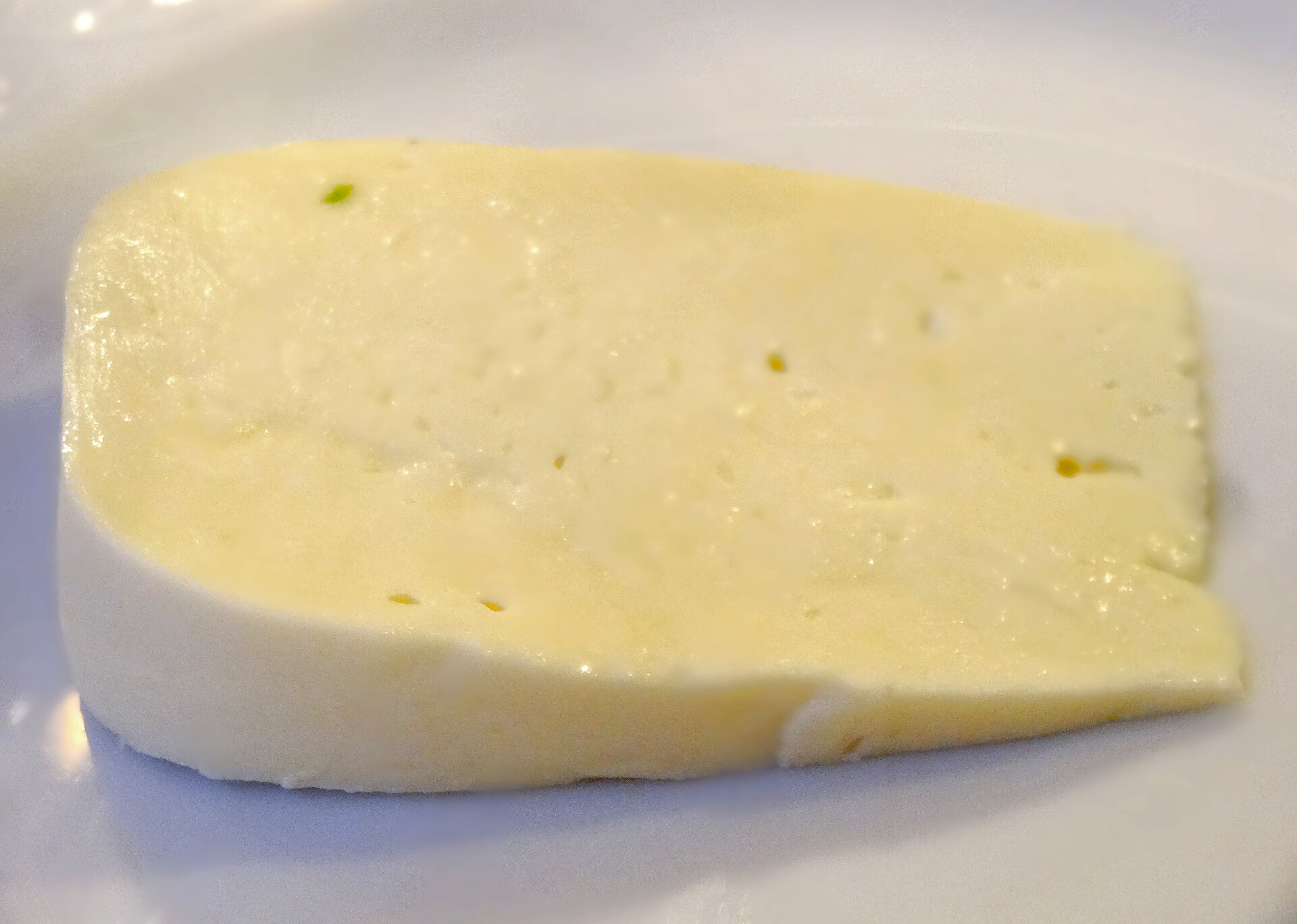
Sulguni: a stretchy, salty cheese, often smoked or fried.
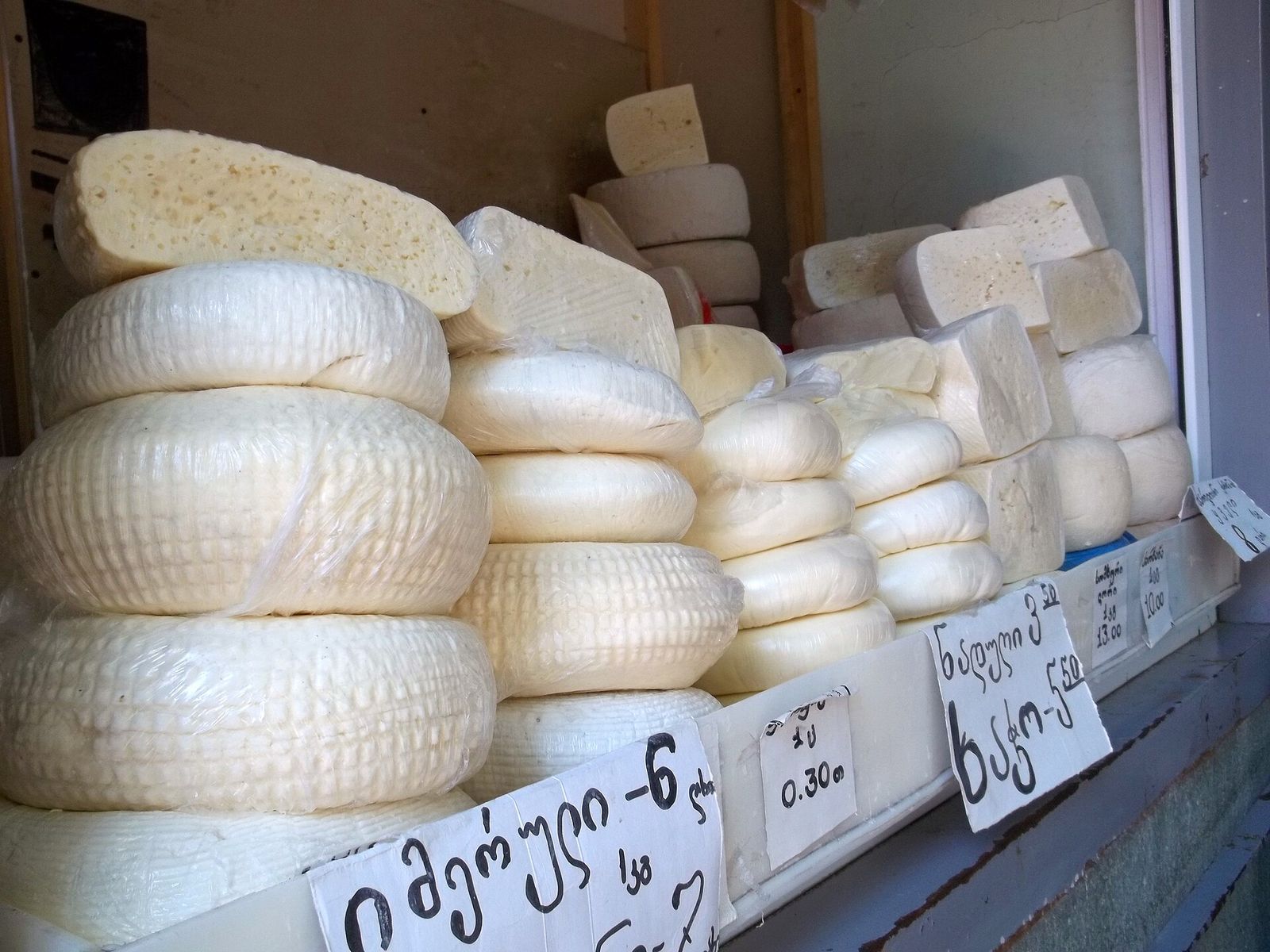
Imeruli: fresh and mild, the cheese inside most khachapuri.
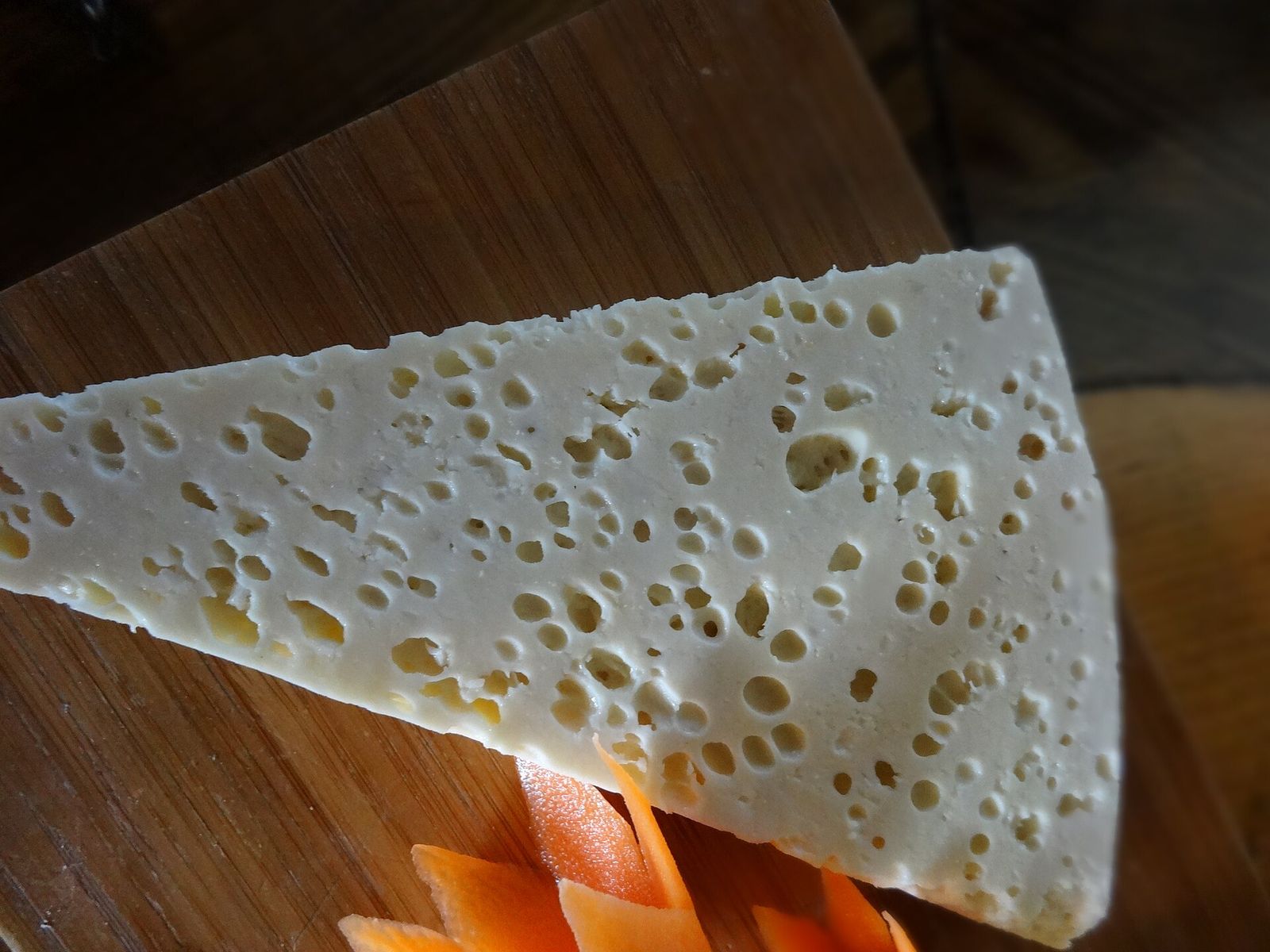
Guda: a sharp sheep's cheese from Tusheti.
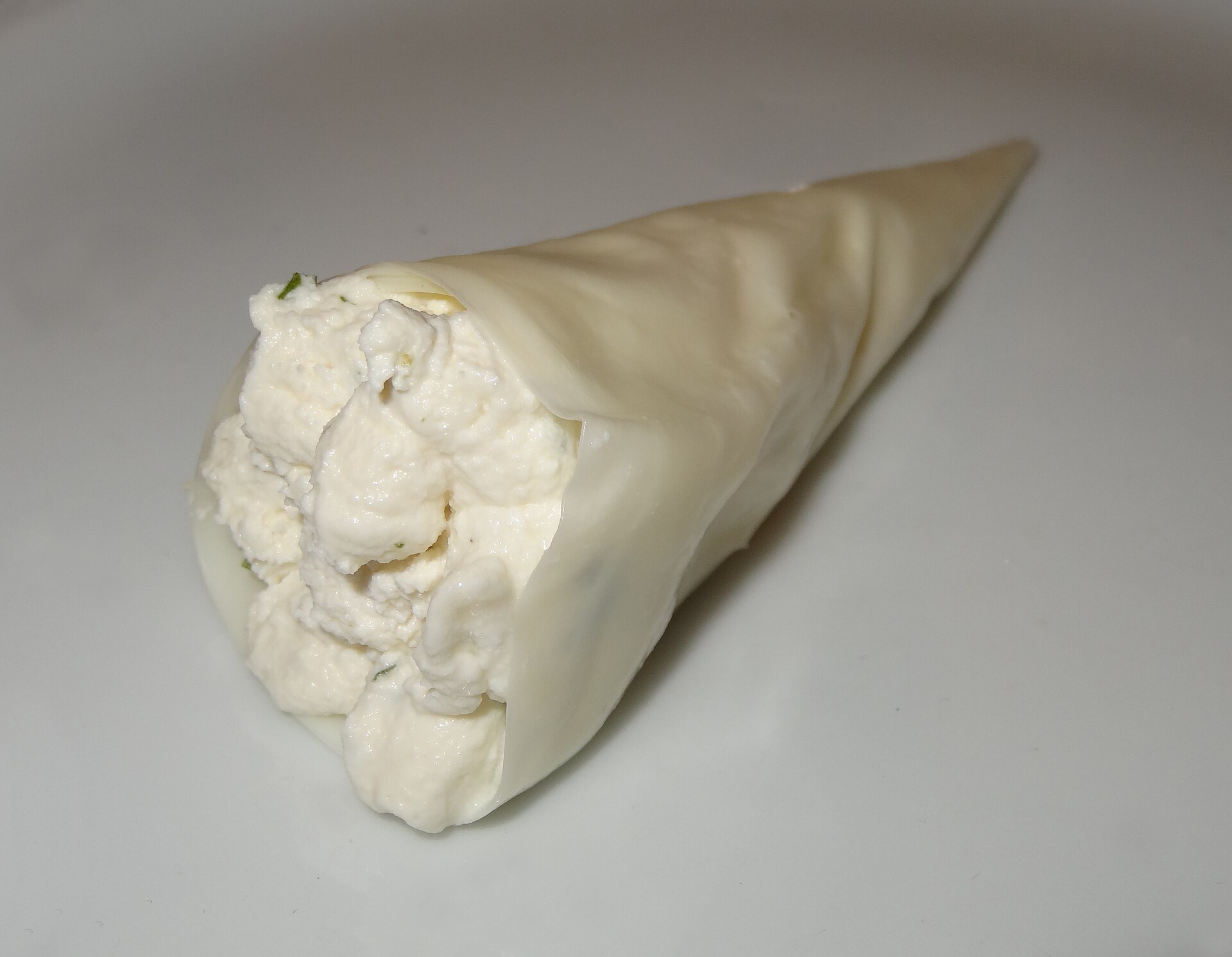
Nadughi: soft whey cheese, often rolled with mint.
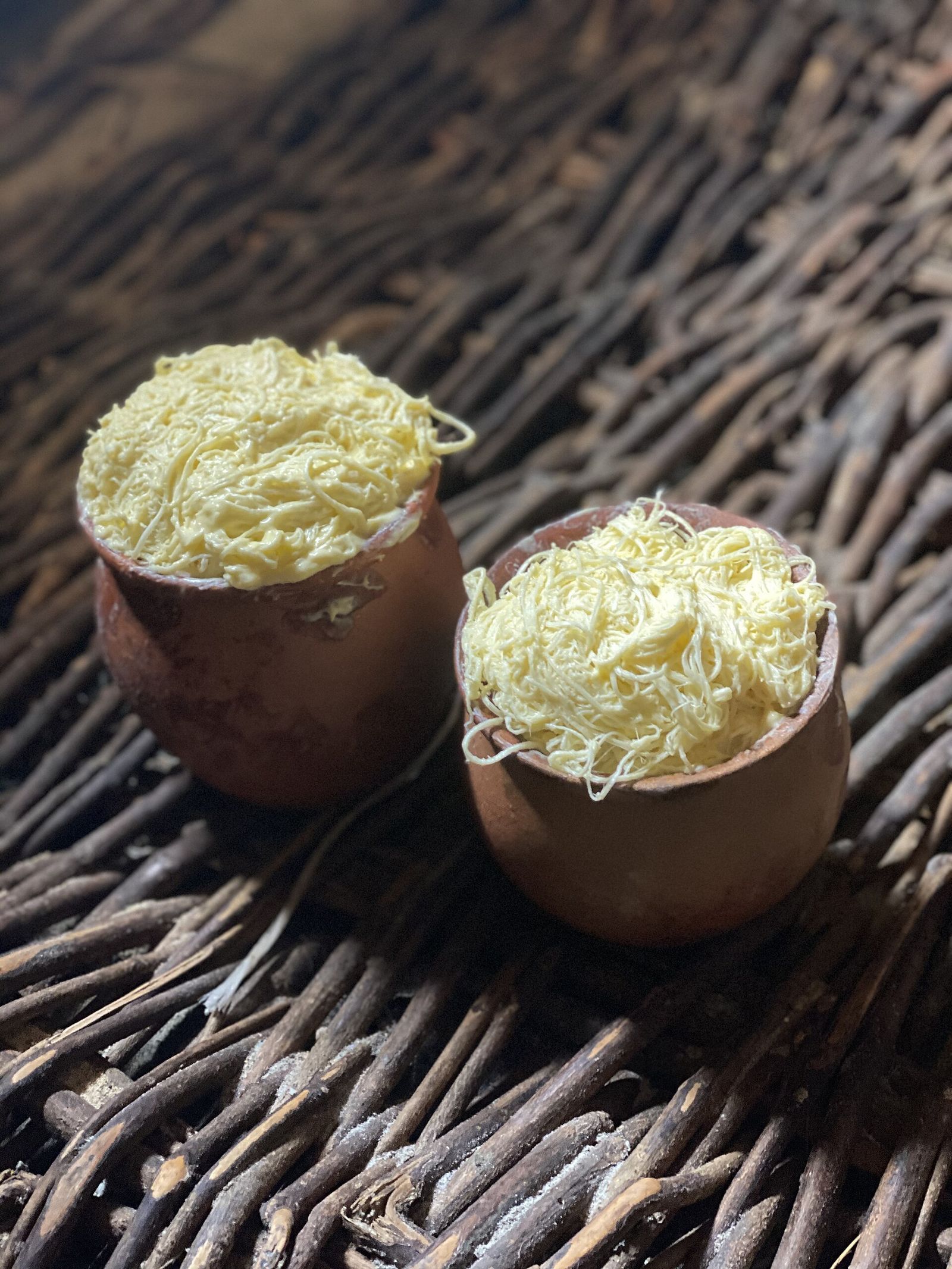
Tenili: a cheese pulled into fine threads, a mountain specialty.
And the sauces that turn up beside them: tkemali, a sour plum sauce for mtsvadi and fried potatoes; ajika, a hot red pepper paste from Samegrelo and Abkhazia; bazhe, a walnut sauce; and satsebeli, a fresh tomato sauce. Two spice blends sit behind most of the flavor: khmeli suneli, a mix of dried herbs, and utskho suneli, blue fenugreek.
Georgian sweets
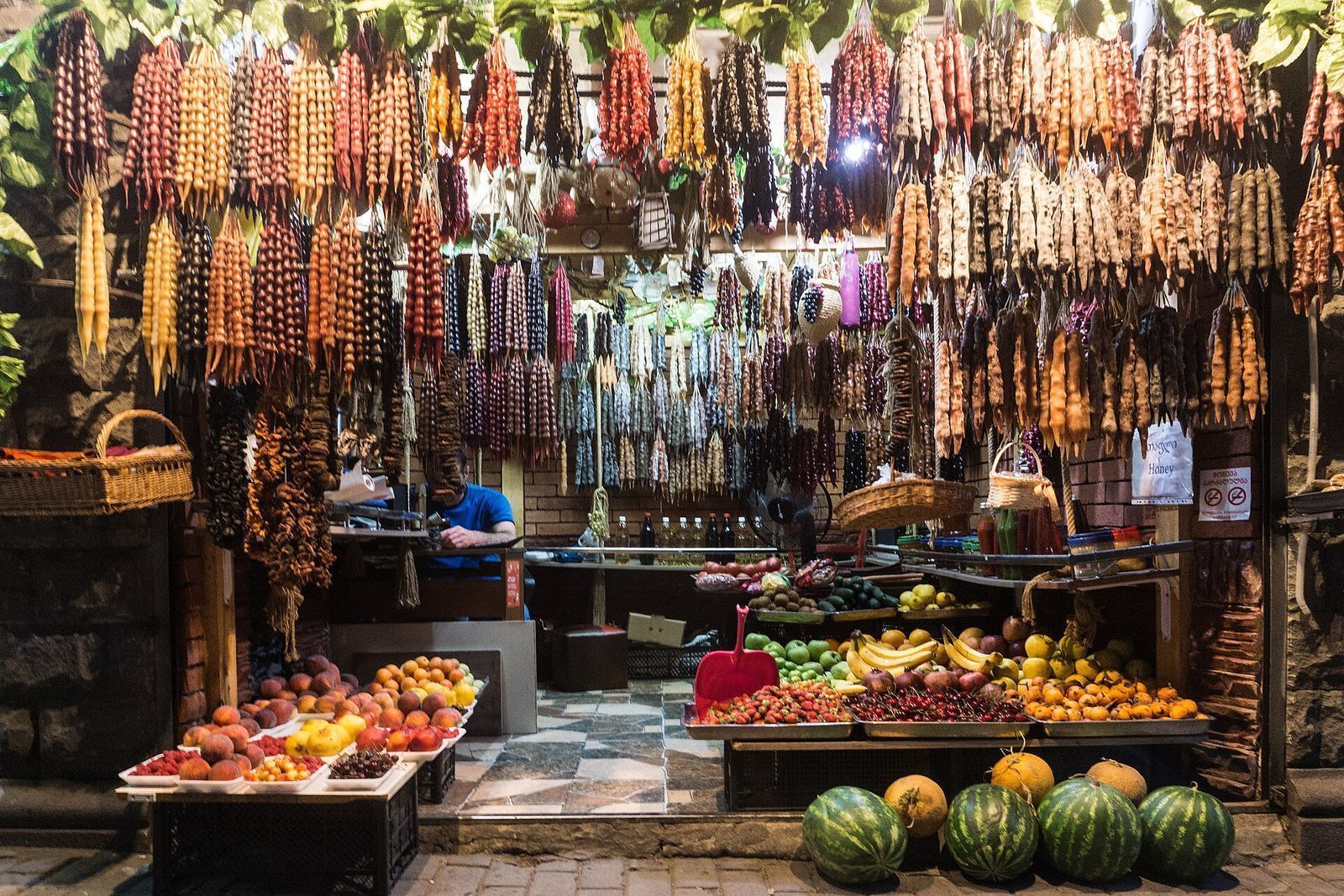
A Georgian meal rarely ends with a big plated dessert. Fruit, a few sweets and another glass of wine do the job. Churchkhela hangs in long strings at Dezerter Bazaar and every souvenir stall, and it's the one Georgian sweet I always pack for the flight home: walnuts or hazelnuts threaded on string and dipped again and again in thickened grape must until it sets.
These are the other Georgian sweets to know.
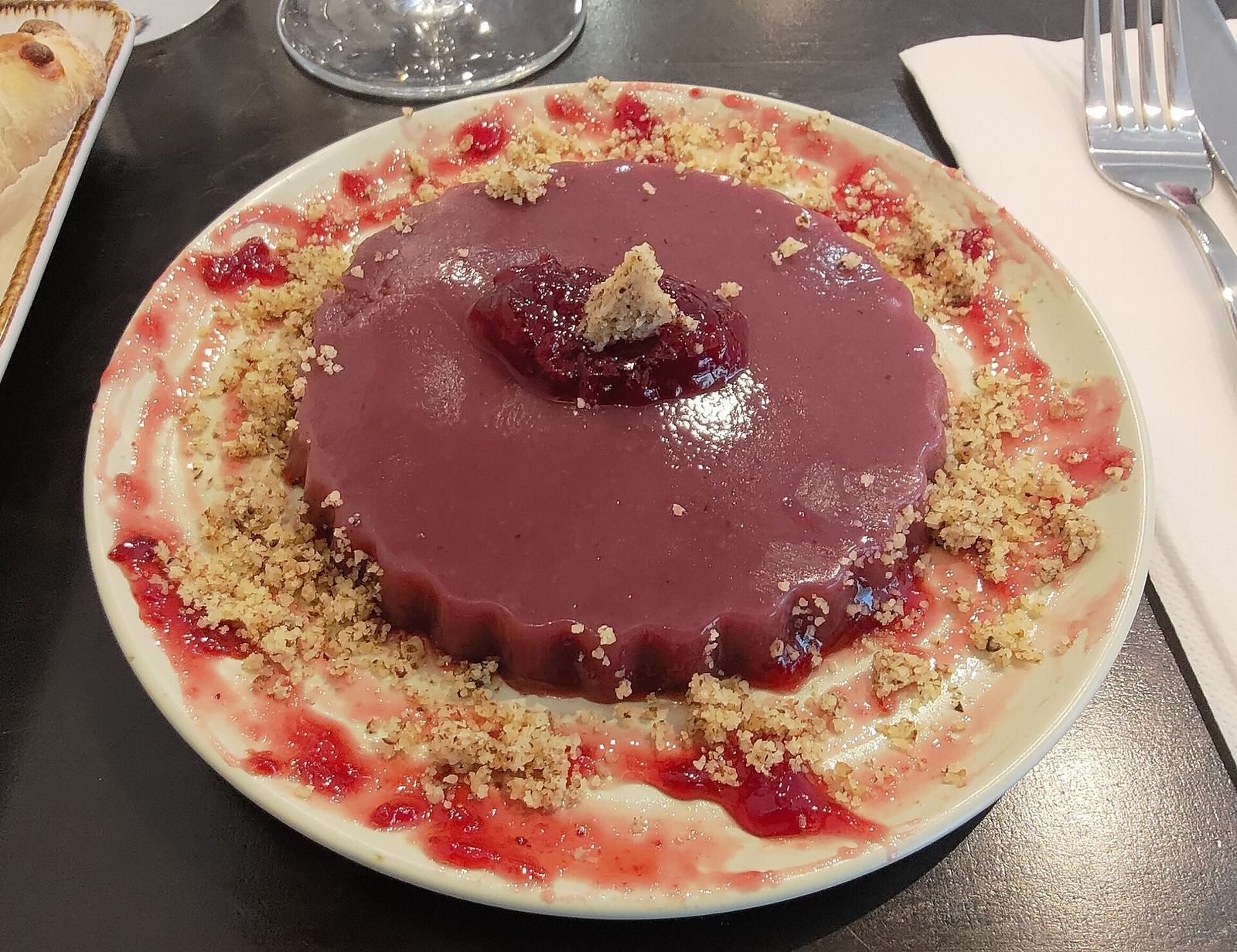
Pelamushi: a soft pudding of grape must and flour, set in a mold and often finished with crushed walnuts.
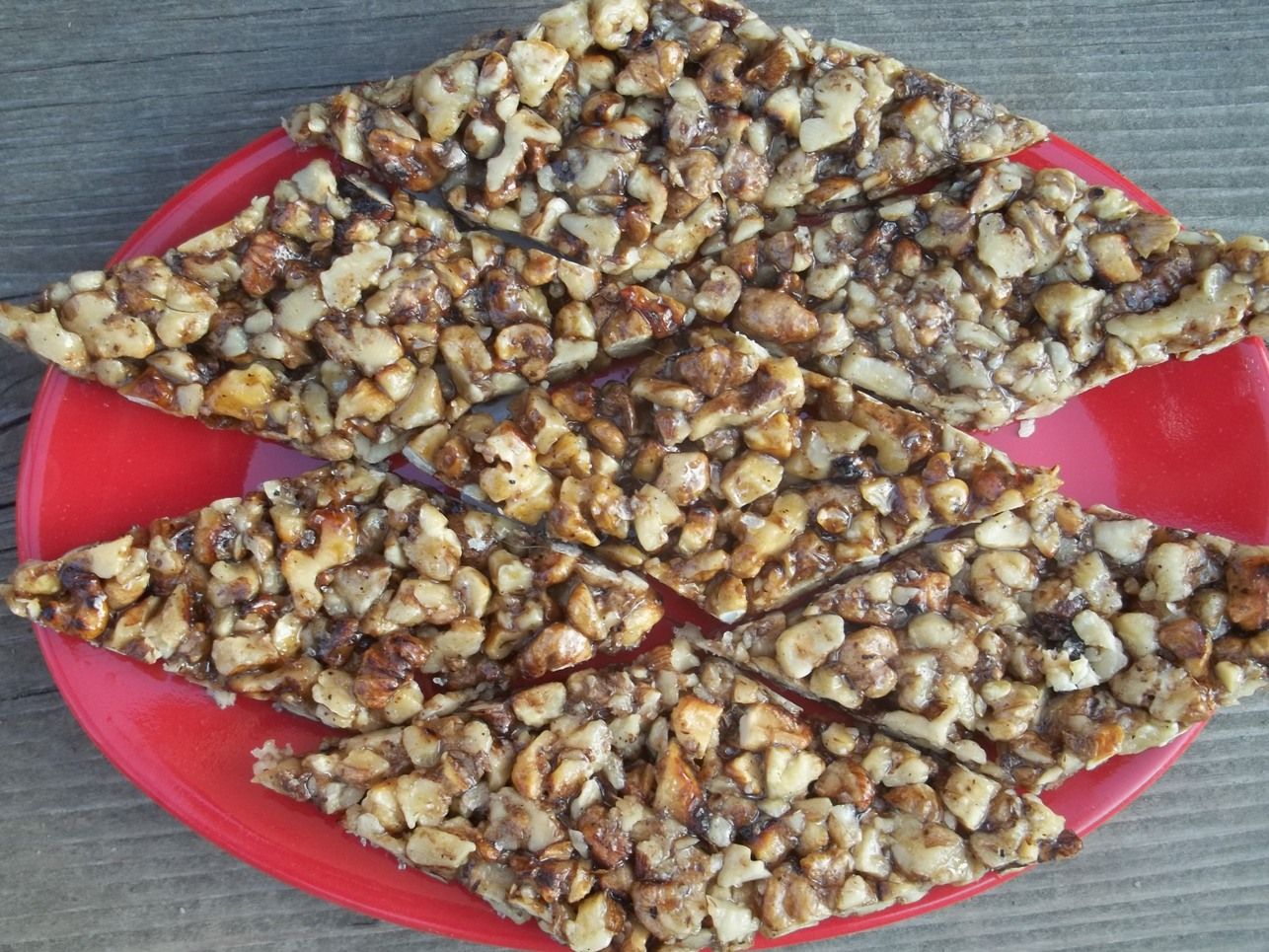
Gozinaki: walnuts set in honey, made for New Year.
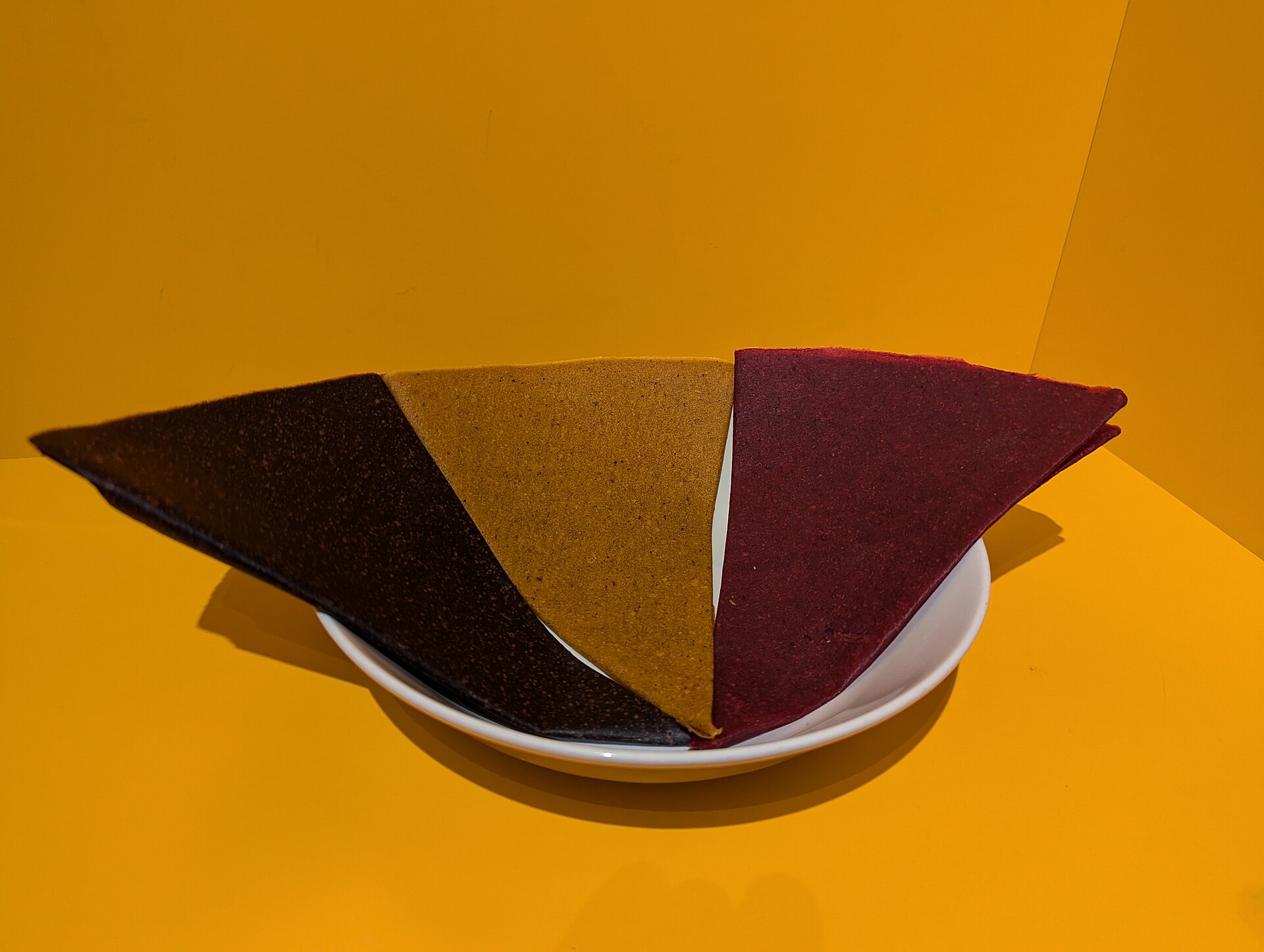
Tklapi: sheets of dried fruit leather, sold rolled up at markets.
In restaurants, Cafe Leila's kaklucha dessert and the Sokhumi ice cream at Amra are both worth leaving room for.
What to drink with Georgian food
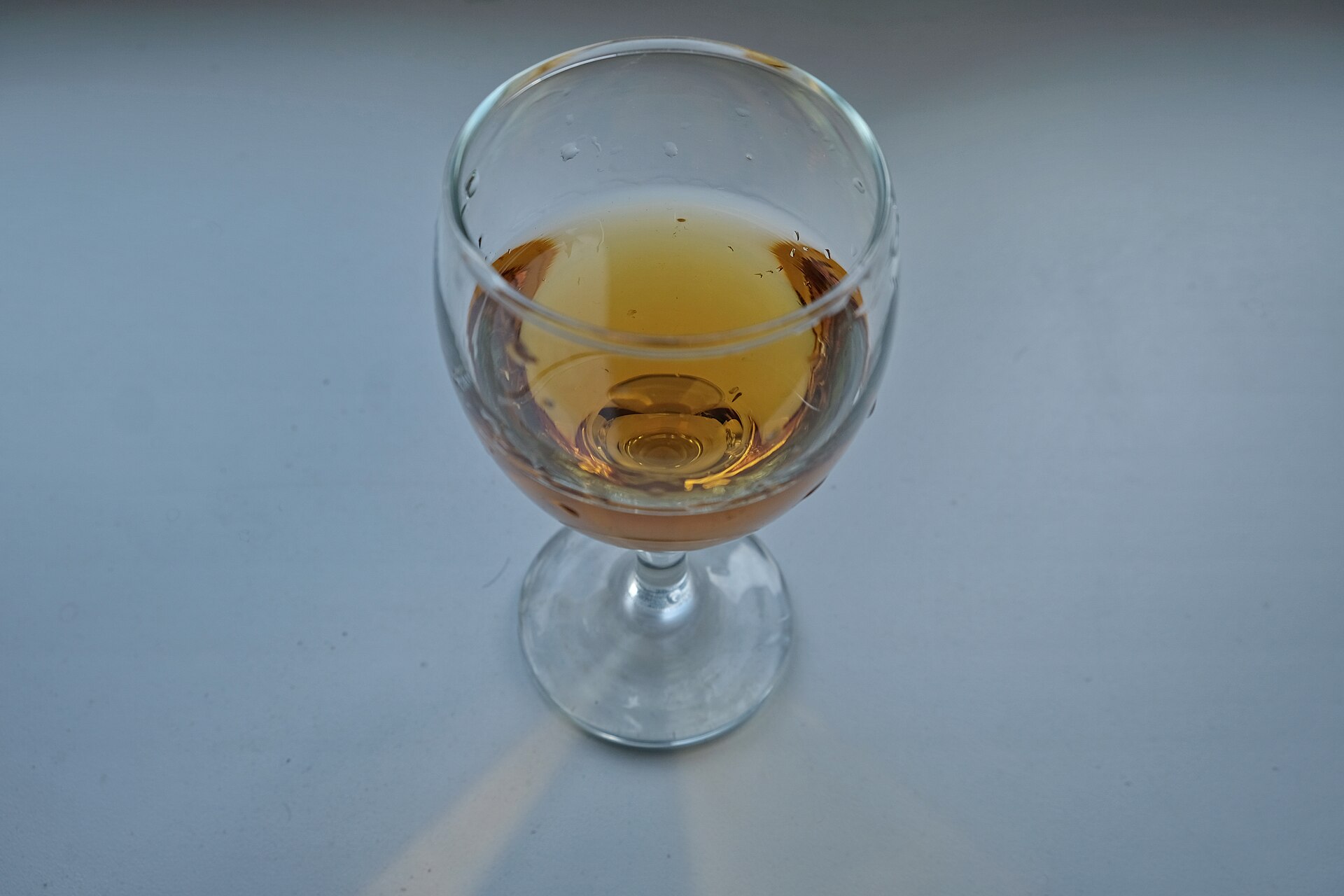
Wine comes first. Most traditional restaurants pour a house wine from a jug for about 5 GEL a glass, and wine bars charge 6 to 15 GEL. Georgian wine made the old way in clay qvevri, especially the amber wines fermented on their skins, has the grip to stand up to garlic and walnut sauces.
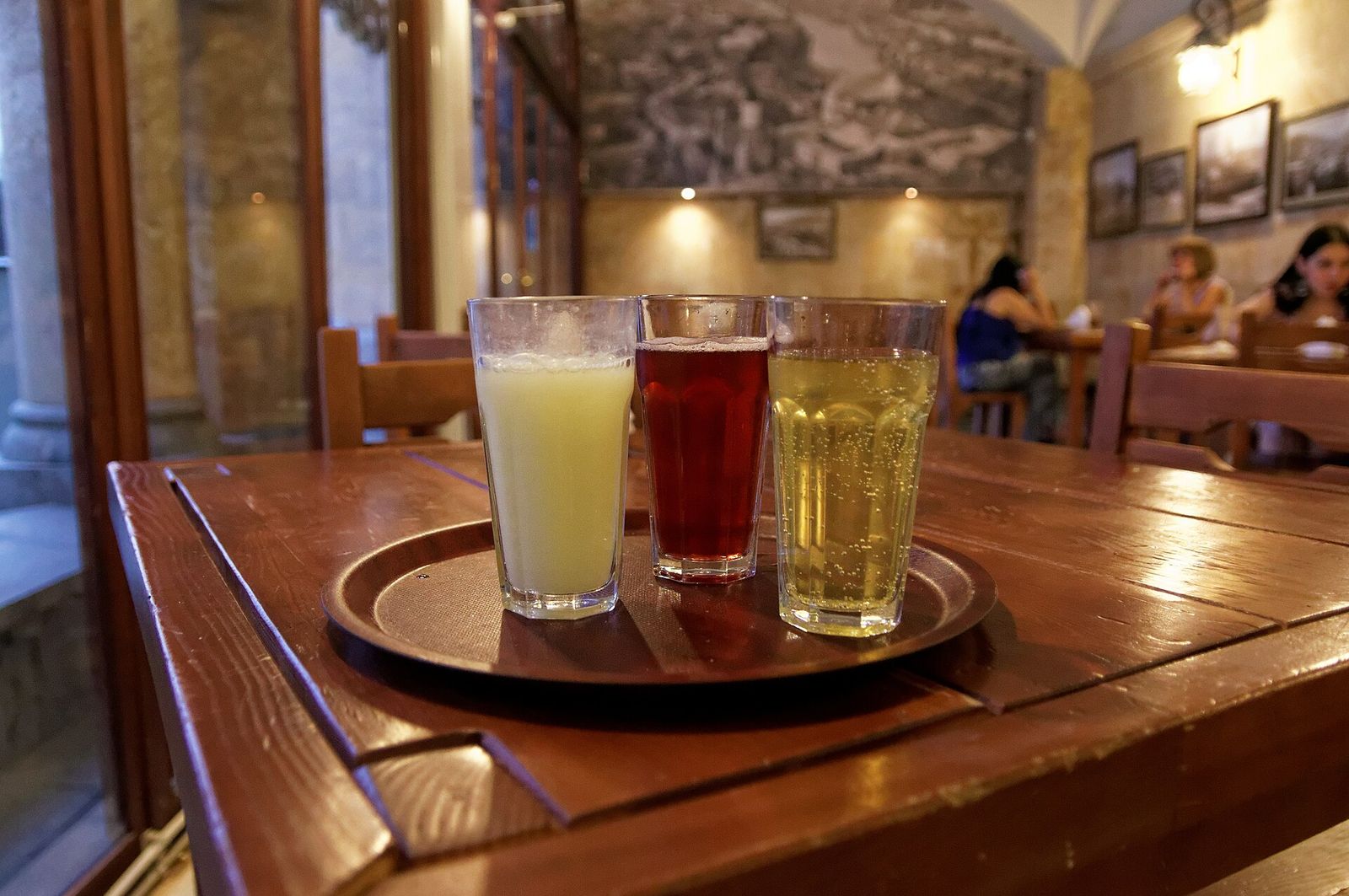
With khinkali, though, locals reach for beer or lemonade instead of wine. Lagidze water, the old-fashioned soda in tarragon, pear and cream flavors, is a Tbilisi institution, and the bright green tarragon lemonade is the one to try first. Borjomi, a salty mineral water, and the milder Nabeghlavi sit on most tables.
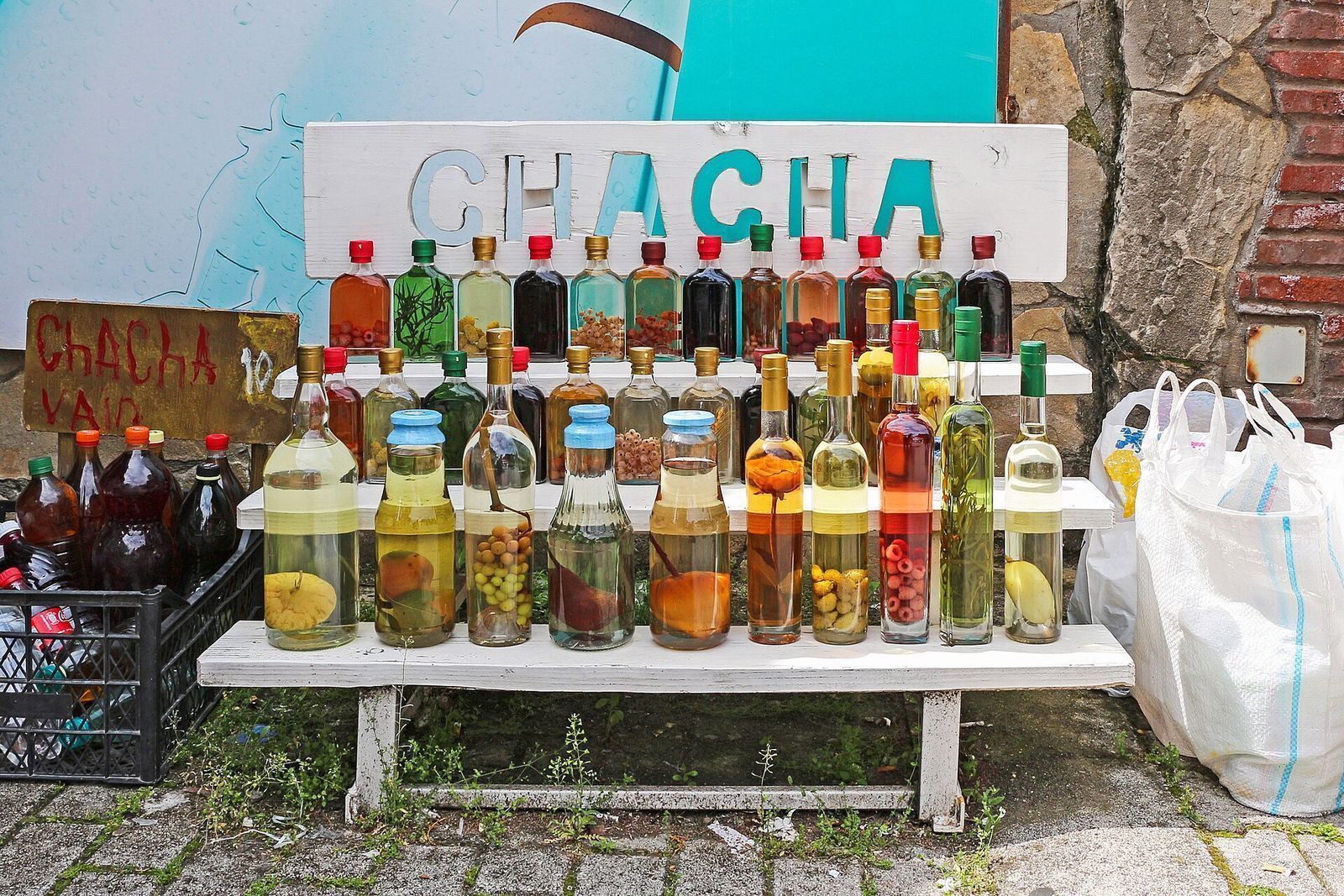
At the end of a long meal someone may pour chacha, the grape brandy: commercial bottles are about 40%, and homemade ones are much stronger, so sip it.
How ordering works in a Georgian restaurant
A family feast follows its own rules, with a toastmaster leading the Georgian supra and nobody drinking between toasts, but an ordinary restaurant meal is relaxed. Locals order several plates and share everything. Cold starters such as pkhali, salads and cheese arrive first, and hot dishes follow 20 to 30 minutes later. A long wait usually means the food is being made fresh, so order a cold starter and settle in.
Over-ordering is normal, and any restaurant will pack leftovers for you to take away. The bill only comes when you ask for it. A few Georgian words at the table go a long way: madloba is thank you, gemrielia is delicious, and angarishi gets you the bill.
Timing is later than you might expect. Most restaurants open around 11 AM and close near midnight, cafes open from 8 or 9 AM, and dinner starts at around 8 or 9 PM. Book modern places and anything on a Friday or Saturday night. Traditional restaurants and canteens take walk-ins. Menus are usually in Georgian and English, sometimes with photos. Cards work nearly everywhere except canteens, bakeries and markets, so carry some cash. Smoking is banned indoors, which is why the terraces fill up with smokers.
If service isn't on the bill, round up or leave about 10%, which is the normal tip in a Georgian restaurant.
What Georgian food costs in Tbilisi
Eating well in Tbilisi is cheap. These are the prices I'd plan around in 2026.
| What you're buying | Typical price |
|---|---|
| Khinkali | 2.40 to 3 GEL a piece, 4 to 5 GEL for dambalkhacho |
| Shotis puri from a bakery window | 1 to 2 GEL |
| Khachapuri or lobiani at a bakery | 3 to 8 GEL |
| Whole Imeruli or Megruli khachapuri | 10 to 20 GEL |
| Adjaruli khachapuri in a restaurant | 14 to 28 GEL |
| Main course at a canteen | 10 to 15 GEL |
| Dinner at a guesthouse | 20 to 30 GEL a head |
| House wine by the glass | From 5 GEL |
| Dinner for two, mid-range restaurant | 60 to 80 GEL, nearer 100 with wine |
| Dinner for two, top tables | 150 GEL and up |
My first-night order for two people at a classic place like Shemomechama: a plate of pkhali, badrijani nigvzit, 10 khinkali (five meat, five mushroom) and a portion of mtsvadi. The khinkali come to about 24 to 30 GEL of it, and the whole table lands at around 60 to 80 GEL, or nearer 100 with a few glasses of house wine. That's plenty of food for two. Save khachapuri for lunch the next day, when you're hungry enough to do it justice.
Where to eat Georgian food in Tbilisi
These are the places I'd point you to for each kind of meal, all serving Georgian food.
| What you want | Where I'd go | Why |
|---|---|---|
| A classic all-round dinner | Shemomechama, Vera and Old Town | Shkmeruli, pkhali, chakapuli; the safe first meal |
| A big first-night show | Ethno Tsiskvili, Beliashvili Street | Live music, dancing and bread baked by the entrance |
| Modern Georgian | Barbarestan, Aghmashenebeli Avenue | Recipes from a 19th-century cookbook |
| A garden dinner | Shavi Lomi, Chugureti | The gobi platter of seasonal starters |
| A cheap lunch | Mapshalia, Aghmashenebeli Avenue | Megrelian canteen, under 20 GEL a head, cash |
| Late-night khinkali | Cafe Daphna, by the Dry Bridge | Open to 2 AM, and 6 AM at weekends |
| Vegetarian | Iasamani, Sololaki | More than half the menu is vegetarian or vegan |
| Shkmeruli at any hour | Ghebi, Aghmashenebeli Avenue | Open 24 hours |
Book Barbarestan, Shavi Lomi and Ethno Tsiskvili ahead, especially for Friday or Saturday. Most traditional restaurants in Tbilisi take walk-ins, and Cafe Daphna is calmer on a weekday. Folding khinkali is harder than it looks, and a khinkali making class is the quickest way to find out why.

For the raw ingredients, go to Dezerter Bazaar near Station Square in the morning. It's the city's big food market, with cheese counters, churchkhela, spices, pickles and fruit, and it's where I'd buy tkemali and khmeli suneli to take home.
Key takeaways
- Khachapuri and khinkali are the famous pair, but pkhali, badrijani, lobio and mtsvadi are what fill a real Georgian table.
- Eat khinkali by hand, in fives, at about 2.40 to 3 GEL each, and leave the tops on the plate.
- Order for the table, starters first, with one big bread dish per meal.
- Budget 60 to 80 GEL for two at a mid-range restaurant, or under 20 GEL a head at a canteen.
- The regional kitchens (Megrelian at Mapshalia, Abkhazian at Amra, Racha at Ghebi) are where Tbilisi's food gets most interesting.
Frequently asked questions
What is the national dish of Georgia?
Khachapuri, the cheese-filled bread, is usually called Georgia's national dish, with khinkali a close second. Every region bakes its own khachapuri, and the boat-shaped Adjaruli with egg and butter is the best known abroad.
Is Georgian food spicy?
Mostly no. Georgian cooking is herby and garlicky rather than hot, built on coriander, tarragon, walnuts and sour plum. The heat comes from ajika and from Megrelian cooking in western Georgia, which uses the most chili.
Is Georgian food vegetarian friendly?
Yes, and easily. Pkhali, badrijani, lobio, ajapsandali, mushroom khinkali and cheese breads are on almost every menu, and church fasting days mean many places offer a samarkhvo menu with no meat, dairy or eggs.
How do you eat khinkali?
With your hands. Hold the twisted top, bite a small hole in the side, drink the broth, eat the rest and leave the top on your plate. A knife and fork lets the broth spill out, which wastes the best part.
What do Georgians drink with food?
Wine, mostly, poured from a jug as house wine at about 5 GEL a glass. With khinkali, beer or lemonade is more usual, and Borjomi or Nabeghlavi mineral water sits on most tables.
How much does a meal cost in Tbilisi?
A canteen lunch costs under 20 GEL a head, and a mid-range dinner for two runs 60 to 80 GEL, nearer 100 with wine. The top tables in town cost 150 GEL and up for two.
Tbilisi Food Guide: What to Eat, Where to Eat It and What It Costs
Tbilisi is known for khinkali and khachapuri. Here's my food guide: what to eat, where to find it and what it costs.
Read the guide
The Best Restaurants in Tbilisi
Tbilisi is known for khinkali and khachapuri. Here are the restaurants I pick, what dinner costs and how to order.
Read the guide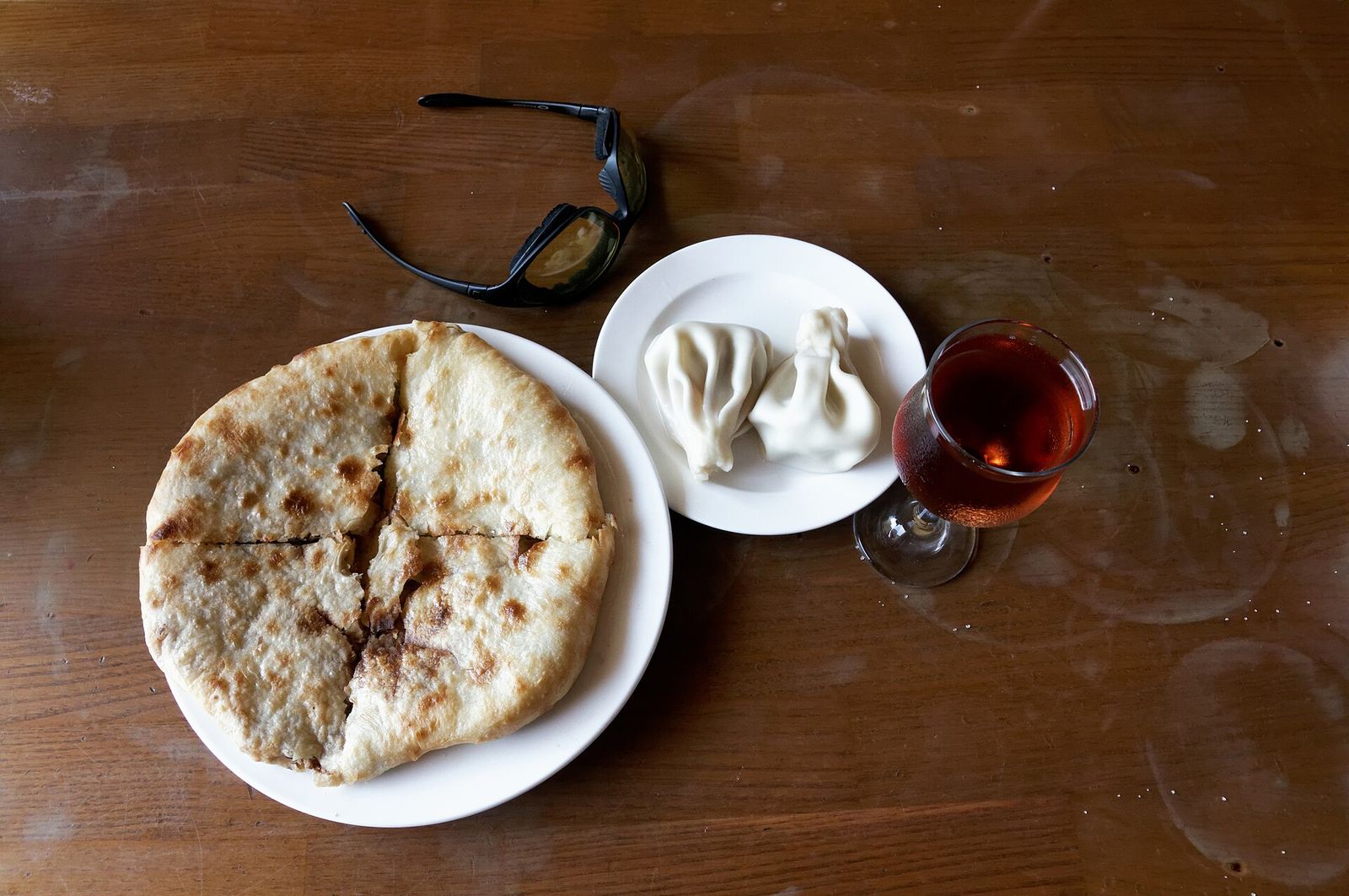
The Best Khinkali in Tbilisi: Where to Eat Them and How
Tbilisi runs on khinkali. Here is where to eat the best ones, what they cost and how to eat them without a fork.
Read the guide