Holy Trinity Cathedral (Sameba) in Tbilisi: How to Visit
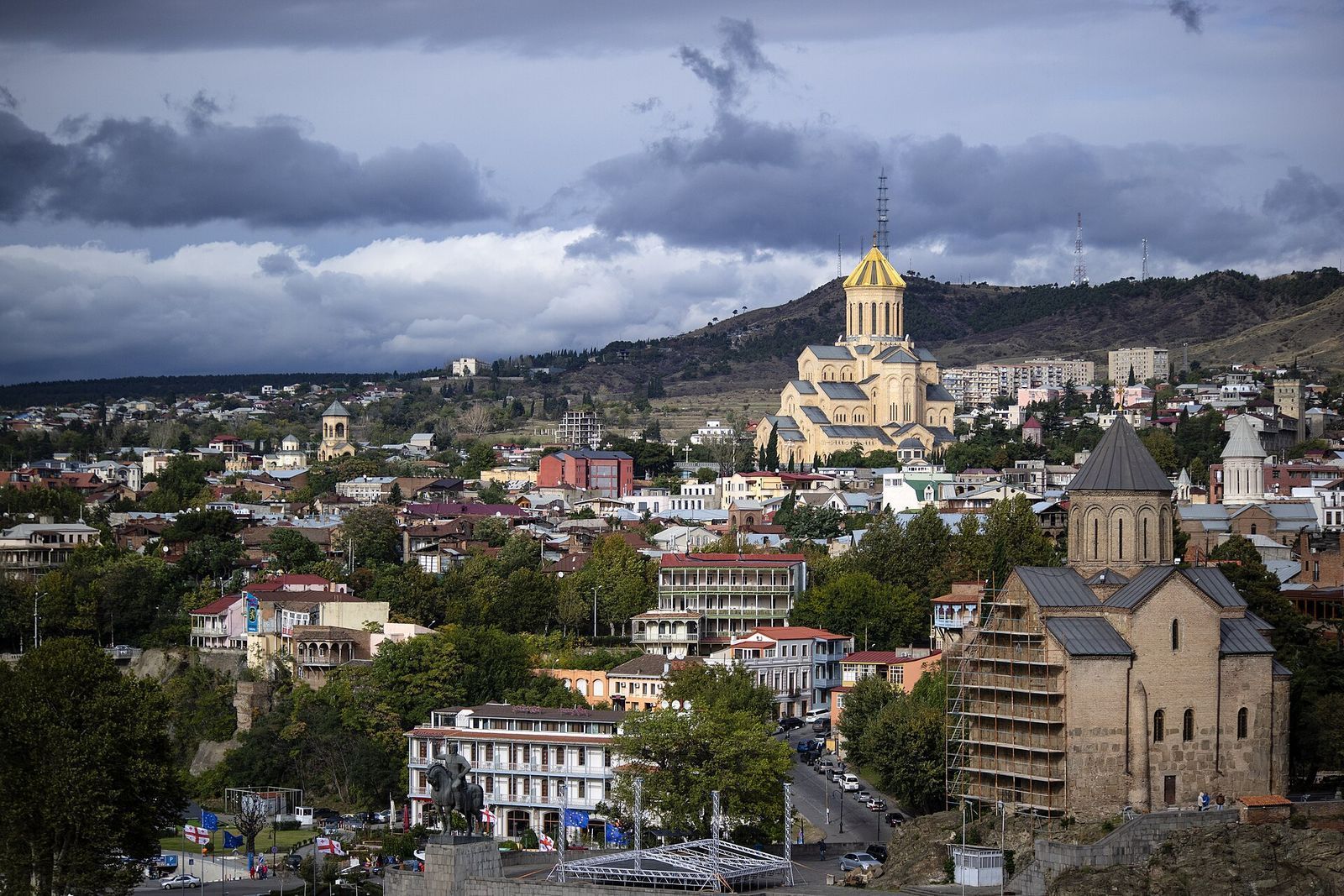
Sameba, the Holy Trinity Cathedral, is the gold-domed giant you can see from almost every rooftop and bridge in Tbilisi, and the main cathedral of the Georgian Orthodox Church. It is free and open every day. Here's what you need to know about visiting: the hours, the dress code, the walk up Elia Hill, what to look for inside, and the time of day that makes it.
Is Sameba Cathedral worth visiting?
Yes, and I'd say that even if churches are not your thing. Sameba is the biggest building on the Tbilisi skyline, and walking up to it changes how you see the city: from the terrace you look back across the river at the Old Town, Narikala and the TV tower on Mtatsminda, the reverse of the view everyone photographs.
Its full name is Tsminda Sameba, which means Holy Trinity, and locals just call it Sameba. It stands on Elia Hill in Avlabari, on the left bank of the Mtkvari, and it is new: the foundation went in in 1995 and the cathedral was consecrated in 2004. So do not come expecting medieval frescoes. Come for the scale, the light inside the dome, the singing if you catch a service, and one of the best views of the city.
Skip it if you only have one day and you have already seen a cathedral that morning. In that case I'd rather spend the hour on the older churches in the Old Town, or keep the energy for Mtskheta, where the cathedrals are a thousand years older.
Sameba opening hours, entry fee and time needed
Entry to the cathedral and the grounds is free, and there is no ticket desk. Donations go in the boxes inside if you want to leave something.
The doors open early, around 07:00, and close in the evening. Published closing times range from 20:00 to 22:00 depending on the day and the season, so I treat 07:00 to 21:00 as the safe window and do not plan to arrive in the last half hour. Hours can also change on big feast days, when parts of the church are given over to services.
Most people need 45 to 90 minutes: 20 minutes inside, the rest on the terraces and in the gardens. Add 30 minutes if you walk down to the river afterwards, which I recommend.
| Visit | Time needed | What it covers |
|---|---|---|
| Quick stop | 30 to 45 minutes | The main church and the front terrace |
| Standard visit | 60 to 90 minutes | Inside, the lower chapels, the grounds and the view |
| Sunday liturgy | 2 hours or more | The service from about 09:00, then the grounds |
| Sunset visit plus walk down | 2 to 2.5 hours | Sameba at golden hour, then Metekhi and Rike Park after dark |
How to get to Sameba Cathedral
Sameba sits on a hill, so every route except a taxi ends with a climb. It is not hard, just steady, and the last stretch is a wide staircase from the main gate.
| Route | Time | Cost | Good for |
|---|---|---|---|
| Metro to Avlabari, then walk | 10 to 15 minutes uphill from the station | 1 GEL a ride | Most visitors |
| Walk from Rike Park or the Bridge of Peace | 20 to 30 minutes, uphill at the end | Free | Combining with the Old Town |
| Taxi to the gate | Depends on traffic | App fare | Hot days, kids, bad knees |
| Cable car to Narikala first, then cross the river | Half a day with stops | 2.50 GEL for the cable car | A big sightseeing loop |
By metro. Take Line 1 to Avlabari. A ride costs 1 GEL when you tap a Metromoney card or a bank card, and the card itself costs 2 GEL; the Tbilisi metro runs every few minutes through the day. From the station exit, head uphill on the streets behind the square and follow the gold dome, which you cannot miss. It takes 10 to 15 minutes at an easy pace.
On foot from the Old Town. Cross the river at the Bridge of Peace, walk through Rike Park and climb through Avlabari's lanes. Plan on 20 to 30 minutes, with the steepest part at the end.
By taxi. Order a car in a taxi app and set the pin on "Holy Trinity Cathedral of Tbilisi" or the Samreklo Street address rather than typing "Sameba", which can match other churches with the same name. Ask for the main gate.
Sameba dress code
Sameba is a working church and the main seat of the Georgian Orthodox Church, and the dress code is enforced more firmly here than at small chapels. It is the standard Georgian church rule.
| Who | What to wear | What to avoid |
|---|---|---|
| Everyone | Shoulders and knees covered | Tank tops, crop tops, shorts |
| Women | A scarf over the hair; a skirt or wrap is the traditional choice | Bare heads, short skirts |
| Men | Long trousers; take off hats inside | Shorts, caps or hats indoors |
Scarves and wraps are usually kept in a box or on a rack by the entrance for visitors who arrive without them. They are free to borrow, but there are not always enough on a busy day, so I carry a light scarf in my bag on church days. Women in trousers can tie a wrap over them. The same rules apply at every church you visit, and the wider Georgian etiquette for visitors is simple: dress modestly, keep your voice down and do not turn your back on the altar for a photo during a service.
Inside the cathedral: the iconostasis, the dome and the lower chapels
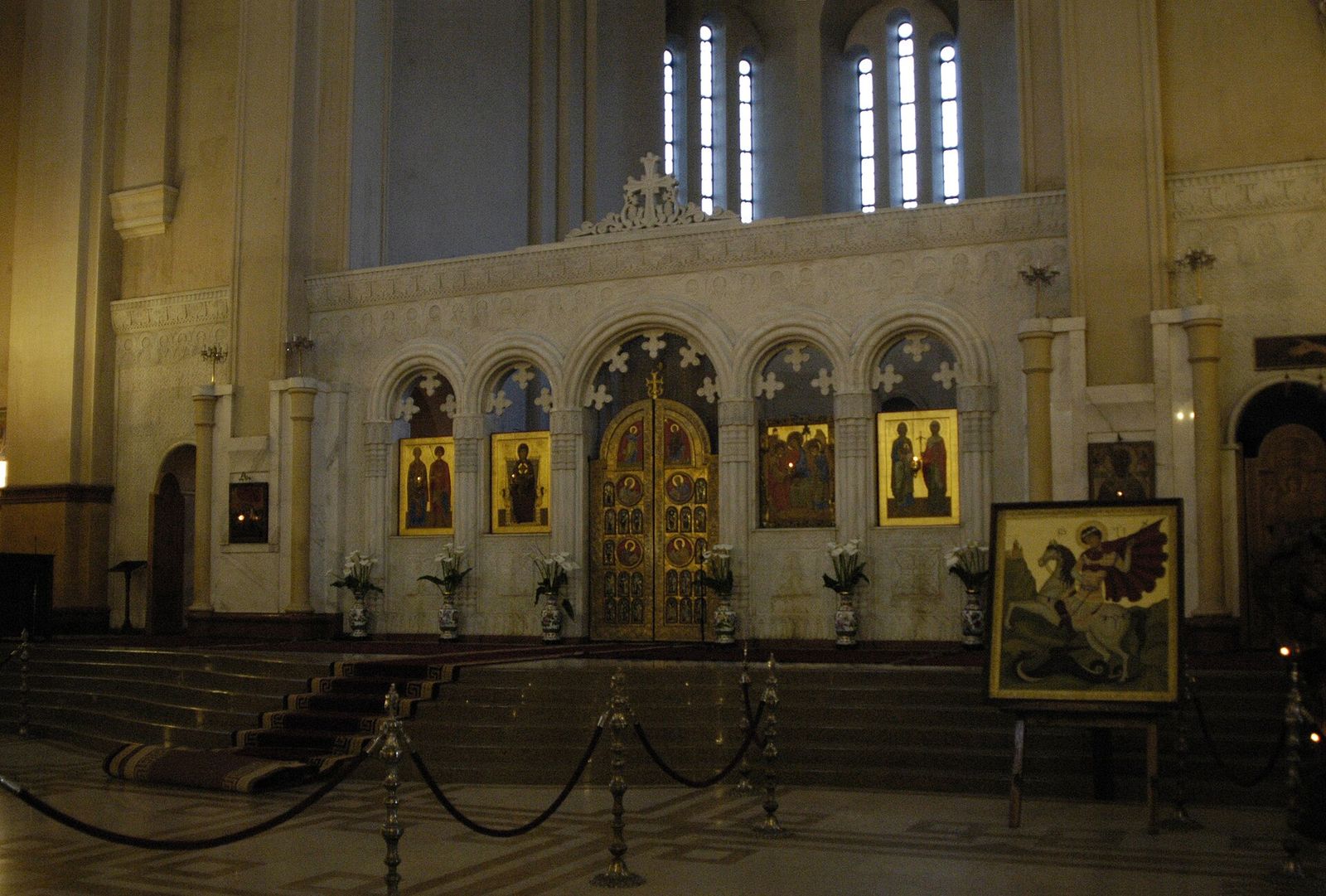
You step in from the side doors into a space far taller than it is wide. The main hall is all pale stone and marble floors, with icons on the walls and pillars, candles burning on brass stands and, straight ahead, the iconostasis: the carved screen of icons with the royal doors in the middle that separates the altar from the congregation.
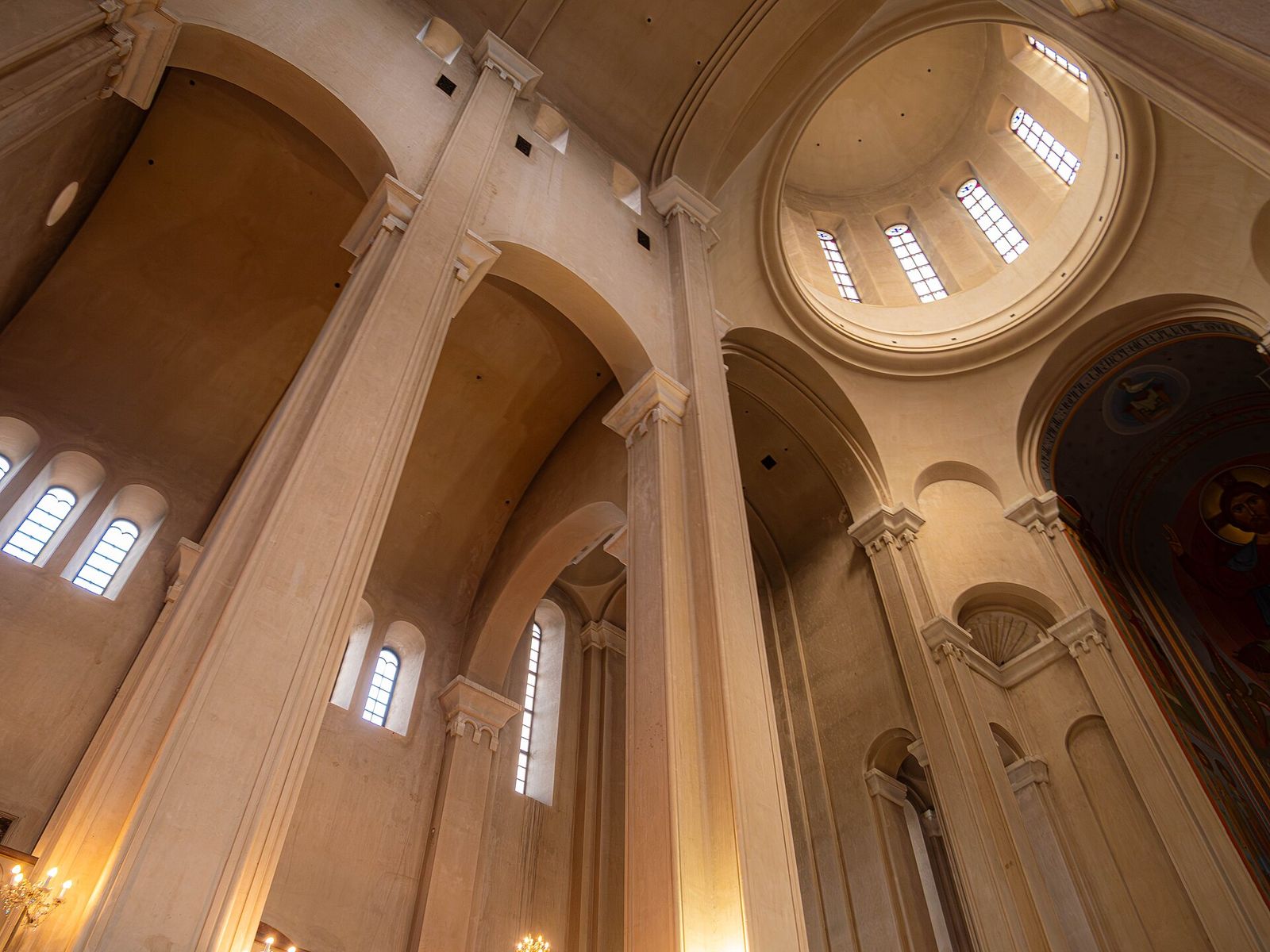
Look up next. The dome rests on 8 columns over the crossing of the cruciform plan, and its ring of windows throws light down through the middle of the church in the morning. The murals were painted by a group of artists led by Amiran Goglidze. Expect services, candles and people praying while you look around: this is a working church first and a sight second.
Sameba has 9 chapels in all, dedicated to the Archangels, John the Baptist, St Nino, St George, St Nicholas, the Twelve Apostles and All Saints among others, and 5 of them are underground. The lower level is quieter and darker than the main hall, and it is where I'd go if the upper church is crowded. Light a candle at one of the stands if you like; locals buy the thin beeswax candles at the counter near the entrance.
Photography rules are posted at the entrance and they vary with what is happening that day. Outside and in the gardens, photograph freely. Inside, never use flash, put the camera away during a service, and do not photograph people praying without asking.
The cathedral grounds, the bell tower and the view
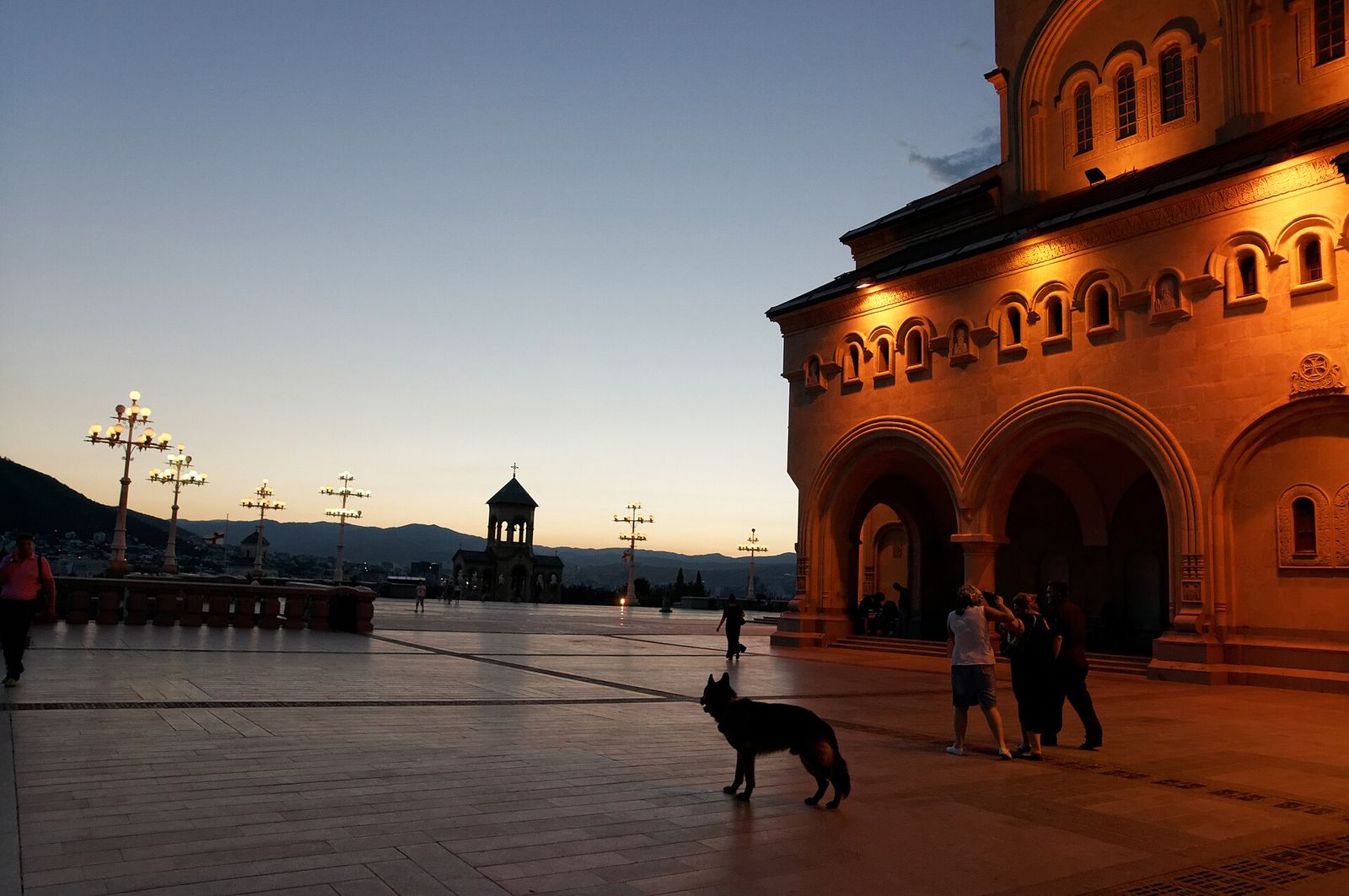
Sameba is more than one building. The complex includes a free-standing bell tower, the Patriarch's residence, a monastery, a seminary and theological academy, workshops and landscaped gardens with smaller chapels and terraces. Most of it is closed to visitors, but the gardens, paths and terraces are open, and they are where the visit gets good.
From the main gate a long staircase climbs to the cathedral. If you would rather skip the steps, a garden path on the right side of the gate winds up more gently. The upper terrace looks west across the river to the center of Tbilisi, with Mtatsminda and its TV tower on the skyline; on a clear evening you can pick out the Ferris wheel at Mtatsminda Park when it lights up.
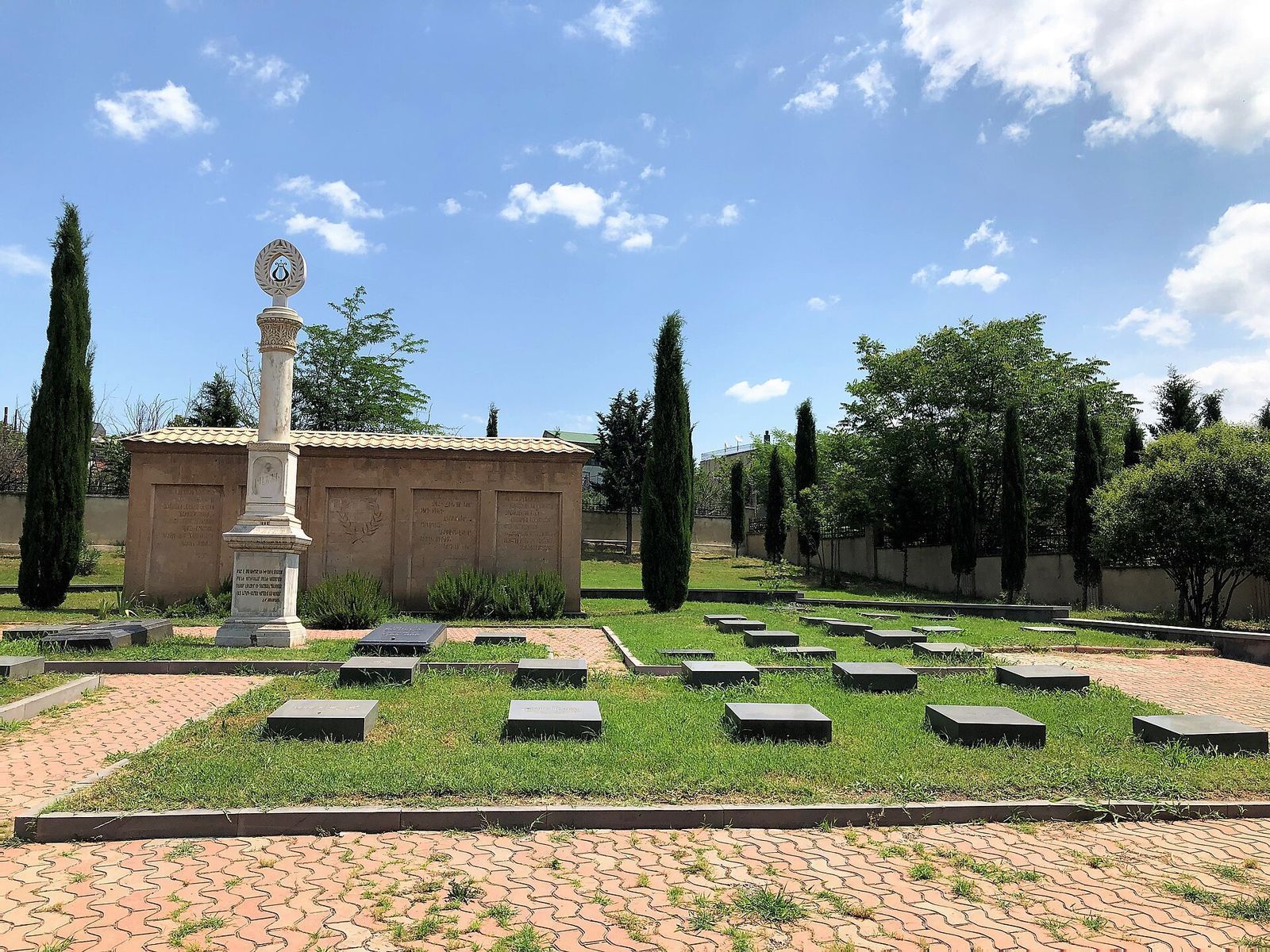
On the edge of the grounds sits the Armenian Pantheon, the surviving corner of the old Khojavank cemetery, where a number of well-known Armenian writers and public figures are buried. It is a short, quiet detour, and it belongs to the story of the hill as much as the cathedral does; the historic cemeteries of Tbilisi are an underrated half day in their own right.
How big is Sameba? Height and architecture
Sameba rises about 87 meters to the top of its cross, and the foundations go another 14 meters into the hill, which puts the whole structure at just over 100 meters. That makes it one of the tallest Orthodox cathedrals in the world, and one of the largest religious buildings anywhere by floor area.
| Measurement | Figure |
|---|---|
| Height to the top of the cross | About 87 m |
| Height including foundations | About 100 m |
| Gilded cross on the dome | 7.5 m |
| Length and width | About 70 m by 65 m |
| Chapels | 9, with 5 underground |
| Columns under the dome | 8 |
The style is traditional Georgian, the cross-dome church you see across the country, stretched upward and given some Byzantine touches. The plan is a cross with a tall drum and dome over the crossing, built in pale stone with grey roofs, and the gold dome and cross are what catch the light from across the city. I think it works best from a distance and at dusk, when the stone glows, and from up close it is the size more than the detail that stays with you.
A short history of Sameba
The idea came in 1989, when a contest was announced for a new cathedral to mark 2,000 years of Christianity and 1,500 years of the Georgian Orthodox Church. More than 100 designs were entered, there was no winner in the first round, and the commission finally went to the architect Archil Mindiashvili.
The civil unrest of the early 1990s held everything up for six years. The foundation was laid on 23 November 1995, and the cathedral was consecrated exactly 9 years later, on 23 November 2004, St George's Day, by Catholicos-Patriarch Ilia II. Most of the money came from donations, many of them anonymous, from businessmen and ordinary Georgians, and for many people here the building stands for the revival of the church and the country after the Soviet years.
The hill had a history before the cathedral. At least part of the site was Khojavank, an old Armenian cemetery. In the Soviet period an Armenian church on the site was demolished, most of the gravestones were destroyed, and the area was turned into a park. Construction in the 1990s disturbed what remained, which is still a sore point for Tbilisi's Armenian community and part of why the Pantheon on the edge of the grounds matters. Avlabari itself was long the city's Armenian quarter, and you will pass Armenian churches on the walk up.
Best time to visit Sameba
The cathedral looks different at every hour, and the time you pick matters more here than at most sights.
| When | What you get | Best for |
|---|---|---|
| Weekday morning, 08:00 to 10:00 | Quiet halls, morning light through the dome, few tour groups | Seeing the inside properly |
| Late afternoon to sunset | Warm light on the stone, the best view back over the city | Photos and the terrace |
| After dark | The cathedral lit up, cooler air in summer | A short evening stop with the walk down |
| Sunday morning, from about 09:00 | The liturgy, with the choir and a full church | Hearing the singing |
| Easter night and Christmas on 7 January | The big services of the year, very crowded | Experiencing a feast day |
Summer afternoons on Elia Hill are hot, with little shade on the terraces, so in July and August I'd go early or late and nothing in between. Weekends and religious holidays are always busier, and on major feast days some areas of the church close to sightseers.
Going to a service, and Easter and Christmas at Sameba
Visitors are welcome at services as long as they dress for church and behave like guests. The Sunday liturgy starts around 09:00 and runs for a couple of hours, and there is an evening service on Saturdays in the late afternoon. Orthodox services are mostly standing, people come and go quietly, and nobody expects a visitor to know the words.
The reason to go is the singing. Georgian church music is sung in close, layered harmony, and hearing it under a dome this size is the closest most travelers get to Georgian polyphonic singing outside a concert. Stand near the back or along the side walls, keep the phone in your pocket, and leave between parts of the service rather than in the middle of a prayer.
Sameba hosts the biggest services in the country on the two great feasts. The Easter service runs through the night before Easter Sunday, and the church is packed hours before it starts; in 2027 Orthodox Easter falls on 2 May. Easter in Georgia is the most important day of the church year, and the night at Sameba is the moment it peaks. Christmas falls on 7 January, because the Georgian church follows the old calendar, and the run of services and street processions makes the Christmas and New Year season in Tbilisi a special time to visit.
Walking down from Sameba to the river
The best way to finish a visit is on foot, downhill toward the Old Town. It takes under half an hour without stops, and it strings together several sights you would visit anyway.
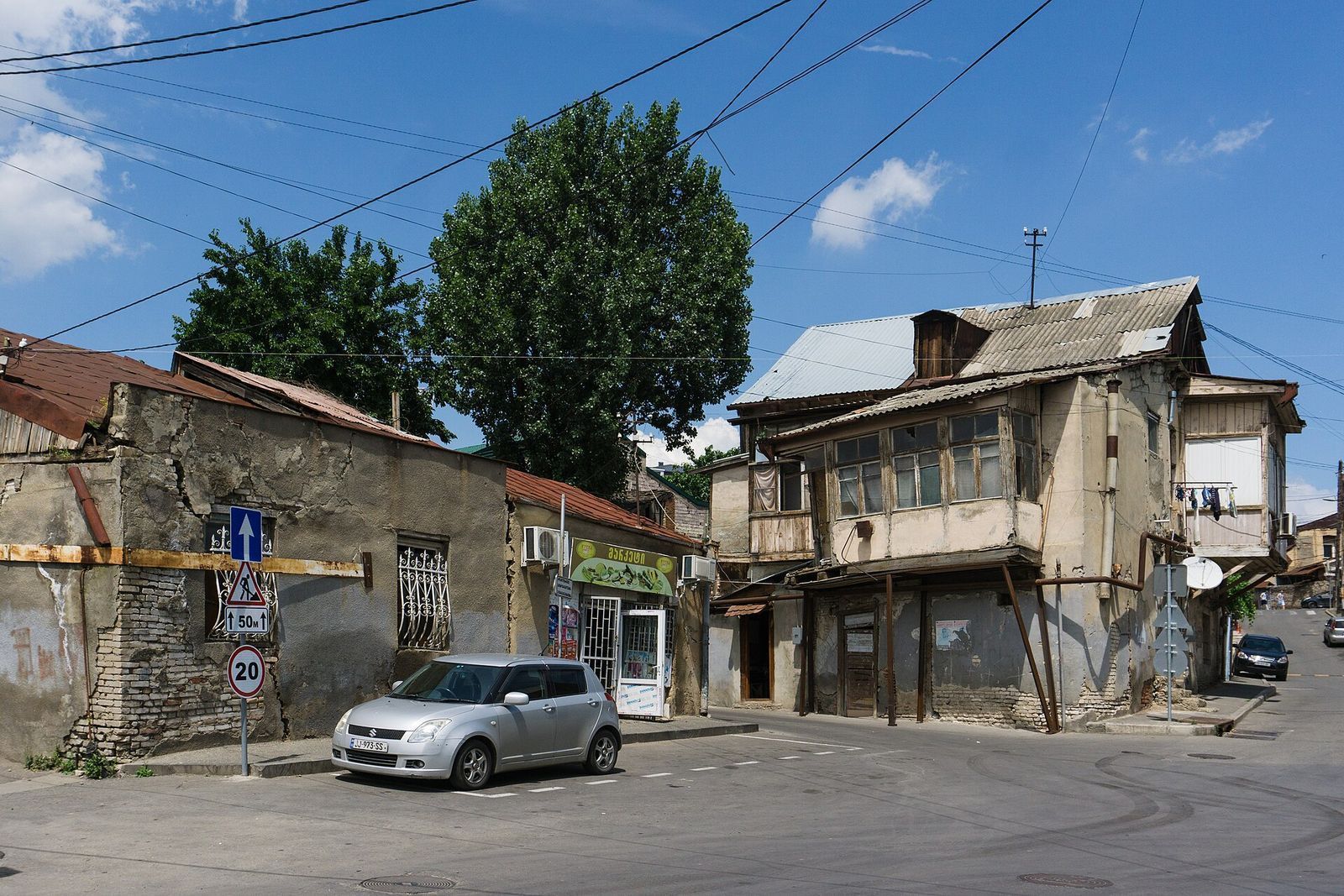
- Avlabari's lanes: wind down from the cathedral gate past old houses and small Armenian churches.
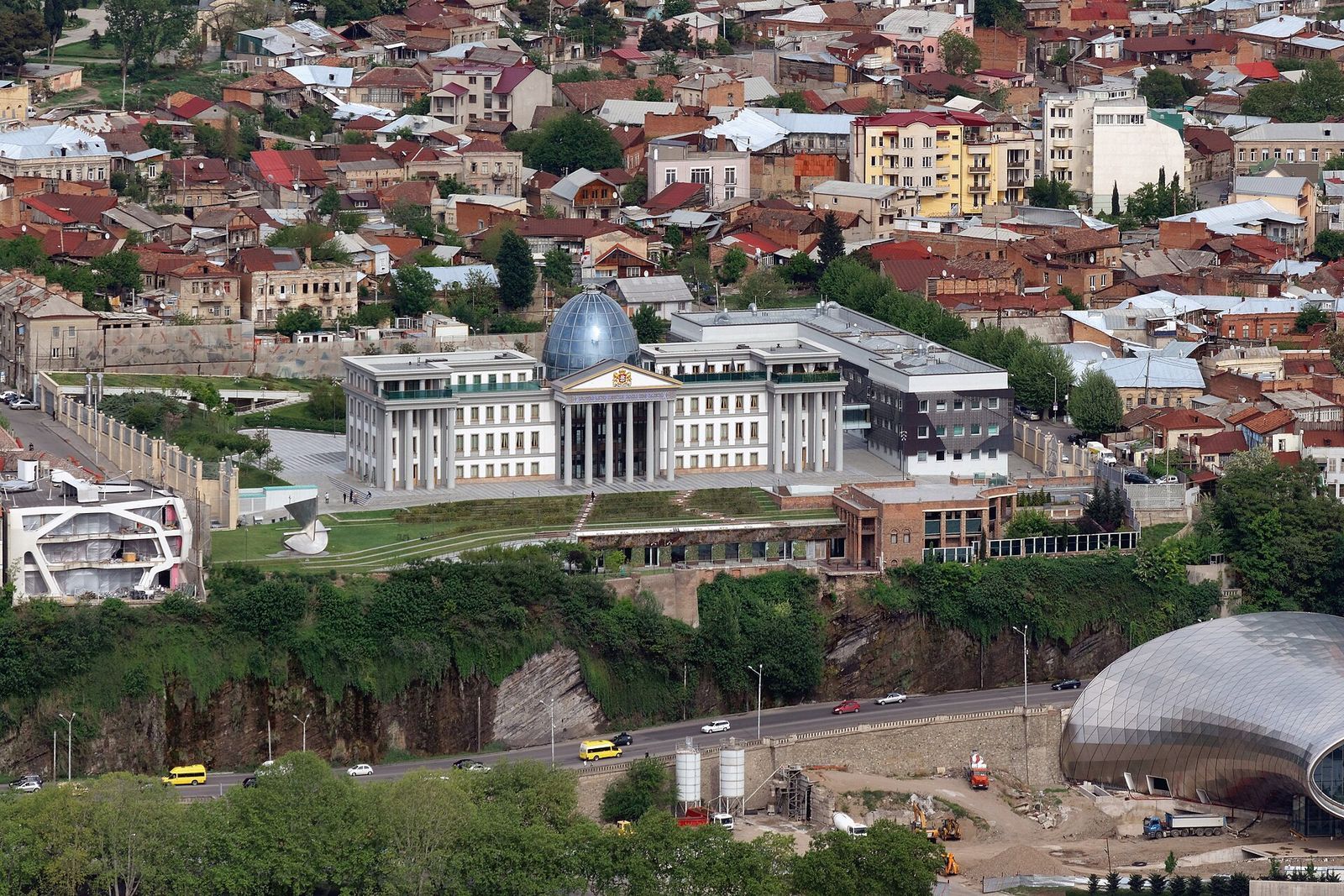
- The glass-domed palace: you pass the old presidential palace, the building with the glass dome just below Sameba.
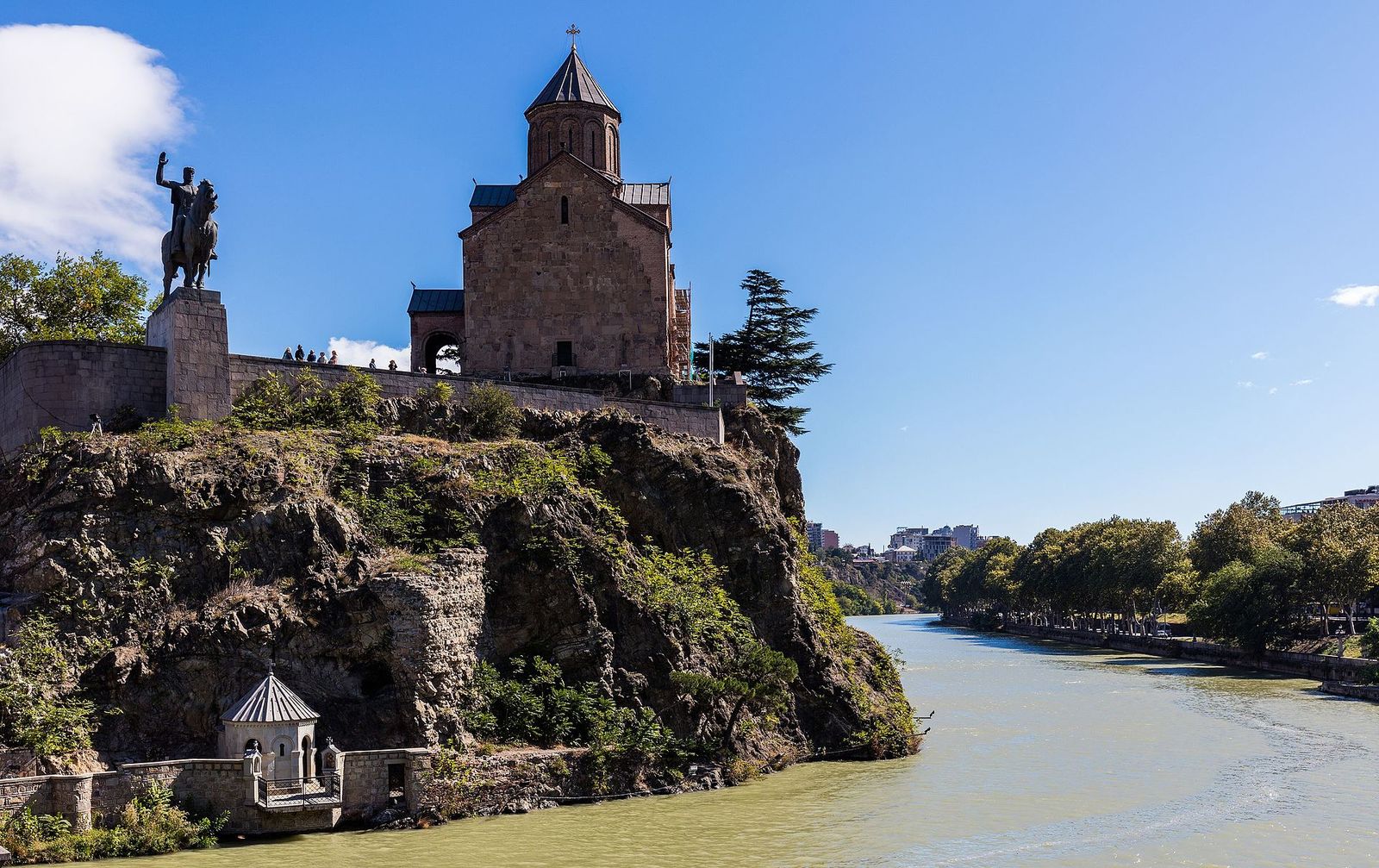
- Metekhi Church: the 13th-century church on the cliff above the river, with the statue of King Vakhtang Gorgasali beside it. It is one of the best churches in Tbilisi and the classic photo of the Old Town across the water.
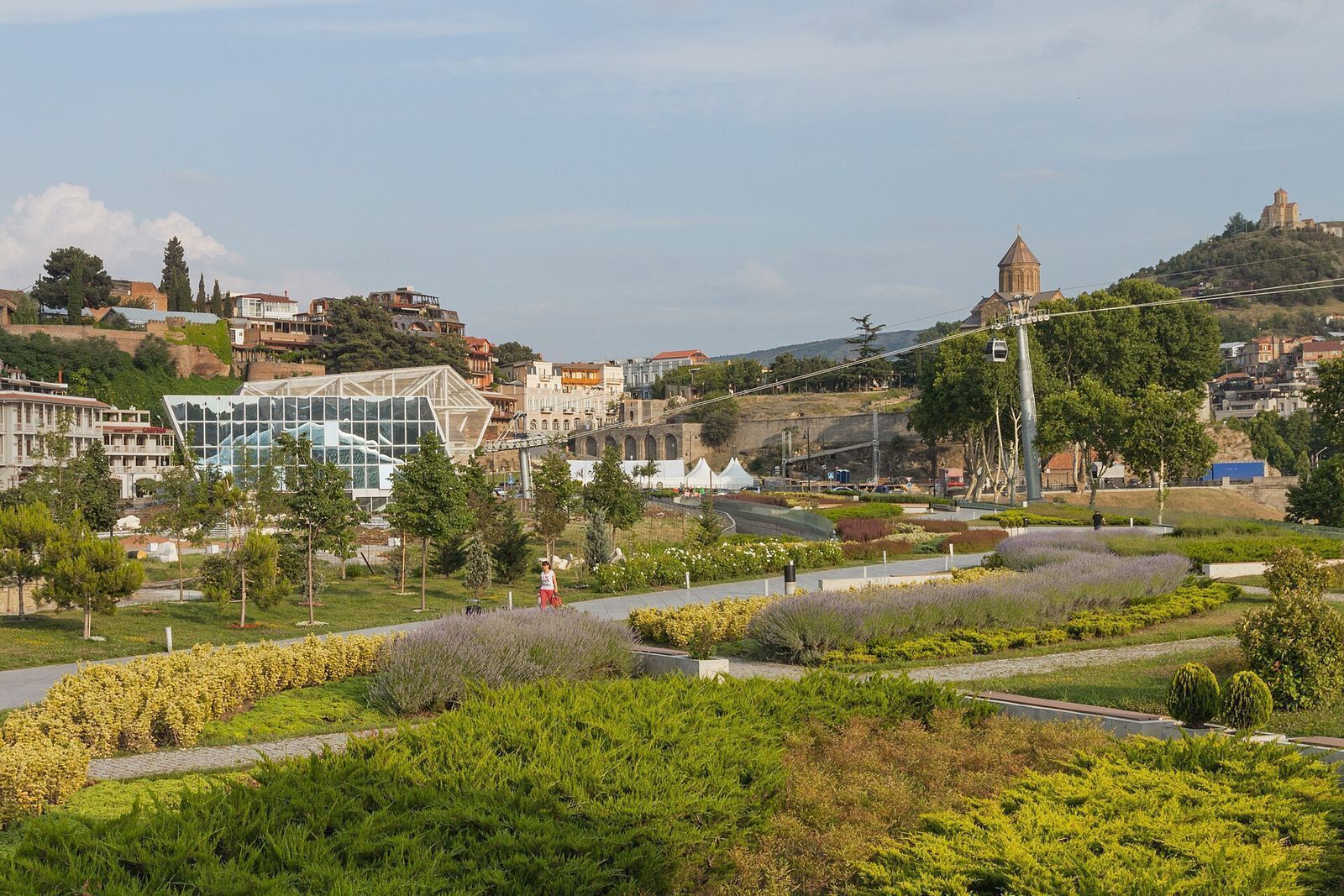
- Rike Park: cross down to the riverside park, where the cable car leaves for Narikala at 2.50 GEL one way.
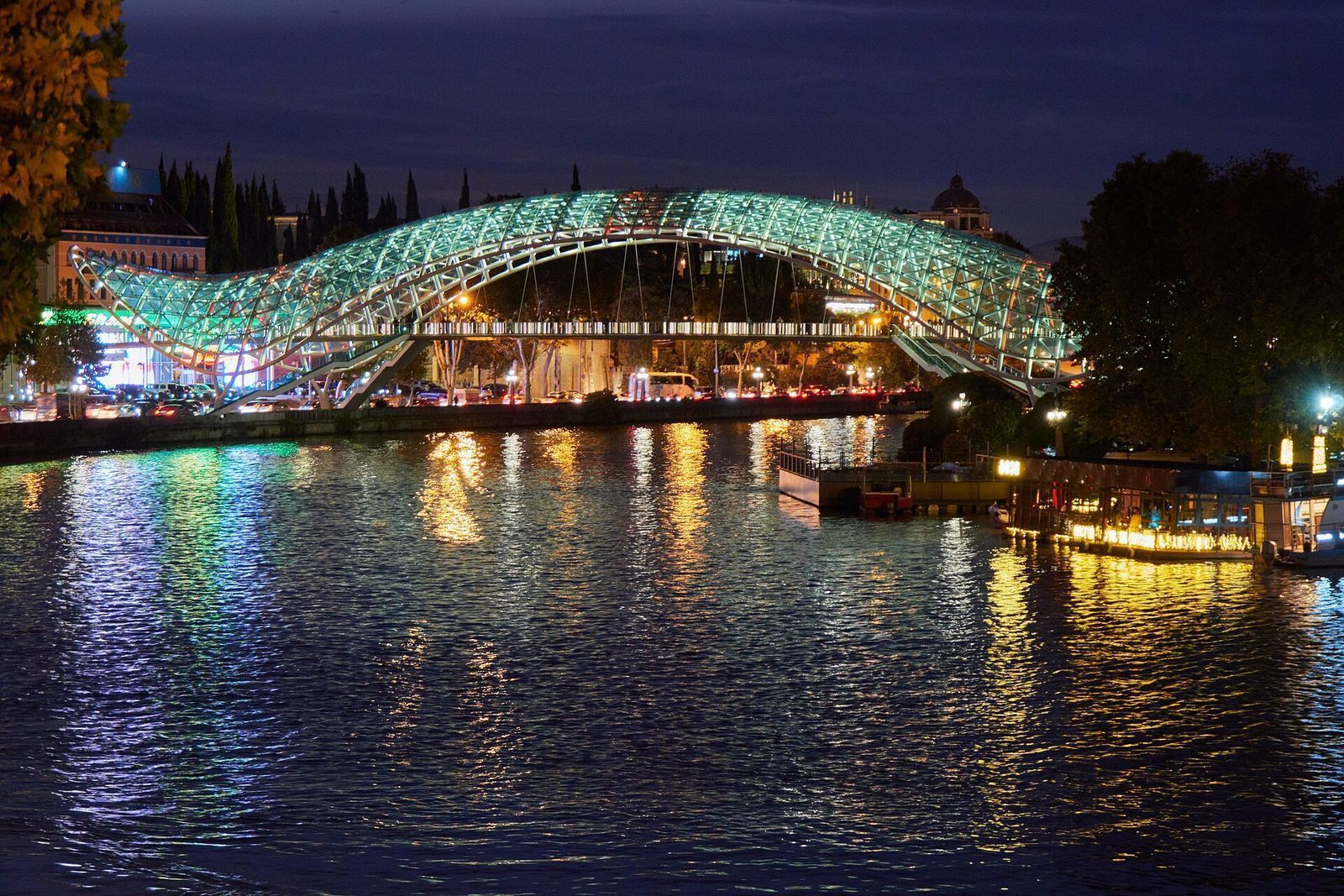
- The Bridge of Peace: walk over the Bridge of Peace into the Old Town, ideally after dark when its lights are on.
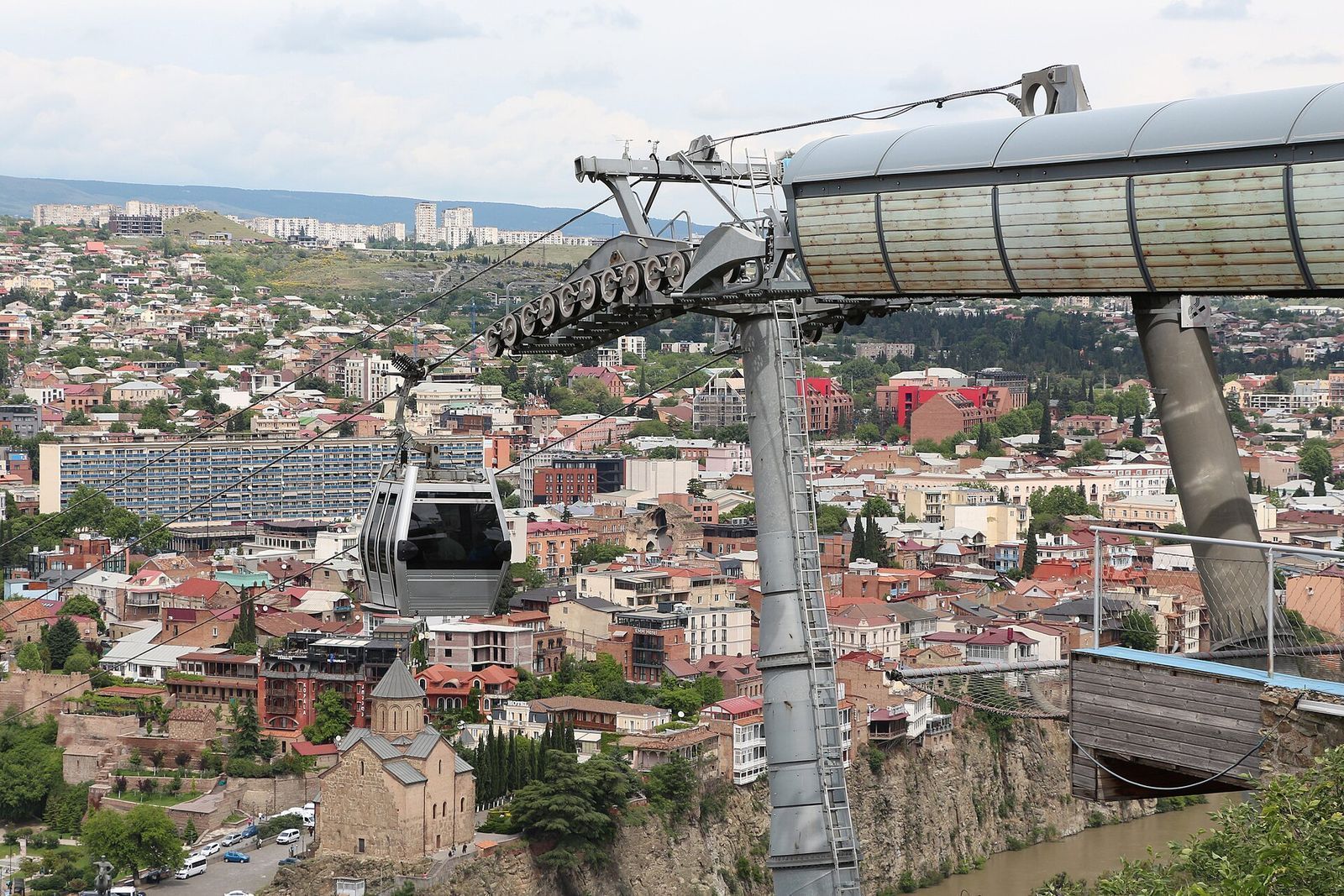
If you still have the energy, ride the Tbilisi cable car from Rike Park up to Narikala. From the fortress ridge you see Sameba across the river, gold dome on the skyline, and it is one of the best viewpoints in Tbilisi for exactly that shot.
Key takeaways
- Sameba is the main cathedral of the Georgian Orthodox Church, free to enter and open daily from about 07:00 to 21:00.
- Dress for church: shoulders and knees covered, and a scarf over the hair for women.
- Take the metro to Avlabari and walk 10 to 15 minutes uphill, or take a taxi up and walk down.
- Go before sunset for the light and the view, or on Sunday morning from about 09:00 for the singing.
- Finish by walking down past Metekhi Church to Rike Park and the Bridge of Peace.
Frequently asked questions
Is Sameba Cathedral free to visit?
Yes. There is no ticket for the cathedral, the lower chapels or the grounds, and you can leave a donation inside if you wish. Guided tours sold by local operators are a separate cost.
What should I wear to Sameba Cathedral?
Wear clothes that cover your shoulders and knees. Women should also cover their hair, and men should wear long trousers and take off hats inside. Scarves and wraps are usually available at the entrance, but bring your own on busy days.
Can you go inside Sameba Cathedral?
Yes, the main church and the underground chapels are open to visitors every day. If the large front doors are shut, use the side doors, which are the usual way in. During major services some areas may be closed to sightseers.
How tall is Sameba Cathedral?
Sameba is about 87 meters tall to the top of its cross, and about 100 meters including the foundations sunk into Elia Hill. It is one of the tallest Orthodox cathedrals in the world.
Can you take photos inside Sameba?
Photos are fine outside and in the gardens. Inside, follow the signs at the entrance, never use flash, and keep the camera away during services and around people praying.
How long do you need at Sameba Cathedral?
Most visitors spend 45 to 90 minutes, enough for the inside, the lower chapels and the terrace view. Allow 2 hours or more for a Sunday service, or for a sunset visit followed by the walk down to the river.
What does Tsminda Sameba mean?
Tsminda Sameba means Holy Trinity, which is why the cathedral is known in English as the Holy Trinity Cathedral of Tbilisi. Locals shorten it to Sameba.
How do I get to Sameba from the Old Town?
Walk across the Bridge of Peace, through Rike Park and up through Avlabari, which takes 20 to 30 minutes with a climb at the end. Alternatively, take the metro to Avlabari and walk 10 to 15 minutes uphill, or take a taxi to the main gate.
25 Best Things to Do in Tbilisi in 2026 (With Prices)
Tbilisi is known for its sulfur baths, balconies and hilltop views. Here are 25 things to do, with prices and times.
Read the guide
The Sulfur Baths of Abanotubani: Prices, Bathhouses and Booking
Tbilisi is known for its sulfur baths. Here is what to know about the bathhouses, room prices and booking.
Read the guide
Narikala Fortress, Tbilisi: Getting Up, What Is Open and When to Go
Narikala is the fortress above Old Tbilisi. Here is what is open in 2026, how to get up and when to go for the view.
Read the guide