Mtskheta Day Trip from Tbilisi: Jvari, Svetitskhoveli and Getting There
Mtskheta is Georgia's old capital and its holiest town, about 25 km north of Tbilisi, where two rivers meet under a hilltop monastery. It is the easiest of all the day trips from Tbilisi: cheap, close and done in half a day. Here's what you need to know about Jvari, Svetitskhoveli and Samtavro, getting there and back, and the order I'd see it all in.
Is Mtskheta worth a day trip?
Yes, and it is the one I'd give a first-time visitor before any other. Mtskheta was the capital of the old kingdom of Kartli, and more of Georgian history starts here than anywhere else: it is where the country took up Christianity in the 4th century. Its churches are UNESCO listed as the Historical Monuments of Mtskheta, and Svetitskhoveli is still the most important church in the country, the place Georgians come to be married and christened.
What makes it a good day trip is the effort-to-reward ratio. You get a 6th-century monastery on a cliff, the view of two rivers meeting, an 11th-century cathedral behind fortress walls and a small, walkable town, all for under 50 GEL and about 4 hours of your day. If churches leave you cold, it is mostly churches, but the Jvari view alone carries the trip.
What to see in Mtskheta
Three churches make the day, and a fourth stop is just the town itself. Here is how they stack up.
| Sight | Built | Where | Time to allow | Entry |
|---|---|---|---|---|
| Jvari Monastery | Late 6th century | Hilltop across the river, taxi only | 20 to 30 minutes | Free |
| Svetitskhoveli Cathedral | 11th century | Center of town | 30 to 40 minutes | Free |
| Samtavro Monastery | Church on a 4th-century site | 5-minute walk from the cathedral | 15 to 20 minutes | Free |
| The old town street | Restored houses, stalls, cafes | Between the cathedral and the river | 30 minutes plus lunch | Free |
Jvari Monastery
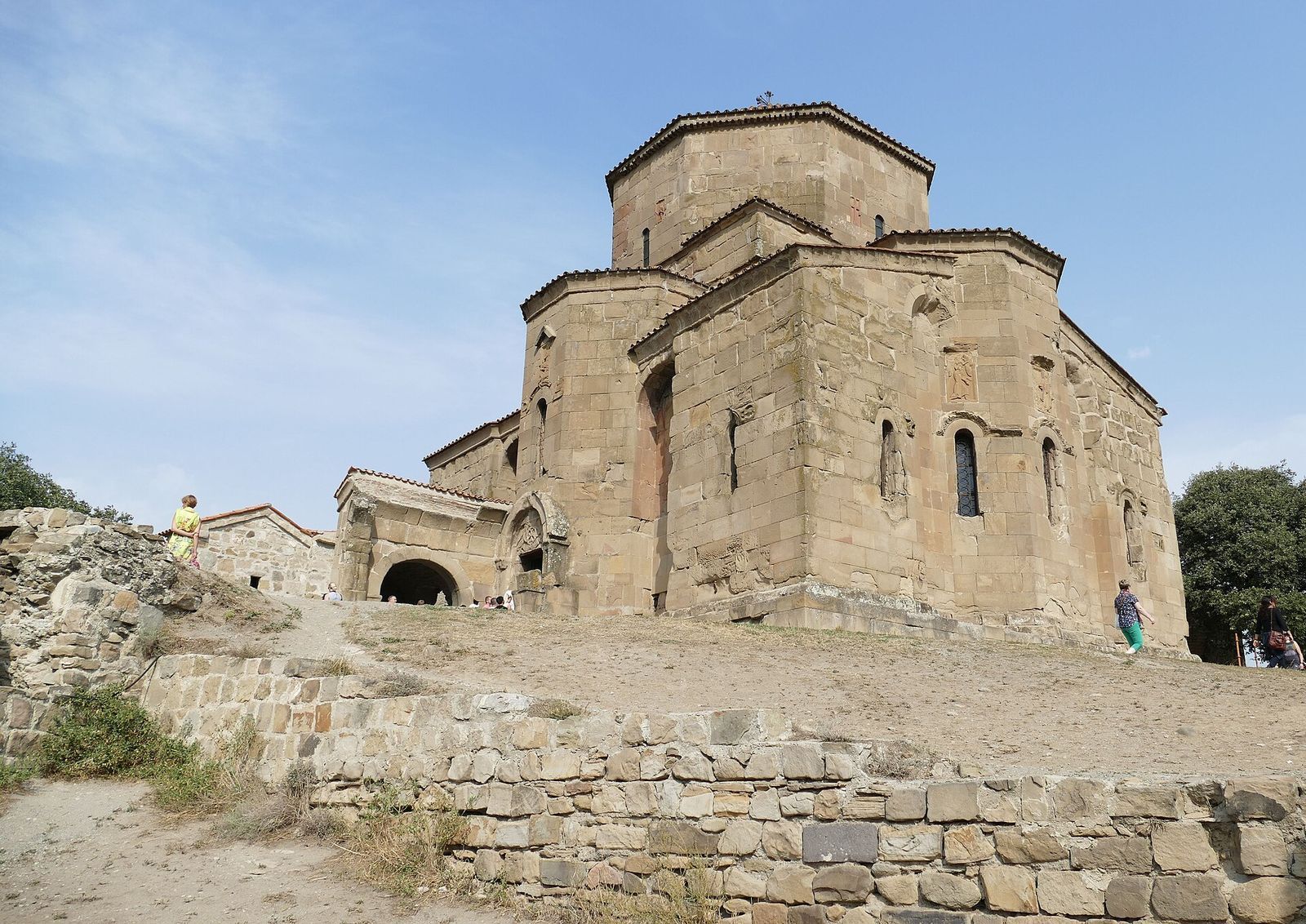
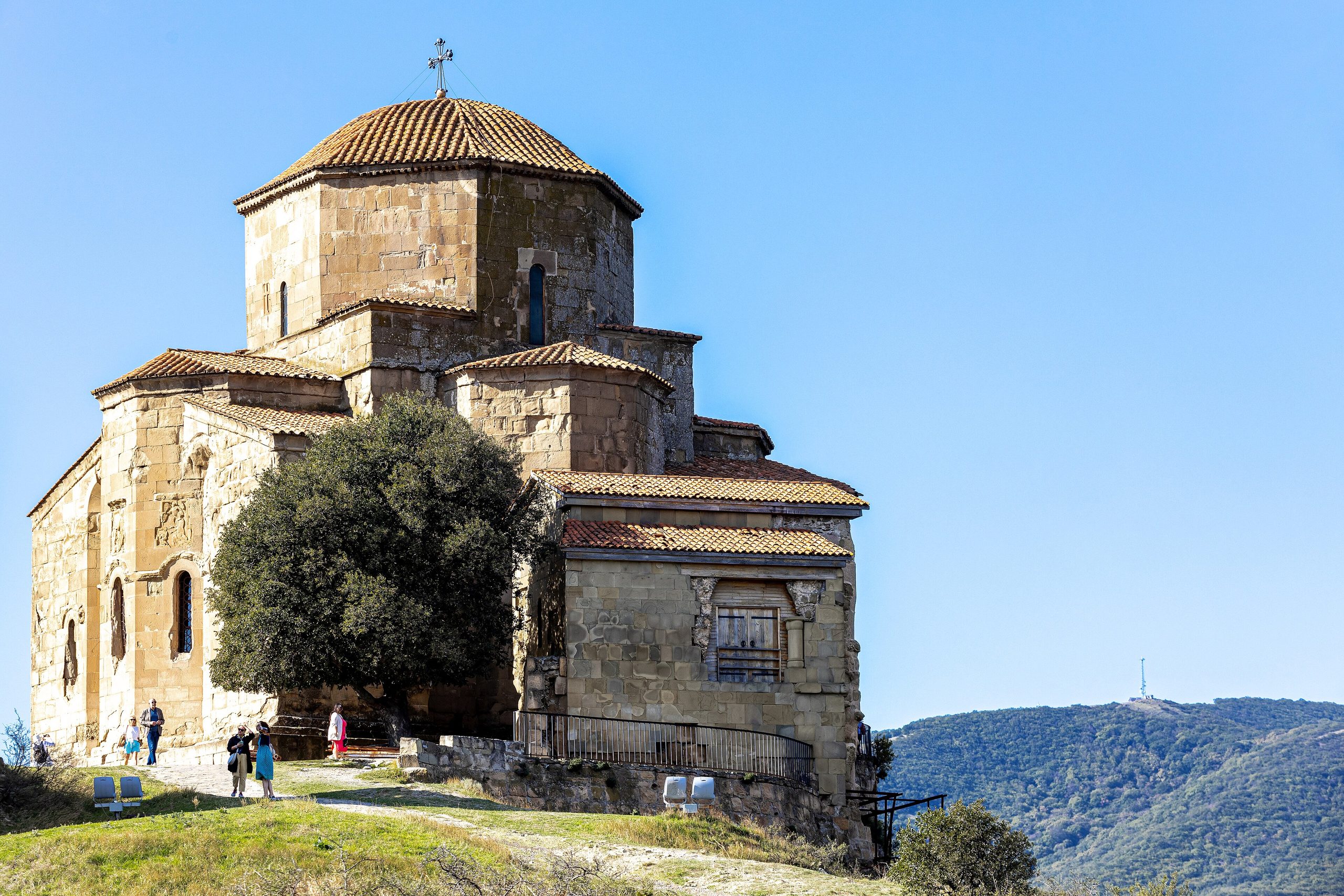
Jvari sits alone on a rocky hill across the river from town, and you see it from the highway long before you arrive. It went up in the late 6th century over the spot where, the story goes, Saint Nino raised a wooden cross after converting the king. Jvari means "cross", and inside the small, bare church a big cross still stands on its old stone base.
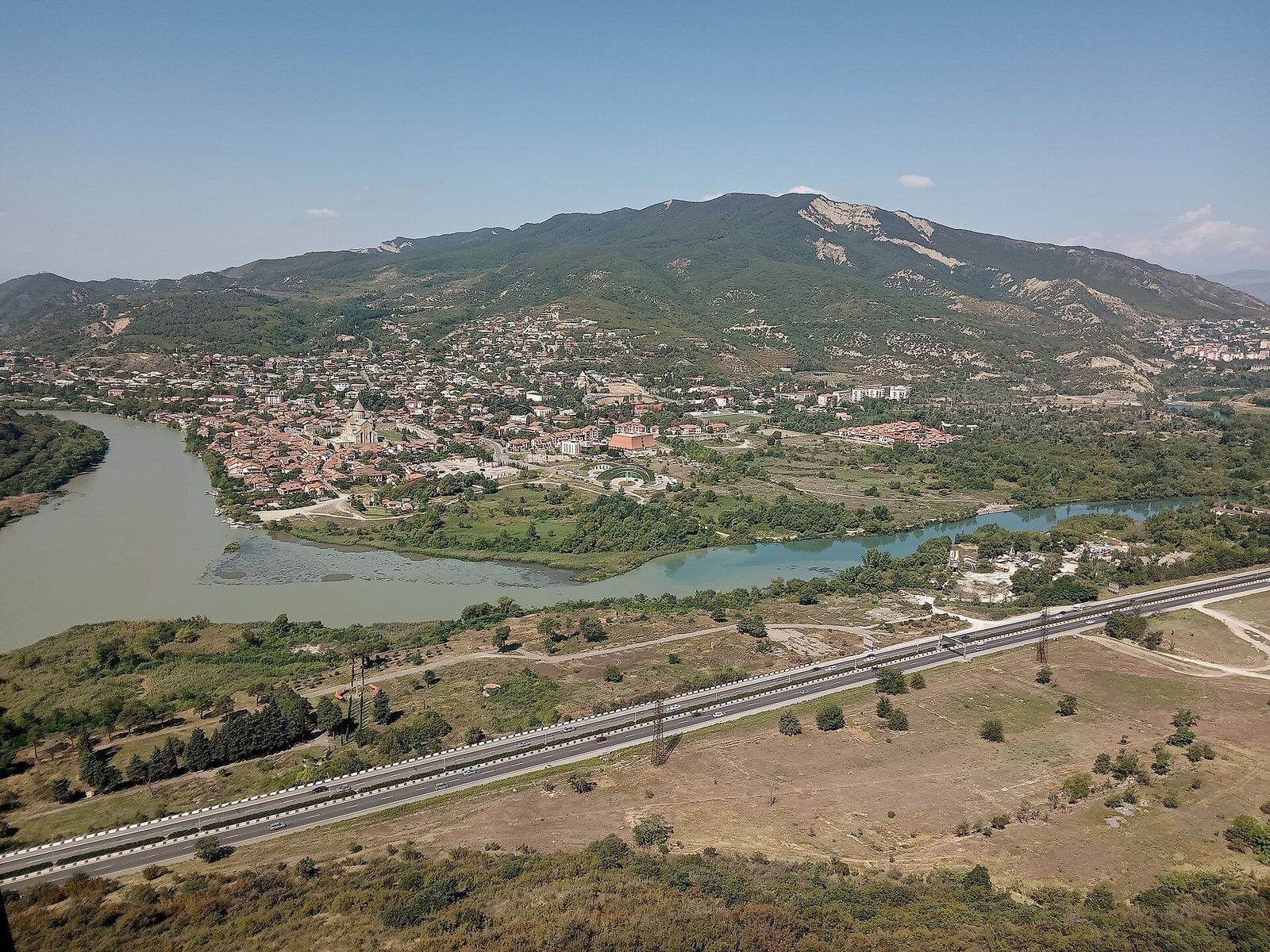
The church takes 10 minutes. The terrace takes as long as you want, and it is why you came: from the wall you look straight down on the meeting of the Aragvi and the Mtkvari, two rivers of different colors running side by side before they mix, with the red roofs of Mtskheta and the cathedral spread out on the far bank. Lermontov set his poem "Mtsyri" around this monastery, and once you are up there the attraction is obvious.
It is windy on that hill in every season, so bring a layer even on a warm day. A few stalls by the car park sell churchkhela, honey and souvenirs, and that is the extent of the facilities.
Svetitskhoveli Cathedral
Svetitskhoveli is the big one: the 11th-century cathedral in the middle of town, ringed by fortress walls with crenellations along the top. A church has stood here since the 4th century, and the legend behind the name (it means "life-giving pillar") is that Christ's robe is buried under it, which is why Georgians treat it as the spiritual center of the country.
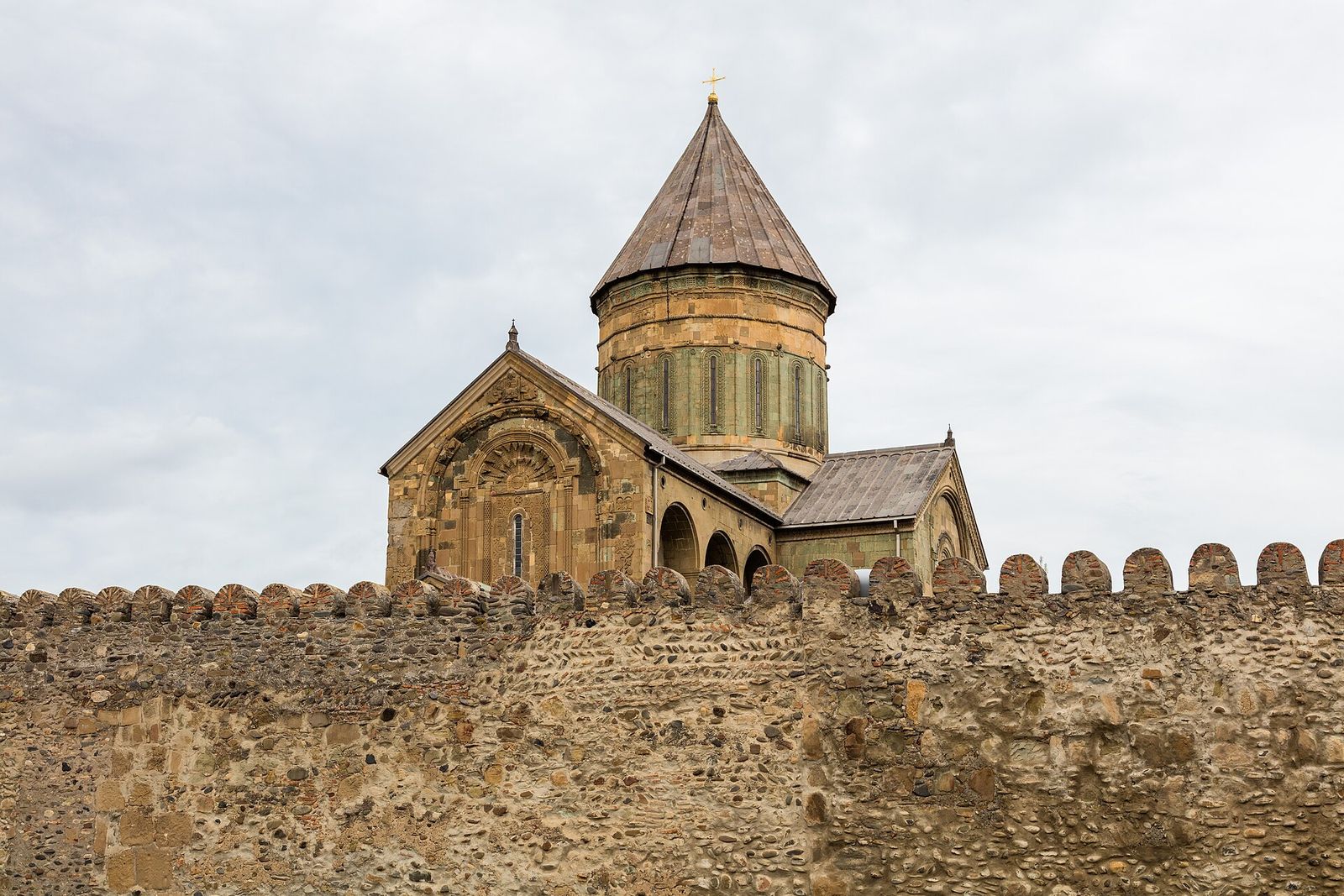
Inside, the scale surprises people after the tiny churches of Old Tbilisi. Look for the faded frescoes high on the walls, the tombs of Georgian kings set into the floor and the canopied shrine over the pillar of the legend. Outside, walk the full loop of the facades: the stone carving is the best in town, and one relief of a hand is tied by local legend to Arsukisdze, the architect, who is said to have paid for this building with his own right hand.
Allow 30 to 40 minutes. On weekends you will very likely walk into a wedding or a christening; stand at the back and you are welcome to watch.
Samtavro Monastery
Samtavro is the stop most visitors skip, and it is 5 minutes on foot from the cathedral. It is a working nunnery with a stone church that is the burial place of King Mirian and Queen Nana, the first Christian king and queen of Georgia. In the grounds there is also a tiny church tied to Saint Nino, built where she is said to have lived when she arrived in Mtskheta.
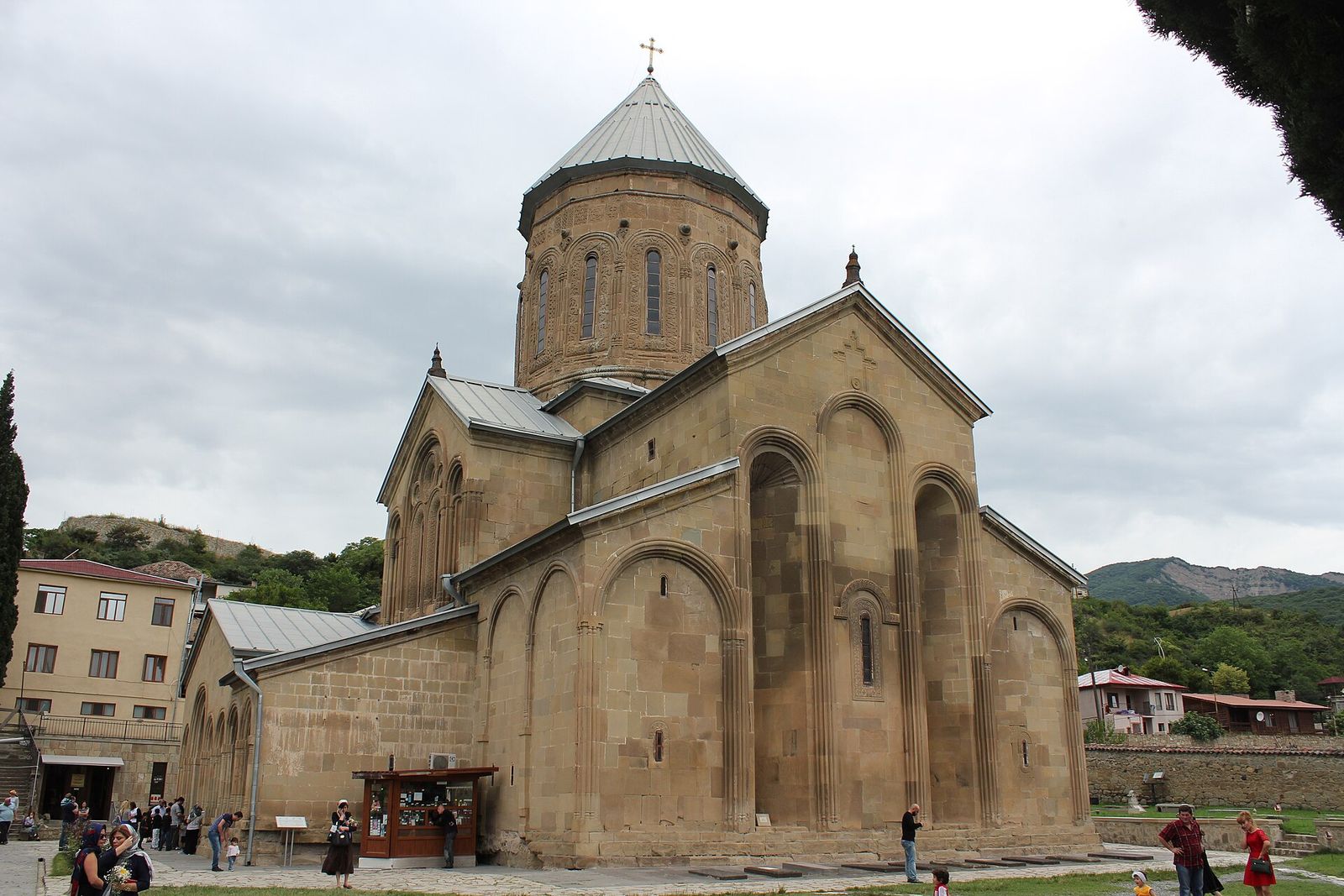
Most Georgians come for a different reason: the grave of Saint Gabriel, a 20th-century monk, which draws a steady line of pilgrims. It is the most devotional corner of the town, so keep your voice down and your camera away. Give it 15 to 20 minutes.
The old town street
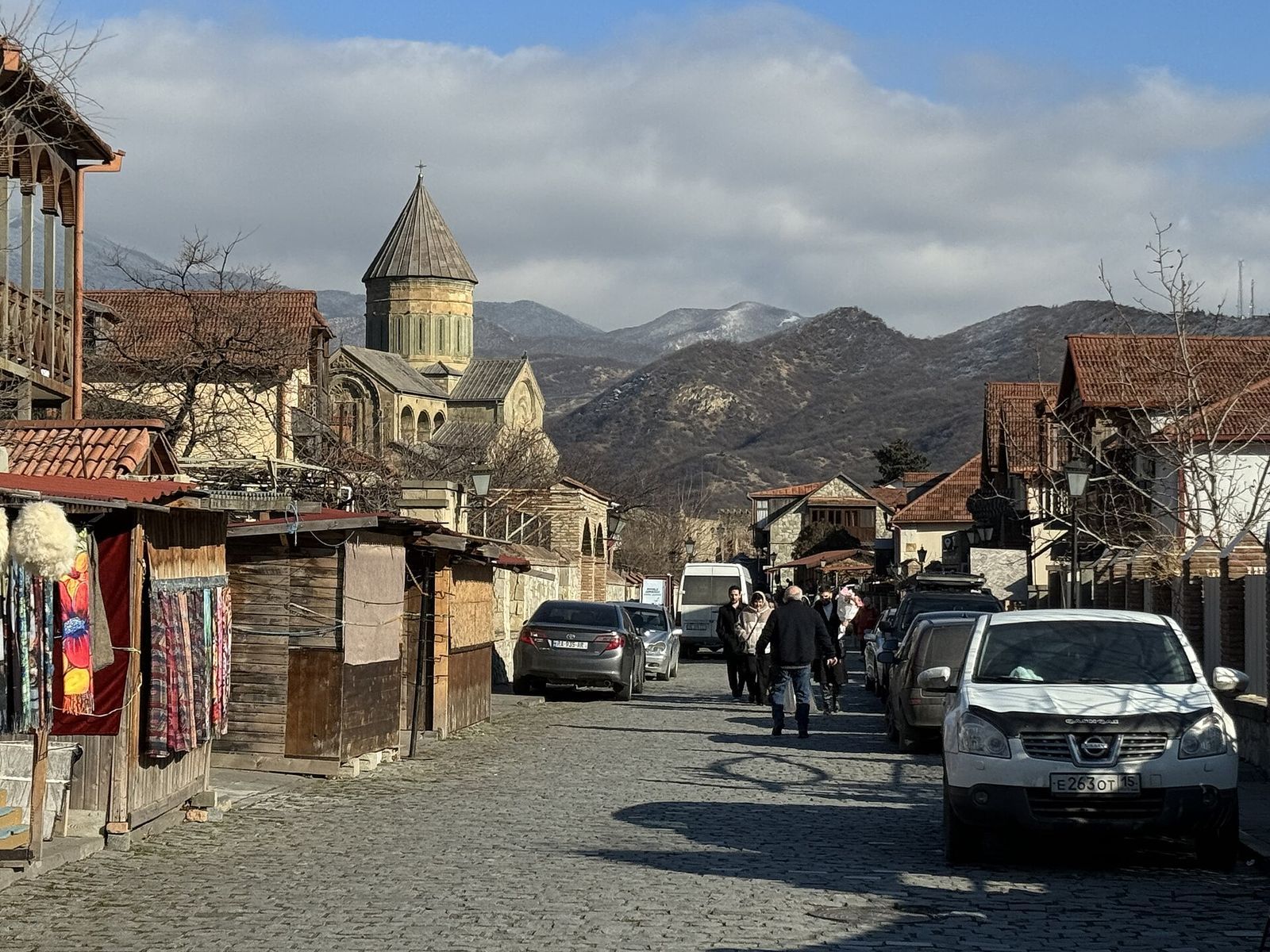
Between Svetitskhoveli's gate and the river runs a restored pedestrian street of wooden balconies, souvenir stalls, churchkhela sellers and cafe terraces. It is touristy and I still like it: buy a churchkhela for the ride home, try the homemade wine if someone is pouring tastes, and use it as the walk between the cathedral and lunch. If you want more from the town, walk to the riverbank for the low-angle view back up to Jvari on its rock.
How to get from Tbilisi to Mtskheta
You have four realistic options, and the right one depends on your group size and how much you want explained.
| Option | From | Time | Cost | Best for |
|---|---|---|---|---|
| Van (marshrutka) | Didube metro | 20 to 30 minutes | About 2 GEL per person | Solo travelers, tight budgets |
| Bolt or taxi | Anywhere in Tbilisi | About 20 to 30 minutes | 15 to 25 GEL per car, one way | 2 to 4 people, no bus station |
| Private driver | Your hotel | Your schedule | About 81 GEL per car for the day trip | Adding Ananuri or Uplistsikhe |
| Group tour | Central Tbilisi | Half or full day | About 25 to 55 EUR per person | The history explained |
Van from Didube
The cheap way is the van from Didube, the bus yard next to Didube metro. Mtskheta vans leave every 15 to 30 minutes from early morning, cost about 2 GEL and take 20 to 30 minutes. Every destination at the Didube bus station has its own row of vans, and the signs on the windscreens are in Georgian script, so ask anyone in the yard for "Mtskheta" and you will be pointed to the right one. Pay the driver in cash.
The van drops you on the main road at the edge of the center, a short walk from Svetitskhoveli.
Bolt or taxi
For two or more people, Bolt is the easy upgrade. A ride from central Tbilisi to Mtskheta runs about 15 to 25 GEL one way, and you skip Didube altogether. Book in the app rather than flagging a car on the street, the same rule as for any taxi in Tbilisi, and you never have to argue the price.
Private driver or tour
A driver for the day trip costs about 81 GEL per car on the fixed-price apps, which is worth it if you want Jvari, the town and a second stop like Ananuri without any waiting. Group tours run about 25 to 55 EUR per person and usually pair Mtskheta with somewhere else. The signs at the churches are thin, so a guide earns the money if you want the stories behind the buildings rather than just the buildings.
Getting up to Jvari
No bus or van goes up to Jvari. Taxis wait by Svetitskhoveli and expect about 15 GEL one way or about 30 GEL return with a wait at the top. There is a hiking trail up from the river side past Saint Nino's spring, but it is steep and exposed, and I'd only walk it in cool weather with water. If you come by Bolt from Tbilisi, the simplest move is to set Jvari as the destination and do it first.
My Mtskheta half day on the clock
This is the order I'd do it by van and taxi, working back from a relaxed return to Tbilisi. Start an hour later if you are not a morning person, but keep Jvari first.
| Time | Leg | Cost | Note |
|---|---|---|---|
| 08:45 | Van from Didube to Mtskheta | 2 GEL | Or Bolt straight to Jvari and skip the next leg |
| 09:15 | Taxi from town up to Jvari | About 15 GEL | Agree the price before you get in |
| 09:30 | Jvari Monastery and the terrace | Free | 30 minutes, before the tours |
| 10:15 | Taxi back down to Svetitskhoveli | About 15 GEL | Or ask the same driver to wait |
| 10:30 | Svetitskhoveli Cathedral | Free | 40 minutes inside and around the walls |
| 11:15 | Samtavro Monastery | Free | 5-minute walk, 20 minutes there |
| 11:45 | Old town street and riverbank | Free | Churchkhela and photos |
| 12:15 | Lunch in town | 15 to 25 GEL | Khinkali or lobio in a clay pot |
| 13:30 | Van back to Didube | 2 GEL | Latest safe start: about 17:00 on weekends |
That is a full Mtskheta day for about 50 to 60 GEL per person including lunch, and you are back in Tbilisi with the afternoon free for the Old Town or a Tbilisi itinerary stop you missed.
What to wear at Svetitskhoveli and Jvari
These are working churches, and the dress code is enforced at the door. Women cover their head and shoulders and wear a skirt or long trousers; men wear long trousers and leave hats off inside. Shorts are the most common reason tourists get stopped.
Scarves and wraparound skirts are lent at the entrances of the main churches, so you will not be turned away, but bringing your own light scarf is easier and more comfortable. The same rules cover every church in Georgia, and the rest of the church etiquette is simple: no photos during a service, phones on silent, and voices down.
Where to eat in Mtskheta
Lunch is part of the day, and the old town street makes it easy. The terraces along the pedestrian street toward the cathedral serve the classic Georgian table (khinkali, khachapuri, lobio in a clay pot, grilled mtsvadi) and a meal runs about 15 to 25 GEL per person with a drink. Eliso is the sit-down restaurant I'd point most people to when they want a proper lunch rather than a quick plate.
If you are new to the menu, Georgian food basics go a long way here: order lobio and mchadi (corn bread) for a cheap, filling lunch, and a few khinkali to share. Expect a slower service on weekends, when Georgian families fill the tables after church.
Best time to visit Mtskheta
Spring and autumn are the best seasons. April and May bring green hills around Jvari, and September and October bring the soft light and the grape harvest around the town. Summer works, but the middle of the day is hot on stone with little shade, so start early. Winter is quiet and perfectly fine for a half day; just bring a warm layer for the wind on the Jvari hill.
The time of day matters more than the season. Be at Jvari before 10:00, when the light is behind you over the confluence and the coach groups are still on the highway. Weekday mornings are the quietest of all; weekends bring weddings and christenings at Svetitskhoveli, which some people love and some find crowded. Mtskheta shares the capital's weather almost exactly, so the best time to visit Tbilisi is the best time here too: spring and early autumn.
Van, driver or tour: which Mtskheta trip to pick
Mtskheta is easy enough that the choice comes down to budget and company. My rule of thumb:
- Take the van if you are on your own, on a budget and fine with a busy bus yard. It is the cheapest day out from Tbilisi.
- Take Bolt if there are 2 to 4 of you. Split four ways, the ride costs little more than the van and you go straight to Jvari.
- Hire a driver if you want Mtskheta plus Ananuri, Gori or a winery in one day. A second stop is where a driver pays for itself.
- Book a tour if you care about the history and want it told on the spot. The churches mean a lot more with the stories.
- Do not give it its own day if you are already doing the Kazbegi road with a driver. Mtskheta sits right on that route, so stop at Jvari and Svetitskhoveli on the way and keep the separate day for something else.
Combining Mtskheta with other day trips
Mtskheta sits right where the roads north and west split, which makes it the natural first stop on two longer trips. Heading north on the Georgian Military Highway, Jvari and Svetitskhoveli fit in an hour before Ananuri and the long climb to the mountains, and most drivers on a Kazbegi day trip will add it if you ask. Heading west, the same highway takes you to Gori and Uplistsikhe, and a driver can do Mtskheta in the morning and the cave town in the afternoon.
For wine, Chateau Mukhrani is a short drive west of Mtskheta, and the wineries near Tbilisi pair well with a morning in the churches. If you have seen Holy Trinity Cathedral in Tbilisi, Svetitskhoveli is the older, quieter and far more important counterpart, and seeing both on one trip gives you the old and new faces of the Georgian church.
What a Mtskheta day trip costs
Here is the full day per person, from the cheapest way to the easiest.
| Item | Van and taxi, solo | Bolt for 2 people | Private driver for 2 people |
|---|---|---|---|
| Tbilisi to Mtskheta and back | 4 GEL | 15 to 25 GEL | About 40 GEL |
| Taxi up to Jvari and back | About 30 GEL | About 8 GEL (Bolt straight to Jvari, taxi down) | Included |
| Entry to the churches | Free | Free | Free |
| Lunch with a drink | 15 to 25 GEL | 15 to 25 GEL | 15 to 25 GEL |
| Total per person | About 50 to 60 GEL | About 40 to 60 GEL | About 55 to 65 GEL |
Split two ways, a driver comes out barely more than doing it yourself, and the waiting disappears. On your own, the van is unbeatable.
Key takeaways
- Mtskheta is 25 km from Tbilisi, free to visit and done comfortably in 3 to 4 hours.
- Take a taxi up to Jvari first, before 10:00, then walk the town: Svetitskhoveli, Samtavro and lunch.
- The van from Didube is about 2 GEL; Bolt is about 15 to 25 GEL per car and the better deal for groups.
- Dress for church: covered heads and shoulders for women, long trousers for everyone.
- If you are driving the Kazbegi or Gori road anyway, stop in Mtskheta on the way instead of giving it a separate day.
Frequently asked questions
Is half a day enough for Mtskheta?
Yes. 3 to 4 hours covers Jvari, Svetitskhoveli, Samtavro and a quick walk, and adding lunch makes it about 5. Leave Tbilisi by 09:00 and you are back by early afternoon.
How far is Mtskheta from Tbilisi?
About 25 km, or 20 to 30 minutes by road from the center. The van from Didube metro takes about the same time as a taxi once you are out of city traffic.
Can you walk from Mtskheta to Jvari Monastery?
You can, but most people should not. A steep, exposed trail climbs from the river side past Saint Nino's spring, and Jvari sits across a busy highway from the town, so a taxi for about 15 GEL is the sensible way up.
Is there an entrance fee for Svetitskhoveli or Jvari?
No. Jvari, Svetitskhoveli and Samtavro are all free to enter. You only pay for transport, candles if you want one and lunch.
What is the dress code for Svetitskhoveli Cathedral?
Women cover their head and shoulders and wear a skirt or long trousers, and men wear long trousers. Scarves and wraps are lent at the door, but bringing your own scarf saves the hassle.
Should I choose Mtskheta or Kazbegi?
Choose Kazbegi if you have a full day, good weather and want mountains; choose Mtskheta if you have half a day or want history over scenery. Better still, do both: Mtskheta sits right on the road to Kazbegi, so a driver can stop there on the way.
Can I take the train from Tbilisi to Mtskheta?
You can, but I would not. The station is about 2 km from the town and trains are infrequent, so the van from Didube or a Bolt is faster and simpler.
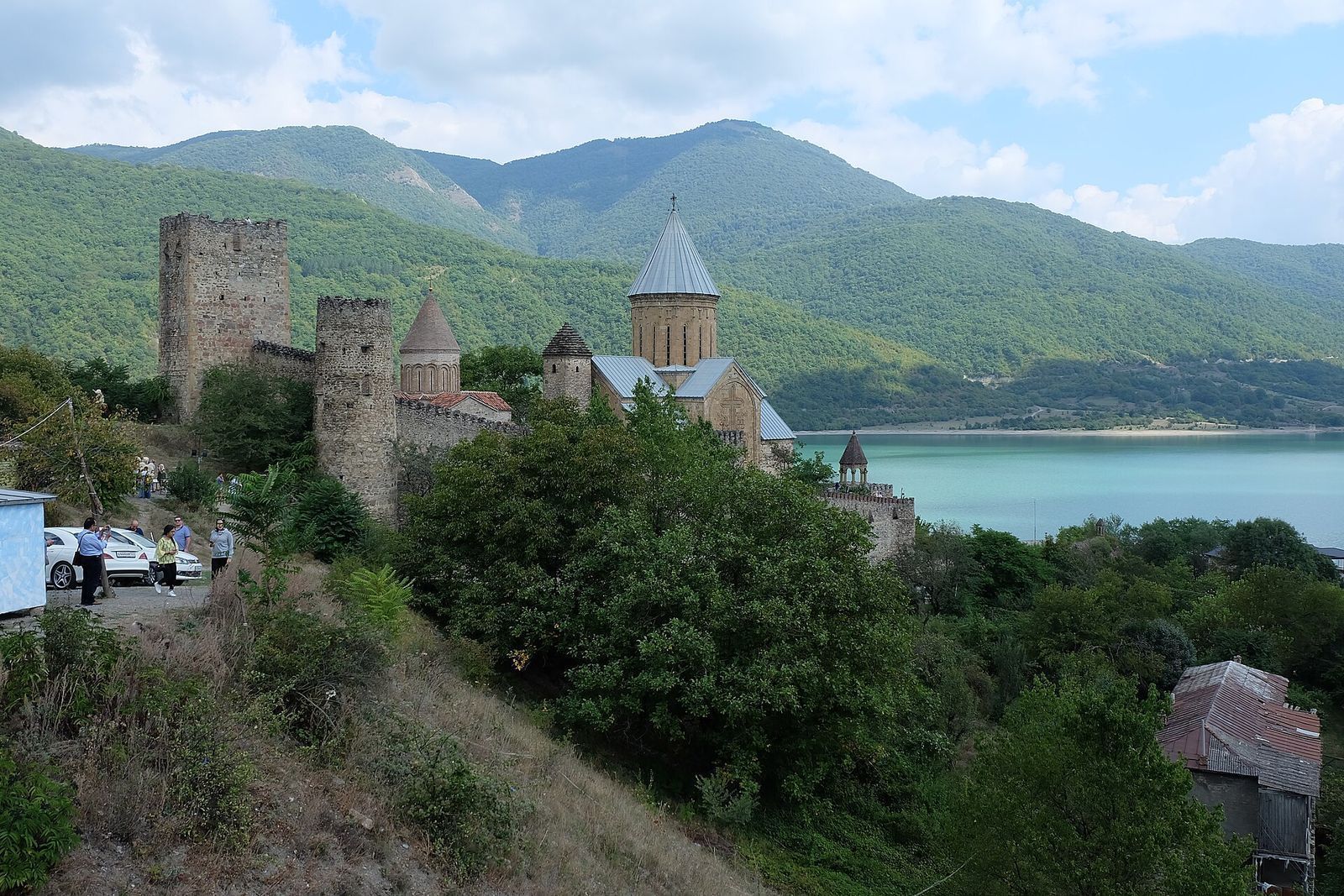
12 Best Day Trips from Tbilisi, With Prices and Timings
Tbilisi is known for its easy day trips. Here are the 12 best, how to reach each one and what a day out costs.
Read the guide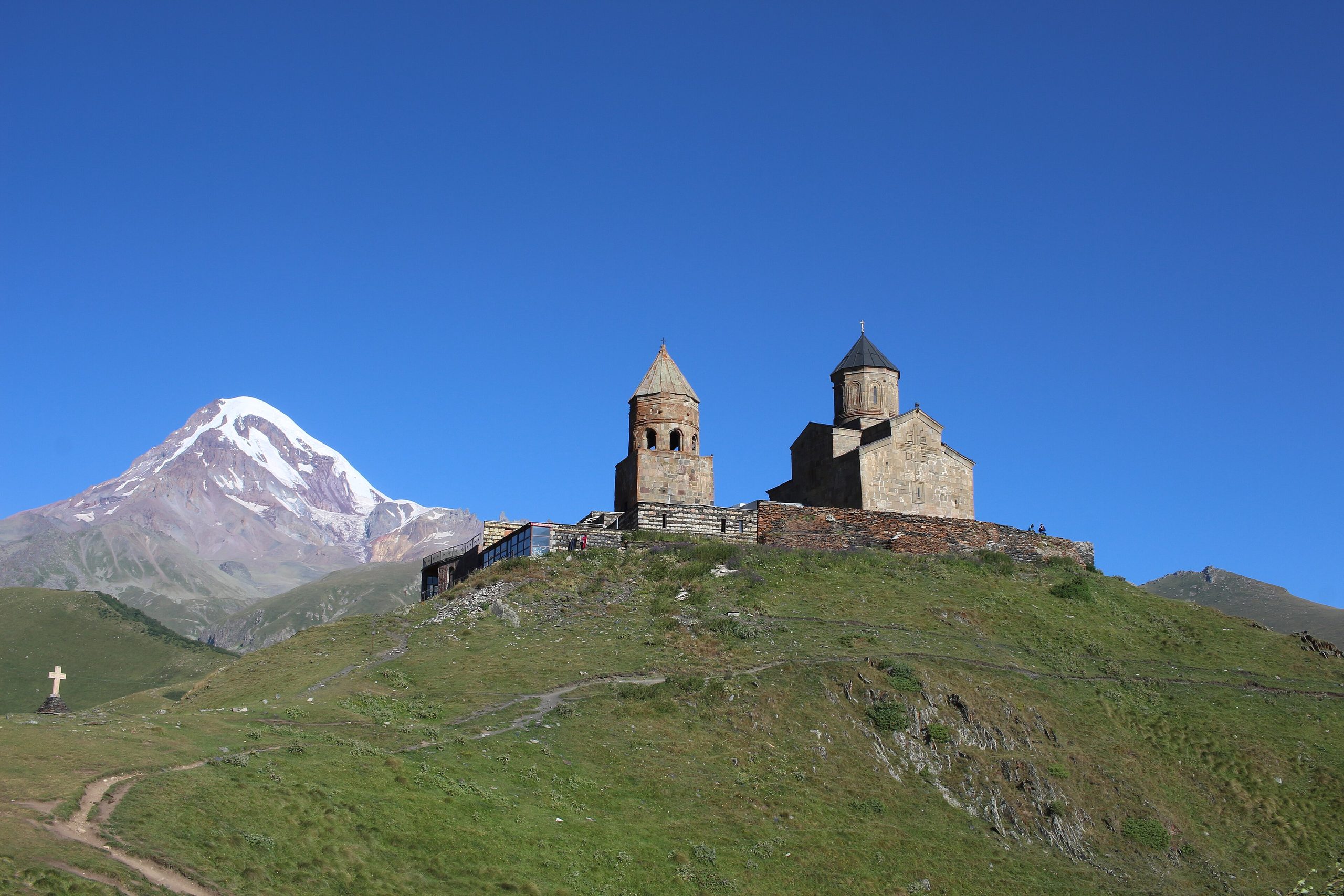
Kazbegi Day Trip from Tbilisi: Gergeti, Ananuri and the Military Highway
Kazbegi is the classic mountain day trip from Tbilisi. Here is the route, the stops, the costs and how to time it.
Read the guide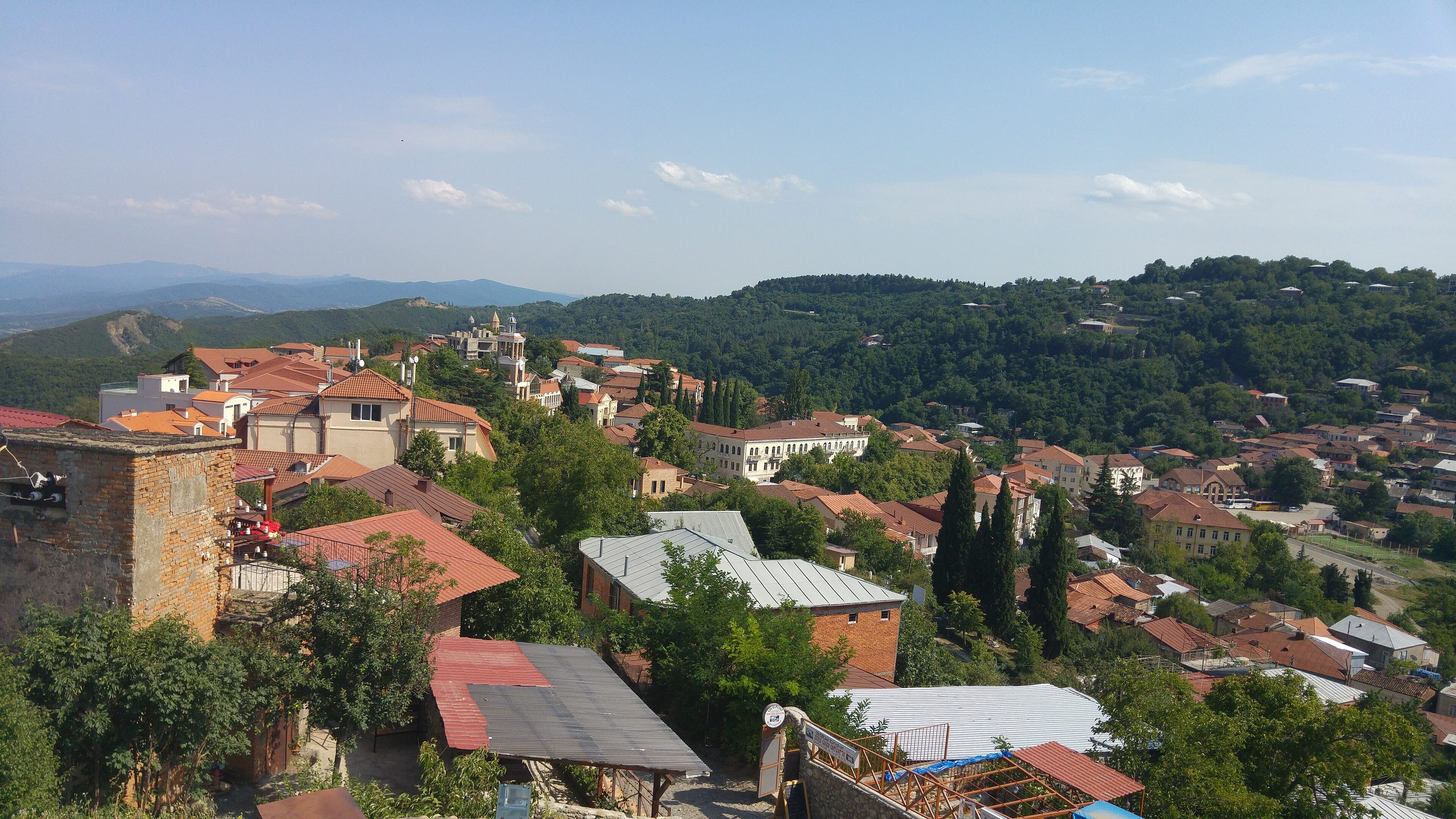
Sighnaghi Day Trip from Tbilisi: Bodbe, the Walls and Getting There
Sighnaghi is the hilltop city of love in Kakheti. Here is how to get there, what to see and how to time the day.
Read the guide