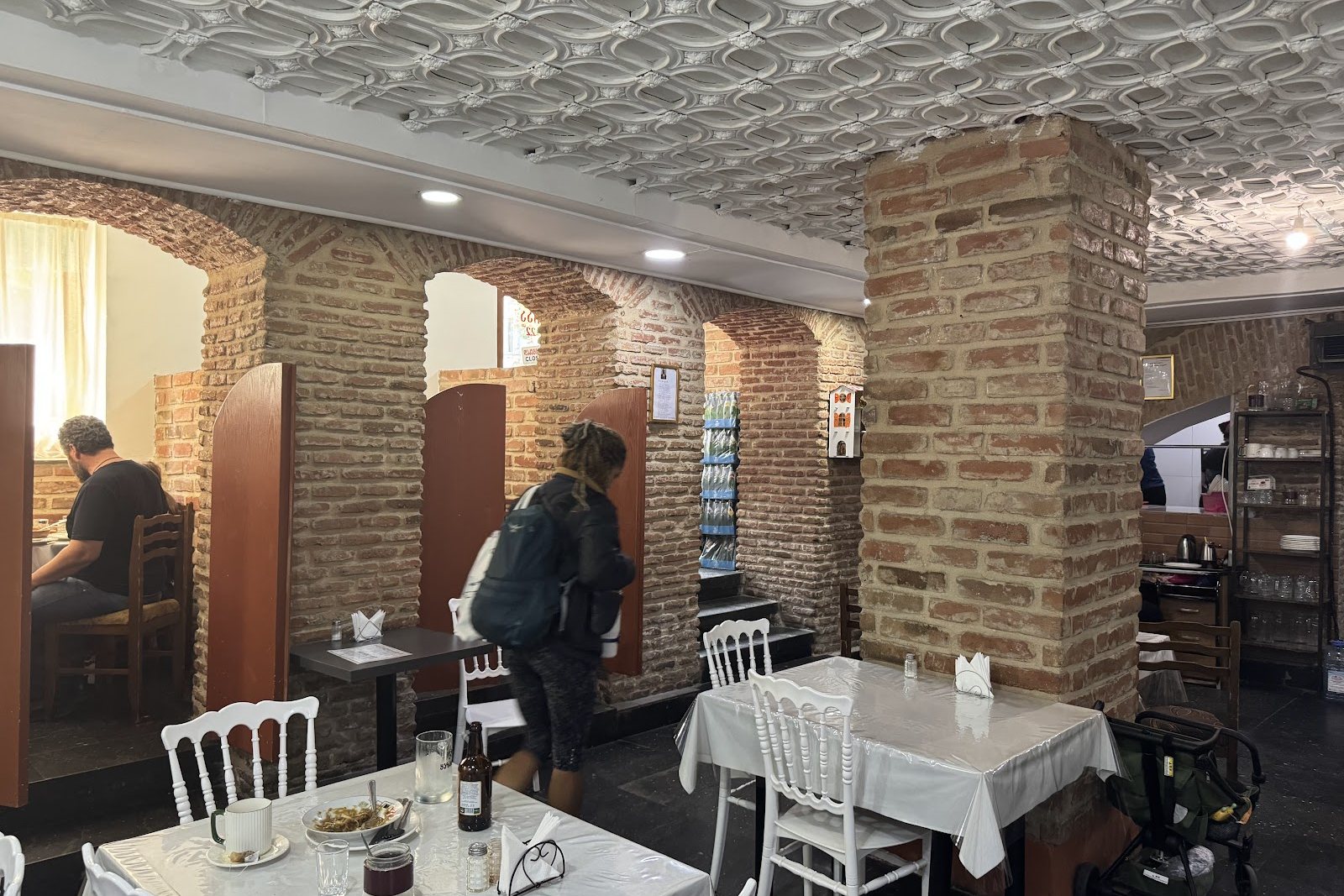
Eating Out in Tbilisi: How to Order, Restaurant Etiquette and the Bill
Tbilisi is known for long, shared dinners: plates crowd the middle of the table, dinner starts late, and nobody brings the bill until you ask for it. Eating out here is easy once you know the rhythm. Here's how restaurants work in 2026, from booking a table and reading a Georgian menu to ordering for the table, the khinkali rules, the bread and service charge on your bill, and what dinner really costs.
How eating out in Tbilisi works
Restaurants in Tbilisi open at about 11:00 and most run until midnight, while cafes open at 8:00 or 9:00. The day runs later than you're used to. Lunch is a 13:00 to 15:00 affair, and dinner starts at 20:00 or 21:00; walk into a Georgian restaurant at 18:00 and you'll have the room to yourself.
Meals are long and shared. Nobody orders a starter and a main each. The table orders a spread of cold dishes, then hot dishes, bread and khinkali, and everyone reaches across. Two hours for dinner is normal, and the waiter won't hurry you out.
| Meal | When locals eat | What it costs |
|---|---|---|
| Cafe breakfast | From 8:00 or 9:00 | Coffee and a pastry, 8 to 15 GEL |
| Lunch | 13:00 to 15:00 | Weekday business lunch, 12 to 20 GEL |
| Dinner | Sits down at 20:00 to 21:00 | Mid-range dinner for two, 60 to 80 GEL |
| Late night | Most kitchens close about 23:00, midnight at weekends | A few khinkali houses run to 2:00 or later |
Booking a table in Tbilisi
Traditional Georgian restaurants and casual places are walk-in, and on a weekday you'll rarely wait. Book the modern Georgian restaurants, the special-occasion places and anything you care about on a Friday or Saturday night, because the best restaurants in Tbilisi are full by 21:00 at weekends. The tasting-menu places want a few days' notice.
My rule on a short trip: book the one or two dinners that matter and walk in for everything else. A traditional place with a 20-minute wait for a table is a better night than a booked room you picked only because it had space.
Reading a Georgian menu
Menus in central Tbilisi come in Georgian and English, often with photos. The exceptions are the old canteens, where the menu can be a chalkboard in Georgian script with little English, and that's where pointing at the next table works best.
Almost every menu runs in the same order, and the order tells you how to eat: cold dishes first, then hot dishes, bread and khinkali, then the grill. Most of the names fall into a short list of classic Georgian dishes, and once you know pkhali, lobio, mtsvadi and khachapuri, you can read most menus in the city.
| Menu section | What you'll find | How it's priced |
|---|---|---|
| Cold dishes and salads | Pkhali, badrijani nigvzit (eggplant with walnut), tomato and cucumber salad, cheese plates | Per plate |
| Hot dishes | Lobio in a clay pot, ojakhuri, shkmeruli, chakapuli, kharcho | Per dish |
| Khinkali | Meat, mushroom, potato, cheese | Per piece, usually 5 minimum |
| Khachapuri and bread | Imeruli, Adjaruli, Megruli, mchadi cornbread | Per bread; mchadi by the piece |
| Grill | Mtsvadi skewers of pork, veal or lamb | Per portion of 4 to 6 pieces |
| Sauces and sides | Tkemali, ajika, fries, potatoes | Each one extra |
A handful of words will get you through the menus without English, and through the end of the meal too.
| Word | What it means | Where you'll see or use it |
|---|---|---|
| Khorci | Meat | Menu headings, khinkali fillings |
| Tevzi | Fish | Menu headings |
| Qveli | Cheese | Khinkali fillings, cheese plates |
| Bostneuli | Vegetables | Menu headings |
| Samarkhvo | Fasting dish, without meat, dairy or eggs | The lean section of some menus |
| Momsakhureba | Service | The service line on your bill |
| Angarishi | The bill | Asking to pay |
Two more go further than any of these: gemrielia means delicious and madloba means thank you, and they're the first two Georgian phrases I'd learn before a trip.
How to order Georgian food for the table
Order for the middle of the table, not for yourself. Locals pick a few cold dishes, one or two hot ones and a bread or a round of khinkali, and everyone shares. For two people, 3 or 4 dishes plus khinkali or a khachapuri is plenty; Georgian portions are generous and over-ordering is the usual first-trip mistake.
Order the cold dishes with your drinks. They arrive fast, and the hot dishes follow 20 to 30 minutes later, cooked to order. A long wait for the hot food usually means it's being made fresh, so don't read it as bad service.
Here's what a first dinner for two looks like at a mid-range Georgian restaurant, with the bill.
| Dish | What it is | Price range |
|---|---|---|
| Pkhali plate | Spinach, beetroot and cabbage pounded with walnut | 6 to 10 GEL |
| Badrijani nigvzit | Fried eggplant rolled around walnut paste | 8 to 12 GEL |
| Lobio in a clay pot | Kidney beans with coriander and garlic, with mchadi | 8 to 14 GEL |
| 10 meat khinkali | Two rounds of 5 | 24 to 30 GEL |
| 2 glasses of house wine | From the jug | From 10 GEL |
| Bread basket | Shotis puri, arrives unasked | 1 to 2 GEL |
| 10% service | Added to many bills | 6 to 8 GEL |
| Total for two | About 63 to 86 GEL |
That's a full table with leftovers, and it lands right where most mid-range dinners do. Add a bottle of wine instead of two glasses and you're near 100 GEL.
Khinkali, khachapuri and the dishes with their own rules
Two dishes come with rules, and getting them right is the quickest way to look like you've eaten here before.
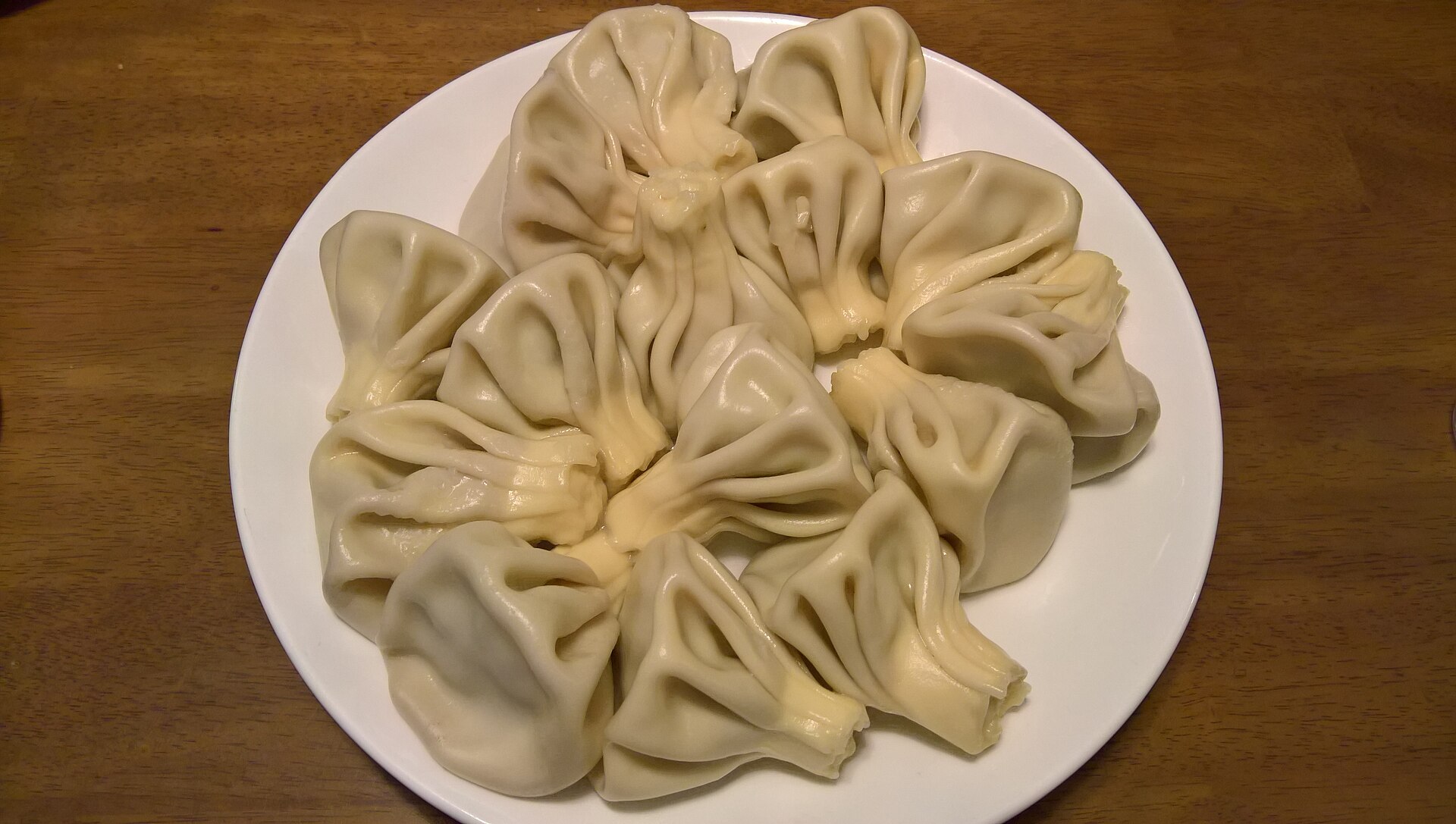
Khinkali are sold by the piece, with a minimum of 5 of one filling even if you're eating alone. Order in fives; after the first round, 6 or 8 is fine. Expect to pay about 2.40 to 3 GEL a piece, and 4 to 5 GEL for dambalkhacho, the ones filled with aged cheese. Eat them with your hands: hold the twisted top, bite a small hole in the side, drink the broth, then eat the rest. Leave the knot on the plate, because locals count the pile at the end to see who ate the most. A fork to hold the top is tolerated in the city; a knife is not. If you don't eat pork, ask what meat is inside, because menus often don't say. My picks for the best khinkali in Tbilisi are all places where the broth is the point.
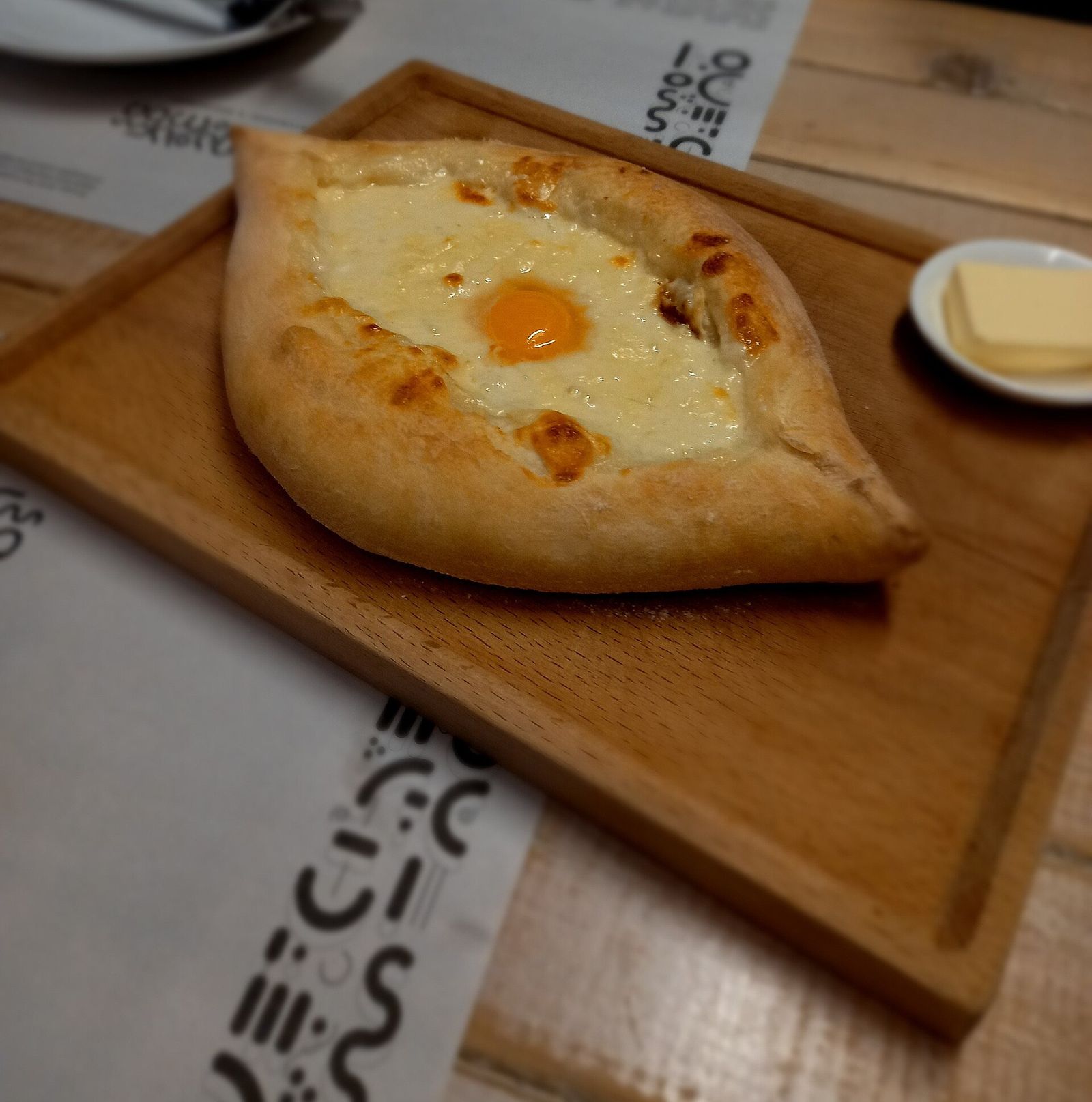
Khachapuri is a whole bread, not a side. One Adjaruli, the boat with molten cheese, a raw yolk and a knob of butter, feeds two people with a salad. Stir the egg and butter into the cheese, then tear off the crust at the ends and dip it in. Imeruli, the round, sealed one, is what Georgians eat most days, and the best khachapuri in Tbilisi is as likely to be an Imeruli from a bakery as an Adjaruli from a restaurant. Order one big bread dish a meal: khachapuri plus khinkali plus a bread basket plus fries is the classic tourist table, and half of it goes back.
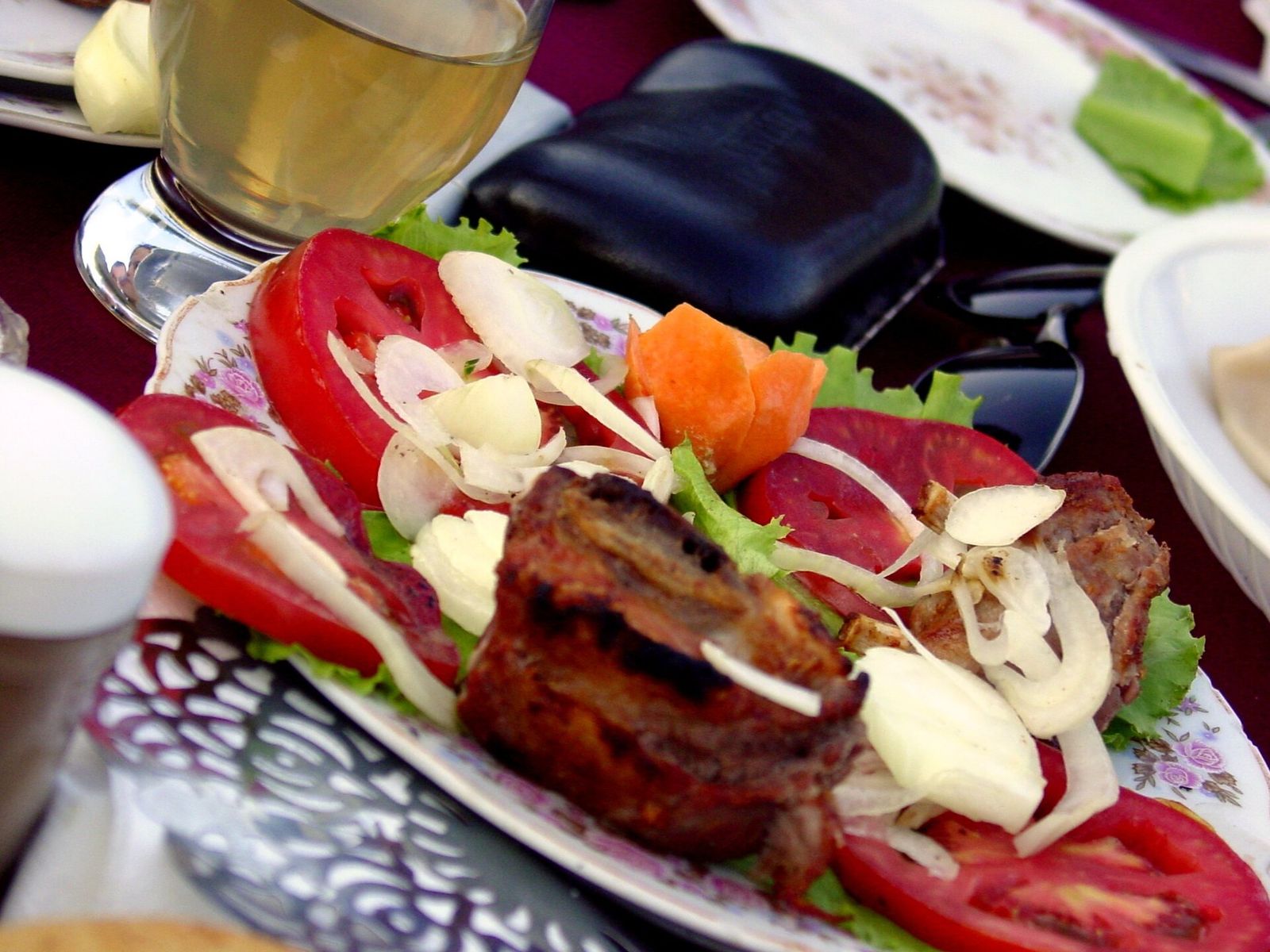
Mtsvadi, the grilled skewers, come as 4 to 6 chunks of meat with raw onion, and the tkemali (sour plum sauce) that makes them is ordered separately.
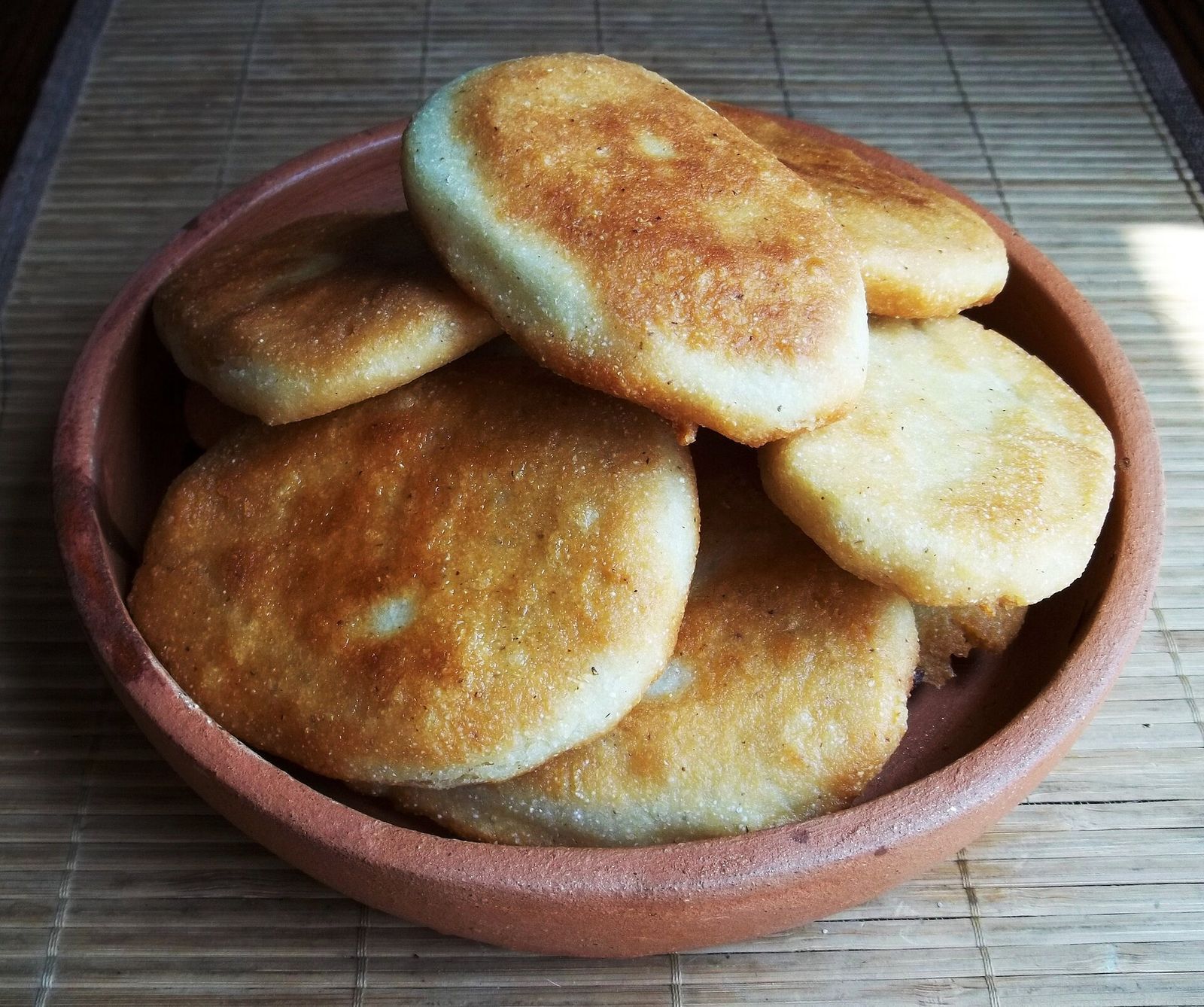
Mchadi, the dense cornbread that comes with lobio, is ordered by the piece.
Bread, water and the extras on your bill
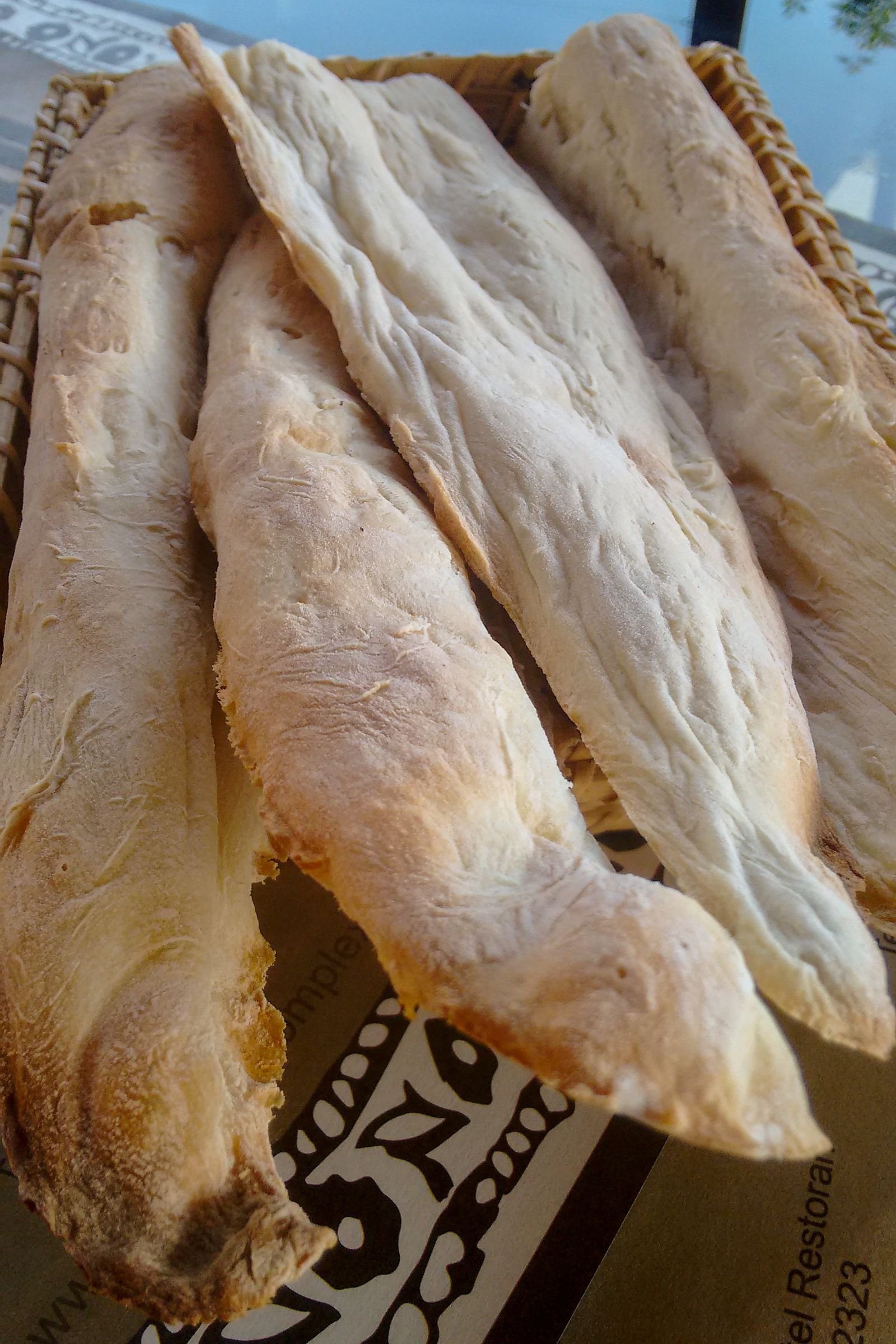
In most Georgian restaurants a basket of shotis puri, the long canoe-shaped bread from the clay oven, lands on the table with the first dishes and shows up on the bill at 1 to 2 GEL. If it doesn't arrive, ask: stews and lobio come without bread unless the menu says so.
Sides work the same way. Traditional dishes come as listed, so a plate of mtsvadi is meat and onion, and potatoes, fries and every sauce are extra. That's how the menu stays cheap and the bill grows.
For water, a jug of tap water is usually free if you ask, and Tbilisi's tap water is fine to drink. Bottled Borjomi or Nabeghlavi, the salty Georgian mineral waters, cost 2 to 5 GEL a bottle.
Drinks with a Georgian meal
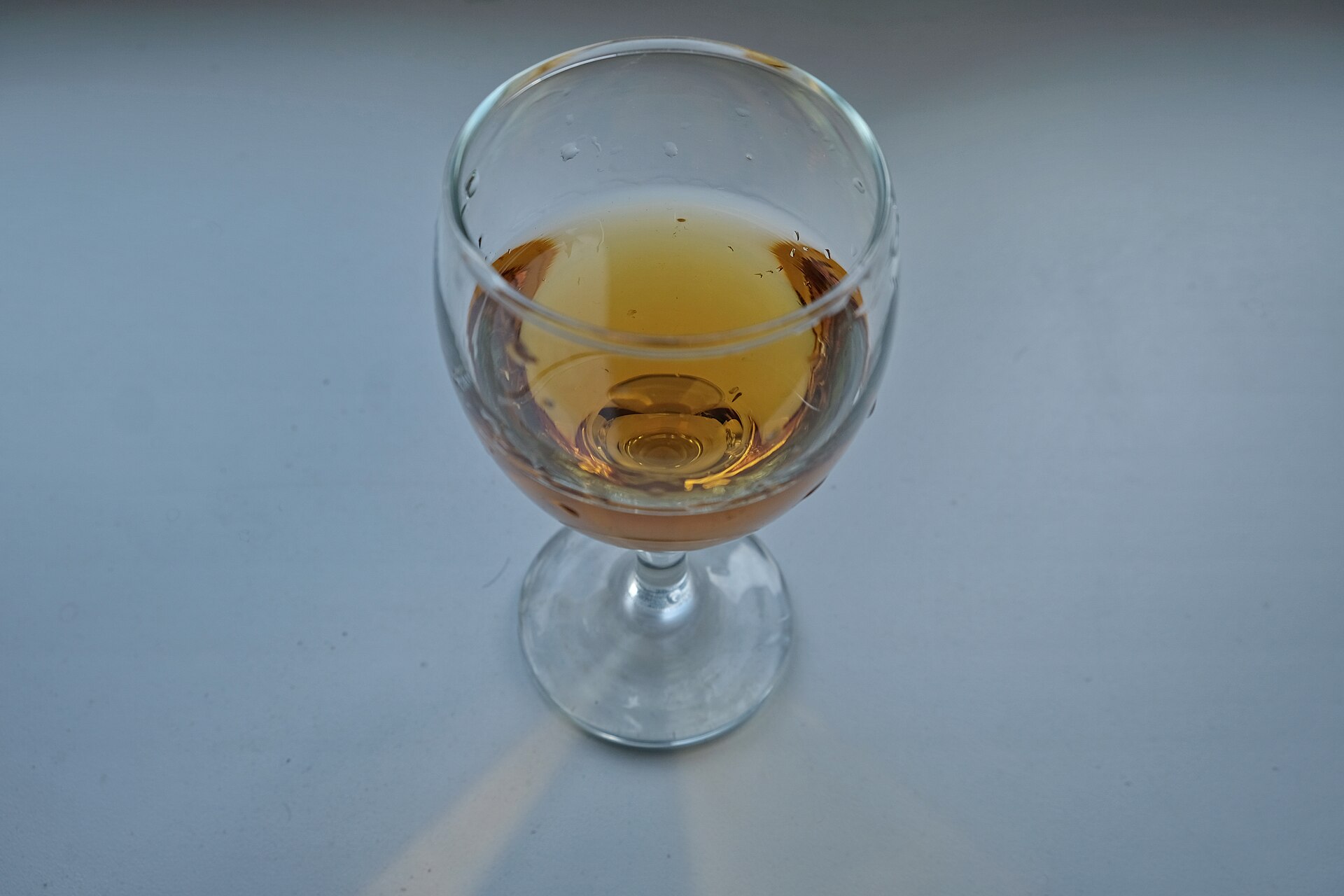
House wine comes by the glass or by the jug, from about 5 GEL a glass, and in a traditional restaurant it's usually the right call. Bottled wine by the glass runs 10 to 15 GEL. With khinkali, locals drink beer or a bottle of Lagidze lemonade (tarragon, pear or cream) rather than wine. With everything else, wine. Georgian wine is made in clay qvevri as well as steel tanks, and the amber qvevri whites are the ones I'd try first.
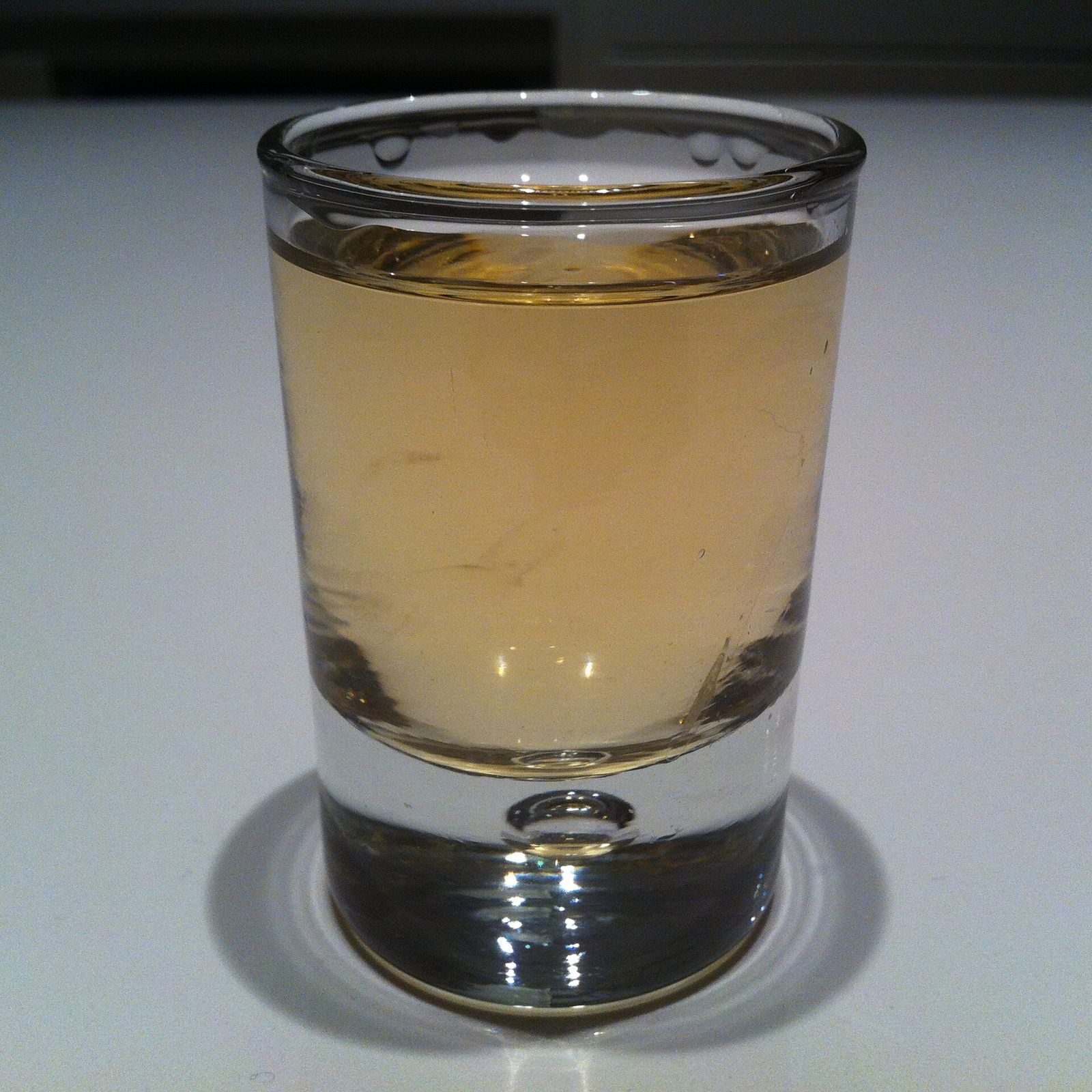
Chacha, the grape brandy, turns up at the end of a meal or with toasts. Commercial chacha is about 40%, and the homemade kind that a host pours you is stronger.
Toasts are part of eating out here. At a small table, a raised glass and "gaumarjos" (cheers) is all anyone expects. At a big Georgian table the toasts follow an order, led by a toastmaster called the tamada, and the Georgian supra runs on them; as a guest you drink when the toast is made, not whenever you like.
Five kinds of Tbilisi restaurant and how each one works
The rules shift a little with the room. A canteen wants cash and a quick order; a modern Georgian restaurant wants a booking; a folk-show restaurant wants a whole evening. Here's one of each that I'd send a first-timer to.
The canteen: Mapshalia
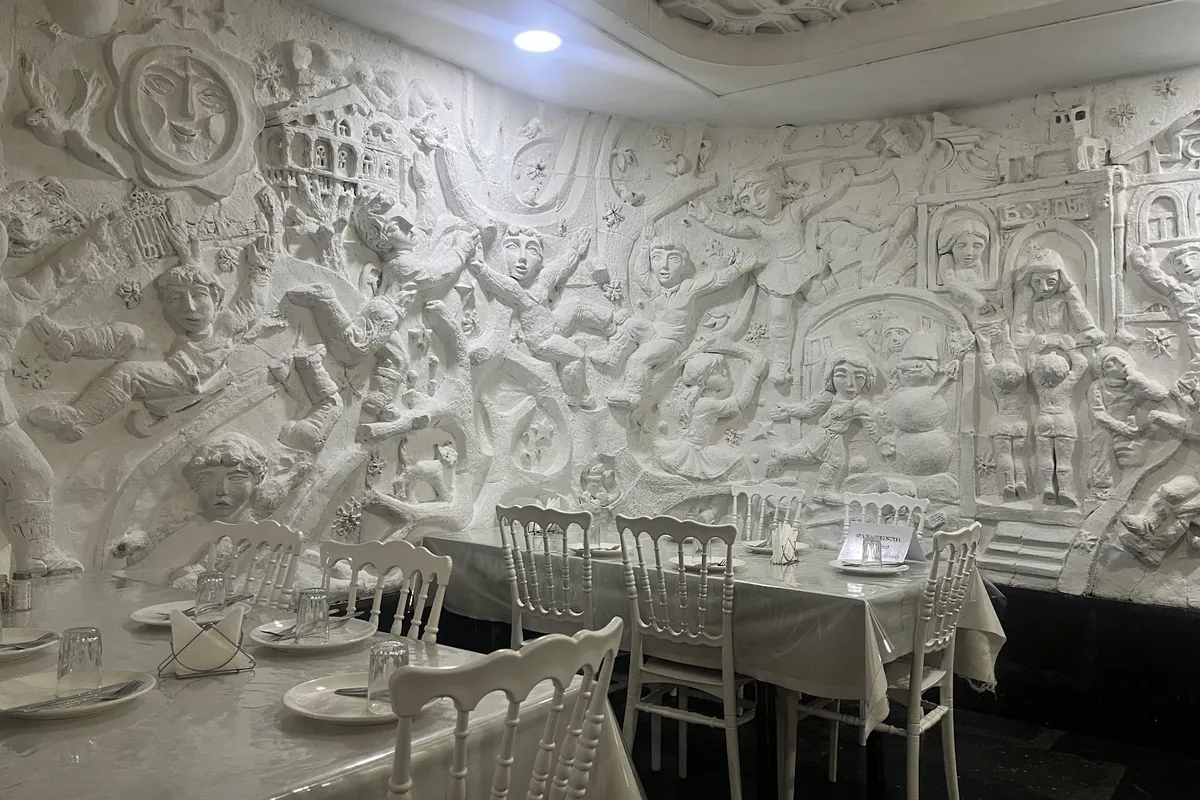
Mapshalia is a Megrelian canteen at 137 Aghmashenebeli Avenue, a few minutes' walk from Marjanishvili metro, and it's how a lot of Tbilisi eats on a weekday: fast, cheap and without ceremony. The menu is kharcho with elarji (cornmeal with cheese), lobio, mchadi, Megrelian khachapuri and kupati sausage, and lunch comes in under 20 GEL a head.
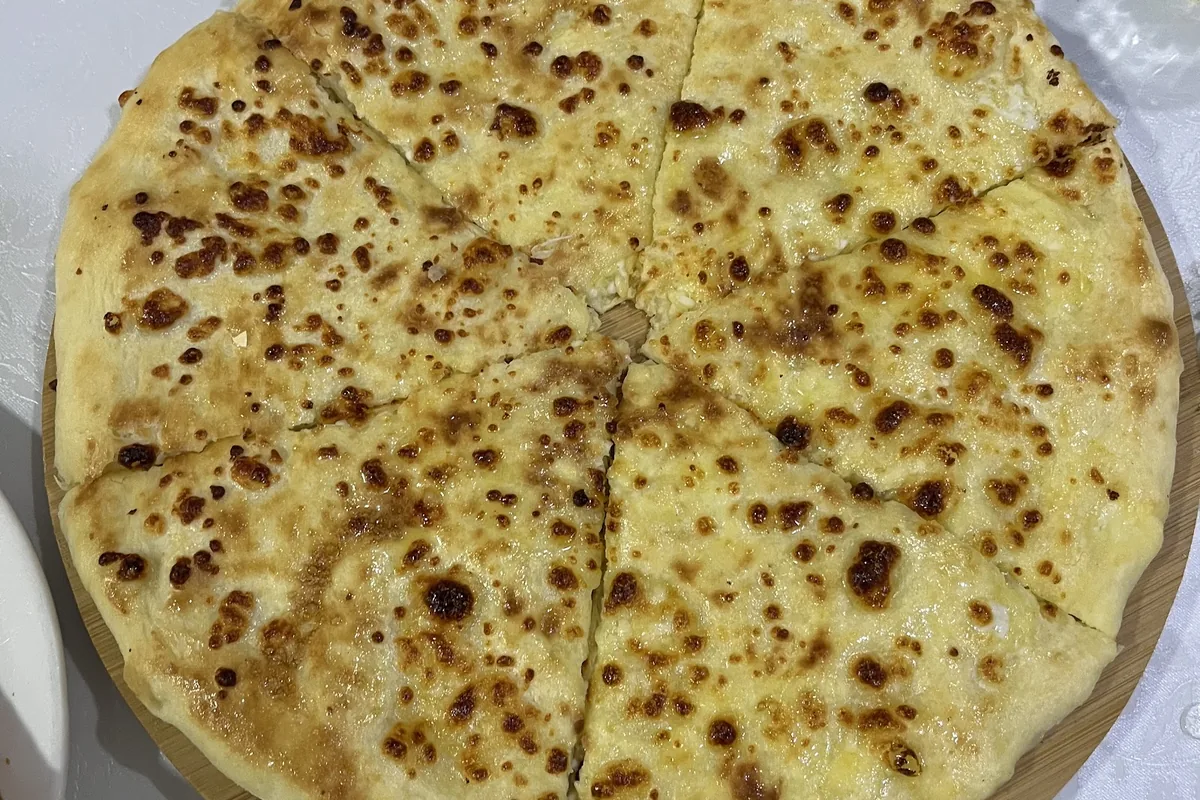
Canteen rules are simple. Order everything at once, eat, pay and go. Carry cash, because a canteen is one of the few places in town where cards can fail you, and come early or book, because it fills at lunch and dinner.
The classic Georgian restaurant: Salobie Bia
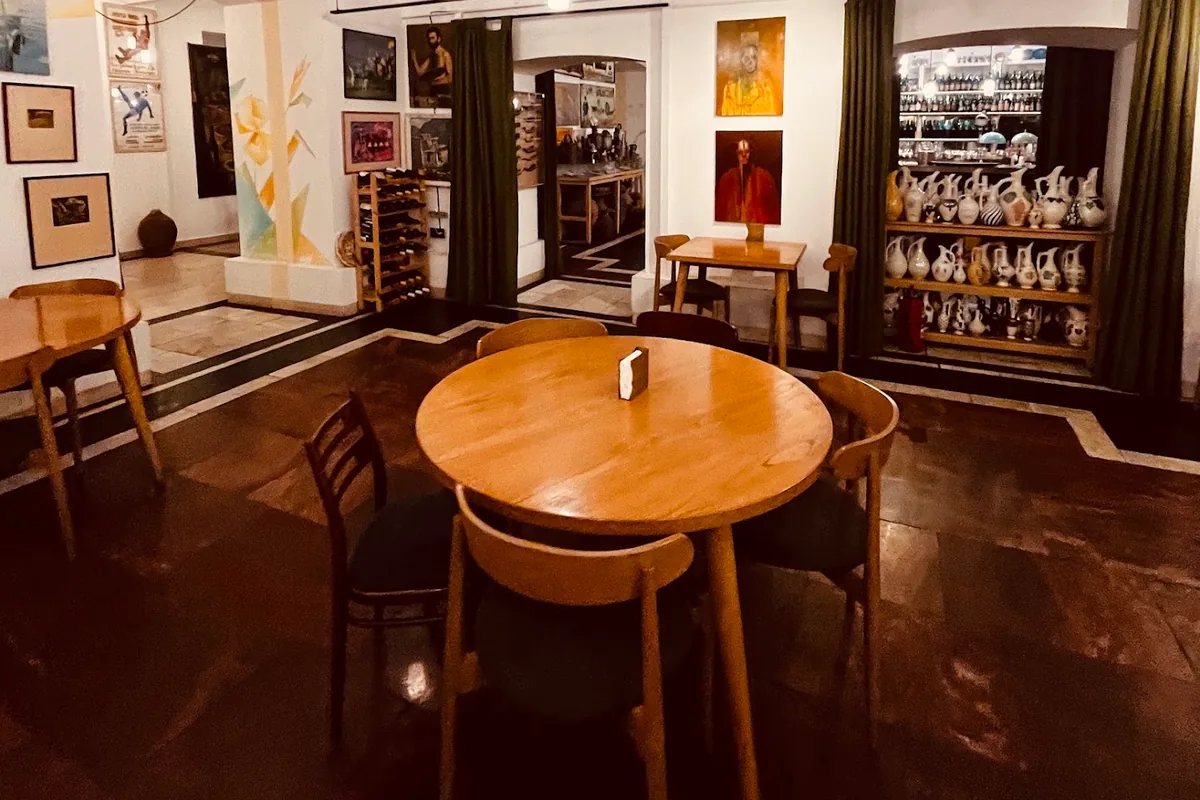
Salobie Bia sits at 17 Rustaveli Avenue, under the Rustaveli Theatre, and it's the calm, central Georgian restaurant I'd pick for a first dinner. It costs a little more than a neighborhood place, and in return it's quiet, easy to find and good at the basics.
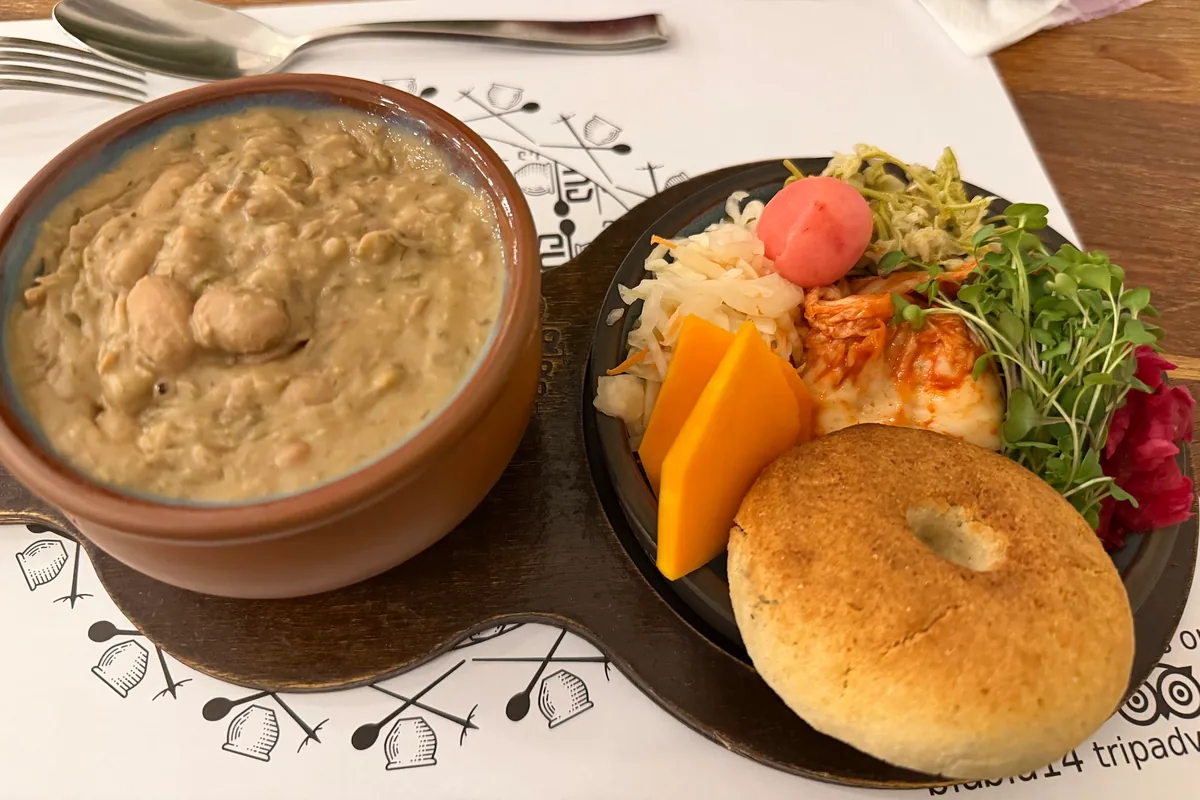
Order the lobio: kidney beans in a clay pot, served with pickles and mchadi, which is the dish this place is known for. Add the pickled mushrooms, kubdari (Svan bread stuffed with spiced meat) or lobiani, and ghomi with sulguni. It's a good table to practice ordering for the middle on.
The khinkali house that stays open late: Cafe Daphna
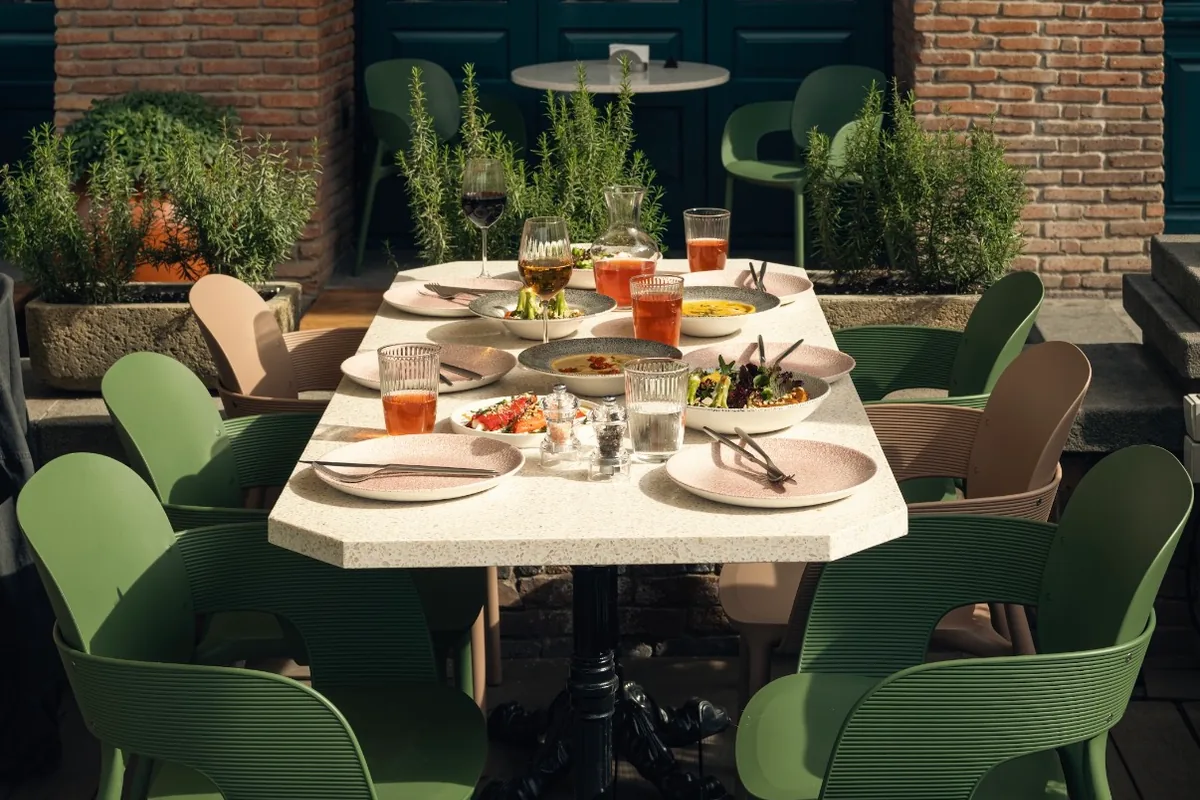
Cafe Daphna has two rooms: one at 29 Atoneli Street by the Dry Bridge, and one at 6 Samghebro Street by Meidan Square in the Old Town, which has the terrace. The khinkali are hand-made, in beef, potato and cheese, or spinach, and the Imeruli khachapuri is good. Expect 25 to 50 GEL a person.
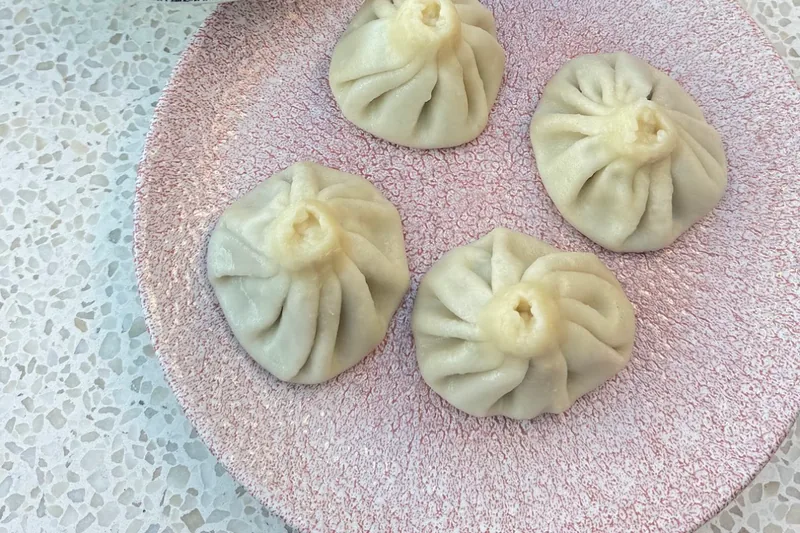
It's the place I'd send anyone nervous about the khinkali rules, because the staff happily show first-timers how to eat them. It also runs late, to 2:00 on weeknights and through the night at weekends, which makes it the answer when dinner turns into a long evening. Weeknights are calmer than Friday and Saturday.
The modern Georgian restaurant: Barbarestan
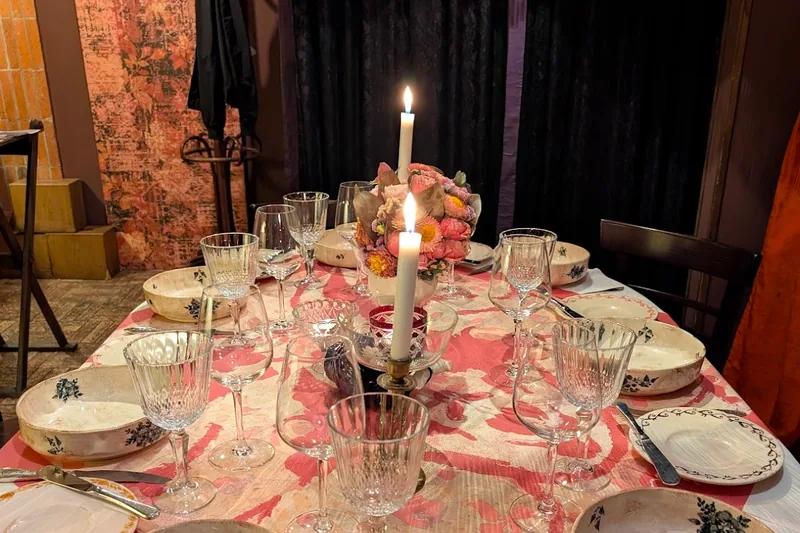
Barbarestan, at 132 Aghmashenebeli Avenue, cooks from a 19th-century Georgian cookbook: pumpkin patties, cherry soup with mint, rabbit wrapped in ham, chakapuli. It opens 14:00 to 23:00 and is full most nights, so book well ahead; it's the one restaurant on this list where walking in rarely works.
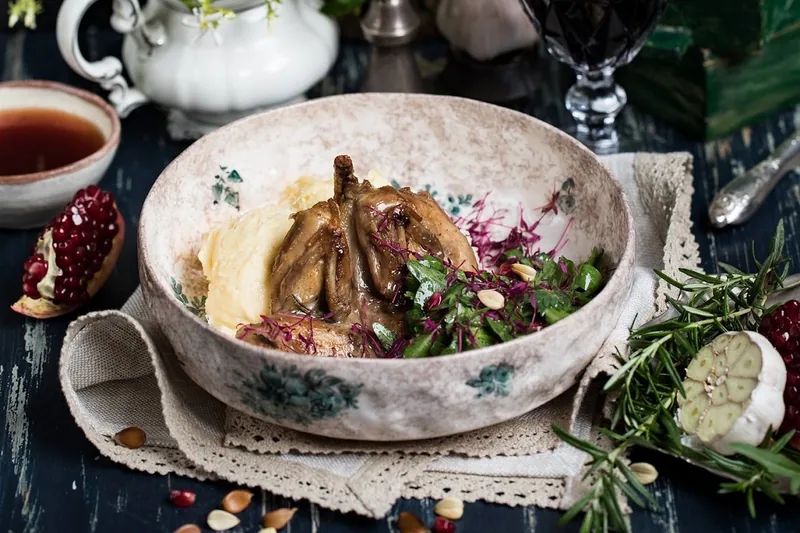
The drinks list is qvevri wine and no beer, and on Saturday evenings there's live Georgian music. Plan this one as your special-occasion dinner, dress a notch up from the canteen, and let the staff pick the wine.
The big night out: Ethno Tsiskvili
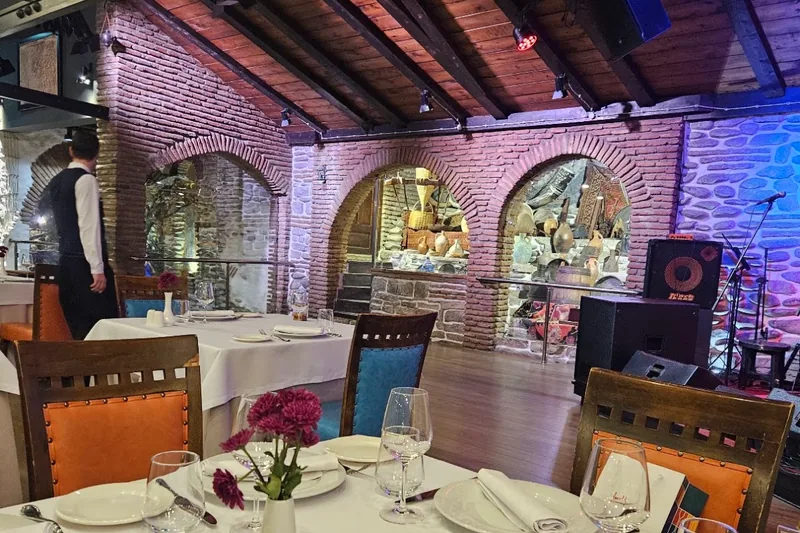
Ethno Tsiskvili, at 99 Akaki Beliashvili Street, is the full show: live music, dancing, a waterfall, and tonis puri baked in a clay oven by the entrance. It sits outside the center, so take a Bolt both ways, and book ahead, especially at weekends.
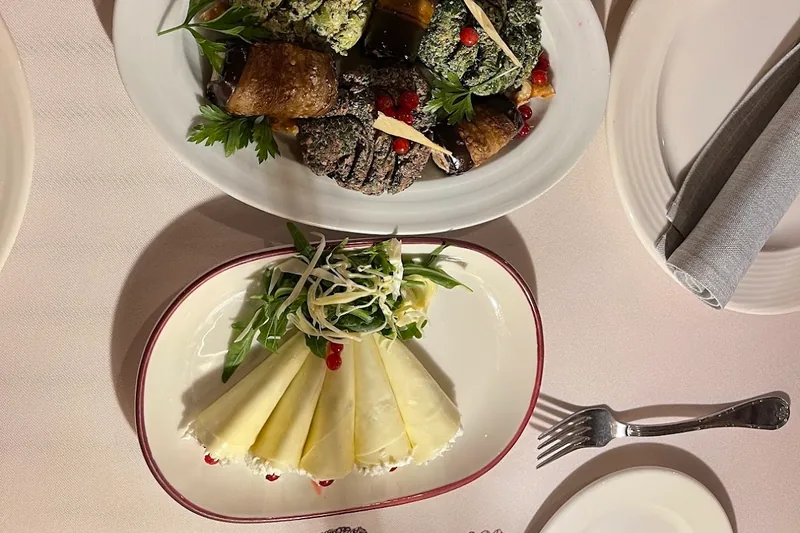
Order badrijani nigvzit, pork mtsvadi and lobiani, and settle in for the evening, because the performance is the point. It's the easiest way to hear Georgian folk music in Tbilisi with dinner, and the place I'd pick for a first-timer's big night out.
The service charge and paying the bill
The bill only comes when you ask for it. Catch the waiter's eye and say "angarishi", or mime writing on your palm; nobody will bring it unprompted, however long you sit.
Many Tbilisi bills add a service charge of 10%, sometimes 12 or 15%, labeled "service" or "momsakhureba", and sometimes printed small or only in Georgian. If it's on the bill, nothing more is expected. If it isn't, round up or leave about 10%. Card terminals rarely have a tip line, so a tip goes in cash on the table, and the full rules for tipping in Georgia are just as relaxed outside restaurants.
| On the bill | What it means | What to do |
|---|---|---|
| "Service 10%" or momsakhureba | Service charge already added | Pay the total; no extra tip |
| No service line | No service charge | Leave about 10%, in cash |
| Bread or puri | The basket that arrived | 1 to 2 GEL; normal |
| VAT 18% added at the end | Menu prices were before tax | Normal at a few places |
Cards and contactless work almost everywhere, from wine bars to khinkali houses. Carry some Georgian lari in small notes for canteens, bakeries, markets and tips. Splitting the bill item by item is unusual: one person pays, and Georgians will argue over who gets to.
Restaurant etiquette: the unwritten rules
Table manners are the friendly end of Georgian etiquette, and very little can go wrong. These are the few things to know.
- Don't rush. A Georgian dinner runs two hours or more, and the waiter leaves you alone until you ask for the bill.
- Eat khinkali with your hands. A knife and fork marks you as new; leaving the knots on the plate is correct.
- Expect smoke on the terrace. Smoking is banned indoors, so terraces and courtyards are where people smoke; pick an inside table if it bothers you.
- Ask for a box. Packing up leftovers is normal at every kind of restaurant.
- Let a Georgian host pay. If you're invited out, you'll rarely win the argument over the bill, so say madloba and pay next time.
- Eat a block or two off the main strips. The same dishes on the busiest tourist streets of the Old Town, Vera and around Vake Park can cost 20 to 40% more than in a neighborhood place nearby.
Cheap eats, business lunches and delivery
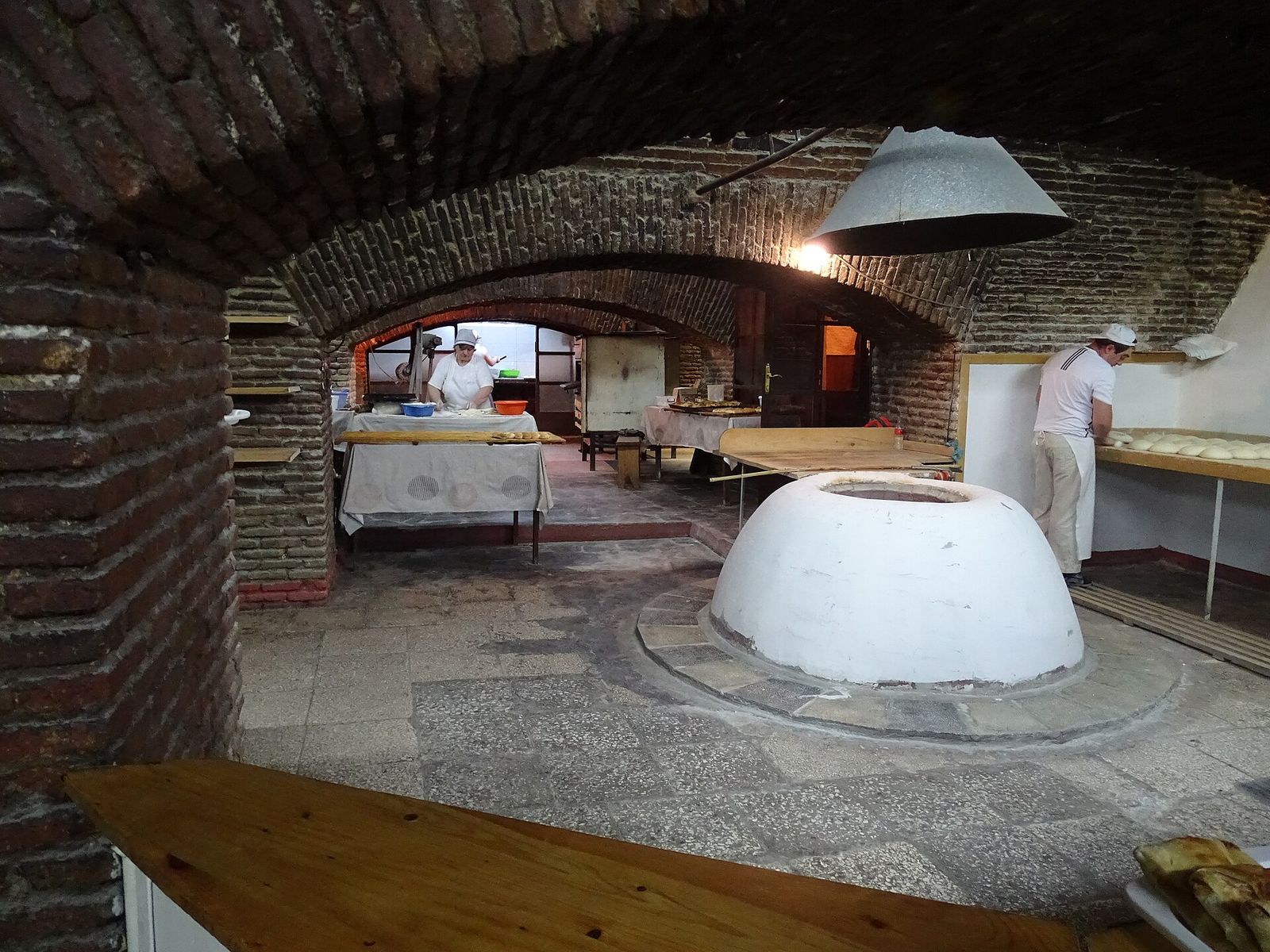
Eating out on a budget in Tbilisi is easy. The tone bakeries in every neighborhood sell khachapuri and lobiani at 3 to 8 GEL and a fresh shotis puri for 1 to 2 GEL, and the street food in Tbilisi beyond the bakeries is just as cheap. On weekdays, many restaurants serve a business lunch from about 12:00 to 15:00 for 12 to 20 GEL, which is the cheapest way to eat at a proper table.
For delivery, Wolt and Glovo cover the city. Wolt takes cards only and charges about 1.99 to 4.99 GEL a delivery; Glovo takes cards or cash and charges about 2 to 5 GEL. Prices in the apps run 10 to 20% above what the same restaurant charges at the table.
Eating vegetarian or vegan
Georgian food is easy on vegetarians. Pkhali, badrijani nigvzit, lobio, ajapsandali (a summer stew of eggplant, tomato and pepper), mchadi and mushroom khinkali are on most menus, and many are vegan as well. Ask about butter in the lobio and ajapsandali, and remember khachapuri is cheese and butter by design.
Some restaurants have a fasting menu, samarkhvo, for the Orthodox fasts, which skips meat, dairy and eggs; dairy can still slip in, so ask if it matters. Dedicated vegan restaurants cluster in Vera and Vake, so vegetarian and vegan eating in Tbilisi goes well past the Georgian classics.
Key takeaways
- Order a spread for the table and share it: cold dishes first, hot dishes 20 to 30 minutes later, one big bread dish a meal.
- Bread, sauces and sides are charged separately, so the bill runs a little above the menu prices.
- Check the bill for a 10% service line; if it's there, don't tip on top, and if not, leave about 10% in cash.
- Eat dinner at 20:00 or later, book modern restaurants and weekend nights, and walk in everywhere else.
- Budget 60 to 80 GEL for a mid-range dinner for two, nearer 100 with wine.
Frequently asked questions
Do you tip in restaurants in Tbilisi?
Yes, but only when there's no service charge on the bill. Many bills add 10%, and then nothing more is expected; if there's no service line, round up or leave about 10% in cash.
Is a service charge included in Tbilisi restaurants?
Often, yes. Many restaurants add 10%, sometimes 12 or 15%, labeled "service" or "momsakhureba" on the bill. Canteens, bakeries and counter cafes usually don't.
Do I need to book restaurants in Tbilisi?
Only for modern Georgian restaurants, special-occasion places and popular spots on Friday and Saturday nights. Traditional and casual restaurants are walk-in, and an Instagram or WhatsApp message is the quickest way to book.
What time do people eat dinner in Tbilisi?
Locals sit down for dinner at 20:00 to 21:00, and restaurants fill up after 21:00. Lunch is usually between 13:00 and 15:00.
How much does dinner cost in Tbilisi?
A mid-range dinner for two costs 60 to 80 GEL, or nearer 100 GEL with wine. A canteen meal for two is about 40 GEL, and the top restaurants run 150 GEL and up for two.
How do you ask for the bill in Georgian?
Say "angarishi", which means the bill, or catch the waiter's eye and mime writing on your palm. The bill never comes until you ask for it.
Are restaurant menus in English in Tbilisi?
Yes, in almost every restaurant in the center, and many have photos too. The exceptions are old canteens, where the menu may be a chalkboard in Georgian only.
Can you pay by card in Tbilisi restaurants?
Yes, cards and contactless work almost everywhere. Carry some cash for canteens, bakeries and markets, and for tips, since card terminals rarely have a tip line.
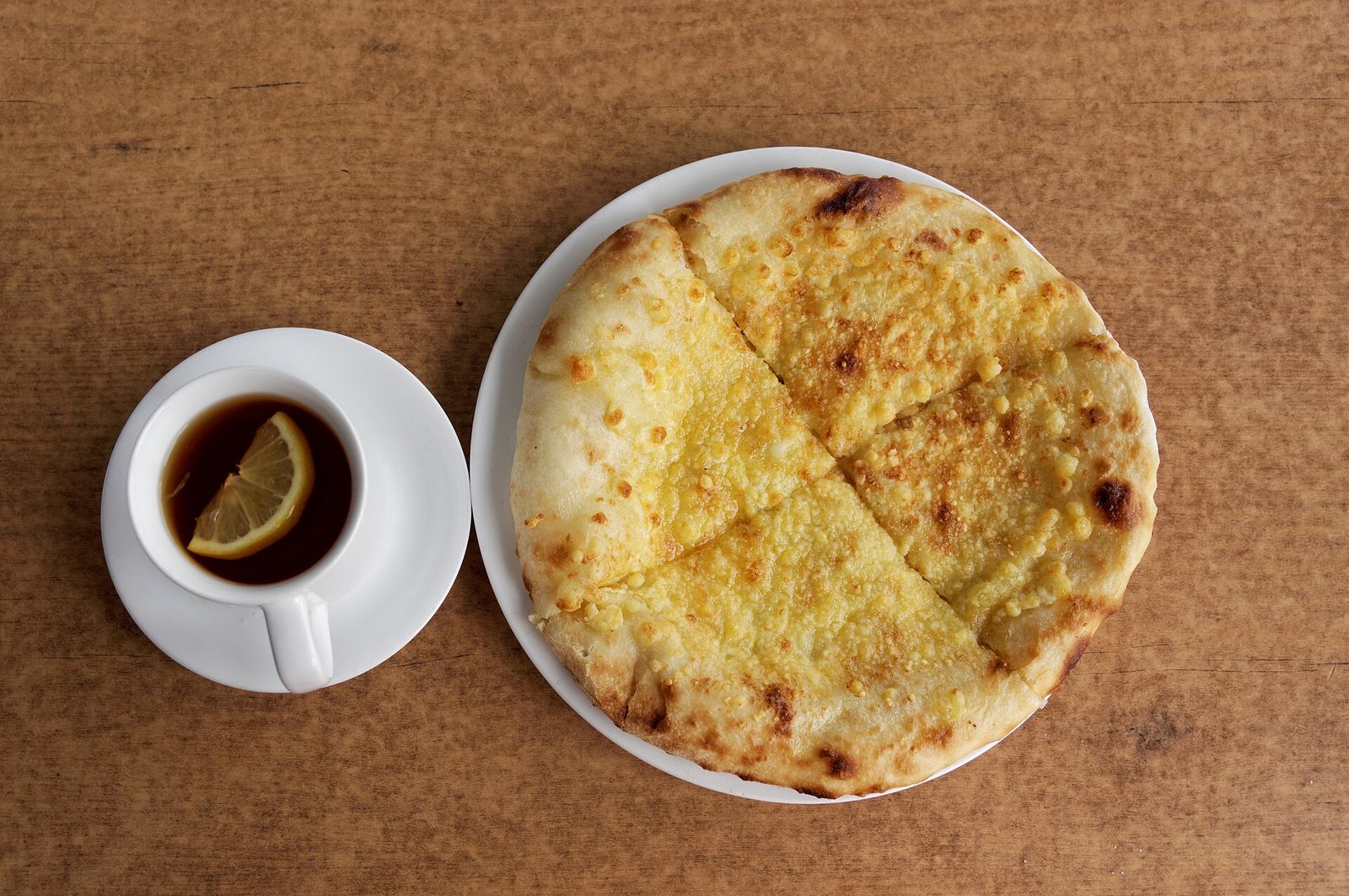
Tbilisi Food Guide: What to Eat, Where to Eat It and What It Costs
Tbilisi is known for khinkali and khachapuri. Here's my food guide: what to eat, where to find it and what it costs.
Read the guide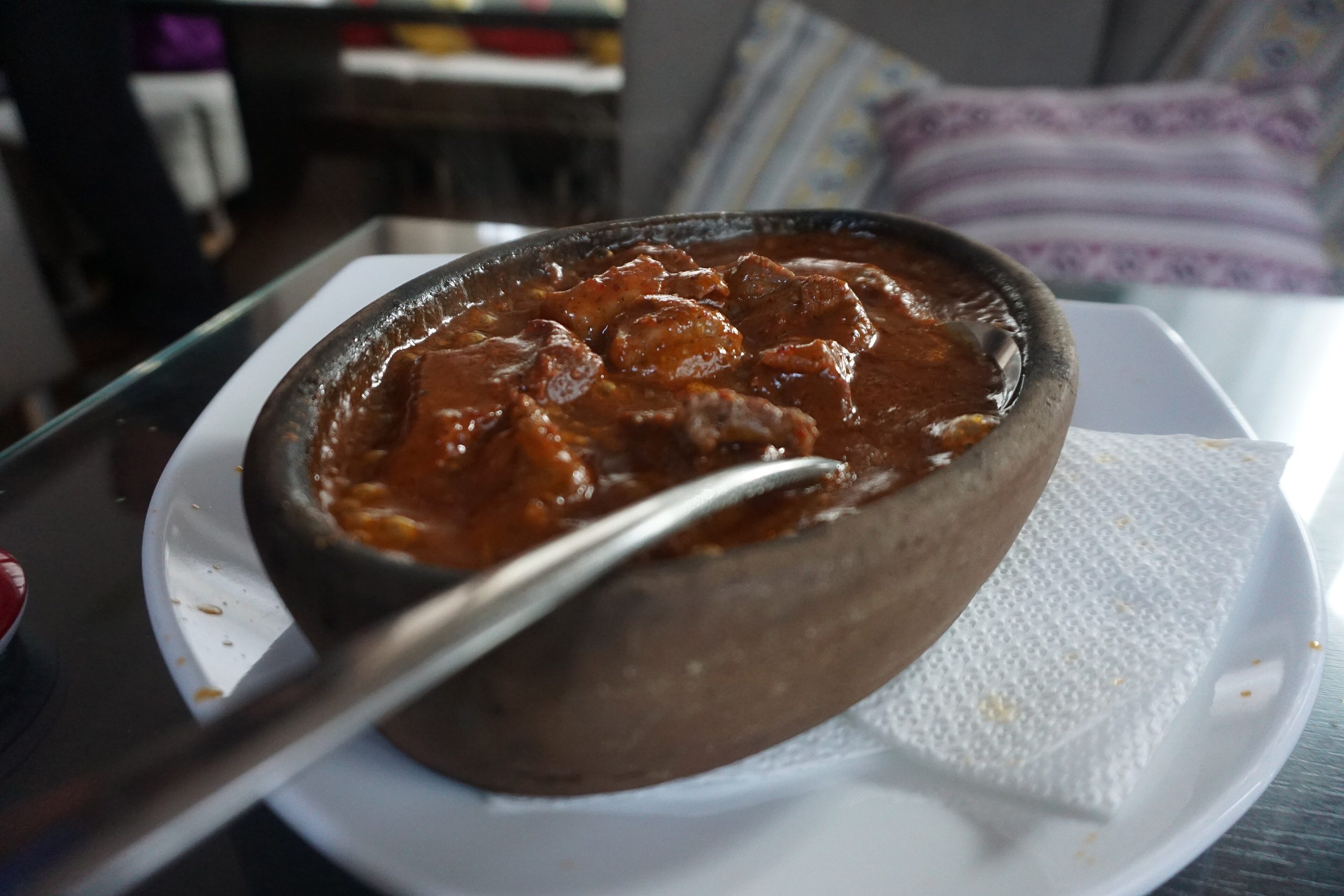
Georgian Food: The Dishes to Try in Tbilisi
Georgia is known for khachapuri and khinkali. Here is what else to order, what it costs and where to eat it in Tbilisi.
Read the guide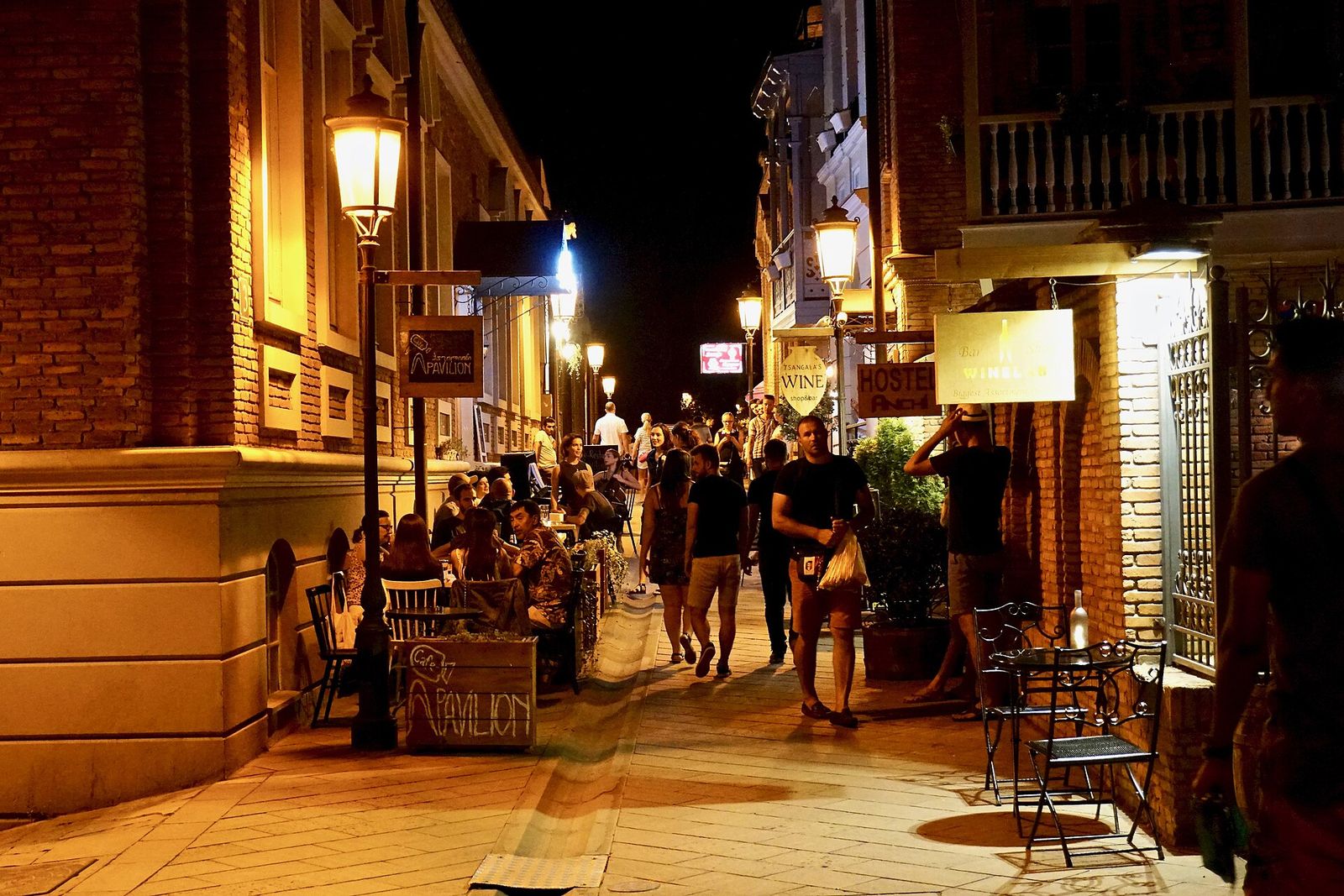
The Best Restaurants in Tbilisi
Tbilisi is known for khinkali and khachapuri. Here are the restaurants I pick, what dinner costs and how to order.
Read the guide