Dezerter Bazaar, Tbilisi: What to Buy, Prices and Hours
Dezerter Bazaar is Tbilisi's central food market, a sprawl of covered halls and street stalls beside the railway station where the city buys its cheese, spices, fruit and meat. It's free to wander, cheap, loud and almost entirely local. Here's what you need to know about the hours, the layout, what to buy and what it costs, and how to shop it with cash in hand.
What is Dezerter Bazaar?

Dezerter Bazaar is the biggest food market in Tbilisi and the one locals actually shop at. It covers several blocks between Station Square and the Dinamo stadium: a covered market of about 2,000 square meters, plus the streets and alleys around it, mostly Tsinamdzghvrishvili and Abastumani streets, lined with outdoor stalls. There's no single main entrance. You walk in from whichever side you arrive on, and the market closes in around you.
You'll also hear it called Station Square Market, Vagzlis Bazroba (the railway station market) or the Deserters' Market. They're all the same place, and any of those names works in a taxi app.
I send everyone here who asks where to see everyday Tbilisi. It isn't polished and it isn't built for visitors, which is the appeal: the cheese is cheaper than anywhere in the center, churchkhela costs a fraction of the Old Town price, and you'll hear more haggling over tomatoes in an hour than in a week on Shardeni Street.
Why is it called Dezerter Bazaar?
The name means the Deserters' Market, Dezertirebis Bazari in Georgian, and the usual story goes back to the early 1920s. In the chaos around the Soviet takeover of Georgia in 1921, soldiers who had deserted their units sold rifles, uniforms and kit to whoever would pay, right here beside the railway station, where trains brought people and goods in from every direction.
Nobody wrote that trade down properly, so treat it as the story the city tells about itself rather than documented fact. What came next is clearer. As the deserters drifted away, farmers from the villages around Tbilisi took over the pitches and brought their surplus produce into town. The market grew from there into the halls you walk through today, and the name never left.
Dezerter Bazaar opening hours and the best time to go
The market is open every day, from about 07:00 to 17:00. Those are the market's hours rather than every stall's: each trader sets their own, the first trucks unload at dawn, and most vendors start packing up between 16:00 and 17:00. A few stalls hang on until 18:00, but anything after 15:00 means picked-over tables and half the cheese counters closed.
| When you arrive | What you get |
|---|---|
| 07:00 to 09:00 | The freshest produce coming off the trucks, few shoppers, vendors with time to chat |
| 08:00 to 11:00 | Every stall open and fully stocked; the best all-round slot |
| 11:00 to 14:00 | Busier, still well stocked, good for a market lunch |
| After 15:00 | Stalls packing up, the best cheese and herbs gone |
Saturday is the busiest day, when half the city does its weekly shop and the covered hall is shoulder to shoulder. A weekday morning is calmer, the vendors are chattier, and it's much easier to stop, taste and compare three cheese counters before you buy.
How to get to Dezerter Bazaar
The market is north of the center, right beside Tbilisi's Central Railway Station. Station Square is the one interchange on the Tbilisi metro, so both lines stop there, and a ride costs 1 GEL on a Metromoney card. Come out of the station, follow the people carrying empty shopping bags, and the first stalls start within 5 minutes.
| From | Best way | Time or cost |
|---|---|---|
| Anywhere on the metro | Ride to Station Square, walk north | 3 to 5 minutes on foot, 1 GEL ride |
| Marjanishvili | Walk | About 15 minutes |
| Freedom Square | Walk across the river to Marjanishvili, then along Aghmashenebeli Avenue | 25 to 30 minutes |
| Old Town | Bolt or another taxi app | 4 to 7 GEL |
| Rustaveli Avenue | Bolt or another taxi app | 5 to 8 GEL |
If you're staying in Marjanishvili and Chughureti, walk. It's a straight 15 minutes, and you pass the restored stretch of Aghmashenebeli Avenue on the way. From the Old Town I'd take the metro from Liberty Square, which beats a taxi stuck in morning traffic on the embankment.
What's where inside Dezerter Bazaar
The layout confuses everyone on a first visit, because there's no front door and no map at the gate. It sorts itself into four areas.
| Area | What's there | Who it's for |
|---|---|---|
| Outer streets and alleys | The cheapest seasonal fruit, vegetables, herbs and walnuts | Everyone; start here |
| Covered central hall | Cheese, matsoni, butter, spices, nuts, dried fruit, churchkhela, pickles | Visitors; the best part for buying and photos |
| Fish section, at the back | Trout, carp and Black Sea fish | Mostly locals |
| Meat section, at the far end | Butchers' counters, with meat hanging in the open | Locals; skip it if raw meat bothers you |
My route: walk the outdoor lanes on Tsinamdzghvrishvili Street first, while the produce is fresh, then head into the covered hall for cheese, spices and churchkhela, and leave the meat and fish for the end, once you've bought what you came for. At an easy pace with stops to taste, that's about an hour.
Most of the food tours in Tbilisi start their morning in these halls, and a guide who knows the stallholders gets you tastes of things you wouldn't think to ask for.
What to buy at Dezerter Bazaar, with prices
Prices aren't posted on a board, they move with the stall and the season, and nobody publishes a list. These are the 2026 ranges I'd expect to pay, and they're a useful check before you hand over cash.
| What | Typical price | Good for |
|---|---|---|
| Khmeli suneli spice blend | 3 to 5 GEL a 100 g bag | Cooking at home |
| Svan salt | 5 to 8 GEL a 100 g bag | The best edible souvenir |
| Utskho suneli (blue fenugreek) | 2 to 4 GEL a 100 g bag | Cooking at home |
| Ground marigold | 2 to 3 GEL a 100 g bag | Cooking at home |
| Sulguni cheese | 12 to 18 GEL a kilo | Eating during the trip |
| Imeruli cheese | 10 to 15 GEL a kilo | Eating during the trip |
| Matsoni yogurt | 4 to 6 GEL a jar | Breakfast |
| Churchkhela | 3 to 8 GEL a string | Gifts and the flight home |
| Tklapi (fruit leather) | 2 to 4 GEL a sheet | A cheap extra |
| Tkemali or adjika | 3 to 8 GEL a jar | Home cooks |
| Mountain honey | 15 to 30 GEL a kilo | Gifts |
| Homemade wine | 10 to 20 GEL a liter | Drinking during the trip |
Spices and Svan salt
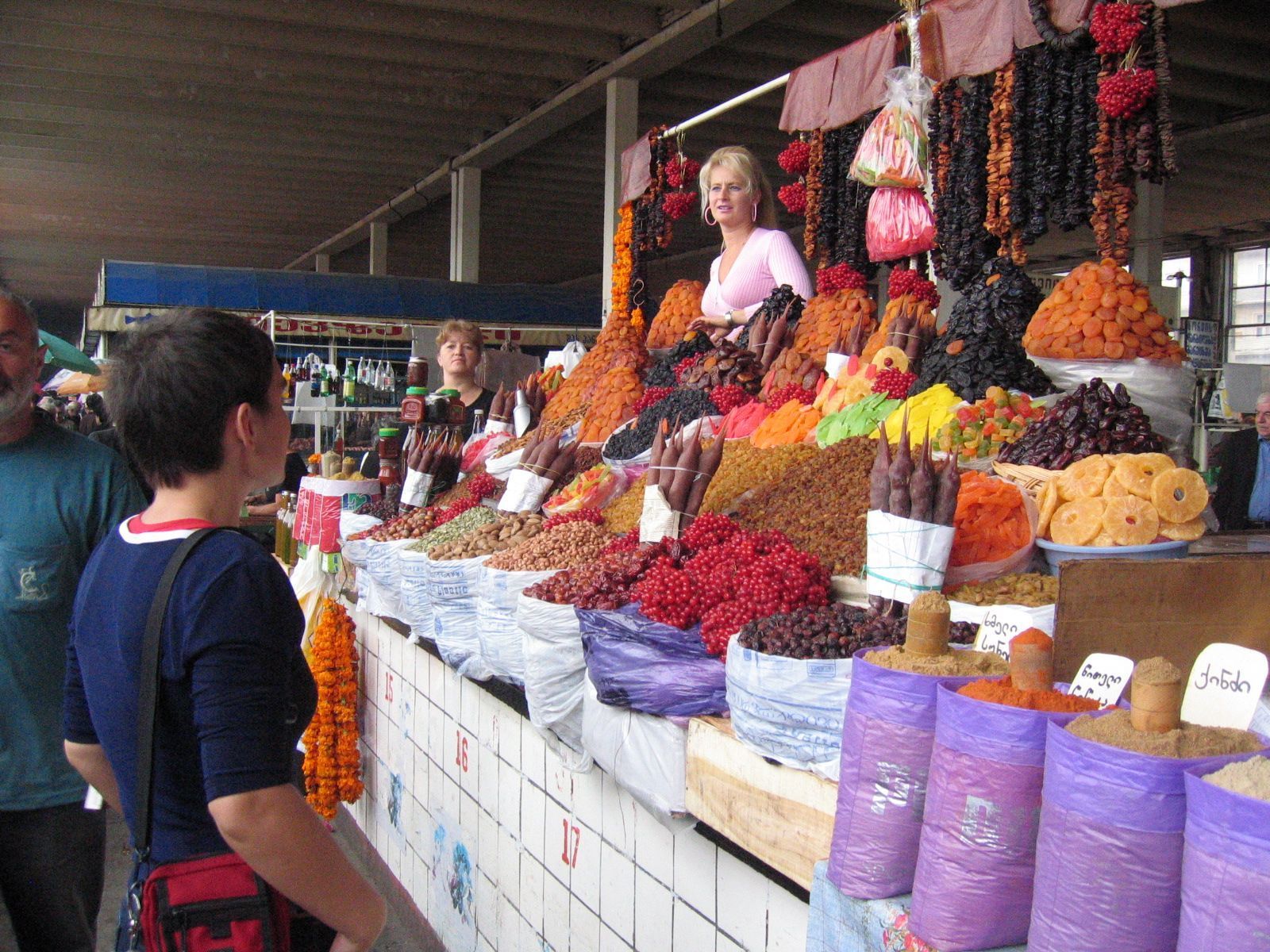
The spice stalls are the reason most visitors come, and they're the best value in the market. Look for the mounds of khmeli suneli, the herb and spice blend that goes into kharcho and most stews; utskho suneli, blue fenugreek, nutty and very Georgian; ground marigold, which colors and flavors walnut sauces like satsivi; and red and green adjika, the chili paste.
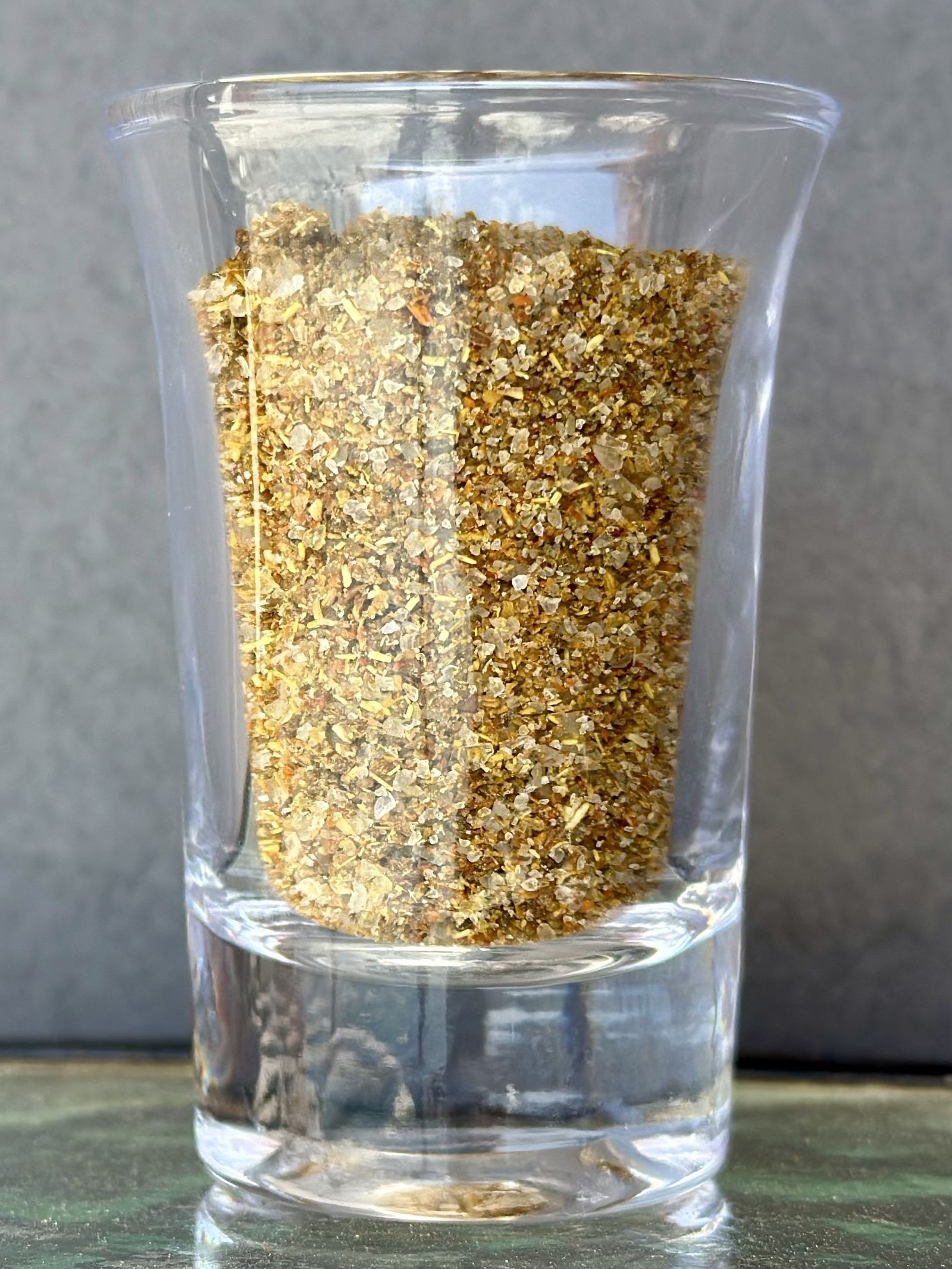
Svan salt, from the mountains of Svaneti, is coarse salt ground with garlic and spices, and it's the one thing I buy every visit: light, cheap and good on everything from eggs to tomatoes.
Cheese and dairy
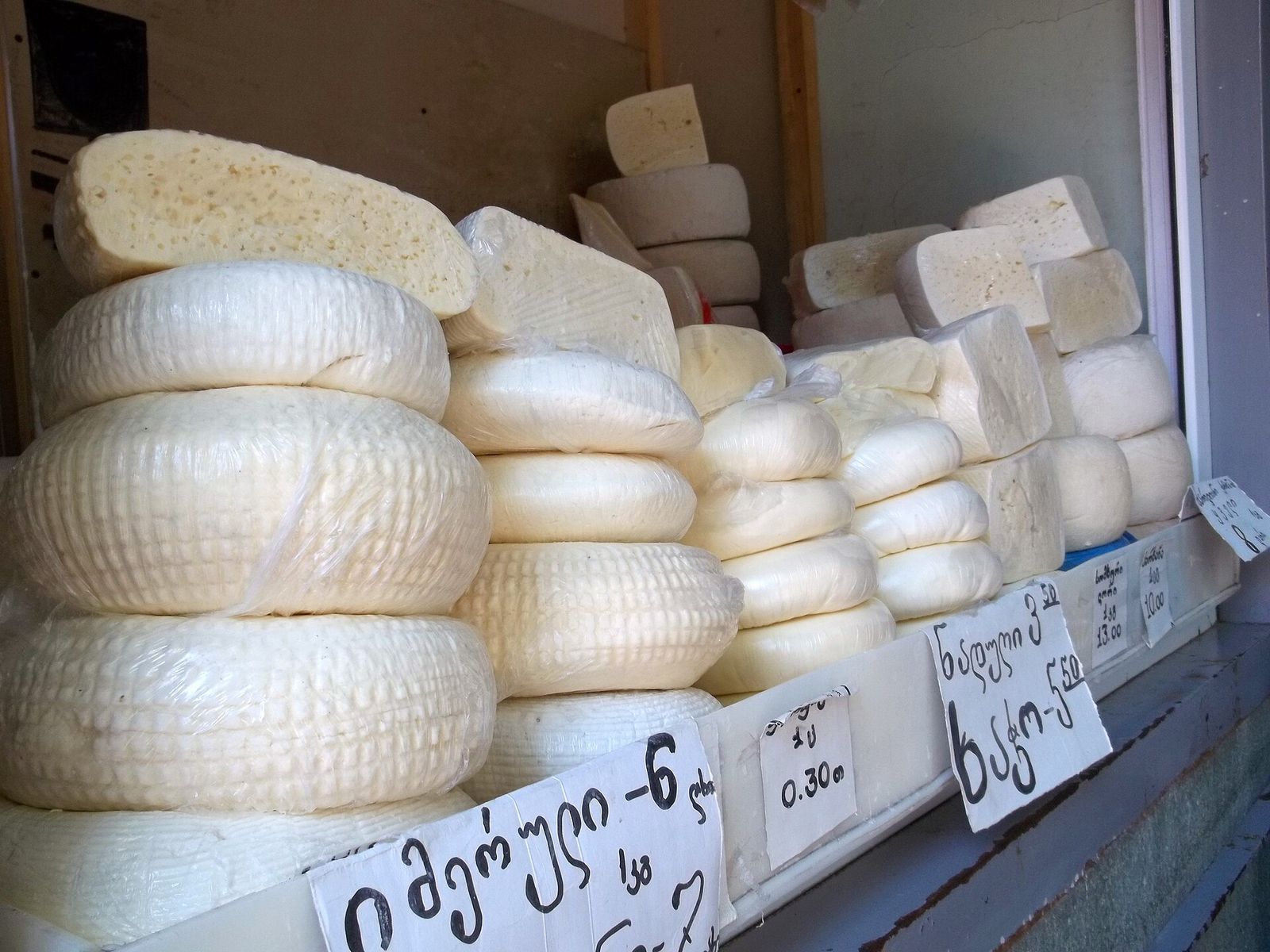
The cheese counters fill the middle of the covered hall. Sulguni is the stretchy, salty one, sold plain or smoked, and the smoked costs a little more. Imeruli is the soft, fresh cheese baked into most khachapuri, nadughi is a soft whey cheese, and matsoni is the thick, tangy yogurt that every Georgian grandmother swears by. Most stalls also sell homemade butter in blocks, sour cream and cottage cheese.
Many sellers will cut you a sliver to taste, and it's how you tell a good sulguni from a rubbery one. Cheese is the one thing here I'd eat rather than pack: buy 200 g for a picnic, and leave the souvenir shopping to the dry goods.
Churchkhela, tklapi and nuts
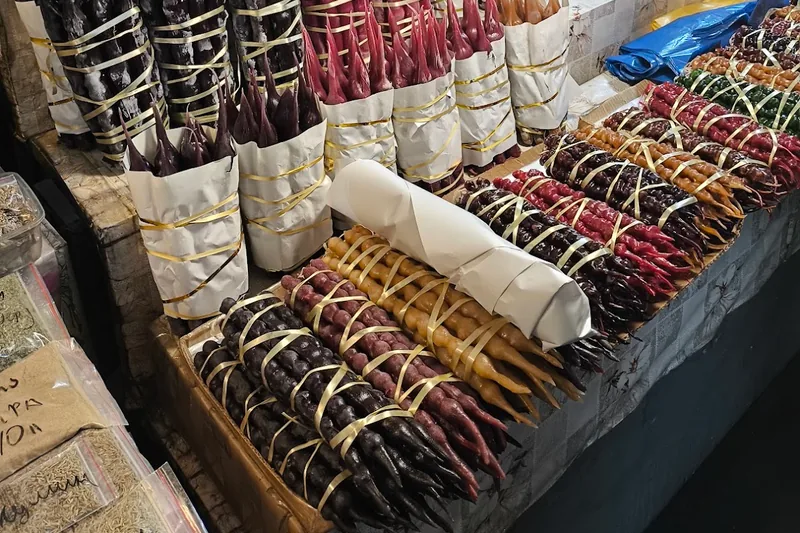
Churchkhela hangs in long, colored strings at half the stalls in the hall: walnuts or hazelnuts threaded on string and dipped again and again in thickened grape must, then dried. A string costs 3 to 8 GEL depending on size, well below the souvenir stalls on the tourist lanes. It's the Georgian sweet I pack most often, because it keeps well and survives a suitcase.
Not all of it is made the traditional way, though. Some is dipped in sugar syrup instead of grape must, so taste before you pay: good churchkhela is chewy, soft and fruity, while rock-hard or gummy usually means the sugar version.
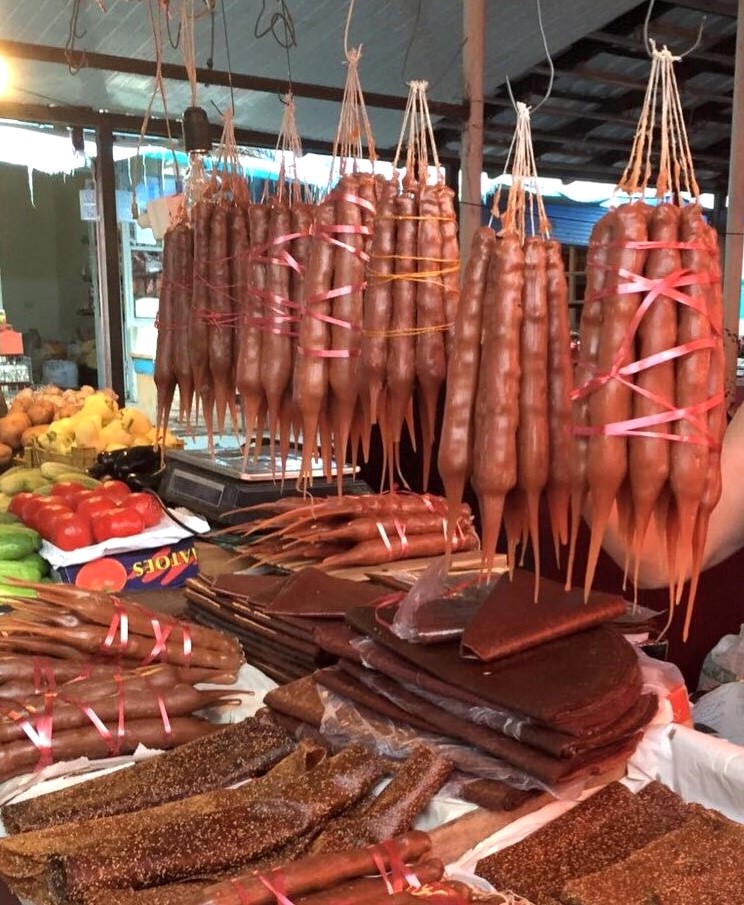
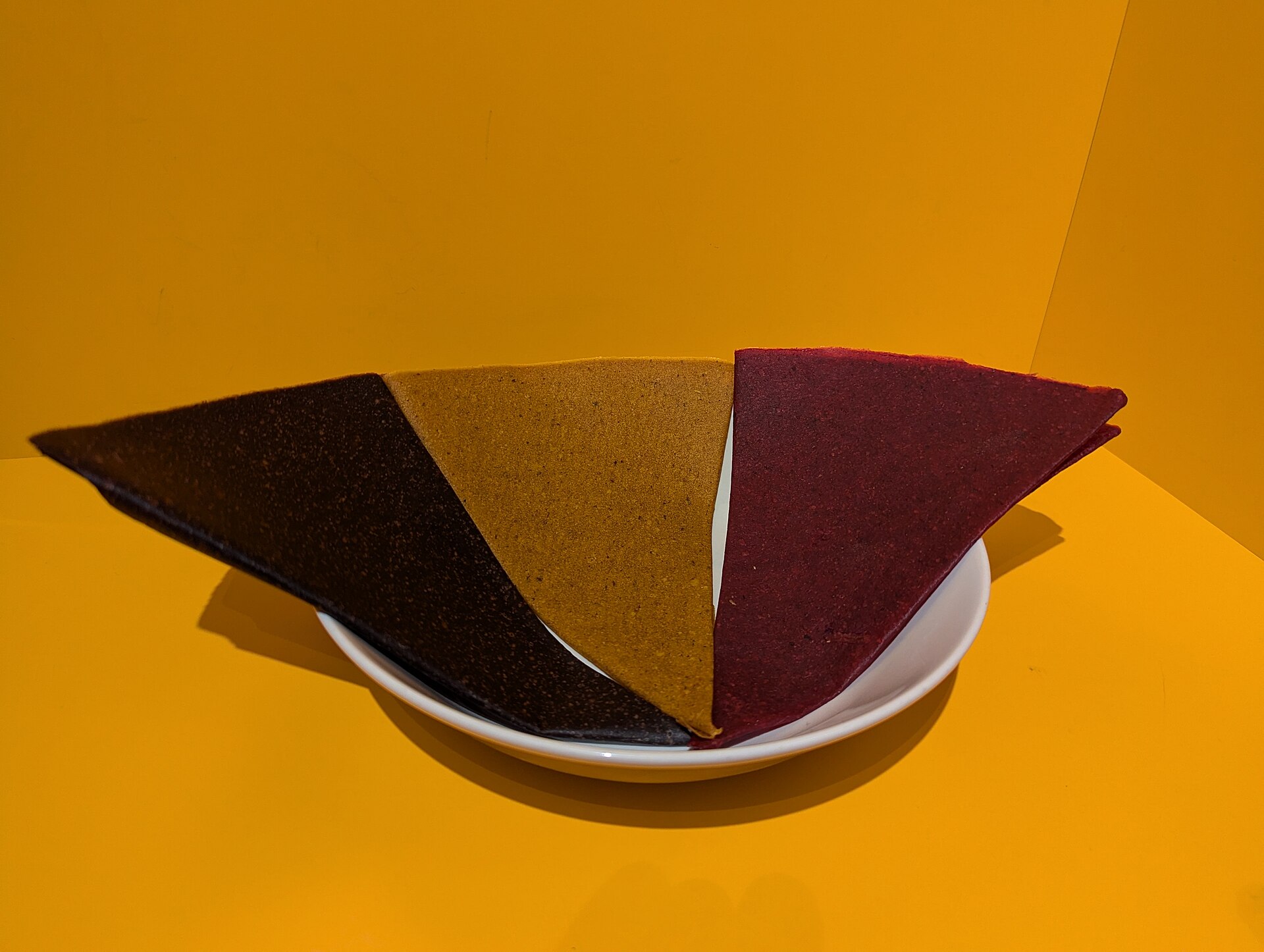
Next to the churchkhela you'll find tklapi, thin sheets of fruit leather made from plums or other fruit, at 2 to 4 GEL a sheet. The nut and dried fruit stalls are the cheapest in the city for walnuts, hazelnuts, dried apricots, figs and persimmons.
Sauces, pickles and honey
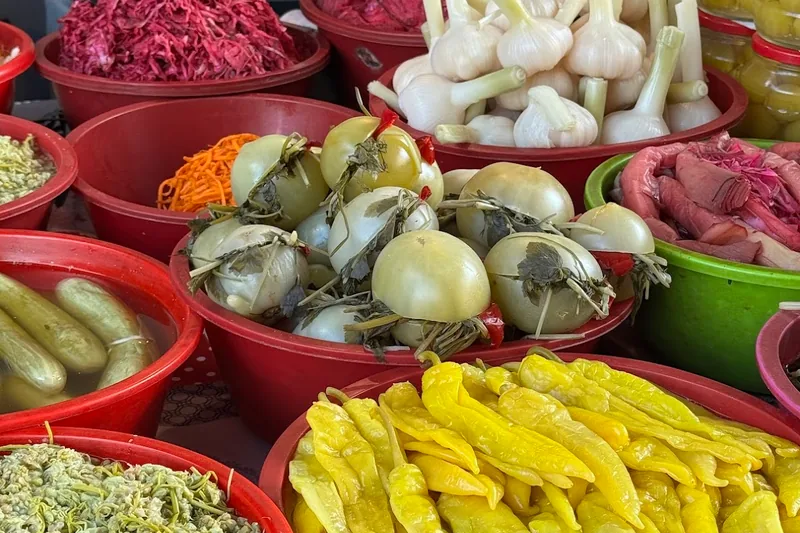
The pickle stalls are the most photogenic corner of the market: tubs of pickled garlic, green tomatoes, cucumbers, yellow peppers and shredded beet, next to jars of preserved peppers and tomatoes. Look for jonjoli too, the pickled flower buds you'll meet again on restaurant tables. Tkemali, the sour plum sauce in green and red, and adjika sell for 3 to 8 GEL a jar, and they're what makes the Georgian food you cook back home taste right.
Honey runs 15 to 30 GEL a kilo. The alpine and chestnut honeys are the ones I'd look for, and a seller will usually let you dip a spoon before you commit.
Homemade wine and chacha
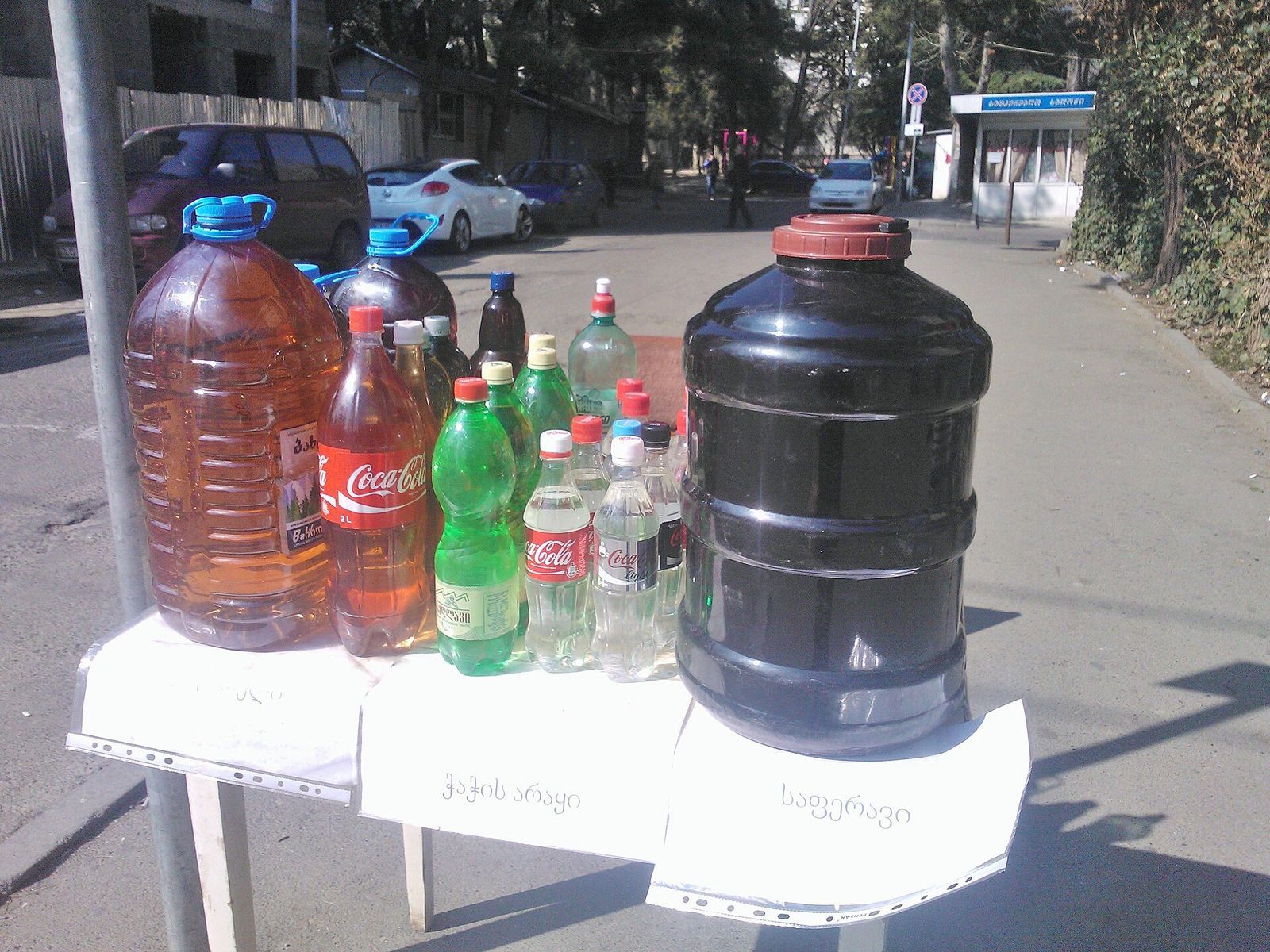
Some stalls sell homemade wine on draught, poured into whatever bottle you bring, at 10 to 20 GEL a liter. It ranges from lovely to vinegar, so taste first, and think of it as wine to drink this week rather than a bottle to age.
The same goes, more strongly, for homemade chacha, the grape brandy, which sellers pour at 50 to 70% alcohol. Homemade chacha from an unknown seller can carry methanol if the first part of the distillation wasn't separated, so buy only from a stall that has obviously been trading there for years, never from whoever waves a plastic bottle at you in the lane.
Fruit and vegetables by season
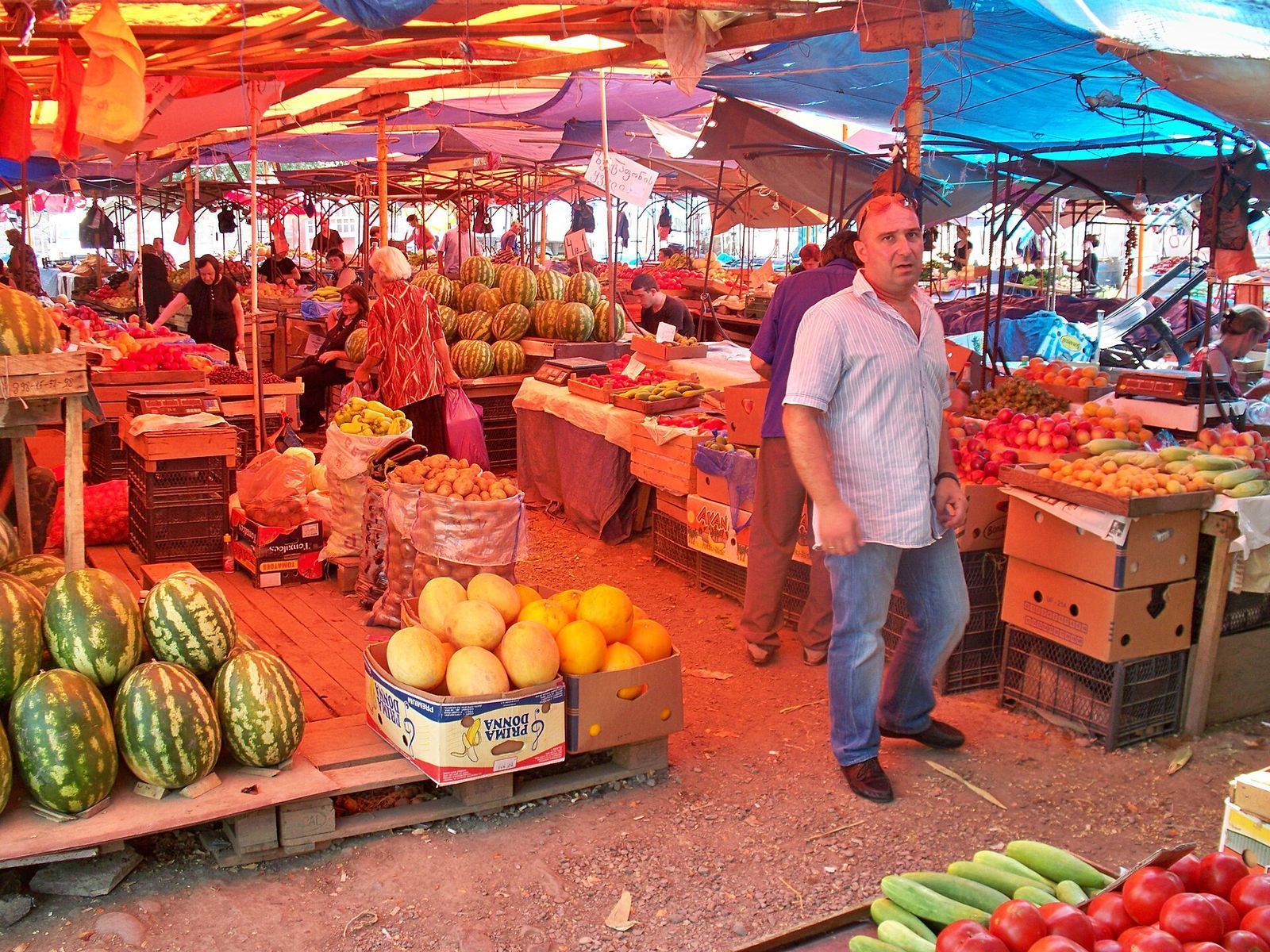
What fills the outdoor stalls changes through the year, and the season is the best guide to what to buy.
| Season | What fills the stalls |
|---|---|
| Spring | Wild garlic and bunches of fresh herbs |
| Summer | Tomatoes, peppers, cucumbers, apricots, peaches, figs and watermelons |
| Autumn | Grapes, pomegranates, persimmons, quince, feijoa and wild mushrooms |
| Winter | Citrus, root vegetables, dried fruit and preserves, plus produce trucked in from Turkey |
What to eat at Dezerter Bazaar
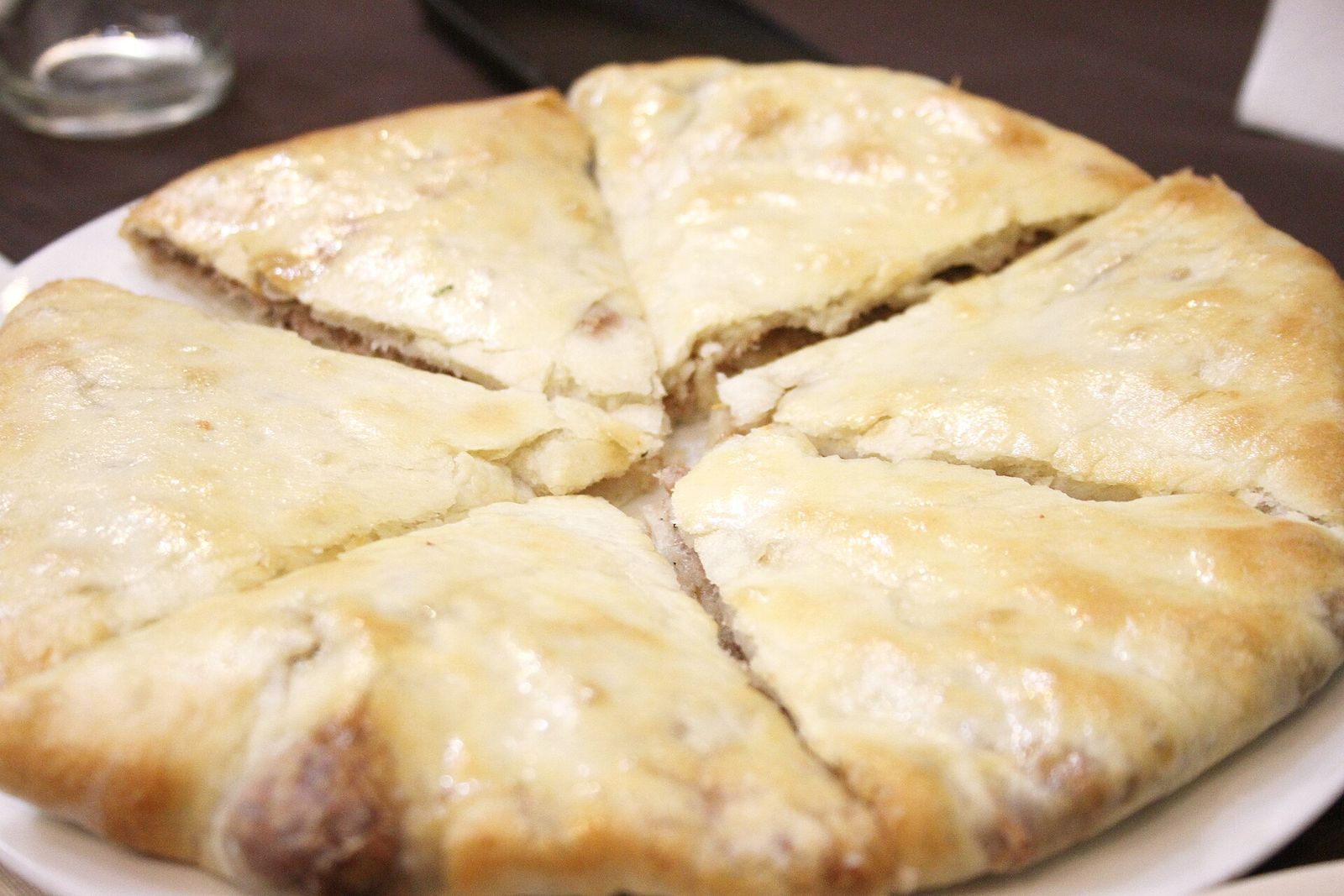
Arrive hungry. Bakery stalls around the market sell lobiani, the bean-filled bread, for 2 to 3 GEL and slices of khachapuri for 3 to 5 GEL, and a hot lobiani straight from a market oven is my favorite piece of Tbilisi street food. The small canteens around the edges feed traders and shoppers a proper lunch for 10 to 15 GEL.
Vendors offer tastes of cheese, fruit and churchkhela as simple hospitality. Accept them; it's polite, and you're under no obligation to buy.
My favorite way to eat here is to build a breakfast as I walk:
| Market breakfast for one | Price |
|---|---|
| A shotis puri, the canoe-shaped bread | 1 to 2 GEL |
| 200 g of sulguni | 2.40 to 3.60 GEL |
| A jar of matsoni | 4 to 6 GEL |
| A string of churchkhela for later | 3 to 8 GEL |
| Total | 10.40 to 19.60 GEL |
How to shop at Dezerter Bazaar
- Cash, in coins and small notes. Almost nobody takes cards. A few vendors accept transfers to TBC or Bank of Georgia accounts, which only helps if you have one. Bring 1 and 2 GEL coins and 5, 10 and 20 GEL notes, since breaking a 100 GEL note for 2 GEL of herbs is awkward for everyone, and weekend ATM queues are long. Everything else about money in Georgia works the same way: cards in the center, cash at markets.
- Ask the price first. Produce is sold and priced by the kilo, and many sellers type the number into a calculator and show you, which gets around any language gap.
- Haggle gently, and only on bigger buys. Produce prices are already low, and haggling over 50 tetri on a 3 GEL bunch of herbs is bad form. On a kilo of churchkhela or a big bag of spices, asking for a little off is normal.
- Learn three words. Gamarjoba (hello), madloba (thank you) and ramdeni ghirs (how much is it) cover most of a market morning, and a few more Georgian phrases earn you smiles and the occasional free walnut.
- Taste when offered, ask when not. Don't help yourself from an open tray; ask with a gesture first.
- Bring a tote and containers. The thin plastic bags vendors hand out split easily, and a sturdy bag plus a couple of lidded jars make sauces and honey easier to carry.
- Ask before photographing people. Wide shots of the stalls are usually fine. For a portrait, ask, buy something, then shoot.
That's about the extent of the risk. Tbilisi is a safe city, and Dezerter Bazaar is crowded and chaotic rather than dangerous.
Taking Dezerter Bazaar food home
Most of what's worth buying here travels well, as long as you pack it with a little care.
- Spices and Svan salt: move them out of the paper bags, which tear, into zip-lock bags, then into a checked suitcase so your clothes don't come home smelling of fenugreek.
- Churchkhela and tklapi: both are dry and keep well; lay them flat at the top of the bag.
- Sauces, honey and wine: anything over 100 ml goes in checked luggage. Roll the jars and bottles in clothes in the middle of the suitcase, and read up on bringing wine home before you fill a 5-liter bottle.
- Khinkali-making sets: the spice stalls sell wooden sets for under 10 GEL, a better present than another fridge magnet.
- Overbought? A cheap sports bag from the market costs 10 to 15 GEL.
Don't leave the market for your last morning. Stalls wind down from about 16:00, so an afternoon flight means no market at all. I do my run 2 days before flying, then fill the gaps from the list of Georgian souvenirs I buy in shops that pack fragile things properly.
Is Dezerter Bazaar worth visiting?
Yes, for most travelers, and it's the food market I'd put first among the markets in Tbilisi. It suits you best if:
- You cook. Spices, Svan salt and tkemali here cost a fraction of the Old Town price, and they're the souvenirs you'll use.
- You want to see the city's daily life. It's the one place on most itineraries where nearly everyone around you is a local doing their shopping.
- You're on a budget. A breakfast, a lunch and a bag of gifts can come in under 50 GEL.
- You're catching a train. The trains in Georgia to Batumi, Kutaisi and Borjomi leave from the station next door, so the market is an easy last stop.
Skip it, or keep it short, if:
- Raw meat in the open puts you off. Stick to the outdoor lanes and the covered hall, and you'll barely see it.
- You want antiques and Soviet badges. That's the Dry Bridge flea market, across the river.
- You only have an afternoon. After 15:00 you're watching the market close.
Bazari Orbeliani, the polished alternative
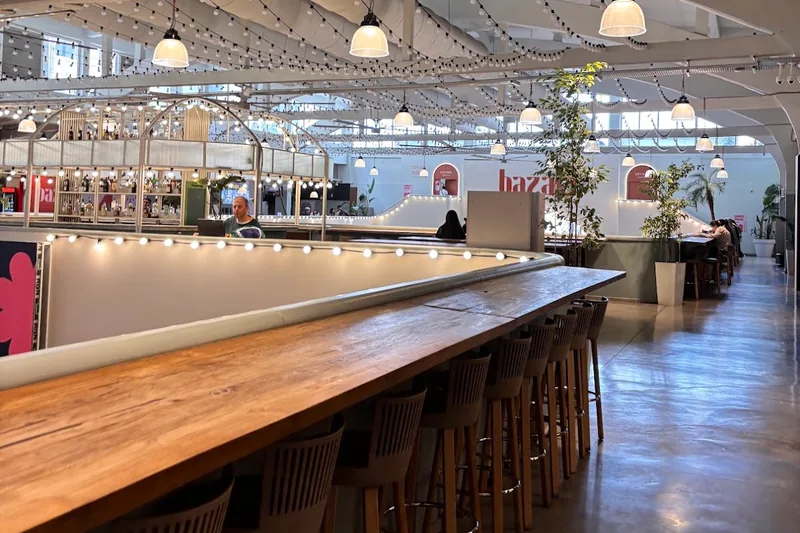
If Dezerter sounds like too much, Bazari Orbeliani is the opposite: a renovated food hall at 3a Vekua Street in the Old Town, with tables, cards accepted and nobody calling out to you. There's a Coffee LAB branch open 10:00 to 23:00, Shoti's sandwiches in tone-oven bread on the second floor, and counters for a sit-down lunch. It doesn't replace Dezerter for shopping, but it's my pick for a rainy afternoon or a group that can't agree on dinner.

What's near Dezerter Bazaar
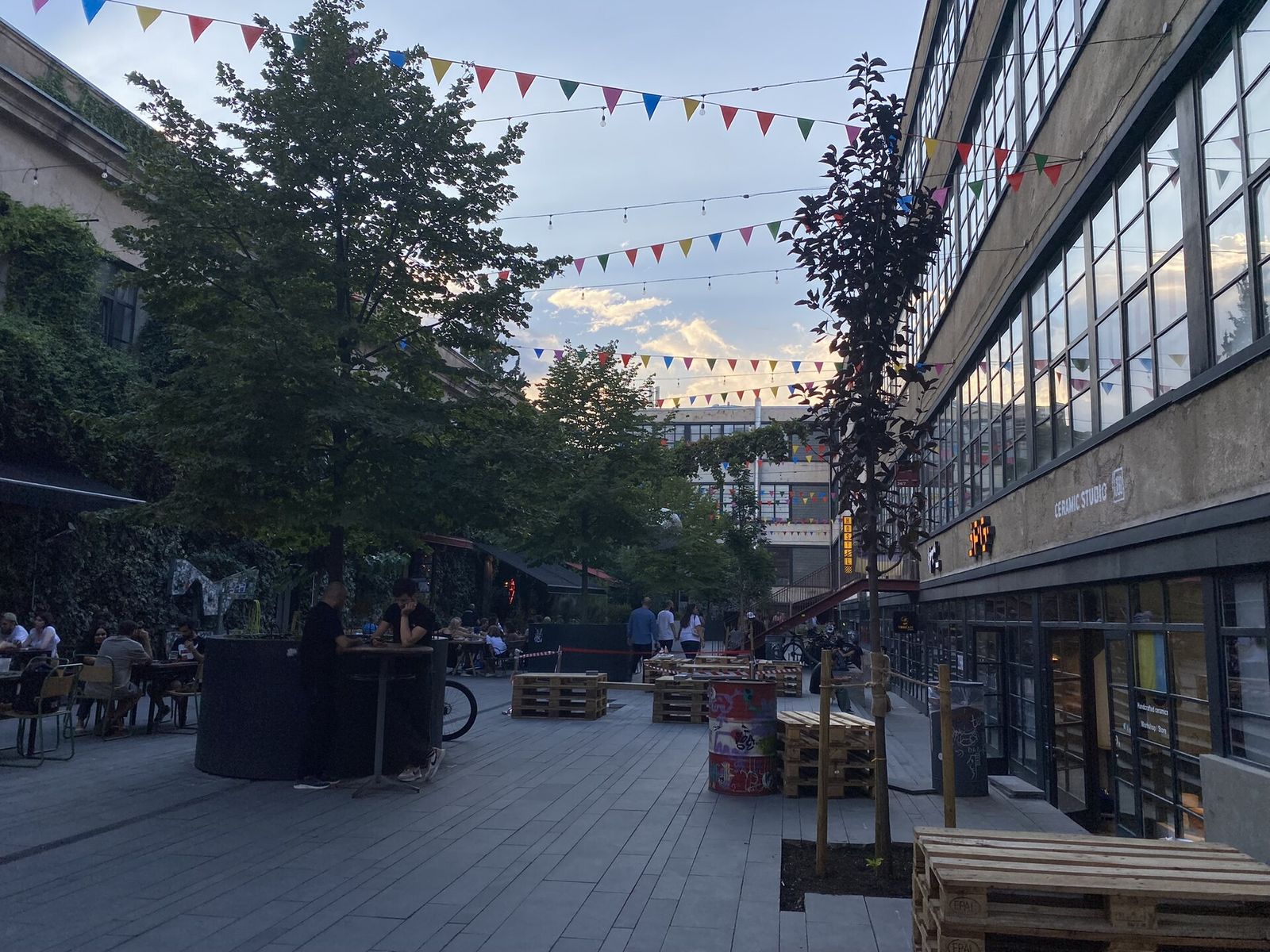
The market makes a natural start to a half day north of the center. Fabrika, the Soviet sewing factory turned hostel, cafes and courtyard bars, is 10 to 15 minutes on foot and the obvious place for coffee afterwards.
Aghmashenebeli Avenue runs south from there toward Marjanishvili, with a restored stretch of 19th-century facades and plenty of places for lunch.
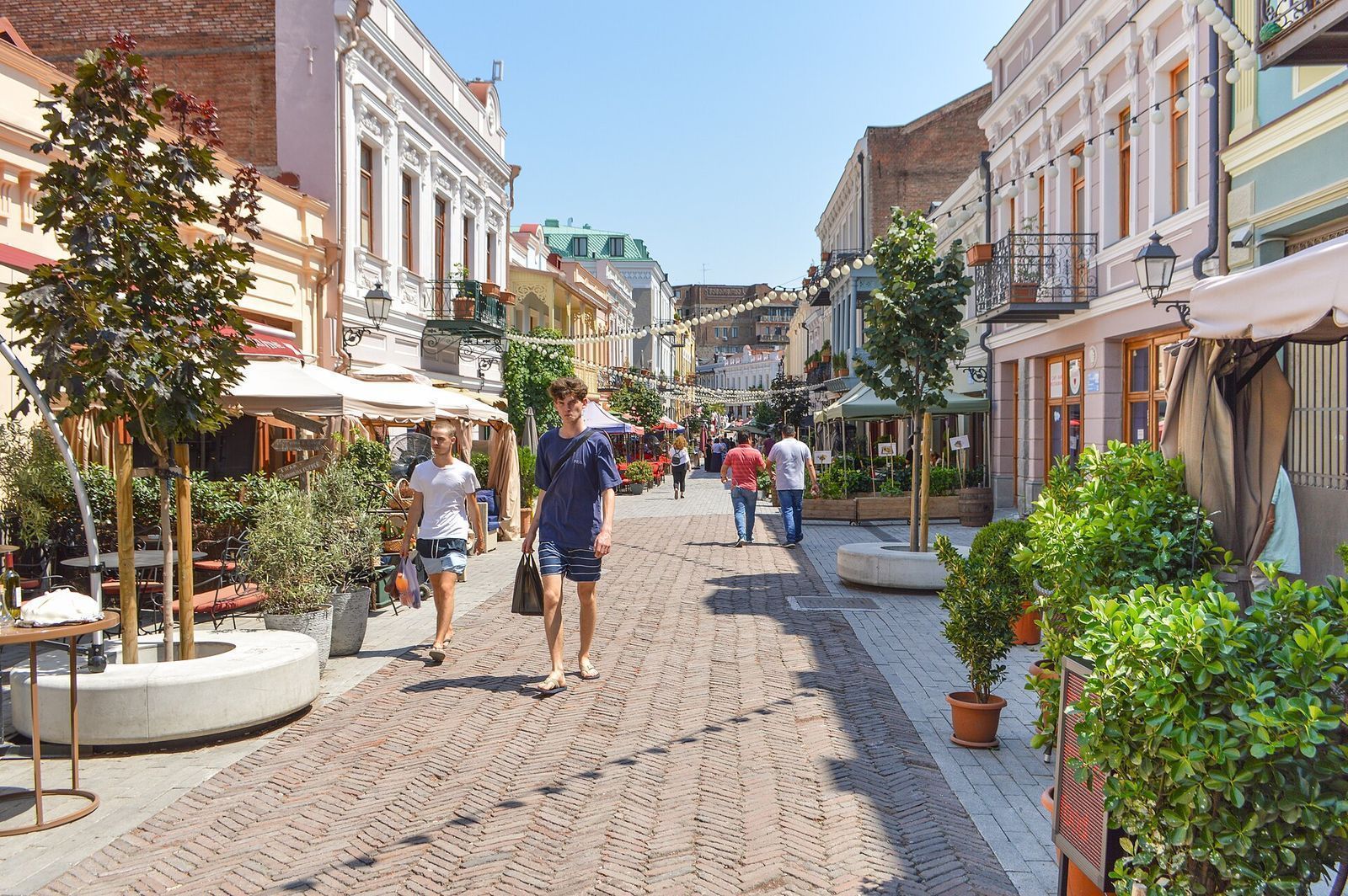
Here's the half day I'd plan around it:
| Time | Stop | What you do |
|---|---|---|
| 08:30 | Dezerter Bazaar | Outdoor lanes first, then the covered hall for cheese, spices and churchkhela |
| 10:00 | Market breakfast | Bread, sulguni and matsoni from the stalls |
| 10:45 | Fabrika | A 10 to 15 minute walk, then coffee in the courtyard |
| 12:00 | Aghmashenebeli Avenue | Stroll the restored stretch, lunch in Marjanishvili |
| 13:30 | Dry Bridge market | Metro or taxi across the river for antiques and Soviet odds and ends |
Key takeaways
- Dezerter Bazaar is Tbilisi's main food market, beside the Central Railway Station and 3 to 5 minutes on foot from Station Square metro.
- It's open daily from about 07:00 to 17:00; go between 08:00 and 11:00 on a weekday, and not after 15:00.
- Bring coins and small notes, since almost no stall takes cards.
- Buy spices, Svan salt, churchkhela and tklapi to take home, and eat the cheese while you're here.
- Taste homemade wine, chacha and churchkhela before you pay.
Frequently asked questions
What are the opening hours of Dezerter Bazaar?
Dezerter Bazaar is open daily from about 07:00 to 17:00. Each stall keeps its own hours, and most vendors start packing up between 16:00 and 17:00, so go before 11:00 for the best choice.
Is Dezerter Bazaar open on Sunday?
Yes, it's open every day of the week, Sunday included. Saturday is the busiest day, and a weekday morning is the calmest time to shop.
Is Dezerter Bazaar the same as the Station Square market?
Yes. Station Square Market, Vagzlis Bazroba (the railway station market) and the Deserters' Market are all names for the same place beside the Central Railway Station.
What is the nearest metro station to Dezerter Bazaar?
Station Square, where both metro lines stop. The market starts 3 to 5 minutes' walk north of the station, and Marjanishvili station is about 15 minutes away on foot.
Can you pay by card at Dezerter Bazaar?
Mostly not. A few vendors accept bank transfers to Georgian accounts, but cash in lari is the only thing that works everywhere, ideally in coins and 5, 10 and 20 GEL notes.
Can you bargain at Dezerter Bazaar?
Yes, gently and on bigger purchases. Asking for a little off a kilo of churchkhela or a large bag of spices is normal, but haggling over small amounts of produce, which is already cheap, is bad form.
Is Dezerter Bazaar safe for tourists?
Yes. It's crowded and chaotic rather than dangerous, and the main risk is pickpockets in the packed covered hall on Saturday mornings, so keep your phone and wallet in a front pocket or a zipped bag.
Is there vegetarian food at Dezerter Bazaar?
Yes, plenty. Lobiani, the bean-filled bread, cheese, matsoni, nuts, churchkhela and the seasonal fruit all make a meal, and vegetarian travelers in Tbilisi will find the market one of the easiest places in the city to eat.
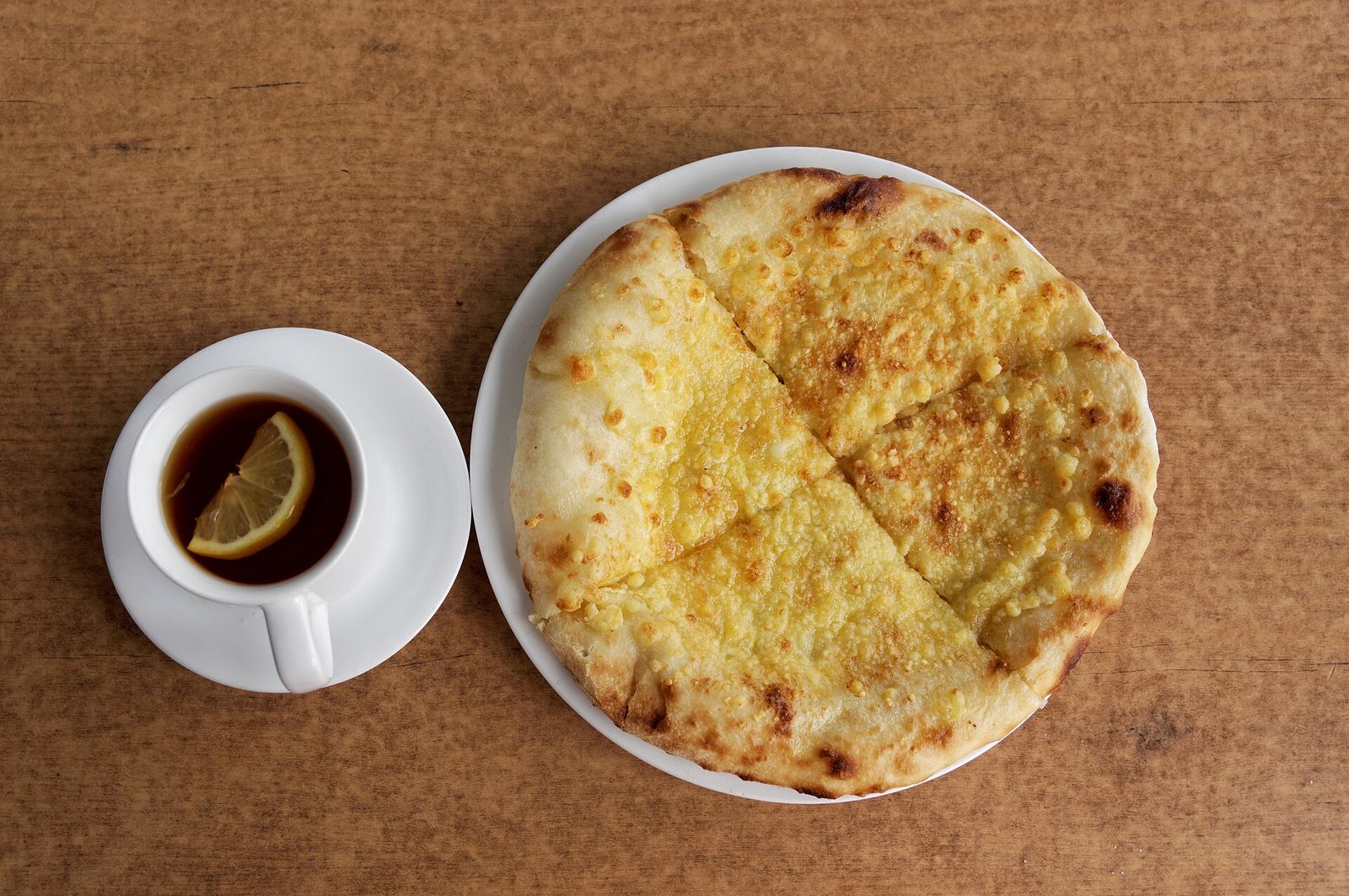
Tbilisi Food Guide: What to Eat, Where to Eat It and What It Costs
Tbilisi is known for khinkali and khachapuri. Here's my food guide: what to eat, where to find it and what it costs.
Read the guide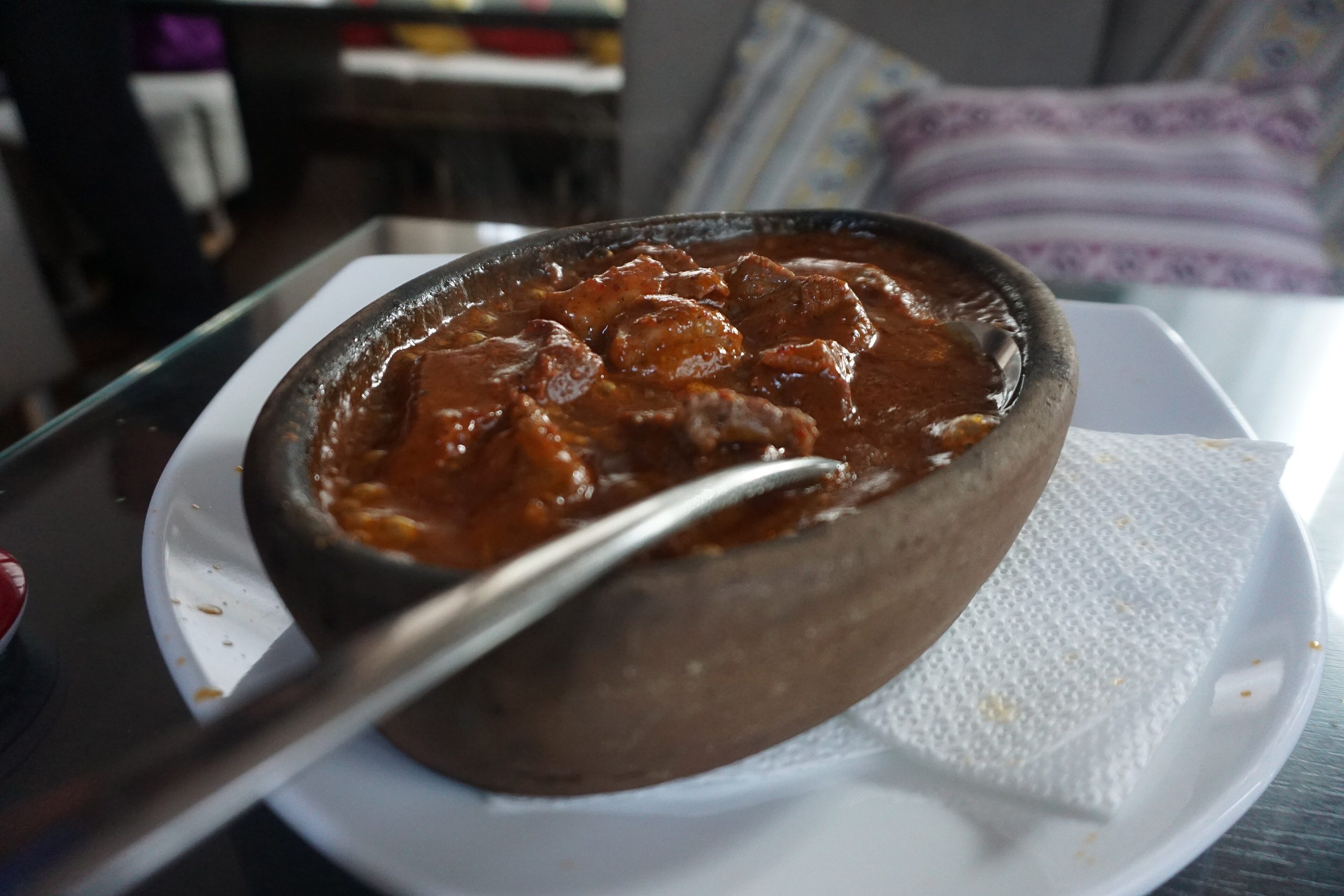
Georgian Food: The Dishes to Try in Tbilisi
Georgia is known for khachapuri and khinkali. Here is what else to order, what it costs and where to eat it in Tbilisi.
Read the guide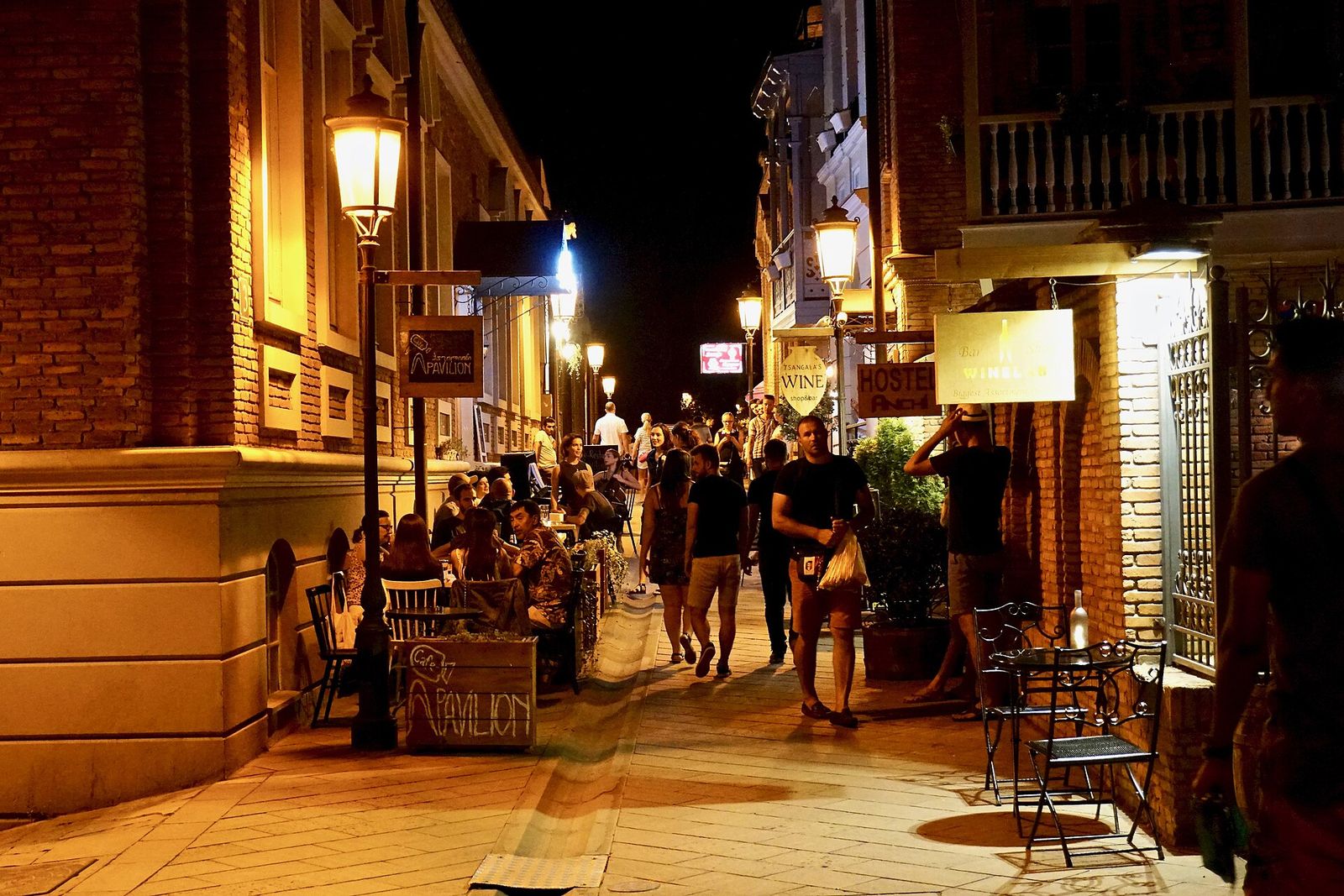
The Best Restaurants in Tbilisi
Tbilisi is known for khinkali and khachapuri. Here are the restaurants I pick, what dinner costs and how to order.
Read the guide