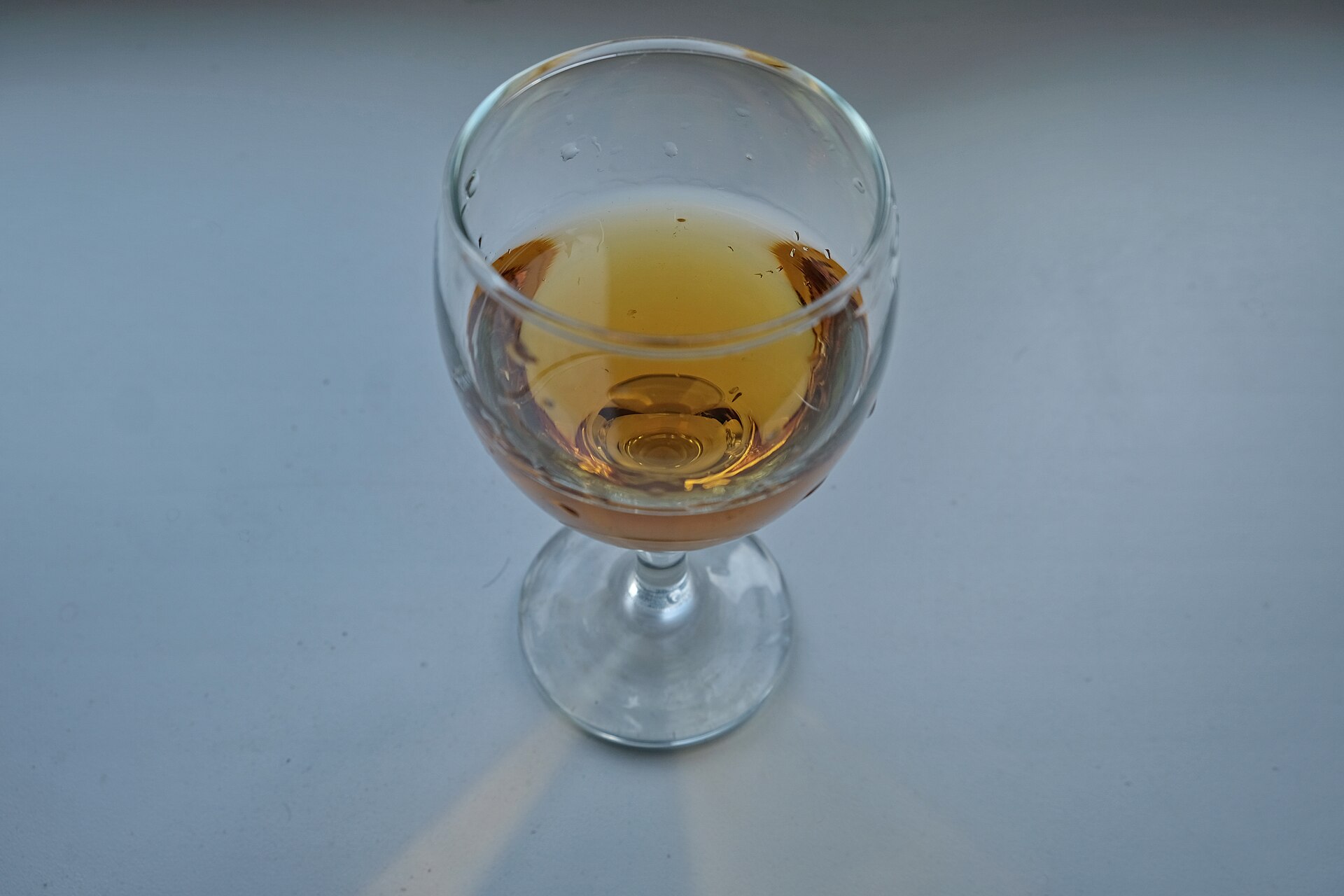
Amber Wine: Georgia's Orange Wine and Where to Drink It in Tbilisi
Georgia is known for amber wine, the copper-colored white that the rest of the world calls orange wine. It is the drink I'd tell any first-timer in Tbilisi to try before they leave. Here's what you need to know about how it's made, what it tastes like, which grapes to order, and where to drink a good glass or buy a bottle in Tbilisi.
What amber wine is
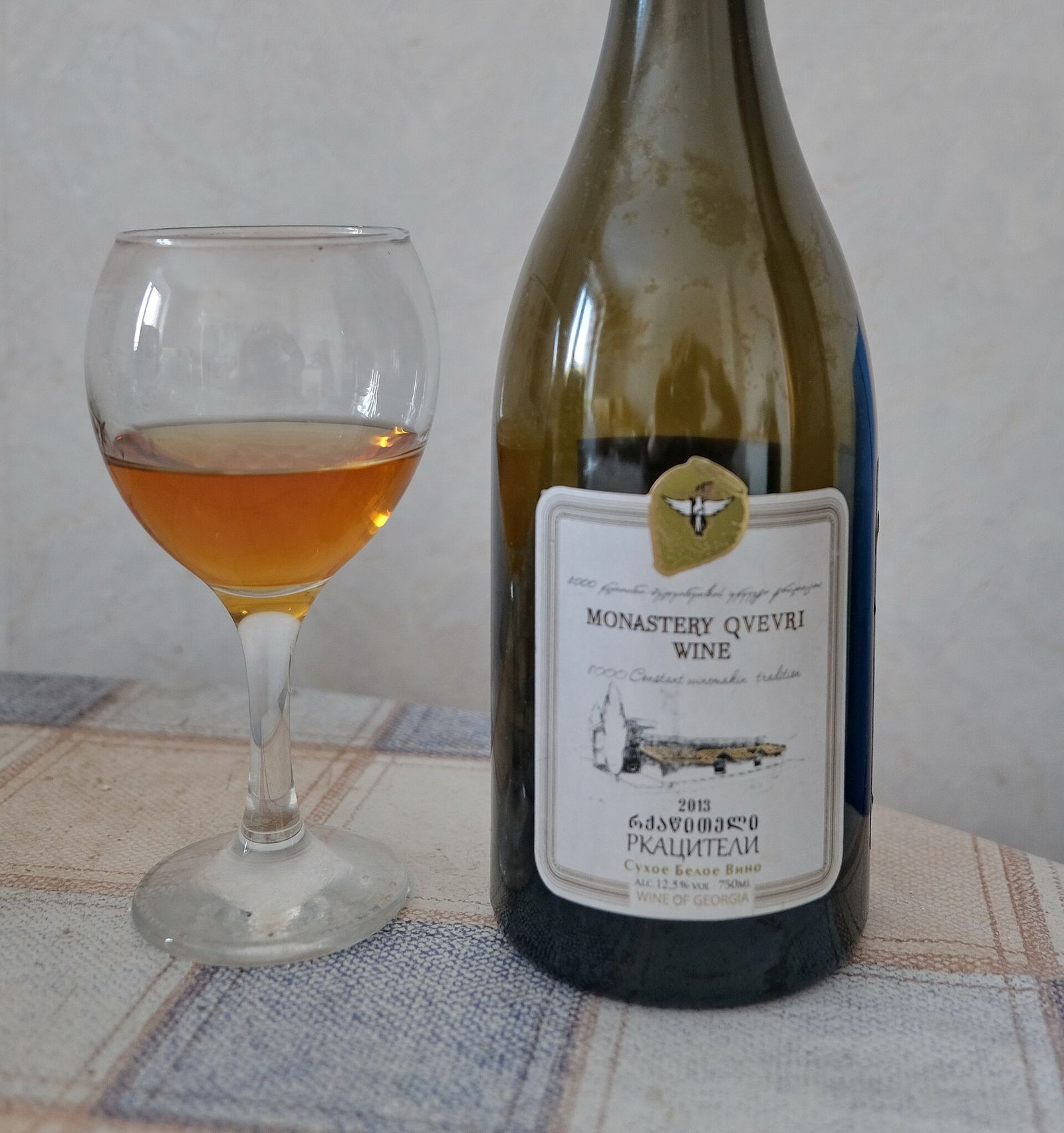
Amber wine starts with white grapes. In a normal white, the grapes are pressed and the skins thrown away before fermentation starts. In an amber wine, the crushed grapes go into the vessel whole, skins, seeds and often stems included, and the juice ferments and sits on them for weeks or months.
Those skins do two things. They pull color into the wine, from deep gold to copper to the color of strong tea. And they add tannin, the drying grip you know from red wine. The result is a white wine with the body of a light red, which is why the first sip surprises most people.
Georgia has made wine this way for a very long time; the country claims about 8,000 years of winemaking, and amber wine is the oldest style in it. Most of what you'll drink comes from Kakheti, the eastern region that makes about 70% of Georgian wine.
| White wine | Amber wine | Georgian red | |
|---|---|---|---|
| Grapes | White | White | Red |
| Time on the skins | Little or none | About 1 to 6 months | About 30 to 45 days in a qvevri |
| Color | Pale straw to gold | Gold, copper, amber | Ruby to near black |
| Tannin | Almost none | Light to firm | Firm |
| Serve it | Fridge-cold | Cool, 13 to 18°C | Cellar to room temperature |
| Best with | Salads, fish | Walnut dishes, eggplant, grilled pork | Grilled meat, stews |
Amber wine or orange wine: is there a difference?
No. Amber wine and orange wine are two names for the same thing: white grapes fermented on their skins. Georgians call it amber, and most winemakers here dislike "orange" because it makes people think of orange juice or orange flavoring. Nothing orange goes into it.
Where the two words do drift apart is in style. Skin-contact whites are now made in Italy, France, Spain and the New World, usually in barrels or tanks rather than clay. The Georgian classic is longer on the skins, made in clay, and usually bigger and more savory. If you've had an orange wine at home and found it light and juicy, a Kakheti amber will taste like a different drink.
How Georgian amber wine is made
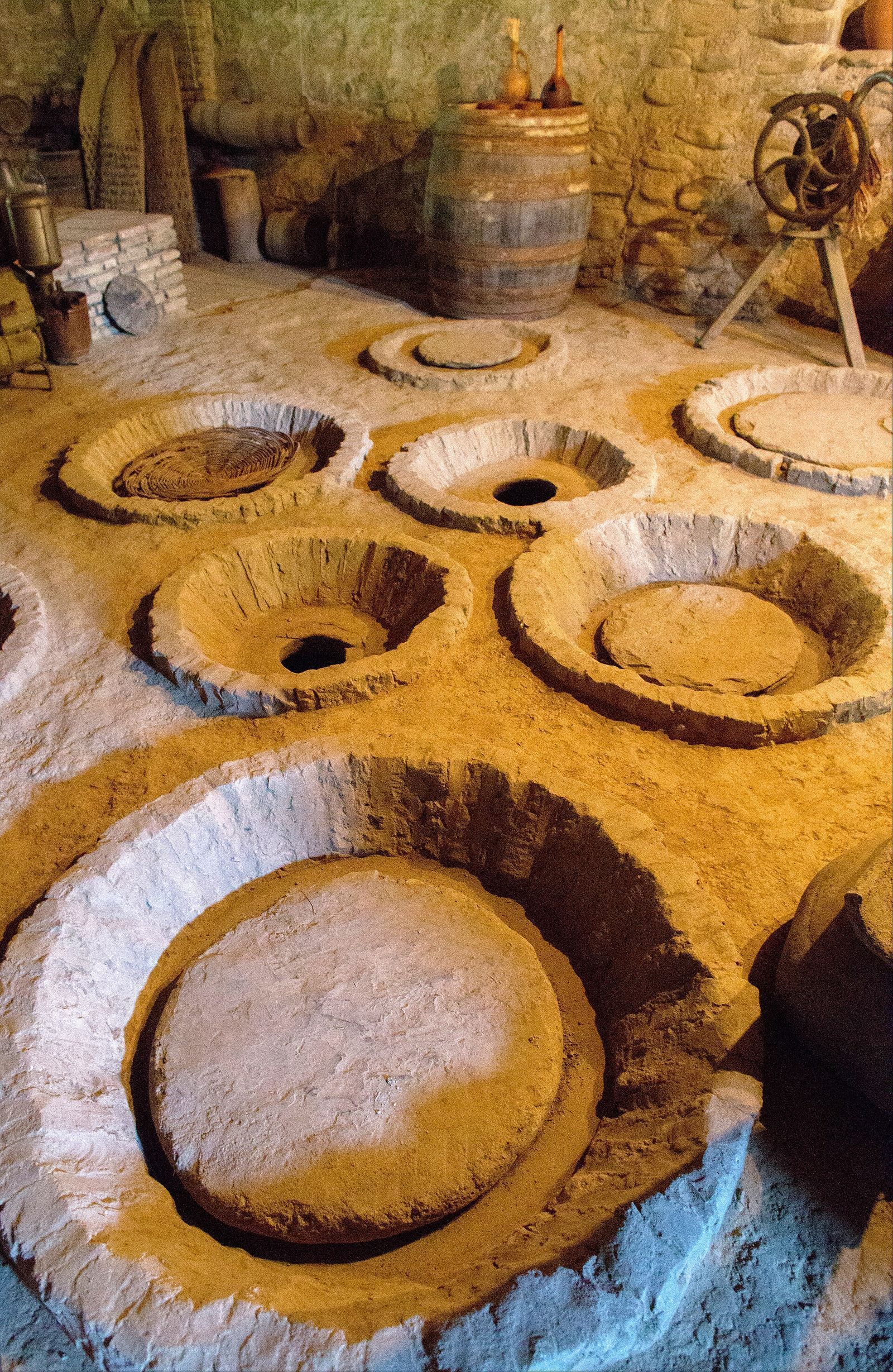
The traditional vessel is the qvevri, a large egg-shaped clay jar buried up to its neck in the floor of a wine cellar, or marani. The biggest are taller than a person. Being underground keeps the wine at a steady, cool temperature all year.
At harvest, the winemaker lightly crushes the grapes and tips everything into the qvevri: juice, skins, seeds and, in Kakheti, some of the stems. The wine ferments in the jar, the skins sink, and the qvevri is closed with a lid sealed with beeswax and wet clay. Then it waits. In Kakheti the classic amber stays on its skins for about six months before the clear wine is drawn off and bottled. In western Georgia and Racha, winemakers use far fewer skins and a shorter contact, so the wines come out lighter.
Some producers then move the wine into oak barrels for a while, which softens the tannin. Others use steel tanks with skin contact instead of clay. All of it counts as amber wine; only the qvevri version is the traditional one.
What amber wine tastes like
Think of it as a white wine wearing a red wine's coat. The fruit is dried rather than fresh: dried apricot, quince, baked apple, orange peel. Under that sit honey, black tea, walnut and a little spice, and in older or more oxidative bottles something nutty that reminds people of dry sherry.
The texture is the part that surprises people. A Kakheti amber has tannin, so it dries your mouth the way a red does, and it can taste almost bitter on its own. With food the bitterness drops away and the fruit comes forward. That is why Georgians drink it at the table, with walnuts and grilled meat, and almost never as an aperitif.
Amber wine is dry. The color comes from skins, not sugar, and the sweet Georgian wines you'll see on menus (Kindzmarauli, Khvanchkara) are reds.
The three styles of amber wine
Amber wine covers a wide range, and the easiest way to order well is to know which of three styles you're in for. Use these words when you ask a bartender for a recommendation.
| Style | Skin contact | How it tastes | Who it suits |
|---|---|---|---|
| Easy-going amber | Short, often with fewer skins; common in central and western Georgia | Fresher fruit, light tannin, medium body | First-timers and anyone who likes white wine |
| Oaked amber | Qvevri first, then time in oak barrels | Softer tannin, fuller, more savory | Red wine drinkers |
| Full-on amber | Months on the skins, the Kakheti classic | Big tannin, dried fruit, tea, walnut | People who already like orange wine, with food |
My advice is to start easy and work up. A full-on Kakheti Rkatsiteli as your very first amber is a lot of wine, and I'd rather you meet it after a lighter glass has shown you what the style is about.
The grapes behind amber wine
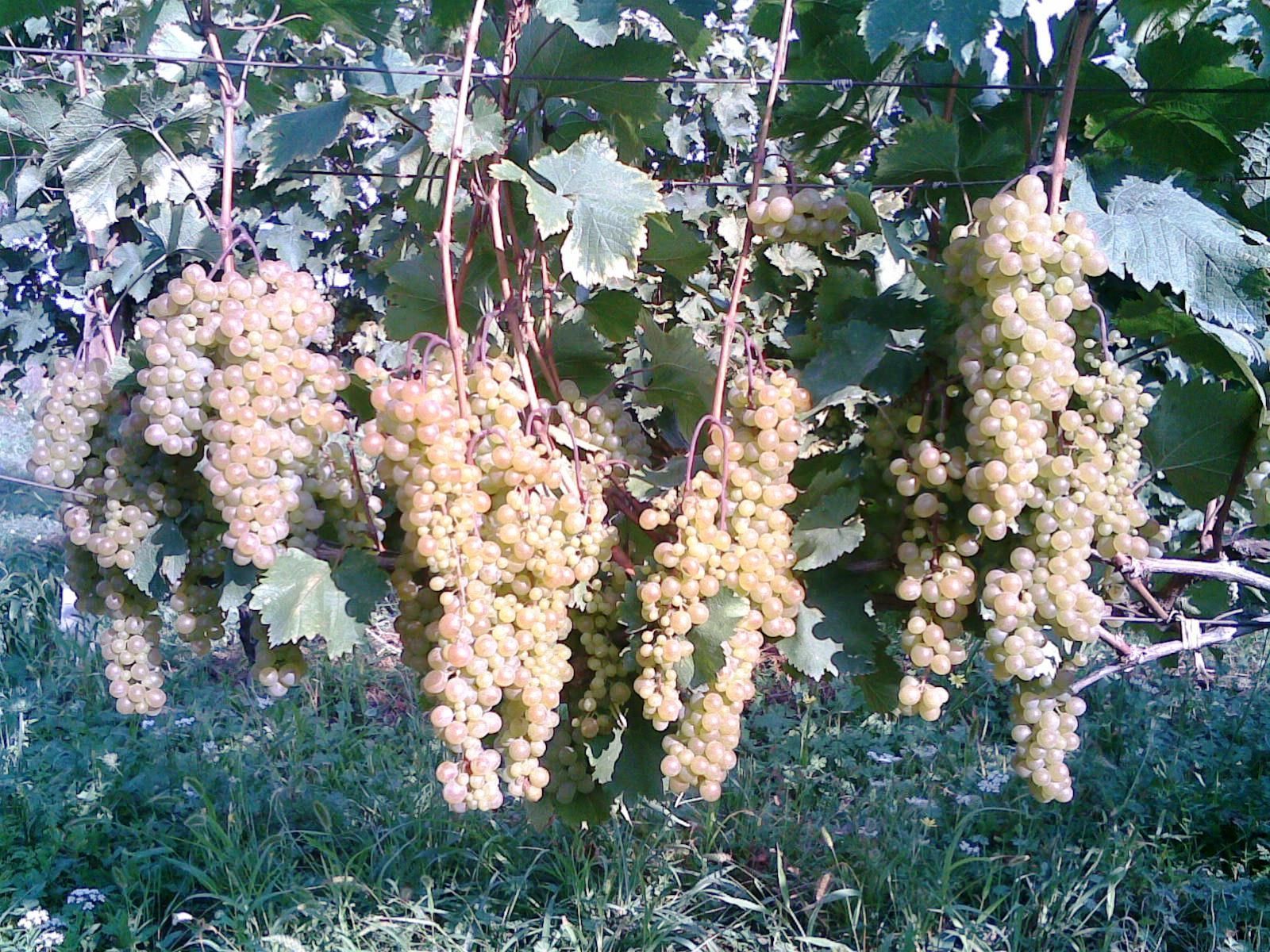
Georgia has hundreds of native grape varieties, and a handful of white ones make most of the amber you'll see on a Tbilisi wine list. Georgian labels usually name the grape rather than the place, so this is the vocabulary you'll actually order with.
| Grape | Where it grows | What it gives an amber wine |
|---|---|---|
| Rkatsiteli | Kakheti, the most planted white grape in Georgia | The classic: spice, honey, dried fruit, firm tannin |
| Mtsvane | Kakheti, often blended with Rkatsiteli | More aromatic and floral, softer |
| Kisi | Kakheti, recently revived | Rich and fragrant, quince and dried fruit |
| Khikhvi | Kakheti | Ripe apricot, honey and spice |
| Chinuri | Kartli, west of Tbilisi | Crisp and fresh, a lighter amber |
| Tsolikouri | Western Georgia | Full-bodied, often with shorter skin contact |
| Krakhuna | Imereti, western Georgia | Stone fruit with herbal and floral notes |
Rkatsiteli is the backbone of most Georgian amber wine and the one to try first. Kisi and Khikhvi are the grapes I'd look for second, because they're rarer abroad and very good in a qvevri.
What to eat with amber wine, and how cold to serve it
Amber wine is a food wine, and Georgian food could have been designed for it. Its tannin and savory edge stand up to walnuts, garlic, herbs and smoky grilled meat, the core of the Georgian table.
The pairings I'd order in a Tbilisi restaurant:
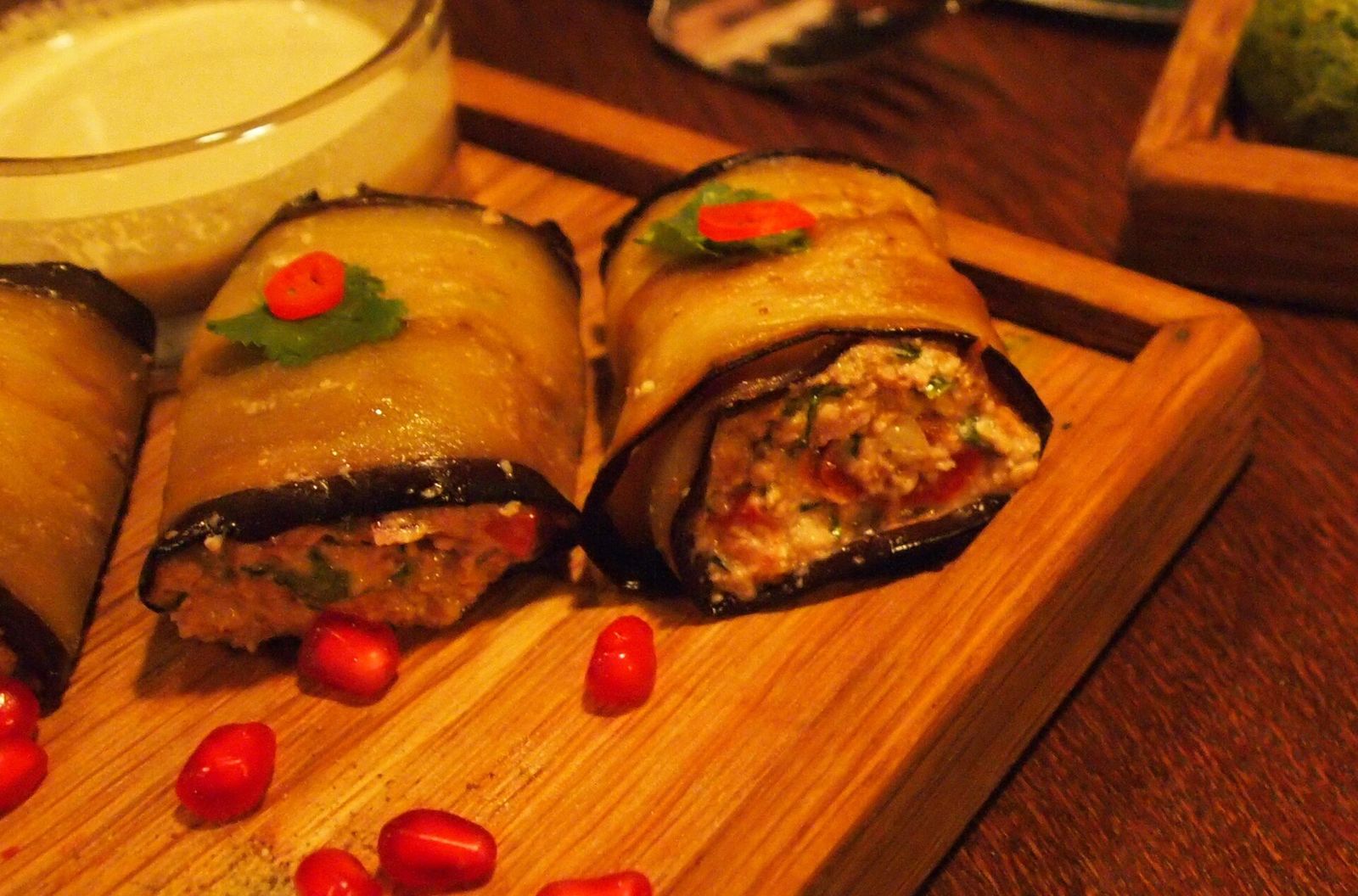
- Badrijani nigvzit, fried eggplant rolled around walnut paste. Eggplant and walnut are the classic amber match.
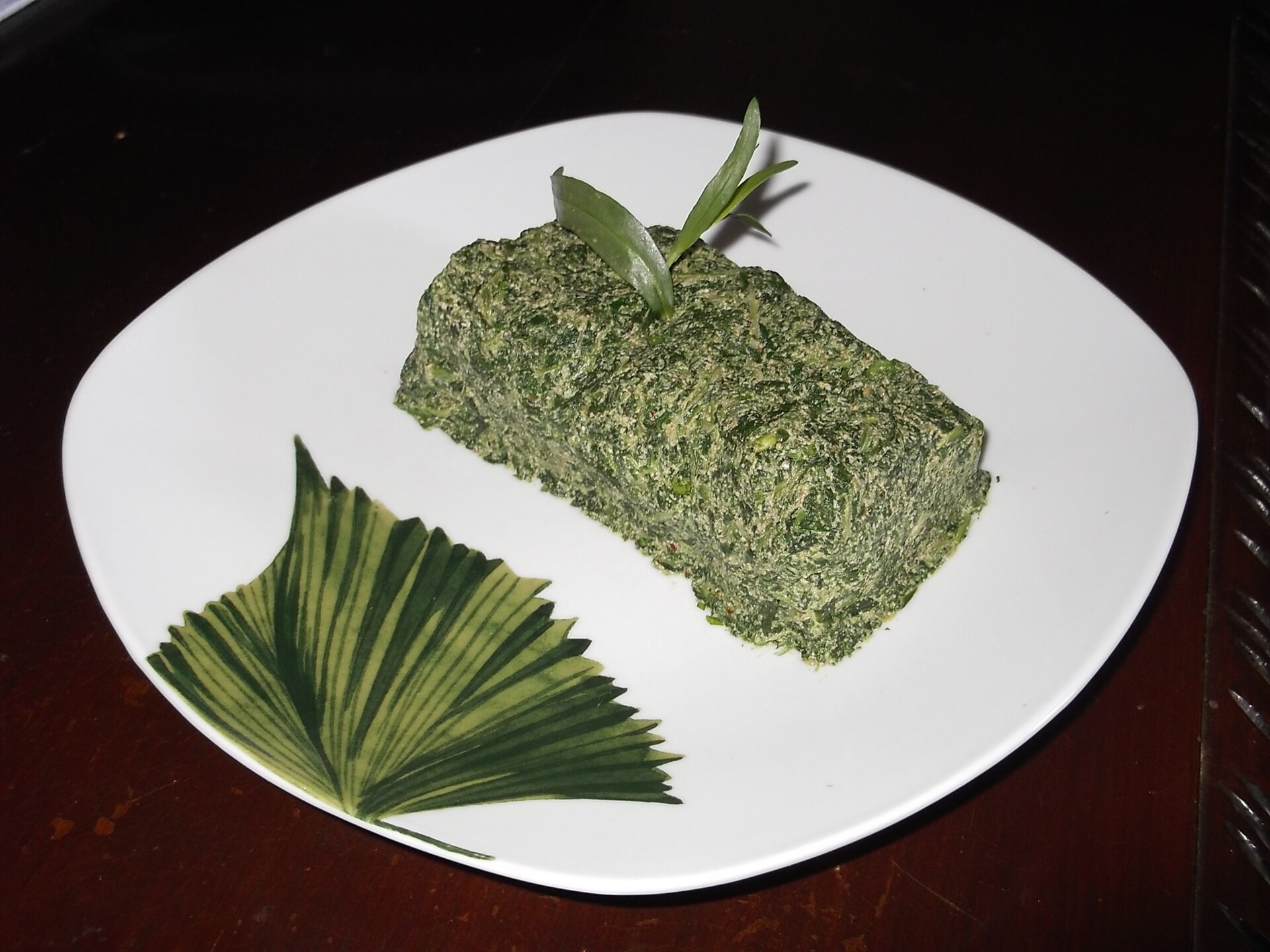
- Pkhali, the spinach, beet and leek pâtés bound with walnuts and herbs.
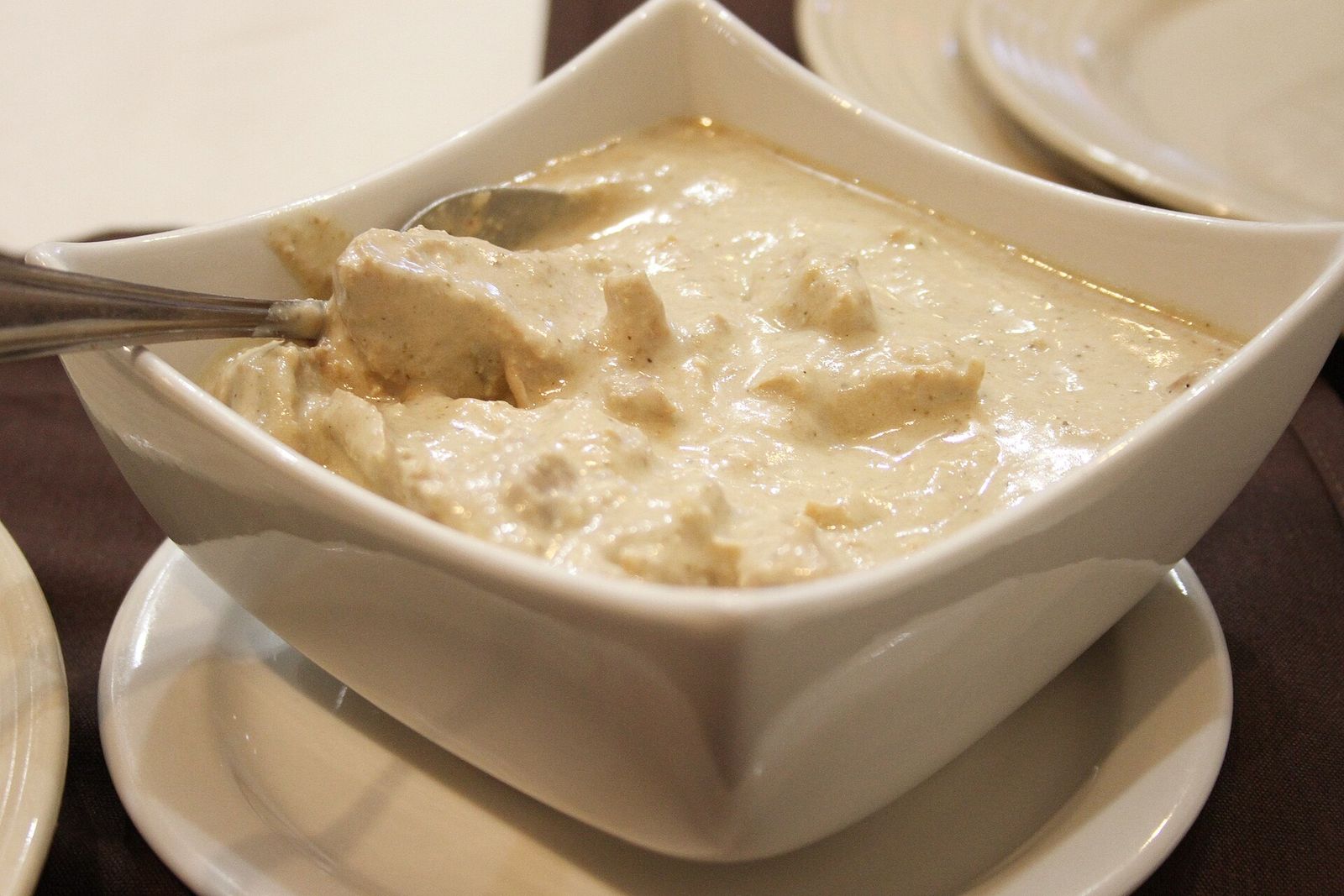
- Satsivi, cold chicken or turkey in a rich walnut sauce.
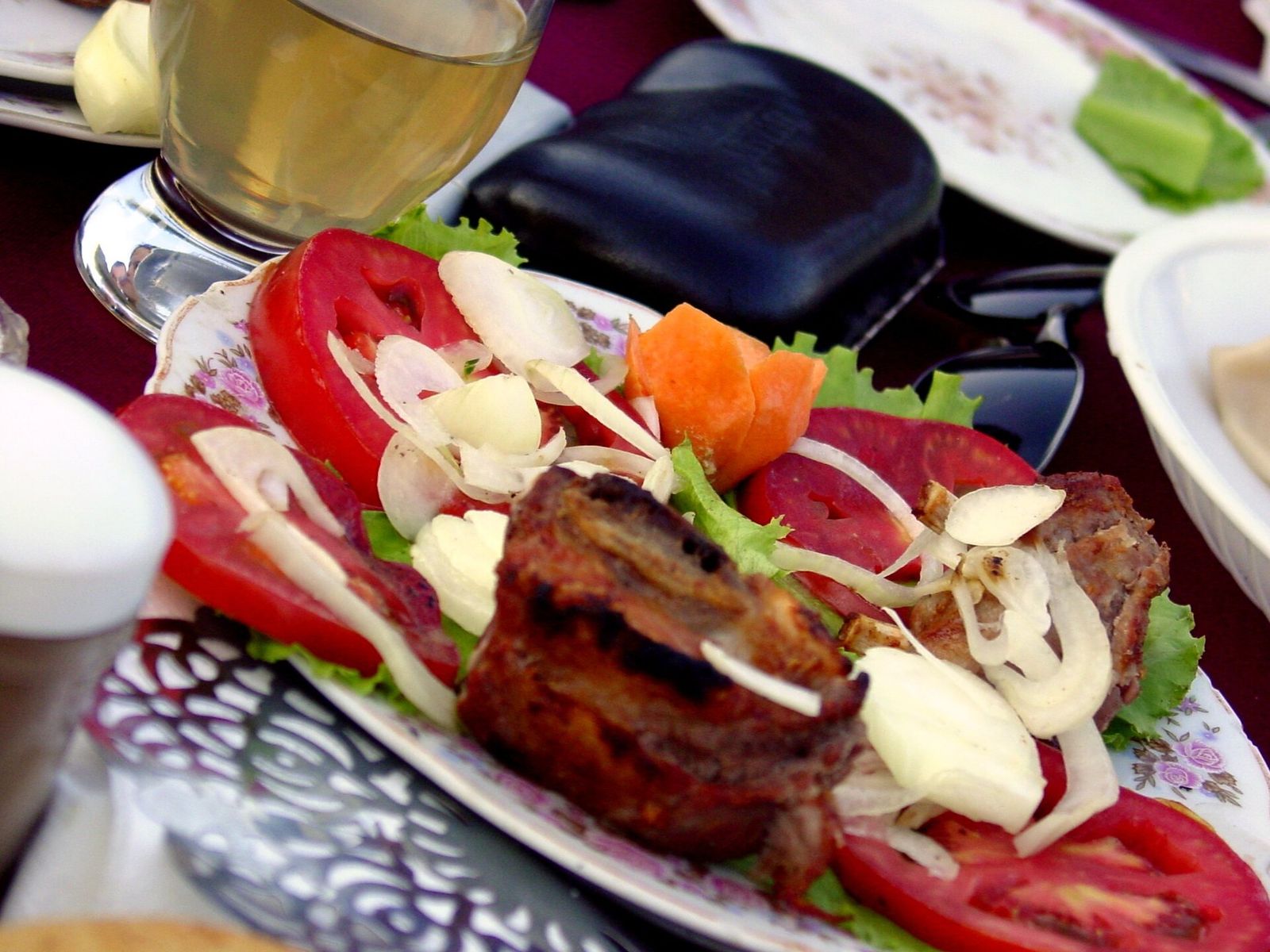
- Mtsvadi, pork skewers grilled over vine cuttings.
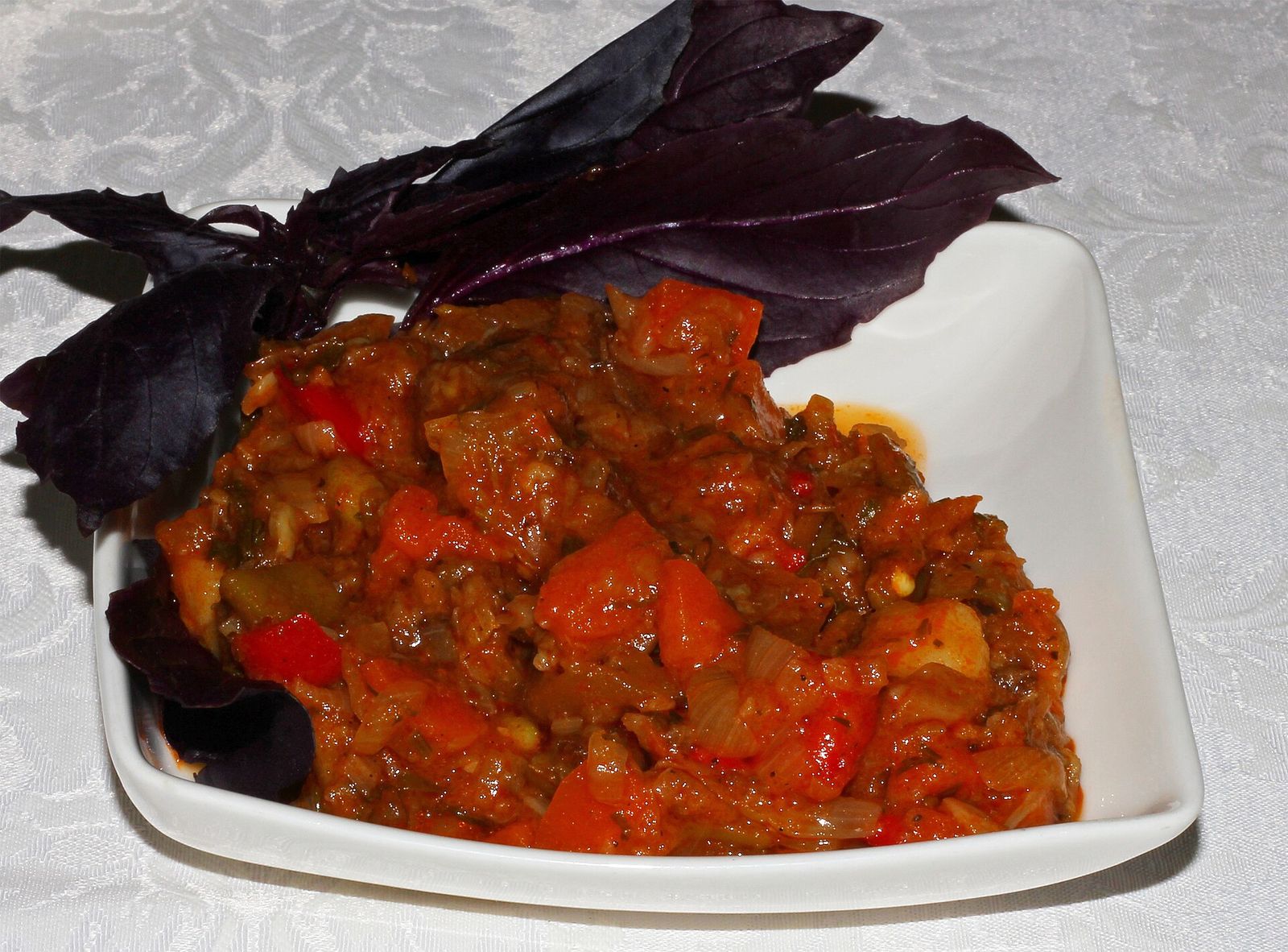
- Ajapsandali, the eggplant, pepper and tomato stew, if you eat vegetarian.
Away from Georgian food, amber wine works with spicy lamb, fatty fish and hard cheeses.
Serve it cool, at 13 to 18°C, which is warmer than a white and about where you'd keep a light red. Straight from a fridge the tannin turns harsh and the aromas shut down. If a bottle has been chilling all day, let the glass sit on the table for a while before you judge it.
Where to drink amber wine in Tbilisi
Tbilisi makes amber wine easy: almost every wine bar pours some by the glass, and the staff can talk you through it. The city has dozens of wine bars, and these six are the ones I'd pick for amber.
| Bar | Area | Best for |
|---|---|---|
| Vino Underground | Galaktion Tabidze St, near Freedom Square | Small qvevri producers, a first amber with good advice |
| Wine Point | Ingorokva St, near Freedom Square | A cheap glass of the day and a 4-wine tasting |
| Ferment Wine Bistro | Off Gudiashvili Square | Amber with dinner, rare grapes |
| 8000 Vintages | Tabukashvili St, off Rustaveli Ave, plus 3 more branches | A big list with cheese boards |
| Sadzvele Wine Hub | Wine Factory N1, Petriashvili St | About 200 wines and a view of the old cellar |
| Wine Code | Avlabari | A guided tasting with a qvevri on display |
Vino Underground
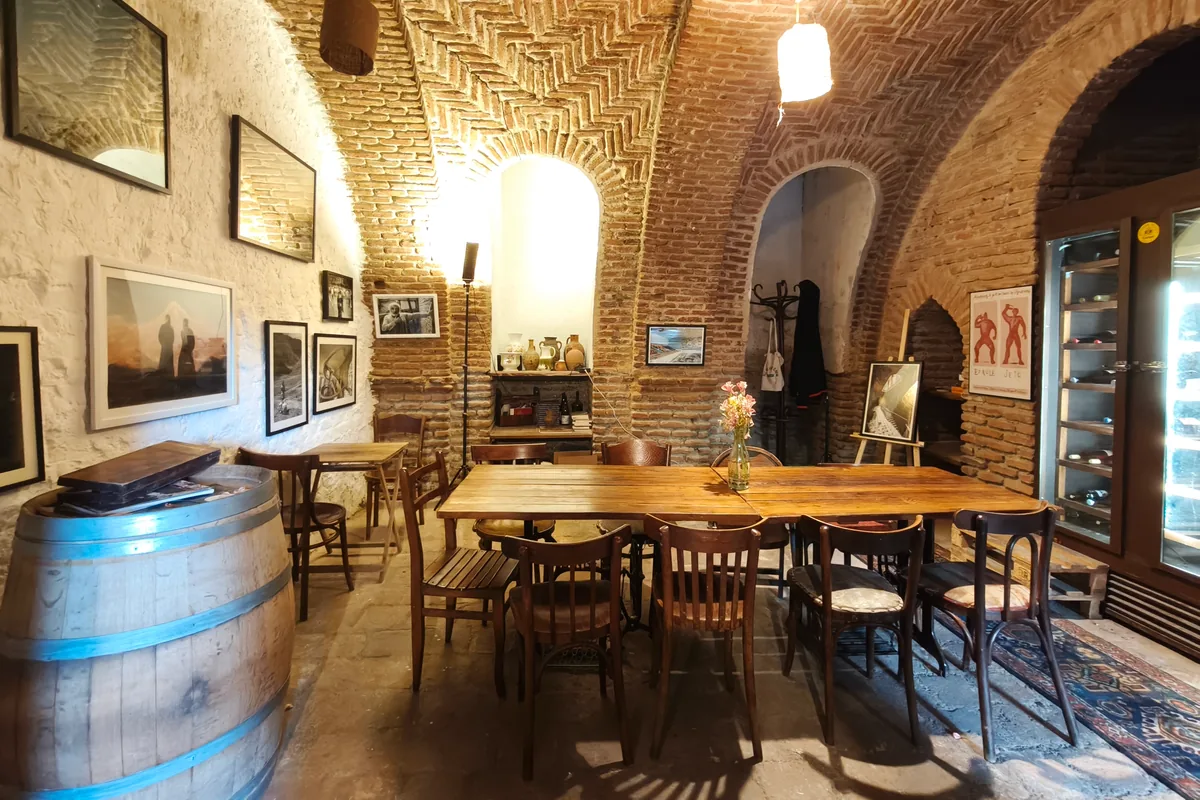
A brick basement bar opened by a group of natural winemakers, and one of the first places in town for organic Georgian wine. Its whole focus is small amber producers working with qvevri, and the staff speak English.
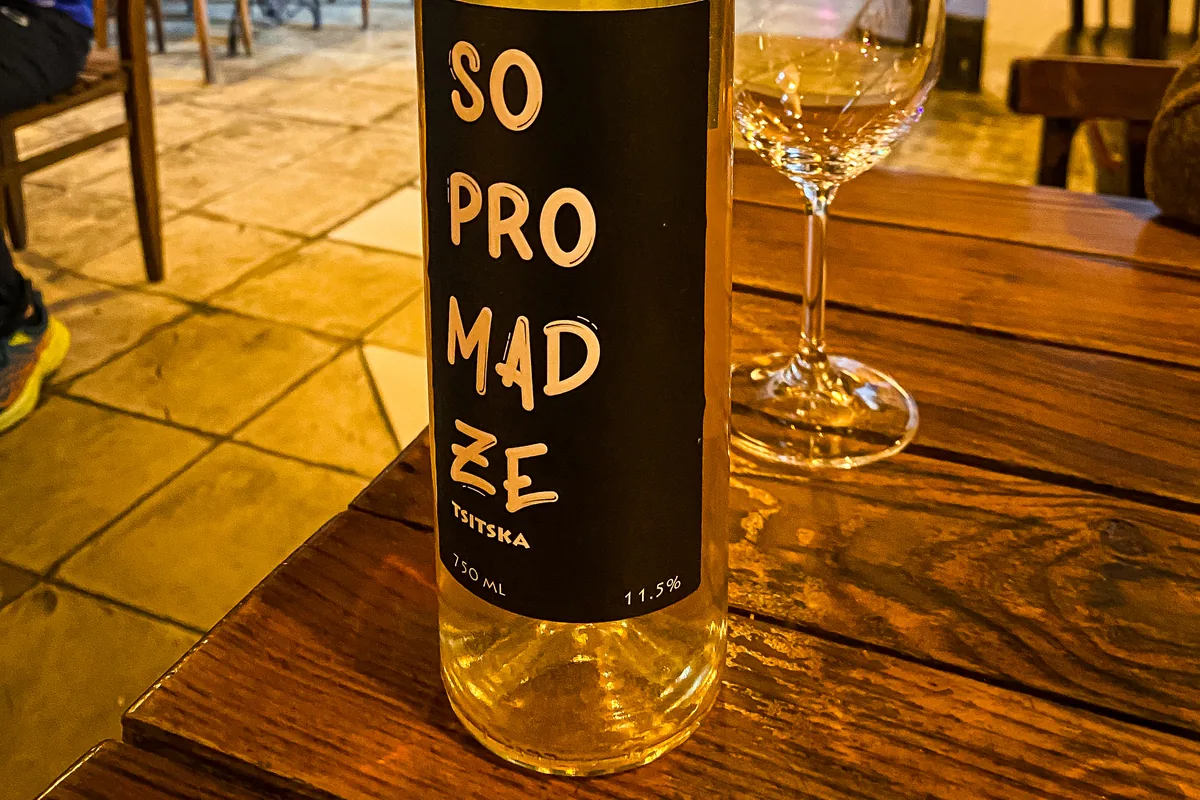
A glass runs about 10 to 20 GEL and bottles 35 to 120 GEL; it opens at 2pm daily. It sits on Galaktion Tabidze Street, a short walk from Freedom Square and the cafes of Sololaki, and it's where I'd send anyone for their first amber.
Wine Point
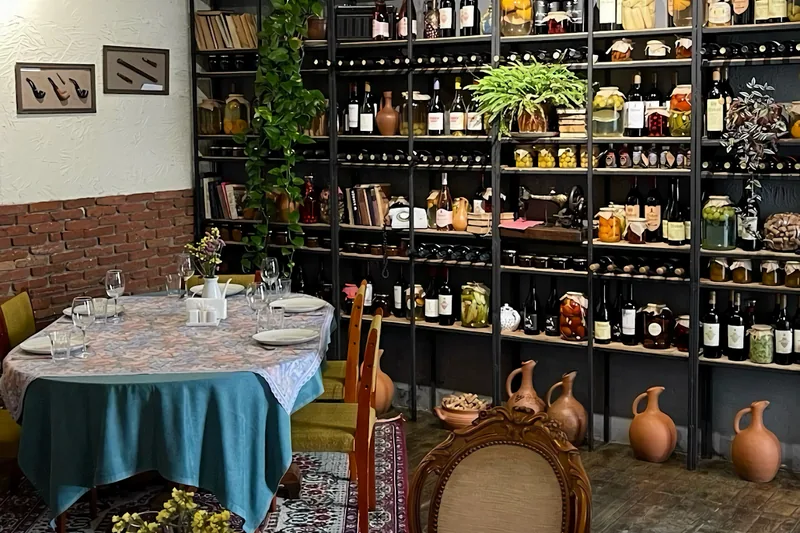
A small bar on Ingorokva Street near Freedom Square that pours amber, pet-nat and sparkling. The wine of the day costs 10 to 15 GEL a glass, and a four-wine tasting with snacks is 45 GEL per person if you book ahead.
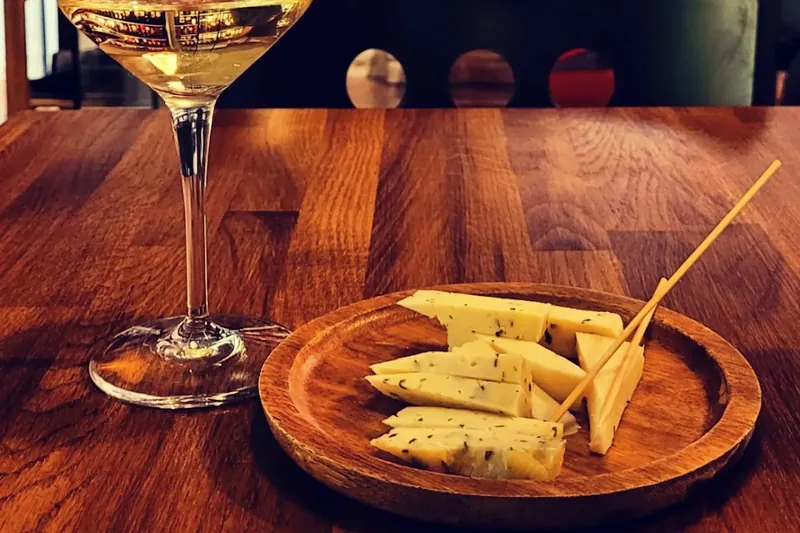
On Friday and Saturday from 7pm there's a wine buffet at 25 GEL a head, one glass plus snacks. Good value for a relaxed first glass.
Ferment Wine Bistro
The ground floor of a 19th-century building just off Gudiashvili Square, about five minutes from Freedom Square. It's owned by winemaker Rezi Tsetskhladze and pours rare grapes, qvevri and natural wines alongside modern Georgian food. Book it for dinner if you want amber with the pairings above.
8000 Vintages
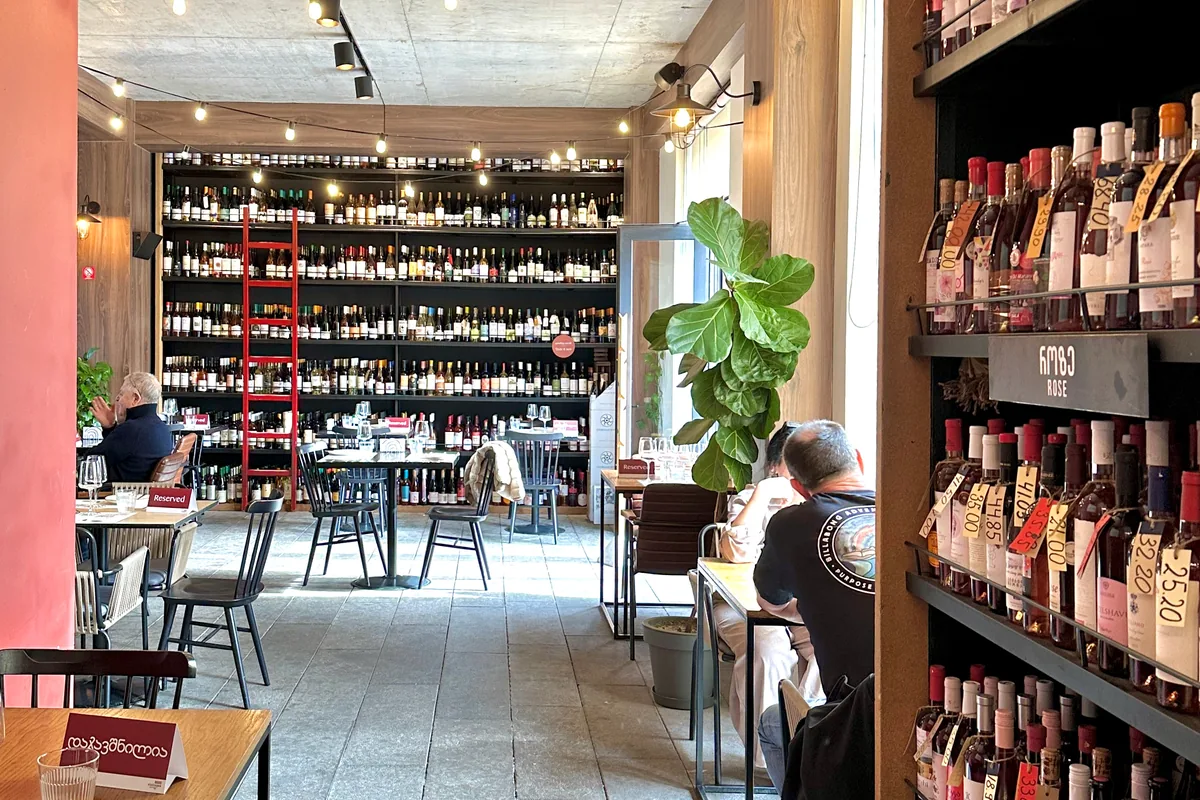
A wine shop and bar with four branches; the one on Revaz Tabukashvili Street, just off Rustaveli Avenue, opens at 11am daily. Glasses run 8 to 16 GEL and bottles 28 to 90 GEL, with cheese, charcuterie and pkhali to go with them.
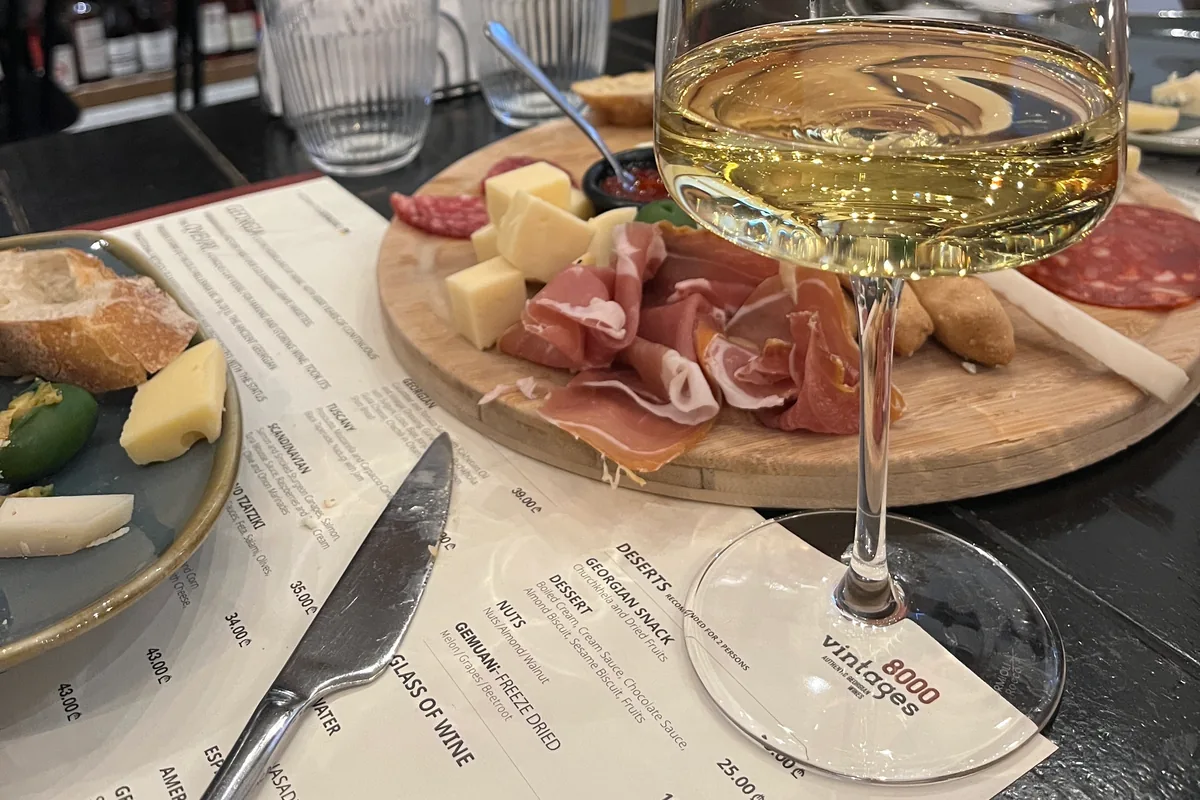
It feels more like a bar than a cellar, and it stocks big and small producers side by side, so it's a good place to compare a big-name Rkatsiteli with a small family qvevri bottle.
Sadzvele Wine Hub
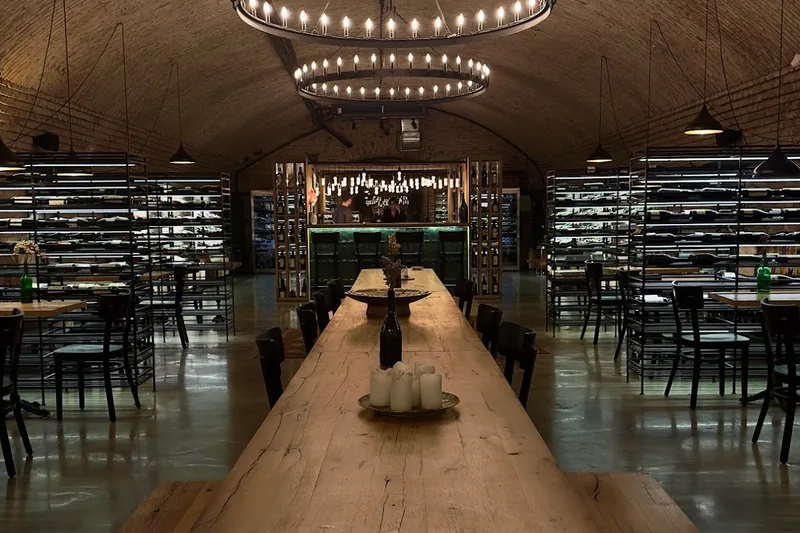
A wine bar, wine school and events room in the 1896 Wine Factory N1 building, opened in fall 2024. It holds about 200 wines, puts qvevri on display and shows the building's oldest cellar through glass. Tastings are bookable.
Wine Code
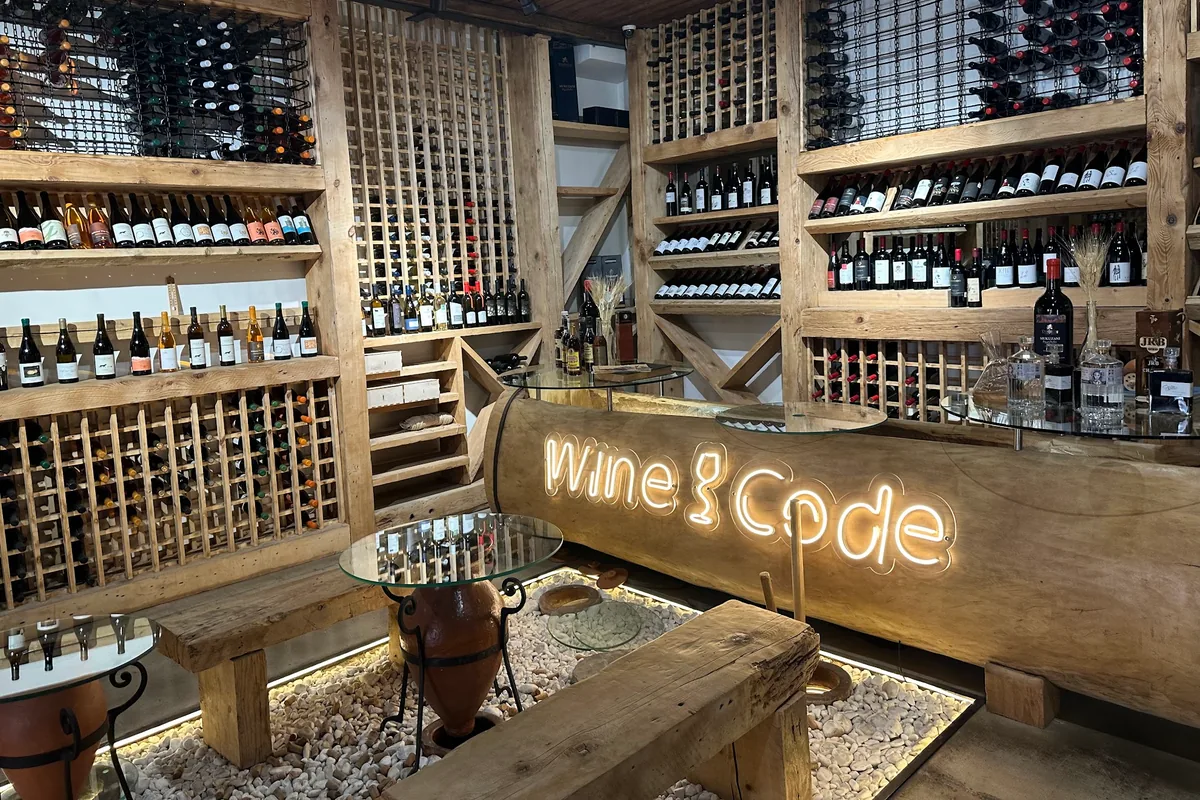
A wine bar in Avlabari with a cellar room and a small qvevri on display, where the staff explain terroir as they pour. A four-wine tasting with high-proof spirits costs 35 GEL, and you need to book. Flights like this one and Wine Point's are the cheapest wine tasting in Tbilisi, well under the price of a private sommelier session.
Buying a bottle of amber wine and taking it home
You'll want to bring some home, and Tbilisi makes it easy. Several of the wine bars above double as shops: 8000 Vintages and Vino Underground both sell bottles, and Warehouse, in the Stamba courtyard on Kostava Street, has a few open bottles on ice and a shelf of Georgian and European wines to take away. The specialist wine shops in Tbilisi carry the bigger ranges.
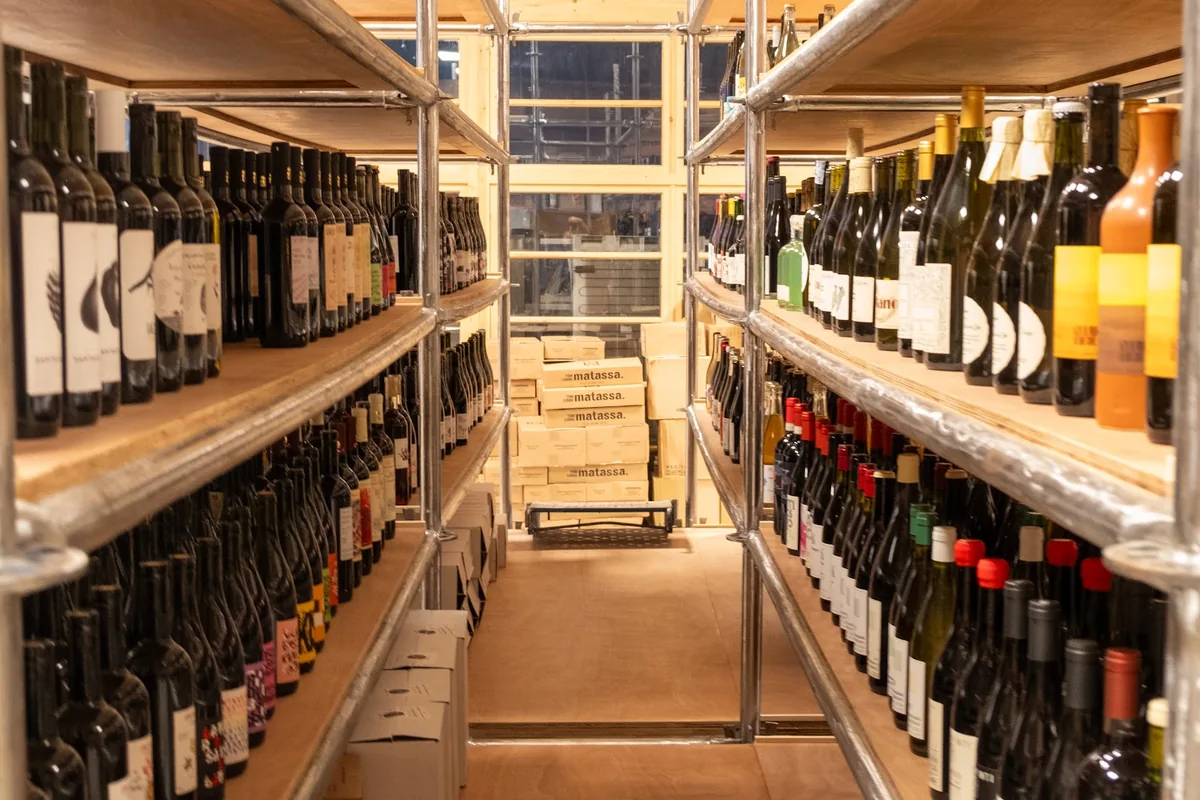
When you buy, ask for qvevri amber by grape. A shop will steer you between the easy-going and the full-on styles if you tell them what you usually drink. Names to look out for include Pheasant's Tears from Sighnaghi, Schuchmann from Napareuli, Teliani Valley and Marnaveli, all of which make amber wines alongside their other bottles.
Shipping wine out of Georgia is hard, so most visitors carry bottles home in their luggage. Wrap each bottle in clothes and keep them in the middle of the case. Your own country's customs allowance sets how much Georgian wine you can carry home duty-free, so check it before you buy a case.
Tasting amber wine at the source in Kakheti
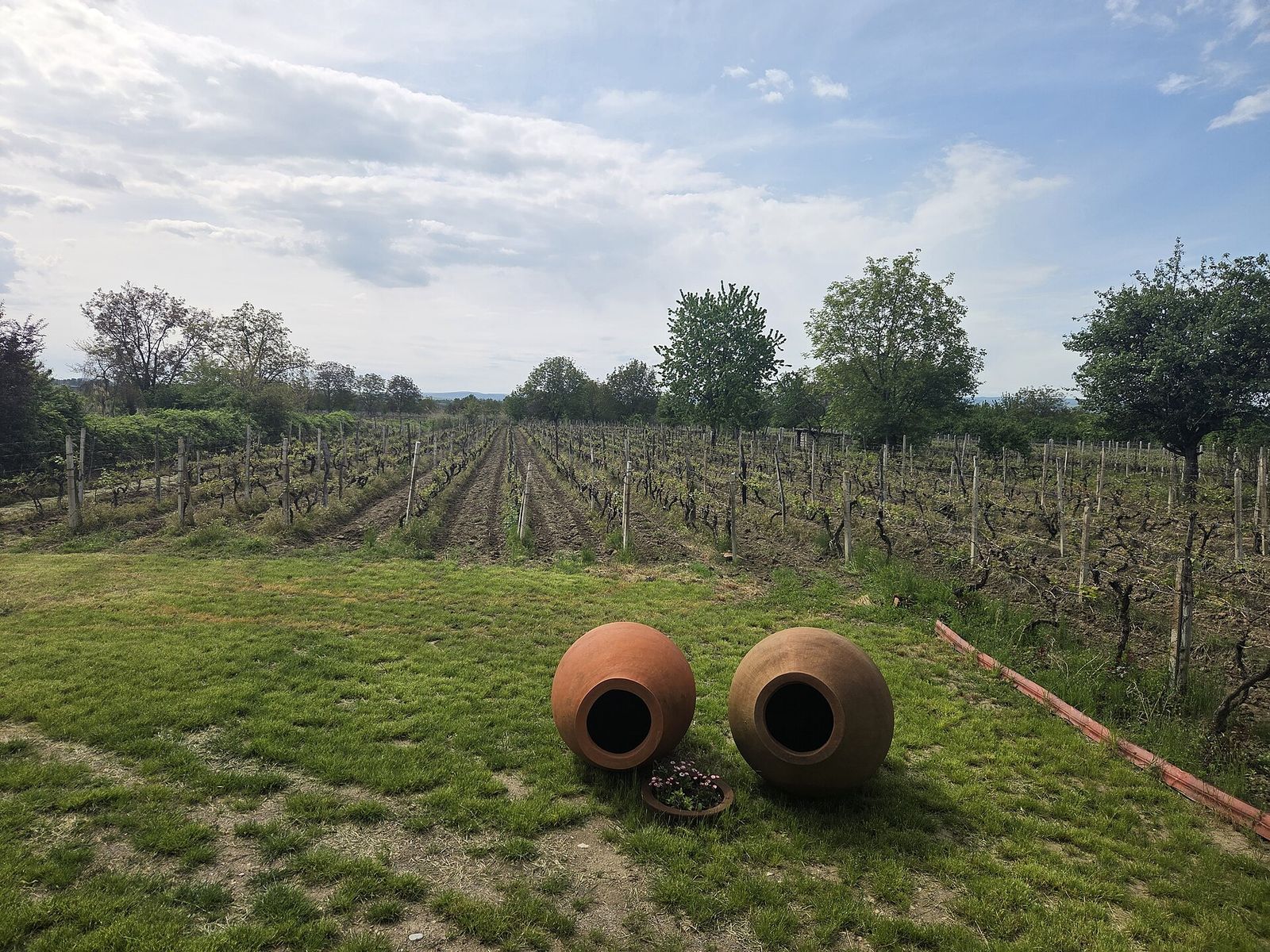
Tbilisi pours the whole country's wine, but Kakheti is where most of the amber is made, and drinking it in a family marani next to the buried qvevri is a different experience. Telavi and Sighnaghi are each about 2 hours' drive from Tbilisi, so a Kakheti wine tour fits in a long day.
At family wineries, tastings run about 30 to 120 GEL per person and a meal with wine 80 to 200 GEL, usually with 24 hours' notice for the meal. Bigger estates are cheaper: Khareba charges 25 GEL for three wines plus its wine tunnel. Bottles bought at the winery cost about 15 to 100 GEL. Most wineries take walk-ins for a tasting, and whoever drives can't drink: the drink-drive limit is zero.
Key takeaways
- Amber is white wine fermented on its skins, the same style the rest of the world calls orange wine.
- The classic Kakheti amber spends about six months on its skins in a buried qvevri; western Georgian ambers are lighter.
- Rkatsiteli is the grape to start with; Kisi, Khikhvi and Mtsvane are the next three to try.
- Drink it cool and with food, especially walnut and eggplant dishes.
- In Tbilisi, a glass costs 10 to 20 GEL at a wine bar and a four-wine tasting 35 to 45 GEL.
Frequently asked questions
Is amber wine the same as orange wine?
Yes. Both names describe white grapes fermented with their skins, which gives the wine its color and tannin. Georgians prefer amber, partly because orange suggests the wine contains orange fruit, which it doesn't.
Is amber wine sweet?
No, almost all Georgian amber wine is dry. The deep color comes from the grape skins rather than from sugar. The sweet Georgian wines on Tbilisi menus, such as Kindzmarauli and Khvanchkara, are semi-sweet reds.
Is amber wine natural wine?
Not by definition. Amber describes how the wine is made, with skin contact, while natural wine describes minimal intervention. The two often overlap in Georgia, since many qvevri ambers are made with little or no added sulfite, but plenty of commercial ambers are made conventionally.
How long does amber wine stay on the skins?
Anywhere from about a month to six months, and longer in some cellars. The classic Kakheti amber spends about six months on its skins in a qvevri. Western Georgian and Racha winemakers use fewer skins for less time, which makes a lighter wine.
Should you chill amber wine?
Lightly. Serve it at 13 to 18°C, cooler than room temperature but warmer than a white straight from the fridge. Too cold, and the tannin tastes harsh and the aromas disappear.
What grape is used for Georgian amber wine?
Rkatsiteli, the most planted white grape in Georgia, makes most of it. Mtsvane, Kisi and Khikhvi are the other big Kakheti amber grapes, while Chinuri, Tsolikouri and Krakhuna make lighter ambers in Kartli and western Georgia.
Where can I try amber wine in Tbilisi?
Any wine bar in Tbilisi will pour amber by the glass, usually for 10 to 20 GEL. My first stop would be Vino Underground on Galaktion Tabidze Street, which focuses on small qvevri producers, followed by Wine Point or Ferment Wine Bistro near Freedom Square.
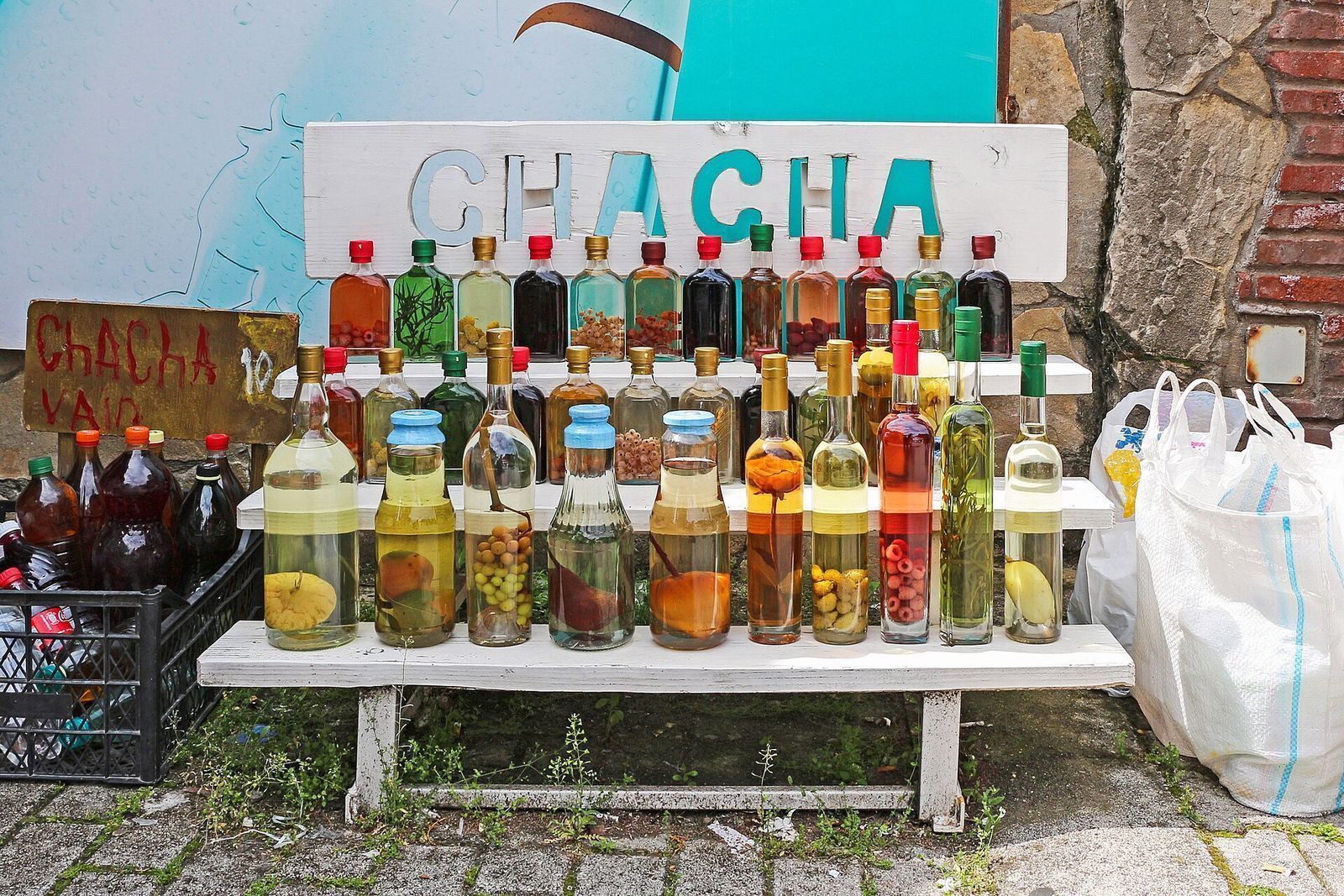
Georgian Drinks: What to Drink in Georgia and Where to Try It in Tbilisi
Tbilisi is known for its qvevri wine. Here's what to drink in Georgia, from amber wine to chacha, and where to try it.
Read the guide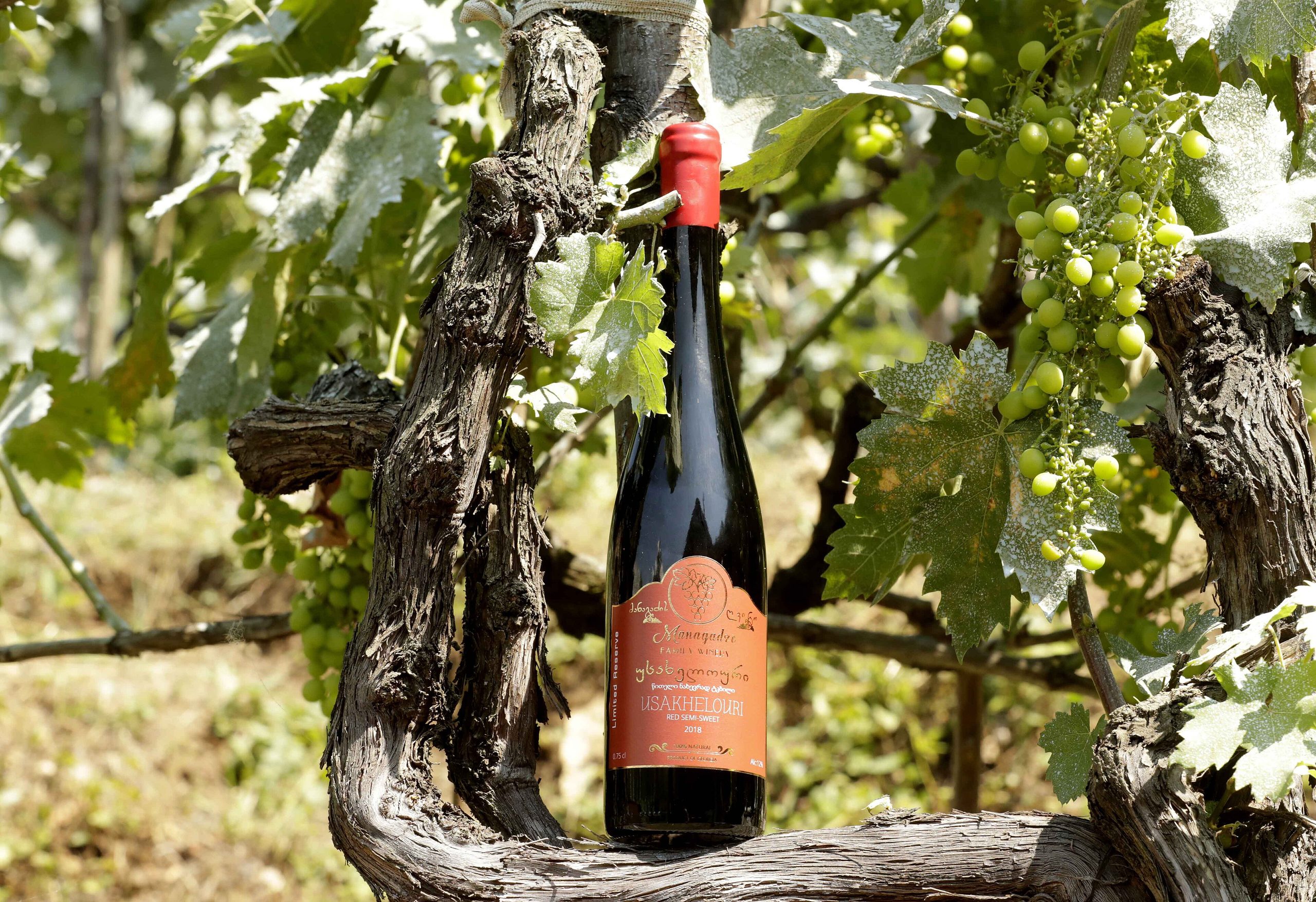
Georgian Wine Guide: Regions, Styles and What to Order
Georgia is known for 8,000 years of winemaking. Here is what to know about its styles, regions, prices and bars.
Read the guide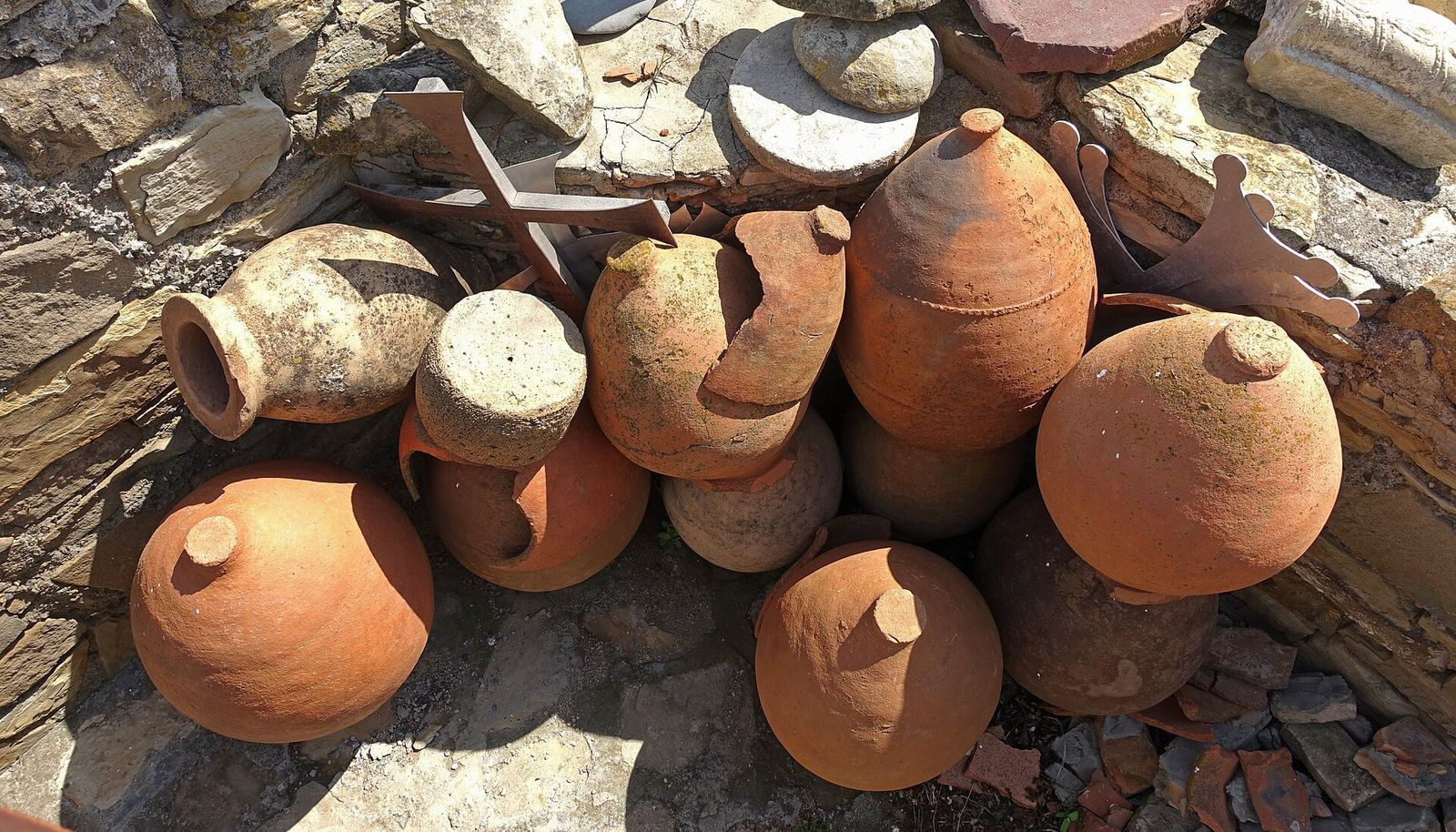
Qvevri Wine: How Georgia Makes Wine in Buried Clay Jars
Georgia is known for qvevri wine. Here is what the clay jars are, how the wine tastes and where to try it in Tbilisi.
Read the guide