Rtveli, the Grape Harvest in Georgia: Dates, Tours and What Happens
Tbilisi is the gateway to Georgian wine country, and every autumn that country goes to work. Rtveli is the grape harvest, when families in Kakheti and beyond pick, press and pour the new wine into clay qvevri, then sit down to a long feast. Here's when it happens, how to join in from Tbilisi, what it costs and what a harvest day looks like.
What is Rtveli?
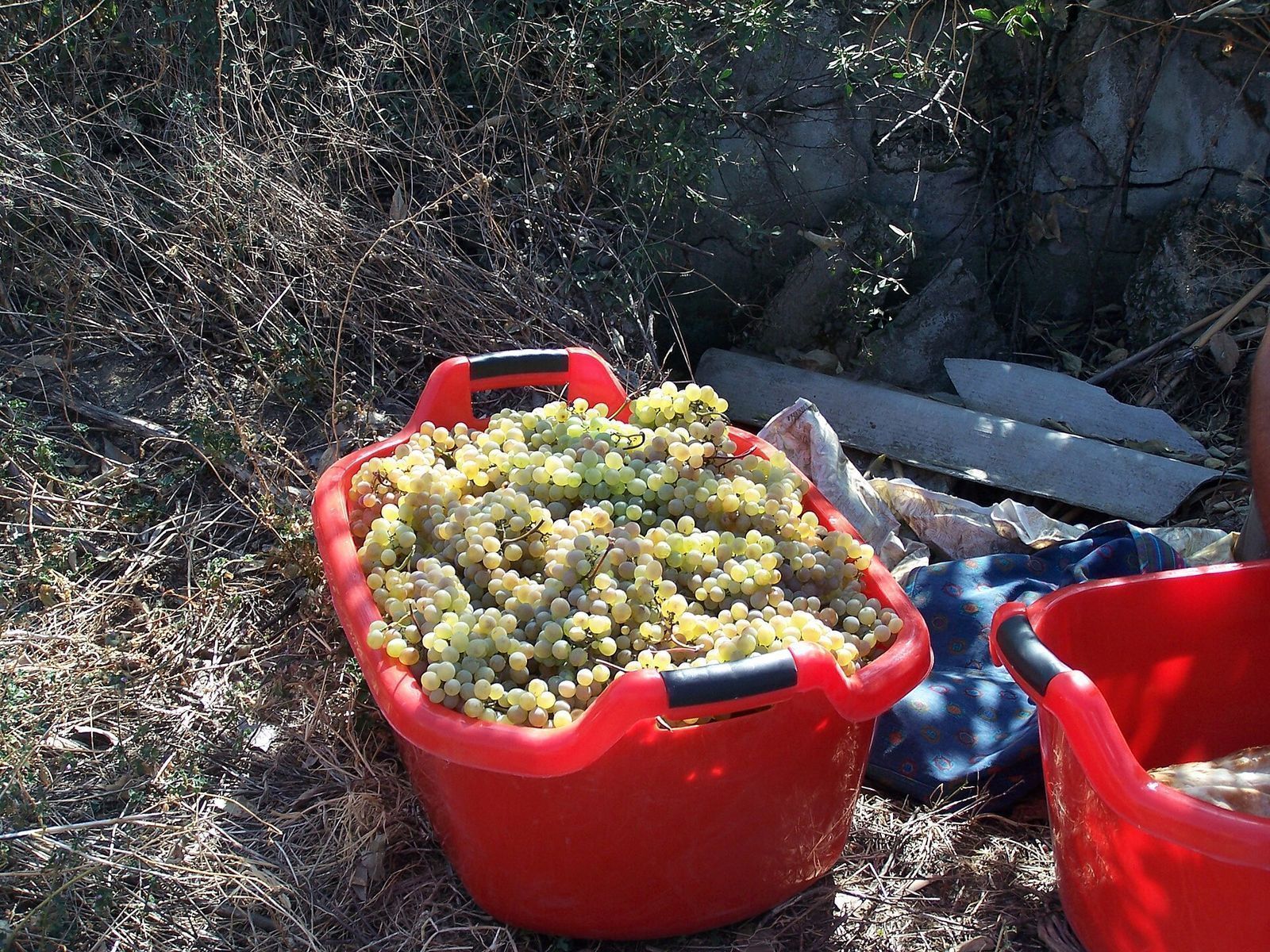
Rtveli is the Georgian grape harvest, and the word simply means the harvest. It covers the whole job: picking the grapes, carrying them to the marani (the family wine cellar), pressing them, pouring the juice into qvevri, the clay vessels buried in the cellar floor, and then the supra, the feast that closes the day.
There is no single Rtveli festival with a stage and tickets. It happens in family vineyards all over the country, and each family picks on its own day, sometimes in one long push and sometimes over several days. Relatives and neighbors come to help, someone gets a fire going for mtsvadi between the rows, and in October almost every village in Kakheti holds its own celebration with music, dancing and a big table.
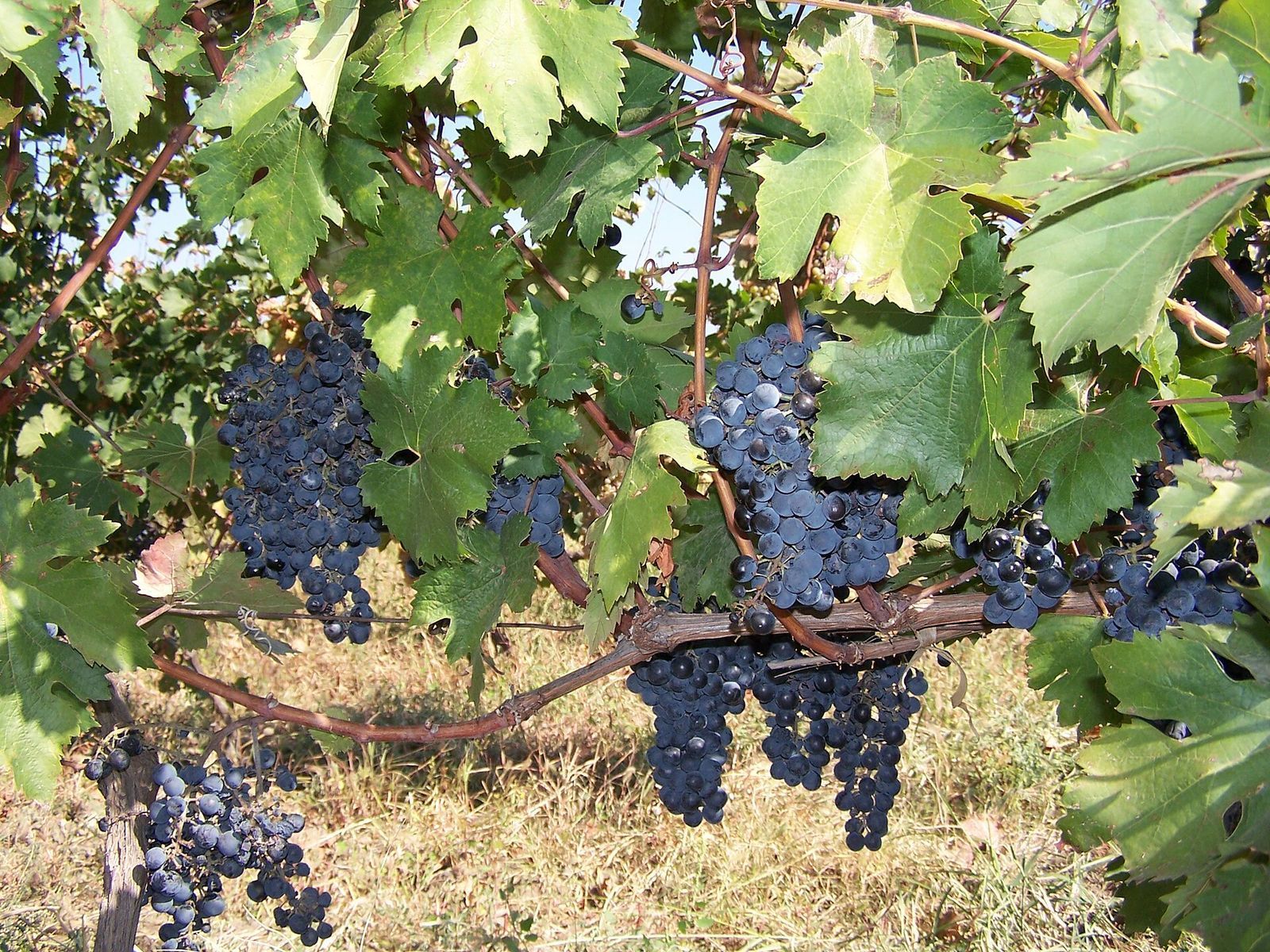
For a visitor that is both the appeal and the catch. It's the most Georgian thing you can do in autumn, and none of it runs to a timetable. Kakheti, the region east of Tbilisi that makes about 70% of Georgian wine, is where most harvest trips go, and the grapes you'll pick there are almost always Rkatsiteli, the white, and Saperavi, the red.
When is Rtveli? Harvest dates by region
The harvest season runs from late August to late October, and in a slow year into early November. Most of the picking falls between about 5 September and 20 October. White grapes such as Rkatsiteli and Mtsvane usually come in about a week before Saperavi, and the start can differ by 1 to 2 weeks between neighboring villages.
The winemaker sets the day by the sugar in the grapes and the forecast, so most families confirm it only a few days ahead, and rain can push it back at short notice. These are the usual windows:
| Region | Main towns | Usual harvest window |
|---|---|---|
| Kakheti | Telavi, Sighnaghi | Mid-September to mid-October, busiest late September to mid-October |
| Kartli | Gori, Bolnisi | Late September to mid-October |
| Imereti | Kutaisi | Late September to mid-October |
| Racha | Ambrolauri | Early to mid-October, sometimes into early November |
| Guria and Adjara | Ozurgeti, Batumi | The end of the season, with the last grapes as late as December |
If I were planning a trip around it, I'd aim for the last week of September or the first ten days of October. That catches Kakheti in full swing, the days are mild, and back in the city it lines up with Tbilisoba, the autumn city festival on the first weekend of October. It's a big part of why early October is my answer to the best time to visit Tbilisi.
What happens on a harvest day
The picking starts in the morning, in the field by 10:00 at the latest, before the sun gets strong. Visitors usually pick for about 2 hours, snipping bunches into crates while the family works twice as fast in the next row. The full crates go onto a trailer and down to the marani.
Then comes the first break, and it's a good one. Khachapuri comes out, the fire is ready for mtsvadi grilled right by the vines, last year's wine is poured, and there's a shot of chacha for anyone brave enough before lunch.
The pressing is where the old way and the new way meet. The traditional tool is the satsnakheli, a long wooden trough where the grapes are trodden barefoot. Plenty of family wineries now use an electric press instead, for hygiene and to save labor: it strips the stems, keeps the skins and seeds, and the juice is pumped through a hose into the qvevri. Crushing can take an hour or more per ton. Harvest days set up for visitors almost always keep a satsnakheli going, because treading grapes is the part everyone came for, children most of all.
In the cellar, the juice goes into the buried clay vessels, skins and all. That is the qvevri method Georgia is known for, and with white grapes in Kakheti the skins often stay in for about 6 months, which is what turns the wine into amber wine, coppery and grippy. The new wine is ready 3 to 6 months after fermentation, so the bottles you drink at the table are last year's.
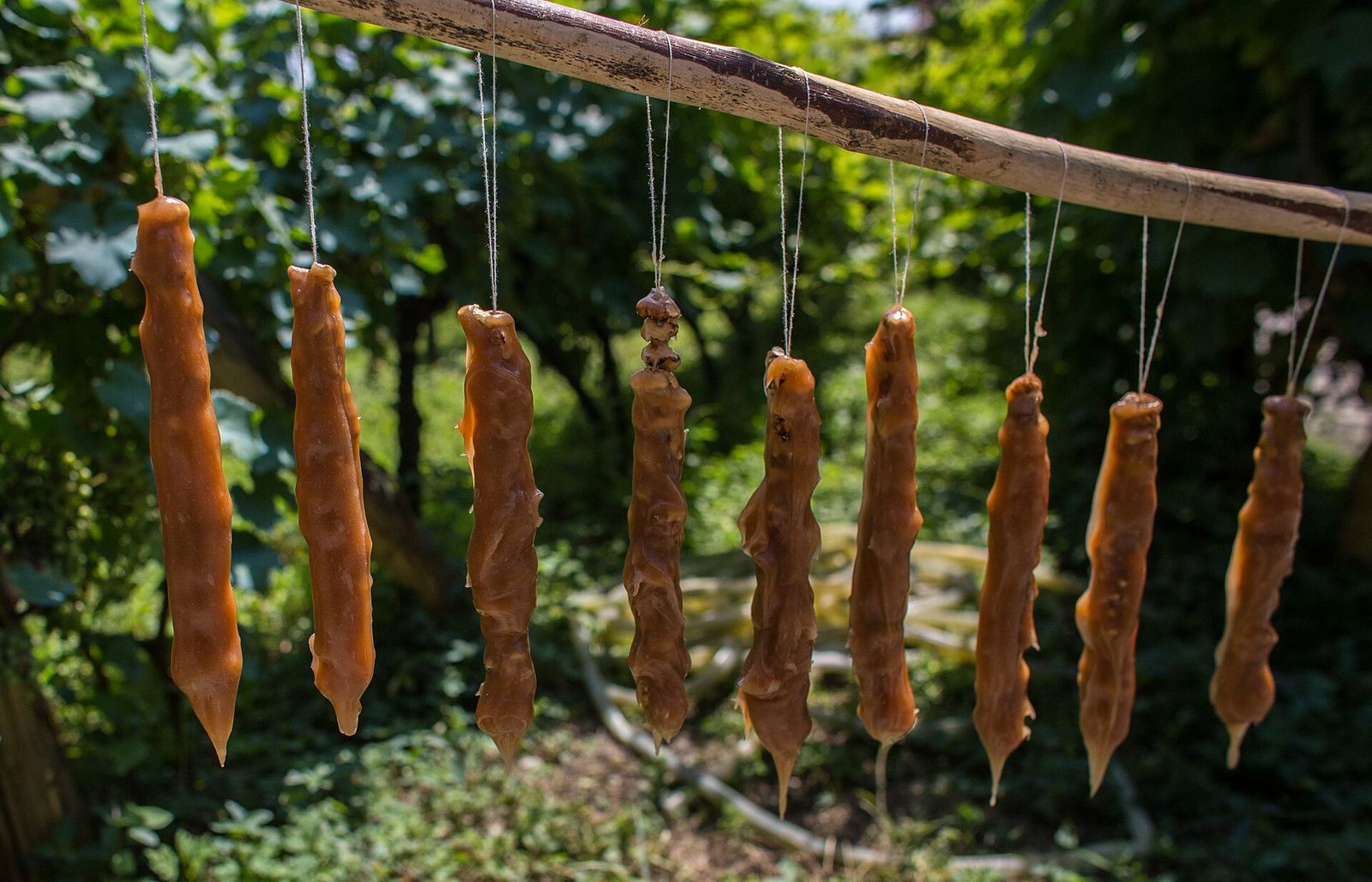
Some of the fresh juice never reaches the cellar. On the stove it's boiled and thickened with flour into tatara, the paste that strings of walnuts are dipped into, again and again, to make churchkhela. Each string hangs to dry for days, and it's one of the Georgian sweets that started life as a way to use up the harvest.
The day ends at the table. A tamada, the toastmaster, leads one toast after another, a drinking horn may come out, and a full harvest supra can run for hours, with songs between the toasts. Nobody will pressure you to drink, but the toasts at a supra are the moment you're most likely to be asked to say a few words, so have one ready about the family and the harvest.
How to join the harvest: your options compared
Visitors can't just turn up in a village and start picking. There are five realistic ways in, and they trade authenticity against certainty.
| Option | What you do | How long | Price | Best for |
|---|---|---|---|---|
| Harvest day tour from Tbilisi | Pick, tread grapes in a satsnakheli, fill a qvevri, eat a supra | 9 to 10 hours | From 225 GEL per person, 10% off for 4 or more | First-timers with one free day |
| Simulation harvest at a winery | A set-up harvest: pick, press by hand, foot or machine, cook, then lunch and a tasting | About 4 hours on site | Set by each winery | Fixed dates, families, any weather |
| Event harvest | A staged harvest day for a large group | A full day | Usually cheaper than a private day | Big groups and budget travelers |
| Real family harvest | Join a family, its neighbors and friends on their actual picking day | 1 or 2 days | Ask the organizer | Flexible travelers who want the real thing |
| Kakheti wine tour in harvest season | Wineries, tastings and markets, no picking | 10 to 12 hours | From 170 GEL in a group, from 560 GEL private for 1 or 2 | Wine without the work |
For most people I'd book the harvest day tour. It gives you every stage of the day, with transport and a guide, and it runs on a date you can plan around.
The real family harvest is better, and it is also the least predictable. Spots are strictly limited, you'll usually join a waitlist, and the date gets confirmed a few days out by text. Keep 2 or 3 days free and treat it as a bonus if it lands.
A simulation harvest is the safe pick if you have exactly one fixed day or travel with small kids. It runs whatever the weather, it's shorter, and it's less real, which some families will prefer.
If none of those fits, a regular Kakheti wine tour in late September still puts you in the middle of it: trucks of grapes on the roads, crates outside every cellar and the smell of fermenting juice in the villages. Most of the bigger wineries in Kakheti take walk-ins for tastings, from 15 to 40 GEL at the large estates.
A harvest day trip from Tbilisi
This is how a typical harvest day tour runs, picking near Telavi and back in Tbilisi for a late dinner.
| Time | What happens |
|---|---|
| 09:00 to 10:00 | Hotel pickup in Tbilisi, then about 1.5 to 2 hours east to Kakheti |
| 11:00 | Picking Saperavi and Rkatsiteli at a family vineyard near Telavi |
| 12:00 | Treading the grapes barefoot in a wooden satsnakheli |
| 13:00 | Filling a qvevri with the fresh must in the marani |
| 14:30 | The harvest supra: Kakhetian food, young qvevri wine, homemade chacha, toasts |
| 16:00 | The drive back, in Tbilisi around 19:00 to 20:00 |
The price covers the transfer, an English-speaking guide, the picking and treading, the wine and chacha at the table and the feast. Bottles to take home are extra, and families usually sell their own for 8 to 15 GEL, which is the cheapest good wine you'll buy on the whole trip. The work is light, no special fitness is needed, and children are welcome.
Staying in Kakheti for the harvest
A day trip covers the essentials, but a night or two in Kakheti gets you closer to the real thing. Family harvests start early, two-day harvest trips sleep near the vineyard, and the village celebrations run into the evening, long after the day tours have driven back to the city.
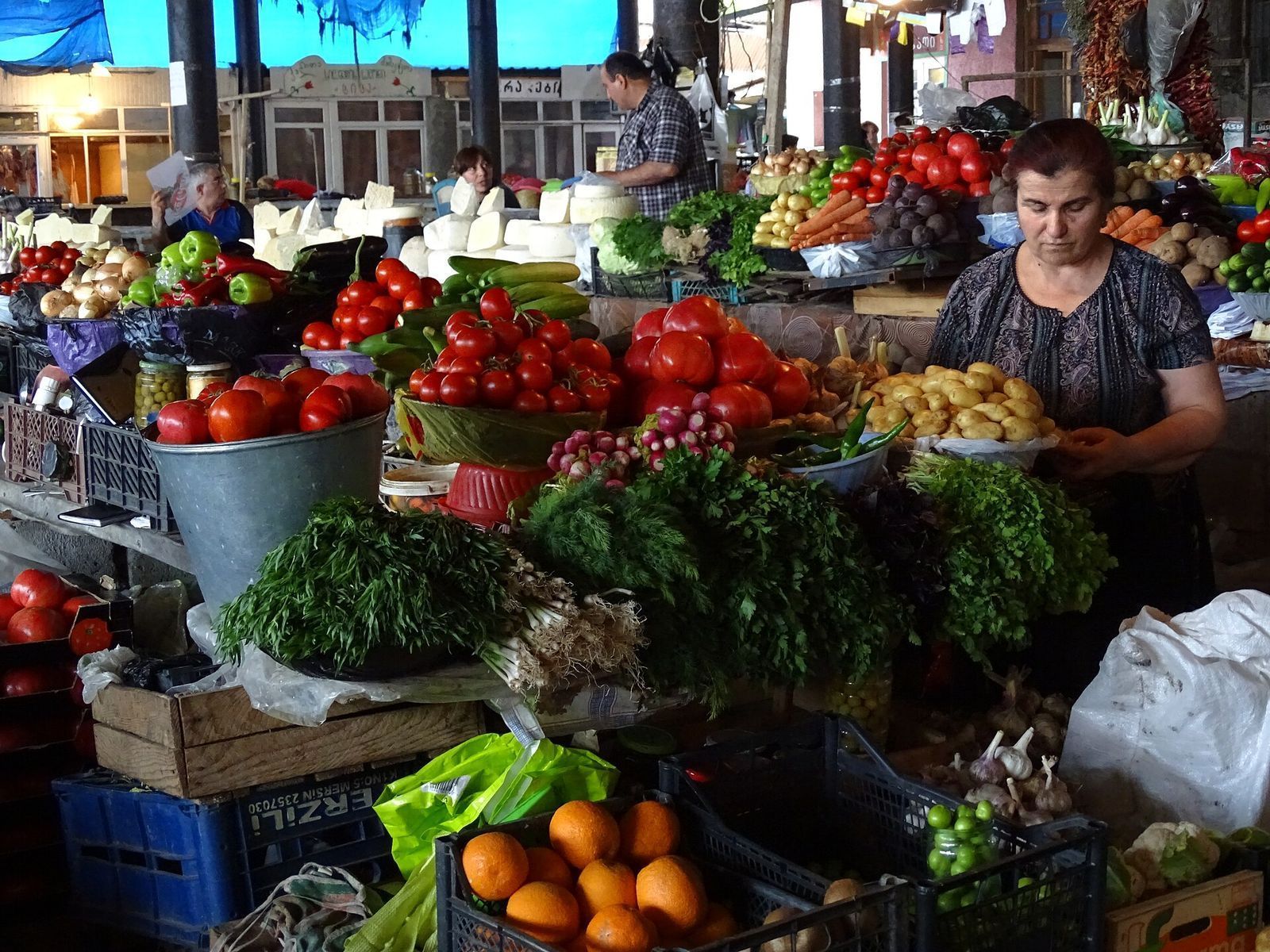
Telavi is the center of the harvest country, about 2 hours from Tbilisi over the Gombori pass. Its market in autumn is piled with grapes, persimmons, pomegranates, walnuts and fresh churchkhela, and Alaverdi, the 6th-century monastery with its own wine cellar, is about 10 minutes out of town. Tsinandali Estate, where bottled European-style wine began in Georgia in the early 1800s, is close by too.
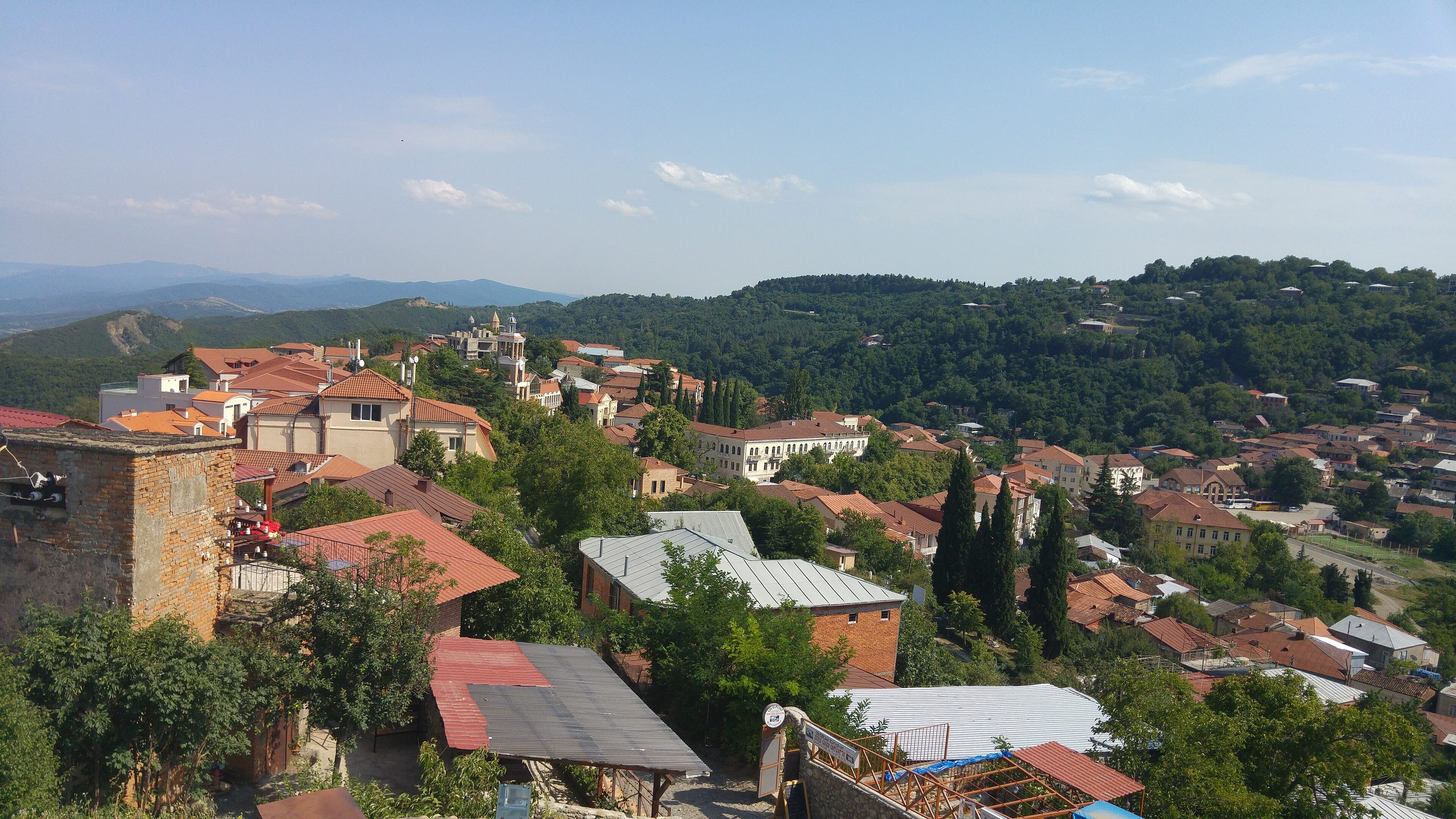
Sighnaghi, the walled hill town 112 km from Tbilisi, is the prettier base, with views over the Alazani valley and plenty of guesthouses. In October expect to pay 80 to 120 GEL a night, about 10 to 20% more than out of season.
Harvest food and drink to try
The harvest has its own menu. Most of these turn up at any village supra in October, and a few are hard to find at other times of the year.
| Food or drink | What it is | When you'll find it |
|---|---|---|
| Young qvevri wine | The family's own wine, poured from the qvevri at the table | All through the harvest |
| Madjari | Fresh grape juice that has just started to ferment | October and November |
| Chacha | Grape spirit distilled from the skins and seeds left after pressing, usually 40 to 65% | Before lunch and at the supra |
| Churchkhela | Walnuts on a string, dipped in thickened grape must and dried | New batches from October |
| Tatara | The thickened grape must itself, also set as a pudding with walnuts | Harvest days |
| Mtsvadi | Pork skewers grilled over an open fire | Lunch in the vineyard |
| Khachapuri | Cheese bread | The first break after picking |
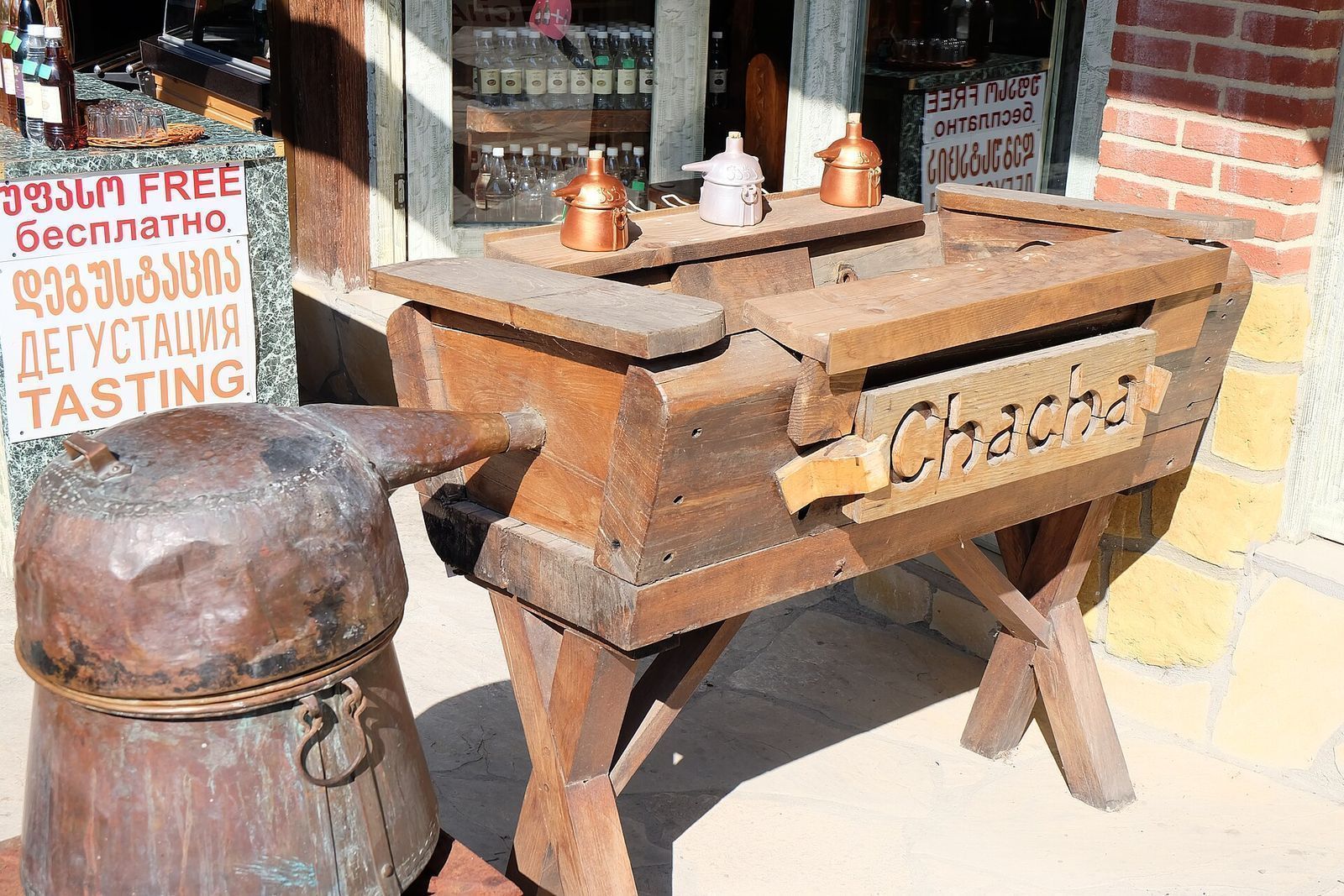
The pile of skins, seeds and stems left in the press doesn't go to waste either. It ferments for 2 to 4 weeks and gets distilled into chacha, so every harvest is also the start of next year's spirit.
What to wear and bring
- Clothes you don't mind staining, plus a spare T-shirt for the drive home. Grape juice gets everywhere, especially if you tread.
- Light shoes with some grip. The rows can be muddy after rain, and you'll want them off fast for the satsnakheli.
- A hat and sunscreen. Vineyards have no shade, and a sunny late-September morning still gets warm.
- A jacket for the evening. Daytime highs of about 15 to 22°C drop to 8 to 12°C at night, and the supra runs late.
- Some cash for bottles. At 8 to 15 GEL from the family cellar, you'll want to carry a few home.
- A word about your diet. Vegetarians can be catered for, but tell the organizer when you book.
The harvest in Tbilisi: where to taste it
Not everyone can give up a day for Kakheti, and the new season reaches the city anyway. These three places put the harvest within walking distance, and the rest of the wine bars in Tbilisi pour the same small producers.
Wine Point
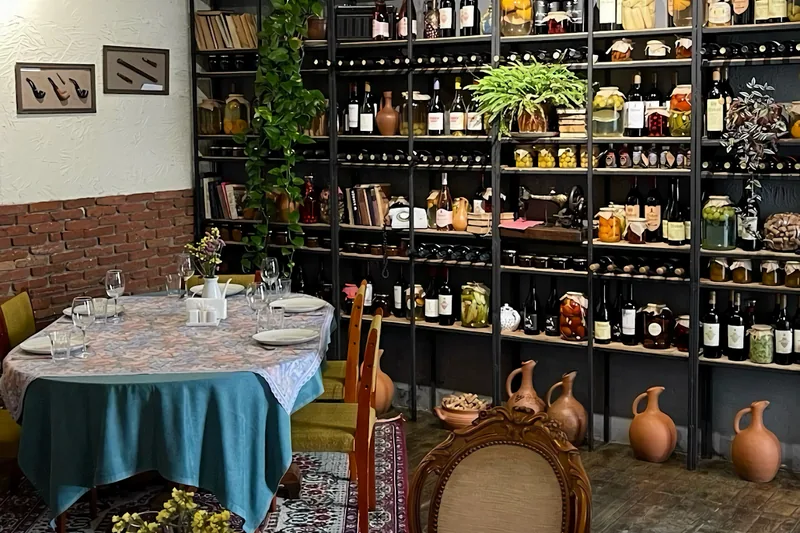
Wine Point is a small bar on Ingorokva Street, a few minutes from Freedom Square, with a list that leans toward pet nats, amber wines and sparkling. The four-wine tasting with snacks costs 45 GEL per person and needs booking, and the wine of the day runs 10 to 15 GEL a glass.

My favorite reason to go is the Friday and Saturday wine buffet from 7pm, 25 GEL for a glass and snacks, which is a cheap, easy way to taste what small producers are pouring this season. Who it suits: travelers short on time, and anyone who wants a guided taste of amber wine before deciding on a Kakheti day.
Vino Underground
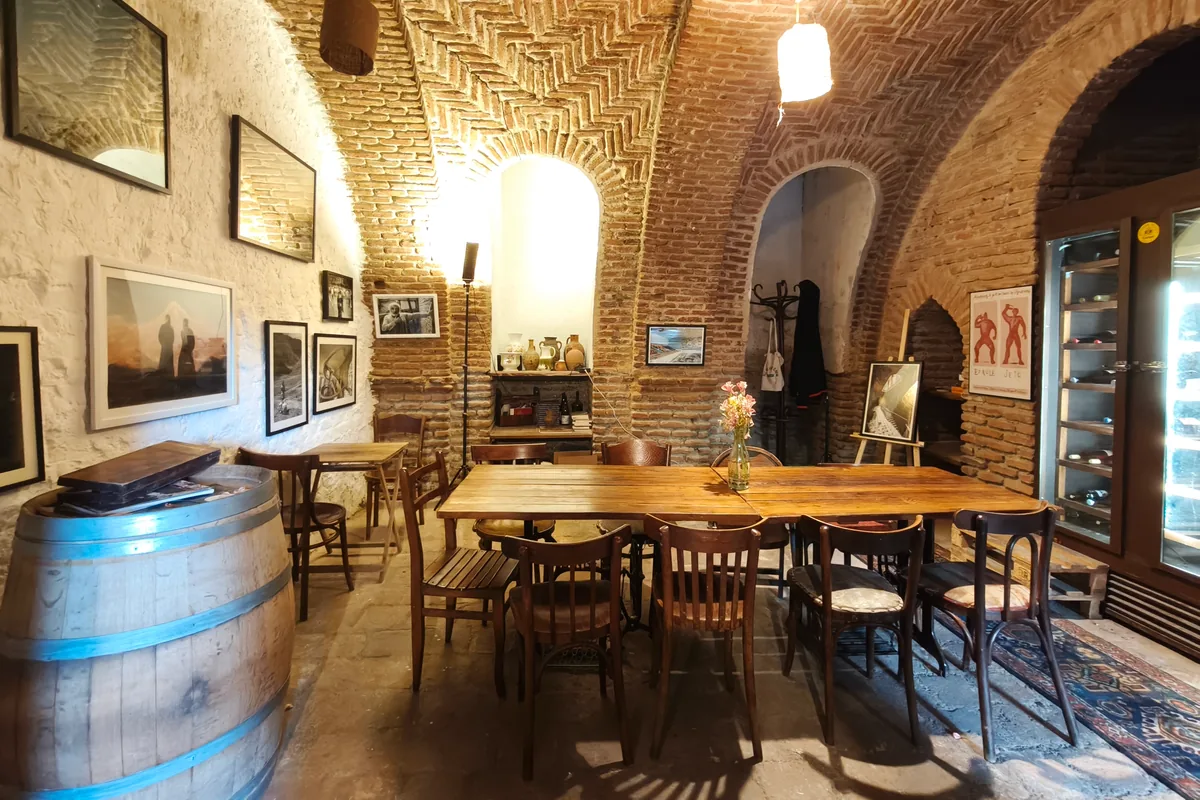
Vino Underground is a brick basement on Galaktion Tabidze Street, opened by a group of natural winemakers and one of the first places in Tbilisi to pour natural qvevri wine. The list focuses on small amber producers, the staff speak English, and it opens at 2pm every day.

A glass costs 10 to 20 GEL and a bottle 35 to 120 GEL. It's the closest thing in the city to drinking in a family marani, and the people who made the wines are often the people behind the bar's list. Who it suits: amber wine fans, natural wine drinkers and anyone hunting bottles to carry home.
Dezerter Bazaar

Dezerter Bazaar, Tbilisi's big food market by Station Square, is where the harvest shows up as produce. In autumn the stalls on Tsinamdzghvrishvili Street fill with grapes, fruit and fresh churchkhela, and the market is open daily from 07:00 to 17:00, best before noon.
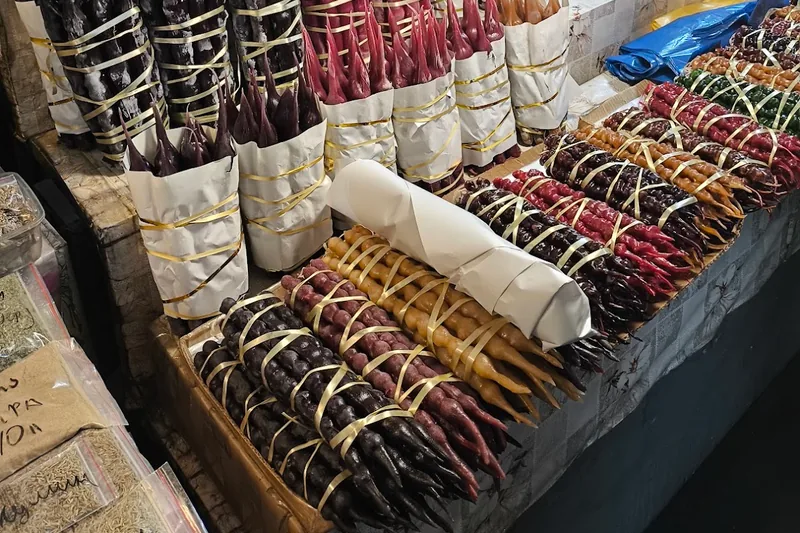
It's also where locals buy homemade chacha, at 10 to 20 GEL a liter. Taste before you buy, and stick to stalls that sell plenty of it, because badly made homemade chacha can be dangerous. It's cash only. Who it suits: food lovers, budget travelers and anyone who wants churchkhela fresh rather than shrink-wrapped.
Key takeaways
- Rtveli is the grape harvest, held family by family from late August to late October, busiest in Kakheti from late September to mid-October.
- Dates move with ripeness and rain, so book a fixed-date harvest tour or keep 2 or 3 days free for a real family harvest.
- A harvest day tour from Tbilisi costs from 225 GEL per person and covers picking, treading, the qvevri and a supra.
- Stay a night in Telavi or Sighnaghi, at 80 to 120 GEL in October, to catch the village celebrations.
- Don't drive: the drink-drive limit is zero and the wine starts before lunch.
Frequently asked questions
When is Rtveli in Georgia?
Rtveli runs from late August to late October, with most picking between about 5 September and 20 October. In Kakheti the busiest stretch is usually late September to mid-October, while Racha and western Georgia harvest later. Each family sets its own date by ripeness and weather.
What does Rtveli mean?
Rtveli means the harvest, and in Georgia it refers to the grape harvest and everything around it. That includes the picking, the pressing, filling the qvevri and the feast that closes the day.
Can tourists take part in Rtveli?
Yes. The simplest way is a harvest day tour from Tbilisi, where you pick, tread the grapes and eat with a host family. Real family harvests take visitors too, but places are limited and the date is often confirmed only a few days ahead.
How much does a Rtveli tour cost?
A harvest day tour from Tbilisi starts at about 225 GEL per person, with 10% off for groups of 4 or more. A standard Kakheti wine tour without picking starts at about 170 GEL in a group, and bottles from the host family cost 8 to 15 GEL.
Where is the best place to experience Rtveli?
Kakheti, the wine region about 2 hours east of Tbilisi, is the best place. It makes about 70% of Georgian wine, almost every village celebrates the harvest in October, and Telavi and Sighnaghi make easy bases.
What is a satsnakheli?
A satsnakheli is the traditional wooden trough Georgians use to tread grapes barefoot during the harvest. Many wineries now press with machines, but harvest days for visitors usually keep a satsnakheli going.
Is Rtveli a public holiday?
No. Rtveli is a family and village tradition, not a day off, and there is no single national date. Villages hold their own celebrations, mostly in October.
What should I wear to a grape harvest?
Wear clothes you don't mind staining, light shoes with grip and a hat, and bring a jacket for the evening. Nights in Kakheti in autumn drop to about 8 to 12°C, and the feast often runs late.
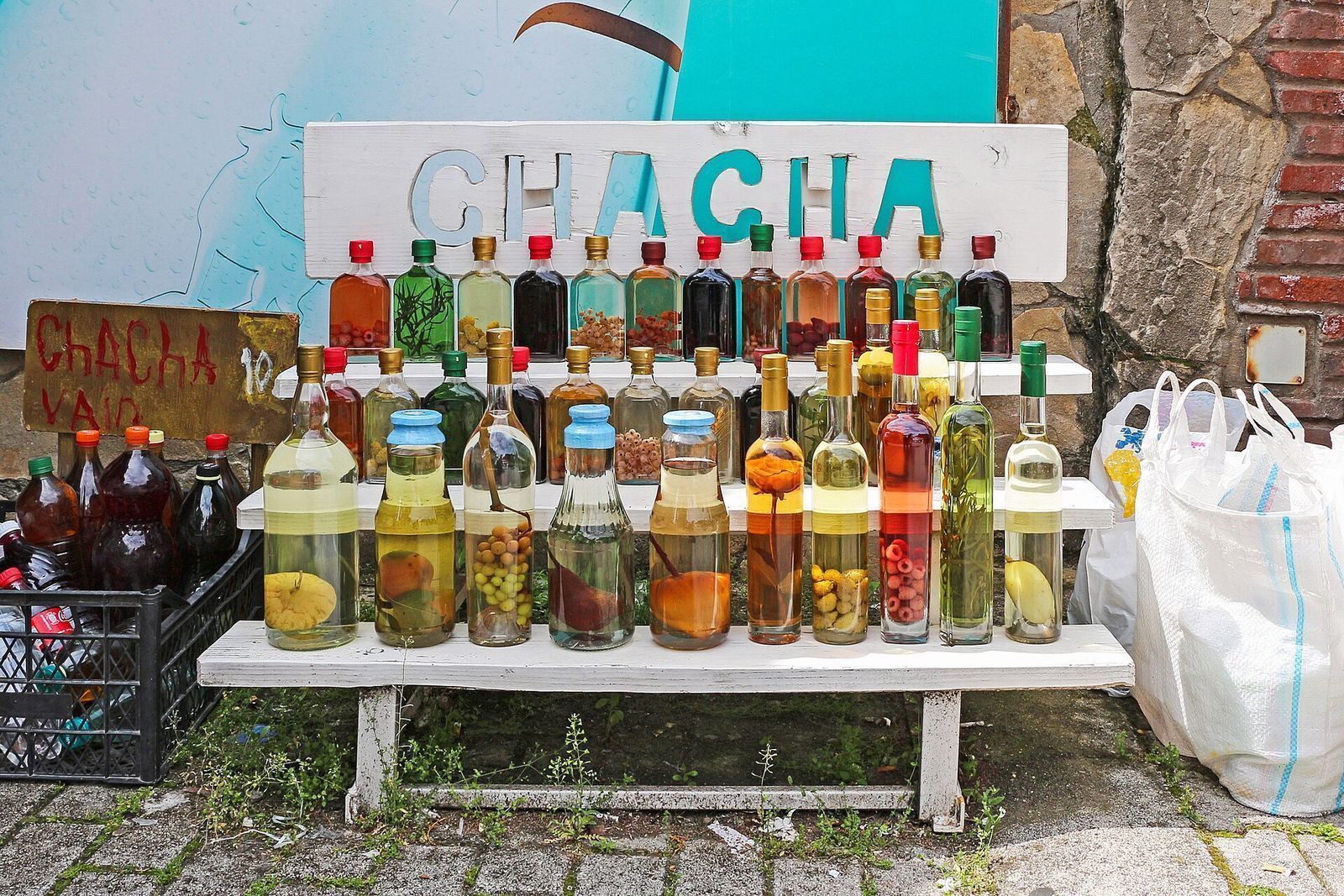
Georgian Drinks: What to Drink in Georgia and Where to Try It in Tbilisi
Tbilisi is known for its qvevri wine. Here's what to drink in Georgia, from amber wine to chacha, and where to try it.
Read the guide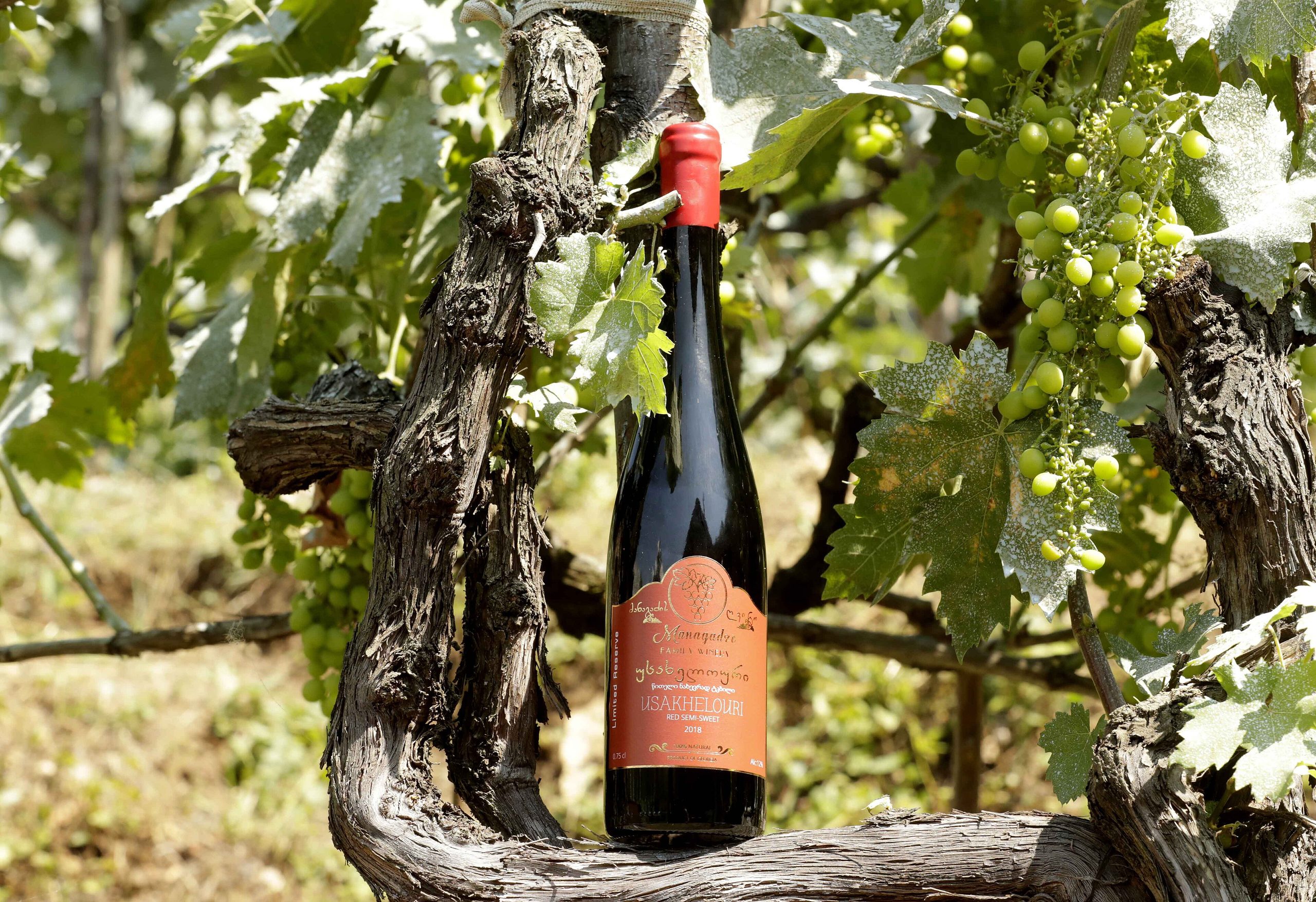
Georgian Wine Guide: Regions, Styles and What to Order
Georgia is known for 8,000 years of winemaking. Here is what to know about its styles, regions, prices and bars.
Read the guide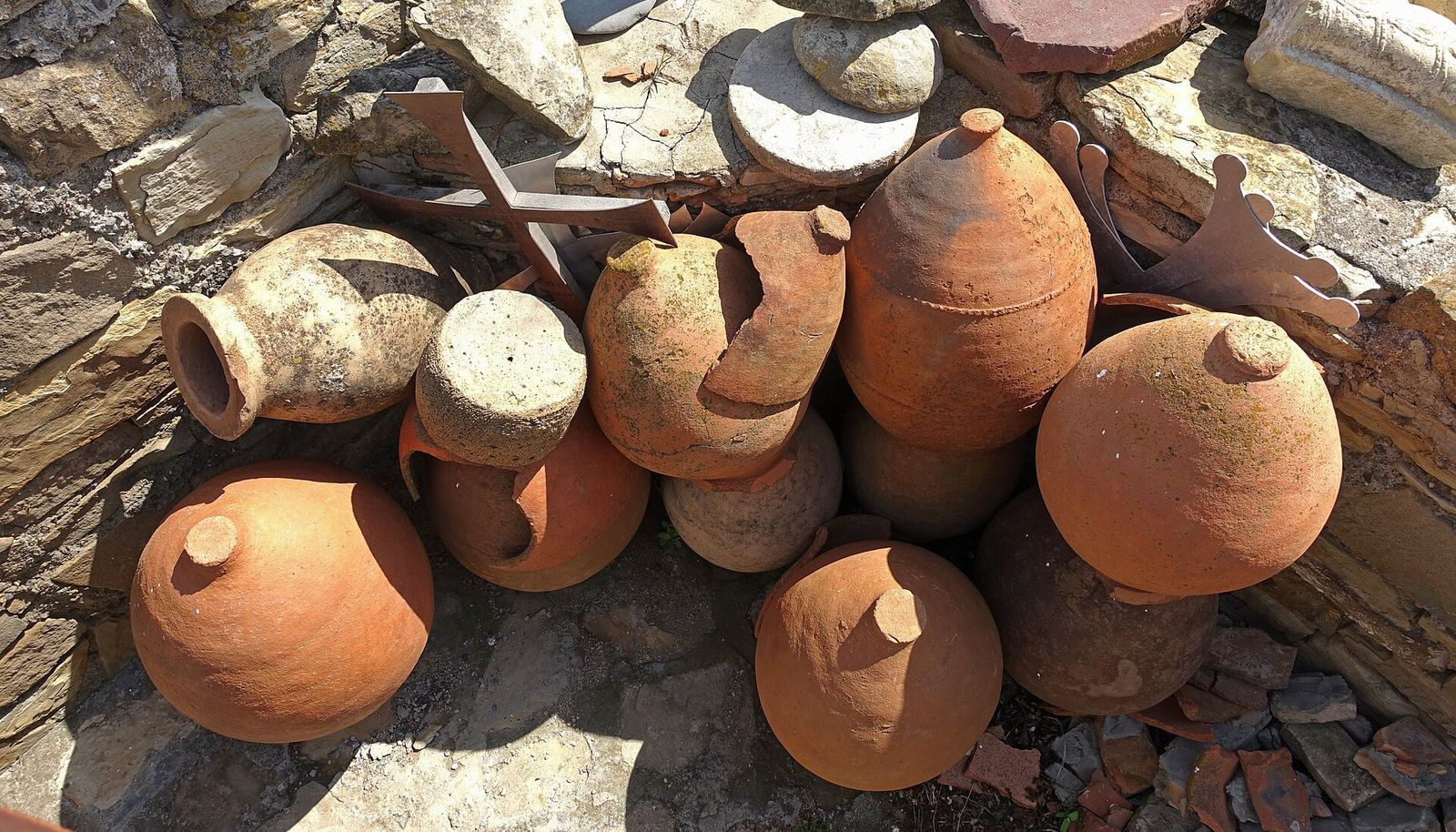
Qvevri Wine: How Georgia Makes Wine in Buried Clay Jars
Georgia is known for qvevri wine. Here is what the clay jars are, how the wine tastes and where to try it in Tbilisi.
Read the guide