Tbilisi Metro: Map, Fares, Hours and the Stations You'll Use
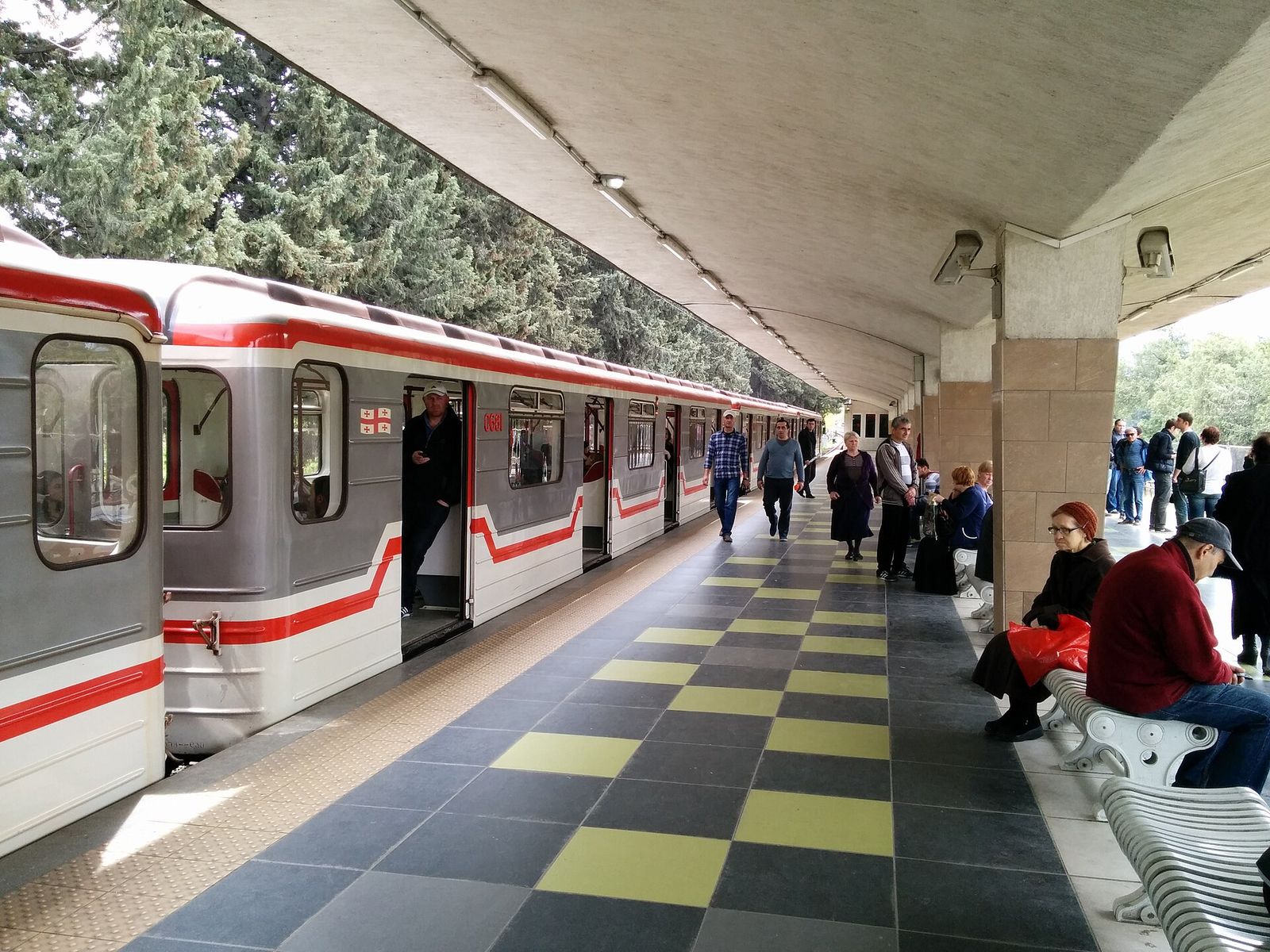
Tbilisi's metro is the quickest way across the city: 2 lines, 23 stations, long escalators down into Soviet-era halls and a flat 1 GEL fare. It won't take you everywhere, and it never touches the airport, but for a long hop across town it beats sitting in traffic. Here's what you need to know about the map, the Metromoney card, the hours, the stations nearest the sights and the places the metro doesn't reach.
Tbilisi metro at a glance
The metro opened in 1966 and has barely grown since: one long line that follows the Kura river through the center, and one short branch out to Saburtalo. That simplicity is what makes it easy. You can't really get lost on a system with one interchange.
I use it for the longer hops, Didube for the minibuses, Station Square for the trains, Saburtalo for a cafe afternoon, and walk everything inside the old town. A ride costs less than a coffee, and from the center to the end of either line is a short trip compared with the same run by road at rush hour.
Tbilisi metro map: 2 lines and 23 stations
The whole network fits in two short tables. Line 1 has 16 stations and Line 2 has 7, and Station Square appears on both, because that's where they meet. Signs in the stations are in Georgian, English and Russian, so the English names below are the ones you'll see on the walls.
Line 1: Akhmeteli Theatre to Varketili
Line 1 is the one you'll ride most. It runs from the housing districts in the north, down through Didube and the center, under the river to Avlabari and out to the southeast.
| Station | What's up top for a visitor |
|---|---|
| Akhmeteli Theatre | The northern end of the line; housing districts |
| Sarajishvili | Housing districts |
| Guramishvili | Housing districts |
| Grmagele | Housing districts |
| Didube | Didube bus station: marshrutkas to Mtskheta, Kazbegi and Kakheti |
| Gotsiridze | Housing districts near Didube |
| Nadzaladevi | Housing districts |
| Station Square | The central railway station; change here for Line 2 |
| Marjanishvili | Marjanishvili and Chughureti, Fabrika, Deserter's Market |
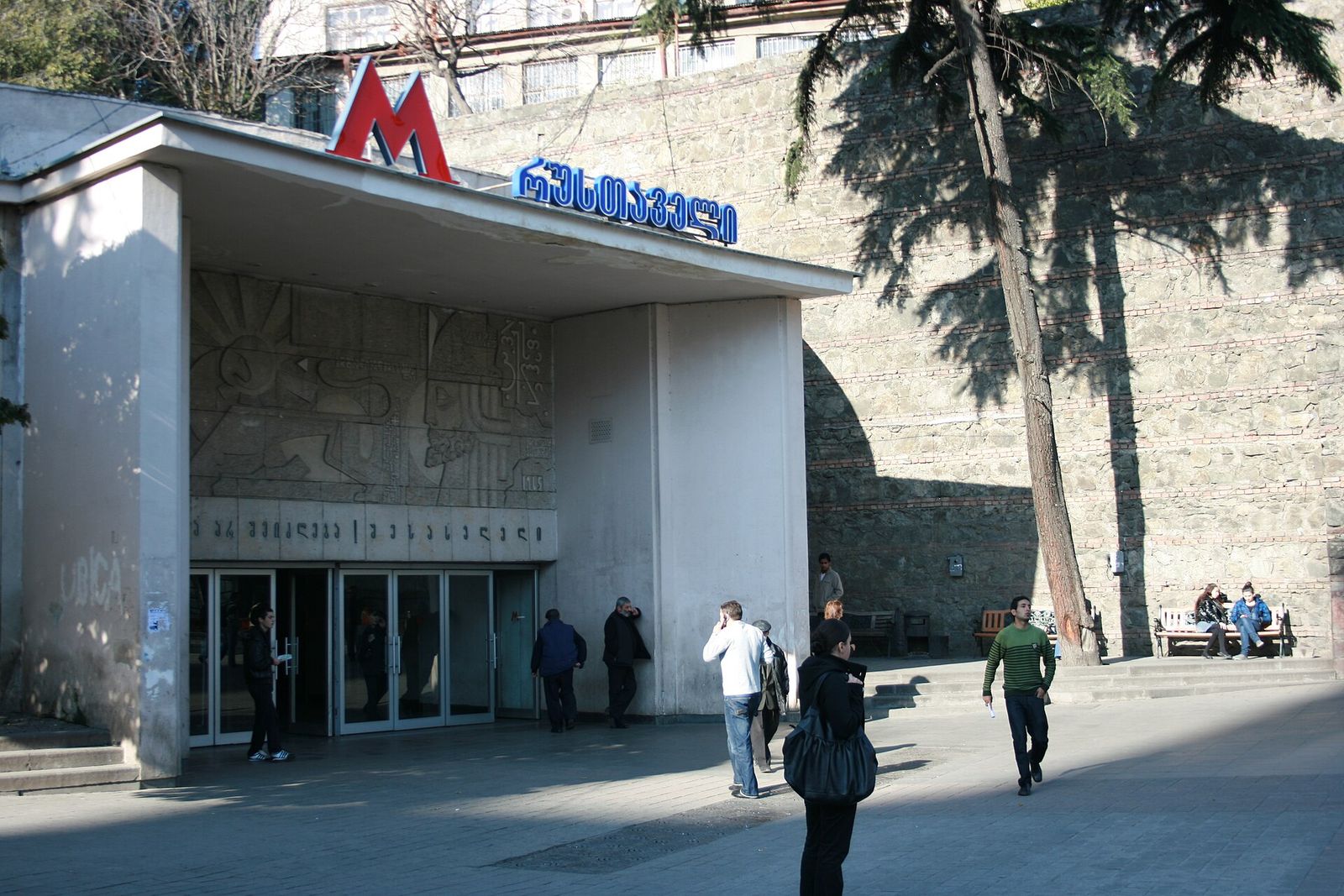
| Rustaveli | The far end of Rustaveli Avenue from Freedom Square |
| Freedom Square | The old town, Sololaki and the National Museum |
| Avlabari | Holy Trinity Cathedral, and Rike Park downhill |
| 300 Aragveli | Housing districts; a stop on the airport bus |
| Isani | Housing districts |
| Samgori | Near the Samgori (Navtlughi) minibus station |
| Varketili | The southeastern end of the line |
The stretch from Station Square to Avlabari is the tourist core: 5 stations that cover almost everything in the center. North of Didube and south of Avlabari, the line serves the people who live in Tbilisi rather than the people visiting it.
Line 2: Station Square to State University
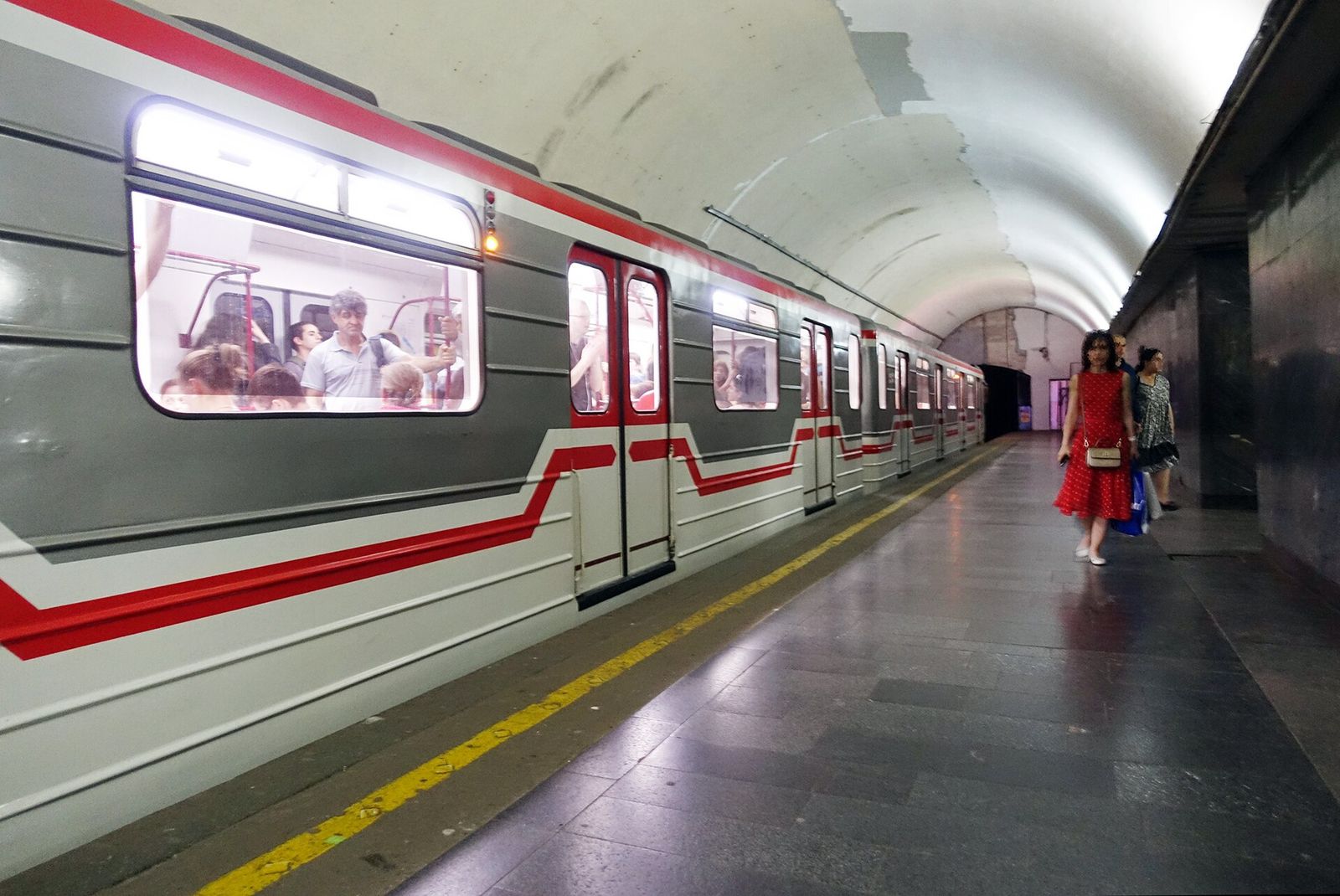
Line 2 is the Saburtalo line, a 7-station branch that heads northwest from Station Square into the university district.
| Station | What's up top for a visitor |
|---|---|
| Station Square | The interchange with Line 1 |
| Tsereteli | Housing and offices along Tsereteli Avenue |
| Technical University | The best of the Line 2 mosaics, and the start of Saburtalo |
| Medical University | Saburtalo |
| Delisi | Saburtalo's cafes and apartment blocks |
| Vazha-Pshavela | Saburtalo, along Vazha-Pshavela Avenue |
| State University | The end of the line, by the university campus |
Most visitors never ride Line 2. I'd use it if you're staying in Saburtalo, which is cheaper than the center and has plenty of cafes, or if you want to see the Technical University mosaic.
Changing lines at Station Square
Station Square (Sadguris Moedani on the Georgian signs) is the only interchange. You change on foot through the station without tapping again, and it's also where you come out for the central railway station. If your trip needs Line 2, it goes through here.
Tbilisi metro fare and the Metromoney card
A ride is 1 GEL whatever the distance, from one stop to the end of the line. You pay by tapping at the turnstile on the way in, and there's nothing to tap on the way out. The turnstiles take no cash, so you need either a Metromoney card or a contactless bank card.
| Ride | Fare | How to pay |
|---|---|---|
| Metro, any distance | 1 GEL | Metromoney card or contactless bank card |
| City bus | 1 GEL | Tap the card on board |
| Minibus (marshrutka) | 1 to 1.50 GEL | The blue ones take a card only; some yellow ones take cash |
| Bus or minibus within 90 minutes of your first tap | Free | Metromoney card paying for one person |
| Rike Park to Narikala cable car | 2.50 GEL one way | Metromoney card |
| Turtle Lake ropeway | 1 GEL one way | Metromoney card |
| Bus 337 from the airport | 1 GEL, up to 1.50 GEL on a foreign bank card | Card only, no cash |
Buying, topping up and returning a Metromoney card
The Metromoney card is a plastic tap card sold at every metro station. The card itself is a 2 GEL deposit. The ticket windows take Visa and Mastercard, and the machines in the station halls take cash only, so on your first visit I'd go to the window and buy the card and a top-up in one go.
You need at least 1 GEL on the card to get through the turnstile. 10 GEL covers most short stays: that's 10 metro or bus rides, or a mix of rides and a cable car or two. Top up at the same windows and machines whenever it runs low.
When you leave, you can hand the card back at a ticket window and get the 2 GEL deposit and any remaining balance refunded, as long as you kept the receipt from when you bought it. In practice most people keep the card for the next trip.
Paying with a contactless bank card
You can tap a contactless Visa or Mastercard straight on the reader, and on your first day, before you've bought a Metromoney card, that's exactly what I'd do. For a stay of more than a day or two I still get the Metromoney card: it's the card the cable cars run on, and it carries the free 90-minute transfer onto a bus or minibus.
The 90-minute transfer and sharing one card
Your first tap starts a 90-minute window, and any bus or minibus you board inside it is free. Ride the metro to Station Square, catch a bus for the last stretch, and you've paid 1 GEL for both.
One card can pay for 2 or 3 people at the turnstile: tap once per person, one after another. It's handy for a couple on a short trip, but the free transfer drops off as soon as the card pays for more than one rider. If you're a family planning to ride a lot, a card each at 2 GEL is the better deal. Even with every ride paid separately, the metro is one of the cheapest parts of Tbilisi on a budget.
Tbilisi metro hours and train frequency
The metro runs every day from 06:00 to midnight, public holidays included. Trains are frequent through the day and thin out late in the evening.
| Time of day | A train every |
|---|---|
| 06:00 to 09:00 | 2 to 3 minutes |
| 09:00 to 18:00 | 5 to 7 minutes |
| 18:00 to 21:00 | 3 to 4 minutes |
| 21:00 to midnight | 7 to 10 minutes |
The busiest times are 08:00 to 09:30 and 18:00 to 20:00, when the cars on the central stretch are packed shoulder to shoulder. If I'm crossing town with a bag or with kids, I plan around those two windows, and mid-morning is the most comfortable time to ride.
Metro stations near the main sights
Most of the sights in central Tbilisi are within walking distance of 4 stations. Here's the one I'd use for each, with the walk where it's longer than a few minutes.
| Sight or area | Nearest station | From the station |
|---|---|---|
| Old Tbilisi and Sololaki | Freedom Square | The old town starts at the square |
| Sulfur baths, Abanotubani | Freedom Square | 20 to 25 minutes on foot |
| Rike Park cable car to Narikala | Freedom Square or Avlabari | About 15 minutes on foot from Freedom Square |
| Georgian National Museum | Freedom Square | A short walk up Rustaveli Avenue |
| Rustaveli Avenue | Rustaveli or Freedom Square | One station at each end |
| Holy Trinity Cathedral and Avlabari | Avlabari | A short uphill walk to the cathedral |
| Fabrika | Marjanishvili | A short walk |
| Deserter's Market | Marjanishvili | About 15 minutes on foot |
| Didube bus station | Didube | Next to the station |
| Central railway station | Station Square | Above the station |
My favorite way to use this: ride to Rustaveli, walk the full length of the avenue past the opera and the parliament to Freedom Square, then drop into the old town. You see the city's grandest street end to end without doubling back.
The one area the metro serves especially well is Marjanishvili, on the left bank, where the station puts you in the middle of the restored streets around Aghmashenebeli Avenue.
Riding the metro: signs, escalators and Wi-Fi
Station names and directions are signed in Georgian, English and Russian, so finding the right platform is easy. Each platform board lists the stations in the direction of travel, and with only 2 lines, you're choosing between two directions at most stations.
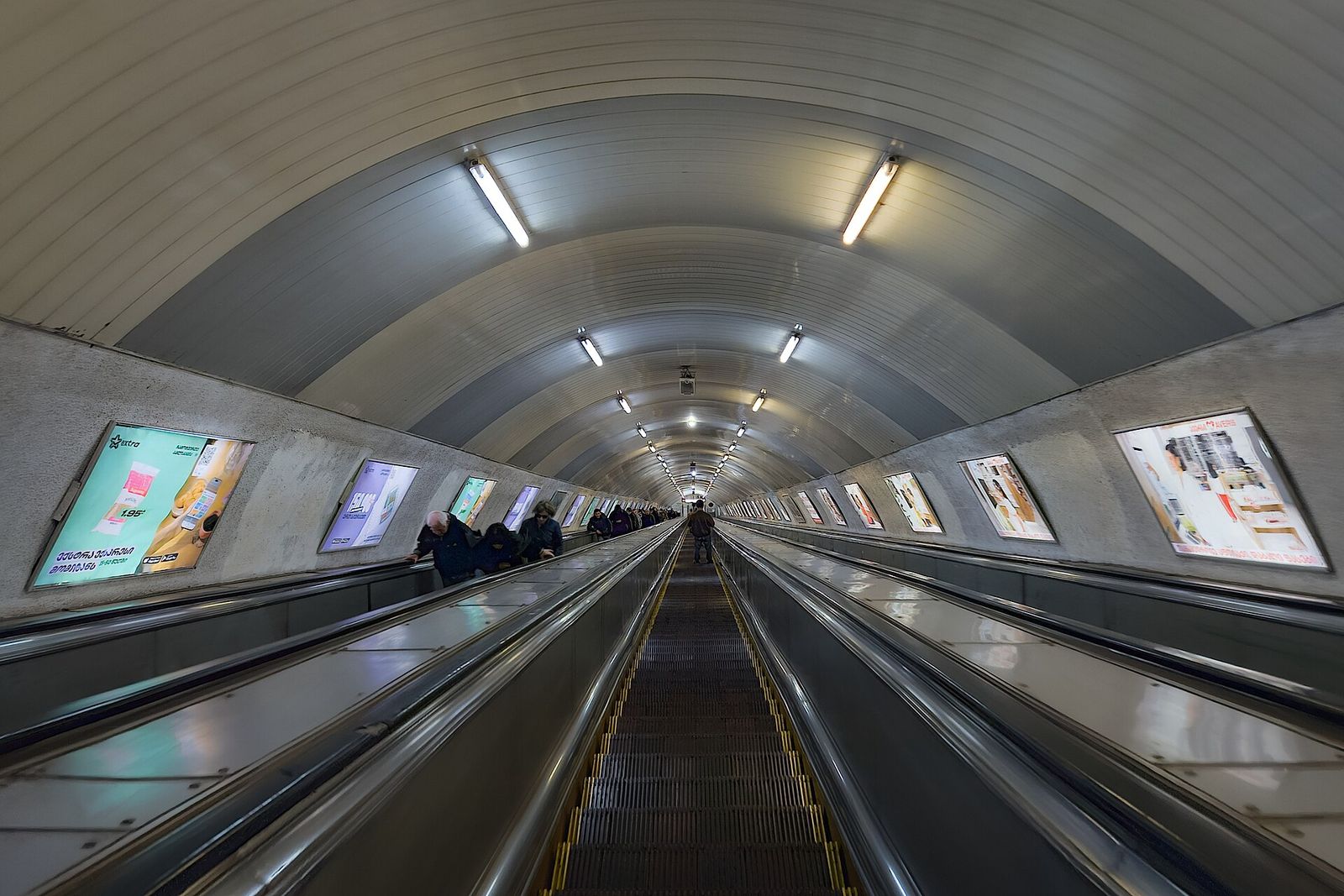
The stations sit deep, and the escalators down are long and steep. Rustaveli is the deepest station on the network, with the longest ride down. Hold the handrail, keep bags in front of you, and stand still rather than walking down if you're carrying anything heavy.
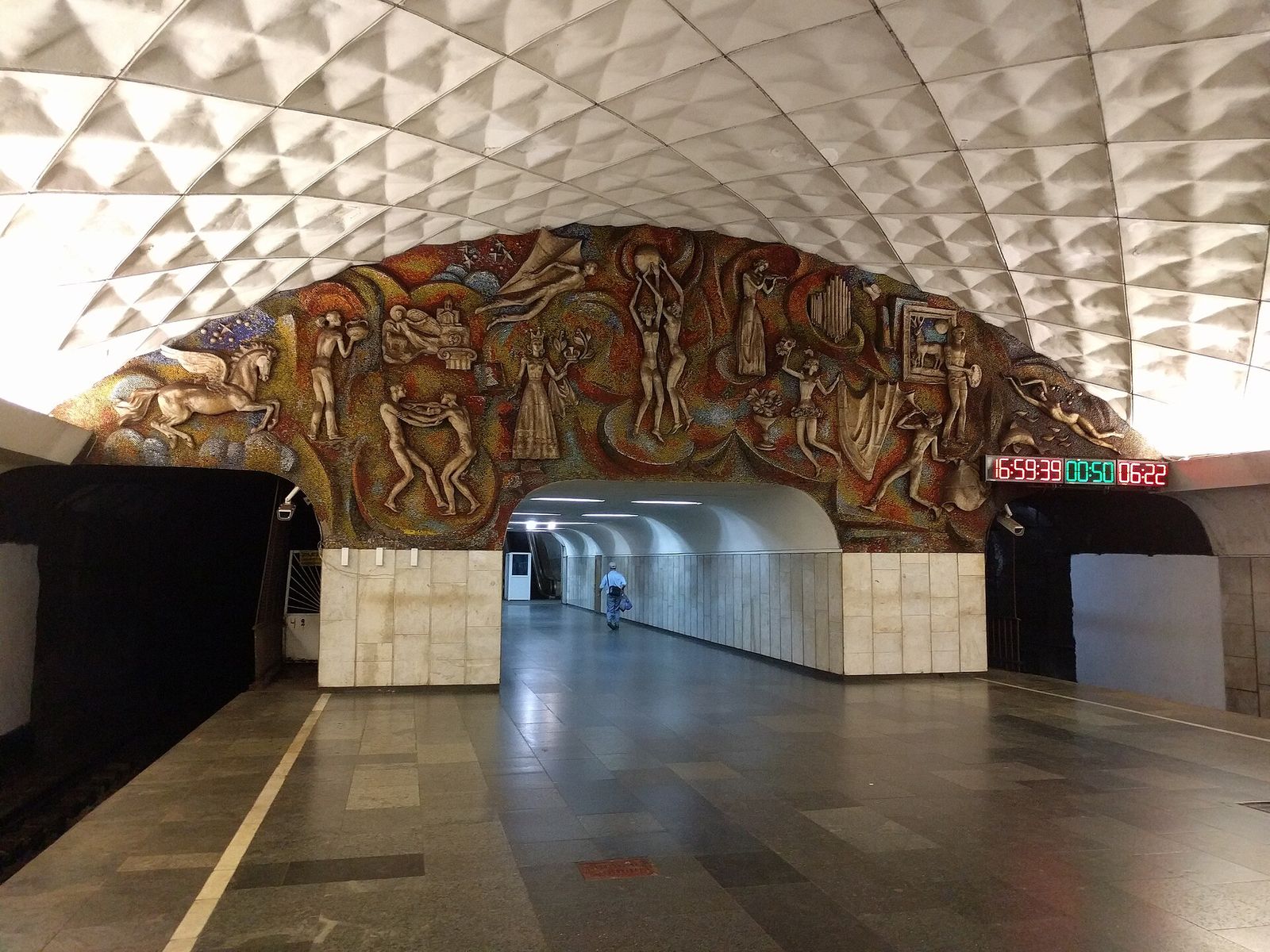
At the tunnel mouth on most platforms there's a red digital clock. It shows the time and how long ago the last train left, which gives you a rough idea of when the next one is due.
There's free Wi-Fi in the metro, which is useful for checking your route underground, though I'd still have a local SIM or an eSIM for the moment you surface and need a map. Google Maps plans metro routes correctly, and the official Tbilisi Transport (TTC) app covers the buses and minibuses you'll connect to.
Soviet mosaics at the metro stations
The metro is one of the easiest places to see Soviet-era public art in Tbilisi, and it costs 1 GEL to get in. The station halls are clad in stone and marble, and several still carry the mosaics and reliefs they opened with.
Three stations are worth a look:
- Rustaveli. The entrance pavilion on the street carries a carved relief above the doors, so the art starts before you tap in.
- Freedom Square. The busiest station in the center, with Soviet-era mosaic work in the hall you pass through on the way to the old town.
- Technical University. On Line 2, the end wall of the platform holds a big mosaic panel of figures, animals and scenes in gold, brown and blue, under a ceiling of white geometric tiles. It's the one I'd ride out to see.
If the mosaics catch your eye, the metro is a good warm-up for the bigger buildings of Soviet architecture in Tbilisi, many of them in the same districts the metro serves.
The metro from the airport, train station and bus stations
The metro is the city's link to most of the ways in and out of Tbilisi, except the airport. Here's which station you'll arrive at.
| Arriving by | Where you land | Nearest metro |
|---|---|---|
| Bus 337 from Tbilisi Airport | Stops on the way into the center, ending at Station Square | Avlabari, 300 Aragveli or Station Square |
| Train from Batumi or Kutaisi Airport | Tbilisi Central Station | Station Square |
| Marshrutka from Kutaisi | Didube bus station | Didube |
| Georgian Bus from Kutaisi Airport | Pushkin Park, by Freedom Square | Freedom Square |
| Omnibus from Kutaisi Airport | Javakhishvili Street, by the bicycle monument | Rustaveli |
| Marshrutka from Mtskheta, Kazbegi or Kakheti | Didube bus station | Didube |
Bus 337 is the cheapest ride from Tbilisi Airport to the city. It runs from about 07:00 to 23:00, every 15 minutes on weekdays and every 18 to 23 minutes at weekends, takes about an hour to the center and costs 1 GEL on a card. You won't have a Metromoney card when you land, so tap a contactless bank card, then buy the Metromoney card at whichever metro station you get off at.
Coming from the west, the fast trains from Batumi stop at Kutaisi Airport's station on the way and arrive at Tbilisi Central Station, right on top of Station Square metro, which makes the train from Batumi the easiest arrival to connect to. The buses from Kutaisi Airport to Tbilisi drop you in the center by Freedom Square or Rustaveli.
Going out of town, Didube is the station for day trips by minibus. The Mtskheta day trip is the easiest one: ride to Didube, walk to the bus station next door, and you're in Mtskheta in about 30 minutes.
Where the Tbilisi metro doesn't go
The metro runs along the valley floor, so it misses most of the places on the hills, and it stops at the city limits.
- The airport. Bus 337 or a taxi.
- Narikala and the old town lanes. Walk, or ride the cable car up to the fortress from Rike Park.
- Mtatsminda. The funicular to Mtatsminda Park starts on a street above Sololaki, a walk or a short taxi from Freedom Square.
- Vake. No station. Vake is reached by bus or Bolt, and so is the Turtle Lake ropeway on the Vake side of the city.
- Tbilisi Sea and anything out of town. Minibuses from Didube, or a taxi.
For everything the metro misses, Bolt across the center costs about 3 to 8 GEL, so most of my days in Tbilisi are the metro for the long hops and a Bolt or a taxi for the hills and late nights. The metro is still the first part of getting around Tbilisi I'd learn, because the buses, minibuses and cable cars all run on the same card.
Tips for riding the Tbilisi metro
- Sort the card on day one. Buy a Metromoney card at the first station you pass and load 10 GEL; it saves fumbling at every bus and cable car afterwards.
- Avoid the rush. 08:00 to 09:30 and 18:00 to 20:00 are crush hours on the central stretch; ride mid-morning or after 20:00 with luggage.
- Count your stops. Announcements are in Georgian only, so know how many stations you're riding before you board.
- Use Rustaveli and Freedom Square as bookends. Ride to one, walk the avenue to the other.
- Watch your bag in a crowd. The metro is safe and busy, with staff at the escalators and police posts in the stations; in packed cars, keep your phone in a front pocket like you would in any big city.
- Keep the receipt. You need it to get the 2 GEL deposit back if you return the card.
- Leave by 23:50. Miss the last train and it's Bolt, not a night bus.
Key takeaways
- A metro ride in Tbilisi costs 1 GEL for any distance, paid with a Metromoney card (2 GEL deposit) or a contactless bank card.
- Trains run 06:00 to midnight every day, every 2 to 10 minutes, with the last ones around 23:50.
- The network is 2 lines and 23 stations, with one interchange at Station Square.
- Freedom Square, Rustaveli, Avlabari, Marjanishvili and Didube cover almost everything a visitor needs.
- There's no metro to the airport, Mtatsminda or Vake; bus 337, the funicular, buses and Bolt fill the gaps.
Frequently asked questions
How much is the metro in Tbilisi?
A ride costs 1 GEL, whatever the distance. You pay by tapping a Metromoney card or a contactless bank card at the turnstile, and any bus or minibus you take within 90 minutes of that tap is free on a Metromoney card.
What are the Tbilisi metro hours?
The metro runs daily from 06:00 to midnight, including public holidays. The last trains leave around 23:50, and trains come every 2 to 3 minutes in the morning rush and every 7 to 10 minutes after 21:00.
Does the Tbilisi metro go to the airport?
No. The nearest stations, Isani and Varketili, are still a long way from the terminal. Take bus 337, which connects the airport to Avlabari, 300 Aragveli and Station Square metro stations for 1 GEL, or a Bolt.
Can I pay with cash or a bank card on the Tbilisi metro?
You can pay with a contactless bank card, but not with cash. The turnstiles only take cards, so tap your bank card on day one and buy a Metromoney card at a ticket window, where Visa and Mastercard are accepted.
Where do I buy a Metromoney card?
At the ticket window or the machine in any metro station. The card costs a 2 GEL refundable deposit; the windows take bank cards and the machines take cash only. Load about 10 GEL for a short stay.
Can two people use one Metromoney card?
Yes. One card can pay for 2 or 3 people at the turnstile if you tap once per person. The free 90-minute bus and minibus transfer stops working when the card pays for more than one rider, so a family riding a lot is better off with a card each.
How many metro lines and stations does Tbilisi have?
Tbilisi has 2 metro lines and 23 stations. Line 1 runs 16 stations from Akhmeteli Theatre to Varketili through the center, Line 2 runs 7 stations from Station Square to State University in Saburtalo, and the two meet only at Station Square.
Is the Tbilisi metro safe?
Yes. It's busy and well staffed, with people at the top and bottom of the escalators and police posts in the stations. Keep an eye on your phone and bag in the packed rush-hour cars, as you would on any city metro.
Tbilisi Travel Tips: What I'd Tell You Before a First Trip to Georgia
Tbilisi is known for wine, sulfur baths and long dinners. Here's what to know about entry, money, transport and safety.
Read the guide
Tbilisi Itinerary: How I'd Spend 1 to 5 Days in Tbilisi
Tbilisi is best over 3 full days. Here is how to spend 1 to 5, with routes, meals, day trips and costs.
Read the guide
The Best Time to Visit Tbilisi, Month by Month
Tbilisi is known for golden autumns and hot summers. Here is the weather by month, the crowds, and when I would go.
Read the guide