Getting Around Tbilisi: Metro, Buses, Bolt and the Metromoney Card
Tbilisi is cheap and easy to get around once you have one small plastic card in your pocket. Here's what you need to know about the Metromoney card, the metro, buses and minibuses, Bolt, the cable cars and the old town on foot, with what each ride costs in 2026 and how I'd get to the places you'll actually go.
Tbilisi transport at a glance: fares for every ride
Here's every way of getting around Tbilisi on one table, with the fare to budget for in 2026. Most days I use three of them: the metro for long hops across town, my own feet for the old town, and Bolt when it's late, raining or uphill.
| Ride | Fare | Pay with | I use it for |
|---|---|---|---|
| Metro | 1 GEL, any distance | Metromoney card or a contactless bank card | Crossing town fast: Didube, Station Square, Saburtalo |
| City bus | 1 GEL | Tap the card on board | Vake, Vera and anywhere off the metro |
| Minibus (marshrutka) | 1 to 1.50 GEL | Card on the blue ones; some yellow ones take cash | Routes the big buses skip |
| Bolt or Yandex Go | 4 to 7 GEL in the center | Card in the app, or cash | Hills, late nights, rain, luggage |
| Rike to Narikala cable car | 2.50 GEL one way | Metromoney card | The ride up to the fortress |
| Turtle Lake ropeway | 1 GEL one way | Metromoney card | A lake walk above Vake |
| Bus 337 to the airport | 1 GEL, up to 1.50 GEL on a foreign card | Card only, no cash | Daytime arrivals and departures |
| Your own feet | Free | Nothing | Everything in the old town |
The metro runs from 06:00 to midnight, bus 337 from about 07:00 to 23:00, and nothing public runs through the night. Bolt is there 24 hours.
The Metromoney card: buy it on day one
The Metromoney card is the first thing I'd sort out after cash and a SIM. It's a plastic tap card that pays for the metro, city buses, minibuses and both cable cars, and a ride on the metro, a bus or a minibus costs 1 GEL whatever the distance.
You buy it at the ticket window in any metro station. The card itself is a 2 GEL deposit. The windows take Visa and Mastercard, while the machines in the station halls take cash only, so the window is the easier first stop. Load 10 GEL with the card and that covers most short city breaks. You need at least 1 GEL on it to get through the turnstile, and you top up at the same windows and machines whenever it runs low.
Keep the receipt. When you leave, hand the card back at a station window and you get the 2 GEL deposit back along with whatever balance is left.
The 90-minute free transfer
Your first tap starts a 90-minute window, and any bus or minibus you board within it costs nothing more. Ride the metro to Station Square, hop on a bus for the last stretch, and you've paid 1 GEL for both rides. The window only works when the Metromoney card paid for a single rider. Pay cash on a minibus or pay through an app and you start from zero on the next ride.
Sharing one card, and using a bank card
One card can pay for 2 or 3 people at the metro: tap once per person, one after another. It's handy for a couple, but the free 90-minute transfer drops off as soon as the card pays for more than one rider. A family that plans to ride a lot does better with a card each, at 2 GEL a piece.
You can also tap a contactless bank card on most readers, and on your very first ride from the airport you'll have to. On bus 337 a foreign card is charged up to 1.50 GEL. I still buy the Metromoney card on day one: it gets the cheapest fare and the free transfer, and it's the card the cable cars run on.
The Tbilisi metro: 2 lines and the stations you'll use
The Tbilisi metro opened in 1966 and still runs on just 2 lines and 23 stations. Line 1 runs 16 stations from Akhmeteli to Varketili, following the river straight through the center. Line 2 is a short 7-station branch out to Saburtalo. The only place to change between them is Station Square, under the central railway station.
The stations sit deep, so the escalators down are long and steep, and the trains themselves are fast. For a visitor, a handful of stations do almost all the work:
| Station | Line | What's up top |
|---|---|---|
| Didube | 1 | Didube bus station, for marshrutkas to Mtskheta, Kazbegi and Kakheti |
| Station Square | 1 and 2 | The central railway station, and the only change between lines |
| Marjanishvili | 1 | Marjanishvili and Chughureti, Fabrika, and Deserter's Market about 15 minutes away on foot |
| Rustaveli | 1 | The top end of Rustaveli Avenue |
| Freedom Square | 1 | The old town, Sololaki, and the cable car about 15 minutes away on foot |
| Avlabari | 1 | Avlabari and Holy Trinity Cathedral, across the river from the old town |
| Technical University, Delisi, State University | 2 | Saburtalo's apartment blocks, cafes and university streets |
Trains run from 06:00 to midnight every day, holidays included, and the last ones leave around 23:50. You'll wait 2 to 3 minutes in the morning rush, 5 to 7 minutes through the middle of the day and up to 10 minutes after 21:00. The cars are packed from 08:00 to 09:30 and again from 18:00 to 20:00, and I plan cross-town rides around those two windows.
The metro has gaps, too. It misses the airport, Mtatsminda, Tbilisi Sea and everything outside the city, and it runs along the valley floor, so it won't help with the steep lanes above the old town.
Buses and minibuses in Tbilisi
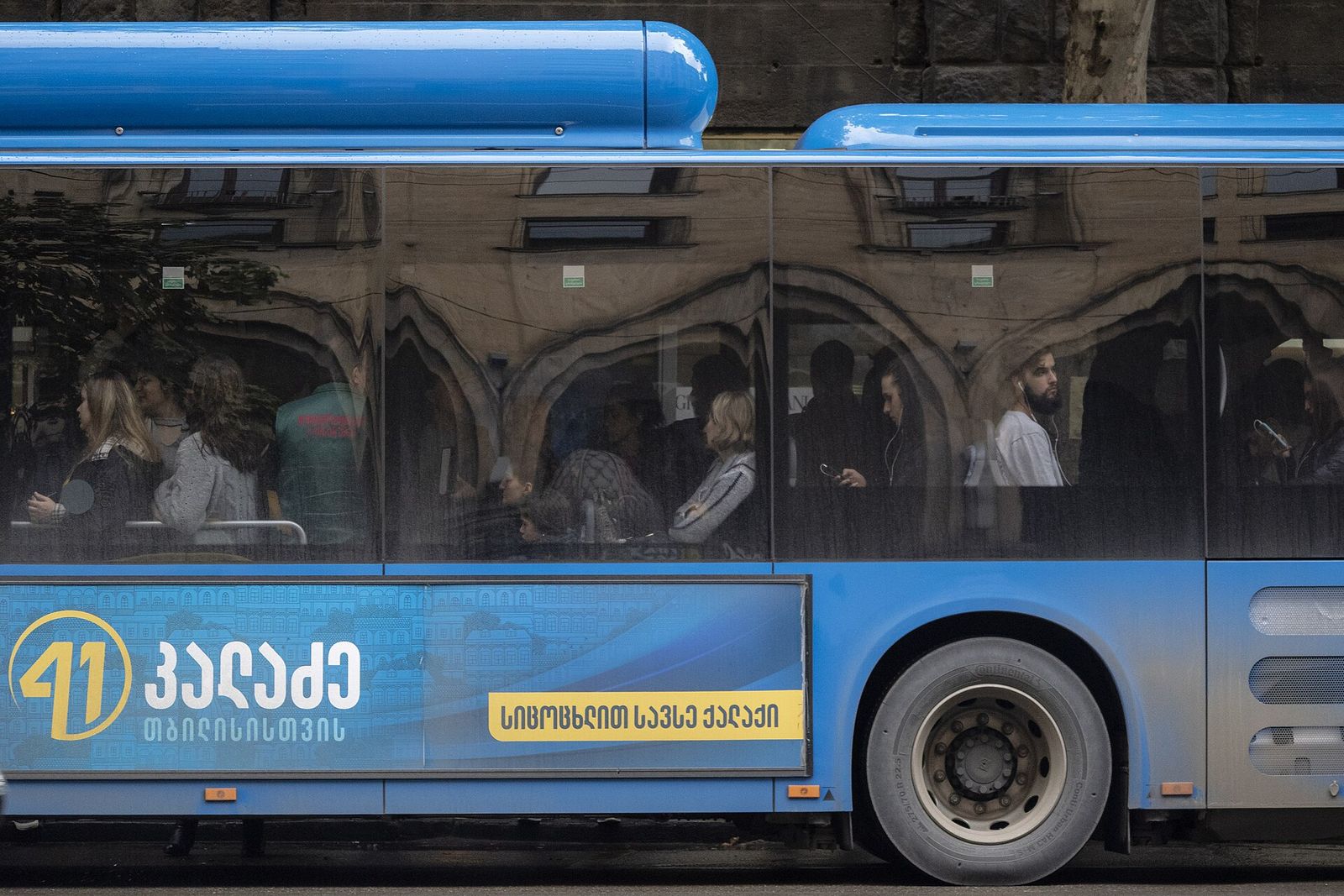
City buses are the big blue ones, and they fill the gaps the metro leaves, which for a visitor mostly means Vake, Vera and the hill neighborhoods. A ride is 1 GEL: tap the Metromoney card on the reader as you board, and there's nothing to tap on the way out.
Most stops have an electronic board showing which buses are coming and how many minutes away they are. For planning, Google Maps handles the metro routes well, and the official Tbilisi Transport (TTC) app shows live bus and minibus times. Both need mobile data, so I'd set up a local SIM or an eSIM before you leave the airport.
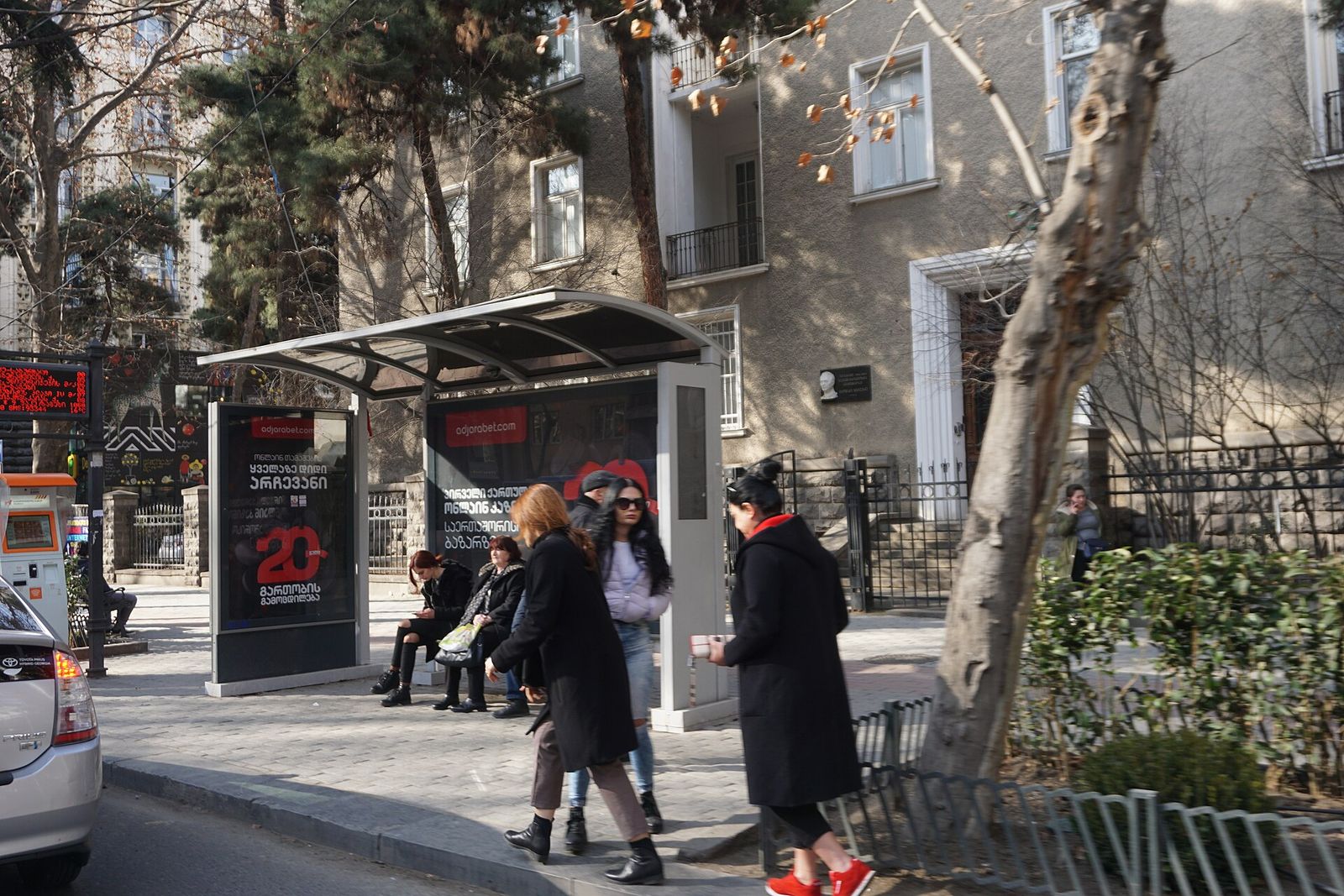
Minibuses, the marshrutkas, run the routes the big buses skip and cost 1 to 1.50 GEL. The newer blue ones take the Metromoney card or a bank card and no cash. Some of the older yellow ones still take coins. They stop on request along the route, which is handy once you know the city and confusing on your first day.
My advice: stick to the metro and the blue buses for the first few days, and save the minibuses for when you know exactly where you're getting off. Whichever you ride, the 90-minute window from your first tap covers a change onto another bus or minibus.
Bolt and taxis in Tbilisi
Bolt is how most people in Tbilisi get a taxi. It has the most cars and the lowest fares, Yandex Go is the alternative and runs slightly higher at peak hours, and there is no Uber in Georgia. Both apps show the price before you book, and the driver can't change it once you're in the car. Link a Visa or Mastercard in the app or pick cash; some drivers prefer cash in the evening.
Bolt fares sit low enough that a taxi in Tbilisi is the normal way home after dinner rather than a splurge. These are the fares at normal hours:
| Trip | Distance | Bolt fare |
|---|---|---|
| Around the center | 2 to 4 km | 4 to 7 GEL |
| Freedom Square to the sulfur baths | Short hop | 3 to 4 GEL |
| Across the city | 6 to 10 km | 8 to 15 GEL |
| Airport to the center | 17 km | 25 to 35 GEL |
| Tbilisi to Mtskheta | 25 km | 30 to 45 GEL |
Expect 1.5 to 2 times those prices in the rain and in the 6 to 8 pm rush. There's no need to tip on an app fare.
Street taxis have no meters. If you flag one down, agree the price before you get in; about 1.5 times the Bolt price is a fair offer. I only do it when my phone has died.
Cable cars and the funicular
Tbilisi's two cable cars both run on the Metromoney card. The Rike to Narikala cable car swings from Rike Park, across the river from the old town, over the Kura and the rooftops up to the fortress walls, for 2.50 GEL one way. Rike Park is about 15 minutes' walk from Freedom Square over the Bridge of Peace.
I ride it up and walk down. The path from Narikala Fortress drops you through the old town lanes toward the bath domes, and the walk down is the better half of the view.
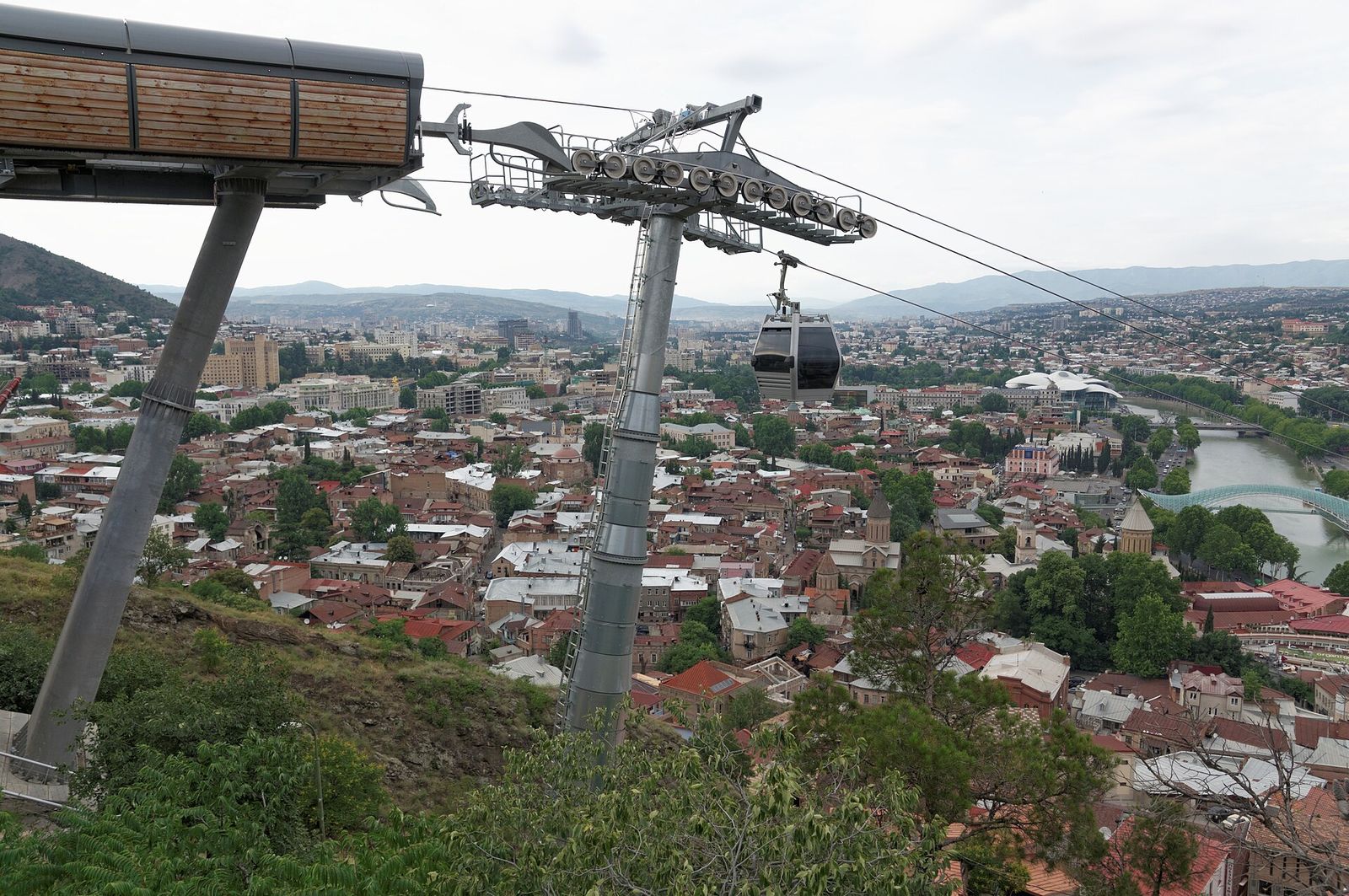
The second cable car, the Turtle Lake ropeway, climbs from Vake to Turtle Lake for 1 GEL one way. It's my pick for a half day out of the heat: bus or Bolt to Vake, ropeway up, a lap of the lake, and back down the same way.
The third way up a hill is the funicular to Mtatsminda Park, the hilltop park under the TV tower, with a Ferris wheel and the highest view over the city. Go up for sunset and come down by Bolt if the funicular queue is long.
Walking around Tbilisi
The old town is a walking city. Freedom Square to the sulfur baths in Abanotubani is a 20 to 25 minute walk, and the lanes of Sololaki, the Bridge of Peace and the cable car station are all on the way or close to it. I walk almost everything in Old Tbilisi and only call a Bolt for the climb back up.
Two things make it harder than the map suggests. The old town is hilly, with cobbles, uneven pavements and steep lanes, so wear shoes with grip and take it slowly after rain. And the big roads are built for cars: on the riverside highway and the wide avenues, you cross by underpass or at marked crossings.
Getting from Tbilisi Airport to the center
No metro reaches the airport, which sits 17 km southeast of the center; the nearest stations, Isani and Varketili, are still a long way off. Bus 337 is the cheapest ride from Tbilisi Airport to the city by a long way. It stops in front of the departures hall, runs from about 07:00 to 23:00 every 15 minutes on weekdays and every 18 to 23 minutes at weekends, and takes about an hour to Station Square, through Avlabari, Rustaveli Avenue and Freedom Square.
It costs 1 GEL on the Metromoney card, up to 1.50 GEL on a foreign bank card, and takes no cash. Since you won't have a Metromoney card yet when you land, tap a contactless bank card.
After 23:00, with heavy bags, or with a group, I'd order Bolt from the pickup zone outside arrivals: 25 to 35 GEL to the center and 25 to 30 minutes on the road. The official taxi booth inside the terminal charges 60 GEL to Avlabari and 80 GEL beyond it, with no card machines in the cars.
Which ride to take: my picks for common trips
This is how I'd make the trips most visitors make, and what each one costs.
| Trip | How I'd do it | Cost |
|---|---|---|
| Freedom Square to the sulfur baths | Walk, downhill through the old town | Free, or Bolt 3 to 4 GEL |
| Old town to Narikala Fortress | Cable car up, walk down | 2.50 GEL |
| Center to Fabrika | Metro to Marjanishvili, then walk | 1 GEL |
| Center to Saburtalo | Metro, change at Station Square onto Line 2 | 1 GEL |
| Center to Turtle Lake | Bus or Bolt to Vake, then the ropeway | 2 GEL by bus, or Bolt plus 1 GEL |
| Old town to Holy Trinity Cathedral | Walk over the river, or metro to Avlabari | Free, or 1 GEL |
| Center to Didube bus station | Metro to Didube | 1 GEL |
| Center to the airport | Bus 337 by day, Bolt at night | 1 GEL, or 25 to 35 GEL |
| Anywhere after midnight | Bolt or Yandex Go | 4 to 15 GEL, more in the rain |
Most of these lean on the metro and your feet. Fabrika, the hostel and bar courtyard in Chughureti, is a short walk from Marjanishvili station. Saburtalo is the one district where Line 2 earns its keep. And Holy Trinity Cathedral sits on the hill above Avlabari, so if you walk it from the old town, budget for the climb.
Day trips and driving out of Tbilisi
Day trips by public transport start at Didube bus station, right by Didube metro. Marshrutkas leave from there for Mtskheta, Kazbegi and Kakheti, and the Mtskheta day trip is the easiest one to do this way because it's the closest. The longer runs, and getting around Georgia beyond the capital in general, mostly happen on these same minibuses.
For a full day with several stops, a driver hired for the day usually works out cheaper than paying a Bolt fare each way, and Bolt to Mtskheta alone is 30 to 45 GEL.
I wouldn't drive in Tbilisi itself. Traffic is heavy and the metro, buses and Bolt cover everything a visitor needs. Renting a car in Georgia makes sense for road trips into the mountains and the wine country, and I'd pick it up on the day you leave the city.
Key takeaways
- Buy a Metromoney card on day one: 2 GEL deposit, 1 GEL a ride on the metro, buses and minibuses, and it runs both cable cars.
- Use the metro for long hops, walk the old town, and take Bolt for hills, rain and late nights.
- Tap once per person on a shared card, but the 90-minute free transfer only works when the card pays for one.
- Public transport stops around midnight; Bolt runs all night at 4 to 7 GEL across the center.
- Bus 337 by day and Bolt by night are the two good ways between the airport and the center.
Frequently asked questions
Is public transport in Tbilisi good?
Yes, it's cheap, frequent and easy to use. The metro comes every few minutes, most bus stops show live arrival times, and every metro, bus or minibus ride costs 1 GEL. Its gaps are the old town's hills, Mtatsminda and the hours after midnight, which is where walking and Bolt come in.
How much is a bus ticket in Tbilisi?
A city bus ride costs 1 GEL on the Metromoney card, the same as the metro, and a minibus costs 1 to 1.50 GEL. Your first tap also covers any bus or minibus you board within the next 90 minutes.
Where can I buy a Metromoney card in Tbilisi?
At the ticket window or machine in any metro station. The card is a 2 GEL deposit; the windows take Visa and Mastercard, the machines take cash only. Keep the receipt, because you need it to get the deposit back.
Can I pay for Tbilisi buses with a bank card?
Yes, most readers on buses and in the metro take a contactless bank card. On bus 337 to the airport a foreign card is charged up to 1.50 GEL, and only the Metromoney card guarantees the 1 GEL fare and the free 90-minute transfer.
What time does the Tbilisi metro close?
The metro runs from 06:00 to midnight every day, and the last trains leave around 23:50. There's no night bus or night metro, so after that it's Bolt or Yandex Go.
Is there Uber in Tbilisi?
No, Uber doesn't operate in Georgia. Bolt is the main ride app, with the most cars and the lowest fares, and Yandex Go is the alternative. Both show a fixed price before you book.
Does the Tbilisi metro go to the airport?
No, the metro doesn't reach the airport, and the nearest stations, Isani and Varketili, are still far from the terminal. Take bus 337 for 1 GEL between about 07:00 and 23:00, or Bolt for 25 to 35 GEL at any hour.
Is Tbilisi walkable?
The old town and the center are very walkable: Freedom Square to the sulfur baths is a 20 to 25 minute walk. Expect hills, cobbles and uneven pavements, and use the underpasses to cross the big roads.
Tbilisi Travel Tips: What I'd Tell You Before a First Trip to Georgia
Tbilisi is known for wine, sulfur baths and long dinners. Here's what to know about entry, money, transport and safety.
Read the guide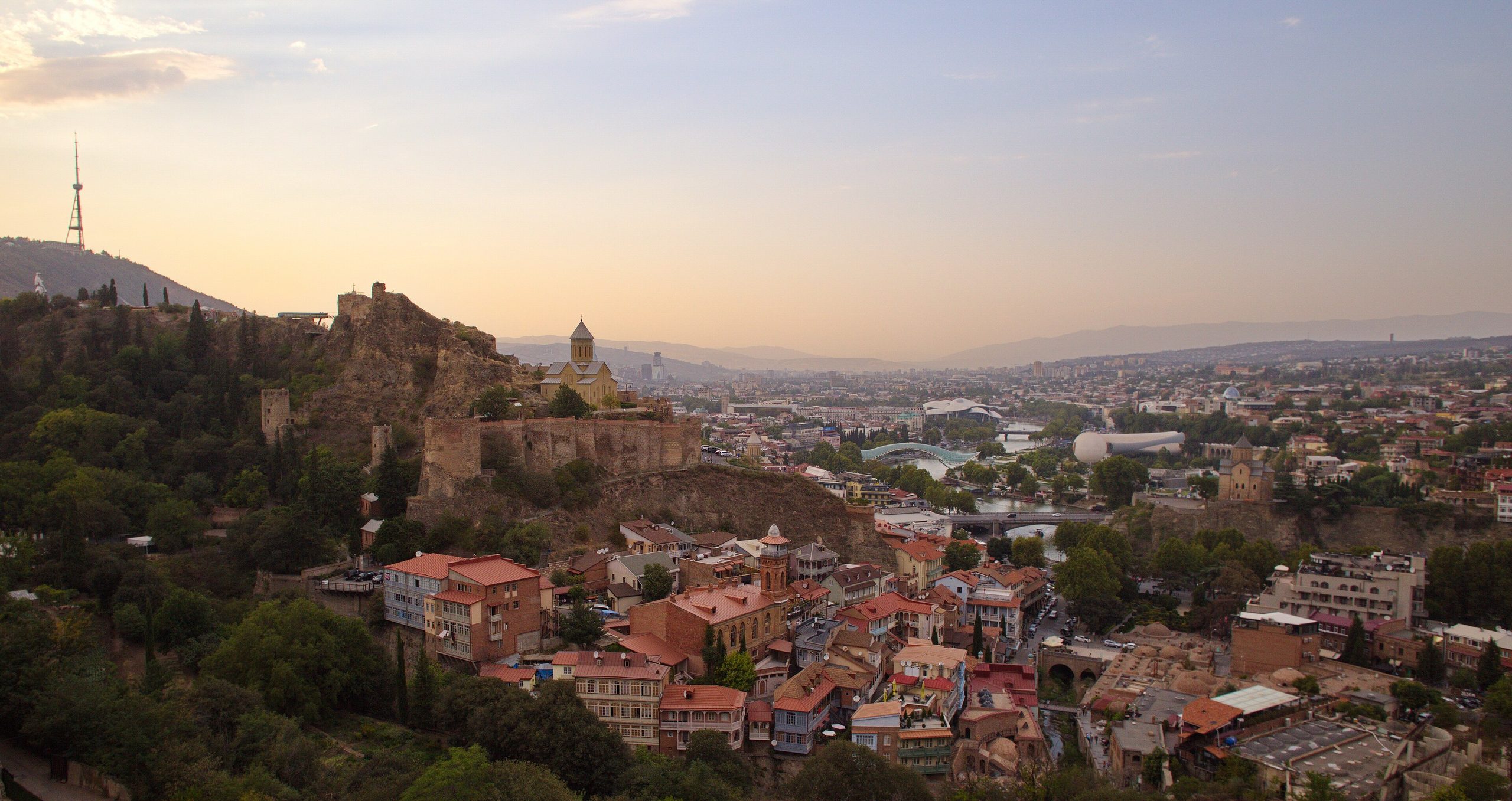
Tbilisi Itinerary: How I'd Spend 1 to 5 Days in Tbilisi
Tbilisi is best over 3 full days. Here is how to spend 1 to 5, with routes, meals, day trips and costs.
Read the guide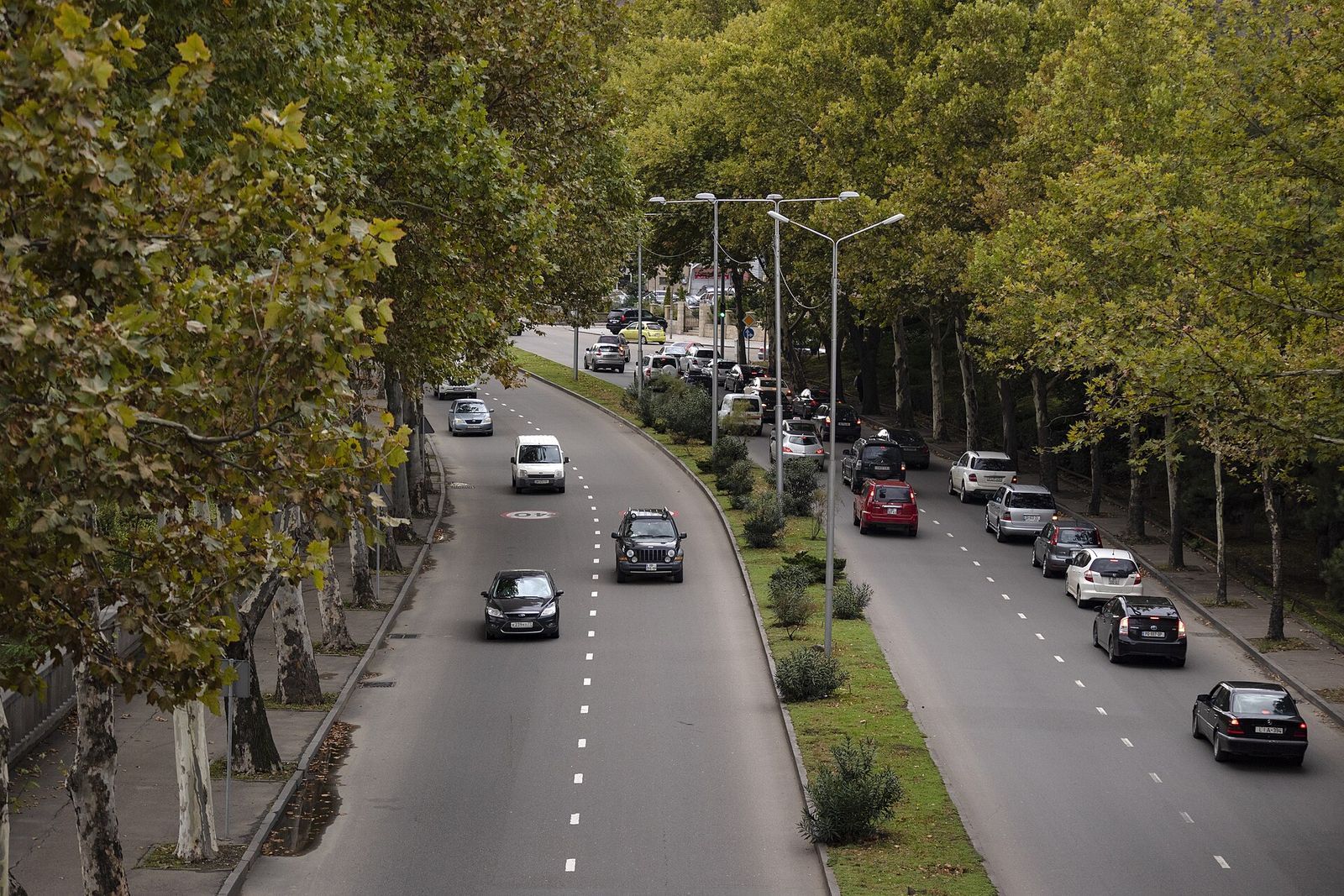
The Best Time to Visit Tbilisi, Month by Month
Tbilisi is known for golden autumns and hot summers. Here is the weather by month, the crowds, and when I would go.
Read the guide