Georgian Etiquette for Visitors: Churches, Tables and Homes
Georgia is known for its hospitality, and most of its etiquette grows out of it: guests get fed, toasted and walked to the door. The rules that do catch visitors out sit in three places, the church door, the feast table and the family home. Here's what to wear in a Georgian church, how to behave at a supra, how to turn down more wine without offending anyone and which topics to leave alone.
Georgian etiquette at a glance: the dos and don'ts
Georgians are forgiving with foreigners who get a detail wrong. What they notice is whether you made the effort, and the effort shows most at the church door and at the table. These are the ten situations where it counts.
| Situation | Do | Don't |
|---|---|---|
| Visiting a church | Cover shoulders and knees; women cover their hair | Shorts, tank tops, a cap on a man's head |
| Inside a church | Keep your voice low and your phone silent | Sit in the central chair, step into the altar area, use flash |
| Invited to a home | Bring a small gift and eat what you're offered | Turn down food outright |
| At a supra | Wait for the toast, then drink | Talk during a toast or propose your own without asking |
| Raising a glass | Toast with wine or chacha | Toast with beer |
| Eating khinkali | Eat by hand, holding the knot | Reach for a knife and fork |
| On the metro or bus | Stand up for older passengers | Stay seated while an elder stands |
| Taking photos | Ask first; a gesture is enough | Shoot people, private houses or courtyards without asking |
| Talking politics | Let your hosts raise it, then listen | Criticize the Church or argue about the breakaway regions |
| Paying in restaurants | Leave about 10% if there's no service charge | Complain about the food to your Georgian hosts |
Church etiquette and dress code in Georgia
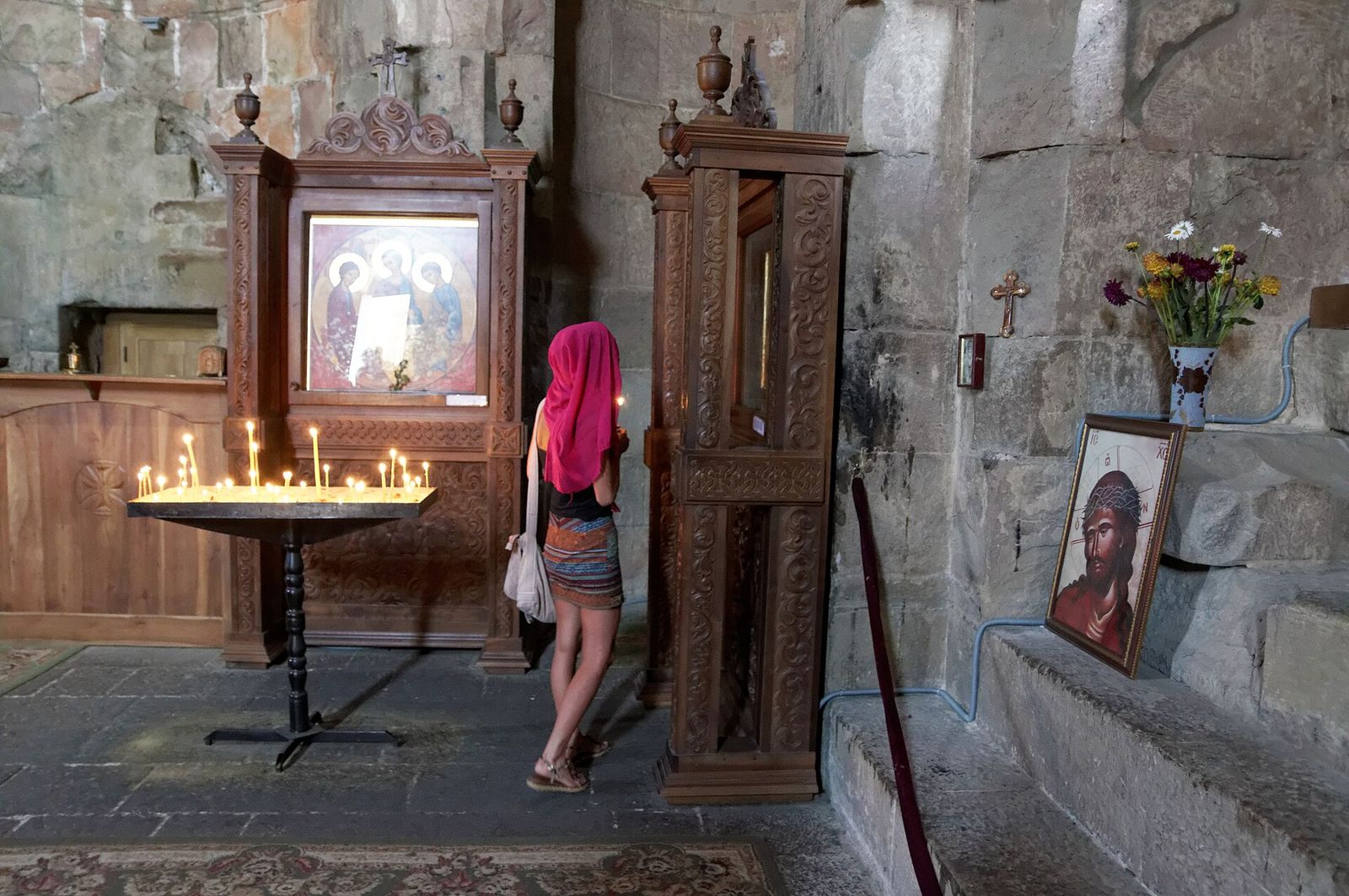
Georgia has been Orthodox Christian since the 4th century, and its churches are working places of worship first and sights second. Walk into any old church in Tbilisi on a weekday and you'll find people lighting candles, kissing icons and praying in the middle of the floor. The etiquette exists for them, and it is the same in a 6th-century basilica and in a cathedral finished in the 2000s.
What to wear in a Georgian church
The dress code is simple and applies to every church and monastery in the country.
| Who | Wear | Avoid |
|---|---|---|
| Everyone | Shoulders and knees covered | Tank tops, crop tops, shorts |
| Women | A scarf over the hair, even partly; a skirt or dress to the knee | Bare heads, short skirts; trousers at stricter churches |
| Men | Long trousers; hat or cap off once inside | Shorts, caps and hats indoors |
| Forgot something | Borrow a scarf or wrap skirt from the rack by the door | Walking in uncovered and hoping nobody minds |
The one point people disagree on is trousers for women. In Tbilisi most churches let them pass with a scarf over the hair, while monasteries in the countryside tend to be stricter, and a wrap skirt tied over the trousers settles it either way. If your day trip to Mtskheta takes in Jvari Monastery and Svetitskhoveli Cathedral, pack a skirt or a long wrap as well as the scarf, because those two see a lot of visitors and they enforce the rules more often than a quiet Old Town church does.
At the busiest churches, like Sameba, the Holy Trinity Cathedral, the scarves and wraps hang in a box or on a rack at the entrance and are free to borrow. On a busy Sunday they can run out, which is why I never rely on them.
How to behave inside a Georgian church
Keep your voice low and your phone on silent, and step around anyone praying in front of an icon rather than between them and it. Candles are sold at a small counter near the door, and lighting one is welcome whether or not you're Orthodox. Coins go in the donation box.
There are no pews. Orthodox services are stood through, and they can run for hours, with people drifting in and out the whole time. That makes it easy to slip in at the back during a service and listen to the choir for 10 minutes, as long as you stay at the back and leave as quietly as you came.
A few places inside are off limits. The altar area behind the screen of icons, the iconostasis, is for the clergy only, so never step through its doors. The large carved chair in the middle of some churches is reserved for the Catholicos-Patriarch, the head of the Georgian Church, and sitting in it, even for a photo, is about the worst thing a visitor can do in a church here. Outside, don't eat or smoke anywhere on church grounds.
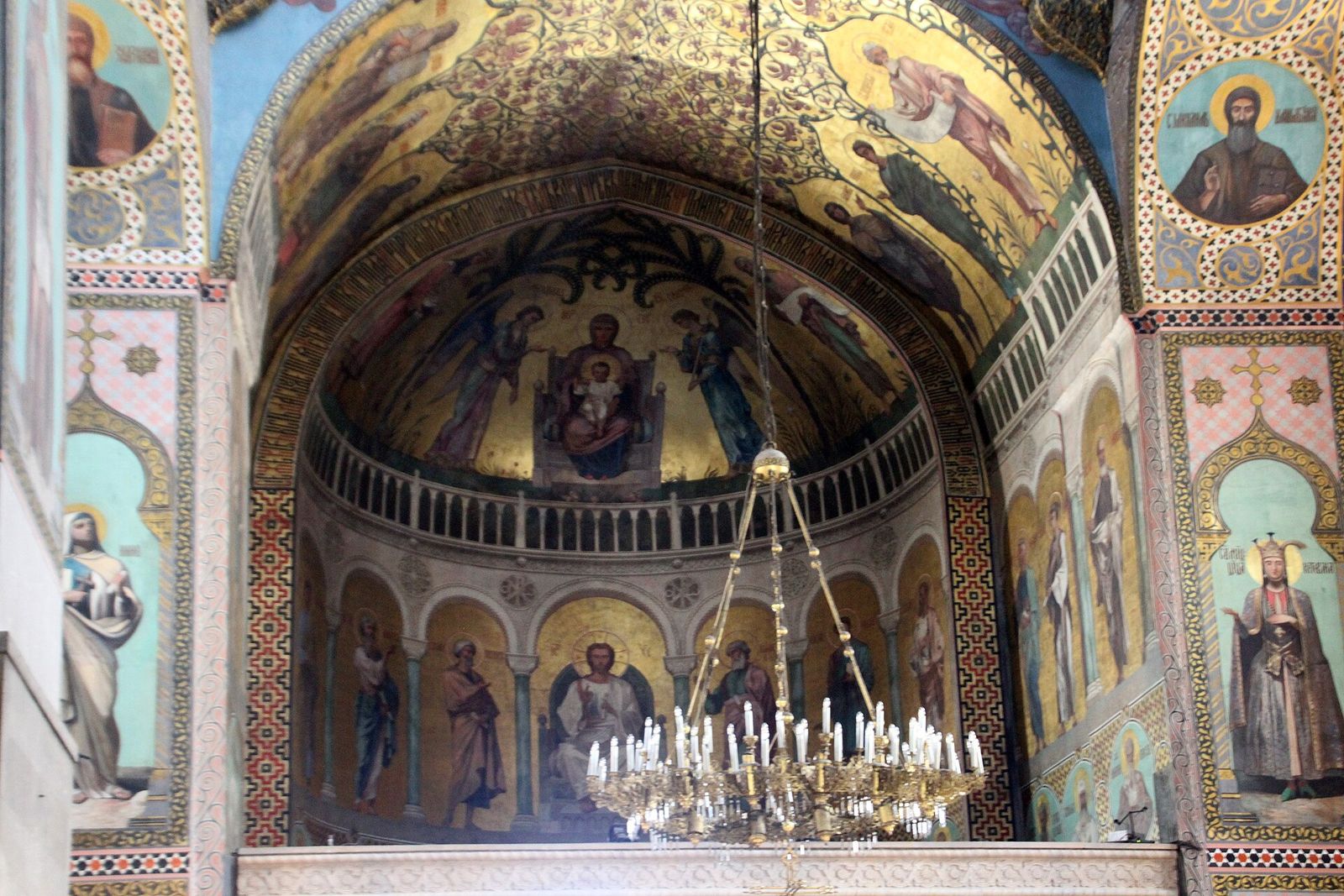
Photography rules change from church to church. Some post a no-photos sign, others allow pictures without flash, and flash is out everywhere because it damages old frescoes. Never photograph people praying or the priests during a service without asking, and don't turn your back on the altar to take a selfie while a service is on. The same courtesy holds in every one of Tbilisi's old churches, from Anchiskhati to Metekhi.
Georgian hospitality and visiting a Georgian home
Georgians have a saying that every guest is a gift from God, and hosts behave as if they believe it. Visitors get invited home after a short conversation, fed far more than they can eat and toasted by people they met an hour earlier. If you're invited, say yes. It is the best meal you'll eat in Georgia, and an invitation turned down for no reason lands as a small insult.
What to bring to a Georgian home
Bring a small gift. A box of good chocolates, a cake from a bakery or something from your own country all work, and the gift from home is the one people talk about afterwards. I'd skip bringing wine to a family in the countryside, because many of them make their own and the bottle you bought will sit unopened next to the jug from their cellar. In Tbilisi a good bottle is a safe choice.
Eating at someone's home
Turning down food reads as impolite. You don't have to finish everything, and you can't, because dishes keep arriving long after the table looks full. Take a little of everything, eat slowly, and keep a little food on your plate: an empty plate tells your host you're still hungry, and it will be refilled within a minute. Praise the food and the wine out loud, since both are often homemade and the compliment means more than the thank you.
The hospitality carries on outside the house. Ask a Georgian for directions and there's a fair chance they'll walk you there instead of pointing. Let them, say thank you, and don't offer money; it would embarrass them.
Table manners at a Georgian supra
A supra is a Georgian feast: a long table covered edge to edge in dishes, a stream of wine and a set of toasts led by the tamada, the toastmaster. A festive supra runs 4 to 5 hours or more, and the tradition has been on Georgia's national list of intangible heritage since 2017. The toasts run in a loose order, from peace and Georgia through the dead, the parents and friendship to the guests, and as a visitor you'll usually hear your own toast near the end of a long Georgian supra.
The tamada is always a man. At a wedding or a formal dinner he's chosen ahead of time; at a family table it may be the host or whoever the table agrees on. He sets the pace, with many toasts early in the evening and fewer later, and the whole table follows him. The rules a guest needs:
- Drink only on a toast. Wait for the tamada to finish and for the table to say gaumarjos, "to victory", before you lift the glass. Some toasts are drunk standing; stand when the table does.
- Stay quiet while anyone speaks. Talking during a toast is rude, and eating through one is kept to a minimum.
- Know the men's and women's rules. At traditional tables, men don't drink straight after the tamada. Each man adds a few words of his own on the same theme and then drains his glass. Women can drink as soon as the toast ends.
- Ask before you toast. A guest who wants to propose a toast asks the tamada first, and it is always welcome. If he hands you the floor by saying alaverdi, you're up: 3 or 4 sincere sentences about your hosts, Georgia or coming back are plenty.
- Arrive on time. A late guest gets a joking toast at their own expense, which is part of the fun, but it does make you the evening's first story.
- Expect small glasses and one big one. Toast glasses hold about 120 ml, but a special toast may come in a horn, a bowl or an oversized glass, and that one goes down to the last drop.
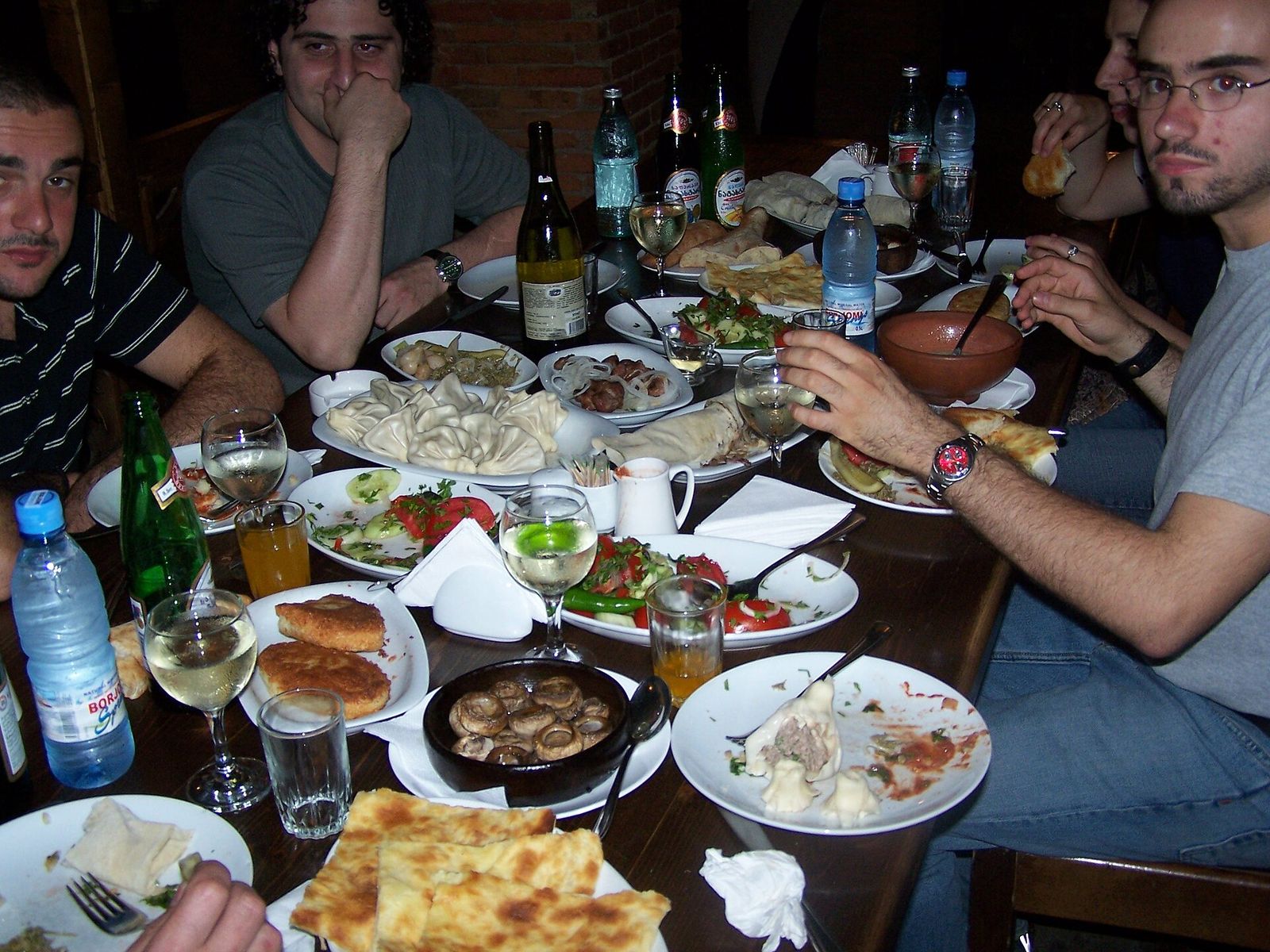
At a traditional supra the wine is white, and it's usually the family's own. Nobody expects a visitor to know the grapes, but asking where the wine came from starts a conversation every host enjoys, and a few words about Georgian wine and its clay qvevri jars make you a better guest.
How to say no to more wine at a Georgian table
This is the part that worries most visitors, and it is easier than it looks. Men are expected, but not forced, to finish each glass, while women face far less pressure. Sipping is accepted, and your glass will be topped up again either way, so the glass is never really empty and you decide how much of it you drink.
The approaches that work, in the order I'd use them:
- Sip on every toast. Lift the glass when the table does, take a sip, put it down. Nobody counts, and over 5 hours this is how most experienced guests stay upright.
- Drain only the big ones. Finish the glass for the toasts that matter, to Georgia, to the dead and to your hosts, and sip the rest.
- Say it early. Driving, medication or a health reason is understood if you mention it at the start of the meal. Mentioned at the twelfth toast, it sounds like an excuse.
- Not drinking at all is fine. It is accepted, though expect to be asked why, more than once and with real curiosity. Raise a glass of water or juice on every toast so you're still part of it.
- Apply the same rule to chacha. When a host brings out a bottle of homemade chacha, the grape brandy, a small sip on the toast counts as drinking it.
The one thing that does embarrass your hosts is getting drunk. A supra celebrates being together, and a guest who loses control at the table is the story nobody wants to tell.
Eating out: khinkali, praising the food and tipping
Khinkali, the pleated soup dumplings, are eaten by hand. Hold one by the knot on top, bite a small hole in the side, drink the broth, then eat the rest and leave the knot on your plate. A knife and fork marks you as a tourist and lets the broth run out onto the plate. Georgians order them by the five, and the places that serve the best khinkali in Tbilisi bring them straight from the steamer, so let them cool for a minute before the first bite.
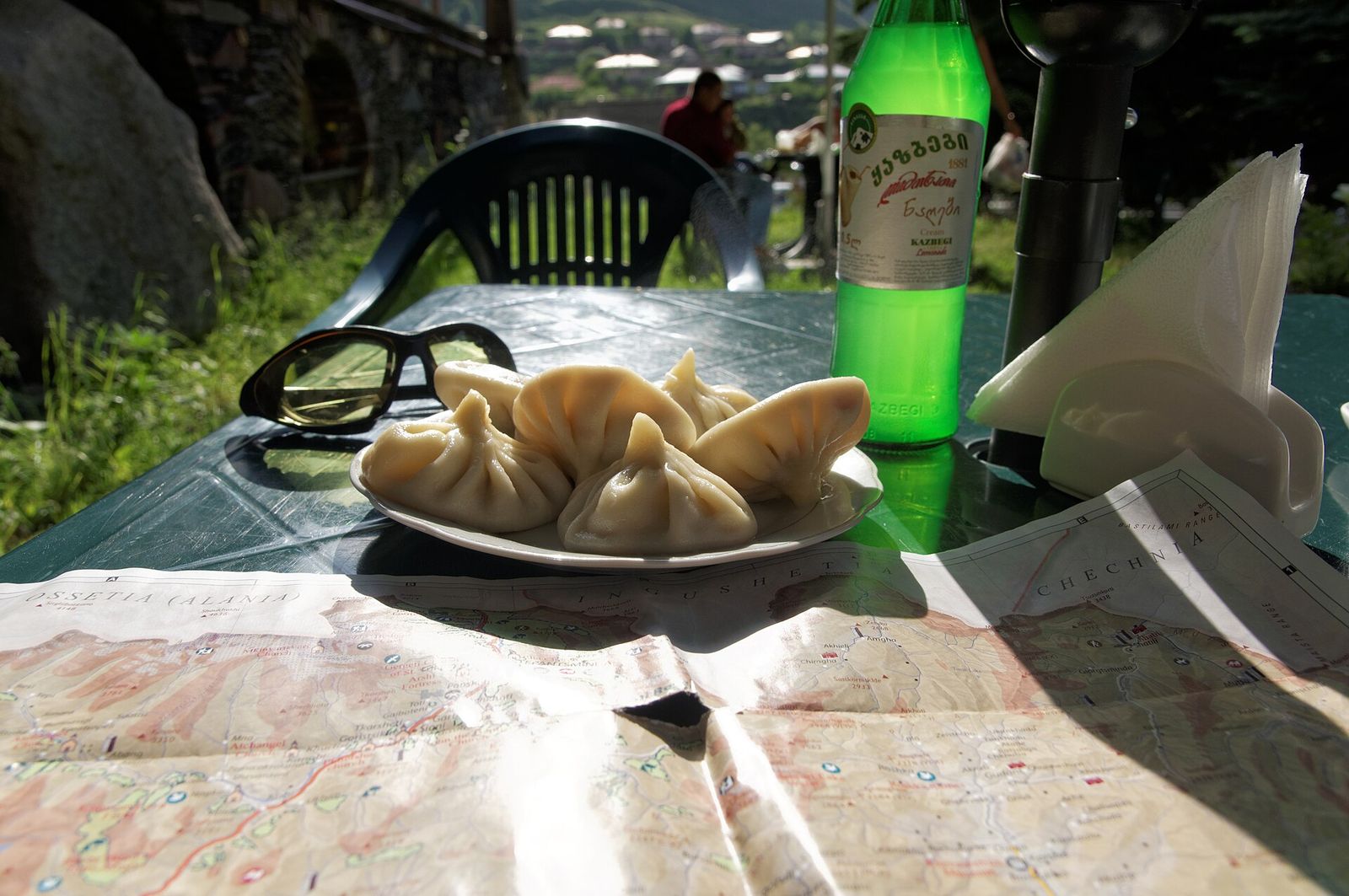
Georgians are proud of their cooking, with good reason. Ask your hosts what to order, let them explain the walnut pastes and the cheese breads, and keep any complaints about Georgian food to yourself at a shared table. If a dish isn't for you, eat a little and move on to the next one; there will be plenty more.
In restaurants, about 10% is the custom for good service, but many bills already add a 10% service charge as its own line, and if it's there, nothing more is expected. The rest of tipping in Georgia is just as relaxed: round up in cafes, nothing extra on an app taxi.
Everyday manners in Tbilisi
Most of daily life in Tbilisi runs on the same manners as any European capital, with a few local habits on top.
- Give up your seat to older people. Respect for elders runs deep, and on the Tbilisi metro and the city buses, younger passengers stand up the moment an older person gets on. Do the same and you'll get a nod of approval from the whole carriage.
- Ask before you photograph people. A raised camera and a questioning look is enough, and most people say yes. Take the same care with private houses and the shared courtyards of the Old Town, where the washing on the line belongs to someone.
- Keep affection and noise down. Public displays of affection and loud behavior in the street draw looks, especially from older Georgians and anywhere near a church.
- Dress however you like away from churches. Tbilisi dresses like any European city, and there are no rules for visitors on the street, in bars or in restaurants.
- Accept what you're offered. Offering food and drink is how Georgians show warmth, in shops and guesthouses as much as in homes. Accept at least once.
Topics to handle with care: politics, Russia and the Church
Georgians talk politics openly with each other, and many will raise it with you within minutes of meeting. Listen more than you argue. The subjects that land worst coming from a visitor are the ones closest to home.
- The breakaway regions. After the five-day war with Russia in August 2008, Russia recognized Abkhazia and South Ossetia as independent. Most Georgians regard both as Georgian land, and the war is recent family memory, so treat it as such.
- Russia. Don't describe Georgia as Russian or as part of Russia's world, and don't assume people share a view of Russia because they lived through the Soviet years. Feelings run strong, in every direction. The background makes more sense after an hour with Georgia's recent history, from independence in 1991 to the Rose Revolution of 2003.
- The Church. The Georgian Orthodox Church is central to how many Georgians see their country, and criticizing it, even in passing, offends people who don't go to church themselves.
None of this means you can't ask. A genuine question about how something looks from a Georgian point of view gets a long, generous answer; a lecture gets a polite silence.
Holidays and occasions that change the etiquette
A few dates in the year bring their own customs, and they're worth knowing if your trip overlaps them.
| Occasion | Date | What changes |
|---|---|---|
| New Year | 1 January | The big family celebration, with a feast at home |
| Orthodox Christmas | 7 January | Church services and a quieter family day |
| Old New Year | 13 January | A second, smaller New Year by the old calendar |
| Easter | Moves each year, on the Orthodox calendar | Churches at their fullest; dress for the church before you go |
| A mourning supra (qelekhi) | After a burial, at 40 days and at one year | Shorter, quieter, and never a gaumarjos |
Christmas and New Year in Tbilisi run together into one long holiday that lasts until the Old New Year on 13 January, and Georgian hospitality peaks with it: if you're in the city then, expect invitations. At Easter in Georgia, the churches overflow, and a visitor who turns up properly dressed is welcomed into the crowd.
The qelekhi is the one you might not expect. It's the mourning meal held after a funeral and again at 40 days and one year, and it runs to about 2 hours with 7 to 9 toasts. The toast there is khsovna ikos, "may they be remembered", and saying gaumarjos at a qelekhi is a serious mistake.
Key takeaways
- Cover your shoulders and knees in every Georgian church; men take off their hats, and women cover their hair and wear a skirt, which many churches lend at the door.
- Stay out of the altar area, never sit in the Patriarch's chair and don't use flash near frescoes.
- At a supra, drink only on a toast, stay quiet while someone speaks and never toast with beer.
- To drink less, sip on every toast, drain only the big ones and tell the tamada early.
- Eat khinkali by hand, accept the food you're offered, give up your seat to elders and let your hosts raise politics.
Frequently asked questions
What should you wear to a church in Georgia?
Cover your shoulders and knees, whoever you are. Men wear long trousers and take off their hats, and women cover their hair with a scarf and wear a skirt or dress to the knee. Many churches lend scarves and wrap skirts at the door, but carrying your own light scarf is easier.
Can women wear trousers in Georgian churches?
In most Tbilisi churches, yes, as long as your hair is covered. Stricter churches and countryside monasteries prefer a skirt, and tying a wrap skirt over your trousers settles it anywhere.
Is it rude to refuse wine in Georgia?
No, as long as you do it gracefully. Sipping on each toast is accepted, and not drinking at all is fine if you say so early, though your hosts will probably ask why. Raise a glass of water or juice on the toasts so you're still part of them.
Is it rude to refuse food in Georgia?
Yes, turning food down outright reads as impolite, especially in someone's home. Take a little of everything and eat slowly, and leave a little on your plate when you're full, because an empty plate gets refilled.
What gift should you bring to a Georgian home?
A small one: chocolates, a cake or something from your own country. The gift from home tends to mean the most. Wine is fine in the city, but many families outside Tbilisi make their own.
Can you take photos inside Georgian churches?
It depends on the church. Some ban photos, others allow them without flash, so obey any sign and ask if there is none. Never photograph people praying or a service in progress without permission.
Why don't Georgians toast with beer?
In Georgian custom, a beer toast is for your enemies or for wishing someone ill. Toast with wine or chacha, even if you're drinking beer with the meal.
What topics should you avoid in Georgia?
Avoid criticizing the Georgian Orthodox Church and arguing about Abkhazia, South Ossetia or Russia. Georgians often raise politics themselves; when they do, listen and ask questions rather than offering opinions.
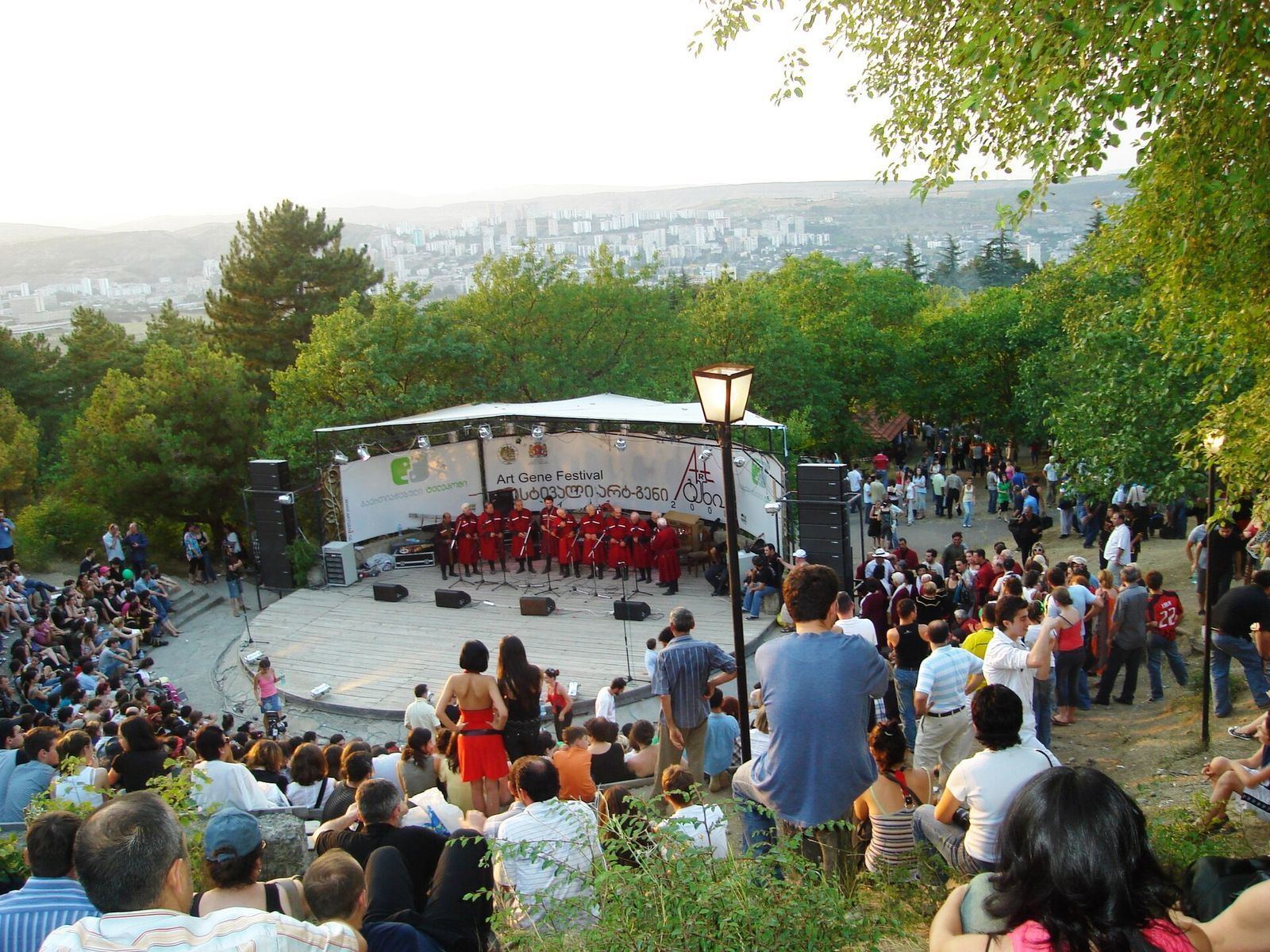
Georgian Culture and Traditions: A Visitor's Guide to Customs, Feasts, Faith and Song
Georgian culture is known for feasts, wine and song. Here's what visitors should know about its customs and traditions.
Read the guide
Basic Georgian Phrases for Travelers, with Pronunciation
Georgian has its own alphabet and a hello that means victory. Here are the phrases to learn and how to say them.
Read the guide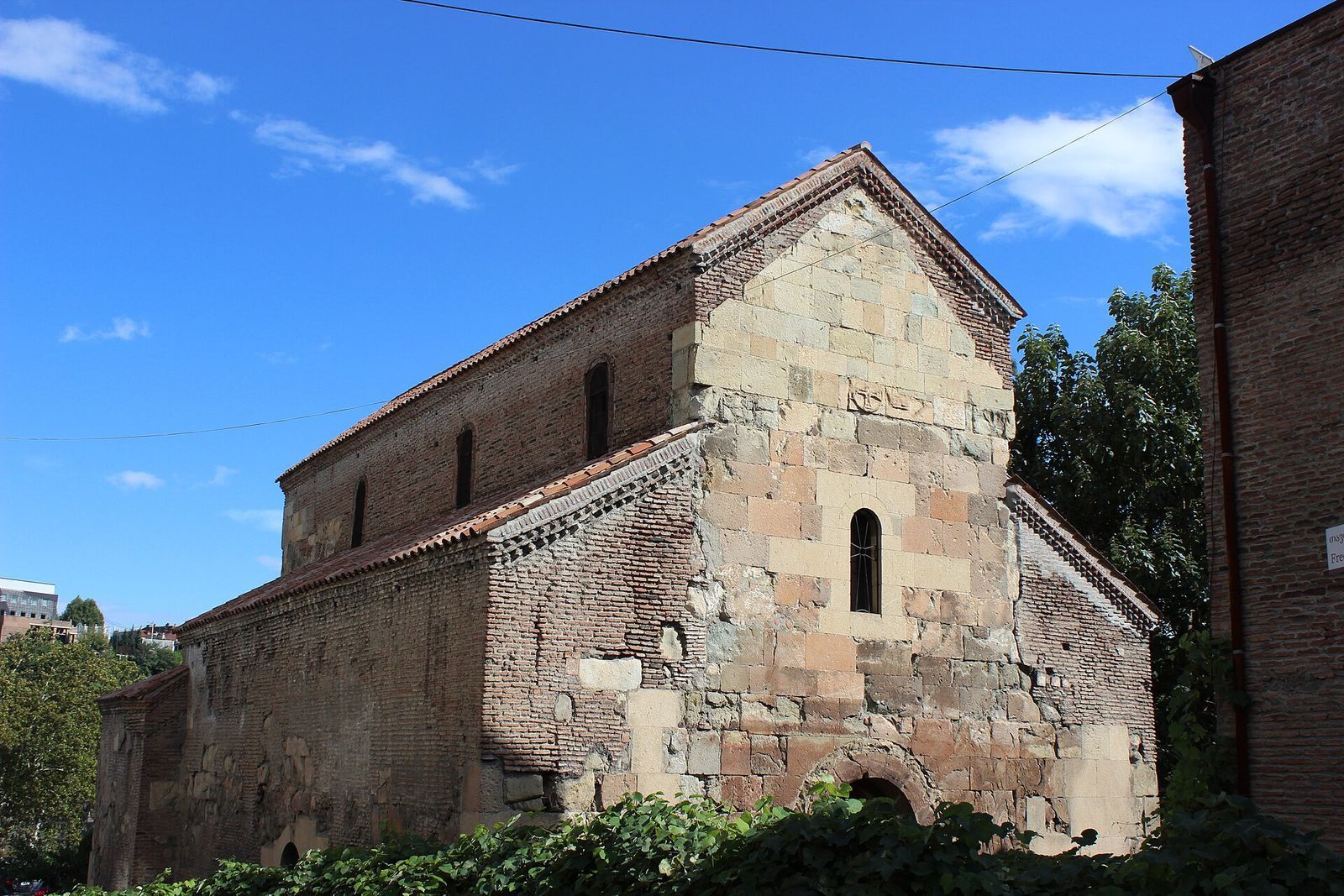
A Short History of Georgia and Tbilisi, From the Falcon Legend to Today
Tbilisi has been burned and rebuilt for 1,500 years. Here is Georgia's story in short, and where to see it today.
Read the guide