Georgian Crafts: Ceramics, Felt, Enamel and Carpets in Tbilisi
Georgia is known for crafts older than most of its churches: clay wine jars, cloisonne enamel, shepherds' felt and hand-woven Kakhetian carpets. Tbilisi is where you find all of them in one place. Here's what each craft is, how to tell the handmade piece from the souvenir-stall copy, which studios and shops I'd buy from, where to take a class and what to pay in 2026.
The main Georgian crafts at a glance
Five crafts cover almost everything you'll see in Tbilisi's studios and markets. Each one comes from a different corner of the country, and each has a shop in the capital that does it properly.
| Craft | What it is | Home region | What to buy | Where in Tbilisi |
|---|---|---|---|---|
| Pottery and ceramics | Clay vessels, from buried wine jars to painted tableware | Every region; black-smoked ware in the west | A mini qvevri, a painted mug, a clay ketsi dish | Ceramic Room and White Studio in Vera, Estia |
| Minankari enamel | Colored glass fired between thin metal walls | Medieval church workshops, now Tbilisi studios | Earrings, pendants, rings, brooches | Istoriali, Gallery 27, Ethnodesign |
| Felt | Sheep's wool pressed by hand with soap and water | Tusheti and the Tush villages of Kakheti | Slippers, hats, wall hangings, scarves | Ethnodesign, the Dry Bridge craft stalls |
| Carpets and kilims | Hand-woven wool rugs and flat-woven kilims | Kakheti, including Kizikian carpets | A small kilim or a runner | Caucasian Carpets Gallery, Meidan Bazaar |
| Lurji supra | Hand block-printed blue tablecloth | Tbilisi | A tablecloth, napkins or a runner | The Academy of Arts workshop, Gallery 27 |
If you only buy one thing, I'd make it enamel or clay. Enamel is small, light and unmistakably Georgian; clay is cheap and gets used every day once you're home. Felt and carpets are the bigger, more personal buys, and the ones where knowing the maker matters most. For the wider gift list, from churchkhela to chacha, the Georgian souvenirs worth buying are mostly food and drink, while this guide sticks to the things people make by hand.
Georgian pottery and ceramics
Pottery is the oldest craft in Georgia. Earthenware here goes back to the Neolithic, when people were already making wine, and for most of the country's history it was ordinary village work, passed from parent to child at the wheel with nothing written down. Each region had its own clay and its own shapes. In the east, Kakheti and Kartli made light, thin-walled vessels, usually raw and undecorated. In the west, the old kingdom of Colchis, potters gave their jugs shapely handles and geometric bands as far back as the Late Bronze Age.
Qvevri and clay wine jugs
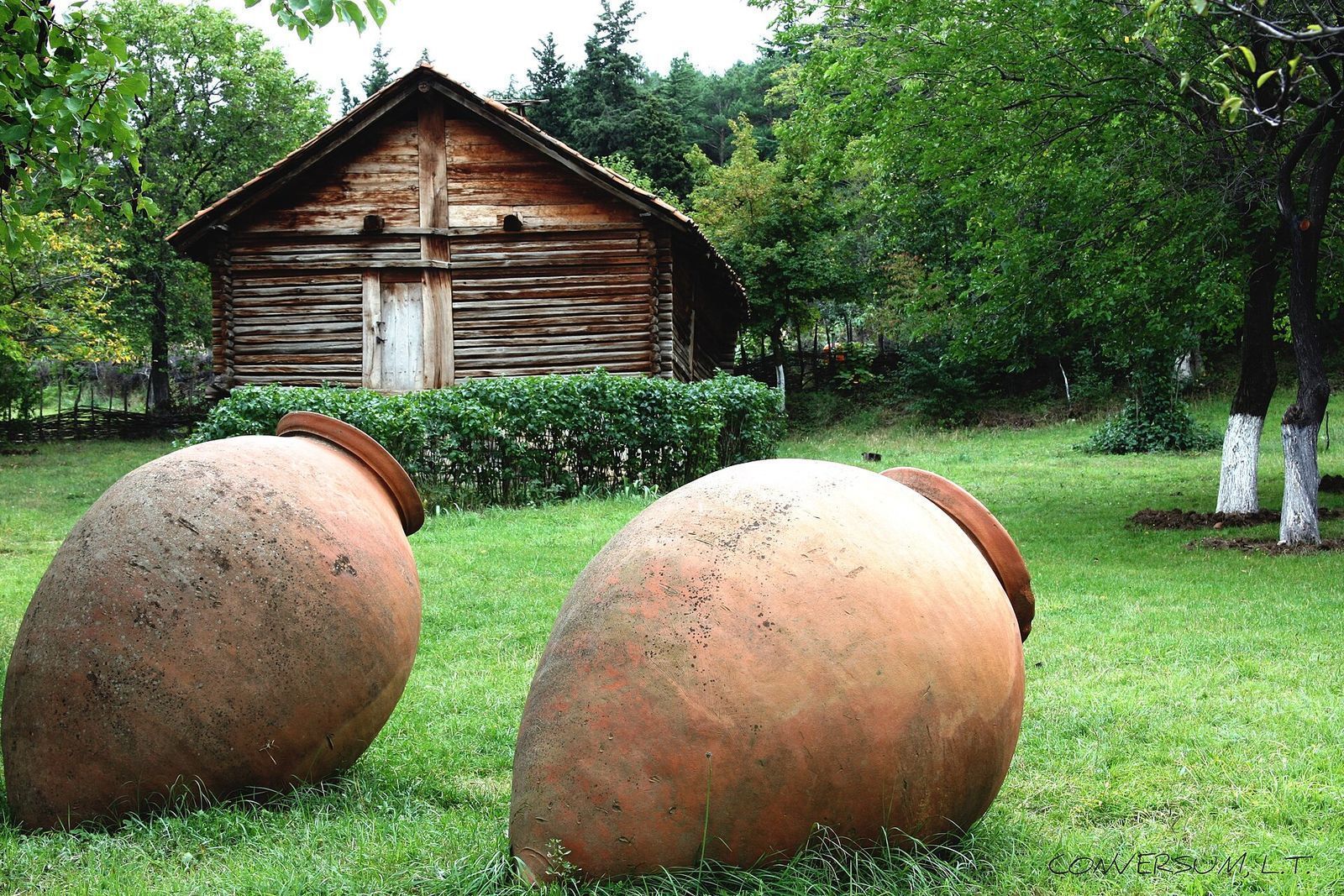
The most famous Georgian pot is the one nobody takes home. A qvevri is an egg-shaped clay jar, usually 100 to 2,000 liters, buried up to its neck to ferment and age wine, and UNESCO listed the method as intangible heritage in 2013. Making one takes weeks of coiling and firing, and only a small number of master potters still do it the old way. If you've had amber wine in Tbilisi, it almost certainly spent months in one, and qvevri wine is the reason the craft survives at all.
What you can take home is the miniature. A mini qvevri jug costs 10 to 25 GEL in markets and craft shops, and it's the ceramic gift I'd pick for anyone who drinks wine. Next to it you'll see clay wine pitchers with long beaks, small drinking bowls and the ketsi, a flat clay dish Georgians bake mushrooms and sulguni cheese in.
Black-smoked ceramics from western Georgia
Black-smoked pottery is the oldest technique still alive in Georgia, dated to the 4th millennium BC and once common across the west. Red clay pieces go into a kiln with burning pine wood, and the smoke stains them black or a soft matte grey all the way through. The finish looks modern, which surprises people who expect folk pottery to be brown and glazed.
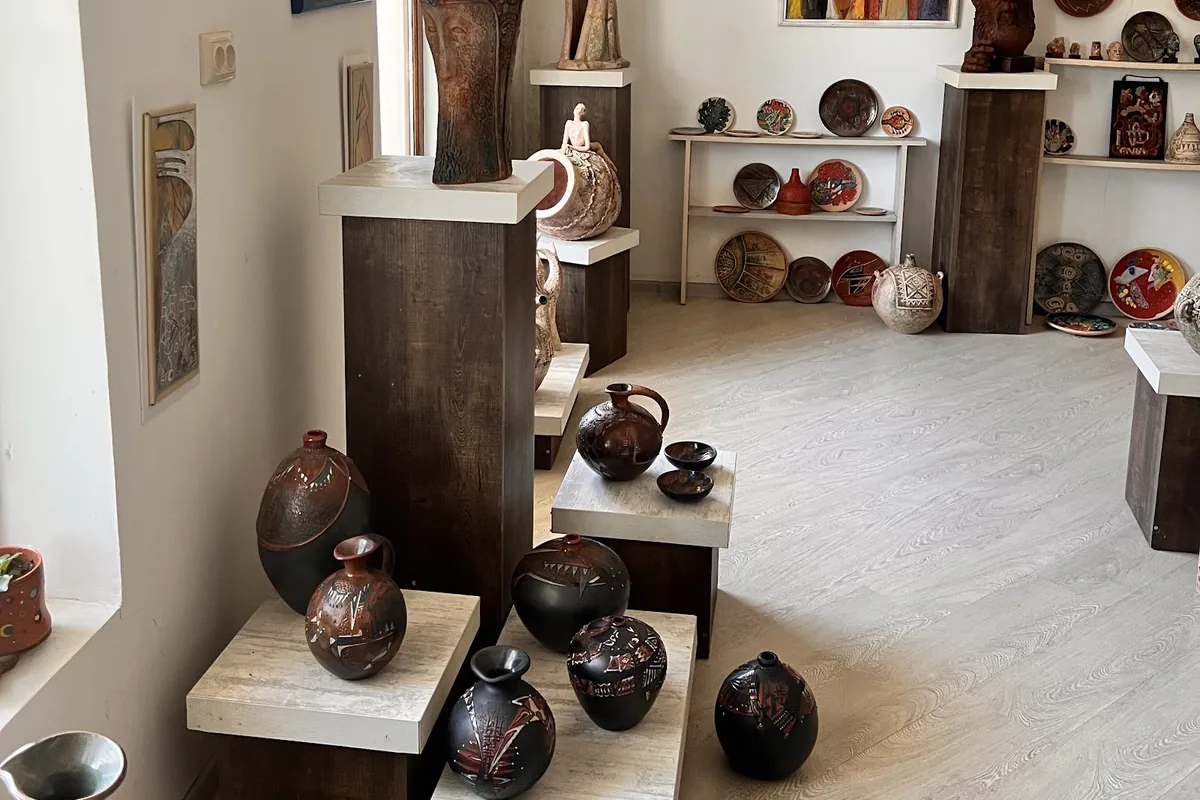
The best-known studio for it is ORKOL in Zugdidi, in Samegrelo, where a family of potters makes pitchers, plates and sculptures from local red clay in a converted traditional oven. Zugdidi is a long way west of Tbilisi, so most visitors meet black-smoked ware in Tbilisi craft shops instead. When you see a matte charcoal jug with a long beak, that's the one.
Painted ceramics from Tbilisi studios
Tbilisi's own ceramics have had a strange century. Soviet factories in Tbilisi, Mtskheta and Ikalto turned out tableware by the ton, then closed. The Tbilisi State Academy of Arts opened a ceramics and glass studio in 1959, and a generation of its graduates now runs the small studios where the best modern Georgian ceramics come from.
My three favorites:
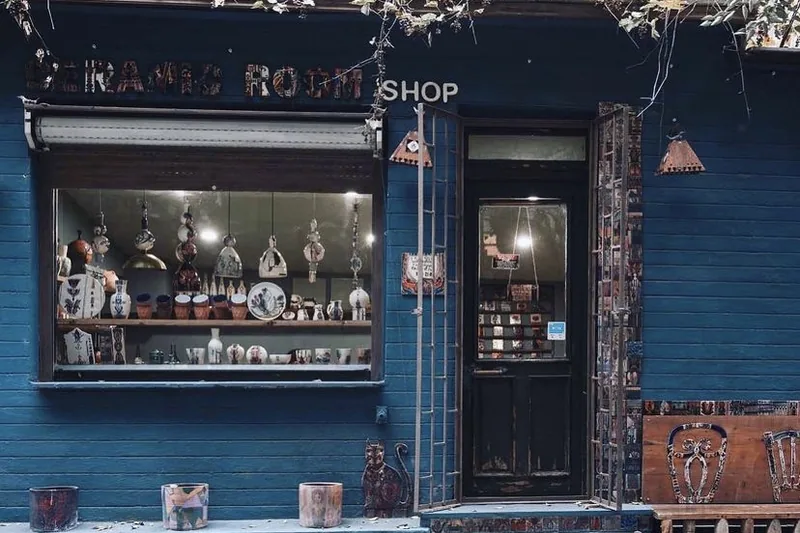
- Ceramic Room, at 30 Vasil Barnovi Street in Vera, makes mugs, tableware, hand-painted tiles and house numbers with Georgian motifs. It's my first stop for a gift that will actually get used, and small hand-painted pieces in studios like this start at about 15 GEL.
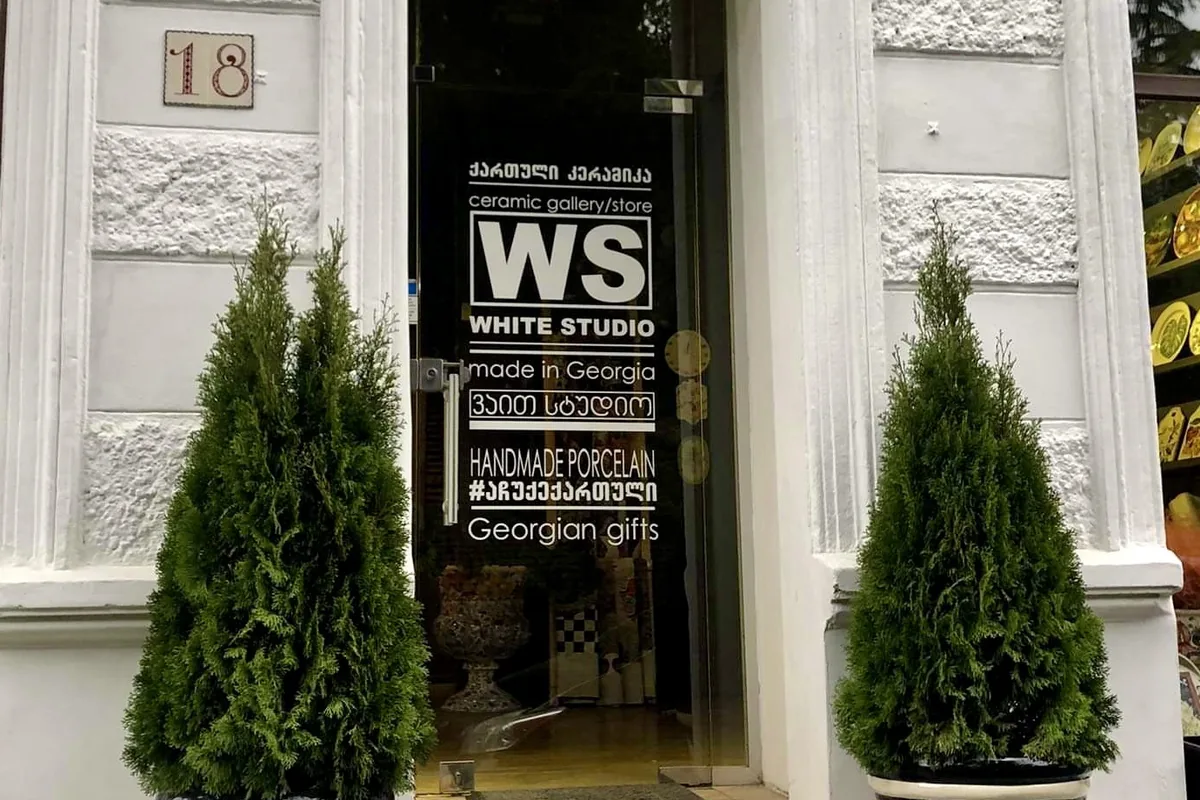
- White Studio, on Vasil Petriashvili Street, also in Vera, works in faience and red clay and paints everything by hand, reviving old Georgian patterns on bigger plates and vases. Some of it is too large to fly with.
- Estia, at 60 Tsinamdzgvrishvili Street, opened in 2014 and draws on Georgian pottery, textiles, literature and the alphabet. It works by appointment, and it was one of the first studios in the city to teach visitors at the wheel.
Minankari: Georgian cloisonne enamel
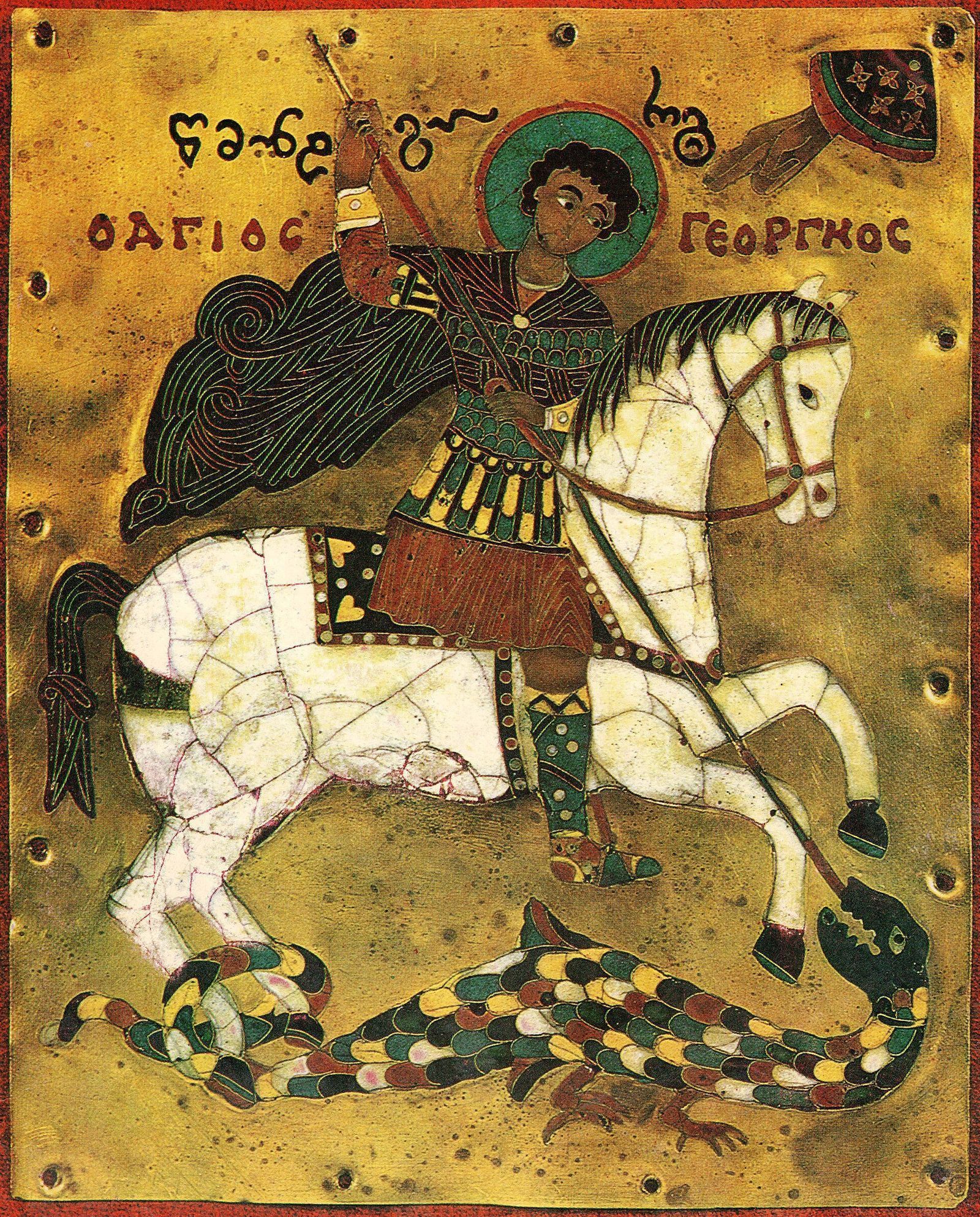
Minankari is Georgian cloisonne enamel, and it's the craft I'd point to if someone asked what Georgia does that nobody else does quite the same way. Thin strips of gold, silver or copper are bent into a pattern and soldered onto a metal base, making tiny walled cells. Each cell is filled with powdered colored glass and fired at high heat until the glass melts into a smooth, shiny surface, then the piece is fired again and polished. Cloisonne is slower and fussier than other kinds of enamel, and every piece is made by hand, which is why the real thing is never cheap.
The craft is old. It was in Georgian workshops by the 8th or 9th century, and it peaked between the 10th and 15th centuries, when enamel medallions were set into gold icons and crosses for the church. The Khakhuli triptych, a gold icon covered in them, is the masterpiece of medieval Georgian enamel. The craft faded for centuries after that and came back as jewelry, which is how most travelers meet it now: pendants, earrings, rings and brooches, often with grapevines, saints or Colchian patterns.
How to spot real minankari
Look at the lines. Real minankari has a fine metal wall between every color, slightly raised, catching the light. The enamel sits glassy and smooth inside those walls, and the colors are deep rather than flat. Turn the piece over: the back of a silver or gold piece is clean metal, and a good studio will tell you what the base is without being asked.
Where to buy minankari in Tbilisi
Price depends almost entirely on the metal. Silver, or copper with a silver finish, is the affordable end; gold is a splurge. These are the places I'd buy from:
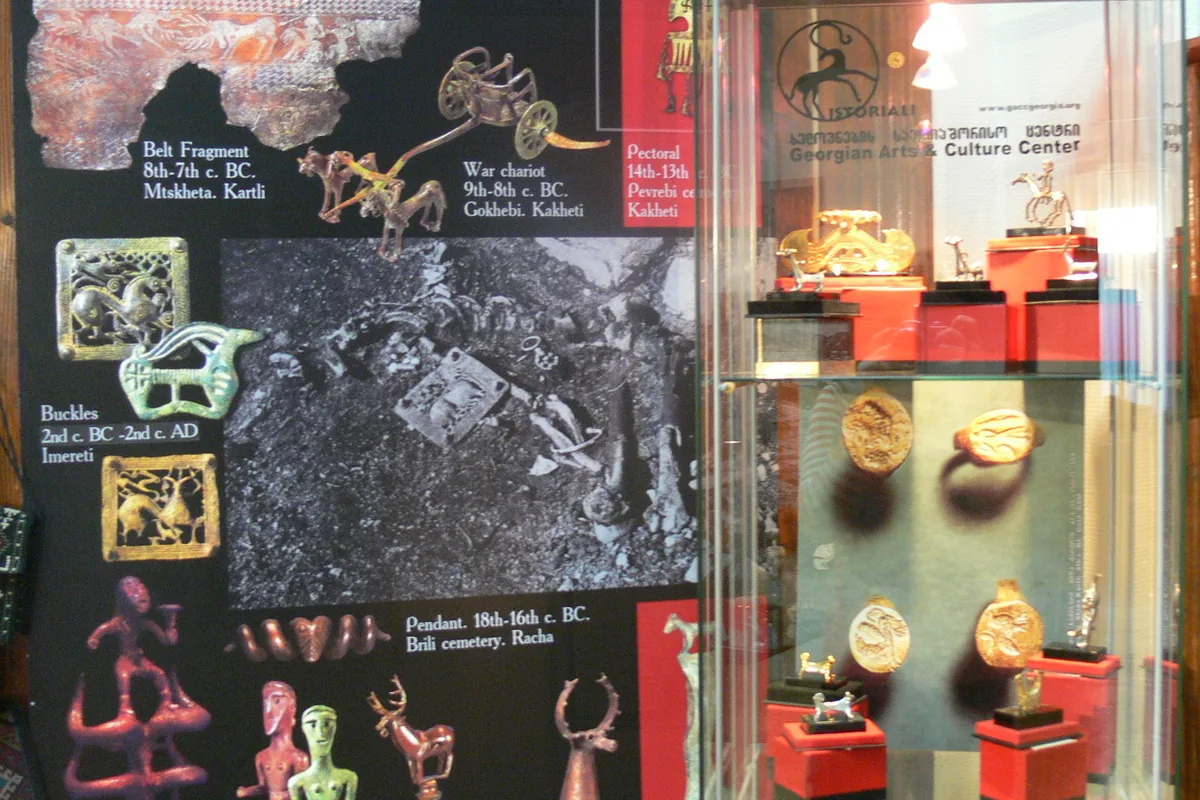
- Istoriali, at 7 Niko Nikoladze Street near Rustaveli metro, makes fine gold and enamel jewelry with ancient Colchian motifs. It's where I'd go for a serious present.
- Ikorta is a workshop about a 40-minute drive from Tbilisi that trains women displaced from South Ossetia in minankari. Its pendants, rings and pins cost far less than studio gold, and Ethnodesign and OVOP both stock them.
- Gallery 27, in Sololaki, carries enamel from smaller makers alongside its ceramics and textiles.
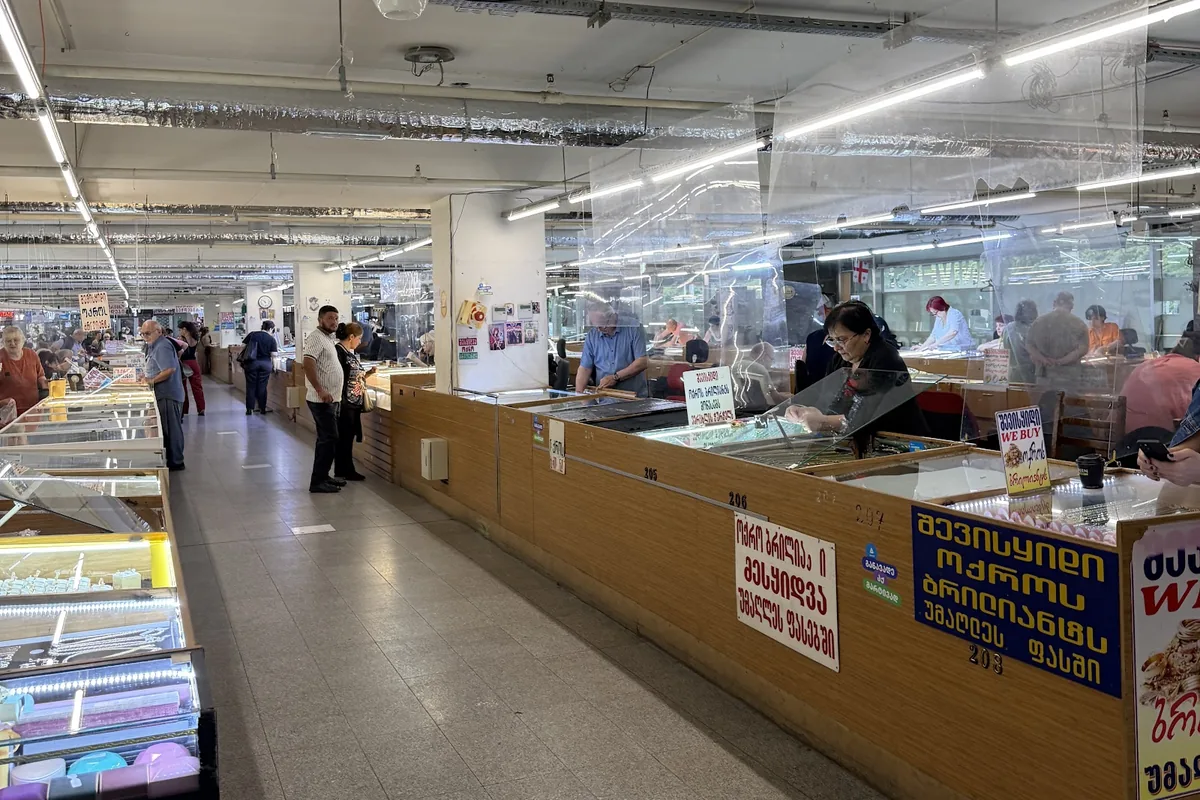
- The Gold Market, on the ground floor of the shopping center at the Central Railway Station, is a hall of small jewelers with minankari counters. It's busier and less curated, and the prices are better.
Erekle II Street, Shardeni Street and the lanes around Meidan Square in Old Tbilisi also have enamel workshops with their own counters. Those are fine, as long as you can see the metal lines.
Georgian felt and Tushetian wool
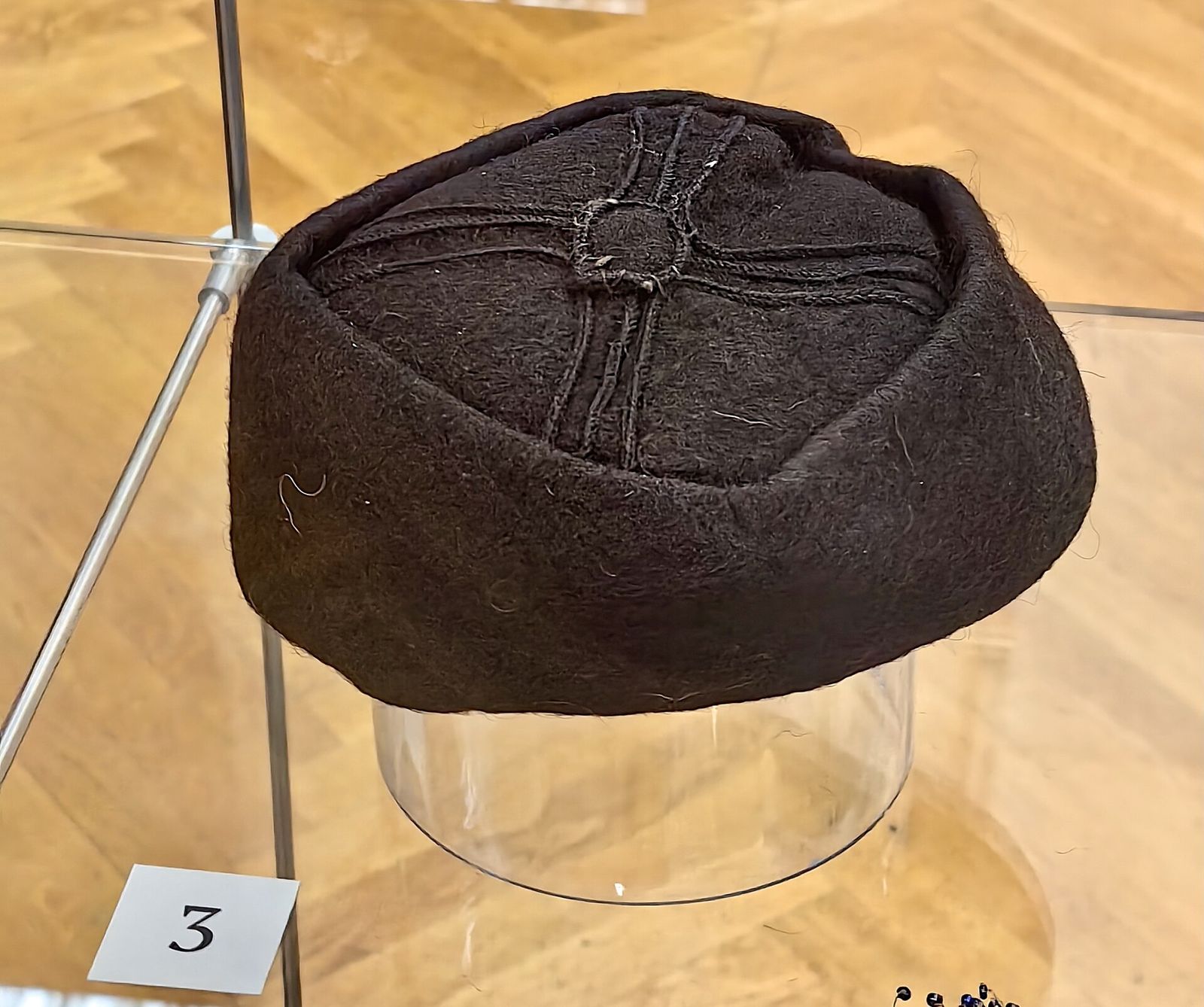
Felt is one of Georgia's oldest fabrics, and it was a survival craft long before it was a souvenir. In the high mountains of Tusheti, Khevsureti and Javakheti, shepherds wore the nabadi, a long, heavy felt cloak big enough to sleep in like a sleeping bag on a cold night with the flock. The Tush made felt hats too, the round caps with stitched patterns that still mark someone from Tusheti.
Tushetian sheep spend summer on the high pastures and winter in the Kakheti lowlands, where Tush families have their second homes in the villages of Zemo and Kvemo Alvani. That's why the felt workshops are down there rather than up in the mountains. The method hasn't changed much. Soft wool is teased out onto a table, wetted with cold water and pressed by hand while it's lathered with natural soap, which fuses the fibers. Once it's thick enough, it's shaped around a mold, dunked in hot water to tighten it and soaped again to harden it. Wall hangings use the same method, with the wool fused onto canvas and then embroidered with pictograms.
What to buy:
- Felt slippers and booties, often with Tushetian ornaments, the easiest felt gift to pack.
- Felted scarves and shawls, light and warm, sometimes felted onto silk.
- A Tushetian felt hat, the most traditional piece.
- Wall hangings, the most artistic, and the one I'd buy for my own home.
- Hand-knitted wool socks, not felt but from the same wool, and cheap.
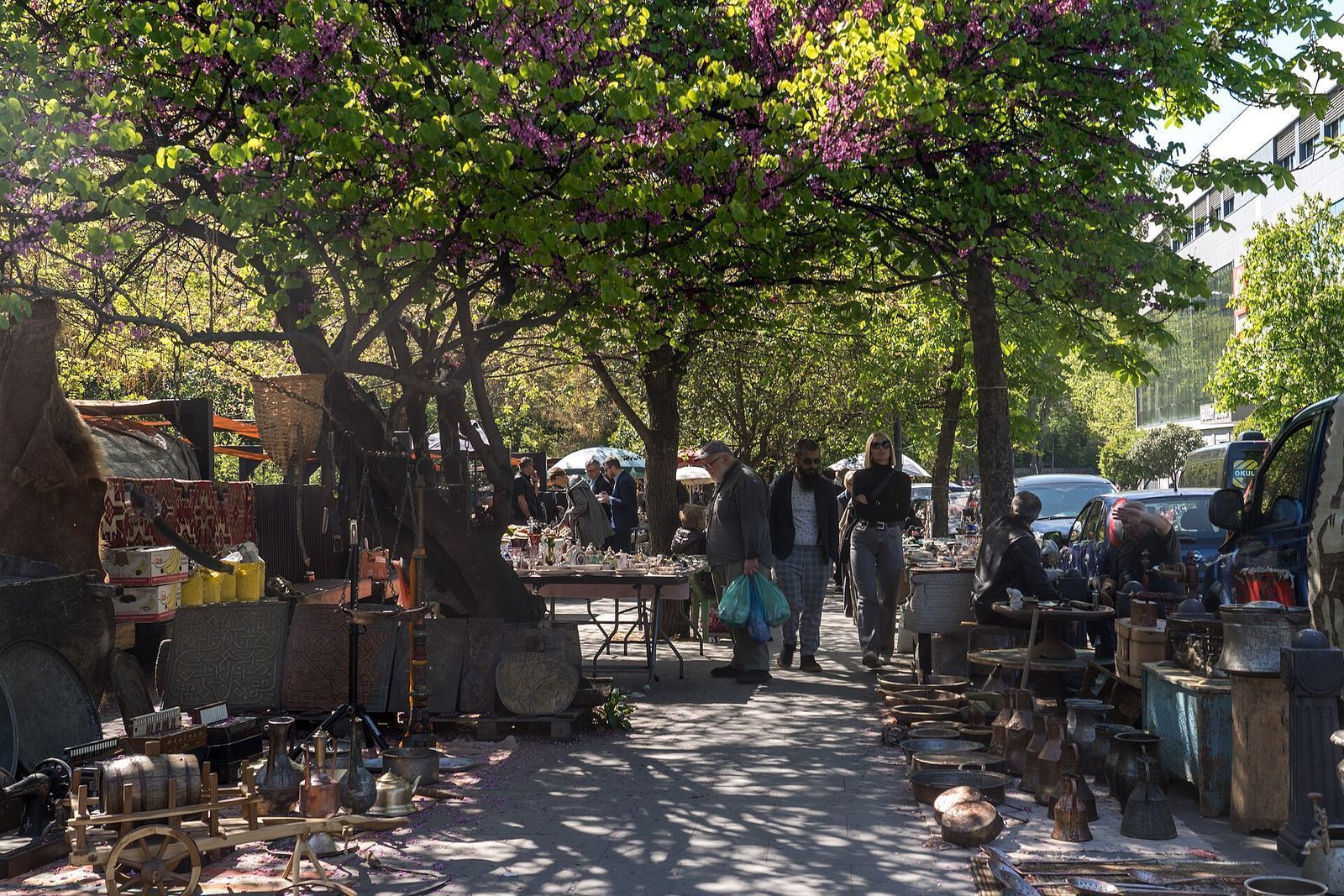
The Dry Bridge Market is the cheapest place to start. Its handmade stalls in Dedaena Park sell felted shawls, wool socks, slippers and felt toys every day, and a slow walk through the Dry Bridge Market is the best quick lesson in what Georgian felt costs before you go to the boutiques.
Georgian carpets and kilims
Georgian carpets are usually wool, built to last for generations, and their patterns carry family and village stories. You'll meet two kinds: knotted pile carpets, thick and soft, and flat-woven kilims, thinner and lighter, which are the ones most travelers end up buying because they fold into a suitcase.
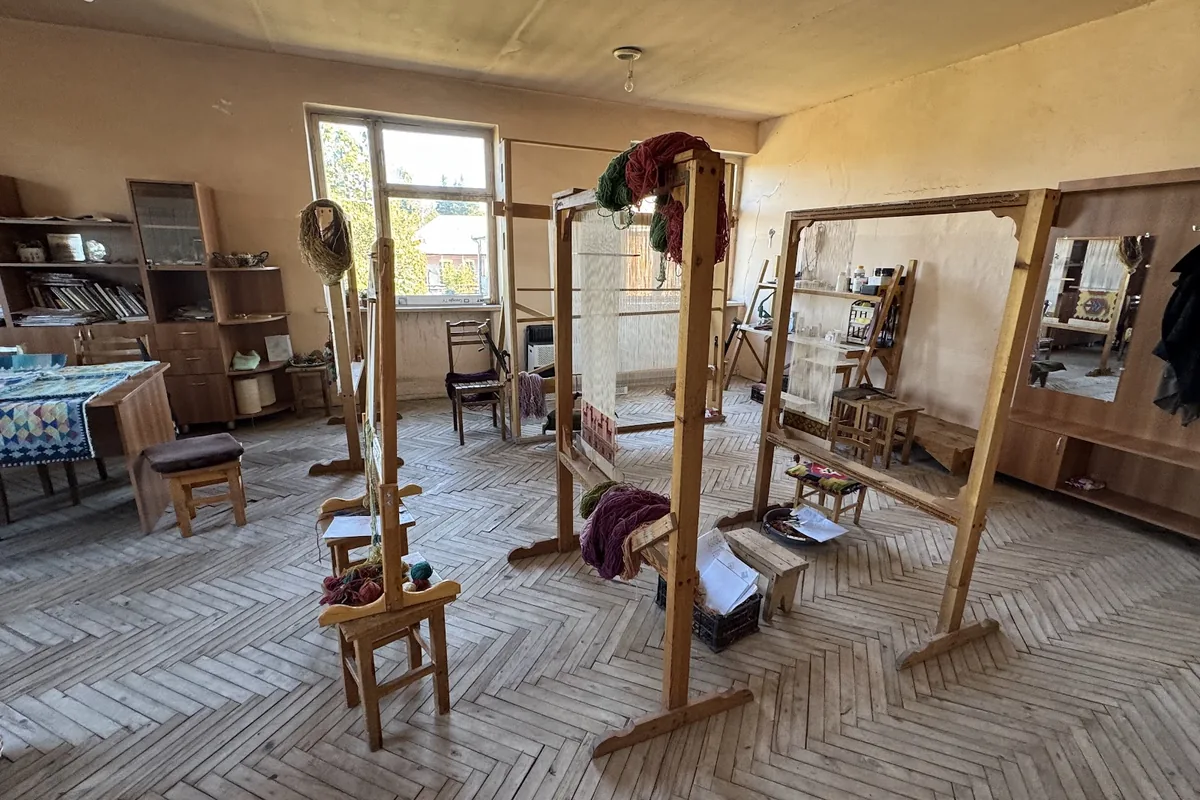
Kakheti is the heartland. The Kiziki area around Sighnaghi and Dedoplistskaro has its own style, woven on standing looms and often patterned with rose buds and open blooms. Pesvebi Art Studio in Dedoplistskaro, founded in 2005, revived Kizikian weaving and natural dyeing after both had died out locally, working from museum archives and old family carpets. Its founder spent 15 years building the dye palette: madder root for crimson in spring, barberries, cherries and pomegranates in summer, onion skins for deep browns all year, and mineral powders for blues, all fixed with iron oxide. Nine women work there now. Its small carpets rarely reach Tbilisi shops, so a stop in Dedoplistskaro on a day out to Sighnaghi is the way to buy one.
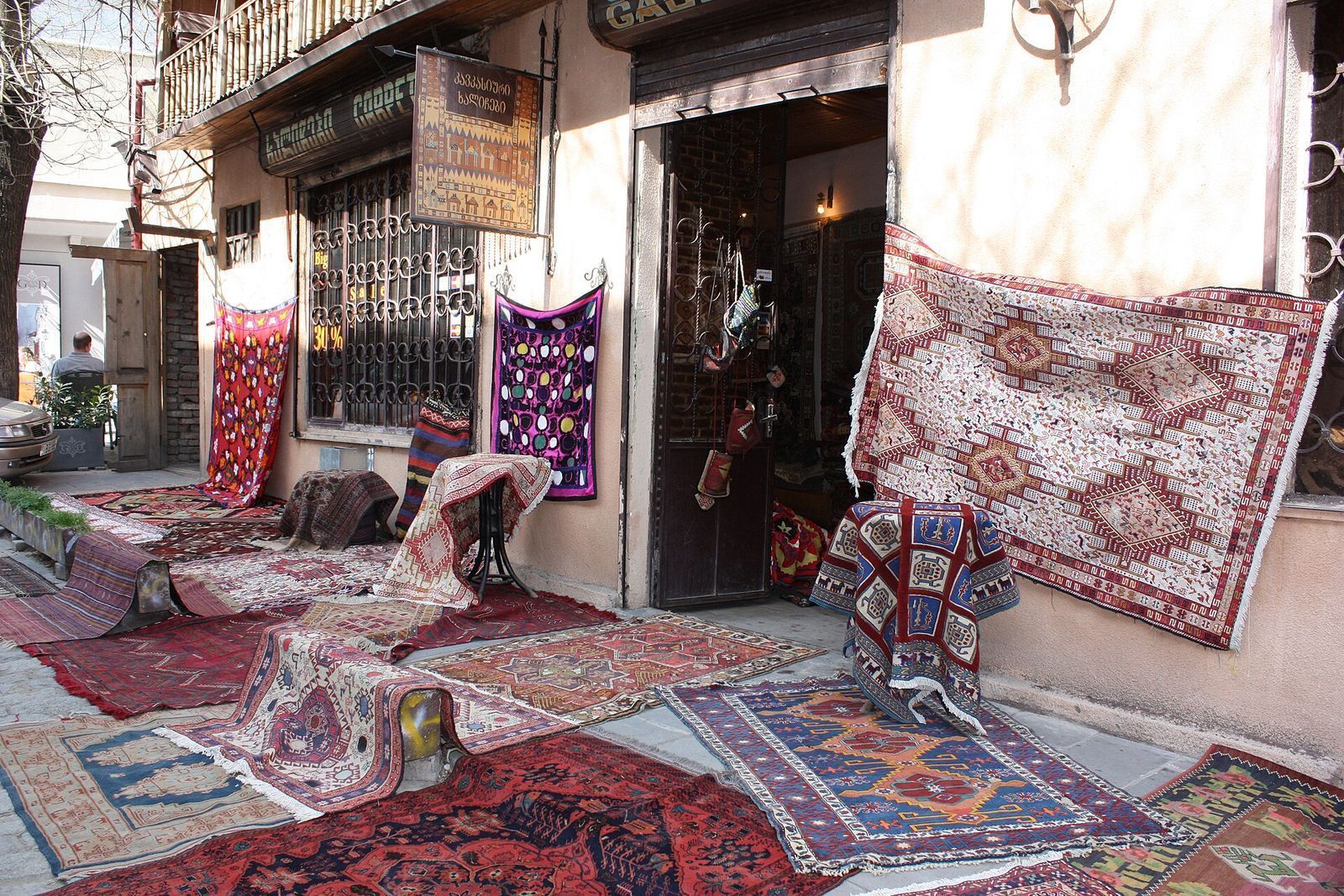
In Tbilisi, use a real dealer. Caucasian Carpets Gallery, at 8 Erekle II Street in the Old Town, sells Kakhetian kilims and export-quality rugs, ships worldwide and handles the paperwork an old carpet needs to leave the country. It's the shop I'd trust with real money.
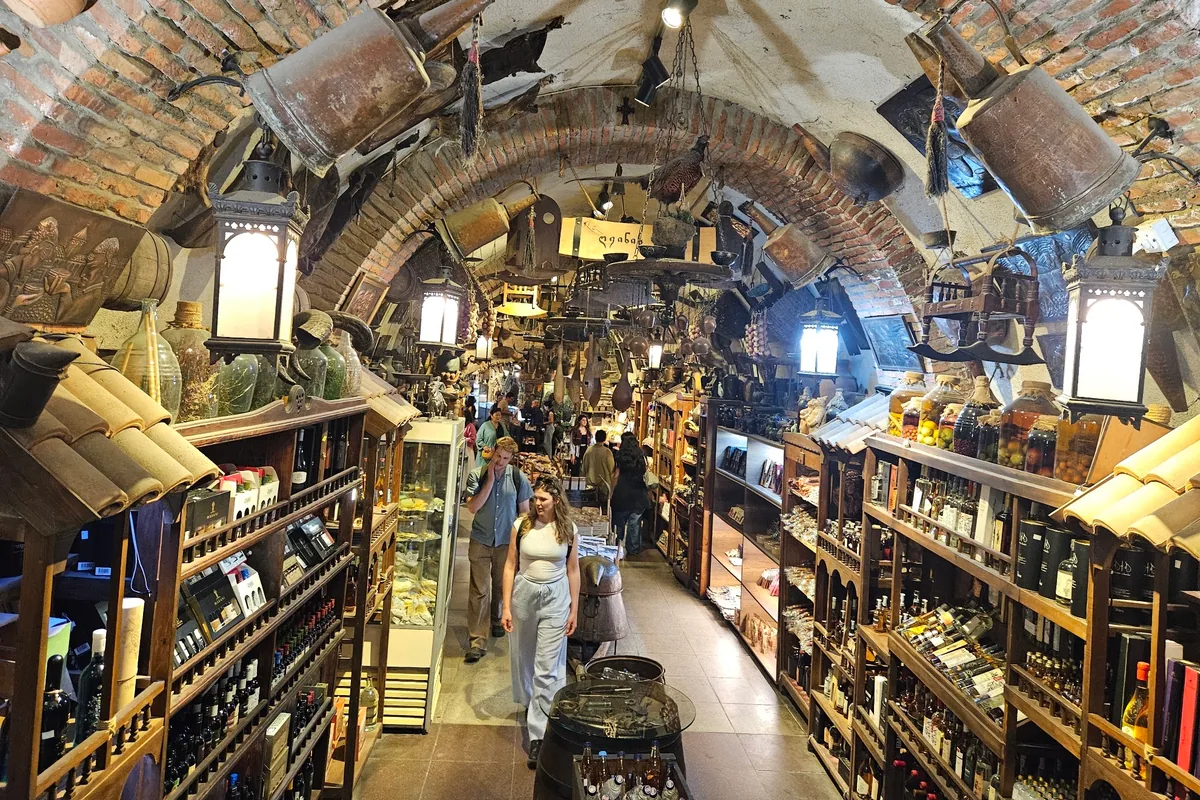
Cheaper carpets turn up in Meidan Bazaar under Meidan Square and on the Dry Bridge, where an older Caucasian kilim appears among the Soviet cameras now and then. Quality and origin vary wildly at both, so buy there only if you know carpets or simply love the piece in front of you.
Lurji supra, the blue printed tablecloth
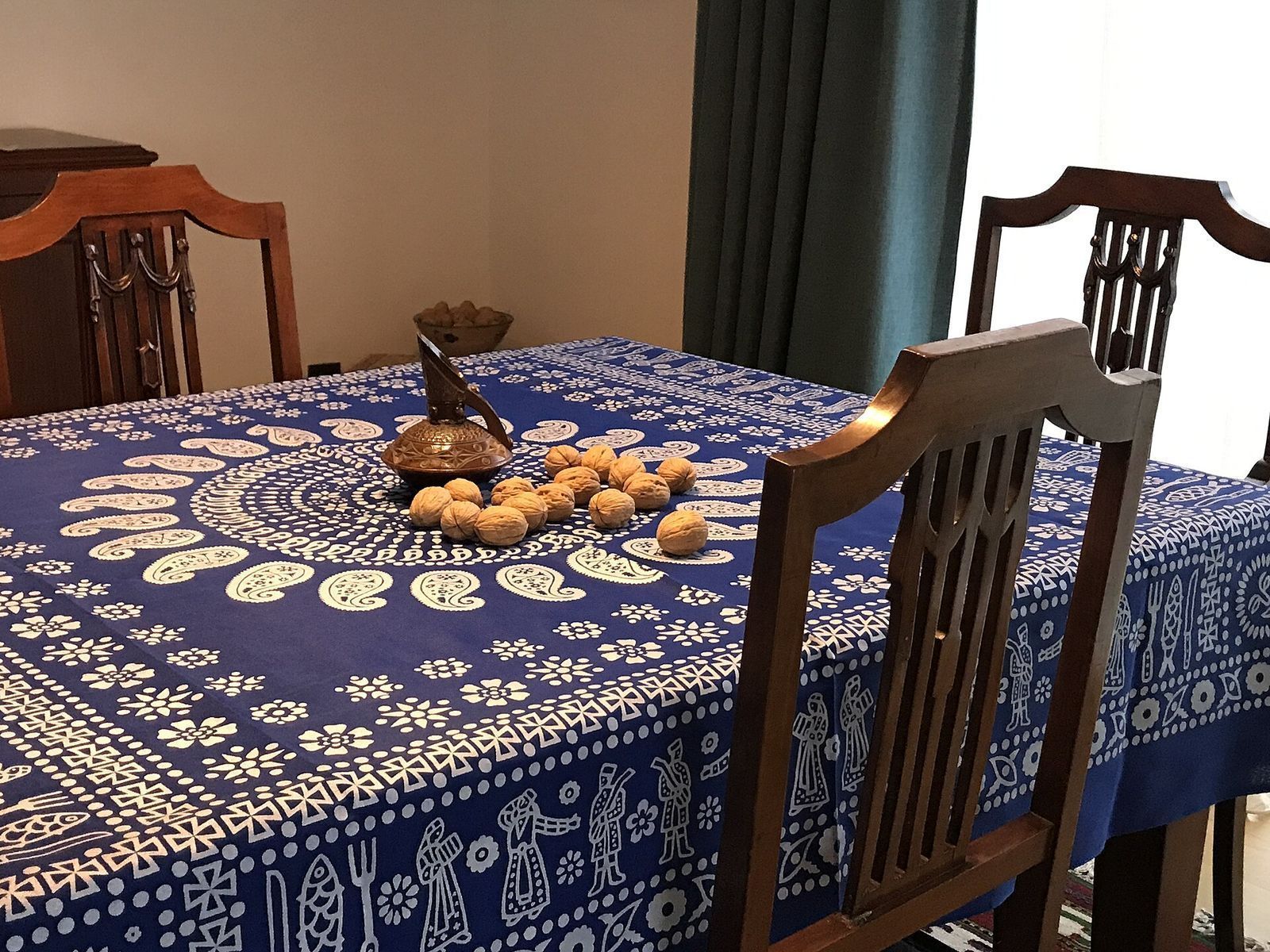
Lurji supra means "blue tablecloth", and it's the one textile craft that grew up in Tbilisi itself. The cotton cloths are hand stamped in indigo blue and white with old Georgian patterns, and they were made for the long feast tables of the Georgian supra. Most of the ones on the street stalls today are machine printed on polyester.
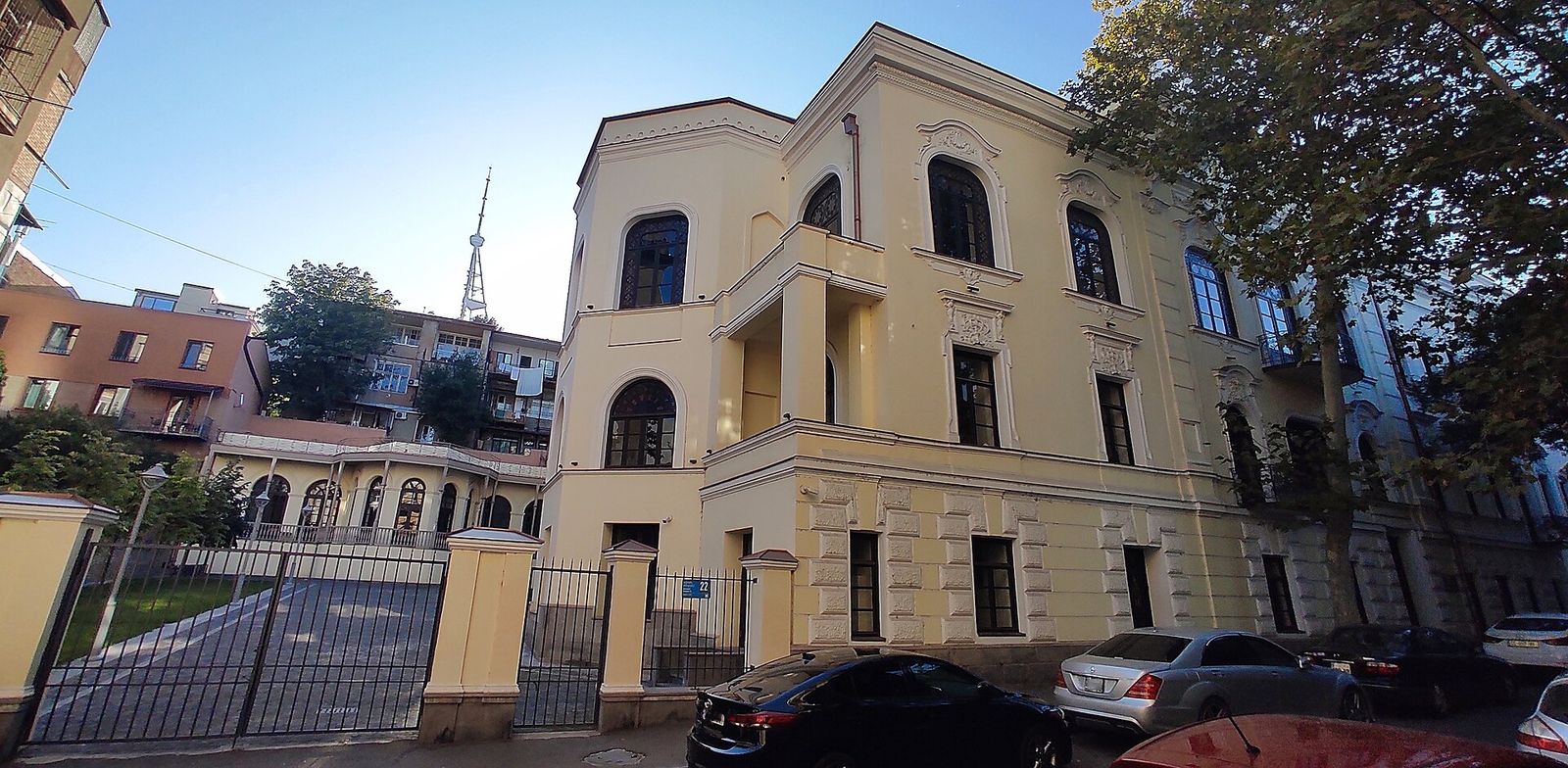
The place to buy the real thing is the Lurji Supra workshop at the Tbilisi State Academy of Arts, where the cloths are hand block printed and screen printed on site. A napkin or runner starts at about 18 GEL and a full tablecloth runs up to about 100 GEL. Gallery 27 and OVOP stock them too, and the same blue patterns now turn up on ceramics and scarves.
Where to buy Georgian crafts in Tbilisi
Most of the good craft shops sit in three neighborhoods close enough to walk between: the Old Town, Sololaki and Vera. I'd give it an afternoon, starting in Sololaki and ending in Vera.
| Shop | Area | Best for |
|---|---|---|
| Gallery 27 | Sololaki, 52 Lado Asatiani St | Enamel from small makers, lurji supra, ceramics, batik |
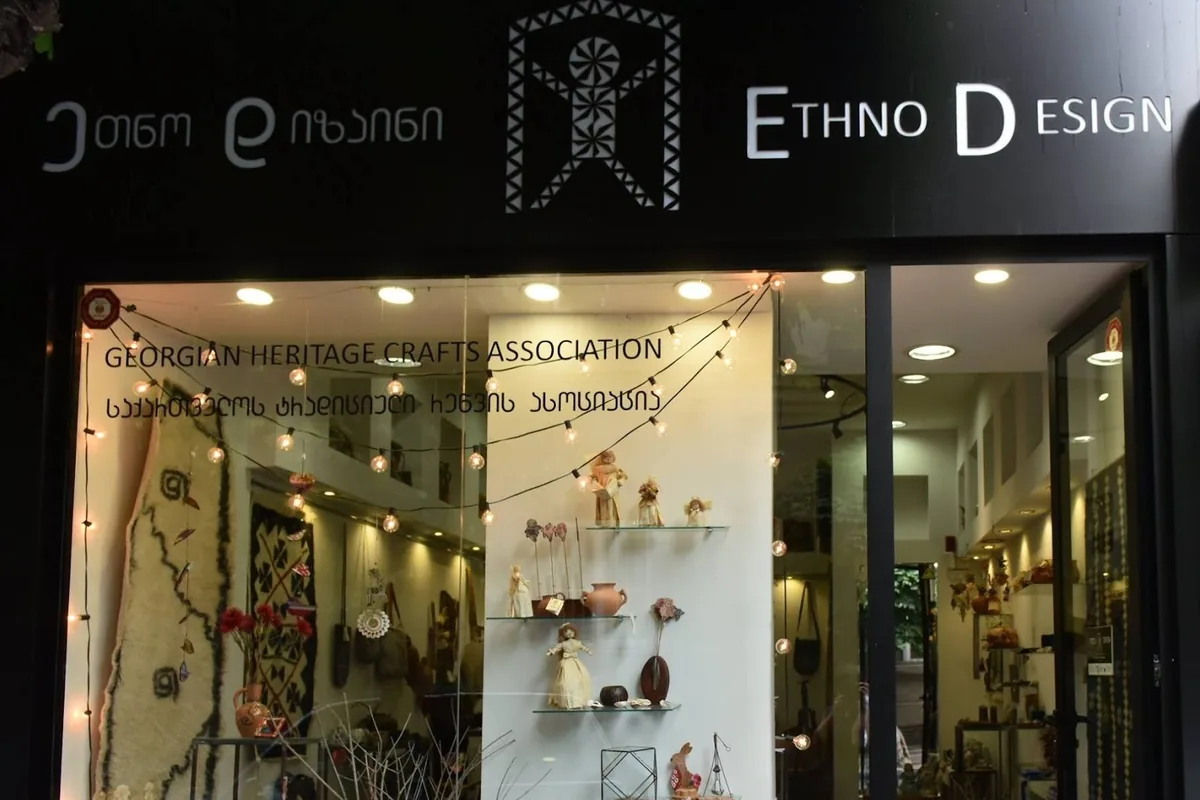
| Ethnodesign | Near Rustaveli metro | Tushetian felt, Pesvebi bags, Ikorta enamel |
| Istoriali | 7 Niko Nikoladze St | Gold and enamel jewelry |
| Ceramic Room | Vera, 30 Vasil Barnovi St | Mugs, tableware, tiles, house numbers |
| White Studio | Vera, Vasil Petriashvili St | Hand-painted faience and red clay |
| OVOP | Vera, 15 Akaki Shanidze St | Lurji supra, ceramics, slippers, Ikorta enamel |
| Caucasian Carpets Gallery | Old Town, 8 Erekle II St | Kilims and rugs, with export paperwork |
| Lurji Supra workshop | Tbilisi State Academy of Arts | Hand-printed tablecloths and napkins |
| Dry Bridge Market | Dedaena Park side of the bridge | Felt, wool socks, mini qvevri, enamel stalls |
| Meidan Bazaar | Under Meidan Square | Knitwear, carpets, crafts, under one roof |
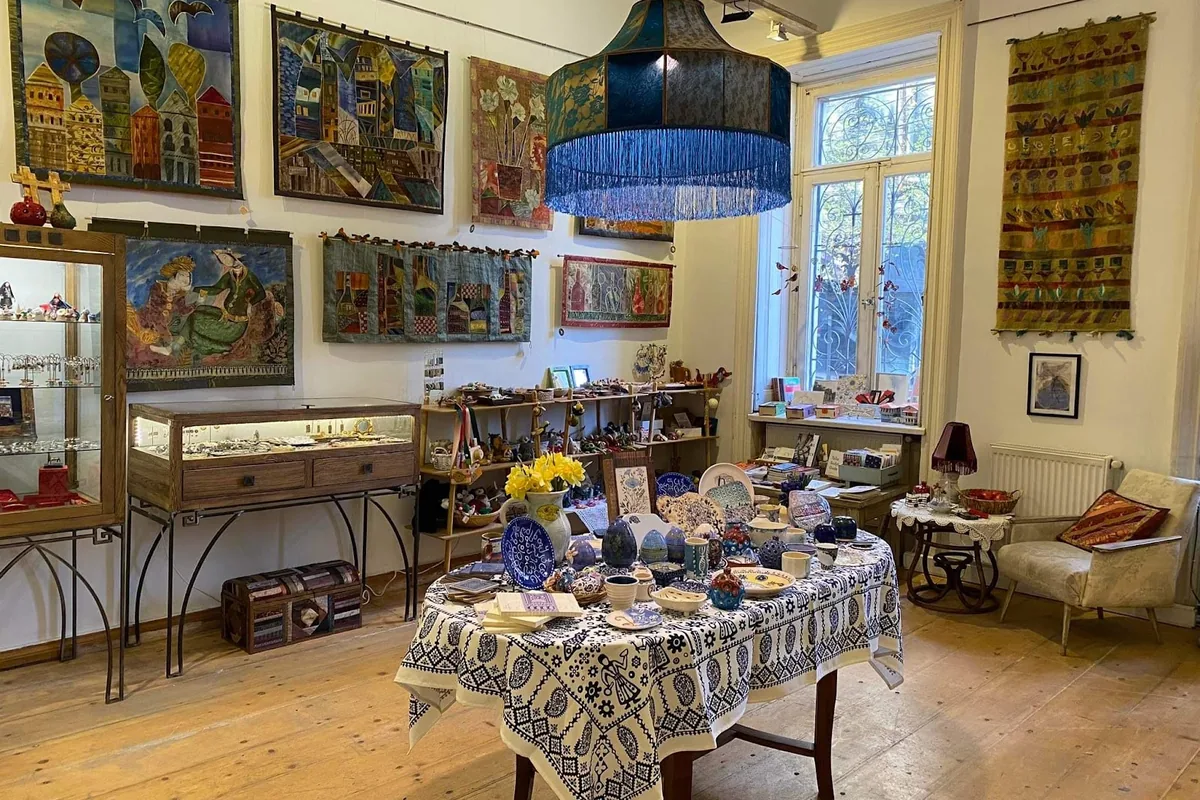
Gallery 27 is the shop I'd send a first-timer to. It's in Sololaki, it carries work from dozens of local makers, and nothing in it looks factory made. Its Sololaki rooms also host enamel, batik and pottery workshops.
The Shardeni Street stalls are the expensive way to do this: they charge 50 to 100% more than the studios for the same things, and the quality is lower. Of all the markets in Tbilisi, the Dry Bridge is the one for crafts, and haggling is normal there in a way it isn't in the studios. Fabrika, the old Soviet sewing factory turned hostel and courtyard, hosts design markets with local makers too.
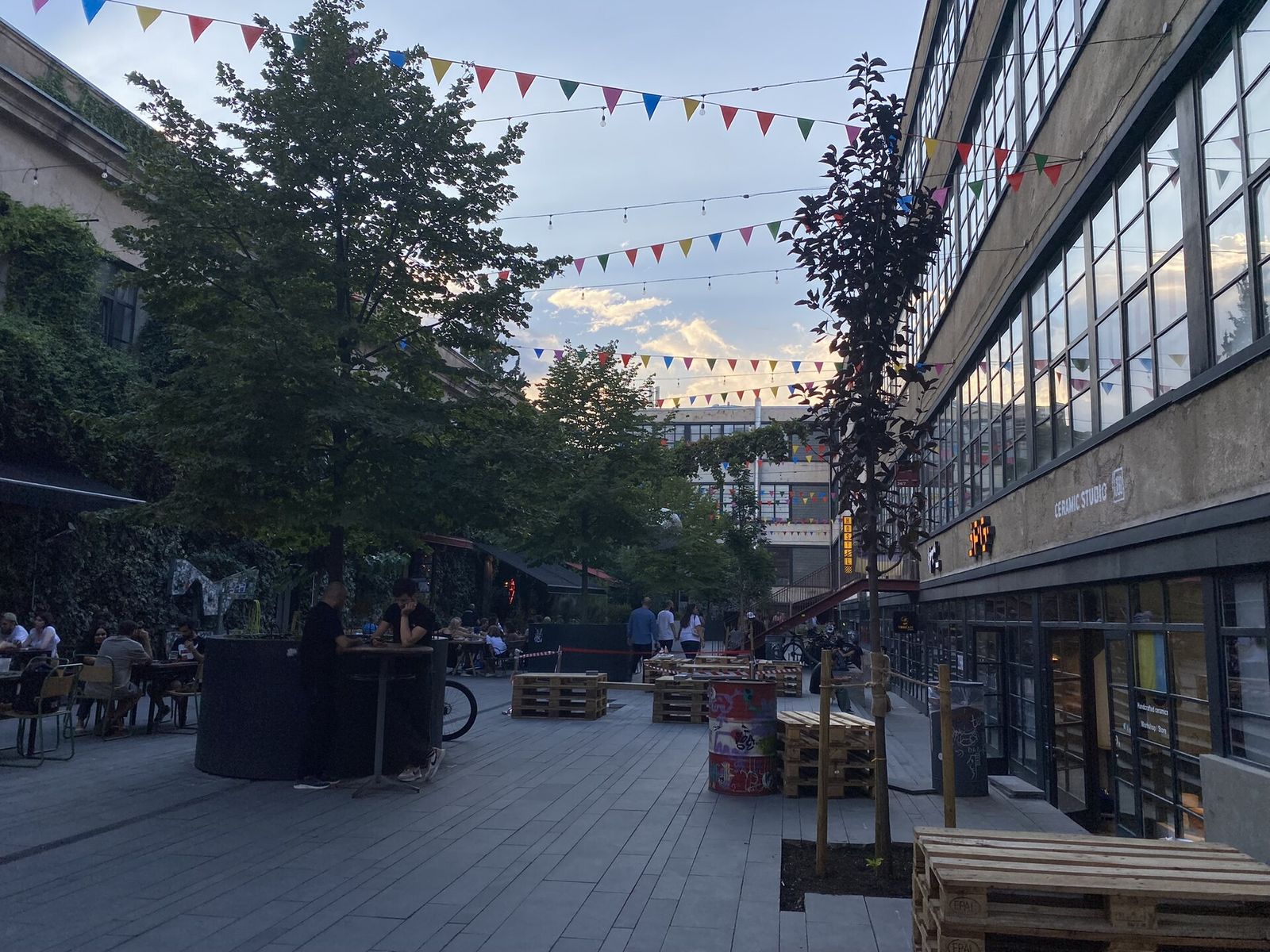
Pottery, enamel and felt workshops in Tbilisi
A class is the best way to understand a Georgian craft, and the piece you make is the souvenir you'll keep longest.
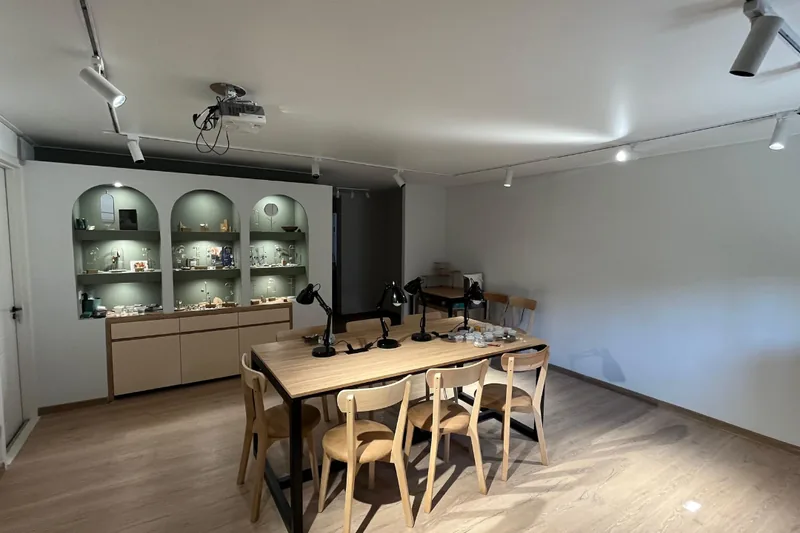
- Estia runs ceramic masterclasses by appointment, one of the first studios in Tbilisi to teach visitors. Sessions often use the slab technique, rolling clay flat and pressing Georgian ornaments into it.
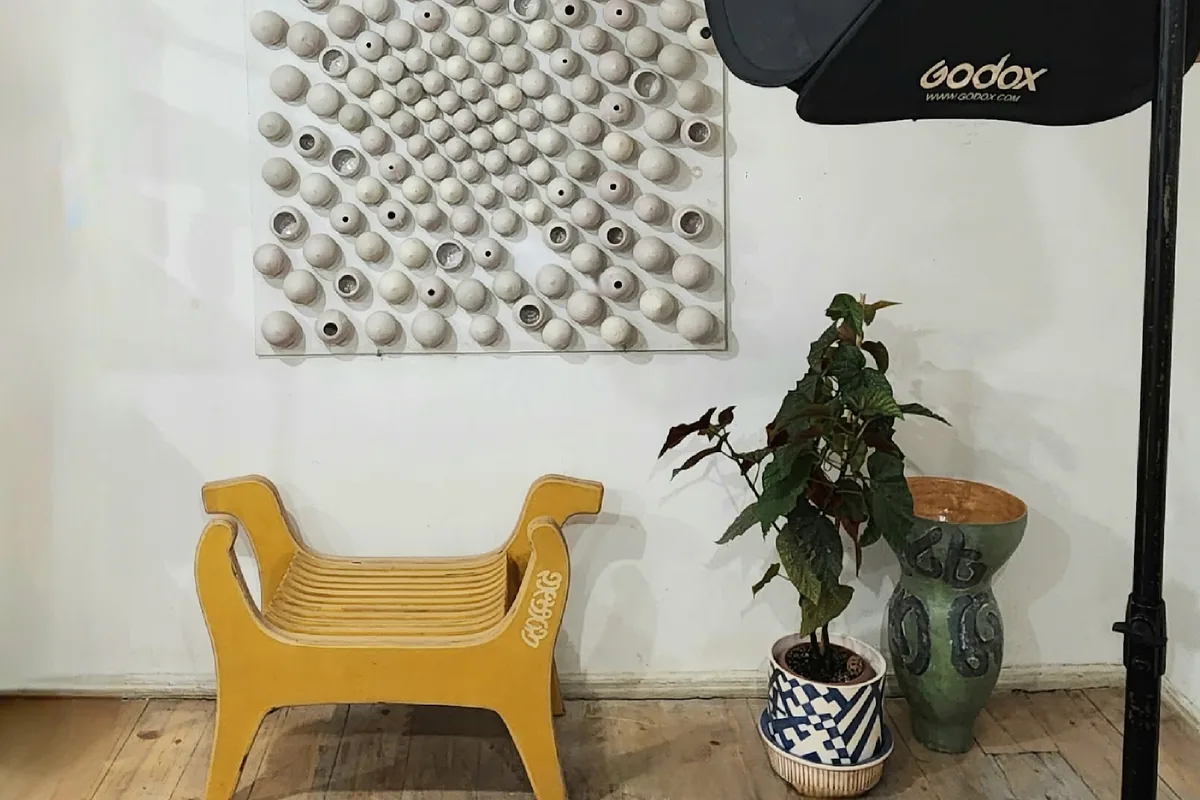
- Ceramicart, on Tamar Chovelidze Street, teaches hand-building and wheel-throwing to complete beginners and to people who've done it before.
- Gallery 27 hosts enamel, batik and pottery workshops at its Sololaki location.
- Ikorta runs minankari workshops where you make your own pendant, ring or pin, then they fire it and send it to you in Tbilisi.
- Felt classes, including felted scarf sessions, run in the city now and then, and Mzemoe in Kvemo Alvani demonstrates felting by appointment.
Seeing old Georgian crafts in museums and festivals
Before you shop, an hour with the old pieces sharpens your eye for the new ones.
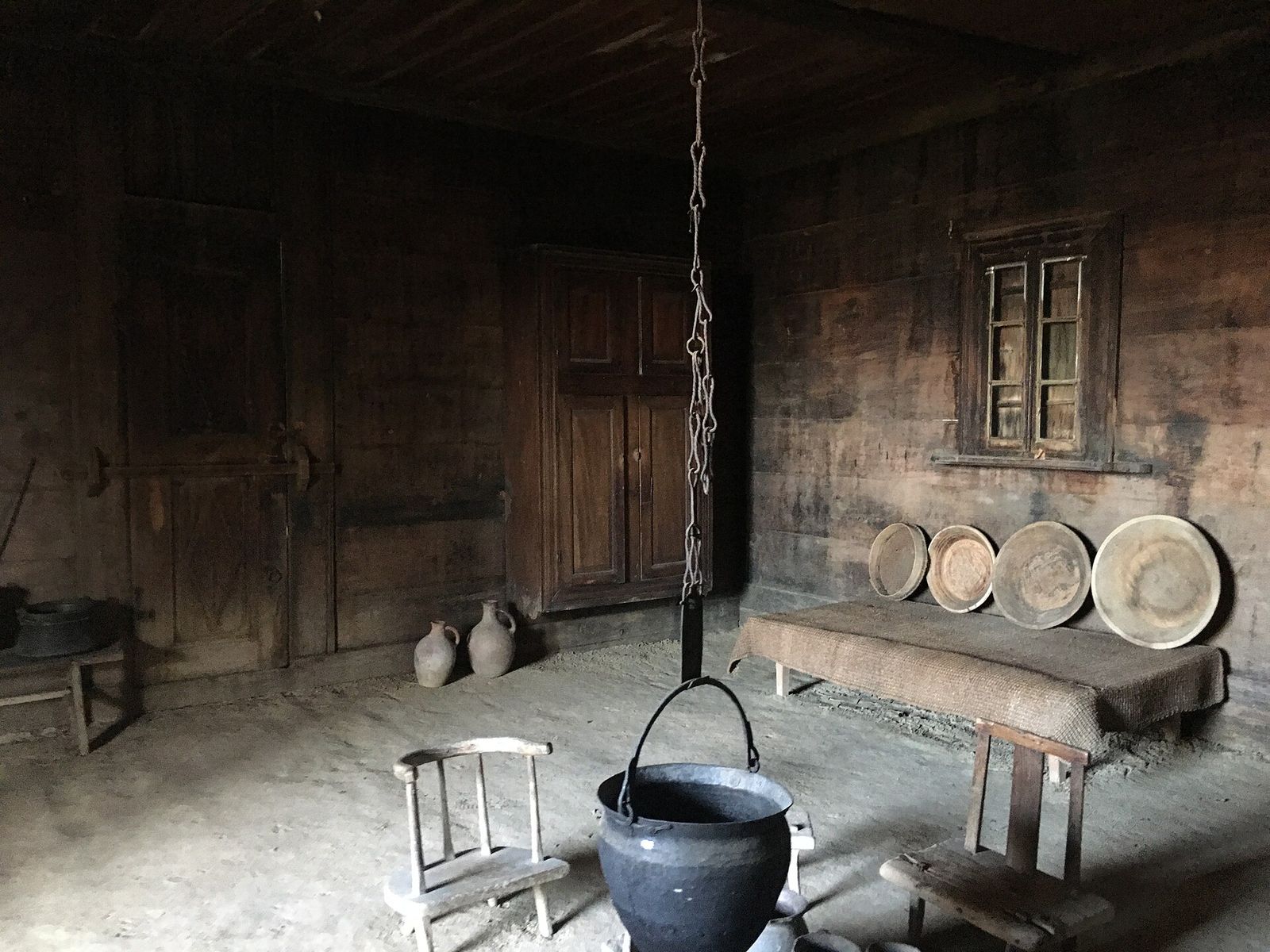
The Open Air Ethnographic Museum above Vake is my favorite place for this. Houses from across Georgia were taken down and rebuilt on the hillside, and inside them you'll find wine cellars with clay qvevri, carpets, carved wood and old tools, all where they were actually used. In July it hosts Art-Gene, a few days of folk music with crafts stalls and makers from around the country, which is the best single event for buying direct from village artisans.
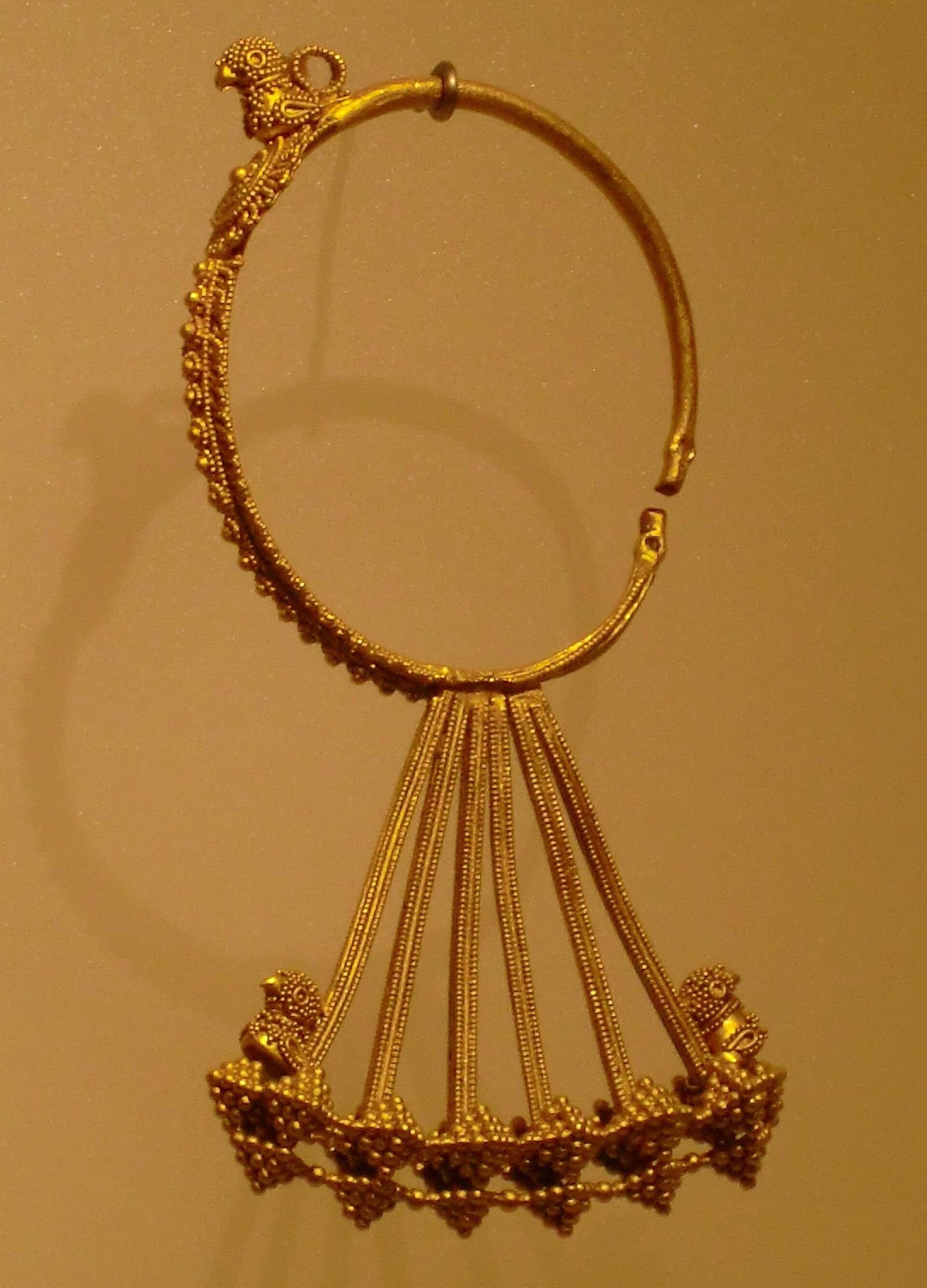
In the city center, the Treasury of the Georgian National Museum holds Colchian gold jewelry, worked so finely it still looks modern, with silver vessels and ceramics from the same graves. A 40 GEL ticket covers it. It's the clearest proof that Georgian metalwork, the craft minankari grew out of, was already world class thousands of years ago.
If you're in town the week before Orthodox Easter, the Easter market at Rose Revolution Square and Rike Park sells pottery, wood carving and textiles next to the painted eggs and paska bread.
Craft stops outside Tbilisi
The best Georgian crafts are made in villages, and a few of the workshops welcome visitors. Most need a car or a driver, and the Kakheti ones need a message ahead.
| Stop | Region | Craft | How to visit |
|---|---|---|---|
| Shrosha | Imereti, on the Rikoti Pass highway | Roadside pottery stalls, qvevri makers | Stop on the drive to Kutaisi |
| ORKOL Studio | Zugdidi, Samegrelo | Black-smoked ceramics | Daily from 10:00 to late afternoon |
| Mzemoe | Kvemo Alvani, Kakheti | Tushetian felt | By appointment |
| Tusheti Wool Factory | Zemo Alvani, Kakheti | Wool washing, spinning and dyeing | By appointment, bring a Georgian speaker |
| Pesvebi Art Studio | Dedoplistskaro, Kakheti | Natural-dye carpets and bags | Working hours; masterclasses by appointment |
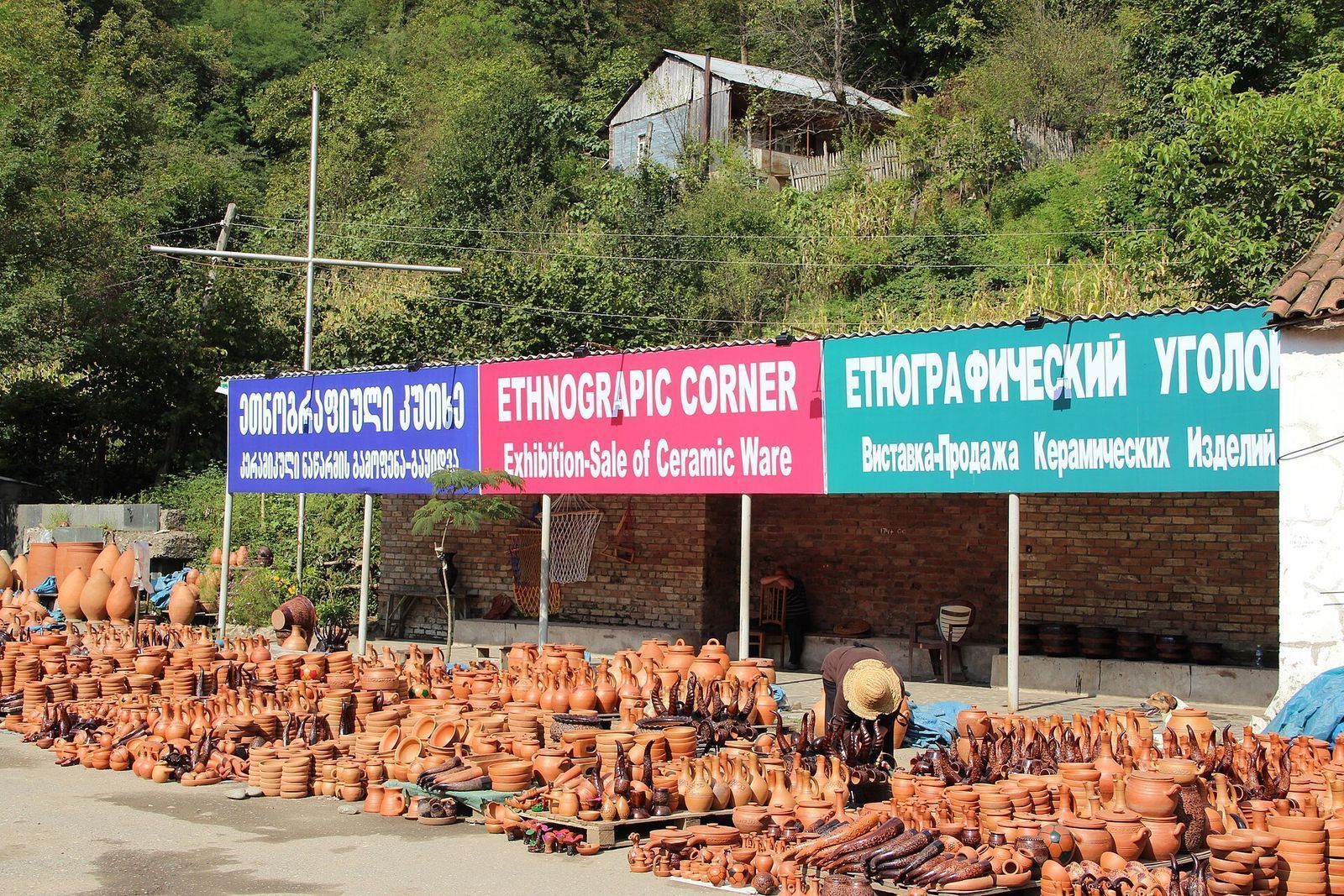
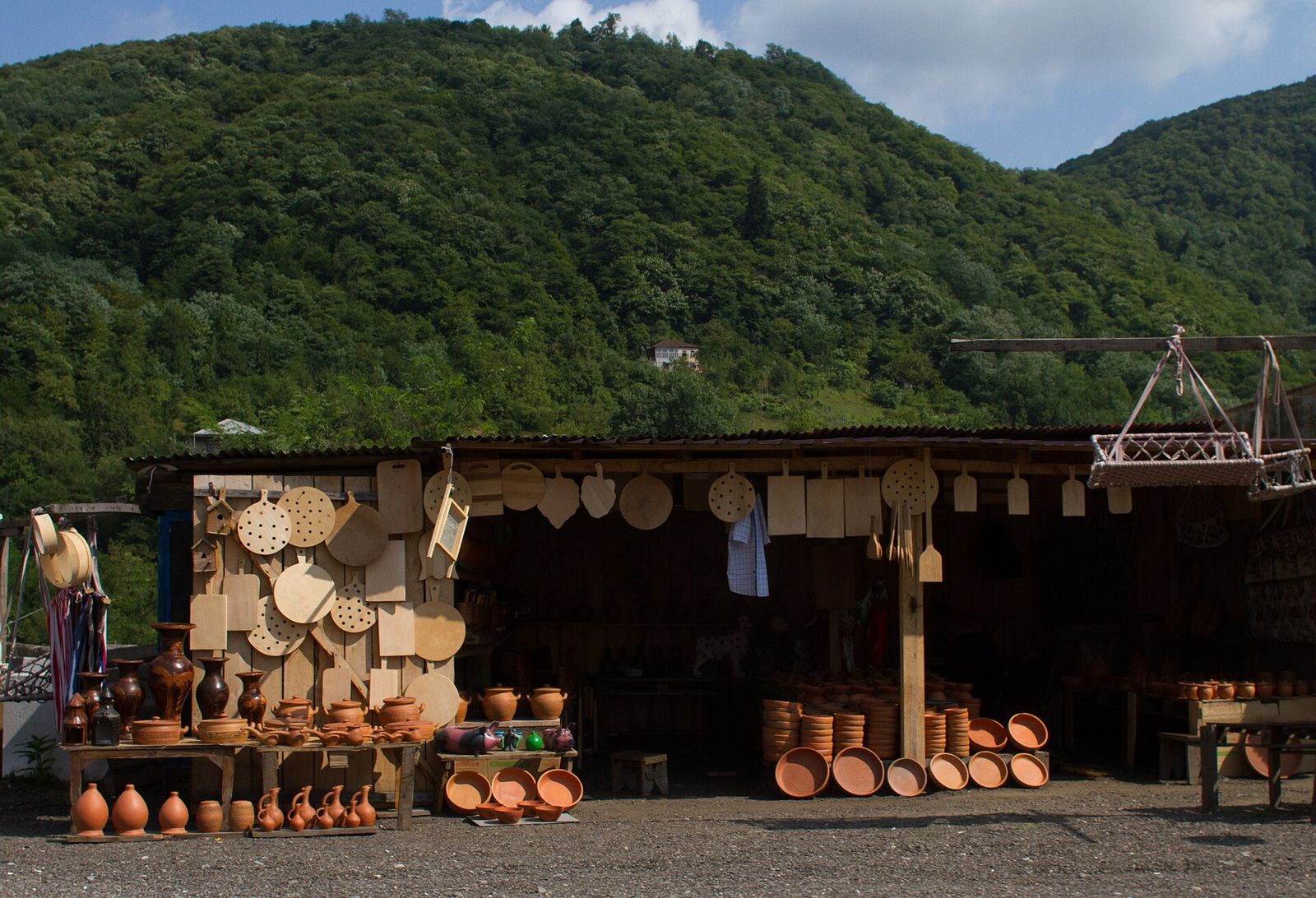
Shrosha is the easy one. The village sits on the main highway between Tbilisi and Kutaisi, and its roadside stalls are stacked with jugs, pots and qvevri, which makes it the obvious stop on the drive from Tbilisi to Kutaisi. Bozhadze Family Enterprise, qvevri makers, is on the same route.
The Alvani workshops are the most rewarding and the hardest to arrange. The wool factory still runs Soviet spinning machines from the 1970s, washes, spins and dyes Tushetian wool in-house, and has no English speaker. Go with a guide, and pair it with Mzemoe in the old House of Culture down the road.
Getting Georgian crafts home
- Ceramics go in your cabin bag, wrapped in a felt scarf or a sweater. Studios wrap well if you tell them you're flying.
- Felt packs flat and weighs almost nothing, so it's the easiest craft to carry.
- Enamel needs nothing more than its box, but keep it out of checked luggage.
- Carpets are where a dealer earns their money: Caucasian Carpets Gallery ships worldwide, and a folded kilim fits in a large suitcase.
- Anything old needs export paperwork, and anything over 100 years old needs the Ministry of Culture permit before it leaves the country.
Key takeaways
- Georgia's four signature crafts are pottery, minankari enamel, Tushetian felt and Kakhetian carpets, plus the blue lurji supra tablecloth made in Tbilisi.
- Ceramics are the cheapest real craft, from about 15 GEL, with mini qvevri at 10 to 25 GEL.
- Buy minankari from studios such as Istoriali or shops that stock Ikorta, and check for metal lines between the colors.
- Ethnodesign, Gallery 27 and Caucasian Carpets Gallery cover felt, enamel and carpets with a maker's name behind every piece.
- Book pottery or enamel classes early, because firing takes days.
Frequently asked questions
What crafts is Georgia known for?
Georgia is best known for pottery, especially the qvevri wine jar, and for minankari, its cloisonne enamel. Tushetian felt, hand-woven Kakhetian carpets and kilims, and the blue printed lurji supra tablecloth round out the list, with metalwork and wood carving behind them.
What is minankari?
Minankari is Georgian cloisonne enamel. Thin metal strips are soldered onto a gold, silver or copper base to form cells, which are filled with powdered colored glass and fired until it melts smooth. It was used on icons and crosses from at least the 8th or 9th century and is now mostly made into jewelry.
Where can I buy authentic Georgian crafts in Tbilisi?
Gallery 27 in Sololaki, Ethnodesign near Rustaveli metro, and the ceramic studios of Vera are the best places for handmade work. For carpets, use Caucasian Carpets Gallery on Erekle II Street, and for cheaper felt and small ceramics, the handmade stalls at the Dry Bridge Market.
How much does Georgian pottery cost?
Small hand-painted ceramics start at about 15 GEL in Tbilisi studios, and a mini qvevri jug costs 10 to 25 GEL in markets and craft shops. Large hand-painted plates and vases cost more, and some are too big to fly home with.
What is Tushetian felt?
It's wet-felted sheep's wool from Tusheti in the northeast mountains, pressed by hand with water and natural soap. Shepherds used it for the nabadi cloak and felt hats, and today it's made into slippers, scarves, hats and wall hangings, mostly in the Tush villages of Kakheti.
Can you take a carpet out of Georgia?
Yes, a new carpet leaves with you like any other purchase. Anything over 100 years old needs an export permit from the Ministry of Culture, so buy old carpets from a dealer like Caucasian Carpets Gallery that handles the paperwork.
Can I take a pottery class in Tbilisi?
Yes. Estia runs ceramic masterclasses by appointment, Ceramicart teaches hand-building and the wheel, and Gallery 27 hosts pottery and enamel workshops. Book early in your trip, because your piece needs days to dry and fire.
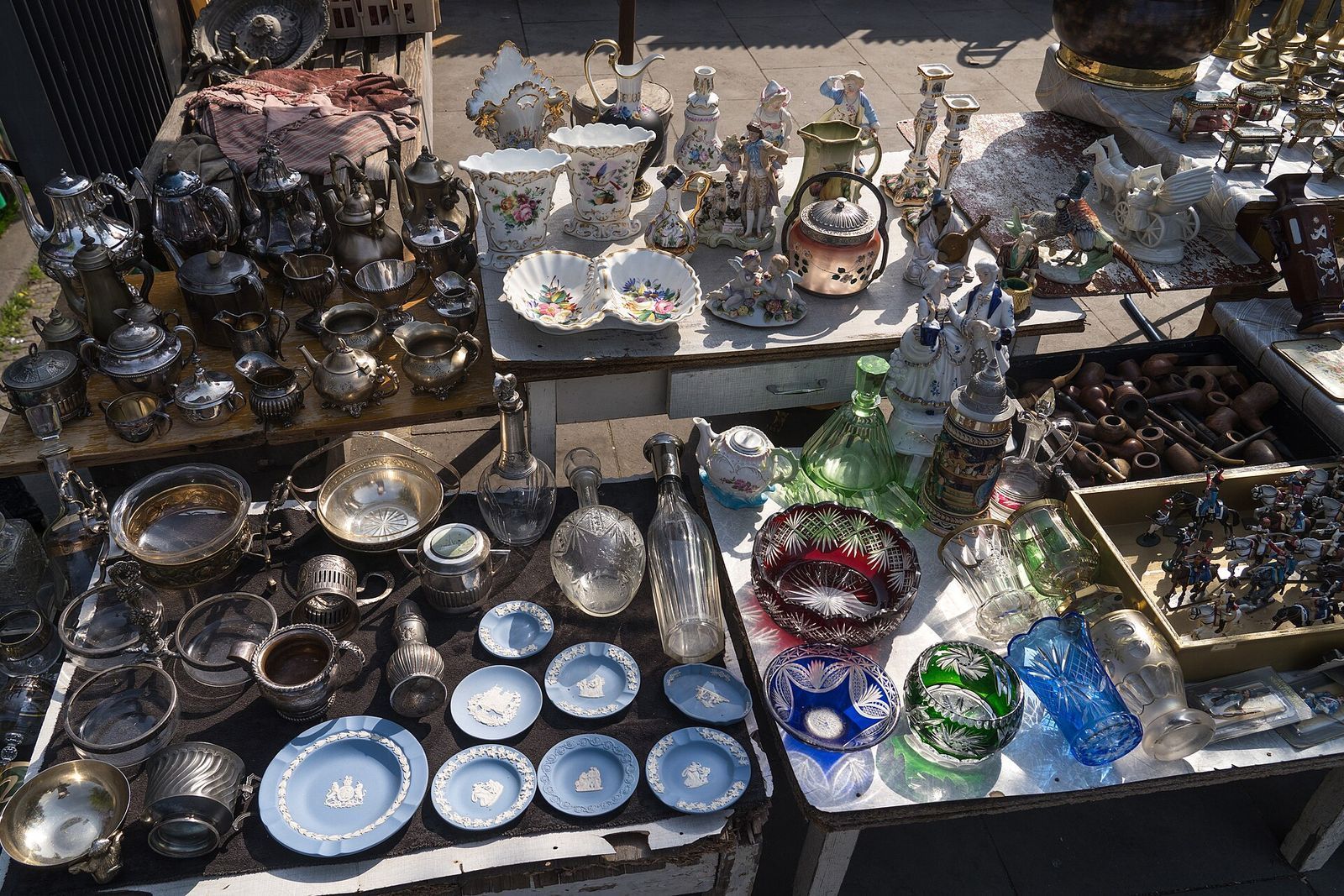
Shopping in Tbilisi: Where to Shop, What to Buy and What It Costs
Tbilisi is known for its flea markets, bazaars and wine. Here's where to shop, what to buy and what it costs.
Read the guide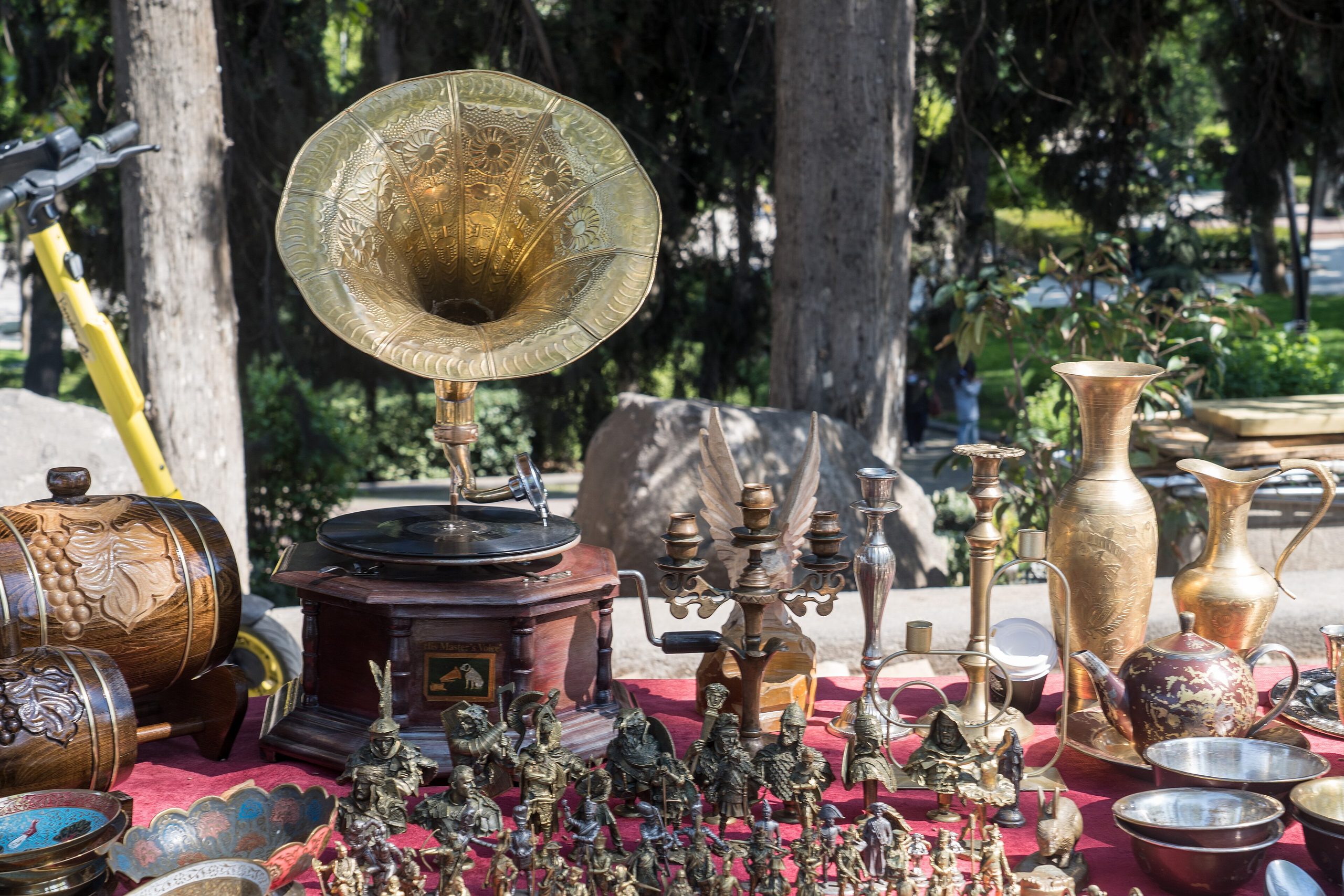
Dry Bridge Market, Tbilisi: A Guide to the City's Flea Market
Dry Bridge is the flea market of Tbilisi. Here is when to go, what to buy, how to haggle and how to get it home.
Read the guide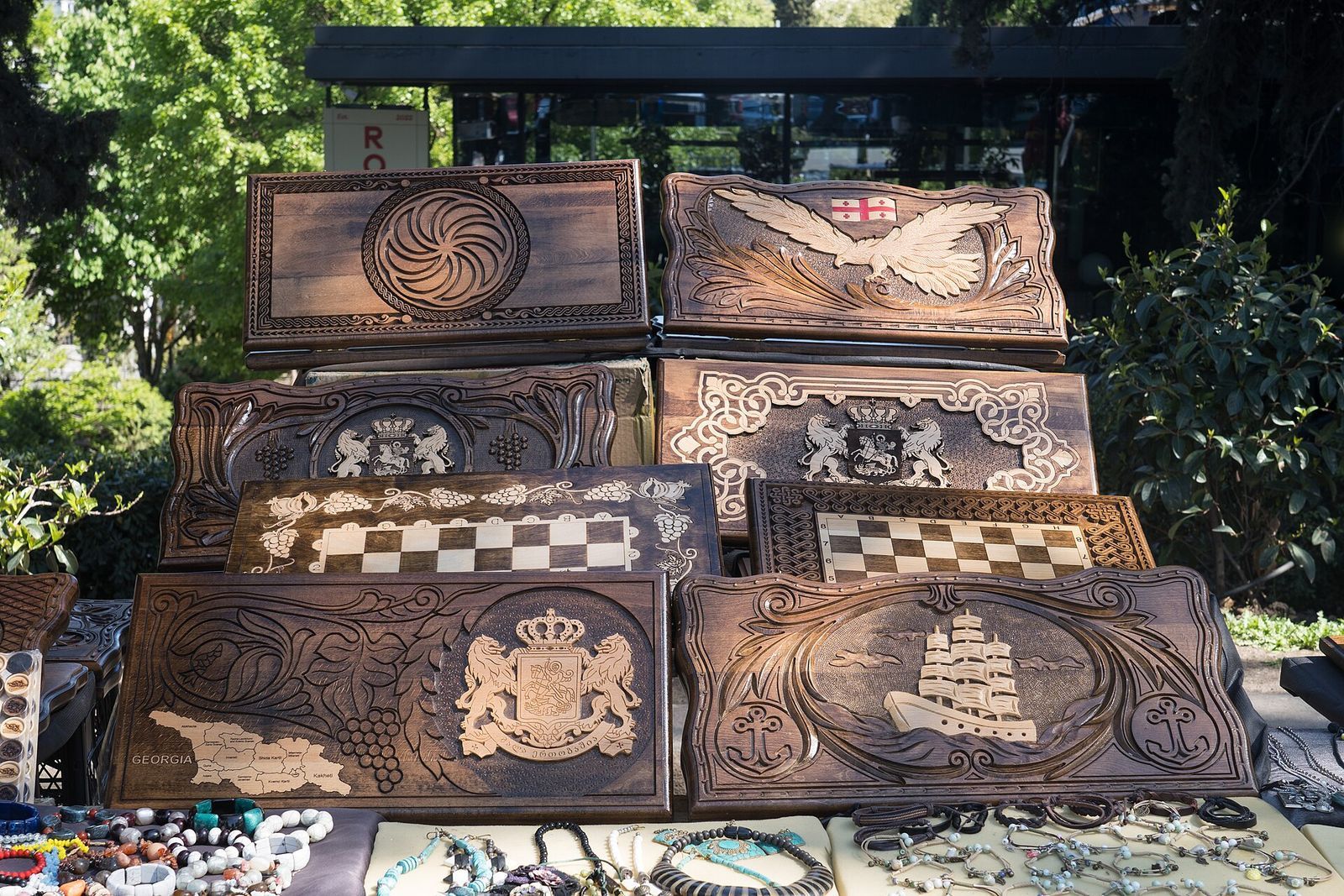
Georgian Souvenirs Worth Buying in Tbilisi
Georgia is known for its wine, churchkhela and crafts. Here is what to buy in Tbilisi, what it costs and where to shop.
Read the guide