Things to Do in Kutaisi: Bagrati, Gelati, Caves and Canyons
Kutaisi is known as Georgia's former royal capital and its second city, 226 km west of Tbilisi, with two of the country's great churches on its hills and a ring of caves and canyons around it. Here's what to do in the center, how to reach Gelati and Motsameta, which day trips earn a place, how many days to stay and where to eat.
Is Kutaisi worth visiting?
Yes, for two nights. Kutaisi is a small, slow, green city split by the Rioni river, and its center is easy to see in a day on foot. What makes it worth the trip west is what sits around it: Gelati Monastery and Motsameta on the hills to the northeast, and a cluster of caves, canyons and Soviet spa ruins within an hour or two.
It's also cheaper and calmer than Tbilisi. Lunch at a kebab counter costs 10 GEL, most museums are free, and the cable car over the river costs 1 GEL. I like it most in the evening, when the Colchis Fountain lights up and the cafes on Rustaveli Avenue fill with locals rather than tour groups.
The trap is trying to see it from Tbilisi in a day. The round trip eats about 7 hours, which leaves time for Bagrati and a quick look at the center, and nothing for Gelati or the caves.
| Sight | Where | Cost | Time needed |
|---|---|---|---|
| Bagrati Cathedral | Ukimerioni hill, above the river | Free | 1 hour |
| Colchis Fountain | Agmashenebeli Square, the main square | Free | 15 minutes |
| Cable car and amusement park | Next to the White Bridge | 1 GEL a ride | 1 hour |
| Green Market | City center | Free | 45 minutes |
| State Historical Museum | Pushkin Street | 5 GEL, guided tour 10 GEL | 1 to 1.5 hours |
| Gelati Monastery | Hills northeast of town | Free | 1.5 hours with the ride |
| Motsameta Monastery | Cliff above the Tskaltsitela river | Free | 1 hour |
| Prometheus Cave | Kumistavi, past Tskaltubo | About 23.5 GEL, boat about 11 GEL extra | Half a day |
| Sataplia | Hills above Kutaisi | About 17.25 GEL, guide included | 2 hours |
| Martvili Canyon | Samegrelo, to the west | 20 GEL, boat 20 GEL | Half a day |
| Okatse Canyon | Northwest of Kutaisi | 20 GEL | Half a day |
Things to do in Kutaisi city center
The center is compact: the Colchis Fountain on the main square, Rustaveli Avenue and its theaters, the market a few blocks away, and the river with its three bridges. Bagrati sits on the hill across the water. Everything below is walkable in a day, with the cable car as the easy way up the other side.
Bagrati Cathedral
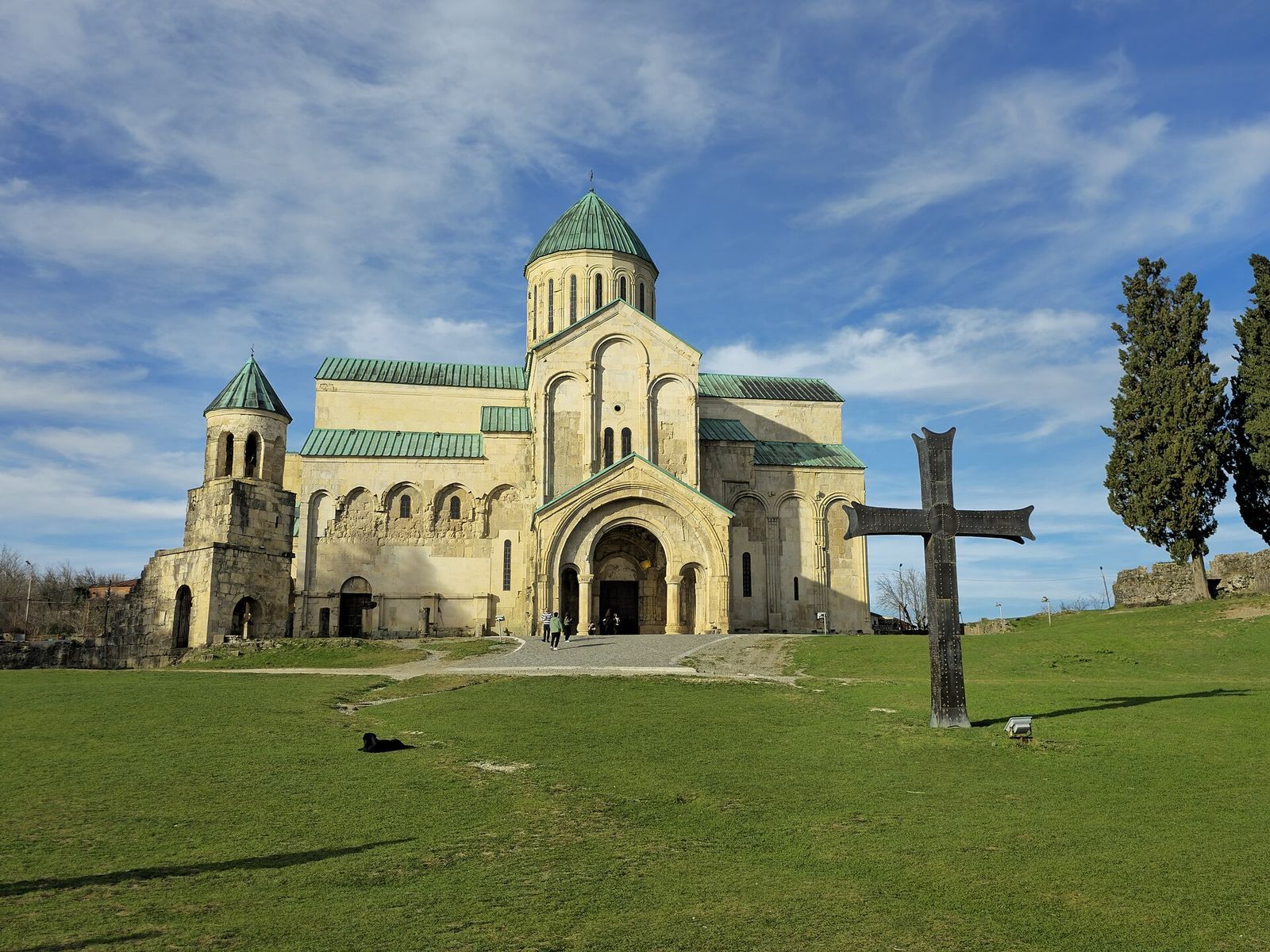
Bagrati is the big stone cathedral on Ukimerioni hill, visible from almost every corner of the city. King Bagrat III built it in 1003, and David the Builder, the king at the center of Georgia's medieval golden age, was crowned here. Ottoman armies wrecked it in the 17th century and it stood roofless for a long time after.
The cathedral you see today is a heavy rebuild, with a new green metal roof and a glass and steel addition on one side. That rebuild cost Bagrati its UNESCO listing in 2017, and you can see why the purists objected. I still think it's worth the walk, for the scale of the old walls and for the view: the terrace looks over the whole city and the Rioni below.
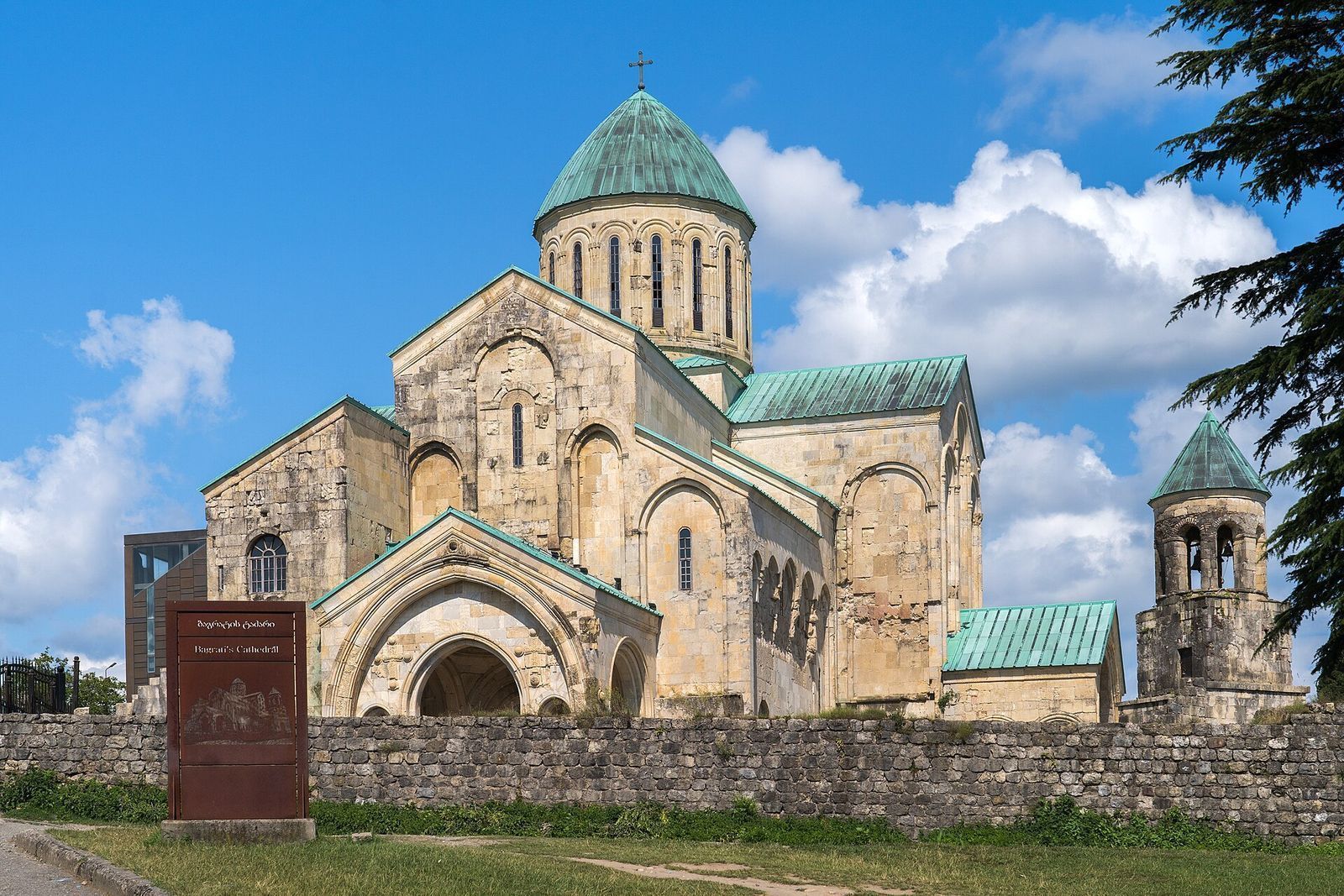
It's about 20 minutes on foot from the main square, partly uphill. Go for sunset, when the stone turns gold and the city lights come on below you. It is a working church, so dress for it.
The Colchis Fountain and Agmashenebeli Square
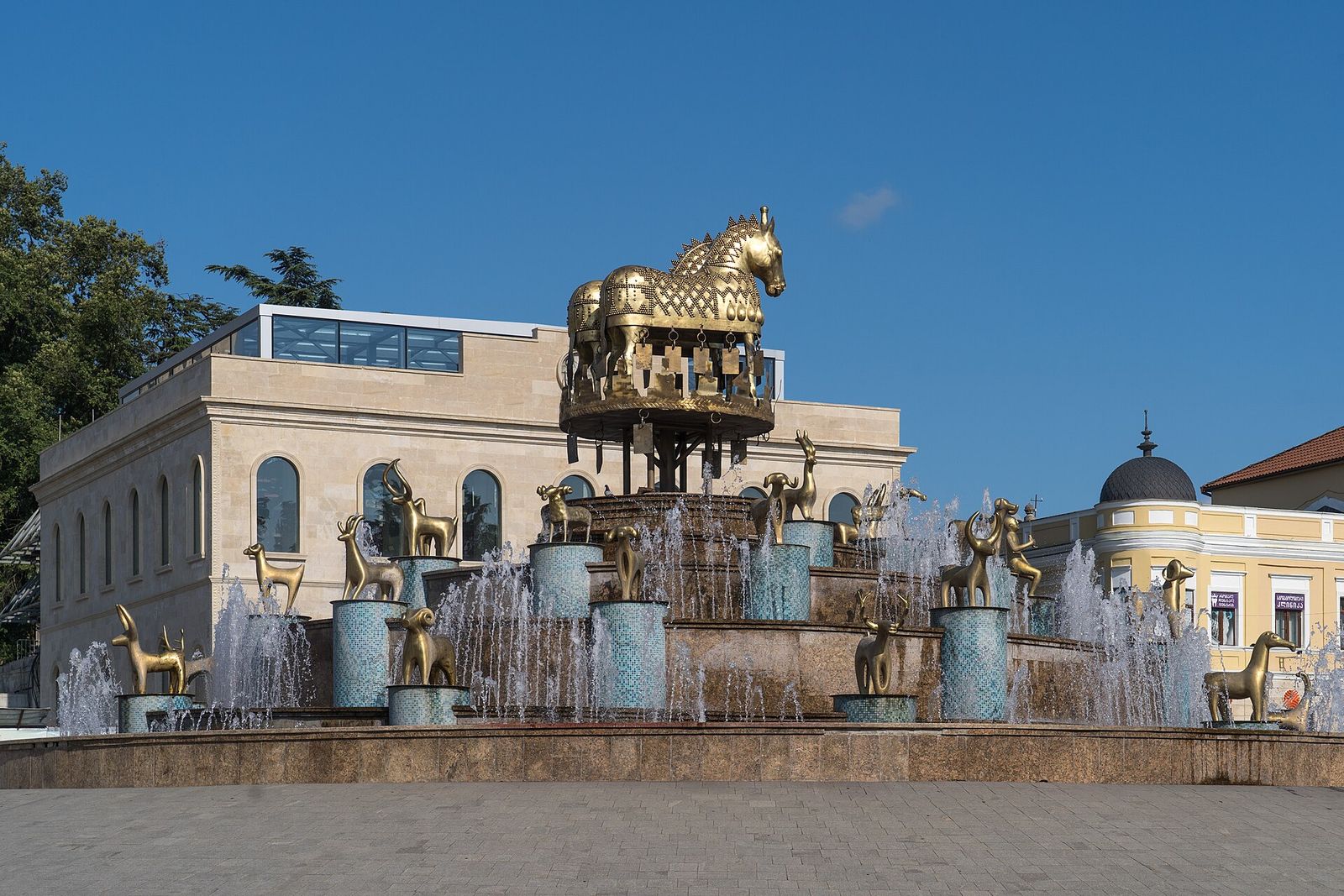
The fountain in the middle of the main square is Kutaisi's mascot. It carries about 30 golden animal figures, horses, tigers and rams among them, plus a tamada, the toastmaster, holding a drinking vessel. They are enlarged copies of ancient gold finds from Colchis, the old kingdom of western Georgia and the land of the Golden Fleece story. By day it looks a bit like a jewelry display; after dark, lit up, it's the best spot in town to sit with an ice cream.
The Rioni bridges: White, Red and Chain
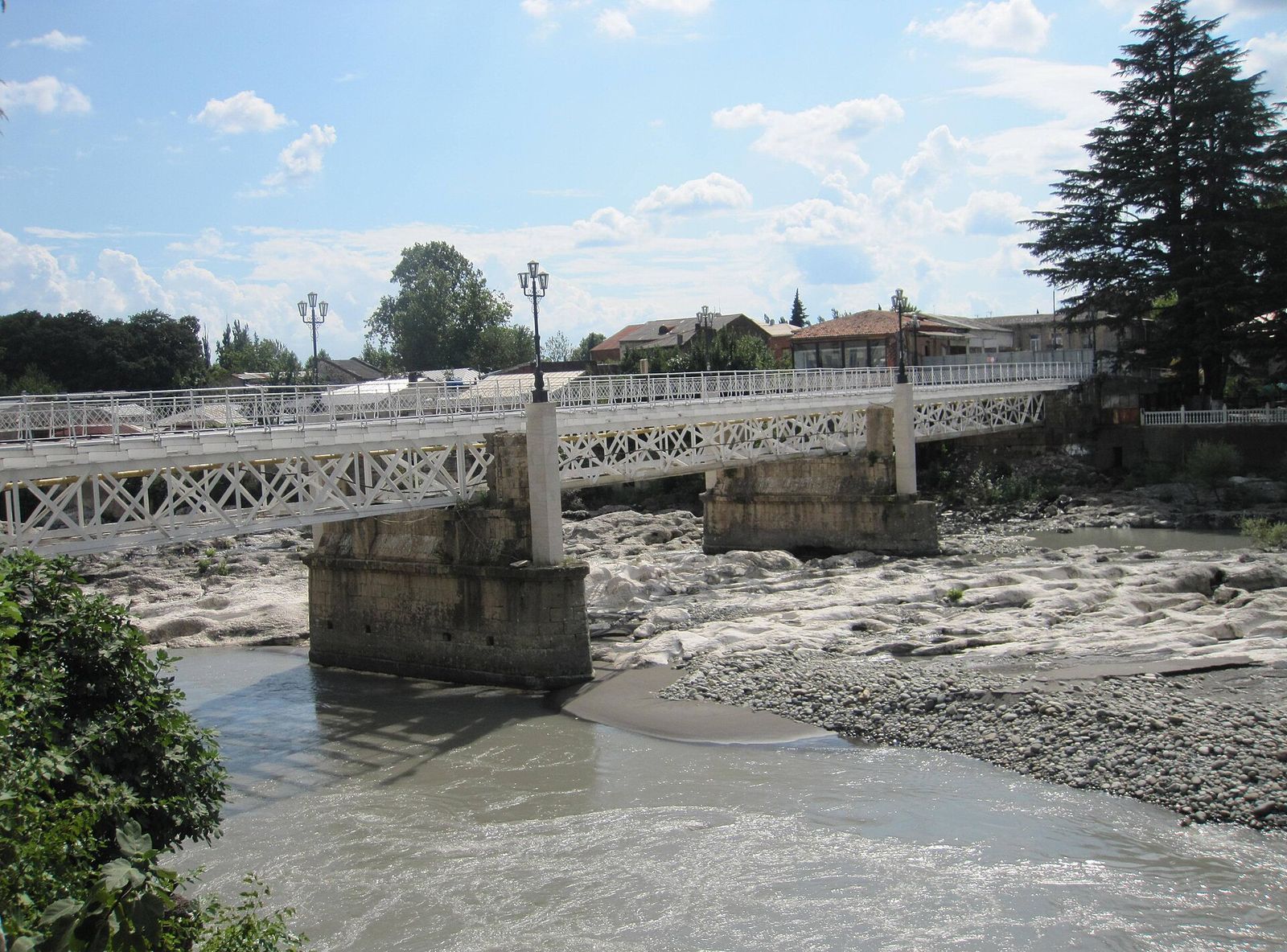
Three bridges cross the Rioni in the center, and you'll use all of them. The White Bridge is the city's only pedestrian bridge and the one with the river views.
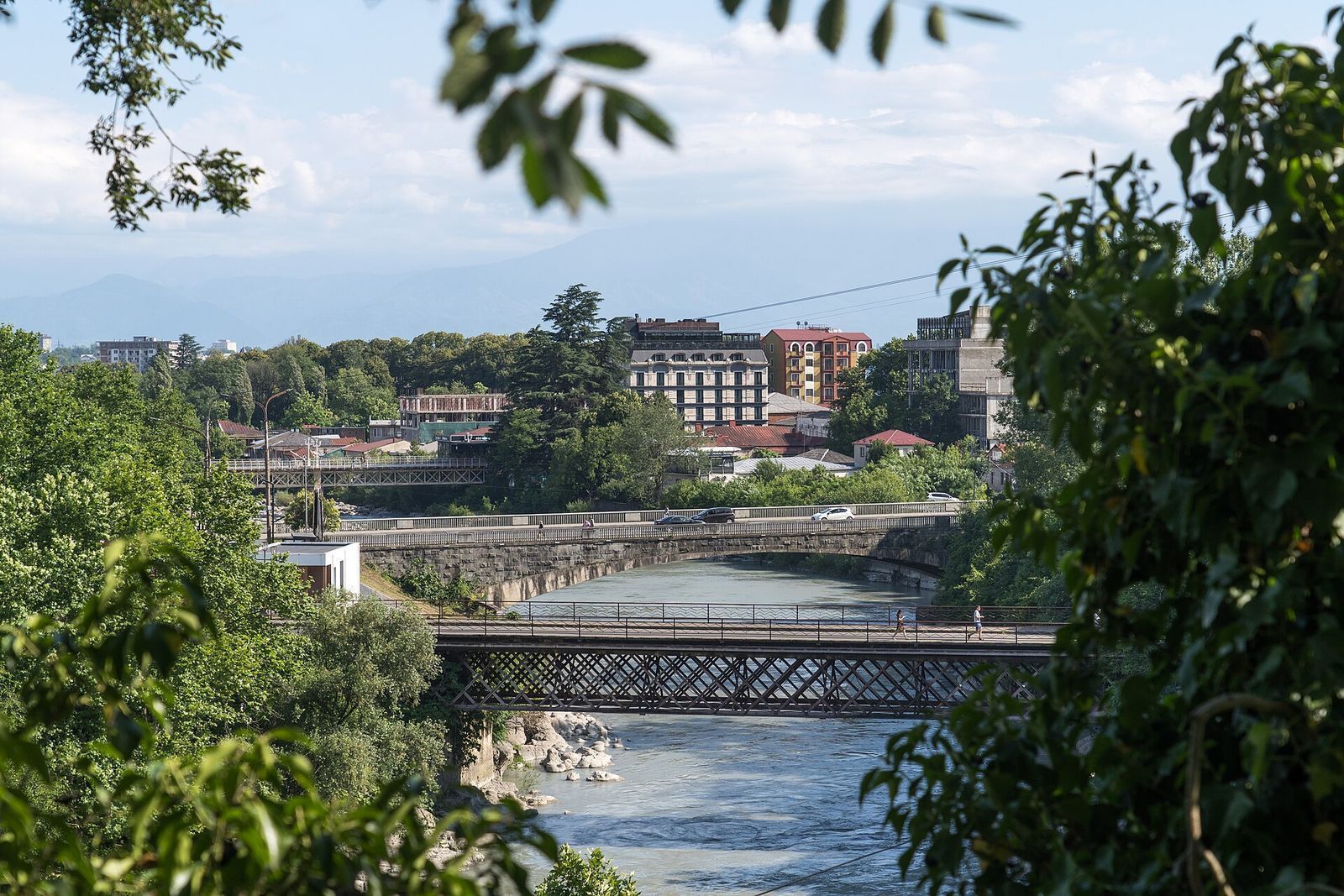
The Red Bridge is an old iron bridge, said to have been made in France at Gustave Eiffel's works. Walk the riverbank between the White and Red bridges in the evening and you have most of old Kutaisi on one side and Bagrati on the hill above.
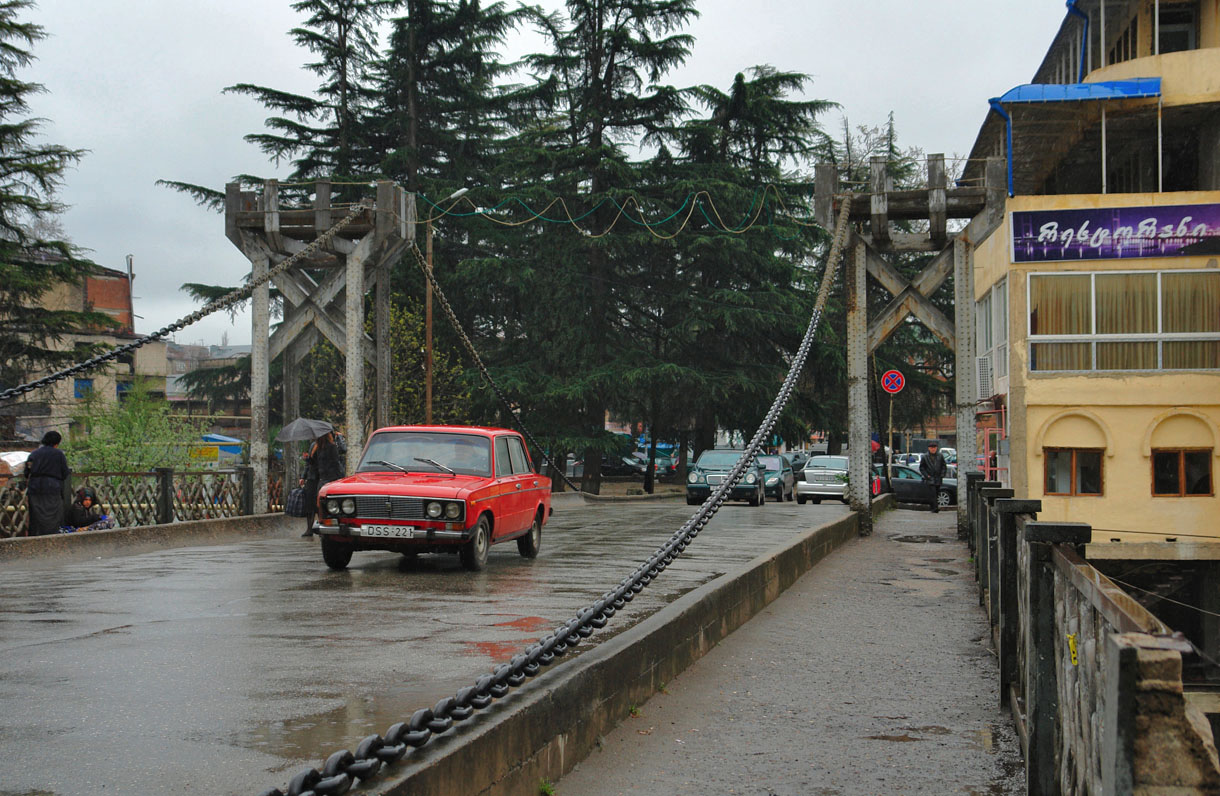
The Chain Bridge is the third crossing, named for the thick chains slung between its towers, and it's where some of the village marshrutkas start.
The cable car and the amusement park
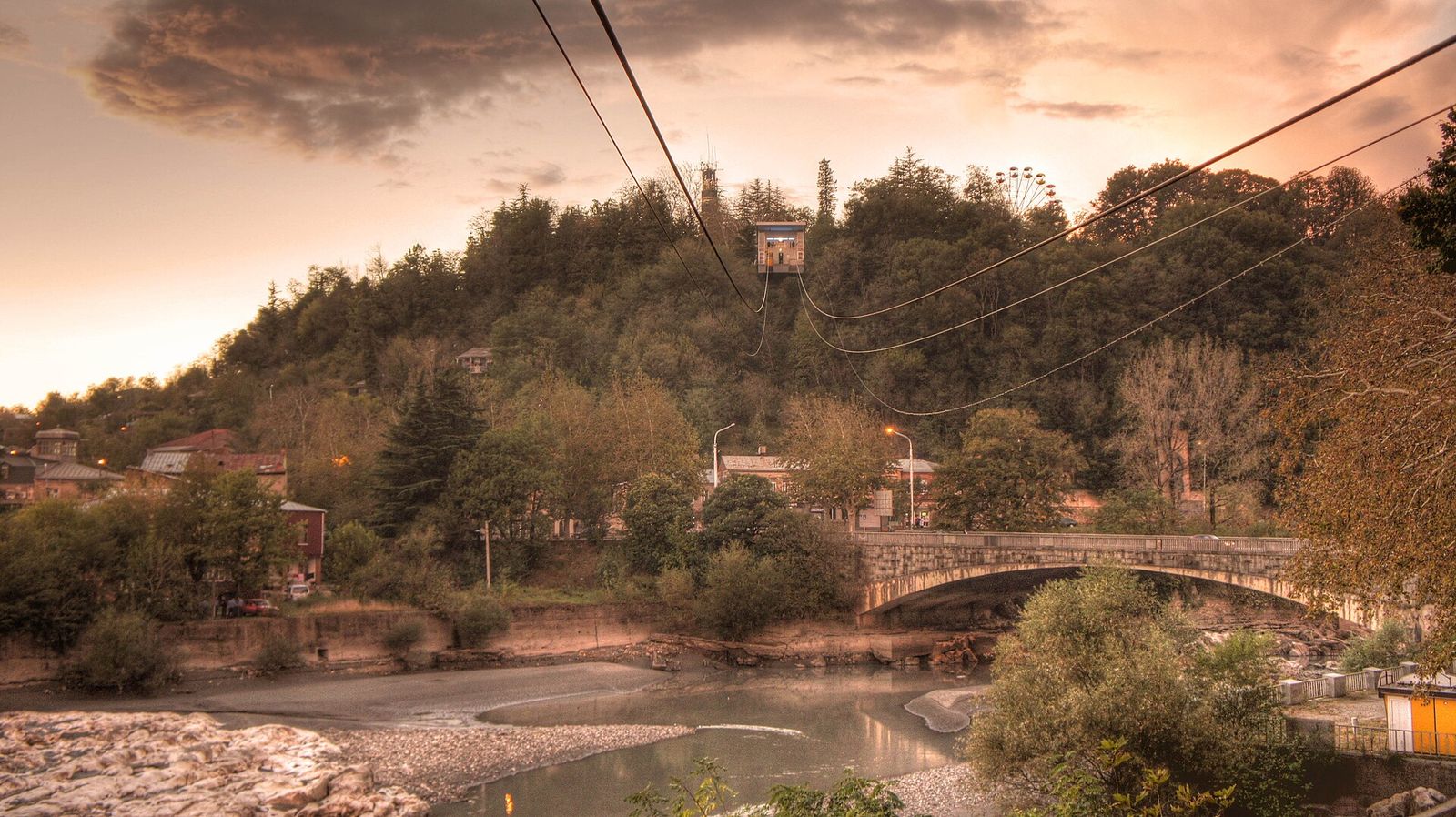
The cable car opened in 1961, and the cabins still look it. It runs from a station next to the White Bridge up to Besik Gabashvili Park, daily from 12:00 to 20:00, and a ride costs 1 GEL. It's short, a bit creaky and gives the best low-angle view of the river and the old town.
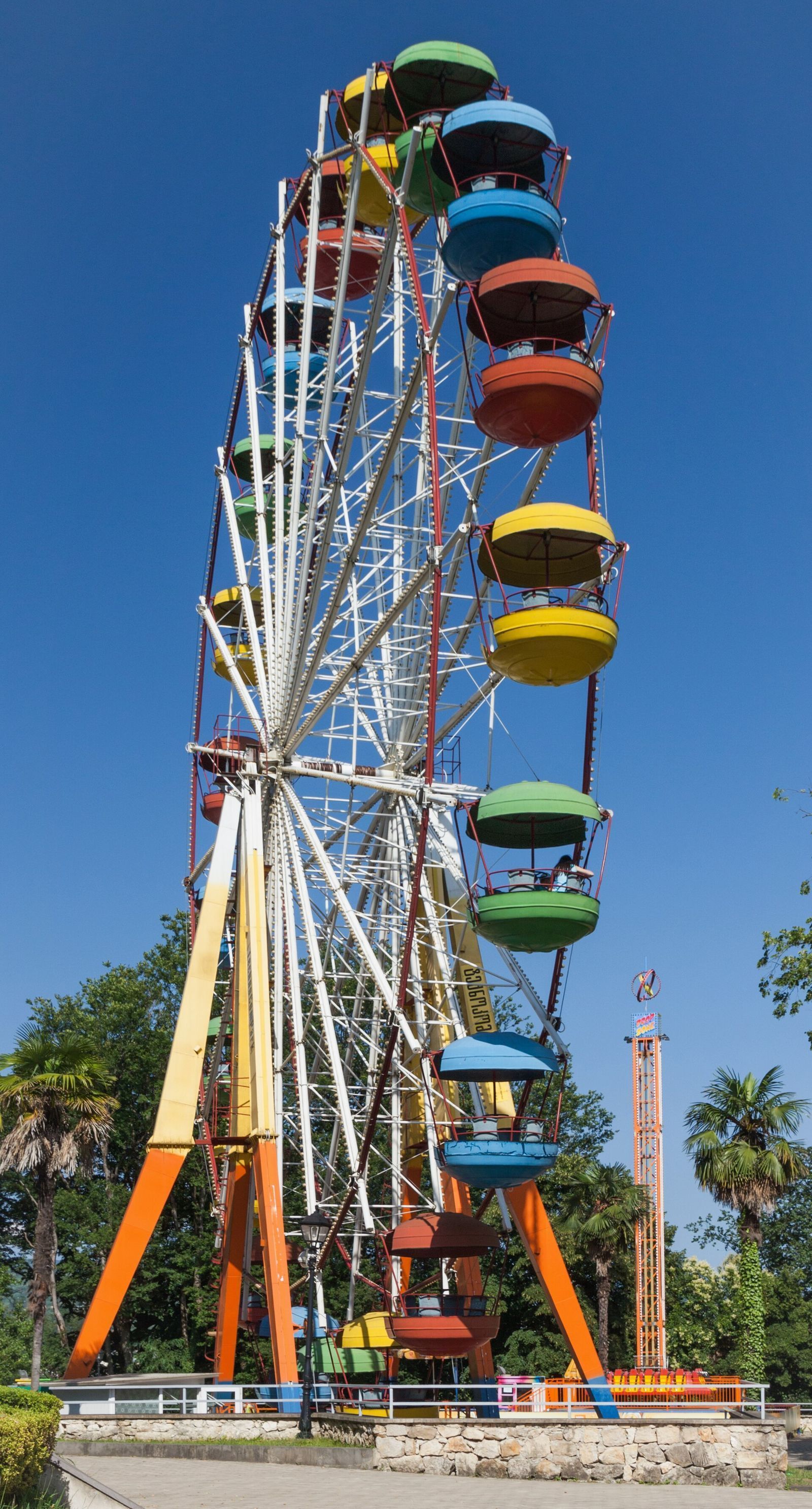
At the top is a small Soviet-era amusement park with a Ferris wheel, and Dzirdzveli, a restaurant that bakes khachapuri on a spade. It's a fun place for an hour with kids, and the Ferris wheel lifts you even higher over the river.
The Green Market
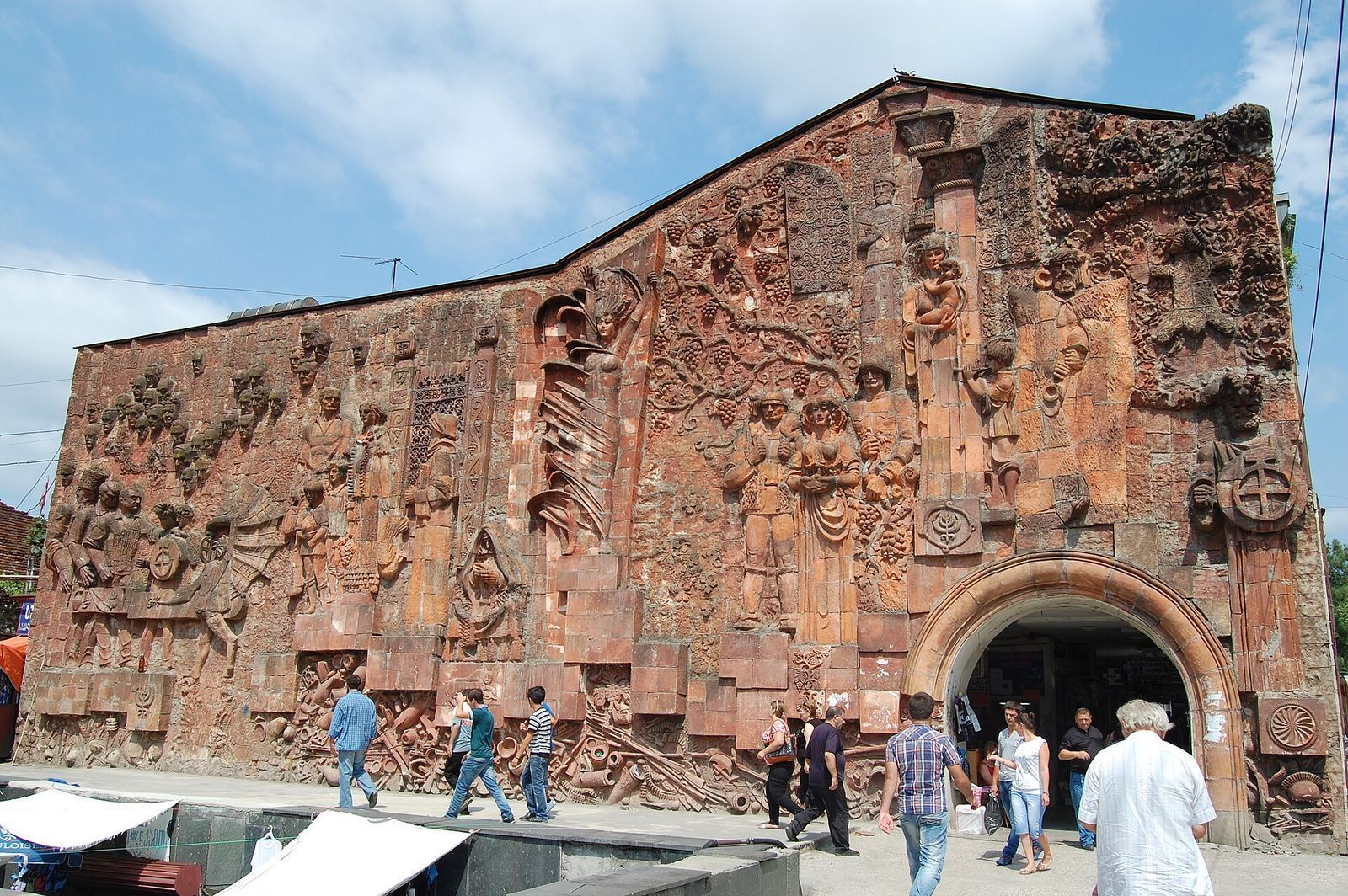
Kutaisi's central market runs daily from early morning to early evening. The open part is fresh produce; the covered hall is where to find herbs, spices, dried fruit, nuts, honey, cheese and strings of churchkhela, the walnut and grape-juice sweet. Imeretian cheese and Imeruli khachapuri come from this region, so the dairy counters are the place to snack. On the market's side wall is the Kolkhida bas-relief, a big Soviet-era sculpture by Bernard Nebieridze.
Old Kutaisi streets and the French Quarter
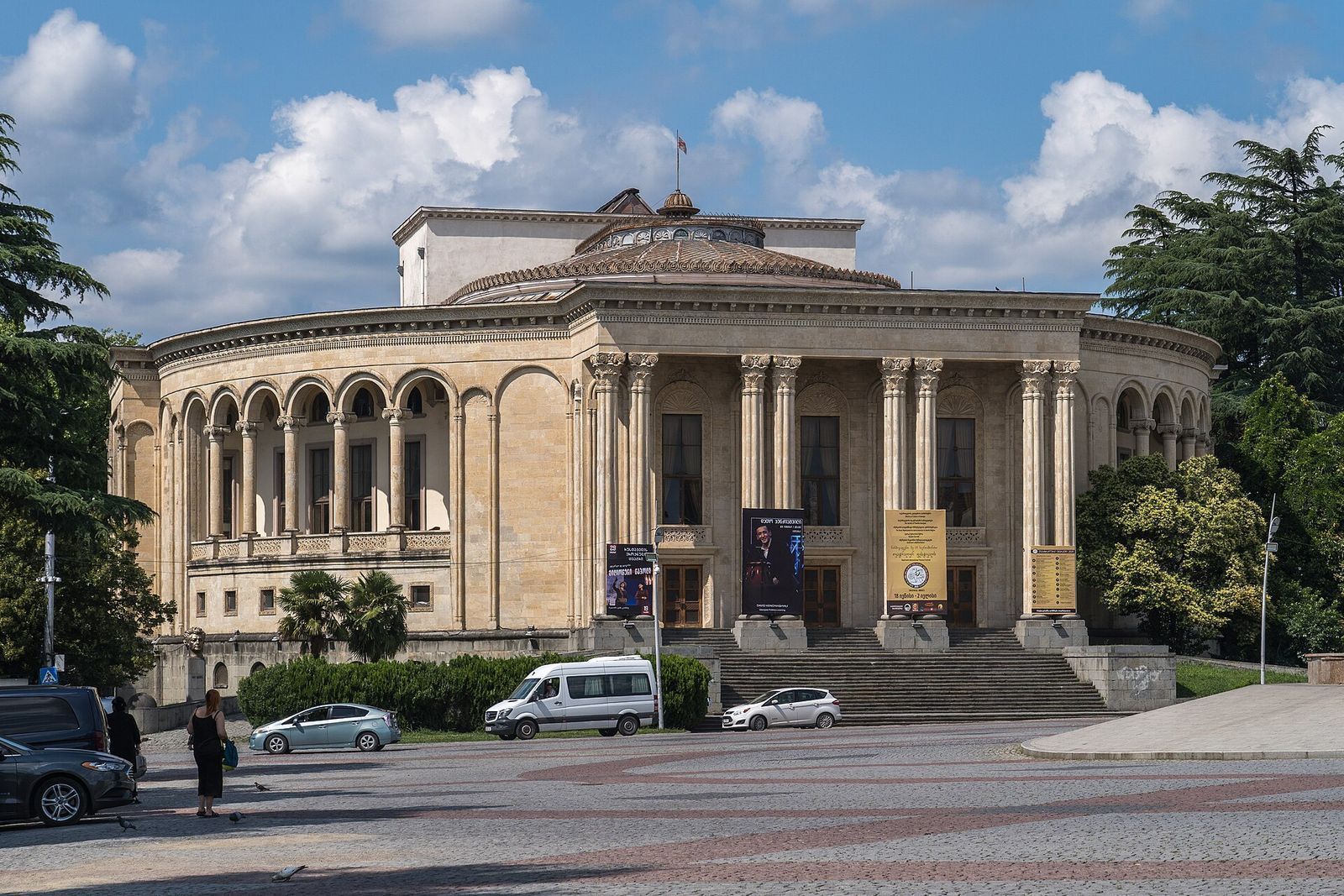
Walk Rustaveli Avenue and the lanes off it for the city's late 19th and early 20th century buildings. The Meskhishvili Theater, founded in 1861, is one of the oldest in Georgia. The Opera and Ballet Theater went up in 1969 with 10 classical statues on its roof pillars. Public School N1, at the corner of Rustaveli Avenue and Tsisperi Kantselebi Street, dates from 1902, and the Art Nouveau gate on Tsminda Nino Street is all that's left of the old Mon Plaisir cinema.

Go through that gate and you're in a passage full of street art, including a mural by the French artist Vinie and the Georgian for "I love you" painted over and over. Two more small stops on the same walk:
- Pharmacy N4 at 14 Pushkin Street opened in 1891 and still works, making some medicines by hand from old recipes.
- The hardware store at 11 Lermontov Street sits in an 1880s house that kept its painted ceilings and fireplace.
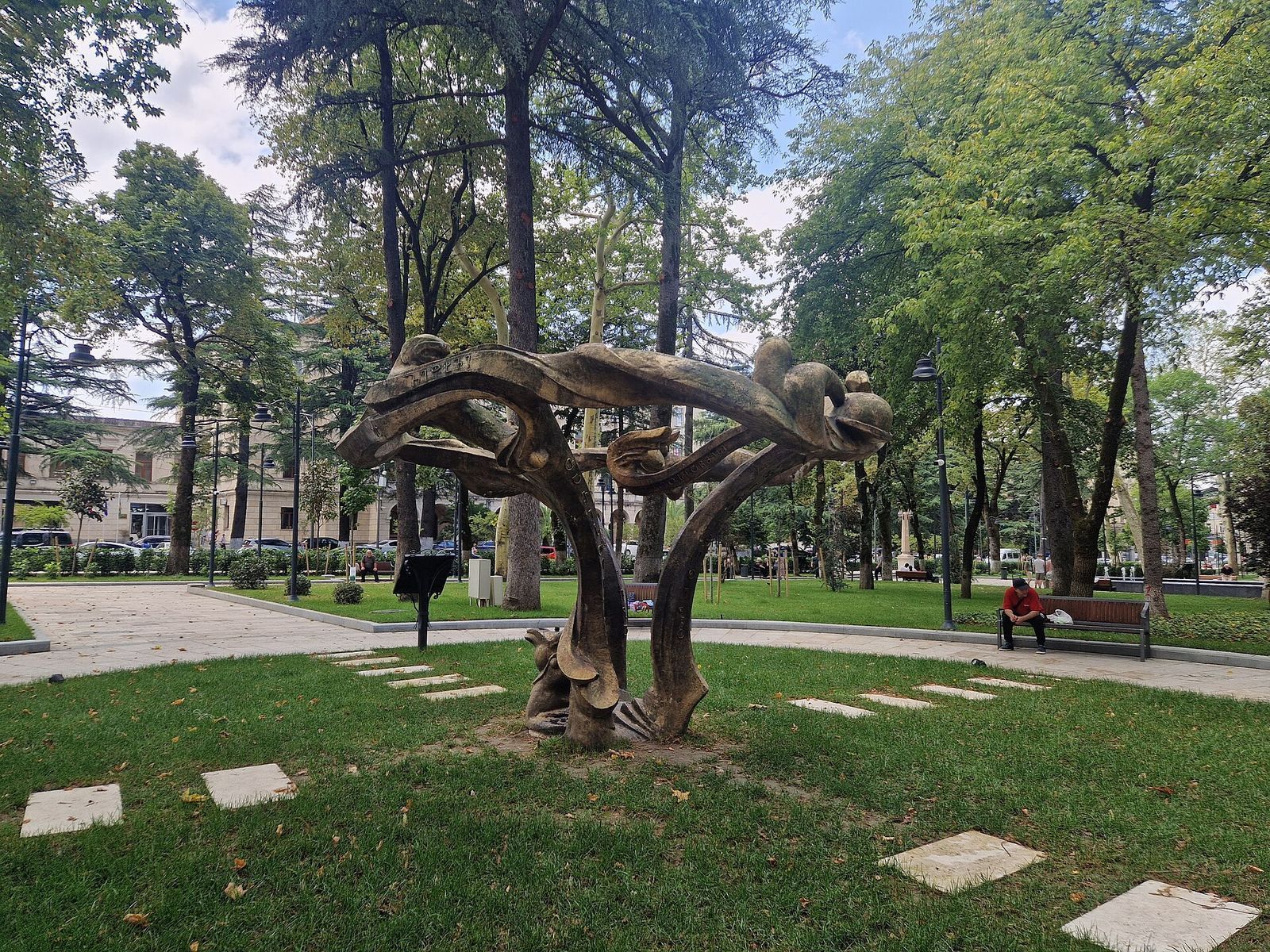
Then rest in Kutaisi Park, the green square in the center, which began as a royal garden given to Princess Darejan in the 1820s. Its benches under the old trees make a shady stop on a hot afternoon.
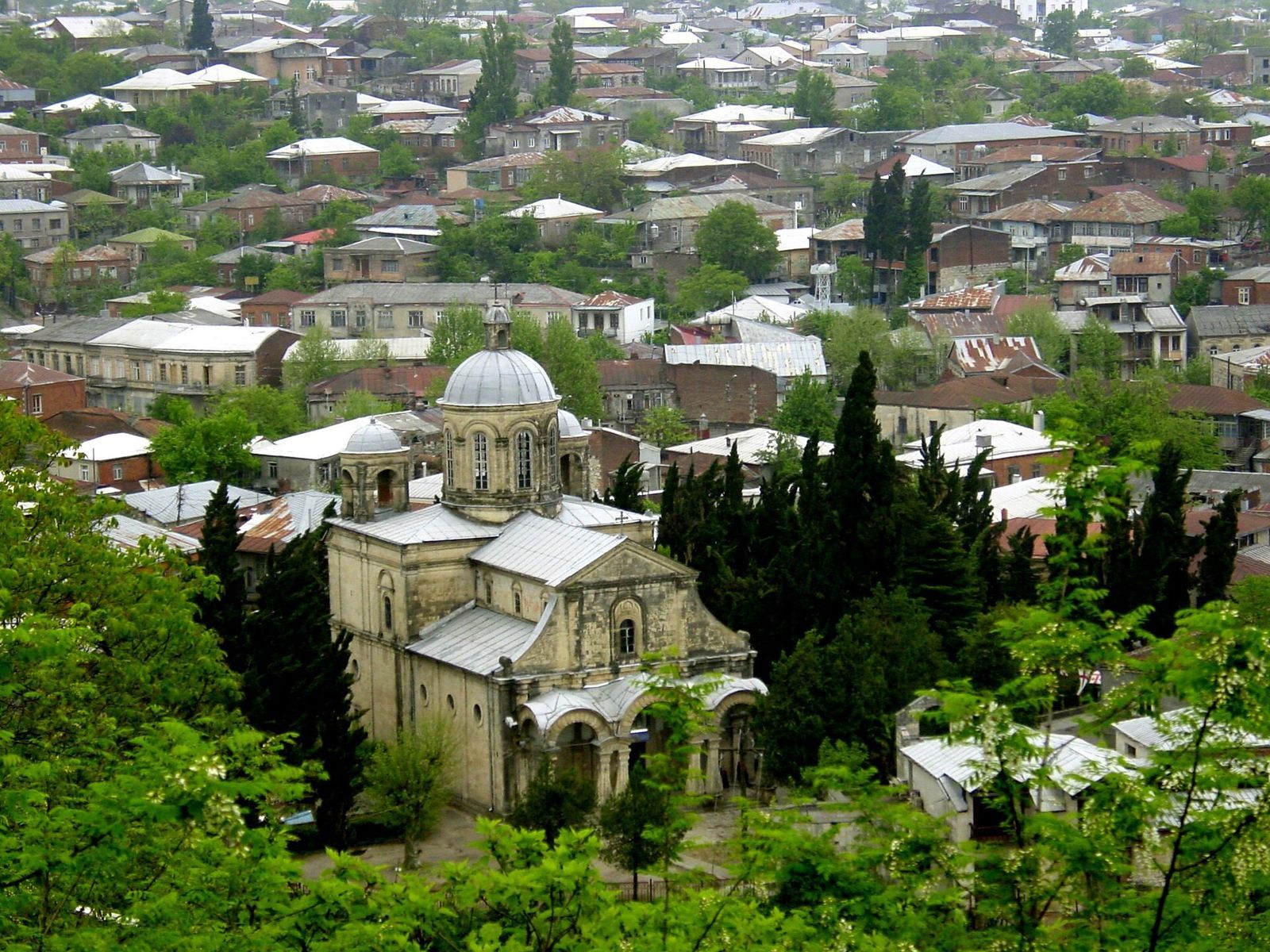
Across the river, the French Quarter is a few streets of low houses around the 19th-century Khareba (Annunciation) church, built as a Catholic church and now Orthodox.
The Kutaisi Synagogue
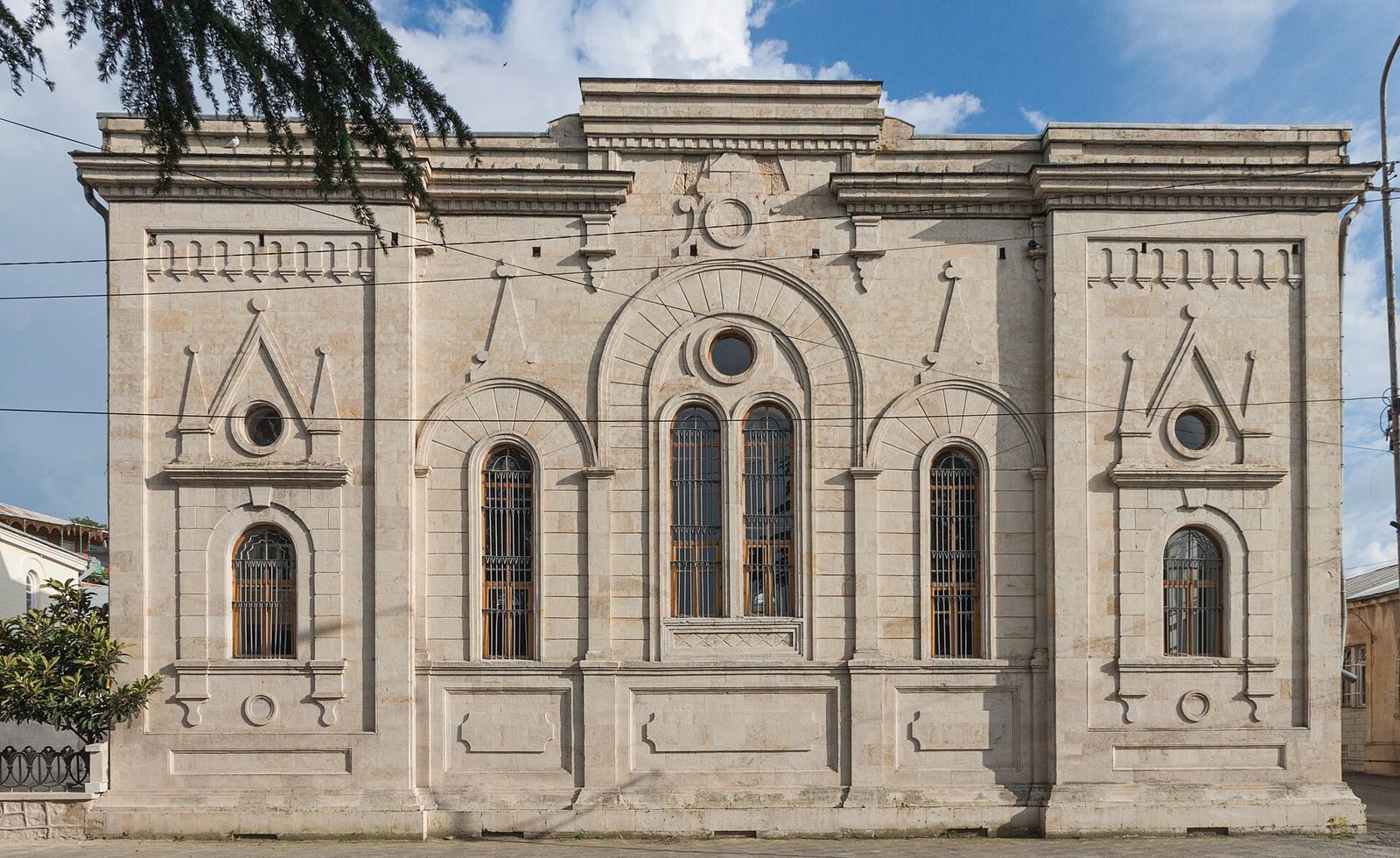
Kutaisi had a large Jewish community, and its synagogue on Gapanov Street, built in 1886, is the second-largest in Georgia after Tbilisi's. Outside stands a statue of Boris Gapanov, who translated Rustaveli's epic poem The Knight in the Panther's Skin into Hebrew. Go in only if someone is in the courtyard to let you in; it's a working synagogue, not a museum.
Kutaisi museums
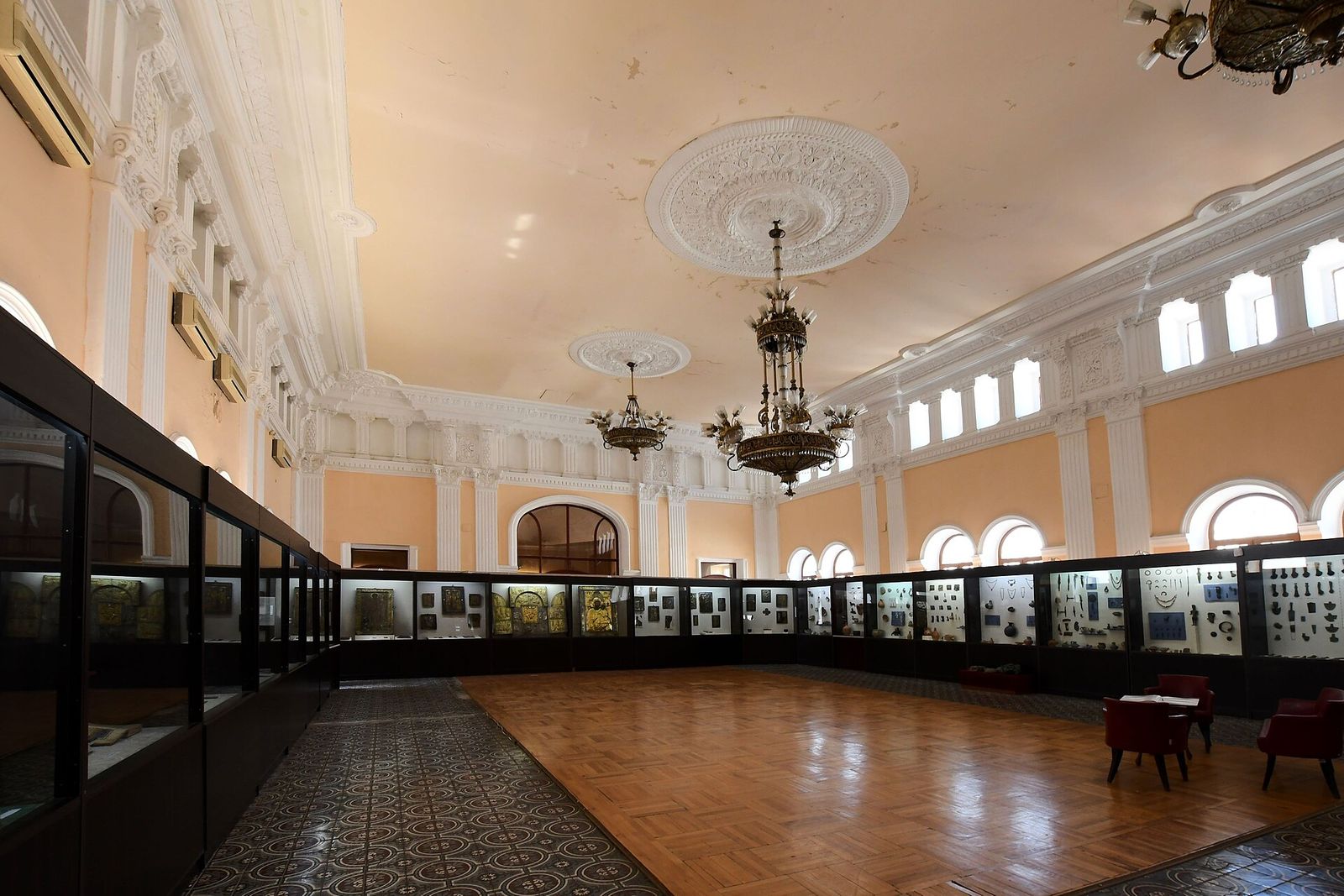
Most of the city museums are free and open daily from 10:00 to 18:00. The only one I'd plan around is the State Historical Museum, which holds more than 150,000 items on the history of Kutaisi and Imereti.
| Museum | What's inside | Price |
|---|---|---|
| State Historical Museum | More than 150,000 items on the region's history | 5 GEL, 10 GEL with a guided tour |
| Georgian Sports Museum | More than 1,600 exhibits on Georgian sport | Free |
| Military Glory Museum | Georgian military history | Free |
| Photo-Cinema Chronicle Museum | Old photos and film of Kutaisi | Free |
| Paliashvili House Museum | The childhood home of the composer, born in 1871 | Free |
Soviet Kutaisi and the old Parliament
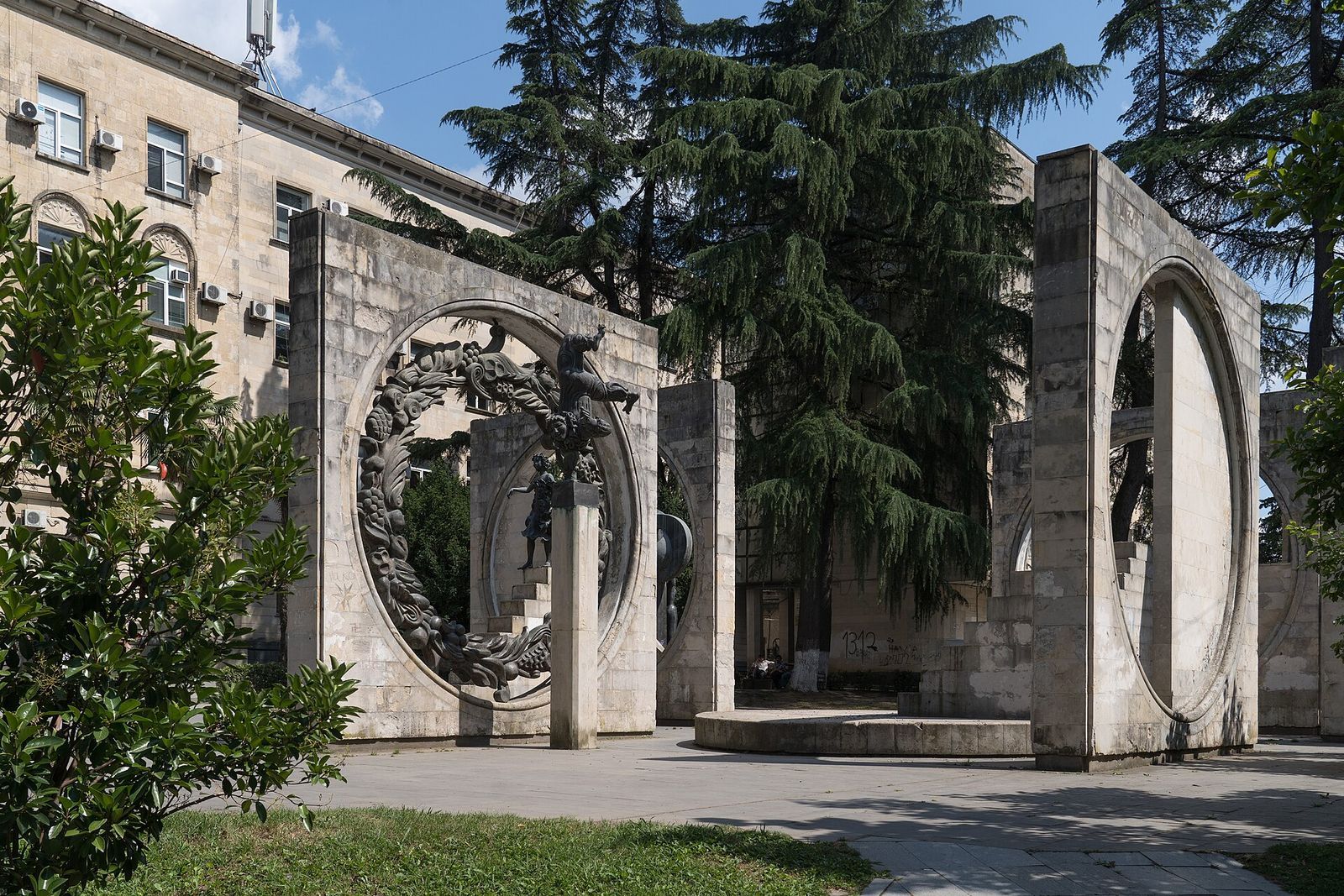
If you liked Tbilisi's Soviet buildings, Kutaisi's are fewer but easy to find on a walk. The Glory to Labor monument, a wrought-iron sculpture from the early 1980s, stands next to City Hall. Hotel Tbilisi on Asatiani Street is half lived in and half abandoned, and the apartment block at 96 Asatiani Street keeps a Soviet mosaic in almost perfect shape. The Balakhvani Stairs, about 100 steps from the 1950s, climb from the railway station up to Aghmashenebeli Avenue.

The odd one out is the former Parliament, a glass and steel dome about 40 m high on the edge of town. Georgia moved its Parliament here in 2012 at a cost of 57 million GEL, then moved it back to Tbilisi in 2019. You see it on the left on the road to the airport, and from outside is the only way to see it now.
The Kutaisi Botanical Garden
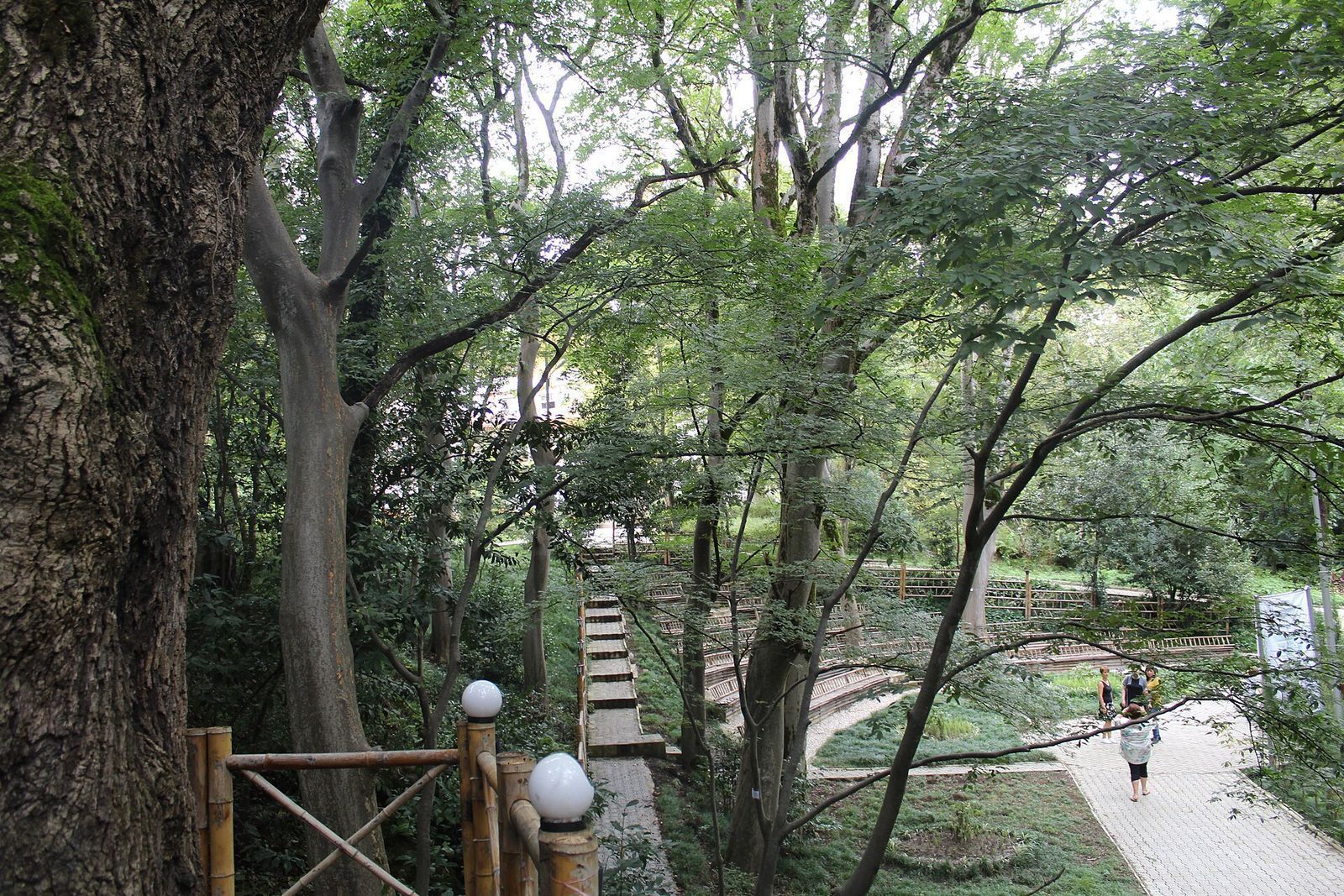
The Botanical Garden sits on the Rioni near Bagrati and is the second-oldest in Georgia after Tbilisi's. Its oddity is a tiny chapel built inside the trunk of an old oak tree. It's a pleasant hour on a hot afternoon; bring mosquito repellent if you stay into the evening in summer.
Gelati Monastery
Gelati is the reason I'd send anyone to Kutaisi. King David IV, David the Builder, began the monastery in 1106 as a church and an academy, and it became one of the great centers of learning in medieval Georgia. He died in 1125, before it was finished, and asked to be buried under the gate so that everyone entering would walk over his grave. The slab is still there in the gateway, and most visitors step over it without noticing.
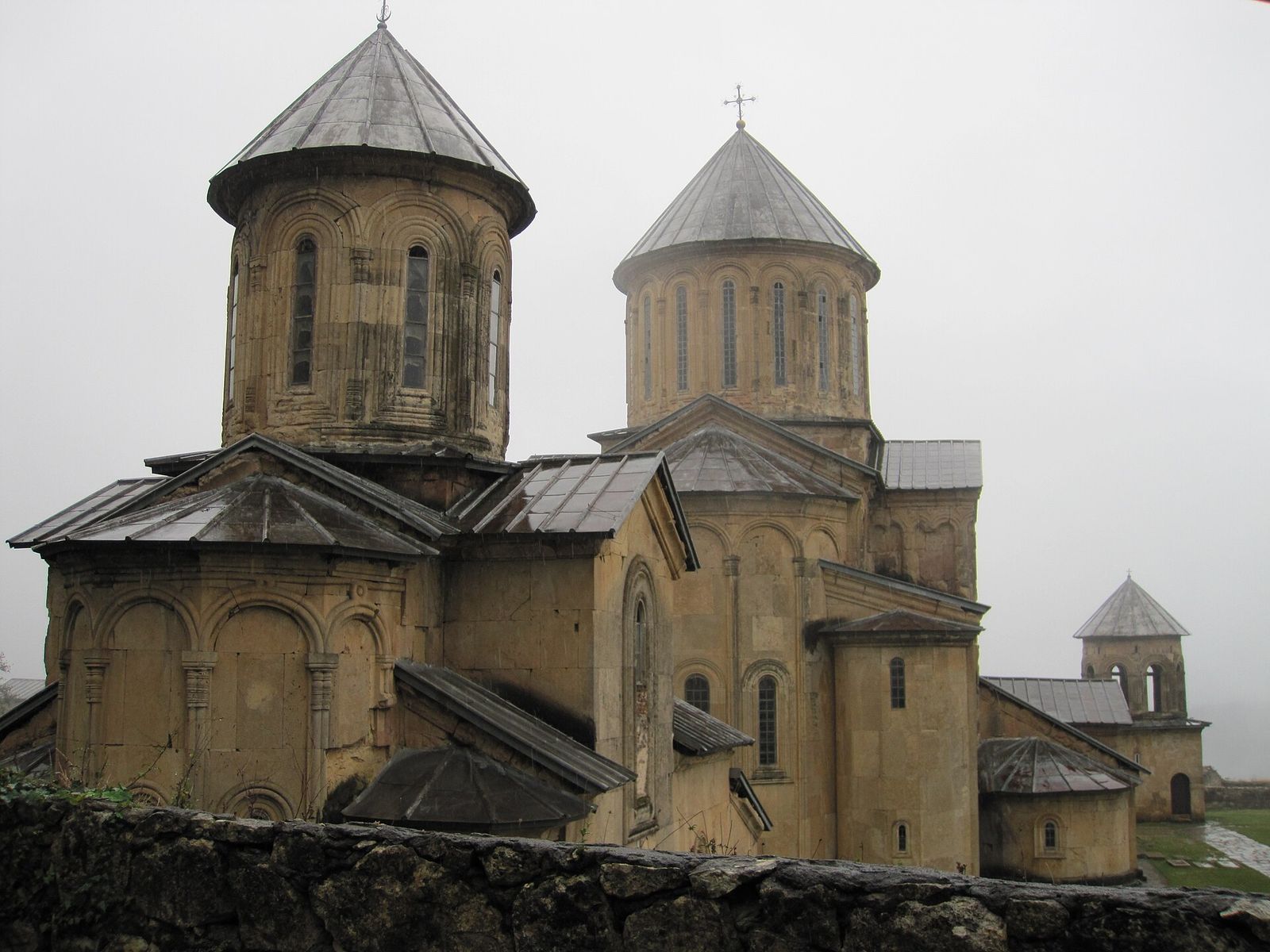
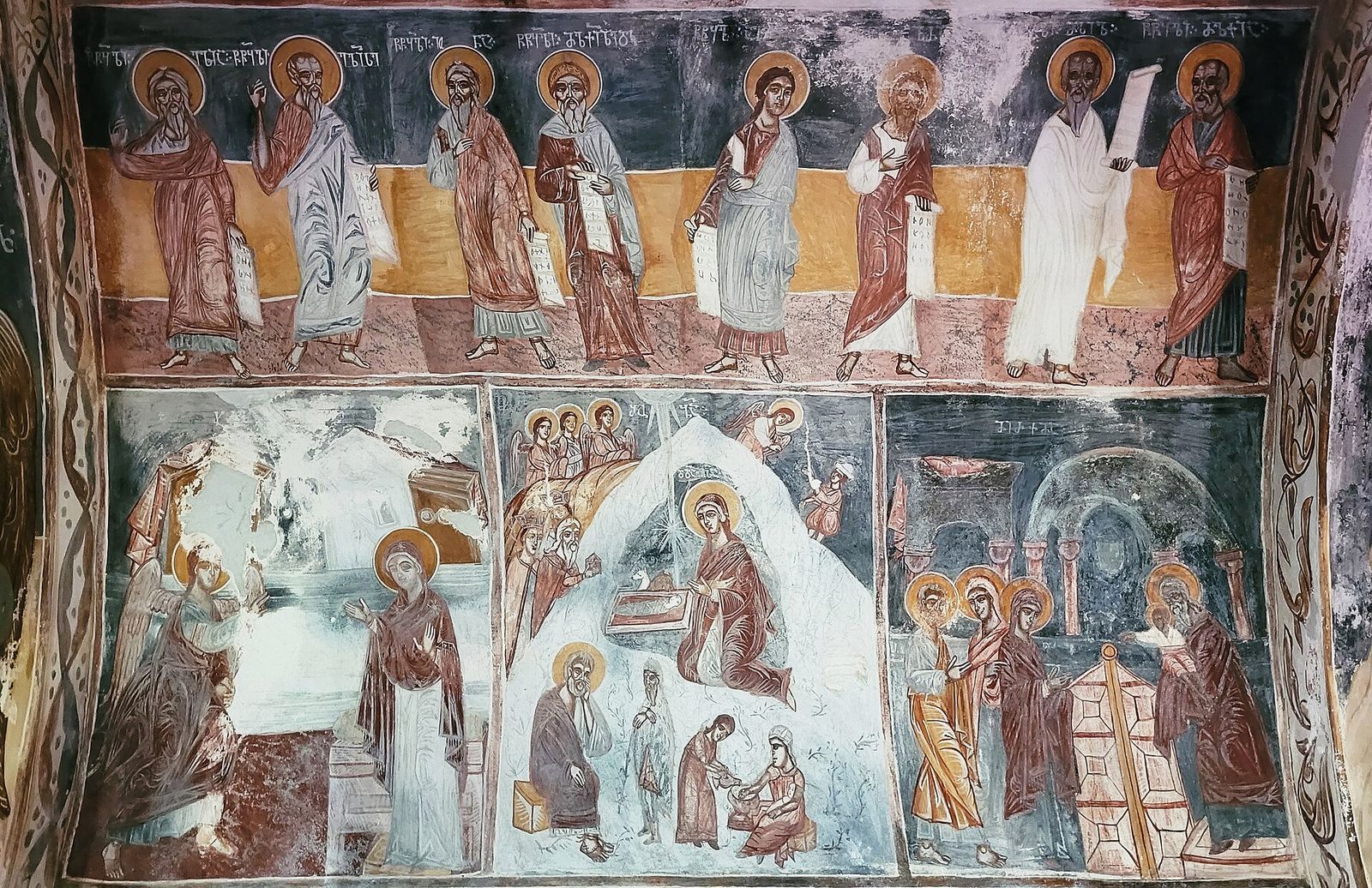
The main church, the Cathedral of the Nativity of the Virgin, is the one to spend time in. In the apse is a 12th-century mosaic of the Virgin and Child between the archangels Michael and Gabriel, one of the very few medieval mosaics in Georgia, and the walls are covered with frescoes of saints, kings and Bible scenes. Two smaller churches and a bell tower stand around it on the lawn. Gelati joined the UNESCO list in 1994 together with Bagrati, and unlike Bagrati it has kept its place.
A marshrutka to Gelati leaves from behind the Meskhishvili drama theater and costs 1 GEL. Departures run at 08:00, 11:00, 14:00, 16:00 and 18:00. A Bolt is the easy option if you're short on time, and many drivers combine Gelati and Motsameta into one run.
Motsameta Monastery
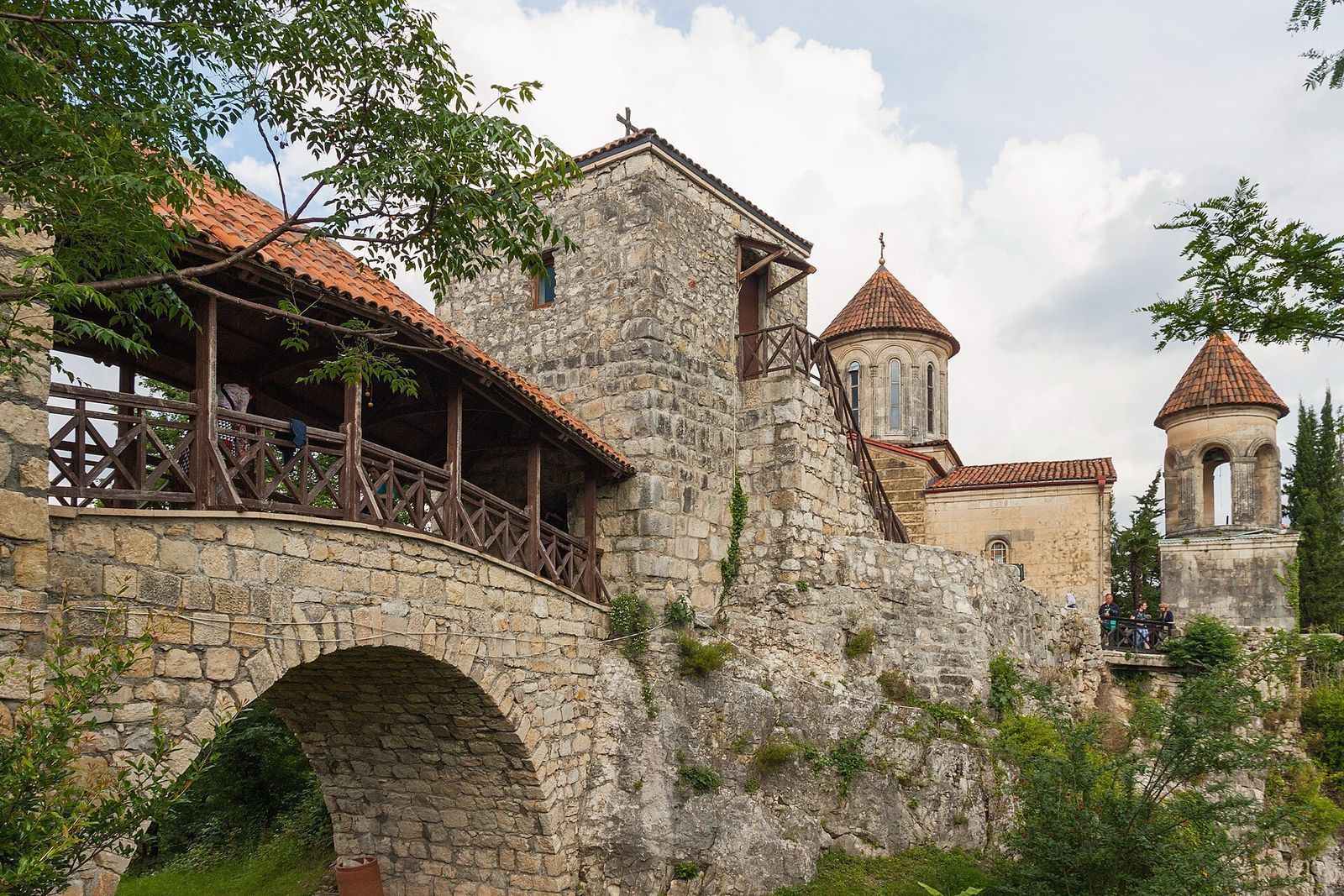
Motsameta is the small monastery I like best around Kutaisi. It sits on a wooded cliff with the Tskaltsitela river curling around below it, and you reach it over a stone footbridge. The name means "place of the martyrs", after two princely brothers killed here by Arab invaders, and the church keeps their relics. It's quiet, green and takes about an hour, including time on the terrace over the river.
Most people visit by taxi on the same run as Gelati. If you like walking, there is a better way: from Gelati, walk down out of the village and follow the old, unused railway tracks to Motsameta, about 90 minutes. From Motsameta it's another 90 minutes on foot back to central Kutaisi, or a short taxi ride.
Day trips from Kutaisi: caves, canyons and Soviet spas
This is where Kutaisi beats Tbilisi as a base. Within an hour or two of town you have two show caves, two canyons, a dinosaur park and a whole spa town of abandoned Soviet sanatoriums. You can't do them all, so pick by what you came for.
| Day trip | How to get there | Entry | My verdict |
|---|---|---|---|
| Prometheus Cave | Marshrutka 30 to Tskaltubo, then 42 | About 23.5 GEL, boat about 11 GEL | The best rainy-day trip |
| Tskaltubo | Marshrutka 30 from the Red Bridge, 2 GEL | Free to walk around | For Soviet ruins and photographers |
| Sataplia | Taxi or tour | About 17.25 GEL, guided | Skip if you've seen Prometheus |
| Martvili Canyon | Driver or tour | 20 GEL, boat 20 GEL | The prettiest water, busiest in summer |
| Okatse Canyon and Kinchkha | Driver or tour | 20 GEL | Best views; closed Mondays |
| Chiatura | Hourly marshrutka, 7 GEL | Cable cars 50 tetri a ride | The strangest day out in Georgia |
Prometheus Cave
Prometheus Cave, also called Kumistavi Cave after the village beside it, is the big show cave of western Georgia. It has 22 halls, 6 of them open to visitors, joined by a 1,420 m walkway past stalactites, stalagmites and underground rivers, all lit in changing colors. Entry is about 23.5 GEL for foreigners, and an optional boat ride on the underground river costs about 11 GEL more.
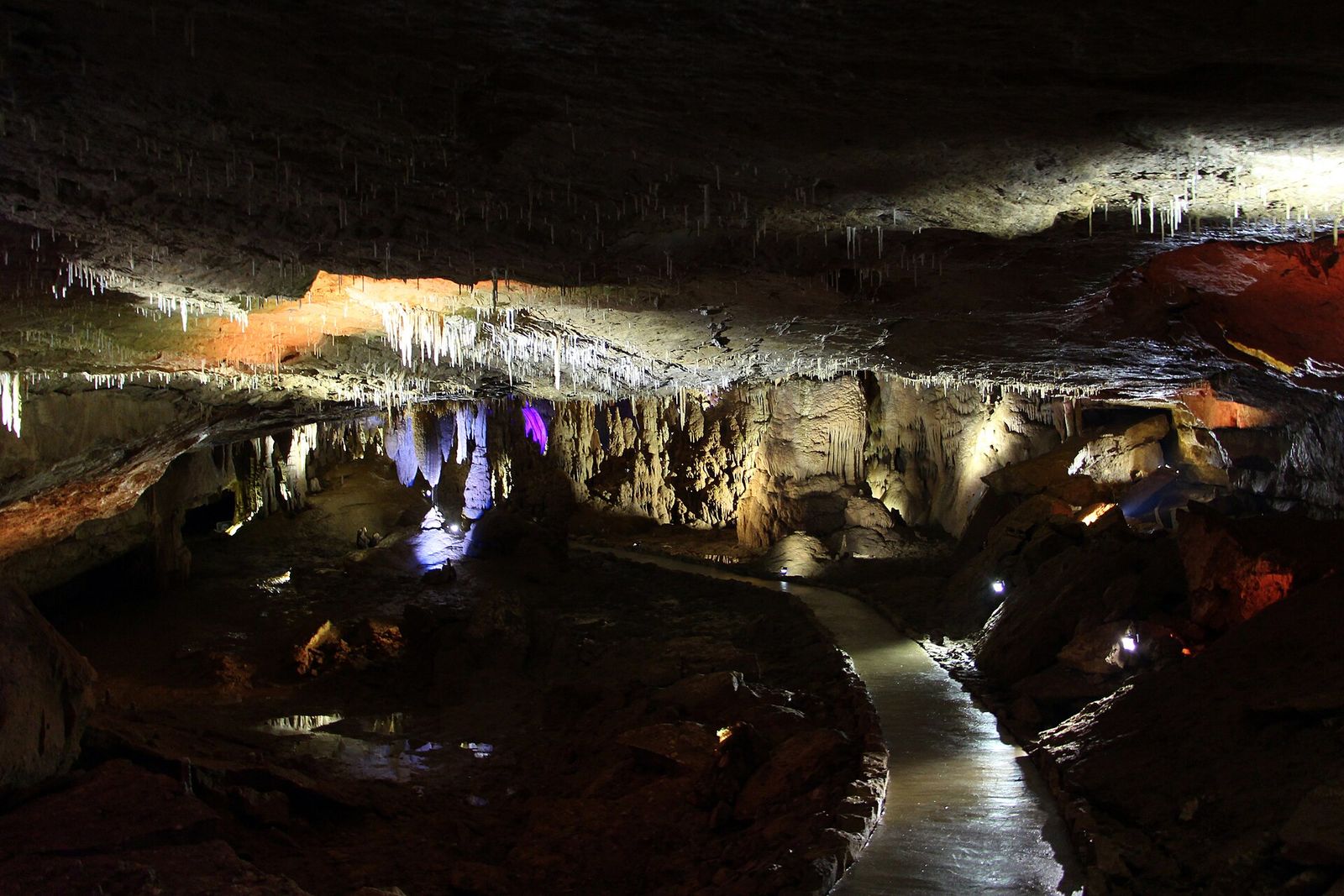
By public transport, take marshrutka 30 to Tskaltubo and then marshrutka 42 to the cave. The colored lighting is a bit theme park for my taste, but the size of the halls is real, and it's my pick for a wet day.
Sataplia Nature Reserve
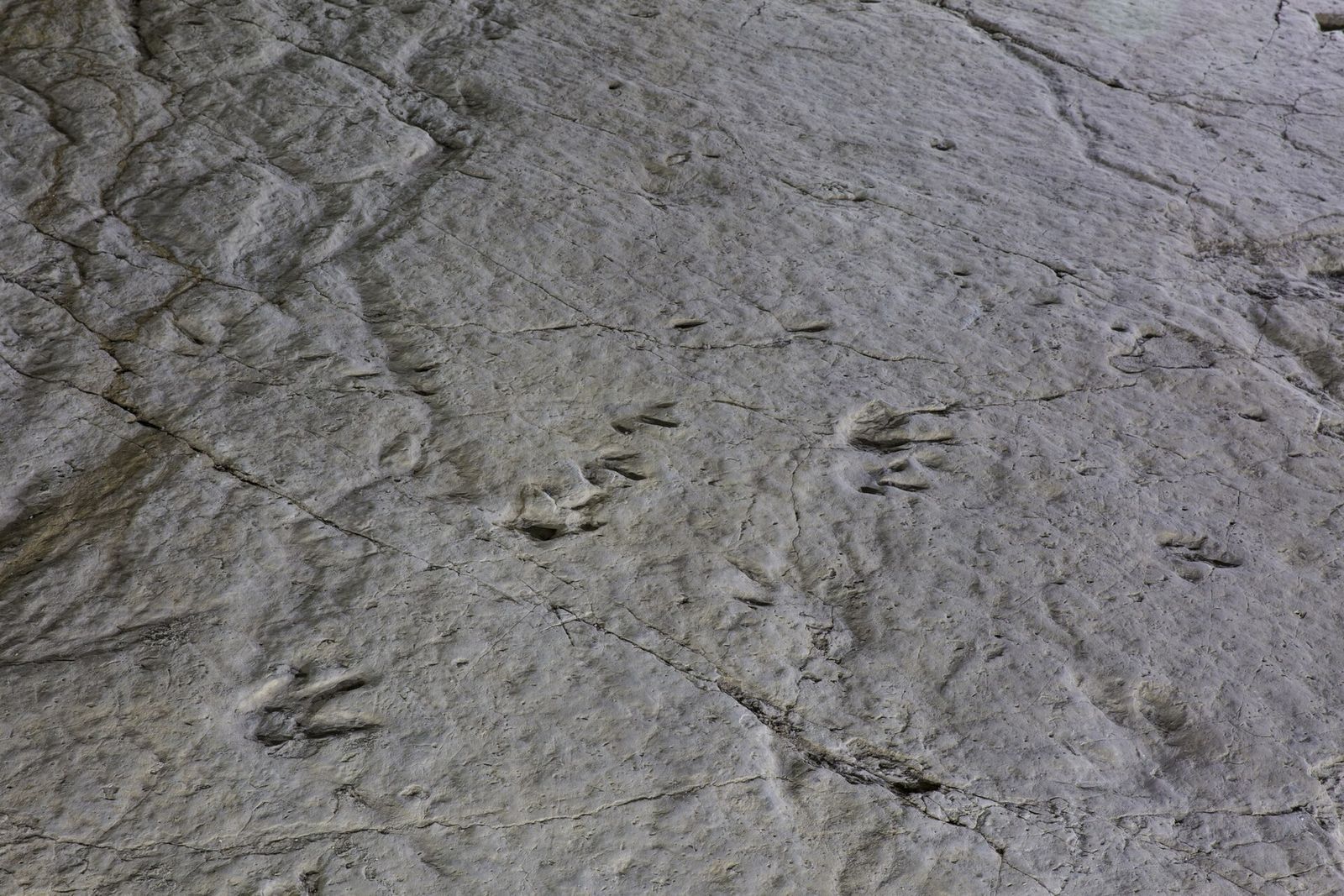
Sataplia sits in the forested hills just above Kutaisi and combines a small cave, dinosaur footprints, life-size plastic dinosaurs and a viewing platform looking back over the city. Entry is about 17.25 GEL with a guided tour, which is compulsory and leaves every 30 minutes to an hour. Honestly, the footprints are faint and look more like a chicken's than a dinosaur's. It's a good stop with children; if you only have time for one cave, choose Prometheus.
Tskaltubo and its Soviet sanatoriums
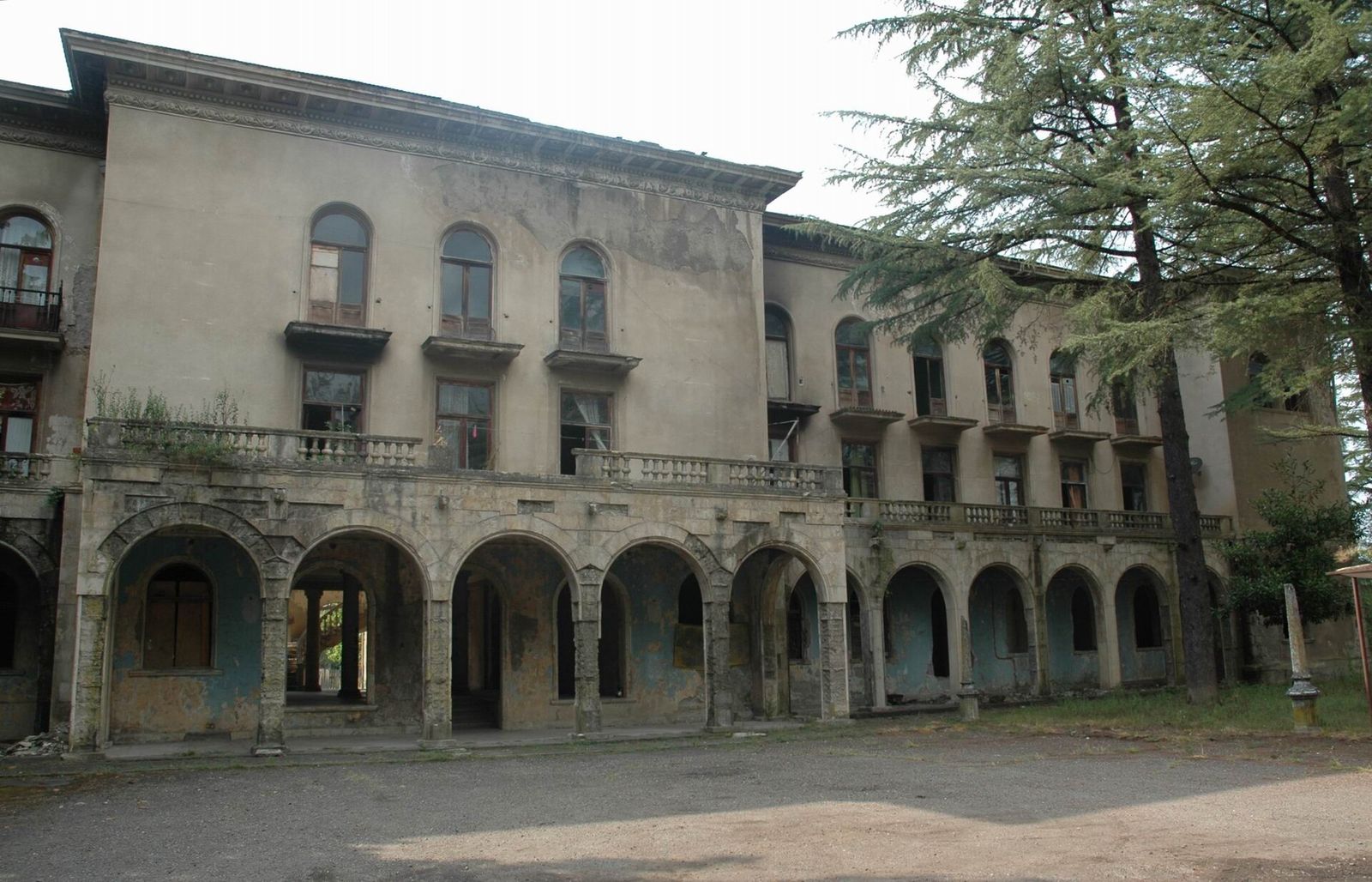
Tskaltubo is a spa town about 15 km northwest of Kutaisi, where Soviet workers once came for the radon baths. Today most of its grand sanatoriums stand empty and overgrown: Hotel Imereti, the Savane Hotel, Sanatorium Iveria and Bathhouse No 5 are the famous ones, and Stalin is said to have had his own private bathhouse here. Two bathhouses still work if you want a soak.
Marshrutka 30 leaves from the Red Bridge about every 20 minutes and costs 2 GEL. Give it 5 to 6 hours if you want to wander the ruins properly, and pair it with Prometheus Cave, which is on the same line.
Martvili Canyon
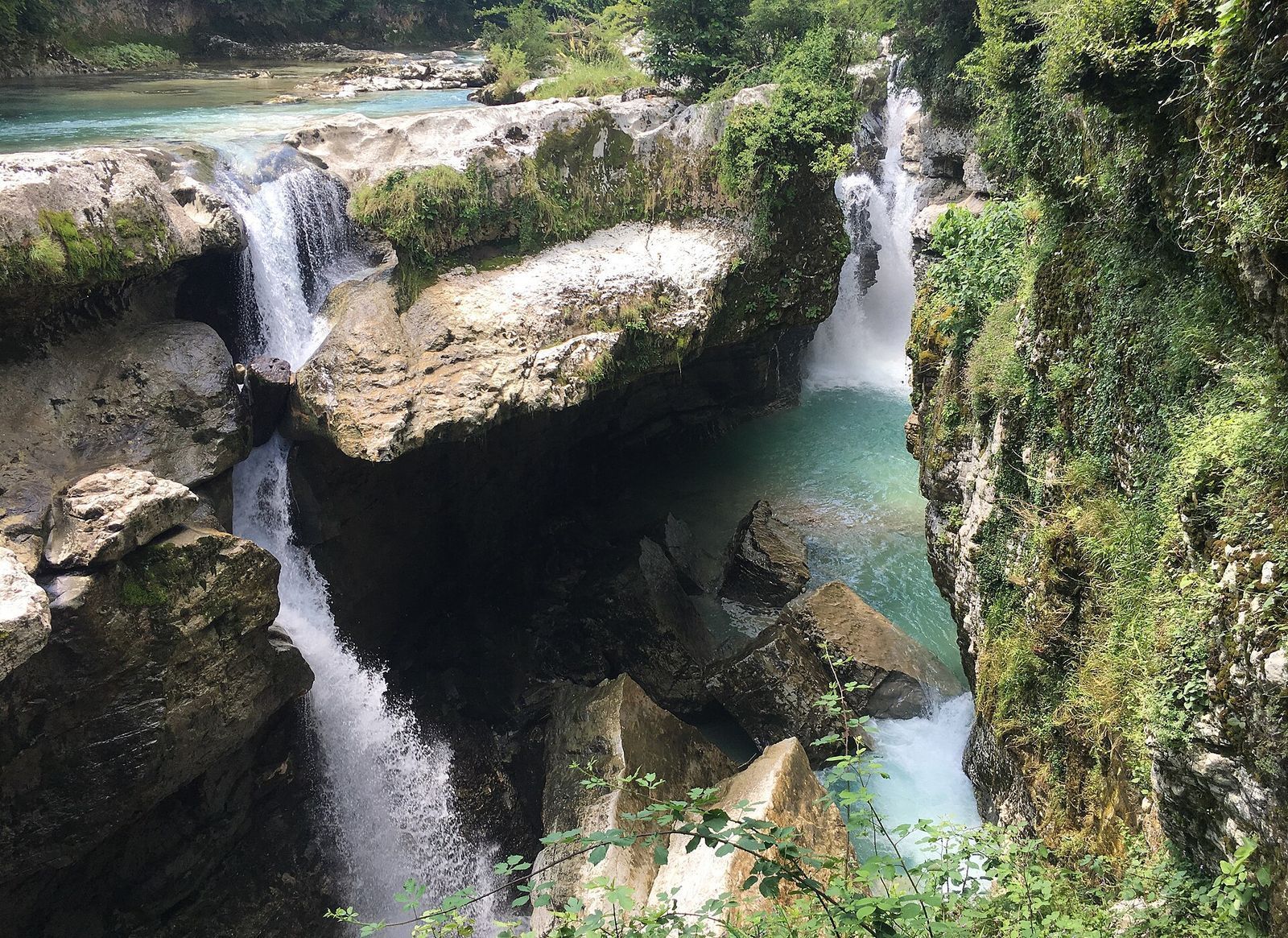
Martvili is a short, narrow canyon of turquoise water and mossy limestone walls in Samegrelo, west of Kutaisi. Entry is 20 GEL for foreigners and the boat ride up the canyon costs another 20 GEL; children under 6 go free. The boat is the best part, and it doesn't run in rain or snow, so check the weather the day before.
Okatse Canyon and Kinchkha Waterfall
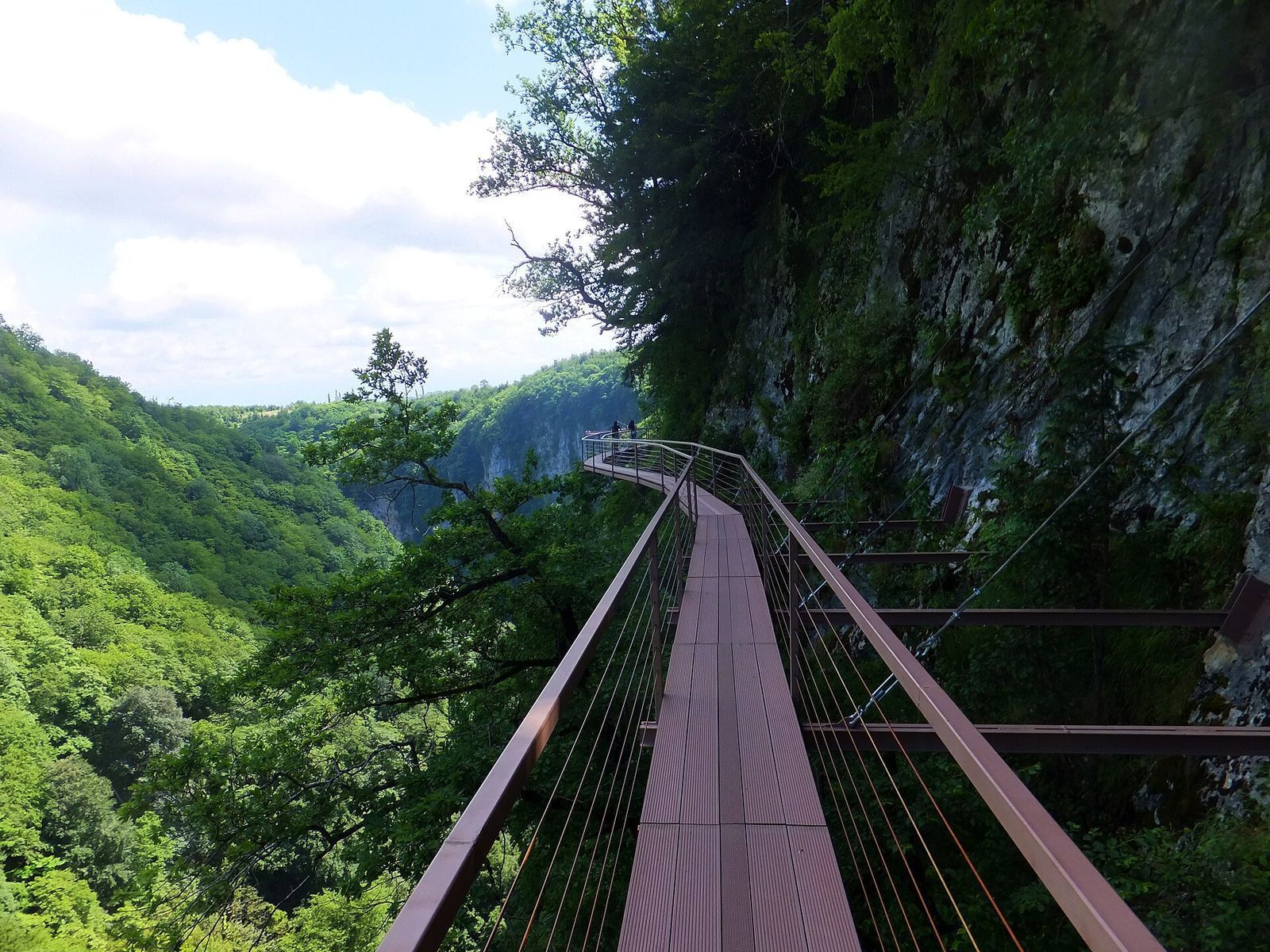
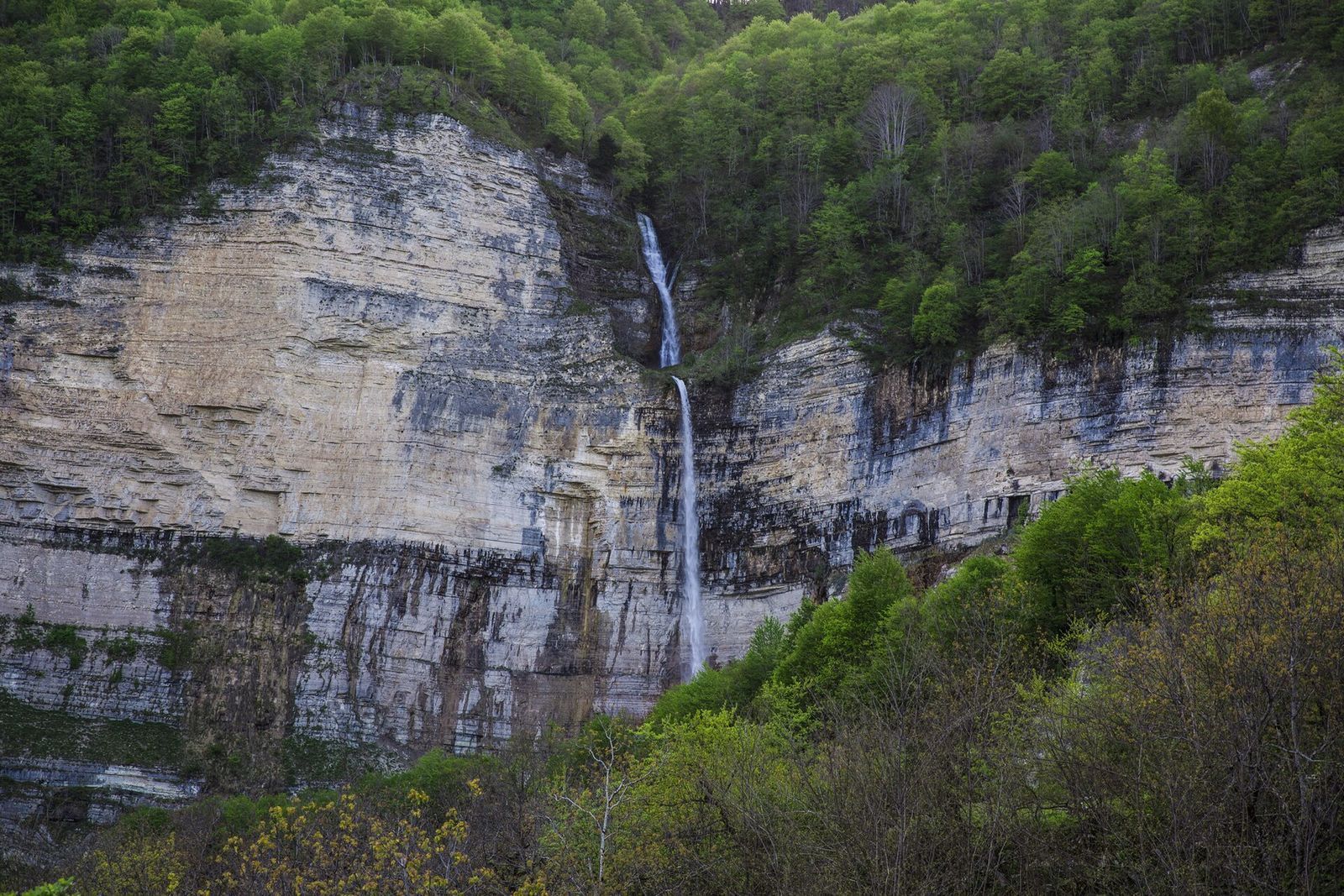
Okatse is the canyon for views rather than water. Its main sight is a hanging walkway about 1 km long, bolted to the canyon wall high above the river, which ends at a platform over the drop. Entry is 20 GEL. Kinchkha, a tall waterfall in the same area, is usually paired with it.
Chiatura and the Katskhi Pillar
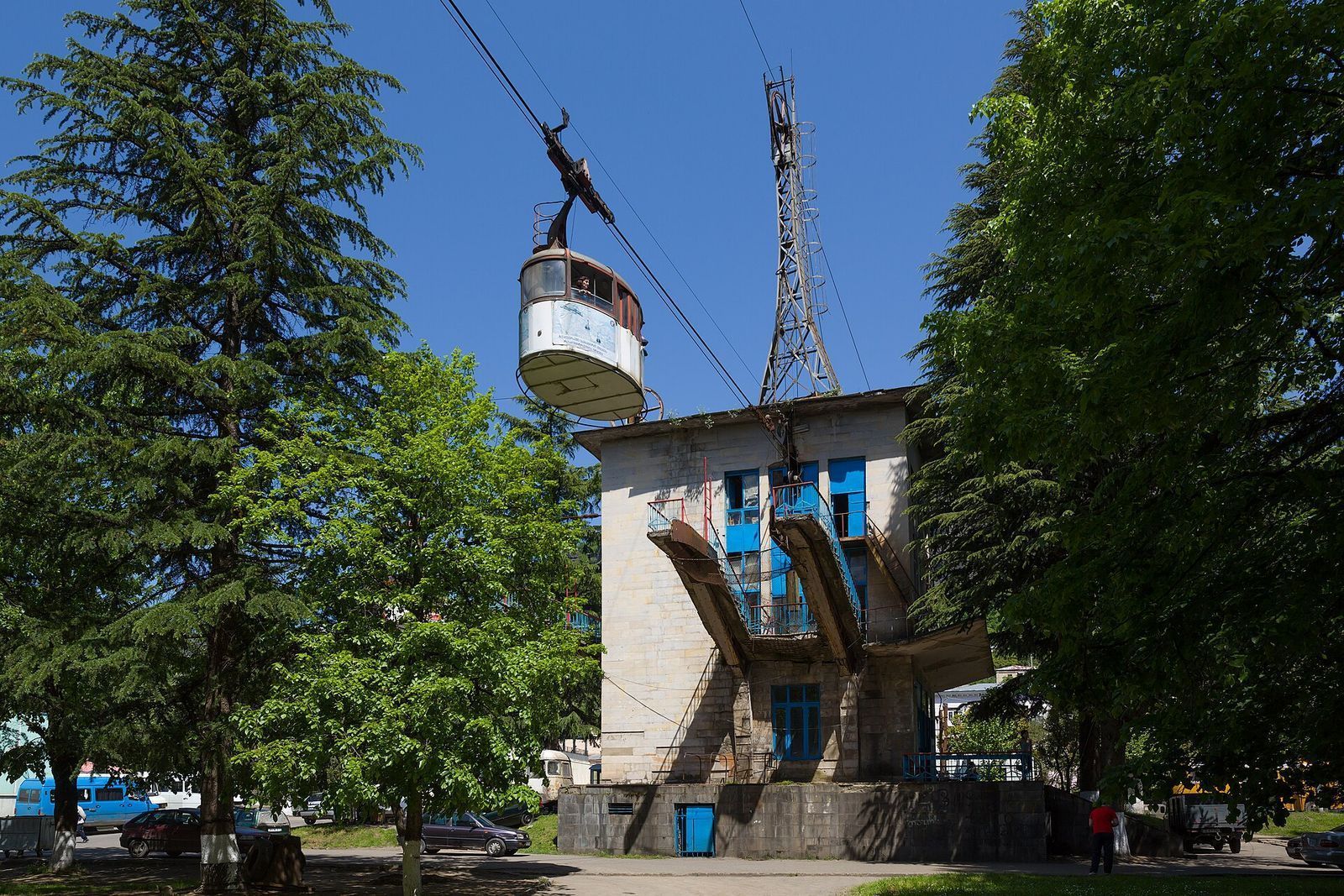
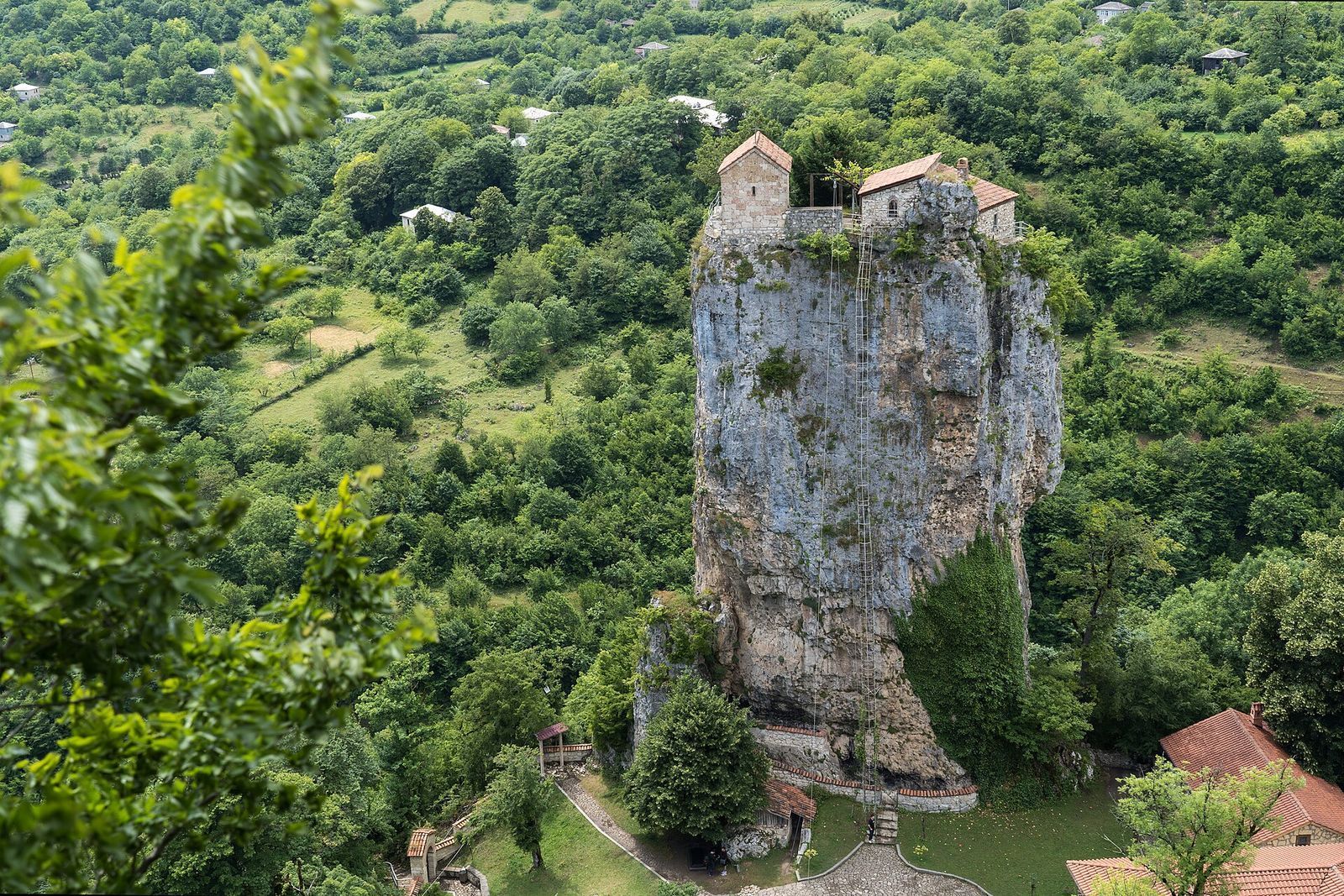
Chiatura is an old manganese mining town in a steep valley, famous for the Soviet cable cars that still carry people up the cliffs. Four lines still run from the center, at 50 tetri a ride. Hourly marshrutkas leave Kutaisi's main bus station for 7 GEL, and the last one back leaves at 16:00, so start early. The Katskhi Pillar, a rock column with a tiny church on top, is close by; you can't climb it, but it's a good photo stop with a driver.
How many days in Kutaisi: 1, 2 and 3 day plans
Two nights is the right amount for most people. In a 10-day Georgia itinerary that's exactly what Kutaisi gets, and it's enough for the city, Gelati and one big day trip.
| Plan | Morning | Afternoon | Evening |
|---|---|---|---|
| 1 day | Bagrati, the Green Market and the Colchis Fountain | 14:00 marshrutka to Gelati, taxi back via Motsameta | Cable car at sunset, dinner on Rustaveli Avenue |
| 2 days | Day 1 as above; day 2 marshrutka 30 to Tskaltubo | Prometheus Cave by marshrutka 42 | Back in town for a wine tasting |
| 3 days | Days 1 and 2 as above; day 3 driver to Martvili | Okatse and Kinchkha (not on a Monday) | An early night before moving on |
If canyons don't appeal, swap day 3 for Chiatura, or walk from Gelati to Motsameta and back into town. Kutaisi is also the usual overnight on the way to Svaneti: a marshrutka to Zugdidi costs 10 GEL and takes about 2 hours, and the road up to Mestia takes about 4 more.
Where to eat and drink in Kutaisi
Imereti has its own cooking, and it's the gentler side of Georgian food. Look for Imeruli khachapuri, the round cheese bread without the egg; mchadi, the corn bread; kupati sausages; pkhali, the walnut and vegetable pastes; and tsitsila, roast chicken in a blackberry sauce. The local cheese is the soft white imeruli kveli, and wild mushrooms turn up on menus in season.
| Place | Where | What to order | Best for |
|---|---|---|---|
| Foe-Foe Tea House | Rustaveli Avenue at Tsminda Nino Street | Tea, crepes, waffles | A slow breakfast or a rainy hour |
| Sisters (Debi) | 4 Rustaveli Avenue | The Imeretian Plate to share | A first proper Imeretian meal |
| Lilestan | A courtyard in the center | Imeruli khachapuri, ojakhuri | Dinner outside on a warm night |
| Story | Tsereteli Street | Chakapuli, chvishtari with matsoni | Something past the usual menu |
| Bikentia's Kebabery | The center | Two beef kebabs with satsebeli | A 10 GEL lunch, standing up |
| Paolo | 5 Rustaveli Avenue | A drink under the vintage labels | An evening glass |
| Winetage | The center | Imeretian wines, a tasting | Learning the local wine |
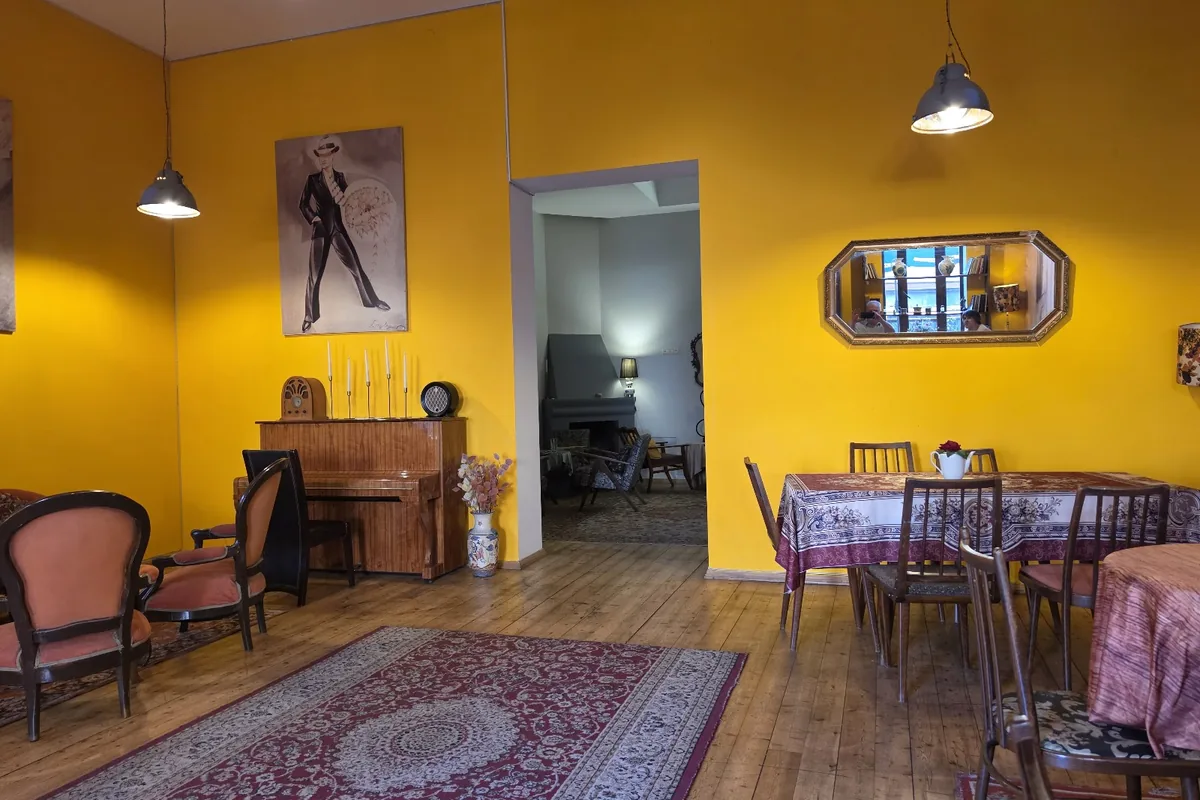
Foe-Foe is my favorite room in the city: it fills the old lobby of the former Kutaisi Hotel, with marble stairs, shelves of books, painted ceilings and a hammock, and a long list of teas.
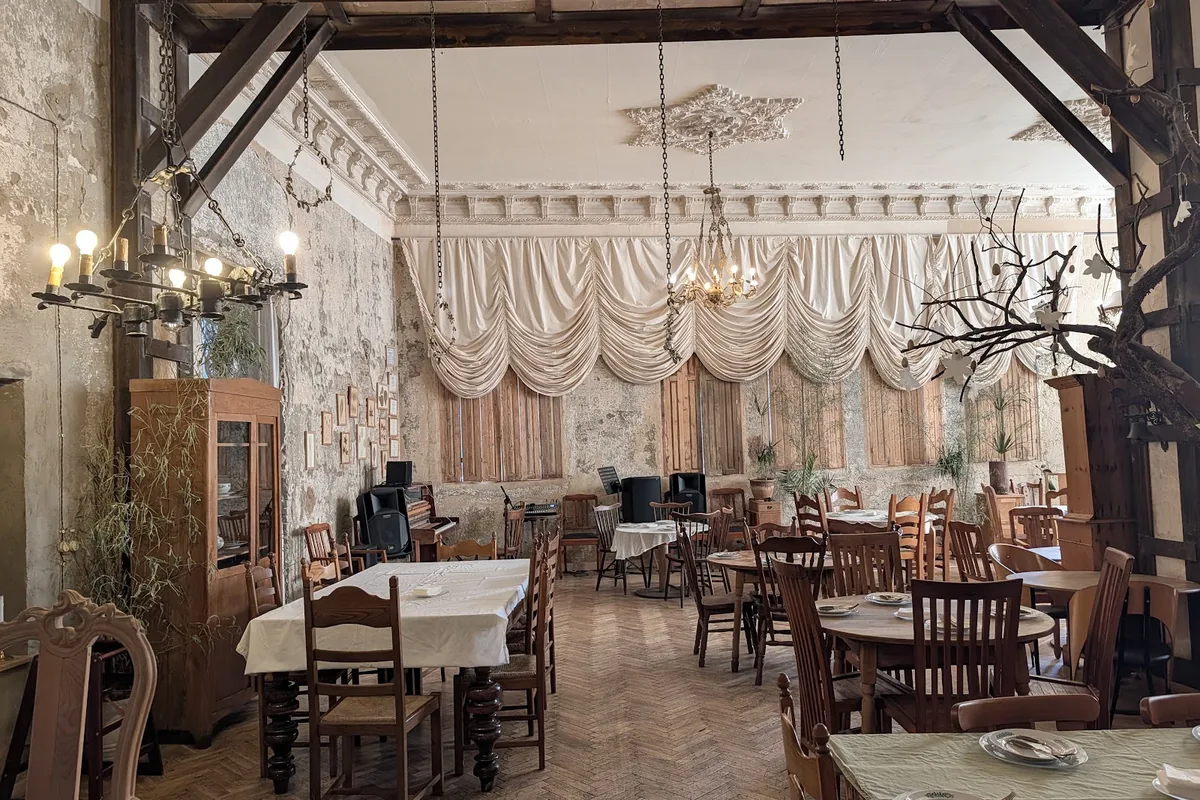
Sisters, Debi in Georgian, is set in a former apartment and serves an Imeretian Plate built for sharing, which is the easiest way to try several local dishes at once.
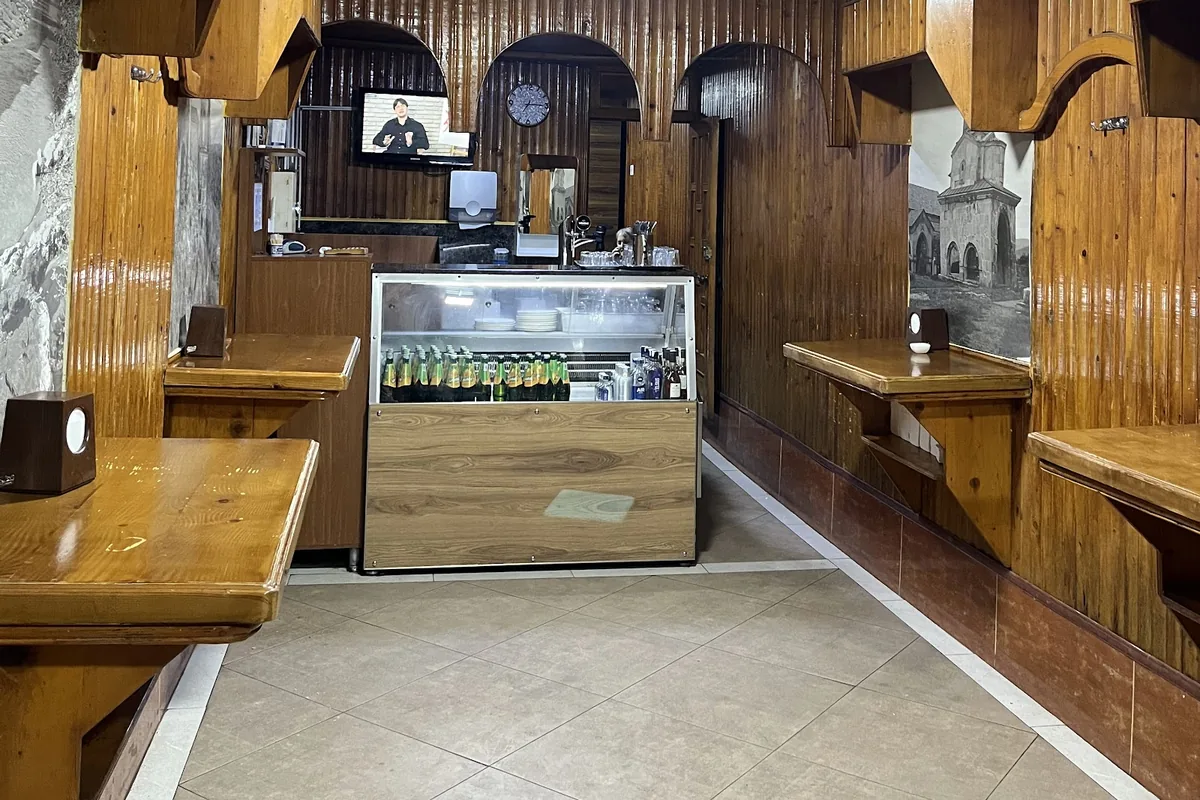
Bikentia's Kebabery is a standing-only counter where 10 GEL buys two beef kebabs with satsebeli tomato sauce, half a loaf of bread and a drink.
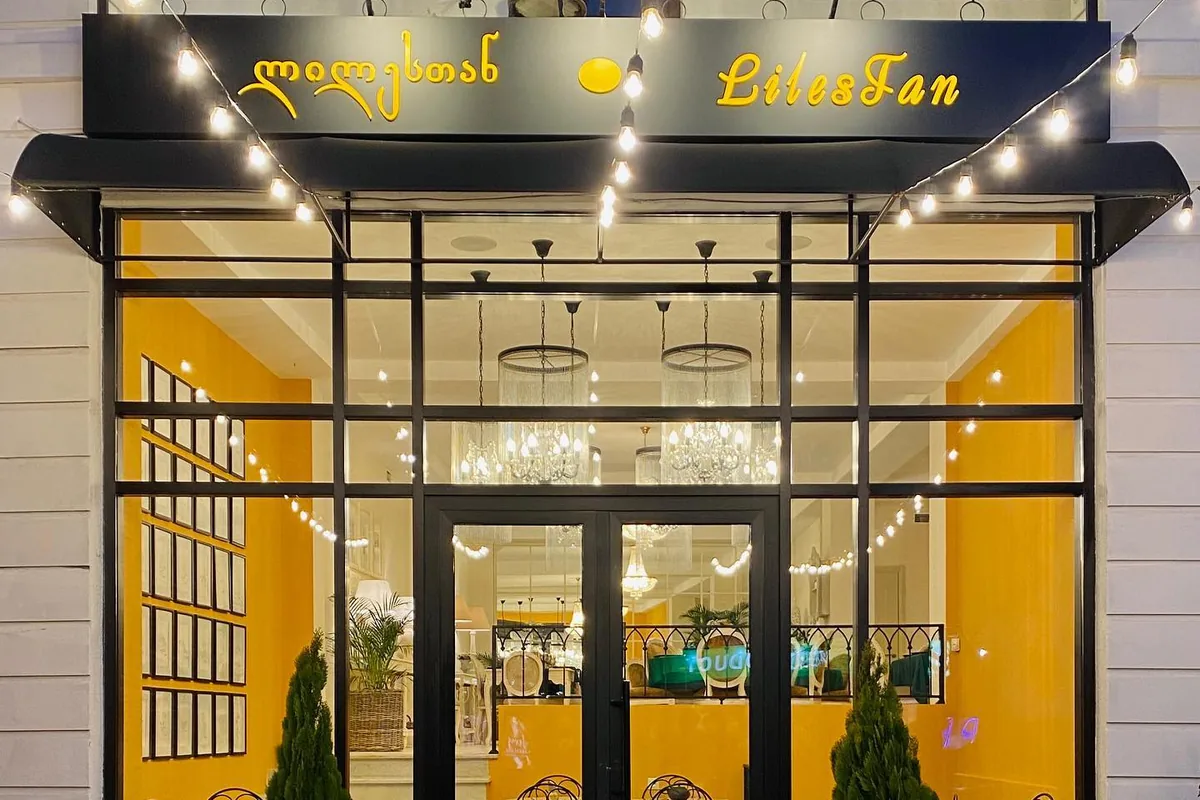
Lilestan does a good Imeruli khachapuri and ojakhuri, pork fried with potatoes, in a courtyard.
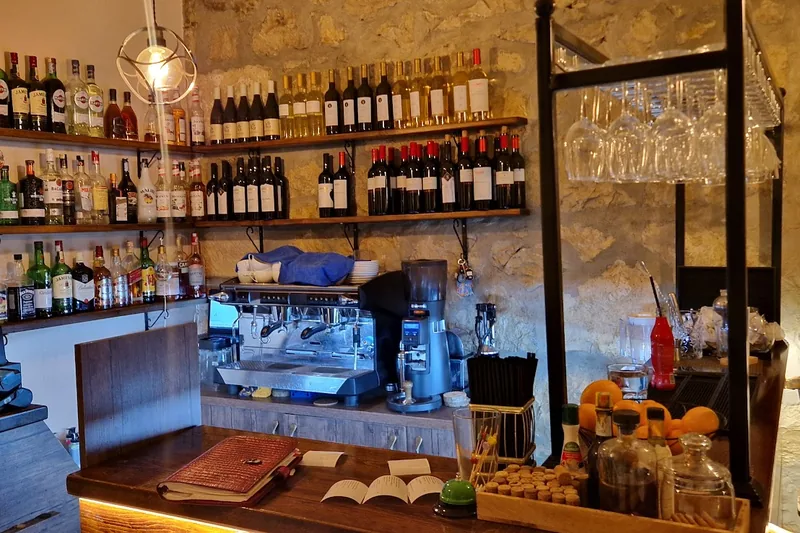
Story on Tsereteli Street has chakapuli and chvishtari, corn bread baked with cheese, served with matsoni.
For drinks, Paolo on Rustaveli Avenue hangs framed vintage labels from old Georgian brandy and drinks makers on its walls. The west has its own grapes and styles of Georgian wine, and Winetage, a wine shop and bar opened in 2023, pours Imeretian wines and runs tastings. On the walk past the Mon Plaisir gate, buy a bubliki, the soft, lightly salted bread rings sold nearby.
Where to stay in Kutaisi
Stay in the center, within walking distance of the Colchis Fountain and the White Bridge. Everything in town is on foot from there, and the day-trip marshrutkas leave from the center too.
| Hotel | Location | Why I'd pick it |
|---|---|---|
| Newport Hotel Kutaisi | City center | The comfortable choice, with a good restaurant and bar |
| Communal Hotel Kutaisi | City center | Central and very well reviewed |
| Grand Opera Hotel | Near Rustaveli Avenue | A short walk from the theaters and the square |
| Solomon | By the White Bridge | Some rooms look over the Rioni |
| Green Rooms | Edge of the center | A garden and free parking, good with a car |
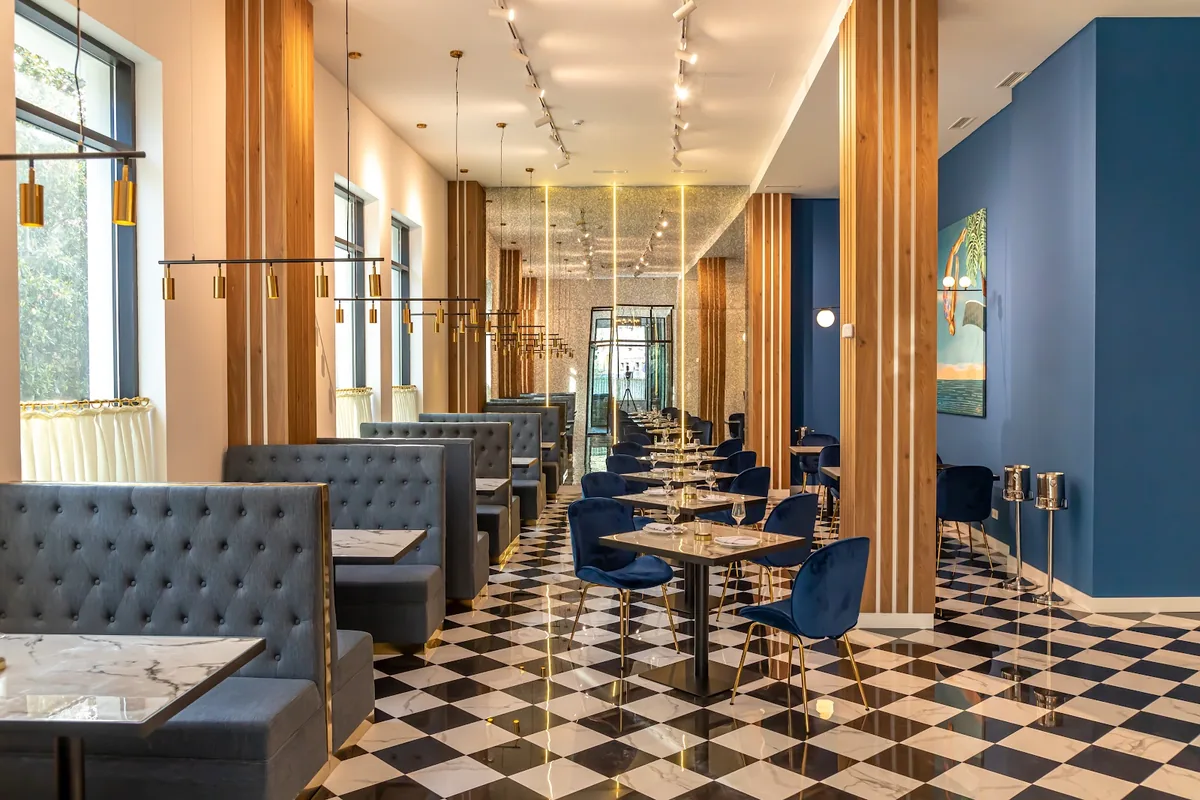
My pick for a first visit is the Newport, for the location, its blue-walled dining room and the gin cocktails at the bar.
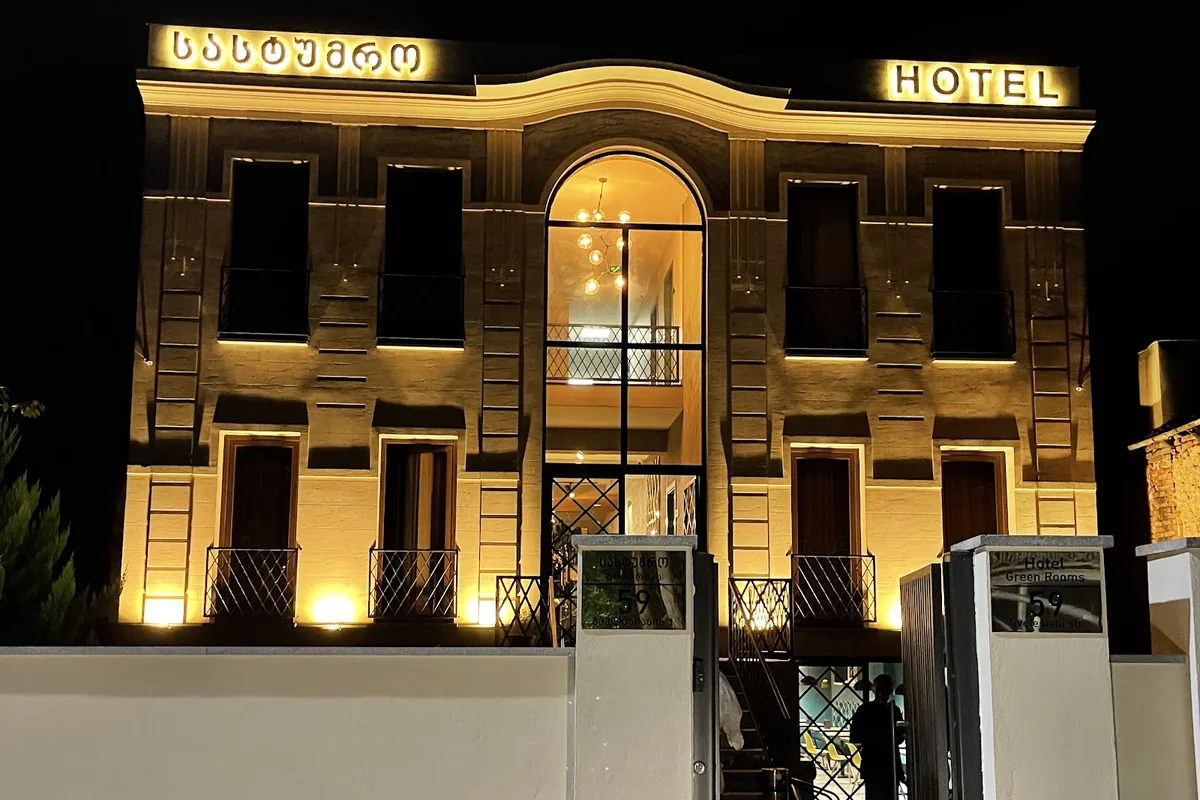
If you're driving, Green Rooms and its free parking save you a headache in the narrow central streets.
Getting to Kutaisi and getting around town
There are no flights between Tbilisi and Kutaisi, so you come by rail or road. The train from Tbilisi to Rioni station costs 14 GEL in economy and takes about 3.5 hours, then a Bolt into the center costs 8 to 12 GEL. Marshrutkas leave Didube bus station in Tbilisi every hour from 07:00 to 20:00 for 20 GEL and arrive at Kutaisi bus station on the highway, from where city bus 1 or a Bolt gets you into town.
If you fly in on a budget airline, Kutaisi's airport is about 25 km from the center, and a bus into town costs 10 GEL. Going the other way, the airport bus to Tbilisi costs 25 GEL and takes 3.5 to 4 hours. The fast Stadler trains stop at Kutaisi Airport station rather than in town, and they are the only rail link on to Batumi on the coast.
Once you're in Kutaisi, walk. The center is small, Bolt rides are cheap, and city bus 1 runs from the main square to the bus station for 50 tetri, paid to the driver. Train tickets for the way back sell on TKT.ge about 20 days ahead, and Georgian trains on the western line fill up in summer, so book as soon as you know your date.
Best time to visit Kutaisi
Late spring and early autumn, from May to June and September to October. Kutaisi has a humid subtropical climate, and July and August are hot and sticky, which makes Bagrati's hill and the canyon walkways hard work in the afternoon. In spring the canyons and the hills around Gelati are at their greenest.
Two dates are worth planning around. On 2 May the city celebrates Gviriloba, its city day, with events in the center. From mid to late December until mid-January, Kutaisi runs its Christmas markets. In winter, remember that the canyon boat at Martvili stops in rain and snow.
Key takeaways
- Kutaisi deserves 2 nights; as a day trip from Tbilisi it is mostly time on the road.
- Gelati Monastery, with David the Builder's grave in its gate and its 12th-century mosaic, is the one sight not to skip, and the marshrutka costs 1 GEL.
- The center is cheap and walkable: a 1 GEL cable car, free museums, a 10 GEL kebab lunch.
- For day trips, pick one: Prometheus Cave and Tskaltubo by marshrutka, the canyons with a driver, or Chiatura for the cable cars.
- Okatse Canyon is closed on Mondays, and Martvili's boat stops in bad weather.
Frequently asked questions
Is Kutaisi worth visiting?
Yes, for 2 nights. The city itself is small and relaxed, and the real draw is what surrounds it: Gelati Monastery, Motsameta, Prometheus Cave and the Martvili and Okatse canyons. It's also a natural stop on the way to Svaneti or the Black Sea coast.
How many days do you need in Kutaisi?
Two days is right for most travelers: one for Bagrati, the center and Gelati, and one for a cave or canyon day trip. Add a third day for both canyons or for Chiatura's cable cars.
Can you visit Kutaisi as a day trip from Tbilisi?
You can, but I wouldn't. It's about 3.5 hours each way by train or marshrutka, and a private driver from Tbilisi costs around 244 GEL a car. Of all the day trips from Tbilisi, Kutaisi is the one I'd always turn into an overnight.
What is Kutaisi famous for?
Kutaisi is famous as Georgia's former royal capital and its second city, and for Bagrati Cathedral and the UNESCO-listed Gelati Monastery. It's also known for the Colchis Fountain, Imeruli khachapuri, and for hosting Georgia's Parliament from 2012 to 2019.
How do you get from Kutaisi to Gelati Monastery?
Take the marshrutka from behind the Meskhishvili drama theater, which costs 1 GEL and leaves at 08:00, 11:00, 14:00, 16:00 and 18:00. A Bolt is quicker, and many drivers will add Motsameta on the way back.
Is Prometheus Cave worth it?
Yes, especially on a rainy day. The walkway runs 1,420 m through 6 lit halls, entry is about 23.5 GEL, and the optional boat ride costs about 11 GEL more. If you only have time for one cave near Kutaisi, choose Prometheus over Sataplia.
Which is better, Martvili Canyon or Okatse Canyon?
Martvili is better for water and the boat ride; Okatse is better for views from its 1 km hanging walkway. Both cost 20 GEL, Martvili's boat is 20 GEL extra, and Okatse is closed on Mondays.
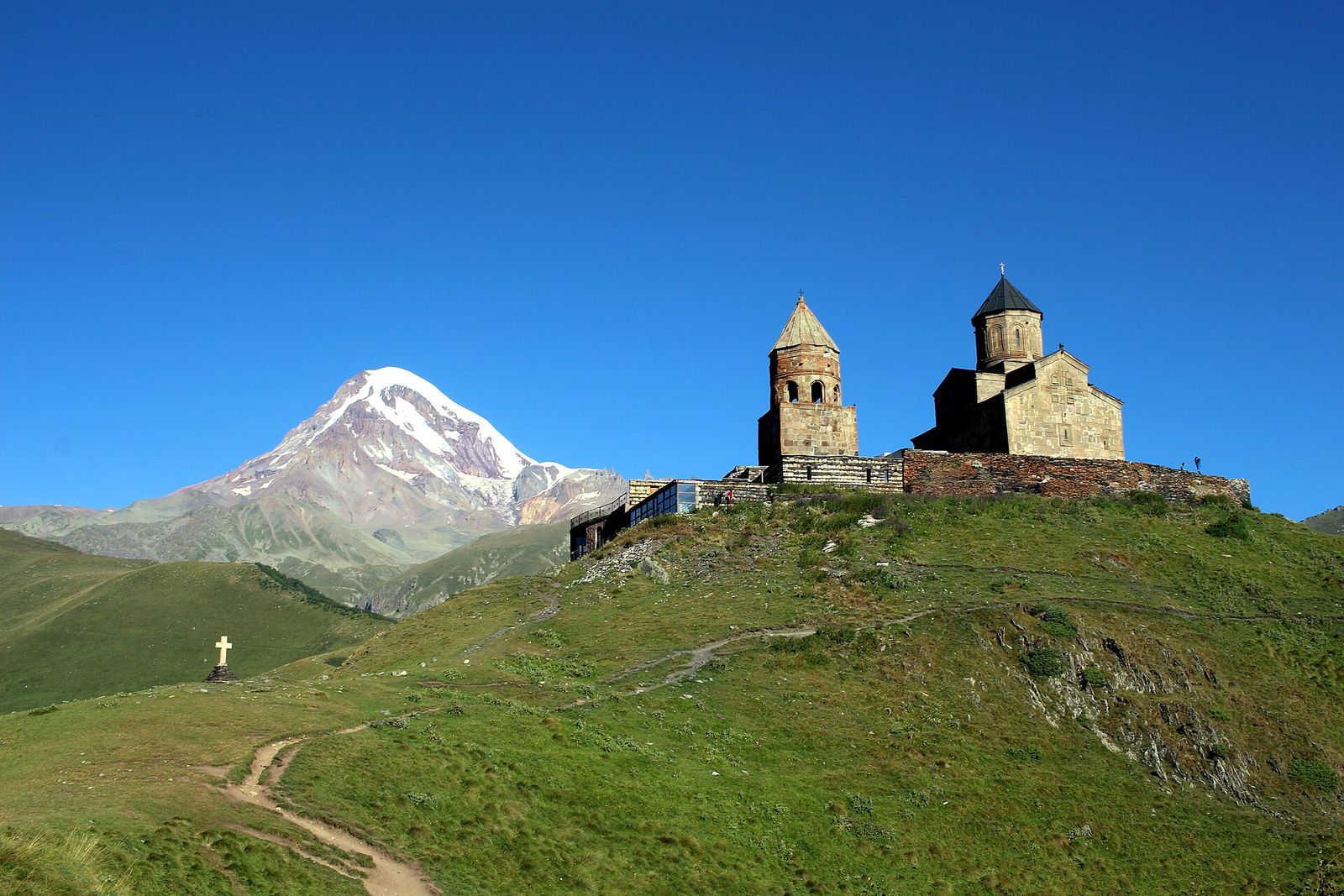
12 Best Places to Visit in Georgia in 2026, From Kazbegi to Batumi
Georgia is known for its mountains, wine and cave towns. Here are the 12 best places to visit and how to reach them.
Read the guide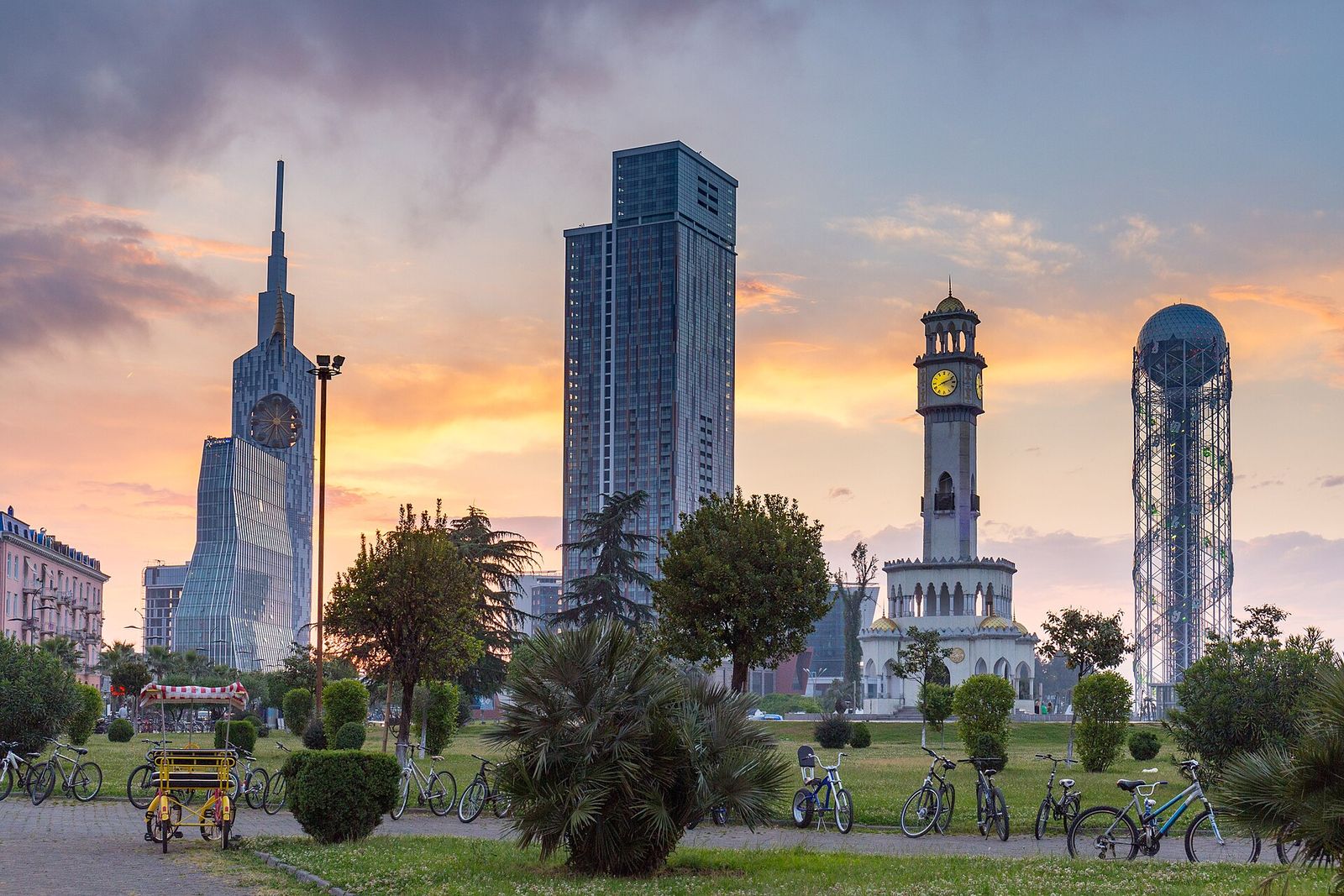
Tbilisi to Batumi: Train, Bus, Marshrutka, Flight or Drive
Batumi is Georgia's Black Sea city. Here is every way to get there from Tbilisi, with times, fares and my pick.
Read the guide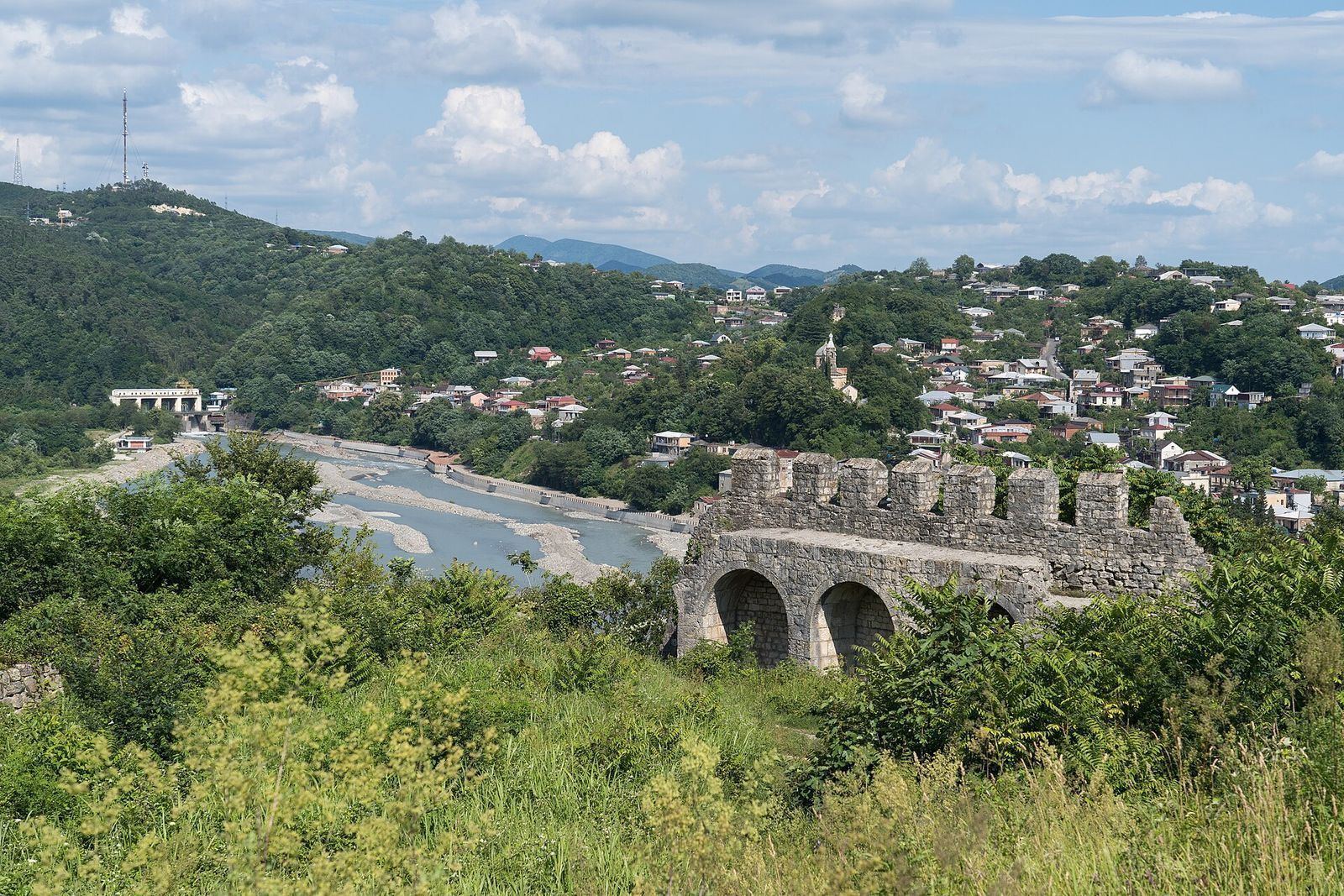
Tbilisi to Kutaisi: Train, Marshrutka, Bus and Car in 2026
Kutaisi is Georgia's second city, 226 km west. How to get there by train, marshrutka or car, and what each one costs.
Read the guide