Stalin's Underground Printing House in Tbilisi: History, Hours and What You See
Tbilisi's strangest small museum sits under a house in Avlabari: a secret printing press that Bolshevik activists ran about 15 meters underground from 1903 until a police raid in 1906, with a young Stalin writing for it. A caretaker still keeps the place like a shrine. Here's what you need to know about the history, what you see inside, the hours, the donation and whether it suits you.
Where is Stalin's Underground Printing House?
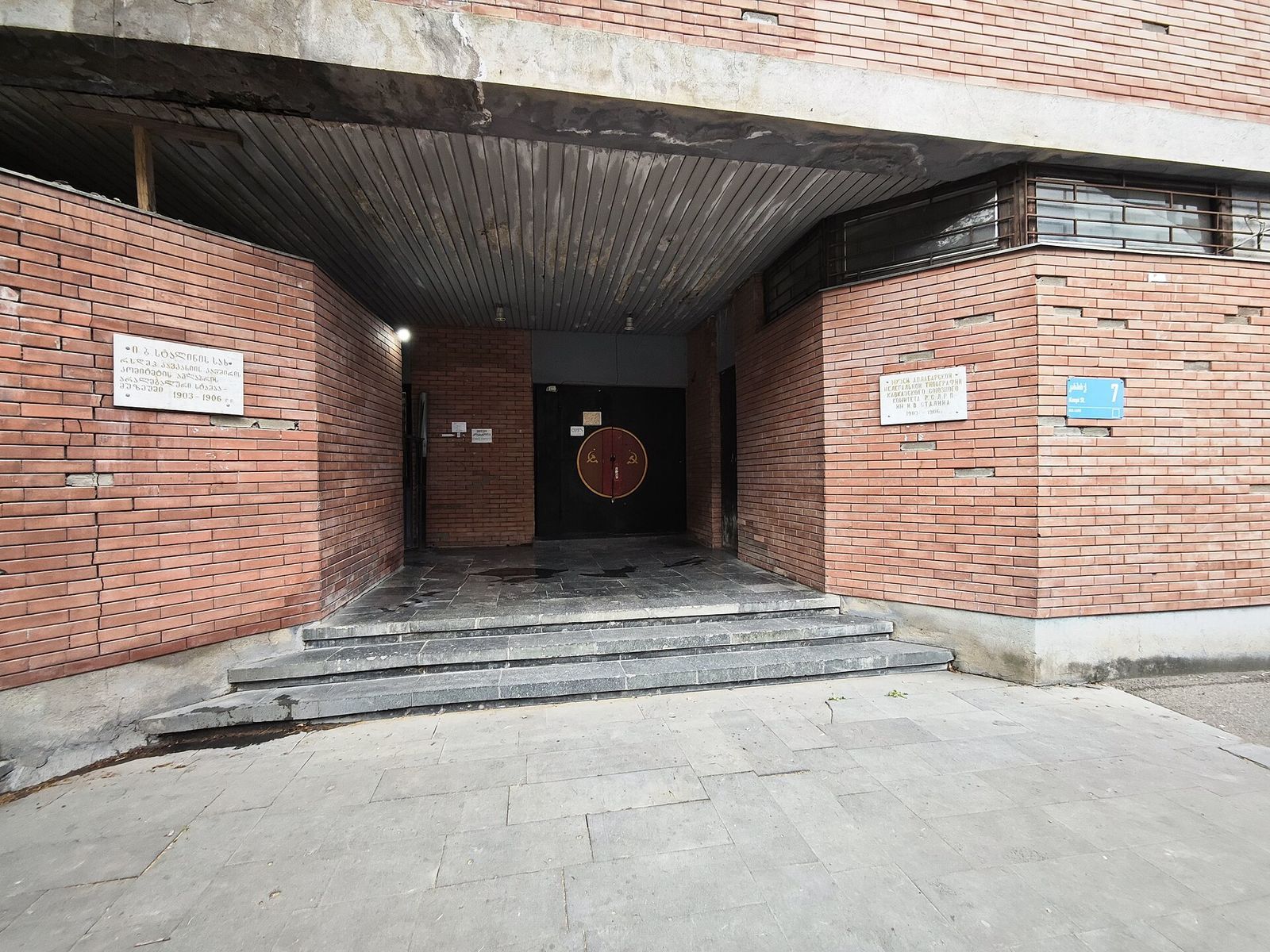
The printing house is at 7 Kaspi Street in Avlabari, the neighborhood on the east bank of the Kura river below the gold dome of Sameba cathedral. From the street it gives almost nothing away: a brick wall with a small plaque, and a black metal door with a hammer and sickle painted on it. Behind the door are a courtyard, a little wooden house, an office full of Soviet memorabilia and, under all of it, the chamber where a secret press printed illegal pamphlets more than a century ago.
Its official name is the J. Stalin Underground Printing House Museum, and you'll also see it listed as the Underground Printing House Museum or the Avlabari illegal printing house. Locals mostly just say Stalin's printing house. It is the only place in Tbilisi with Stalin's name over the door, which is why it shows up on lists of Soviet sights and unusual things to do in Tbilisi far more often than on first-timer itineraries.
The history of the secret press
The story starts in Baku. Bolshevik activists there owned a German printing press built in 1893, and when their Baku hideout was shut down in 1903 they took the machine apart and smuggled it to Tbilisi in pieces. The Caucasian committee of the Russian Social Democratic Labour Party needed somewhere the Tsarist police would never think to look, and it chose a plain wooden house in Avlabari.
The trick was the well. The press went down the well in the yard behind the house, piece by piece, and the workers dug a tunnel sideways from the shaft into a hidden chamber about 15 meters below the ground, where they put the machine back together. The diggers were rotated so no single worker knew the whole layout. Two women lived in the house above and kept watch from the porch, and a hidden bell warned the printers below whenever the police came down the street.
For about 3 years the press turned out pamphlets and leaflets in Georgian, Russian, Armenian and Azeri. Bundles left by way of the train station, and the copies traveled across the Caucasus, into Russia and on to Europe.
It ended on 15 April 1906. Acting on a tip, the police searched the house and at first found nothing, until they went down the well and found the tunnel. They seized the press and the printed stock, set fire to the house and blew up the basement, which flooded the chamber.
The site's second life began in 1937, when Lavrenti Beria, then the boss of the Georgian Communist Party, turned it into a museum of Stalin's early years. Stairs were cut down to the chamber and the press went back on show. Under Soviet rule it was a pilgrimage stop, drawing up to 800 visitors a day in the 1970s. After 1991 it was left to decay, and some original pieces reportedly left the country and were sold abroad.
| Year | What happened |
|---|---|
| 1893 | The press is built in Germany |
| 1903 | It is smuggled from Baku in pieces and lowered down the Avlabari well |
| 1903 to 1906 | The chamber prints pamphlets in Georgian, Russian, Armenian and Azeri |
| 15 April 1906 | Police raid; the house is burned and the chamber flooded |
| 1937 | The site reopens as a Stalin museum under Beria |
| 1970s | Up to 800 visitors a day |
| 1990s | Abandoned after the Soviet Union falls |
| 2001 | Registered again as a museum |
| 2012 | Handed to the National Parliamentary Library of Georgia |
| 2019 | Listed as a national cultural heritage monument |
What you see inside the printing house
The visit runs in a short loop: the office, the courtyard and the well, the chamber underground, then the main hall. The caretaker usually walks you round himself and unlocks each part as you go.
The office and the shrine
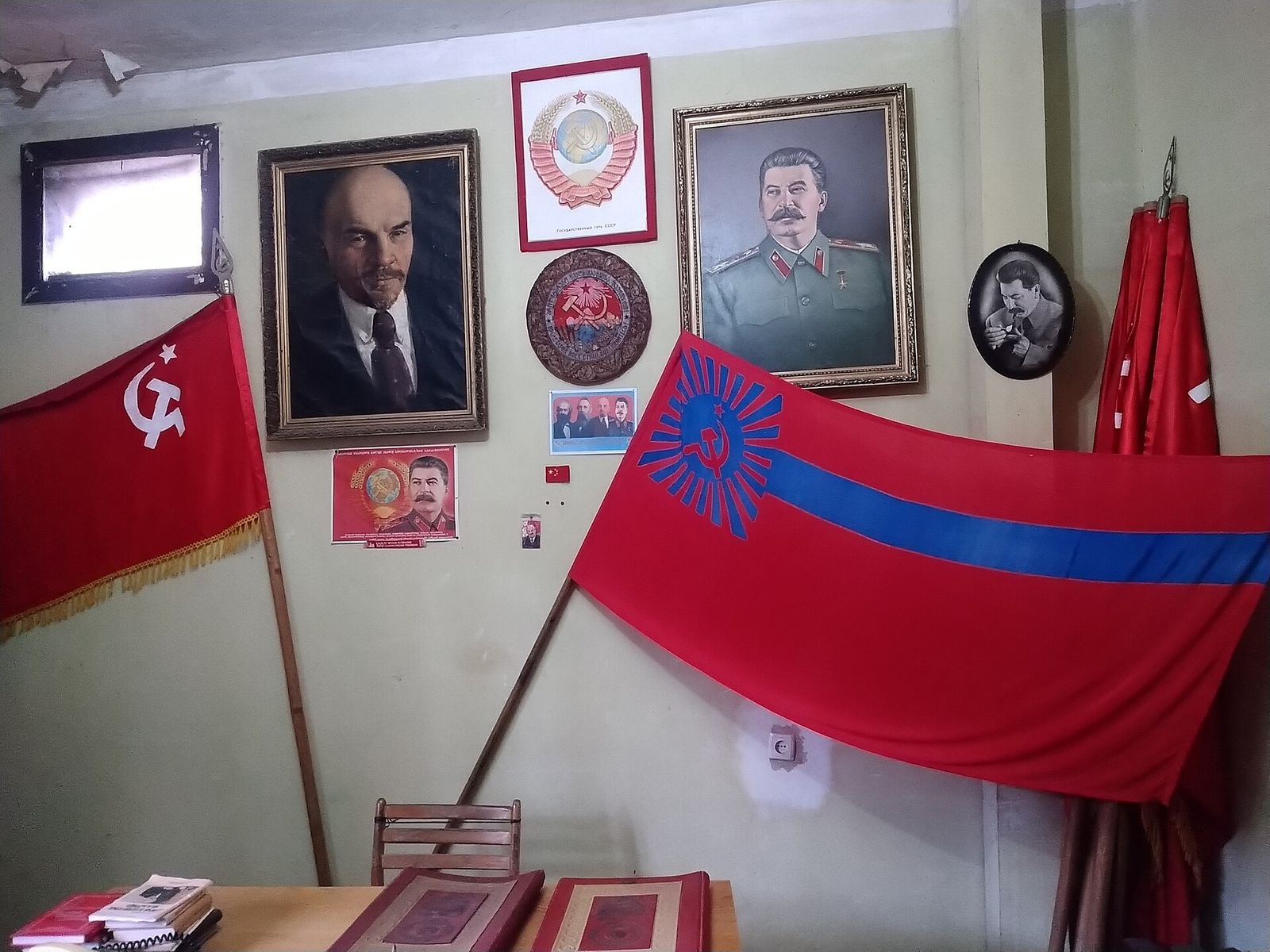
The first room sets the tone. Portraits of Lenin and Stalin hang on the walls, a gold medallion carries both their profiles, and two gold busts sit on a table with a vase of flowers, arranged like a small altar. There is an old rotary phone, a guest book to sign, and a small Chinese flag among the Soviet pieces, because Chinese tourists are some of the most regular visitors. It is hard to tell where the museum ends and the caretaker's own convictions begin, and that is a big part of the experience.
The courtyard and the well
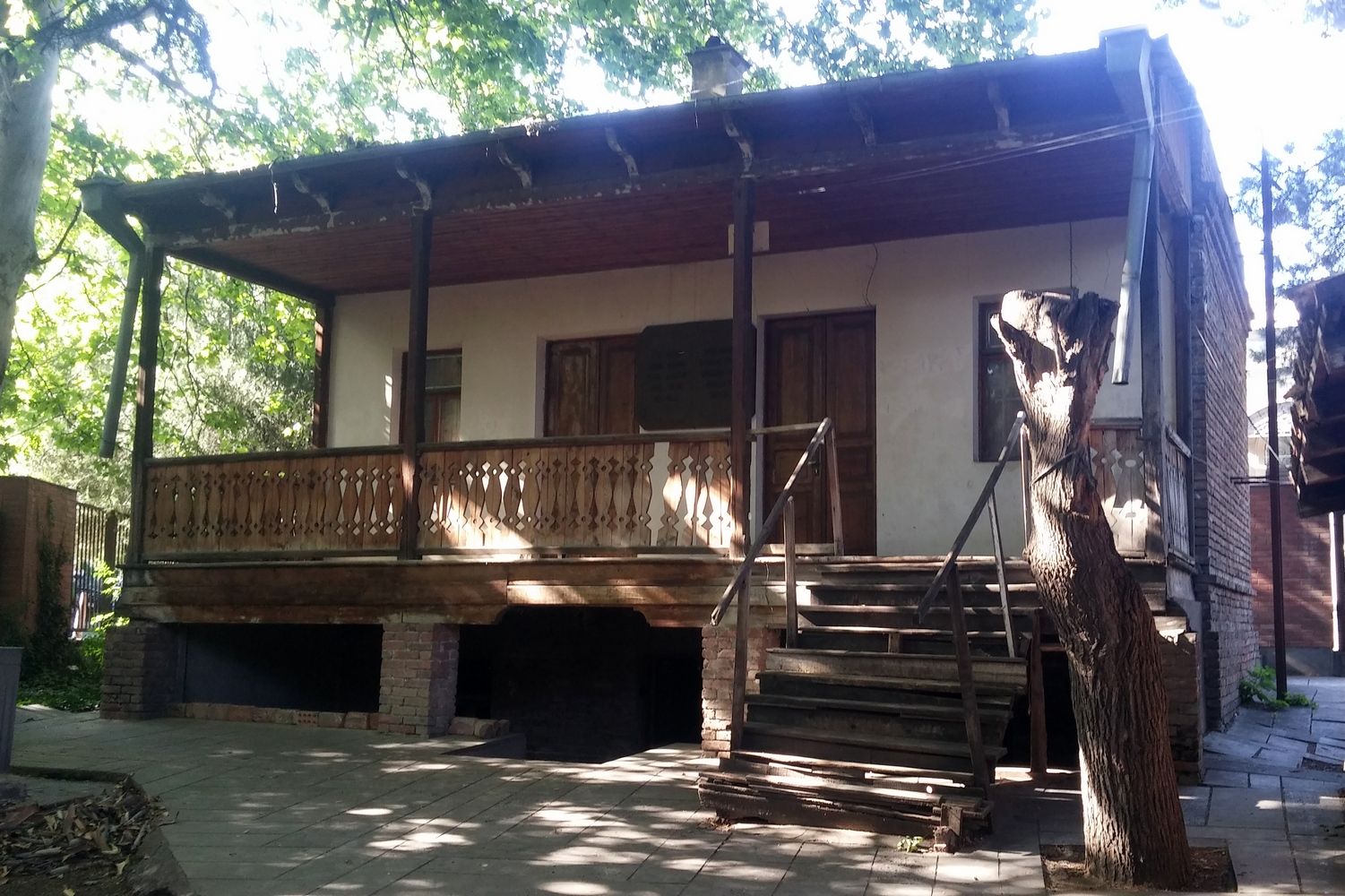
Out in the courtyard is the original well, boxed in with iron. In 1903 this shaft was the only way in or out of the chamber, and every printer climbed down it. You don't go down the well today. Behind it stands the wooden house that hid the whole operation, still on its old footprint above the chamber.
Down to the printing chamber
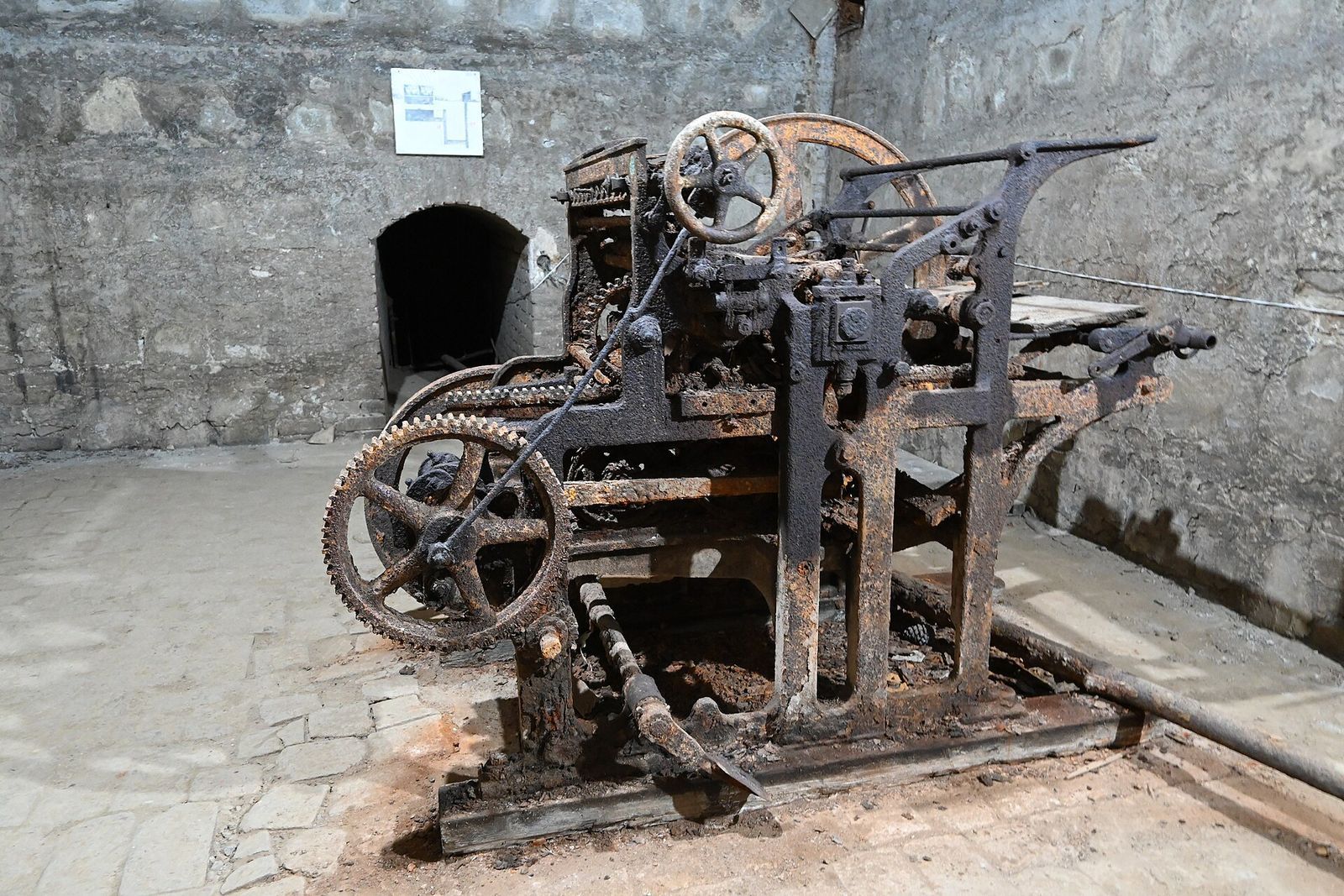
A narrow, rusted spiral staircase beside the well takes you down to the chamber. The descent takes about a minute, and the room at the bottom is damp, musty and lit by a single bare bulb. In the middle stands the press itself, rusted solid, with a maker's plate that reads Maschinenfabrik Augsburg.
This is the part you'll remember. Standing in a room dug out by hand, under a house, at the bottom of a well, you get a real sense of how much effort and nerve it took to print a leaflet in the Russian Empire. I'd spend a few quiet minutes down here before heading back up, whatever the caretaker's pace.
The main hall and the tiled map
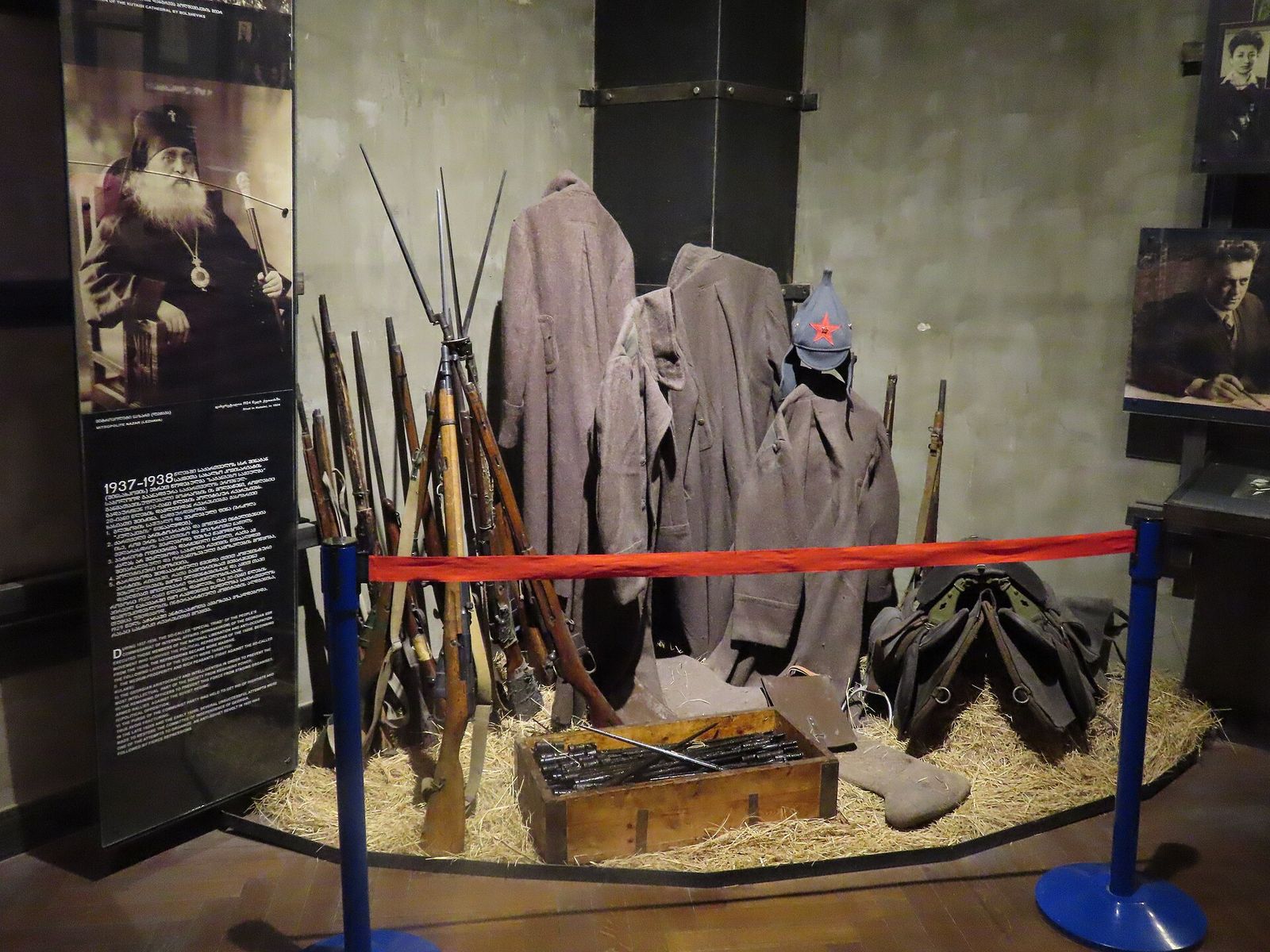
The last stop is the main building, packed with photographs, newspapers (some of them reproductions) and Soviet objects, under walls that are cracked in places. The centerpiece is a big tiled map of Europe, labeled in Russian, with markers for the cities the Avlabari pamphlets reached, Moscow, Kyiv, Berlin and London among them.
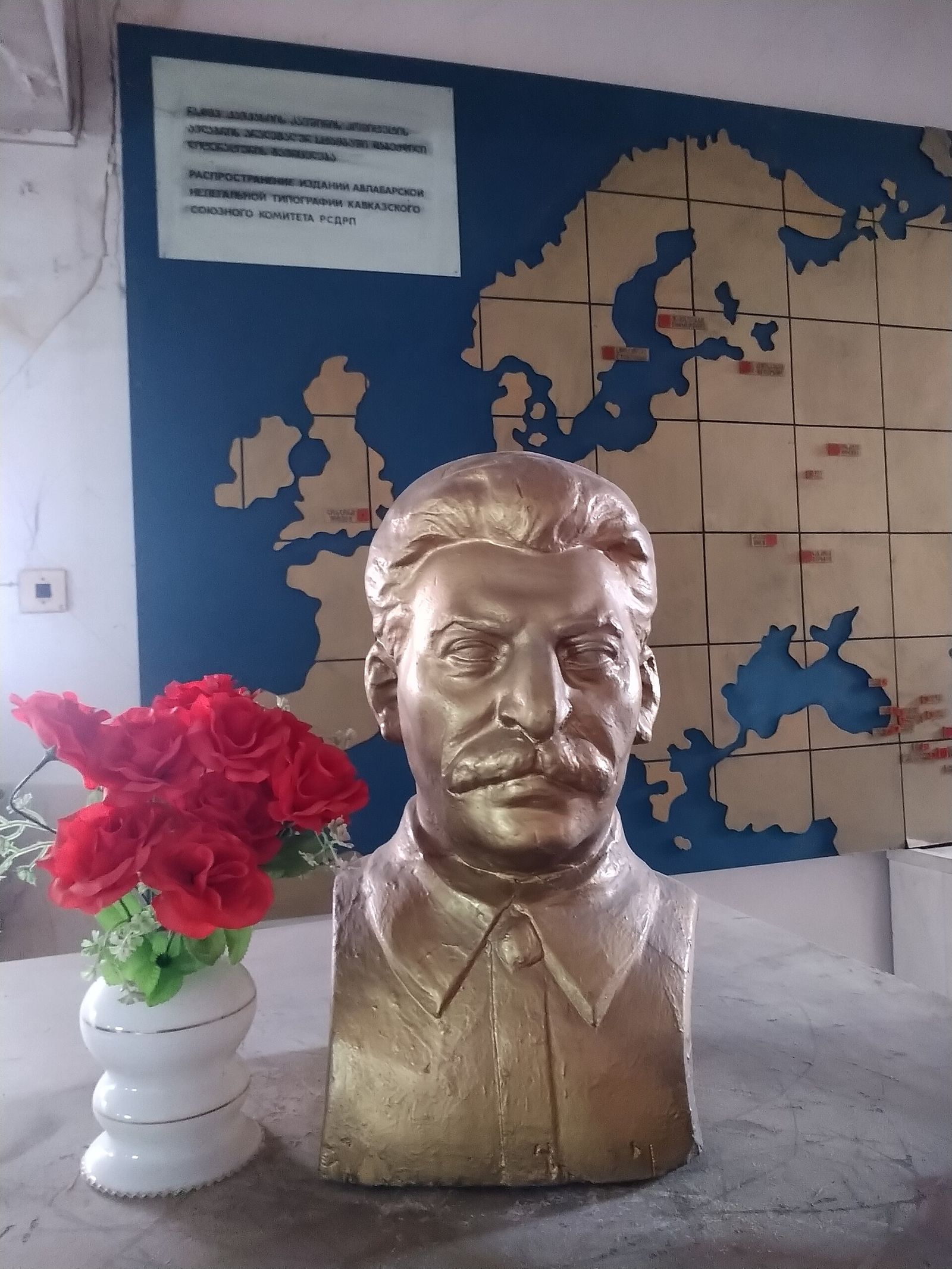
Around the map are mugshot-style photographs of the members of the 1903 Caucasus committee, the young Stalin among them, and cases of underground newspapers: reproductions of Brdzola, the Georgian-language paper he wrote for, later issues of Pravda and a 2019 copy from the Russian Communist Party. The labels are mostly in Georgian and Russian.
Did Stalin really run the press?
He was part of it, but the museum gives him more credit than history does. The press had been running for about a year before Ioseb Jughashvili, the young Georgian who later called himself Stalin, was writing for it. By 1904 and 1905 he was writing articles for its pamphlets under pen names such as Koba, and money from the bank robberies he helped organize went toward keeping the underground running.
The tour tells it as Stalin's press from the first day, with Stalin as founder and hero, and it stops in 1906. Nothing in these rooms mentions the purges, the deportations or the famines that came later, or the Soviet takeover of Georgia in 1921 and the 9 April 1989 killings on Rustaveli Avenue that sit at the center of modern Georgian history. I don't think that makes it a reason to stay away. It makes the museum a time capsule of how the Soviet state wanted Stalin's youth remembered, and I find it far more interesting seen that way.
Opening hours, price and the caretaker
The printing house opens Monday to Friday, roughly 10:00 to 18:00, and is closed at weekends. There is no website, and the hours have shifted over the years, so treat them as a guide: when the caretaker steps out, the black door simply stays shut.
There is no ticket desk. The caretaker asks for a donation at the start, and 10 GEL per person in cash is the usual amount, so bring small notes. Since 2012 the building has belonged to the National Parliamentary Library of Georgia, but day to day it is kept open by an elderly caretaker with clear communist sympathies, and Georgia's small Communist Party supports it on donations.
The tour itself is half guided: the caretaker points, shows old photos and leads you from room to room, and you fill in the gaps from the handout. If you speak Russian, you'll get far more out of him.
| What | Detail |
|---|---|
| Days | Monday to Friday |
| Hours | Roughly 10:00 to 18:00 |
| Price | Donation, usually 10 GEL per person |
| Payment | Cash only |
| Language | Georgian or Russian, English handout |
| Time needed | About 45 minutes |
How to get to the printing house
The nearest metro station is 300 Aragveli on line 1, about 600 meters from the door, or a 10-minute walk through the residential streets of Avlabari. A ride on the Tbilisi metro costs 1 GEL with a Metromoney card, and 300 Aragveli is one stop from Avlabari station.
A Bolt from anywhere in the center costs about 3 to 7 GEL and drops you at the door, which saves hunting for an unmarked entrance. If you are already up at Holy Trinity Cathedral, you can walk over in a few minutes; the printing house sits in the same neighborhood, near the cathedral and the glass-domed Presidential Palace.
| Way there | Cost | Notes |
|---|---|---|
| Metro to 300 Aragveli, then walk | 1 GEL | About 600 m, a 10-minute walk |
| Bolt from the center | 3 to 7 GEL | Door to door, easiest for a first visit |
| On foot from Sameba | Free | Same neighborhood, a short walk |
Is Stalin's Underground Printing House worth visiting?
For 45 minutes and 10 GEL, I think it's one of the most memorable small stops in the city, and the smallest, strangest entry on my list of the best museums in Tbilisi. Because entry is a donation, it also counts among the free things to do in Tbilisi, though I'd never walk out without leaving the 10 GEL.
It suits you if you are:
- Into Soviet history. This is one of the few places where the early Bolshevik underground is something you can physically climb down into.
- Fond of odd, small museums. The shrine-like office and the caretaker's devotion are as much the exhibit as the press.
- Already visiting Sameba. It sits in the same neighborhood and adds an hour of something completely different to a cathedral morning.
- Curious about how the Soviet Union told its own story. The museum still tells it the 1937 way.
Skip it if:
- You are only in Tbilisi at the weekend. It is closed on Saturday and Sunday.
- Stairs are a problem. The spiral staircase is the only way down to the chamber.
- The history is personal. For anyone whose family suffered under Stalin, a room that treats him as a hero can be hard going.
- You want a polished museum. There are cracked walls, few English labels and no café or shop.
Is there a Stalin museum in Tbilisi?
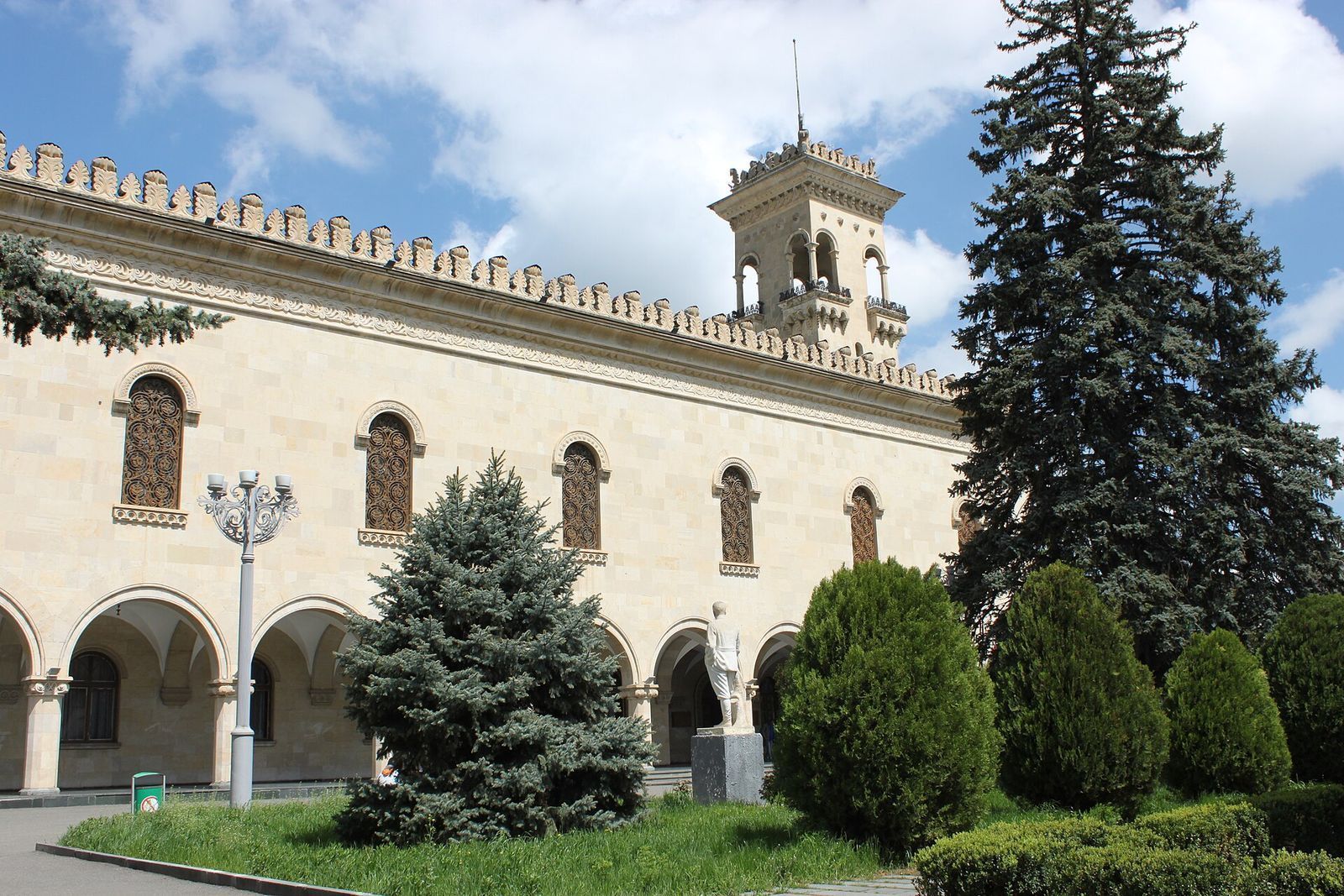
The printing house is the only museum in Tbilisi devoted to Stalin, and it covers just his years as a young underground activist. The big Joseph Stalin Museum is in Gori, his hometown west of the capital, where a grand Soviet-era museum tells his whole life story beside the small house he was born in and the armored railway carriage he traveled in. Most people see it on a day trip to Gori and Uplistsikhe, the cave town just outside Gori.
| Underground Printing House, Tbilisi | Stalin Museum, Gori | |
|---|---|---|
| Covers | His underground years, 1903 to 1906 | His whole life |
| Highlight | A secret press 15 m underground | His birth house and his railway carriage |
| Scale | A house, a courtyard and one chamber | A large Stalinist museum building |
| Time needed | About 45 minutes | Part of a full day trip from Tbilisi |
| Feel | A caretaker's shrine | A Soviet-era showpiece |
If you only have time for one, choose by what you want from it. The printing house is the better story and the stranger visit; Gori is the bigger museum and the fuller portrait of the man, and it comes with a day in the countryside.
What to see nearby in Avlabari
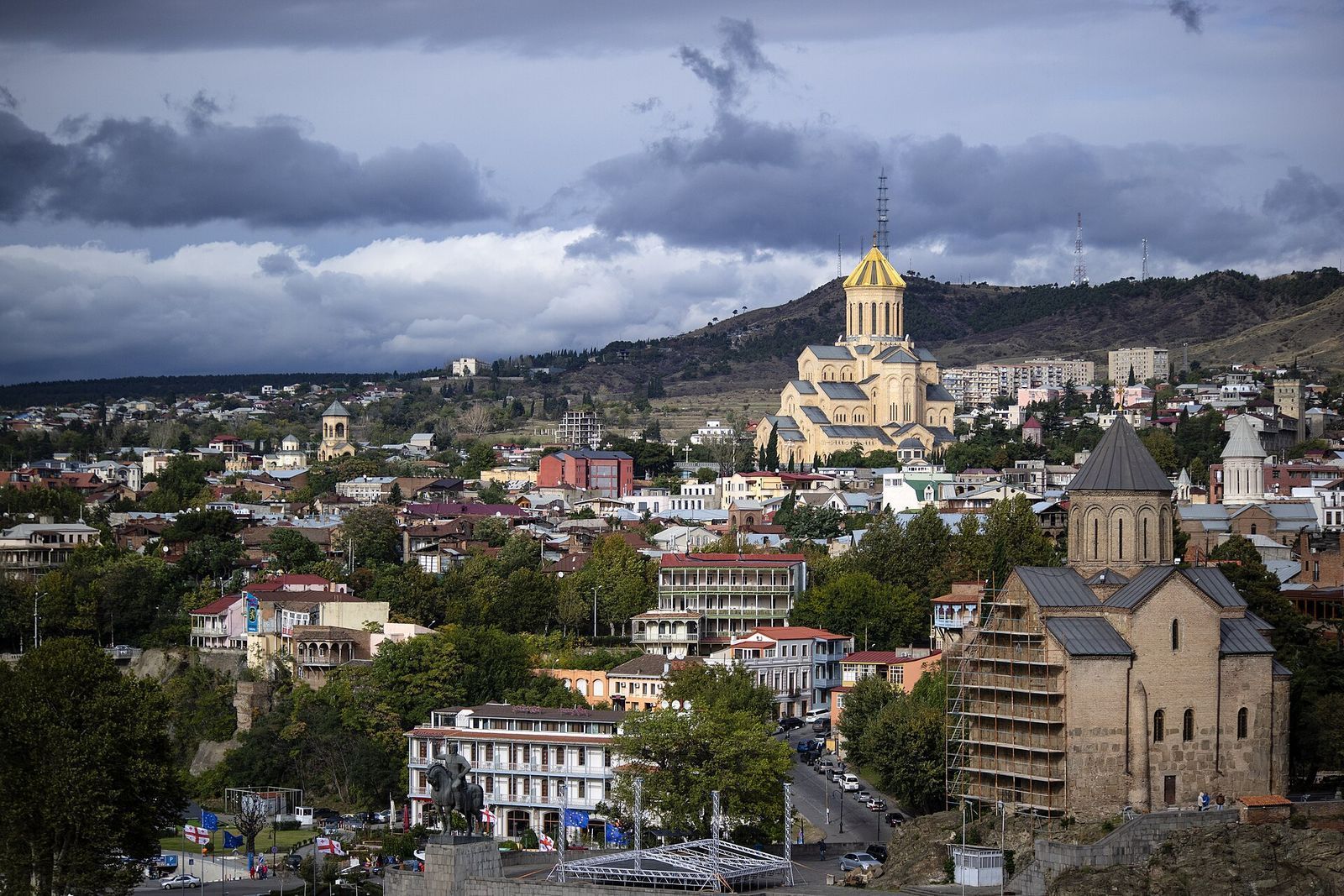
The printing house fits neatly into a morning on the east bank. Sameba, the biggest cathedral in Georgia, crowns the hill above it, and the Presidential Palace with its glass dome stands close by. From there it's a walk downhill through Avlabari's old lanes to Rike Park and the river, and across the Bridge of Peace into the Old Town.
The Soviet layer of the city carries on above ground, too. The stacked towers of the Bank of Georgia headquarters, the Stalin-era blocks of Rustaveli Avenue and the mosaics in the metro stations make up the best of Tbilisi's Soviet architecture, and several Soviet-themed city tours include the printing house as a stop, with a guide who can translate the caretaker.
Key takeaways
- Stalin's Underground Printing House is a tiny museum at 7 Kaspi Street in Avlabari, a 10-minute walk from 300 Aragveli metro.
- It opens Monday to Friday, roughly 10:00 to 18:00, and runs on a cash donation of about 10 GEL.
- The 1893 German press sits in a chamber about 15 meters underground, reached by a narrow spiral staircase beside the old well.
- The caretaker's tour is in Georgian or Russian with an English handout, and it tells Stalin's story the Soviet way, ending in 1906.
- For the full Stalin museum, go to Gori; for the full story of Soviet Georgia, add the Georgian National Museum.
Frequently asked questions
Where is Stalin's Underground Printing House?
It is at 7 Kaspi Street in Avlabari, on the east bank of the river near Sameba cathedral. The nearest metro is 300 Aragveli, about 600 meters away, and the only signs outside are a small plaque and a black door with a hammer and sickle.
Is Stalin's Underground Printing House free?
There is no fixed ticket, but the caretaker asks for a donation, and 10 GEL per person is the usual amount. Bring cash in small notes; nobody here takes cards.
What are the opening hours of Stalin's printing house?
It opens Monday to Friday, roughly 10:00 to 18:00, and is closed at weekends. The hours depend on the caretaker being in, so late morning to mid-afternoon on a weekday is the safest time to go.
How deep is Stalin's underground printing house?
The printing chamber is about 15 meters below the ground. In 1903 the only way in was down the well in the courtyard and along a side tunnel; today you reach it by a narrow spiral staircase.
Did Stalin really work at the printing house?
Yes, though less than the museum suggests. The press ran from 1903 to 1906, and by 1904 and 1905 the young Stalin was writing articles for its pamphlets under pen names such as Koba, while the press itself had been running before he joined.
Is there a Stalin museum in Tbilisi?
The Underground Printing House is the only Stalin museum in Tbilisi, and it covers only his underground years. The main Joseph Stalin Museum, with his birth house and railway carriage, is in Gori, an easy day trip west of the city.
How long do you need at the printing house?
About 45 minutes covers the office, the well, the chamber and the main hall. Allow an hour if you love Soviet memorabilia and want time with the handout and the photographs.
25 Best Things to Do in Tbilisi in 2026 (With Prices)
Tbilisi is known for its sulfur baths, balconies and hilltop views. Here are 25 things to do, with prices and times.
Read the guide
The Sulfur Baths of Abanotubani: Prices, Bathhouses and Booking
Tbilisi is known for its sulfur baths. Here is what to know about the bathhouses, room prices and booking.
Read the guide
Narikala Fortress, Tbilisi: Getting Up, What Is Open and When to Go
Narikala is the fortress above Old Tbilisi. Here is what is open in 2026, how to get up and when to go for the view.
Read the guide