Tbilisi's Converted Factories: Stamba, Wine Factory N1 and More
Tbilisi is known for giving its empty Soviet buildings a second life: a publishing house became the Stamba and Rooms hotels, an 1890s winery became a courtyard of bars, a sewing factory became Fabrika, and a drained swimming pool became the city's most famous club. Here's what each one was, what is inside now, what it costs and how to string them into a day.
Tbilisi's reclaimed spaces at a glance
After 1991 Tbilisi was left with a city's worth of Soviet buildings and no one to run them. Printing houses, factories and institutes stood empty for 20 years or more, and from the 2010s a handful of developers started turning them into hotels, bars and creative hubs instead of knocking them down. Adjara Group, the hotel company behind Rooms, Stamba, Fabrika and Radio City, did more of this than anyone.
What makes these places good is how much of the old building they keep. Concrete walls stay bare, old machinery turns into furniture, and the factory floor becomes the bar. Here's the set I'd visit, from the essential to the specialist.
| Space | What it was | Reopened as | What's there now | Area | Walk-in entry |
|---|---|---|---|---|---|
| Stamba and Rooms | Soviet publishing house, 1930s | Hotels, 2014 and 2018 | Two hotels, cafes, bars, a bakery, a photography museum | Vera | Free |
| Wine Factory N1 | Winery built 1894 to 1896 | Bar courtyard, 2017 | Bars, restaurants, a wine hub, designer shops | Vera | Free |
| Fabrika | Soviet sewing factory | Hostel and courtyard, 2016 | Hostel, courtyard bars, shops, coworking | Chughureti | Free |
| Radio City | Soviet radio factory, 1980s | Creative hub, 2024 | Coworking, padel courts, a diner, events | Mukhiani | Free |
| Bassiani | Swimming pool under Dinamo Arena | Club, 2014 | Techno club | Dinamo Arena | 25 to 50 GEL |
| KHIDI | Inside a road bridge | Club, 2016 | Techno club and art space | Vakhushti Bagrationi Bridge | 20 to 40 GEL |
| The Biltmore | Soviet institute, 1930s | Five-star hotel | Rooms, pools, a spa, a top-floor bar | Rustaveli Avenue | Free to the lobby |
If you only have time for two, make them Stamba in the morning and Wine Factory N1 in the evening. They sit in the same neighborhood, and between them you see both ends of the idea: a hotel that kept its printing presses, and a winery that kept its cellars.
Stamba and Rooms: the old Soviet publishing house on Kostava Street
The big building at 14 Merab Kostava Street was built in the 1930s as one of the largest publishing complexes in the Caucasus. It printed Kommunist, the main newspaper of Soviet Georgia, and after the Soviet Union collapsed it closed and sat empty for about 20 years. Today it holds two hotels, one in each wing, and it's the reason Vera turned into the city's design and cafe neighborhood.
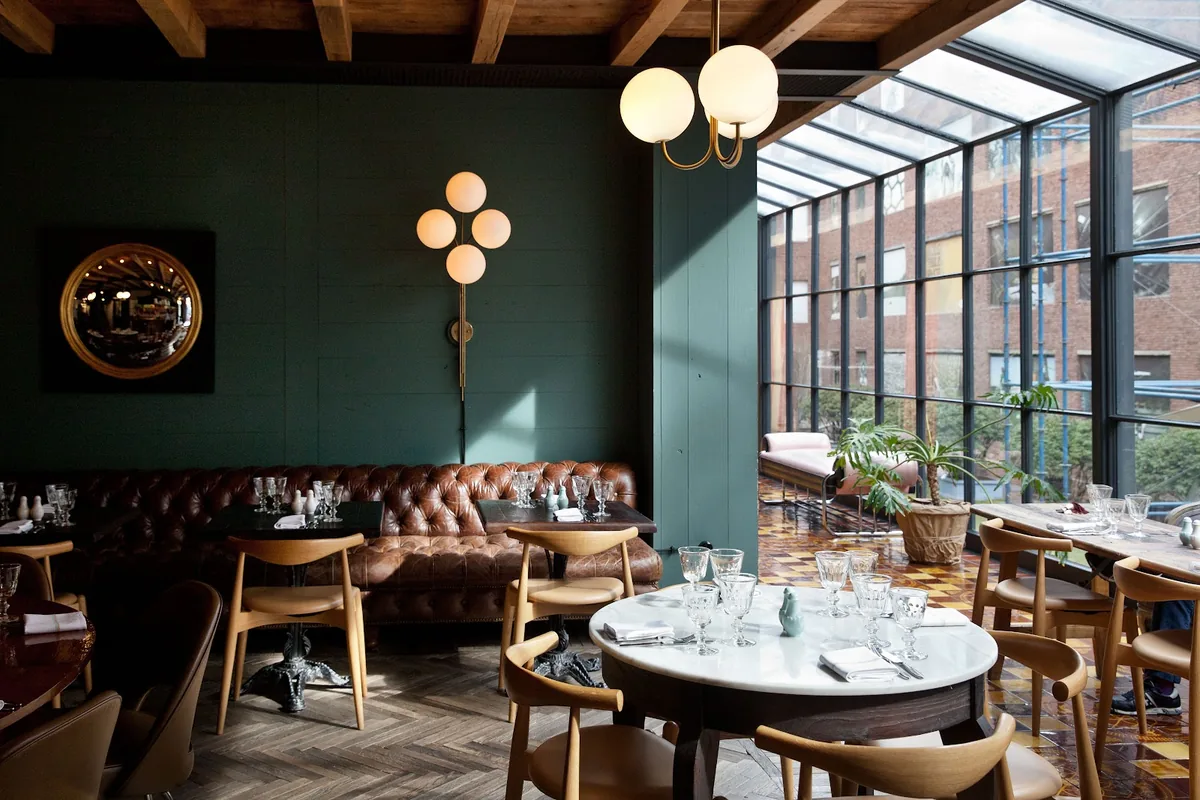
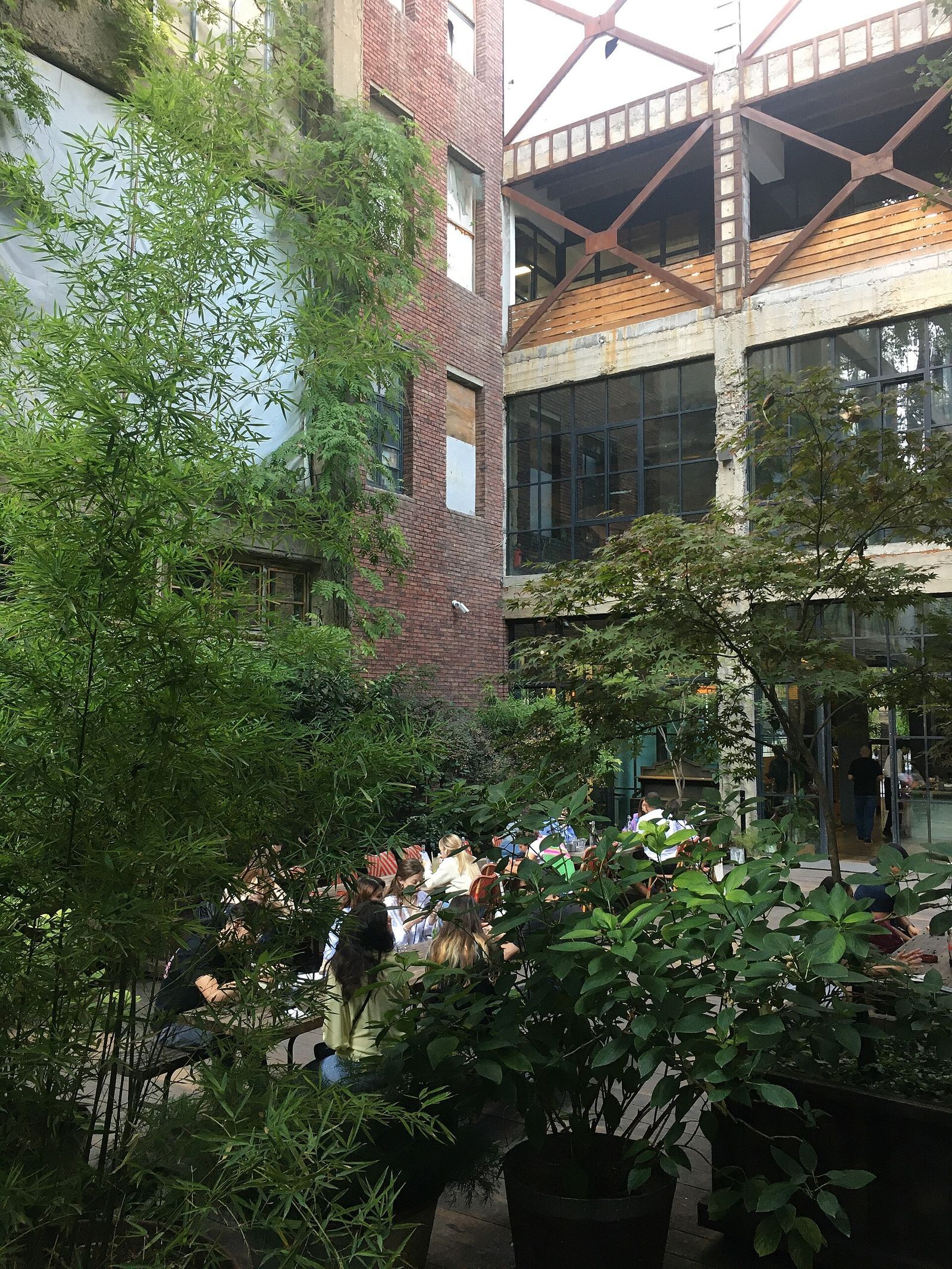
Rooms opened first, in 2014, with about 140 rooms. It's the warmer of the two: red brick, vintage furniture, a courtyard with a glasshouse Garden Bar, and a terrace facing Mtatsminda that I think is the best place in the city for a slow coffee.
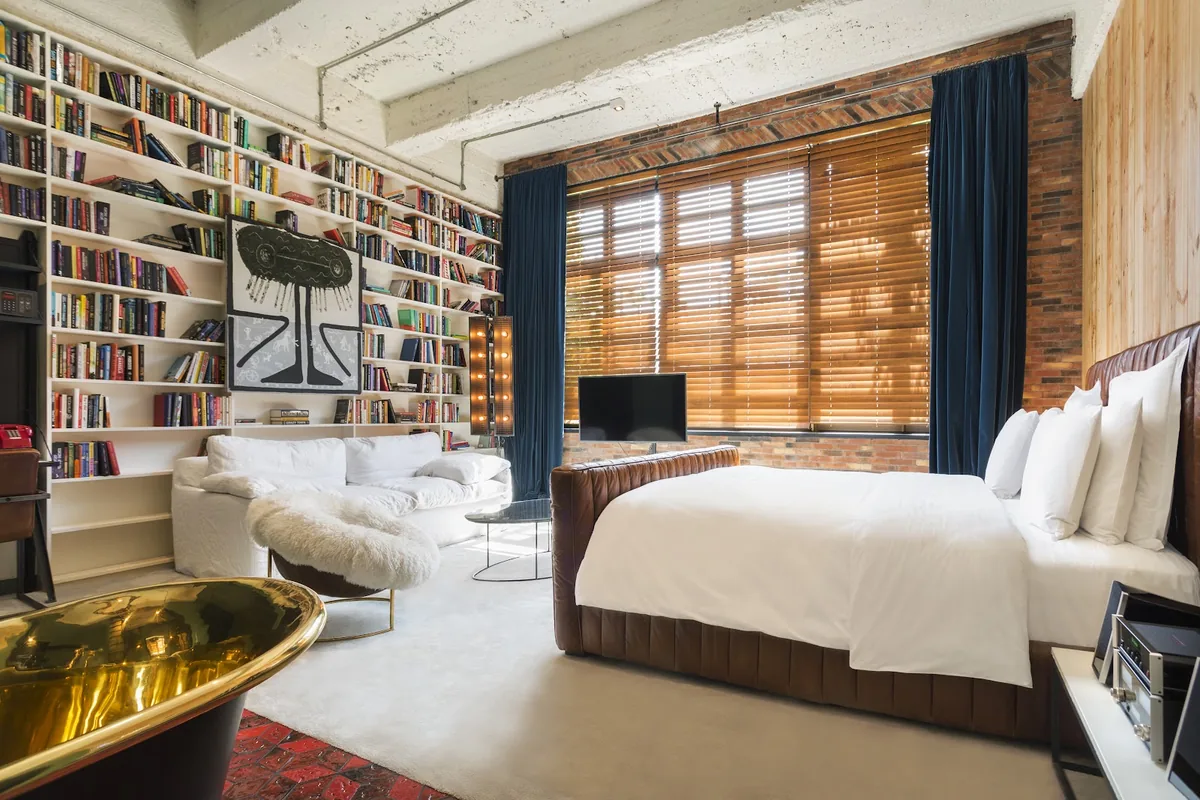
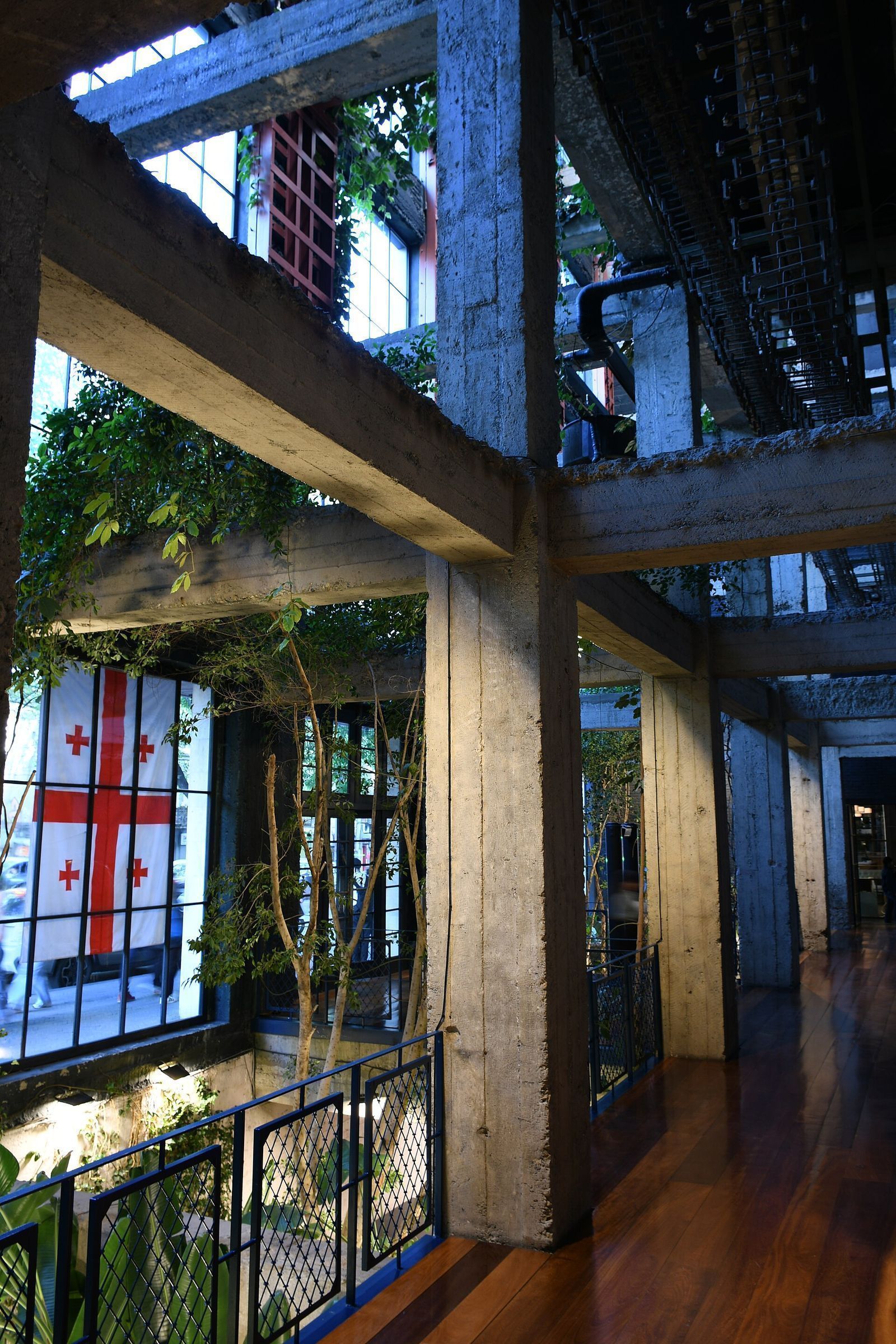
Stamba followed in 2018 with 150 rooms, and it went the other way. The raw concrete and steel stay exposed, a 5-storey atrium has trees growing up through it, the corridors are lined with bookcases, and two of the original 1930s printing presses stand in the lobby.
You don't need a room to see any of it. Walk in through Cafe Stamba, go up to look at the atrium, browse the bookshop and the free gallery, and leave by the courtyard. It's one of the few boutique hotels in Tbilisi that is as much a public space as a hotel.
Cafe Stamba and the courtyard
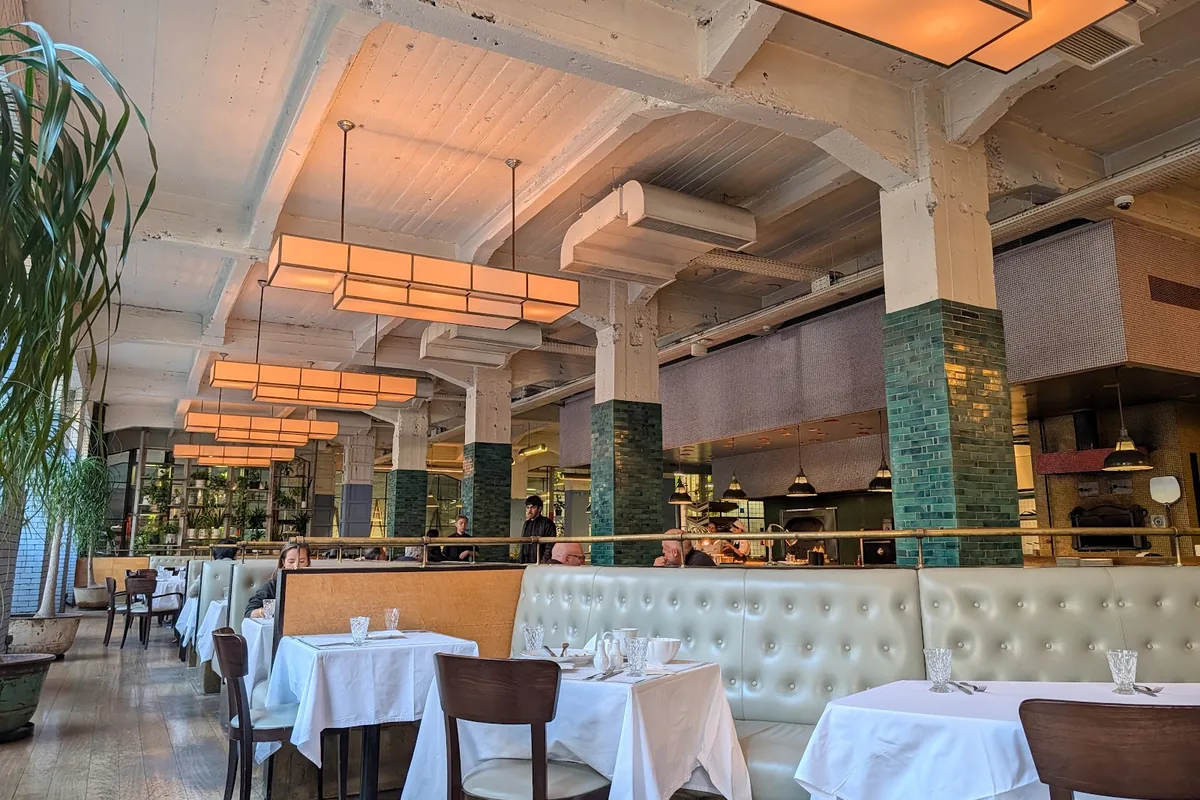
Cafe Stamba fills the ground floor of the old printing hall: pink walls, tiled floors and a garden out the back that doubles as the smoking area. In the morning it's one of the reliable 08:00 openers, and the khachapuri is the order, either an Adjaruli with a thinner, crispier crust than the classic or the puff pastry kind. In the evening the same room makes light, fruity cocktails with house-made ingredients, around 18 to 30 GEL. Book at weekends; from about 11:00 it fills.
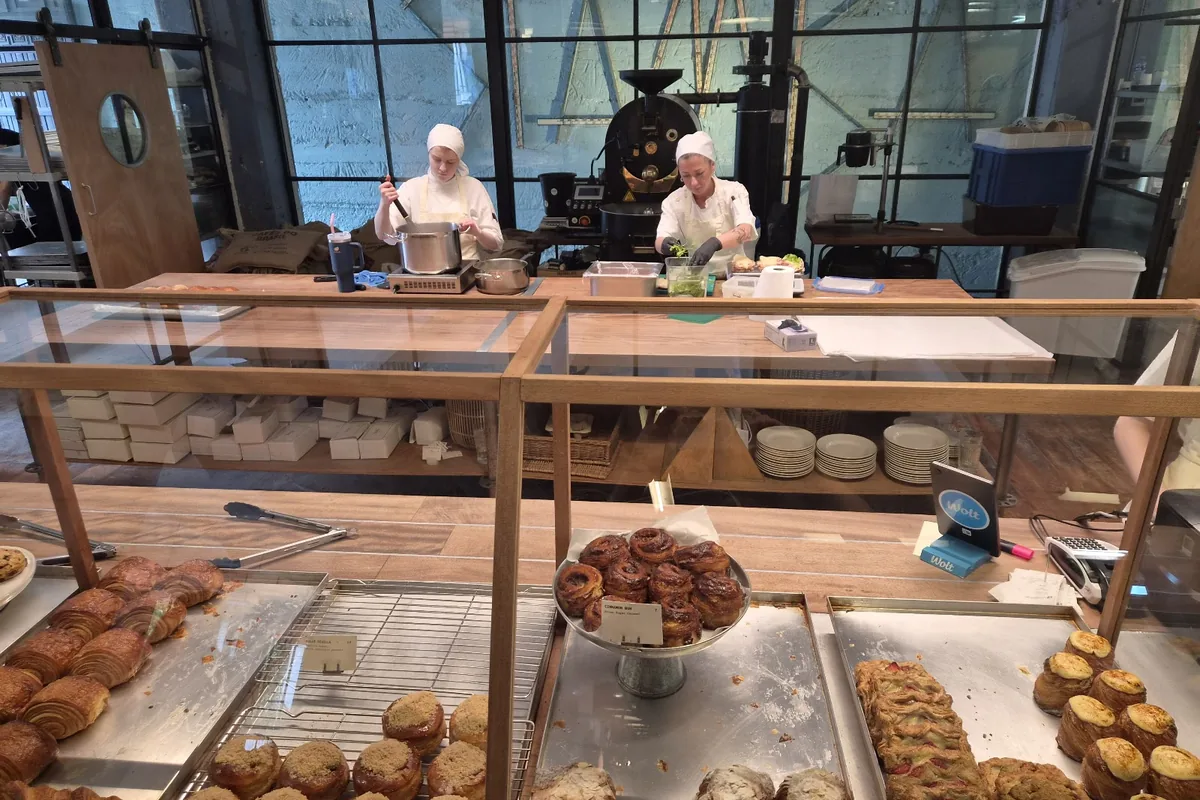
Stamba Bakery, in the same building, bakes with Georgian wheat from the group's own farm at Udabno, and a cappuccino costs about 10 GEL. Around the courtyard you'll also find a chocolatier, an Asian restaurant, a bookstore, a pink bar, an outdoor amphitheater and the Tbilisi Photography and Multimedia Museum.
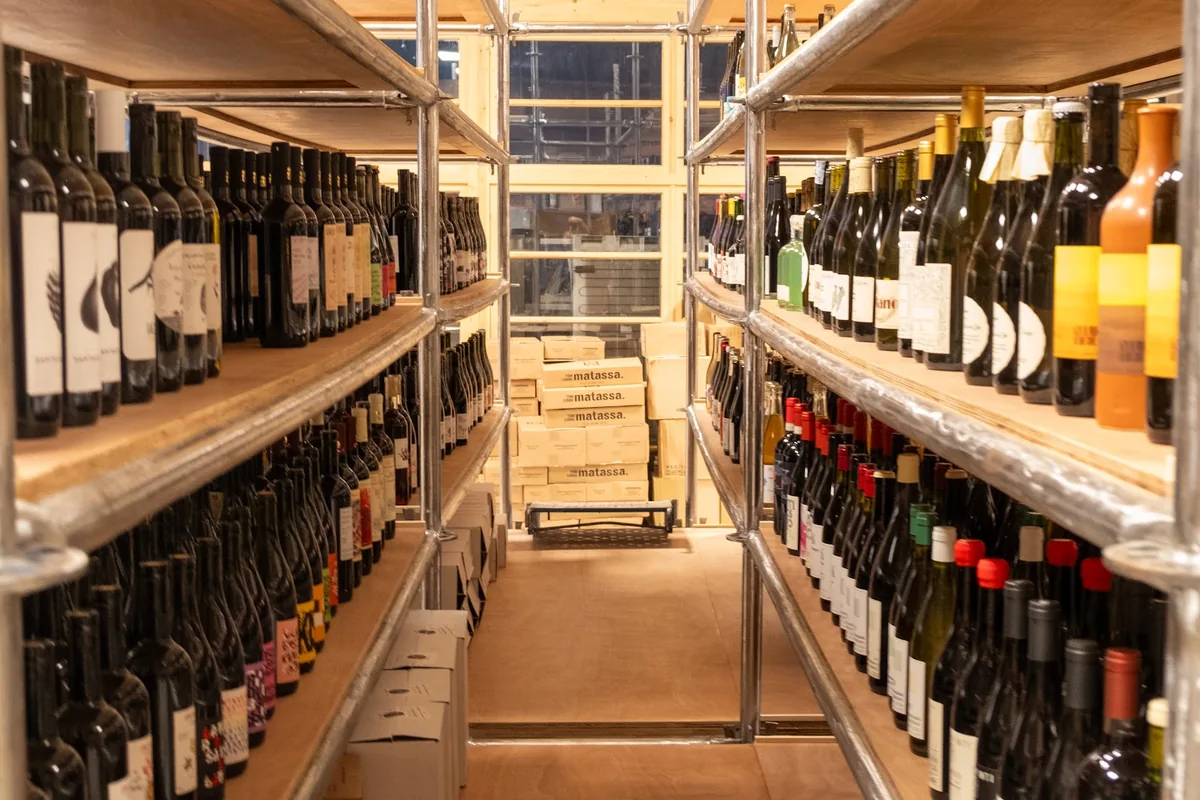
Then there's Warehouse, my favorite thing in the complex and the easiest to miss. It's a tiny wine bar and shop in the courtyard: walk past the plant pergola and the door is on the left. There's no menu, just a few open bottles on ice, Georgian and European, and a shelf of wine to take away. Across Kostava Street, Process Craft Beer Bar pours odd Georgian craft beer styles like tomato gose and tarragon sour, which makes this one block a full evening.
Wine Factory N1: an 1890s winery turned bar courtyard
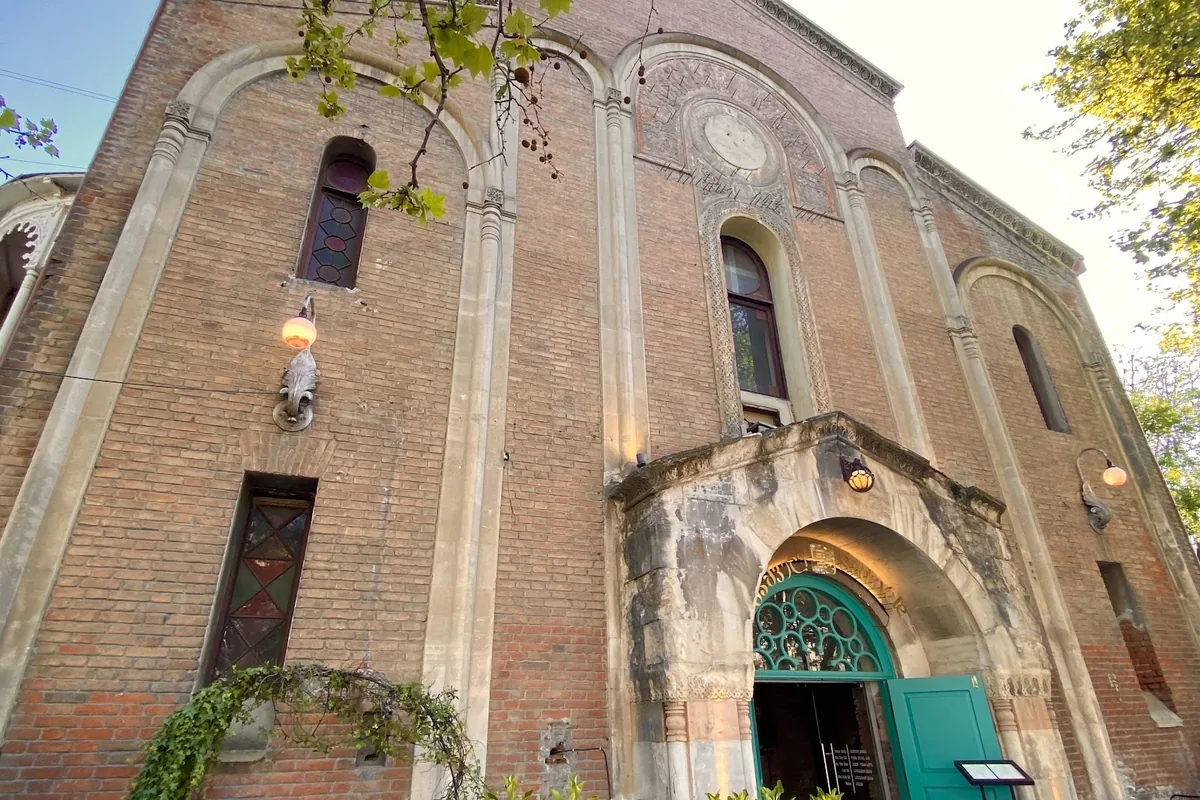
Wine Factory N1, Ghvinis Karkhana in Georgian, was built between 1894 and 1896 to a design by the architect Alexander Ozerov, at 1 Vasil Petriashvili Street in Vera. It's the most beautiful building on this list. The facades borrow the forms of medieval Georgian churches, and from above the building reads as two crossing basilicas, which is a lot of ceremony for a place that made wine.
Production declined in the 1980s, and the building spent most of the last century closed to the public before it reopened in 2017 as a courtyard of independent bars and restaurants. Alongside them sit a bakery, a wine shop, a showroom for Georgian designers and an art studio, and on some weekends flea market stalls set up in the square. Most venues open from about 12:00 and run late, and in warm months the whole courtyard turns into one big terrace.
I'd come here for an evening rather than a sight. Have dinner, move to a second bar, and you never have to leave the gate.
Sadzvele Wine Hub
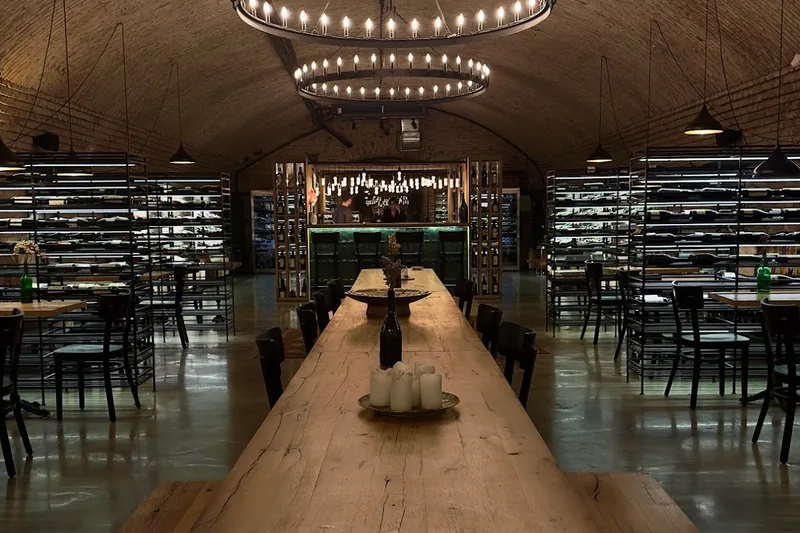
Sadzvele opened in fall 2024 and is the one venue that uses the building for what it was built for. It's a wine bar, a wine school and an event room in one, with about 200 wines, qvevri on display and the oldest cellar visible through glass. Book a tasting flight and you can spend a whole evening on Georgian wine without moving tables.
It sits near the top of my list of the best wine bars in Tbilisi for exactly that reason: the room under the vaults does half the work. Tastings run by appointment, so message ahead if you want a guided flight rather than a glass at the bar.
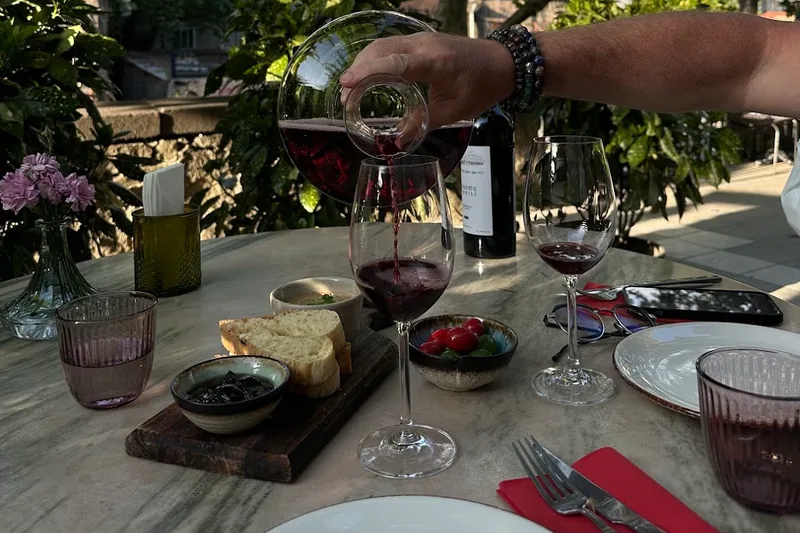
Kikodze Bar
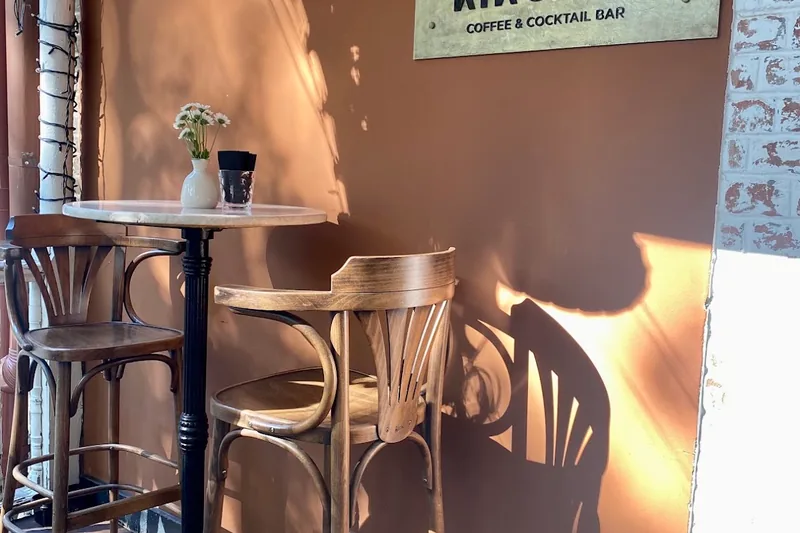
Kikodze is coffee and brunch by day and cocktails at night, in a small room with infused spirits lining the shelves and a patio on the factory square. The cocktail to try is the White Leather, a peanut-oil fat-washed bourbon with agave, ginger, lemon and a float of Laphroaig. It's the best warm-evening seat in the complex; in winter the room is small and fills fast.
Kikodze holds its own against the Sololaki names on any list of cocktail bars in Tbilisi, and it's the bar I'd start at before dinner here.
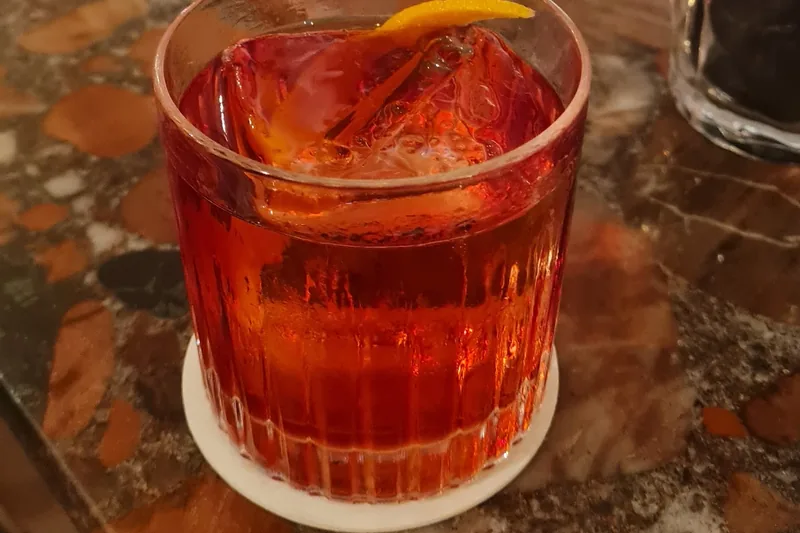
Black Dog Bar, Teko's Tacos and Shushabandi
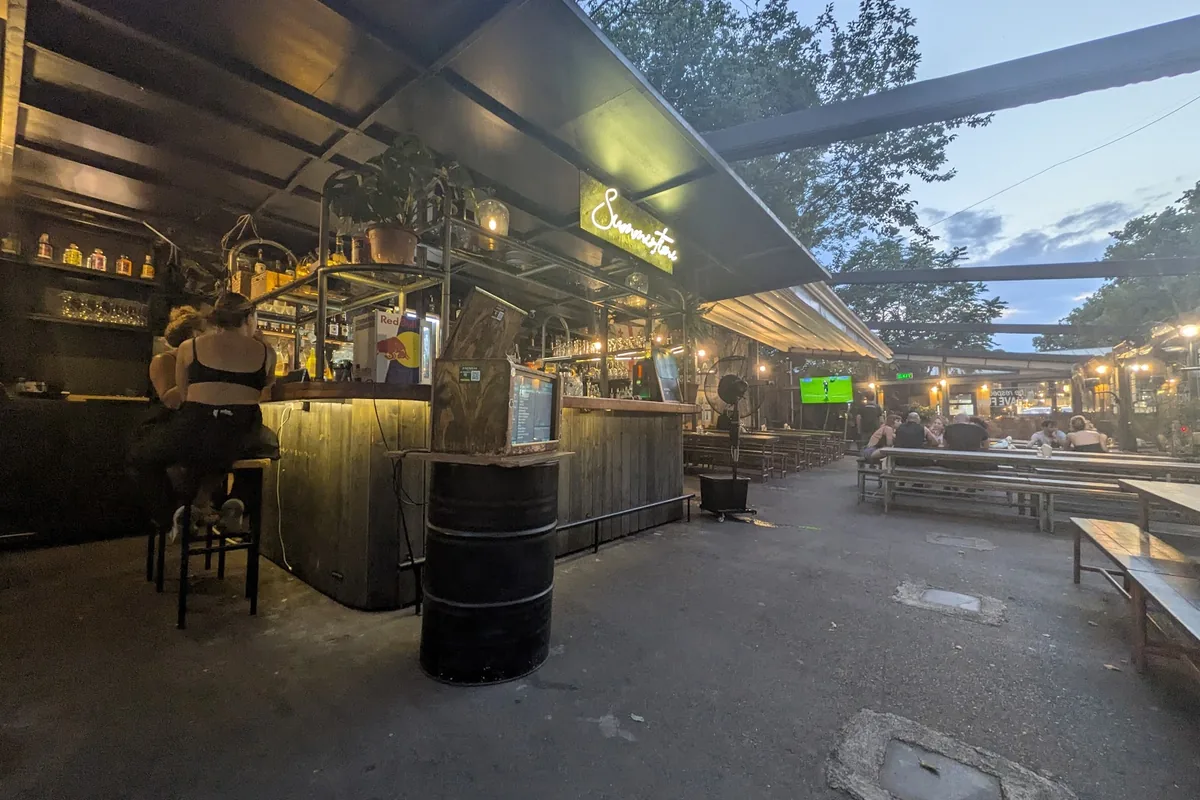
Black Dog Bar runs its bigger branch here, roomier than the original and open-air in the warm months, with craft beer, cocktails, burgers and grills, and rock, reggae and jazz evenings. It's pet friendly and it's loud, which is either the point or the problem.
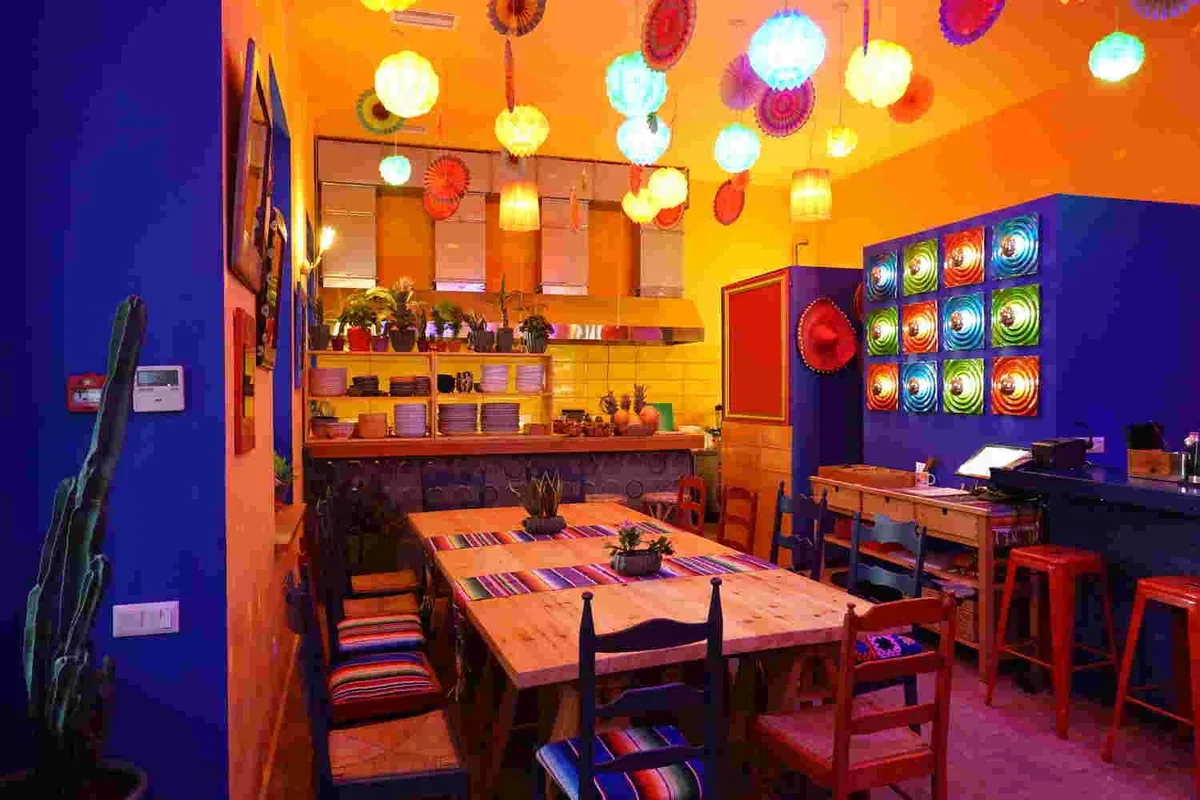
Taqueria Teko's Tacos does tacos, tequila and a passion fruit margarita, and gets busy at weekends.
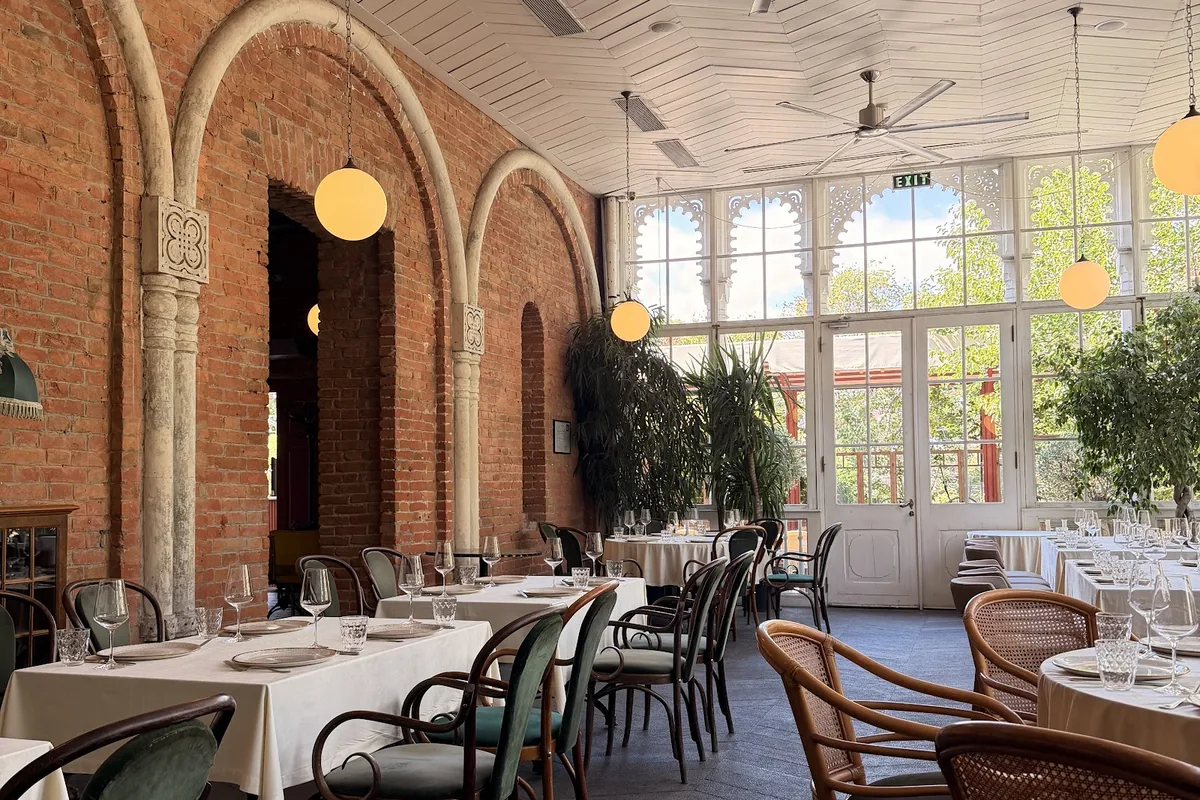
Shushabandi, at 1 Petriashvili Street, is the sit-down Georgian dinner in the building.
Fabrika: the Soviet sewing factory across the river
Fabrika is the converted space most visitors already know. It was the Nino sewing factory, which made women's clothing in Soviet times, and it stood empty for years before the architecture studio MUA and Adjara Group reopened it in July 2016 as a hostel with a long courtyard of bars, cafes and small design shops behind it. The concrete wings, steel-framed windows and the Soviet bas-relief over the entrance are all still there, and the walls are covered in murals.
It sits at 8 Egnate Ninoshvili Street in Chughureti, on the Marjanishvili side of the river, an 8 to 10 minute walk from Marjanishvili metro. The courtyard is free and open around the clock, beer runs about 7 to 10 GEL and most cocktails 14 to 20 GEL. Daytime is coffee, brunch and laptops; after 20:00 it turns into one of the busiest night spots in the city.
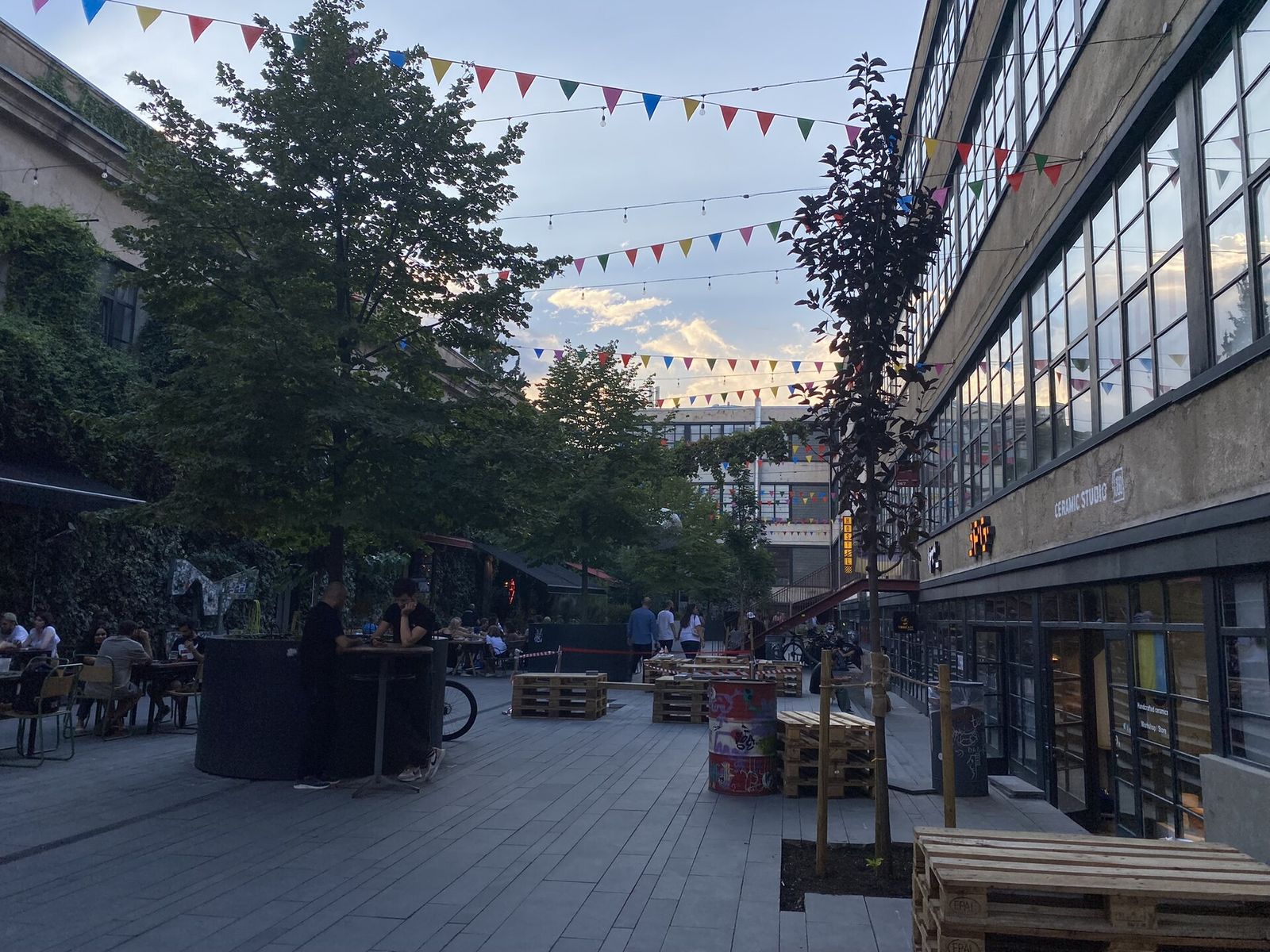
Fabrika is the one I'd pick for a first evening out: natural wine at Saamuri, a cocktail at G.U.M, then a bench in the Fabrika courtyard until late. It's also the easiest stop on any walk looking for street art in Tbilisi, since it was the first building in the city to hand its walls to street artists.
Radio City: a Soviet radio factory in Mukhiani
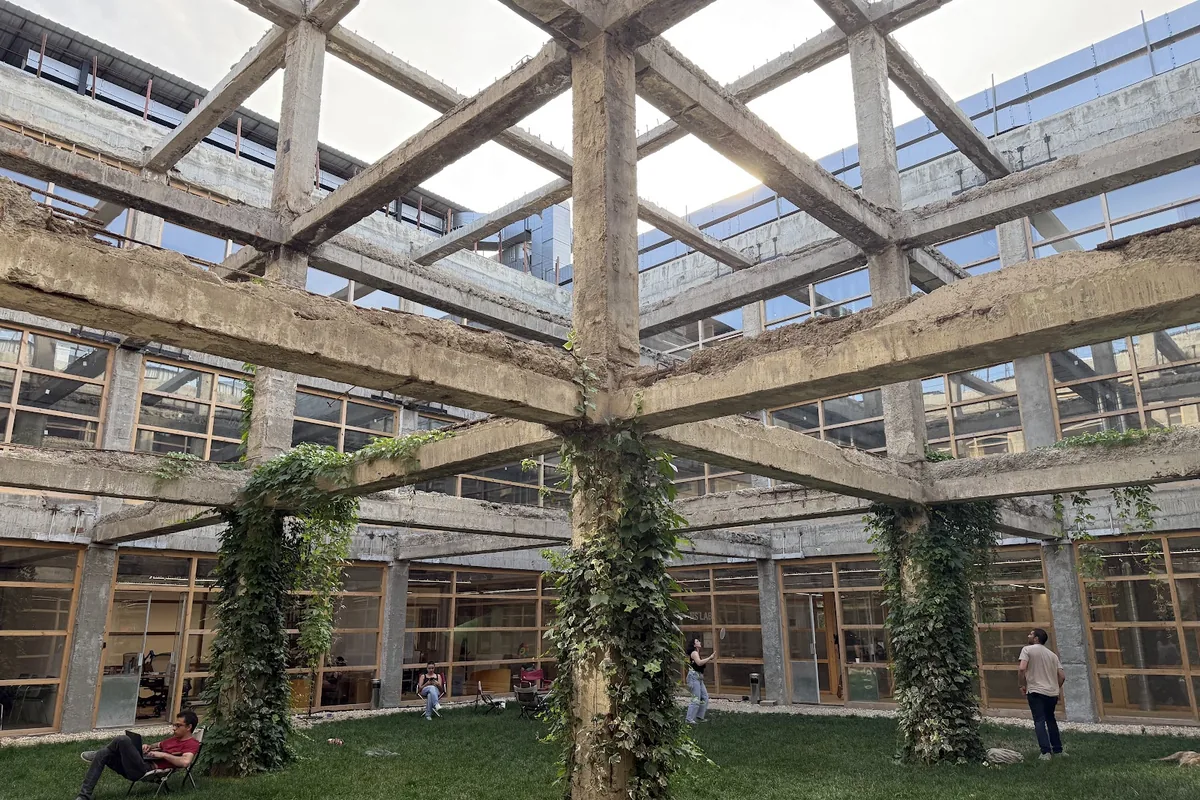
Radio City is the newest and the furthest out. It takes over a 1980s Soviet radio factory on a 12-hectare site in Mukhiani, in the north of the city, which Adjara Group bought at a city auction in 2019. The first phase opened in 2024, and the rest is planned in two more stages.
For now there's D Block, a shared creative and working space for people across different disciplines, three open-air padel courts, a diner and an event space, with festivals, exhibitions, art fairs, artist residencies and studios on the plan. The developers' stated aim is to keep as much of the factory as possible, which is the same approach that worked at Fabrika.
Be honest with yourself before you make the trip. Radio City is about a 10-minute bus ride from Akhmeteli Theatre, the northern end of line 1 on the Tbilisi metro, so it's a half-day outing for a visitor. It suits remote workers, people in town for a specific event and anyone curious about where the city's creative scene is heading. On a 3-day first trip, I'd skip it.
Bassiani and KHIDI: clubs in a swimming pool and under a bridge
Tbilisi's club scene lives in reclaimed spaces too, and the two big names are as much buildings as they are clubs.
Bassiani
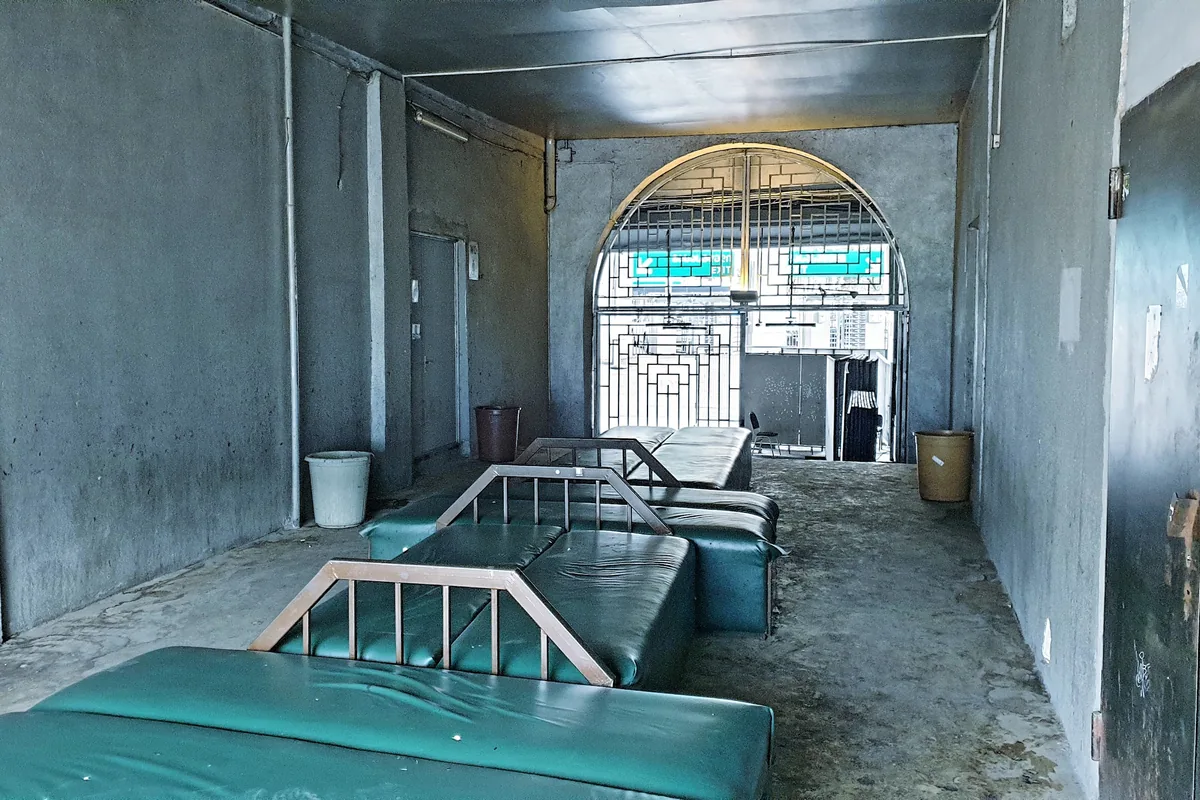
Bassiani opened in 2014 in a drained Soviet swimming pool under Dinamo Arena, the national football stadium. The main room is the pool itself: you dance where the water used to be, with a Funktion-One sound system around you, across 2 dance floors. It opens on Friday and Saturday from 23:00 to 09:00, entry is 25 to 50 GEL depending on the lineup, and tickets go on sale online, one event at a time, after you register and get verified.
KHIDI and Mtkvarze
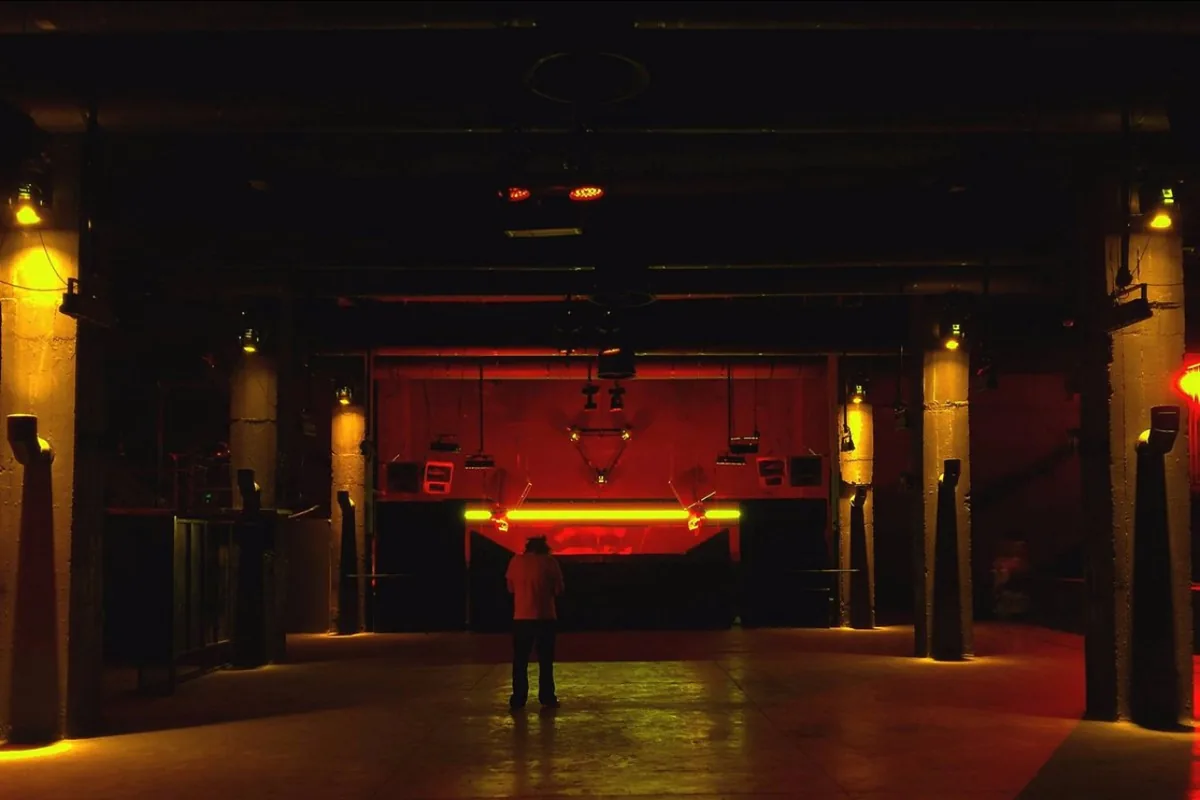
KHIDI opened in 2016 inside the concrete of the Vakhushti Bagrationi Bridge on the bank of the Kura. It spreads over 3 floors, holds up to 1,200 people, hosts art exhibitions alongside the parties and plays darker, harder techno than Bassiani, from midnight to 09:00 for 20 to 40 GEL.
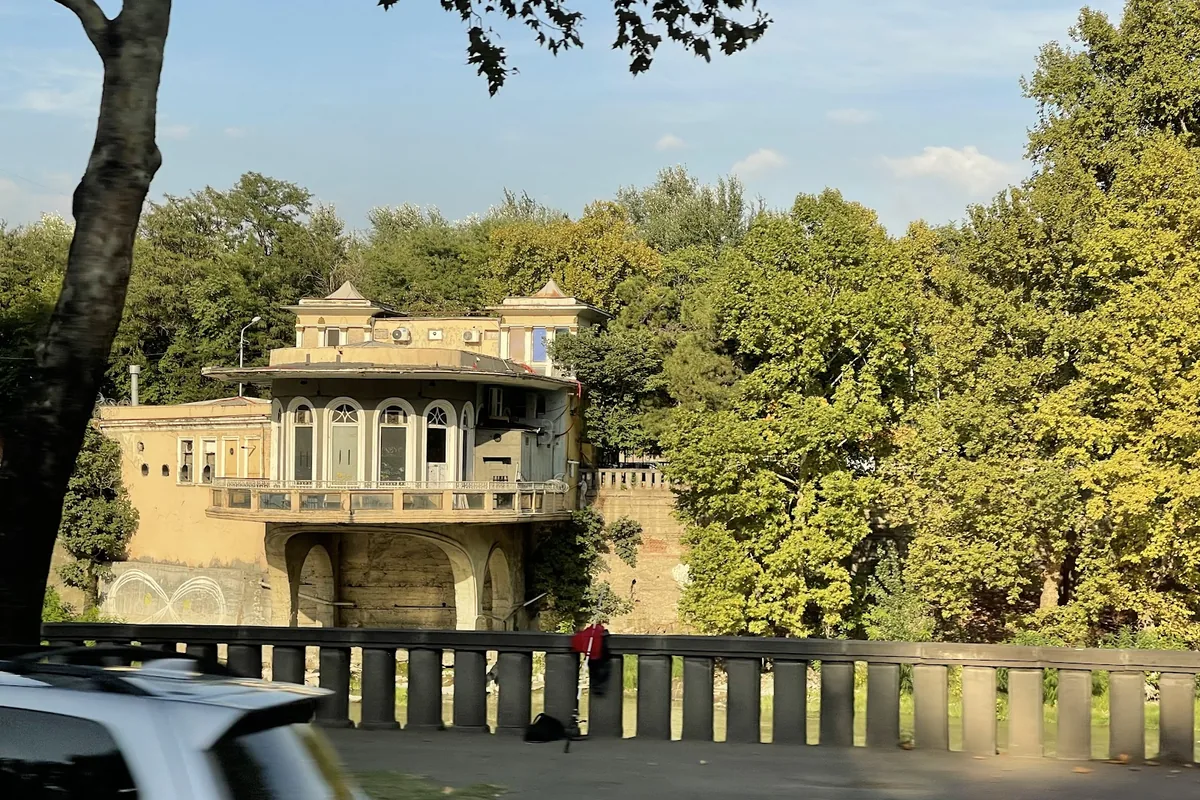
Mtkvarze, on the riverbank in a former Soviet glass-box restaurant, is the gentler option: house, disco and melodic electronica for 15 to 35 GEL, with the river and the sunrise in the big windows. All three are on my list of techno clubs in Tbilisi.
The Biltmore: a Soviet institute with a glass tower on top
The grandest conversion on Rustaveli Avenue is the Biltmore. Its lobby fills the colonnaded 1930s IMELI building, a Soviet institute, and a glass tower rises straight up behind the old facade, so the Stalin-era columns and the new skyline sit in one frame. Love it or hate it, it's the most striking example in the city of building on top of the Soviet past rather than inside it.
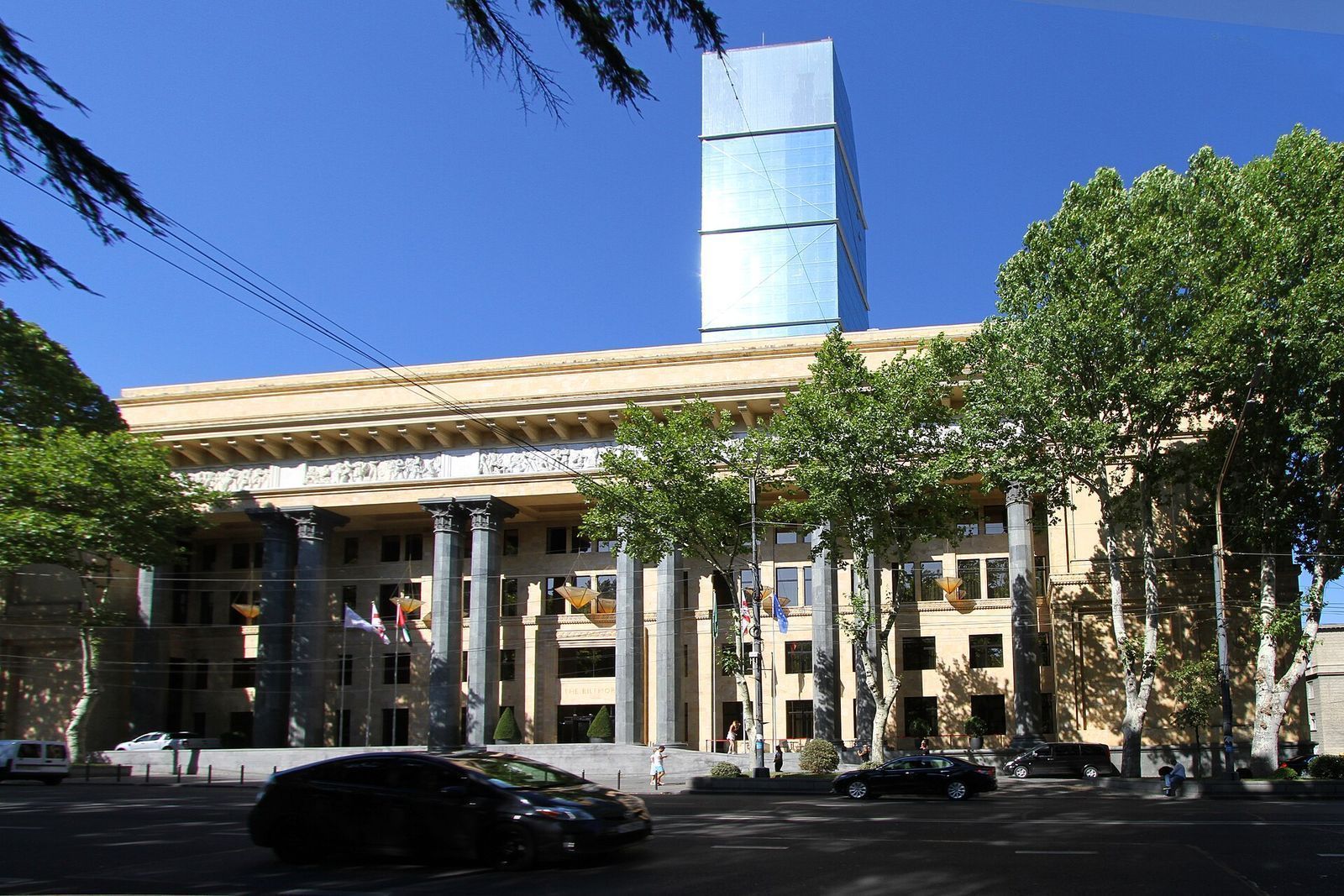
It's a 214-room five-star with pools and a spa, doubles at about 180 to 300 USD, and one of the luxury hotels in Tbilisi most people mean when they ask for a five-star. For a visitor, the reason to walk in is the 360 Sky Bar on the top floor, which looks out over the whole city. If the building's story interests you, the rest of Soviet architecture in Tbilisi is a short taxi ride away, from the Ministry of Highways to the Chronicles of Georgia.
Sleeping in a converted building
Four of these spaces are also places to stay, and they cover every budget, from a dorm bed to a five-star suite.
| Stay | Building | Price a night | Best for |
|---|---|---|---|
| Fabrika Hostel & Suites | Soviet sewing factory | Dorms from about 32 GEL, privates about 145 to 210 GEL | Solo travelers, budget trips, a social base |
| Rooms Hotel | Soviet publishing house, red brick wing | About 300 to 700 GEL | Couples, design lovers, Vera's cafes |
| Stamba Hotel | Soviet publishing house, concrete wing | About 300 to 700 GEL | Design lovers who want the industrial look |
| The Biltmore | 1930s IMELI building plus a glass tower | About 180 to 300 USD | Pools, a spa and the view |
Between the two Kostava Street hotels, Rooms is red brick, vintage and a little cozier, while Stamba is raw concrete, bigger and busier. If one is full, I'd book the other without a second thought. Rooms lets non-guests into its breakfast buffet for about 60 to 75 GEL if you ask at the front desk the evening before, and Cafe Stamba is my pick for breakfast in Tbilisi on a Vera morning even if you're sleeping somewhere else.
A day through Tbilisi's converted spaces
Stamba, Wine Factory N1 and Fabrika line up into an easy day: Vera in the morning and evening, Chughureti after dark, with the metro or a cheap Bolt in between. Here's how I'd run it.
| Time | Where | What to do |
|---|---|---|
| 09:00 | Cafe Stamba, Kostava Street | Khachapuri and coffee, then the atrium, the presses and the bookshop |
| 11:00 | Rooms Hotel terrace | A second coffee looking at Mtatsminda |
| Afternoon | Vera's streets | Wander downhill toward Petriashvili Street |
| 18:00 | Kikodze Bar, Wine Factory N1 | A cocktail on the patio as the courtyard fills |
| 19:30 | Sadzvele or Shushabandi | A booked tasting or a Georgian dinner under the factory roof |
| 22:00 | Fabrika, Chughureti | Rustaveli to Marjanishvili by metro, 1 stop, 1 GEL; then the courtyard until late |
Saturday is the best day for it, when Wine Factory N1 sometimes has flea market stalls and Fabrika's courtyard has live music. Sunday morning works too, but Cafe Stamba is at its busiest then.
Which reclaimed space suits you
Each of these suits a different trip, and few people need all of them.
- First-timers should do Stamba for breakfast and Fabrika for a night out; between them you see the idea at its best for the price of two meals.
- Wine drinkers belong at Wine Factory N1, with Sadzvele for a tasting and Warehouse in the Stamba courtyard for a bottle to take home.
- Design and architecture fans get the most from Stamba's atrium, the Wine Factory facades and the Biltmore's tower on its 1930s base.
- Clubbers come to Tbilisi for Bassiani and KHIDI, and the buildings are half the story.
- Remote workers on a longer stay should look at Fabrika's coworking space and Radio City's D Block.
Skip them if:
- You only have a day or two and haven't seen the Old Town, the baths or Narikala yet.
- You want a quiet, traditional Georgian evening; the factory courtyards get loud after 20:00.
- You're hoping for a museum visit. Apart from the photography museum at Stamba, these are places to eat, drink and stay, with the history on the walls rather than on labels.
Key takeaways
- Stamba and Rooms fill a 1930s Soviet publishing house at 14 Merab Kostava Street, and the cafe, courtyard, bookshop and gallery are free to walk into.
- Wine Factory N1 is an 1894 to 1896 winery in Vera, reopened in 2017, with Sadzvele, Kikodze Bar, Black Dog Bar and Teko's Tacos in one courtyard.
- Fabrika is the sewing factory courtyard for a night out, 1 metro stop from Rustaveli to Marjanishvili.
- Bassiani (a drained pool, 25 to 50 GEL) and KHIDI (a road bridge, 20 to 40 GEL) are working clubs with strict doors, not daytime sights.
- Radio City in Mukhiani is the newest conversion and a half-day trip, best for remote workers and event goers.
Frequently asked questions
What was the Stamba Hotel building before?
Stamba was a Soviet publishing house built in the 1930s, where the newspaper Kommunist was printed. It closed after the Soviet Union fell and stood empty for about 20 years. Rooms opened in one wing in 2014 and Stamba in the other in 2018, and two of the original printing presses still stand in Stamba's lobby.
Can you visit Stamba without staying there?
Yes. Cafe Stamba, the courtyard, the bookshop, the gallery and the bars are open to everyone, and Warehouse wine bar sits in the same courtyard. Book Cafe Stamba at weekends, when it fills from about 11:00.
What is Wine Factory N1 in Tbilisi?
Wine Factory N1 is a winery built between 1894 and 1896 at 1 Vasil Petriashvili Street in Vera, reopened in 2017 as a courtyard of bars, restaurants and shops. It holds Sadzvele Wine Hub, Kikodze Bar, a branch of Black Dog Bar, Teko's Tacos and Shushabandi, with most venues open from about 12:00 until late.
Who is behind Fabrika, Stamba and Rooms?
All three, plus Radio City, come from Adjara Group, a Georgian hotel company. Fabrika was renovated with the local architecture studio MUA and opened in 2016, Rooms opened in 2014 and Stamba in 2018. Radio City, a former Soviet radio factory, opened its first phase in 2024.
Can tourists get into Bassiani?
Yes, but you need a ticket bought online for the exact night, after registering and being verified, and you still have to pass face control. Entry runs 25 to 50 GEL, the club opens on Friday and Saturday from 23:00 to 09:00, and the name on the ticket must match your passport.
What are the best creative spaces in Tbilisi?
Fabrika is the best known, with its hostel, courtyard bars, studios, shops and gallery in a former sewing factory. Stamba and Wine Factory N1 in Vera add design, food and wine, and Radio City in Mukhiani is the newest, with a shared creative space called D Block.
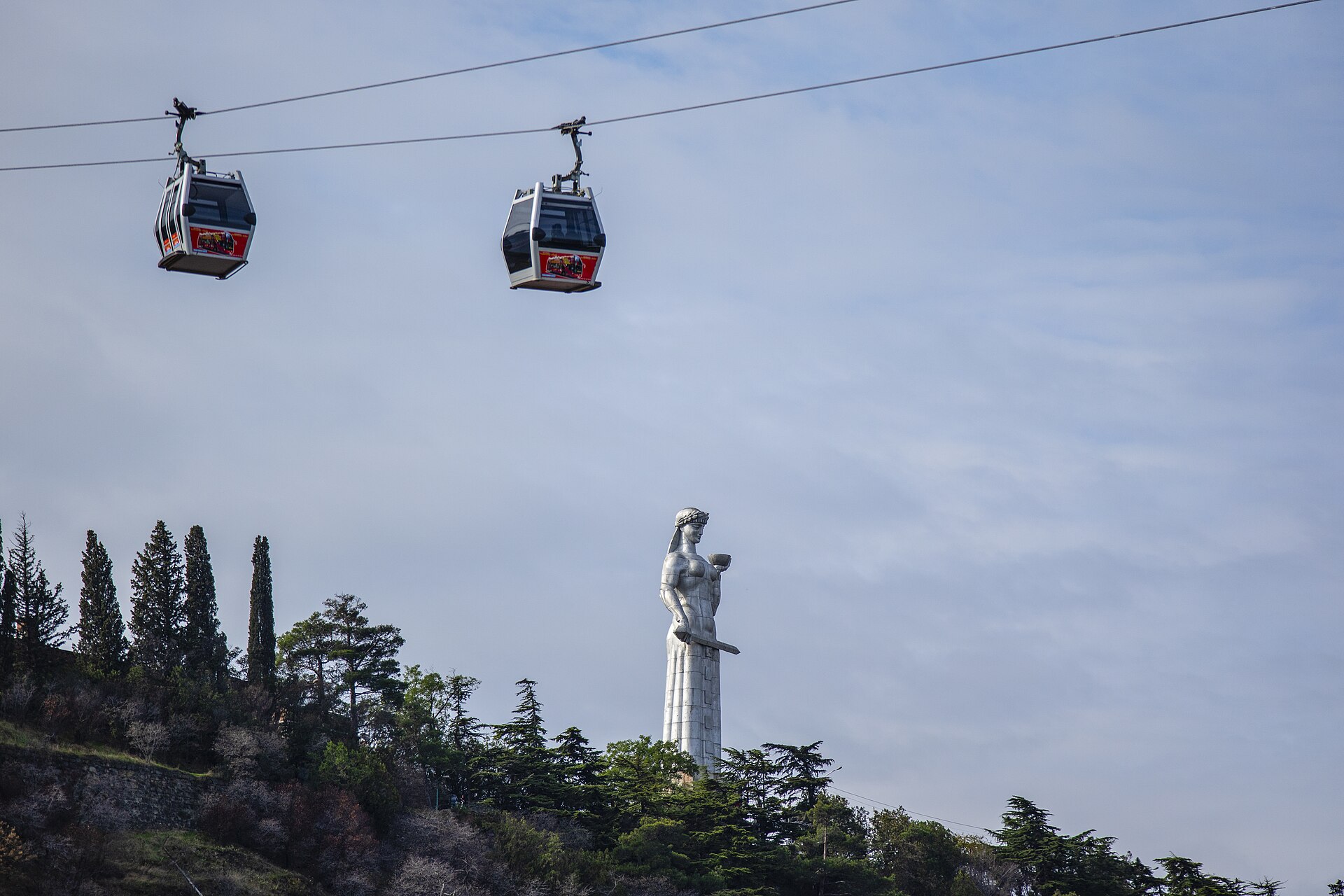
25 Best Things to Do in Tbilisi in 2026 (With Prices)
Tbilisi is known for its sulfur baths, balconies and hilltop views. Here are 25 things to do, with prices and times.
Read the guide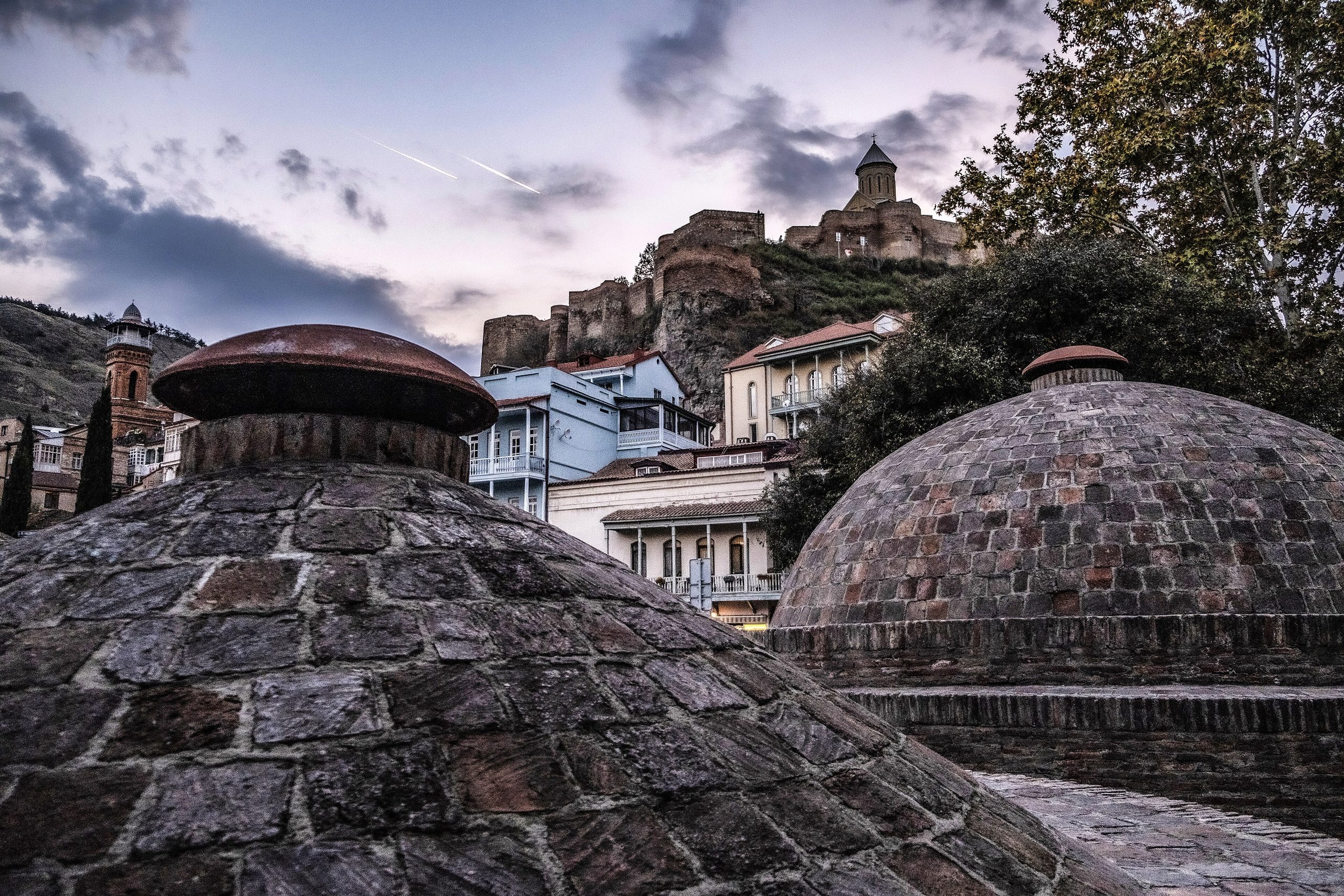
The Sulfur Baths of Abanotubani: Prices, Bathhouses and Booking
Tbilisi is known for its sulfur baths. Here is what to know about the bathhouses, room prices and booking.
Read the guide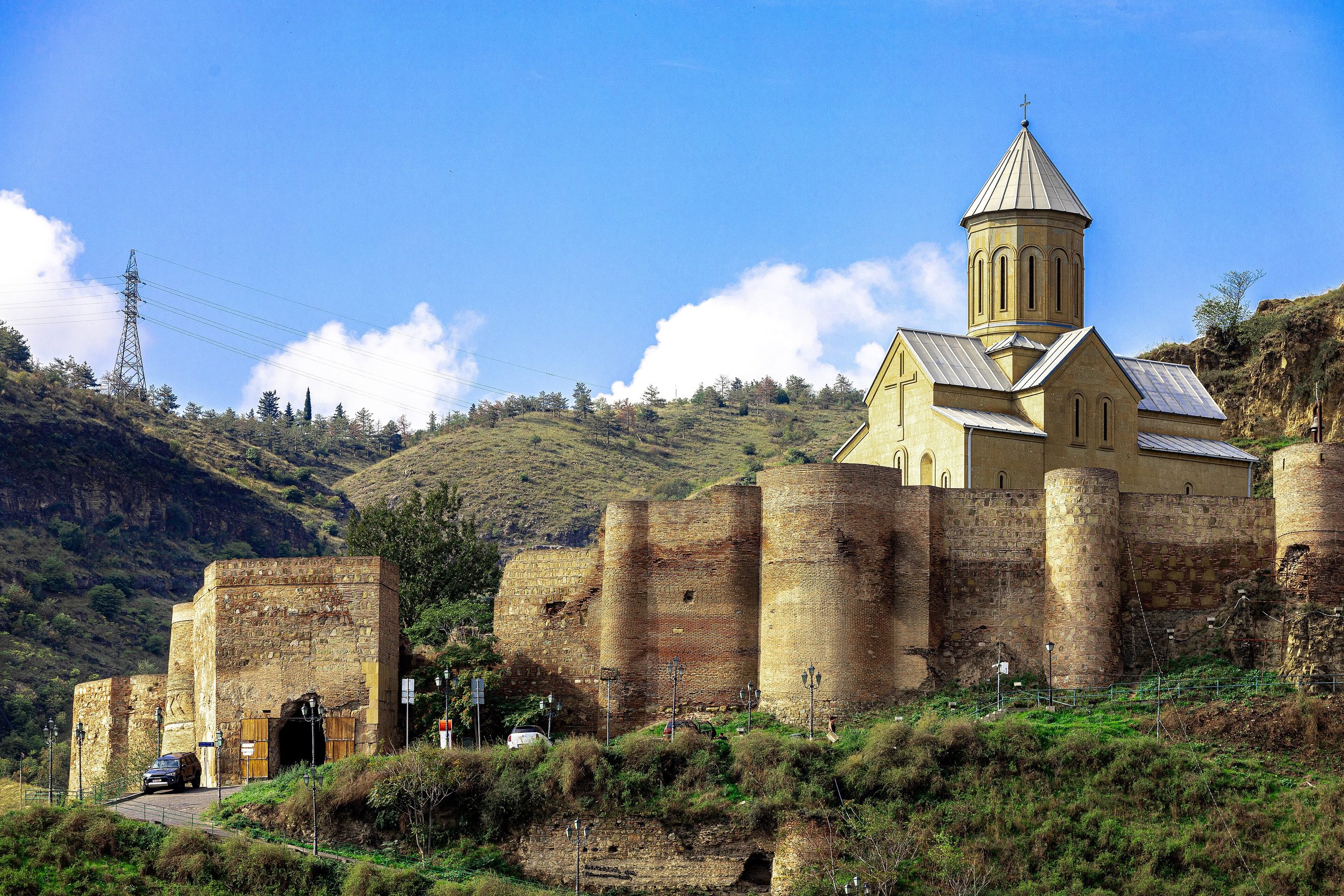
Narikala Fortress, Tbilisi: Getting Up, What Is Open and When to Go
Narikala is the fortress above Old Tbilisi. Here is what is open in 2026, how to get up and when to go for the view.
Read the guide