Georgian Tea: History, Plantations and Where to Try It in Tbilisi
Georgia is known for its wine, but it also grows its own tea, on green hills in the wet west of the country. Forty years ago it was one of the biggest tea producers on earth; today it is a small revival of family estates making far better tea than the Soviet factories ever did. Here's what Georgian tea tastes like, where it comes from, where to drink and buy it in Tbilisi and which plantations you can visit.
What Georgian tea is
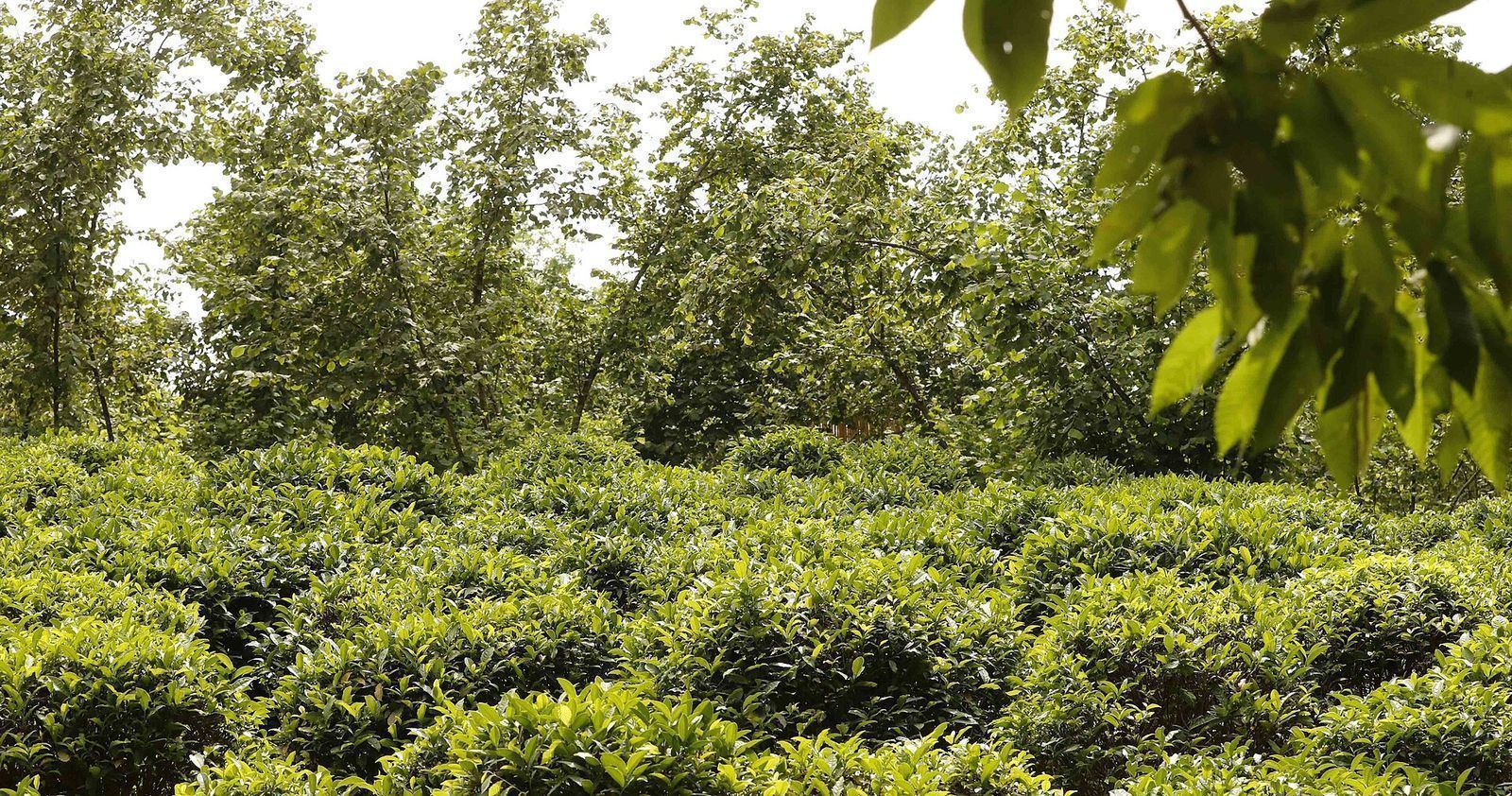
Georgian tea is ordinary tea, Camellia sinensis, grown on the subtropical side of the country near the Black Sea. What makes it different is the slow growth. The bushes go dormant through the cold months, roughly October to May, and that slow, stop-start season gives the leaf a mellow, slightly sweet taste with very little bitterness. I find a good Georgian black tea closer to a soft Chinese black than to a strong breakfast blend, and it barely needs milk.
The bushes themselves are local. In 1941 the Georgian scientist Ksenia Bakhtadze crossed Indian and Chinese tea plants and went on to breed 16 varieties for different parts of the west, from warm coastal slopes to cold hill farms. The two best known, Georgian N1 and Georgian N2, were bred for heavy yields, and the hardiest of her hybrids survive frosts down to about minus 15°C.
| Type | What it is in Georgia | Where you'll find it |
|---|---|---|
| Black tea | The classic and most of what Georgia makes | Every supermarket, the Bitadze shop |
| Green tea | Made since Soviet times, when it sold across Central Asia | Tea shops and estate shops |
| White and oolong | Small batches from the new estates | Estate shops and online |
| Herbal tea | Wild mountain plants, no tea leaf at all | Markets and gift shops |
Where tea grows in Georgia
Tea needs rain, and only the west has it. Eastern Georgia, Tbilisi included, is too dry, so you will never pass a tea field on a day trip from the capital. The western lowlands and foothills run from about 23°C in July to 5°C in January, with plenty of sun, big swings between day and night and real winters. That is what keeps the tea slow and sweet, and it also keeps pests down, so many small farms grow without pesticides.
| Region | Base town | What to know |
|---|---|---|
| Guria | Ozurgeti | The heart of Georgian tea: the first bushes, the Anaseuli factory and the Tea Route farms |
| Adjara | Batumi, Kobuleti | Chakvi, where the first big plantation went in, in 1892 |
| Samegrelo | Martvili | Martvili Tea and the Tsalenjikha factory, plus the biggest share of the replanting |
| Imereti | Kutaisi | Renegade Tea Estate and the old plantations around Terjola |
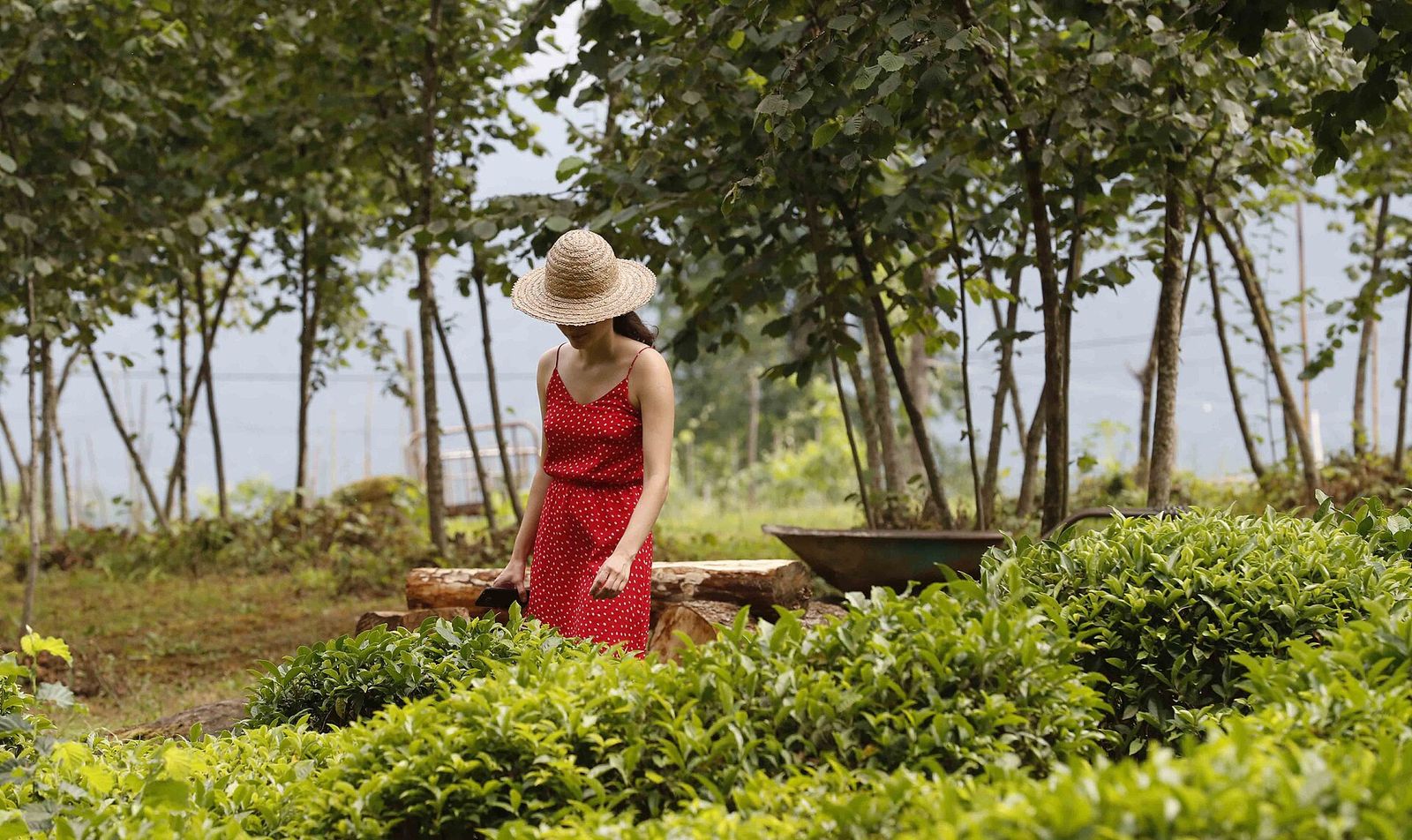
If you only see one region, make it Guria. It is green, rural and full of half-wild tea rows between hazelnut groves, and it is the region where the whole story of Georgian tea started.
A short history of Georgian tea
Tea arrived in Georgia as a garden plant. Prince Mamia V Gurieli planted the first bushes in Guria in 1809 as ornamentals, at a time when Russia, which ruled Georgia by then, bought all its tea from China by caravan. Russia's tea imports had grown from around 115 tons a year in 1790 to more than 32,000 tons a century later, so a tea farm inside the empire was a tempting idea.
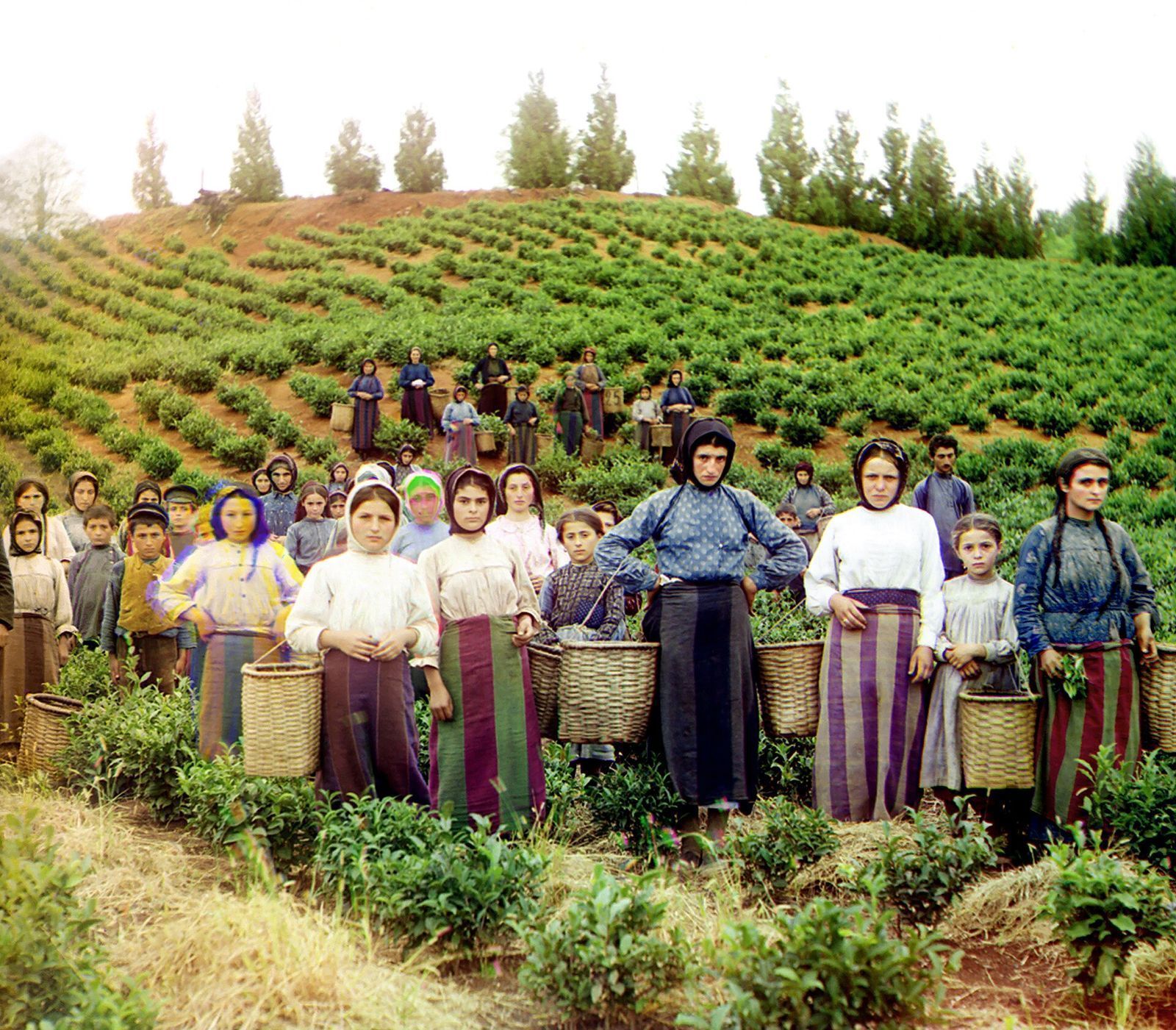
The first real attempt was Prince Mikheil Eristavi's. He brought seeds from China and started a plantation in the Ozurgeti area of Guria in 1847, and he showed his tea at the Russian agricultural exhibition in St Petersburg in 1864. The empire never funded him. The breakthrough came in 1892, when the Russian tea merchant Popov planted about 300 hectares at Chakvi, on the coast north of Batumi, and brought over a young Chinese tea master, Liu Jun Zhou, with Chinese workers and seed. Georgian tea won a gold medal at the Paris World Expo in 1900, and from there the plantations spread.
| Year | What happened |
|---|---|
| 1809 | The first tea bushes are planted in Guria, as garden ornamentals |
| 1847 | Prince Mikheil Eristavi starts a plantation near Ozurgeti |
| 1892 | Popov plants about 300 hectares at Chakvi, Adjara |
| 1900 | Georgian tea wins gold at the Paris World Expo |
| 1930 | A tea and subtropical crops research institute opens at Anaseuli |
| 1941 | Ksenia Bakhtadze breeds the first Georgian tea hybrids |
| 1985 | Production peaks at about 152,000 tons |
| 2014 | Production is down to about 1,800 tons |
| 2016 | The state Tea Rehabilitation Program starts replanting |
Liu Jun Zhou's old house still stands on the beach at Chakvi, between Kobuleti and Batumi, abandoned but an easy stop from Kobuleti or Batumi. It is the one tea sight on the coast, and a good excuse for a stop on the drive south.
The Soviet tea boom and the collapse
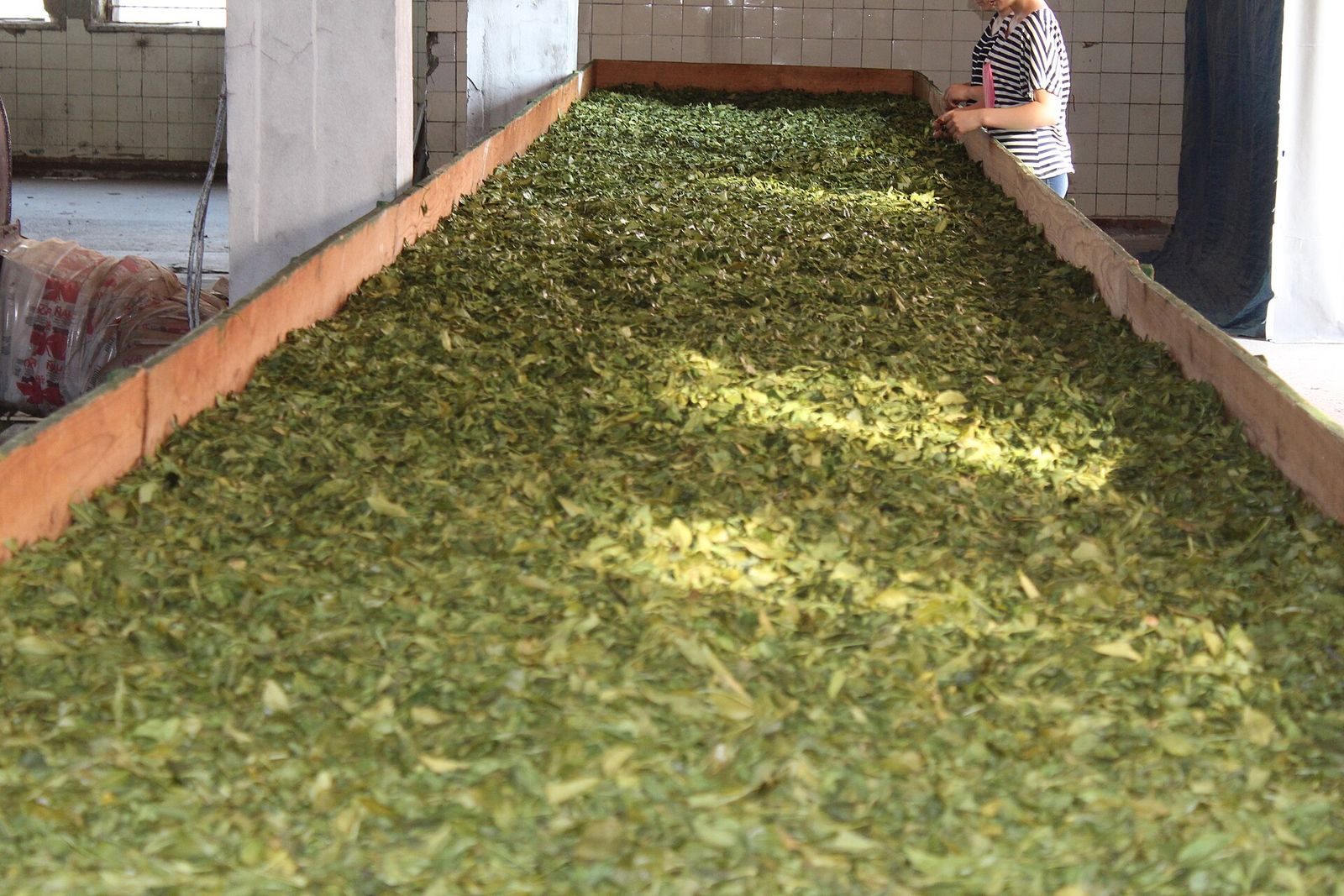
Under Soviet rule, tea became an industry. Farms were collectivized, families were moved to Guria, Samegrelo and Imereti to work the fields, and machines replaced hand picking. About 180,000 people worked in Georgian tea over the 70 Soviet years. By the 1980s Georgia was the fourth-largest tea producer in the world and supplied about 95% of the Soviet Union's tea by weight: black tea for kitchens across the union, green tea for Central Asia, and pressed bricks for Mongolia.
Quantity won over quality. Machine picking takes old leaves and stalks along with the bud, and heavy pesticide use and rushed processing turned Georgian tea into a cheap, rough brew. If you know a little about the Soviet decades, the pattern is familiar: huge output, low standards and a market that only existed inside the union.
When the Soviet Union broke up in 1991, that market disappeared overnight. The civil war of 1991 to 1994 finished the job, as factories were stripped and sold for scrap. By 2014 Georgia made about 1,800 tons of tea, roughly 99% less than at the 1985 peak, and only about 800 hectares were still being farmed. Drive through Guria or Imereti today and you still pass rusting factories and tea bushes grown into small trees.
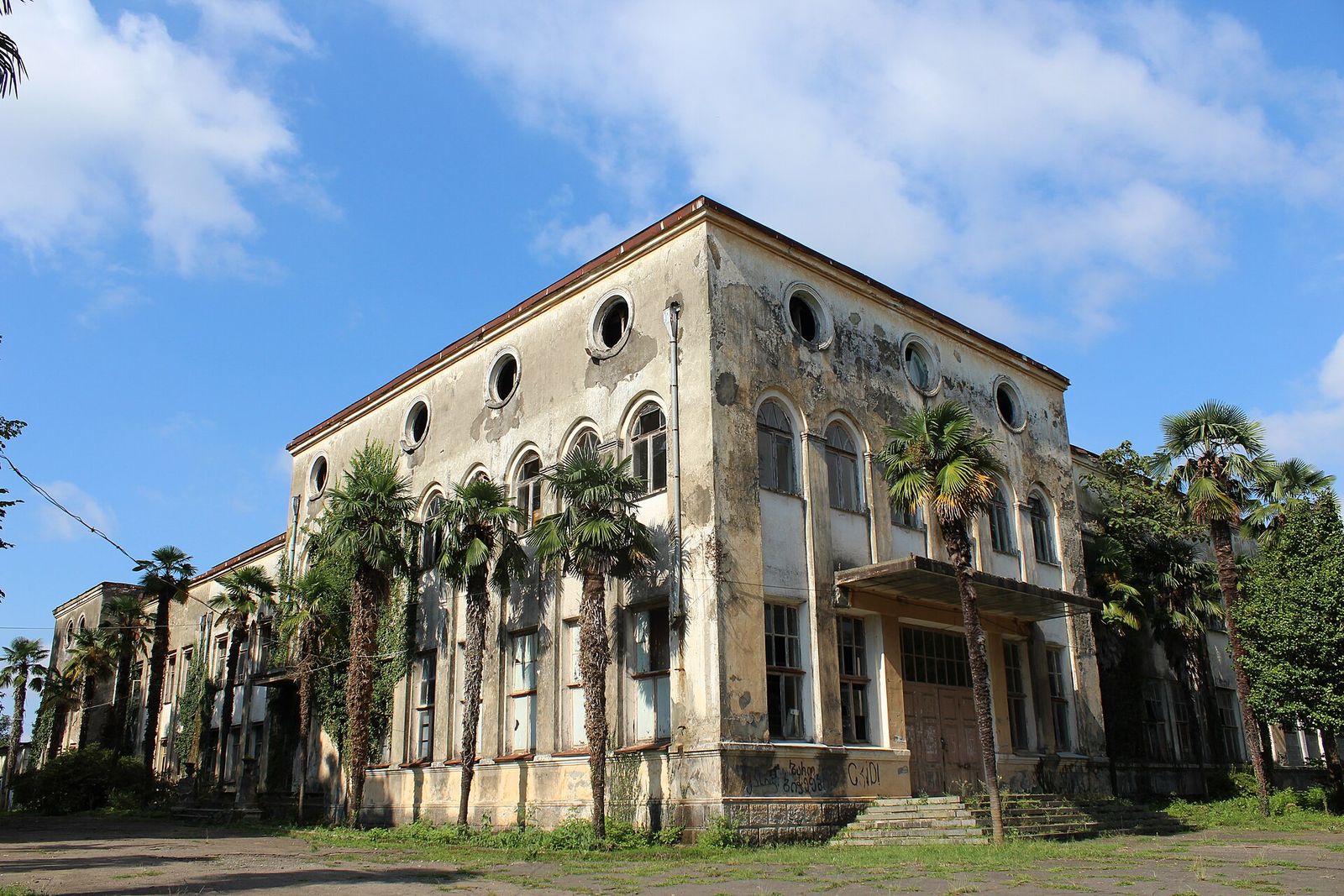
The research institute at Anaseuli, opened in 1930 and once the only one of its kind in Europe, is one of those empty buildings now. It is a strange, beautiful ruin, and it tells you more about what happened to Georgian tea than any museum display.
Georgian tea today: the revival
The comeback started small. In 2011 Shota Bitadze founded the Georgian Organic Tea Producers Association with 12 families, picking from old, abandoned bushes that had gone years without chemicals. Their wild black tea won awards at the Tea Masters Cup International in Seoul in 2016, the first sign that Georgian tea could compete on taste.
The state followed with the Tea Rehabilitation Program in 2016, which set out to bring about 7,000 hectares back into use. Most of the replanting is planned for Samegrelo (43%) and Guria (37%), with smaller shares in Imereti (16%) and Adjara (4%). By 2018 the land under tea had grown from about 800 to more than 1,800 hectares, across 222 working plantations.
Foreigners joined in too. In 2017 four Estonians and a Lithuanian took over a Soviet-era plantation near Kutaisi and founded Renegade Tea Estate, restoring 47 hectares and making green, black, oolong and white tea by hand. In 2018 the town of Ozurgeti launched the Tea Route, a set of Gurian farms that open their fields to visitors for tours, tastings and home-cooked meals.
Georgia exported 2,439 tonnes of tea in 2021, mostly to its neighbors and Central Asia, and there are now more than 30 Georgian tea companies. The volume is tiny next to the Soviet years. The quality is far higher, and to me that is the better trade.
Where to drink and buy Georgian tea in Tbilisi
You don't need to go west to taste good Georgian tea. My first stop is always the Bitadze Tea Shop and Museum at 15 Galaktion Tabidze Street in Sololaki, a few minutes' walk from Freedom Square. It is run by Shota Bitadze, the man behind the organic producers' association, so the shelves are the small-farm teas the revival is built on, in retro packaging that looks like a gift before you've done anything to it. Old tins and vintage packaging are on display, and walking in costs nothing.
The reason to plan ahead is the tea ceremony. It costs 40 GEL a person, lasts 1 to 1.5 hours and takes 4 or 5 people at most, and it is a slow, guided tasting of Georgian teas. It is the best hour on tea you can spend in the city and one of the gentler cultural afternoons among the museums in Tbilisi. The groups are tiny, so I'd ask at the counter a day or two before.
Markets are the second place to look. The Sunday producers' market at the old Ezo restaurant on Kikodze Street, in Sololaki, runs from 10:00 to 14:00 and usually has small-batch Georgian teas next to the cheese and jam. About three times a year, the Agromarket fair fills Dedaena Park with farmers and small producers, tea among them. Both are on my list of Tbilisi markets, and both put you face to face with the people who grew the leaf.
For a cup rather than a packet, try one of the city's Azeri teahouses; several food tours open with a pot and a slice of khachapuri in one. For Georgian leaf specifically, I buy a pack at Bitadze and brew it at my apartment.
Georgian tea brands to look for
The supermarket shelf is a mix of old Soviet names, new brands and imported tea in Georgian packaging. These are the names I trust, from everyday to special.
| Brand | What it is | Where to buy it |
|---|---|---|
| Gurieli | Founded in 2008; the everyday loose and bagged tea | Supermarkets everywhere |
| Anaseuli | From a Gurian factory founded in 1935 | Grocery stores |
| Organic producers' teas | Small-farm organic tea, including the award-winning wild black | Bitadze shop, Sololaki |
| Renegade Tea Estate | Hand-made green, black, oolong and white from Imereti | The estate and online |
| Kona | Loose-leaf tea and herbal blends in neat gift boxes | Tbilisi tea and gift shops |
| MANNA | Traditional and blended teas | Tbilisi grocery shops |
| Martvili Tea | Black, green and herbal tea from Samegrelo | The factory at Didi Chkoni |
For a first taste, I'd buy one supermarket Gurieli black and one small-farm black from Bitadze and drink them side by side. The difference between mass tea and estate tea is obvious from the first cup.
How Georgians drink tea, and the herbal teas
I'll be honest: Georgians are not a nation of tea drinkers. Outside the west, where the tea grows, people reach for coffee in the morning and wine at the table. In western Georgian homes and at guesthouses, though, a pot of black tea comes out after meals and with breakfast, usually with sugar and a saucer of muraba on the side.
Muraba belongs with the other Georgian sweets, and it is the most Georgian thing you can put next to a cup of tea.
Herbal tea is older than tea itself here. Long before the first bushes reached Guria, Georgians brewed wild plants from the mountains: wild blueberry, rhododendron, blackberry, mountain thyme, rose hips, hawthorn, sea buckthorn, mulberry leaves and mint. You'll find dried bundles and herbal blends at markets and in gift boxes, and mountain thyme is my pick for a cold evening.
Visiting tea plantations from Tbilisi
The tea country is a long way from Tbilisi. Kutaisi is 3.5 to 4.5 hours by road, Batumi just under 6, and the estates sit on village lanes with little or no public transport. Treat a plantation visit as part of a trip west rather than a day trip. I'd base myself in Kutaisi for Imereti and Samegrelo, or in Ozurgeti or Batumi for Guria and Adjara.
| Estate or sight | Where | What you do there |
|---|---|---|
| Komli | Tsitelmta, Guria | Lika Megreladze's plantation and guesthouse; hand-rolled tea, and you can stay the night |
| Bakhvi Tea Estate | Bakhvi, Guria | A Tea Route farm run by David Teneishvili, a member of the organic association |
| Natura Tea Company | Gurianta, Guria | A modern factory on the Tea Route |
| Anaseuli Tea Factory | Anaseuli, near Ozurgeti | A working factory from 1935 on about 62 hectares, with the old institute nearby |
| Guri Oda Tea House | Guria | A family-revived 10-hectare historic plantation with a 120-year-old tea house, a guided walk and hand picking |
| Lanchkhuti factory | Lanchkhuti, Guria | Tastings and small-leaf black, large-leaf black, green and white tea to buy |
| Renegade Tea Estate | Near Kutaisi, Imereti | A 47-hectare Soviet plantation brought back to life, organic |
| Martvili Tea | Didi Chkoni, Samegrelo | Factory visits, often added to tours of the Martvili area |
| Liu Jun Zhou's house | Chakvi beach, Adjara | The abandoned house of the Chinese tea master, between Kobuleti and Batumi |
If I had one day in tea country, I'd spend it in Guria: a morning walk through the Tea Route fields, lunch and a tasting at a farm, and a look at Anaseuli on the way out. Komli is the one I'd sleep at, because waking up between tea rows is the point of going.
Getting there takes some planning. The train and marshrutkas from Tbilisi reach Kutaisi and Batumi easily, and the route to Kutaisi is the obvious first leg, but the farms themselves need a car, a local driver or a tour. Multi-day tea and tangerine tours to Guria run from Tbilisi, and renting a car gives you the most freedom on the small Gurian roads.
Bringing Georgian tea home
Tea is one of the easiest things to fly home from Georgia: light, cheap and nothing like what people can buy in their own supermarket. I'd buy estate tea in sealed, labeled packs, which travel well and get through customs without questions, and I'd skip the anonymous loose tea sold by the kilo in western markets, which is often small-scale and coarse.
The Bitadze packs and Kona's boxes are the best-looking gifts, and both sit alongside wine, churchkhela and spices among the Georgian souvenirs I'd fill a suitcase with. For a friend who already has a shelf of chacha from earlier trips, a pack of wild black tea from a Gurian farm is the more personal present.
If your home country is strict about plant imports, keep herbal blends in their original sealed packaging rather than buying loose bundles of dried herbs. Tea itself is rarely a problem.
Key takeaways
- Georgian tea grows only in the rainy west, in Guria, Adjara, Samegrelo and Imereti, and most of it is mellow, low-bitterness black tea.
- Georgia went from about 152,000 tons of tea in 1985 to about 1,800 tons in 2014; the revival since 2011 is small, often organic estates with much better tea.
- In Tbilisi, go to the Bitadze shop at 15 Galaktion Tabidze Street, free to enter, and book its 40 GEL tea ceremony for the best introduction.
- Visit plantations between May and September from Kutaisi, Ozurgeti or Batumi, with a car or a tour, and message Tea Route farms ahead.
- Check the pack says the tea was grown in Georgia, since a lot of tea packed in the country uses imported leaf.
Frequently asked questions
Does Georgia grow its own tea?
Yes. Georgia has grown tea commercially since the late 1800s, on the humid western side of the country near the Black Sea. In the 1980s it supplied about 95% of the Soviet Union's tea, and today a smaller industry of family estates and factories is growing again.
Where is tea grown in Georgia?
Tea grows in four western regions: Guria, Adjara, Samegrelo and Imereti. Guria, around Ozurgeti, is the heart of it and has the most farms you can visit. Eastern Georgia, including Tbilisi, is too dry for tea.
Is Georgian tea good?
The best of it is very good: mellow, slightly sweet and low in bitterness, thanks to slow growth through cold winters. Organic wild black tea from small Georgian farms has won international awards. Cheap supermarket tea and unlabeled market tea are a different product, so buy from a named estate.
Can you visit tea plantations in Georgia?
Yes. The Tea Route around Ozurgeti in Guria is a group of farms that host visitors for field walks, tastings and meals, and estates like Komli also offer rooms. Most need a car, a driver or a tour, and you should contact them a few days ahead.
When is the best time to visit Georgian tea plantations?
Go between May and September, the picking season, when the fields are green and the farms are working. Outside those months the bushes are dormant and many small farms are not set up for visitors.
Where can I buy Georgian tea in Tbilisi?
The Bitadze Tea Shop and Museum at 15 Galaktion Tabidze Street in Sololaki is the best place, with small-farm organic teas and a 40 GEL tea ceremony. Supermarkets carry Gurieli and Anaseuli, and the Sunday producers' market on Kikodze Street often has small-batch teas.
Is Georgian tea organic?
Much of the new small-estate tea is, because the cold winters keep pests down and many farms picked up old bushes that had gone years without chemicals. The organic producers' association and Renegade Tea Estate both grow organically. Mass-market brands are not necessarily organic, so check the label.
Georgian Drinks: What to Drink in Georgia and Where to Try It in Tbilisi
Tbilisi is known for its qvevri wine. Here's what to drink in Georgia, from amber wine to chacha, and where to try it.
Read the guide
Georgian Wine Guide: Regions, Styles and What to Order
Georgia is known for 8,000 years of winemaking. Here is what to know about its styles, regions, prices and bars.
Read the guide
Qvevri Wine: How Georgia Makes Wine in Buried Clay Jars
Georgia is known for qvevri wine. Here is what the clay jars are, how the wine tastes and where to try it in Tbilisi.
Read the guide